Tag: anxiety

  • Mental Health First Aid (Adults)

    Mental Health First Aid (Adults)

    March 18, 9 AM – 3:30 PM at Northern Kentucky University

    (FREE)

    6 CEUs (for Peer Professionals and possibly others)

    Mental Health First Aid for Adults teaches people how to recognize signs of mental health or substance use challenges in adults ages 18 and older, how to offer and provide initial help, and how to guide a person toward appropriate care if necessary. Topics covered include anxiety, depression, psychosis, and addictions. Check with your state’s licensing board to see if you can receive CEUs.
    Learn More/Register
  • CVG participates in Sunflower Lanyard Program for hidden disability awareness

    CVG participates in Sunflower Lanyard Program for hidden disability awareness

    Erlanger, Ky. – The Cincinnati/Northern Kentucky International Airport (CVG) is making travel more accessible for passengers with hidden disabilities or conditions. The airport is participating in the Sunflower Lanyard Program, a worldwide initiative which aims to raise awareness and support those who have autism, hearing loss, dementia, PTSD, anxiety, or other conditions which may not be readily visible.

    Employees and volunteers at many airports, and other public places, identify the sunflower as a symbol that a person may need additional assistance and patience. At CVG, all airlines, concessions, and TSA personnel have received and will continue to receive information about the program and how they can best offer assistance. Wearing a lanyard does not expedite security or other airport processes. Rather, it allows an individual to voluntarily share that they may need a helping hand, more understanding, or more time.

    CVG travelers can request a free sunflower lanyard to be mailed to their residence by emailing info@cvgairport.com or by stopping by the information desk on the Baggage Claim level at the airport. CVG is experiencing high passenger volumes this summer and wants to spread awareness and increase utilization of this program.

    More than 215 airports across the world participate in the Sunflower Lanyard program, including many CVG has nonstop service to including:

    •   Seattle, WA (SEA)
    •   Tampa, FL (TPA)
    •   Boston (BOS)
    •   Dallas (DFW)
    •   Toronto, Canada (YYZ)
    • For a list of airports which participate in the program and more information, visit the Hidden Disabilities Sunflower website at hdsunflower.com.
  • COVID-Related Anxiety in Kids: Why It’s Happening and How to Help

    COVID-Related Anxiety in Kids: Why It’s Happening and How to Help

    “In fact, suicide is the second-leading cause of death in kids 10 years and older.”

    Lynne Merk, PHD


    This is the latest post from Cincinnati Children’s Blog:


    JANUARY 10, 2022
    
    It’s been a tough couple of years for everyone – adults and kids alike. 
    
    When the pandemic first started, we were all worried about getting the illness. That sentiment certainly still exists for some, in particular people who are immunocompromised and the elderly. However, it seems we have now transitioned into a more generalized anxiety related to COVID-19, but not necessarily about contracting it. And the unfortunate reality is that our kids are feeling the same way. 
    
    THE SITUATION: MORE KIDS HAVE ANXIETY NATIONWIDE
    
    We’re seeing more kids with anxiety nationwide. More psychology visits. More visits to the Emergency Department for suicide attempts. In fact, suicide is the second-leading cause of death in kids 10 years and older.
    
    I don’t mention this to cause panic in parents, but rather to heighten our sense of awareness. Our kids have suffered much in the way that adults have, and we need to watch and take note (more on that later). While we don’t have an exact link to causation at this time, we certainly can make some guesses. 
    
    WHY KIDS HAVE COVID-RELATED ANXIETY
    
    We’re noticing that kids are behaving in ways that are similar to how we act after experiencing significant loss. And I think this makes sense. They have missed out on nearly two years of normalcy. Two years of attending school in a typical way. Two years of uncertainty and disbelief. They’ve missed major milestones and activities, such as graduation, school dances, field trips and sporting events. 
    
    Not to mention the developmental impacts of virtual school. Kids learn by interacting with others and through hands-on projects. They develop socially by having to navigate relationships and work things out. Their sense of well-being, especially for teens, is tied to their peers and achievements. And now that some of these activities have started up again, many are anxious about returning to them, because they’re out of practice. 
    
    So what can we as parents do about it? I recommend the following:


    1. ENCOURAGE RESILIENCY
    
    Resiliency is the ability to manage and bounce back from a stressor. Without social interactions and activities, these skills have been sitting on a shelf. They need to be dusted off and used. This will take work and time. It can start by explaining that they have the ability to do it – they can do hard things. Perhaps remind them of another time when they worked through something difficult. Have them focus on what’s within their control and let go of what isn’t. Read this previous post for more tips on teaching resiliency.
    
    2. PROMOTE BASIC BRAIN HEALTH
    
    The last couple of years have wreaked havoc on our basic brain health, and this impacts how we think and feel. We’ve gotten out of our normal routines, sleeping patterns and healthy meals. I recommend getting back to a daily structure. Have a normal bedtime. Engage in regular physical activity. Eat meals together. It doesn’t have to be every day or even at dinner, but children who eat meals with their families are often more resilient than those who don’t eat with their family.
    
    3. NURTURE PARENT-CHILD CONNECTIONS
    
    Conveying a sense of connection with your children is so important for their sense of well-being and willingness to open up to us. Just hang out together and have fun on a consistent basis. You don’t have to have big important discussions. This will plant the seed for them to trust you and confide in you when they need help.
    
    4. TAKE CARE OF YOURSELF
    
    This goes back to the oxygen mask metaphor – when you’re on a plane, you need to put your oxygen mask on before you help someone else put theirs on. The same goes for mental health. It is difficult to help someone else when you’re not taking care of yourself. I realize this is easier said than done, but start taking small steps. Ask another adult to partner with you in making self-care a priority. 
    
    5. NOTICE CHANGES IN YOUR CHILD
    
    Basic changes in your children can indicate that they are having a difficult time. Be on the lookout for changes in sleep, eating, appearance, academics, energy level, activities, and social interactions. Pay attention to their social media accounts. When you notice any of these differences, ask them about it. Say something like, “I’ve noticed you’re eating less than normal”. Or, “you’re not hanging out with Suzie as much”. Follow up with, “let’s talk about that”. Or, “have you noticed that too”? They may not be open up right at that moment, but you’ve opened the door and it may lead to more conversations. And if you’re concerned, say so.
    
    6. GET HELP WHEN NEEDED
    
    It is okay to ask if they’ve had thoughts of suicide or wanting to die. Parents sometimes worry that they will plant those thoughts in their heads, but this just isn’t the case. This allows them to share concerning thoughts with us. By asking difficult questions, parents open the door for children to discuss difficult topics.  Children who talk about these feelings with trusted adults are at less risk of acting on them.
    
    If you notice significant changes in your children, or if they talk about wishing they were dead or having thoughts of killing themselves, never hesitate to contact a professional. You can reach out to our Pediatric Intake Response Center at 513-636-4124, our Division of Behavioral Medicine and Clinical Psychology at 513-636-8107, or refer to a list of contacts on our mental health and resources page.


  • Loveland parents: “Hey all, It’s time to take our combined effort and show our Superintendent and School Board what is important.”

    Loveland parents: “Hey all, It’s time to take our combined effort and show our Superintendent and School Board what is important.”

    Loveland, Ohio – Loveland parents Leah Marcus and Becca Moates say, “Hey all, It’s time to take our combined effort and show our Superintendent and School Board what is important.” They wrote a template letter, a petition, with the help of who they call a super IT friend to solicit support to help them protect school children, teachers, and the community by performing the following COVID 19 related steps.

    1. Read the below letter.
    2. Open your email client and start a new email by clicking this link.
    3. Copy the contents of the below template and paste it into the body of the email message. 
    4. Add your name and additilal comment to the bottom of the document.
    5. Share your voice by hitting send.

    Moates adds, “I can’t stress enough how important it is as a community for us to come together around this. Our healthcare systems are drowning and we are hurting our most vulnerable if we don’t act.”

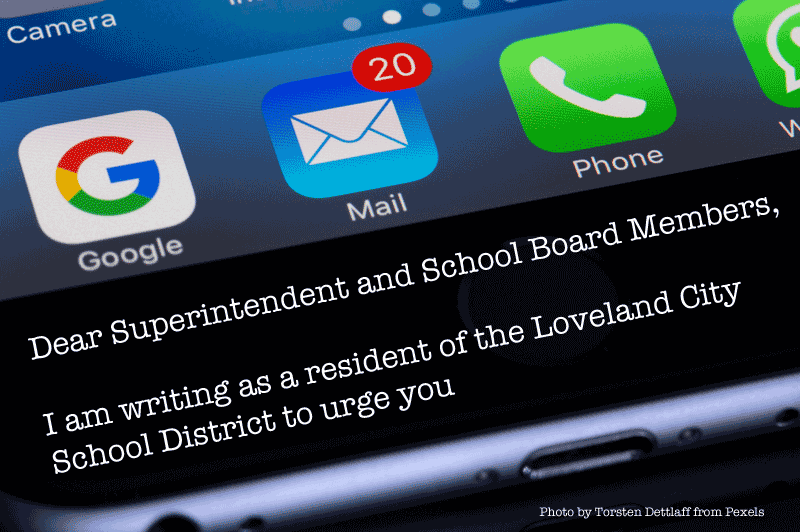
    Dear Superintendent and School Board Members,
    
    I am writing as a resident of the Loveland City School District to urge you, our Superintendent and elected School Board members, to maintain the all staff and PreK through 6th grade universal indoor masking requirements, scheduled to end January 18, 2021. I am also writing to request that the current universal indoor masking requirement be expanded to include students in grades 7 -12.
    
    This request is being made in consideration of the recent COVID-19 Omicron variant case surge, which has been shown to be more transmissible and contagious than previous variants.
    
    The Ohio Department of Health, the Ohio Department of Education, the American Academy of Pediatrics, the CDC, and locally, the Cincinnati Children’s Hospital Medical Center, recently provided clear guidance for universal masking in schools and in the community. Universal indoor masking, in addition to vaccination and boosters for those eligible, are strongly recommended as the best tools, especially when used in tandem, for mitigating the spread of COVID-19 and the current variant.
    
    The pandemic also continues to take a toll on our children’s and educators’ mental health. Since the pandemic began, rates of psychological distress among young people, including anxiety, depression, and other mental health disorders have increased substantially. There is much to be done and each of us has a part to play. Supporting the mental health of youth will require a community effort to address challenges, strengthen the resilience of young people, support their families, and mitigate the pandemic’s mental health impact.
    
    As a resident of the Loveland City School District, I am asking that you consider the following actions:
    
    1. Maintain universal indoor masking for all staff.
    2. Maintain Universal indoor masking for all students Pre-K through Grade 6.
    3. Expand universal indoor masking requirements to include students in grades 7 - 12.
    4. Identify a threshold for educator and/or student absence at which the district will move forward with a remote learning plan.
    5. Increase the frequency with which you report to the public student and educator absences as well as individuals positive for COVID.
    6. Create and promote safe, positive, and affirming school environments which are inclusive and supportive of student’s social, emotional, and cultural needs.
    7. Provide key administrative, educator, and paraprofessional staff with the necessary training to recognize signs of changes in mental and physical health among students.
    8. Provide Mental health gatekeeper training so that staff and peers take appropriate action when needed.
    9. Support the mental health of all school personnel, including providing competitive wages, time off, access to well paid substitute teachers, regularly assessing staff well-being, and integrating measures to help personnel maintain their own empathy, compassion, and ability to create positive environments for students.
    
    As superintendent and elected school board members, your roles include the evaluation of district operations, interpretations of public health policies, and health service delivery.
    
    My role as a district resident is to help our district leadership identify the areas in need of protection, prioritization, and planning to keep Loveland City School District safe and in school: Universal Indoor Mask Requirements and adequate Mental Health Support for Students and Staff. 
     
    Signature
    
    Add Additional Comment
    
    References for Information:
    
    https://www.scientificamerican.com/article/omicrons-effect-wont-be-as-mild-as-hoped1/
    https://www.reuters.com/world/us/us-coronavirus-cases-hit-record-high-2021-12-29/
    https://www.kcur.org/news/2021-12-17/kansas-city-hospitals-are-full-again-omicron-has-arrived-and-doctors-are-begging-for-your-help
    https://www.cdc.gov/mmwr/volumes/70/wr/pdfs/mm7046a4-H.pdf
    https://www.the-scientist.com/news-opinion/omicron-propagates-70-times-faster-than-delta-in-bronchi-study-69540
    https://www.med.hku.hk/en/news/press/20211215-omicron-sars-cov-2-infection
    https://edition.cnn.com/2021/12/28/health/chicago-childrens-hospital-surge-doctor-vaccines/index.html
    https://www.hhs.gov/sites/default/files/surgeon-general-youth-mental-health-advisory.pdf
    https://yourlocalepidemiologist.substack.com/p/our-youth-are-struggling-with-mental

    If you choose, please go to the original post: https://theweis01.github.io/?fbclid=IwAR05yFIugYOv7X3FjgC2wfho59WggZB7-_75SPbS777LcLykpWTBDXqDINE

  • Continuing business closures in Ohio

    Continuing business closures in Ohio

    The following businesses and operations remain closed as of May 15, 2020, as part of Ohio’s plan to prevent the spread of COVID-19:

    • K-12 schools.
    • Childcare services (permitted to reopen May 31).
    • Restaurants and bars dine-in service.
      • Carry-out and delivery services are permitted.
      • Outdoor dining is permitted.
      • Dine-in service permitted May 21.
    • Older adult day care services and senior centers.
    • Adult day support or vocational habilitation services in congregate settings.
    • Rooming and boarding houses, and workers’ camps.
    • Entertainment/recreation/gymnasium sites.
      • Includes, but is not limited to:
        • All places of public amusement, whether indoors or outdoors, such as:
          • Laser tag facilities, roller skating rinks, ice skating rinks, arcades, indoor miniature golf facilities, bowling alleys, indoor trampoline parks, indoor water parks, arcades, and adult and child skill or chance game facilities remain closed.
          • Gambling industries. (Horse racing is permitted without spectators May 22.)
          • Auditoriums, stadiums, arenas.
          • Movie theatres, performance theatres, and concert and music halls.
          • Public recreation centers and indoor sports facilities.
          • Parades, fairs, festivals, and carnivals.
          • Amusement parks, theme parks, outdoor water parks, children’s play centers, playgrounds, and funplexes.
          • Aquariums, zoos, museums, historical sites, and similar institutions.
          • Country clubs and social clubs.
    • Spectator sports, recreational sports tournaments and organized recreational sports leagues. (Non-contact and limited-contact sports leagues are permitted to reopen May 26.)
    • Health clubs, fitness centers, workout facilities, gyms, and yoga studios (permitted to reopen May 26).
    • Swimming pools, whether public or private, except swimming pools for single households. (Public pools and club pools regulated by local health departments are permitted to reopen May 26.)
    • Residential and day camps.
    • Campgrounds, including recreational camps and recreational vehicle (RV) parks (permitted to reopen May 21).
      • Excludes people living in campground RVs with no other viable place of residence.
      • Excludes people living in cabins, mobile homes, or other fixed structures that are meant for single families and where preexisting residential activity already has been established. (E.g., for people who have part-time preestablished residences at campgrounds for the summer months.)

    For answers to your COVID-19 questions, call 1-833-4-ASK-ODH (1-833-427-5634).


    Your mental health is just as important as your physical health. If you or a loved one are experiencing anxiety related to the coronavirus pandemic, help is available 24 hours a day, seven days a week. Call the COVID-19 CareLine at 1-800-720-9616.

  • M/INT PTSA presents: How to Build on Boys’ Innate Character Strengths

    M/INT PTSA presents: How to Build on Boys’ Innate Character Strengths

    The speaker will be sharing insights into boys and how to build on their innate character strengths. The public is encouraged to attend.

    Loveland, Ohio – The 2018-2019 focus and priority of the Loveland Middle and Intermediate Parent Teacher Student Association (M/INT PTSA) is the social and emotional health of students in 5th through 8th grades. To accomplish their goal, they have invited experts to contribute to their newsletter and speak at public seminars.

    Their April program will be a focus on boys. The speaker will be sharing insights into boys and how to build on their innate character strengths. The public is encouraged to attend.

    The presentation will be at the Loveland Middle School Media Center on April 9, between 7 PM and 8 PM. (See Map below)

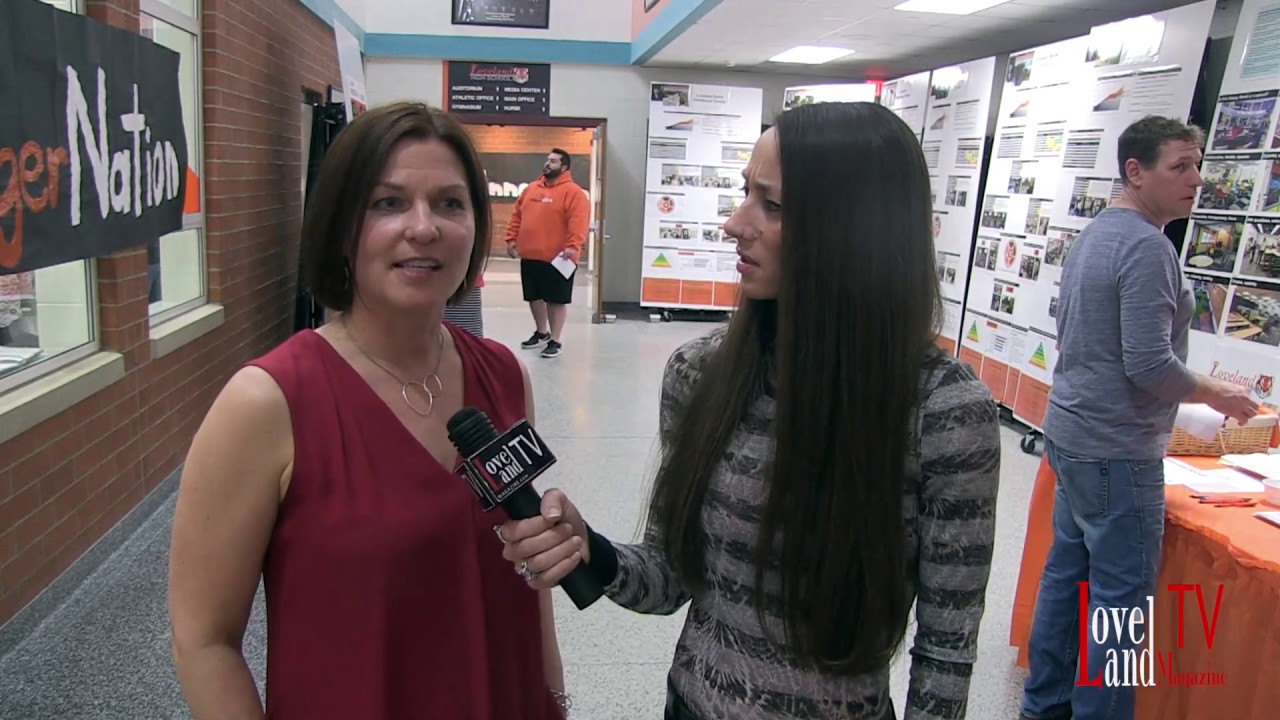
    Columnist Cassie Mattia caught up with Megan Graff last week at Loveland High School when the District held their student-led, State of the Schools event.

    Graff is President of the M/INT PTSA and talked to LOVELAND MAGAZINE TV about how the organization is tackling the “big hurdles for our kids today” such as Internet safety, suicide, depression, and anxiety.


  • [When “Calm Down” Doesn’t Help] How to Tackle Meltdowns, Anxiety & Depression with Your Daughter

    [When “Calm Down” Doesn’t Help] How to Tackle Meltdowns, Anxiety & Depression with Your Daughter

    PROMOTED POST

    Fran Hendrick, P.C.C.

    Hi — Fran Hendrick here.

    If you’ve worked with me before, you already know that when I see moms and girls consistently having the same problem, I’m going to look for a way to make it better. That’s because – first – I know you want these problems to go away; and second – I know they can.

    Toward the end of first quarter, I started hearing about meltdowns — those painful, exhausting, tearful sessions of self-doubt and giving up – often on school work or sports teams, but sometimes just on straightening the bedroom. And the topic hasn’t gone away – probably because school becomes steadily more stressful as the year goes on.

    So I’ve been working on it – which for me means creating a cost-effective solution that you can use at your own pace in your available time. To make things better.

    Would you like to be able to help your daughter manage her stress and anxiety without meltdowns – and without repeating some of the painful encounters you may have experienced with your own mom growing up?

    I know when you’re faced with the homework meltdown, what you want in that moment is for it to stop – for your daughter’s well-being and – let’s face it – for your own sanity. So you might start by trying to calm your daughter – but I’ll tell you, I’ve rarely seen “Calm Down!” help anyone feel calm. So you try pushing back a little; reassuring her that you know she can handle the task she’s panicked about. You offer help. And maybe you’ve threatened a consequence.

    Your intentions are good. It’s just that none of this works very well. You have to go deeper to get to the root of this problem.

    To help you do that, I’ve created:

    When “Calm Down” Doesn’t Help: How to Tackle Meltdowns, Anxiety & Depression in Your Daughter

    This pre-launch sale is LIVE now.

    And, instead of struggling to figure this out by yourself, here is everything you need to know in order to tackle this frustrating problem.

    • Help your daughter avoid those exhausting mood swings and move from quitting to persisting.
    • Build in her strong resistance to anxiety and depression by supporting her in moving from feeling inadequate to feeling confident.
    • Provide the very specific responses she needs from you in order to get off the Self-Esteem Roller Coaster so she can hang in there even when she’s becoming overwhelmed.

    Not only will you walk the path towards being meltdown-free, but it will also give you the momentum you need to achieve to build your daughter’s confidence and protect her from anxiety and depression.

    That’s so important – because these things – meltdowns, self-esteem, anxiety, depression – are all connected.

    Because this is a brand-new course and I want to see how you like it, I’m only offering it for the next four days (but once purchased, you’ll have access to it for as long as you want). Four days is short, I know – so in exchange for that quick decision, there is an one-time introductory price of $47.

    When “Calm Down” Doesn’t Help: How to Tackle Meltdowns, Anxiety & Depression in Your Daughter

    I’d love for you to take this opportunity to buckle down and address the meltdown saga! And remember – while you’re working the course, you can share your questions, experiences, and comments in the Raising Confident Girls Facebook group.

    I’ll be there!

    — Fran

    Fran Hendrick, P.C.C.
    Founder, Raising Confident Girls – The Power of Everyday Conversations

  • Splashing In – Welcome!

    Splashing In – Welcome!

    by Fran Hendrick

    Professional clinical counselor, parenting columnist, and instructor Fran Hendrick has provided coaching and counseling for hundreds of women and girls for twenty-five years. Clients appreciate Fran’s calm, empathic style, her practical strategies and solid advice, and her playful spirit. In addition to her therapy practice at Wildflower House in Loveland, Fran provides consultation, through private video chat and by phone, for moms participating in her online course “Helping Confidence Bloom: The Step-by-Step Approach to Raising Confident Girls”.

    “I don’t want my daughter to struggle with confidence and anxiety issues. I want to learn what I can do to help her become strong and confident – and really have fun with her life.”

    This is the concern – and the heartfelt wish — that many of my clients share with me. 

    Join Fran’s Raising Confident Girls Facebook Group – especially for moms.

    What I find both fascinating and empowering is that your daughter’s trust and confidence are not built by big actions and grand gestures; they’re actually built in the small moments of everyday life. Moments like when she’s late for school – or puts down her iPad to help her little brother with his spelling; says she hates what you’re having for dinner – or does her first headstand. 

    Believe it or not, these are the moments where what you say and do can make all the difference in building her confidence – or unintentionally eroding it. (And – by the way – what we generally think of as praise is likely to backfire completely!)

    It’s easy to miss the opportunity in these moments, not because you don’t want to be there for her but because you aren’t fully aware of what she needs from you. It’s easy to get discouraged and even feel powerless to help your daughter become less anxious and more assertive; or to help her persist at a hard task instead of feeling stupid and quitting in a storm of frustration. What you need is a lens that allows you to see things you couldn’t see before – along with the insight, tools, and a clear framework to know what to do or say. 

    And it’s so important! Confidence is not only a goal in its own right. Beyond that, a strong sense of self-confidence and self-worth provides lifelong protection against depression.

    I’m not one to step up to a microphone without major provocation. But the statistics on depression and self-harm in girls and women today in this country demand it.

    I’m not one to step up to a microphone without major provocation. But the statistics on depression and self-harm in girls and women today in this country demand it. According to the National Institute of Mental Health, a whopping 17.3% of girls ages 12-17 have experienced a major depressive episode1, along with 8.2% of adult women2.  It has even been estimated that girls’ self-esteem, their greatest protection against depression, peaks (yes, peaks) before they are ten years old!

    What makes this all the more unacceptable is that it is largely preventable! We have the knowledge to raise girls to feel whole, adequate, and joyful so they experience the world confidently and in bright colors. The knowledge exists to protect our girls from depression, from lifelong battles against feeling not good enough, from desperation – in short, to prevent rivers of tears and needless pain.

    They can joyfully become exactly who they’re meant to be.

    But for parents to actually be able to implement that knowledge in the small moments that make up everyday life with children requires a clear approach, intentional action — and a strong dose of self-reflection, because it can be scary. With that investment, our girls can be spared the lifetime of depression and anxiety that so many women experience. They can joyfully become exactly who they’re meant to be.

    They kick upwards, their arms reach for the sky, they seem to fairly prance, all with their own dance steps, their own vivid colors, their own lively style.

    On my desk at Wildflower House, I have a colorful drawing, spontaneously crayoned by a spectacular six-year-old girl. In it, twelve children jubilantly dance two-by-two in all directions across the fluorescent green paper. They kick upwards, their arms reach for the sky, they seem to fairly prance, all with their own dance steps, their own vivid colors, their own lively style. 

    That is how our girls should feel! I believe our daughters simply must be given that opportunity. Parents need a clear approach to evade those awful statistics and, in their place, to create something wonderful.

    I invite you to be part of improving the odds for today’s little girls, especially the ones within your own reach.

    “So let’s fix it together.”

    Why? Because each little girl has the potential to bloom uniquely. Because it is a sacred responsibility to learn to nurture, to discover that. And because there should be, there must be no lost voices. Each individual human being is entitled to self-expression.  Without it, our sparks dim and become buried out of our reach, hopelessness gains ground, despair sets in.  Human beings should not be locked away inside themselves. Ever.

    So let’s fix it together. 

    You really can build your daughter’s confidence right there in the midst of simple everyday conversations. I’ve designed this new column to show you how.

    I hope you’ll join me!

    Located at 111 N. Wall Street in Downtown Loveland, Wildflower House, Fran’s cozy personal development studio for coaching, counseling, and classes provides a space for women and girls to confidently become exactly who they’re meant to be. 

  • M/INT PTSA address The Culture of Youth Sports  with FREE seminar

    M/INT PTSA address The Culture of Youth Sports with FREE seminar

    Loveland, Ohio – This school year, the Loveland Middle and Intermediate School PTSA is advocating for social and emotional health. Every month, a newsletter is sent out to ALL parents of the 1500

    John O’Sullivan, the author of the Best-Selling book, “Changing the Game.”

    students at the buildings on one specific topic that faces our kids today. After an initial message to “Start Talking,” in August, they have addressed internet safety, Juuling and nicotine, anxiety, empowering girls, and suicide/depression. During the month of February, their focus is, “The Culture of Youth Sports Today.” All of their newsletters and mental health resources can be found at www.lovelandmintptsa.org.

     
    On February 21st, there will be a FREE seminar open to ALL members of the community given by John O’Sullivan, the author of the Best-Selling book, “Changing the Game.”
     

    The Loveland Youth Sports Council is sponsoring the author’s visit (along, in part, by the M/INT PTSA). Youth organizations in Loveland (baseball, fast pitch, soccer, lacrosse, football, and basketball) have formed a coalition to address some of the problems that are negatively impacting their players. M/INT PTSA President Megan Graff said, “Extracurricular activities should be the source of stress relief, rather than the cause of it. It’s time to change the culture of youth sports.  Be engaged, start talking about how to create a positive environment for our kids, and attend the seminar.”

    Please reserve your FREE seat here to attend: