If your daughter’s reaching (or has reached) the age when you feel it’s time she had a phone, you know you’re entering into a challenge.
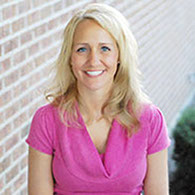
by Fran Hendrick, PCC
Getting a cell phone warrants a celebration, right? Of course! But like any rite of passage, there is both responsibility and risk attached to it. Having a phone in her possession raises a number of very real health and safety issues because cell phone use is implicated in anxiety, stress, depression, cyberbullying, addiction, and emotional dependency (that’s right, cell phones can erode confidence!) — for starters. Like driving later on, handing your daughter her first phone merits some planning.
Join me Friday for a Facebook Livestream on this this topic!
Got questions?
I’ve been looking at a different back-to-school concerns each week for the past three weeks. Please join me at www.facebook.com/franhendrick for a Facebook Live Stream on Fridays (8/3-8/24) at 11:00 AM Eastern Time.
Post your questions about that week’s back-to-school issue in the comment section of the live stream post — or private message me on Facebook. I love helping you work out these answers.
See you there!
I’ve got three things for you on this topic:
1. The Cell Phone Safe Use Resource Sheet
I’ve put this together to help you create an informed plan — and yes, I really do think it’s that important. The research is coming in and it’s disturbing. But along with the research, we’ve now got more strategies and guidelines to help having a phone be a constructive experience for kids.
In this Resource Sheet, I cover:
Links to information you need to educate yourself in order to plan for your daughter.
Links to information on Parental Controls — super important.
How your own fears can get in the way of taking steps to protect your daughter.
How to structure a conversation with your daughter on this delicate topic.
How to respond to her feelings about implementing some structure around cell phone use.
2. From the Blog Archives
This issue of emotional dependency cuts right to the heart of what so many moms want for their daughters — and that’s confidence. In the post below, I’ve explained how cell phones can erode confidence. It’s not a small thing.
I’ll be talking about this topic and other questions, as well, Friday August 24 at 11:00 AM Eastern Time in a Facebook Live. You can join this event on my Facebook Page. (By the way — previous topics are also there for you to view. Just click the Video tab and you’ll see them.)
Professional clinical counselor, parenting columnist, and teacher Fran Hendrick has provided coaching and counseling for hundreds of women and girls for twenty-five years. She is a member of the International Association for Psychoanalytic Self Psychology. In addition to her therapy practice, Fran provides consultation online and by phone for moms participating in her Helping Confidence Bloom classes and upcoming ecourse.
Fran divides her time among working with clients, kayaking with her husband, and scampering up jungle gyms with her granddaughters. Clients appreciate Fran’s calm, empathic style, her practical strategies and solid advice, and her playful spirit. Wildflower House, Fran’s cozy personal development studio in charming, historic Loveland, Ohio provides a space for women and girls to grow the confidence to become exactly who they’re meant to be.
Loveland, Ohio– Stressed? Can’t sleep? Experiencing body pain you can’t explain? Unfortunately, these are all symptoms that we feel every day due to the constant pressure we put on ourselves to succeed at work, at school, at the gym or even within our own families. People are constantly trying to find that one unique escape route where they can relieve their daily stresses, without having to necessarily partake in a vigorous 30-minute run or a trip to the bar for some happy hour cocktails. Loveland Resident Linda Becker offers an escape route for those everyday stresses that is not only unique but promotes healing and a sense of well-being mentally and physically.
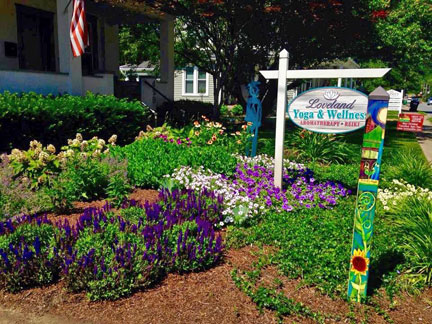
Linda opened Loveland Yoga and Wellness in 2014 in the West Loveland Historic District only one block west of the Little Miami River on West Loveland Avenue. “I have lived in Loveland since 1981. I knew if I owned a business, I wanted it to be a part of the Loveland community. When I saw the For Sale sign and scheduled a viewing of the property, I fell in love with the house/location,” Linda said.
According to Linda, it wasn’t always her plan to open her own studio, but claimed that she always had a passion for the art of yoga.
“My daughter was home from college and took me to a couple of classes in the early 2000s. It was love at first breath. It made me feel so good afterward. I began practicing as much as I could and enrolled in my first teacher training in 2007. I took the teacher training to delve deeper into my own personal practices. I had no intention of teaching others! But with encouragement from my teachers, I began teaching at YogahOMe in Symmes Township (no longer in operation). I eventually taught a variety of classes there 5 times a week. I became increasingly interested in yoga therapy and in 2013 I completed a 300hr advanced training in Urban Zen Integrative Therapy. I never wanted to own a studio, but when YogahOMe closed their doors, I thought it might be the right time to offer more therapeutic services. So I opened Loveland Yoga and Wellness in 2014.”
Over the past few years, Linda has racked up quite a number of certifications. Becker is not only a Yoga Teacher at the 500-hour level registered with Yoga Alliance, but she is also certified as an Urban Zen Integrative Therapist, a Yoga Therapist with The International Association of Yoga Therapists, a Master Reiki, and an Oil Therapist who makes custom solutions for sleep.
So what exactly makes Loveland Yoga and Wellness unique? “Loveland Yoga and Wellness is not a typical yoga studio. I think of it as a wellness center with many options to meet students where they are. Class sizes are kept small with plenty of individual attention to develop safe practices. It’s a community with everyone supporting each other,” Linda said.
Linda’s wellness studio offers a variety of unique therapy techniques indeed! Of course the center provides both Yoga and Yoga Therapy, but in addition to that Linda also offers Urban Zen Integrative Therapy, which mixes the healing modalities of gentle yoga such as gentle movements, restorative positions, guided meditation and breathing techniques, Reiki Therapy, a Japanese healing practice that is associated with the benefits of deep relaxation, stress reduction, more restful sleep, and enhanced immune functioning, Aromatherapy, which uses essential oils made from plant materials to promote relaxation, relieve stress, anxiety and lessen symptoms from acute and chronic health conditions, and lastly Raindrop Technique Therapy, which is an energizing technique where oils are layered on the neck, back and feet bringing about balance and electrical alignment.
With the wellness center providing so many different types of therapy it attracts a wider audience than most Yoga studios ranging from young professionals to senior citizens. “I am passionate about yoga practices being accessible to everyone,” Linda said.
Loveland Yoga and Wellness offers a plethora of classes that integrates different types of therapy according to what health or physical challenges you’re encountering as well as training classes/series, such as Reiki Level 1, Yoga series for Osteoporosis, Yoga series for Chronic Back Pain and 200-hour Level Yoga Teacher training, for anyone seeking certification in a particular therapy.
“In addition to typical mixed level yoga classes, I offer therapeutic and chair yoga classes appropriate for anyone. Urban Zen classes address symptoms of pain, anxiety, nausea, insomnia, constipation, and exhaustion. Private sessions address specific individual needs. I want to empower students to be proactive in their health care. I also offer private Reiki treatments and Essential Oil Therapy,” Linda said. “I am beginning a 200-hour teacher training immersion 9/17. This is for anyone wanting to learn how to be their own teacher and share the practices with others. Also, 9/26 I am offering a very popular chronic low back pain series. Last year this 12-week series sold out,” Linda added.
As off current on Monday’s at 3 PM Chair Yoga is offered, which uses a chair for comfort for seated positions as well as for standing postures. This class is meant to help increase flexibility, strength,and a sense of calm. On Tuesday’s at 9 AM, Wednesday’s at 8:30 AM and Saturday’s at 9 AM Mixed Levels Yoga classes are given. This class is designed for yogis of all levels! The class uses props and modifications so that everyone can complete the postures effectively. Also offered on Tuesday’s are Therapeutic Yoga classes which are held at 6 PM. This class requires no previous yoga experience and places a strong focuses on gentle and slow movements that build strength to support your spine and joints. Therapeutic Yoga is ideal for beginners, those recovering from a surgery or people who suffer from joint pain. On Thursday’s at 9:30 AM and 6 PM Urban Zen classes are held which incorporates both Essential Oils and Reiki while using simple movements, breath awareness techniques, guided meditations and restorative positions.
Over the past few years, Yoga studios have been popping up left and right as it has become extremely popular as a form of exercise as well as a way of uniting mind, body, and spirit. Loveland Yoga and Wellness is far from your average Yoga studio as it not only offers the most unique therapeutic practices but it also invites anyone and everyone to take classes regardless of their age, weight or current health status. Not to mention Yoga pants aren’t required!
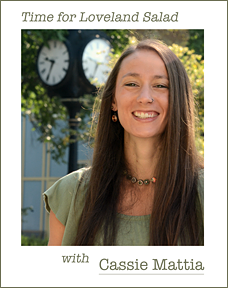
Cassie Mattia lives in Historic Downtown Loveland, Ohio.
If we don’t protect our youth who will? In May, Ohio Paul Zeltwanger and Thomas Brinkman proposed House Bill 658, which states:
“If a government agent or entity has knowledge that a child under its care or supervision has exhibited symptoms of gender dysphoria or otherwise demonstrates a desire to be treated in a manner opposite of the child’s biological sex, the government agent or entity with knowledge of that circumstance shall immediately notify, in writing, each of the child’s parents and the child’s guardian or custodian. The notice shall describe the total circumstances with reasonable specificity.”
gen·der dys·pho·ri·a
ˈjendər disˈfôrēə/
noun
MEDICINE
The condition of feeling one’s emotional and psychological identity as male or female to be opposite to one’s biological sex. How to pronounce gender dysphoria.
In plainer language House Bill 658, also known as the “Parent’s Rights Bill,” would make any school administrator or teacher who allows or offers gender dysphoria (the condition of feeling one’s emotional and psychological identity as male or female to be opposite to one’s biological sex) treatment, including resources on sex and gender or counseling, for a minor “without the written, informed consent of each of the child’s parents and the child’s guardian or custodian” they could be charged with a felony in the fourth degree. The parents of the student according to the bill would get the ultimate decision whether their child gets access to treatment, including educational materials, counseling or medical services.
If this House Bill is implemented it could have detrimental consequences for teachers and even more importantly for those students affected. Teachers are there to lend their students a helping hand educationally and emotionally in order to prepare them for what’s to come once they are out on their own, why take this from them?
A teacher’s take on House Bill 658
I spoke to one Loveland teacher who wishes to remain anonymous, a mom of a teenager. I’ll call her Susan. She told me that for many students their home life is a wreck and out of control with issues of poverty, broken families, and domestic abuse. “For many of my students, the only adult in their life that can be trusted may be their teacher. Teachers who lend an ear and can be trusted can be an enormous help that often reflects on their academic achievement. We care for the whole child.”
Susan told me that for many students their home life is a wreck and out of control with issues of poverty, broken families, and domestic abuse. “For many of my students, the only adult in their life that can be trusted may be their teacher.”
Susan told me that she just overheard a conversation between her daughter and a friend about a classmate they thought was transgender. “I wondered, do they know what that means? Are they friends with this young person? How do my kid and others treat her? Because I am a teacher, would I be required to file a report with the District? These are all questions that ran through my head as a mom and a teacher.”
Susan said she wants to protect and support all of her kids, her biological ones and the ones that are “her’s” for a school year. “I want to be able to do that freely and openly and with my heart.” She said that some of her students desperately need someone they can trust in their life and the last thing they need is another person that will let them down because politicians want school staff charged as felons if they don’t report that the student herself, or a classroom teacher, principal, gym teacher, bus driver, or classmate may be questioning her gender identity.
Susan asked, “Just what stereotypes am I going to be expected to police?
HB 658 is a harmful bill that takes aim at some of our most vulnerable — transgender youth — by forcing school officials to serve as ‘gender police’ and out them or risk getting a felony.” – Alana Jochum
LGBTQ advocacy
“HB 658 is a harmful bill that takes aim at some of our most vulnerable — transgender youth — by forcing school officials to serve as ‘gender police’ and out them or risk getting a felony,” said Alana Jochum, executive director of LGBTQ advocacy group Equality Ohio. Jochum told NBC News. “This exposes young people to discrimination, harassment, and bullying.”
Jochum couldn’t be more correct if you really take a look at the alarming statistics. One study done by the Cincinnati Enquirer showed that 64% of LGBTQ youth in Ohio heard “negative comments” about their gender identity or sexual orientation from their family and in result, according to another study done by National Transgender Discrimination, 41% attempted suicide. Though many transgender students
75% of transgender youth have felt unsafe at school after being outed and have lower GPA’s due to missing school in fear of their safety.
have experienced negative comments, violence has become the most popular form of dealing with transgender youth. Disturbingly enough 19% of transgender youth, according to the National Center for Transgender Equality, experience the majority of violent abuse in their home from their own family members. Along with dealing with all the dissension from family members 75% of transgender youth, according to a national survey done by GLSEN (pronounced “glisten”), have felt unsafe at school after being outed and in result have lower GPA’s due to missing school in fear of their safety. With all the facts at hand, The Ohio Education Association who represents 125,000 teachers and support professionals, have openly opposed the bill.
Violence has become the most popular form of dealing with transgender youth.
Kathryn Lorenz is the Loveland Board of Education Vice President
While researching House Bill 658 I managed to only get a response from two local representatives of the Loveland School Board, one being Kathryn Lorenz, the Board Vice President and the other being Loveland School Board Member, Ned Portune. Lorenz’s response was, “In the case of House bill 658, we would have to say that we do not yet have enough information, nor have we met as a board for a few weeks, so we do not yet have a Board statement to make.”
Ned Portune is a member of the Loveland School Board
Portune added that he, “…simply has not been fully informed at this point on HB 658 to have an educated opinion. There are several items in your statement that would certainly give me a gut reaction, and opinion on, if true as presented. But I need time to fully review the Bill, its implications and existing laws to have any formal statement.”
School Superintendent Amy Crouse, High School Principal Peggy Johnson, and assistant principals at the High School did not respond.
Studies show most transgender youth are fully aware of their gender identity by age 4.
After attempting several times to contact both Representatives Paul Zeltwanger and Thomas Brinkman through email and phone about House Bill 658, I, unfortunately, got no response. It wasn’t hard to find Brinkman’s opinion on the issue in several other publications though, voicing to WCPO, “Parents have the right to decide what is best for their children,” and telling WOSU Public Media, “And if somebody doesn’t like it, you’re emancipated at age 18 and you can go do whatever the heck you want.” Seems pretty harsh considering the transgender population represents about 0.3% (700,000) of Americans and studies show most transgender youth are fully aware of their gender identity by age 4. Are we encouraging parents and administrators to discard their students or child’s gender identity in fear of social rejection? Do these children not deserve to live an authentic life?
Fran Hendrick, PCC has offices at Wildflower House in the West Loveland Historic District.
House Bill 658 is expected to be presented to the Ohio General Assembly in the Fall and will be without a doubt one of the most controversial bills to date. Many have opinions on this issue one being Fran Hendrick, a respected and highly educated clinical counselor who specializes in assisting women and girls who are experiencing depression or anxiety triggered by a crisis or major life change. When I presented Fran with House Bill 658 and asked what her opinion was she had a lot to say and rightfully so considering one of her life missions, according to Fran’s website franhendrick.com, is to “gently help you find and shelter your spark (the essence of who you are at your core) and grow it so that it illuminates your person and is radiated through words, actions and decisions, big and small, that make up your daily life.”
In a culture such as ours, it is a matter of life and death for transgender youth to decide if and when to trust another person with their reality. – Fran Hendrick, PCC
“Being a parent takes great courage, even more so when your child presents you with something that you’re unfamiliar with – or even afraid of. In a perfect world, a child who feels somehow ‘different’ from their peers (‘their’ is deliberately gender-neutral), they could consult their parents, who would strive to deeply understand the child’s experience, would provide accurate empathy, and would go on a crash course to learn everything they could about the unfamiliar issue. And, so very fortunate for their children, there are many parents like these.
But in the real world, an adolescent boy saying to his father, ‘Dad, I think I’m a girl’ is very likely to encounter disgust, rejection, rage, or even violence, not empathy and understanding.
While the intent of this bill, giving benefit to grave doubt, could be a deeply uninformed and misguided attempt to protect children, that seems unlikely. My sense is that in truth it is more about attempting to hand parents the power to say no to their child’s gender identity,” Hendrick said, “But gender identity – and sexual orientation, for that matter – are not matters of choice. And in a culture where transgender people are assaulted and even murdered at a rate higher than their cisgender counterparts,where transgender youth are summarily shunned and rejected by their own parents (the rate of homelessness is, not surprisingly, very high), where the suicide rate that results from these atrocious facts is far higher than for other youth – in a culture such as ours, it is a matter of life and death for transgender youth to decide if and when to trust another person with their reality, and, most importantly, whom to trust.
To be “outed” for the choice to trust; or to be prosecuted for trying to be help – these are not protections. Actions like these support bigotry, and increase isolation and despair. – Fran Hendrick, PCC
To be “outed” for the choice to trust; or to be prosecuted for trying to be help – these are not protections. Actions like these support bigotry, and increase isolation and despair. Stopping a teacher from helping such a student, one who is likely alone with the reality of their gender identity, who stands to be emotionally and psychologically rejected, or even physically abused, by their own family is, quite simply, a cruelty. This, I strongly believe, is not what the overwhelming majority of parents want for their own or anyone else’s children. This is bad enough. However, this bill opens the door to much more far-reaching damage than this.”
Is he to be turned in to the gender police?
The talented young male artist who despises sports – is he to be turned in to the gender police? The girl who chooses overalls and a t-shirt rather than a dress and a mani-pedi –what of her? The sponsors of the bill have explicitly said that teachers should be required to inform on them, as well. We have an essential responsibility to ensure that proposed legislation protects vulnerable people from the bigotry endemic in our society.This legislation explicitly deprives them of protection.”
Ultimately what it comes down to is ensuring that our children are and feel safe when going to school. Teachers and administrators are the ones that take on the responsibility of creating that fun, loving and supportive atmosphere so that our children get the best opportunities in life. Passing a bill such as House Bill 658 only presents another obstacle that both teachers and administrators have to overcome. Don’t these professionals have enough obstacles to conquer as is?
Both Justin Haake and Tonya Schaeffer who are Professional Clinical Counselors for Hope Restored Counseling Services in Loveland couldn’t agree more.
Justin Haake is a Licensed Professional Counselor at Hope Restored Counseling Services in Loveland and works primarily with adolescents and adults, specifically during transitional periods in life.
Haake said, “For some, teachers and school administrators may be the only people in schools that feel safe for students to reach out to.Imagine the fear of asking for support, knowing that you’ll either be outed or put the teacher or administrator at risk of a felony.”
Schaeffer said, “From my perspective, this would most likely increase the level of bullying and possible harm to these students.There is already so much shame and stigma attached with Transgender people, and they need as much support as they can get,”
Tonya Schaeffer is a Licensed Professional Clinical Counselor and co-owner of Hope Restored Counseling Services in Loveland.
Schaeffer added, “Support is out there.In fact, we are offering a psycho-educational group starting in September that offers education, support and a safe environment for Transgender students to express themselves.” She said they hope to offer a similar group to parents who are trying to understand what their child is going through, explore what the parents are experiencing and provide support. “We currently serve the LGBTQ community, and we are expanding those services.I recently read a statement that it is estimated that 41% of trans men and women have attempted suicide. I don’t believe this bill would help–it seems like it could only hurt.”
Susan, the mom and teacher said, “I am thankful I live in a community where support services like those provided by Hope Restored, and Fran Hendrick at Wildflower House are nearby for my students and their families.”
Transgender youth have so many mountains to climb within their own scientific makeup and allowing a bill like House Bill 658 to go through in hindsight is taking away their basic rights as Americans and human beings.
“GLSEN (pronounced “glisten”) was founded in 1990 by a small, but dedicated group of teachers in Massachusetts who came together to improve an education system that too frequently allows its lesbian, gay, bisexual, transgender, queer and questioning (LGBTQ) students to be bullied, discriminated against, or fall through the cracks.”
June 20th is the 10-year anniversary of Hope Restored Counseling Services
Loveland, Ohio – Maggie Gehler and Tonya Schaeffer met at graduate school while attending Xavier University. Their first location for Hope Restored Counseling Services was at 420 West Loveland Avenue in the historic church building where they worked out of one room. They both had other jobs at that time at other agencies and in different private-practices. Even though it was during the recession, Schaeffer said they had the idea and decided to run with it – “Why don’t we give it a shot? It really was like we’re going to give this a shot and see what happens.”
Schaeffer said that she was maintaining at least two other jobs; two different jobs at the Children’s Home of Cincinnati doing in-home counseling and going to different school districts such as Sycamore. “I had multiple jobs and Maggie was working full-time at Child Focus at that at that time,” she said.
Tonya Schaeffer, M.Ed., LPCC Licensed Professional Clinical Counselor
New moms said let’s do it!
Schaeffer said, “Maggie had three children and I had two – so we were new moms – but we said let’s do it. We did, and we look back and it’s funny. We are therapist, we know therapy we know counseling but we weren’t sure about business.” They contacted SCORE, a group of expert business mentors that advise start-ups, and met with them briefly to come up with the business plan. They also met with an accountant they knew.
The new businesswomen shared that office in the old church for about two years and then moved to Julie Swain’s building just down the street where they had two separate offices. “At that point, we said OK we’re doing well let’s bring on another therapist and see how that works.” That is when they brought on Clinical Counselor, Beata Bartler to help with their caseload and expand the business.
“We ultimately ended up moving to their present location at 600 West Loveland Avenue, again for more space and have added several other therapists,” said Schaeffer. Clinical Counselor, Elizabeth Greller has been with Restored Hope about 5 years. Licensed Independent Social Workers, Dana Hurd, and Catrina Spicer have also been added to the team. They have been in the West Loveland Historic District amongst other professional businesses since they started.
“We all have kind of our own niche. Maggie works a lot with children who have ADHD or on the autism spectrum. Same with Liz. She does a lot of work with families and children on the spectrum. Beata works a lot with the more mature population and does a lot of couples work. Dana and I work with adolescent teenagers and their families.”
Hope Restored counsels individuals with ADHD or autism, but they also work closely with the family. Schaeffer said, “All of us handle ADHD and what’s interesting is that a lot of times people will come in, and a lot of times adults, or let’s say teenagers, that have made it through school one way or another without being diagnosed and I’m sitting here like – you definitely have ADHD. You have all the markers for it.” Schaeffer said that sometimes they need to be convinced and so they need some more scientific information. “We can use a DSM to diagnose, but sometimes if we want more information we will refer out to have them psychologically evaluated. She said the DSM (Diagnostic and Statistical Manual) is their bible. “We were trained in testing at Xavier, but that’s not something we want to do. I think that’s better for psychology.”
Maggie Gehler, M.A., LPCC Licensed Professional Clinical Counselor
They’ve been able to serve hundreds of people struggling with depression, anxiety, divorce, autism and so much more. “My particular passion is working with families and individuals with autism other special needs. There can be a deficit of resources and services for those families and it is extremely gratifying to be able to help,” said Gehler.
For a lot of families and their children on how to best handle divorce, Schaeffer does grief work as well. “We do get a lot of families who are here to avoid divorce or who want to handle it, hopefully, the best way possible. But we also have clients that come to us over death and loss, as well,” she said.
Families who have lost people to a drug overdose
One thing Schaeffer said she found that she didn’t expect, is that over the last three-years the practice is dealing with a lot of families who have lost people to a drug overdose. She lamented, “It’s obviously an epidemic and it’s all over the place and it seems to be happening more and more. I’m finding almost everyone is affected.” She says that a lot of people will come in who have had someone significant that has died from an overdose. “And it’s a lot of different ages, yes a lot.”
Hope Restored does counseling for dependency and has in the past seen clients who have been referred through a court order for drug and alcohol assessments. “But we don’t do a ton of that where we’re looking to grow,” said Schaeffer.
Beata Bartler, M.A., LPCC Licensed Professional Clinical Counselor
What’s in the Future?
“Where we’re looking to grow is, I want Hope Restored to work with people who are transgender and we are looking at exploring their world. Educating parents and relatives on the terminology that’s used and what a person might be going through,” said Schaeffer. “That’s where we’re definitely looking to expand. We’re getting ready to bring somebody on, so I’m excited about that.”
“We’re just super proud to be celebrating 10 years. We just didn’t know. We just said okay let’s give it a shot,” said Schaeffer. “We’d love to have more clients probably the people that have called me in the last 24 hours are thinking why hasn’t she called me back yet, and it’s because we’re super busy.”
Schaeffer would love to be able to hire more therapist that are independently licensed and have the ability to work with more individuals and families and eventually hopes to find a larger space. “However we don’t want to become ginormous by any means.”
On being a school resource
“Almost 50-percent of the local schools know who we are, but some of the schools don’t and we’re just right down the road,”said Schaeffer. She would like their name on the list of resources available that the school puts out for children with special needs. “They list out all of the bigger agencies and places but we are never included, which I don’t get that – so I’m working so folks know we’re right down the road. We’ve introduced ourselves. We have kids in the district. We have kids in the community. We live in the community and we are Loveland.”
Hope Restored recently had a booth at the Loveland School-sponsored, “Right Under Your Nose” event and are part of the task force.
“You can walk in here and get an appointment and you can’t always do that with the bigger agencies.”
Elizabeth Greller, M.A., LPCC Licensed Professional Clinical Counselor
inspirational people along the 10-year journey
Schaeffer said that there were two people who gave her the confidence to go into business and to go out on her own.
“The first person is my grandma who has passed away. Her name was Birdie and that’s why you see little birds all over my office. I opened up the doors on June 20th which is her birthday so she was definitely the first person. She gave me life lessons in general. She had nine kids and lived on the farm and she just sent me the message that I could do anything and that nothing could stop me. Which, was an amazing message. She was a strong woman.”
Dana Hurd, MSW, LISW Licensed Independent Social Worker
She also mentioned her high school guidance counselor at Franklin Monroe High School in Pitsburg, Ohio, Mr. Phipps, who she remains friends with. He led her to understand what her strengths were when she was considering journalism or counseling.
“Maggie’s dad, Mr. Gehler who just passed last year deserves a lot of credit for our success. He was in our field of private practice but he was also a professor in Chicago. He was definitely someone that Maggie would call often and ask business questions. He was a huge guidance. He was a big influence for her.”
Catrina Spicer, LISW-S
Maggie Gehler added, “I’ve always felt driven to help others, inspired by my dad who was a clinical counselor and director of a community mental health agency outside of Chicago. My dad was passionate about developing new programs that would benefit at-risk individuals.”
Just stay home and make a pie?
Early on, Schaeffer remembers contacting a preacher at her church and asking if he had any names so she could get some business advice. “The man I then contacted said to me that I should not do this and that Maggie and I should not pursue this because we were young mothers and it would be very difficult,” said Schaeffer starting to laugh. Though more laughter she said, “And that just pushed me more. (laughing more) Yep, I’m like, ‘Oh, no way.”
She said she thinks he truly thought that he was being helpful. “He said, I should just stay home and make a pie. He thought it was because we were young mothers that we wouldn’t be able to do this, and we still have young ones, ten years later at our anniversary. I’ll never forget that phone call because the message for me was you can do whatever you want to do if you put your mind to do it and if you work hard you can have kids and have a business.”
Professionals building rapport because they are real people
Schaeffer said, “Our work is interesting because the most important thing, in my opinion, is building rapport with a client of any age. I think it’s why we’ve been doing this for so long.”
She said everyone in the office is real people. “You can’t connect with someone if you are seeming above them. We have problems too and I think we try to connect with our clients. We’re genuine. We have empathy.”
Schaeffer believes there are a lot of “Fly by Night” things popping up all over, people doing different things that look like they’re counseling, “But they’re not and that’s scary for us because we deal with a lot of very serious situations such as daily suicidal clients, weekly suicidal ideation, and you have to know how to deal with that and what steps need to be taken.” She worries about people who are not qualified, yet counseling.”
Friends as business partners and risk-takers
“Some people say, don’t go into business with your friends. But I mean it’s not to say we haven’t had our struggles early on adjusting, figuring out what each of us is better at doing. Maggie’s definitely the numbers person and I’m more going out promoting the business and handling all of our referrals,” said Schaeffer.
“We are looking forward to further expanding our services. We are adding groups to meet the needs of our community and have hired more clinical staff to provide even more individual services,” said Gehler.
“I think we just want people to know that we’re here in the community that you know. We really do provide a lot of different services and if we can’t we definitely will find someone that can, said Schaeffer. “It’s hard to believe it goes fast. It was scary in the beginning, but we just took that leap.”
600 West Loveland Ave, Suite 2A • Loveland, OH 45142
There are many students who require summer support.
By Eric Dool,
How will my student’s mental-health needs be met when school is not is session?
As summer vacation has arrived, thoughts for most naturally turn to rest, time with friends and family, travel, summer projects, professional development and so forth. For some, however, an extended break from school can lead to significant anxiety. Will my son or daughter retain the knowledge and skills needed to be successful at the start of next year? What can I do to better prepare my child for the increasing rigor faced as they progress from grade to grade? How will my student’s mental-health needs be met when school is not is session? As has become quite clear through research and practical application, there are many students who require summer supports in order to continue to access, participate and progress at school, year to year. That being said, Tiger Care is not something that can end in May and begin in September – it MUST be on-going.
Tiger Care is not something that can end in May and begin in September – it MUST be on-going.
For Loveland City Schools, targeted Care supports are an essential part of how we do business. It is an extension of our practices throughout the school year. As such, in addition to the multitude of athletic, art, and enrichment opportunities we make available to students, Loveland offers more-intensive intervention supports for smaller groups of students, frequently in collaboration with well-known community providers. Three examples include: mental-health services through The Children’s Home of Cincinnati (CHOC); an ADHD Summer Treatment Program through the Cincinnati Children’s Hospital Medical Center (CCHMC); and Extended School Year (ESY) services for identified students with educational disabilities.
Loveland offers more-intensive intervention supports for smaller groups of students.
In March, I noted the on-going relationship Loveland has had with The Children’s Home of Cincinnati in providing mental-health services to students, inclusive of individual and family therapy, case management, and medication management services. For students involved, CHOC services will continue on-site throughout the summer – with little to no disruption in service. Arrangements for services are being handled through CHOC.
In exchange for hosting the program in Loveland, a handful of Loveland students will be able to attend for free, or at a reduced cost for families.
Loveland additionally will for the first time be partnering with the Cincinnati Children’s Hospital Medical Center to host their annual ADHD Summer Treatment Program. This intensive, seven-week-long program has proven to be highly effective in meeting the needs of some students with ADHD, and has been offered through CCHMC for several years at Xavier University through parent payment and minimal scholarship assistance. In exchange for hosting the program in Loveland, a handful of Loveland students will be able to attend for free, or at a reduced cost for families. School teams have worked to identify possible candidates for this program.
And finally, approximately 120 students with educational disabilities will receive varied Extended School Year (ESY) summer services to prevent excessive loss of knowledge and skills during the summer months, loss typically taking excessively long periods of time to recoup in the fall. These services have been offered through Loveland for several years in a summer-school-like fashion, focused on intensive reading, mathematics, functional living, communication and sensory needs. For a few students, more individualized supports are provided.
Eric Dool (dooler@lovelandschools.org) is Director of Student Services for the Loveland City School District
In summary, Loveland recognizes its role in continuing to provide Care during extended absences from school. To that end, we recognize that it is our responsibility to work with families and community resources to ensure that all Tigers return to school in August ready to learn.
Nine teacher-designed and student-inspired projects awarded to advance the goals of #TigerInnovation #TigerGrowth and #TigerCare across the district
Loveland, Ohio –From the establishment of an Innovation Lab at Loveland Primary School (LPS) to encourage educational risk taking to the creation of Virtual Reality Environments at Loveland Middle School (LMS) to help students with special needs – the Loveland City School District is excited to announce the district will help fund nine projects for the 2018-19 school year as part of the annual Innovative Classroom Grant program. The selection of winners was presented to the Loveland Board of Education during the April 17 Board Business Meeting.
“With this next iteration of the Innovative Classroom Grant, we have learned so much about what innovation truly means and looks like across our classrooms,” said Loveland Director of Technology and Innovation David Knapp. “Innovation is not about things. It’s about embracing the perspective of our students to think about teaching and learning differently.
“We could not be more excited to see the growth and development of these teacher-generated and student-inspired ideas that resulted from this year’s grant opportunity. As we plan and eventually implement these new ideas that will impact so many of our students immediately, we are also piloting experiences that could impact our students for years to come in thinking about the next phase of our Loveland classrooms and learning experiences.”
The district established Innovative Classroom Grants during the 2016-17 school year to fund innovative teacher ideas that would enhance the district’s three key goals of providing Tiger academic Growth, Innovation and Care. In the program’s debut year, the district funded 11 projects, including flexible learning spaces, MakerSpace and digital microscopes. This year, projects will continue to impact Tigers at all age levels, with continued focus on Growth, Innovation and Care.
“Loveland Middle School plans to design a space with social and emotional learning supports for our students who struggle with anxiety and anger,” said LMS Counselor Kim Shafer – who was part of a winning grant team. “We will have tools and programs to help our students take a minute away from class to reset emotionally – with the goal to rejoin the class. This will be a powerful way for the district to provide Tiger Care.”
“Our grant idea was inspired by watching our students at Loveland Primary School work with MakerSpace – which was part of the grant selection last year,” said Innovative Instructional Coach Traci Stubenrauch – who was a part of a winning grant team. “Our hope for the LPS Innovation Lab is that it will be a place for students and teachers to be able to take educational risks, try new things, collaborate, share and give each other feedback.”
“This is an important investment to continue to make as we develop a world-class student experience for our Tigers that is unlike any other,” said Loveland Superintendent Dr. Amy Crouse. “This opportunity puts our rock star educators in a position to game-change the traditional classroom for their students. We appreciate the support of our Board of Education as we take opportunities like these to enhance our core business – preparing students for tomorrow, today – in unique ways.”
The winning projects included (by building):
Loveland Primary School
LPS Innovation Lab – Cristin Kiefer and Traci Stubenrauch
Loveland Elementary School
iPods for Personalized Learning – Heidi Weber
Loveland Intermediate School
Team Model for Flexible Learning – Kelly Coldiron and John Waple
Flexible Space for Collaborative Learning – Natasha Young
Loveland Middle School
Virtual Reality Environments – Rachael Angel
Social and Emotional Learning Supports – Lauren Cripe, Kim Shafer and Anita Winning
Student Designed Flexible Learning Space – Chloe Jackson



 by Fran Hendrick, PCC

 registered with Yoga Alliance, but she is also certified as an Urban Zen Integrative Therapist, a Yoga Therapist with The International Association of Yoga Therapists, a Master Reiki, and an Oil Therapist who makes
  Linda’s wellness studio offers a variety of unique therapy techniques indeed! Of course the center provides both Yoga and Yoga Therapy, but in addition to that Linda also offers Urban Zen Integrative Therapy, which mixes the healing modalities of gentle yoga such as gentle movements, restorative positions, guided meditation and breathing techniques, Reiki Therapy, a Japanese healing practice that is associated with the benefits of deep relaxation, stress reduction, more restful sleep, and enhanced immune functioning, Aromatherapy, which uses essential oils made from plant materials to promote relaxation, relieve stress, anxiety and lessen symptoms from acute and chronic health conditions, and lastly Raindrop Technique Therapy, which is an energizing technique where oils are layered on the neck, back and feet bringing about balance and electrical alignment.
 Loveland Yoga and Wellness offers a plethora of classes that integrates different types of therapy according to what health or physical challenges you’re encountering as well as training classes/series, such as Reiki Level 1, Yoga series for Osteoporosis, Yoga series for Chronic Back Pain and 200-hour Level Yoga Teacher training, for anyone seeking certification in a particular therapy.
  beginners, those recovering from a surgery or people who suffer from joint pain. On Thursday’s at 9:30 AM and 6 PM Urban Zen classes are held which incorporates both Essential Oils and Reiki while using simple movements, breath awareness techniques, guided meditations and restorative positions.

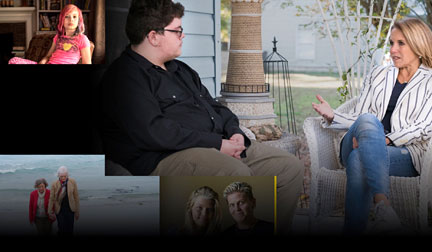 If you would like to explore the topic of Transgender youth and adults even further please check out “