Tag: Ariana Figueroa

  • Biden commutes sentences of nearly 1,500 people, pardons 39 in historic clemency action

    Biden commutes sentences of nearly 1,500 people, pardons 39 in historic clemency action

    By:  Ohio Capital Journal

    WASHINGTON — President Joe Biden Thursday commuted the sentences of roughly 1,500 people who were placed in home confinement during the coronavirus pandemic, and granted pardons for 39 individuals with convictions for nonviolent crimes.

    “America was built on the promise of possibility and second chances,” Biden said in a statement. He noted many of the 1,500 were serving long sentences that would be shorter under current laws, policies and practices.

    As the Biden administration winds down, it’s the largest single-day grant of clemency in modern day history.

    The president added that his administration will continue to review clemency petitions before his term ends on Jan. 20. There are more than 9,400 petitions for clemency that were submitted to the White House, according to recent Department of Justice clemency statistics. 

    “As President, I have the great privilege of extending mercy to people who have demonstrated remorse and rehabilitation, restoring opportunity for Americans to participate in daily life and contribute to their communities, and taking steps to remove sentencing disparities for non-violent offenders, especially those convicted of drug offenses,” Biden said.

    Those 39 people who received pardons included 67-year-old Michael Gary Pelletier of Augusta, Maine, who pleaded guilty to a nonviolent offense, according to the White House, which provided brief biographies of the pardoned individuals.

    After his conviction, Pelletier worked for 20 years at a water treatment facility and volunteered for the HAZMAT team, assisting in hazardous spills and natural disasters. He now grows vegetables for a local soup kitchen and volunteers to support wounded veterans.

    Another pardon was granted to Nina Simona Allen of Harvest, Alabama.

    Allen, 49, was convicted of a nonviolent offense in her 20s, the White House said. After her conviction, she earned a post-baccalaureate degree and two master’s degrees and now works in the field of education. Additionally, she volunteers at a local soup kitchen and nursing home.

    Hunter Biden pardon

    The clemency action came after the president gave a full pardon for his son, Hunter Biden, on gun and tax charges and any other offenses, from 2014 until December. The president previously stated he would not pardon his son, but changed his mind because he said his son was constantly targeted by Republicans.

    Other clemency actions Biden has taken include commuting sentences of those serving sentences for simple possession and use of marijuana under federal and District of Columbia law and a pardon of former U.S. service members who were convicted under military law of having consensual sex with same-sex partners — a law that is now repealed.

    Additionally, advocates and Democrats have pressed Biden to exert his clemency powers on behalf of the 40 men on federal death row before President-elect Donald Trump returns to the White House. Democrats have pushed for this because Trump expedited 13 executions of people on federal death row in the last six months of his first term.

    The co-executive directors of Popular Democracy in Action, a progressive advocacy group, Analilia Mejia and DaMareo Cooper, said in a joint statement that Biden should “not stop now.”

    “Thousands more of our people who have been wronged by an unjust system are still waiting for freedom and compassion,” they said.

    Those with nonviolent offenses who were pardoned by the president, according to the White House:

    Alabama

    Nina Simona Allen

    California

    Gregory S. Ekman

    Colorado

    Johnnie Earl Williams

    Connecticut

    Sherranda Janell Harris

    Delaware

    Patrice Chante Sellers

    District of Columbia

    Norman O’Neal Brown

    Florida

    Jose Antonio Rodriguez

    Illinois

    Diana Bazan Villanueva

    Indiana

    Emily Good Nelson

    Kentucky

    Edwin Allen Jones

    Louisiana

    Trynitha Fulton

    Maine

    Michael Gary Pelletier

    Maryland

    Arthur Lawrence Byrd

    Minnesota

    Kelsie Lynn Becklin

    Sarah Jean Carlson

    Lashawn Marrvinia Walker

    Nevada

    Lora Nicole Wood

    New Mexico

    Paul John Garcia

    New York

    Kimberly Jo Warner

    Ohio

    Duran Arthur Brown

    Kim Douglas Haman

    Jamal Lee King

    James Russell Stidd

    Oklahoma

    Shannan Rae Faulkner

    Oregon

    Gary Michael Robinson

    South Carolina

    Denita Nicole Parker

    Shawnte Dorothea Williams

    Tennessee

    James Edgar Yarbrough

    Texas

    Nathaniel David Reed III

    Mireya Aimee Walmsley

    Lashundra Tenneal Wilson

    Utah

    Stevoni Wells Doyle

    Virginia

    Brandon Sergio Castroflay

    Washington

    Rosetta Jean Davis

    Terence Anthony Jackson

    Russell Thomas Portner

    Wisconsin

    Jerry Donald Manning

    Audrey Diane Simone

    Wyoming

    Honi Lori Moore

    Last updated 1:50 p.m., Dec. 12, 2024


    Ariana Figueroa
    Ariana Figueroa

    Ariana covers the nation’s capital for States Newsroom. Her areas of coverage include politics and policy, lobbying, elections and campaign finance.

    Ohio Capital Journal is part of States Newsroom, the nation’s largest state-focused nonprofit news organization.

    MORE FROM AUTHOR

  • Biden’s pardon of his son draws blowback from Republicans, a few Democrats

    Biden’s pardon of his son draws blowback from Republicans, a few Democrats

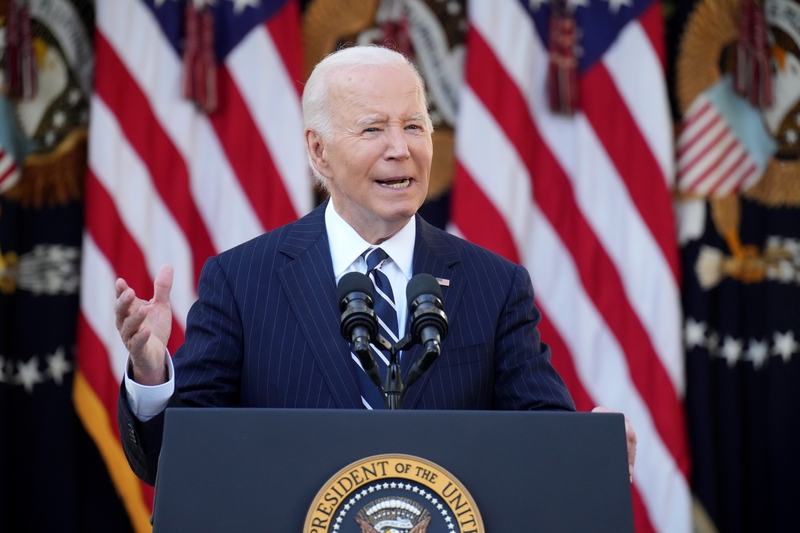
    President Joe Biden delivers remarks on the results of the 2024 election in the Rose Garden at the White House on Nov. 7, 2024 in Washington, D.C. (Photo by Andrew Harnik/Getty Images)

    By:  Ohio Capital Journal

    WASHINGTON — President Joe Biden’s decision to pardon his son from federal gun and tax crimes —and any other offenses over a nearly 11-year period — has drawn outrage from Republicans, while only a few Democrats have criticized the outgoing president.

    In a lengthy Sunday night statement, Biden laid out his reasoning for reversing his long-stated position that he would not give his son a pardon. He argued that Hunter Biden was unfairly targeted by Republicans and noted that investigations began in December 2020, shortly after Biden won the presidential election.

    The pardon would cover offenses which Hunter Biden “has committed or may have committed or taken part in during the period from January 1, 2014 through December 1, 2024,” the executive grant of clemency signed by Biden said.

    “No reasonable person who looks at the facts of Hunter’s cases can reach any other conclusion than Hunter was singled out only because he is my son — and that is wrong,” Biden said.

    Trump and Jan. 6

    President-elect Donald Trump took to his social media site, TruthSocial, where he called the move  “an abuse and miscarriage of Justice!”

    Trump questioned whether Biden’s pardon would include the 29 inmates held in the District of Columbia jail for offenses related to the Jan. 6, 2021 attack on the U.S. Capitol. Of those, 27 are charged with assaulting law enforcement after Trump riled up his supporters to overturn the presidential election he lost.

    “Does the Pardon given by Joe to Hunter include the J-6 Hostages, who have now been imprisoned for years?” Trump wrote.

    With the move, Biden joined Trump and former President Bill Clinton in pardoning family members.

    Biden has one of the lowest clemency rates compared to prior presidents. There are currently more than 10,500 petitions for clemency that were submitted to the White House, according to recent Department of Justice clemency statistics.  

    Trump granted 143 pardons during his first term and so far Biden has granted 26 pardons, including his son’s. Former President Barack Obama granted 212 pardons.

    Advocates and Democrats have pressed Biden to exert his clemency powers on behalf of the 40 men on federal death row before his term expires in January. The push comes as Trump is set to return to the White House. The former president expedited 13 executions of people on federal death row in the last six months of his first term.

    The co-executive directors of Popular Democracy in Action, a progressive advocacy group, Analilia Mejia and DaMareo Cooper, said in a joint statement that Biden should “provide the same compassion he gave his son and pardon the 10,000 clemency petitions on his desk.”

    “The President has the power to provide clemency to thousands of people who have been wronged by the laws governing the judicial system and the political considerations that engendered them,” they said.

    Hunter Biden’s federal charges stem from a 2018 gun purchase. He lied on a form by checking a box that affirmed he was not using illegal drugs, but he did then use drugs while owning the firearm.

    A federal jury convicted him in June and the gun charges carried a possible prison sentence.

    Hunter Biden also pleaded guilty to separate federal tax charges in California.

    Target for Republicans

    Over the course of Biden’s presidency, House Republicans have held hearings and inquiries into the finances of the Biden family, focusing on Hunter Biden in an attempt to broadly stick corruption charges to the president. No evidence has shown any wrongdoing by the president.

    But the pardon gave fresh ammunition to Biden critics, who noted it contradicted what the president had long promised.

    House Committee on Oversight and Accountability Chair James Comer, Republican of Kentucky, in a statement said Sunday that Biden “has lied from start to finish about his family’s corrupt influence peddling activities.”

    “The charges Hunter faced were just the tip of the iceberg in the blatant corruption that President Biden and the Biden Crime Family have lied about to the American people,” Comer said. “It’s unfortunate that, rather than come clean about their decades of wrongdoing, President Biden and his family continue to do everything they can to avoid accountability.”

    Many Republicans criticized Biden for reversing his long-standing stance that he would not pardon his son.

    “President Biden insisted many times he would never pardon his own son for his serious crimes,” House Speaker Mike Johnson, Republican of Louisiana, said on social media. “But last night he suddenly granted a ‘Full and Unconditional Pardon’ for any and all offenses that Hunter committed for more than a decade! Trust in our justice system has been almost irreparably damaged by the Bidens and their use and abuse of it.”

    Selective Democrats object

    Democrats in Congress have largely remained silent about the pardon, but some, including Ohio’s Greg Landsman and Arizona’s Greg Stanton, criticized the move.

    “As a father, I get it,” Landsman wrote on social media. “But as someone who wants people to believe in public service again, it’s a setback.”

    Stanton in a social media post wrote that while he respected Biden, “I think he got this one wrong.”

    “This wasn’t a politically-motivated prosecution,” he said. “Hunter committed felonies, and was convicted by a jury of his peers.”

    Colorado U.S. Sen. Michael Bennet wrote on social media that “President Biden’s decision put personal interest ahead of duty and further erodes Americans’ faith that the justice system is fair and equal for all.”

    Michigan U.S. Sen. Gary Peters, chair of the Senate Homeland Security & Governmental Affairs Committee, wrote on social media that the president’s decision to pardon his son was wrong.

    “A president’s family and allies shouldn’t get special treatment,” Peters said. “This was an improper use of power, it erodes trust in our government, and it emboldens others to bend justice to suit their interests.”

    On CNN, Maryland U.S. Rep. Glenn Ivey said that he had “mixed views” about the pardoning.

    “I know that there was a real strong sentiment in, you know, wanting to protect Hunter Biden from unfair prosecution,” he said. “But this is going to be used against us when we’re fighting the misuses that are coming from the Trump administration.”

    Trump pardons

    Trump himself granted controversial pardons, including of Paul Manafort, a former campaign official who was convicted of tax and bank fraud and alleged interference by Russia in the 2016 presidential election.

    He also pardoned Roger Stone, who was convicted on charges of lying to Congress about his knowledge of Russian efforts to discredit former first lady and 2016 Democratic nominee Hillary Clinton during the 2016 presidential race.

    Trump also pardoned his son-in-law’s father, Charles Kushner, who was charged with tax evasion and retaliating against a federal witness, who was the elder Kushner’s brother-in-law. Trump on Saturday announced his intent to appoint Kushner as the next U.S. ambassador to France.

    GET THE MORNING HEADLINES.

    _____________
    Ariana Figueroa
    Ariana Figueroa

    Ariana covers the nation’s capital for States Newsroom. Her areas of coverage include politics and policy, lobbying, elections and campaign finance.

    Ohio Capital Journal is part of States Newsroom, the nation’s largest state-focused nonprofit news organization.

    MORE FROM AUTHOR

  • Matt Gaetz bows out as Trump’s pick for attorney general

    Matt Gaetz bows out as Trump’s pick for attorney general

    Former U.S. Rep. Matt Gaetz leaves a House Republican Conference meeting at the U.S. Capitol on Oct. 3, 2023 in Washington, D.C. (Photo by Drew Angerer/Getty Images)

    By: Jennifer Shutt and Ariana Figueroa – Ohio Capital Journal

    WASHINGTON — Former Florida Congressman Matt Gaetz announced Thursday he’s withdrawing as President-elect Donald Trump’s planned nominee for attorney general days after securing the appointment.

    Gaetz’s path to Senate confirmation was highly unlikely following years of investigations about alleged drug usage and payments for sex, including with an underage girl. He submitted his resignation to Congress last week.

    “While the momentum was strong, it is clear that my confirmation was unfairly becoming a distraction to the critical work of the Trump/Vance Transition,” Gaetz wrote in a social media post. “There is no time to waste on a needlessly protracted Washington scuffle, thus I’ll be withdrawing my name from consideration to serve as Attorney General. Trump’s DOJ must be in place and ready on Day 1.”

    Trump posted on social media afterward that he “greatly” appreciated “the recent efforts of Matt Gaetz in seeking approval to be Attorney General.”

    “He was doing very well but, at the same time, did not want to be a distraction for the Administration, for which he has much respect,” Trump wrote. “Matt has a wonderful future, and I look forward to watching all of the great things he will do!”

    When asked if the Trump-Vance transition team had another nominee choice lined up, and whether they viewed the Gaetz withdrawal as a setback, spokesperson Karoline Leavitt did not provide details.

    “President Trump remains committed to choosing a leader for the Department of Justice who will strongly defend the Constitution and end the weaponization of our justice system. President Trump will announce his new decision when it is made,” Leavitt told States Newsroom in an emailed statement.

    The House Ethics Committee voted along party lines Wednesday not to release its report on Gaetz, following more than three years of investigation. Gaetz has repeatedly denied any wrongdoing, including the allegations that he had sex with a minor.

    Meetings with senators

    Trump’s running mate, Ohio Sen. J.D. Vance, spent Wednesday shuffling Gaetz between meetings with Republicans on the Senate Judiciary Committee, which would have held his confirmation hearing. Republicans will control the Senate in the new session of Congress beginning in January.

    South Carolina Sen. Lindsey Graham, the top Republican on the Judiciary Committee, wrote on social media that he respected Gaetz’s decision to withdraw his name from consideration as AG.

    “I look forward to working with President Trump regarding future nominees to get this important job up and running,” Graham said.

    GOP Sen. Chuck Grassley, incoming Judiciary Committee chair, posted the following on X: “I respect Gaetz decision &look fwd 2helping PresTrump confirm qualified noms 2reform Dept of Justice &bring TRANSPARENCY/ACCOUNTABILITY Trump’s mission = DRAIN THE SWAMP& I would add get some1 who will answer my hundreds of outstanding oversight letters sitting at Biden DOJ/FBI.”

    Grassley’s staff referred States Newsroom to the social media post when the outlet reached out for comment.

    The offices of Sens. John Kennedy of Louisiana and Tom Cotton of Arkansas, fellow Senate Judiciary Committee Republicans, declined to comment.

    Gaetz’s future is unclear, given that he resigned from the U.S. House last week and notified the chamber he didn’t plan to take the oath of office for the upcoming 119th Congress.

    He first joined the House in January 2017 and led efforts to remove former House Speaker Kevin McCarthy from that role last year, setting off a month-long stalemate within the House Republican Conference over who should lead the party.

    The race to fill his empty seat in a special election has already attracted six candidates, mostly Republicans in a heavily conservative-leaning district.

    Gaetz could jump into the race for his old seat, possibly winning a place back in the House of Representative next year following the special election.

    He could also try to take the oath of office when the next session of Congress begins on Jan. 3, since he wrote in his resignation letter that he did “not intend to take the oath of office for the same office in the 119th Congress, to pursue the position of Attorney General in the Trump Administration.”

    That would give the House Ethics Committee jurisdiction to complete its report on Gaetz and release it publicly.

    AG oversees Department of Justice

    The attorney general is responsible for overseeing the Department of Justice, which includes the federal government’s top law enforcement agencies as well as prosecutors.

    The Bureau of Alcohol, Tobacco, Firearms and Explosives, or ATF, Drug Enforcement Administration, Federal Bureau of Investigation, Federal Bureau of Prisons, Office for Victims of Crime, Office on Violence Against Women and U.S. Attorneys’ offices are among the 40 entities within the DOJ and its 115,000-person workforce.

    Congress approved $37.52 billion for the Department of Justice in the most recent full-year spending bill.

    Trump had two attorneys general during his first term as president. He first nominated former Alabama Sen. Jeff Sessions, whom Trump later fired amid disputes, and then Bill Barr.

    Ashley Murray contributed to this story.

    Last updated 3:03 p.m., Nov. 21, 2024


    Jennifer Shutt
    Jennifer Shutt

    Jennifer covers the nation’s capital as a senior reporter for States Newsroom. Her coverage areas include congressional policy, politics and legal challenges with a focus on health care, unemployment, housing and aid to families.

    Ohio Capital Journal is part of States Newsroom, the nation’s largest state-focused nonprofit news organization.

    MORE FROM AUTHOR

    Ariana Figueroa
    Ariana Figueroa

    Ariana covers the nation’s capital for States Newsroom. Her areas of coverage include politics and policy, lobbying, elections and campaign finance.

    Ohio Capital Journal is part of States Newsroom, the nation’s largest state-focused nonprofit news organization.

    MORE FROM AUTHOR

  • BREAKING: Trump picks Ohio U.S. Sen. J.D. Vance as his running mate

    BREAKING: Trump picks Ohio U.S. Sen. J.D. Vance as his running mate

    BY:  AND  Ohio Capital Journal

    MILWAUKEE, Wis. — Donald Trump announced Ohio U.S. Sen. J.D. Vance as his running mate Monday during the first day of the Republican National Convention, capping off months of speculation about who would get the nod as his vice presidential pick.

    Vance has not been a member of Congress long, having less than two years experience as a senator and having voted against major bipartisan bills throughout his tenure in the upper chamber.

    Before becoming a U.S. lawmaker, Vance served in the Marine Corps during the Iraq war, worked as a venture capitalist and wrote a book about growing up in Middletown, Ohio. He holds a law degree from Yale.

    “After lengthy deliberation and thought, and considering the tremendous talents of many others, I have decided that the person best suited to assume the position of Vice President of the United States is Senator J.D. Vance of the Great State of Ohio,” Trump, who will be nominated as the 2024 Republican presidential candidate on Thursday night, posted on social media.

    “J.D. has had a very successful business career in Technology and Finance, and now, during the Campaign, will be strongly focused on the people he fought so brilliantly for, the American Workers and Farmers in Pennsylvania, Michigan, Wisconsin, Ohio, Minnesota, and far beyond….,” Trump added.

    Kevin Roberts, president of the conservative Heritage Foundation, received the news while he was speaking to reporters at the foundation’s all-day policy fest in downtown Milwaukee.

    “You will see a broad smile on my face,” Roberts said, adding that he and Vance are “good friends” and that he “personifies” Heritage’s values.

    “He listens. He’s thoughtful. He’s funny. He and I had a similar upbringing, challenging childhood, so we hit it off like that when we met. He’s obviously going to be his own man. He’s got to work with our conservative standard bearer,” Roberts said. “The second thing is in terms of policy, he understands the moment we’re in in this country, which is that we have a limited amount of time to implement great policy on behalf of forgotten Americans.”

    Trump’s former Vice President Mike Pence has distanced himself from Trump since the Jan. 6, 2021, attack on the U.S. Capitol building — requiring Trump to find a different person to join him on the ticket this year.

    Pence was in the Capitol that day, when a pro-Trump mob attacked police officers, broke into building and disrupted Congress’ certification of the electoral college votes for President Joe Biden.

    Pence has been critical of how the Republican Party has changed under Trump’s leadership, including rejecting how the platform evolved on abortion this year.

    The Biden-Harris campaign immediately slammed the selection of Vance.

    “Donald Trump picked J.D. Vance as his running mate because Vance will do what Mike Pence wouldn’t on January 6: bend over backwards to enable Trump and his extreme MAGA agenda, even if it means breaking the law and no matter the harm to the American people,” said Biden-Harris 2024 Chair Jen O’Malley Dillon.

    “Over the next three and a half months, we will spend every single day making the case between the two starkly contrasting visions Americans will choose between at the ballot box this November: the Biden-Harris ticket who’s focused on uniting the country, creating opportunity for everyone, and lowering costs; or Trump-Vance – whose harmful agenda will take away Americans’ rights, hurt the middle class, and make life more expensive  – all while benefiting the ultra-rich and greedy corporations.”

    Vance background

    Vance was born in Middletown, Ohio in August 1984. After graduating from high school in 2003 he enlisted in the Marine Corps, later deploying to the Iraq War.

    He attended Ohio State University, where he received a bachelor’s degree in political science and philosophy in 2009. Vance went on to attend Yale Law School, graduating in 2013 before working for the law firm Sidley Austin LLP.

    Vance gained national attention with his 2016 memoir, “Hillbilly Elegy: A Memoir of a Family and Culture in Crisis,” which tells the story of him growing up in poverty in the Rust Belt. However, the book faced backlash from many historians and journalists over his depictions of Appalachia and the people who live there.

    The 39-year-old worked in San Francisco in the tech industry as a venture capitalist. He served as a principal at one of the firms of Peter Thiel, the co-founder of PayPal.

    Vance later moved back to Ohio and raised more than $90 million to co-found a venture capital firm in Cincinnati, Narya Capital, which received financial backing from Thiel.

    Vance ran his first campaign for U.S. Senate in 2022, defeating Democratic candidate and former U.S. House Rep. Tim Ryan with 53% of the vote.

    Since being sworn into office in January 2023, Vance has voted against several big-ticket legislative items, including the law that raised the debt limit, the national defense policy bill and two must-pass government funding packages.

    Aid to Ukraine, Israel, Taiwan

    Vance also voted against legislation that held $95 billion in military and humanitarian assistance for Ukraine, Israel and Taiwan as well as a ban on TikTok within the United States unless the social media app’s Chinese parent company sold it.

    Vance was among the 18 senators who voted against that emergency spending bill heading to President Joe Biden’s desk. Another 79 senators voted to approve the legislation.

    During floor debate on the supplemental spending package, Vance spoke out against sending more aid and arms to Ukraine, arguing that there were parallels between its fight to eject Russia from its borders and the U.S. war in Iraq.

    “And the same exact arguments are being applied today, that you are a fan of Vladimir Putin if you don’t like our Ukraine policy, or you are a fan of some terrible tyrannical idea because you think maybe America should be more focused on the border of its own country than on someone else’s,” Vance said.

    “This war fever, this inability for us to actually process what is going on in our world to make rational decisions is the scariest part of this entire debate,” he added.

    Bipartisan efforts

    Vance has also worked across the aisle on bipartisan legislation during his somewhat brief tenure in the U.S. Senate.

    He sponsored a bill alongside Ohio Sen. Sherrod Brown, Pennsylvania Sens. Bob Casey and John Fetterman, all three of whom are Democrats, to address rail safety in the aftermath of the Norfolk Southern train derailment in East Palestine.

    Vance wrote in a statement released when the bill was unveiled in March 2023 that with the legislation “Congress has a real opportunity to ensure that what happened in East Palestine will never happen again.”

    “We owe every American the peace of mind that their community is protected from a catastrophe of this kind,” Vance wrote. “Action to prevent future disasters is critical, but we must never lose sight of the needs of the Ohioans living in East Palestine and surrounding communities.”

    The bipartisan legislation has yet to advance in the Senate to either a committee markup or a floor vote.

    Ashley Murray contributed to this report.


    Jennifer Shutt
    JENNIFER SHUTT

    Jennifer covers the nation’s capital as a senior reporter for States Newsroom. Her coverage areas include congressional policy, politics and legal challenges with a focus on health care, unemployment, housing and aid to families.

    Ohio Capital Journal is part of States Newsroom, the nation’s largest state-focused nonprofit news organization.

    MORE FROM AUTHOR

    Ariana Figueroa
    ARIANA FIGUEROA

    Ariana covers the nation’s capital for States Newsroom. Her areas of coverage include politics and policy, lobbying, elections and campaign finance.

    Ohio Capital Journal is part of States Newsroom, the nation’s largest state-focused nonprofit news organization.

    MORE FROM AUTHOR

  • Parents have no right to allow their children’s gender transition, Republicans say

    Parents have no right to allow their children’s gender transition, Republicans say

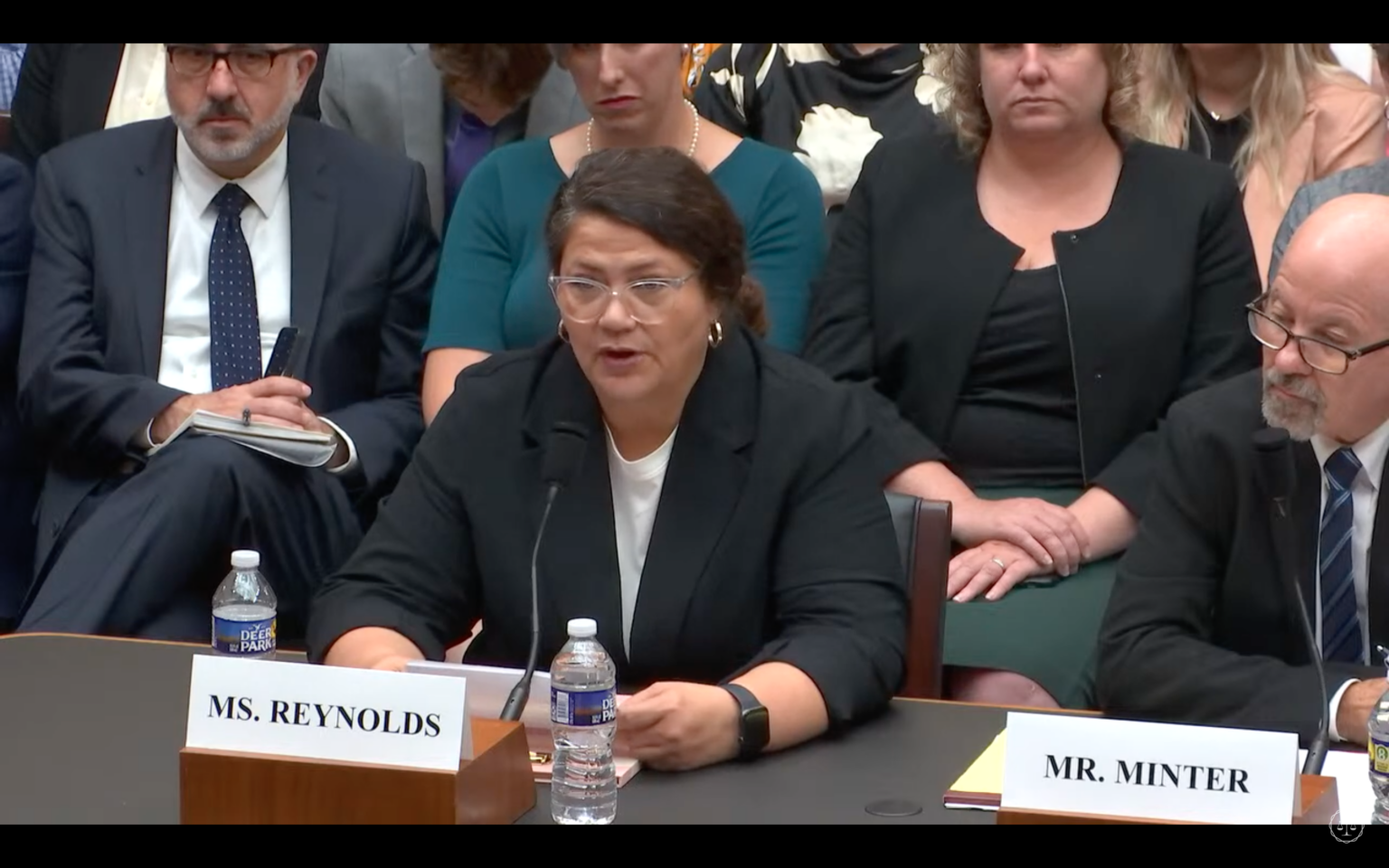
    Myriam Reynolds of Texas, the mother of a transgender son, said before he received care, he was unhappy and she has “no doubt that the health care my son accessed was life-saving.” (Screenshot from committee webcast)


    WASHINGTON — U.S. House Republicans on a panel for limited federal government on Thursday argued that parents should not be allowed to let their transgender children have access to gender-affirming care.

    “A parent has no right to sexually transition a young child,” the chair of the House Judiciary Subcommittee on the Constitution and Limited Government, Rep. Mike Johnson of Louisiana, said at a hearing on transgender youth. “Our American legal system recognizes the important public interest in protecting children from abuse and physical harm. No parent has a constitutional right to injure their children.”

    Johnson, and several other Republicans, floated the idea that the federal government should get involved, but did not offer specifics on potential legislation. They argued that gender-affirming surgery should not be allowed for transgender minors. That type of surgery is rarely performed on patients under 18.

    In Johnson’s home state, the Louisiana Legislature in early July voted to override a veto from Gov. John Bel Edwards, allowing a ban on gender-affirming health care for transgender youth to become law.

    Thursday’s hearing reflects a broader trend. At least 21 Republican-led states have passed laws banning or restricting gender-affirming care for minors, according to the Movement Advancement Project, an organization that tracks LGBTQ+ state policies.

    The wave of legislation has had a chilling effect on health care providers, who are wary of providing other care to transgender youth, such as mental health and other medical care.

    Gender-affirming care can be social affirmations such as adopting a hairstyle or clothes that align with a transgender youth’s gender identity, or the use of puberty blockers and hormone therapy. Typically, in adulthood it can be gender-affirming surgery.

    “When our Republican colleagues allege that gender-affirming care raises particular dangers or due process issues, that is fearmongering at its worst,” the top Democrat on the panel, Rep. Mary Gay Scanlon of Pennsylvania, said. “Picking on already vulnerable kids in order to stir up chaos that they hope to ride to success at the ballot box.”

    Democrats said the hearing is a pattern of GOP lawmakers attacking transgender kids and their families.

    Scanlon said that barring parents from making those decisions would be in violation of their parental rights. Republicans passed legislation for a federal “Parents Bill of Rights” in March pertaining to access to education-related materials.  

    State laws

    Several federal courts have either blocked or struck down state laws banning gender-affirming care for transgender youth, such as in AlabamaArkansasFlorida and Indiana.

    The top Democrat on the House Judiciary Committee, Rep. Jerry Nadler of New York, asked one of the Democratic witnesses, Shannon Minter, an attorney, what the federal courts have concluded about states moving to pass bans on gender-affirming care.

    Minter, who is the legal director of the National Center for Lesbian Rights and is also transgender, said the federal courts have found that those state laws “severely burden parents’ fundamental rights to make medical decisions for their own children.”

    “They’re blatantly discriminatory,” he said. “They violate the guarantee of equal protection because they do something that has just never been done before in this country, which is single out a particular group of people, transgender young people, in order to deny them medical care.”

    Despite the federal court cases, Johnson argued that states have the right to regulate gender-affirming care, such as puberty blockers.

    Puberty blockers were first approved by the Food and Drug Administration in 1993 to temporarily pause puberty in children who were going through it too early. When used in gender-affirming care for transgender youth, those adolescents can choose to start hormone therapy, in which they receive either estrogen or testosterone treatments, whichever one that aligns with their gender identity.

    “We’re limited government conservatives, right,” Johnson said. “We obviously recognize that parents have a natural and fundamental right to the bringing up of their children to make decisions with regard to their care and custody and control. But at the same time, our legal system in this country, our law does not allow a parent to physically or mentally abuse or harm a child.”

    May Mailman a senior legal fellow at the Independent Woman’s Law Center, a conservative advocacy organization, said states should be able to regulate who can have access to transgender health care.

    “Unfortunately, I think you’re seeing this movement that states should not be able to regulate the practice of medicine and somehow federal judges should,” she said.

    Life-saving care

    One of the Democratic witnesses, Myriam Reynolds, is the mother of a transgender son. She said before he received care, he was unhappy and she has “no doubt that the health care my son accessed was life-saving.”

    Reynolds said any health care provided to her son was through slow and careful decisions that were approved by her and her husband and that their son always had the opportunity to stop if he wanted to. He received puberty blockers as well as counseling.

    “When my child came out, as transgender, there was not the hysteria that there is now about this,” she said. “To be looked at as a child abuser, or you know an indoctrinate or something like that, it feels very hateful and divisive.”

    Texas Republican Rep. Wesley Hunt said that instead of parents jumping to gender-affirming care when a child tells them they have gender dysphoria, meaning their gender identity differs from the sex they were assigned at birth, they should instead question “the root cause of that feeling.”

    He compared that decision to his toddlers, whom if they could “have their way, they would have ice cream for breakfast, lunch and dinner and for every single meal in between. Oh, the wisdom of children.”

    “In a sane country, we know that children aren’t mature enough to make adult decisions that will impact the rest of their lives, that’s why we have parents,” he said. “Children cry for ice cream, but as parents, we have the wisdom to know that ice cream is not in their best interests, particularly their long-term interest.”

    He said that in 2024, Republicans will have an opportunity to “stop all this foolishness.”

    Florida Republican Rep. Matt Gaetz, who is not a member of the panel, took aim at a recently passed law in Washington that protects transgender youth seeking gender-affirming care who are estranged from their parents.

    “I am against transitioning children against the will of their parents,” he said.

    Title IX

    Several of the Republican witnesses criticized the Department of Education’s new rule that updates Title IX to allow transgender youth who attend public schools from competing in sports that align with their gender identity.

    The rule came as states with Republican state legislatures have passed laws banning transgender students from competing in sports that align with their gender identity.

    One of the witnesses, Paula Scanlan, is a former NCAA athlete who swam at the University of Pennsylvania and shared a locker room with Lia Thomas, the first openly trans woman to compete in the NCAA women’s division. Scanlan said she opposed the Biden administration’s changes to Title IX and that transgender women should not be allowed to compete in sports that align with their gender identity.

    House Republicans recently passed legislation to ban transgender girls from competing in the sports that align with their gender identity, a move that mirrors legislation passed by Republican-controlled state legislatures.

    Mailman, with the Independent Woman’s Law Center, said that gender ideology has destroyed “women and girls, by dissolving legal protections for women in athletics.”

    Reynolds said as soon as her son came out as transgender, he stopped playing sports because of the rhetoric about transgender athletes competing in sports that align with their gender identity.

    “That left a big hole in his life,” she said.


    Ariana Figueroa
    ARIANA FIGUEROA

    Ariana covers the nation’s capital for States Newsroom. Her areas of coverage include politics and policy, lobbying, elections and campaign finance.

    MORE FROM AUTHOR

  • D.C. nears Jan. 6 anniversary with warnings about extremism, awards for courage

    D.C. nears Jan. 6 anniversary with warnings about extremism, awards for courage

    BY: ARIANA FIGUEROA Ohio Capital Journal – JANUARY 5, 2023 2:58 PM

    WASHINGTON – On the eve of the second anniversary of the U.S. Capitol insurrection, congressional Democrats and dozens of veterans on Thursday in a press conference called on incoming House Republican leaders to condemn political violence and hold their members who supported the attack accountable for their actions.

    Meanwhile, President Joe Biden is scheduled on Friday to host a ceremony where he will speak about the Jan. 6 attack, and award medals to a dozen people who “demonstrated courage and selflessness during a moment of peril for our nation,” according to a White House official.

    They will include:

    • Election workers Shaye Moss and Ruby Freeman of Fulton County, Georgia, who were targeted by Trump administration officials and falsely accused of voter fraud.
    • Rusty Bowers, the former speaker of the Arizona House who resisted pressures to overturn 2020 election results.
    • Jocelyn Benson, the Michigan secretary of state who faced armed protesters outside her home when she resisted pressure over election results.
    • Al Schmidt, a former GOP commissioner in Philadelphia and member of the Philadelphia County Board of Elections who during the 2020 election faced threats for defending the integrity of the election.

    At the veterans’ press event near the Capitol Reflecting Pool, House members Jason Crow of Colorado, Chrissy Houlahan of Pennsylvania and Mikie Sherrill of New Jersey talked about how their values to uphold democracy started with their military service when they took an oath to protect the Constitution.

    They voiced their concerns about how many veterans were part of the Jan. 6 mob.

    “When you raise your right hand, and you take that oath to give everything to your country, that is a lifetime commitment,” Crow said. “A lifetime commitment and uniform, but continuing to fight for and preserve our democracy, and never has that been more important than the era that we live in right now.”

    Extremism worries

     U.S. Rep. Chrissy Houlahan, D-Penn., with military veterans at the U.S. Capitol on Thursday, Jan. 5, 2023. Houlahan spoke at a press conference about the second anniversary of the Jan. 6, 2021 attack on the Capitol calling on the House Republican majority to denounce political violence. Photo by Ariana Figueroa/States Newsroom.

    House Democrats have held hearings and issued reports that have shown the growing worries about extremism among veterans and have recommended the U.S. Department of Veteran Affairs protect veterans from those groups. Separately, an analysis by NPR found that 1 in 5 of the defendants charged for their involvement in the riot were veterans.

    “While the individuals who descended upon and disrespected these storied halls represent a very small fringe faction of the population, it is no secret that they were inspired by some of the most senior officials in our government who failed to accept the results of the 2020 election,” said Houlahan.

    She, Crow and Sherrill were in the House chamber during the insurrection, when hundreds of pro-Trump supporters stormed the Capitol in an attempt to prevent members of Congress from certifying the results of the 2020 presidential election.

    President Donald Trump was impeached for a second time for his role in the insurrection, and a special committee investigating the attack unanimously voted to refer him and others to the Justice Department for potential criminal charges, including inciting or aiding an insurrection.

    The special House panel investigating Jan. 6 found that Trump was directly involved in efforts to pressure state officials in Georgia, Arizona and elsewhere to overturn the 2020 election results in their states.

    White House awards

    Michael Fanone, who served as a Metropolitan Police Department Officer and defended the Capitol on Jan. 6, 2021, suffering injuries, spoke at a press conference on the second anniversary of the attack on the Capitol, calling on the House Republican majority to denounce political violence. Photo by Ariana Figueroa/States Newsroom.
     Michael Fanone, who served as a Metropolitan Police Department Officer and defended the Capitol on Jan. 6, 2021, suffering injuries, spoke at a press conference on the second anniversary of the attack on the Capitol, calling on the House Republican majority to denounce political violence. Photo by Ariana Figueroa/States Newsroom.

    This will be the first time Biden will give out the Presidential Citizens Medal, which is awarded to individuals who have done an extraordinary act of service for the United States or fellow Americans.

    Among the recipients will be Eugene Goodman, the U.S. Capitol Police officer who is credited with diverting rioters from the Senate floor, allowing senators and staff to evacuate.

    The president will also posthumously award a medal to the late Brian Sicknick, a  Capitol Police officer who was injured while responding to the Jan. 6 attack and later died.

    Michael Fanone, a Metropolitan Police Department Officer who responded to the Jan. 6 attack and was injured, will also receive a medal. Fanone later resigned, and has continued to put pressure on congressional Republicans to acknowledge their role in spreading the false narrative that the 2020 presidential election was stolen.

    He most recently sent a letter signed by more than 1,000 veterans to top Republican leaders on Wednesday, calling on them to denounce political violence and the Jan. 6 attack.

    Fanone, who was at the press event, said he wants MAGA Republicans to know “that myself and thousands, tens of thousands of veterans and members of the law enforcement community are paying very close attention to the things that they’ve said.”

    He singled out Reps. Marjorie Taylor Greene of Georgia and Kevin McCarthy of California, who is struggling to garner enough votes to secure the position of speaker of the House.

    “This type of chaos will happen every single day in the House as some of the most extreme politicians our country has ever seen hold our democracy hostage,” Fanone said about the speaker race that has continued for three days.

    Without a speaker, no members of Congress can be sworn in and the chamber cannot conduct government business such as committee meetings or constituent services.

    (McCarthy elected House speaker in rowdy post-midnight vote.)

    The veterans’ press conference was hosted by Courage for America, an initiative organized by progressives to speak out against extremism and counter the GOP House, and Common Defense, a grassroots organization that works to promote progressive ideas in the veteran community.

    A ‘new sense of hope’

    Sherrill, who served in the Navy for nine years, said she remembers being crouched in the House gallery, a cell phone in one hand, calling her loved ones, and a gas mask in the other.

    “I had this great sense of sorrow that it had come to this,” she said about veterans who attacked the Capitol. “The other side of my brain had really a sense of rage. How dare they?”

    “And yet as I sit here today … I think about how far we’ve come with the January 6 hearings,” she said, adding that many people who ran as election deniers lost their campaigns.

    “I feel a new sense of hope,” Sherrill said. “Our democracy is stronger and more resilient than ever, and so it’s with almost a sense of joy, that I start this new term in Congress, because I know the American people have our back.”

  • Student loan repayment pause extended by White House amid legal battles over relief plan

    Student loan repayment pause extended by White House amid legal battles over relief plan

    BY: ARIANA FIGUEROA – Ohio Capital Journal

    The Department of Education announced on Tuesday it is extending the pandemic-era pause on federal student loan repayments until June 30 while legal challenges to the administration’s student debt relief program are fought over in the courts.

    The agency said if the student debt relief program has not been put in place by June 30, and if litigation is still tied up in the courts, student loan payments will begin 60 days after that.

    “Payments will resume 60 days after the Department is permitted to implement the program or the litigation is resolved, which will give the Supreme Court an opportunity to resolve the case during its current Term,” the department said in a statement.  “If the program has not been implemented and the litigation has not been resolved by June 30, 2023 — payments will resume 60 days after that.”

    Earlier the administration had said the pandemic-era pause would expire on New Year’s Eve. Two lawsuits blocking the Biden plan, including one brought by six GOP-led states, have been appealed by the Justice Department, but it’s unclear how long the legal process could take.

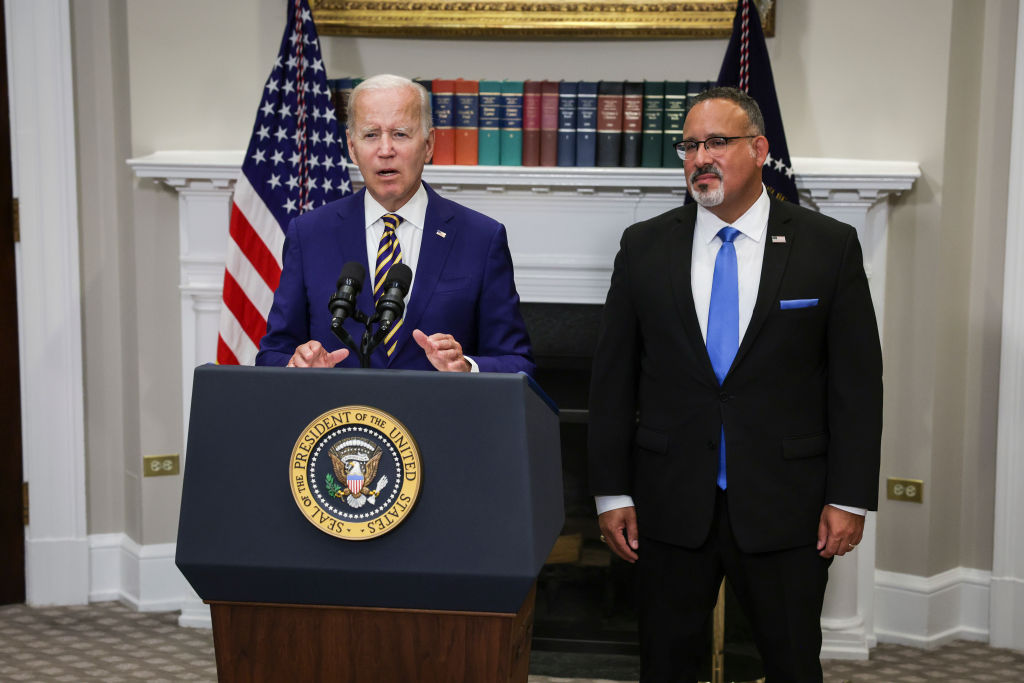
    “We’re extending the payment pause because it would be deeply unfair to ask borrowers to pay a debt that they wouldn’t have to pay, were it not for the baseless lawsuits brought by Republican officials and special interests,” U.S. Secretary of Education Miguel Cardona said in a statement.

    President Joe Biden, in a Tuesday tweet, said the extension will give “the Supreme Court time to hear the case in its current term.”

    “I’m confident that our student debt relief plan is legal,” he said on Twitter.

    Before the announcement, more than 200 advocacy groups had urged Biden to extend the pause.

    In a Monday letter, the groups argued that if student loan repayments restart, it would be a financial setback for borrowers, especially at a time of record high inflation.

    “We, the undersigned 225 organizations, urge you to immediately extend the payment pause until your Administration is able to fully implement debt relief for all eligible borrowers and to continue to use every legal authority at your disposal to make this relief real,” according to the letter.

    “We cannot allow these blatantly political lawsuits to throw millions of borrowers into financial catastrophe,” the letter said. “Throwing millions of borrowers back into repayment as the state of debt relief remains uncertain is a recipe for disaster and will result in widespread confusion and set borrowers up for failure.”

    Most of the organizations that signed onto the letter include labor groups like the AFL-CIO, legal organizations like the ACLU and NAACP, and debt cancellation advocacy groups such as the Debt Collective and Student Debt Crisis Center.

    Multiple extensions

    The Trump administration implemented the pause on student loan repayments due to the coronavirus pandemic and the Biden administration has extended it multiple times.

    A federal appeals court issued a nationwide injunction that barred the Biden administration from carrying out its student debt relief plan following the challenge by the six GOP-led states — Nebraska, Missouri, Arkansas, Iowa, Kansas and South Carolina.

    The Biden administration has asked the U.S. Supreme Court to vacate the nationwide injunction.

    “The Eighth Circuit’s erroneous injunction leaves millions of economically vulnerable borrowers in limbo, uncertain about the size of their debt and unable to make financial decisions with an accurate understanding of their future repayment obligations,” Solicitor General Elizabeth Prelogar wrote in the filing to the U.S. Supreme Court.

    In late August, Biden announced he would cancel up to $20,000 in federal student loan debt for Pell Grant borrowers and up to $10,000 for all other borrowers with an income of less than $125,000 for an individual and $250,000 for a household.

    The program would only apply to current borrowers, not future ones, and income levels for the 2020 and 2021 tax years would be considered. Student loan borrowers who have private student loans would not be eligible.

    The attorneys general from the states that launched the legal challenge argued that the loan relief program threatens those states’ future tax revenues and that the plan overrode congressional authority.

    ​​More than 43 million Americans have student loan debt, and the Federal Reserve estimates that the total U.S. student loan debt is more than $1.76 trillion.

    The three-panel judge from the 8th Circuit Court of Appeals in St. Louis put the injunction in place “until further order of this court or the Supreme Court of the United States.”

    Those judges are Bobby E. Shepherd and Ralph R. Erickson, both President George W. Bush appointees, and L. Steven Grasz, a President Donald Trump appointee.

    Following the decision, White House press secretary Karine Jean-Pierre said the White House believes it has the legal authority to carry out the program.

    “The Administration will continue to fight these baseless lawsuits by Republican officials and special interests and will never stop fighting to support working and middle class Americans,” she said in a statement.

    26 million applicants

    More than 26 million student loan borrowers have applied for the program, and 16 million have been accepted, according to the Department of Education.

    The nonpartisan Congressional Budget Office found that the program would add $400 billion to the national deficit over the span of 30 years. The agency found that the pause on federal student loan repayments has cost $20 billion from September to December 2022.

    Adam Looney, a senior fellow at the Brookings Institute — a left-leaning think tank — said while the cost seems high, for borrowers who qualify it comes out to a monthly average savings of about $59.

    Looney previously was a senior economist for public finance and tax policy with former President Barack Obama’s Council of Economic Advisers, and was an economist at the Federal Reserve Board.

    “It’s like a tax cut,” Looney said of student loan borrowers who would qualify for debt relief.

    Second lawsuit

    The Biden administration stopped accepting applications for student debt relief following a second decision from a federal judge in Texas who separately ruled the program was unlawful.

    In Fort Worth, U.S. District Judge Mark Pittman, an appointee of former President Donald Trump, ruled that the program was an “unconstitutional exercise of Congress’s legislative power.” He ruled in favor of two borrowers, backed by a conservative advocacy group, who brought the challenge.

    The Department of Justice has already filed an appeal to that ruling.

    Pittman wrote in his opinion that “[w]hether the Program constitutes good public policy is not the role of this Court to determine.”

    Sabrina Calazans, the outreach director at the Student Debt Crisis Center, said prior to Tuesday’s announcement that the Biden administration should resume its pause on student loan repayment. The center also signed onto the letter to the White House from the more than 200 organizations.

    “We’re advocating for an extension to the payment pause until student debt cancellation is applied to borrowers’ accounts,” she said. “We believe that borrowers should be able to get their debt canceled and not have to make any payments until that happens because they’ve been promised this relief.”

    Calazans, who has student loan debt herself — federal and private loans — and is a first-generation college student, said the pause on repayments has been a lifeline for her and her family. The pause did not include private loans, which she has, so she’s had to continue those payments throughout the pandemic.

    “Folks were struggling before the pandemic started,” she said of student loan debt. “This was already a crisis that people were dealing with beforehand, so this has been around for a long time, not just recently.”

    Calazans said those student loan borrowers who applied to the Department of Education for debt relief are starting to get emails that their applications for student debt cancellation were approved, but the lawsuits are blocking it.

    “Folks are excited about the prospect of having their debt canceled — whether it’s all of it or a portion of it — and now that hope that they had is now suddenly stopped for now because of the blocking of this plan,” she said. “Borrowers are in this limbo.”

    Emails sent out

    The Department of Education has sent out emails to student loan borrowers who applied, and were approved for the debt relief program with the subject line: “Your Student Loan Debt Relief Application Has Been Approved.”

    However, the body of the email reads: “Unfortunately, a number of lawsuits have been filed challenging the program, which have blocked our ability to discharge your debt at present.”

    “We believe strongly that the lawsuits are meritless, and the Department of Justice has appealed on our behalf,” according to the email. “We will keep your application information and will continue our review of your eligibility if and when we prevail in court. We will update you when there are new developments.”

  • Biden student debt relief plan thrown out by Texas judge; new applications halted

    Biden student debt relief plan thrown out by Texas judge; new applications halted

    BY: ARIANA FIGUEROA – Ohio Capital Journal

    WASHINGTON — Late Thursday a federal judge in Texas struck down the Biden administration’s student debt relief plan, ruling that the program is unlawful, in a blow to 16 million student debt borrowers already approved for relief.

    The U.S. Department of Education now is no longer accepting applications for the program, according to the student aid federal website.

    “Courts have issued orders blocking our student debt relief program,” according to the website. “As a result, at this time, we are not accepting applications. We are seeking to overturn those orders.  If you’ve already applied, we’ll hold your application.”

    In Fort Worth, U.S. District Judge Mark Pittman, an appointee of former President Donald Trump, in his 26-page judgment called the program an “unconstitutional exercise of Congress’s legislative power” and ruled in favor of two borrowers, backed by a conservative advocacy group, who brought the challenge.

    The Department of Justice has already filed an appeal of the ruling, White House press secretary Karine Jean-Pierre said in a statement.

    “The President and this Administration are determined to help working and middle-class Americans get back on their feet, while our opponents — backed by extreme Republican special interests — sued to block millions of Americans from getting much-needed relief,” Jean-Pierre said.

    She added that the Department of Education will continue to hold onto the information of student debt borrowers who applied for the program — about 26 million — so the department “can quickly process their relief once we prevail in court.”

    Of those 26 million borrowers who applied for the program that launched in October, 16 million have been approved, she said.

    The debt relief program was initially halted by an appeals court in late October following an emergency request from six Republican-led states who argued that the president does not have the authority to wipe out debt, and it should be left to Congress to make that decision. The court is considering the request by the states for an injunction.

    That lawsuit was filed on behalf of Republican Iowa Gov. Kim Reynolds, and by Republican attorneys general in Nebraska, Arkansas, Missouri, South Carolina and Kansas.

    Legal barrage

    Since the White House’s announcement of the program last month, there have been multiple challenges to it.

    The plaintiffs in Thursday’s case argued that the Biden administration did not follow the proper rule making procedure and was unlawful.

    The conservative advocacy group that backed the plaintiffs is the Job Creators Network Foundation, which was founded by billionaire Bernie Marcus, who also co-founded Home Depot.

    Elaine Parker, the president of Job Creators Network Foundation, said in a statement that Thursday’s ruling “protects the rule of law which requires all Americans to have their voices heard by their federal government.”

    “This attempted illegal student loan bailout would have done nothing to address the root cause of unaffordable tuition: greedy and bloated colleges that raise tuition far more than inflation year after year while sitting on $700 billion in endowments,” Parker said.  “We hope that the court’s decision today will lay the groundwork for real solutions to the student loan crisis.”

    One of the two plaintiffs, Myra Brown, had a business loan forgiven through the Biden administration’s Paycheck Protection Program. She owns the Texas business Desert Star Enterprises Inc, which was granted a $48,000 loan, where $47,996 was forgiven on April 27, 2022.

    Under the Biden administration’s plan, student loan borrowers can qualify for up to $10,000 in loan forgiveness, while the recipients of Pell Grants can apply for up to $20,000 in debt relief. The program is intended to assist borrowers who, in 2021, earned no more than $125,000 per year, and couples who earned up to $250,000 per year.

    ​​More than 43 million Americans have student loan debt, and the Federal Reserve estimates that the total U.S. student loan debt is more than $1.76 trillion.

    The non-partisan Congressional Budget Office in September found that as of June, the White House’s debt forgiveness program would eliminate about $430 billion of the $1.6 trillion of student debt. The report in June preceded another increase in the total debt to $1.76 trillion.

    The Texas federal judge, Pittman, wrote in his opinion that “[w]hether the Program constitutes good public policy is not the role of this Court to determine.”

    He determined that the student loan debt forgiveness program was one of the “the largest exercises of legislative power without congressional authority in the history of the United States.”

    Pittman said that the HEROES Act did not grant the approval of the $400 billion student loan forgiveness program.  The Biden administration relied on the 2003 HEROES Act while enacting its debt relief program, because that law provides loan assistance to military personnel.

    “In this country, we are not ruled by an all-powerful executive with a pen and a phone. Instead, we are ruled by a Constitution that provides for three distinct and independent branches of government,” Pittman wrote.

    Legal standing questions

    Another lawsuit filed against Biden’s student loan forgiveness program has been dismissed due to lack of standing.

    The Brown County Taxpayers Association, a Wisconsin organization that advocates for conservative economic policy on behalf of its members, brought an emergency request to block the program to Justice Amy Coney Barrett — who is assigned to the 7th Circuit Court of Appeals — but was denied.

    A federal district court in Missouri threw out the case by the six Republican-led states that argued the Biden administration violated the Administrative Procedure Act by not adhering to the proper rule making process.

    U.S. District Judge Henry Autrey, an appointed judge of former President George W. Bush, of the Eastern District of Missouri issued a 19-page ruling that declared those states didn’t have legal standing to sue the Biden administration over its student debt cancellation program, despite the “important and significant challenges” they have raised in the case.

    In Autrey’s decision, he seemed to agree with attorneys from the Biden administration that a potential loss of tax revenue in the future did not give the states enough standing to sue.

    “It is hard to make a cake if you don’t have a pan to put that cake in,” Autrey said during oral arguments. “That pan is standing. It doesn’t matter if you have all the ingredients.”

    But GOP states brought a successful emergency request to the 8th Circuit Court of Appeals, asking the federal appeals court to block the Biden administration’s plan from rolling out until the court ruled on the emergency request from the GOP state’s legal challenge.

    Following the Texas judge’s decision, the Student Borrower Protection Center, an advocacy group that focuses on relieving student debt, called on the Biden administration to extend the pause in student loan payments, which is set to end Jan. 1, 2023. The pause was set in place in early 2020 by the Trump administration due to the pandemic.

    “The devastating result of this court’s decision today is that tens of millions of student loan borrowers across the country now have their vital debt relief blocked as a result of this farcical and fabricated legal claim,” SBPC deputy executive director and managing counsel Persis Yu said in a statement. “The Biden Administration cannot now resume payments. It must use all of its tools to fight to ensure that borrowers receive the debt relief they need.”

  • Jewish congregations mount legal challenges to state abortion bans

    Jewish congregations mount legal challenges to state abortion bans

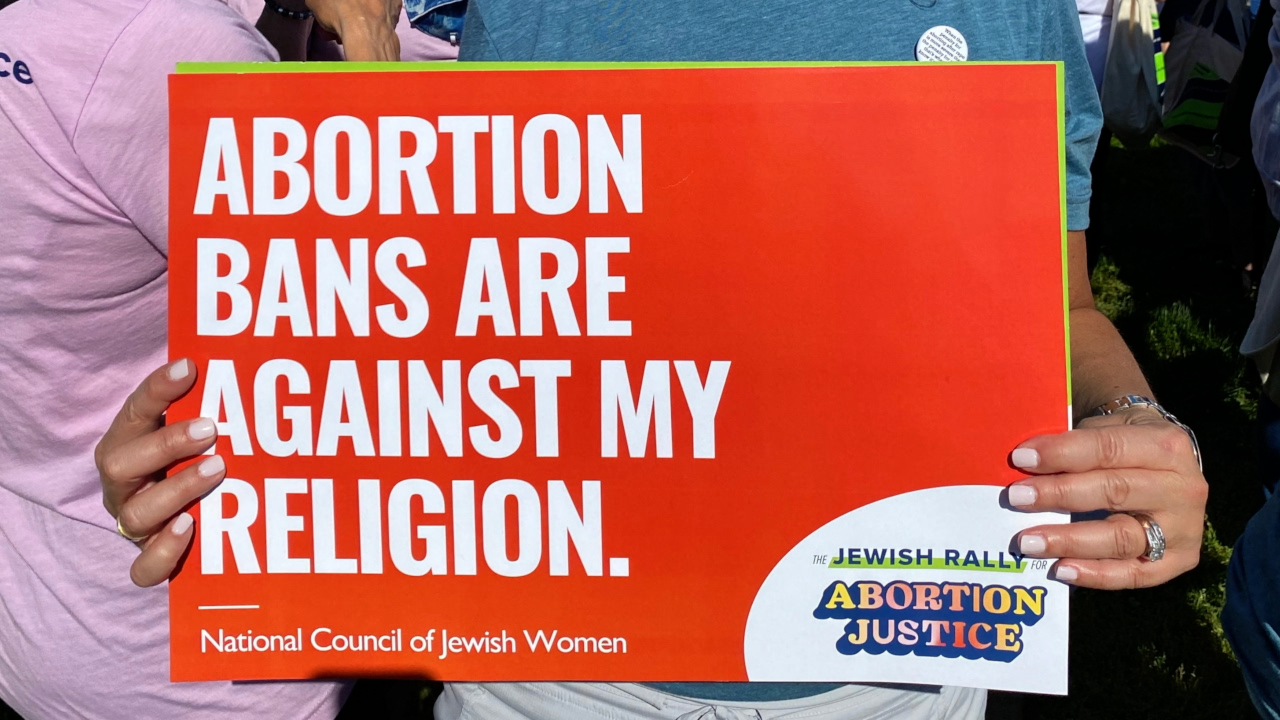
    Members of the Jewish community have spoken out against abortion bans in Ohio, saying it infringes on their religious freedom. Photo by Morgan Trau, WEWS.

    BY: ARIANA FIGUEROA – Ohio Capital Journal

    WASHINGTON — Thousands of years of Jewish scripture make it clear that access to abortion care is a requirement of Jewish law and practice, according to Rabbi Karen Bogard.

    “We preserve life at all costs,” she said in an interview with States Newsroom. “But there is a difference between that which is living, and that which is not yet living.”

    Bogard is a rabbi at Central Reform Congregation in St. Louis, which is in the  progressive tradition of Reform Judaism. She said that whether it’s the Torah — the first five books of the Old Testament in the Hebrew Bible — or the Talmud — the central text of Rabbinic Judaism and the primary source of Jewish religious law and theology — those pieces of Jewish literature “really draw the difference between life and potential life.”

    But with the fall of Roe v. Wade in late June, some members of the Jewish faith as well as other religious groups find their beliefs in deep conflict with state laws that ban or greatly restrict abortion — especially if a pregnant patient’s life is in danger.

    Since the Supreme Court’s Dobbs v. Jackson Women’s Health Organization decision, states now are permitted to craft their own laws regarding abortion, and in Bogard’s home state of Missouri, the procedure is banned.

    “Our congregants are heartbroken,” she said. “It’s really violating to be told what you can and can’t do with your own self.”

    Legal challenges are resulting. The enactment of state laws that ban or restrict access to abortion has already sparked a lawsuit in Florida from a liberal Jewish congregation in the Sunshine State. In Ohio, another liberal Jewish congregation is joining the American Civil Liberties Union in a lawsuit against the state’s six-week abortion ban.

    A coalition of three dozen rabbis also filed a brief on a separate lawsuit in the Buckeye State, where physicians are challenging the new abortion law in the Supreme Court of Ohio.

    Similar lawsuits are anticipated, not only from liberal Jewish congregations, but other religious groups as well.

    There’s currently a lawsuit in the U.S. District Court for the Southern District of Texas Houston Division filed by the Satanic Temple — not to be confused with the Church of Satan — on behalf of a member who argues the state’s abortion ban violates that temple member’s religious beliefs allowing access to an abortion ritual.

    The ritual involves members repeating verses in a mirror to affirm body autonomy and repel any guilt, shame or discomfort that can surface when undergoing an abortion.

    “There’s going to be a wave of religious freedom lawsuits,” Rabbi Daniel Bogard, who’s married to Rabbi Karen Bogard, said. “We’re going to find out if this country really believes in religious freedom, or whether this country believes in the freedom of a small minority to impose its will on the rest of us.”

    But it’s unclear if these religious-based lawsuits challenging state abortion laws can win in court.

    “We’re very much in the wild, wild west of abortion law and religious law,” said Candace Bond-Theriault, the director of racial justice policy and strategy at Columbia Law School’s Center for Gender and Sexuality Law.

    Jewish law

    According to Jewish law, a fetus is not considered a full human being and the biblical foundation for this is found in Exodus 21:22 of the Torah, Rabbi Daniel Bogard said.

    The translation reads: “When men fight, and one of them pushes a pregnant woman and a miscarriage results, but no other damage ensues, the one responsible shall be fined according as the woman’s husband may exact from him, the payment to be based on reckoning. But if other damage ensues, the penalty shall be life for life, eye for eye, tooth for tooth, hand for hand, foot for foot, burn for burn, wound for wound, bruise for bruise.…”

    Rabbi Daniel Bogard said that the Jewish legal interpretation of these passages states that a fetus is not a person, because the miscarriage results in only monetary compensation, rather than the “life for life” punishment.

    There are several other passages in Jewish literature that make the distinction that the life of the person who is pregnant is prioritized.

    “If we’re going to live in a religiously free society, we are each allowed to interpret these verses on our own for our own traditions and a minority in this country can’t impose their conservative white Christian religiosity on the rest of us,” Rabbi Daniel Bogard said.

    The lawsuits challenging abortion laws are predominately filed by congregations that practice Reform Judaism, but Conservative Judaism also supports access to abortion.

    The question of access to abortion gets more restrictive when it comes to Orthodox Judaism, but access to the medical procedure isn’t barred, says Yedida Eisenstat, a fellow at the Center for the Study of Law and Religion at Emory University in Atlanta.

    “Abortion in Judaism absolutely does have a place, and within Jewish law, there absolutely is a place for abortion,” she said. “Judaism is not anti-abortion, like Christianity is, so it absolutely does make sense for Jewish congregations to be saying, ‘Hey, this is a violation of our religious rights.’”

    Eisenstat specializes in Jewish biblical interpretation and also works as an editorial associate at the Posen Library of Jewish Culture and Civilization.

    “Judaism doesn’t have one voice or one opinion or one ruling about everything,” she said, adding that every situation is different and “there’s all this other gray area,” when it comes to theoretical cases in Jewish law pertaining to abortion.

    And interpretations on abortion in Jewish law, or Halacha, vary across American Jewish denominations.

    “We use the theoretical cases to illuminate other cases — just like in American law — so there isn’t one blanket answer for every situation, every situation has its own nuances,” she said. “And again, that’s why this is a decision, a very personal decision, not one that the government should be making.”

    The Rabbinical Assembly, a major institution of Conservative Judaism, condemned the Supreme Court’s ruling in Dobbs.

    “Denying individuals access to the complete spectrum of reproductive healthcare, including contraception, abortion-inducing devices and medications, and abortions, among others, on religious grounds, deprives those who need medical care of their Constitutional right to religious freedom,” the organization said in a statement.

    Orthodox Judaism is typically more aligned with Christian conservative views on religious liberty issues, Eisenstat said, but differs on the belief that life begins at conception.

    Following the Dobbs decision, the Rabbinical Council of America and Agudath Israel, large organizations that represent Orthodox Jewish communities, urged states to consider exceptions to expand abortion access.

    “As the debate over abortion rights enters this new phase, we encourage states to craft policies that will simultaneously express the great value we place on life as well as protecting the rights to abortion when warranted by Jewish law,” the Rabbinical Council of America said in a statement.

    Florida lawsuits

    Rabbi Barry Silver is a self-proclaimed “rabbi-rouser.”

    He’s an attorney, a social activist, a former Democratic legislator in the Florida House of Representative and the leader of the Congregation L’Dor va-Dor, a synagogue practicing progressive Judaism in Palm Beach, Florida.

    Silver, along with three rabbis, a United Church of Christ reverend, a Unitarian Universalist minister, an Episcopal Church priest and a Buddhist lama, each have filed separate lawsuits challenging the state’s 15-week abortion ban that went into effect July 1. Those suits argue that the new abortion law violates Florida’s state constitution, as well as U.S. constitutional protections for freedom of speech and religion.

    The suits also claim the law creates “substantial” burdens on individuals’ ability to practice their faith, and creates a “potential” burden on religious leaders to advise their members. Because of the vagueness of the law, Silver said, rabbis or other religious leaders who counsel their clergy members on abortion could face criminal charges.

    “It criminalizes the practice of Judaism as well as all the other religions that are not aligned with fundamentalist Christianity, which is pretty much everybody,” Silver said of Florida’s new abortion law.

    Silver’s Congregation L’Dor Va-Dor also filed a separate suit in June in state court that argues the 15-week abortion ban violates the right to privacy guaranteed by the Florida state constitution.

    “For Jews, all life is precious and thus the decision to bring new life into the world is not taken lightly or determined by state fiat,” according to the lawsuit. “As such, the act prohibits Jewish women from practicing their faith free of government intrusion and this violates their privacy rights and religious freedom.”

    Silver said he still plans to counsel his congregants who need or are considering abortion care, despite Florida’s new law.

    “We do the right thing and if they want to come after us, they can make our day, we’re not going to stop saying what we need to say. We’re not gonna stop practicing Jewish law,” he said.

    A spokesperson with GOP Gov. Ron DeSantis’ office did not answer questions from States Newsroom about whether the newly passed abortion law prevents Jewish people from practicing their faith.

    “Governor DeSantis is pro-life, and we believe HB 5 will ultimately withstand all legal challenges,” a spokesperson with DeSantis’ office wrote in an email to States Newsroom, referring to the abortion law. “The struggle for life is not over.”

    Congregation L’Dor Va-Dor’s suit claiming Florida’s constitution has an explicit right to privacy is “fairly straightforward, and would generally be unremarkable,” said Caroline Mala Corbin, a law professor at the University of Miami School of Law.

    “Under the existing law, it’s a no-brainer challenge,” Corbin said.

    She added that the Florida Supreme Court has interpreted that language to cover abortion.

    “Except that, like the U.S. Supreme Court, the Florida Supreme Court has taken a sharp turn to the right, so just as you have the U.S. Supreme Court completely remake abortion law, it’s a possibility the Florida Supreme Court will as well,” she said.

    Corbin said the court could rule several ways in the congregation’s case.

    “They might argue, ‘We question your sincerity,’ which would be shocking given how deferential they are to other claims of religious liberty,” she said.

    The court could also rule that the congregation did not prove Florida’s abortion law created a substantial burden, or that even if the law prevents someone from practicing their religion, “the state has a compelling reason for its law, and therefore, the state must prevail,” she said.

    “So the state might respond, even if this does affect your ability to live your religious truth, the state has a compelling interest in saving lives and therefore the state still prevails,” Corbin said.

    Future cases

    Micah Schwartzman, the director of the University of Virginia School of Law’s Karsh Center for Law and Democracy, and the Hardy Cross Dillard professor of law, said lawsuits brought on behalf of a group of people, like the one from Silver’s congregation in Florida, rather than a particular individual, will have more procedural hurdles to prove the group has standing to sue under state and federal law.

    “I’m not terribly confident about these early lawsuits,” Schwartzman said.

    He pointed to the case in Texas, the one by the Satanic Temple, which the religious organization filed in federal court on behalf of one of its members, and said he expects to see similar cases.

    “I think in the future, we’re going to see cases that are brought on behalf of particular individuals who are burdened by abortion restrictions or prohibitions,” he said. “And those types (of cases) will have a stronger chance of surviving the preliminary stages of litigation.”

    Schwartzman said there’s also the question of religious exemptions, particularly in states that have enacted trigger law bans or near total bans on abortion, and whether those laws impose a burden on people trying to practice their religion.

    State abortion laws are going to have some exemptions for abortion, he said, such as in cases of rape and incest and to protect the life and health of the mother.

    “And in those circumstances, courts are going to face the question if these laws have certain secular exceptions, why shouldn’t they also grant exceptions on religious grounds?” he said. “And I think that will be the structure of many challenges that we will see in the future.”

    Elizabeth Sepper, a religious liberty, health law and equality scholar at the University of Texas School of Law, said that over the last couple of decades the Supreme Court has “reduced the establishment clause to rubble,” which under the First Amendment prohibits the government from establishing a religion.

    When Roe v. Wade was initially issued, Congress passed the Hyde Amendment, which prohibits the use of federal funds to cover the cost of abortions, with some limited exceptions.

    Sepper said Congress’ decision to pass a restriction related to abortion in the case of the Hyde Amendment, is an example of “an establishment of religion because when legislators pass abortion bans that say ‘Well, human beings come into life at the moment of conception,’ that’s a doctrine — is a theological stance — that’s rooted in a particular religious faith, and we all know religious faith that is.”

    “I think some large segment of the population on both sides of the abortion issue understands (that) to be the truth, which is that many abortion bans require religious reasoning,” Sepper said.


  • Biden to wipe out $10,000 in student loan debt for many borrowers

    Biden to wipe out $10,000 in student loan debt for many borrowers

    BY: ARIANA FIGUEROA – Ohio Capital Journal

    WASHINGTON — President Joe Biden announced Wednesday that he will cancel up to $20,000 in federal student loan debt for Pell Grant borrowers and up to $10,000 for all other borrowers with an income of less than $125,000 for an individual and $250,000 for a household.

    Biden also announced his administration is extending a pause on student loan repayments until Dec. 31. The decision comes one week before the expiration of a pause of student loan repayments put in place at the beginning of the coronavirus pandemic.

    “Here’s the deal, the cost of education beyond high school has gone up exponentially,” Biden said at the White House.

    Biden stressed that the people who would benefit the most are low-income and middle class families and individuals.

    “No high income household, will benefit from this action, period,” Biden said.

    Biden said that many Americans with student loan debt have put off starting families because of the cost and have been unable to qualify for mortgages to buy a home because of the student loan debt they carry.

    “All this means is an entire generation is now saddled with unsustainable debt,” Biden said.

    Despite numerous reports in recent weeks that Biden would take action on student loans, the White House had remained silent, but on Wednesday the president tweeted out his decision, prior to his remarks.

    “In keeping with my campaign promise, my Administration is announcing a plan to give working and middle class families breathing room as they prepare to resume federal student loan payments in January 2023,” Biden wrote on Twitter.

    Following the announcement, the Department of Education said it will release an application in the weeks ahead that will allow millions of borrowers to claim this new relief.

    “[S]tudent loan debt has hindered their ability to achieve their dreams — including buying a home, starting a business, or providing for their family,” U.S. Secretary of Education Miguel Cardona said in a statement. “Getting an education should set us free; not strap us down!”

    The cancellation of student debt will only apply to current borrowers, not future ones, and income levels for the 2020 and 2021 tax years will be considered, a senior administration official said during a Wednesday call with reporters.

    The Department of Education estimates that about 8 million borrowers will automatically receive relief because the agency already has those borrowers’ income information on file. That means those borrowers do not have to submit applications.

    Borrowers who received Pell Grants, who will benefit from the most relief, are among the students who had the lowest household incomes while in college. They will also be subject to the $125,000 and $250,000 income caps.

    New rule on loans

    The Biden administration is also directing the Department of Education to propose a rule to help current and future borrowers with their loan repayments.

    The rule would eliminate monthly interest  payments on loans, “so that unlike other existing income-driven repayment plans, no borrower’s loan balance will grow as long as they make their monthly payments — even when that monthly payment is $0 because their income is low,” according to the department website.

    The proposed rule would also forgive loan balances “after 10 years of payments, instead of 20 years, for borrowers with loan balances of $12,000 or less.” It would also require “borrowers to pay no more than 5% of their discretionary income monthly on undergraduate loans.”

    “Middle class borrowers struggle with high monthly payments and ballooning balances that make it harder for them to build wealth,” a senior administration official said.

    While many Democrats and progressive advocates were pleased with the announcement, it falls short of the student debt relief campaign platform that Biden ran on.

    In a Medium post during the 2020 presidential election, Biden said under his administration he would “forgive all undergraduate tuition-related federal student debt from two- and four-year public colleges and universities for debt-holders earning up to $125,000, with appropriate phase-outs to avoid a cliff.”

    He also promised he would “immediately cancel a minimum of $10,000 of student debt per person,” but this recent student debt announcement comes two years into his administration and only after continual pressure from congressional Democrats and advocates.

    Some congressional Democrats have urged the White House to cancel up to $50,000 worth of student loans, arguing that because about 92%  of that debt is held by the Department of Education, the administration has the authority to cancel those loans through executive action.

    More than 43 million Americans have student loan debt, and the Federal Reserve estimates that the total U.S. student loan debt is more than $1.75 trillion.

    A Penn Wharton budget model released Tuesday found that a one-time loan forgiveness of $10,000 would mostly benefit borrowers in the four lowest quintiles of incomes.

    Earlier this month, more than 100 Senate and House Democrats urged the Biden administration to extend the pause on repayment of student loans beyond the Aug. 31 deadline. The lawmakers argued that due to inflation and the ongoing coronavirus pandemic, student loan borrowers should get an extension on pausing their loan payments. They did not give another deadline for repayments to begin in their letter to the president.

    Democrats praise Biden

    Democrats did welcome the President’s announcement.

    “By delivering historic targeted student debt relief to millions of borrowers, more working families will be able to meet their kitchen table needs as they continue to recover from the challenges of the pandemic,” House Speaker Nancy Pelosi said in a statement. “Importantly, this action will help those most in need, easing a financial burden disproportionately harming women and people of color.”

    She has previously said that the president does not have the authority to cancel student loans and that the process needs to be done through Congress. She did not mention her previous comments in the statement.

    Biden also had said earlier, while in the White House, that he would only cancel up to $10,000 in student loan debt, and only if Congress passes legislation to do so. Administration officials did not address the shift in policy.

    While the Democrat-controlled House likely could pass legislation canceling some portion of student loan debt, the evenly divided Senate would need all 50 Democrats on board along with an additional 10 Republicans to get a bill to the president’s desk.

    House Education and Labor Committee Chairman Bobby Scott, a Virginia Democrat, said that while the student loan cancellation will provide relief for borrowers, it doesn’t solve the “underlying problems that caused the student debt crisis in the first place,” such as high tuition costs.

    “Without reversing the chronic underinvestment in higher education that has driven up tuition costs, and without fixing our student loan system that has made student loans more expensive to take out and harder to pay off, students will continue to take on more debt and borrowers will continue to face rising debt levels,” Scott said.

    Republicans critical

    GOP lawmakers sharply criticized the cancellation move.

    “At a time of skyrocketing inflation, declining wages, and a national recession, Washington has again turned its back on hardworking Americans in Iowa and across this country,” Iowa Gov. Kim Reynolds, a Republican, said in a statement. “President Biden isn’t canceling student debt, he’s shifting the costs to the taxpayer and to those who worked to pay off their loans in full.”

    Senate Minority Leader Mitch McConnell, a Kentucky Republican, said in a statement the move was a “slap in the face to every family who sacrificed to save for college, every graduate who paid their debt, and every American who chose a certain career path or volunteered to serve in our Armed Forces in order to avoid taking on debt.”

    Overall in Kentucky, there are about 600,000 student loan borrowers who have an average balance for federal and private student loans of $30,794.  

    In March 2020, President Donald Trump issued an emergency pause on student loan repayments, which has now been extended several times by both administrations. The pandemic is still ongoing, and the U.S. has surpassed 1 million COVID-19 deaths.