
Tag: ballot

  • Robert Giuffre : “Pass it Forward”

    Robert Giuffre : “Pass it Forward”

    by Robert Giuffre

    Robert (Rob) Giuffre is a resident of Loveland and a retired public-school treasurer, having served four districts including Loveland

    I have been a proud Loveland resident for twenty-three years. As a retired public-school treasurer, having served four districts including Loveland, I am familiar with Loveland School’s fiscal operations and its needs in placing the November 5th levy on the ballot…While this levy request is certainly about numbers, I encourage you to read this article and consider critical aspects of this levy request. (Loveland Board of Education asks for combined 16.78-mill levy)

    As a former school treasurer, I am well versed in school finance. I have been challenged throughout my career trying to explain how the laws governing school funding work and what their impact has been on school districts over the years. This redirection of tax-payer dollars by our legislators has fallen on our lap to explain. We have had little or no input on preserving the level of school funding voted and approved by our community. These legislative decisions cost Ohio school districts millions of dollars each

    a year and are almost impossible to explain to stakeholders. All I would ask of you is to consider that your feelings about this levy are not fully directed at the leadership of this district. Please understand your legislators’ responsibility for the confusion surrounding school funding and the redirection of tax dollars.

    With that, Loveland City Schools has a long and documented history of strong conservative fiscal management and has kept its commitments to this community. Two examples I would like to bring to your attention are: The District vowed that the last levy in 2014, would last for four years and it has lasted for five and a half. Twenty years ago, when I was still the District Treasurer, this community supported a bond issue to build and to renovate its buildings. Past and current students and community members benefit still from these facilities. Now, it is time to move forward with renovations and construction of new buildings for the next generation.

    This levy request is about what is best for our children and our community.  Students cannot learn as well in these rapidly changing times in buildings that are older than my fifty-year-old house. As we all know, maintaining, operating and implementing technology costs significantly more in old buildings as opposed to new construction. You may not be aware that students are currently being taught in temporary trailers and hallways. The one-time cost of new construction is certainly more frugal than continuing to expend operating funds year after year on dated facilities. Energy efficiency, our children’s safety and the continuing evolution of technological integration are our new normal. Unfortunately, safety training has become an urgent and critical component of our children’s and our community’s education. You own

    these facilities and although the Board of Education and Administration provide leadership, you are ultimately responsible to provide that which our children need to be safe so they can succeed. Our buildings do not have current safety and security infrastructure to protect against real threats facing them.

    The quality of our schools has a direct impact on the quality of our community and its economic stability, including the value of our property.  Legitimizing a “no” vote without taking into consideration these critical realities is short-sighted.

    As we each make up our minds about how to vote on November 5th, I ask that you consider not just the numbers, but also what the school district has consistently delivered for our children and for this community.  There is a shift in education. This vote is about all our children, the lives of the children of our community. This responsibility belongs to all of us. The return on investment will come both soon and later. Actually, return on investment has already been provided for us by voters in the past.  PASS IT FORWARD, please.


  • Gathering the facts to make an informed decision

    Gathering the facts to make an informed decision

    by Dr. Amy Crouse

    As the superintendent of the Loveland City School District, it is my responsibility to ensure that every child in our district has access to quality education while managing our tax dollars wisely and providing a good value to residents. I take this responsibility seriously.

    Dr. Amy Crouse is Superintendent, Loveland City School District

    Another responsibility I take very seriously is the dissemination of facts. This is why we have been hosting community chats and forums, such as the event held on September 12; it’s why we are constantly updating our website and addressing frequently asked questions; and it’s why we are so intent on engaging with our community. It is imperative that our residents have the facts in order to make an informed decision at the ballot on November 5. And some of what we’re seeing out there, well, it’s simply not accurate.

    What is accurate is that Loveland City Schools have reached a critical juncture: We have overcrowding, with some classes being held in hallways and in trailers, we have three old buildings for which repair costs have reached the threshold where industry standards recommend replacement over renovation, and we have a need to secure additional operating dollars. The needs facing our schools are very real and immediate.

    Over these last several years, we have spent time working with the community on a plan that is cost-efficient and meets the school district’s needs. This is the ballot issue facing voters with the Tuesday, November 5 election.

    We realize that this ballot issue is no small ask. We also realize, like the community members who helped identify and prioritize the needs, that it is more cost effective to do the work all at once and that the longer we wait, the more expensive it will be to remedy the needs facing our schools.

    Large amounts of money would have to be spent on other temporary solutions, like trailers, instead of putting the dollars toward real solutions for the long term.

    When considering this ballot issue, it is important to note that there is no zero-cost option with our facilities and the needs do not go away over time if we continue with the status quo. In fact, continuing to do so with our facilities comes at a substantial cost – we would need to divert funds from the classroom to pay for critical repairs, which are still only temporary fixes to problems that don’t go away. We would need to put off important safety and security updates in the buildings and continue to make do with antiquated science and technology laboratories and learning spaces. Large amounts of money would have to be spent on other temporary solutions, like trailers, instead of putting the dollars toward real solutions for the long term.

    I encourage you to visit the “Frequently Asked Questions” section on our website.

    These are important considerations for our community – it comes down to how we want our schools to operate. So that you can be informed about the facts regarding the district work, planning and needs, I encourage you to visit the “Frequently Asked Questions” section on our website. Among other facts on this page, we have also included the updated cost information that shows the board’s intent to structure the financing so that the overall impact of the tax is phased in for residents over three years. This helps residents and it helps meet the school district’s needs.

    In service to our Tigers.


  • Lynn Mangan: Why I am a yes on the school levy

    Lynn Mangan: Why I am a yes on the school levy

    Lynn Mangan, a resident of the Loveland School District lives in the Eagles Point subdivision in Miami Township.

    by Lynn Mangan

    After listening to the community meeting last Thursday night at the high school, I felt very compelled to write out why I am a yes on the levy.

    First, let me introduce myself. We have lived in Loveland City Schools for almost 23 years. We moved to Loveland when I was expecting our oldest son. My husband, Pat and I have four boys (two are in college) and the younger two are in 10th and 8th grade. I am a wife, mother, family/community member, and business executive. When I look at whether I want to vote yes or no to the levy I try to think about it from all of the angles of who I am.

    As a mom:

    • I am grateful that we are focusing on the total child. We are creating problem solvers, continuous learners, preparing students for their next steps (trades, military or college), and challenging them to try as many new things as possible. We are creating well rounded young adults. And the district is not ignoring the increase of mental health disease. I have numerous examples over the years of teachers who believed in and advocated for my boys to be their best selves.
    • I am grateful for a school district that keeps my children safe and is calling in the experts to keep it that way (I was happy to hear we have engaged the Department of Homeland Security to make recommendations on how to do this). And I’m extremely sad that the safety of our children even has to be on the list.

    As a business executive and community member:

    • I am grateful that the school district is fiscally responsible. Keeping healthcare rates at only 2.2% is unheard of (can my business hire whoever is in charge of this at the district?). Making sure that as many dollars as possible can be put towards the staff serving our children vs on extraneous expenses. The people are what make it happen in every organization and schools are no exception. I appreciate that the district is also reducing energy costs wherever possible too.
    • The curriculum is expanding to prepare children for the real world. I’ve seen firsthand the expansion of so many programs: computer science, robotics, life skills, music, etc. A focus on continuous improvement is an absolute must.
    • Our district leaders are being creative problem solvers and passing on savings when possible (ex. change in the levy structure).
    • I appreciate the balance in the focus on improved learning spaces for our children, increasing our curriculum, making the spaces safer and a focus on the whole student. As a business executive, we have to focus on employee engagement – that means we have facilities that are not 100% about work – just like the school has to improve the facilities for arts and athletics. And the auditorium move is the best use of space to expand the learning areas first. And at the middle school, the track and bleachers are atrocious and unsafe. I don’t really think the baseball fields are necessary but that is okay. At work, we always debate the best choices. It is an 80%/20%. I am happy and confident with 80% of the choices in this plan and that feedback and experts have been engaged to come up with a solid plan.

    I’ll be candid…at first, I was a no. My kids are going to graduate before most of this will be in place. Then I asked myself: If this was a non-profit would I donate to them? Would I want to spend my time helping improve the schools? Does it benefit my family if we say yes even without children in the district?

    How does it impact our family budget?

    • I recognize not everyone is in the same situation as our family. When my kids graduate, the money that we’re currently paying for their extracurricular activities will now go to the schools when the levy passes. This might seem like a strange way to justify it as obviously we’ll be helping with college tuition. It provides me with perspective that even over 37 years this is worth it so that other children and our entire community can benefit.
    • My family has already benefited from increasing home values. We moved within the district three years ago so that my mom could move in with us. Our home sold in one day and it was over asking price. My hope is that when we downsize after our kids graduate, we’ll have the same experience that our home values continue to increase for the benefit of our entire community. I want Loveland students to be known as solid citizens and our continued investment in our schools does this.

    I believe in the leadership of the district

    • And most importantly, I believe in the leadership of the district. Is every decision they make the right one? Nope…and who am I to hold them to that unreasonable standard? I give them a lot of credit for their composure and well thought out plan. It is extremely hard to go in front of 1000s of people to present a plan like this.
    • Does it stink that we have to pay this much property tax? Yes, it does, and I made the choice to live in a community where there aren’t businesses to fund the school system. I grew up in Sycamore and my husband went to Catholic schools. We believe in public schools and didn’t want to pay the huge home prices in Sycamore schools. Of course, I would love to have less taxes due to all the businesses in Sycamore schools. It’s a tradeoff. I’ll take the tradeoff and pay for the increase to invest in our children and our community.

    Overall, no plan will ever be without ways to make it better. I appreciate that the district has asked for feedback, been transparent and is continuing to strive for what is best for our students. I am thankful for teachers that advocate for my children and want to see them succeed in their class and in life. I am a yes.

    If you haven’t already done so, I’d encourage you to listen to the latest presentation here and the corresponding slide deck here.


  • Information sessions with Loveland Schools Superintendent and Treasurer about the November 5 ballot issue

    Information sessions with Loveland Schools Superintendent and Treasurer about the November 5 ballot issue

    Loveland, Ohio – With the upcoming vote on a 16.78-mill combined operating levy and bond request on the November 5 ballot, the Loveland City School District has scheduled several opportunities for residents to meet with Superintendent Dr. Amy Crouse and Treasurer/CFO Kevin Hawley in September and October. A community meeting, including a presentation and question-and-answer session, will be held in the Loveland High School auditorium at 7 PM on Thursday, September 12.

    September

    • Community Meeting (Loveland High School Auditorium), Thursday 9/12, 7 PM
    • Tour of Facilities (LES/LPS, 550 Loveland Madeira Road), Tuesday 9/17, 7  PM
    • Loveland Dairy Whip (611 W. Loveland Avenue), Friday 9/20, 5-7 PM
    • Starbucks (10551 Loveland-Madeira Road), Monday 9/30, 4-6 PM

    October

    • Hometown Cafe (111 Railroad Avenue), Thursday 10/3, 8-10 AM
    • Branch Hill Coffee Company (371 Bridge Street), Wednesday 10/9, 7-9 AM


  • Andy Bateman joins Bailey and Blair in pursuit of Council Seat

    Andy Bateman joins Bailey and Blair in pursuit of Council Seat

    Loveland, Ohio – There will be 3 elected to a 4-year term of Loveland City Council on November 5, and as of Monday evening 3 have submitted sufficient signatures on Nominating petitions to be placed on the ballot. Current Mayor Kathy Bailey, incumbent Kent Blair, and on his second try, Andy Bateman, have all have qualified.

    Andy Bateman

    Bateman told Loveland Magazine last week that he had submitted sufficient signatures to the Hamilton County Board of Elections (BOE) and that the signatures have been validated. He ran a distant 5th is his first try to be on City Council in the 2017 election.

    All three are guaranteed victory if no one else files to run.

    Current Councilwoman Angie Settell’s term ends this December.

    Blair is 2-year incumbent

    Blair is running for the seat he was appointed to when former Mayor Mark Fitzgerald quit office on August 14, 2017 after petitions were circulated putting his recall and his council seat on the ballot. The petition recall effort could have resulted in a head-to-head race, Fitzgerald vs. Neal Oury who circulated the petitions.

    Up until August 18, of 2017, Blair was one of nine candidates on the ballot for four City Council seats. Blair removed his name from consideration so he would not take votes away from Rob Weisgerber, Ted Phelps, Neal Oury, or Tim Butler. It was a pre-arranged deal, under a possible scenario if Fitzgerald’s seat was not going to be on the ballot. After a ruling by the City Attorney, Mayor Bailey was allowed to appoint Blair to the seat that was still open in January of 2018.

    Weisgerber, Phelps, Oury, and Butler were elected in 2017.

    Word on the street is that former Councilwoman Pam Gross has picked up petitions from the BOE, however, that would not necessarily mean that Gross is running. She may or not circulate petitions, or she may have picked up the petitions for someone else who is interested in being on Council. Gross also ran in 2017 to keep her seat however was roundly defeated for re-election, finishing behind Bateman.

    Loveland School Board race

    No one has yet filed petitions to be a member of the Loveland Board of Education. There are 2 open seats for 4-year terms. Current Board Vice-President Kathy Lorenz is, however, gathering signatures. Word on the street is that current Board President Art Jarvis is also collecting signatures.

    The deadline for candidates to file nominating petitions to the BOE, either in the City Council Race or for a School Board seat is Aug 7.

    Loveland City Council will ask voters to approve a revised Charter on November 5 and the Loveland Board of Education is expected to place a Bond Issue on the ballot.


  • Who has thrown their political hats

    Who has thrown their political hats

    Editor’s Note: This story has been corrected to explain that, “Current Loveland School Board Vice-President Kathryn Lorenz has picked up a packet of petitions to run for one of two open seats, however, she had not yet submitted petitions.”

    Loveland, Ohio – As of June 6, the local election for elected offices may only be a popularity contest. Neither school board or council races have competition for the number of seats open. There are 3, four-year council at large seats open, and 2 open, four-year terms for the Loveland Board of Education.

    Current Loveland Mayor Kathy Bailey and current councilmember Kent Blair have submitted nominating petitions to the Hamilton County Board of Elections (BOE) with sufficient signatures to qualify for the ballot.

    Andrew Bateman who ran an unsuccessful race in 2017, picked up nominating petitions, however, he has not yet submitted them to the BOE.

    Current Loveland School Board Vice-President Kathryn Lorenz has picked up a packet of petitions to run for one of two open seats, however, she had not yet submitted petitions. No one else had picked up petitions as of June 6.

    The election is on November 6.

    The Loveland School District is expected to place a bond issue to build new schools and renovate current buildings on the ballot. The City of Loveland is expected to ask voters to approve a revised Charter.


    Firecracker Festival 2019 June 28, 2019 – June 29, 2019   Celebrate Your Independence at the Firecracker Festival at Home of the Brave and Symmes Park! Read more…
  • Learn how voters with disabilities can still vote

    Learn how voters with disabilities can still vote

    AVIL Logo Press Release OH.jpg

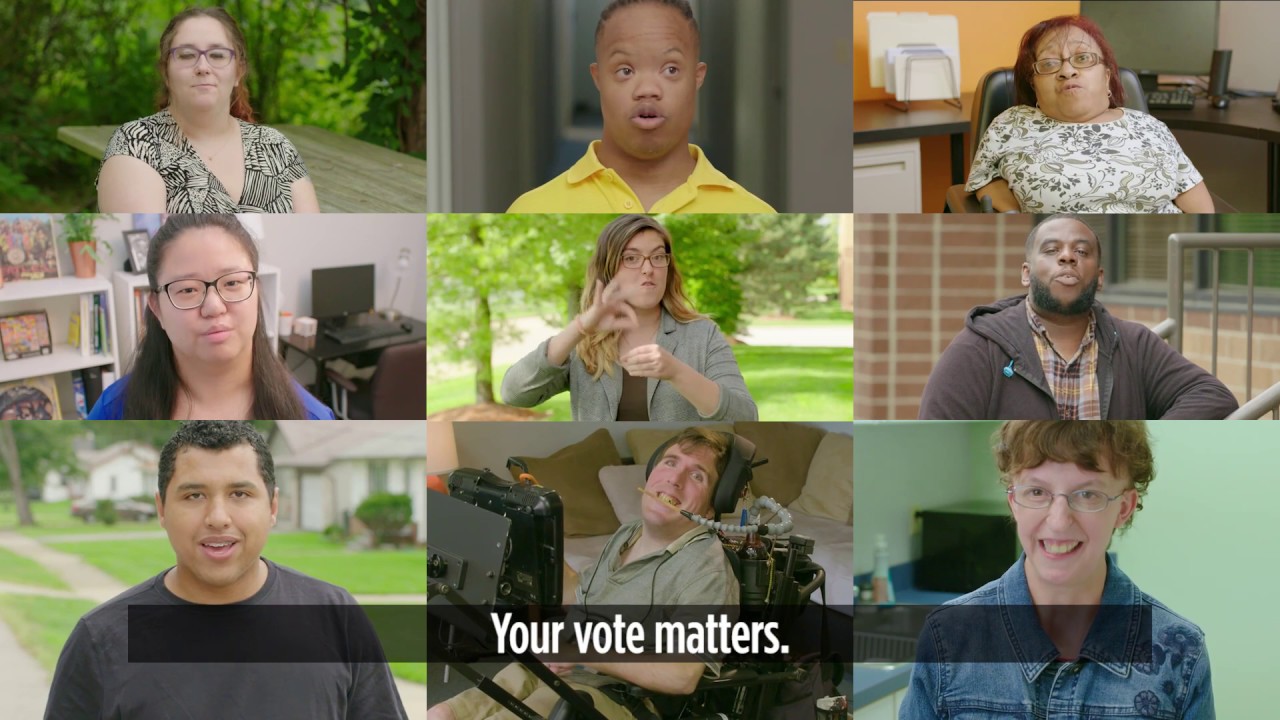
    “Voters with disabilities face very real barriers to the ballot and a critical piece of removing those obstacles is emphasizing that voters know they have the right to vote, regardless of their disability,” said Mike Brickner, State Director of All Voting is Local Ohio. “People may not realize that the law requires election officials to offer assistance and accommodations to any voter who needs it.”


    Disability Rights Ohio is mandated by the Help America Vote Act of 2002 (PL 107-252) to advocate for the rights of Ohio voters with disabilities and to assist the Secretary of State in fulfilling the Secretary’s obligations to those voters under the federal law. Through this program, Disability Rights Ohio:

    • educates individuals, communities, poll workers and boards of election about the voting rights of people with disabilities;
    • monitors and investigates complaints about polling place accessibility and privacy;
    • collaborates with other voting rights advocates for systemic change for people with disabilities;
    • participates in the implementation of provisions of the Help America Vote Act affecting people with disabilities; and
    • assists and represents individual voters in state-based administrative grievance processes.

    Resources

    The Ohio Secretary of State’s voter resource page: MyOhioVotes.com

    Forms to request to use Ohio’s remote absentee ballot marking tool for voters with vision impairments and other print disabilities: PDF version | HTML version

    Voter Rights and Assistance

    Early Voting

    Individuals with Disabilities and Voting: The Glancy Consent Order

    Is Your Polling Place Accessible?

    Protect Your Right to Vote

    Registering to Vote: Frequently Asked Questions

    Voting Rights: Frequently Asked Questions (February 2016)


  • Judge Jerry R. McBride: Why Issue One should be opposed

    Judge Jerry R. McBride: Why Issue One should be opposed

    by Judge Jerry R. McBride

    If you are concerned about neighborhood safety, then you should NOT support Issue One on the ballot this fall. It will hinder law enforcement, prosecutors, and judges in their ability to deal with the biggest drug crisis in this state’s history.As a result, it will result in more drugs on the streets, more crime, more deaths from overdoses, and more costs to local communities and taxpayers.

    Jerry R. McBride is a Clermont County, Ohio, Common Pleas Court Judge

    Judges have the ability to comment on issues that affect the administration of justice. Issue One will have a devastating effect on the administration of justice on Ohio. As one trial judge, this is my take on Issue One:

    ISSUE ONE DOES NOT BELONG IN THE STATE CONSTITUTION

    A state constitution should set forth the powers and functions of the branches of government, certain general values and principles upon which the citizens of the state generally agree, and the basic rights which are afforded to the citizens of the state. It should set forth matters which are so fundamental and important that they will not be subject to change over time. This proposed constitutional amendment does not in any way belong in a state constitution. It seeks to change sentencing law as it exists in the state of Ohio based on an assumption that change needs to be made. If change does need to be made, then it should be made through the process of enacting legislation, as is done on a regular basis in this state, and not through a constitutional amendment.

    ISSUE ONE DIRECTLY CONTRADICTS THE CONCEPT OF TRUTH IN SENTENCING AND IGNORES THE RIGHTS OF VICTIMS.

    There should be truth in sentencing, not lip service to truth in sentencing. Issue One allows a credit to be given by the Department of Rehabilitation and Correction for participation in rehabilitative, work, or educational programming of up to 25% of a sentence plus 30 days. While this may sound good at first glance, it is contrary to the concept of truth in sentencing. When a victim is told what a sentence will be, he/she should be able to rely on that being the sentence unless a hearing is scheduled on a possible reduction in the sentence. Why should a sentence be reduced just because an inmate “participates” in programming? Isn’t that the bare minimum that should be expected from an inmate? Why should an inmate be rewarded for doing the bare minimum? If a sentence is to be reduced, it should be reduced by the sentencing judge based upon an assessment that the risk of recidivism has been reduced, not because somebody has shown up to work. And if the judge makes the assessment that the sentence should be reduced, a hearing will be required and the victim will have an opportunity to be present and to be heard, which is the way it should be. Additionally, what does it mean to “participate” in these activities? This essentially allows the prison authorities to reduce a judge’s sentence,and it should be the judge who imposed a sentence who determines whether that sentence should be reduced.

    ISSUE ONE IS DANGEROUS IN THAT IT INTERFERES WITH THE JUSTICE SYSTEM’S ABILITY TO DEAL WITH THE DRUG CRISIS

    It is highly inappropriate in the midst of the biggest crisis in this state in terms of drug abuse for the possession and use of dangerous drugs to be treated essentially the same as minor traffic and criminal offenses. Possession of dangerous drugs leads to overdoses, to more serious criminal offenses, to deaths. The possession and use of dangerous drugs are not minor offenses to the persons who are addicted to drugs, to the victims of crime involving persons under the influence of drugs, to the parents and family members who are praying that their loved ones will not overdose and die. To suggest that we need to include treatment in our approach to this drug crisis is highly appropriate, and in fact it is already being done routinely across this state. However, to suggest that we should reduce the level of these offenses so that they are no longer classified as serious offenses is highly inappropriate.

    ISSUE ONE TREATS USE OF DANGEROUS DRUGS AS LESS SERIOUS THAN JUST ABOUT EVERY OTHER CRIME

    The proponents of the constitutional amendment, in saying that a jail sentence cannot be imposed, are saying that possession and use of such drugs as heroin, methamphetamine, and cocaine should be treated more lightly than reckless driving, shoplifting, lying to a police officer, gambling, and persistent disorderly conduct, all of which can result in the imposition of jail sentences. Is this really the message that we should be sending to drug addicted adults who represent a risk of committing more serious offenses as long as they persist in the use of dangerous drugs?

    ISSUE ONE ELIMINATES THE ABILITY OF A JUDGE TO IMPOSE A JAIL SENTECE FOR A FIRST OR SECOND POSSESSION OFFENSE, EVEN IF THE DRUG IS HEROIN, METHAMPHETAMINE, OR COCAINE

    In all likelihood, probation will be appropriate for a person who commits a drug possession offense which is the first or second within a 24-month period. However, that will not always be the case. For instance, probation may not be appropriate at all if the offense is committed at the same time as a more serious offense such as a burglary or an assault. Similarly, probation may not serve the purpose of protecting the public if the drug possession or use offense is committed by a convicted sex offender for whom use of a dangerous drug or alcohol represents a significant risk of reoffending and for whom intermediate sanctions may provide no real protection to the community. As for the term probation, does that include treatment in a halfway house or in a lock-down community based correctional facility?

    If it doesn’t include residential treatment, including lockdown residential treatment, ittakes away some of the most effective tools which can be used in trying to rehabilitate an offender. Needless to say, the problem with creating an absolute standard that requires that a person who uses or possesses drugs receive the lowest level of sanction available is that applying that standard under the facts of given case may not be consistent with the seriousness of the offense or the likelihood of recidivism.

    ISSUE ONE PUTS HANDCUFFS ON JUDGES IN THEIR ABILITY TO GET OFFENDERS TO STOP USING DRUGS

    The proposed amendment would eliminate the possibility of imposing a jail sentence at all for a violator on a first or second drug possession or use offense within 24 months and would eliminate the possibility of a court imposing a prison sentence for a felony violator unless the violator commits a new criminal offense. However, this leads to some very real dilemmas. If that is to be the law, what is a court to do with someone who simply refuses to attend treatment or to comply with any of the intermediate sanctions or who simply says that he/she will not comply with anything that the court orders? What is a court to do with someone who says he/she will comply with community control sanctions but then refuses to do anything which is ordered? Under the language of the proposed constitutional amendment, a felony offender could simply tell a judge at the time of the sentencing hearing that he/she will comply with the community control sanctions that are ordered, and then after being placed on community control, refuse to do anything that the court orders. At that point, a prison sentence could not be imposed. What is the possible sense in that? How does that serve to protect the public? The probation department has a statutory duty to report violations to the court, but if the offender continually absconds or fails to comply with the sanctions that are ordered, how can the probation department perform that function? The answer is very simple- it can’t.

    ISSUE ONE JUST GIVES LIP SERVICE TO THE CONCEPT OF GRADUATED SANCTIONS

    Issue One strips away the full range of tools which enable a judge or probation department to be effective in not only rehabilitating an offender, but also in protecting the public. It is difficult to argue with the concept of graduated responses, and the use of intermediate sanctions, by courts and probation departments. It is consistent with the use of evidence-based practices. However, the application of graduated responses or intermediate sanctions to a violator in a given case will depend on the seriousness of the original offense, the risk of recidivism, and the nature of the violation. In this regard, a graduated response policy will typically include probation (monitored or with conditions), intermediate sanctions (which may include such things as house arrest, residential or outpatient treatment, day reporting, a short jail term, or other requirements), and jail or prison. Issue One, however, arbitrarily takes away the option of jail or prison even for someone who thumbs his or her nose at the system and who refuses to undergo treatment or to make other changes that are necessary to reduce the likelihood of recidivism. It also arbitrarily takes away the option of jail or prison for someone for whom lesser sanctions are simply not appropriate.

    ISSUE ONE CONTRADICTS THE IMPORTANT CONCEPT OF SEPARATION OF POWERS

    The proposed amendment provides that each court must prepare guidelines for graduated responses that may be imposed in sentencing offenders and that the guidelines must be approved by the Department of Rehabilitation and Correction, which is part of the executive branch. Such a provision, which is proposed to be part of the state constitution, violates an already existing constitutional principle, which is the separation of powers. Additionally, there is no reason to believe that the Department of Rehabilitation and Correction has any expertise in deciding what factors a court should consider in determining which graduated response should be applied in a given case in sentencing an individual. That is pure and simple a judicial function.

    UNDER ISSUE ONE, THERE WILL BE LESS, NOT MORE, MONEY FOR TREATMENT

    The proponents of this constitutional amendment assume that the costs of their proposal will be covered by a substantial reduction in the number of prison beds. However, since the cost of housing fourth and fifth degree felons in the prison system is a very small part of the overall prison cost, since the projections as to cost reductions by the Department of Rehabilitation and Corrections have been inaccurate in the past, and since the increase in prison population has primarily resulted from longer sentences, and that is not addressed at all by the constitutional amendment, there is no real reason to believe that the assumptions of the proponents in this regard are correct.

    ISSUE ONE WILL RESULT IN GREATER COSTS TO LOCAL COMMUNTIES WITH WORSE RESULTS

    In the unlikely possibility that the proponents of Issue One are correct that there will be more money for treatment, and that appears to be fool’s gold, the most significant costs of this proposed constitutional amendment are the following- it undermines the efforts being made by courts and the law enforcement community to deal with the drug crisis, it undermines the ability of courts to effectively sentence offenders, and worst of all, it will not make the public any safer at all, and given the problems identified above, will likely lead to the public being more at risk. The cost of the proponents of Issue One pursuing their ill-conceived political agenda will be to put more people at risk of being victims, will not result in more or better treatment for drug users, and will result in greater cost- both human and monetary- to local communities. That is the reason that law enforcement, prosecutors, and judges throughout Ohio are opposing Issue One as being both ill-conceived and dangerous.


      Relaxed atmosphere and friendly service welcomes you back time and time again! Located in the heart of the Historic Loveland District Just outside Cincinnati, Ohio.


  • Deadline to register to vote in Ohio’s General Election is next Tuesday

    Deadline to register to vote in Ohio’s General Election is next Tuesday

    November 6 is the General Election

    The deadline to register to vote in the 2018 General Election is next Tuesday, October 9. The full, detailed and interactive 2018 elections calendar is available on the Secretary of State’s website.

    In November, voters will decide a statewide ballot initiative, as well as races for both state and federal offices. There will also be 1,661 local issues and a number of local races, which voters can obtain additional information on by contacting their county board of elections.

    Register to Vote/Update Your Address

    The deadline to register to vote or update an existing registration ahead of the November 6 General Election is October 9 (30 days before the election). Voters may go to MyOhioVote.com/VoterRegistrationto register online or update an existing registration. Voter registration forms can also be printed from MyOhioVote.com or obtained from a local library or board of elections office.

    Absentee Voting by Mail and In-Person

    All voters may begin voting on October 10 (first day after the close of registration) via in-person and by mail-in absentee ballot. For more information, visit MyOhioVote.com.

    Military & Overseas Voting

    Military voters who have not yet registered to vote or submitted a request for an absentee ballot may do so by visiting OhioMilitaryVotes.com, while overseas voters can visit OhioVoterPassport.com. There they can download the Federal Post Card Application, register to vote and request an absentee ballot, read through frequently asked questions, track the status of their mailed ballot, and sign up for election reminders via email and social media.
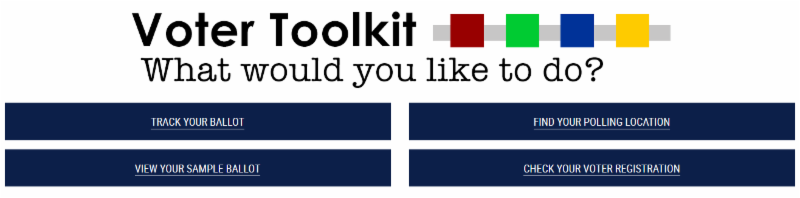
    Says Voter Toolkit on the top half and underneath says What would you like to do Bottom half has 4 boxes. Box1 says Track Your Ballot Box 2 says Find Your Polling Location Box 3 says View Your Sample Ballot and Box 4 says Check Your Voter Registration
  • Ohio Ballot Board certifies proposed constitutional amendments as single ballot issues

    Ohio Ballot Board certifies proposed constitutional amendments as single ballot issues

    “Ohio communities today are saying, We don’t have a fracking, pipeline, or development problem. We have a democracy problem!” – Tish O’Dell
     
    Columbus, Ohio – The Ohio Ballot Board today certified two proposed constitutional amendments, one regarding Ohio Community Rights and the other regarding Initiative and Referendum for Counties and Townships, as single ballot issues. Both respective amendments had previously been certified by the Ohio Attorney General’s Office.
     
    Petitioners will now need to collect 305,591 signatures, which is equal to 10 percent of the total vote cast for governor in 2014, for each issue in order to place the issues on the ballot.
     
    As state government and industry attempt to strip local self-governing authority from communities across the state, residents refuse to surrender their democratic and environmental rights. Working through the Ohio Community Rights Network (OHCRN), they submitted the two proposed state constitutional amendments.
     
    It also secures the authority of communities to put in place stronger environmental rights and protections than those recognized at the state, federal, or international level, according to a statement from OHCRN.
     
    After submitting initial petitions to the State, Greg Pace, a member of the OHCRN said, “For years we have tried to protect our communities from harmful corporate projects. Today, we understand why we can’t get what we want: We are blocked by a system designed to force the harms in against our will. It is a system that refuses to recognize our right to govern our own communities. The Community Rights Amendment is the people’s way to change that.”
     
    Today, only city and village residents can exercise their inalienable right to propose and repeal laws, which is recognized under Article 2, Section 1b of the Ohio Constitution. However, nearly 39% of Ohio’s population resides in townships and counties. They do not have the same constitutional right to legislate. This amendment extends equal rights to local self-government to all Ohio residents, regardless of jurisdiction within the state.
     
    As part of the total number of signatures needed to place the measure on the ballot, petitioners must collect signatures from at least 44 of Ohio’s 88 counties, and within each of those counties, collect enough signatures equal to five percent of the total vote cast for governor in the most recent gubernatorial election, 2014.
     

    “This goes beyond fossil fuel industries,” stated Tish O’Dell, CELDF’s Ohio organizer. “The right to pass local laws regarding fracking, gun control, predatory lending, minimum wage, and more, are thwarted by state preemptive laws. And those laws are often written by industry.”

    She continued, “Ohio communities today are saying, ‘We don’t have a fracking, pipeline, or development problem. We have a democracy problem!’