Tag: Bill 6

  • Ohio’s new U.S. Senator Jon Husted has a history of connections to energy and charter scandals

    Ohio’s new U.S. Senator Jon Husted has a history of connections to energy and charter scandals

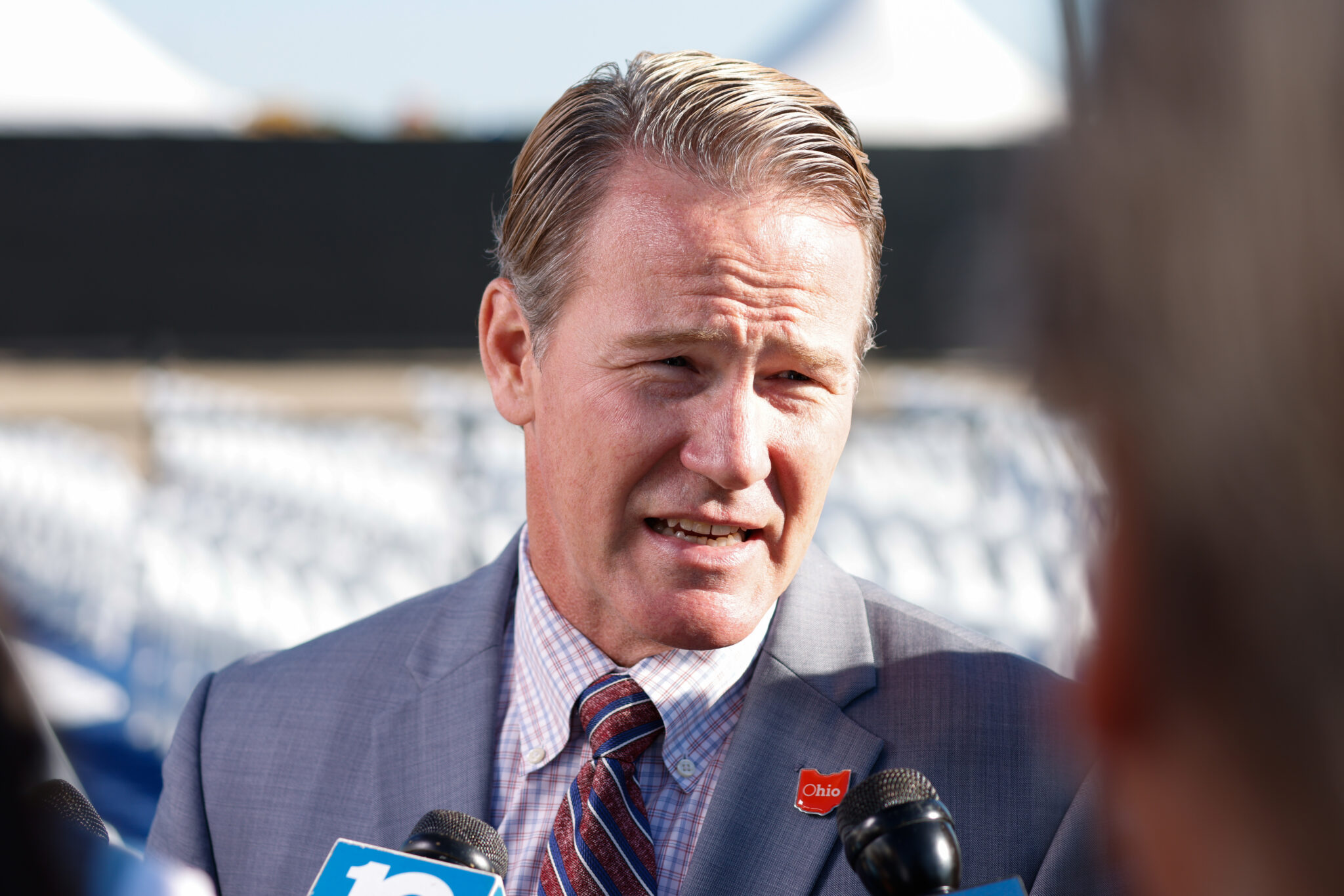
    Ohio’s next U.S. Senator, Jon Husted. (Photo by Graham Stokes for the Ohio Capital Journal. Republish photo only with original story.)

    Commentary

    The same day Jon Husted was tapped to be Ohio’s next U.S. Senator, former FirstEnergy executives were indicted on federal racketeering charges

    Marilou Johanek
    Marilou Johanek is a veteran Ohio print and broadcast journalist who has covered state and national politics as a longtime newspaper editorial writer and columnist.

    “No comment.” That’s all Ohio Gov. Mike DeWine said and walked away. Only at the tail end of DeWine’s press conference last Friday, to announce Lt. Gov. Jon Husted as his pick to replace J.D. Vance in the U.S. Senate, was the elephant in the room even acknowledged. What was the governor’s response to the federal indictments handed down (the same day) against two former FirstEnergy executives tied to the biggest public corruption scandal in state history?

    DeWine’s response was no response. His briefing was about Husted’s promotion not the stain of malfeasance on their watch that the federal indictments underscored. Both men revert to a predictable default setting when it comes to questions about their knowledge of or involvement in the FirstEnergy scheme to bribe lawmakers into giving it a massive state subsidy. Deny. Deflect. Dismiss. No comment.

    The pair insists, despite mounting evidence to the contrary, that they knew nothing about anything corrupt in the legislation written by and for FirstEnergy that they were instrumental in passing and signing into law. DeWine and his LG maintain they conducted themselves properly and did right by Ohio with energy policy that just happened to include an extravagant gift from the state to a utility that donated richly to their campaigns.

    They either outright refute the logged meetings, phone calls, emails and text messages shared with FirstEnergy brass before, during, and after the company’s billion-dollar nuclear plant bailout was enacted — or feign amnesia about their chumminess with generous GOP donors even as FirstEnergy’s devious pay-to-play arrangement was underway to enrich investors and hose ratepayers.

    But as court documents indicate — in the state and federal trials of defendants who got caught up in the nuclear bailout scam — DeWine, and especially Husted, had their fingerprints all over the dodgy FirstEnergy legislation while it was being created and passed through the legislature to benefit the utility and Republican sugar daddy. Like many Ohio Republicans, DeWine and Husted had lengthy relationships and intricate business dealings over the years with the head honchos at FirstEnergy.

    Their coziness with ex-FirstEnergy CEO Chuck Jones and Senior VP Mike Dowling appeared to reach its peak in 2019 with passage of House Bill 6 to prop up the utility’s two aging and uncompetitive nuclear power plants in Ohio. So when federal prosecutors announced that Jones and Dowling — at the center of a $60 million bribery plot to buy off state officials for a $1.2 billion bailout — had been slapped with federal racketeering charges, the top state officials who made that bailout happen must have squirmed.

    Their political patrons, already facing related charges on the state level, could well implicate the guv and his Senate-appointee in the developing federal cases. No wonder Husted is hightailing it out of Ohio before the boom lowers. But the senator-to-be, who has managed to skate around his deep entanglements in some of the state’s biggest scandals, (e.g., the notorious ECOT online charter school he championed without accountability that ripped-off a ton of taxpayer money for phantom students) may not be able to slide so deftly around his role as a pivotal player in the FirstEnergy scandal.

    Publicly released court records suggest Husted, in close contact with FirstEnergy execs, was leading the behind-the-scenes efforts to push the tainted HB6 through the legislature and onto the governor desk ASAP. Detailed evidence contains a slew of FirstEnergy texts referencing “State Official 2,” confirmed as Husted, that show how involved the LG was in not only lobbying for arguably the most corrupt piece of state energy legislation ever, but for making the nuclear bailout bill even beefier by extending the FirstEnergy payouts in the legislation a few extra years.

    Although Husted had to trim his sails on that front, FirstEnergy leaders chortled in text messages that the LG was in their corner “fighting to the end” to give the company everything it wanted and more. Who cared if Ohio ratepayers were on the hook for hundreds of millions in new monthly surcharges on their electricity bills? Husted wasn’t working for them. He was helping FirstEnergy boost its profit margin in an unprecedented bribery and money laundering fraud perpetrated on everyday Ohioans.

    Of course, Husted defaults to denial about any knowledge of the corruptness that permeated FirstEnergy’s bid for bloated state subsidies from the very beginning. It’s a dance he and DeWine do whenever pervasive state scandal threatens to puncture the governor’s folksy persona or the LG’s image as the telegenic GOP Golden Boy who checks off every box that matters to deep-pocketed powerbrokers lining up to make a killing on custom-made government policy.

    As Husted heads to Washington he takes a political skills set honed in shameless service to: an unscrupulous utility that tried to buy a gravy train ticket from the state with secretly-funded legislation, to a crooked for-profit charter that bilked taxpayers out of hundreds of millions of dollars, to a billion-dollar voucher boondoggle funding private religious schools in a scandal waiting to explode, to the fossil fuel industry’s anti-wind and anti-solar propaganda machine after publicly supporting renewable energy.

    Husted will fit right in with the Republican Senate majority carrying water for the highest bidder waving a campaign check, capitulating to the tyrant trashing the Constitution with impunity, and brushing aside telling stains of gathering malfeasance with “no comment.”
     

  • Former GOP Chair Borges chair sentenced to five years in massive corruption case

    Former GOP Chair Borges chair sentenced to five years in massive corruption case

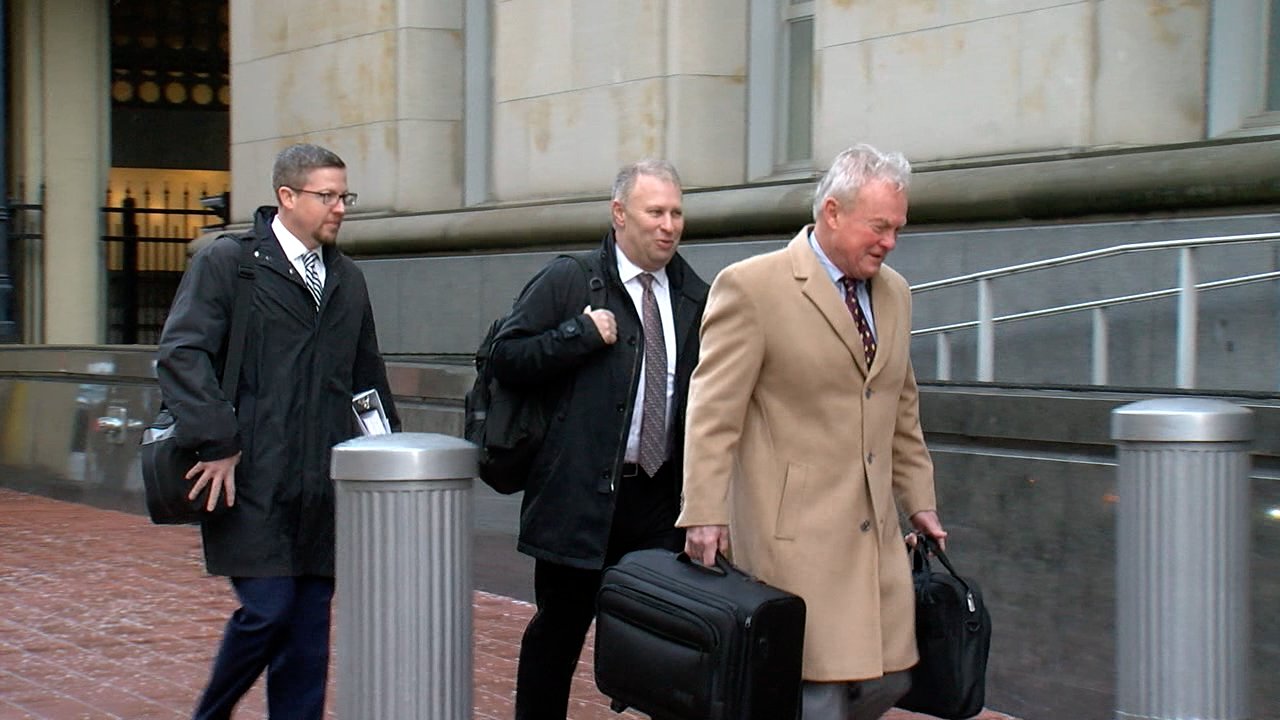
     Center, former Ohio Republican Party chair, and statehouse lobbyist, Matt Borges with his attorneys outside of the federal courthouse. Photo courtesy of WEWS.

    BY:  Ohio Capital Journal

    CINCINNATI — It was Matt Borges, the former chairman of the Ohio Republican Party, who was handcuffed by U.S. Marshals Friday after being sentenced to five years in prison for his participation in the biggest corruption scandal in state history.

    But federal prosecutors made clear that they were trying to send a message to other state leaders who played roles in the scandal and are now trying to pretend they didn’t.

    The sentencing of Borges, 51, follows the 20-year sentence U.S. District Judge Timothy Black meted out a day earlier to former Ohio House Speaker Larry Householder for masterminding the scheme. Akron-based FirstEnergy and other Ohio utilities ponied up more than $60 million between 2017 and 2020 to pass and protect a $1.3 billion ratepayer bailout that was mostly intended to benefit FirstEnergy.

    Borges received a lesser sentence because he was only involved in 2019, when FirstEnergy funneled $38 million into a dark-money group that funded an ugly, falsehood-strewn campaign to defeat a citizen-initiated repeal of the unpopular bailout. Because those voices were squelched — and because Ohio’s Republican legislature refuses to repeal the corrupt bailout — Ohioans continue to be harmed by the racketeering conspiracy, said Assistant U.S. Attorney Matthew Singer.

    The bulk of the subsidies — those going to two nuclear plants in Northern Ohio and a fee to “recession-proof” FirstEnergy — have been suspended. But Ohio ratepayers continue to pay hundreds of millions to prop two coal plants owned by AEP and other utilities, including one that’s in Indiana.

    The effort to gather enough voter signatures to put a repeal of the bailout — House Bill 6 — failed after Borges bribed a worker with the petition drive $15,000 for inside information and opened lines of communication with Republican officeholders.

    At the same time, teams of “blockers” harassed and allegedly assaulted petition gatherers and Householder’s minions flooded the airways with ads falsely claiming that the repeal effort was really China’s bid to take over the Ohio energy grid.

    The scheme Borges participated in was meant to “prevent Ohio voters from exercising their right to reject this corruption,” Singer said. “Ohioans never had the opportunity to vote up or down on this legislation.”

    Singer also pointed the finger at people only speaking out about Householder now and not earlier.

    “It’s interesting that some people are piling on (Householder) after the fact,” he said. “So many knew what was happening in real time and did nothing about it. Not only did they do nothing about it, they helped facilitate it.”

    Ohio Secretary of State Frank LaRose in a Tuesday appearance on Cincinnati’s 700WLW claimed that everybody who knew Householder knew he was “a crook” at the time the mammoth conspiracy was taking place. However, LaRose never spoke out against the deal at the time. And in text messages presented to the jury, FirstEnergy CEO Chuck Jones said that LaRose — who also heads up the Ohio Ballot Board — was giving him “private” updates about the signature-gathering effort.

    LaRose has refused to explain whether he was in communication with Jones or what he might have told him, but Singer, the prosecutor, seemed to refer to the state’s top elections official on Friday.

    Not only did Householder, Borges and their Republican allies squelch a citizen-initiated attempt to repeal the corrupt utility bailout, the gerrymandered legislature is now putting Issue 1 on the Aug. 8 ballot. It would make it virtually impossible for citizens to initiate amendments to the state Constitution. LaRose, a major supporter of the move, claims it will reduce corruption in Ohio.

    During Borges’ sentencing Friday, Singer decried the fact that many of the uncharged players in the racketeering scandal continue to thrive on Capitol Square. They include mega-lobbyist Robert Klaffkey, whom co-defendant Juan Cespedes testified slid a check for $400,000 in FirstEnergy dark money across a table to Householder during a 2018 meeting. Klaffkey denied sliding the check, but he didn’t deny being present.

    Singer said that it was remarkable that Klaffkey was “comfortable sitting in a room and sliding a $400,000 check to a public official.”

    Klaffkey is hardly alone.

    Megan Fitzmartin was paid hundreds of thousands as she aided Householder and co-defendant Jeffrey Longstreth in creating a Householder-friendly Republican majority in the state House. Now she’s policy director for the Republican supermajority in Ohio’s gerrymandered House.

    Corruption — and tolerance of it — corrodes our political foundation, Singer said.

    “Once corruption takes hold democracy itself becomes a charade,” he said.

    Cespedes and Longstreth are yet to be sentenced and U.S. Attorney Kenneth L. Parker on Thursday hinted that others might yet be charged in the scandal.


    Marty Schladen
    MARTY SCHLADEN

    Marty Schladen has been a reporter for decades, working in Indiana, Texas and other places before returning to his native Ohio to work at The Columbus Dispatch in 2017. He’s won state and national journalism awards for investigations into utility regulation, public corruption, the environment, prescription drug spending and other matters.

    MORE FROM AUTHOR

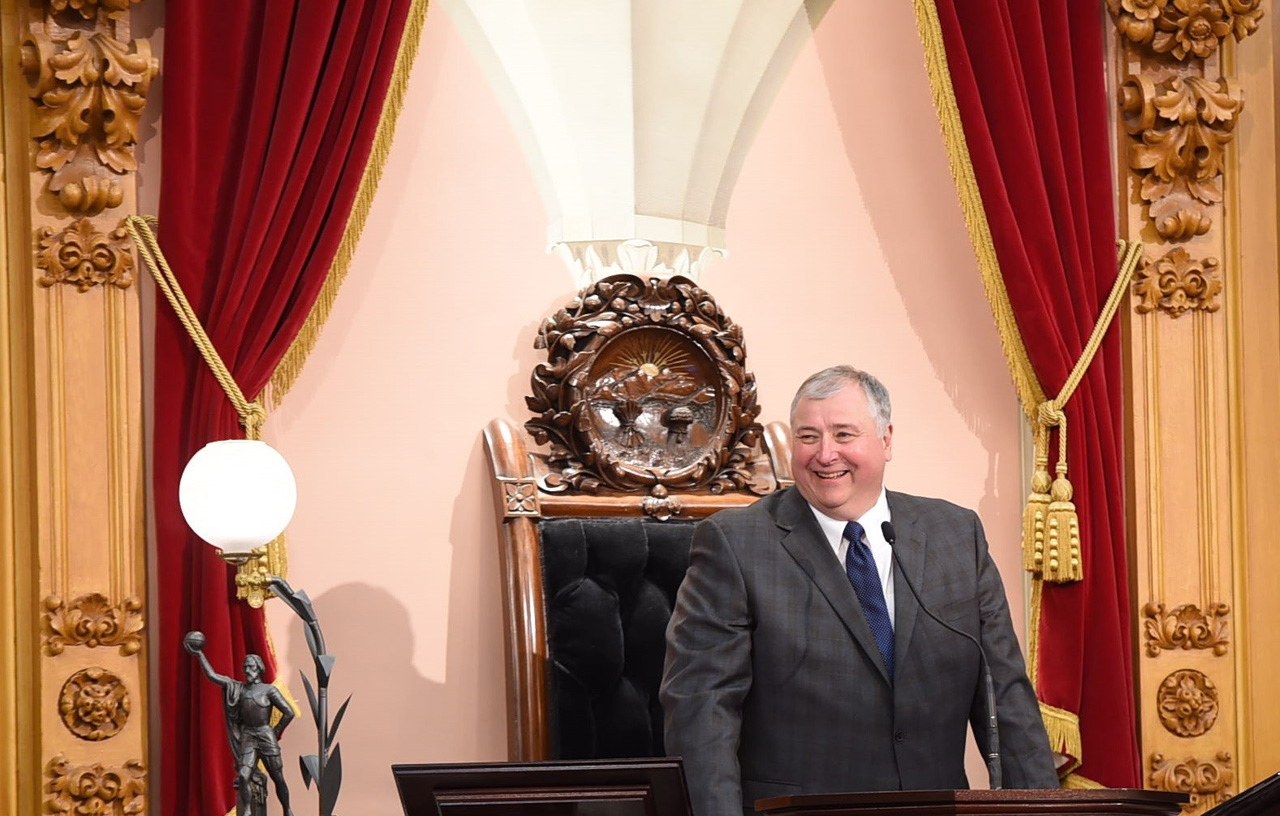
  • Householder denies D.C. dinners, tying donations to legislation

    Householder denies D.C. dinners, tying donations to legislation

    BY: MARTY SCHLADEN – Ohio Capital Journal

    Former House Speaker Larry Householder, R-Glenford. Source: Ohio General Assembly.

    CINCINNATI — Former Ohio House Speaker Larry Householder on Wednesday claimed that he never promised any legislative action to FirstEnergy in exchange for the tens of millions the company paid into a 501(c)(4) dark money group he controlled.

    He also denied attending dinners in Washington, D.C., during Donald Trump’s inauguration during which other witnesses said he met with top FirstEnergy executives. 

    And the former speaker denied that he demanded unquestioning loyalty from lawmakers whose elections he worked for. Instead, he said, he wanted them to be independent thinkers.

    After sitting through federal court testimony since Jan. 23, Householder on Wednesday took the witness stand in his own defense. That’s considered by many lawyers to be a risky strategy because he will be subject to cross examination by prosecutors who are eager to catch the former speaker in a lie.

    Householder, a Republican from Glenford, and former Ohio GOP chair Matt Borges are being tried on accusations of racketeering in a case that federal prosecutors have said is likely the biggest bribery and money laundering scandal in Ohio history. 

    Householder is accused of masterminding a scheme to use $61 million in utility money to elect House members who would vote to make him speaker at the beginning of 2019. He led the effort to pass a $1.3 billion ratepayer bailout of failing nuclear and coal plants the following July and then protected it from a repeal campaign that failed in October 2019. Prosecutors say the bailout was explicitly tied to FirstEnergy’s contributions.

    On the stand, Householder introduced himself as a guy from Appalachia who had worked for years to protect Ohio’s energy independence. But he also made a number of statements prosecutors are likely to challenge.

    One is that as it neared passage, the bailout law, House Bill 6, became the object of “misinformation” in commercials that he said were financed by the American Petroleum Institute. The nuclear reactors the law would subsidize couldn’t compete with natural gas, which Householder said the petroleum institute supported instead of nuclear power.

    However, in his testimony, Householder didn’t point to anything specific that the group had misstated. Similarly, he complained of misinformation in a Cleveland Plain Dealer editorial, but he didn’t point to anything specific, nor did he say whether he asked for a correction.

    At the same time, the former speaker seemed guilty of some misinformation of his own.

    Householder said one of the chief goals of House Bill 6 — dubbed the “Ohio Clean Air Program” — was to lower carbon emissions. But the bill provided hundreds of millions in subsidies to coal-burning plants owned by FirstEnergy subsidiary FirstEnergy Solutions and other Ohio utilities.

    Householder’s claimed concern for carbon emissions also seems to clash with earlier statements he made on the stand. He testified that he was president of a group that owned an Alabama coal mine and that during an earlier stint in the Ohio House, he worked to subsidize coal production.

    Householder also tried to soften his image after three former House Republicans portrayed the former speaker as a heavy-handed autocrat who demanded loyalty at all times. He pointed out that even though they didn’t vote to make him speaker and they voted against HB 6, he didn’t remove Reps. Laura Lanese and Dave Greenspan from their leadership positions.

    In secret FBI recordings played earlier in the trial, lobbyist Neil Clark described Householder as ruthless and said he told Greenspan that because the lawmaker had opposed HB 6, Householder would never allow legislation Greenspan wanted to move forward. What Householder wanted, witnesses testified, were “casket carriers” — people so loyal that they would stay with him until he died and then lower his casket into the ground.

    But Householder on Tuesday said he didn’t want blind loyalty, he wanted independence. As for wanting casket carriers, that meant “I didn’t want enemies. I wanted friends,” Householder testified.

    Householder also disputed some of the basic factual allegations that had been made against him. 

    He denied testimony from former aide Jeffrey Longstreth that in an Oct. 10, 2018 meeting, lobbyist Robert Klaffky slid a $400,000 check from FirstEnergy Services across a conference table and under Householder’s hand. It was a FirstEnergy Services employee who gave him the check and there was no conference table to slide it across, Householder said.

    Even if that’s true, it’s hard to square that account with other parts of Householder’s testimony.

    At issue in the case is whether Householder pushed the bailout legislation in exchange for all the millions he received from FirstEnergy. He said he had little involvement in Generation Now, the main 501(c)(4) dark money group the company paid into and which supported Householder-friendly candidates and ferociously attacked their opponents.

    Householder said his understanding was that Generation Now was “a vehicle that would educate the public on issues that were important to Ohio.”

    But on Wednesday, Householder said he accepted a $400,000 check from FirstEnergy Solutions that was made out to Generation Now, which was created and controlled by Longstreth, his underling. The former speaker conceded that it was a huge contribution — and the jury might find it hard to credit that he played such a passive role in the group’s activities.

    Householder also denied Longstreth’s account of a dinner during Trump’s 2017 inaugural. Longstreth testified that he sat at one end of a long table in a crowded steakhouse with FirstEnergy Vice President Michael Dowling, while Householder sat at the other with CEO Chuck Jones. Longstreth said he couldn’t hear the conversation at the other end of the table, but he did hear Dowling instruct him to set up an organization that could accept “undisclosed and unlimited contributions” from FirstEnergy and its subsidiary. 

    Householder testified that he went to the inaugural with his wife and several of his sons and only briefly saw Jones and Dowling, but didn’t dine with them. Instead, he and his family went to the inauguration, the parade that followed and attended functions where they were photographed with such luminaries as former Indiana University basketball coach Bob Knight, Householder said.

    However, Householder said he and one of his sons flew to D.C. and back on a FirstEnergy jet. 

    The former speaker testified that on March 29, 2019 — more than two months later — he wrote a check for $2,647 reimbursing the company for the flight. But he didn’t say why it took him that long to make the payment or what prompted him to do so.

    In addition, paying for flights on private jets crashed pretty hard against another bit of Householder’s testimony Wednesday — that he is very frugal.

    “Anybody who’s been around me knows I’m cheap,” Householder said. “I drive a 2001 GMC Sonoma and I don’t like to spend money.”

  • Utility regulators block watchdog’s requests for info about a buried audit of a $460 million fund

    Utility regulators block watchdog’s requests for info about a buried audit of a $460 million fund

    Photo by Getty Images.

    BY: JAKE ZUCKERMAN – Ohio Capital Journal

    An administrative judge blocked a watchdog’s attempt to obtain an audit that the Ohio utility regulatory agency’s former chairman, who has been accused of taking a $4.3 million bribe, allegedly tried to squash before publication.

    The ruling, released Friday evening, is a setback for the Ohio Consumers’ Counsel, a state funded agency representing residential ratepayers in utility cases. The OCC has pushed for investigations of FirstEnergy, especially since the company admitted to playing a central role in a massive public corruption scandal.

    The OCC asked the Public Utilities Commission of Ohio to grant it a subpoena to obtain a copy of any draft audit into a $458 million charge from FirstEnergy that started in 2017 collected called the “Distribution Modernization Rider.” The OCC also sought to depose an auditor who worked on report.

    The Ohio Supreme Court blocked FirstEnergy from continuing to charge customers for the DMR, two years after it was first applied on monthly bills. The court said the PUCO unlawfully failed to ensure the money is actually spent on modernizing the grid. A subsequent PUCO investigation was inconclusive as to whether the DMR monies were used to fund the bribery operations.

    The Supreme Court’s order questioned the value of leaving intact the audit when it overturned the rider, finding the reviews fail to properly protect ratepayers from the “possible misuse of DMR funds.” Additionally, the justices reasoned that any findings of misuse of the funds would be moot given the court had already blocked the charge and a state law blocked the court from ordering refunds unless PUCO explicitly allows for them, which it did not. The PUCO later nixed the audit, citing the court’s thinking.

    The OCC has previously obtained a text message from FirstEnergy’s CEO referencing former PUCO Chairman Sam Randazzo “burning the DMR final report.”

    The text partially came to light when FirstEnergy entered into a deferred prosecution agreement with the U.S. Department of Justice to possibly avert a charge of wire fraud. The company agreed to pay a $230 million penalty. It also admitted to paying Randazzo $22 million over nine years, including $4.3 million just before he started as PUCO chairman. The company also admitted to a separate $60 million bribery scheme ran through the state Legislature to pass House Bill 6 in 2019.

    Randazzo has not been charged with a crime and has maintained his innocence. The PUCO has received two subpoenas in connection with the investigation.

    PUCO Attorney Examiner Gregory Price denied both the OCC’s requests. He said the facts are clear that no such draft report exists in any form. Additionally, the question of FirstEnergy’s political spending is being “thoroughly addressed” in other PUCO cases.

    Price ruled OCC’s reliance on the Randazzo text shows its “obvious interest in investigating potential wrongdoing” as opposed to matters it “actually has jurisdiction over.”

    In December 2020, about two months after federal agents raided Randazzo’s home, the PUCO opted to resume the audit into the DMR. However, this time it hired Daymark Energy Advisors. That audit, released earlier this year, was inconclusive as to whether the DMR funds were used to fund the HB 6 campaign. FirstEnergy, the auditors said, pooled funds from all its 11 utilities in one pot, creating an “inability” for the auditors to track the funds.

    Price, however, said the final report “appears to fully address whether [FirstEnergy] properly expended the DMR funds.”

    In records the PUCO provided to federal prosecutors, Price is copied onto email threads regarding policy meetings before and after the passage of House Bill 6. As was first reported by Cleveland.com, one email shows Price was invited to one such meeting days before the House passed the bill.

    Other investigations into FirstEnergy, Randazzo and other alleged conspirators continue. Former House Speaker Larry Householder is expected to stand trial on a racketeering charge in connection with the scandal this fall. He recently asked a court to dismiss the charge against him. That motion has not yet received a ruling.

    Meanwhile, FirstEnergy shareholders have filed a class action lawsuit against the company as well.