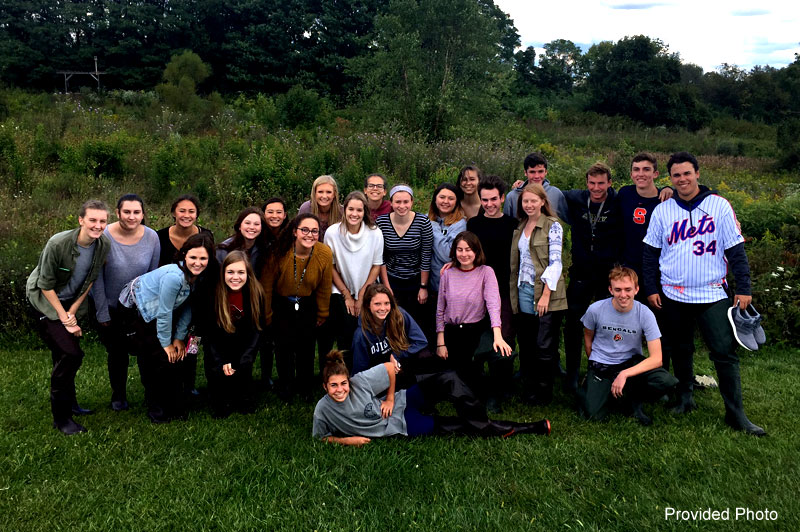
Loveland, Ohio – Students involved in Honors Biology, Green Team, and Environmental Science at Loveland High School have won thousands of dollars in grants to help local environmental concerns. They applied for the Caring For Our Watersheds program through the Hamilton County Conservation District. The contest awards grant money up to $1000 to implement a project that will benefit the local area and watershed.
Here are their winning programs:
Clean up for Candy
Roman Wilburn, Gavin Folzenlogen, Semi Ozarslan, and BusyAiken will be recruiting clubs and other classmates to clean up recyclables after athletic events that would normally go into the trash. Volunteers get entered into a raffle for various prizes as well as a candy bar.
Drug Take-Back Day
Ashley Wheeler and Ollie Fisher are working with the Loveland Police Department to organize a day where parents can drop off medications that are expired or unused to be properly disposed of by LPD.
Contact Lens Recycling
Sonya Yurovski will be working with local Eye doctor offices to encourage the recycling of contact lenses and packaging. LHS will also be a collection site for students to bring their contacts for recycling.
Honorable Mentions:
Milkweed for Monarchs
Sophia Choi and Reese Renock created a program to increase biodiversity and provide food for the declining Monarch butterfly population. Sophia and Reese will hand out milkweed seeds and germinated seedlings for people to plant at their homes.
Reducing Stream Bank Erosion and Harnessing the Power of Mushrooms
Dharmin Patel and AJ Cook are creating erosion control barriers by stuffing burlap bags with a straw mixture that has mushroom spores that have been added. The mycelium that the mushrooms produce has been shown to have many positive environmental effects and will help reduce erosion.
Loveland students won three of the 10 statewide awards and both of the available Honorable Mentions. They will present their ideas to judges during an event at the Cincinnati Zoo on April 30. In total, these students will be managing over $4,000 in grant funds and will all earn prizes.
(Reprinted with permission from a social media post of Jamie Smith)
by Jamie Smith
There will be a planning and zoning meeting at Loveland City Hall Wednesday, May 4th at 7 PM, with a demonstration beforehand at 6 PM to rally against the petition Drees is submitting for an (SPD) proposal.
Jamie’s family is often on the Grailville Farm. “My dogs have their absolute biggest smiles here, as do my kids and I.”
The granting of an SPD would allow them to build over 200 homes on the land that was annexed originally for “low-density housing.” This neighborhood of about 206 homes would sit on the south side of the old Grailville property, between Saint Columban Church and the north side of Grailville (their current offices).
The building of yet another non-distinct neighborhood in Loveland would destroy several historically rich and architecturally beautiful buildings that hold much significance in the hearts of many Loveland residents. Even a stranger passing by, with no knowledge of the importance of the work that was done there, is struck at the beauty of the place.
The women (and men) who started the mission here at Grailville were so dedicated to the righteousness of its cause that many of its early devotees are buried on-site, in the loveliest little cemetery on the north side of O’Bannonville Road.
Some of the reasons I feel very strongly against the actions aimed at adding yet another subdivision to our previously rolling river valley and forested areas are as follows:
1. It is my favorite place in Loveland, exactly as it is, in its natural state. My dogs have their absolute biggest smiles here, as do my kids and I.
2. I and my children have gained much peace and happiness from our exposure to the blessings of the land, water, and sky at Grailville. We have shared this joy with others. This land has kept us healthy physically and mentally. I can feel instant decompression upon starting my explorations there.
3. The place has a beautiful historical significance. You can explore the beginnings of the good that has been done on this land starting with this LINK. The historical films created, however, don’t even begin to touch on the good work that was done up until current times.
4. Not only have many historic buildings of Loveland been destroyed that are tragically gone FOREVER, but the greenspace in Loveland is rapidly disappearing, to the point that Grailville is the “last of the Mohicans.” Losing the large stretch of greenspace that connects fields to the “wilderness” on the north side would have a hugely detrimental impact on local wildlife, as well as on the human beings that regularly seek solace in the fields and woods of its paths.
5. TRAFFIC IN DOWNTOWN LOVELAND
“I and my children have gained much peace and happiness from our exposure to the blessings of the land, water, and sky at Grailville.”
6. GREED over NATURE
7. Absolutely zero benefits to Loveland residents, only more destruction, construction, and overcrowding of our streets….adding to issues of congestion instead of working on solutions.
8. Once this land is developed, the sanctity and purity of the place will be lost forever. We are Loveland, and beginning to look like Liberty Township, a “run-on sentence of subdivisions.” We are a town rich in farming and RR history. Let’s not erase YET ANOTHER part of our heritage. There is enough history at Grailville to erect a small museum to the humanitarian work and personal development that was achieved there and carried throughout other communities in the hearts of members of the Grail.
9. The land is certified organic, which is no small feat.
10. About 10 million reasons this ties into the bigger picture of the environmental crisis: urban sprawl (in turn, increasing urban blight), loss of greenspaces for migratory species, the immediate destruction of the habitat for countless plant and animal species, loss of biodiversity, etc., etc., etc.
11. The thought of losing this place and the PEACE IT HAS BROUGHT MY FAMILY, and having to deal with the congestion of another subdivision literally breaks my heart….and I am not alone.
Come show your solidarity. Let’s not let an out-of-state developer take what’s left of who we are! These historic places, YES EVEN OPEN PLACES, FARMS….this is what Loveland was, and part of it always should be! We need to retain a connection to what draws people to love this land.
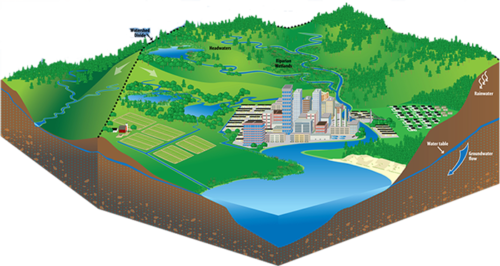
Citizens for Rights of the Ohio River Watershed (CROW) is an organization that advocates for rights of communities dwelling within the watershed to protect the health, biodiversity, and safety of the Ohio River Watershed ecosystem. Government permits that put the fragile balance of this ecosystem at risk not only affect the functioning of the watershed as a living system, they deprive local communities from exercising their democratic rights to protect their own health and safety.
CROW joins the Sierra Club Miami Group in urging Loveland City Council to hold a public hearing before Loveland City Council takes a vote on the proposed downtown parking garage. Addressing the parking situation in Loveland should rightfully include all stakeholders in the discussion.
Some questions to consider:
1. The Little Miami State Park, located within the beautiful and historic Little Miami River valley, has been designated as a federal and state scenic river. It is protected because of its high water quality, panoramic setting, and the many historic sites that can be found along its banks. In accordance with the provisions of chapter 1547 of the Ohio Revised Code, the Miami Valley Scenic Park has an Advisory Council representing local interests. Has this Advisory Council been consulted about the ecological viability of this proposed structure?
2. The Little Miami River traverses an ecologically vulnerable flood plain. Trail volunteers report the never-ending battle of keeping the trail free of conditions that cause flooding on parts of the trail-clogged culverts, erosion caused by bridge embankments, and other obstacles that interrupt the flow of water away from the trail surface. Even a few inches of rainfall can cause permanent flood damage. With the ground’s inability to absorb or impede the flow of water, the consequences can be disastrous. We can further expect Increased microbursts and flooding due to climate change. If you have done a geotechnical survey to study the subsurface conditions of the soil, was this survey conducted before or after a rainfall? Has a thorough environmental impact study been done? How many trees will need to be cut down to make room for this structure? Trees increase the permeability of the forest soils, preventing erosion and flooding. Other potential environmental impacts: Contamination due to increased particulate matter, increased noise pollution in Loveland, the potential increase in stormwater runoff from asphalt surfaces and bulldozed ground, and the laying down of detention basins, new water and sewer lines.
3. If we really need a parking lot for bikers, have alternative proposals for downtown parking been considered? Since the garage would be 100 feet from the Little Miami River bike trail, presenting a potential environmental risk, why not locate the parking garage 1000 feet away from the flood plain? Bikers are fit enough to drop their bikes at the trail head and park their cars 1000 feet away.
The Citizens for Rights of the Ohio River Watershed (CROW) appreciate your consideration of our concerns, our questions, and our request.
Signed: Jeanne Nightingale, Jessica Schultz, Jim Schenk, Bill Cahalan, Deborah Jordan, Mary Aguilera, Susan Vonderhaar, Nikki Orlemann, Lynn Hamamoto, Frank Collins, Sue Brungs
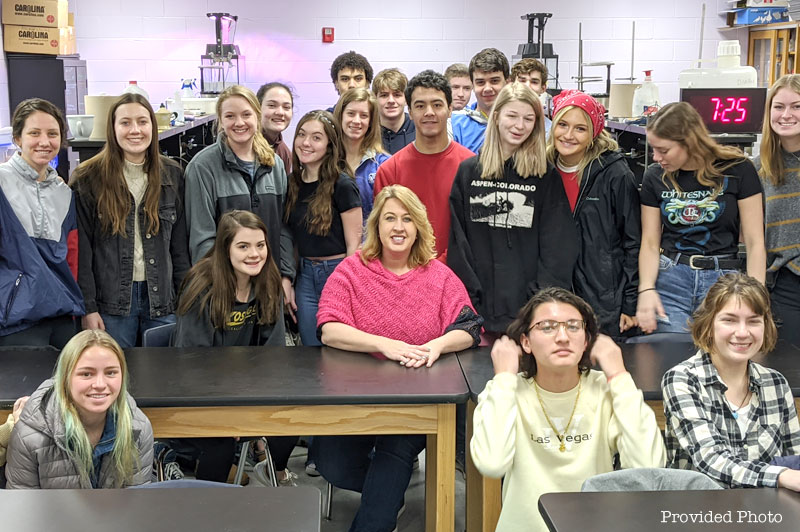
Amy Aspenwall (center), surrounded here by students in one of her AP Environmental Sciences classes at Loveland High School, is one of 20 teachers nationwide selected for “Nourish the Future” national teacher leadership training in San Antonio, Texas, in February.
Loveland, Ohio – As one of only 20 teachers nationwide, Loveland High School Science Teacher Amy Aspenwall has been selected to attend the national teacher leadership training by EducationProjects.org in San Antonio, Texas, in February. The training will take place at the Commodity Classic, the nation’s largest agricultural trade show, and professional development event.
“This is really exciting for me personally, but also for Loveland High School,” said Aspenwall. “It will provide leadership opportunities and allow collaboration with teachers around the country to identify and create new problem-based modules, flipped classroom materials, and science labs for our students.”
It will also highlight the connection between the science they teach in the classroom and the application to food production and food security.
Loveland High School science teacher Amy Aspenwall
EducationProjects.org has connected industry to the classroom for more than 20 years. The upcoming training, “Nourish the Future,” will introduce participants to the latest developments in water quality, sustainable agriculture, and 21st-century tools and technology in precision agriculture. It will allow teachers to take part in a curated tour of the trade show, with a focus on the science and engineering that support the production of food, fiber, and fuel. It will also highlight the connection between the science they teach in the classroom and the application to food production and food security. After the three-day event, teachers will continue to collaborate and access additional training through webinars and national and regional conferences.
“Agriculture is an important aspect of our work and a great opportunity to engage students in concepts and activities that impact their own lives,” said Aspenwall.
“Agriculture is an important aspect of our work and a great opportunity to engage students in concepts and activities that impact their own lives,” said Aspenwall. “When that connection is made, students are empowered to become more involved and engaged in environmental issues.”
Loveland City School District and Amy Aspenwall receives Sustainability Award by local chamber in 2018
Through the nomination of Aspenwall and her AP Environmental Science class at LHS, Loveland City Schools earned the Sustainability Award by the Little Miami River Chamber Alliance in 2018. The award recognized the work with students and the commitment to developing environmental leaders for the future. Aspenwall’s class continues to offer authentic, hands-on opportunities for students to understand issues like water quality and biodiversity, and allows them to develop innovative solutions to problems. The class was implemented at LHS in the fall of 2016 and was filled to capacity after only a couple of years.
AP Environmental students trying on waders for the first time in preparation for a water quality study field trip.
District recognized for impact on students and community through
environmental sciences coursework
Loveland, Ohio –The Loveland City School District, through the nomination of Advanced Placement (AP) Environmental Sciences Teacher Amy Aspenwall, has earned the Sustainability Award by the Little Miami River Chamber Alliance. The award recognizes the district and Aspenwall for her work with students, and the devotion to developing environmental leadership for the future.
“It’s an honor to be recognized for work that means so much to me and my colleagues at Loveland,” said Aspenwall. “We promote sustainability by developing environmentally educated and responsible leaders, and are committed to continuing to create programs that heighten awareness not just for our students at school, but for them as Loveland citizens and stewards of our world.”
The AP Environmental Sciences course at Loveland offers authentic, hands-on opportunities for students to understand water quality and biodiversity, consumer habitat design, and the impact of a population that shifts the needs and municipalities of the community. Students examine solutions to various environmental issues and are empowered to develop new ways to solve problems. Loveland Schools has a long-established, integrated recycling program, but the course work now offered helps develop a greater understanding of consumer goods, product development, and the power to choose sustainable methods. Students track their carbon footprint in the areas of food and fuel consumption, waste generation, and water and electricity use, and learn about ways that small changes can have a large impact for the benefit of the environment.
The AP Environmental Sciences course was implemented at Loveland High School (LHS) in the fall of 2016, resulting in a perfect 100 percent CollegeBoard passage rate in 2017. The program has doubled in size every year since its inception and is now filled to capacity until new sections can be added. Many students who completed the course have gone on to major or minor in environmental studies in college.
“APES challenged the typical AP class by making students think in a different way,” said Maddie Craft, a 2017 LHS graduate. “I’m about two years out of the class now, and I can still see how the topics that we discussed impact not only me personally but the world around me. I am going into Logistics Management and one of my goals in my career is to help build a more sustainable supply chain. This really stems from things that I learned in APES and the values that the class made me realize I have.”
Loveland Sweets is a purveyor of hand-crafted chocolates, caramels, marshmallows, and ice creams. Our house-made candies are prepared in small batches.




 Classic