[vc_row][vc_column][vc_column_text]Loveland, Ohio – The Little Miami Chamber Alliance has announced that the closing of the Loveland Bike Trail for repairs will be delayed until October 2023.[/vc_column_text][vc_raw_html]JTNDaWZyYW1lJTIwc3JjJTNEJTIyaHR0cHMlM0ElMkYlMkZ3d3cuZmFjZWJvb2suY29tJTJGcGx1Z2lucyUyRnBvc3QucGhwJTNGaHJlZiUzRGh0dHBzJTI1M0ElMjUyRiUyNTJGd3d3LmZhY2Vib29rLmNvbSUyNTJGTE1SQ2hhbWJlckFsbGlhbmNlLm9yZyUyNTJGcG9zdHMlMjUyRnBmYmlkMDJRNUFnOFgzZnpqZW9LblFXb0VnSGdMODlHd3JFY3hXVEZvbVhhY0FUQ2E1RlZmUk1XdFZkU1QxaVg3MzZZQnpDbCUyNnNob3dfdGV4dCUzRHRydWUlMjZ3aWR0aCUzRDUwMCUyMiUyMHdpZHRoJTNEJTIyNTAwJTIyJTIwaGVpZ2h0JTNEJTIyNjUxJTIyJTIwc3R5bGUlM0QlMjJib3JkZXIlM0Fub25lJTNCb3ZlcmZsb3clM0FoaWRkZW4lMjIlMjBzY3JvbGxpbmclM0QlMjJubyUyMiUyMGZyYW1lYm9yZGVyJTNEJTIyMCUyMiUyMGFsbG93ZnVsbHNjcmVlbiUzRCUyMnRydWUlMjIlMjBhbGxvdyUzRCUyMmF1dG9wbGF5JTNCJTIwY2xpcGJvYXJkLXdyaXRlJTNCJTIwZW5jcnlwdGVkLW1lZGlhJTNCJTIwcGljdHVyZS1pbi1waWN0dXJlJTNCJTIwd2ViLXNoYXJlJTIyJTNFJTNDJTJGaWZyYW1lJTNF[/vc_raw_html][vc_column_text]Read Background
[vc_row][vc_column][vc_column_text]Miami Township, Ohio – Barrett Paving will be resurfacing12.6miles of road,andadditionally replacing curb and gutter at needed locations. Work will be performed this summer when school is not in session to avoid conflicts with school buses. They are allowing the contractor to begin concrete work as soon as temperature and weather are appropriate.
The project also includes an asphalt rejuvenation treatment. An asphalt rejuvenator is a substance that penetrates asphalt and is designed to replace the lost maltenes, the soft fraction of the asphalt binder in the original asphalt pavement. This should restore the original qualities of viscosity and significantly extend the life of the pavement according to the Township Service Director, John Musselman.
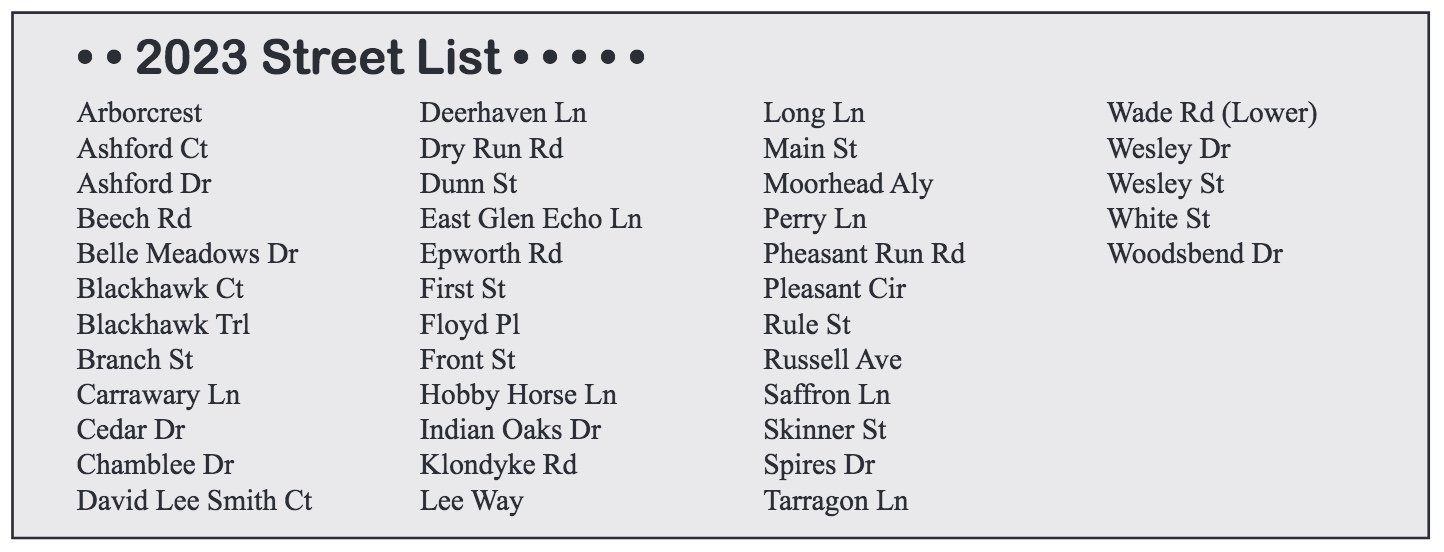
Here is the list of streets in the Township that are scheduled for resurfacing.
Part of Loveland Magazine’s coverage of Developmental Disabilities Awareness Month
[/vc_column_text][vc_column_text]
Cassie Mattia
by Cassie Mattia
Since the inception of Ohio’s Technology First Initiative, new and improved devices that help with two-way communication or provide step-by step assistance has helped many families and individuals with developmental disabilities overcome daily obstacles. For children with developmental disabilities, communication devices are often one of the most important parts of their growth and development. Butler County Board of Developmental Disabilities (BCBDD) Early Intervention Speech-Language Pathologist, Bree Lanham, began learning about Augmentative and Alternative Communication devices in college and knew that with her expertise she could implement what she had learned into the BCBDD Early Intervention program and immediately impact the children and families a part of the program.
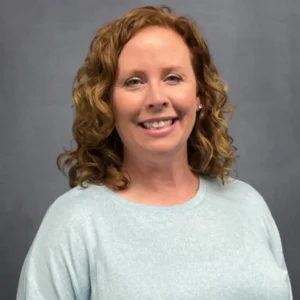
Bree Lanham
“Since joining the board, I saw an opportunity for increasing awareness of Augmentative and Alternative Communication (AAC) to be used in Early Intervention. There are many myths associated with using AAC in young populations and I really wanted to make it my mission to reveal the truth about AAC and how it can benefit birth to 3,” Bree said.
Bree, who has been a Speech-Language Pathologist (SLP) for 14 years, began learning about low-tech and high-tech AAC devices at Arizona State University where she gained her degree in Communication Disorders (Speech Pathology). Bree’s undergraduate degree in Special Education allowed her to explore the world of AAC devices and use various forms of the devices to give the children she worked with access to language surrounding curriculum in the classroom. “I’ve lived all over the US and had experience working with families and children not only in Early Intervention (EI), but schools and clinics as well. I have found that the earlier a child has access to a robust system of communication, the earlier they can begin integrating their skills with family and friends across environments and building lifelong relationships,” Bree said.
What is an AAC device?
Augmentative and alternative communication encompasses the communication methods used to supplement or replace speech or writing for those with impairments in the production or comprehension of spoken or written language. In simpler terms, AAC means ALL of the ways that someone communicates besides talking. Anyone at any age can use AAC to help with speech and language skills. AAC devices fall into two categories, no or low-tech, meaning a physical aid or tool is not required, and high-tech, which utilizes technology. No or low-tech includes gestures and facial expressions, writing, sign language, drawing, spelling words by pointing to letters, and pointing to photos, pictures, or written words. High-tech most often uses an app on an iPad or tablet to communicate. High-tech may also include using a computer with a speech-generating device.
Who should use AAC devices?
AAC devices work well for children who are pre-verbal, those with developmental delays such as Autism or Down Syndrome as well as children who are difficult to understand such as those with severe phonological impairments or Childhood Apraxia of Speech. High-tech AAC devices allow children to build on their language skills; quickly going from single words to short sentences in a matter of months. High-tech AAC devices gives children a voice to request their favorite food, favorite toy or to tell their parents and caregivers about an important need or want. AAC devices can be a huge help to kids who are learning verbal speech alongside their device and promotes speech and language development.
Bree quickly recognized the need for AAC devices in the BCBDD EI program and as a result of her efforts, the EI department procured several iPads with five apps (Proloquo2Go, TouchChat, TD Snap, Snap Scene and Cough Drop) to use for expressive communication. The iPads are available through a budding lending library for EI families to now learn the possibilities of what is out there and how AAC devices can help their child develop and grow to the best of their potential. Since the introduction of AAC devices to the EI program, the Butler County Educational Service Center has provided an additional 8 iPads to help grow the lending library.
“It’s great to work for an organization where employees feel empowered to reach out when they see a need. Bree approached us with an opportunity to enhance our services to the children we serve. Of course, we quickly made that opportunity a reality for our families and can now add AAC as another option for our families,” said Sherry Dillon, BDBDD Community Services Director.
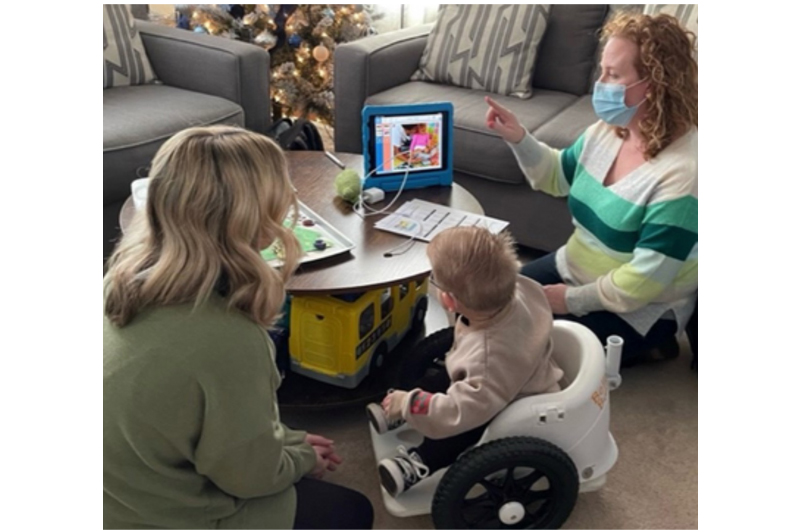
2-year-old Leo Davis using an AAC device
BCBDD EI Therapists are trialing the AAC apps with several kids in the EI program to use across daily routines such as playtime and mealtime. “Our plan is to figure out which app best fits their needs and work to complete an AAC Evaluation to provide these children with permanent devices to supplement expressive language. I feel that all children should have access to robust language from an early age to promote developmentally and/or age-appropriate communication skills,” Bree explained.
The use of AAC devices in the BCBDD EI program has already begun to make a huge difference in Kasey Davis’ life, whose 3-year-old son Connor is using an AAC device to model language.
“Having access to the device has been amazing for our family,” said Kasey. “It’s allowed our son to explore expressive communication in new ways we didn’t think was possible. Although we are still learning the different apps, he’s picking it up quickly and is engaged when using it. Having a ‘tailor made’ device that we can customize to our needs has made the experience even better. We’re so grateful for the opportunity to work with the program and use the device as a tool for our son.”
The benefits of AAC can be endless when introduced early on, according to Bree.
“Our Early Intervention program is unique. We have access to low and high-tech AAC for all children. Families will need to work with their therapists to obtain the right fit and explore all options. Typically, a child will be working with a therapist for a period of time to determine the best fit for AAC. High-tech AAC devices can and should be implemented early but are often not the first strategy or system that we use. This may be due to various factors including need or fit for the family and child. Essentially, it’s a complex process of determining what is the best fit for a child and family long-term. This is why a family’s Speech Language Pathologist should work together with the family to determine the most appropriate fit that meets the current need and also allows the child to push to the next level of development,” Bree said.
Bree says that when working with a SLP or therapist it is critical in determining the need for high-tech devices as not all children and families will need them. “Asking your SLP or therapist questions is the best way to learn more about what we have to offer and which program on the device will fit their needs. It’s also critical to work with your therapist to learn the device and how to implement it in daily routines to reduce device abandonment long-term,” Bree added.
AAC devices can lead to other benefits in a child’s future!
According to AssistiveWare.com, AAC devices can offer a child many social, physical, and emotional benefits including:
stronger friendships and deeper relationships
richer, more frequent social interactions
deeper social roles
increased autonomy and decision-making power over their own life
increased independence
more respect from others
greater participation in their family lives and communities
improved information sharing with physicians
improved personal safety in a variety of care settings, such as hospitals or long-term facilities
more employment and volunteer opportunities
improved physical and mental health
With the implementation of AAC devices in the BCBDD EI program and the proven success rate with families currently trialing the devices, BCBDD Superintendent, Lisa Guliano couldn’t be happier about offering more assistive technology options to children and families.
“I appreciate Bree’s initiative in pursuing use of Augmentative and Alternative Communication as an option for children and families being served through Early Intervention,” Lisa said. “These efforts align with our statewide Technology First plan and our agency’s goal to increase the number of people using assistive technology across the lifespan. I’m excited to see the outcomes for children and families as they explore the options available.”
The new BCBDD AAC system in the EI program is something Bree believes all organizations that serve children with communication delays and disorders would benefit from. “All children should be provided a system of communication as early as possible, and this can range from pictures and signs to a high-tech device,” said Bree. “I’ve always felt that my job as an SLP is not to ‘make a child talk’ but to teach a child to communicate and AAC is another tool in my toolbelt that can support a child in their development of communication skills.”
AAC Myths vs. Facts
Myth: Using AAC or high-tech device will prevent a child from talking. Fact: Using AAC or a high-tech device can help to promote verbal speech.
Myth: AAC is a “last resort” in speech-language intervention. Fact: There are no pre-requisites for providing AAC and it can be used in tandem with traditional speech-language intervention.
Myth: Only children with certain cognitive abilities will benefit from AAC or high-tech devices. Fact: No, the opposite is true. Emerging research is showing that devices can actually promote communication and cognitive development including increasing social skills, facilitating communicative intent and aiding in learning symbolic representation.
Myth: Children need to trial low-tech devices before high-tech devices such as PECS. Fact: There are no pre-requisites for providing a robust system of communication. Each child should be evaluated independently and provided access to the system of communication that will grow with them. Speech-Language Pathologists specialize in assisting families with making these decisions.
To find out more about access to BCBDD AAC devices through the EI program contact your Developmental Specialist or email info@butlerdd.org.[/vc_column_text][vc_separator border_width=”10″][vc_message]
Columnist Cassie Mattia is a resident of Historic Downtown Loveland and the Public Relations Coordinator at the Butler County Board of Developmental Disabilities. Cassie was awarded the Little Miami River Chamber Alliance 2021 Young Business Professional of the Year. Cassie is very active in the Loveland community and will often be seen helping plan and volunteering at the Little Miami Chamber Alliance and City of Loveland events. Cassie also enjoys supporting the local restaurants and businesses in Loveland as well as making guest barista appearances at Mile42 Coffee. To see what Cassie is up to follow her on Facebook and Instagram!
You can reach Cassie at cmattia12@gmail.com[/vc_message][/vc_column][/vc_row]
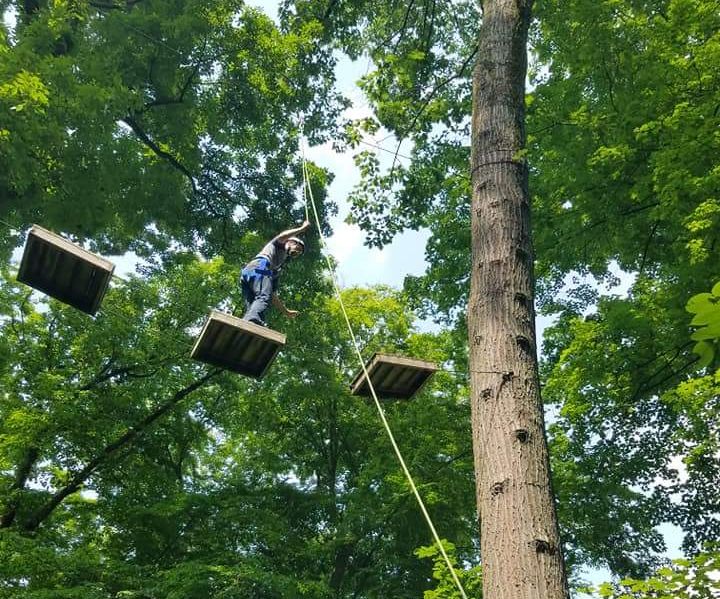
[vc_row][vc_column][vc_column_text]There is still time to apply for a Camp Canopy Scholarship! If you are attending Camp Canopy during Summer 2023, Warren Co SWCD wants to help you get there. Sponsorships are available to eligible high school students in the amount of $400 to cover the cost of camp attendance.[/vc_column_text][vc_column_text]Have you ever wondered what types of trees are in Ohio’s forests? Or what kinds of relationships do organisms have with the forest? If so, Camp Canopy is the place to be!
The camp is held at Ohio FFA Camp Muskingum, located on Leesville Lake in the beautiful rolling hills of Carroll County, Ohio. Any student who has completed 8th grade through high school seniors graduating the year of camp are welcome to participate. Be prepared to obtain valuable forestry information, make many new friends and HAVE FUN!
LEARN MORE ABOUT CAMP CANOPY[/vc_column_text][vc_video link=”https://youtu.be/VGiVRtP5RjM”][/vc_column][/vc_row][vc_row][vc_column][vc_column_text css=”.vc_custom_1680188785533{border-top-width: 20px !important;border-left-width: -60px !important;padding-right: 60px !important;padding-bottom: 10px !important;background-color: #e2e2e2 !important;border-left-color: #e2e2e2 !important;border-top-color: #e2e2e2 !important;}”]
If you are attending Camp Canopy in 2023, Warren Co SWCD wants to help you get there! Sponsorships are available in the amount of $400 for qualifying students with a desire to pursue a future career in natural resource management, agriculture, forestry, equine science, wildlife, geography, ecology, environmental science, or other related field of study. Payments are made directly to Camp Canopy upon registration.
What does an AR-15 do to a human body? A visual examination of the deadly damage. – Washington Post
How to Make a Difference
Moms Demand Action is a grassroots movement of Americans fighting for public safety measures that can protect people from gun violence. We pass stronger gun laws and work to close the loopholes that jeopardize the safety of our families. We also work in our own communities and with business leaders to encourage a culture of responsible gun ownership. We know that gun violence is preventable, and we’re committed to doing what it takes to keep families safe.
After Jim Brady, a gun owner, Republican and President Reagan’s Press Secretary, survived a gunshot to his head, he and his wife Sarah, worked tirelessly alongside Democrats and Republicans to pass the bipartisan Brady Bill to ensure background checks were conducted on gun sales. But we cannot rest on that victory. America’s gun violence epidemic continues to worsen. Today, led by Brady President Kris Brown, we work with gun owners and non-gun owners and individuals of all identities and ideologies to create solutions! Together, there is nothing we cannot accomplish.
A movement of nearly 10 million mayors, teachers, survivors, gun owners, students, and everyday Americans.
Ultimately, our movement exists to end gun violence and save lives.
Thanks to the hard work of our volunteers across the country, we have won unprecedented victories against the gun lobby—at the ballot box, in state legislatures, and in corporate America.
Born out of a tragic school shooting, March For Our Lives is a courageous youth-led movement dedicated to promoting civic engagement, education, and direct action by youth to eliminate the epidemic of gun violence.
We aim to create safe and healthy communities and livelihoods where gun violence is obsolete.
From Tragedy To Transformation
Sandy Hook Promise is a national nonprofit organization founded and led by several family members whose loved ones were killed at Sandy Hook Elementary School on December 14, 2012. Based in Newtown, Connecticut, our intent is to honor all victims of gun violence by turning our tragedy into a moment of transformation. By empowering youth to “know the signs” and uniting all people who value the protection of children, we can take meaningful actions in schools, homes, and communities to prevent gun violence and stop the tragic loss of life.
[/vc_column_text][vc_video link=”https://www.youtube.com/watch?v=WXtFhqIhWwo”][vc_column_text]Access to an unsecured firearm in the home increases the risk of injury or death. Protect yourself and your loved ones by storing your guns securely – locked, unloaded, and away from ammunition. Learn more about safe gun storage practices at www.EndFamilyFire.org.[/vc_column_text][vc_video link=”https://youtu.be/UwZXj0rymOU” title=”Access to an unsecured firearm in the home increases the risk of injury or death. Protect yourself and your loved ones by storing your guns securely – locked, unloaded, and away from ammunition. Learn more about safe gun storage practices at www.EndFamilyFire.org.”][/vc_column][/vc_row]
Loveland, Ohio – Loveland Schools begin their Spring Break this Friday afternoon March 31, and classes will resume on Monday, April 10.[/vc_column_text][/vc_column][vc_column width=”1/3″][vc_widget_sidebar sidebar_id=”td-default”][/vc_column][/vc_row]
Rocky is a member of the Congressional Committee for the 50th Anniversary of the Vietnam War and the Purple Heart Foundation. He is an active board member of the Warriors to Citizens Foundation, which is devoted to helping soldiers, police, fire, EMTs, and their families recover from the psychological harm caused by career-induced stress.
Rocky will share his story about his time in Vietnam and his amazing journey to recovery from injuries sustained while in the service.
6 PM: Pre-event live music from the ‘60s and ‘70s with The Remains
Live music from the ‘60s and ‘70s with The Remains
Concessions available for purchase throughout the event
7 PM: Tribute program begins
Rocky Bleier, Super Bowl Champ and Vietnam Veteran
Entertainment acts, including Bob Hope impersonator and tribute by Bill Cunningham
Stories of Vietnam veterans
Recognition of veterans from all eras and military branches
Only about three months ago, Ohio lawmakers passed a wide-ranging elections bill that will require voters present a photo ID when they cast a ballot. But it didn’t start out that way. Lawmakers bolted on the photo ID requirements only at the last minute.
The bill began as a proposal to eliminate August special elections. The bill’s sponsor, Rep. Thomas Hall, R-Madison Township, argued there should only be two elections a year “a primary election, and a general election.”
“August special elections are costly to taxpayers and fail to engage a meaningful amount of the electorate in the process,” he argued.
So why are lawmakers now preparing to un-eliminate the elections they just scrapped?
The Senate’s proposal
Sens. Rob McColley, R-Napoleon, and Theresa Gavarone, R-Bowling Green, introduced a bill Wednesday that would, once again, allow August special elections.
COLUMBUS, Ohio — MARCH 22: State Rep. Allison Russo, D-Upper Arlington, speaks to reporters after the House Constitutional Resolutions committee meeting first hearing on HJR 1 that would require 60% vote to approve any constitutional amendment, March 22, 2023, at the Statehouse in Columbus, Ohio. (Photo by Graham Stokes for Ohio Capital Journal. Republish photo only with original story.)
Despite the most recent August election barely clearing 8% in statewide voter turnout, the sponsors specifically add legislature-initiated amendments to the brief list of proposals that can go on an August ballot. Citizen-led amendments can still only go before voters in November
McColley and Gavarone’s change of heart has to do with one such proposal working its way through the Ohio House. That resolution would put a proposal on the ballot raising the threshold for passage of all future amendments from a simple majority to 60%.
After that resolution’s hearing, House minority leader Allison Russo criticized the unnecessary expense. Of Republicans’ about face, she said, “the hypocrisy here has no bounds.”
“Really what this is about is silencing the voice of voters and shutting down direct democracy,” she argued, “Because again, this is a legislature who has no interest in being checked by voters — they picked their voters.”
The sponsors readily acknowledge the expense of their gambit. The bill appropriates $20 million to help county boards conduct a special election. If lawmakers were to wait about three months, they could save that money. As it happens, there’s an election every November, and it’s relatively cheap to add one more question.
But Senate president Matt Huffman is calculating the question differently, and to him, the math adds up.
Huffman’s take
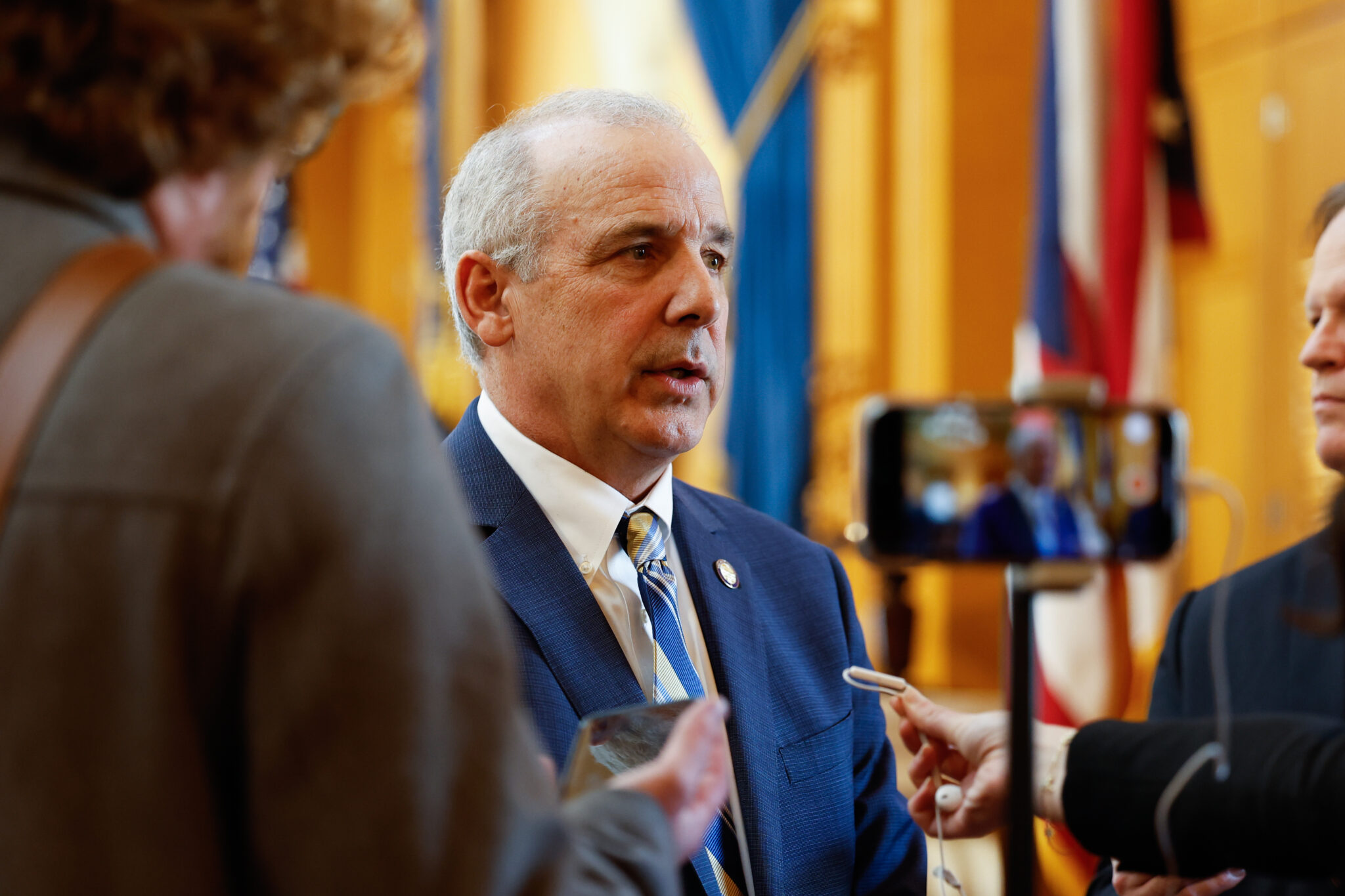
“If we save 30,000 lives as a result of spending $20 million, I think that’s a great thing,” Huffman told reporters after a Senate session Thursday. “Now I know a lot of people don’t look at it that way, but that’s the way I look at it.”
His comments are an explicit connection between efforts to raise the threshold for amending the constitution and undermining an abortion rights amendment. Organizers are currently gathering signatures for that proposal and hope to have it on the ballot this November.
The senate president over-shot the mark, however. Department of Health statistics put the number of induced abortions at more like 21,000-22,000 per year on average.
Huffman defended the push for an August election. He said he’d expected the House to have the supermajority resolution passed in time for the May primaries.
COLUMBUS, OH — JANUARY 03: Newly elected Ohio House Speaker Rep. Jason Stephens (R-Kitts Hill) gives brief remarks at the opening day ceremonies of the 135th General Assembly of the State of Ohio, January 3, 2023, in the House Chamber at the Statehouse in Columbus, Ohio. (Photo by Graham Stokes for Ohio Capital Journal. Republish photo only with original story.)
Still Huffman attempted to draw a distinction between the current proposal and lawmakers eliminating August elections as a standing “as-needed” date on the election calendar.
“Do I have turnout concerns in school levies in August because very few people come out, and they’re done when people are on vacation, and they don’t know about it? And liquor permits and things like that, that typically happen? Yeah.” Huffman said.
“But I think in this case, it’s something that a lot of people are going to be very fired up about,” he added.
Huffman said he plans to have the special elections measure passed by mid to late April. He wants the House to have “ample consideration,” before the deadline to get the supermajority amendment on the ballot.
House headwinds
If House Speaker Jason Stephens has his way, though, the special elections bill may be dead on arrival.
“We just voted to not have those anymore just a few months ago,” Stephens told reporters Thursday. “The county election officials I’ve talked to are not interested in having it.”
“I’m frankly not interested in having an election in August,” he said.
A new lawsuit claims the Ohio Ballot Board made the wrong call when they approved the validity of a constitutional amendment proposal on abortion.
In the lawsuit, filed this week with the Ohio Supreme Court, Cincinnati attorney Curt Hartman asks the court to demand the ballot board vacate their March 13 decision, in which they said the proposed ballot language to cement abortion rights in the Ohio Constitution attempts to make changes to only one constitutional issue.
The lawsuit also wants the state Ballot Board to “issue a determination that the foregoing initiative petition contains more than one proposed amendment to the Ohio Constitution,” divide the petition into separate initiatives and certify those with the Ohio Attorney General.
To prove the separate issues, the lawsuit cites the overturned legalization of abortion in Roe v. Wade, in which abortion was described as “inherently different” than other personal rights. Because abortion is “inherently different,” parties in the lawsuit argue it represents a different issue than “one’s own reproductive decisions,” which is part of the ballot initiative, therefore “does not and cannot relate to a single general object or purpose.”
The lawsuit acknowledges in a footnote that supporters of the ballot initiative “have not, to date, provided any explanation of the distinction between a decision concerning ‘continuing one’s own pregnancy’ versus concerning ‘abortion.’
Ohio Attorney General Dave Yost saw the initiative before the board, and certified the amendment proposal in a separate process. In his letter confirming that the proposal could then move on to the ballot board, Yost made his own comments on the issue.
“I cannot base my determination on the wisdom or folly of a proposed amendment as a matter of public policy,” Yost wrote in his letter on the amendment proposal.
The lawsuit now sets the state, specifically Yost, up to defend the decision of the ballot board, despite any personal feelings he may have on the initiative itself.
The board made no decisions on the merits of the issue, though state Sen. Theresa Gavarone, R-Bowling Green, made a point to speak out against the issue during the board meeting, saying she was “horrified at the thought of this amendment.”
Hartman is representing Margaret DeBlase and John Giroux, both members of the Cincinnati Right to Life. Giroux spoke during the Ohio Ballot Board meeting.
“If this is about one issue, this amendment is about abortion, and that’s plain and simple,” Giroux told the board. “They want to advance abortion in our state constitution.”
In the lawsuit, Hartman argues there was “absolutely no discussion or debate whatsoever” by the members of the board, other than Gavarone’s comments.
Parties challenging the decision say the ballot board’s action, or lack thereof, “constitutes an abuse of discretion and/or an act in clear disregard of applicable legal provisions.”
The Ohio Supreme Court has not decided whether or not they will accept the lawsuit for review.
Pro-abortion rights groups are facing a July 5 deadline to gather signatures in support of placing the petition on the ballot in November. That deadline might also lie in the shadow of an August special election now, with Senate President Matt Huffman expressing interest in placing a measure on the ballot that month to increase the threshold needed to amend the constitution by changing it to 50% plus one vote to 60%.
Spring in the Midwest – we’ve seen sunshine, flowers, heavy rain, crazy wind and even snow!
As we move into a new season, we always have fresh hope. But many of our clients are facing the same issues that plagued them through the winter. Unpaid bills and rising food and shelter costs continue to weigh on their minds.
Spring is the time of our annual Feed The Hungry campaign, which brings hope that LIFE clients will have a brighter season.
This year we are changing the name to better reflect what we do – it’s more than food. While food donations are important, monthly pledges from the community and business partners help us buy needed perishables such as milk, eggs, and cheese but also does so much more. Financial donations allow us to pay emergency financial assistance for items such as rent, utilities, prescription medicines, and maintenance for vehicles, so clients can continue to live safely in their homes and have reliable transportation for work.
You will receive information next month about this important campaign, and how you can be a LIFEsaver* with just the click of a button from the comfort of your home, office, or anywhere. We make it easy for to make a monthly donation, would you please consider it? Of course, we welcome one-time donations as well, which is also easy to do online. You can also drop a check in the mail or bring it by in person – we love to show off our pantry!
Spring cleaning is just around the corner! We need cleaning products such as window and floor products, all-purpose cleaners, paper towels, bathroom cleaning products, anything you use to make your house fresh and clean. When you pick up supplies for your home, please consider adding a few additional items to donate to the pantry.
*LIFE is so thankful for our LIFEsavers, who provide an ongoing monthly contribution to help our neighbors in need. If you’d like to learn more about donating and being a LIFEsaver, visit our



 Loveland Bike Trail’s O’Bannon Creek Bridge Closure
 [/vc_column_text][/vc_column][/vc_row]