Tag: Cassie Mattia

  • Citing a hazy memory, former rep seems to distance himself from scandal

    Citing a hazy memory, former rep seems to distance himself from scandal

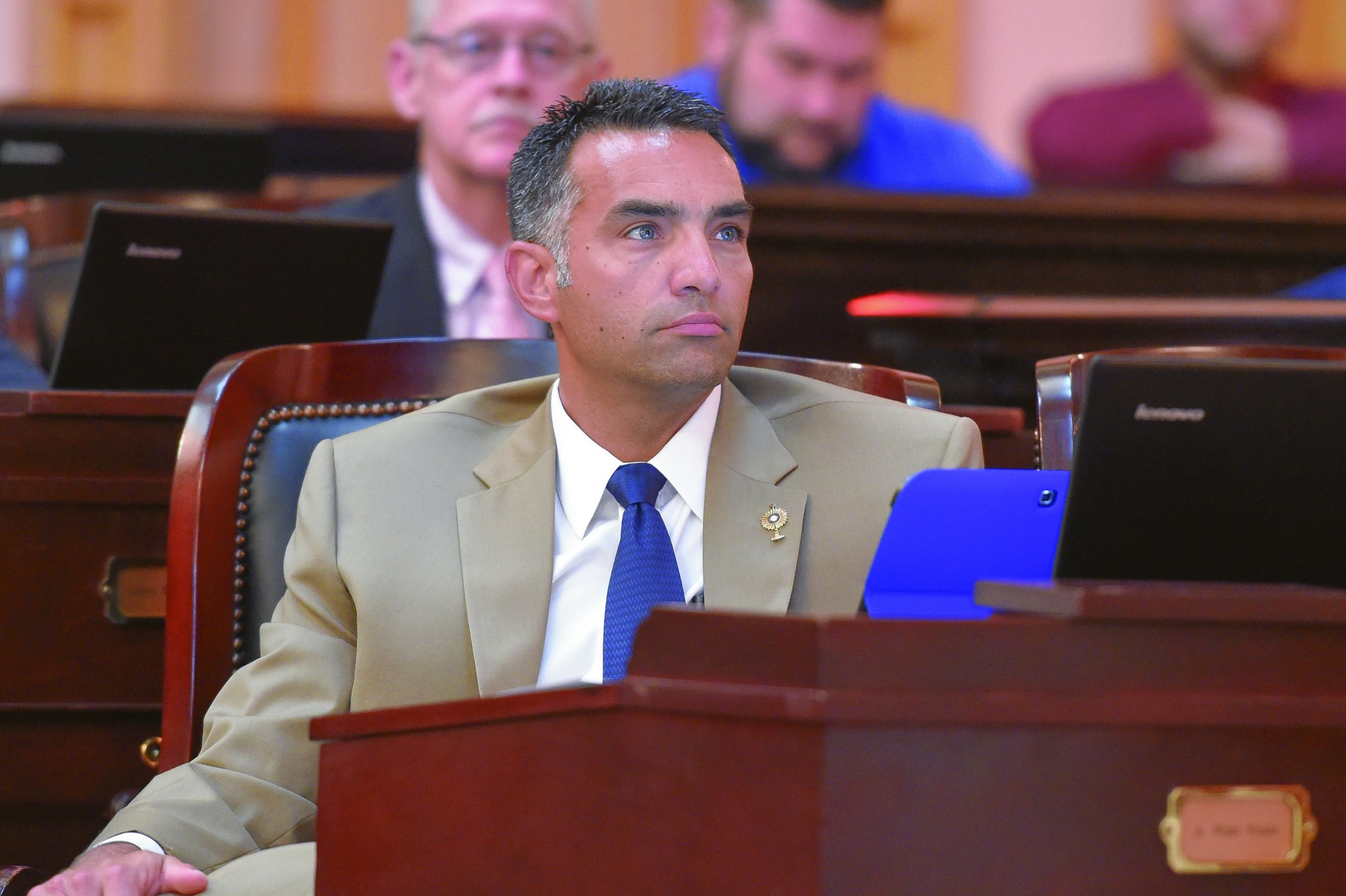
    State Rep. Nino Vitale, R-Urbana. Photo from Ohio House website.

    Vitale was said to be a big supporter of Householder now charged with racketeering

    BY: MARTY SCHLADEN – Ohio Capital Journal

    CINCINNATI — Former state Rep. Nino Vitale on Tuesday testified that he didn’t have much of a memory for — nor was he much interested in — raising money or campaigning for office. At several points, the Republican from Urbana even said he didn’t remember what year he was first elected to the legislature (it was 2014.)

    But on cross examination, federal prosecutors showed him records and written communications indicating that Vitale was regarded as an enthusiastic member of “Team Householder” who, as part of the team, received thousands in campaign funds and other assistance that originated with Akron-based FirstEnergy.

    As former Speaker Larry Householder’s appointee to chair the Energy and Natural Resources Committee, Vitale in 2019 helped to pass a $1.3 billion bailout that primarily benefited FirstEnergy. When they announced arrests in the summer of 2020, federal prosecutors said the bailout was at the center of what was likely the largest bribery and money-laundering scandal in Ohio history.

    Vitale was called by Householder’s lawyers in the trial, which started on Jan. 23. Householder and former Ohio Republican Party Chairman Matt Borges are charged with racketeering in an alleged scheme to use $61 million in utility money to elect friendly lawmakers who would make Householder speaker and then bail out FirstEnergy’s failing nuclear and coal plants.

    Vitale has long been known for controversial political gestures — including refusing to wear a mask at the height of the coronavirus pandemic because human faces are “the likeness of God.

    But on Tuesday, Vitale portrayed himself as a reluctant politician. In a possible nod to how uncompetitive his district was, the former lawmaker said he didn’t have to do much to get reelected.

    “The whole marketing side of things wasn’t big on my radar because my district elected me overwhelmingly and frequently,” Vitale said.

    Householder’s attorneys seemed to call Vitale and other Householder supporters in the House to testify so they could say they believed the bailout law was good public policy. But U.S. District Judge Timothy Black limited such testimony, saying the proceeding wasn’t a referendum on the merits of House Bill 6.

    Vitale also said he never felt pressured to support Householder for speaker or to support the bailout. 

    But Assistant U.S. Attorney Megan Gaffney Painter then posed a series of questions that seemed to be intended to show that Householder made Vitale chairman of the Energy and Natural Resources Committee not because Vitale had any particular qualifications, but because he was an enthusiastic member of Team Householder who would do the speaker’s bidding.

    Vitale tried to refute that characterization.

    When Painter tried to get him to agree that he had little in his background to school him in large-scale electricity generation or the management of the state’s natural resources, Vitale wouldn’t. 

    “I know quite a lot about those topics, actually,” he testified.

    Vitale said he works for his wife’s family’s company, which makes parts for truck brakes. It has an electricity substation and it sits on 30 acres, and those factors gave him expertise on the power grid and the environment, Vitale said.

    When Painter proposed that Vitale had no academic credentials that would make him expert in those areas, Vitale disagreed again, saying his business degree provided him with such knowledge.

    “In a business degree, part of what you study is energy inputs to a business,” Vitale said.

    The former lawmaker also claimed that he wasn’t very familiar with FirstEnergy and had to be convinced to support the bailout bill. Then Painter displayed a text message from FirstEnergy Vice President Michael Dowling to CEO Chuck Jones on Feb. 17, 2019 — before the bill was introduced. Earlier testimony showed that the executives believed the bailout was critical to their company, and Jones had asked Dowling who was going to chair the House Energy and Natural Resources Committee.

    “Nino Vitale from Springfield will chair,” Dowling responded. “Good friend and bigtime (Householder) supporter.”

    Confronted with the message, Vitale said he’d only met Dowling a few times.

    Vitale also disputed that it was Householder who first broached the idea of Vitale being chairman.

    “I asked him,” Vitale said.

    Then Painter played a voicemail message that Vitale left for Householder in January 2019, just after Householder had been made speaker. In it, Vitale said he had talked the matter over with his family.

    “I’m in if that’s what you want me to do,” Vitale said.

    As Painter tried to move on to another question, Vitale insisted that chairing the Energy and Natural Resources Committee was originally his idea.

    And to refute Vitale’s claims that he was half-hearted about fundraising and political marketing, Painter displayed an October 4, 2017 text message Vitale sent to Jeffrey Longstreth, Householder’s right-hand man in making him speaker and then passing the bailout. It certainly seemed to link FirstEnergy’s policy agenda to Vitale’s desire for corporate contributions.

    FirstEnergy lobbyist “Ty Pine wants to meet with me on a legislative matter and I want to meet with him on a contribution matter,” Vitale said in his message.

    After more than a month, testimony in the trial is entering the homestretch. Householder’s final witnesses — including Householder himself — are expected to testify Wednesday and Thursday. Then it will be Borges’ turn to call any witnesses he may have.

    After that, the prosecution and the defense teams will make closing statements, Judge Black will instruct the jury and then it will deliberate.

  • Outdoor open burning statewide in unincorporated areas during the months of March and April

    Outdoor open burning statewide in unincorporated areas during the months of March and April

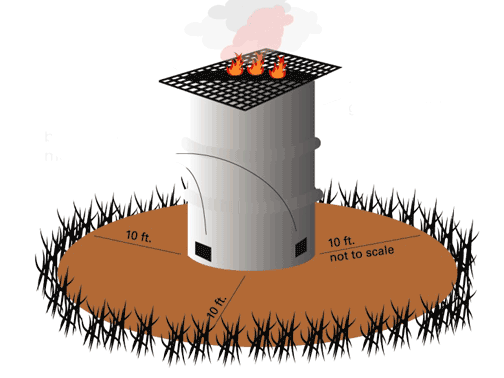
    This law prohibits outdoor open burning statewide in unincorporated areas during the months of March, April, and May between the hours of 6 AM and 6 PM.

    This ban includes the burning of yard waste, trash, and debris, even in a proper burn barrel.

    During spring, wildfire danger is high before plants have
    turned green.

    Warm, windy weather also contributes to elevated fire risk. Always be sure to use a proper burn barrel when burning outdoors during legal hours.

  • [Tonight] Conjunction of Venus and Jupiter

    [Tonight] Conjunction of Venus and Jupiter

    Former NASA astronaut Scott Kelly snapped this photo of the Earth’s crescent, the Moon, Venus, and Jupiter (from top to bottom) on Aug. 6, 2015, while he was aboard the International Space Station.

    From In-The-Sky.orgGuides to the night sky

    Venus and Jupiter will share the same right ascension, with Venus passing 32′ to the north of Jupiter.

    At around the same time, the two objects will also make a close approach, technically called an appulse.

    From Loveland, the pair will become visible around 18:08 (MST), 23° above your western horizon, as dusk fades to darkness. They will then sink towards the horizon, setting 2 hours and 27 minutes after the Sun at 20:19.

    You can track this phenomenal event HERE.


    NASA: All month long, you’ll notice the two brightest planets in the sky, Jupiter and Venus, appear closer together each evening. Find them in the west in the hour or so after sundown. On February 22nd, the crescent Moon sits just a degree apart from Jupiter, with Venus hanging beneath them. The two planets then continue to get closer in the sky over the following week, culminating in a close conjunction on March 1st.

  • School Supply Drive during Murder on the Orient Express

    School Supply Drive during Murder on the Orient Express

    Dear Loveland Magazine Readers,

    Hello all! As you probably know, teachers aren’t paid enough (how could they be?) and are often responsible for the supplies our community’s children need for a great education!

    We’re most of the way through the school year, and those supplies are running low. So I’m arranging a supply drive for Loveland Schools! I have a list (scan the QR code) of needed supplies, and I know our teachers will appreciate any help.

    If you have kids at the schools, you can send supplies in with them the week of April 17-21. Or, if you’d rather drop them off yourself, I’m arranging a drop-off location at the Highschool on April 19, 20, 21, and 22 from 6 PM to 7 PM.

    Why these dates, you ask? Because those are the same nights our amazing High School is putting on the play, Murder on the Orient Express.

    You can drop off supplies and go see the show! Do some good and have a night of entertainment. What could be better? Please share with anyone you know that might want to donate or help!

    Thank you,

    Josh Hendrickson

  • [A reminder] Ribbon Cutting and Open House at new Chamber office tomorrow

    [A reminder] Ribbon Cutting and Open House at new Chamber office tomorrow

    by David Miller

    Loveland, Ohio – The public is invited to join the Little Miami River Chamber Alliance as they celebrate moving into their new office.

    There is plenty of free parking behind the office that can be accessed from either the driveway off of West Loveland or the driveway off of Center Alley.

    March 2

    5 until 7 PM

    514 West Loveland Avenue

    Drinks and light appetizers provided

    The ribbon cutting is at 5:30 PM

    The new office is next-door to Union Savings Bank.

  • Southwest Ohio residents can receive $100 gift card when they recycle old mowers with no emission battery-run mowers

    Southwest Ohio residents can receive $100 gift card when they recycle old mowers with no emission battery-run mowers

    Residents of southwest Ohio are invited to replace their gas-powered lawn mower with a new battery-operated mower through the “Mow Greener” program. Residents may register online to receive a $100 VISA gift card when they recycle their old mower and provide proof of purchase of a battery-powered mower. Program registration opens on Wednesday, March 1 at SouthwestOhioAir.org. Residents who do not have internet access may register by phone at (513) 946-7777. There is a limit of available gift cards, available on a first-come, first-serve basis.

    Mow Greener is for residential household in Butler, Clermont, Clinton, Hamilton, or Warren counties. New battery powered lawn mower must be purchased after January 1, 2023, to be eligible. Program participants will find a list by county of scrap metal recyclers where they can take their old lawn mowers on the Mow Green webpage.

    Why should a homeowner consider switching to a battery-operated lawn mower? From an air quality perspective, battery-powered mowers run cleaner than gas and oil-based engines. In addition, they are easier and cheaper to maintain as there is no gas, oil, or spark plugs. Battery-powered mowers are lightweight, easy to start, and their battery packs may be used in other lawn care equipment with the same brand and/or voltage requirements.

  • [Public Hearings] Duke seeks a rate increase that would generate approximately $48.7 million of additional revenue

    [Public Hearings] Duke seeks a rate increase that would generate approximately $48.7 million of additional revenue

    Public hearings on Duke Energy Ohio’s natural gas rate application scheduled for March

    The local public hearings are scheduled as follows: 

    March 8, 2023, at 6 p.m.
    Mason Municipal Center | Fire Station 51, Community Room
    4420 Mason Montgomery Road

    Mason, OH 45040 

    March 10, 2023, at 12:30 p.m.
    Cincinnati City Hall | Council Chambers, Room 300
    801 Plum St.
    Cincinnati, OH 45202 

    Read below to learn how to submit a comment if you cannot attend.


    Individuals who testify will be required to provide their full name and contact information. Those that testify will have their comments included in the case record.

    Learn more about how to testify at a PUCO public hearing

    Written comments may also be addressed to the Public Utilities Commission of Ohio, 180 E. Broad Street, Columbus, Ohio, 43215. Comments should reference case docket numbers 22-507-GA-AIR22-508-GA-ALT22-509-GA-ATA and 22-510-GA-AAM.  

    A copy of Duke Energy Ohio’s applications and the entry scheduling the public hearings are available on the PUCO website www.PUCO.ohio.gov by clicking on the links to “Docketing Information System” and searching for case number 22-507-GA-AIR


    Case background

    On June 30, 2022, Duke Energy Ohio filed a combined application to increase rates and charges and for approval of an alternative rate plan. 

    Duke seeks a rate increase that would generate approximately $48.7 million of additional revenue, or an increase of 10 percent. After its review of Duke’s records and application, PUCO’s staff recommends a revenue increase in the range of $23.6 million to $36.4 million or an increase of 4.73 percent to 7.28 percent. 

  • Don Tassone releases new book of bite-size stories based on everyday themes

    Don Tassone releases new book of bite-size stories based on everyday themes

    Don Tassone

    Loveland, Ohio – After a long career in the corporate world, Don Tassone returned to his creative writing roots. He is the author of two novels and seven short story collections. Don and his wife Liz live in Loveland, Ohio. They have four children.

    Tassone said, “I’m delighted to let you know my new short story collection, Musings, has just been published.” 

    Tassone continued, “The 75 new stories in this collection come from my own musings about real-life happenings. I hope they show what pausing to reflect can reveal and invite a closer look at the passing parade of events through our daily lives.” They are bite-size stories based on everyday themes.

    You can buy Musings here.

    Read more about Don Tassone and the other books he has published by visiting his website. His books include two novels and seven short story collections.

  • Ohio utility regulator front and center in massive bailout scandal

    Ohio utility regulator front and center in massive bailout scandal

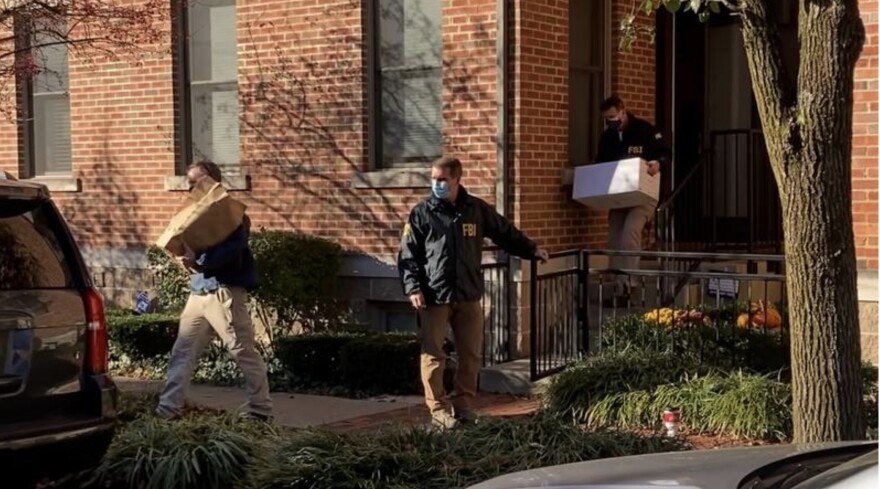
    FBI agents remove boxes of materials from PUCO Chairman Sam Randazzo’s condo in Columbus Nov. 17, 2020. Photo courtesy of Daniel Konik/Statehouse News Bureau.

    BY: MARTY SCHLADEN – Ohio Capital Journal

    CINCINNATI — Ohio’s utility regulator is at the center of a massive bribery and money laundering scandal that has been the focus of a trial here since late last month. In 2019, its chairman and a very recent senior official played a central role in writing corrupt bailout legislation that would give more than $1 billion in subsidies to companies the Public Utilities Commission of Ohio was supposed to be regulating.

    But did their role in the process violate any PUCO rules? The answer is unclear.

    When it comes to being a consumer watchdog, the PUCO doesn’t have the best track record. 

    Since 2008, it has granted more than $1 billion in electric rate increases that were later declared illegal by the Ohio Supreme Court. But, thanks to the way the increases — or “riders” — were written, there’s no way to force utilities to return those ill-gotten gains to ratepayers.

    In at least one of those instances, a regulator might have known the rate hike was illegal when he voted to grant it.

    In June of 2019 — as Akron-based FirstEnergy was funneling millions through dark-money groups to pass the bailout that is the subject of the trial here — the Supreme Court struck down an increase that had already paid the company a non-refundable $460 million. Asim Haque, who months earlier was chairman of the PUCO, sent a FirstEnergy executive a text suggesting that Haque knew the increase was illegal when he voted for it. Haque then said he was just kidding.

    Then, just last month, the PUCO approved an increase of more than 50% in fixed rates for Columbia Gas without making the company go through a formal process to show that it needs the money. That means that after five years throughout much of Ohio, it likely will cost nearly $60 a month just to have gas service  — regardless of whether you live in a 500 square-foot apartment or if you live in a mansion on a five-acre lot. Any payments for gas itself will be in addition to that amount.

    It doesn’t appear that Columbia owner NiSource needed the money. Last year, before the PUCO allowed the rate hike, NiSource’s profits came in $217 million — or 41% — higher than expected. Then, a month after the increase was granted, NiSource announced it was increasing its profit forecast for 2023.

    In a press release, the company boasted of “strong regulatory execution” — including by winning the fixed-rate increase from the PUCO.

    And then there’s House Bill 6, the 2019 law that is the subject of the trial in federal court here that has been ongoing since Jan. 23.

    Former Ohio House Speaker Larry Householder and former Ohio Republican Party Chairman Matt Borges are on trial for their participation in what prosecutors say is likely the biggest bribery and money laundering scandal in Ohio history. They allege that $61 million that mostly came from FirstEnergy was used to make Householder speaker in 2019, and then to pass and protect the $1.3 billion bailout. Most of that money was intended to prop up FirstEnergy’s failing nuclear and coal plants.

    No current or former PUCO employees have been charged in the scandal. But, to put it charitably, the conduct of at least two of them was puzzling — given that the agency’s mission is to protect ratepayers who don’t have a choice about buying the utilities’ products.

    In January 2019, Householder won the speakership and was beginning his push for a FirstEnergy bailout. At the same time,  FirstEnergy lobbyist Ty Pine sent PUCO senior advisor Pat Tully’s resume to Jeff Longstreth, Householder’s right-hand man, according to testimony in the trial. Within weeks, Tully had moved from his PUCO job to one as senior advisor for energy policy in the House Republican Caucus.

    Sam Randazzo, a former FirstEnergy consultant, was confirmed as Gov. Mike DeWine’s nominee to chair the utility commission in April 2019. When he nominated Randazzo, DeWine brushed off warnings that his nominee had “opaque and undisclosed” ties to FirstEnergy.

    In the Householder trial, Tully testified that while Randazzo was still a nominee, he met with Tully, Householder and Rep. Nino Vitale R-Urbana. From there, Tully worked with Randazzo to help draft the utility bailout, HB 6, and to reconcile it with draft legislation submitted by FirstEnergy. The bill secured final passage in July 2019 — months after Randazzo had taken the helm at the utility commission.

    In other words, Ohio’s top utility regulator helped write a law that gave a billion-dollar bailout to a company he was supposed to be regulating on the ratepayers’ behalf. And he was heading an agency that over the previous decade had awarded electric utilities more than $1 billion in illegal, non-refundable rate hikes.

    Randazzo would later resign after the FBI in 2020 raided his Columbus condo. And in a deferred prosecution agreement, FirstEnergy admitted that it paid him $4.3 million just before he became PUCO chairman.

    But does the PUCO have any rules against the role Randazzo played in drafting HB 6? 

    Asked if the agency had a policy prohibiting a commissioner from helping write legislation affecting a utility he or she is supposed to be regulating, spokesman Matt Schilling initially seemed to say that it did not.

    “The PUCO is a state agency and will always be responsive to requests for information or technical assistance to the Ohio General Assembly on matters related to utilities and commercial transportation,” Schilling said in an email last week.

    But in answer to a follow-up, Schilling seemed to say something different. He was asked if that means PUCO believes there was nothing inherently improper about its chairman helping to draft legislation creating subsidies for utilities the agency regulates.

    “No, I never stated anything like that,” Schilling replied. “The PUCO does not comment on ongoing proceedings or court cases.”

    So what about commission employees doing as Tully did when he had a FirstEnergy lobbyist passing out his resume? After all, you might pull punches as a regulator if you’re hoping to land a job with one of the companies you’re supposed to be regulating.

    Schilling’s response might not be very reassuring. He cited a law that “prohibits Commission employees from seeking employment with utilities regulated by the Commission.”

    But Schilling also sent along agency guidance that contains a pretty big loophole.

    “Although this law prohibits Commission employees from soliciting Commission-regulated utilities for employment, it does not prevent employees from considering employment opportunities with these utilities in instances in which the utility approaches the employee,” it said.

    It seems that, after the fact, it might be difficult for the PUCO to figure out who approached whom when an employee jumps ship for a well-paid utility job. And its protections against conflicts of interest during the hiring process don’t seem ironclad.

    “However, if you are contacted by a utility concerning a possible job offer, you must immediately advise your supervisor of the contact so that your supervisor can limit your duties to matters which do not involve the utility in question while any discussions are taking place,” the guidance said.

    In Tully’s case, he didn’t end up directly on FirstEnergy’s payroll. But he did help write a law that the company paid more than $60 million for.

  • Loveland Spring brush pick-up

    Loveland Spring brush pick-up

    Loveland, Ohio – The 2023 spring brush pickup program will begin on Monday, March 20. Brush must be placed in the grass near the roadside no later than Sunday night, March 19. Public Works will collect the brush for approximately two weeks.

    Loveland’s Guidelines

    The following are guidelines established for the brush pick-up program:

    • Brush must be placed at the curb or edge of roadway. Do not place brush in the roadway, gutter, ditches, or on sidewalks. 
    • Do not block fire hydrants.
    • Please remove basketball hoops from sidewalks, cul-de-sacs, the end of your driveway, etc. In many neighborhoods, basketball hoops make it difficult for our leaf/brush crews to navigate the route and make turns. 
    • Limbs cannot exceed 10 inches in diameter at the cut section.
    • Limbs should be placed at the curb with the cut section facing the street and all limbs should be facing the same direction. This makes it easier and faster to handle.
    • No leaves, pine needles, grass clippings, bamboo, ornamental grass, or other yard waste will be collected.
    • Small twigs and sticks should be bundled with twine in bundles 12 inches in diameter. Twigs or sticks can also be placed in a container at the curb, but no other yard waste should be in the containers. No loose piles of sticks and debris, please.

    You may also view Illustrated Brush Pick-Up Instructions (PDF) or our how-to video.