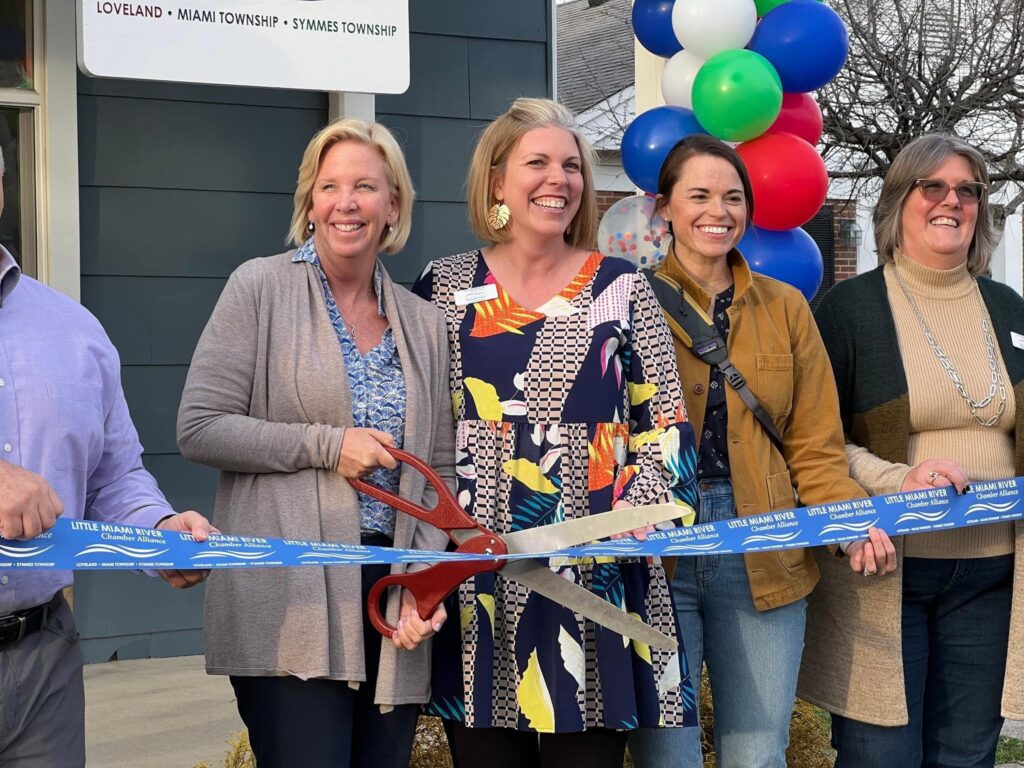
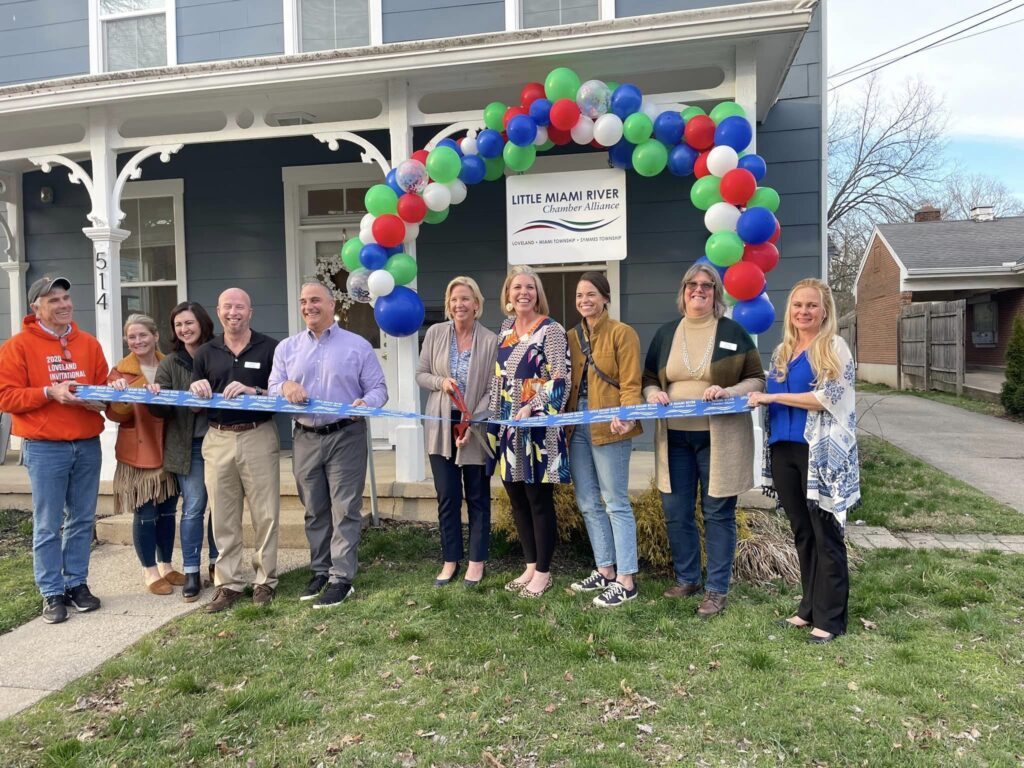
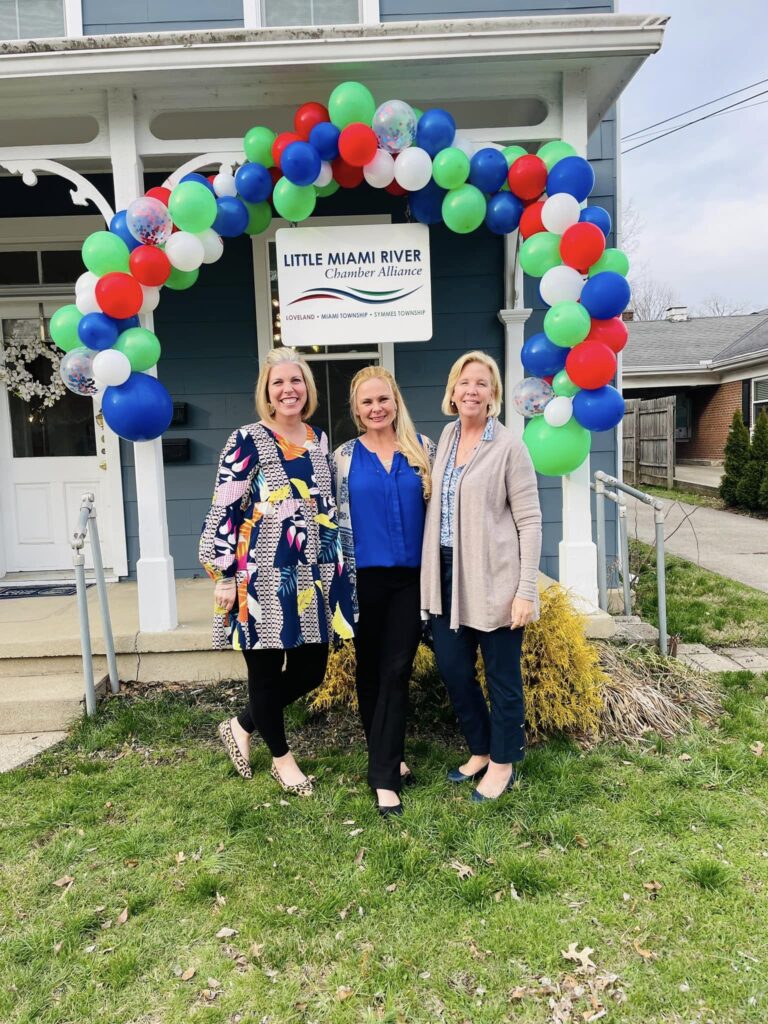
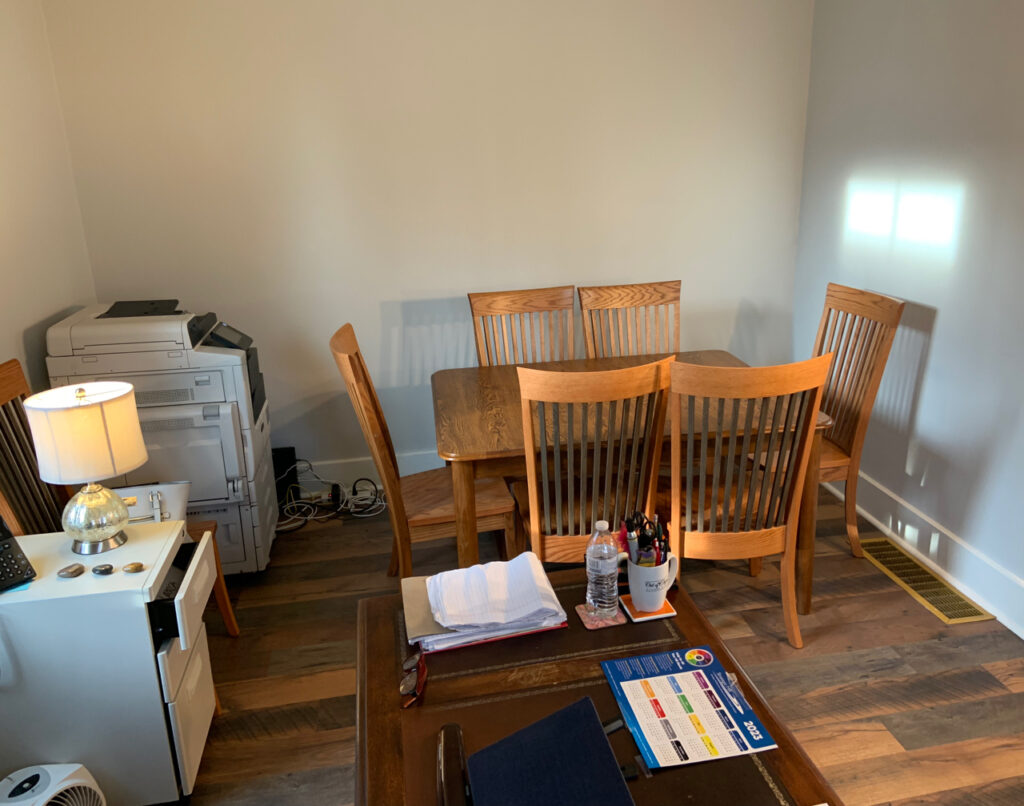
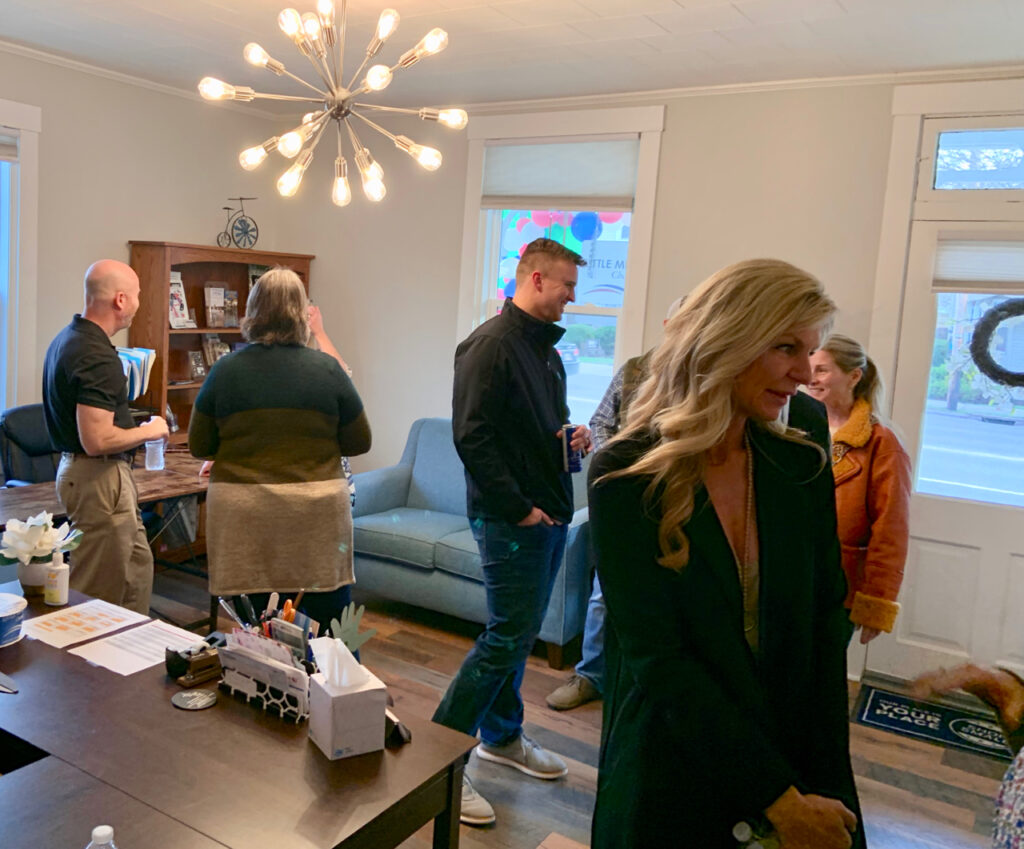
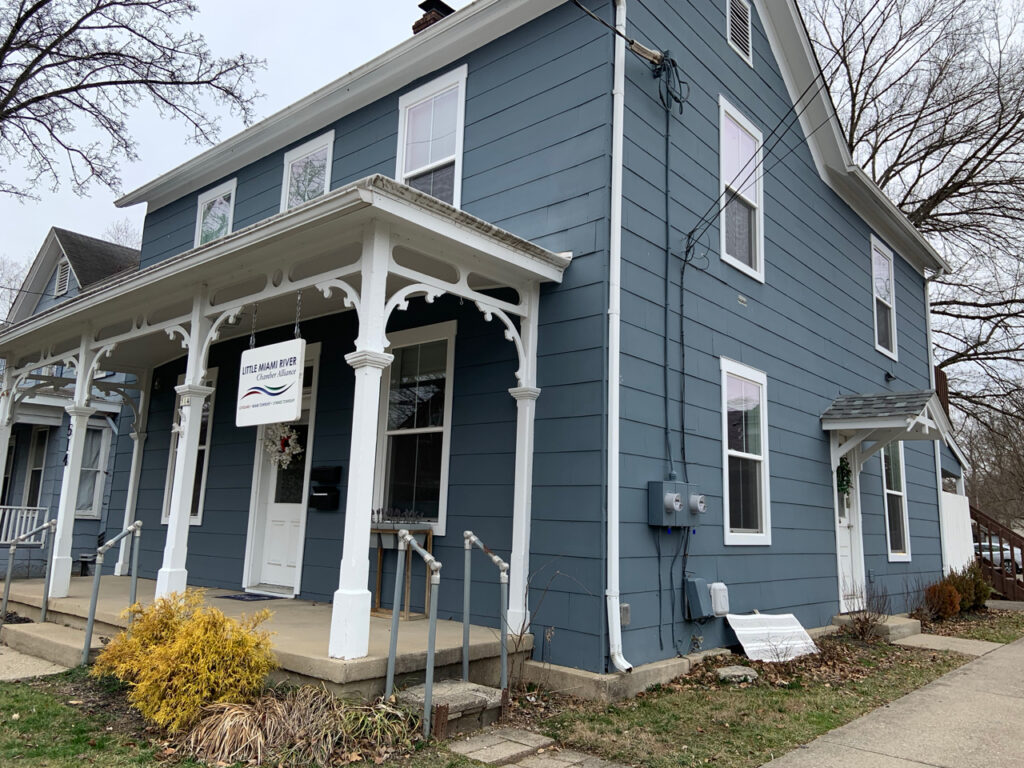
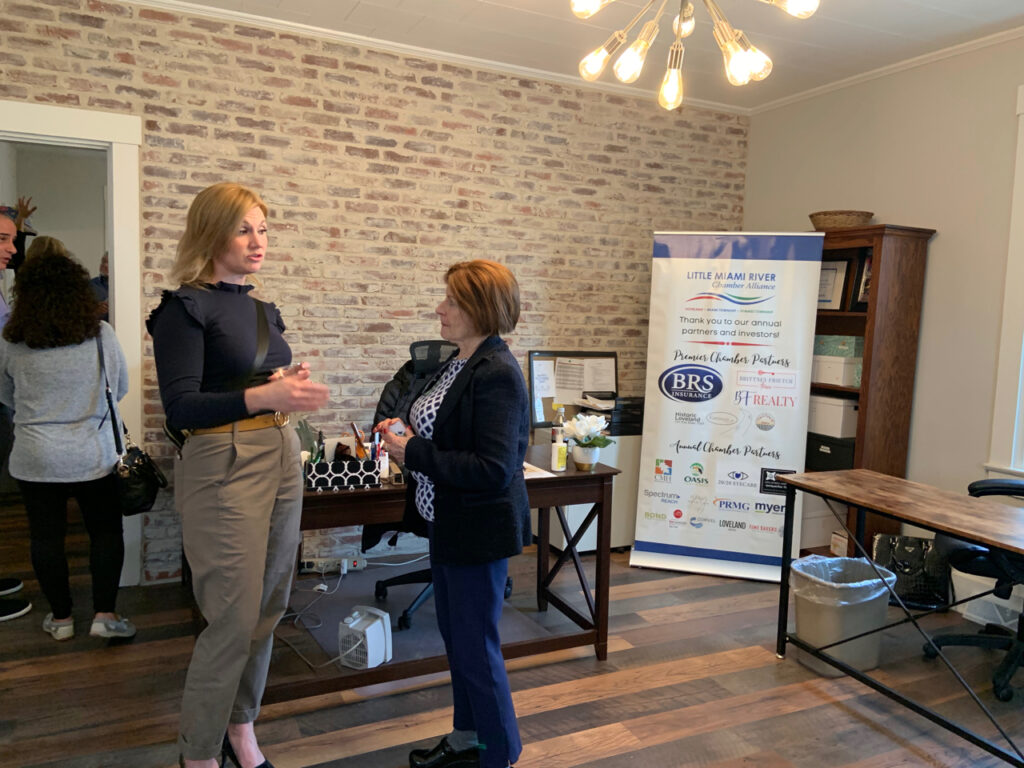
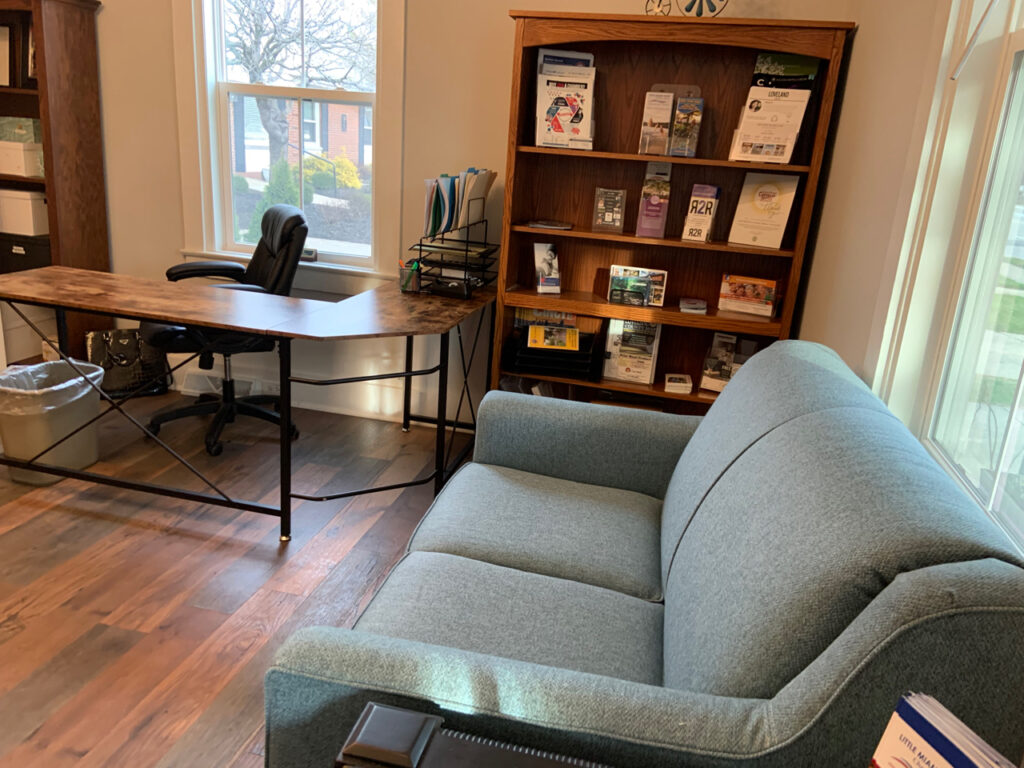
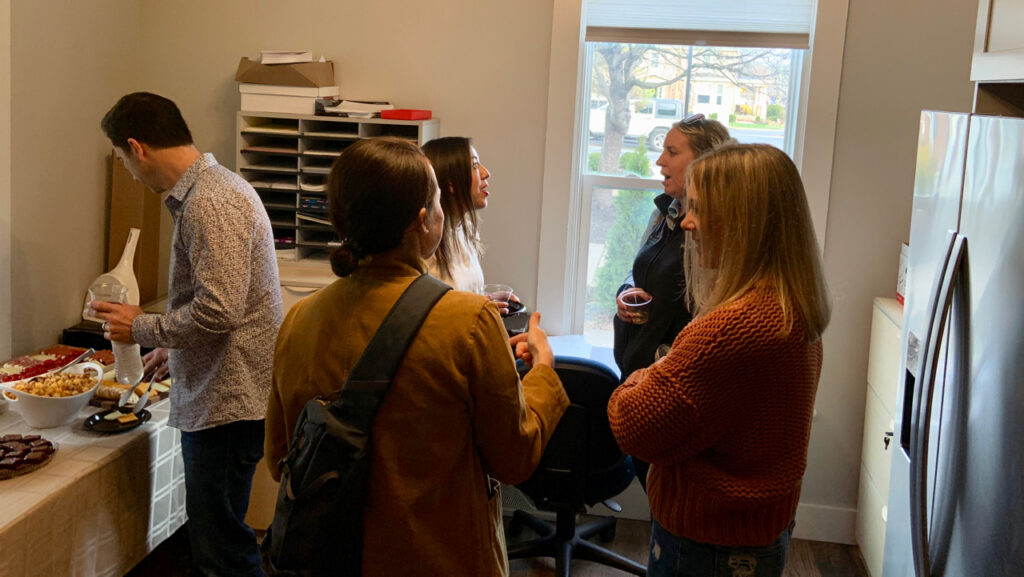
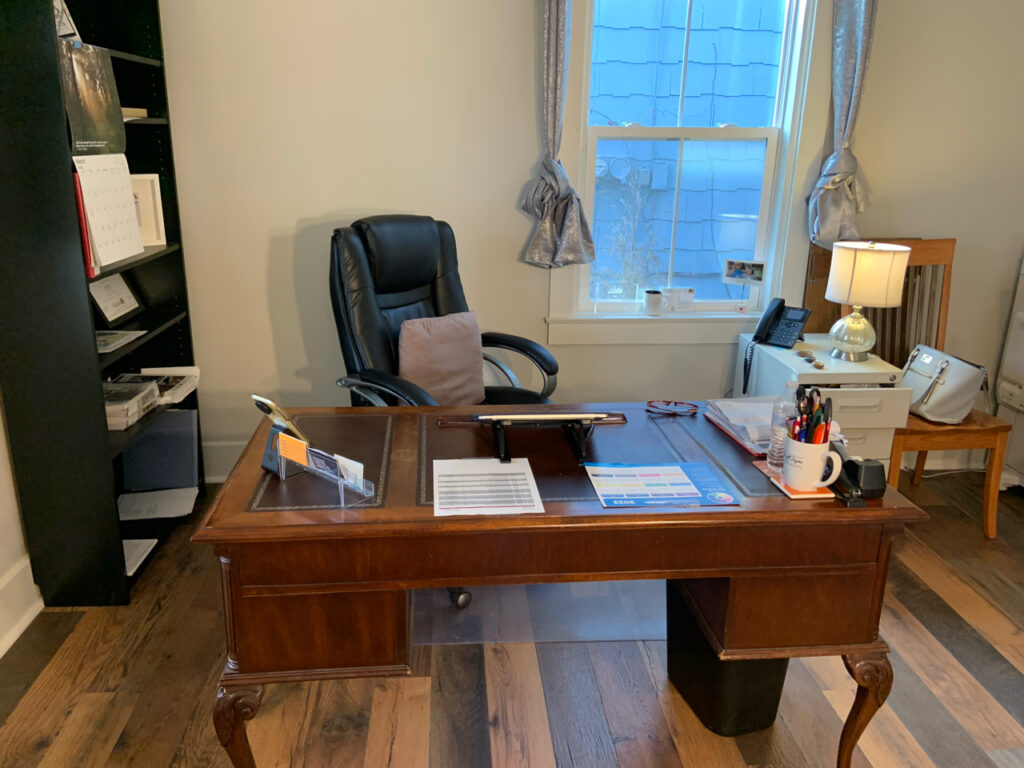
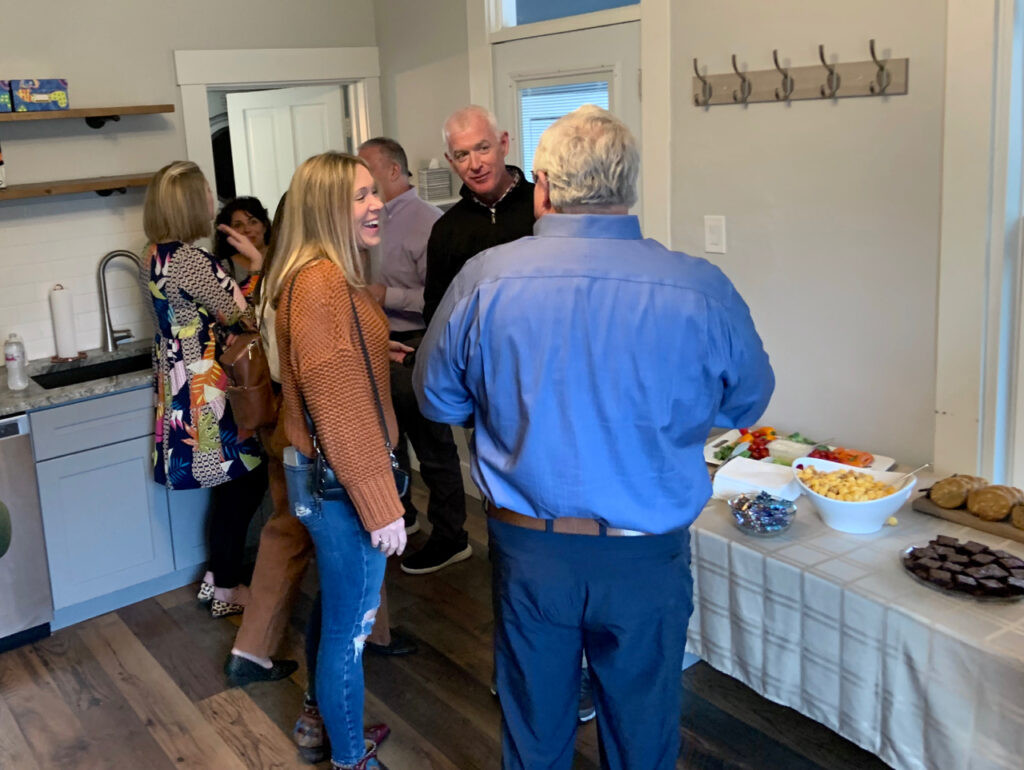
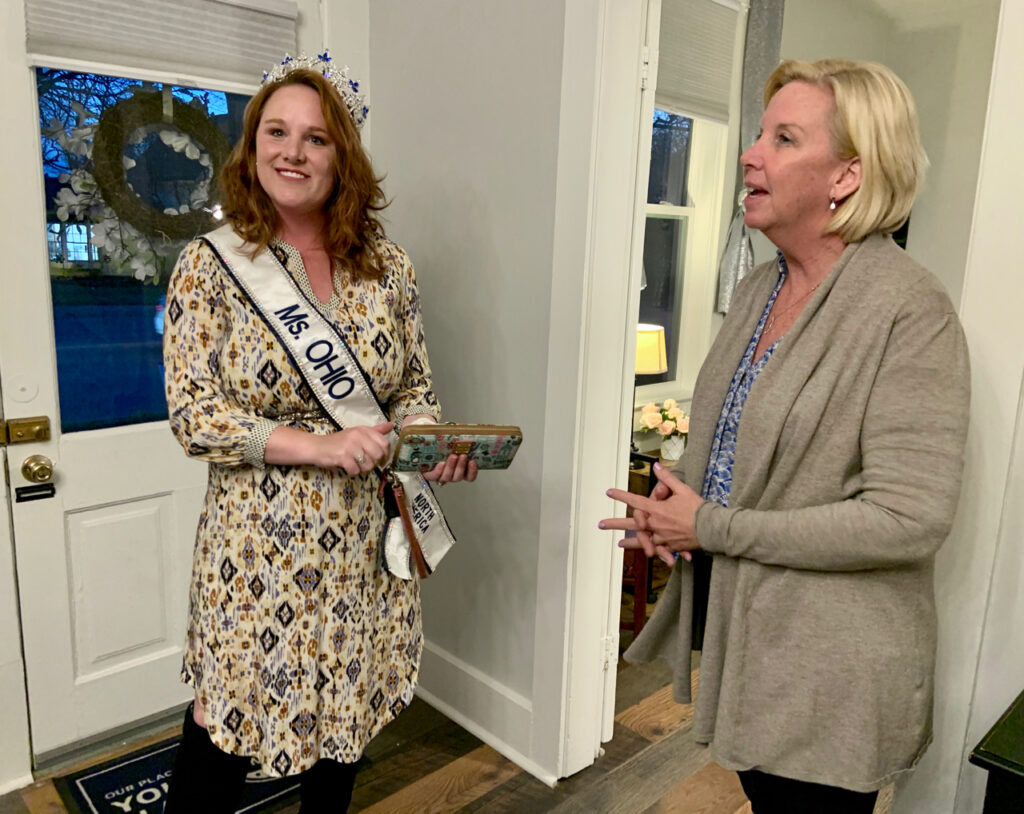
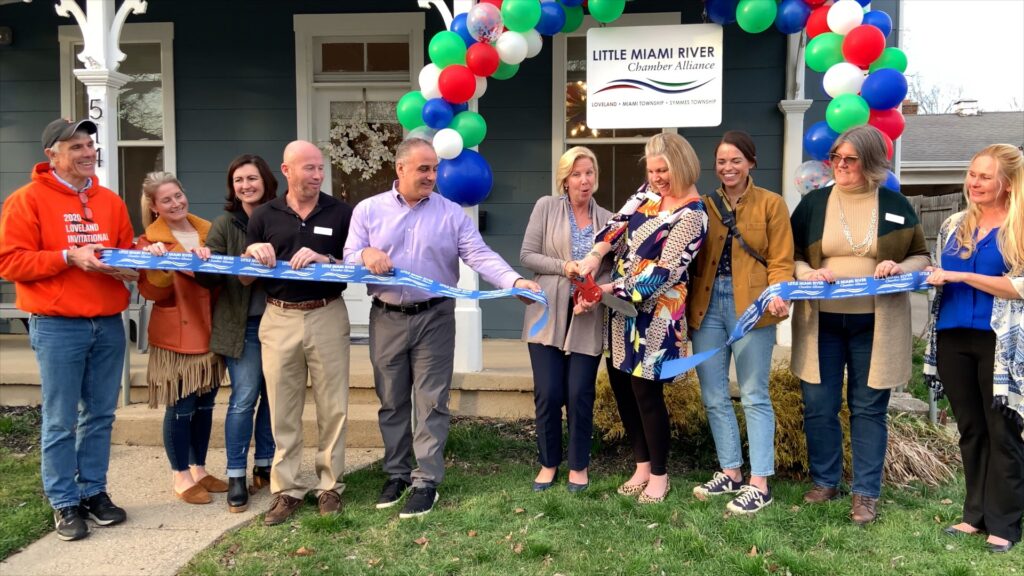
The public was invited to join the Little Miami River Chamber Alliance as they celebrated moving into their new office on March 2nd at 514 West Loveland Avenue.
There is plenty of free parking behind the office that can be accessed from either the driveway off of West Loveland or the driveway off of Center Alley. The new office is next-door to Union Savings Bank in the West Loveland Historic District.
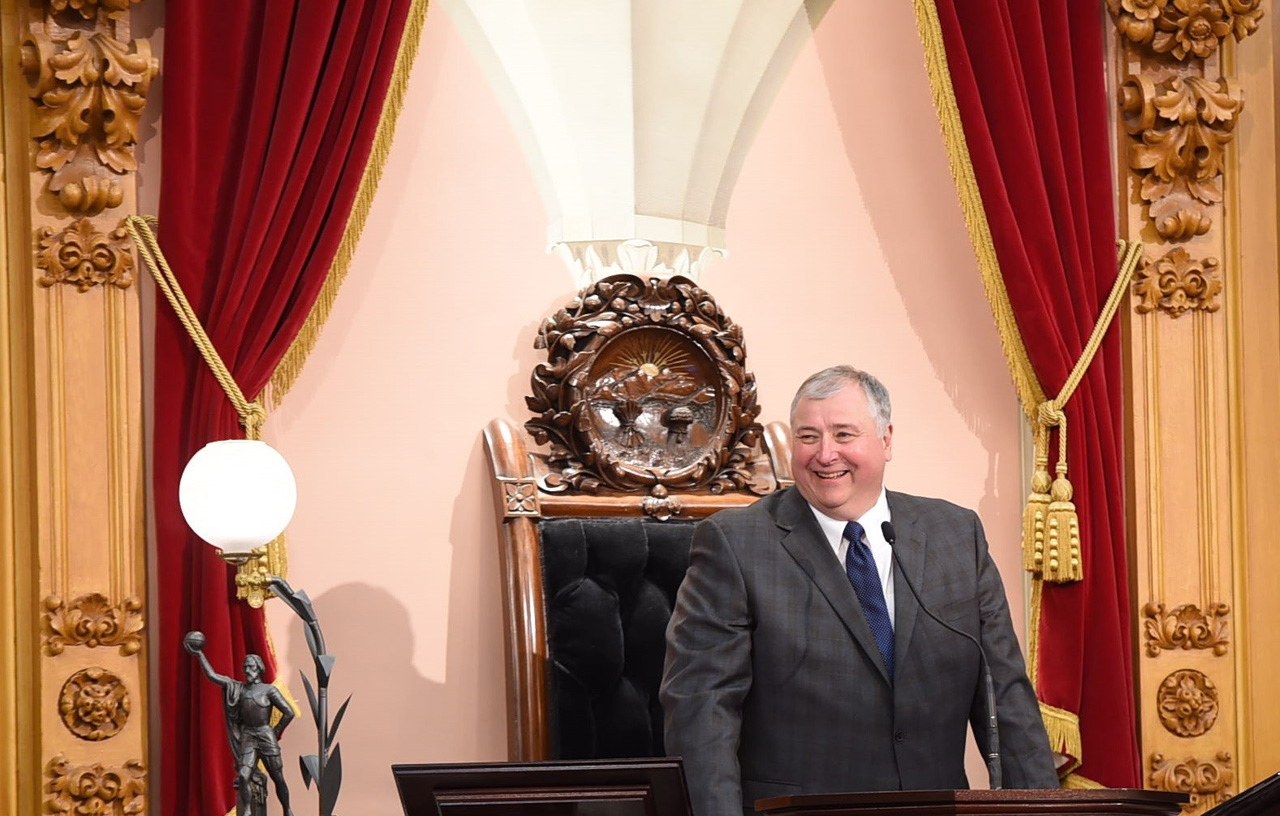
Former House Speaker Larry Householder, R-Glenford. Source: Ohio General Assembly.
CINCINNATI — Former Ohio House Speaker Larry Householder on Wednesday claimed that he never promised any legislative action to FirstEnergy in exchange for the tens of millions the company paid into a 501(c)(4) dark money group he controlled.
He also denied attending dinners in Washington, D.C., during Donald Trump’s inauguration during which other witnesses said he met with top FirstEnergy executives.
And the former speaker denied that he demanded unquestioning loyalty from lawmakers whose elections he worked for. Instead, he said, he wanted them to be independent thinkers.
After sitting through federal court testimony since Jan. 23, Householder on Wednesday took the witness stand in his own defense. That’s considered by many lawyers to be a risky strategy because he will be subject to cross examination by prosecutors who are eager to catch the former speaker in a lie.
Householder, a Republican from Glenford, and former Ohio GOP chair Matt Borges are being tried on accusations of racketeering in a case that federal prosecutors have said is likely the biggest bribery and money laundering scandal in Ohio history.
Householder is accused of masterminding a scheme to use $61 million in utility money to elect House members who would vote to make him speaker at the beginning of 2019. He led the effort to pass a $1.3 billion ratepayer bailout of failing nuclear and coal plants the following July and then protected it from a repeal campaign that failed in October 2019. Prosecutors say the bailout was explicitly tied to FirstEnergy’s contributions.
On the stand, Householder introduced himself as a guy from Appalachia who had worked for years to protect Ohio’s energy independence. But he also made a number of statements prosecutors are likely to challenge.
One is that as it neared passage, the bailout law, House Bill 6, became the object of “misinformation” in commercials that he said were financed by the American Petroleum Institute. The nuclear reactors the law would subsidize couldn’t compete with natural gas, which Householder said the petroleum institute supported instead of nuclear power.
However, in his testimony, Householder didn’t point to anything specific that the group had misstated. Similarly, he complained of misinformation in a Cleveland Plain Dealer editorial, but he didn’t point to anything specific, nor did he say whether he asked for a correction.
At the same time, the former speaker seemed guilty of some misinformation of his own.
Householder said one of the chief goals of House Bill 6 — dubbed the “Ohio Clean Air Program” — was to lower carbon emissions. But the bill provided hundreds of millions in subsidies to coal-burning plants owned by FirstEnergy subsidiary FirstEnergy Solutions and other Ohio utilities.
Householder’s claimed concern for carbon emissions also seems to clash with earlier statements he made on the stand. He testified that he was president of a group that owned an Alabama coal mine and that during an earlier stint in the Ohio House, he worked to subsidize coal production.
Householder also tried to soften his image after three former House Republicans portrayed the former speaker as a heavy-handed autocrat who demanded loyalty at all times. He pointed out that even though they didn’t vote to make him speaker and they voted against HB 6, he didn’t remove Reps. Laura Lanese and Dave Greenspan from their leadership positions.
In secret FBI recordings played earlier in the trial, lobbyist Neil Clark described Householder as ruthless and said he told Greenspan that because the lawmaker had opposed HB 6, Householder would never allow legislation Greenspan wanted to move forward. What Householder wanted, witnesses testified, were “casket carriers” — people so loyal that they would stay with him until he died and then lower his casket into the ground.
But Householder on Tuesday said he didn’t want blind loyalty, he wanted independence. As for wanting casket carriers, that meant “I didn’t want enemies. I wanted friends,” Householder testified.
Householder also disputed some of the basic factual allegations that had been made against him.
Even if that’s true, it’s hard to square that account with other parts of Householder’s testimony.
At issue in the case is whether Householder pushed the bailout legislation in exchange for all the millions he received from FirstEnergy. He said he had little involvement in Generation Now, the main 501(c)(4) dark money group the company paid into and which supported Householder-friendly candidates and ferociously attacked their opponents.
Householder said his understanding was that Generation Now was “a vehicle that would educate the public on issues that were important to Ohio.”
But on Wednesday, Householder said he accepted a $400,000 check from FirstEnergy Solutions that was made out to Generation Now, which was created and controlled by Longstreth, his underling. The former speaker conceded that it was a huge contribution — and the jury might find it hard to credit that he played such a passive role in the group’s activities.
Householder also denied Longstreth’s account of a dinner during Trump’s 2017 inaugural. Longstreth testified that he sat at one end of a long table in a crowded steakhouse with FirstEnergy Vice President Michael Dowling, while Householder sat at the other with CEO Chuck Jones. Longstreth said he couldn’t hear the conversation at the other end of the table, but he did hear Dowling instruct him to set up an organization that could accept “undisclosed and unlimited contributions” from FirstEnergy and its subsidiary.
Householder testified that he went to the inaugural with his wife and several of his sons and only briefly saw Jones and Dowling, but didn’t dine with them. Instead, he and his family went to the inauguration, the parade that followed and attended functions where they were photographed with such luminaries as former Indiana University basketball coach Bob Knight, Householder said.
However, Householder said he and one of his sons flew to D.C. and back on a FirstEnergy jet.
The former speaker testified that on March 29, 2019 — more than two months later — he wrote a check for $2,647 reimbursing the company for the flight. But he didn’t say why it took him that long to make the payment or what prompted him to do so.
In addition, paying for flights on private jets crashed pretty hard against another bit of Householder’s testimony Wednesday — that he is very frugal.
“Anybody who’s been around me knows I’m cheap,” Householder said. “I drive a 2001 GMC Sonoma and I don’t like to spend money.”
The Ohio Senate passed a bill to overhaul the administration of the state’s education system in a Wednesday vote along party lines.
The 26-7 party-line vote on Senate Bill 1 came with fierce urgency from GOP supporters that the chances must be completed to improve the way in which education is led in the state.
State Sen. Andrew Brenner, R-Powell. Official photo.
Senate Education Committee chair Sen. Andrew Brenner, R-Delaware, complimented the State Board of Education members for being hardworking people with good intentions for the state education system.
“Yet the structure they find themselves in is sluggish and incapable of getting through the bureaucracies,” Brenner said on the Senate floor.
Democratic opposition questioned the motives, but also the speed at which the measure was pushed through the chamber, claiming the true intent of the bill hasn’t yet been teased out.
Senate Education Committee ranking member Sen. Catherine Ingram, D-Cincinnati, said spotlighting districts at the bottom of state report cards or test scores only points to a greater problem not addressed by SB 1.
“When you continue to point to the lowest achieving districts, unfortunately you are continuing to point to those children who have been left behind all along,” Ingram said.
After multiple hearings in the last General Assembly and in the current one that included hours of testimony against the bill, Ingram said she fears the desires of the public, and elected school boards in each district, will be overlooked if the bill becomes law.
“We continue to talk about how we listen to the people,” Ingram said. “I don’t buy it.”
If SB 1 moves on to be passed by the GOP-majority House, it will change the Ohio Department of Education to the Department of Education and Workforce, and create a new leadership position not under the purview of the Ohio State Board of Education, but under the governor’s cabinet.
Two deputy directors, one for primary and secondary education and another for workforce, would also be created under the bill.
If passed, the transfer of duties to the new leadership would happen six months after the bill’s passage.
The bill would reduce the Ohio State Board of Education’s powers to include hiring a new superintendent of public instruction and dealing with district-level territorial and licensure issues.
In the Senate Education Committee, several amendments were made, for the most part by Republican legislators.
Amendments added to the bill before it’s full Senate passage changed the implementation date of the proposed law, taking it from June 30, 2023, to 90 days after full General Assembly passage.
The committee also adopted an amendment that would allow the superintendent of public instruction to serve as an advisor to the heads of the new department, which was originally a requirement in the bill.
A Democratic amendment adopted requires the Senate Education Committee to hold at least one in-person meeting before approving a director or deputy director for DEW.
Scott DiMauro, of the Ohio Education Association, agreed that the bill’s true aim is unclear at this point.
“I’m still not seeing exactly how restructuring the department get to what are ultimately policy decisions and support decisions,” DiMauro said. “It raises questions about what the impact of this will be.”
DiMauro said he hopes the House consideration will include changes to ensure a voice for educators and the public.
“I hope that whatever happens with this whole issue of any kind of restructuring … wherever Senate Bill 1 ends up, that lawmakers are not losing sight of a larger purpose,” he said.
The bill came back to the Senate hastily after the lame-duck effort last year was rejected at the last minute. Senate President Matt Huffman pledged after the effort went down to bring it back as quickly as possible.
When asked what he sees as the direct impact of SB 1, Huffman said it would “allow greater opportunity for reforms” and the “ability to act on specific problems.”
“When I have district meetings, and folks ask me questions and I can’t get the current answer,” Huffman said. “I know that I’m going to be able to get a better answer now.”
SB 1 now moves to the House for committee consideration.
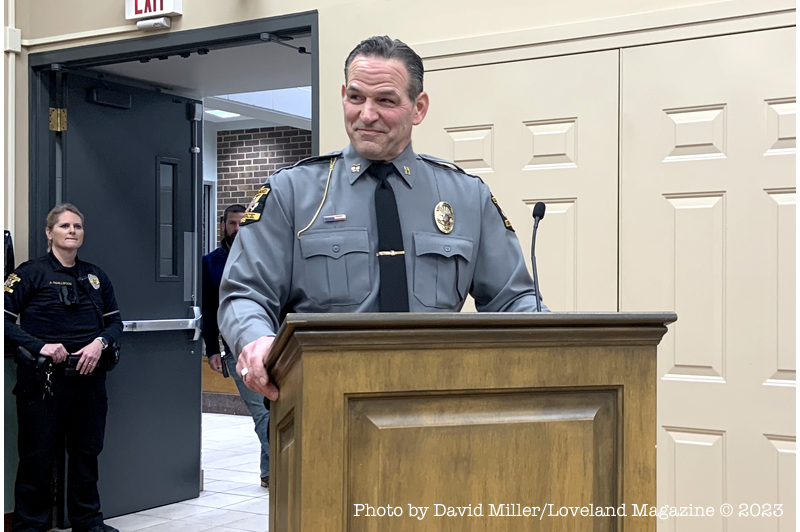
Captain Dan Gangwer took his oath of office at this week’s City Council meeting
Loveland, Ohio – Captain Dan Gangwer was sworn in as Assistant Police Chief at Tuesday’s council meeting. He was previously employed by the Kettering Police Department, where he served for more than 27 years.
The assistant chief position has been unfilled since 2016.
Through his career with Kettering, Gangwer was promoted to sergeant, lieutenant, captain, and eventually assistant chief in 2016. He served several years in field training, SWAT team leadership, bike patrol, rangemaster, and weapons instructor/armorer. As a supervisor at Kettering, he led operations in patrol, jail, court, community relations, investigations, and dispatch.
Gangwer graduated from the University of Louisville with a Bachelor’s Degree in Police Administration.
He took his oath of office at this week’s City Council meeting, where he was joined by his wife, daughter, and former co-workers. Welcome to the LPD family!
Loveland, Ohio – I scream, you scream, we all scream for Loveland Dairy Whip Ice Cream!
Loveland is home to many family-owned businesses and historical buildings due to the fact that Loveland itself was founded in 1876. Businesses have come and gone and a majority of the historical buildings have had to go through some major renovations, but there is one business in particular that has not only called Loveland home from the beginning but has also kept its building as close as possible to the original layout. The Loveland Dairy Whip (LDW) located at 611 West Loveland Ave. has been serving up the community the finest high-quality ice cream since 1955 and has managed to satisfy sweet-tooths all over the city for 66 years! That’s why I couldn’t resist paying LDW a visit for my next round of “Cassie The Food Guru!”
Teresa (Flint) Morgan and her husband Rick Morgan became official LDW owners in 2001 although the ice cream hot spot had been in the Flint family since 1972. Teresa’s parents Marian and Jim Flint bought LDW in 1972, sold it in 1986, then bought it back in 1993. Up until 2001 when Teresa became the owner of LDW, she had been helping her parents run the shop since age 11 so she was no stranger to the LDW way of life!
The Morgan’s now run one of the longest-standing businesses and buildings in the City of Loveland. The LDW has not only been able to keep its historical charm intact even after the minor yet much-needed renovations that took place in 2014 it has also managed to stay true to its mantra, which is to continue offering the community the absolute best quality ice cream at a price that any family can afford! From the legendary vanilla, chocolate, or twist dip-top cones to the delicious Chocolate Mountain Cyclone to the yummy Oreo Parfay to the fan-favorite Banana Boats, LDW can sweeten anyone’s day with its magical ice cream creations!
Without further ado, I bring to you “Cassie the Food Guru” takes on Loveland Dairy Whip! Click below to see my on-camera interview with owner Rick Morgan!
Loveland, Ohio – Loveland Robotics Boosters reported yesterday, “It’s official! LMS VEX Team 97310A Andrometa is going to the 2023 VEX Robotics World Championships!! Huge Congratulations to the first ever Loveland VEX team to qualify for Worlds! We are so proud of you!!”
It's official! LMS VEX Team 97310A Andrometa is going to the 2023 VEX Robotics World Championships!! Huge Congratulations to the first ever Loveland VEX team to qualify for Worlds! We are so proud of you!! @LovelandTigers @MrDavidKnapp @ArblasterNelsonpic.twitter.com/nTnFMFDJgX
— Loveland Robotics Boosters (@LRobotBoosters) March 2, 2023
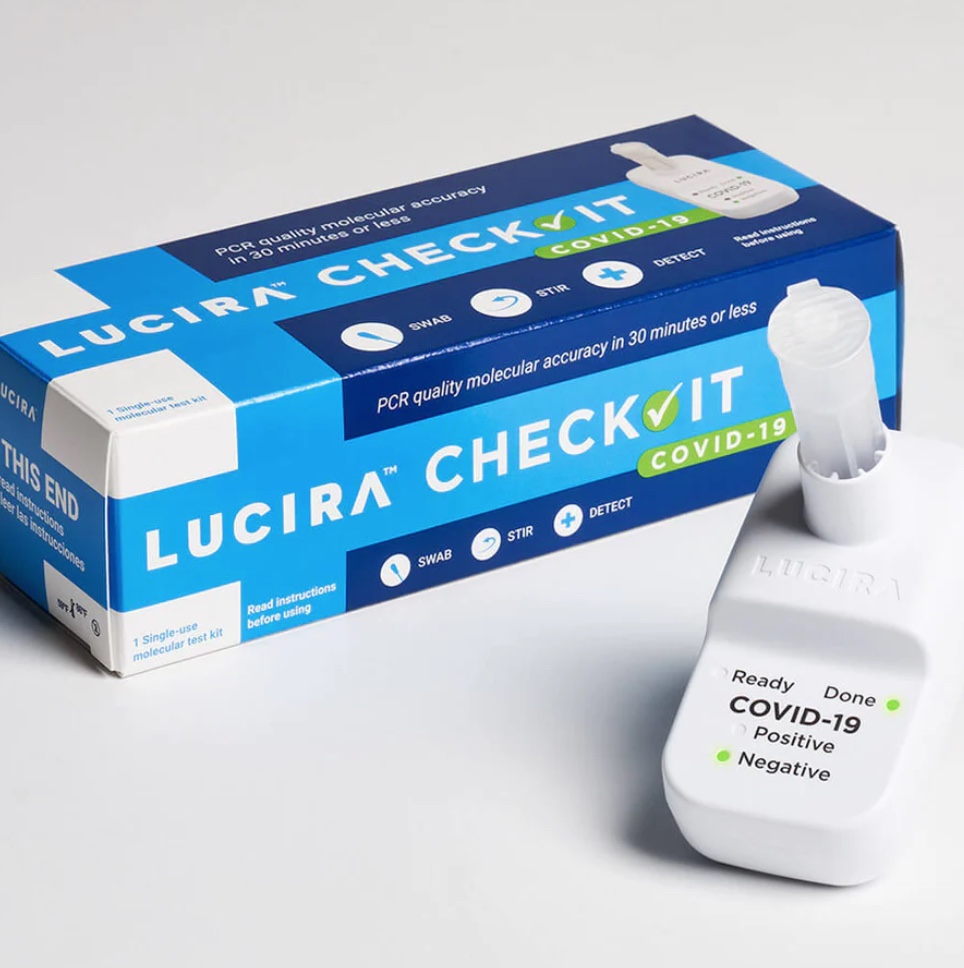
On February 24, the U.S. Food and Drug Administration issued an emergency use authorization (EUA) for the first over-the-counter (OTC) at-home diagnostic test that can differentiate and detect influenza A and B, commonly known as the flu, and SARS-CoV-2, the virus that causes COVID-19. The Lucira COVID-19 & Flu Home Test is a single-use at-home test kit that provides results from self-collected nasal swab samples in roughly 30 minutes.
https://youtu.be/HA0n05d73Gc
The Lucira COVID-19 & Flu Home Test is a single use test for individuals with signs and symptoms consistent with a respiratory tract infection, including COVID-19. The test can be purchased without a prescription and performed completely at home using nasal swab samples self-collected by individuals ages 14 years or older or collected by an adult for individuals 2 years of age or older.
The test works by swirling the sample swab in a vial that is placed in the test unit. In 30 minutes or less, the test unit will display the results that show whether a person is positive or negative for each of the following: Influenza A, Influenza B and COVID-19.
Individuals should report all results obtained to their healthcare provider for public health reporting and to receive appropriate medical care.
According to the FDA, in individuals with symptoms, the Lucira COVID-19 & Flu Home Test correctly identified 99.3% of negative and 90% of positive Influenza A samples, 100% of negative and 88.3% of positive COVID-19 samples and 99.9% of negative Influenza B samples. Since there are currently not enough cases of Influenza B circulating to include in a clinical study, validation confirmed that the test can identify the virus in contrived specimens, and the EUA requires Lucira to continue to collect samples to study the test’s ability to detect Influenza B in real-world settings.
“As with all rapid diagnostic tests, there is a risk of false positive and false negative results. Individuals who test positive for either flu or COVID-19 should take appropriate precautions to avoid spreading the virus and should seek follow-up care with their physician or healthcare provider as additional testing may be necessary,” said the FDA in announcing the test. “Negative results for SARS-CoV-2 and influenza B should be confirmed, if necessary for patient management, with an authorized or cleared molecular test performed in a CLIA-certified laboratory that meets requirements to perform high or moderate complexity tests. Individuals who test negative and continue to experience symptoms of fever, cough and/or shortness of breath may still have a respiratory infection and should seek follow up care with their healthcare provider.”
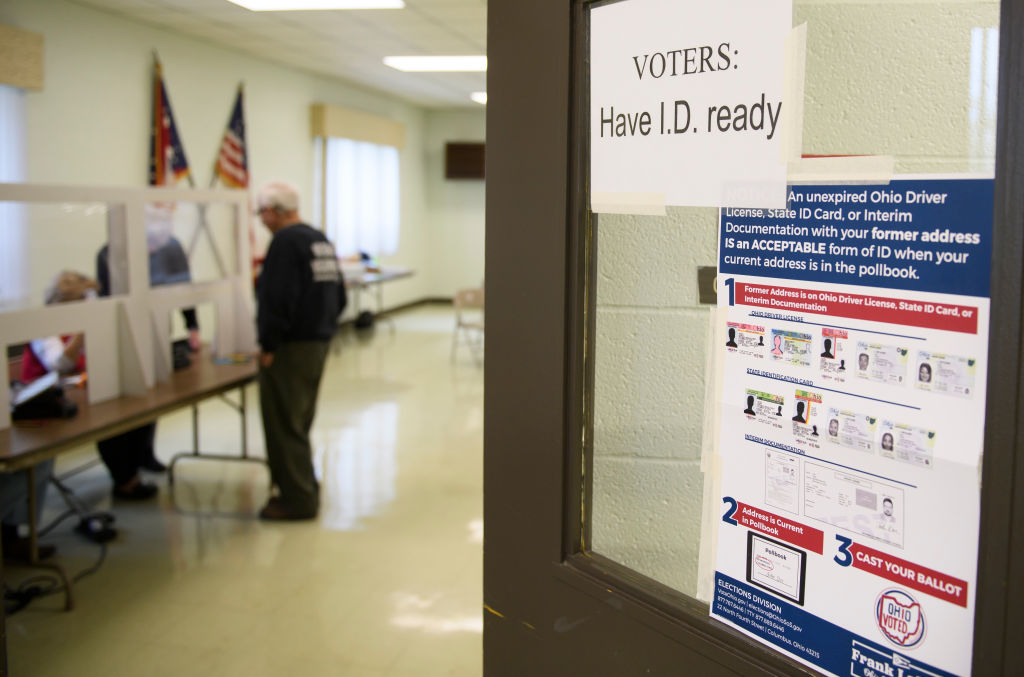
Ohio Gov. Mike DeWine signed House Bill 458 on Jan. 6, enacting what’s been called one of the most restrictive voter-ID laws in the country.
Public records obtained by the Ohio Capital Journal show how the law moved through the process, with lawmakers often ignoring moderation suggestions proposed by the Ohio Secretary of State’s Office and a law firm that lobbied on the law.
Taking elements from two election bills previously introduced in the Statehouse — House Bill 294, and Senate Bill 320 — House Bill 458 instituted sweeping changes to how elections are administered in Ohio.
Alterations include mandating the use of photo IDs, passports, or driver’s licenses to vote, and limiting counties to one ballot drop box. The law also mandated citizenship status on IDs and excludes county-issued veterans’ identification and college IDs from the list one can use to vote.
Such restrictions received significant backlash, with Democratic law firm the Elias Law Group filing a lawsuit the day the law was passed.
Regardless, Ohio’s Republican leaders insist the new voting restrictions were necessary, despite no evidence of significant voter fraud, by impersonation or otherwise. Total possible voter fraud in the 2020 election was a microscopic 0.0005%.
Nevertheless, DeWine said the new restrictions were needed to combat concerns about voter fraud, which have been pushed politically by his own party without evidence.
“Election integrity is a significant concern to Americans on both sides of the aisle across the country,” DeWine claimed in a statement.
DeWine also touted what he sees as moderation of the law’s voting restrictions, congratulating the general assembly for “working with my Administration on changes to House Bill 458 to ensure that more restrictive proposals were not included in the final bill.”
Ohio Secretary of State Frank LaRose’s Press Secretary Rob Nichols similarly touted the DeWine administration’s involvement in the process.
“While no legislation is ever perfect, the House and Senate leaders listened to many of our concerns and made some improvements to the bill,” Nichols wrote in an email responding to OCJ when asked the extent of SOS’s work on election reform. “Overall, the legislature approved some much-needed reforms that will benefit both voters and elections officials, while continuing to make Ohio one of the most honest and accessible voting states in the nation.”
But documents obtained by the Ohio Capital Journal through a public records request reveal a complex web of bureaucrats, lawmakers, lobbyists, and outside powerbrokers, united in their efforts to pass the new voting restrictions, including the Ohio Secretary of State’s Office.
Records show that the Secretary of State’s Office supported most of the House GOP’s voting restrictions, haggling out various details. In some cases where the office pushed for more moderation, their recommendations were not followed by lawmakers.
Regardless, LaRose has been publicly supportive of the law as passed.
Ohio Secretary of State input
Ohio Secretary of State Frank LaRose. Official photo.
On Dec. 9, 2022, Frank LaRose’s Chief of Staff Jason Mauk submitted a memo to Senate GOP legal Counsel Frank Strigari, outlining the secretary’s issues with HB 458.
Since Dewine signed the law, military families have voiced opposition to it, saying the mail-in ballot rules curtail the ability of service members to vote.
Mauk appears to have foreseen the blowback that the law’s rigid deadline for mail-in ballots would cause, especially among the armed services, and warned against it.
Mauk asked the Senate to “allow for ballots to be returned by the postal service for at least five days after election day.”
Eventually, lawmakers settled on a four-day cutoff.
Asked if his colleagues in the secretary’s office were concerned that the four day cutoff — below the deadline recommended by Mauk — might endanger voters, press secretary Rob Nichols indicated it could have been worse.
“They wanted zero,” Nichols said. “We said that might disenfranchise voters, asked for at least a five day return deadline, and they cut it down to four.”
Asked again if the four-day cutoff would harm voters, Nichols replied, “We enforce the laws; we don’t make them.”
Asked for comment, Ohio House Republican Majority Leader Bill Seitz responded in an email, “I do not think there will be any impact on service members being disenfranchised by our new law.”
In communications, Mauk from the Secretary of State’s Office also argued counties should be allowed to have multiple ballot drop boxes on site, writing they “respectfully ask the Senate to allow up to three drop boxes on board office property.”
He also fought against immediate disclosure of drop box surveillance.
“This office has serious concerns about the burden placed on the county boards of elections in requiring immediate disclosure of drop-box video surveillance records,” Mauk wrote. “The immediacy of this requirement is problematic.”
Nevertheless, the provision remained in the final bill and drop boxes were limited to one.
Likewise, Mauk recommended creating a “secure, electronic method of verifying voter registration data,” using information from the Bureau of Motor Vehicles.
One of the benefits from this system, Mauk claimed, is that it could deter non-citizens from voting.
“It also helps to ensure non-citizens are not able to submit a voter registration accidentally, or intentionally,” he wrote.
Another aspect of the election law process made clear by the records is the involvement of the Columbus law firm Byers, Minton & Associates.
Byers Minton is one of Ohio’s largest lobbying firms, with clientele ranging from Apple to the Cleveland Browns, and the Girl Scouts. Byers Minton’s public position on election reform is rarely mentioned on its website, social media, or other communications.
The firm’s weekly update on events at the Statehouse failed to mention HB 458, instead prioritizing DeWine signing a spending bill. The election bills are referenced once, at the bottom of a list including everything passed by the Statehouse during its lame duck session.
But behind the scenes, records show an apparently close relationship between Byers Minton’s lawyers and the lawmakers producing the election legislation.
Founder Bill Byers was involved at the earliest stages of the eventual law’s development. Records show Byers helped arrange favorable testimony, though some of his suggestions for election law changes, such as automated voter registration, were not followed by lawmakers.
Republican Ohio House Majority Leader Bill Seitz. Official photo.
For the original bill, House Bill 294, Byers helped arrange witness testimony from former Kentucky Secretary of State Trey Grayson to speak on its behalf.
Byers would also be included in a thread on the final draft of HB 294 from Oct. 5 of last year, featuring multiple revisions.
Asked about this, another legislative aide for Seitz said Byers’ actions were within the purview of Byers Minton’s regular duties.
“Bill Byers lobbied on behalf of the Secure Elections Project,” wrote the legislative aide in a response email to OCJ. “Byers simply offered valuable input on the bill on behalf of his client.”
Byer’s interest in election law would later extend to SB 320, the other predecessor bill to the one that was eventually passed, which was introduced by Republican state Sen. Teresa Gavarone.
In it, Byers argues for the cost-saving potential of automated voter registration and verification, and the wastefulness of provisional ballots.
“Processing provisional ballots imposes significant costs on county election officials,” Byers said.
Byers also portrayed decreasing the amount of provisional ballots as a financial windfall.
“Reducing the number of provisional ballots cast in the 2016 and 2018 election cycles, would have resulted in an additional $830,721 in savings to county BOEs,” Byes said.
According to the Massachusetts Institute of Technology’s Election Lab, 1.7 million provisional ballots were counted in 2016 nationally, and accounted for 1.2% of all votes in the 2018 midterm election.
“Thank you!,” the aid replied to Byers.
Six days later, the aide emailed Byers once more, saying Gavarone “would like to meet with you to get more Info,” and requested “Frank(LaRose)’s attendance during that meeting with us.”
Asked to discuss the details of these meetings, no one from Gavarone’s offices responded.
As for Byers Minton, asked for comment, Andrew Minton replied, “My firm does not give comment to the press on any issue or for any reason.”
Speaking about the election reform bills as a whole, Mallory was livid when asked for comment.
“These anti voter policy changes are not about improving the election process, it’s about erecting barriers and decreasing access,” Mallory said. “What we have is a super majority rushing anti voter bills through a lame duck session. They are perpetuating a fraud on Ohio voters and the democratic process, with the false narrative of Election security and modernization. It is disingenuous.”


![[VIDEO] Ribbon Cutting and Open House at Loveland’s new Chamber office](https://lovelandmagazine.com/wp-content/uploads/2023/03/My-Movie-20.jpg)