Tag: children

  • Pertussis (whooping cough) “Advisory” from Warren County Health District

    Pertussis (whooping cough) “Advisory” from Warren County Health District

    Loveland, Ohio – The Warren County Health District (WCHD) is urging the public to stay up to date with immunizations, especially for pertussis (whooping cough). WCHD has identified an increase in pertussis cases in the county. In 2023, there have been 15 cases, including 14 that have been in the last month. By comparison, there was one case in 2022.

    The Advisory

    Whooping cough is highly contagious and is usually spread by coughing or sneezing while in close contact with others, who then breathe in the pertussis bacteria. It can cause serious illness in people of all ages but is most dangerous for babies.

    Symptoms of whooping cough usually develop within 5 to 10 days after you come into contact with the bacteria that cause it. Sometimes symptoms do not develop for as long as 3 weeks.   

    Whooping Cough symptoms can be classified into three stages: Stages 1,2, and 3.

    Stage 1, or early symptoms can last 1-2 weeks and include:

    • Runny or stuffed up nose

    • Low-grade fever (less than 100.4F)

    • Mild, Occasional cough (babies do not do this)

    • Apnea (life threatening pauses in breathing) and cyanosis (turning blue or purple) in babies and young children

    Many times, in the early stages of whooping cough, it is very easy to think it is just a common cold. Early testing is important since the antibiotics used to treat the illness is most effective in the first stage of pertussis. Antibiotics are not effective once the “whooping” starts.

    Stage 2 symptoms can begin one to two weeks after symptom onset, and can last anywhere from 1-10 weeks. During this time, someone affected by whooping cough will develop rapid, violent, and uncontrolled coughing fits. As the illness continues, these coughing fits will increase in frequency and intensity.

    Stage 3 is recovery, which can be slow, as the cough becomes milder and less common as someone gets better, but they can return if someone develops another respiratory infection.

    Whooping cough can cause serious and sometimes life-threatening complications in babies. This is especially true within the first 6 months of life. It is important to know that some babies with whooping cough don’t cough at all. Instead, it causes them to stop breathing and turn blue.

    If their mothers are vaccinated in the third trimester (27-36 weeks), newborns are offered some protection.

    The best way to prevent whooping cough is to get vaccinated. Two vaccines in the United States help prevent whooping cough: DTaP and Tdap. These vaccines also provide protection against tetanus and diphtheria. These vaccines cannot give you whooping cough, tetanus, or diphtheria.

    WCHD offers both of these vaccinations. If you are unsure of if you need the Tdap vaccination or have not received one in the last 10 years, and need to get scheduled, call 513-695-1229.

    For people exposed to whooping cough, the Centers for Disease Control and Prevention (CDC) recommends preventive antibiotics only if they:

    • Live with the person who has been diagnosed with whooping cough.

    • Are at increased risk for serious disease (e.g., babies, people with certain medical conditions) or will have close contact with someone who is at increased risk for serious disease (e.g., women in their third trimester of pregnancy, people who work with or care for high risk individuals).

    If you’ve been exposed to the bacteria that causes whooping cough, talk to your doctor about whether you need preventive antibiotics. This is especially important if there is a baby or pregnant woman in your household or you plan to have contact with a baby or pregnant woman.

  • ID R Kids for Safety

    ID R Kids for Safety

    There is no minimum age for an Ohio ID card. According to the Ohio Bureau of Motor Vehicles, obtaining an ID card for your child has many advantages, including that it may assist police if a child is reported missing. You may apply for an Ohio ID card for your child through the Ohio Bureau of Motor Vehicles.

    You may also apply for an Ohio ID card for your child at any deputy registrar location.

    • Ohio ID cards are used for identification purposes only.
    • Ohio photo ID cards for children may assist police if a child is reported missing.

    What do you need to bring?

    You must provide proof of your child’s:

    • Full legal name
    • Date of birth
    • Social Security number (if ever assigned)
    • Legal presence
    • Ohio residency

    Any child under age 18 must be accompanied by a parent or guardian with an Ohio driver license or ID card. If the parent or guardian does not have an Ohio driver license or ID card, then they must also provide proof of:

    • Full legal name
    • Date of birth
    • Social Security number (if assigned)
    • Legal presence
    • Ohio residency

    Go to our Acceptable Documents page for a full list of identity documents and links to use our interactive process to assist you with what to bring to a deputy registrar agency.

    How much does an Ohio ID cost?

    $10.00

    The bureau says, “Don’t forget to include a listing for your child’s Next of Kin in connection with his or her state ID. It will help police get in touch with parents or guardians.”
  • Nurse’s Notes: Preventative Healthcare

    Nurse’s Notes: Preventative Healthcare

    Every month, the staff nurses at the Butler County Board of Developmental Disabilities share important health updates. This month, their nurses are talking about preventative healthcare!

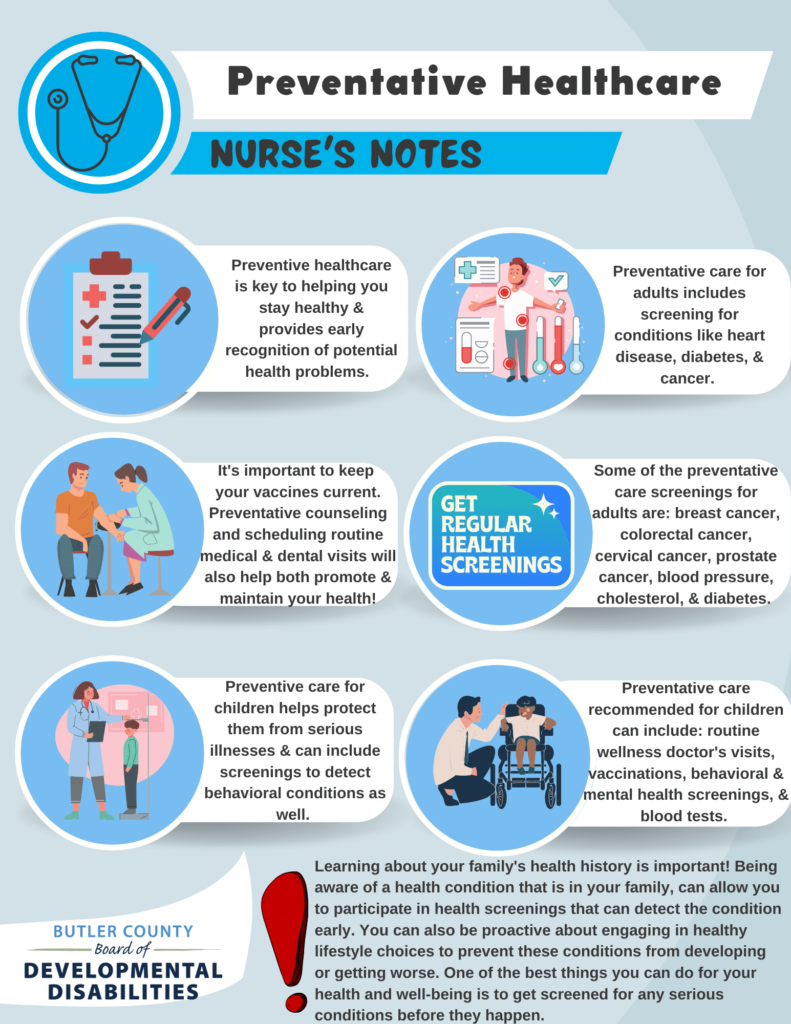
    Preventive healthcare is key to helping you stay healthy and provides early recognition of potential health problems. Seeking preventative healthcare can help you live a longer, healthier life!

    Preventative care for adults typically includes screening for conditions like heart disease, diabetes, and cancer. This also includes counseling and receiving appropriate patient teaching on healthy eating and life habits.

    What are some of the screenings recommended for adults? (Please note that these screenings are recommended based on age and family history).

    • Screenings for breast cancer, colorectal cancer, cervical cancer, and prostate cancer: These types of cancers are affecting men and women the most and early detection can stop or slow the spread and allow early treatment.
    • Screenings for blood pressure, cholesterol, and diabetes: These screenings can detect common conditions that can be treated with basic lifestyle changes and or medications. If left untreated or diagnosed, they can lead to serious diseases and early death.
    • Immunizations: Not only children need vaccines, but adults should also stay on top of their vaccines as well.  Annual flu shots, COVID-19 vaccines and any necessary boosters can help you prevent illness and diseases. Visit the CDC for guidelines on vaccines.
    • Preventative Counseling: Preventative counseling and patient teaching is useful to help us make ongoing positive health related changes to promote a healthy lifestyle.
    • Scheduling routine medical and dental visits:  Annual physicals and routine dental care is valuable to maintain general health and ensure necessary recommended screenings are performed.

    Preventive care for children helps protect them from serious illnesses and can include screenings to detect behavioral conditions as well. Preventive healthcare can help children stay healthy when they’re young and promote healthy decision making as they grow older.

    What preventative care is recommended for children?

    • Well-child visits: Routine visits every few months when your child is an infant, and yearly after that.  Routine immunizations and screenings are also conducted during these visits.
    • Vaccinations: Vaccinations for children protect them from serious diseases now and in the future.
    • Behavioral and mental health screenings: Pediatricians routinely screen children for conditions like autism, depression, and developmental delays.
    • Blood tests: Various blood test screenings can be conducted throughout childhood to detect various diseases.

    Why is knowing your family history important?

    Learning that you have a family history of a serious health condition can be discouraging and stressful, but knowledge is power. When you are aware of a health condition that is in your family, you can participate in health screenings that can detect the condition early, so that treatment is more effective and can be started early on. You can also be proactive about engaging in healthy lifestyle choices to prevent these conditions from developing or getting worse.

    One of the best things you can do for your health and well-being is to get screened for any serious conditions before they happen. That’s what preventive health is about, and why medical experts recommend that all adults and children participate in routine tests, screenings, and immunizations.

    If you have any questions about preventive care and what screenings you or your children should get, be sure to talk with your doctor or healthcare professional. Check to see if you are up to date on your preventative care! 

    The Butler County Board of Developmental Disabilities supports over 3,700 people to live, work, and learn successfully in their community. Supports and services are available life-long through contracts with partner agencies or directly provided by our Board.
    Please visit the website of the Butler County Board of Developmental Disabilities often for more great information about the services that they provide, many of which go beyond the walls of their facilities and take place in the greater community.

    Look for, and subscribe to their newsletters!

  • Air Quality Alert has been extended into Saturday

    Air Quality Alert has been extended into Saturday

    Loveland, OhioThe Southwest Ohio Air Quality Agency expects to see levels of ozone in the “unhealthy for sensitive groups” range on the Air Quality Index (AQI).

    Saturday, Aug 5 Unhealthy for Sensitive Groups Ozone


    This level of Ozone can be harmful to children, seniors, adults who are active outdoors (such as manual laborers), and people with heart disease, lung disease (such as asthma, emphysema, and bronchitis), or diabetes.

    On Air Quality Alert days, everyone can help reduce ozone formation by taking the following actions:

    • Take the bus, carpool, bike, or walk instead of drive.
    • Refuel your vehicle after 8 p.m.; do not top off when refueling and tighten the gas cap.
    • Do not idle your vehicle; exhaust contributes considerably to ozone formation.
    • Combine trips or eliminating unnecessary vehicle trips.
    • Keep your vehicle maintained with properly inflated tires and timely oil changes.
    • Avoid use of gasoline-powered lawn equipment on Air Quality Alert days.
    • Avoid use of oil-based paints and stains on Air Quality Alert days.
    • Never burn leaves or other yard trimmings.
    • Suspend use of fire pits, campfires and charcoal grills on Air Quality Alert days.
    • Conserve electricity by turning out lights and unplugging unused appliances and electronics.
  • Air Quality Alert has been declared for Loveland on Friday

    Air Quality Alert has been declared for Loveland on Friday

    Loveland, OhioThe Southwest Ohio Air Quality Agency expects to see levels of ozone in the “unhealthy for sensitive groups” range on the Air Quality Index (AQI).

    Friday, Aug 4: 108 AQI Unhealthy for Sensitive Groups Ozone


    This level of Ozone can be harmful to children, seniors, adults who are active outdoors (such as manual laborers), and people with heart disease, lung disease (such as asthma, emphysema, and bronchitis), or diabetes.

    On Air Quality Alert days, everyone can help reduce ozone formation by taking the following actions:

    • Take the bus, carpool, bike, or walk instead of drive.
    • Refuel your vehicle after 8 p.m.; do not top off when refueling and tighten the gas cap.
    • Do not idle your vehicle; exhaust contributes considerably to ozone formation.
    • Combine trips or eliminating unnecessary vehicle trips.
    • Keep your vehicle maintained with properly inflated tires and timely oil changes.
    • Avoid use of gasoline-powered lawn equipment on Air Quality Alert days.
    • Avoid use of oil-based paints and stains on Air Quality Alert days.
    • Never burn leaves or other yard trimmings.
    • Suspend use of fire pits, campfires and charcoal grills on Air Quality Alert days.
    • Conserve electricity by turning out lights and unplugging unused appliances and electronics.
  • Parents have no right to allow their children’s gender transition, Republicans say

    Parents have no right to allow their children’s gender transition, Republicans say

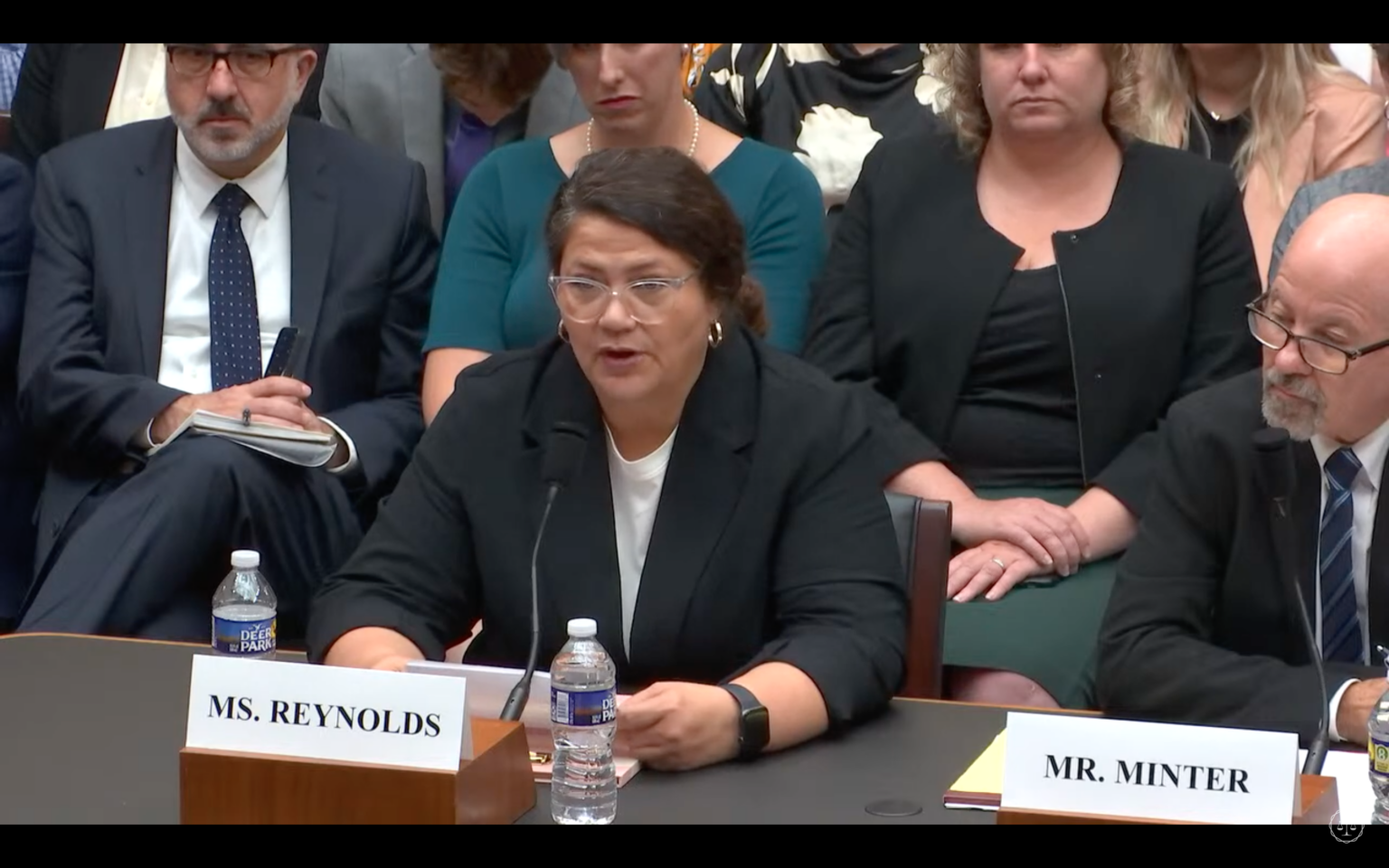
    Myriam Reynolds of Texas, the mother of a transgender son, said before he received care, he was unhappy and she has “no doubt that the health care my son accessed was life-saving.” (Screenshot from committee webcast)


    WASHINGTON — U.S. House Republicans on a panel for limited federal government on Thursday argued that parents should not be allowed to let their transgender children have access to gender-affirming care.

    “A parent has no right to sexually transition a young child,” the chair of the House Judiciary Subcommittee on the Constitution and Limited Government, Rep. Mike Johnson of Louisiana, said at a hearing on transgender youth. “Our American legal system recognizes the important public interest in protecting children from abuse and physical harm. No parent has a constitutional right to injure their children.”

    Johnson, and several other Republicans, floated the idea that the federal government should get involved, but did not offer specifics on potential legislation. They argued that gender-affirming surgery should not be allowed for transgender minors. That type of surgery is rarely performed on patients under 18.

    In Johnson’s home state, the Louisiana Legislature in early July voted to override a veto from Gov. John Bel Edwards, allowing a ban on gender-affirming health care for transgender youth to become law.

    Thursday’s hearing reflects a broader trend. At least 21 Republican-led states have passed laws banning or restricting gender-affirming care for minors, according to the Movement Advancement Project, an organization that tracks LGBTQ+ state policies.

    The wave of legislation has had a chilling effect on health care providers, who are wary of providing other care to transgender youth, such as mental health and other medical care.

    Gender-affirming care can be social affirmations such as adopting a hairstyle or clothes that align with a transgender youth’s gender identity, or the use of puberty blockers and hormone therapy. Typically, in adulthood it can be gender-affirming surgery.

    “When our Republican colleagues allege that gender-affirming care raises particular dangers or due process issues, that is fearmongering at its worst,” the top Democrat on the panel, Rep. Mary Gay Scanlon of Pennsylvania, said. “Picking on already vulnerable kids in order to stir up chaos that they hope to ride to success at the ballot box.”

    Democrats said the hearing is a pattern of GOP lawmakers attacking transgender kids and their families.

    Scanlon said that barring parents from making those decisions would be in violation of their parental rights. Republicans passed legislation for a federal “Parents Bill of Rights” in March pertaining to access to education-related materials.  

    State laws

    Several federal courts have either blocked or struck down state laws banning gender-affirming care for transgender youth, such as in AlabamaArkansasFlorida and Indiana.

    The top Democrat on the House Judiciary Committee, Rep. Jerry Nadler of New York, asked one of the Democratic witnesses, Shannon Minter, an attorney, what the federal courts have concluded about states moving to pass bans on gender-affirming care.

    Minter, who is the legal director of the National Center for Lesbian Rights and is also transgender, said the federal courts have found that those state laws “severely burden parents’ fundamental rights to make medical decisions for their own children.”

    “They’re blatantly discriminatory,” he said. “They violate the guarantee of equal protection because they do something that has just never been done before in this country, which is single out a particular group of people, transgender young people, in order to deny them medical care.”

    Despite the federal court cases, Johnson argued that states have the right to regulate gender-affirming care, such as puberty blockers.

    Puberty blockers were first approved by the Food and Drug Administration in 1993 to temporarily pause puberty in children who were going through it too early. When used in gender-affirming care for transgender youth, those adolescents can choose to start hormone therapy, in which they receive either estrogen or testosterone treatments, whichever one that aligns with their gender identity.

    “We’re limited government conservatives, right,” Johnson said. “We obviously recognize that parents have a natural and fundamental right to the bringing up of their children to make decisions with regard to their care and custody and control. But at the same time, our legal system in this country, our law does not allow a parent to physically or mentally abuse or harm a child.”

    May Mailman a senior legal fellow at the Independent Woman’s Law Center, a conservative advocacy organization, said states should be able to regulate who can have access to transgender health care.

    “Unfortunately, I think you’re seeing this movement that states should not be able to regulate the practice of medicine and somehow federal judges should,” she said.

    Life-saving care

    One of the Democratic witnesses, Myriam Reynolds, is the mother of a transgender son. She said before he received care, he was unhappy and she has “no doubt that the health care my son accessed was life-saving.”

    Reynolds said any health care provided to her son was through slow and careful decisions that were approved by her and her husband and that their son always had the opportunity to stop if he wanted to. He received puberty blockers as well as counseling.

    “When my child came out, as transgender, there was not the hysteria that there is now about this,” she said. “To be looked at as a child abuser, or you know an indoctrinate or something like that, it feels very hateful and divisive.”

    Texas Republican Rep. Wesley Hunt said that instead of parents jumping to gender-affirming care when a child tells them they have gender dysphoria, meaning their gender identity differs from the sex they were assigned at birth, they should instead question “the root cause of that feeling.”

    He compared that decision to his toddlers, whom if they could “have their way, they would have ice cream for breakfast, lunch and dinner and for every single meal in between. Oh, the wisdom of children.”

    “In a sane country, we know that children aren’t mature enough to make adult decisions that will impact the rest of their lives, that’s why we have parents,” he said. “Children cry for ice cream, but as parents, we have the wisdom to know that ice cream is not in their best interests, particularly their long-term interest.”

    He said that in 2024, Republicans will have an opportunity to “stop all this foolishness.”

    Florida Republican Rep. Matt Gaetz, who is not a member of the panel, took aim at a recently passed law in Washington that protects transgender youth seeking gender-affirming care who are estranged from their parents.

    “I am against transitioning children against the will of their parents,” he said.

    Title IX

    Several of the Republican witnesses criticized the Department of Education’s new rule that updates Title IX to allow transgender youth who attend public schools from competing in sports that align with their gender identity.

    The rule came as states with Republican state legislatures have passed laws banning transgender students from competing in sports that align with their gender identity.

    One of the witnesses, Paula Scanlan, is a former NCAA athlete who swam at the University of Pennsylvania and shared a locker room with Lia Thomas, the first openly trans woman to compete in the NCAA women’s division. Scanlan said she opposed the Biden administration’s changes to Title IX and that transgender women should not be allowed to compete in sports that align with their gender identity.

    House Republicans recently passed legislation to ban transgender girls from competing in the sports that align with their gender identity, a move that mirrors legislation passed by Republican-controlled state legislatures.

    Mailman, with the Independent Woman’s Law Center, said that gender ideology has destroyed “women and girls, by dissolving legal protections for women in athletics.”

    Reynolds said as soon as her son came out as transgender, he stopped playing sports because of the rhetoric about transgender athletes competing in sports that align with their gender identity.

    “That left a big hole in his life,” she said.


    Ariana Figueroa
    ARIANA FIGUEROA

    Ariana covers the nation’s capital for States Newsroom. Her areas of coverage include politics and policy, lobbying, elections and campaign finance.

    MORE FROM AUTHOR

  • New Communication Devices Give Children a Chance to Find Their Voice

    New Communication Devices Give Children a Chance to Find Their Voice

    [vc_row][vc_column][vc_column_text]

    This story is republished with the permission of the Butler County Board of Developmental Disabilities.
    Part of Loveland Magazine’s coverage of Developmental Disabilities Awareness Month

    [/vc_column_text][vc_column_text]

    Cassie Mattia

    by Cassie Mattia

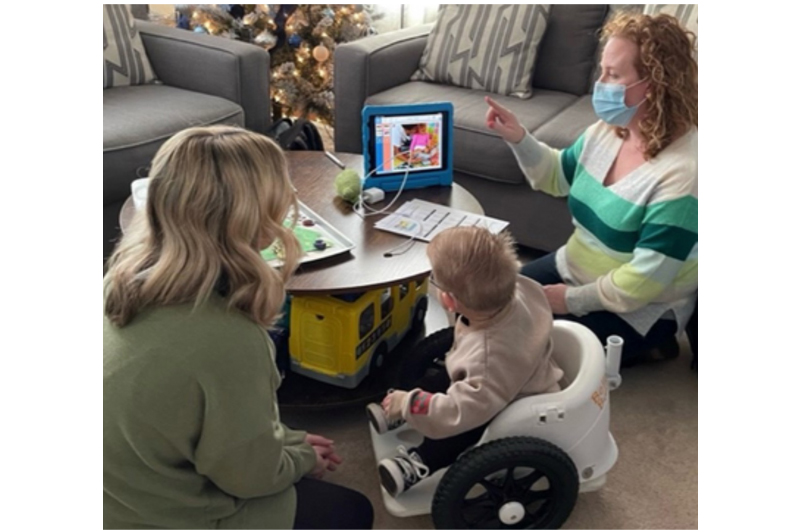
    Since the inception of Ohio’s Technology First Initiative, new and improved devices that help with two-way communication or provide step-by step assistance has helped many families and individuals with developmental disabilities overcome daily obstacles. For children with developmental disabilities, communication devices are often one of the most important parts of their growth and development. Butler County Board of Developmental Disabilities (BCBDD) Early Intervention Speech-Language Pathologist, Bree Lanham, began learning about Augmentative and Alternative Communication devices in college and knew that with her expertise she could implement what she had learned into the BCBDD Early Intervention program and immediately impact the children and families a part of the program.

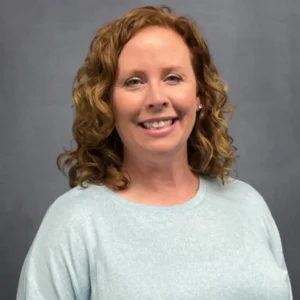
    Bree Lanham

    “Since joining the board, I saw an opportunity for increasing awareness of Augmentative and Alternative Communication (AAC) to be used in Early Intervention. There are many myths associated with using AAC in young populations and I really wanted to make it my mission to reveal the truth about AAC and how it can benefit birth to 3,” Bree said.

    Bree, who has been a Speech-Language Pathologist (SLP) for 14 years, began learning about low-tech and high-tech AAC devices at Arizona State University where she gained her degree in Communication Disorders (Speech Pathology). Bree’s undergraduate degree in Special Education allowed her to explore the world of AAC devices and use various forms of the devices to give the children she worked with access to language surrounding curriculum in the classroom. “I’ve lived all over the US and had experience working with families and children not only in Early Intervention (EI), but schools and clinics as well. I have found that the earlier a child has access to a robust system of communication, the earlier they can begin integrating their skills with family and friends across environments and building lifelong relationships,” Bree said.

    What is an AAC device?

    Augmentative and alternative communication encompasses the communication methods used to supplement or replace speech or writing for those with impairments in the production or comprehension of spoken or written language. In simpler terms, AAC means ALL of the ways that someone communicates besides talking. Anyone at any age can use AAC to help with speech and language skills. AAC devices fall into two categories, no or low-tech, meaning a physical aid or tool is not required, and high-tech, which utilizes technology. No or low-tech includes gestures and facial expressions, writing, sign language, drawing, spelling words by pointing to letters, and pointing to photos, pictures, or written words. High-tech most often uses an app on an iPad or tablet to communicate. High-tech may also include using a computer with a speech-generating device.

    Who should use AAC devices?

    AAC devices work well for children who are pre-verbal, those with developmental delays such as Autism or Down Syndrome as well as children who are difficult to understand such as those with severe phonological impairments or Childhood Apraxia of Speech. High-tech AAC devices allow children to build on their language skills; quickly going from single words to short sentences in a matter of months. High-tech AAC devices gives children a voice to request their favorite food, favorite toy or to tell their parents and caregivers about an important need or want. AAC devices can be a huge help to kids who are learning verbal speech alongside their device and promotes speech and language development.

    Bree quickly recognized the need for AAC devices in the BCBDD EI program and as a result of her efforts, the EI department procured several iPads with five apps (Proloquo2Go, TouchChat, TD Snap, Snap Scene and Cough Drop) to use for expressive communication. The iPads are available through a budding lending library for EI families to now learn the possibilities of what is out there and how AAC devices can help their child develop and grow to the best of their potential. Since the introduction of AAC devices to the EI program, the Butler County Educational Service Center has provided an additional 8 iPads to help grow the lending library.

    “It’s great to work for an organization where employees feel empowered to reach out when they see a need. Bree approached us with an opportunity to enhance our services to the children we serve. Of course, we quickly made that opportunity a reality for our families and can now add AAC as another option for our families,” said Sherry Dillon, BDBDD Community Services Director.

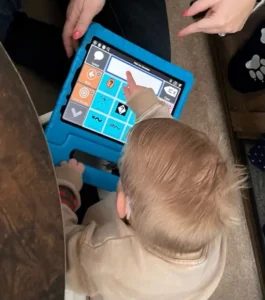
    2-year-old Leo Davis using an AAC device

    BCBDD EI Therapists are trialing the AAC apps with several kids in the EI program to use across daily routines such as playtime and mealtime. “Our plan is to figure out which app best fits their needs and work to complete an AAC Evaluation to provide these children with permanent devices to supplement expressive language. I feel that all children should have access to robust language from an early age to promote developmentally and/or age-appropriate communication skills,” Bree explained.

    The use of AAC devices in the BCBDD EI program has already begun to make a huge difference in Kasey Davis’ life, whose 3-year-old son Connor is using an AAC device to model language.

    “Having access to the device has been amazing for our family,” said Kasey. “It’s allowed our son to explore expressive communication in new ways we didn’t think was possible. Although we are still learning the different apps, he’s picking it up quickly and is engaged when using it. Having a ‘tailor made’ device that we can customize to our needs has made the experience even better. We’re so grateful for the opportunity to work with the program and use the device as a tool for our son.”

    The benefits of AAC can be endless when introduced early on, according to Bree.

    “Our Early Intervention program is unique. We have access to low and high-tech AAC for all children. Families will need to work with their therapists to obtain the right fit and explore all options. Typically, a child will be working with a therapist for a period of time to determine the best fit for AAC. High-tech AAC devices can and should be implemented early but are often not the first strategy or system that we use. This may be due to various factors including need or fit for the family and child. Essentially, it’s a complex process of determining what is the best fit for a child and family long-term. This is why a family’s Speech Language Pathologist should work together with the family to determine the most appropriate fit that meets the current need and also allows the child to push to the next level of development,” Bree said.

    Bree says that when working with a SLP or therapist it is critical in determining the need for high-tech devices as not all children and families will need them. “Asking your SLP or therapist questions is the best way to learn more about what we have to offer and which program on the device will fit their needs. It’s also critical to work with your therapist to learn the device and how to implement it in daily routines to reduce device abandonment long-term,” Bree added.

    AAC devices can lead to other benefits in a child’s future!

    According to AssistiveWare.com, AAC devices can offer a child many social, physical, and emotional benefits including:

    • stronger friendships and deeper relationships
    • richer, more frequent social interactions
    • deeper social roles
    • increased autonomy and decision-making power over their own life
    • increased independence
    • more respect from others
    • greater participation in their family lives and communities
    • improved information sharing with physicians
    • improved personal safety in a variety of care settings, such as hospitals or long-term facilities
    • more employment and volunteer opportunities
    • improved physical and mental health

    With the implementation of AAC devices in the BCBDD EI program and the proven success rate with families currently trialing the devices, BCBDD Superintendent, Lisa Guliano couldn’t be happier about offering more assistive technology options to children and families.

    “I appreciate Bree’s initiative in pursuing use of Augmentative and Alternative Communication as an option for children and families being served through Early Intervention,” Lisa said. “These efforts align with our statewide Technology First plan and our agency’s goal to increase the number of people using assistive technology across the lifespan. I’m excited to see the outcomes for children and families as they explore the options available.”

    The new BCBDD AAC system in the EI program is something Bree believes all organizations that serve children with communication delays and disorders would benefit from. “All children should be provided a system of communication as early as possible, and this can range from pictures and signs to a high-tech device,” said Bree. “I’ve always felt that my job as an SLP is not to ‘make a child talk’ but to teach a child to communicate and AAC is another tool in my toolbelt that can support a child in their development of communication skills.”

    AAC Myths vs. Facts

    • Myth: Using AAC or high-tech device will prevent a child from talking. Fact: Using AAC or a high-tech device can help to promote verbal speech.
    • Myth: AAC is a “last resort” in speech-language intervention. Fact: There are no pre-requisites for providing AAC and it can be used in tandem with traditional speech-language intervention.
    • Myth: Only children with certain cognitive abilities will benefit from AAC or high-tech devices. Fact: No, the opposite is true. Emerging research is showing that devices can actually promote communication and cognitive development including increasing social skills, facilitating communicative intent and aiding in learning symbolic representation.
    • Myth: Children need to trial low-tech devices before high-tech devices such as PECS. Fact: There are no pre-requisites for providing a robust system of communication. Each child should be evaluated independently and provided access to the system of communication that will grow with them. Speech-Language Pathologists specialize in assisting families with making these decisions.

    To find out more about access to BCBDD AAC devices through the EI program contact your Developmental Specialist or email info@butlerdd.org.[/vc_column_text][vc_separator border_width=”10″][vc_message]

    Columnist Cassie Mattia is a resident of Historic Downtown Loveland and the Public Relations Coordinator at the Butler County Board of Developmental Disabilities. Cassie was awarded the Little Miami River Chamber Alliance 2021 Young Business Professional of the Year. Cassie is very active in the Loveland community and will often be seen helping plan and volunteering at the Little Miami Chamber Alliance and City of Loveland events. Cassie also enjoys supporting the local restaurants and businesses in Loveland as well as making guest barista appearances at Mile42 Coffee. To see what Cassie is up to follow her on Facebook and Instagram!

    You can reach Cassie at cmattia12@gmail.com[/vc_message][/vc_column][/vc_row]

  • Awaiting budget proposal, child advocates hope for more

    Awaiting budget proposal, child advocates hope for more

    Getty Images

    BY: SUSAN TEBBEN – Ohio Capital Journal

    As policymakers await the newest budget priorities to be laid out by Gov. Mike DeWine, advocates for the state’s children are hoping comprehensive child well-being will be at the top of the list.

    The Ohio Children’s Budget Coalition released their policy agenda for the 2024-2025 state budget, which they hope will include whole-child services to address housing, health, child care, economic stability, and adoption of the Fair School Funding Plan, which was only approved for two years of the six-year phase-in so far.

    “Children do not come in pieces, and neither should the policies and investments that crucially provide and pave the way for them to grow and flourish into successful adulthood,” said Katherine Ungar, senior policy associate with the Children’s Defense Fund-Ohio.

    Recommendations by the OCBC also targeted structural racism, the effects of which “negatively impact child outcomes,” according to the announcement of budget priorities.

    “The budget is a moral document that reflects our state’s priorities,” OCBC co-leader and Children’s Defense Fund-Ohio policy associate Matthew Tippit said in a statement.

    The policy report also laid out challenges to combatting the teacher shortage the state has suffered from for several years, with the Bureau of Labor Statistics stating 21,000 fewer teachers were employed in K-12 public school in the state from September 2021 to September 2019.

    The state has faced recruitment and retention issues, which the coalition attributes to “mounting pressures related to the COVID-19 pandemic, under-resourced schools, politicization of education and lack of respect for educators and the education profession.”

    “While a mass exodus of experienced educators from the teaching profession has not yet materialized, it is cause for significant concern when so many are expressing deep frustrations over what they believe is a lack of support and respect for the work they do with students,” the report stated.

     Groundwork Ohio

    The policy recommendations also come on the heels of a recent early childhood dashboard released by the advocacy group Groundwork Ohio. The dashboard has been in the works since 2021 to “help inform policy makers about the realities facing Ohio families with young children.”

    Groundwork Ohio president and CEO Shannon Jones said the dashboard “tells us where to focus on making positive change for infants, toddlers and preschoolers.”

    The report found that one in five Ohio infants don’t have access to child care or early learning and six in 10 children aren’t ready to attend school based on kindergarten readiness, fourth-grade reading proficiency and eighth-grade math proficiency.

    Racial issues appeared as part of Groundwork Ohio’s analysis, with the group finding that infant mortality rates are still above the U.S. average in Ohio “with a large and appalling racial disparity.”

    “While there are many ways we can begin to improve outcomes for young children, focusing state efforts on its very youngest citizens is an urgent moral imperative as well as a wise state investment,” according to the report.

    The organization was encouraged by state performance in areas like eighth grade math proficiency and improved homeless students and housing cost burdens.

    Early investments are needed to benefit Ohio children throughout their lives, the dashboard concluded as state performance compared to the rest of the country was worse in categories such as early intervention service access and young child poverty.

    Large disparities were found particularly in Black, Hispanic and Native American/American Indian children living below the poverty level.

    The state has also worsened in terms of kindergarten literacy, chronic absenteeism and special needs preschools, according to the dashboard.

  • Federal OK sought for two-dose COVID vaccine for kids under 5

    Federal OK sought for two-dose COVID vaccine for kids under 5

    BY: JENNIFER SHUTT – Ohio Capital Journal

    WASHINGTON — Pfizer and BioNTech on Tuesday asked the federal government to begin the approval process for a two-dose COVID-19 vaccine for children under 5.

    The companies said in a joint statement they began the rolling submission process for an emergency use authorization at the request of the Food and Drug Administration “in response to the urgent public health need in this population.”

    While the approval process is underway for the two-dose regimen, the company will continue researching a third dose that would likely be given at least eight weeks after a child receives the second dose.

    Pfizer Chairman and Chief Executive Officer Albert Bourla said in the statement that increasing infections and hospitalizations of young children led the two companies to begin the approval process.

    “As hospitalizations of children under 5 due to COVID-19 have soared, our mutual goal with the FDA is to prepare for future variant surges and provide parents with an option to help protect their children from this virus,” Bourla said.

    “Ultimately, we believe that three doses of the vaccine will be needed for children 6 months through 4 years of age to achieve high levels of protection against current and potential future variants.”

    Bourla said that if the FDA authorizes the two doses, that would allow parents to begin vaccinating their young children while waiting on approval of a third dose.

    The submission announcement on Tuesday comes sooner than previously expected.

    In mid-December, Pfizer and BioNTech announced they were modifying their trial to include a third dose of the vaccine for children between 2 and 4 years old after the two-dose approach didn’t lead to the type of immune response researchers sought. The trial did, however, produce the levels desired in children between six months and 2 years old.

    The company said at the time that if the three-dose trial was successful, it would likely submit its emergency use request to the federal government in the first half of 2022.

    Dr. Anthony Fauci, director of the National Institute of Allergy and Infectious Diseases, then said last week that parents needed to be patient in waiting for approval of the vaccine for younger children.

    “I don’t think we can predict when we will see an [emergency use authorization] with that because the company is still putting the data before the FDA,” Fauci said during a White House briefing on the pandemic.

    poll released Tuesday by the Kaiser Family Foundation indicated about 31 percent of parents would get their small children vaccinated immediately.

    Another 29 percent said they would wait and see while 12 percent said only if required and 26 percent of respondents said they definitely would not give their young child the vaccine.

  • Analysis: Child tax credit provides needed stability amid pandemic recovery

    Analysis: Child tax credit provides needed stability amid pandemic recovery

    BY: SUSAN TEBBEN and Ohio Capital Journal

    An analysis by an Ohio-based think tank says the expanded child tax credit has given life to families who were already struggling before the pandemic began, but sank further amid job losses and increased child care needs.

    The child tax credit was expanded temporarily in March as part of the federal American Rescue Plan, raising the per-child credit from $2,000 per child in 2020 to $3,600 for each child younger than six, and from $2,000 to $3,000 per child for children age six to 16.

    There is also a $3,000 credit for households with 17-year-old children.

    Monthly payments started going out in July, but the credit is only effective for 2021, with a deadline of Nov. 15 for families to sign up for the tax credit.

    So far, $1.6 billion has been given to more than 2.1 million Ohio children since July 15, federal data from the U.S. Department of the Treasury shows, averaging $437 per month per family.

    The think tank said this expansion brought minority communities and children in rural communities funding they needed and didn’t have even before the pandemic.

    “Years of policy choices have held down wages and limited opportunities for many Black and brown and rural families, draining resources from their communities,” the Policy Matters analysis stated.

    As the pandemic continued, the analysis estimated 1.15 million adults with children reported struggling to pay for basic household expenses before the child tax credit, and after the tax credit, that number decreased by 26%.

    Citing data from the Center on Budget and Policy Priorities, Policy Matters said an estimated 84% of households who make less than $35,000 per year used the refundable child tax credit to pay for “basic needs, including food, clothing, rent, mortgage, phone and internet, to support their family.”

    The CBPP said 60% of those making more than $35,000 per year would also be using the credit for the same basic needs.

    Financial recovery from the pandemic is still going on, as is the COVID-19 pandemic, so having the temporary boost has allowed more financial security and stability.

    A report on child poverty by the National Academies of Sciences, Engineering and Medicine said child poverty costs America an estimated $800 billion and $1.1 trillion in “lost adult productivity, the increased costs of crime and increased health expenditures.”

    Because of the increased financial stability and food security with the expanded child tax credit, among other reasons, Policy Matters recommended that Congress make the expansion permanent.

    “When we as a society prioritize the health and well-being of kids and families, we all benefit,” the thinktank stated.