On Tuesday, the state reported 744 new positive cases within the previous 24 hours, a daily total that hadn’t been seen since May.
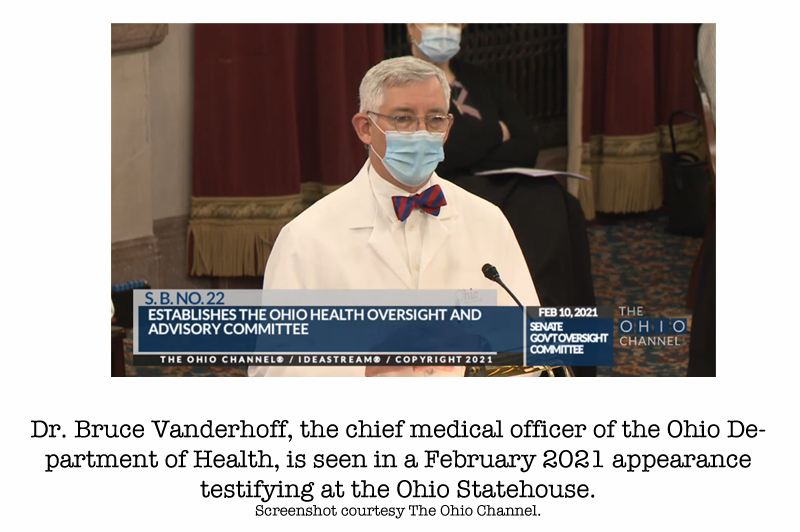
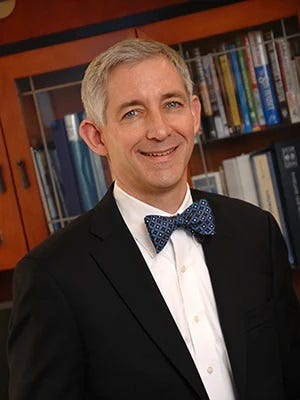
Dr. Bruce Vanderhoff acknowledges that as the public face of the Ohio Department of Health he is repeating himself a lot these days.
Dr. Bruce Vanderhoff
But the message is important enough to continue repeating in simple terms, ODH’s chief medical officer said Wednesday.
“It really comes down to, are you vaccinated and safe or are you unvaccinated and vulnerable?”
Ohio once again finds itself at a crossroads. After months of declining rates of new cases, hospitalizations and deaths, Ohio is now seeing increases thanks mostly to a new “Delta variant” that officials say is even more contagious.
I think it is absolutely the case that we are now looking at a pandemic of the unvaccinated.
– Dr. Bruce Vanderhoff, Ohio Department of Health
Vaccination rates here have all but stalled, concerning those like Vanderhoff who fear the state will slip back into a public health crisis as schools look to return to class next month.
“I think it is absolutely the case that we are now looking at a pandemic of the unvaccinated,” he told reporters .
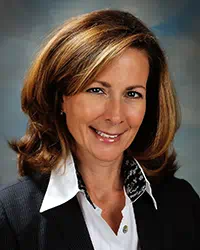
Vanderhoff was joined by two pediatricians, including Dr. Patty Manning-Courtney, the chief of staff at Cincinnati Children’s Hospital. The recent rise in cases has them worried not just of the Delta variant, but what else could be on the horizon.
Patricia Manning-Courtney, MD
Manning-Courtney said her hope is Ohioans will get vaccinated before the state experiences an even worse variant that could significantly impact the youth population. She fears a scenario of Ohio learning “the hard way” that vaccines are necessary for public health.
The latest surge
The state’s COVID-19 numbers declined throughout the spring, leading Gov. Mike DeWine and ODH to rescind the swath of public health mandates.
There was reason for optimism: The two-week average was down to just 17.6 cases per 100,000 residents as of July 7.
But since then, that average has more than doubled to 37.8.
On Tuesday, the state reported 744 new positive cases within the previous 24 hours, a daily total that hadn’t been seen since May. The state is recording a greater proportion of cases and hospitalizations among younger people, according to ODH data.
“It appears that this surge is being driven by yet another variant, the Delta variant,” Vanderhoff said, “which is, as I’ve shared before, even more contagious than the (alpha) variant that preceded it.”
The Delta variant is now present in more than one-third of all new cases in Ohio and is on its way to being the dominant variant of COVID-19, Vanderhoff said.
‘Captains of the ship of their own health’
President Biden recently said COVID-19 vaccine misinformation is costing Americans lives. (Photo by Alex Wong/Getty Images)
Unlike a year ago, when mitigation tactics like distancing and face masks were seen as the most effective ways to protect oneself from the virus, a proven vaccine is now available for Ohioans.
But it remains difficult to convince a majority of residents here to get vaccinated.
A vast number of Ohioans received shots when they were first made available, with a boost in vaccinations this spring with the widening of eligibility and the announcement of a Vax-A-Million sweepstakes. (Franklin County is among the places still experimenting with vaccine incentives; those who get their first dose at Columbus-area clinics receive a $100 Visa gift card.)
On the whole, the statewide vaccination rate has stagnated. More than 5.3 million Ohioans have completed their vaccination doses, but that still reflects just 45.5% of the total population.
DeWine had said his lottery idea was meant to target those who were not anti-vaccine, but needed some kind of boost to schedule their appointment.
Now, after months of availability, Vanderhoff and others believe there is still a large segment of the population who can be convinced. These are well-intentioned people with understandable concerns that can eventually be swayed to change their minds, the officials hope.
Misinformation spread online and in public spaces isn’t helping matters. Vanderhoff agreed with a recent statement by President Joe Biden that vaccine misinformation shared around on social media platforms is contributing to ongoing hesitancy and COVID-19 deaths.
“I think there have been people who are sharing information in a very authoritative way that is not scientifically accurate,” Vanderhoff said. “As a physician, that’s very distressing, because we want people to make their own decisions of course. We want people to be the captains of the ship of their own health, but we want them to make their decisions on the basis of good, well-founded, scientific information.
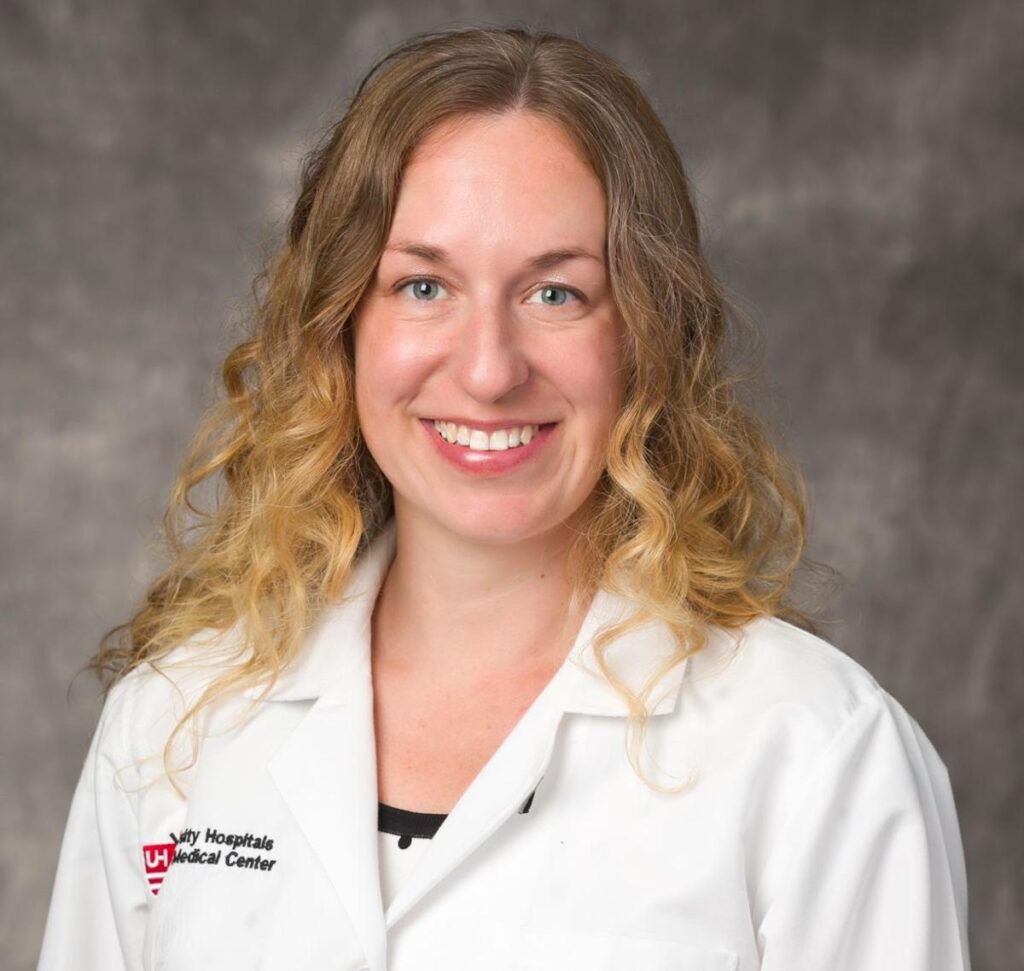
Dr. Amy Edwards
“Frankly, it’s heartbreaking when we see people who are cascading information that is not scientifically based,” he added.
Dr. Amy Edwards, the associate medical director of pediatric infection control at UH Rainbow Babies & Children’s Hospital, said vaccine misinformation has been around long before the coronavirus. She noted an example of seeing a child die of the whooping cough.
“That’s unacceptable to me,” she said. “It should just never happen.”
Vanderhoff and the pediatricians tried to dispel fears about the vaccine harming children. They noted rare cases of myocarditis, an inflammation of the heart muscle that has been reported in a small number of children this year.
But Edwards called this a “rare side effect” that impacts as few as one in every 100,000 or more that receive the vaccine.
“The risk is much higher from the virus itself,” she said.
While there continue to be some examples of vaccinated people getting COVID-19, most are protected against serious outcomes like hospitalizations and deaths.
All of the 130 people in Maryland who died of the virus in June were unvaccinated. Other states have reported similar statistics, including Alabama, where 96% of the COVID-19 deaths between April and mid-July were unvaccinated.
“The issue of breakthrough with this kind of a vaccine against this kind of virus,” Vanderhoff said, “is really the issue of: Are you seeing people get severely ill? Are they ending up in the hospital? Are they dying? We’re just not seeing that in appreciable numbers with this vaccine.”
Asked about future health orders with school returning in the fall, Vanderhoff said he could not disclose ongoing policy discussions within the state health department. He said ODH will be providing guidance and recommendations “in the near future.”
Loveland, Ohio – The Center for Disease Control says, “Getting a flu vaccine is more important than ever during 2020-2021 to protect yourself, your family and your community from flu.”
A flu vaccine this season can also help reduce the burden on our healthcare systems responding to the COVID-19 pandemic and save medical resources for care of COVID-19 patients.
Area residents who do not have a primary care physician can find a place to get a seasonal flu vaccine (and other vaccines) at VaccineFinder.org.
What vaccines do I need?
We all need vaccines throughout our lives to help protect against serious diseases. CDC and other medical experts update vaccine recommendations every year based on the latest research and science. Vaccination is a critical step in protecting those that are most vulnerable to illness – infants and young children, the elderly, and those with chronic conditions and weakened systems.
Visit the CDC website to take the child or adult vaccine recommendation quiz. Visit the CDC travel website for vaccine recommendations based on the country you intend to visit.
What is the difference between Influenza (Flu) and COVID-19?
Influenza (Flu) and COVID-19 are both contagious respiratory illnesses, but they are caused by different viruses. COVID-19 is caused by infection with a new coronavirus (called SARS-CoV-2) and flu is caused by infection with influenza viruses. Because some of the symptoms of flu and COVID-19 are similar, it may be hard to tell the difference between them based on symptoms alone, and testing may be needed to help confirm a diagnosis. Flu and COVID-19 share many characteristics, but there are some key differences between the two.Read on at CDC…
Families who relied on free or reduced-price meal programs when school was in session will receive approximately $300 to purchase healthy and nutritious foods to feed their children
Columbus, Ohio – Governor Mike DeWine announced that the Ohio Department of Job and Family Services (OJFS) has received approval from the United States Department of Agriculture for its Pandemic EBT plan. The Pandemic EBT program was included in the Families First Coronavirus Response Act of 2020.
The approval will allow OJFS to distribute SNAP benefits to 850,000 students across Ohio who relied on free or reduced-price meal programs when school was in session to have access to a hot, nutritious meal. The benefits will be mailed directly to students, and families do not need to apply to be eligible.
Families will receive approximately $300 to purchase healthy and nutritious foods to feed their children.
As we launch a new school year at Loveland City Schools, I am particularly grateful to our community, which continues to support and invest in the greater good, especially for our children. Last week, more than 100 community members volunteered to prepare the playground at Loveland Early Childhood Center for our youngest Tigers to enjoy their first recess. And the community’s involvement has been evident throughout the past several years as hundreds of residents provided input in the district’s facility master planning process, where we extensively researched, assessed and vetted the district’s building and infrastructure needs, ultimately developing a plan that will adequately prepare our graduates.
Dr. Amy Crouse is the Loveland City School District Superintendent
The message heard from the community was clear: Loveland Schools must continue the positive momentum in academic achievement, yet the aging buildings need renovations and upgrades. With teachers using mobile carts and hallways for instruction and temporary trailer classrooms to absorb our overcrowded classrooms, we must modernize our facilities for our children and our community to have a strong future. The Loveland community expects a high-quality education and the reality is that we need to upgrade and expand science and technology laboratories to prepare students for college and 21st-century careers.
The plan put forth and adopted unanimously by the Board of Education is cost-effective and unique to Loveland’s current and future needs. The plan:
reduces our reliance on trailers as classrooms and mobile carts and hallways for teaching;
provides safer and more secure learning environments at all of our schools with secure entrances, camera systems and electronically-activated locks to prevent intrusions;
updates and expands offerings of science, technology, engineering and math programs that are increasingly mandatory for colleges and careers.
The bottom line is, we do a great job of maintaining our buildings and infrastructure, but we are to the point where it’s more costly to maintain than it is to upgrade or, in some cases, rebuild. The district’s facility needs will not go away; they will only increase in cost. There is no zero-cost option and without this levy investment we will need to continue diverting funds from the classroom so that we can make critical fixes in our schools.
Strong schools mean a strong community, and I encourage everyone to make sure our schools are as strong as possible by joining us over the next couple of months at community conversations. Please see www.lovelandschools.org for all scheduled events. There will be a presentation at Loveland High School on September 12 at 7 p.m. where residents can learn more about the November 5th ballot issue and why it’s needed now. And, as always, please feel free to contact me directly with questions.
Columbus, Ohio – Ohio Governor Mike DeWine has released recommendations from the Governor’s Advisory Committee on Home Visitation about how to increase the state’s investment in proven home visitation programs and announced a new pilot program to expand home visiting programs.
“Evidence-based home visiting programs help give children the best possible start in life and increasing participation can help lower infant mortality rates, increase kindergarten readiness and improve parenting skills,” said Governor DeWine. “Strong children grow into strong adults, so an investment in these proven programs is an investment in our state’s future.”
The advisory committee, formed the day after Governor DeWine took office, is made up of leaders from the Ohio Children’s Hospital Association, home visiting programs, and area health officials. The group met six times to form this collaborative report that makes 20 recommendations aimed at tripling the number of families served through evidence-based home visiting.
The recommendations include:
Make race and ethnicity foundational elements of the state’s infant mortality efforts.
Expand and streamline eligibility requirements so more at-risk families can be served.
Create a central point of intake for all home visiting programs.
Create a central data warehouse for all home visiting programs.
Promote collaboration among healthcare payers, children’s hospitals, birthing hospitals, and other community-based providers.
Leverage the Medicaid program to reimburse for eligible services in a more cost-effective manner.
Align the Department of Medicaid infant mortality reduction funds to complement the Help Me Grow program.
Increase the frequency of the Ohio Department of Health incentive payments.
To implement these recommendations, Governor DeWine will be asking the legislature to double the funding of Ohio’s home visiting programs, investing an additional $50 million over the biennium into evidence-based home visiting programs, bringing the total state funding for home visiting to $90 million over two years.
To help triple participation in home visiting programs, Governor DeWine also announced the formation of a pilot program, Pay for Success, a public-private partnership aimed at increasing the availability of, and participation in, home visiting programs.
Participating communities fundraise to contribute the upfront capital for the programs and then receive incentive payments from the Ohio Department of Health based on a custom Outcomes Rate Card, to be released in the coming weeks, every time a participating family meets a performance metric. Once communities reach goals set by the Ohio Department of Health, they will receive enhanced payments for their success.
“This innovative approach is one way to encourage expansion of these programs. Working together communities can invest in their own success.” said Governor DeWine. “By leveraging private dollars, we can work to address some of our most pressing health needs.”
Like most adults, thoughts of the holiday season bring images of spending time with family and friends to mind. If you ask a child to describe the holidays you will hear many talk about family and friends, but you will always hear every child mention presents. As adults we know the true meaning of the holidays. We know it is a time to celebrate family, faith, and friends. To children it is a time for decorations, songs, and gifts.
So that the moms and dads who shop at our Toy Store have a sense of dignity that they are “buying” the gifts for their children and grandchildren, not receiving a hand out.
While the holiday may not be about gifts, the Loveland Initiative Christmas Toy Store is about more than just Barbie, G.I. Joe, and games. The program was established to operate, not only so that low income residents could provide education dollars to those that have the most difficulty affording educational opportunities beyond high school, but also so that the moms and dads who shop at our Toy Store have a sense of dignity that they are “buying” the gifts for their children and grandchildren, not receiving a hand out, and so are contributing to something greater than ourselves.
The Tracy Johnson Scholarship awards one thousand five hundred dollars to a student with financial need in Loveland.
The Loveland Initiative Christmas Toy Store may seem like it is focused on presents, but the proceeds provide funds for scholarships to students within the Loveland community. The Tracy Johnson Scholarship awards one thousand five hundred dollars to a student with financial need in Loveland. Now that sounds like the true holiday spirit to me!
The 22nd Annual Christmas Toy Store’s location is still to be determined but the date for the event is December 14, 2018.Please check out our website, lovelandinitiative.org,for more information about us.Also, “like” our Facebook page to stay up to date!There is a wonderful video from WLWT on the page from the 2017 Christmas Toy Store.Check it out to see what the Christmas Toy Store is all about.
We will be accepting donations of NEW, UNWRAPPED toys and gifts for children, pre-teens and teens. (See suggested gift list below). Gift cards and monetary donations are also greatly appreciated.
Please drop off donations to any of the Loveland School District buildings during school hours November 1 – December 10.We can also make arrangements to pick up gifts.
We are confident that our community will once again pull together to help the children and the families in Loveland.
In addition to gifts, we always need volunteers for pick-up, displays and transportation.We are confident that our community will once again pull together to help the children and the families in Loveland.
Cassie Mattia lives in Historic Downtown Loveland, Ohio.
If we don’t protect our youth who will? In May, Ohio Paul Zeltwanger and Thomas Brinkman proposed House Bill 658, which states:
“If a government agent or entity has knowledge that a child under its care or supervision has exhibited symptoms of gender dysphoria or otherwise demonstrates a desire to be treated in a manner opposite of the child’s biological sex, the government agent or entity with knowledge of that circumstance shall immediately notify, in writing, each of the child’s parents and the child’s guardian or custodian. The notice shall describe the total circumstances with reasonable specificity.”
gen·der dys·pho·ri·a
ˈjendər disˈfôrēə/
noun
MEDICINE
The condition of feeling one’s emotional and psychological identity as male or female to be opposite to one’s biological sex. How to pronounce gender dysphoria.
In plainer language House Bill 658, also known as the “Parent’s Rights Bill,” would make any school administrator or teacher who allows or offers gender dysphoria (the condition of feeling one’s emotional and psychological identity as male or female to be opposite to one’s biological sex) treatment, including resources on sex and gender or counseling, for a minor “without the written, informed consent of each of the child’s parents and the child’s guardian or custodian” they could be charged with a felony in the fourth degree. The parents of the student according to the bill would get the ultimate decision whether their child gets access to treatment, including educational materials, counseling or medical services.
If this House Bill is implemented it could have detrimental consequences for teachers and even more importantly for those students affected. Teachers are there to lend their students a helping hand educationally and emotionally in order to prepare them for what’s to come once they are out on their own, why take this from them?
A teacher’s take on House Bill 658
I spoke to one Loveland teacher who wishes to remain anonymous, a mom of a teenager. I’ll call her Susan. She told me that for many students their home life is a wreck and out of control with issues of poverty, broken families, and domestic abuse. “For many of my students, the only adult in their life that can be trusted may be their teacher. Teachers who lend an ear and can be trusted can be an enormous help that often reflects on their academic achievement. We care for the whole child.”
Susan told me that for many students their home life is a wreck and out of control with issues of poverty, broken families, and domestic abuse. “For many of my students, the only adult in their life that can be trusted may be their teacher.”
Susan told me that she just overheard a conversation between her daughter and a friend about a classmate they thought was transgender. “I wondered, do they know what that means? Are they friends with this young person? How do my kid and others treat her? Because I am a teacher, would I be required to file a report with the District? These are all questions that ran through my head as a mom and a teacher.”
Susan said she wants to protect and support all of her kids, her biological ones and the ones that are “her’s” for a school year. “I want to be able to do that freely and openly and with my heart.” She said that some of her students desperately need someone they can trust in their life and the last thing they need is another person that will let them down because politicians want school staff charged as felons if they don’t report that the student herself, or a classroom teacher, principal, gym teacher, bus driver, or classmate may be questioning her gender identity.
Susan asked, “Just what stereotypes am I going to be expected to police?
HB 658 is a harmful bill that takes aim at some of our most vulnerable — transgender youth — by forcing school officials to serve as ‘gender police’ and out them or risk getting a felony.” – Alana Jochum
LGBTQ advocacy
“HB 658 is a harmful bill that takes aim at some of our most vulnerable — transgender youth — by forcing school officials to serve as ‘gender police’ and out them or risk getting a felony,” said Alana Jochum, executive director of LGBTQ advocacy group Equality Ohio. Jochum told NBC News. “This exposes young people to discrimination, harassment, and bullying.”
Jochum couldn’t be more correct if you really take a look at the alarming statistics. One study done by the Cincinnati Enquirer showed that 64% of LGBTQ youth in Ohio heard “negative comments” about their gender identity or sexual orientation from their family and in result, according to another study done by National Transgender Discrimination, 41% attempted suicide. Though many transgender students
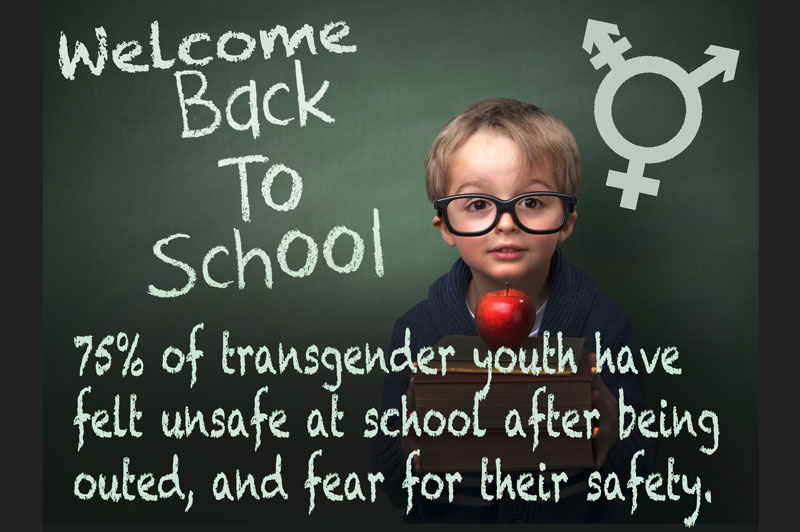
75% of transgender youth have felt unsafe at school after being outed and have lower GPA’s due to missing school in fear of their safety.
have experienced negative comments, violence has become the most popular form of dealing with transgender youth. Disturbingly enough 19% of transgender youth, according to the National Center for Transgender Equality, experience the majority of violent abuse in their home from their own family members. Along with dealing with all the dissension from family members 75% of transgender youth, according to a national survey done by GLSEN (pronounced “glisten”), have felt unsafe at school after being outed and in result have lower GPA’s due to missing school in fear of their safety. With all the facts at hand, The Ohio Education Association who represents 125,000 teachers and support professionals, have openly opposed the bill.
Violence has become the most popular form of dealing with transgender youth.
Kathryn Lorenz is the Loveland Board of Education Vice President
While researching House Bill 658 I managed to only get a response from two local representatives of the Loveland School Board, one being Kathryn Lorenz, the Board Vice President and the other being Loveland School Board Member, Ned Portune. Lorenz’s response was, “In the case of House bill 658, we would have to say that we do not yet have enough information, nor have we met as a board for a few weeks, so we do not yet have a Board statement to make.”
Ned Portune is a member of the Loveland School Board
Portune added that he, “…simply has not been fully informed at this point on HB 658 to have an educated opinion. There are several items in your statement that would certainly give me a gut reaction, and opinion on, if true as presented. But I need time to fully review the Bill, its implications and existing laws to have any formal statement.”
School Superintendent Amy Crouse, High School Principal Peggy Johnson, and assistant principals at the High School did not respond.
Studies show most transgender youth are fully aware of their gender identity by age 4.
After attempting several times to contact both Representatives Paul Zeltwanger and Thomas Brinkman through email and phone about House Bill 658, I, unfortunately, got no response. It wasn’t hard to find Brinkman’s opinion on the issue in several other publications though, voicing to WCPO, “Parents have the right to decide what is best for their children,” and telling WOSU Public Media, “And if somebody doesn’t like it, you’re emancipated at age 18 and you can go do whatever the heck you want.” Seems pretty harsh considering the transgender population represents about 0.3% (700,000) of Americans and studies show most transgender youth are fully aware of their gender identity by age 4. Are we encouraging parents and administrators to discard their students or child’s gender identity in fear of social rejection? Do these children not deserve to live an authentic life?
Fran Hendrick, PCC has offices at Wildflower House in the West Loveland Historic District.
House Bill 658 is expected to be presented to the Ohio General Assembly in the Fall and will be without a doubt one of the most controversial bills to date. Many have opinions on this issue one being Fran Hendrick, a respected and highly educated clinical counselor who specializes in assisting women and girls who are experiencing depression or anxiety triggered by a crisis or major life change. When I presented Fran with House Bill 658 and asked what her opinion was she had a lot to say and rightfully so considering one of her life missions, according to Fran’s website franhendrick.com, is to “gently help you find and shelter your spark (the essence of who you are at your core) and grow it so that it illuminates your person and is radiated through words, actions and decisions, big and small, that make up your daily life.”
In a culture such as ours, it is a matter of life and death for transgender youth to decide if and when to trust another person with their reality. – Fran Hendrick, PCC
“Being a parent takes great courage, even more so when your child presents you with something that you’re unfamiliar with – or even afraid of. In a perfect world, a child who feels somehow ‘different’ from their peers (‘their’ is deliberately gender-neutral), they could consult their parents, who would strive to deeply understand the child’s experience, would provide accurate empathy, and would go on a crash course to learn everything they could about the unfamiliar issue. And, so very fortunate for their children, there are many parents like these.
But in the real world, an adolescent boy saying to his father, ‘Dad, I think I’m a girl’ is very likely to encounter disgust, rejection, rage, or even violence, not empathy and understanding.
While the intent of this bill, giving benefit to grave doubt, could be a deeply uninformed and misguided attempt to protect children, that seems unlikely. My sense is that in truth it is more about attempting to hand parents the power to say no to their child’s gender identity,” Hendrick said, “But gender identity – and sexual orientation, for that matter – are not matters of choice. And in a culture where transgender people are assaulted and even murdered at a rate higher than their cisgender counterparts,where transgender youth are summarily shunned and rejected by their own parents (the rate of homelessness is, not surprisingly, very high), where the suicide rate that results from these atrocious facts is far higher than for other youth – in a culture such as ours, it is a matter of life and death for transgender youth to decide if and when to trust another person with their reality, and, most importantly, whom to trust.
To be “outed” for the choice to trust; or to be prosecuted for trying to be help – these are not protections. Actions like these support bigotry, and increase isolation and despair. – Fran Hendrick, PCC
To be “outed” for the choice to trust; or to be prosecuted for trying to be help – these are not protections. Actions like these support bigotry, and increase isolation and despair. Stopping a teacher from helping such a student, one who is likely alone with the reality of their gender identity, who stands to be emotionally and psychologically rejected, or even physically abused, by their own family is, quite simply, a cruelty. This, I strongly believe, is not what the overwhelming majority of parents want for their own or anyone else’s children. This is bad enough. However, this bill opens the door to much more far-reaching damage than this.”
Is he to be turned in to the gender police?
The talented young male artist who despises sports – is he to be turned in to the gender police? The girl who chooses overalls and a t-shirt rather than a dress and a mani-pedi –what of her? The sponsors of the bill have explicitly said that teachers should be required to inform on them, as well. We have an essential responsibility to ensure that proposed legislation protects vulnerable people from the bigotry endemic in our society.This legislation explicitly deprives them of protection.”
Ultimately what it comes down to is ensuring that our children are and feel safe when going to school. Teachers and administrators are the ones that take on the responsibility of creating that fun, loving and supportive atmosphere so that our children get the best opportunities in life. Passing a bill such as House Bill 658 only presents another obstacle that both teachers and administrators have to overcome. Don’t these professionals have enough obstacles to conquer as is?
Both Justin Haake and Tonya Schaeffer who are Professional Clinical Counselors for Hope Restored Counseling Services in Loveland couldn’t agree more.
Justin Haake is a Licensed Professional Counselor at Hope Restored Counseling Services in Loveland and works primarily with adolescents and adults, specifically during transitional periods in life.
Haake said, “For some, teachers and school administrators may be the only people in schools that feel safe for students to reach out to.Imagine the fear of asking for support, knowing that you’ll either be outed or put the teacher or administrator at risk of a felony.”
Schaeffer said, “From my perspective, this would most likely increase the level of bullying and possible harm to these students.There is already so much shame and stigma attached with Transgender people, and they need as much support as they can get,”
Tonya Schaeffer is a Licensed Professional Clinical Counselor and co-owner of Hope Restored Counseling Services in Loveland.
Schaeffer added, “Support is out there.In fact, we are offering a psycho-educational group starting in September that offers education, support and a safe environment for Transgender students to express themselves.” She said they hope to offer a similar group to parents who are trying to understand what their child is going through, explore what the parents are experiencing and provide support. “We currently serve the LGBTQ community, and we are expanding those services.I recently read a statement that it is estimated that 41% of trans men and women have attempted suicide. I don’t believe this bill would help–it seems like it could only hurt.”
Susan, the mom and teacher said, “I am thankful I live in a community where support services like those provided by Hope Restored, and Fran Hendrick at Wildflower House are nearby for my students and their families.”
Transgender youth have so many mountains to climb within their own scientific makeup and allowing a bill like House Bill 658 to go through in hindsight is taking away their basic rights as Americans and human beings.
“GLSEN (pronounced “glisten”) was founded in 1990 by a small, but dedicated group of teachers in Massachusetts who came together to improve an education system that too frequently allows its lesbian, gay, bisexual, transgender, queer and questioning (LGBTQ) students to be bullied, discriminated against, or fall through the cracks.”
The Ohio EPA is predicting that the ozone level will be 107 on Friday.
Predicted Air Quality Index (AQI) for the Loveland Area
107
Unhealthy for Sensitive Groups
Health Message:Active children and adults, and people with lung disease, such as asthma, should reduce prolonged or heavy exertion outdoors.
Steps you should take to protect you or your children’s health
Reduce prolonged or heavy outdoor exertion. Take more breaks, do less intense activities. Watch for symptoms such as coughing or shortness of breath. Schedule outdoor activities in the morning when ozone is lower.
People with asthma should follow their asthma action plans and keep quick relief medicine handy.
Do Your Share!
Carpool, bike or walk instead of driving.
Use your most fuel efficient vehicle and drive gently.
Keep your motorcycle in the garage. They don’t have the pollution controls modern passenger vehicles do.
Refuel your vehicle after 8 PM; do not top off when refueling and tighten the gas cap.
Avoid idling your vehicle. (Avoid drive-thru windows.)
Combine trips and eliminate unnecessary vehicle trips
Do not use of gasoline-powered lawn equipment
Do not use of oil-based paints and stains
Never burn leaves or other yard trimmings.
Do not use fire pits.
Conserve electricity by turning off unnecessary lights.
Turn your air conditioner thermostat up and use room fans for cooling.
Save the power boating for another day.
Initiate an Air Pollution Alert Day policy where you work; whether that be a company you own, an employee, a local government agency you work for, or a school district.
Sign up for Enviroflash and Start Receiving Your Air Quality Forecast
Children and Air Pollution
Children face special risks from air pollution because their lungs are growing and because they are so active and breathe in a great deal of air.
Just like the arms and legs, the largest portion of a child’s lungs will grow long after he or she is born. Eighty percent of their tiny air sacs develop after birth. Those sacs, called the alveoli, are where the life-sustaining transfer of oxygen to the blood takes place. The lungs and their alveoli aren’t fully grown until children become adults. In addition, the body’s defenses that help adults fight off infections are still developing in young bodies. Children have more respiratory infections than adults, which also seems to increase their susceptibility to air pollution.
Furthermore, children don’t behave like adults, and their behavior also affects their vulnerability. They are outside for longer periods and are usually more active when outdoors. Consequently, they inhale more polluted outdoor air than adults typically do.






















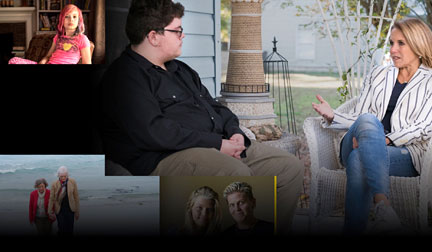 If you would like to explore the topic of Transgender youth and adults even further please check out “