Tag: Cincinnati

  • With the first pick secured, the Bengals will go Burrow, right?

    With the first pick secured, the Bengals will go Burrow, right?

    Willie Lutz is a former Loveland resident, a graduate of Loveland High School, and former sportswriter for Loveland Magazine

    by Willie Lutz

    Those who endured the 12-minute run from the Bengals, who looked lifeless in Miami, down 23 points on a day many at home hoped to be the final loss on one of the worst seasons of the last decade in Cincinnati, despite eight losses being within one possession. 

    After a 35-38 overtime loss at Hard Rock Stadium in Miami, the Cincinnati Bengals secured the first overall pick in the 2020 draft, a pick that should bring a new franchise centerpiece, Joe Burrow. LSU’s Heisman-winning quarterback won the nation’s collective hearts with a dazzling senior season, finishing with 4,715 passing yards, 48 touchdowns, completed 77.9% of passes, and averaged 10.7 yards per attempt. With only 6 interceptions and without a loss on his Tigers’ resume, he represents the nation’s top seed in the College Football Playoff as the nation’s best player.

    If the jungle kittens don’t win next Sunday…

    If the jungle kittens don’t win next Sunday against Cleveland, they’ll have the worst record of any Bengals team ever, though a win would tie the team with the Jon Kitna-led 2002 team who finished 2-14. That finish put Cincinnati in place to draft Heisman winner Carson Palmer with the top pick in the 2003 NFL Draft.

    Certainly, a narrative exists in which the Andy Dalton-led Cincinnati Bengals crush the messy Cleveland Browns in a fitting end to the 2019 season. It’ll likely be Dalton’s last game in a striped helmet and the Browns are about to wrap up one of the most embarrassing seasons of NFL football in recent memory. As we learned on Sunday against the Dolphins, Dalton is here to win; he passed for 396 yards, 4 touchdowns, 0 interceptions, and completed 33-of-56 passes, nearly leading the team to the biggest comeback victory in team history. 

    It’ll likely be Dalton’s last game in a striped helmet and the Browns are about to wrap up one of the most embarrassing seasons of NFL football in recent memory.

    Dalton will want to impress the potentially red-hot quarterback market, as many teams seem ready to move a different direction with their passers. Teams like the Chicago Bears, Carolina Panthers, Jacksonville Jaguars, New England Patriots, and Tampa Bay Buccaneers are among teams that may make a change at QB in the coming months. Potentially, Dalton could head to one of those teams in a favorable trade for the Bengals, as a move could net the team a second or third-round pick if Andy continues to impress against the Browns. 

    For Cincinnati, loss to Miami made a few things pretty clear; Joe Burrow is obviously the pick at the top of the draft and that this team needs to add more good players to the roster this offseason. 

    There is obviously bound to be plenty of pressure from a central Ohio-minded fanbase to go with Burrow’s teammate and practice opponent at Ohio State in DE Chase Young. There probably won’t be as much pressure to draft QB Tua Tagovailoa from Alabama, as the 21-year-old quarterback will enter the league with a cumbersome injury resume. 

    It’s amazing to hear so many college-aged people rave not about the player, but about the human being.

    Having graduated from Ohio State in 2019 and thus meeting a handful of people who are friends or former classmates with Burrow, it’s amazing to hear so many college-aged people rave not about the player, but about the human being. What some knew before but many learned during his incredibly touching Heisman speech, Joe Burrow has the heart of a leader and the poise of a title fighter, essentially the intangibles you’d dream of in a franchise quarterback.

    I’d recommend throwing a couple bucks for this awesome Facebook fundraiser called, “Joe Burrow’s Heisman speech: Fundraiser for Athens County Food Pantry” if you’re feeling inspired by the passer and in the spirit. 

    Before the season, I think like many people, I thought Dwyane Haskins had a higher upside and was probably a better player than Joe Burrow; it’s impossible for me to feel that way after everything I’ve seen from the senior passer’s closing season at LSU. 

    Burrow does everything you’d hope from a young quarterback all before NFL refinement.

    Navigating the pocket like a pro and keeping his eyes on a level plane while reading the defense, Burrow does everything you’d hope from a young quarterback all before NFL refinement. In Cincinnati, he’ll have the chance to work with Zac Taylor and Brian Callahan, two coaches with backgrounds as quarterback coaches from their earlier days in the NFL (of course both are under 40, so those earlier days aren’t exactly ancient). 

    “New Dey” promise

    When Cincinnati comes to the blatant conclusion that they’ll take Burrow at the top of the draft and set this franchise on a brand-new trajectory, it’ll finally deliver on the “New Dey” promise that became apart of the team’s marketing pitch following Zac Taylor’s hire. As many know by now, Burrow is an Ohio kid and a willing leader; he’s more personable than Palmer ever was and doesn’t bring any baggage to a lockerroom currently loaded with likable personalities.

    If this team drifts from Joe Burrow, they’re making a mistake that the 6’3” passer will certainly find a way to make them regret in years down the road.

    If this team drifts from Joe Burrow, they’re making a mistake that the 6’3” passer will certainly find a way to make them regret in years down the road. Sure, Ohio State when got lucky when Justin Fields decided to join the Buckeyes via transfer, filling the gap left by the Burrow departure in 2018, but even they might feel the brunt of that move if they advance to the National Championship game. In the NFL, Burrow will have the chance to make the Bengals pay once every four years, at the most minimal rate.

    The pick seems obvious to this sports-watcher, draft Joe Burrow and call it a day; it’ll give your team one of the best chances in its history to construct a contending roster. However, like many others, I think this is all just preaching to a Bengals-based choir, one including Duke Tobin, Troy, and Katie Blackburn.




  • It’s winter in Cincinnati, but the sun is shining on Paul Brown Stadium

    It’s winter in Cincinnati, but the sun is shining on Paul Brown Stadium

    If this team drafts Joe Burrow with their first pick in next year’s draft, the trajectory of this franchise drastically changes

    Willie Lutz is a former Loveland resident, graduate of Loveland High School, and former sports writer for Loveland Magazine

    by Willie Lutz

    The beginning of the Zac Taylor era in Cincinnati isn’t bringing the sweeping organizational changes some fans might’ve hoped when the team moved on from Marvin Lewis a little under a year ago. The team is off to a 1-13 start with their new head coach, they might lose the second-best player in franchise history after taking one snap in the team’s last 20 games, and they’re still probably not going to spend in free agency.

    Further, they’ve got a lot of their cap tied into older players and don’t have a ton of obvious young talent on the roster to try to extend. Trusting Geno Atkins, Carlos Dunlap, and Shawn Williams to carry this team for the next decade isn’t going to cut it.

    Key draft picks like tackle Cedric Ogbuehi, center Billy Price, and tackle Jake Fischer were trusted to be the future of this team’s line, only for the three to get benched over and over again, with Price trending towards the third in the group to be off the team before the decade flips. We won’t even get a chance to see this year’s 11th-overall pick Jonah Williams play a snap until 2020.

    They’ve also had issues with buy-in, as veteran linebacker Preston Brown gained weight throughout the season, eventually getting cut from the team, and starting left tackle Cordy Glenn pretended to be so injured that he couldn’t play, only to be called on his bluff by line coach Jim Turner who eventually found a way to put Glenn on notice with a one-game suspensions.

    All of that and I can still say, in the words of Dave Lapham, it’s a great day to be a Bengals fan.

    Some of the ugliness of the first few weeks was mitigated and the football started to get more watchable (for lack of a better term).

    The sky was falling in Cincinnati through the first eleven games of the season. After the team took its trip to London, did some bye week soul searching, and revaluated what they wanted to do with their offense, some of the ugliness of the first few weeks was mitigated and the football started to get more watchable (for lack of a better term). After clearing the hurdle with their first win of the season by taking the top off a rocky New York Jets squad, this team played a better four quarters of football than the Cleveland Browns when they visited First Energy Stadium two Sundays ago, when the men in stripes took a 19-27 loss in the battle of Ohio, a game where Andy Dalton certainly outplayed Baker Mayfield.

    Around the trade deadline, players lamented the thought of any of their teammates heading to other destinations almost as much as their own departures.

    Right now, I much rather be the Cincinnati Bengals than the Cleveland Browns, if for no other reason than culture alone. The Bengals’ locker room raves about the internal communication, something that was incredibly important in Zac Taylor’s initial statements about the job. Around the trade deadline, players lamented the thought of any of their teammates heading to other destinations almost as much as their own departures.

    Trust me, if you’re the Bengals, you’d rather lose that game by 8 than be on the same boat as the Browns, who are drowning under their own ego clashes after coming into the year with mixed playoff and somehow Super Bowl expectations. No one thought the Bengals would be good, but at least this team doesn’t have a star player asking other quarterbacks to lineup a trade for their talents after games.

    When Andy Dalton was benched, the team rallied around Ryan Finley. When Andy Dalton was renamed the starter, the team rallied around Andy with excitement you wouldn’t expect from a winless team who ranked 32nd in the league in just about every statistical category.

    Not to mention, this team is really starting to play some good football. Not without their stupid mistakes, of course, but the combination of Joe Mixon getting going in the rushing game and the defense starting to kick some tail, they’ve become a pretty tough team to beat over the last five weeks. 

    If this team drafts Joe Burrow with their first pick in next year’s draft, the trajectory of this franchise drastically changes.

    If this team drafts Joe Burrow with their first pick in next year’s draft, the trajectory of this franchise drastically changes.

    In sports, there is no worse place to be than in the middle. That’s why the Miami Dolphins are bottoming out, that’s why the Philadelphia 76ers did the process, it’s why the Baltimore Ravens took Lamar Jackson in 2018. You can choose to be average or you can choose to be extraordinary, but extraordinary is always going to take more work. Eventually, franchises are forced to take a hard look in the mirror and decide what they want to be; usually, the answer is a title contender.

    Could the Bengals have gone to Zac Taylor and given him a playoff-level roster headed into week one? Sure, but then all you’re doing is betting on Andy Dalton to take you into January, which has resulted in the same thing over and over again, a playoff loss.

    Bottoming out for one season to take a franchise-changing player is a tried and true formula, even with varying results.

    Bottoming out for one season to take a franchise-changing player is a tried and true formula, even with varying results. While teams are increasingly striking gold atop the draft, there’s still a Ryan Leaf for every Peyton Manning.

    However, with what we’ve seen from LSU quarterback Joe Burrow this year, it looks closer to the latter than the former. If Burrow is the next quarterback of the Bengals, he should be thrilled for the opportunity to succeed in Cincinnati. On top, his coach will be Zac Taylor, who spent a large portion of the beginning of his career, including with the 2018 NFC Champion Los Angeles Rams, as a quarterback coach. Further, in the Bengals locker room, there’s a lot of interesting young talent teams around the league would clamor over, even if that’s not resulting in wins at the moment.

    Whatever passer winds up in the Bengals backfield next season is going to be in a situation to succeed.

    In his first year in Cincinnati, Burrow (or any quarterback the team drafts) will have incredible weapons like John Ross (who’s made a significant leap in limited year-three reps), Tyler Boyd, A.J. Green (we assume), Auden Tate (another guy who made a leap), and Joe Mixon coming out of the backfield.

    Clearly heading towards a quarterback selection in the 2020 NFL Draft after Ryan Finley showed as an incapable starting option, whatever passer winds up in the Bengals backfield next season is going to be in a situation to succeed.


  • Supreme Court Lets Martin v. Boise Stand:  People Experiencing Homelessness Cannot Be Punished for Living in Absence of Adequate Housing or Sheler

    Supreme Court Lets Martin v. Boise Stand: People Experiencing Homelessness Cannot Be Punished for Living in Absence of Adequate Housing or Sheler

    Persons experiencing homelessness cannot be punished for sleeping outside on public property in the absence of adequate alternatives.


    Cincinnati, Ohio – This morning, the U.S. Supreme Court denied a petition by the city of Boise to review the case Martin v. Boise (formerly Bell v. Boise). This leaves in place earlier rulings by the 9th Circuit that persons experiencing homelessness cannot be punished for sleeping outside on public property in the absence of adequate alternatives.

    The Supreme Court’s decision, issued without comment, means the April 2019 ruling is binding in the 9th Circuit, covering nine states including most of the western states, and carries national influence.

    In a press release issued today, Josh Spring, Executive Director of the Greater Cincinnati Homeless Coalition said, “This is very important news, as our federal lawsuit filed last year by people experiencing homelessness and the Homeless Coalition continues to move forward here in the 6th Circuit.”  Their lawsuit aims to overturn City of Cincinnati policies criminalizing people experiencing homelessness outdoors and hopes to squash last year’s Common Pleas Court order making it an arrestable offense to experience homelessness outdoors anywhere in the Hamilton County including Loveland.

    The Law Center’s Executive Director, Maria Foscarinis, said, “Ultimately, our goal is to end homelessness through housing…so that no one has to sleep on the streets in the first place. We hope that the 9th Circuit decision will help communities find the political will to put that housing in place. Housing, not handcuffs, is what ends homelessness.”

    John Parvensky, Acting Executive Director of the National Coalition for the Homeless described this as a “victory”, saying, “…it will force communities to address homelessness proactively – through the development of an adequate supply of affordable housing, while providing safe and appropriate emergency shelter in the interim”.

    For the full text of the Law Center press release and links to documents from the case, click here.

    For the full text of the National Coalition press release click here.


    Oh Christmas Tree Oh Christmas Tree Why Not Give the Gift of Charity…


  • Mayo Clinic, Cincinnati Children’s announce rare congenital heart defect collaboration

    Mayo Clinic, Cincinnati Children’s announce rare congenital heart defect collaboration

    Cincinnati, Ohio –  Mayo Clinic’s Todd and Karen Wanek Family Program for Hypoplastic Left Heart Syndrome (HLHS) and Cincinnati Children’s Hospital Medical Center have announced their collaboration within the nationwide HLHS Consortium to provide solutions for patients with hypoplastic left heart syndrome.

    Hypoplastic left heart syndrome is a rare and complex form of congenital heart disease in which the left side of the heart is severely underdeveloped. Infants born with HLHS undergo a series of three surgeries to support the right side of the heart, which must work doubly hard to pump blood to the lungs and the rest of the body. The consortium’s regenerative research continues to look for safe and effective new therapies to further strengthen these young patients’ hearts, with the hope of delaying or eliminating the need for a heart transplant later in life.

    The consortium aligns regional “medical centers of excellence” and advocacy groups with the shared goal of finding solutions for people affected by congenital heart disease, including HLHS. The consortium, which was developed by Mayo Clinic’s Todd and Karen Wanek Family Program for Hypoplastic Left Heart Syndrome, works to sustain a continuous pace of research and innovation by bringing clinical trials and expertise to patients across the country.

    With a 135-year history serving pediatric patients, Cincinnati Children’s will participate in future HLHS Consortium clinical trials under the guidance of James Tweddell, M.D., executive co-director of the Heart Institute and director of cardiothoracic surgery at Cincinnati Children’s.

    “We’re excited to collaborate with Dr. Tweddell and the team at Cincinnati Children’s,” says Tim Nelson, M.D., Ph.D., director of the Todd and Karen Wanek Family Program for Hypoplastic Left Heart Syndrome. “They are not only a center of excellence for the early-stage HLHS surgeries, but they also provide high-quality, comprehensive care for teens and adults with congenital heart disease. We’re proud to work together with them to find new ways to strengthen the hearts of people with HLHS.”

    “A large portion of the patients that we care for have a single pumping chamber, and decreased function continues to plague a subset of our patients with single ventricle anatomy,” says Dr. Tweddell. “Dr. Nelson and the Wanek family have developed a cutting-edge research program into the use of autologous stem cells for maintenance and improvement of single ventricle function.”

    Dr. Nelson and his colleagues have developed techniques to isolate and amplify stem cells from umbilical cord blood, Dr. Tweddell explains. Then the cells are injected into the myocardium of single ventricle patients at the time of the second staged surgery.

    “Preliminary studies have shown the stem cell injections to be safe, and future studies will build on this experience while looking at the benefits of stem cell therapy. We are excited to collaborate with Mayo Clinic and the Wanek family on this important new strategy to improve the lives of some of our most challenging patients,” says Dr. Tweddell.

    Cincinnati Children’s is the ninth member of the HLHS Consortium, joining Mayo Clinic, Children’s Hospital of Philadelphia, Children’s Hospital Los Angeles, Children’s Minnesota, Children’s Hospital Colorado, The Children’s Hospital at OU Medicine, and Ochsner Hospital for Children, as well as the advocacy group Sisters by Heart.


  • Wear Orange Weekend June 7-9 to elevate gun violence prevention efforts

    Wear Orange Weekend June 7-9 to elevate gun violence prevention efforts

    CINCINNATI CHAPTER OF MOMS DEMAND ACTION AND STUDENTS DEMAND ACTION TO HOST WEAR ORANGE WEEKEND

    CINCINNATI, OHIO – The Cincinnati Chapter of Moms Demand Action for Gun Sense in America and Students Demand Action, part of Everytown for Gun Safety, will host a Wear Orange Weekend featuring landmark light-ups, Mayor Proclamations, and a rally and peace march to honor the lives of all those affected by gun violence and to elevate gun violence prevention efforts nationwide.

    Orange is the color that Hadiya Pendleton’s friends wore in her honor after she was shot and killed in Chicago at the age of 15—just one week after performing in President Obama’s second inaugural parade in 2013. Orange honors the 100 lives cut short and the hundreds more wounded by gun violence every day—and demands our lawmakers take action that will help keep all Americans safer. Hundreds of Wear Orange events will take place across the country June 7-9 for Wear Orange Weekend.

    LANDMARKS LIGHT UP ORANGE, JUNE 7 and 8

    Due to the groundwork in the past from volunteers nationwide, America will light up orange June 7 and 8. In Cincinnati, Duke Energy’s iconic “CINCINNATI”, the Tyler Davidson Fountain, and the National Underground Railroad Freedom Center will join in lighting orange as they did in 2018. An addition this year is Fifth Third’s downtown office building.

    NATIONAL GUN VIOLENCE PREVENTION DAY PROCLAMATIONS, JUNE 7

    Volunteers nationwide have been instrumental in obtaining proclamations from local governments recognizing National Gun Violence Awareness Day. Locally, Cincinnati Mayor John Cranley will proclaim the day as part of his involvement in Mayors Against Gun Violence.

    WEAR ORANGE RALLY AND PEACE MARCH, SATURDAY, JUNE 8, 1-3 PM, FOUNTAIN SQUARE

    A community rally honoring the lives of those affected by gun violence and elevating gun violence prevention efforts in Ohio and nationwide and peace march by Students Demand Action.

    Attendees will learn about the work being done by Moms Demand Action and Students Demand Action and by other community partners who share the dream of eliminating gun violence including Ohio Students for Gun Legislation, Ohioans for Gun Safety, The Young Activists Coalition, the UC Trauma Center and more.

    Featured will be a special “Quiet Space” for survivors of gun violence with calming activities, a memory wall, community faith leaders, volunteers from Moms Demand Action offering “free hugs”, the Cincinnati Moms Dream Quilt created by local survivors. Also available will be therapy animals who spend time in hospitals, nursing homes and libraries. Face painting for children, juggling, food trucks, and a social media photo area are planned.

    SPEAKERS

    • Michele Mueller, volunteer Local Group Lead with the Ohio chapter of Moms

    • Demand Action for Gun Sense in America

    • Yousuf Munir, Walnut Hills Student and Co-Lead with Students Demand Action

    • Pastor Jackie Jackson, Community Outreach Advocate and gun violence survivor who was himself shot in the hand when he was 10.

    • Councilman P. G. Sittenfeld, City of Cincinnati

    • Chief Criminal Attorney Kenneth L. Parker, Assistant United States Attorney

    • Abbie Youkilis, MD, whose niece was shot and killed in the Parkland, Florida, School Shooting

    • Officer Princess Davis, Cincinnati City Police Department

    • Mara Nickels, Co-leader, SAFE (Scrubs Addressing the Firearms Epidemic)

    • More

    History of National Gun Violence Awareness Day

    The color orange has a long and proud history in the gun safety movement.

    Whether it’s worn by hunters in the woods of Pennsylvania, activists in New York City, or Hadiya’s loved ones in Chicago, orange honors the 100 lives cut short and the hundreds more wounded by gun violence every day—and demands action. Since the first National Gun Violence Awareness Day in 2015, hundreds of communities and organizations continue to commemorate that event by wearing orange, holding community events, lighting skylines orange, and issuing city and state proclamations.

    Federal, state and local elected leaders, such as President Obama; celebrities, like Julianne Moore, Halsey, Angela Bassett, and Lin-Manuel Miranda; hundreds of national corporate and nonprofit partners, such as Viacom, Univision, Vogue, the National PTA and PlannedParenthood; have joined hundreds thousands of Americans nationwide to #WearOrange and call for an end to gun violence.

  • Full of Cents podcast: Business News by Rick Mulvey & David English

    Full of Cents podcast: Business News by Rick Mulvey & David English

    Business news is boring. Let’s make it interesting, fun, and understandable. New episodes are up every Tuesday and Thursday!
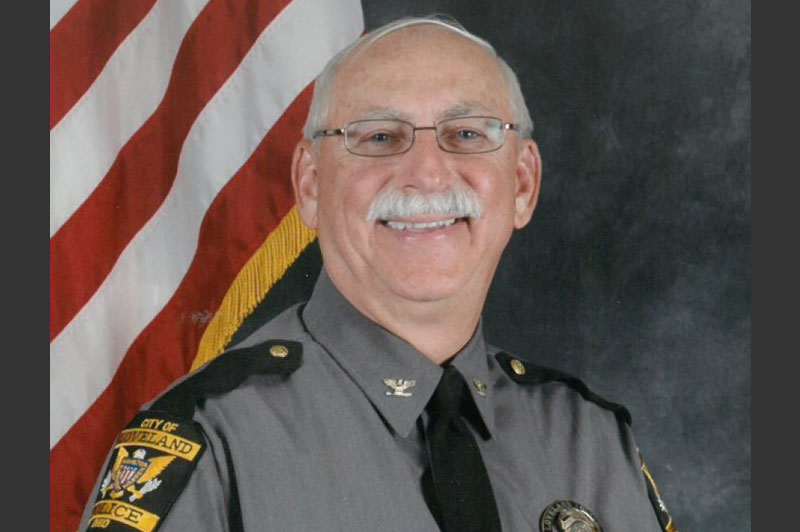
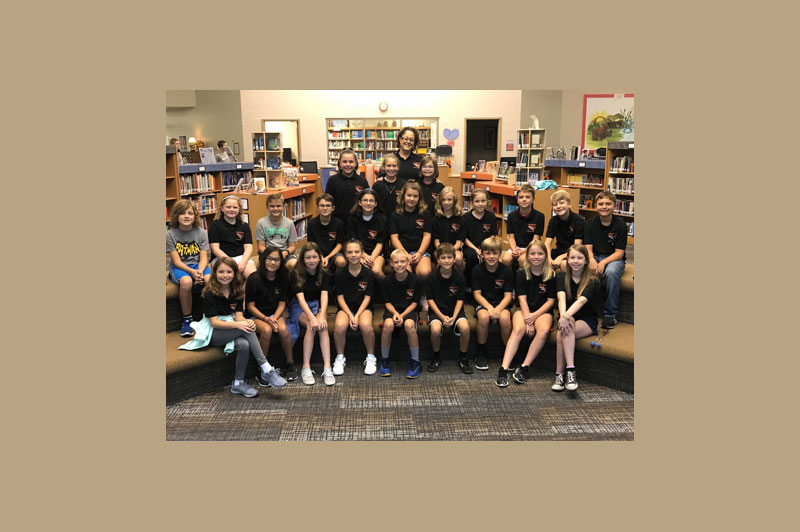
    New Full of Cents podcast is up! David English and Rick Mulvey talk Paul Manafort’s mortgage fraud, FC Cincinnati’s awful awful streaming deal, and more.

    Full of Cents is now a regular feature in Loveland Magazine.


    Each podcast is owned and operated by the Podcast creators (Podcasters). Loveland Magazine is not responsible or to be held accountable for the information listed or the content of the podcasts. The opinions expressed are solely those of the Podcasters and do not necessarily the views or opinions of Loveland Magazine.


  • Former Loveland Police Chief Dennis “Denny” Rees passes

    Former Loveland Police Chief Dennis “Denny” Rees passes

    Distinguished Vietnam Soldier

    OBITUARY

    Dennis “Denny” Rees. Beloved husband of Maggie (nee Hall) Rees. Loving father of Dennis Scott (Holly) Rees and Jason Rees. Proud grandfather of Lauren & Ashley Rees. Cherished son of the late Robert R. and Anna Mae Rees. Dear brother of Kathy (Paul) Gessendorf, Genny Hall,Terry (Cathy) Rees, Dorothy Sue Rees, Patrick (Marian) Rees, and the late Robert (Nancy) Rees, Jr. Passed away October 26, 2018 at the age of 71.

    Denny was Vietnam Veteran with the United States Army. While serving he earned serveral awards and medals. Those honors included: Two Purple Hearts, Bronze Star “10 LC” with B Device, Vietnam Service Medal, Vietnam Campaign Medal with 60 Device, Gallentry Cross with Bronze Star, and the Army Commendation Medal. Denny was honorably discharged from the United States Army as a Captain.

    Denny was the Chief of Police for the City of Loveland and Police Captain for the City of Cincinnati.

    Family and friends will be received from 10 AM – 12 Noon on Saturday, November 3 at New Hope Baptist Church, 1401 Loveland Madeira Rd, Loveland, OH 45140, where services will be held at 12 Noon with Faternal Order of Police Services and Full Millitary Honors.

    In lieu of flowers, donations in memory of Denny may be directed to The Shield, 7149 Ridge Road, Cincinnati, OH 45237 or Hospice of Cincinnati. P.O. Box 633597, Cincinnati, OH 45263-3597


  • Loveland Elementary’s Mallet Madness to share national stage

    Loveland Elementary’s Mallet Madness to share national stage

    “I knew it was a far shot because the other groups that auditioned were middle-school aged.”

    Loveland, Ohio – Last year Loveland Elementary teacher Michele Henn submitted a recording of Mallet Madness to audition for one of four spots performing at the National Convention of the American Orff-Schulwerk Association, which will be held in Cincinnati this year. Orff-Schulwerk is the approach to music education used by thousands of teachers in America and is used in the Loveland elementary schools. Henn said, “I knew it was a far shot because the other groups that auditioned were middle-school aged. Well, our 4th grade group really pulled it out and we received one of the coveted spots.”

    Mallet Madness is an advanced percussion group of 20-24 fourth grade students at Loveland Elementary School. The group performs complicated pieces for xylophone, drum, accessory percussion, and recorder. Roughly 70-90 students audition for membership each year. The group rehearses before school, three days per week, from October through May. Ensemble members show tremendous dedication by arriving to school early simply for the joy of making music together. 

    The group is in its 10th season and is directed by LES music teacher Michele Henn.

    This year, Mallet Madness will perform at the National Convention of the American Orff-Schulwerk Association (the approach to music education used at LES, LPS, and LECC). This is quite an honor, as the group will perform for music teachers from all corners of the country. Numerous ensembles from neighboring states competed for a chance to perform.  Mallet Madness earned one of four performance positions, and they were one of the youngest ensembles to audition. 

    Students from the 2017-2018 season of Mallet Madness are currently rehearsing throughout September and October to prepare for their November 10th performance at the Duke Energy Center.

    From Mrs. Henn:

    When we started Mallet Madness ten years ago, my teaching partner and I simply approached a few students that really seemed to enjoy music. We asked them if they would like to come to school early a few times per week and make music. That’s it. It was no big deal. Over the years the ensemble has grown in popularity and now we have multiple performances per year and a large number of students audition to join the group.

    Mallet Madness means so much to me personally because I am energized by the artistic atmosphere created by this group. I am able to push the group to perform music that in any other setting would probably not be attainable. This fulfills many needs for me as a musician, teacher, and director.


  • Part II: Butterworth Station of Loveland and the Underground Railroad: Further Recollections

    Part II: Butterworth Station of Loveland and the Underground Railroad: Further Recollections

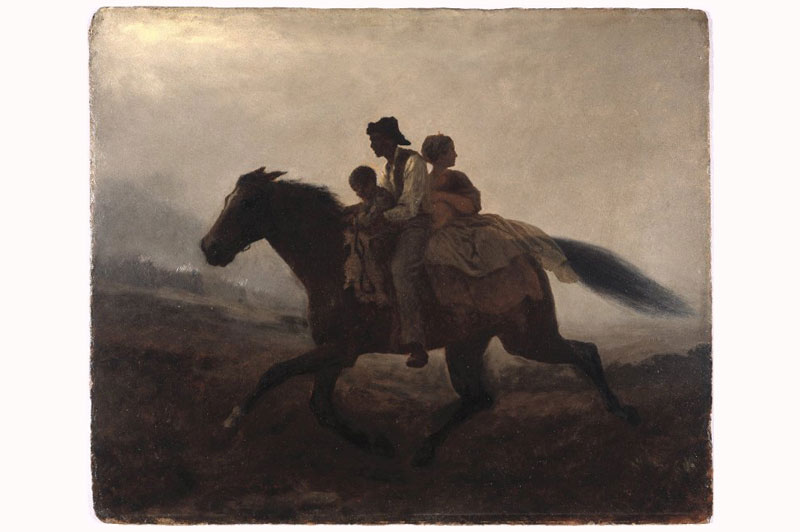
    The Fugitive Slaves, oil on paperboard, circa 1862, Brooklyn Museum

    (Read Part 1: Further Recollections of Butterworth Station)

    The following is an excerpt from Chapter Seven of The Search for the Underground Railroad in South-Central Ohio by Tom Calarco, scheduled for publication in late October by History Press. It is being published with permission from History Press.

    Tom Calarco is a resident of Historic Downtown Loveland, Ohio.

    By Tom Calarco

    Part Two of Two

    Butterworth Station of Loveland and the Underground Railroad: Further Recollections

    In 1894, Robert Carroll provided the Cincinnati Times-Star with his account of the assistance he gave the Butterworths in their work along the Underground Railroad.

    Often, in this wild flight for freedom, the master, with his unhuman helpers was in close pursuit, armed … devoid of mercy, protected by the law, and supported by a public sentiment that was respectable … Whether the pursuit was or was not immediate and pressing, it was always probable and expected, so that the runaway was in the condition of the hunted . . . . 


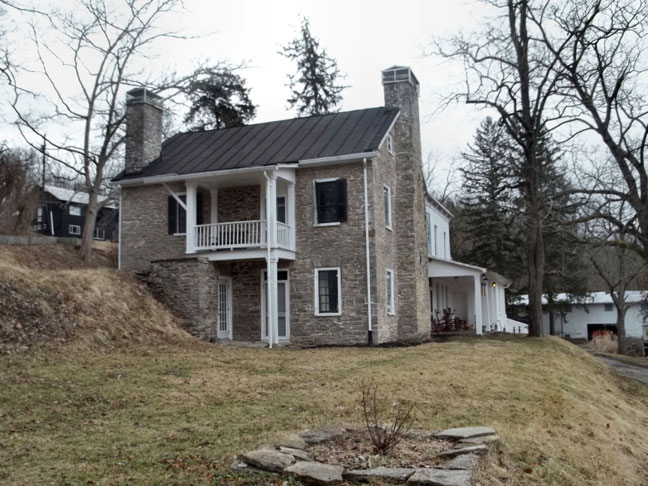
    By 1820, the old stone house overlooked the fields as it does today along the Little Miami Bike Trail just outside of Loveland in Hamilton Township.

    Along the banks of the Little Miami River in the hilly countryside north of Cincinnati, stands an old stone house, a relic of slower days, when there was lots of land and few people. It is not lived in much these days, but a big family of Quakers lived there for many years. Their forefather, Benjamin Butterworth was a six-foot six inch pioneer, a giant of a man who was said to have weighed 300 pounds. His roots in America dated back before the 1700s. Born in Virginia, he fought in the Revolution and was entitled to purchase a grant of land in the Northwest Territory, in the Virginia Military District, of which much of Ohio was part. This land and his inheritance provided him with substantial wealth. He was like many future Ohioans who would settle the new state: a slaveholder who freed his slaves and took them along to where there was no slavery.

    The people that helped [fugitives] . . . had no rational hope of compensation. On the contrary, they gave aid, with the certainly of the loss of time and money, and with the possibility of fines and imprisonment.

    One early morning I was told to go up in the haymow. On doing so I was somewhat startled to see half a dozen black persons hidden away. That day they lay hid and their food was carried to them with secrecy. About 9 o’clock that evening we hitched up, [and] cautiously loaded the vehicle with its human freight, and carefully fastened down the curtains.
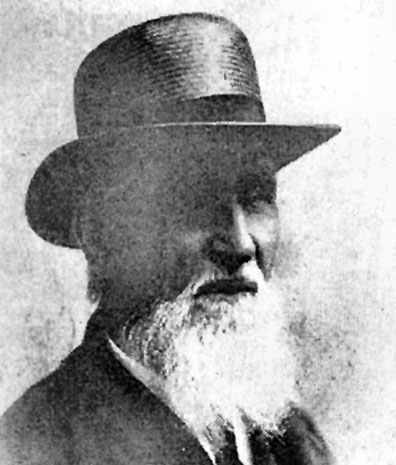
    Thomas Butterworth
    Thomas Butterworth was there and assisted. It was raining; the sky was still clouded and the roads wet and muddy. We went at first by a lane, across the farm of Butterworth, another of the brothers … We soon struck the main road and turned our course towards the North Star . . . . We drove along at a round pace, always on the lookout for pursuers, and it must be confessed, somewhat nervous. Now and then we stopped, and by the struggling moonbeam’s misty light, carefully scanned the road in both directions. We crossed Todd’s Fork near the site of Morrow; drove past Rochester and Clarksville and on through the night to Harveysburg, where we arrived just after daylight. As we traveled along the stories of the blacks were told.

    We soon struck the main road and turned our course towards the North Star. Now and then we stopped, and by the struggling moonbeam’s misty light, carefully scanned the road in both directions.

    In one, a slave trader had come to their plantation which meant the possibility of being sold to the Deep South where they would be overworked in brutal conditions with the likelihood of dying an early death. Another was family of three, whose twelve-year-old daughter was under consideration of being sold away. They stole a skiff and rowed down the Licking River to Cincinnati. A third told of a man who contracted out to work and earn money which he was using to pay for both the freedom of himself and his wife. Unfortunately, his wife was owned by a different master, a Baptist minister in fact, who sold her away to the Deep South.

    Unfortunately, his wife was owned by a different master, a Baptist minister in fact, who sold her away to the Deep South.

    “Scruples of conscience at violating the Fugitive Slave Law readily vanished before such narrative[s],” Carroll said.

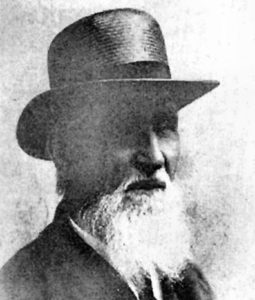
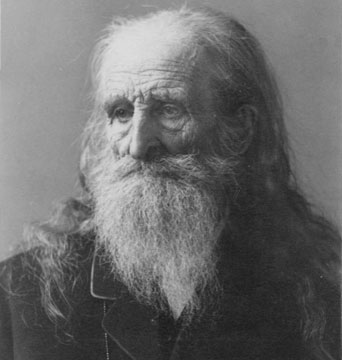
    Ready to vanquish any such scruples was an eccentric and intensely intellectual abolitionist and free thinker, Orson S. Murray who moved into the Butterworth neighborhood sometime in the early 1840s. Long hair, scraggy beard, he was an unappealing, atheistic version of Jesus Christ. He had come from Vermont, where he’d been a fiery antislavery speaker who antagonized the already angry mobs gathering at antislavery lectures all over the North. Here in remote Ohio he found some solitude, a haven for his ideas, and people who would tolerate him. 

    Orson S. Murray who moved into the Butterworth neighborhood sometime in the early 1840s. Long hair, scraggy beard, he was an unappealing, atheistic version of Jesus Christ.

    Murray already had done some writing in metaphysical journals of the day and had published his own newspaper in Vermont, The Telegraph. He started another newspaper, the Regenerator, not far from the Butterworth backyard. Its motto: ignorance was evil and knowledge its remedy. 

    Here’s what William Burleigh, the brother of eccentric antislavery speaker, Charles Burleigh, whom Murray named one of his children after, wrote about the Regenerator: “Mr. Murray appears to be a benevolent and self-denying man–is very eccentric in his appearance–very wild in many of his notions–and a very unsafe leader, for he leads into the mazes of skepticism and infidelity.”

    And here’s what Murray had to say about the Regenerator himself: “If the Regenerator has helped to dispel and disperse the delusion, that that book [the Bible] is the voice of a god–and to show that it is only the words of men–men, some of them, in profound ignorance and darkness on the subjects they were pretending to elucidate–it has done something towards accomplishing one of the principal objects which have impelled me to do the very unpopular work of publishing it.”

    Legends say he might’ve helped some fugitives too. He lived until 1885, dying at the age of 78. 

    Butterworth’s daughter Jane also wrote to Siebert, of her memories when she was about six or seven years old:

    I saw no people of color, heard no words, but I was sure there was such in our wagon.

    Among my earliest recollections, I was awakened about sunrise by the stopping of my father’s large wagon and two horse, and [him] handing me a little child 5 or 6 years old over to the care of a thrifty woman [who had come] out of a well-kept farmhouse, while he gave a shrill whistle for the men to come up from the field. I was taken into the house and seated in a small chair. The woman then gave me some freshly baked ginger bread while father talked with the man. I did not understand so unusual a visit at that place and time of my life for nothing was explained to me and I saw no people of color, heard no words, but I was sure there was such in our wagon. But as I grew older and learned about the Underground R.R, I knew that we were in that business then. [After] that time I [went] with my father on this said business when I was old enough to know about it. Several times I remember mother coming to our bedroom late at night and getting [us] all up in a hurry and putting us in bed elsewhere to give our bed to a lot of fugitives who come weary and tired, and our grandmother [Rachel who died in 1848] would tell them to “go to sleep, you will be safe in that room, nobody will get you there.”

    Several times I remember mother coming to our bedroom late at night and getting [us] all up in a hurry and putting us in bed elsewhere to give our bed to a lot of fugitives who come weary and tired.

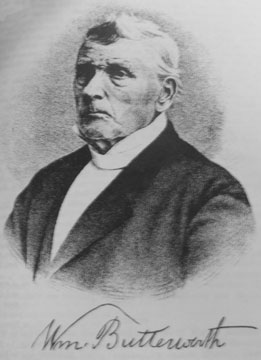
    William Butterworth

    Thomas said his brother, William, who lived a few miles north in Maineville, probably helped twice as many as him. How many is not known though Thomas said he probably helped as many as one hundred. Family anecdotes, however, suggest more, including stories of single parties numbering as many as 26 belying Thomas’s count. The important thing though was that all were brought safely to freedom.

    “I can say in truth that such was our success that I do not believe a single one was ever re-captured and taken back to slavery,” he said.


    Read Part 1: Further Recollections of Butterworth Station


     1. Robert W. Carroll, “An Underground Railway: Fugitive Slaves and the Butterworths,” Cincinnati Times-Star, August 19, 1896, Siebert Collection.

    2. Review of The Regenerator by William H. Burleigh, editor of the Christian Freeman, Jan. 22, 1844: 14 < https://popularfreethought.wordpress.com/browse-by-title/regenerator-1844-1854/ >

    3. Extract from a Letter.” 175 (Jan. 1854): 353 < https://popularfreethought.wordpress.com/browse-by-title/regenerator-1844-1854/ >

    4. Henry T. Butterworth to Wilbur Siebert, June 9, 1892, includes recollection of Jane.


  • Butterworth Station of Loveland and the Underground Railroad: Part I

    Butterworth Station of Loveland and the Underground Railroad: Part I

    The Fugitive Slaves, oil on paperboard, circa 1862, Brooklyn Museum

    The following is an excerpt from Chapter Seven of The Search for the Underground Railroad in South-Central Ohio by Tom Calarco, scheduled for publication in late October by History Press. It is being published with permission from History Press.

    Tom Calarco is a resident of Historic Downtown Loveland, Ohio.

    By Tom Calarco

    Part one of Two

    Along the banks of the Little Miami River in the hilly countryside north of Cincinnati, stands an old stone house, a relic of slower days, when there was lots of land and few people. It is not lived in much these days, but a big family of Quakers lived there for many years. Their forefather, Benjamin Butterworth was a six-foot six inch pioneer, a giant of a man who was said to have weighed 300 pounds. His roots in America dated back before the 1700s. Born in Virginia, he fought in the Revolution and was entitled to purchase a grant of land in the Northwest Territory, in the Virginia Military District, of which much of Ohio was part. This land and his inheritance provided him with substantial wealth. He was like many future Ohioans who would settle the new state: a slaveholder who freed his slaves and took them along to where there was no slavery.

    On September 15, 1812, he set out with his family and some former slaves in two covered wagons to cross the old green Appalachian mountains of
    what is now West Virginia. It was a trek of more than 300 miles up mountains more than 4,000 feet high through scenic passageways like those that had inspired trailblazers like Daniel Boone a generation earlier; there was only one road through this wilderness, the Midland Trail which ran along the Kanawha River and today is Route 60. Benjamin, 46; his wife Rachel, 47; Moorman, 19; Benjamin Jr, 18; Samuel, 14; Rachel, 12; William, 10; and Henry Thomas (called by his middle name), 3, made the journey in 25 days. One can only imagine the sunsets blazing their fire in that pristine wilderness of future promises. In the years ahead their lives would soon be afire with the cause of abolition

    When Butterworth arrived, he found that his 1500-acre property needed a lot of work to make it suitable for farming. Though it had the advantage of a natural springs and the Little Miami River, it needed clearing and was hilly and full of gullies. It would take time to make it livable. Instead, he took the family to nearby Waynesville where one of his older daughters, Polly already was living with her husband Zachariah Johnson. Within a week he purchased land along nearby Caesar’s Creek where they moved. Busy with his farming and building a mill, he ignored his other property for the next three years.

    By 1820, the old stone house overlooked the fields as it does today along the Little Miami Bike Trail.

    In 1815, Moorman visited it and found a squatter who had built a cabin and planted crops on five acres he had cleared. He bought the cabin and the crops, and moved in. Three months later his older sister Milly and her husband, John Dyer, emigrated from Virginia and they moved in with him. They built a two-story log cabin, and a year later, Benjamin and family joined them. By 1820, the old stone house overlooked the fields as it does today along the Little Miami Bike Trail. In future years, the Butterworth farm grew prosperous through the sale of sweet potatoes, chickens and their eggs, and the construction of the Little Miami Railroad that ran through their property, connecting south to Cincinnati by 1843 and north to Springfield by 1846. 

    Being Quakers, they were stirred by the movement for immediate emancipation of the slaves that already had many supporters in this section of Ohio.

    Thomas Butterworth

    For a time, a least up until 1850 and the passage of the Fugitive Slave Law, their most important business was the UGRR. Being Quakers, they were stirred by the movement for immediate emancipation of the slaves that already had many supporters in this section of Ohio. Slaves had begun running away more than ever as more in the North joined the effort to assist them. The Little Miami River was a natural gateway. When they exactly became involved in aiding them is not known but probably no later than 1830-1831 when their sons, William and Thomas, married into the Wales and Linton families, Quaker abolitionists who may already have been part of the UGRR. 

    The Little Miami River was a natural gateway.

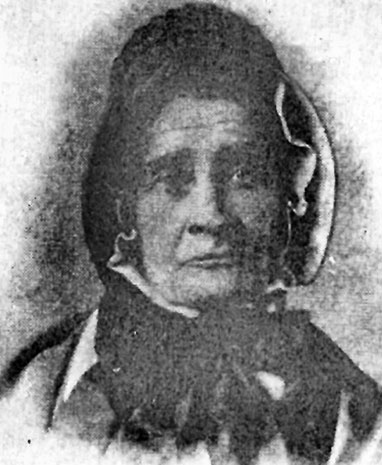
    Nancy Butterworth

    Thomas’s wife Nancy was a Wales and her sister Jane married Valentine Nicholson. It was a double wedding. William married Elizabeth Linton. So, it became an all-in-the-family UGRR operation. Thomas recalled those days shortly before his death in a letter to Wilbur Siebert:

    We [once] had two women, one man and some children on hand and had them concealed for some time and it was becoming unsafe to keep them longer . . . I had two good horses and a good wagon with high sides and a good set of bows and cloth. I put the bows on and then stretched the cloth on and tied it thoroughly down. . . . . After thus being all fixed I stored in a lot of hay for the poor creatures to lie on. Then after leaving all the children [the fugitives’ children] for fear of their crying and betraying us, I put in two carts for my daughter Mary and I to sit on.

    After thus being all fixed I stored in a lot of hay for the poor creatures to lie on.

    By this time we had heard that a pro-slavery boy by the name of Andrew Davis had somehow got a knowledge of the whole thing and had, perhaps for a sum of money, made it known to two persons who would do anything they could to catch the flying slaves. The names of these two persons [were] David Coddington and James Foster. We had heard of our betrayal; I prepared for it; the river was high. My destination was to take them to an uncle of my wife’s by the name of Turner Welch residing at Harveysburg . . . . The bridge here at Foster’s must be crossed and was a toll bridge. Joseph Whitney took the toll at the west and James Foster kept a store at the east end (just before they came to the bridge). We had our Quaker school teacher, Robert Way, to go with us to see if we should run the gauntlet . . . just as we expected out came the two men [Coddington and Foster]. 

    William Butterworth

    Foster called out to him . . . Got any chickens, got any eggs, got any butter? 

    Butterworth shouted back as he passed by, “I am not going to market I am after fruit trees,” and handed Whitney the toll with stopping. 

    He heard Coddington say to Foster, “I’ll be damned if there ain’t niggers in that wagon.”

    Butterworth had thought they would follow him and kept looking back but they made it safely to his wife’s Uncle on the north side of Caesar’s Creek. He did not consider it safe to keep them that night, so he sent them over to Harveysburg up on one of the many hills in that area, and Butterworth returned home to see about the fugitives’ children. He gave the task to Robert Carroll, who lived only a mile away with whom he had a regular arrangement regarding the transport of fugitives.

    I had a small one or two-horse wagon. I had a neighbor a mile from me who was as strong an anti-slavery man as myself. As far as worldly goods were concerned he had nothing, was rich enough to have a wife and children to help him be poor. He feared no risks in helping fugitive slaves . . . I told him that when fugitives were on hand that he knew of, to come and get this wagon and one or two horses, as the case would require, and take them, and I would have no questions, and he should ask me none and go in the night, and go to such underground station as we know best, which was at or near Harveysburg . . . . This man Carroll took those children up there where they no doubt found their mothers.

    Next Time in Part 2: Further Recollections of Butterworth Station