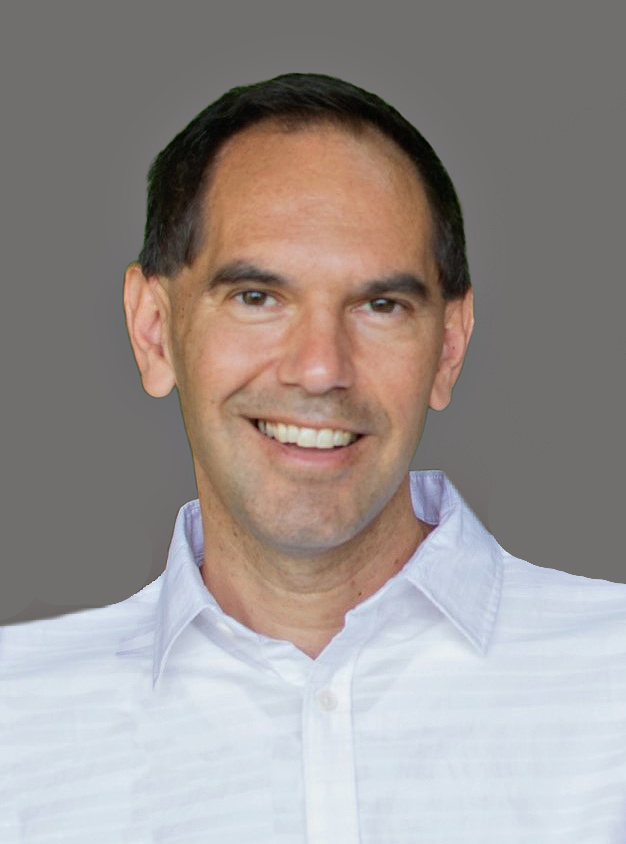
It is with profound sadness that the family of David M. DelloStritto, 47, announce his passing on July 2, 2023, after a lengthy, courageous battle with colon cancer.
David was born on June 15, 1976, to Dennis and Carol DelloStritto. He attended Howland Schools and graduated from Ohio University in 1998 with a BBA in Business Management/Operations. After college, he worked for ADP in Columbus, Ohio, where he met his wife, Amy. They were married on August 14, 2004. He eventually transferred to Cincinnati. He continued to work through most of his illness, most recently for SAP Concur, where he worked as a senior software sales executive. Through his career, Dave achieved great success and was able to travel the world.
The pride and joy of his life was his daughter, Alexa and son, Colin. Together with Amy, he raised two incredibly intelligent, loving, compassionate, amazing children. Nothing gave him more happiness than watching Alexa play softball and volleyball and Colin play soccer, basketball, and football. He especially loved coaching Alexa in softball and Colin in basketball. Dave loved and was deeply devoted to his family and treasured every memory made with them. His family will carry these beautiful memories with them for the rest of their lives.
Dave is survived by his wife Amy, daughter Alexa (16), and son Colin (12), his parents; sister Danielle (Nate) Mailach and niece Mallory; Father-in-law Tom (Dawn) Freeman; brother-in-law Thomas (Cami) Freeman and nephews Thomas and Mathias; many loving aunts, uncles, and cousins; and many cherished friends.
Dave wished to leave these words to his adored family and friends: “If ever there is a tomorrow when we are not together, there is something you must always remember. You are braver than you seem and smarter than you think. But the most important thing is, even if we’re apart…I’ll always be with you.”
Per Dave’s wishes, no services will be held. A private family Celebration of Life will be held at his home.
In lieu of gifts or flowers, donations may be made in his memory to Hospice of Cincinnati, C/O Bethesda Foundation, Inc., P.O. Box 633597, Cincinnati, OH, 45263, or online at www.hospiceofcincinnati.org. His family wishes to thank the amazing doctor, nurses, hospice aides, staff, and volunteers who provided such excellent, compassionate care to us.
He was deeply loved and will be forever missed by all who knew him.
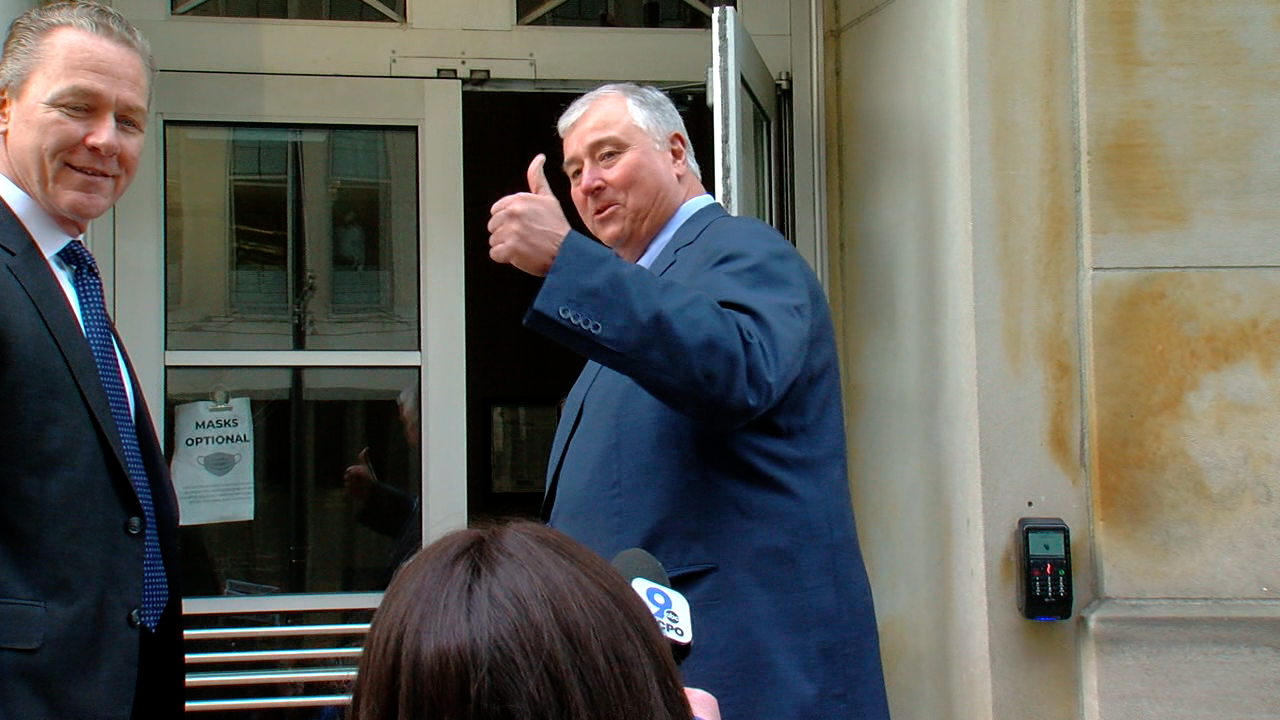
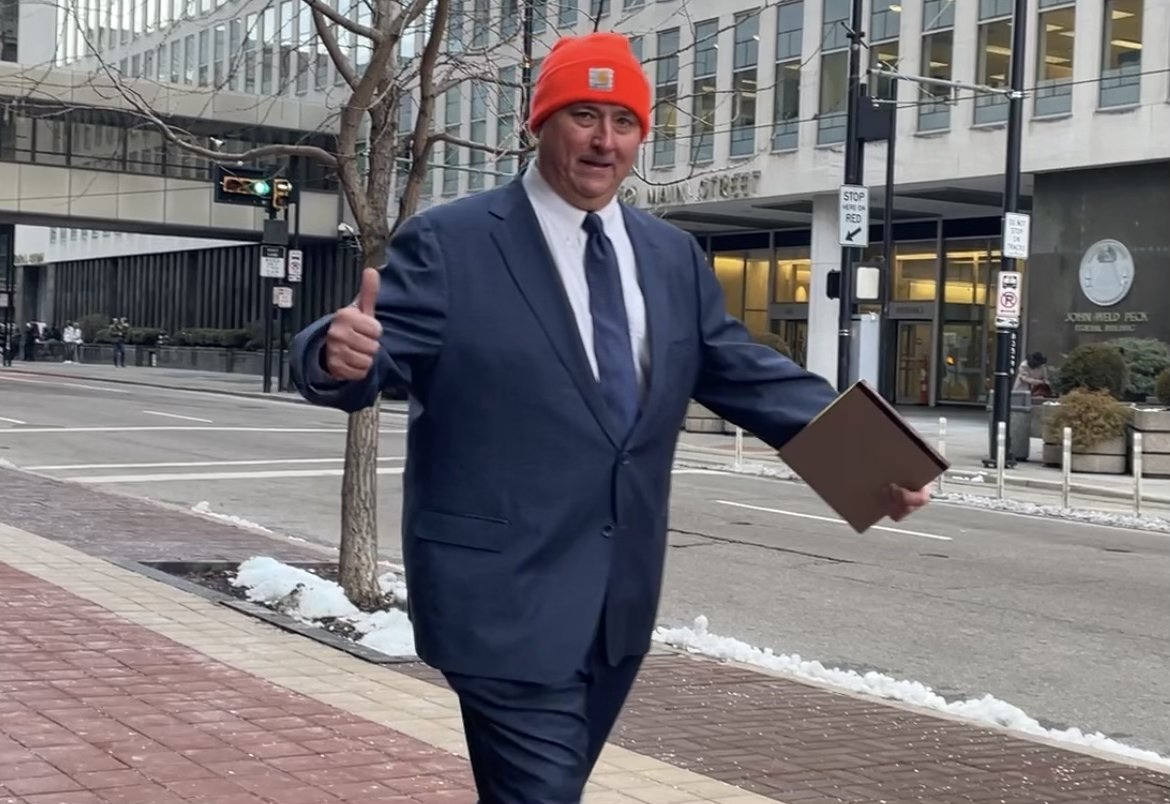
Former Ohio House Speaker Larry Householder gives the thumbs up as he enters the courthouse where he is expected to testify Wednesday, March 1, 2023. Photo from WEWS.
The cross examination prompted some observers to say Householder badly damaged his defense against federal racketeering charges by using the risky tactic of testifying in his own defense. It marked the end of the evidentiary phase of the trial. Closing arguments will begin Tuesday.
Householder and former Republican Party Chairman Matt Borges are accused in a scheme to use $61 million in funds mostly from Akron-based FirstEnergy to make Householder speaker and then to pass and protect a $1.3 billion bailout that primarily went to prop up a subsidiary’s failing nuclear plants.
Over more than five weeks of testimony, prosecutors have put on evidence they say proves Householder passed the bailout in return for massive 501(c)(4) “dark money” contributions and for more than $500,000 in personal benefits. Perhaps as a sign that they didn’t believe things were going well, Householder and his defense team took the controversial step of putting him on the witness stand on Wednesday.
Defense attorneys are usually reluctant to put their clients on the stand because prosecutors can use cross examination to catch them in lies. That seemed to be Assistant U.S. Attorney Emily Glatfelter’s goal as she cross-examined Householder on Thursday.
Hardball
Glatfelter played secret recordings of conversations that jarringly contradicted Householder’s claims that as speaker, he wanted to be a peacemaker. Under its earlier leadership, Householder said, the House Republican Caucus was too “divisive.”
“I didn’t want enemies. I wanted friends,” Householder said Wednesday, trying to refute claims that he was an autocratic leader who demanded unstinting loyalty from lawmakers and contributors.
Glatfelter played a wiretap recording of a conversation between Householder and Neil Clark, a lobbyist who was charged in the conspiracy and later died by suicide.
“We like war and you know that Neil,” Householder told Clark. Then referring to Republican Reps. Dave Greenspan and Scott Lipps, whom Householder considered insufficiently supportive, he said, “If you f**k with me, I’ll f**k with your kids.”
Former House Speaker Larry Householder, R-Glenford. Source: Ohio General Assembly.
The former speaker had earlier denied being involved in using dark, or “C4” money to make attack ads, but when Clark asked “You’re talking about C4 money?” Householder responded, “Yeah.”
When Glatfelter asked Householder if he punished contributors and lawmakers who supported his foes instead of him, Householder said, “I can’t think of any consequences” he had meted out to non-supporters.
Then Glatfelter played a recording between Householder and Clark in which they discussed what to do about non-supporters.
“We can f**k them over later,” Householder said.
In the dark about dark money
The prosecutor also didn’t buy Householder’s claim of general ignorance about the operations of Generation Now, a 501(c)(4) dark money group into which FirstEnergy pumped scores of millions to pass and protect the bailout legislation. The entity was created and controlled by Jeffrey Longstreth, Householder’s underling, a few weeks after Householder flew with FirstEnergy Vice President Michael Dowling to Donald Trump’s 2017 inauguration aboard FirstEnergy’s corporate jet.
Householder claimed that he was so new to the dark money game that Longstreth had to explain how such groups worked.
And, as he did through much of the cross examination, Householder answered questions repetitively and seemingly grudgingly. When asked by Glatfelter what the former speaker thought the purpose of Generation Now was, Householder responded, “To educate the public on important issues and support candidates who support those issues.”
Records and testimony from Longstreth — who pleaded guilty in the case — indicated that dark money from Generation Now was used to make and run ferocious attack ads against opponents of “Team Householder.” Then it was used to claim without evidence that an effort to repeal the bailout was really a Chinese effort to take over the Ohio energy grid.
Because such groups don’t have to disclose their contributors, FirstEnergy was able to keep its fingerprints off its involvement in passing and protecting legislation of such interest to the company.
Prosecutors also played recordings and showed written messages indicating that Householder was involved in planning Generation Now-funded messages. But asked by Glatfelter several times on Thursday what he believed the dark money group actually did, Householder tried not to move far from his initial answer.
The group was for “educating the public on issues that are important to Ohio and me and supporting candidates who support those issues,” he said.
Champagne travel for a “country Republican”
The former speaker and the prosecutor also clashed over Householder’s flight to the Trump inaugural. Householder and his son were invited to do so by Cleveland businessman Tony George.
Former FirstEnergy CEO Charles “Chuck” Jones. Source: FirstEnergy, via Flickr
Glatfelter asked what George’s relationship with FirstEnergy was. Householder said George “knew Chuck” — referring to FirstEnergy CEO Chuck Jones.
Incredulous, Glatfelter said, “There’s a difference between knowing somebody and having access to his company jet, right?”
Householder said that the only reason Dowling, the FirstEnergy vice president, flew with the group is because George said someone from the company had to be on the flight. The implication, apparently, was that the trip wasn’t part of the plan for a FirstEnergy bailout.
Householder said he agreed to take the flight to save time. But traveling by private jet might not fit with his explanation earlier in the day of the difference between him and Borges.
“He’s a country club Republican and I’m more of a country Republican,” Householder said.
The former speaker also claimed that he didn’t intend to fly free.
“From day 1, I was going to pay for that flight,” he said.
More than two months later, Householder paid FirstEnergy $2,647. He said he paid then because that’s how long it took for FirstEnergy to send him a bill — not because the Dayton Daily News had written a story about the flight and the questionable appearance that it made.
That Householder would take a private jet without knowing what the cost would be is difficult to square with another statement he made about himself when he testified a day earlier.
“Anybody who’s been around me knows I’m cheap,” Householder said. “I drive a 2001 GMC Sonoma and I don’t like to spend money.”
Glatfelter punched other holes in Householder’s attempts Wednesday to distance himself from FirstEnergy executives on the trip to the Trump inaugural. She showed that George reserved rooms at the same hotel for Householder and CEO Jones within a minute of each other and paid the same amount for both — $1,500.
Householder said he believed the Ohio Republican Party paid for his room.
Personal payments, questionable sources
Observers have said that one of the most damning kinds of evidence against Householder is that Longstreth had paid more than $500,000 to settle a lawsuit against the speaker, repair a house he owned in Florida, and to retire credit card debt. Longstreth said he had papers drawn up to formalize the payments as loans, but Householder never would sign them.
Householder said his plan was to pay Longstreth when the Florida house was sold. When it finally did sell — for nearly $700,000 — Householder said he couldn’t pay Longstreth because both had been arrested in July 2020 and he believed any payments to a co-defendant could be used against him. The former speaker said he planned to pay Longstreth when the case is over.
Householder also showed a curious lack of interest in the sources of Longstreth’s money.
Longstreth testified that he received millions in FirstEnergy money through Generation Now and into a separate account that he used to pay Householder’s debts, hire contractors, pay himself, and the like.
Glatfelter asked Householder where Longstreth got the money to pay Householder’s debts and to run the sweeping political operation.
“His business wasn’t my business,” Householder said of the man he hired to recruit candidates, get them elected, and then get them to vote to make him speaker.
Lack of disclosure
Glatfelter also took Householder to task for not disclosing debts and gifts in compliance with state ethics laws.
He didn’t disclose a $1.89 million judgment against him over a failed Alabama coal mine. Nor did he disclose 2016 World Series tickets that were given him at a discount from the going rate of $2,500 apiece, Glatfelter said. And he failed to report the $1,500 hotel room George got him for Trump’s inauguration.
Householder testified that his attorney filed the disclosures and that he had only “glanced over” them.
Glatfelter pointed him to the portion of the disclosures in which the filer says he or she knows the contents of the disclosure and has to swear it’s accurate — a legally binding attestation similar to the one Householder made before testifying. She asked Householder if the documents bore his electronic signature.
“I don’t even know what an electronic signature is,” he replied.
Pressed, Householder responded with several versions of, “I relied on the advice of my attorney.”
Samuel Smith operates a camera out of the back of a truck in San Diego, California. (Photo by Savannah Braswell)
Since leaving Loveland in 2018 for the prestigious New York University, Sam Smith has been cinematographer on numerous projects including Crimson Ties, directed by Francesca Scorcese.
A slash of Edward Hopper-esque smoggy evening light outlines a working-class mother, hunched over a sewing machine. A split composition: out of focus in the background of her 1956 New York tenement apartment, her children hug their father.
Bobby, 11, donning a school uniform, stands over the camera with a note in her hand. A low angle, wide-lens shot might indicate confidence. But not here. The note fills the frame and holds the power. Her body looks awkward and distorted—her hands are too big, torso too long, head too small.
These are two images from Heartbreak on Murray Hill, a short film to be photographed by Loveland local Samuel Wright Smith. The movie is the true story of the director’s (Malcolm Quinn Silver-Van Meter) grandmother’s childhood breakup in 1956 immigrant NYC. Samuel Smith will act as the eyes of the film, sculpting light, movement and framing.
For as long as he can remember, Samuel Wright Smith has had a camera glued to his face. When he first found himself in the tight-knit Cincinnati film scene, he was only 14. Smith spoke about his roots:
“Making a film takes a village. I am indebted to organizations like The Cinedepenent Festival, The Underground Academy, Loveland Magazine, the Overture Awards/Artswave, and the many Cincy mentors and patrons of the arts. Cincinnati offered the impetus to realize my dreams. It feels fitting that my biggest project yet is about community.”
Since leaving Loveland in 2018 for the prestigious New York University Tisch School of the Arts, Smith has been cinematographer on numerous projects including Crimson Ties, directed by Francesca Scorcese, which premiered at Tribeca. In 2020, at only age 19, he published a photo book titled Abandoned Cincinnati through Fonthill Publishing.
Samuel Wright Smith is the author of Abandoned Cincinnati, a 2019 photo/commentary book available in Cincinnati bookstores and online through Amazon. The book explores the history, beauty, and implications of Cincinnati’s vacant structures.
Recently, Smith shot a feature film with the Secoya indigenous community in the Ecuadorian rainforest. His work has garnered attention at other major festivals including Nashville Film Festival and Beverly Hills Film Festival.
For Heartbreak on Murray Hill, the crew will build a replica 1956 tenement apartment. Smith describes the style as “warm realism”. Pulling inspiration from American Realist painters, he intends to create a style that is bold, believable, and magical.
Heartbreak on Murray Hill is the story of 11-year-old Bobby and her first breakup in 1950s NYC. It is based on a true story.
Heartbreak is set to be one of NYU’s most ambitious thesis films ever. Seeking an indie budget of $150k, the film is fiscally sponsored and donations are tax-deductible.
“Writing and photographing for Loveland Magazine in high school opened my eyes to the possibility of meaningful work through the lens of a camera. I owe so much of where I am to David Miller, the LM publisher. So many peers, teachers and community organizers in the Loveland community gave me the push to pursue my dreams. I can’t believe that this is my life now. Living off of art seemed impossible once. But thanks to community: here I am,” said Smith.
“Sam started as a Loveland Magazine Intern while he was still attending Loveland High School and soon was paid for his skillful work. I was still able to hire Sam a few times for special projects after he went to NYC to study. Since the day we were first introduced his photographic eye and writing has always seemed magical,” said Loveland Magazine Managing Editor, David Miller. “I cannot wait to see this new film and really wish the team success in securing the funding they need and do hope the Loveland and Cincinnati community will support Sam’s career.”
CINCINNATI — Former Ohio Republican Party Chairman Matt Borges paid $15,000 off the books in 2019, a witness testified Tuesday. It was in an attempt to gather inside information about the campaign to repeal a $1.3 billion utility subsidy that had just been passed by the legislature, a Borges associate said.
In addition, the chairman of the company that benefited most from the subsidy in an email referred to the scheme as a “black op” and said he was prepared “to do whatever it takes” to defeat the repeal effort, the witness, Juan Cespedes, said. Coincidentally, the chairman, John Kiani, started his career at Enron, a Houston Energy company that collapsed under a wave of unmet contracts and accounting scandals in 2001.
It was the 11th day in the federal court trial of Borges and former Ohio House Speaker Larry Householder, R-Glenford. Borges is accused of assisting Householder and others in a scheme to use $61 million from Akron-based FirstEnergy to make Householder speaker and pass the massive bailout.
The bulk of the bailout was intended to benefit money-losing nuclear and coal plants owned by FirstEnergy subsidiary FirstEnergy Solutions. It was going through bankruptcy proceedings and executives with the parent company and the subsidiary desperately wanted the bailout to complete the bankruptcy, spin off FirstEnergy Solutions and possibly sell the nuclear plants.
Gov. Mike DeWine signed the bailout the same day it passed in 2019, but a repeal effort started amid reports that it was “the worst energy bill of the 21st century.” Not only did it prop up 70-year-old coal plants under the guise of being a “Clean Air Program,” it also gutted the state’s renewable energy standards.
Borges was part of a team of lobbyists who worked to pass and protect the bailout, House Bill 6. And, because of his long experience in Ohio politics, he was asked to make use of some of his relationships in the effort, Cespedes, another member of the team, testified.
Cespedes was also charged with racketeering, but he pleaded guilty and is cooperating with prosecutors.
The off-the-books payment
One of the primary acts Borges is charged with has to do with a $15,000 payment he made during the repeal effort to Tyler Fehrman, who was helping manage the campaign to gather enough valid signatures to get the repeal on the ballot.
Inside information was valuable to the pro-H.B. 6 team because it enabled them to gauge the strategy and likelihood of success of the repeal effort.
Cespedes testified that he tried to keep the plan to recruit Fehrman from Kiani, the FirstEnergy Solutions chairman whose company financed a big portion of the fight against the repeal. Kiani was a hard-charging executive and Cespedes believed that once he learned of the spying effort, he would press the operatives relentlessly.
However, Cespedes said, Borges told Kiani about it, and it seems Cespedes’s worries were well founded.
In an Aug. 31, 2019 text, Kiani asked “what happened to the black ops?” in a reference that Cespedes said was to the spying effort. Then, in a Sept. 2, 2019 text, Cespedes told Borges that Kiani, “reiterated to do whatever it takes to get this information.”
It appears that Fehrman was paid, but it’s unclear what he was paid for.
In taped conversations played earlier in the trial, Borges discussed paying Fehrman, but he claimed to Fehrman that it was for work Fehrman might do some time in the future. But Borges made other statements that seemed to show that he knew the two were doing something wrong.
“It would be bad for both of us if the story came out,” he told Fehrman in a recording that Fehrman made with the help of the FBI. “But it would be worse for you.”
On Tuesday, Cespedes testified that he roughed out a budget at the time of the repeal campaign. He made an entry in it to pay $25,000 to an “employee.” Cespedes said the money was intended for Fehrman.
Asked why he used “employee” to label the entry, Cespedes said, “I wasn’t going to write ‘bribe.’ I wasn’t going to write anything nefarious.”
Prosecutors displayed a photograph of what they said was a contemporaneous budget that Borges roughed out in a notebook that Cespedes had photographed. Cespedes testified that when he asked Borges why a payment to Fehrman wasn’t in it, Borges “simply said it wasn’t something he wanted to write down.”
Cespedes testified that Fehrman later went quiet on Borges and Cespedes assumed that their deal had fallen through. But after the repeal campaign had failed, an accounting showed that the $15,000 had been paid, Cespedes said.
When he asked Borges about it, “He said, ‘I just wanted to keep him quiet,’” Cespedes testified.
Earlier in the HB 6 fight, Borges and Cespedes were struck by Kiani’s connections to Enron, which ceased to exist after one of the biggest corporate scandals to that point in American history.
“The shocking thing last night was learning that Kiani came from Enron,” Borges said in a text.
Kiani went from there to work as a hedge fund manager and then he made his way onto the FirstEnergy Services board as an activist investor. Cespedes testified that a Kiani aide told him that Kiani would make $100 million from the sale of FirstEnergy Solutions’ nuclear plants.
Regardless of whether that’s accurate, Kiani clearly was willing to spend lots of corporate money to win subsidies for them. To fund a statewide, eight-week media campaign for the bailout, bankrupt FirstEnergy Solutions approved a $15 million budget, Cespedes testified.
That amount would grow after the bill passed and the repeal fight got underway.
Kiani continues to be executive chairman of Energy Harbor, the new name for FirstEnergy Solutions after it emerged from bankruptcy. His company bio credits him with “the successful operational and financial turnaround of Energy Harbor into a leading, carbon free power infrastructure and energy supply company.”
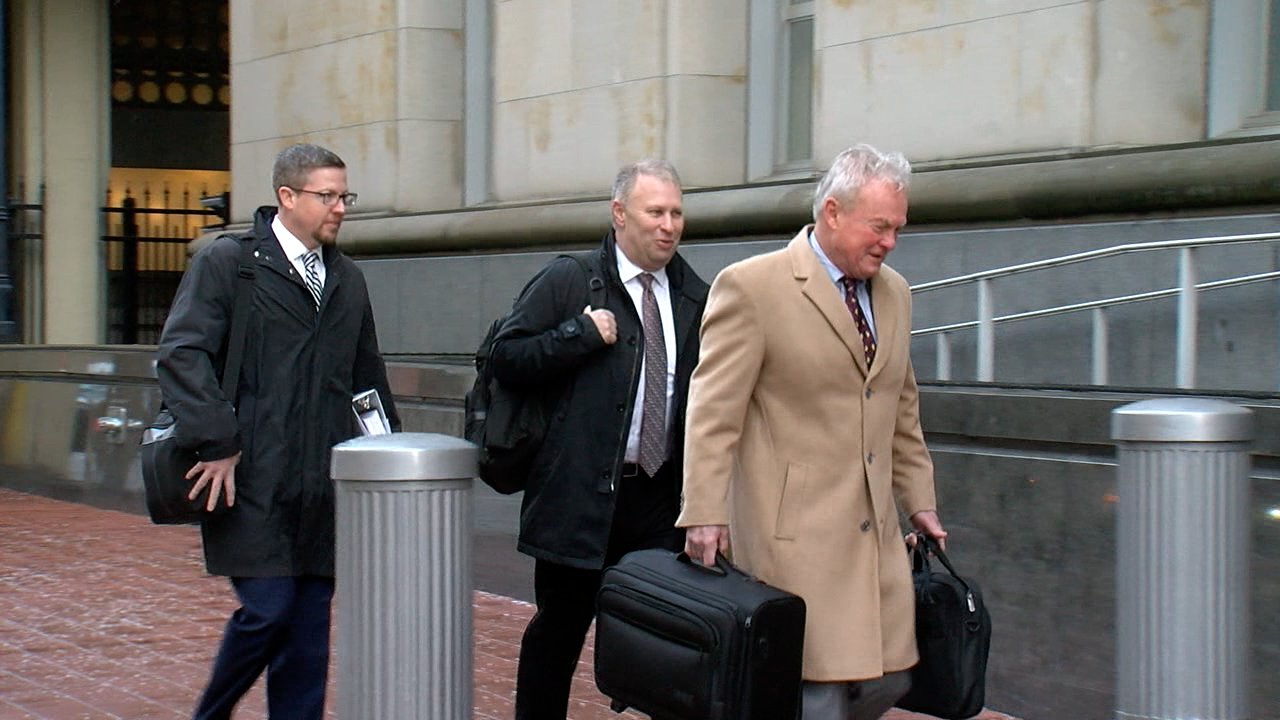
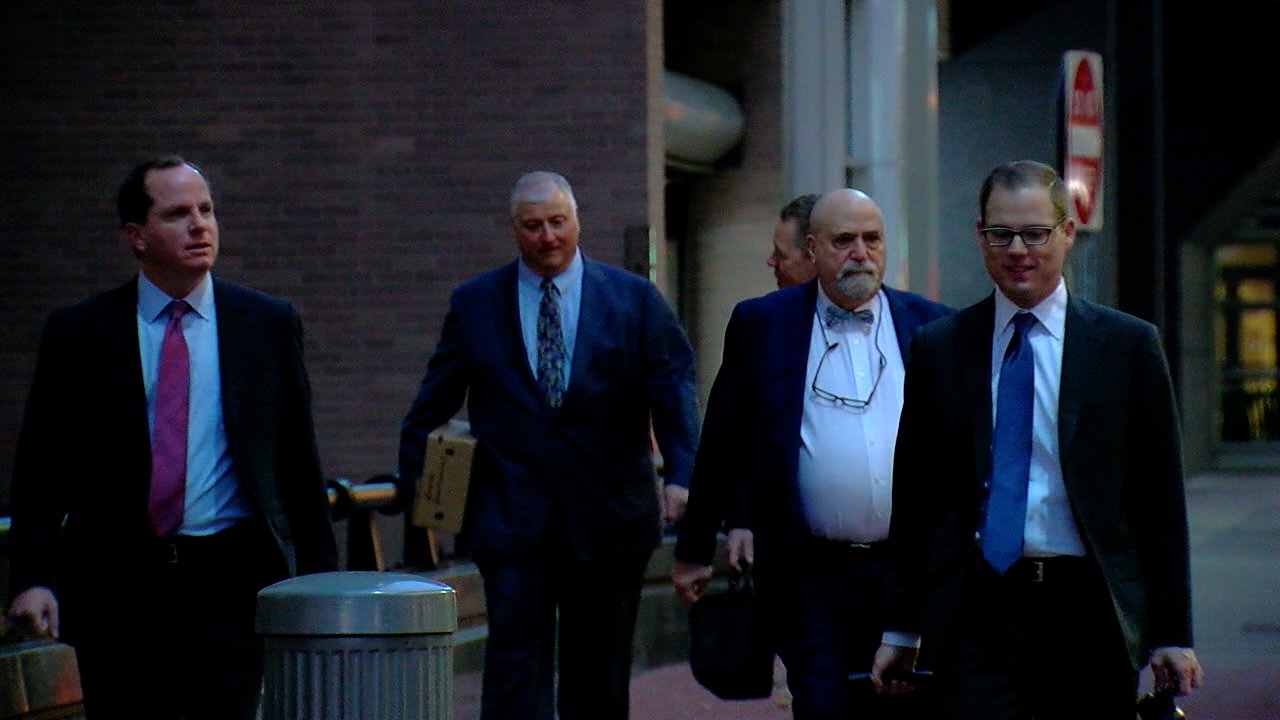
Former Ohio House Speaker Larry Householder, a Perry County Republican, second from left, with attorneys outside of his racketeering trial. Photo courtesy of WEWS.
CINCINNATI — There has been speculation since the start of a massive public corruption trial that lawyers for the main defendant — former Ohio House Speaker Larry Householder — were banking on getting any conviction tossed out on appeal.
There might have been evidence of that on Tuesday when one of the attorneys took the rare step of accusing the judge in the case of bias against his client. The attorney also suggested that the judge harbored a political grudge against Householder going back more than 22 years.
Testimony resumed Tuesday in the case after repeated delays — first because of weather and then because a juror tested positive for covid.
When it did, federal prosecutors continued presenting extensive evidence to support allegations that Ohio utilities paid $61 million into Householder-controlled 501(c)(4) dark money groups and Householder used the money to elect friendly Republicans to make himself speaker in early 2019. Householder is accused of pushing through a $1.3 billion ratepayer bailout that primarily benefited his primary benefactor — Akron-based FirstEnergy — in return.
Federal prosecutors are known to usually file charges only when they’re almost certain to get a conviction. That’s perhaps even more true when the case is against an elected official.
And over the course of testimony so far, Assistant U.S. Attorney Emily Glatfelter has introduced reams of evidence in the form of emails and text messages, as well as transcripts of wiretaps and witness testimony — including that of co-defendants who have pleaded guilty.
Householder also is alleged to have pocketed $500,000 in utility money himself, but his lawyers say those were loans he fully intended to repay.
However, the attorneys’ conduct on Tuesday might indicate that they’re looking past the jury trial.
Before the jury entered the courtroom, Householder attorney Mark Marein rose to complain to U.S. District Judge Timothy Black — about the conduct of Black himself.
“We all collectively believe that the court holds animosity toward us,” Marein said, referring to Householder’s legal team. He added, “I question whether (Judge Black) should be presiding over this.”
Black scolded Householder’s lawyers last week for muttering and making faces during Glatfelter’s opening statement. Among his criticisms, Black called the conduct “bush league.”
The judge also dismissed a juror who refused to wear a mask in court. That prompted speculation that Householder’s lawyers were displeased because such a juror might be more sympathetic to their client, a pro-Trump Republican.
But Marein gave a wholly different reason for suspecting that the judge was biased against Householder. He said that Black might be holding a grudge from 2000, when Black ran for the Ohio Supreme Court and Householder worked against the candidacy.
Both Marein and Black acknowledged that Marein was making the statements simply to get them into the record — presumably so they would be there in the event of an appeal.
There is some precedent for overturning public corruption convictions over complaints of judicial bias and prosecutorial misconduct.
But accusing a judge of bias in the middle of a trial has risks. Lawyers have said that if one genuinely believes a judge is biased, accusing that person of it in open court could simply make things worse. And in some instances, such accusations have resulted in professional sanctions against the lawyers making them.
There were a few other developments of interest Tuesday:
Prosecutors played a recording of a wiretapped phone conversation between Householder and political operative Neil Clark in December 2017. Clark was also charged in the corruption scandal, but later died by suicide. In a laughing, profanity-strewn passage, the two talked about how Republicans legislators in 2010 drew a portion of Columbus into former U.S. Rep. Pat Tiberi’s district. “Tiberi wanted a safer district,” Householder said, later adding, “He doesn’t like me because he thinks I f*****d with him.” The maps drawn in 2011 were said to have some of the most gerrymandered in the country. Last year, a Republican-controlled panel repeatedly refused orders from the state Supreme Court to draw them more evenly.
Householder allies and FirstEnergy officials in August 2017 discussed a third tranche of $250,000 from the company to a Householder-controlled dark-money group at the posh Greenbrier resort in West Virginia, where that state’s Coal Association was holding its annual meeting. The money flowed soon thereafter. That meeting follows a round of swanky dinners in Washington, D.C., involving Householder and FirstEnergy officials the previous January during former President Donald Trump’s inauguration. Two dark-money groups were set up within weeks and one quickly received the first $250,000 from FirstEnergy, even though was hemorrhaging money.
The trial resumes Wednesday. It’s expected to last into March.
CINCINNATI — A federal court trial over allegations of epic public corruption has been interrupted at least until Monday after a juror was diagnosed with COVID on Wednesday.
“The Court was advised this afternoon that a juror has tested positive for COVID-19,” U.S. District Judge Timothy Black wrote in an order Wednesday evening. “In an effort to ensure everyone’s safety, jury trial will not convene for the duration of the week. The recess is CONTINUED until Monday, 1/30/2023 at 9:30 a.m.”
In the trial, former Ohio House Speaker Larry Householder and lobbyist Matt Borges are accused of racketeering.
Householder is accused of masterminding a scheme in which $61 million — mostly from Akron-based FirstEnergy — was used to help elect Republican lawmakers who would make Householder speaker in 2019. In exchange, prosecutors say, Householder shepherded through a $1.3 billion utility bailout package and then protected it from a ballot initiative intended to repeal the measure.
Borges is accused of acting corruptly in the successful effort to block the repeal.
The great majority of the ratepayer money was intended to prop up two failing nuclear plants in Northern Ohio owned by FirstEnergy subsidiary FirstEnergy Services. Some went to “recession proof” coal-fired plants owned by the subsidiary that FirstEnergy management regarded as unsellable.
Even though the law was billed as a “clean air” measure, the rest of the package went to subsidize coal plants owned by utilities other than FirstEnergy — including a plant that’s not even in Ohio. Of the three tranches of subsidies, that is the only one that’s still in effect after FirstEnergy entered into a deferred-prosecution agreement.
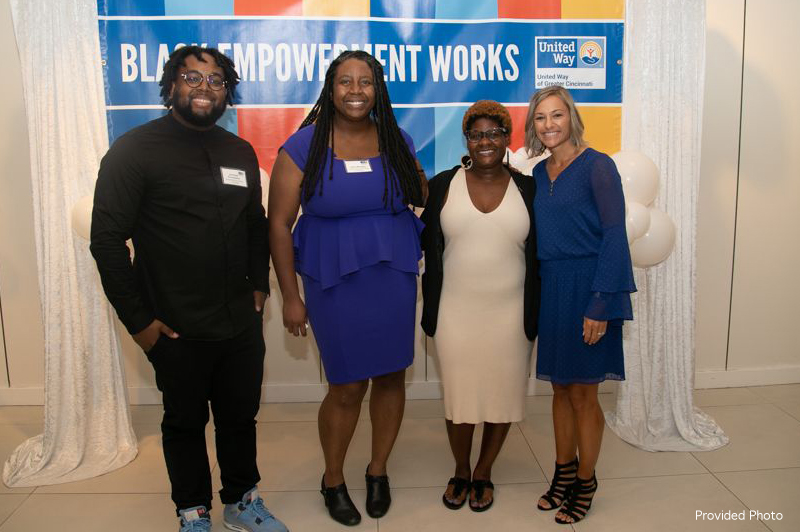
Cincinnati, Ohio – For the third consecutive year, United Way of Greater Cincinnati is giving grants to Black changemakers to fund creative ideas and impactful projects that help Greater Cincinnati communities address poverty and systemic inequality. In partnership with bi3and P&G Always, United Way has announced the investment of $1.3 million into 60 Black-led projects and programs promoting social mobility, economic prosperity, and systemic change through its Black Empowerment Works program.
The work selected will provide a range of services to improve health, education, employment, and economic well-being. The 2022-2023 class of 60 grantees includes a mix of community coalitions, nonprofit organizations, for-profit businesses, and individuals. Grants range from $10,000 to $25,000. Eighteen grantees are returning from the class of 2020 and/or 2021 to continue growing the capacity of their work. The full list of recipients is listed below and can be found, along with more information about the program, at uwgc.org/bew.
“We are proud to continue our deep commitment to collaborating with organizations and leaders who are closely connected to the community,” said Moira Weir, president and CEO of United Way. “We are incredibly thankful to partner with the changemakers carrying out this work and those making positive impact throughout Greater Cincinnati.”
Jena’ Bradley, director of Black-led Social Change at United Way, said one key to the Black Empowerment Works grantmaking process is the community involvement. A panel of 45 community reviewers spent a combined 1,300 hours selecting organizations they believe exemplify the mission of Black Empowerment Works.
“We can’t thank our amazing community reviewers enough for the work they put into making these selections,” said Bradley. “Without their hard work and belief in the Black Empowerment Works program, none of this would be possible.”
Greater Cincinnati has a wealth of Black social changemakers, as indicated by the 215 applications received. Investing in more Black-led ideas, programs and projects brings:
Greater diversity of ideas and solutions.
A better understanding of the unique strengths, opportunities and challenges within communities, and
Collaboration on strategies that work to reduce racial disparities in outcomes.
Since its inception in 2020, the Black Empowerment Works program has invested $2.9 million in 100 Black entrepreneurs and social changemakers. Still, support goes beyond the grant. Grantees connect with other beneficial resources to support their ideas, including having access to volunteers and mentors, trainings and opportunities to share their knowledge with others.
Visit the United Way of Greater Cincinnati website to see a full list and descriptions of each program or by clicking here. View photos from the event here.
Cincinnati, Ohio – The horticulture team at the Cincinnati Zoo & Botanical Garden has been waiting and watching the rare corpse flower that arrived three years ago from the Chicago Botanic Garden for signs that it’s ready to bloom. What they’ve seen in the past few days gives them hope that the horrible smell, described as being similar to a decaying corpse, and fantastic flower that they’ve been waiting for could be coming soon!
“We’ve all heard how bad the smell is, but it’s just one of those things that you want to experience in order to describe it in your own words,” said Cincinnati Zoo horticulturist Jerome Stenger. “And the fact that the occurrence is so rare, sometimes just blooming once in a decade, makes everyone want to see it.”
The smell only lasts 24 – 36 hours, which should be bearable even to the people who work in the Zoo’s education building where Morticia, the name that Cincinnati Zoo social followers picked for the plant, is located.
“The odor, color, and temperature, which can rise to 98 degrees, of the flower are meant to attract pollinators that are attracted to dead animals,” said Stenger. “Since the Discovery Forest greenhouse isn’t crawling with dung beetles and flesh flies, we are trying to get our hands on some pollen so we can help Morticia pollinate!”
Once the flower has bloomed and pollination is complete, the flower collapses. In addition to its unique, sporadic, and stinky blooms, the plant itself can grow to a massive 15 feet tall with leaves as big as 13 feet wide.
Visitors are welcome to come see Morticia in the Zoo’s Discovery Forest. The Zoo, and Discovery Forest, are open daily from 10 AM to 5 PM during the Summer Adventure presented by Cincinnati/NKY Honda Dealers. Members may enter at 9 AM. There is no additional charge to see this amazing plant.
Rhinegeist and Colemine Records are teaming up to host an afternoon of top notch vinyl sales, swapping, and spinning in the Taproom! Guests can shop thousands of vinyl records and other sundries while getting to know other vinyl enthusiasts and experiencing the sounds of Colemine Records. We will feature vendors from all over the region set up festival-style throughout the space.
Over a dozen vendors slinging new and used vinyl, food from Mazunte, and our very own Terry Cole aka Leroi Conroy spinning records all afternoon long.
Be sure to set a calendar reminder right now, and come hang with us on the 23rd!
Plaid Room Records is in the Historic District of Loveland, Ohio
Family owned and completely independent, we are proud to offer personal, high quality service along with a vast selection of over 45,000 new and used LPs!
Hit Terry or Bob up anytime and they’ll be glad to help. If you have any questions about an order, record availability or anything else, just call us. There are humans that will answer the phone and talk to you!
For order inquiries via email, PLEASE email the following address for the fastest response:
Kickoff: 3 p.m. Eastern. Television: The game will air nationally on CBS-TV. In the Bengals’ home region, it will be carried by WKRC-TV (Ch. 12) in Cincinnati, WHIO-TV (Ch. 7) in Dayton and on WKYT-TV (Ch. 27) in Lexington. Broadcasters are play-by-play announcer Jim Nantz and analyst Tony Romo, with sideline reporters Tracy Wolfson, Evan Washburn and Jay Feely.
Radio: The game will air on the Bengals Radio Network, led by Cincinnati flagship stations WLW-AM (700), WCKY-AM (ESPN 1530; all sports) and WEBN-FM (102.7). Broadcasters are Dan Hoard (play-by-play) and Dave Lapham (analyst).
The game also will air nationally on Westwood One Radio. Broadcasters are Ian Eagle (play-by-play), Tony Boselli (analyst) and Ross Tucker (sideline reporter).
Setting the scene: The Bengals on Sunday travel to Arrowhead Stadium to take on the two-time defending AFC-champion Kansas City Chiefs, in what will be Cincinnati’s third-ever appearance in an AFC Championship Game. Cincinnati won both of its previous AFC Championship appearances — vs. San Diego in the 1981 season, and vs. Buffalo in the 1988 season.
The Bengals earned their spot in the NFL’s final four in thrilling fashion on Saturday, when rookie K Evan McPherson nailed a 52-yard FG as time expired in the Divisional Playoff to give Cincinnati a 19-16 win over top-seeded Tennessee.
“It feels great,” said Bengals head coach Zac Taylor. “This is the expectation for these guys — it’s not too big for them.
“I know we haven’t been here before, but it sure feels like we have. You see the attitude of the team and the confidence that they have, that we’re going to find a way to win. You just can’t replace the confidence that these guys have earned in themselves.”
The contest began in what turned out to be fitting fashion — with a key defensive play that swung the game’s momentum. On the very first play from scrimmage, Titans QB Ryan Tannehill faked a handoff to star RB Derrick Henry, who was playing for the first time since Halloween (foot injury), and then fired a pass over the middle that was intercepted by Bengals S Jessie Bates.
“They were in a ‘pass-alert’ formation that we talked about all week,” Bates said. “Honestly, Tannehill just stared it down, and I knew exactly what was going on. We talked about coming out fast with a sense of urgency, and it couldn’t have worked out any better.
The Bengals took over possession at the Titans’ 42-yard line, however the offense managed just a FG. Cincinnati went on to add two more FGs in a first half dominated by defense, and took a 9-6 lead into the locker room.
The Bengals received the opening kickoff of the second half and quickly jumped ahead 16-6, thanks to a nine-play, 65-yard drive that HB Joe Mixon capped with a 16-yard TD run. The Bengals have now come away with points on their first offensive drive of the second half in 14 of 19 games this season (six TDs, eight FGs). During the regular season, Cincinnati’s 56 combined points on the first possession of the second half were second-most in the NFL.
“We called ‘stretch right,’ and all of a sudden the linebackers and safety were flowing hard over the top,” Mixon said. “I put my toe in the ground, then I put my toe in the ground again, and I just (saw) the backside was like open like the Red Sea. I was fortunate enough to find daylight, and everything worked out.”
On the ensuing possession, Tennessee turned to its fifth-ranked rushing attack and marched 66 yards on just four runs to reach Cincinnati’s nine-yard line. But on the fifth play of the drive, Bengals nickel CB Mike Hilton batted a screen pass from Tannehill into the air and came down with an INT.
“We had a lot of jokes about Mike getting caught after that pick,” Bates said with a laugh. Hilton returned the INT 19 yards before being caught by Tannehill.
“We were trying to line up the order of who had the worst returns this year, and I think Mike’s pretty much at the top of that list right now (laughs). But he made a hell of a play. You jump in the air and you track the ball — I think he was almost maxed out at that point, so we can’t complain too much about that.”
After a Bengals punt, the Titans again marched downfield but mustered only a 34-yard FG that cut the margin to seven points. On the ensuing possession, a pass from QB Joe Burrow bounced off the hands of HB Samaje Perine and into the grasp of Titans S Amani Hooker. The INT was Burrow’s first since Week 13 against the L.A. Chargers, and broke a string of 209 consecutive passes (regular season plus playoffs) without a pick — the second-longest such streak in team history.
Tennessee took over possession on Cincinnati’s 27-yard line, and two plays later Tannehill found WR A.J. Brown for a 33-yard TD that knotted the game at 16. Entering the game, Cincinnati had allowed just one third-quarter TD in its previous nine contests. It was also just the fourth TD allowed by Cincinnati’s defense in the 19 combined possessions (regular season plus playoffs) immediately following a Bengals turnover.
After scoring a combined 17 points in the third quarter, neither team’s offense found much traction in the final period. Cincinnati’s first two possessions in the fourth quarter both were thwarted by third-down sacks of Burrow. The Titans ended the day with nine total sacks of Burrow, the most takedowns of a winning QB in NFL postseason history.
“He’s the toughest guy in the league,” DT D.J. Reader said of Burrow. “He’s a super tough guy, and he’s gritty. I love that about him. He doesn’t complain, he just goes out there and does his job. I really appreciate Joe.”
But the Bengals’ defense put together an impressive showing of its own. Henry was held to just 3.1 yards per carry on 20 attempts, and most notably was stopped for a two-yard loss by LB Logan Wilson on a fourth-and-one play mid-way through the fourth quarter. But while Bates, Hilton and Wilson made the highlight plays of the day, there was little question among players and coaches about the defense’s key component.
“D.J. Reader was unbelievable,” Taylor said on Sunday. “He was Superman, quite frankly.
“You see him make some plays during the game, but then you really dial in and watch the tape, and you can further understand the impact he had on the game. Overall, you can point out every single player on defense making some key plays in that game. But if you’re going to single out one guy for their performance, D.J. Reader is certainly deserving of that.”
With the score knotted at 16, Tennessee took over possession just before the two-minute warning and looked to move into range for a potential game-winning FG. But Reader yet again stopped Henry for no gain, and then Tannehill threw a five-yard completion as the Titans seemed content to drain nearly all of the remaining clock. On the next play — a third-and-five with 28 seconds remaining — Bengals CB Eli Apple tipped a pass into the air, and a leaping Wilson came down with one of the most significant INTs in team history.
This week’s AFC Championship features a battle between two of the NFL’s top young players in Burrow and Chiefs QB Patrick Mahomes. This will be Mahomes’ fourth consecutive AFC Championship game (all at home), while Burrow last week became the first QB picked No. 1 overall to reach a conference title game within his first two seasons.
The game is also a rematch of a dramatic Jan. 2 meeting between the two teams, which ended in a 34-31 Bengals win at Paul Brown Stadium. That contest was also decided by a McPherson walk-off FG, and it clinched the AFC North division title for Cincinnati. But among Bengals fans, it is perhaps best remembered for Chase’s 266 receiving yards, which set both a Bengals single-game record and the NFL’s single-game rookie record.
“I’m tired of the underdog narrative,” Burrow said after the Titans game. “We’re a really, really good team. We’re here to make noise, and teams are going to have to pay attention to us. We’re a really good team with really good players and coaches, and we’re coming for it all.”
The AFC West champion Chiefs finished the regular season 12-5, and earned the No. 2 seed in the AFC playoffs. They opened postseason play with a 42-21 home win over Pittsburgh in the Wild Card Playoff. Then, in Sunday night’s Divisional Playoff against Buffalo, they scored a walk-off TD in overtime to win 42-36 at Arrowhead.