Loveland, Ohio – The Loveland Police Department has placed automated license plate readers throughout the city to capture the “fingerprint” of vehicles.
According to City Hall, the police will utilize the “latest technology to detect and deter criminal activity” and are using Flock Safety Automated License Plate Readers.
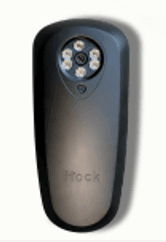
Automated License Plate Reader (Photo provided by City of Loveland)
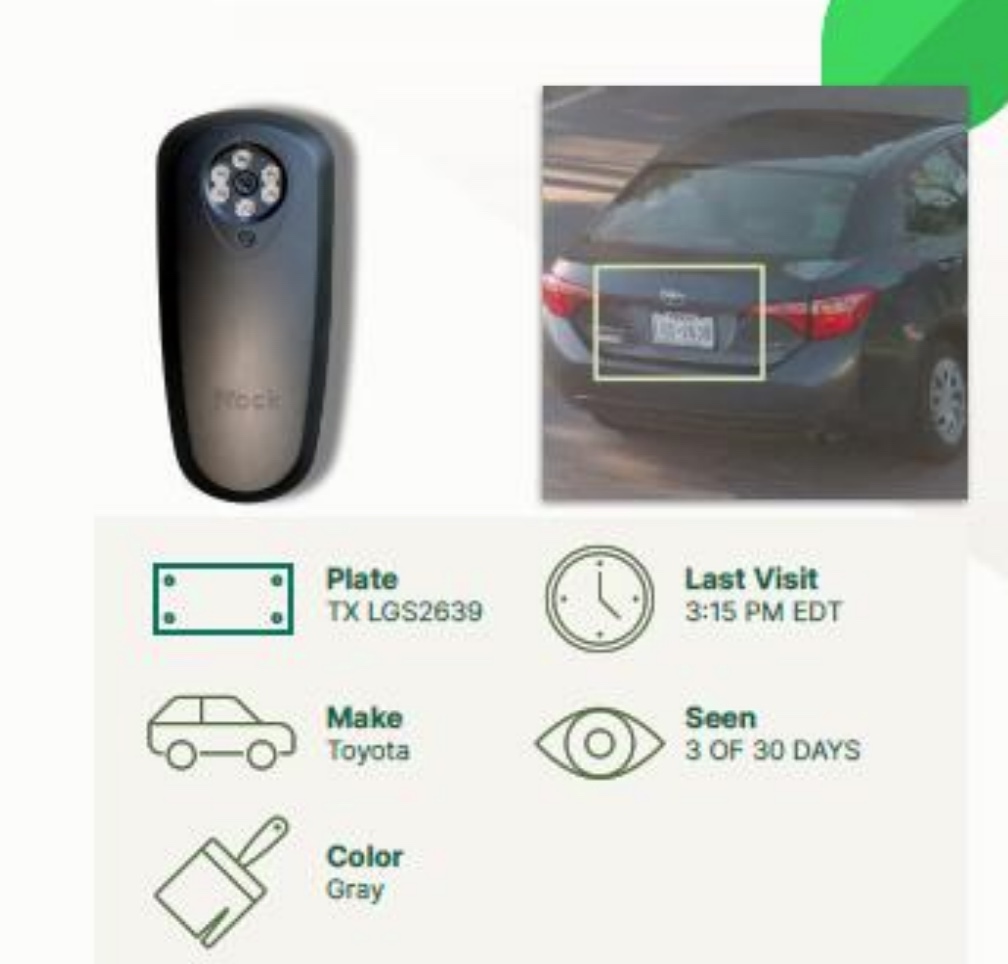
In a news release, City Hall says that approximately 70% of all crimes involve a vehicle. “With the readers, a vehicle fingerprint can be captured: the license plate, make, model, color, and number of times the vehicle has been seen. Alerts are sent to officers for cars wanted in connection with crimes, stolen vehicles, wanted persons, and Amber/Silver Alerts for missing persons. Investigators can use Flock data (stored for 30 days) to identify cars used in crimes.”
The City says the devices will not be used for traffic enforcement. Alerts are sent to officers for cars wanted in connection with crimes, stolen vehicles, wanted persons, and Amber/Silver Alerts for missing persons.
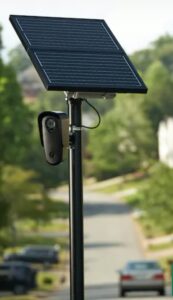
Flock Safety Automated License Plate Reading Camera (Image by Flock Safety)
The City gives this example of how the Flock data could be used: “In 2022, a senior resident with memory issues drove away from home. The family contacted LPD to report a missing person. A search of Flock could have provided a direction of travel. The resident’s vehicle could have been entered into Flock’s database, and officers would be alerted if/when it passed by any Flock license plate reader nationwide.”
Below is what their “Transparency Portal” says about what data will be maintained and its current usage.
“Loveland OH PD uses Flock Safety technology to capture objective evidence without compromising on individual privacy. Loveland OH PD utilizes retroactive search to solve crimes after they’ve occurred. Additionally, Loveland OH PD utilizes real time alerting of hotlist vehicles to capture wanted criminals. In an effort to ensure proper usage and guardrails are in place, they have made the below policies and usage statistics available to the public.”
What’s Detected: Vehicle Fingerprint
License Plates, Vehicle Make, Vehicle Color, Last Visit Date / Time, Number Of Days Seen
What’s Not Detected
Facial recognition, People, Gender, Race
Acceptable Use Policy
Data is used for law enforcement purposes only. Data is owned by Loveland OH PD and is never sold to 3rd parties.
Prohibited Uses
Immigration enforcement, traffic enforcement, harrassment or intimidation, usage based solely on a protected class (i.e. race, sex, religion), Personal use
Access Policy
All system access requires a valid reason and is stored indefinitely.
Hotlist Policy
Hotlist hits are required to be human verified prior to action.
Data retention (in days)
30 days
Number of owned cameras
6
Vehicles detected in the last 30 days
163,191
Searches in the last 30 days
31
Hotlists Alerted On
National Crime Information Center (NCIC) which includes vehicles wanted for crimes, missing and wanted persons, AMBER & Silver Alerts
Loveland, Ohio – The loss of positive pressure within a distribution water pipe may allow disease-causing microorganisms from surrounding soil or groundwater to be drawn into the pipe that feeds your home or business.
The City of Loveland recently issued a Boil Water Advisory for portions of Downtown after a water main break, however, did not simultaneously inform residents or businesses what it meant, what they needed to do, or why they should take important steps to protect their health or the health of customers and employees. Nor did the City tell anyone what risk they were taking if they used the possibly contaminated water coming from the tap.
“With little to no in-house water treatment, a lot of local restaurants are forced to close for the duration of the advisory. The ones that choose to remain open must bear a significant cost of substitution, for example, by using bottled water. As soon as a BWA is issued, every equipment utilizing water, from the soda machine to the ice machine, needs to be thoroughly cleaned out and all pre-made product from such machines needs to be thrown away.”*
“Distribution systems are usually under enough pressure so that any cracks let clean water out (at a cost to taxpayers), but prevent dirty water from getting in. When water mains break, however, system pressure drops—and those cracks allow contaminants like viruses to seep in. Water main breaks are thus a key vulnerability that promote waterborne disease.”**
Below is what the CDC (Centers for Disease Control) recommends when a boil water notice is issued to residents or food service facilities.
_________________________
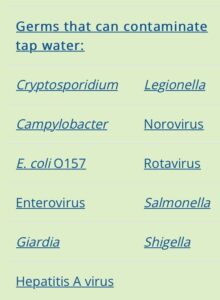
Drinking water advisories let people know that tap water could be contaminated and make them sick. Advisories tell people, schools, hospitals, businesses, and others about the situation and how to take immediate action, if necessary. Water systems and state or local agencies issue these advisories when they have concerns about water contamination.
If your local health officials issue a boil water advisory, you should use bottled water or boil tap water. This is because a boil water advisory means your community’s water has, or could have, germs that can make you sick.
Advisories may include information about preparing food, drinks, or ice; dishwashing; and hygiene, such as brushing teeth and bathing. Boil water advisories usually include this advice:
Use bottled or boiled water for drinking, and to prepare and cook food.
If bottled water is not available, bring water to a full rolling boil for 1 minute (at elevations above 6,500 feet, boil for 3 minutes). After boiling, allow the water to cool before use.
Boil tap water even if it is filtered (for example, by a home water filter or a pitcher that filters water).
Do not use water from any appliance connected to your water line, such as ice and water from a refrigerator.
Breastfeeding is the best infant feeding option. If you formula feed your child, provide ready-to-use formula, if possible.
Handwashing
In many cases, you can use tap water and soap to wash hands during a boil water advisory. Follow the guidance from your local public health officials.
Be sure to scrub your hands with soap and water for at least 20 seconds. Then, rinse them well under running water.
If soap and water are not available, use an alcohol-based hand sanitizer that contains at least 60% alcohol.
Pets can get sick from some of the same germs as people or spread germs to people. Give pets bottled water or boiled water that has cooled.
If bottled water is not available, bring water to a full rolling boil for 1 minute (at elevations above 6,500 feet, boil for 3 minutes). After boiling, allow the water to cool before use.
Boil tap water even if it is filtered (for example, by a home water filter or a pitcher that filters water).
Do not use water from any appliance connected to your water line, such as ice and water from a refrigerator.
Caring for your garden and houseplants
You can use tap water for household plants and gardens.
Guidelines for Food Service Facilities During and After a Boil Water Advisory
During a Boil Water Advisory
When a boil water advisory is issued that affects a food service establishment and the local health department does not indicate that food service establishments must close, the following precautions should be taken by food service facilities until they are notified by authorities that the advisory has ended.
General
Post signs or copies of the water system’s health advisory.
Develop a plan to notify and educate employees about emergency procedures. Food Preparation
Shut off appliances that use tap water, such as ice machines, drinking fountains, produce misters, bottled water refill machines, soft drink fountains connected to the water supply, and water dipper wells.
Discard ice and mixed beverages made with contaminated water.
Use packaged ice from approved sources.
Use bottled water, boiled water, or water that has been disinfected with bleach for drinking, food preparation, washing produce and cooking.
If possible, use disposable plates, cups, and utensils. Hygiene and Cleaning
Wash hands with soap and tap water. When you are done washing and drying your hands, use an alcohol based hand-sanitizer and let hands air dry.
Commercial dishwashers generally are safe to use if the water reaches a final rinse temperature of at least 165°F–180°F, as determined by your local or state authorities.
If you are not able to use disposable plates, cups, and utensils and do not have a dishwasher, wash dishes by hand following these instructions:
Wash and rinse the dishes as you normally would using hot water. In a separate basin, add 1 teaspoon of unscented household bleach for each gallon of warm water.
The bleach label should say that it contains 5–9% of sodium hypochlorite. Soak the rinsed dishes in the water for at least 1minute. Let the dishes air dry completely before using again.
The local health department may add requirements to protect public health during the boil water advisory, such as modifying food preparation, prohibiting menu items or closing operations. Consult with [health department contact] for specific requirements.
After the Boil Water Advisory is lifted
When a food service establishment is notified that the boil water advisory has been lifted and the drinking water supply is safe, the following actions need to be taken.
Flush pipes throughout the facility by running each faucet with cold water for [X] minutes.
Flush, clean, and sanitize appliances that use tap water (such as beverage dispensers, spray misters, coffee and tea urns, ice machines, glass washers, dishwashers) according to the manufacturer’s instructions.
Run water softeners through a regeneration cycle.
Flush hot water tanks.
Run drinking fountains continuously for [X] minutes to flush the system.
Replace and sanitize water filter cartridges according to the manufacturer’s instructions.
Take proper steps to flush ice machines by following the manufacturer’s instructions, including:
• Throw out any remaining ice.
• Flush the waterline to the machine inlet.
• Close the valve on the waterline behind the machine.
• Disconnect the waterline from the machine inlet.
• Open the valve and run 5 gallons of water through the valve. Dispose of the water.
• Close the valve.
Loveland, Ohio – City Hall has invited interested parties to attend two public hearings.
The first is on April 25 and it is about Flood Damage Prevention Regulations. The second hearing is about new proposed Outdoor Lighting Regulations and is on May 9.
[vc_row][vc_column][vc_column_text]Loveland, Ohio – Here is the list of the streets, or sections of streets that will be repaved in the city this year.
Construction is expected to begin this spring.
Sawcutting of curb sections to be replaced was scheduled to begin on March 31. On-street parking restrictions and minor traffic delays are expected, according to the City.
Apache Ct.
Bellwood Dr. (Sunrise to West terminus)
Bloomfield Ct.
Bridlespur
Cones Rd. (within City limits)
County Down Ln. (Brandywine to South terminus)
Fox Chase Dr.
High Country Ln.
Highcliff Ct.
Navaho Dr.
Oneida Dr.
Potomac Ct.
Pueblo Plc.
Rednor Ct.
Seminole Dr.
Shelburn Dr.
Silver Fox Ct.
Sioux Dr.
Sunrise Dr.
W. Main St. (Cherokee to West terminus).
Limited pavement repairs (without repaving) will also be performed on portions of Kerr Cemetery Rd.
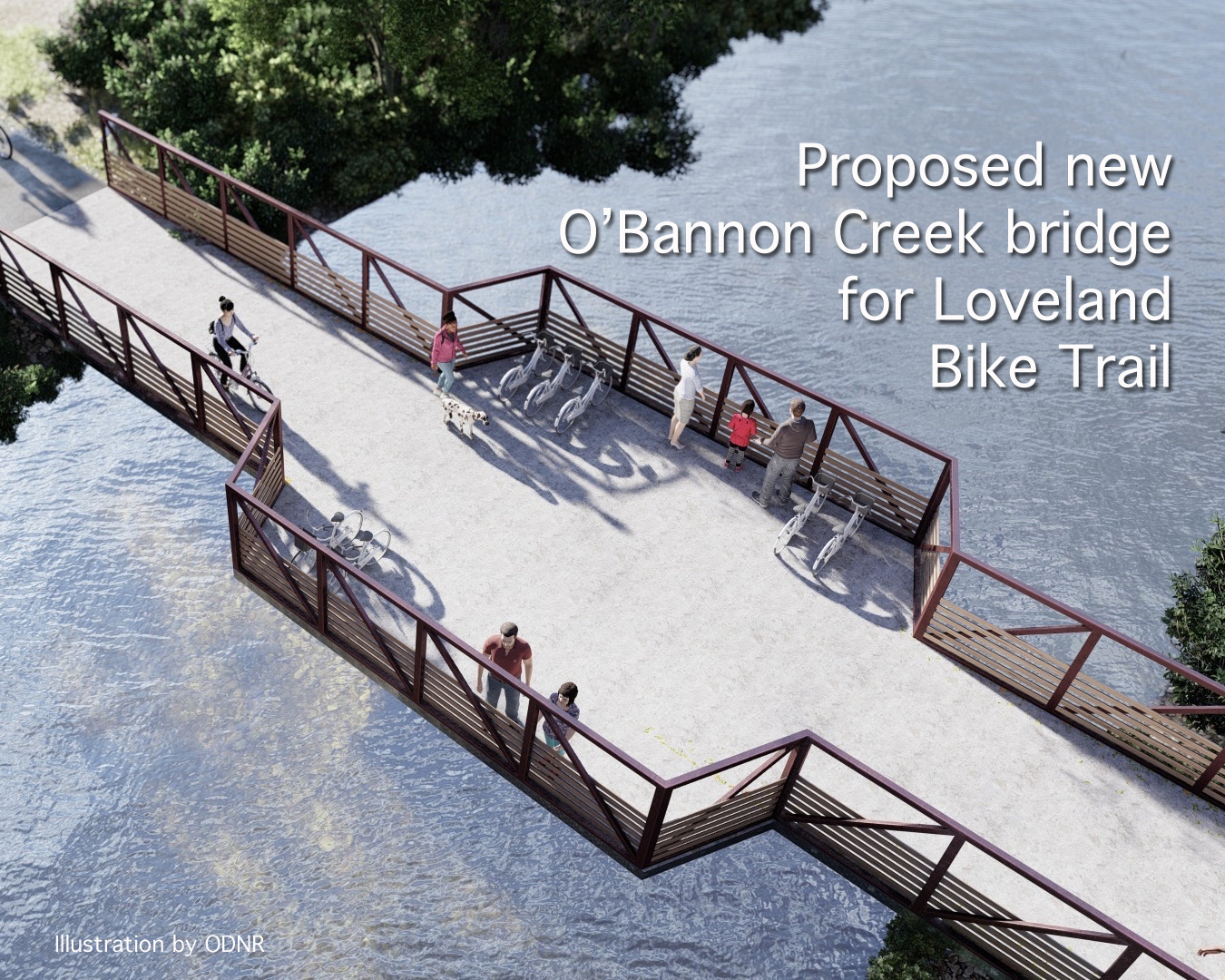
[vc_row][vc_column][vc_column_text]Loveland, Ohio – The Little Miami Chamber Alliance has announced that the closing of the Loveland Bike Trail for repairs will be delayed until October 2023.[/vc_column_text][vc_raw_html]JTNDaWZyYW1lJTIwc3JjJTNEJTIyaHR0cHMlM0ElMkYlMkZ3d3cuZmFjZWJvb2suY29tJTJGcGx1Z2lucyUyRnBvc3QucGhwJTNGaHJlZiUzRGh0dHBzJTI1M0ElMjUyRiUyNTJGd3d3LmZhY2Vib29rLmNvbSUyNTJGTE1SQ2hhbWJlckFsbGlhbmNlLm9yZyUyNTJGcG9zdHMlMjUyRnBmYmlkMDJRNUFnOFgzZnpqZW9LblFXb0VnSGdMODlHd3JFY3hXVEZvbVhhY0FUQ2E1RlZmUk1XdFZkU1QxaVg3MzZZQnpDbCUyNnNob3dfdGV4dCUzRHRydWUlMjZ3aWR0aCUzRDUwMCUyMiUyMHdpZHRoJTNEJTIyNTAwJTIyJTIwaGVpZ2h0JTNEJTIyNjUxJTIyJTIwc3R5bGUlM0QlMjJib3JkZXIlM0Fub25lJTNCb3ZlcmZsb3clM0FoaWRkZW4lMjIlMjBzY3JvbGxpbmclM0QlMjJubyUyMiUyMGZyYW1lYm9yZGVyJTNEJTIyMCUyMiUyMGFsbG93ZnVsbHNjcmVlbiUzRCUyMnRydWUlMjIlMjBhbGxvdyUzRCUyMmF1dG9wbGF5JTNCJTIwY2xpcGJvYXJkLXdyaXRlJTNCJTIwZW5jcnlwdGVkLW1lZGlhJTNCJTIwcGljdHVyZS1pbi1waWN0dXJlJTNCJTIwd2ViLXNoYXJlJTIyJTNFJTNDJTJGaWZyYW1lJTNF[/vc_raw_html][vc_column_text]Read Background
What does an AR-15 do to a human body? A visual examination of the deadly damage. – Washington Post
How to Make a Difference
Moms Demand Action is a grassroots movement of Americans fighting for public safety measures that can protect people from gun violence. We pass stronger gun laws and work to close the loopholes that jeopardize the safety of our families. We also work in our own communities and with business leaders to encourage a culture of responsible gun ownership. We know that gun violence is preventable, and we’re committed to doing what it takes to keep families safe.
After Jim Brady, a gun owner, Republican and President Reagan’s Press Secretary, survived a gunshot to his head, he and his wife Sarah, worked tirelessly alongside Democrats and Republicans to pass the bipartisan Brady Bill to ensure background checks were conducted on gun sales. But we cannot rest on that victory. America’s gun violence epidemic continues to worsen. Today, led by Brady President Kris Brown, we work with gun owners and non-gun owners and individuals of all identities and ideologies to create solutions! Together, there is nothing we cannot accomplish.
A movement of nearly 10 million mayors, teachers, survivors, gun owners, students, and everyday Americans.
Ultimately, our movement exists to end gun violence and save lives.
Thanks to the hard work of our volunteers across the country, we have won unprecedented victories against the gun lobby—at the ballot box, in state legislatures, and in corporate America.
Born out of a tragic school shooting, March For Our Lives is a courageous youth-led movement dedicated to promoting civic engagement, education, and direct action by youth to eliminate the epidemic of gun violence.
We aim to create safe and healthy communities and livelihoods where gun violence is obsolete.
From Tragedy To Transformation
Sandy Hook Promise is a national nonprofit organization founded and led by several family members whose loved ones were killed at Sandy Hook Elementary School on December 14, 2012. Based in Newtown, Connecticut, our intent is to honor all victims of gun violence by turning our tragedy into a moment of transformation. By empowering youth to “know the signs” and uniting all people who value the protection of children, we can take meaningful actions in schools, homes, and communities to prevent gun violence and stop the tragic loss of life.
[/vc_column_text][vc_video link=”https://www.youtube.com/watch?v=WXtFhqIhWwo”][vc_column_text]Access to an unsecured firearm in the home increases the risk of injury or death. Protect yourself and your loved ones by storing your guns securely – locked, unloaded, and away from ammunition. Learn more about safe gun storage practices at www.EndFamilyFire.org.[/vc_column_text][vc_video link=”https://youtu.be/UwZXj0rymOU” title=”Access to an unsecured firearm in the home increases the risk of injury or death. Protect yourself and your loved ones by storing your guns securely – locked, unloaded, and away from ammunition. Learn more about safe gun storage practices at www.EndFamilyFire.org.”][/vc_column][/vc_row]
March is National Developmental Disabilities Awareness Month
by David Miller
Dear City Hall,
I ask you to install directional signs in our Historic District that point to accessible parking spaces.
To honor National Developmental Disabilities Awareness Month I decided to revisit the draft of a proposal I worked on from 2014 until 2016. Most of the proposal was eventually approved by Loveland City Council and the Loveland Planning and Zoning Commission and is now adopted law in the City. I started the project in 2014 when resident, Amy Clawson raised concerns to me. Amy said that unfortunately, a very common problem for people who have different needs is in finding good, appropriate parking that can accommodate their physical or health issues. She pointed me to several instances of inadequate and poorly marked parking spaces in the Historic District. After taking an inventory around town, I published this story: Accessible parking; out of sight, out of mind, neglected and abused.
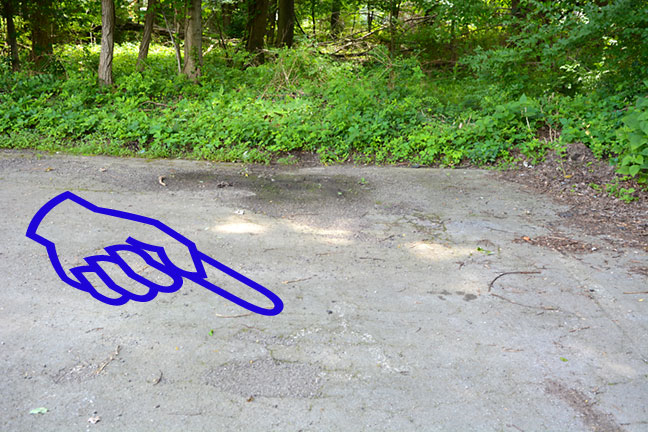
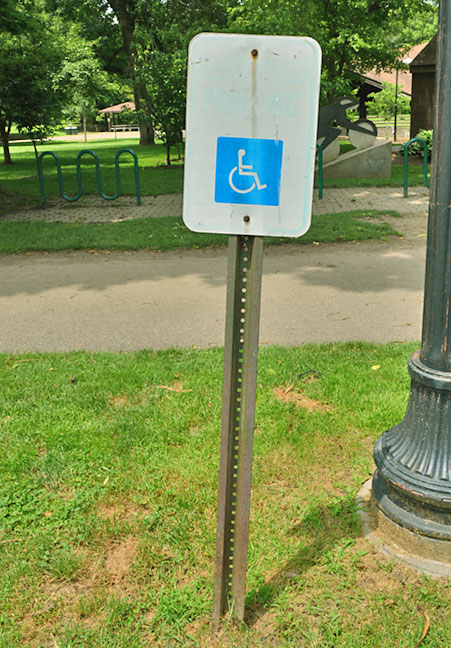
This nearly invisible accessible parking space was at McCoy Park in 2014. There should have been a pole-mounted sign and the paint on the pavement had all but disappeared.
Because most spaces in Loveland in 2016, whether on public or private parking lots were not in compliance with either Ohio or Federal law, the proposal was to mark all accessible parking spaces in the City in a consistent manner and for City Hall to choose a deliberate pathway to bring them all into lawful compliance.
This was the neglected condition of the accessible parking sign near the restroom at Nisbet Park in 2014.
It’s intuition that leads you to rather easily locate the accessible parking spaces at Kroger or shopping centers, however, since most businesses in Historic Downtown do not provide their own parking, directional signs as well as signage at the parking spots themselves are needed.
At the time I started my research, accessible parking was out of sight, out of mind, neglected, and abused. During special events, they are still mostly out of sight and mind.
I received the full support and helpful suggestions from both City Manager Dave Kennedy and City Engineer Cindy Cindy Klopfenstein as I crafted and illustrated the plan. Kennedy from his end ensured that the planning commission and city council gave careful thought to the plan and secured their approvals.
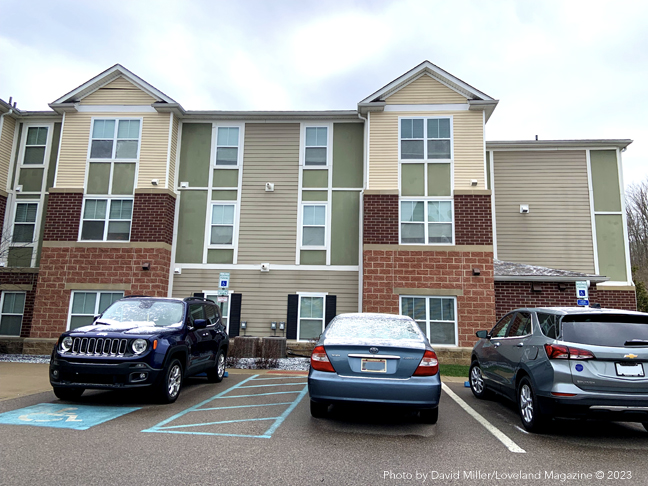
When built, the Trails at East Loveland was the first new development to fully comply with the new requirements for accessible parking spaces.
The plan as adopted requires that all new parking spaces from new development must tell the Planning and Zoning Commission how they intend to comply with the new requirements. Any repaving, recoating, or new stripping of existing parking lots must now also use the guidelines.
Also adopted at the time was a policy requirement that all applications, whether from private groups or City Hall who filled out an application for special events describe on the application how they will provide the number of accessible parking spaces based on their anticipated attendance.
The Accessible Parking Sign used by the State of New York
The original plan I proposed was to use a new universal design that at the time was being adopted around the country, but through research of Ohio Department of Transportation law, I discovered that although they were considering the new design they had not yet made it their design of choice. The newer “fluid movement” design is meant to accentuate a more positive image of accessible needs rather than an expression of one using the parking spot as being “handicapped”.
Also, one idea I had in 2016 was to have directional signs placed throughout our Downtown Historic District pointing to where a person could find accessible parking, without driving around looking for them.
Thus, in light of it being National Disabilities Awareness Month I have revisited my earlier proposal and now suggest “wayfinding” directional signs in the Historic District so people can find the hidden gems closest to where they want to go.
I propose permanently mounted signs as well as portable ones that would be brought out for special events such as Christmas in Loveland, parades, and the Independence Day event.
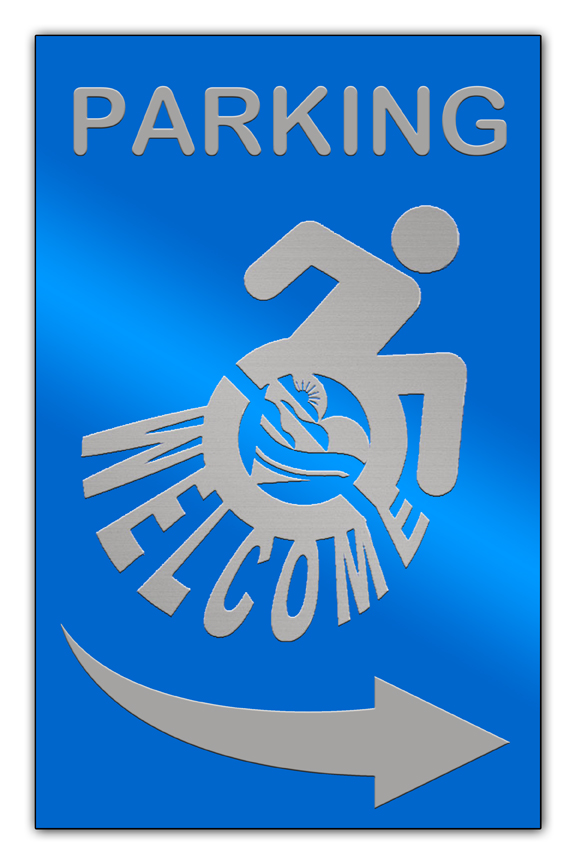
The Direction Sign I propose for Historic Downtown Loveland would tell visitors and shoppers where to find an accessible parking space and that the Sweetheart City of Loveland, Ohio is a welcoming community.
Thank you for considering my suggestion.
Best regards,
David Miller
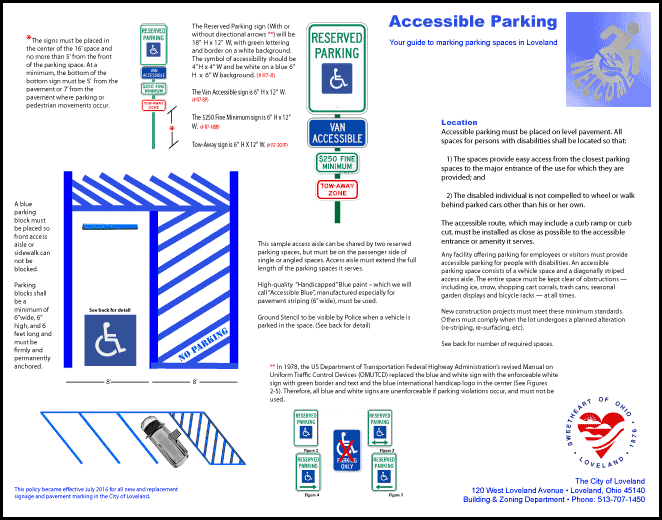
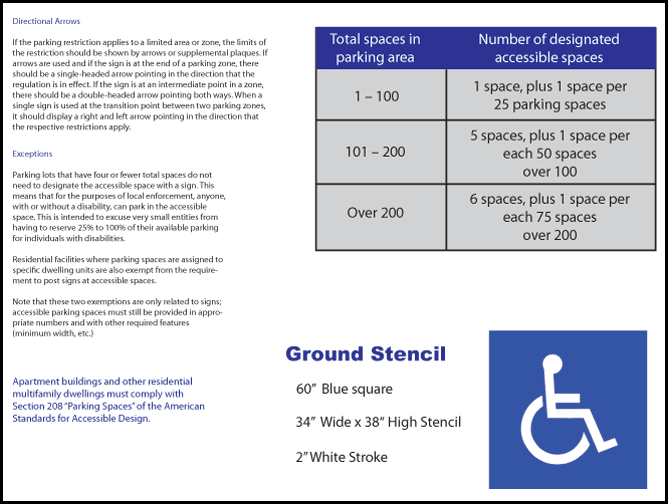
The Accessible Parking Space Guide Approved in 2016
Response to September 27th City Council Meeting Comments
A guest column by Lauren Enda
Loveland resident, Lauren Enda
At the city council meeting on September 27th, a Loveland resident voiced concern regarding an invasive removal event held at the West Loveland Nature Preserve on September 10th. In her speech, she compared the sanctioned, supported, and fully vetted work done by volunteers with hypothetical residents who may wish to rip out playgrounds and clearcut trees. Examples that she herself said were “outrageous”. After her speech, Loveland’s city officials did not reassure the resident that the city sanctioned the work, that the Nature Preserve was in safe and competent hands throughout the project, and that they were grateful for the work the volunteers had done. They remained silent on all these truths. The mayor seemed to confirm the resident’s concerns by stating, “For all the reasons you mentioned, steps have already been taken and that project has been put back where it belongs, which is Tree and Environment and that will be the only entity that will be taking those steps forward.”
Anyone listening to the speech and the mayor’s reply might be led to think the speaker’s concern was that the volunteers did something inappropriate or incorrect. No. The speaker in fact stated that the volunteers did a good job removing invasives in the Nature Preserve. The speaker’s concern is that city officials sanctioned this type of project in the first place. She asked later in her speech that the city rethink future projects like this one.
A quick call to the city manager would have informed her that city officials had already cancelled future projects, not because of the professionalism or work of the volunteers, but because the city solicitor stepped in. From the city solicitor on September 20th, “While the City appreciates the work you performed, please be advised that the City is not willing to allow… non-city contracted entity, to do further work in the West Loveland Nature Preserve. Any work performed by the City, or on the City’s behalf, must be done through a contracting process that includes certain insurance, liability and other requirements we expect of all contractors.”
In the end, by approving the project 53 man-hours of labor jumpstarted the arduous process of removing invasives from Loveland’s green spaces. Fantastic! And that is something we can all be proud of.
So, if there was a lapse in judgement it was not by the volunteers. What the volunteers did on September 10th was an act of concern and respect for Loveland’s green spaces.
To clarify things that should have been clarified at the city council meeting on the 27th, below is timeline for the event. This should clear up any remaining concerns about how the event came to be, who was involved, and who gave permission. It shows that insurance and liability issues had been handled. In the timeline are approvals from the Tree and Environment Committee, the City Manager, and the Public Works Director. There is support from Public Works in supplying tools and clearing up the cut debris and from the Marketing and Communications Coordinator for publicity.
If you are interested in joining future invasive removal days on privately-owned land, please contact me at lauren_enda@hotmail.com. The work continues!
8 July – After receiving approval from them to remove invasives in the West Loveland Nature Preserve (WLNP), the Tree and Environment Committee sent a waiver so high school students could help in the project
July – Conducted multiple dates of invasive removal in the WLNP with volunteers and members of the Tree and Environment Committee
End of July – City Manager approved the project to hire a contractor, at my own expense, to speed the clearing of invasives
1 August – Contractor insurance document was emailed to City Manager
15 August – Emailed project details to the City Manager and Public Works Director, indicating that written approval would be necessary to finalize the plans
19 August – Loveland’s Public Works Director sent email, approving the project, stating that “…this is a great project and really do appreciate your lead in this.”
21 August – Emailed Tree and Environment Committee about the September 10th date for invasive removal at WLNP
24 August – Met with invasive removal contractor at WLNP to discuss project
24 August – Received email from Tree and Environment Committee stating, “We are all working for the betterment of our environment – and that is what matters. We look at you as a hero in many ways for the way you have researched and pursued issues.”
30 August – Met with the Reforestation Program Manager at the Ohio River Foundation to discuss project
30 August – Spoke with the Director of Land Stewardship at the Arc of Appalachia to discuss project
6 September – After phone conversations with Loveland’s Marketing and Communications Coordinator, sent her event details and she posted them on Loveland’s social media; the post encouraged residents to join the event
8 September – Contract for work sent to me from contractor. I called City Manager to ask about how to proceed. He said that he does not need to see it or sign it since I am paying the contractor’s bill
8 September – Loveland Public Works brought work gloves, eye protection, loppers, and the key for the WLNP in preparation for the event
10 September – Event is held; a huge success with approximately 1000 invasive plants removed, painted with herbicide, and stacked in the manner dictated by Public Works
12 September – Public Works Department chipped all stacked invasives in the WLNP
13 September – Marketing and Communications Coordinator posted summary of the event on Loveland’s social media pages
13 September – As a show of respect for the support and encouragement from Loveland officials, I reported to city council about the event, the outcomes, and thanked the city for their help in making the project possible. The Mayor thanked me for my work stating, “Thank you Mrs. Enda. We appreciate your efforts and that of all the volunteers.” Other city members chimed in with “thanks” as well.
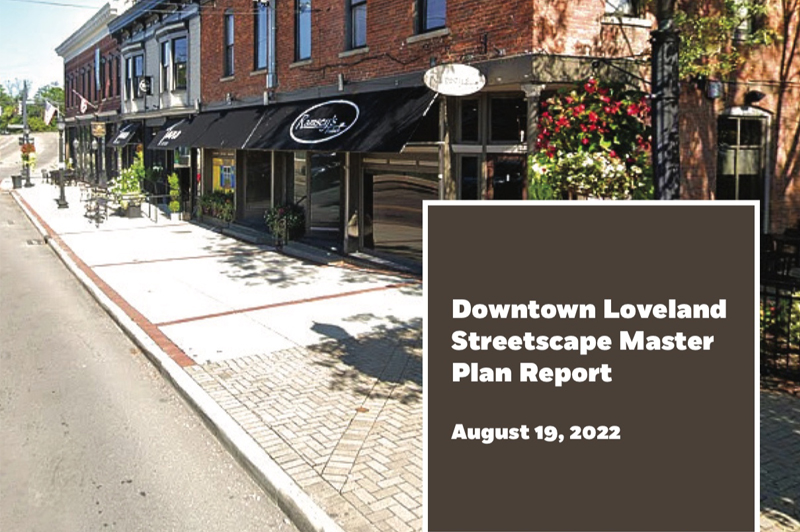
Loveland, Ohio – City Council will hold a public hearing (at or about) 7 PM in the council chambers at City Hall on September 27 to review and receive public input on a proposed Downtown Loveland Streetscape Master Plan.
The project aims to, “Create a planning document that will guide both short- and long-term infrastructure and streetscape investments in the city’s downtown business district.”
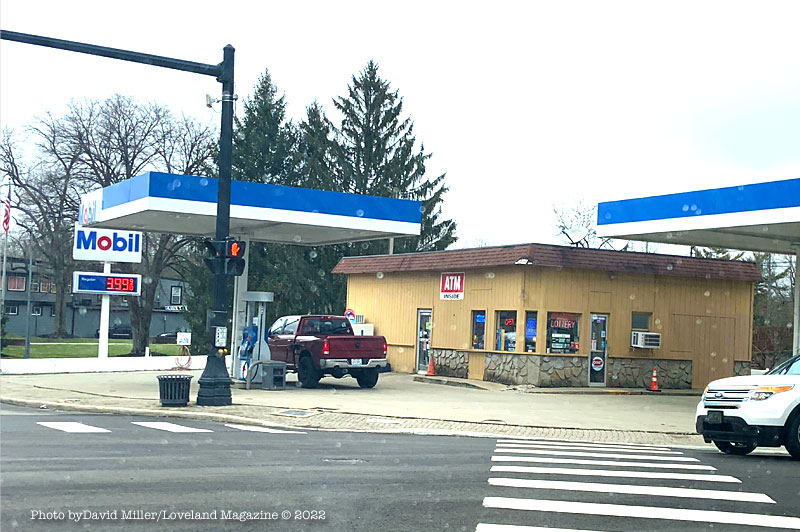
Loveland, Ohio – Last night by a unanimous “emergency” vote, City Council voted to allow City Manager Dave Kennedy to proceed with the purchase of the Mobil gas station at the corner of West Loveland and State Route 48 in Historic Downtown Loveland.
The ordinance authorizes the City Manager to execute a purchase agreement for the property located at 106 West Loveland Avenue for the construction of a turn lane and other traffic improvements.
You can read the background and details of the purchase here:
In this LOVELAND MAGAZINE TV segment, you can watch Kennedy explain why the Ordinance was declared an “emergency”, some of the financing of the project, how tax increment financing will be used, the turn lane, and a pocket park he intends to construct on the site.



 by David Miller