Tag: City Manager Dave Kennedy

  • Trick or Treat’s a go in Loveland

    Trick or Treat’s a go in Loveland

    -This story has been corrected to reflect that Halloween is on Saturday October 31.

    Loveland Police Chief Sean Rahe

    Loveland, Ohio – City Manager Dave Kennedy announced at last night’s council meeting that Halloween Trick or Treating in Loveland is a go. He said that Police Chief Sean Rahe is reviewing an advisory that was issued by the Ohio Department of health and the City will issue a statement after it has been reviewed.

    Kennedy said, “We hope to move forward full steam and certainly encourage people to follow the rules. We are not going to mess with changing times or dates.”

    Photo by Olivia Smith © 2020

    Although not announced at the meeting, Trick or Treating hours in Loveland have been between 6 and 8 PM for many consecutive years.

    Halloween is on Saturday October 31.

    DeWine recommends children wear masks on Halloween!

    In Ohio Governor Mike DeWine’s announcement of the health department orders he reminded parents that Halloween activities will be different this year than in years past. He encouraged, “parents and children to wear a mask, practice social distancing, avoid large groups, and to stay home if sick.” Dewine also said, “Final decisions on whether to hold or participate in trick-or-treating or other events should be made by local communities, individuals, and parents.”

    The state has developed guidance for Halloween and it can be found at coronavirus.ohio.gov.


    Celebrating Halloween at Re-Start Ohio

    Amid the COVID-19 pandemic, it is important to use caution and plan ahead for Halloween festivities. Decisions on whether to participate should be made by local communities, individuals, and parents/ guardians.

    Always follow current state public health orders and rules/regulations established by your local community, and check the Ohio Public Health Advisory System to determine COVID-19 risk levels in your county before making decisions about Halloween activities. Some communities may choose to cancel Halloween events, so check with local sources before making plans.

    This guidance is designed to help curb the spread of COVID-19. It will be reassessed and updated as the situation evolves and we learn more in the weeks leading up to Halloween.

    Recommended Best Practices

    General Guidance

    • It is strongly recommended that hayrides and haunted houses be canceled/avoided.

    • It is strongly recommended that Ohioans exercise caution when deciding to participate in trick-or-treating and events that put them in close contact with people outside their households. To lower risk, consider safer, socially distant ways to celebrate, such as:

    • Holding a drive-through or drive-in trick-or-treat event, with children in costume and face coverings staying in cars and collecting treats from individuals spaced at least 6 feet apart.

    • Holding drive-by costume or car-decorating contests with judges who are physically distanced.

    • Leaving treats for friends and neighbors.

    • Decorating your home and hide treats as an alternative to trick-or-treating.

    • Holding costume parties or pumpkin carving events or contests online, such as by video conference.

    • Do not hold large in-person Halloween parties. If holding smaller parties, limit attendance to 10 or fewer people and hold the event in an outdoor area where social distancing is possible. Avoid activities, such as bobbing for apples, that foster the spread of infection.

    • Always wear a face covering and stay 6 feet away from people who are not from your household, whether trick-or- treating, passing out treats, or attending attractions or events. Stay home if you are sick. (NOTE: Face coverings should never be placed on children younger than 2 or anyone who cannot easily remove them.)

    • Carry hand sanitizer and use it often, especially after coming into contact with frequently touched surfaces and before eating candy.

    • Select events/attractions that are held outdoors and allow attendees to stay in their cars (such as drive-through event with displays) or socially distance. Avoid events that involve being crowded in a small area or coming into contact with/being touched by others.

    • Consider the people in your household who may be at greater risk of complications if COVID-19 is brought into the home, such as those with certain health conditions, women who are pregnant, or older family members.

    For Parents/ Guardians

    • If taking your children trick-or-treating, limit the number of houses you visit and ask your children to stay as far from treat-givers as possible. For small children, consider holding the bag for them.

    • Wipe off candy wrappers with sanitizing wipes when you arrive home. (NOTE: Never wipe unpackaged food with wipes.) • Allow children to eat only factory-wrapped treats. Avoid homemade treats made by strangers.

    • If your child is at greater risk of complications from COVID-19, contact your doctor before allowing participation in Halloween activities.

    For Community Members

    • For trick-or-treating, reach out to neighbors to discuss ways to ensure 6-foot social distancing, how candy can most safely be distributed, and the need for face coverings.
    • Refrain from having children select their own treats from a bowl/common container or set up a hand-sanitizing station. Consider placing treats on porch steps or a table in the driveway with a sign asking children to take only one. Or use other creative ways to distribute treats, such as using a candy “slide” made of PVC pipe, or hanging treats from a wall or fence.
  • Parking garage planning moves forward

    Parking garage planning moves forward

    Loveland, Ohio – City Manager Dave Kennedy announced last Friday that the city received notification that it’s Appalachian Regional Commission (ARC) pre-application for $250,000 of grant funding for the downtown parking garage, was ranked as the #1 priority project within the Ohio Valley Regional Development Commission. With this ranking, the city has been invited to submit a full application.

    Previously, the city’s grant application for the downtown parking facility was submitted to the Economic Development Administration (EDA). The total amount requested was $2,831,835.

    On August 25, Kennedy recommended that Council authorize staff to move forward with a downtown parking fee study at a cost of $16,000. The study would inventory existing parking and the proposed parking facility. He noted that Desman Design Management would use the occupancy counts to identify peak parking needs for weekdays and then evaluate the differences in seasonal variations, summer, and weekend demands. They will identify and recommend street and lots for paid parking and recommend parking rates. The payment was approved by Council.

    Read more about the planned parking garage in Historic Downtown Loveland:

  • 32 unit condo project sent back to P&Z

    32 unit condo project sent back to P&Z


    New public hearing set for September 1

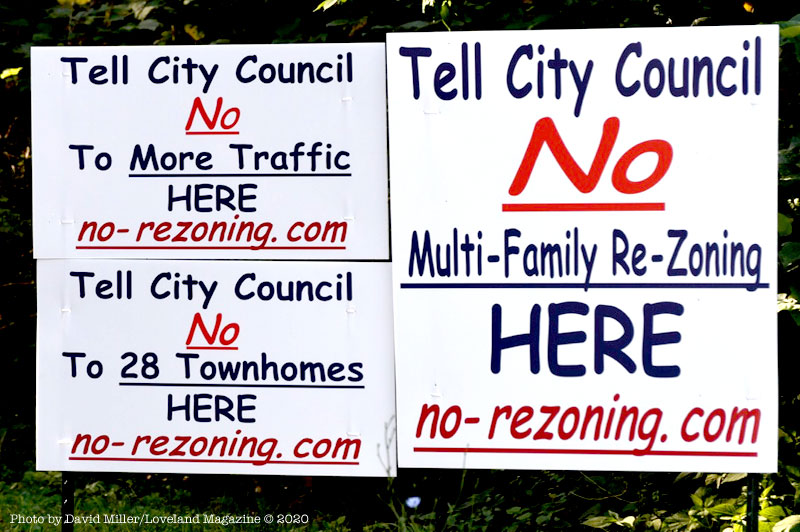
    Loveland, Ohio – “ We’re approaching a traffic nightmare,” resident Courtney Hauck told City Council during open forum at their meeting on August 11. Hauk lives in a restored, historic Victorian home on State Route 48 (North Second Street) in North Loveland across the street from where Zika Homes hopes to build 28 condos.

    Hauck then proceeded to outline sections of the zoning code that he believes should prohibit the development. He believes that the Planning and Zoning Commission “erred” when they recommended rezoning the land from medium density to multifamily use.

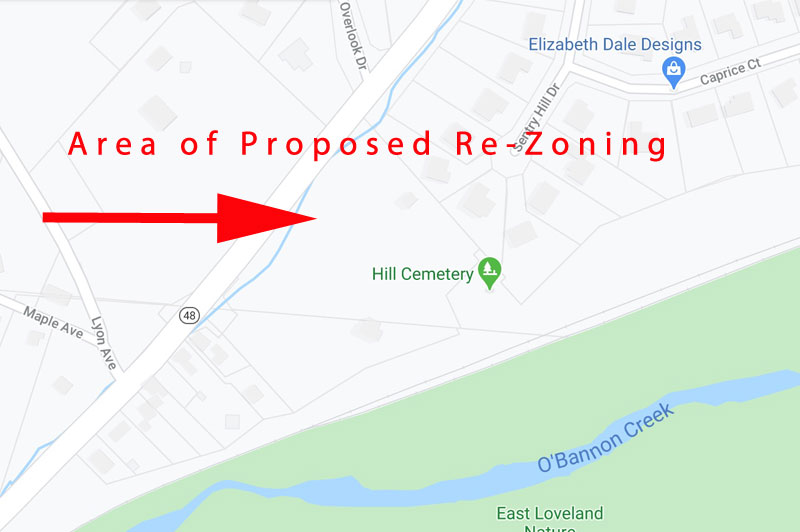
    An application has been submitted on behalf of Joe Farruggia with Zicka Homes to re-zone property off North Second Street (St. Rt. 48) south of the Sentry Hill subdivision with the potential use to build a 28-unit condominium development. The area consists of approximately 5.529 acres of undeveloped land.

    cccc

    After a public hearing, the Planning and Zoning Commission, on July 21, with a 3 to 2 split-vote sent the proposal to City Council for a final decision. Assistant City Manager Tom Smith in recommending the zone change at the time, told the Commission, “It is the opinion of City staff that the proposed rezone would be consistent with the recommendations of the Downtown Strategic Plan, surrounding land uses, and poses very little significance in the disparity between the two zones in question. Therefore, City staff dos not believe that the integrity of the code, surrounding land uses, nor their density requirements will be jeopardized with regards to the applicant’s request for rezone.”

    Hauck also told City Council that a home in the adjacent Sentry Hills subdivision recently sold for $880,000 and suggested that Zika should build high-end single-family housing that would further enhance the neighboring home values – instead of lowering them. He said that Zika was given a variance in 2017 for single family homes on the property, “But apparently decided they could not make enough money so came back with a far more profitable plan.” Hauck also expressed concern that access to the cemetery on the property promised by Zicka is not adequate because it would be too narrow for burials to take place there.

    A few minutes later during the August 11 Council meeting City Manager Dave Kennedy recommended that the request be removed from the Council agenda and recommended a motion to send the application back to the Planning and Zoning Commission so they can obtain additional information as to how the project would meet the requirements of the code.

    Kennedy said the project was not “fully vetted” from a zoning code standpoint by the Commission and he thought it best that it go back and be reevaluated. Kennedy said that he shared some of the same concerns regarding complying with the requirements of the code that Hauck expressed a few moments before.

    Both Hauck and Kennedy cited Section 1115.06 of the code and the requirements Zicka must meet before the land can be re-zoned for more intense land use.

    Section 1115.06: STANDARDS FOR ZONING MAP AMENDMENTS

       (a)    Recommendations made only by the Planning and Zoning Commission shall be considered for map amendments. All recommendations by the Planning and Zoning Commission for zoning map amendments shall be consistent with the City’s adopted plans, goals, and policies and with the intent of this Zoning Code.

    A.   Prior to making a recommendation on a proposed rezoning, the Planning and Zoning Commission shall make a finding to determine if the following conditions exist.  No rezoning of land shall be approved prior to specific documents finding at least one of the following:

             1.   There has been a change in demand for land which alters the information upon which the zoning map is based. A study indicates that there has been an increase in the demand for land in the requested zoning district.  The study shall provide a rational basis for indicating why a change in the zoning map is warranted.

             2.   Proposed uses cannot be accommodated by sites already zoned in the City due to lack of transportation or utilities or other development constraints, or the market to be served by the proposed use cannot be effectively served by the location of the existing zoning district.

             3.   There is an error in the Code text or zoning map as enacted.

             4.   The City of Loveland’s current Comprehensive Master Plan specifies a different land use for the subject property other than that which is specified on the current zoning map.

    City Council voted unanimously to send the condo proposal and re-zoning to multi-family use back to the Commission.

    There, the process starts over again with a Public Hearing on September 1 at 7 PM at City Hall.

    Concerns about increased traffic on St. Rt. 48 and gridlock going into Historic Downtown are the most often cited problem immediate neighbors have expressed about changing the land use to multi-family.

    Hauck ended by saying he didn’t think the Zika proposal was the best project in the world and he would like to see the area remain single-family zoning.

    Previous stories about the condo proposal:


    You can watch video of residents speaking against the re-zoning during the July 21 public hearing at the Planning and Zoning Commission and watch the developer defend his proposal.

    https://www.youtube.com/embed/UHAN-3CDklc
    https://www.youtube.com/embed/vrktFHCkOCE
    https://www.youtube.com/embed/rGVxq0Mf608
    https://www.youtube.com/embed/uoYi5ZM7B20
  • Old storm sewer causes sink holes in local neighborhood

    Old storm sewer causes sink holes in local neighborhood

    by Tom Vargo

    Dear Loveland Magazine Reader,

    Let me start by saying my family and I have been residents of Loveland for over 25 years. Our children have gone through and graduated from the Loveland School System. Of all the areas we looked at when we moved here from Columbus, we felt at home in Loveland. Until recently.

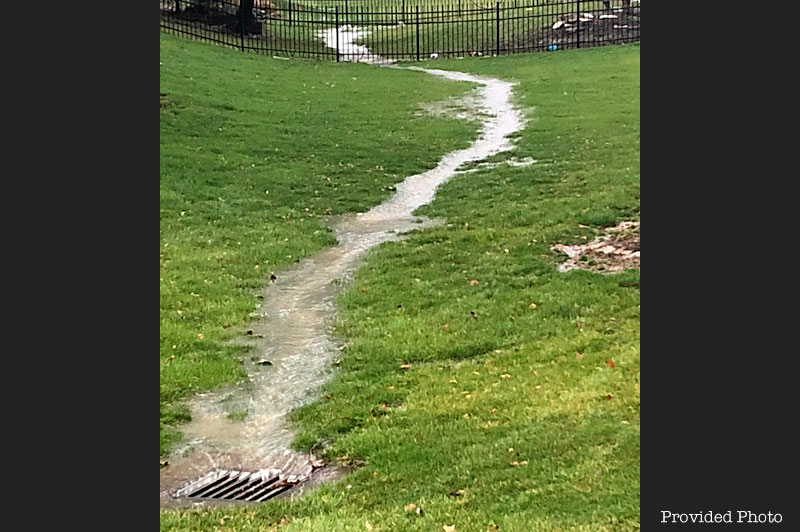
    There is a storm sewer line that runs between mine and my neighbor’s house. The line sits equally on both of our properties.  This storm sewer takes the rainwater from a great many homes around us and runs it out to the main sewer in the street.

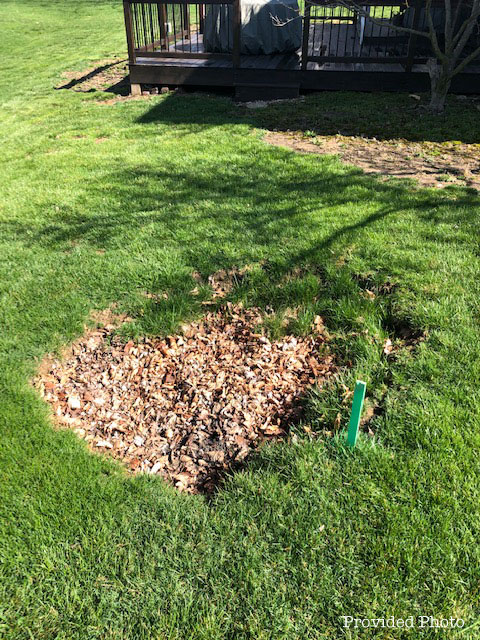
    Over the years, the storm sewer has come apart and has started to cause a large sinkhole between the 2 houses. 
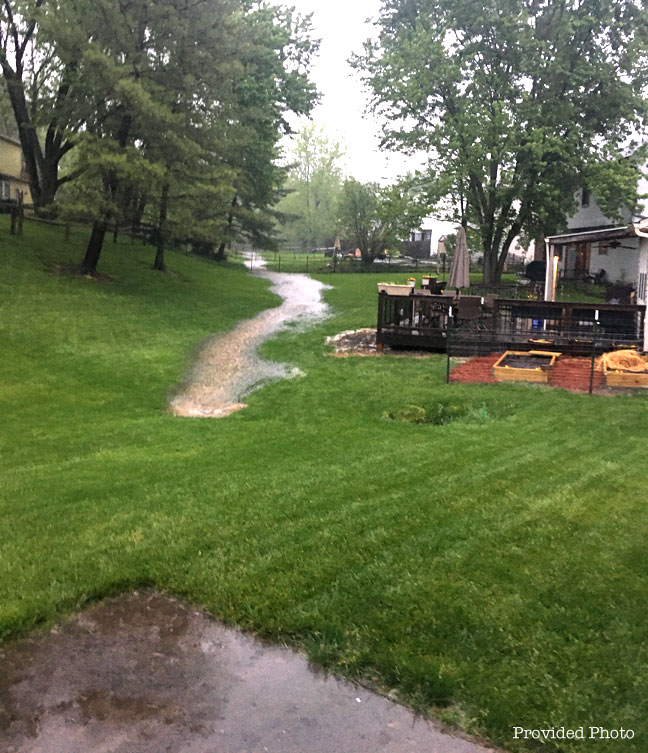
    Not only is this an eyesore but it is extremely dangerous.

    Now we have 2 additional sinkholes starting on the sewer line. We have had a company come out and run a camera through the line and we can see where the pipe has come apart and water is leaking through.

    My neighbor has reached out to the City of Loveland and had some communications with City Manager Dave Kennedy about this issue.  During a phone call, Mr. Kennedy agreed with my neighbor that we have a problem and the city should look into the issue. In fact, Mr. Kennedy suggested we meet and discuss the problem in person.

    Under a prior City Administration when my neighbor called and complained about the other sinkholes appearing in his yard, the City sent out a crew to fill in the holes. So you see, this is not our first time reaching out to them on this matter.

    My neighbor did receive an email back from Mr. Kennedy stating that since the storm sewer is on a “Private Easement” the repair is not the responsibility of the City of Loveland. 

    This property was surveyed way before we moved in. So we had no input into the private vs public easement classification. Nor would we know the difference. We are not surveyors or lawyers. 

    There are seven other storm sewers in our subdivision and only two are private. The other five are public and the city takes care of them.

    This is my opinion is an outrage. How can some surveyor 30-40 years ago arbitrarily pick a description and the City let it stand? Do not the City’s past repairs indicate that they felt the problem belonged to them in the first place?

    When we have reached out to Mr. Kennedy to meet and discuss, we have not received a response back. Again this is an outrage.

    To anyone living currently in Loveland and anyone planning on moving to Loveland, I say take a good hard look at your decision.  The city government has no problem taking your tax dollars but when you need their help, they are nowhere to be found. 

    It makes you wonder why anyone would want to live here in the first place.


  • On again off again parking garage is ON AGAIN

    On again off again parking garage is ON AGAIN

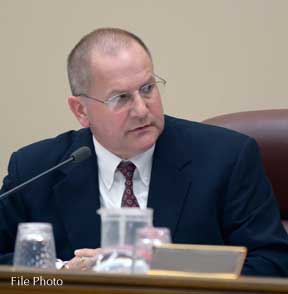
    City Manager Dave Kennedy File Photo

    Loveland, Ohio – In a June memo to City Council, City Manager Dave Kennedy said that the COVID-19 pandemic has not dampened the need for a municipal parking garage in Historic Downtown. Because of budget concerns and a possible unknown income shortfall Kennedy had previously put on hold the engineering expenditure for the project and the engineering and design of the downtown parking facility was temporarily suspended.

    Kennedy’s June report stated, “Meanwhile, parking needs in the city continued to expand and availability of potential funding sources for the project came to the city’s attention.” Kennedy further explained, “With the aforementioned, it was time to request the engineering and design team for the project, to prepare a final cost estimate, including civil engineering.”

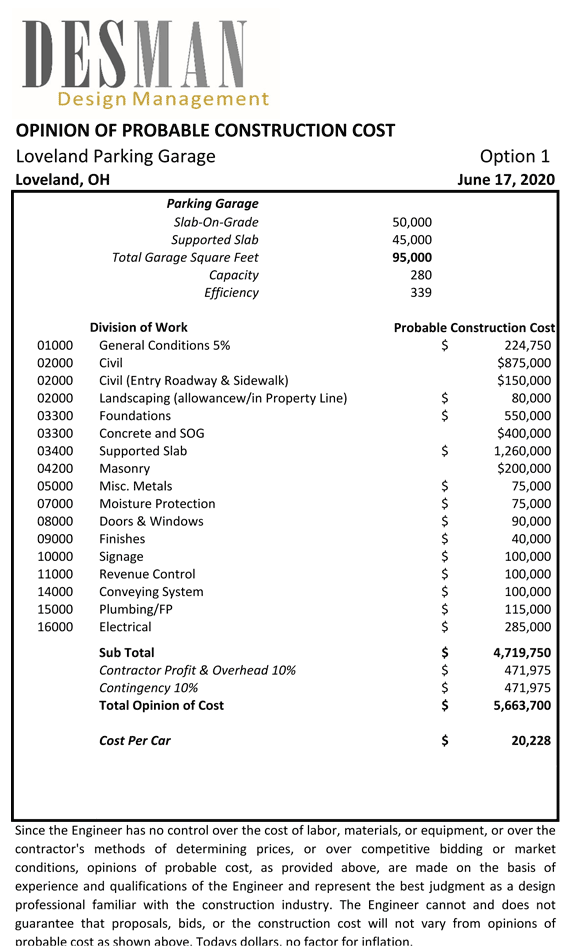
    The total cost is estimated to be $5,663,700. (See estimate below)

    Kennedy told Loveland Magazine Wednesday that the public will pay to park in the garage.

    Below is an excerpt from the report concerning the design elements:

    Design
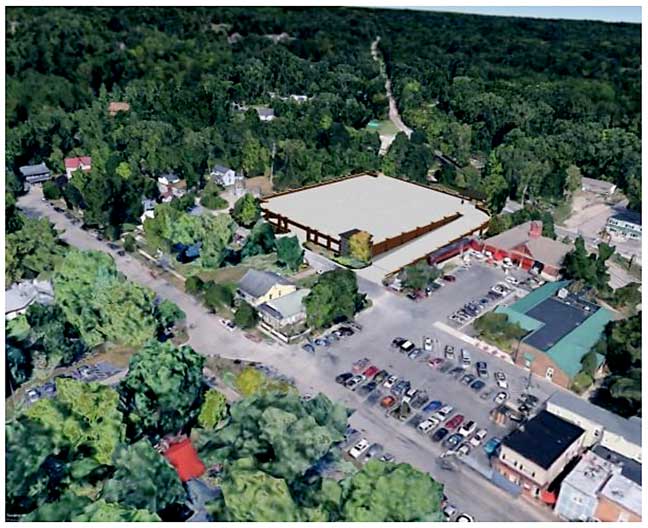
    The design of the parking facility is simplistic by nature and includes a total of 279 parking spaces.
    For reference this will equal more than two times the number of spaces currently at the Linda J. Cox Trailside Parking Area.
    The facility includes two levels, with 138 spaces on the ground floor and 141 spaces on the 2nd level.
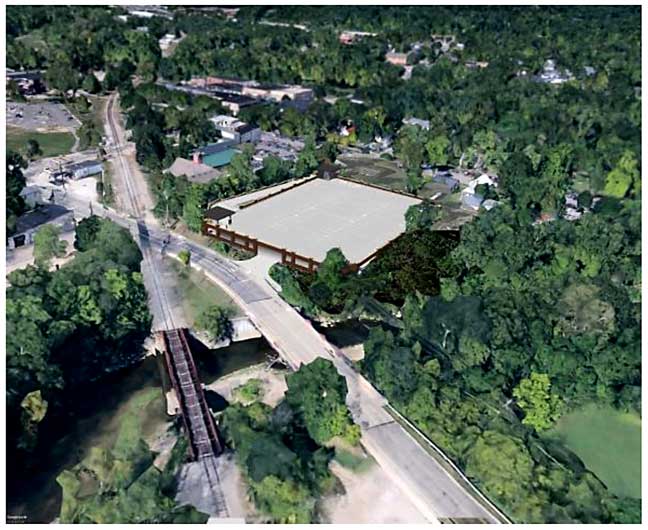
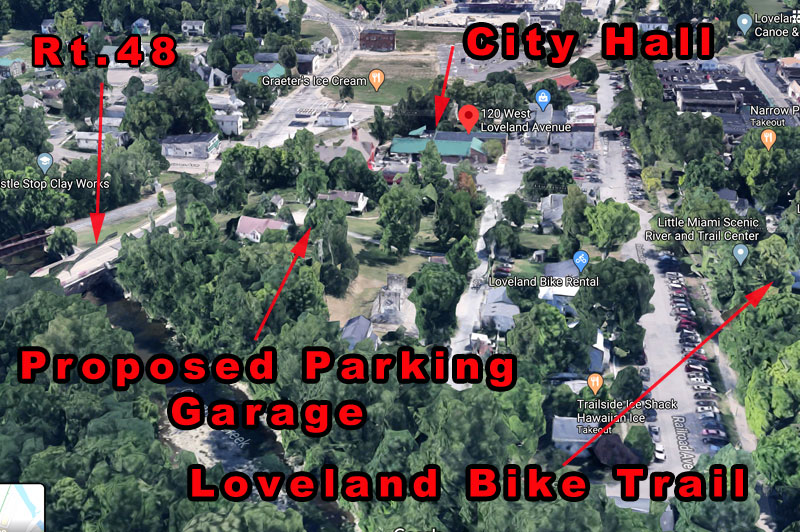
    Access to the ground level will be both from Harrison Avenue/First Street and from State Route 48. Access to the 2nd level will be via an exterior ramp along the side of the Works’ railcar.
    The project design does not include an internal ramp to the 2nd level, which would both reduce ground level spaces and add to the cost of the project.
    Access from State Route 48 will include sidewalks to allow for both vehicular and pedestrian traffic to enter into the downtown district.


    Kennedy said that specific design and material selections for the exterior facing of the facility have not been decided and that input from the public on this matter is important.

    Kennedy said, “Specific design and material selections for the exterior facing of the facility have not been decided.”

    “Although preliminary designs of the parking facility have been completed, the following aerials give a good perspective on how the project fits within the downtown district and how access from State Route 48 will be configured. Note that figure number 1, does not include the razing of the structure at 124 Railroad Avenue, which will serve as the access point into the facility from within the downtown district. This area is currently serving as temporary parking, until the new parking facility project commences.” – Source: June memo to City Council


    Financing

    Kennedy told the Council, “No doubt that this project will include city bond financing, it is a priority among city staff to reduce the local financing by securing other funding sources.” One source mentioned by Kennedy is the Appalachian Regional Commission (ARC) program, which is administered by the Ohio Valley Regional Development Commission (OVRDC). “The pre-application request is for $250,000, and is based heavily on jobs, in terms of retention and creation that the project could support,” said the City Manager.

    Kennedy also said that the City may be eligible for Adjustment Assistance Programs including CARES Act Funding. The program is federally funded and can fund up to 50% of a project’s total cost. City staff is preparing a grant application for the funding.

    Additionally, in 2019, the city submitted the parking facility project for funding consideration in the State of Ohio Biennial Capital Budget. Kennedy told Council, “This budget, which has not been adopted by the state, will undoubtedly be impacted by the COVID-19 pandemic so funding has not yet been committed.”

    Public Hearings

    Kennedy said in his report that the next step is to prepare for public meetings. “A public meeting will likely be scheduled for an outdoor venue and announced later this summer,” he said.

    Additional points made by the City Manager

    • The project will add much needed parking to the downtown district
    • The project will increase public parking in the downtown district by 46%
    • The project is supported by the majority of the city’s downtown businesses
    • The project will include a new access point into the downtown district via State Route 48 thus better disbursing traffic flow
    • The two-level design will not dominate other buildings within the district
    • Public input on the facilities exterior features and other components will be sought and utilized in the project’s final design
    • The additional purchase and demolition of the structure at 124 Railroad Avenue will improve ingress and egress into the facility. Attachments: Parking Facility Cost Estimate


    City adds 2 new parking locations

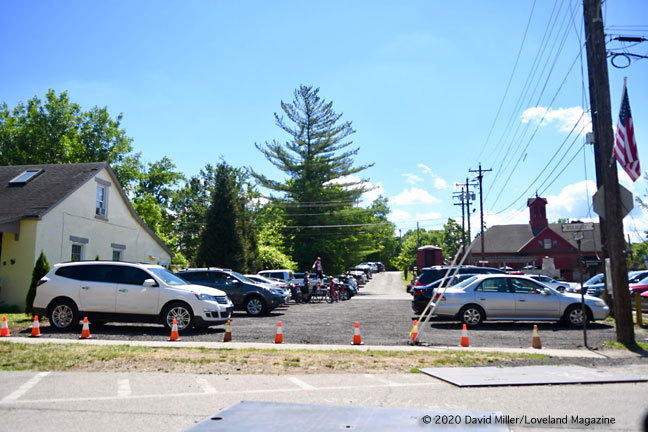
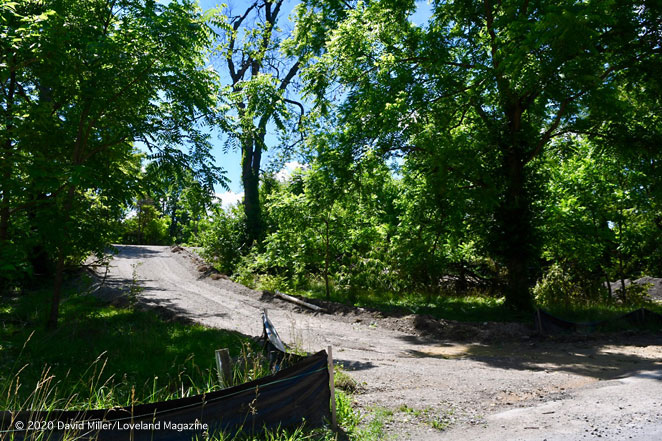
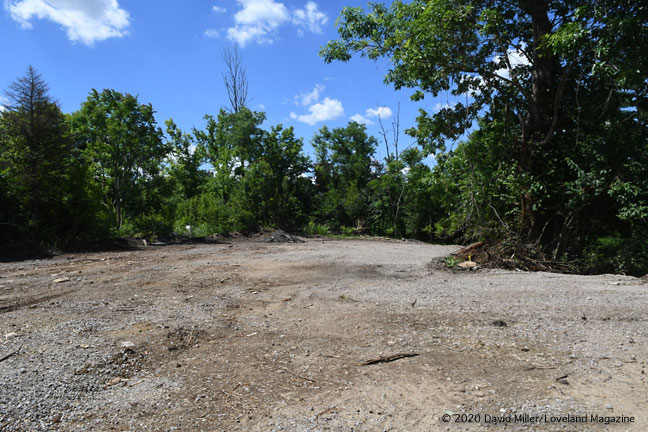
    The land where the parking garage will be located is being turned into about 50 temporary parking spaces. Kennedy said Wednesday, “We’re not finished yet, but we think it will be close to another 50 spaces.”

    Another new parking area that is complete is where the McCoy house next to City Hall used to stand at 124 Railroad Avenue. The City recently demolished the house in preparation for the parking garage construction. This spot has 20 spaces.

    “We are working hard to add spaces,” Kennedy said.

    Kennedy says this temporary parking space at the old McCoy house next to City Hall added 20 spaces.

    The 2nd new temporary location for additional parking is where the new parking garage will eventually be constructed. These spaces will have access from First Street near Works Pizzeria.

    The 2nd new temporary location for additional parking is where the new garage will eventually be constructed. These spaces will have access from First Street near The Works restaurant and will hold about 50 vehicles.

  • Downtown “Quiet Zone” temporarily suspended

    Downtown “Quiet Zone” temporarily suspended

    Loveland, Ohio – In a press release issued today, City Manager Dave Kennedy said:

    The downtown Quiet Zone will be temporarily suspended due to issues with the railroad crossing gates. Until repairs are completed, trains traveling through the downtown district will temporarily return to sounding their train horns.