Milford, Ohio – The former city manager of Milford in Clermont County has been charged with importuning, Ohio Attorney General Dave Yost and Montgomery County Sheriff Rob Streck announced on August 12.
Michael Doss was charged in the Montgomery County Court of Common Pleas with one count of importuning, a fifth-degree felony.
An undercover investigation by the Miami Valley Human Trafficking Task Force revealed that Doss allegedly attempted to purchase sex from an individual he believed was a 15-year-old girl. Additional charges are anticipated in the case according to a news release from Yost’s office.
Doss recently resigned as Milford’s city manager after he was confronted about the allegations. He was Milford’s Manager for roughly 8 years.
The Miami Valley Human Trafficking Task Force is formed under the attorney general’s Ohio Organized Crime Investigations Commission and is led by the Montgomery County Sheriff’s Office. The task force includes resources from the Butler Township Police Department, Oakwood Police and Homeland Security Investigations.
_________________
Section 2907.07 Ohio Revised Code Importuning.
(A) No person shall solicit a person who is less than thirteen years of age to engage in sexual activity with the offender, whether or not the offender knows the age of such person.
(B)(1) No person shall solicit another, not the spouse of the offender, to engage in sexual conduct with the offender, when the offender is eighteen years of age or older and four or more years older than the other person, and the other person is thirteen years of age or older but less than sixteen years of age, whether or not the offender knows the age of the other person.
(2) No person shall solicit another to engage in sexual conduct with the offender, when the offender is eighteen years of age or older and four or more years older than the other person, the other person is sixteen or seventeen years of age and a victim of a violation of section 2905.32 of the Revised Code, and the offender knows or has reckless disregard of the age of the other person.
(C) No person shall solicit a person who is less than sixteen years of age to engage in sexual activity with the offender when the person who is less than sixteen years of age is substantially impaired because of a mental or physical condition.
(D) No person shall solicit another by means of a telecommunications device, as defined in section 2913.01 of the Revised Code, to engage in sexual activity with the offender when the offender is eighteen years of age or older and either of the following applies:
(1) The other person is less than thirteen years of age, and the offender knows that the other person is less than thirteen years of age or is reckless in that regard.
(2) The other person is a law enforcement officer posing as a person who is less than thirteen years of age, and the offender believes that the other person is less than thirteen years of age or is reckless in that regard.
(E) No person shall solicit another by means of a telecommunications device, as defined in section 2913.01 of the Revised Code, to engage in sexual activity with the offender when the offender is eighteen years of age or older and either of the following applies:
(1) The other person is thirteen years of age or older but less than sixteen years of age, the offender knows that the other person is thirteen years of age or older but less than sixteen years of age or is reckless in that regard, and the offender is four or more years older than the other person.
(2) The other person is a law enforcement officer posing as a person who is thirteen years of age or older but less than sixteen years of age, the offender believes that the other person is thirteen years of age or older but less than sixteen years of age or is reckless in that regard, and the offender is four or more years older than the age the law enforcement officer assumes in posing as the person who is thirteen years of age or older but less than sixteen years of age.
(F) Divisions (D) and (E) of this section apply to any solicitation that is contained in a transmission via a telecommunications device that either originates in this state or is received in this state.
(G)(1) Whoever violates this section is guilty of importuning.
(2) A violation of division (A), (C), or (D) of this section is a felony of the third degree on a first offense, and, notwithstanding division (C) of section 2929.13 of the Revised Code, there is a presumption that a prison term shall be imposed as described in division (D) of section 2929.13 of the Revised Code. If the offender, in addition to soliciting the other person, arranged to meet the other person for the purpose of engaging in sexual activity, the court shall impose upon the offender as a mandatory prison term one of the prison terms prescribed in division (A)(3)(b) of section 2929.14 of the Revised Code for a felony of the third degree.
If the offender previously has been convicted of a sexually oriented offense or a child-victim oriented offense, a violation of division (A), (C), or (D) of this section is a felony of the second degree, and the court shall impose upon the offender as a mandatory prison term one of the definite prison terms prescribed in division (A)(2)(b) of section 2929.14 of the Revised Code for a felony of the second degree, except that if the violation is committed on or after March 22, 2019, the court shall impose as the minimum prison term for the offense a mandatory prison term that is one of the minimum terms prescribed in division (A)(2)(a) of that section for a felony of the second degree.
(3) A violation of division (B) or (E) of this section is a felony of the fifth degree on a first offense, and, notwithstanding division (B) of section 2929.13 of the Revised Code, there is a presumption that a prison term shall be imposed as described in division (D) of section 2929.13 of the Revised Code. The court shall impose upon the offender as a mandatory prison term one of the prison terms prescribed in section 2929.14 of the Revised Code for a felony of the fifth degree if both of the following apply:
(a) Either of the following applies:
(i) The offender is ten or more years older than the other person.
(ii) Regarding a violation of division (E)(2) of this section, a law enforcement officer posed as a person thirteen years of age or older but less than sixteen years of age and the offender is ten or more years older than the officer claimed to be.
(b) In addition to soliciting the other person, the offender arranged to meet the other person for the purpose of engaging in sexual activity.
(4) If the offender previously has been convicted of a sexually oriented offense or a child-victim oriented offense, a violation of division (B) or (E) of this section is a felony of the fourth degree, and the court shall impose upon the offender as a mandatory prison term one of the prison terms prescribed in section 2929.14 of the Revised Code for a felony of the fourth degree that is not less than twelve months in duration.
David Miller is the Managing Editor of Loveland Magazine
by David Miller
Loveland, Ohio – The city’s drinking water currently meets drinking water standards where enforcement action by regulators is not possible, however as early as January, when new regulations go into effect enforcement actions could be mandated and Loveland could face sanctions.
Testing has revealed that Loveland has two “Forever Chemicals” in its drinking water. One, at a level four times higher than what may soon become the enforceable standards proposed by the U.S. Environmental Protection Agency. This is the highest reported level in the area.
Per- and polyfluoroalkyl substances (PFAS) are commonly referred to as “Forever Chemicals”. They are a class of widely used chemicals that persist in the environment and bioaccumulate in humans. Research going back decades suggests evidence that Forever Chemicals impact human reproduction and development. Human health impacts include infertility, premature birth, trouble breastfeeding, delayed puberty, earlier menopause, and diverse metabolic impacts, as well as suggestions of a relationship with neurologic and behavioral disorders (including attention deficit hyperactivity [ADHD], autism, and schizophrenia). (*1)
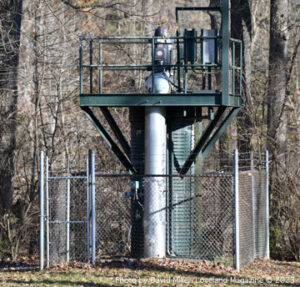
Loveland’s water wells are located on the East side of Bodly Park at the end of 10692 Bettyray Drive on the bank of the Little Miami River.
Forever Chemicals may enter a person’s body when they drink water or eat food that has been contaminated. Unborn babies may be exposed to Forever Chemicals if their mother ingests them while she is pregnant, and babies may be exposed through breast milk. (*2)
Bioaccumulate means the toxic chemicals become concentrated inside the human body as time goes by. Because Forever Chemicals have a long “half-life” and if the chemicals are continuously ingested it’s a one-step forward, two-steps-back scenario.
Whether or not a person gets sick from exposure to PFAS depends on how long a person was exposed (duration), how often they were exposed (frequency), and how much PFAS they were exposed to (dose). Personal factors like age, lifestyle, and other illnesses may also determine whether or not a person gets sick from exposure to PFAS. (*2)
Loveland City Hall knows the truth and possibly understands the danger of “Forever Chemicals” in our tap water but remains mostly silent. They have not informed the public and only briefly discussed finding solutions at a November 28, 2023 council meeting when passing a resolution to approach a consulting company to explore the cost to determine the extent of the problem and recommend solutions.
City Manager Dave Kennedy told Loveland Magazine, “We have already secured the services of a water engineer (Burgess & Niple) who is doing a full analysis of our system modifications that need to be made to treat for PFAS and at the same time, steps the city can make to begin softening our water. The agreement with Burgess & Niple was approved by city council and the agreement was executed.” City Hall became aware of the elevated levels nine months ago, in March.
Loveland Magazine asked Kennedy whether the public was notified about the presence of Forever Chemicals in the tap water. He did not respond.
Loveland Magazine has sent City Hall a public records request for documentation in their possession along with a series of questions. To date, no records have been provided.
Among the questions:
• What would you recommend institutions such as schools and childcare facilities do? What about breweries, restaurants, and businesses? Same question about drinking fountains and during commercial food preparation.
• Has Loveland determined or investigated where the Forever Chemicals are ultimately coming from that have contaminated our well water? “We have not,” was Kennedy’s response.
• Loveland has an emergency connection to the City of Cincinnati’s Richard Miller treatment plant that currently tests negative for Forever Chemicals. When asked if the connection to the Cincinnati Water Works is large enough to satisfy Loveland’s needs for drinking, household, and commercial use, Kennedy responded by saying, “We intend to keep our water system, so I have not looked into the capacity of the city of Cincinnati.”
• Is the Loveland-Symmes Fire Department or other departments using firefighting foam containing Forever Chemicals at the fire training facility on East Loveland Avenue in Loveland? Have they in the past? “Will check with LSFD”, was the City Manager’s response, however, Loveland Magazine has not received an answer.
• Has Loveland determined or investigated where the Forever Chemicals are ultimately coming from that have contaminated our well water? “We have not,” responded Kennedy.
Neither the City Manager nor Ricky Gregory who runs Loveland’s water system have responded to say if they would be willing to answer questions during an on-camera interview.
“PFAS exposure through drinking water can be reduced by treating the water using reverse osmosis or certified carbon filtration units, or by using an alternative source of water that is not contaminated. In general, dermal contact with water is not a health concern because PFAS are not readily absorbed through the skin. Using water that contains PFAS for showering, bathing, laundry, or household cleaning is generally safe.” Look for products identified as certified to NSF International’s Standard P473. Products tested and certified by the Water Quality Association can be found here: https://www.wqa.org/find-products#/. (OEPA)
Loveland’s water wells are located on the East side of Bodly Park at the end of 10692 Bettyray Drive on the bank of the Little Miami River.
The wells draw water from an underground layer of water-bearing, permeable rock, rock fractures, or unconsolidated materials (gravel, sand, or silt). (Wikipedia)
The source of the underground water is rainfall and other discharges onto the surrounding land and hillsides, and the Little Miami River. There are approximately 900 homeowners outside the Loveland City limits who also drink water from the Loveland wells. A small number of Loveland residents in Warren County receive water from the Western Water Company. There are approximately 13,000 residents of the City.
Some people may be more vulnerable to contaminants in drinking water than the general population. Immuno compromised persons such as persons with cancer undergoing chemo therapy, persons who have undergone organ transplants, people with HIV/AIDS or other immune system disorders, some elderly, and infants can be particularly at risk from infections. These people should seek advice about drinking water from their health care providers. (*3)
____________________
What the Ohio EPA says:
What are the health effects of exposure to PFAS?
It is important to keep in mind that exposure to PFAS does not always mean a person will have health effects. Whether or not a person gets sick from exposure to PFAS depends on how long a person was exposed (duration), how often they were exposed (frequency), and how much PFAS they were exposed to (dose). Personal factors like age, lifestyle, and other illnesses may also determine whether or not a person gets sick from exposure to PFAS.
There are many chemicals in the PFAS family, and they may cause different health effects if you are exposed to them. The health effects of PFOS, PFOA, PFHxS, and PFNA have been more widely studied than other chemicals in the PFAS family. Some, but not all, studies in humans with PFAS exposure have shown that certain PFAS may: Affect growth, learning, and behavior of infants and children; Lower a woman’s chance of getting pregnant; Interfere with the body’s natural hormones; Increase cholesterol levels; Affect the immune system; or Increase the risk of certain cancers.
Scientists are still learning about the health effects of exposures to mixtures of PFAS. For the most part, laboratory animals exposed to high doses of one or more PFAS have shown changes in liver, thyroid, and pancreatic function, as well as some changes in hormone levels. Because animals and humans process these chemicals differently, more research will help scientists fully understand how PFAS affect human health.
Pregnant and nursing women
Pregnant and nursing women may be more at risk than the general population to the health effects of PFAS. Pregnant and nursing women may want to consider treating their water source if they know or suspect it is contaminated with PFAS. They may also consider using an alternate source of water for drinking, making ice, preparing food, and brushing teeth.
Women who are planning to become pregnant may wish to take steps to reduce their exposure to PFAS. PFAS take a long time to leave the human body, and chemicals like PFOA, PFOS, and PFHxS can build up in a woman’s body if she is exposed for a long time. When she is pregnant, her fetus is then exposed to the chemicals that have built up inside her body. Research suggests that fetuses and babies are more vulnerable to exposure to PFAS than adults.
Breastfeeding provides many health benefits for mother and baby. Research has shown that babies who are breastfed are at less risk of ear and respiratory infections, asthma, obesity, and sudden infant death syndrome (SIDS). Mothers who breastfeed are at less risk of high blood pressure, type 2 diabetes, and ovarian and breast cancer. Although PFAS can be passed from a mother to her child through breastmilk, the benefits of breastfeeding are far greater than any risks. ODH recommends that women currently breastfeeding continue to do so even if they have been exposed to PFAS. For information about breastfeeding, see the Ohio Department of Health Breastfeeding webpage or the Agency for Toxic Substances and Disease Registry (ATSDR) PFAS and Breastfeeding webpage.
Babies who are bottle-fed may also be at greater risk from drinking PFAS than adults because they drink more in proportion to their body weight. If your baby is bottle fed using a powdered or liquid formula, be sure the water mixed with the formula comes from a safe alternate source, such as a public or private water supply that has been tested for PFAS chemicals. This will reduce your baby’s exposure to PFAS. If your usual drinking water source is contaminated with PFAS, treat the water or use a safe alternate source for mixing formula or preparing food. Information about treating water for PFAS can be found by going to the main Ohio PFAS in Drinking Water page, clicking the “Private Drinking Water” tab, and expanding the “Home Treatment Options” menu.
Please consult with your healthcare provider or your child’s pediatrician with any PFAS exposure concerns.
Children
Children have different exposure circumstances that make them especially sensitive to environmental contaminants, like PFAS. Understanding these differences is key for evaluating potential for environmental hazards from pollutants.
Children consume more of certain foods and water relative to body weight than adults. That means the same glass of water with the same PFAS concentration level results in greater exposure to a child versus an adult, even though they are drinking the same amount. Children also do not excrete chemicals as easily as adults, because the enzymes in their bodies that break down contaminants are still developing. That increases the chances for contaminants such as PFAS to interfere with a child’s growth and development.
In addition, young children tend to play close to the ground and come into contact with contaminated soil outdoors. To ensure the protection of children and other sensitive populations, the Ohio PFAS Action Levels are set to protect the most sensitive populations, thereby protecting the health of all populations in Ohio.[/learn_more]
Household Pets
Since many household pets are smaller than people, they also consume more of certain foods and water relative to their body weight than people. That means that the same bowl of water with the same PFAS concentration results in greater exposure to household pets, even though they may be drinking the same amount. As a precaution, if you have elevated levels of PFAS in your water, you should consider using alternative water for your household pets.[/learn_more]
Home Treatment Options
Water treatment in a home to reduce levels of PFAS can be:
At the point of entry (POE) where treatment all of the water entering the household plumbing system occurs, or;
At the point of use (POU) which is often at the kitchen sink or primary source of water for drinking or cooking (potentially also including a water line to the refrigerator if it has a plumbed in water line).
Either type of water treatment has pros and cons that should be considered before selecting the best treatment option for a home. The type of treatment system chosen should consider the volume of water that will be used in the home, the number and location of sites where water is consumed in the home, and the type of PFAS chemical identified in the laboratory result.
If water for drinking, cooking and making ice is primarily obtained from the kitchen sink, then the installation of a treatment unit below the sink or on the sink faucet is an option. If drinking water and ice are obtained from the refrigerator, then it is important to consider treating the water line to the refrigerator also.
If drinking water is obtained from multiple locations in a home, then a point of entry, or whole house treatment system may be preferred.
If possible, it is important to choose a treatment system that has been tested and certified to remove the PFAS present in the water based on data provided from the public water system provider or from a laboratory analysis.
Certified Water Treatment Products to Remove PFOA and PFOS
Currently, certified products are only for point of use (POU) treatment, which means they are products designed to treat the water at only one or two locations, usually at the kitchen sink and possibly the refrigerator if it has water connected. Certified products are either granular activated carbon (GAC) filtration or reverse osmosis (RO) treatment systems. It should be noted that some of the products certified to treat water at the point of use are counter-top products or pour through (like a pitcher filter that you fill from the tap yourself as needed).
NSF International and the Water Quality Association are independent third-party testing agencies that currently test and certify products to remove the specific PFAS PFOA and PFOS.
Look for products identified as certified to NSF International’s Standard P473. The NSF International consumer information team can also be contacted at info@nsf.org or 1-800-673-8010 for assistance in finding a certified product.
Products tested and certified by the Water Quality Association can be found here: https://www.wqa.org/find-products#/.
NSF Standard P473 was retired in March of 2019 when the testing protocol was incorporated into existing water treatment standards, so new products certifications are tested to meet either NSF/ANSI Standard 53: Drinking Water Treatment Units – Health Effects for the reduction of PFOA and PFOS with granular activated carbon filtration systems or to NSF/ANSI Standard 58 Reverse Osmosis Drinking Water Treatment Systems for the reduction of PFOA and PFOS with reverse osmosis systems. There is currently not a standard for certification of other types of treatment systems.
Treatment System Products to Remove other PFAS
There are currently no certified standards for removing PFAS other than PFOA and PFOS, however, consideration of the type of PFAS chemical can inform the selection of the best water treatment system. PFOA and PFOS are longer chain PFAS than other chemicals in the PFAS family. Longer chain chemicals are larger which makes it easier for a filter or membrane to trap them. Shorter chain PFAS are harder to remove with granular activated carbon treatment alone. Though there is no product certification standard at this time, research has shown that reverse osmosis treatment systems can effectively remove a wide range of PFAS, including the shorter chain chemicals in the PFAS family.
Considerations for point of use (POU) granular activated carbon (GAC) treatment:
• Physical filter cartridge traps contaminant(s) which is then removed and disposed of at the end of its rated lifecycle.
• Filter must be replaced on a regular schedule (identified by the manufacturer).
• Generally, granular activated carbon filters provide more water flow than a reverse osmosis system.
• May not effectively treat shorter chain PFAS if present in addition to the longer chain PFOA and/or PFOS.
Considerations for point of use (POU) reverse osmosis (RO) treatment:
Typically requires pre-filtration to be installed to remove any sediment and small particles as well to maximize the life and effectiveness of the membrane.
Large volumes of water are wasted in the treatment process. Typically, for every 10 gallons sent into the treatment unit, 7-8 gallons are sent down the drain as waste, and 2-3 gallons of treated water are produced.
Membranes must be replaced on a regular schedule (identified by the manufacturer) in addition to any pre-filtration cartridges.
Research has shown it to effectively reduce shorter chain PFAS in addition to the longer chain PFOA and/or PFOS.
Point of Entry Water Treatment
Point of entry water treatment is where all the water entering the home is treated for the removal of PFAS. Though there are not currently any products certified to treat all water that enters a home (also called point of entry or POE treatment) for removing any of the PFAS family of chemicals, research has shown that a point of entry granular activated carbon treatment can be effective if properly designed.
These systems are commonly referred to as a lead-lag granular activated carbon system. This system consists of two flow through vessels filled with granular activated carbon with a water sample faucet installed between the two vessels (after the lead vessel, before the lag vessel). Water samples are collected periodically and analyzed for PFAS to monitor the lifespan of the first carbon vessel. When the first vessel starts to lose its ability to remove PFAS, it is removed, the second carbon vessel which was in the lag position is moved to the lead carbon vessel position and new granular activated carbon media is placed into the other vessel, and it is moved to the lag position. This design relies on the lag vessel to provide protection for the water consumer in case the lead vessel is no longer able to trap the PFAS before periodic sample collection identifies that the lead carbon vessel is no longer able to perform effective PFAS removal.
The installation of a point of entry water treatment system to treat water received from a public water system may require a local plumbing permit. Please check with the local building or health department to determine if a plumbing permit is needed.
The installation of a point of entry water treatment system to treat water received from a private water system (water well, spring, pond, rainwater cistern or hauled water storage tank) will require an installation permit form the local health district. These treatment systems may only be installed by a private water systems contractor registered by the Ohio Department of Health. These contractors are bonded and the list of registered contractors may be found at: https://odh.ohio.gov/wps/portal/gov/odh/know-our-programs/private-water-systems-program/info-for-homeowners/.
Please be an informed consumer and request complete information on the components that will be installed, product certification as applicable, the maintenance requirements and cost, and appropriate disposal of the treatment media.
Please note that testing a water sample for PFAS at a lab certified to perform analysis of drinking water by U.S. EPA Standard Method 537.1 varies by private lab but is estimated to cost approximately $400 per sample. Water samples should be collected and analyzed prior to the selection of an installed treatment unit to help size and select the appropriate treatment device. After the treatment device is installed, water samples should be periodically analyzed to ensure the treatment unit is working properly. Initial and on-going sampling will add to the cost of the installation of treatment systems. Countertop or pitcher type devices will not require routine sampling but media should be replaced in accordance with the manufacturer’s recommendations. U.S. EPA cost estimates for different types of treatment types are below:
Treatment Type
Approximate Initial Cost of Equipment
Approximate Media Replacement Cost
NSF P473 certified Point of Use Granular Activated Carbon (GAC)
$100 -$1200
$200 – $300 each year
NSF P473 certified Point of Use Reverse Osmosis (RO)
$400 – $700
$200 each year
Non-certified Lead-Lag Point of Entry Granular Activated Carbon (GAC)
$1,200
$2000 each 3-5 years (depending on periodic testing results*)
Testing your blood for PFAS
While a PFAS blood test measures how much of specific PFAS are in a person’s body at the time of the test, there are limitations.
A PFAS blood test cannot:
• Tell you where or how you were exposed to PFAS found in your body;
• Tell you what, if any, health problems might occur or have occurred because of PFAS in your body; or
• Be used by your doctor to guide treatment decisions.
Measuring a person’s exposure to PFAS and monitoring potential impacts on human health is best addressed through consultation with a physician. ODH has and will continue to provide information and recommendations to healthcare providers to help providers and patients make informed decisions about what PFAS exposure might mean for an individual’s health. There is no recommendation from ODH or the Centers for Disease Control and Prevention (CDC) that clinicians should test patients for PFAS. Please consult your healthcare provider if you have concerns regarding PFAS exposure.
PFAS Testing for Individuals
ODH does not generally recommend testing your blood for PFAS. Physicians will not be able to treat a specific health issue using the result from this test. Please consult your healthcare provider if you have concerns regarding PFAS exposure.
A blood test for PFAS can tell you what your levels are at the time the blood was drawn, but not whether levels in your body are safe or unsafe.
Most people in the U.S. have measurable amounts of PFAS in their body because PFAS are commonly used in commercial and industrial products.
The PFAS blood test is not a clinical test and cannot tell you whether your health has been or will be affected.
Many health issues associated with PFAS, such as increased cholesterol and decreased thyroid hormone levels, commonly occur in the population as a whole – even when not associated with high levels of PFAS in the blood.
These health issues can be caused by many factors, and there is no way to know or predict if PFAS exposure has or will cause your health problem.
If you have specific health concerns, please consult your doctor for the best treatment choices for you.
It is complicated to get a PFAS blood test.
It is not a routine clinical test, so you would need to contact a private lab directly to arrange the test and it is unlikely that insurance would cover the cost.
There are hundreds of PFAS around us. Labs can only test for a small number of PFAS in blood.
Laboratories that Offer PFAS Testing
ODH is aware of three private laboratories that offer PFAS testing in blood. ODH does not recommend specific labs and does not know specifics regarding the different tests they offer. The cost for PFAS blood testing is in the $500-800 range, not including fees that a clinic might charge for drawing and shipping the blood.
You can compare your levels to those in groups of people nationwide. The National Biomonitoring Program by the U.S. Centers for Disease Control and Prevention (CDC) tests a very large group of people for PFAS and other chemicals and tells us about average exposures in the U.S. population. These studies can be used to compare your blood test result to what is known about levels in people throughout the country.
Loveland, Ohio – Homeowners in Glen Lake subdivision, Tom Vargo, and Mack Fey continue to voice the problem of a collapsing storm drain between their homes. Out of seven storm drains in the subdivision, two are labeled as ‘private’, the one landing in between Vargo and Fey’s houses being one of them.
Vargo maintains that the City keeps the other five in working order.
This particular storm drain catches runoff water from about 8-10 houses in the immediate neighborhood. Since March, the two have been communicating with the City of Loveland to understand why it is private and steps to fix it.
One temporary solution would be to add an insert to prevent the ground from caving in which would end up costing Fey and Vargo $20,000 of their own money for a 114 feet worth of storm drain from their backyard to the street. Vargo and Fey don’t believe they should shell out that kind of money now when in the past City Hall had stepped up to the plate and admitted responsibility. Twice under previous administrations, the public works department has made repairs.
In terms of what they would like to see happen, Vargo commented, “I would say first and foremost, I would like to get [the collapsing storm drain] fixed. I’m just afraid that somebody’s going to get hurt. Mack has grandchildren, I have grandchildren, they do come out and run around, now, we watch them, but, still know you can’t watch them every second they’re out here, so I would like to get it fixed but I really think… we need to talk. We need to figure out why the City is not fixing the sinkhole. Just because it’s private? Is that the City’s only claim to fame here?”
After months of contacting the City Hall, Vargo and Fey still don’t have the answers they are looking for. City Manager Dave Kennedy told the homeowners he would visit, even suggesting it and would bring the City engineer with him. The visit never happened and now, the only communication Vargo and Fey have received is from the City’s attorney.
Loveland City Manager Dave Kennedy was given the authority to extend the DORA for 60-days.
Loveland, Ohio – The City of Loveland’s Designated Outdoor Refreshment Area (DORA), which previously allowed for the consumption of alcohol within specific boundaries in Historic Downtown only during specified events was modified in May from being in effect only during specified events to being in effect seven days a week from noon to 11 PM.
The modification that went into effect in May was set to expire today.
The DORA allows for the consumption of alcohol within specific boundaries in Historic Downtown.
As provided within the legislation previously adopted by City Council, the City Manager was given the authority to extend the DORA for an additional 60-days.
Under that authorization, City Manager Dave Kennedy announced yesterday that he has extended the seven-day DORA until September 5.
Q: What is a DORA?
A: A Designated Outdoor Refreshment Area (DORA) is a specially designated area that allows patrons of an establishment serving alcohol to take an open container of alcohol out of the business and walk around the public streets. Drinks must be in special cups designated as DORA cups. These cups can be obtained at all participating alcohol establishments inside the DORA.
Q: May a person bring their own alcohol into a DORA?
A: No. Ohio open container law prohibits a person from having an opened container of alcohol on a permit premises that was not purchased from that permit holder even if the permit premises are within a DORA purchased elsewhere.
Q: Do I have to use special DORA Cups?
A: Yes. Any open alcohol which leaves an establishment must be in designated DORA cups. And, DORA cups must be empty to enter an establishment. Cups can be obtained at any participating establishment.
Q: What types of alcoholic beverage can I have in my DORA cup?
A: Beer, wine and liquor are allowable beverages to be consumed in designated DORA cups.
Q: Can I walk anywhere with my DORA cup?
A: Patrons can enjoy their beverage within the designated DORA Boundaries which are marked by signage.
Businesses serving DORA beverages will have the below sticker decal displayed:
Check out these savings from All American Gutter Protection. All American Gutter Protection offers the best micro mesh gutter guards and gutters at highly competitive pricing.
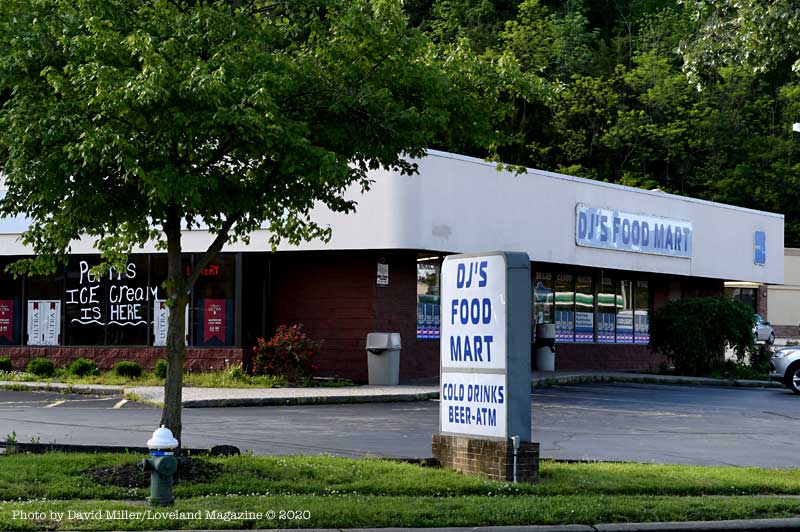
Loveland, Ohio – The plans for the conversion of DJ’s Food Mart to a laundromat have been approved according to City Manager Dave Kennedy’s weekly report to Council on May 15.
Kennedy said, “Their permit is ready to be issued. The laundromat is reportedly called Tiger Express.”
This is where the United Dairy Farmers store used to be.
There are 22,131 confirmed and probable cases of COVID-19 in Ohio and 1,271 confirmed and probable COVID-19 deaths. A total of 4,140 people have been hospitalized, including 1,167 admissions to intensive care units. In-depth data can be accessed by visiting coronavirus.ohio.gov.
Video of yesterday’s State House announcements, including versions with foreign language closed captioning, can be viewed on the Ohio Channel’s YouTube page.
191 cases. (46 new possible cases in last 14 days). 36 hospitalizations. (9 new hospitalizations in last 14 days). 13 total deaths (3 in the last 14 days).
In Loveland City Council unanimously passed a resolution expanding the dates and times for the operation of the Designated Outdoor Refreshment Area (“DORA”) in downtown Loveland. The action authorized the City Manager to implement this expansion once the State relaxed the Stay at Home Order or allowed residents to leave their homes to engage in non-essential work or activities.
On Thursday, City Manager Dave Kennedy used that authority and announced that the expansion of the DORA will begin Saturday, May 9, at noon and run until 11 PM. The DORA will remain in effect 7 days a week for 60 days.
Within the DORA people can purchase alcoholic beverages in a designated cup from permitted establishments and carry the beverages outside within a defined Downtown area.
Additional picnic tables have been placed in Nisbet Park. Visitors to Historic Downtown may also bring tables or chairs to use as long as they “maintain safe distancing guidelines which will also be posted in the downtown area.”
The newly renovated restrooms in Nisbet Park are also open and will be sanitized daily by the City.
In Columbus, Ohio Governor Mike DeWine, Lt. Governor Jon Husted, and Dr. Amy Acton, MD, MPH, announced Thursday the next phase of the Responsible RestartOhio plan as it relates to restaurants, bars, and personal care services.
As part of yesterday’s announcement, Governor DeWine reminded Ohioans that COVID-19 is still “incredibly dangerous” and stressed the importance of continuing to exercise safe health habits as different sectors of the economy begin to reopen.
“Reopening Ohio is a risk, but it’s also a risk if you don’t move forward. We’re on a dangerous road that has never been traveled before in Ohio and the danger is that we relax and stop taking precautions,” said DeWine. “All of us collectively control this. I ask you to take calculated risks and make good judgments. Continue social distancing, washing your hands, and wearing face coverings. If you aren’t concerned with what happens to you, do it for others.”
RESTAURANTS/BARS
Restaurants and bars in Ohio will be permitted to reopen as follows:
Outdoor dining: May 15
Dine-in service: May 21
DeWine’s Restaurant Advisory Group created a detailed list of guidelines and best practices for restaurant and bar owners to follow. The full list of mandatory and recommended best practices can be found at coronaviurs.ohio.gov.
PERSONAL CARE SERVICES
Personal care services such as hair salons, barbershops, day spas, nail salons, and tanning facilities may reopen on May 15.
DeWine’s Personal Services Advisory Group created a detailed list of guidelines and best practices for personal care service providers to follow. The full list of mandatory and recommended best practices can be found at coronaviurs.ohio.gov.
CURRENT OHIO DATA
There are 22,131 confirmed and probable cases of COVID-19 in Ohio and 1,271 confirmed and probable COVID-19 deaths. A total of 4,140 people have been hospitalized, including 1,167 admissions to intensive care units. In-depth data can be accessed by visiting coronavirus.ohio.gov.
Video of yesterday’s announcements, including versions with foreign language closed captioning, can be viewed on the Ohio Channel’s YouTube page.
Tom Grossmann – Commissioner Shannon Jones – Commissioner David G. Young – Commissioner Tiffany Zindel – Administrator Martin Russell – Deputy Administrator Tina Osborne – Clerk of Commissioners
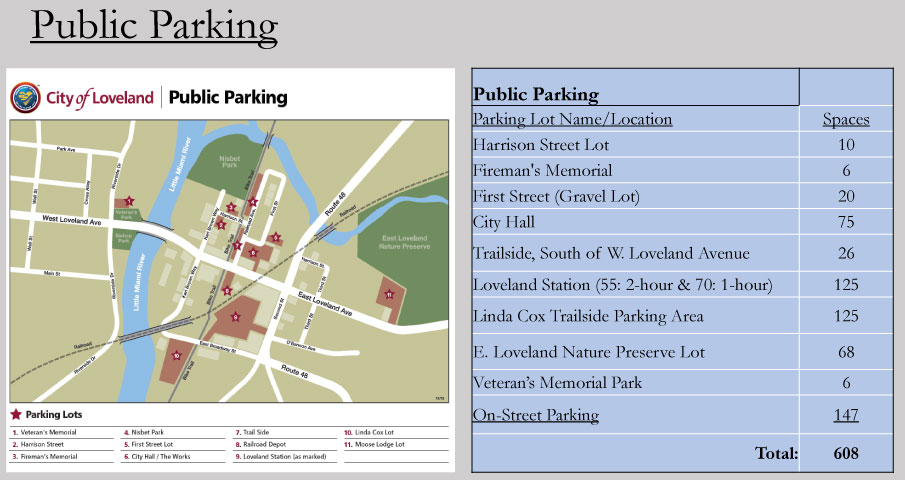
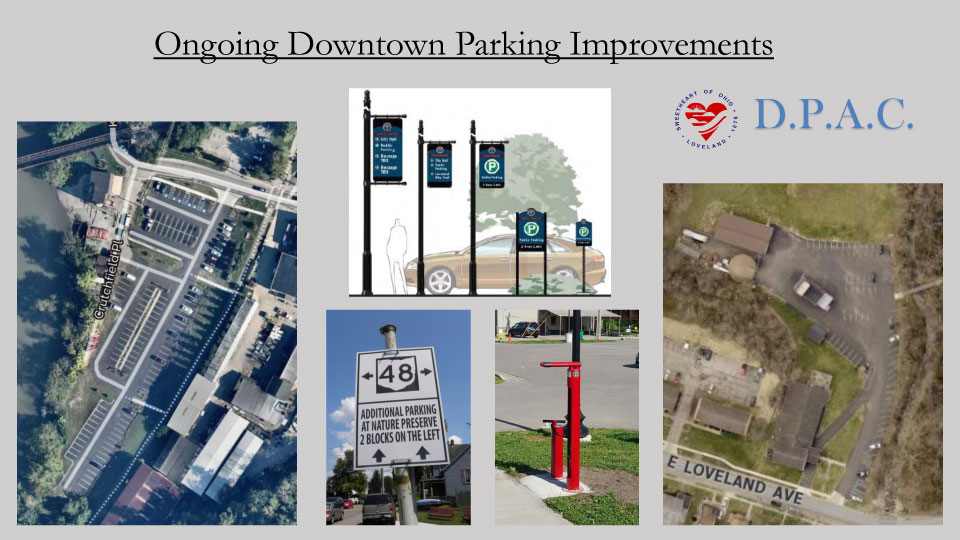
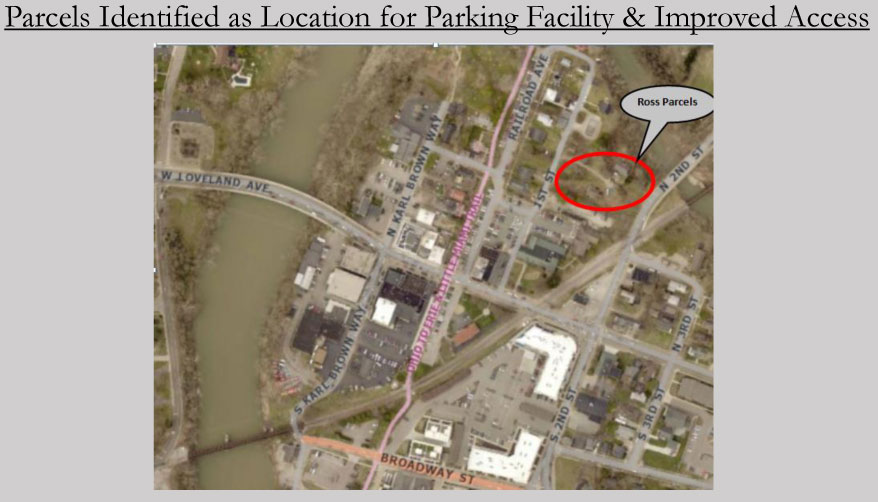
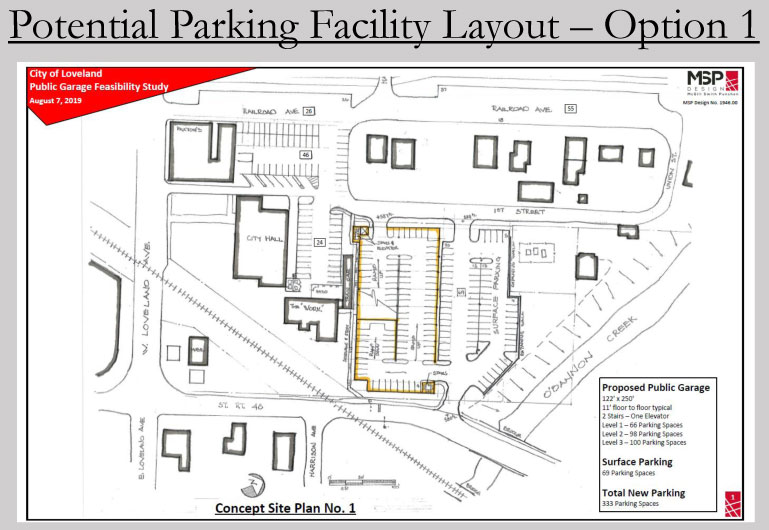
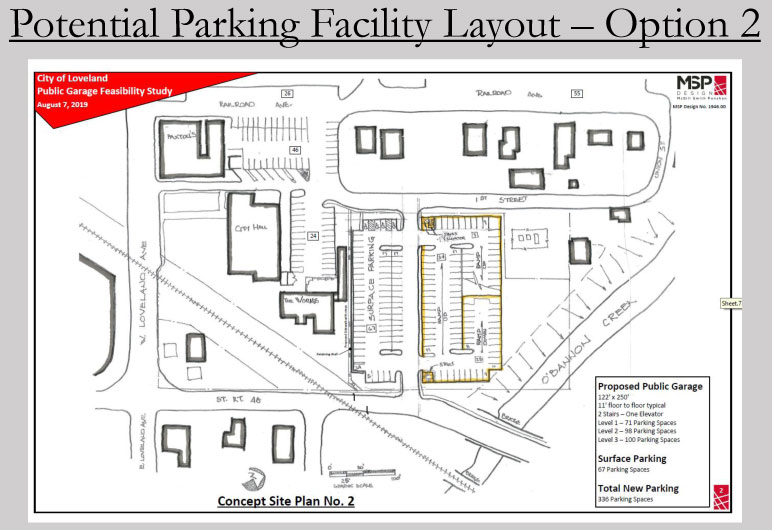
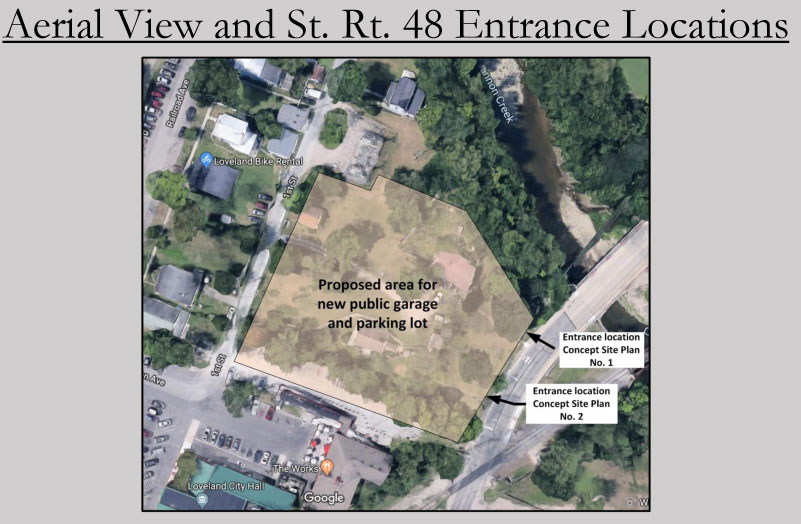
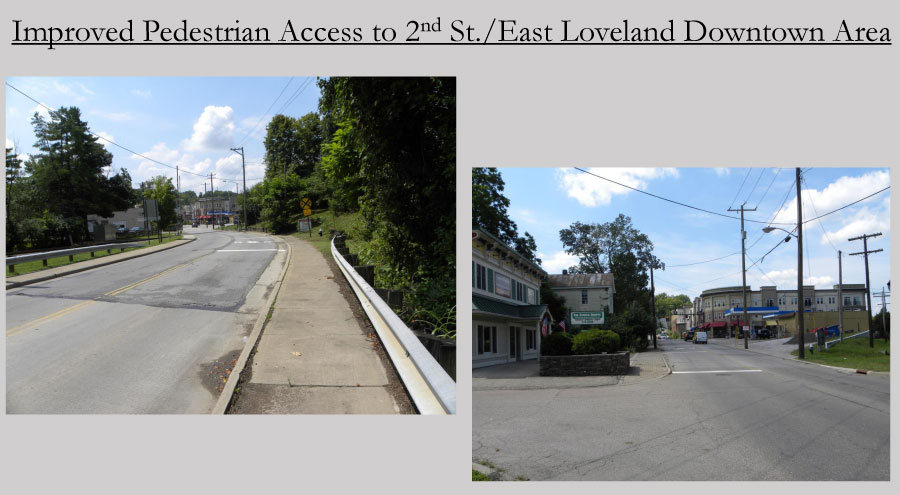
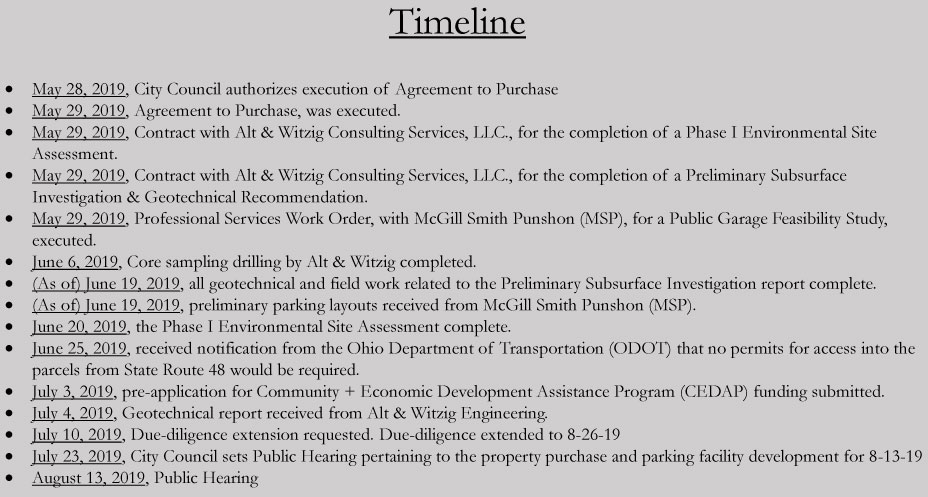
Loveland, Ohio – City Council held a public hearing on August 13, to hear public comments on the proposed purchase of 1.15406 acres of land in Historic Downtown and to construct a parking facility. An entrance to the garage from Rt. 48 is an integral part of the plan presented by City Manager, Dave Kennedy.
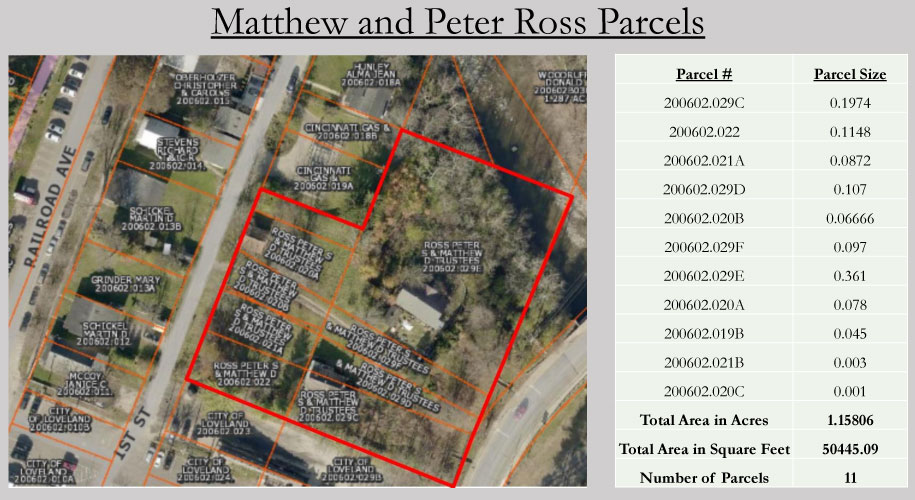
The property includes eleven parcels contiguous to First Street to the west and Second Street/State Route 48 to the east. The parcel total 1.15406 acres.
Peter and Matthew Ross agreed to a selling price of $550,000 which matched the appraisal obtained by the City. The total “appropriation” cost according to Kennedy, will be $571,150. Council has already authorized Kennedy to purchase the land.
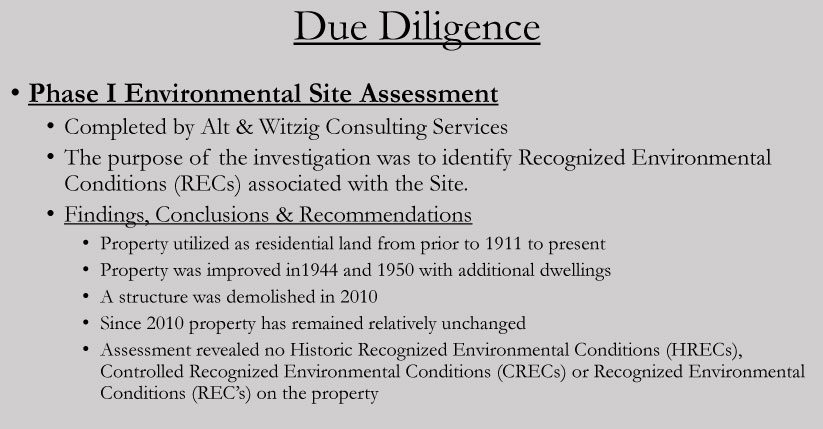
Council gave the City Manager authority to complete the purchase in May once he completed studies to see if there were such things as environmental or soil problems that would prevent the city from building a garage on the site. These videos are of Kennedy’s report to Council and the public comments they received during the public hearing. After the public hearing, Council debated whether or not to give the City Manager further direction and support for moving ahead with the purchase.
To built the garage would cost between 6 and 6.8 million dollars in addition to buying the land.
You can make a charitable tax-deductible donation to the Ramsey-Paxton Cemetery Association, Inc. and mail it to the Ramsey-Paxton Cemetery Association C/O Rob Geiger, PO BOX 25, Loveland, Ohio 45140.
Rob Geiger is the President of the Ramsey-Paxton Cemetery Association
by Rob Geiger
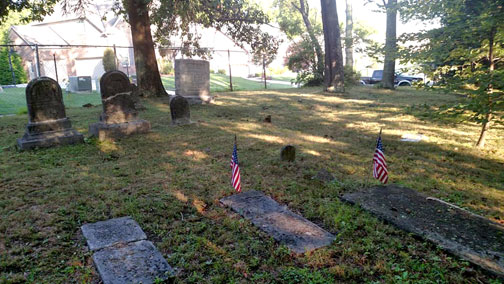
Over the last 224 years since the first settler that entered the Greater Loveland Area, so many historical landmarks that were created have disappeared because of fire, floods, and development. Our oldest historical landmark of 206 years is well on its way to being preserved for another generation because of the generosity of so many people and having community support.
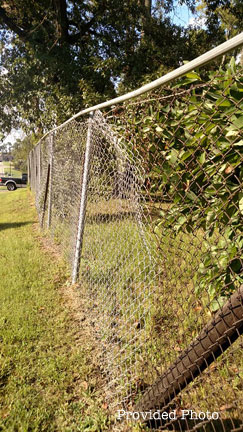
The Ramsey-Paxton Cemetery Association, Inc has received almost $12,487.00 with another $722.00 pledged to be given – bringing the total to $13,200.00. We are having faith that we will reach our goal of $14,200.00 very soon. We have a tentative date in which the work will start by removing trees, the old rusted chain-link fence, the installation of a new black aluminum industrial grade 4’ fence with an antique wrought iron gate in September.
The old rusted chain-link fence will be replaced with the installation of a new black aluminum industrial grade 4’ fence with an antique wrought iron gate in September.
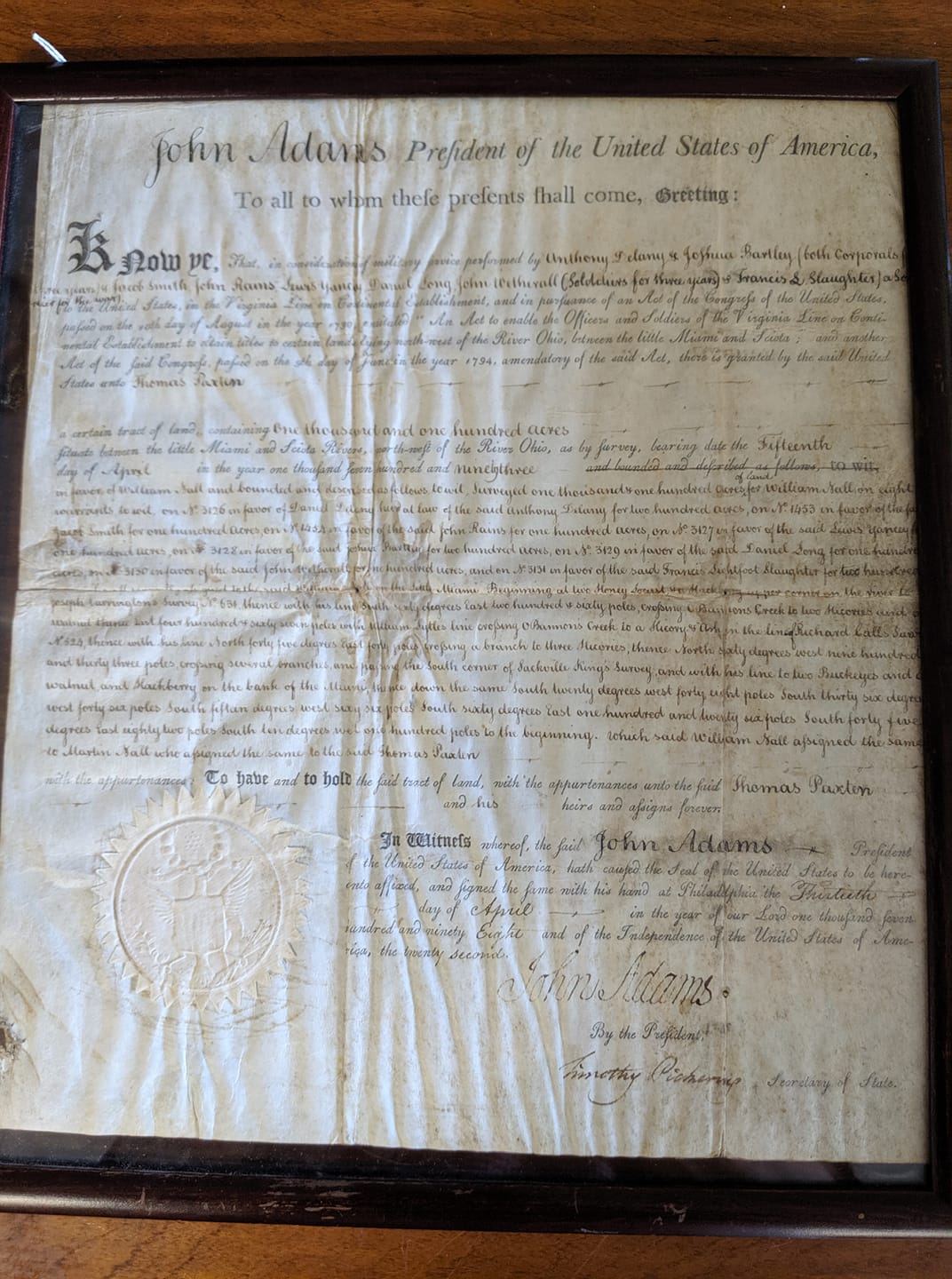
The first internment was Lt. Col. Thomas Paxton in 1813 who contributed so much on the National, State and Local levels including being in the American Revolution along with his son-in-law Captain John Ramsey, who is buried in the cemetery with other family members. There is plenty of history on Paxton through the internet, the Loveland Museum Center (having the original land grant document for Paxton signed by President John Adams), and family members.
With partnerships formed it seems that the donations started to come and after our third attempt in 23 years to make capital improvements to the cemetery we will succeed this time!
This has been a frustrating project. Trying to get community support was hard until Loveland Magazine became our Media Sponsor and Kevin Egan, one of the owners of Paxton’s Grill and Ramsey’s Trailside restaurants came on board, including the Loveland Legacy Foundation (Steve Max). With partnerships formed it seems that the donations started to come and after our third attempt in 23 years to make capital improvements to the cemetery we will succeed this time!
I was at the Loveland Museum Center and held the original land grant certificate issued by President John Adams issued on April 13th, 1798 for 1,100 acres to Thomas Paxton.
The cemetery is owned by family members of the Paxton Ramsey family which serves as trustees. We do not receive any source of income like other municipality cemeteries that you see along roadsides in our community. We are very conscientious with financial expenditures so that we can preserve this historical site for years to come and look at other funding revenue to accomplish our mission “To preserve and restore the dignity and honor of the graves for the education of tomorrow’s citizens”.
The trustees are very grateful to Loveland’s City Manager, Dave Kennedy for showing his support early on with clearing vegetation on city property by the fence line, installing the Bicentennial Cemetery Sign at the cemetery, and waiving the fence permit.
Loveland’s oldest historical landmark is located in White Pillars subdivision on Ramsey Court.
We could not complete this project without the in-kind donations from our two contractors, Steve Rainy Tree Service, and Eads Fence Company! This project would normally have cost $32,200.00 but with their generosity, they have reduced the cost to $14,200.
Dale Eads also is donating the antique wrought iron gate that will be the focal point of the project. We were so excited when Paxton’s Grill (Ralph Dunnigan and Sandy Russell) Ramsey’s Trailside (John Zielke) had a benefit night, and so appreciative to Loveland Sweet Shoppe (Gloria Wilson), Bond Home Furnishings (Kevin Malof) and Bush Re Shea Insurance Agency (Bill Re).
There were so many individuals in the area along with the family members of the Paxton Ramsey Family that have donated almost half of the project cost and we appreciate their giving.
We are so pleased to have formed a partnership with the Loveland American Legion Post 256 with their enthusiasm and donations, not only for the present but for our future plans. We are looking forward to when Mike Henderson from the Legion will be cleaning the gravestones in the very near future.
There were so many individuals in the area along with the family members of the Paxton Ramsey Family that have donated almost half of the project cost and we appreciate their giving.
We have one more fundraising event that will take place August 21, at 7 PM at the American Legion Hall at 4618 River Rd, Cincinnati, OH 45204 on the Westside of Cincinnati. This will be a quarter auction type of event along with basket raffles. Please come out to this event or you can make a charitable tax-deductible donation to the Ramsey-Paxton Cemetery Association, Inc. and mail it to the Ramsey-Paxton Cemetery Association C/O Rob Geiger, PO BOX 25, Loveland, Ohio 45140.
In this LOVELAND MAGAZINE TV video, Cassie Mattia talked with Steve Max and Rob Geiger last May about the history of the cemetery, who is buried there, and the announcement of the matching grant.
Loveland, Ohio – While speaking about proposals to change the City Charter, Councilwoman Angie Settell raised concerns about whether the Finance Director should be reporting to the City Manager or City Council.
She said that the Council’s first responsibility is to be the keeper of the taxpayer’s money and that there needed to be checks and balances and a level of protection was being eliminated for no valid reason.
She also raised concerns about proposed changes to the role of the Vice-Mayor in situations where the Mayor is incapable of performing their duties.
The occasion was during a meeting on June 11, when Council was holding a public hearing to receive comments regarding proposed revisions to the Charter of the City.
Councilmembers, Ted Phelps and Tim Butler; and acting Solicitor Matt Fellerhoff responded to Settell’s concerns.
If you see value in having a hometown newspaper with Loveland News in it and are enjoying seeing your neighbors and friends featured in interviews, videos, and stories, please show your appreciation by clicking the button below.



 Michael Doss was charged in the Montgomery County Court of Common Pleas with one count of importuning, a fifth-degree felony.
 The Miami Valley Human Trafficking Task Force is formed under the attorney general’s Ohio Organized Crime Investigations Commission and is led by the Montgomery County Sheriff’s Office. The task force includes resources from the Butler Township Police Department, Oakwood Police and Homeland Security Investigations.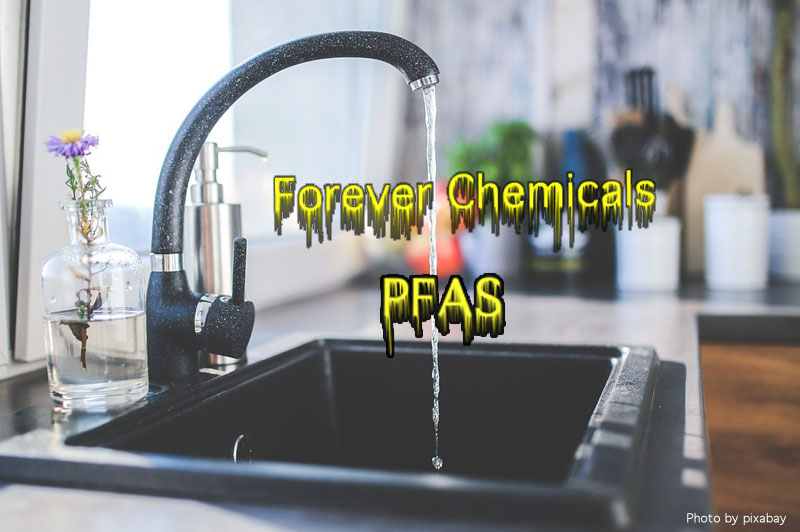

![[Video Interview] City Hall: Is the collapsed sewer a public or homeowner problem?](https://lovelandmagazine.com/wp-content/uploads/2020/07/feature-vargo.jpg)









![[VIDEO] Parking garage coming to Historic Downtown](https://lovelandmagazine.com/wp-content/uploads/2019/08/feature-loveland-parking-garage.jpg)

















![[Loveland Magazine TV] Councilwoman Angie Settell expresses concerns about proposed City Charter](https://lovelandmagazine.com/wp-content/uploads/2019/07/maxresdefault-4.jpg)