Tag: clermont county commissioners

  • Clermont Commissioners give OK to Grailville grant application

    Clermont Commissioners give OK to Grailville grant application

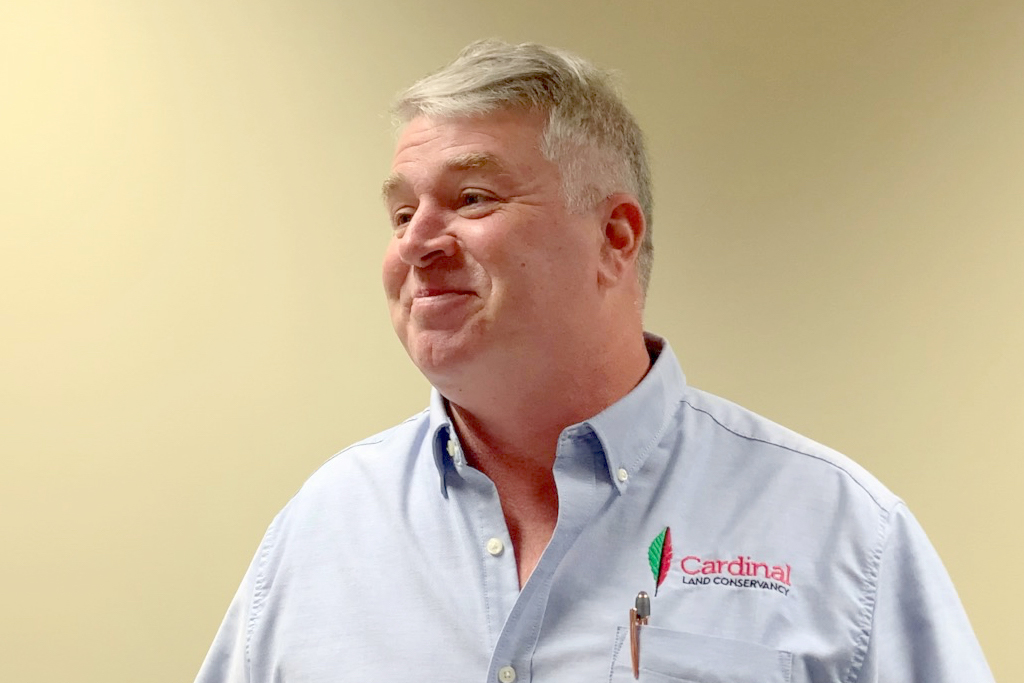
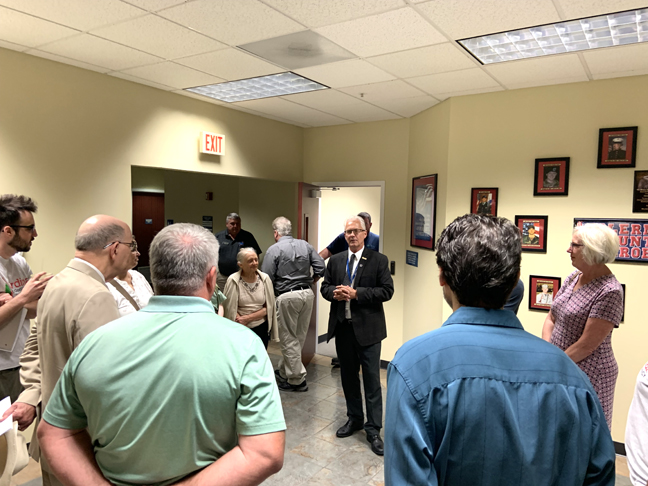
    After the meeting, Commissioner David Painter came to the hallway where Grailville supporters and Cardinal Land Conservancy workers had gathered and congratulated them for their efforts. (Photo by David Miller)

    David Miller is the Managing Editor of Loveland Magazine

    by David Miller

    Batavia, Ohio – On Wednesday, Clermont County Commissioners Bonnie Batchler, Claire Corcoran, and David Painter voted their unanimous support for the Cardinal Land Conservancy seeking a grant from the State of Ohio’s Clean Ohio Conservation Fund that would be used to purchase 89 acres of Grailville land.

    Both the City of Loveland and Miami Township have previously voted their unanimous support for the grant application. Cardinal needed an affirmative resolution from all three governing bodies that have jurisdiction over land use at Grailville.

    Sharon Scovanner a leader with the grassroots, Grail Land Preservation Group told Loveland Magazine today, “Members of the community were pleased with the unanimous vote by the Clermont County Commissioners yesterday. This vote brings us one step closer to preserving 89 acres of Grail land in perpetuity.”

    Another member of the group and also a Grail Member, Elizabeth Murphy sent this statement:

    “For over 70 years the women of The Grail have tended this Grailville land. We have had the privilege and the pleasure of protecting and caring for this small piece of God’s Creation, and of sharing its peace and natural beauty with others. It is important to The Grail that the future of this land be in keeping with these values. We believe that Cardinal Land Conservancy will be an excellent steward of this property going forward, and it has been very good working with them to make this happen. We are grateful that all three government bodies – Loveland City Council, Miami Township Trustees, and the Clermont County Board of Commissioners have supported us. We look forward to having Cardinal as an active neighbor to our remaining Grailville property.”

    Scovanner added, “Cardinal Land Conservancy will now be submitting an application for Clean Ohio funding. A decision should happen later this year. The partnership between The Grail, Cardinal, and the community has been instrumental in getting us to this point.”

    There will be no direct local tax dollars used for the purchase.

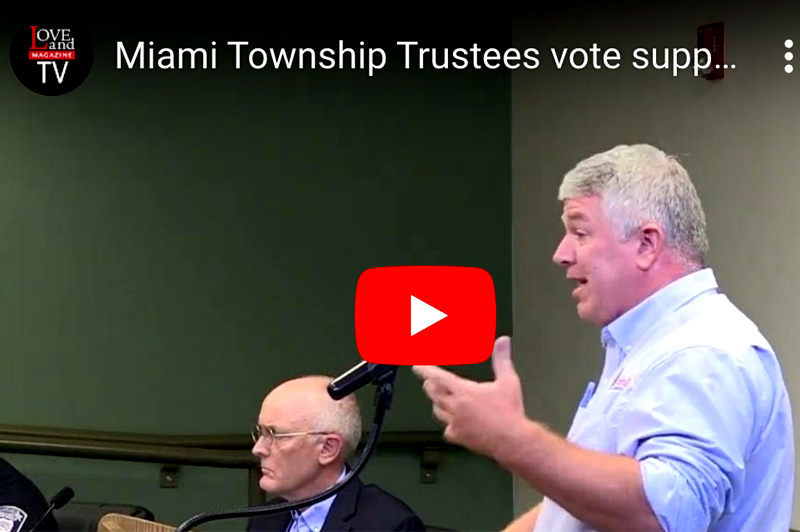
    The below LOVELAND MAGAZINE TV video is when Cardinal Land Conservancy’s Andy Dickerson spoke to the Commision on Wednesday, August 17 about Grailville and how they intend to use the grant funds if their request is approved.

    The below LOVELAND MAGAZINE video is from Wednesday, August 17 when local residents made the trek to the Clermont County Commission meeting to urge support for a grant application to secure funding to preserve Grailvile acreage as permanent green space.

    Clean Ohio Program

    The Clean Ohio Green Space Conservation Program is dedicated to environmental conservation including acquisition of green space and the protection and enhancement of river and stream corridors. Grant recipients agree to maintain the properties in perpetuity so that they can be enjoyed and cherished for generations to come.

    CLEAN OHIO FUND

    DESCRIPTION
    • The Clean Ohio Fund is a $400 million state bond initiative first approved by Ohio voters in 2000. It was overwhelmingly renewed in all 88 counties in 2008 with strong bipartisan support from the executive and legislative leadership.

    • A public-private partnership, Clean Ohio restores, protects and connects Ohio’s natural and urban places by preserving open space and farmland, improving outdoor recreation, and cleaning up brownfields to encourage redevelopment and revitalize communities.

    Four separate Clean Ohio programs run a competitive selection process so that Ohioans benefit from the very best projects:

    – Clean Ohio Revitalization Fund: supports cleanup of brownfields for redevelopment; only public entities may apply.

    – Clean Ohio Agricultural Easement Purchase Program: preserves farmland; local sponsors such as non-profit land trusts and soil and water conservation districts submit an application on the landowner’s behalf.

    – Clean Ohio Open Space Conservation Program: preserves and restores open spaces, sensitive ecological areas and stream corridors; non-profit entities and local parks are eligible but not state agencies.

    – Clean Ohio Trails Fund: improves outdoor recreational trail opportunities; any public subdivision or non-profit entity in Ohio may apply.

    Clean Ohio Fund
    An Investment In Economic Revitalization, Family Farms & Environmental Health 388, 708, 153, 246, Clean Ohio Projects by Program: Farmland, Trails, Brownfields, and Green Space.
    Development of the Ohio & Erie Canal Towpath Trail in Cleveland was supported by Clean Ohio.
    © The Trust for Public Land
    Smith Farm, located in Fairfield County, was preserved with a Clean Ohio agricultural easement.
    © SWCD

    ACCOMPLISHMENTS
    All 88 Ohio counties have received funding and benefited from the Clean Ohio Fund. This critical state investment has:

    • Cleaned up nearly 400 abandoned, polluted sites.
    • Preserved over 26,000 acres of natural areas.
    • Protected over 39,748 acres of family farms.
    • Created over 216 miles of multi-purpose, recreational trails.
    • Leveraged additional investments to create a total economic impact of approximately $2.6 billion in public and private investments to date.

    BENEFITS
    • Helps catalyze economic activity in Ohio by creating new jobs and retaining existing ones in construction, goods, services, recreation, eco-tourism and high-tech industries.
    • Helps secure our agricultural base, Ohio’s number one industry, by helping to preserve working family farms.
    • Helps keep Ohioans’ drinking water safe.
    • Protects Lake Erie and rivers and streams by creating natural buffers to keep them clean.
    • Cleans and redevelops polluted abandoned industrial properties, protecting neighborhoods and spurring redevelopment.
    • Protects natural areas and develops miles of multi-use trails for public access.
    • Generates new tax revenues for schools and communities with redevelopment project spin-offs across Ohio.
    • Leverages additional investments to create a total economic impact of approximately $2.6 billion to date.
    • Does not raise taxes – each $25 million in Clean Ohio Fund bonds requires $2.3 million in annual debt service.
    • Helps keep Ohio environmentally sound, economically viable, and poised for the future.

    Clean Ohio Fund
    The Nature Conservancy’s Kitty Todd Nature Preserve in Northwest Ohio is supported in part by Clean Ohio funding.
    © Randall Schieber
    The site for the current Ohio Valley Surgical Center in Springfield was revitalized using Clean Ohio funding.
    © Ohio Development Services Agency

    _________________


  • A Grailville up-date: Commission didn’t vote but plenty of optimism

    A Grailville up-date: Commission didn’t vote but plenty of optimism

    Batavia, Ohio – About 20 local residents, members of both the Grail and the Grail Land Preservation Group made the trek to Batavia and the Clermont County Commissioners meeting Wednesday morning to show support for a grant application that needs the support of the Commission. There was no vote because the resolution was not finalized, however, both President Bonnie Batchler and member Claire Corcoran listened attentively as Andy Dickerson from the Cardinal Land Conservancy made a presentation followed by several residents from Loveland and Greater Cincinnati espousing the benefits they see if the remaining Grail land is preserved as greenspace in perpetuity.

    The hold up on having a resolution in front of the Commissioners was because Commissioner David Painter could not attend and it was expressed that there were one or two remaining questions before a vote was taken.

    This LOVELAND MAGAZINE TV video is Dickerson talking to supporters after the presentation was concluded. Dickerson expects a resolution will be voted on next week when Painter can attend.

    Both the City of Loveland and Miami Township governing bodies have previously voted their unanimous support for the Cardinal Land Conservancy seeking a grant from the State of Ohio’s Clean Ohio Conservation Fund to purchase the remaining 89 acres of Grailville land. (Second step in securing grant money to preserve Grailville a success)

    More at 11 as they say

    Loveland Magazine will be publishing speeches from citizens as they passionately urged the Commission to support the grant application. You will hear their unique perspectives on why the Grailville land is so important as greenspace, and a tourism attraction for Loveland, Miami Township, and Clermont County. There were discussions of the positive financial impact on the area, and Grailville’s important cultural past that can be preserved and continue into the decades to come.

    _________________

    For background: History of Grailville – The Grailville Archive

  • Second step in securing grant money to preserve Grailville a success

    Second step in securing grant money to preserve Grailville a success

    David Miller is the Managing Editor of Loveland Magazine

    by David Miller

    Miami Township and Loveland, Ohio – “The members of the Grail Land Preservation Group in attendance were excited by the unanimous support of the Miami Township Trustees. The opportunity for open green space to be protected in perpetuity has been a desire for many group members,” said Loveland resident Sharon Scovanner.

    The quest to get formal support from three government jurisdictions moved to step two last evening when the Miami Township Board of Trustees voted unanimously to give their stamp of approval. Andy Dickerinson with The Cardinal Land Conservancy, based in Miami Township, appeared at the township meeting to explain the proposal and answer any questions. His appearance was probably unnecessary as both Ken Tracy and  Mary Makley Wolff, as well as Township Administrator Jeff Wright spoke enthusiastically about the Grailville land remaining greenspace.

    Loveland City Council voted their unanimous support in June. The next step is to seek the support of the Clermont County Commissioners. (Council endorses request by residents for Grailville grant application filing)

    The Cardinal Land Conservancy and many Loveland and Miami Township residents are asking local governments to lend their support to a plan that could save 89 acres at Grailville as dedicated green space in perpetuity. Dickerson, on behalf of the Conservancy, is requesting votes of support for a grant application that would be submitted to the Clean Ohio Conservation Fund, to purchase 89 acres of the Grail property.

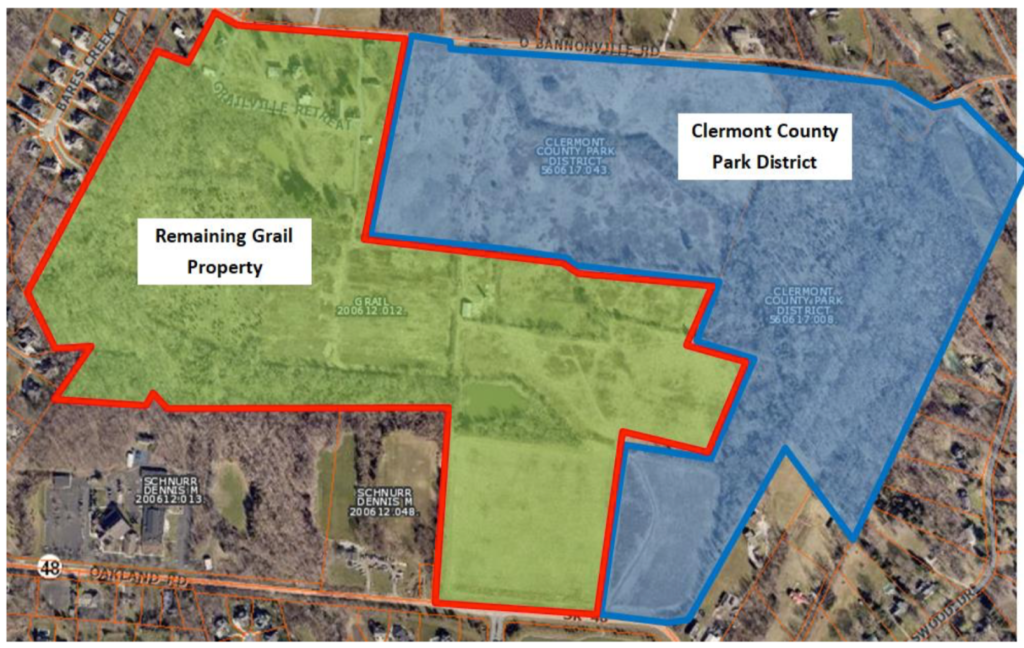
    This is the site where Drees Homes was denied the zoning change they requested in 2022 after local residents filled Planning and Zoning chambers to urge that the site be protected. The Kentucky home builder had requested the land become a Special Planning District which could have allowed 209 homes on the site. The same parcel is also where the Loveland City School District proposed building a campus until the funding they wanted was denied by voters in 2019. The site is bounded by O’Bannonville Road and State Route 48 (Oakland Road).

    After the re-zoning Drees requested was denied, local Grail members and other local residents coalesced to find the solution. The Grailville Land Preservation Group worked together to stop the zoning change Drees wanted.

    If the grant application is successful, the 89 acres of land would be deeded as dedicated green space in perpetuity. The proposed purchase by the conservancy would be adjacent to the 100-acre Clermont County Park District property, which was also acquired from the Grail using Clean Ohio funding.

    Scovanner added, “It has always been our hope that the land will be preserved to respect not only the legacy of the Grail and their members past and present, but to also be a gift to future generations. We appreciate our partnership with Cardinal and look forward to garnering support from the Clermont County Commissioners as the next step in the process.”

    In this LOVELAND MAGAZINE TV video, Andy Dickerson explains the details of the grant and what he was asking the Miami Township Trustees to do.

    For background: History of Grailville – The Grailville Archive

  • Clermont County Commissioners approved a 2020 General Fund operating budget of $61.5 million

    Clermont County Commissioners approved a 2020 General Fund operating budget of $61.5 million

    Batavia, Ohio – Clermont County Commissioners approved a 2020 General Fund operating budget of $61.5 million at their Dec. 11 session. The non-operating budget of $9.7 million includes one-time expenses for capital and economic development projects within the General Fund.

    The General Fund is the largest discretionary source of funds in the county and finances 20 of 21 elected offices in Clermont County. The Engineer’s Office is funded through state gasoline taxes and driver license fees. Clermont County Commissioners also appropriated $199.2 million in 2020 for the other 114 special purpose funds under their budgetary control.

    As required by law, the budget is balanced, with expenses not exceeding projected revenues plus unobligated cash.

    Sales tax revenue, which provides nearly 47 percent of General Fund revenue, is estimated to be $30 million in 2020. The next two largest streams of revenue include charges for services ($10 million) and property taxes ($9 million)  included within the General Fund.

    In 2020, General Fund program areas will be funded as follows:

    Criminal justice: $26.8 million

    Judicial services: $14.7million

    General government: $12.3 million

    Public safety: $4.5 million

    Health and human services: $3.3 million

    Personnel costs account for the largest share of the total General Fund budget — $49.6 million, or 70% of the budget, with $21.6 million going to other expenses.

    For questions, contact Office of Management and Budget Director Mary Rains, mrains@clermontcountyohio.gov, 513.732.7988.


  • Per diem rates increase for some Clermont County foster care children

    Per diem rates increase for some Clermont County foster care children

    Batavia, Ohio – Clermont County Commissioners recently approved an increase to the per diem rate for therapeutic foster care children.

    The rate increased from $40 per day to $60 or $70 per day, depending on the number of children in the foster care home.

    There are children who are considered to have “therapeutic demonstrate behavior” that is considered from moderate to high risk, and may require psychiatric treatment. The child may be depressed, or have bouts of physical aggression, or frequent emotional outbursts.

    Commissioners also approved an increase in mileage rates.

    “The needs of these children place more demands on their foster parents,” said Sara Faison, Foster Care and Visitation Supervisor. “They may need to see a therapist on a regular basis, or require additional medical attention. The previous rate was $40 per day, and we did not think that was adequate to meet the particular needs of these children.” The rate was last increased in 2013, Faison said.

    One of the reasons Children’s Protective Services, which oversees the county’s foster care program, wanted to increase the therapeutic rate was to keep these children closer to their homes. “These children have often been placed in homes or centers outside the county,” Faison said. “We hope that by increasing the per diem rate, we can keep these children closer to their biological families, and keep them in the same school. This offers more stability to the child, which is so important.”

    The $60 per day rate is for families with one or two children in foster care, and applies only to the therapeutic child. The $70 per day rate is for families with three or more foster children, and again applies only to therapeutic children.

    Commissioners also approved an increase in mileage rates, from $.40 per mile to a standardized reimbursement rate listed by the U.S. General Services Administration, currently the rate is $.545 per mile. Foster parents are reimbursed for transporting children to approved medical and counseling appointments, and visitations with parents.

    For a complete list of current per diem rates for foster care children, which depend on the age of the child, whether the placement is considered an emergency, and other factors, click here:https://clermontforkids.org/clermont-county-foster-care-per-diem-rates/.

    “We would love to attract more foster care parents from Clermont County,” Faison said. “We are very supportive of our foster care parents, and they also support each other. It is far better for every child in foster care to stay as close as possible to their home so that the disruption they are experiencing isn’t worsened by a distant placement.”


      Accounting Plus–Bingaman Accounting and Tax Service, LLC is a tax preparation, payroll and bookkeeping company locally based in Loveland, OH.


  • “This deal is pure crony capitalism” – Port Authority approves bonds to support FC Cincinnati complex in Milford

    “This deal is pure crony capitalism” – Port Authority approves bonds to support FC Cincinnati complex in Milford

    Milford, Ohio – On September 9, the Clermont County Port Authority approved issuing $30 million in lease revenue bonds to finance the cost of building a training facility and youth academy in Milford for the professional soccer team, FC Cincinnati.

    Chris Hicks

    Self-described “Taxpayer Watchdog” and candidate for Clermont County Auditor, Chris Hicks told Loveland Magazine, “This deal is pure crony capitalism. It raises taxes, the hotel tax, specifically to support one private, for-profit, company. It buys land using tax dollars for that company. It then has the government issue bonds to finance it all for the private company and then has the government own the land and buildings so the private, for-profit, company never pays property tax.” Hicks also says that the City of Milford gets no new infrastructure such as road or sidewalk improvements. and it actually makes the citizens of Milford liable for $43,000 to 47,000 per year for 20 years, to pay for the land.

    Under the arrangement between Milford, Clermont County, and the Port Authority, construction materials will be also be exempted from paying Ohio sales tax, estimated to be $1 million.

    A recent increase in the Clermont County lodging tax will also provide $223,000 a year to support the project.

    Because the Port Authority is tax exempt, FC Cincinnati will not have to pay property taxes. It has negotiated annual payments with the Milford School District to help compensate for what they might otherwise lose, however, other public agencies whose funding derives from property taxes will not be made whole.

    Under the agreement, the Port Authority will lease the 24 acres of land on U.S. 50 in the City of Milford near Interstate 275, and the facilities to be built, to FC Cincinnati for $1 a year. The bonds will be privately purchased by FC Cincinnati. The Port Authority will receive a one-time fee of $105,000 and an annual average fee of $9,000, most of which will go to support various county levies.

    The vote was 4-1. Port Authority Vice Chairman Loretta Rokey the Administrator of Pierce Township; Fiscal Officer Sam DeBonis an Assistant Vice President of Park National Bank, and members Greg DeFisher the President & CEO, Freeman Schwabe Machinery, and Rex Parsons the Administrator of Batavia Township; voted in favor. Member Greg Simpson a Principal with Key Transportation Inc., voted against the resolution.

    In a statement released by Clermont County after the vote, Andy Kuchta, Executive Director and Secretary of the Port Authority, offered the following statement:

    The structure of the lease answers all of the questions related to what the economic impact will actually be and if it is worth the level of incentives being provided. The Port Authority will have the choice to not renew the lease every 360 days for any reason. This is not a 20-year deal but a 360-day deal, full stop.

    Within the next 3-5 years there will be a comprehensive evaluation of the actual economic impacts and benefits once the facility has been constructed and operational for a period of time. If that evaluation determines the economic impacts have not materialized, the Port Authority will be able to substantially renegotiate the terms of these agreements or simply not renew them and return the property to a fully taxable status.


    On Aug. 22, Clermont County Commissioners approved an increase in the lodging tax in the county, from 6% to 7%. The revenue generated by the increase in the tax, approximately $223,000 a year, will be used by Milford to pay for the land. Commissioner David Uible said that “As a businessman, I love this deal. Clermont County incentivizes the City of Milford to buy this property for FC with a 1% lodging tax. This will result in $7 million in additional spending each year. The clear winners are the City of Milford, the county as a whole, and all the citizens who call Clermont County home.”

    Hicks says that the statement by Uible is misleading because the $7 million figure pertains to all soccer in the region, not from the Milford practice facility. Hicks says in a fact sheet he released on August 29 that even if credible, their own study lists the actual impact at only $1.6 million per year.

    Hicks has previously said that the 1% tax increase was not enough to cover the cost of the land. “To fund $3.5 million for land, based on Clermont County Convention & Visitors Bureau estimates, the hotel tax needs to be at least 1.2%, leaving Milford taxpayers holding the bag for $43-47 thousand per year.”

    In an analysis of the deals, Hicks says that County agencies that rely on property taxes like library, safety services, developmental disabilities, senior services, mental health, the Park District, Live Oaks, the City of Milford, and the County general fund will all lose the funds they receive now, $1,144,160, because when the FC Cincinnati site is developed there will be zero property taxes assessed. Hicks says that a $30 million development should pay $866,744 per year.

    Commissioner David Painter, who voted against the tax increase, said at the time of the vote, “I didn’t think the return was high enough to fully represent the stakeholders of Clermont County, who are the citizens of Clermont County.”

    According to the County, the 1% increase in the countywide lodging tax will “sunset” in 2038 or when the balance in the lodging tax account is sufficient to pay off the debt, whichever occurs first.

    The $30 million soccer complex is expected to include a 30,000-square-foot training facility and a 6,500-square-foot youth academy. FC Cincinnati said they hope to complete the training facility by next summer.

    The Port Authority decision represents the last step before the project can begin. FC Cincinnati also entered into agreements with the City of Milford and the Clermont County Convention & Visitors Bureau.

    Also according to the press release issued by the County, a study by Sports Facilities Advisory, a sports management consulting group based in Clearwater, Fla., estimated that the FC complex would generate “almost 65,000 visitor days” by out-of-town visitors and result in almost $7 million in direct spending annually. Hicks said, “Go deeper and find an economic study that has been misrepresented. It actually says a paltry $1.6 million in annual benefit will come from this site.” Hicks also claims that the economic study does not mention that FC Cincinnati will be selling “high dollar academy memberships for millions” as opposed to letting locals come and go as they please. “These type of facilities are money makers selling the ‘academy dream’ of your kid on a pro-soccer team,” added Hicks.

    You can look at Hick’s August 10 breakdown of the cost of building the Milford facility: Massive incentives.

    FC Cincinnati, whose owners were recently granted expansion status by Major League Soccer, will also build an estimated $200 million stadium in the West End of Cincinnati, which is expected to be open for the 2021 season. The team currently plays at Nippert Stadium at the University of Cincinnati. The City of Cincinnati is contributing 35 million dollars of public money to the West End Stadium.


  • 1% increase in Clermont County lodging tax approved for FC Cincinnati

    1% increase in Clermont County lodging tax approved for FC Cincinnati

    Batavia, Ohio –  Clermont County Commissioners today approved a 1% increase in the countywide lodging tax. The revenue generated by the increase in the tax, approximately $223,000 a year, will be used to support a new training facility and youth academy for FC Cincinnati in the City of Milford, near Interstate 275 and U.S. 50.

    The vote was 2-1. Commissioners Ed Humphrey and David Uible voted in favor; Commissioner David Painter voted against the resolution.

    Taxes on hotel-motel rooms in Clermont County will increase from 6% to 7% after Oct. 1. Under an agreement among Clermont County, the City of Milford, and the Clermont County Convention & Visitors Bureau, the revenue generated by the lodging tax would be remitted by the CVB to the City of Milford to repay debt securities of $3.5 million used to help purchase the property.

    “I believe that the benefits from this deal far outweigh any tax incentives,” Ed Humphrey, President of the Board of County Commissioners, said. He noted that the City of Milford and the Milford School District were satisfied with their agreements with FC Cincinnati, and also that local police, fire and EMS said the new facility would not strain their resources, according to a press release issued by the County.

    Commissioner David Uible said that “as a businessman, I love this deal. Clermont County incentivizes the City of Milford to buy this property for FC with a 1% lodging tax. This will result in $7 million in additional spending each year … The clear winners are the City of Milford, the county as a whole, and all the citizens who call Clermont County home.”

    Commissioner David Painter, who voted against the resolution, said, “I didn’t think the return was high enough to fully represent the stakeholders of Clermont County, who are the citizens of Clermont County.”

    The total property purchase price was $5 million, of which Milford is paying $3.5 million and FC Cincinnati is paying $1.5 million. The 1% increase in the countywide lodging tax will “sunset” in 2038 or when the balance in the lodging tax account is sufficient to pay off the debt, whichever occurs first.

    The anticipated $30 million soccer complex will be built on 23.6 acres at the former Expressway Park location. FC Cincinnati hopes to complete the training facility by next summer.

    A study by Sports Facilities Advisory, a sports management consulting group based in Clearwater, Fla., estimated that the FC complex would generate almost 65,000 visitor days by out-of-town visitors and result in almost $7 million in direct spending annually, according to the press release.

    FC Cincinnati, whose owners were recently granted expansion status by Major League Soccer, will also build an estimated $200 million stadium in the West End of Cincinnati, which is expected to be open for the 2021 season . The team currently plays at Nippert Stadium at the University of Cincinnati.


      Take Home Tano is about fresh, wholesome food for the frenzied family   Our goal is to meet the needs of busy families
  • Kaisich approves Disaster Relief Program for Clermont jurisdictions impacted by February storms

    Kaisich approves Disaster Relief Program for Clermont jurisdictions impacted by February storms

    Batavia, Ohio – The Clermont County Emergency Agency was notified on July 25 that Gov. John Kasich approved the implementation of the State Disaster Relief Program (SDRP) for local government agencies in Clermont County impacted by the Ohio River flood and tornado that occurred this past February.

    These jurisdictions have the potential to be reimbursed up to an estimated $943,000. Each eligible agency must submit a letter of intent to apply to the Ohio Emergency Management Agency, which is coordinating this effort, by Aug. 24. The Ohio EMA will then get funding approval from the State Controlling Board, which meets on Sept. 10, before distributing any funds.

    These expenses represent local government outlays during the flood and tornado, including debris removal, life-saving emergency protective measures, and the repair, replacement, or restoration of disaster-damaged publicly-owned facilities. This funding is available to the local political subdivisions and non-profit organizations that participated in the damage assessment process.

    The jurisdictions and potential reimbursement amounts are:

    Batavia Township – $104,000

    Clermont County Engineer – $266,139.63

    Clermont County Sheriff – $9,237.95

    Washington Township – $58,719.40

    Village of New Richmond – $124,811.80

    Clermont County Commissioners – $11,351.34

    Franklin Township – $246,277.44

    Monroe Township – $18,081.46

    Pierce Township – $44,601.78

    Village of Moscow – $30,000

    Clermont Municipal Court – $5,089

    Clermont County Park District – $3,500

    Adams-Clermont Solid Waste District – $21,000

    Countywide Total                                            $942,809.80

    Previously, these Clermont County jurisdictions had submitted an application to the Federal Emergency Management Agency for disaster relief through its Public Assistance Program. FEMA denied certain expenses that it considered ineligible as FEMA was unable to determine that the damage was caused specifically during the February storms.

    Under the SDRP, the state will reimburse 75% of eligible expenses. Each government agency will be responsible for the balance of the expenses.


  • Tom Eigel named Clermont county administrator

    Tom Eigel named Clermont county administrator

    Batavia, Ohio – Clermont County Commissioners have named a new county administrator. Thomas J. Eigel, who had been interim county administrator, was named to the top position.

    Eigel, 48, who reports directly to the Commissioners, is responsible for the budget and operations of all county departments that fall within the purview of the Commissioners. These include the Water Resources Department, the Building Inspection Department, the Office of Management and Budget, the Department of Community and Economic Development, the Public Safety Services Department, the Emergency Management Agency, and the Department of Job & Family Services. More than 400 employees work for these various departments.

    “We have several challenges in front of us,” Eigel said. “I am confident that we can meet them. We have a strong team in place, and I am thankful to the staff for all the help they gave me during this transition period.”

    Eigel became assistant county administrator in 2012. He came to the county with more than 15 years of experience in the government and nonprofit sectors. He graduated with a Bachelor of Arts degree from University of Cincinnati in Political Science in 1993, and a Master of Public Administration degree from Northern Kentucky University in 2003.

    Board President Ed Humphrey commended Eigel. “As both assistant and then interim county administrator, Tom Eigel has demonstrated the qualities of strong leadership and effective management,” he said. “He knows Clermont County, so there is no learning curve. Tom will keep us on a sound path fiscally, and will make sure that we are moving forward with initiatives that will help Clermont County continue to grow.”

    Eigel said that he would be focusing on several large capital projects the county is embarking on in 2018. “And we’ll be looking for ways to make the county more customer friendly,” Eigel said. “All of our departments will be engaged in this.”

    Said Commissioner David Painter, Vice President of the Board, “Tom has been a strong partner to the Commissioners. He is committed to serving our citizens. Tom will ensure that our departments continue to innovate, whether that is in adopting new technology or supporting best practices.”

    “Tom’s dedication to Clermont County and its government has long been apparent,” said Commissioner David Uible. “He has been instrumental in some of our biggest initiatives, including the launch and continuation of the Community Alternative Sentencing Center. We’re looking forward to the next chapter with Tom as County Administrator.”

    Eigel replaces Steve Rabolt, who retired as County Administrator last August. Eigel said that the search for an assistant county administrator was in progress.


  • Clermont Commissioners approve increase in poll worker pay

    Clermont Commissioners approve increase in poll worker pay

    Clermont County is seeking 30 Democratic poll workers for the Nov. 7 general election

    Batavia, Ohio – Clermont County Commissioners approved on Sept. 27 an increase in the pay of county local precinct officials, also known as poll workers.

    Beginning immediately, one-day pay for poll workers will go from $105 to $120. Pay for training, which typically lasts two to three hours, will increase from $25 to $35. And pay for mileage will increase, from a minimum of $10 a trip to a maximum of $55 a trip. Poll workers are paid mileage based on the distance from the Board of Elections in Batavia, where they pick up equipment and supplies, to the precinct polling place.

    “This is the first increase in pay for our poll workers since 2008,” said Judy Miller, Director of the Clermont County Board of Elections. “Our poll workers are dedicated to what they do, and they are responsible for making our elections a success. They work long days, and we are grateful that the Commissioners recognized that they were due a raise in pay.”

    Clermont County has 167 precincts, and four poll workers – two Democrats and two Republicans – are required by law to staff every precinct. Currently, Clermont County is seeking 30 Democratic poll workers for the Nov. 7 general election. Races for cities, villages, townships, and school boards will be on the ballot, along with a race for a Municipal Court judge, as well as two state issues.

    If you are interested in finding out more about being a poll worker, call the Board of Elections at 513.732.7275. You will also find information here: http://www.clermontelections.org/precinct-election-officials.


    Now Enrolling at All About Kids at Wards Corner today!