Rick Ogden Heating & Air Conditioning has been providing Loveland and the Tri-State area with quality heating and cooling solutions since 1982. During this time, they have built a well-deserved reputation for honesty, professionalism, and friendly service. Whether you need emergency air conditioning service, heat pump installation, or just want to improve your indoor air quality, their trained technicians have the experience and expertise to take care of all your HVAC needs.
Poorly maintained heating and cooling systems are costly and can leave your home uncomfortable throughout the year. It’s important to find an HVAC contractor that is reliable and friendly, and with Rick Ogden Heating & Air Conditioning, you can rest easy knowing your home is in good hands.
The expert team has experience servicing a wide variety of systems, including:
Gas Furnaces
Electric Furnaces
Oil Furnaces
Boilers
Air Conditioning
Humidifiers
Heat Pumps
Hot Water Heaters
Aside from impeccable service and thorough knowledge, Rick Ogden Heating & Air Conditioning carries only the very best in HVAC products. They offer items from Comfortmaker, Aprilaire, and Honeywell, all top brands in the industry. They will always treat you like you’re part of the family, only recommending the best for your heating and cooling system installations and repair.
Finding a reliable HVAC contractor is vital to the maintenance and quality of your heating and cooling systems. If you’re located in Hamilton or Clermont county or the southern areas of Butler and Warren counties, your search is over. When you trust the professionals at Rick Ogden Heating & Air Conditioning, you will receive 24-hour emergency services, high-quality products, on-going maintenance, and unbeatable HVAC installation and repair.
Give them a call at (513) 683-3714 today for a free estimate. You can also visit them online to view a comprehensive list of their heating and cooling services.
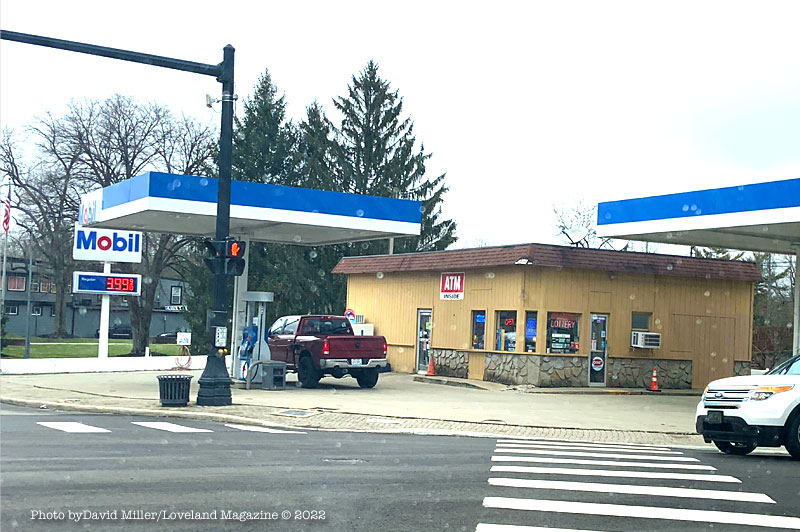
Loveland, Ohio – Last night by a unanimous “emergency” vote, City Council voted to allow City Manager Dave Kennedy to proceed with the purchase of the Mobil gas station at the corner of West Loveland and State Route 48 in Historic Downtown Loveland.
The ordinance authorizes the City Manager to execute a purchase agreement for the property located at 106 West Loveland Avenue for the construction of a turn lane and other traffic improvements.
You can read the background and details of the purchase here:
In this LOVELAND MAGAZINE TV segment, you can watch Kennedy explain why the Ordinance was declared an “emergency”, some of the financing of the project, how tax increment financing will be used, the turn lane, and a pocket park he intends to construct on the site.
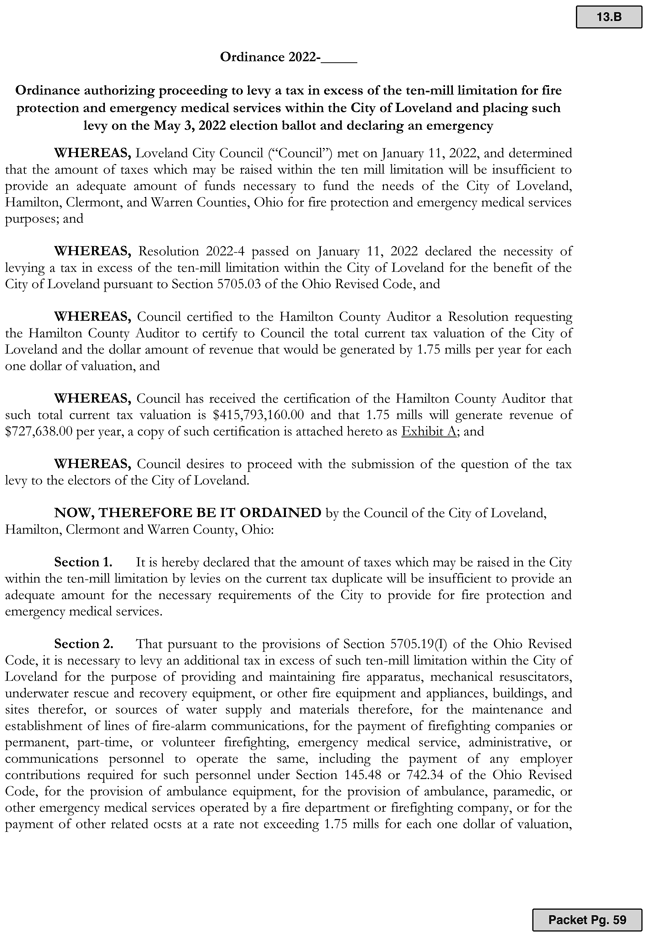
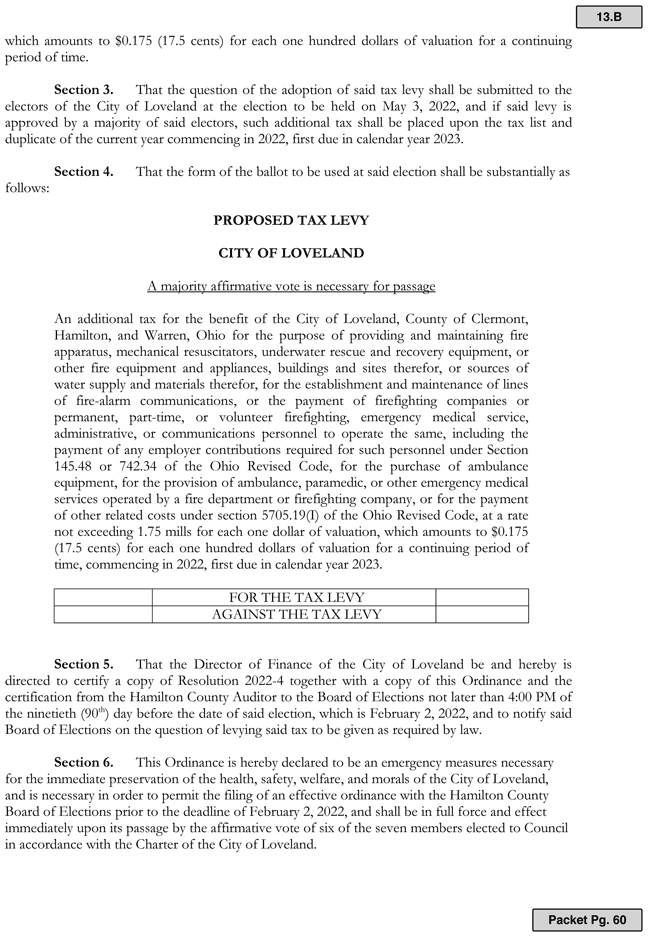
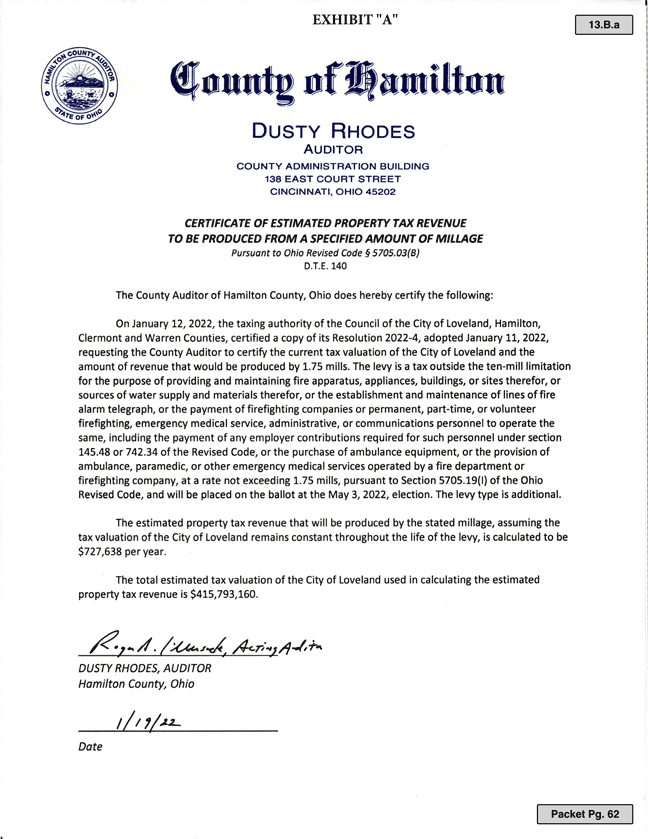
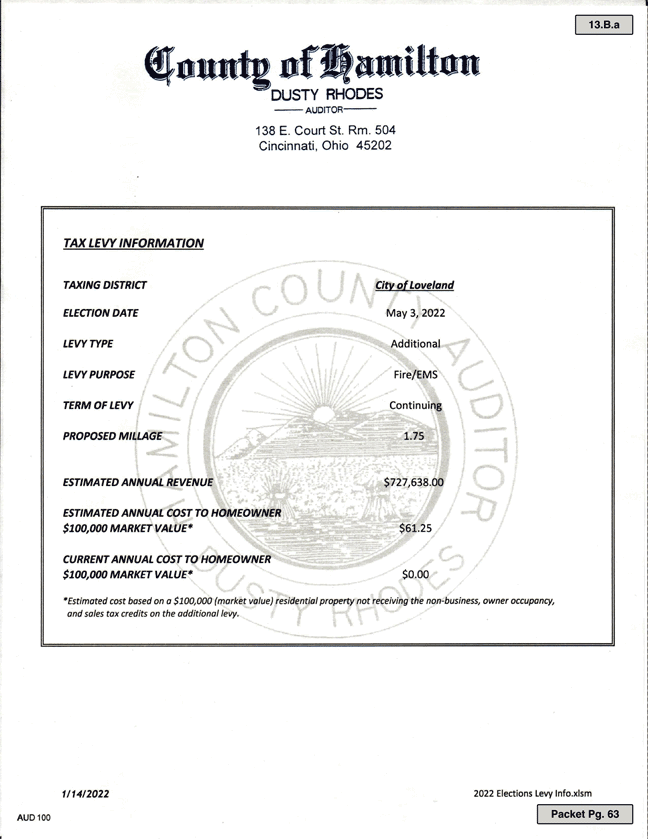
Loveland, Ohio – City Council approved Ordinance 2022-17, which authorized a levy to be placed on the May 3, 2022 ballot for fire protection and emergency medical services. It is a 1.75 Mill Fire and EMS Levy. Finance Director Mark Medlar reported that the City of Loveland currently has four levies to pay for Fire and EMS services and noted that the last levy was approved in 2014.
City Manager Dave Kennedy told the council on January 20, that the city received an estimated tax valuation from the Hamilton County Auditor’s Office of $415,793,160. This estimate is for the entire city which includes parts of Hamilton, Clermont, and Warren Counties. The estimated property tax revenue that will be produced by a 1.75 mill levy is $727,638 per year. “This amount is sufficient to maintain fire and EMS services”, according to the City Manager.
The estimated cost to an owner of a home with a $100,000 market value is $61.25 per year.
In the last year, it has been a challenging time with serious health diagnoses, treatment, and the looming concerns regarding Covid. Plans were slowed down but our pioneer blood kept forging ahead keeping progress moving ahead.
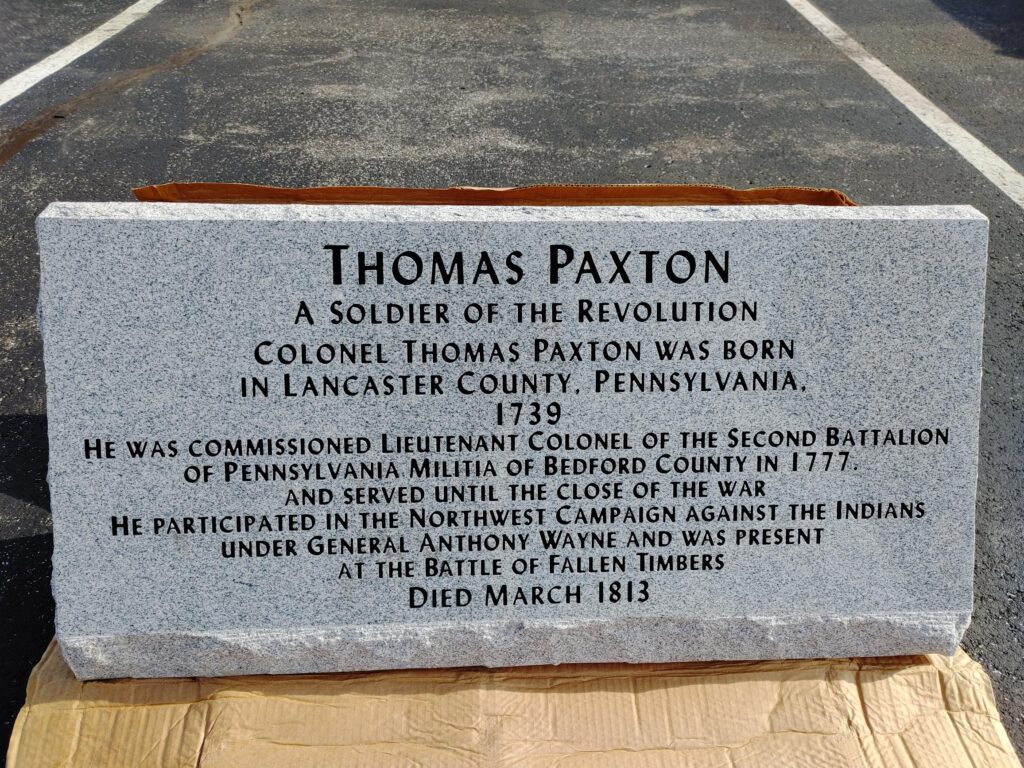
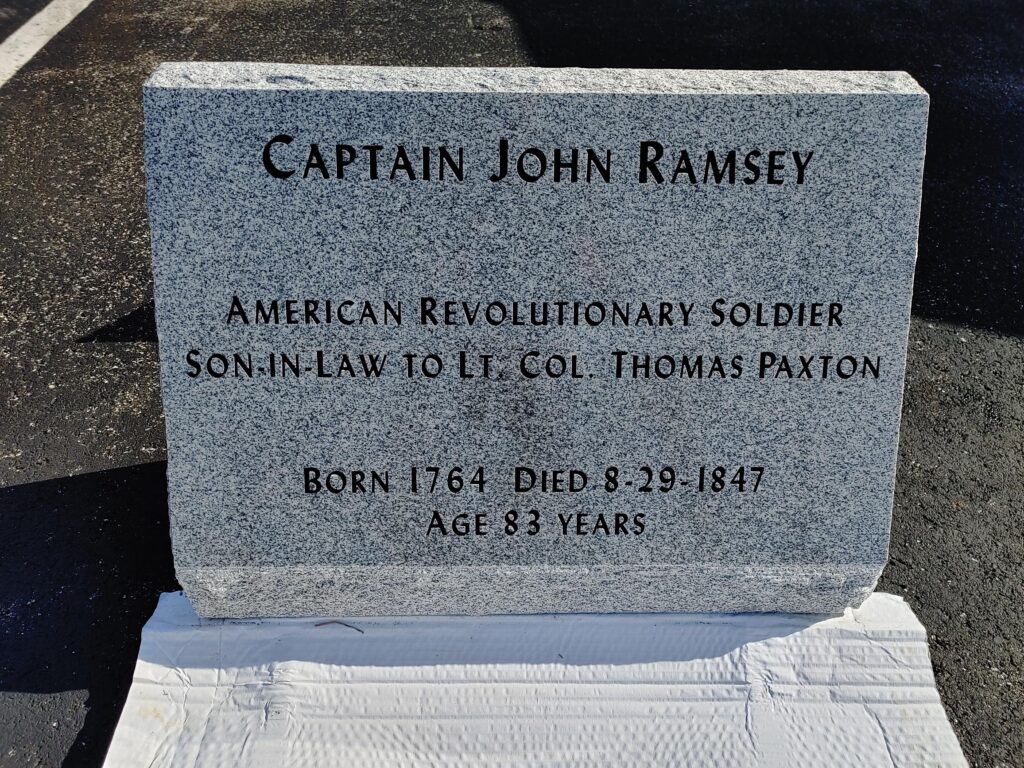
We are winding up the capital improvements to the cemetery and it’s hard to believe the capital fundraising started in 2018 with two big line items completed in 2019 – removal of the dead and dying trees, the old rusted fence, installing the beautiful black aluminum fence, the installation of the one of a kind wrought iron gates in 2020 and two new headstones installed for Lt. Col. Thomas Paxton and Capt. John Ramsey.
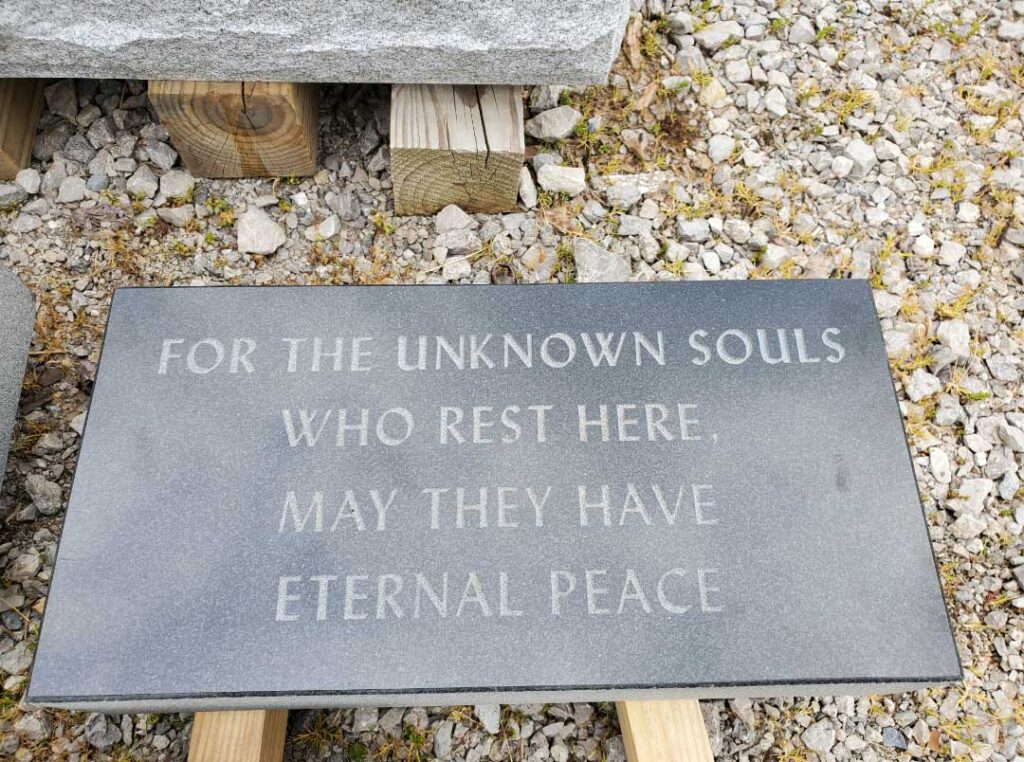
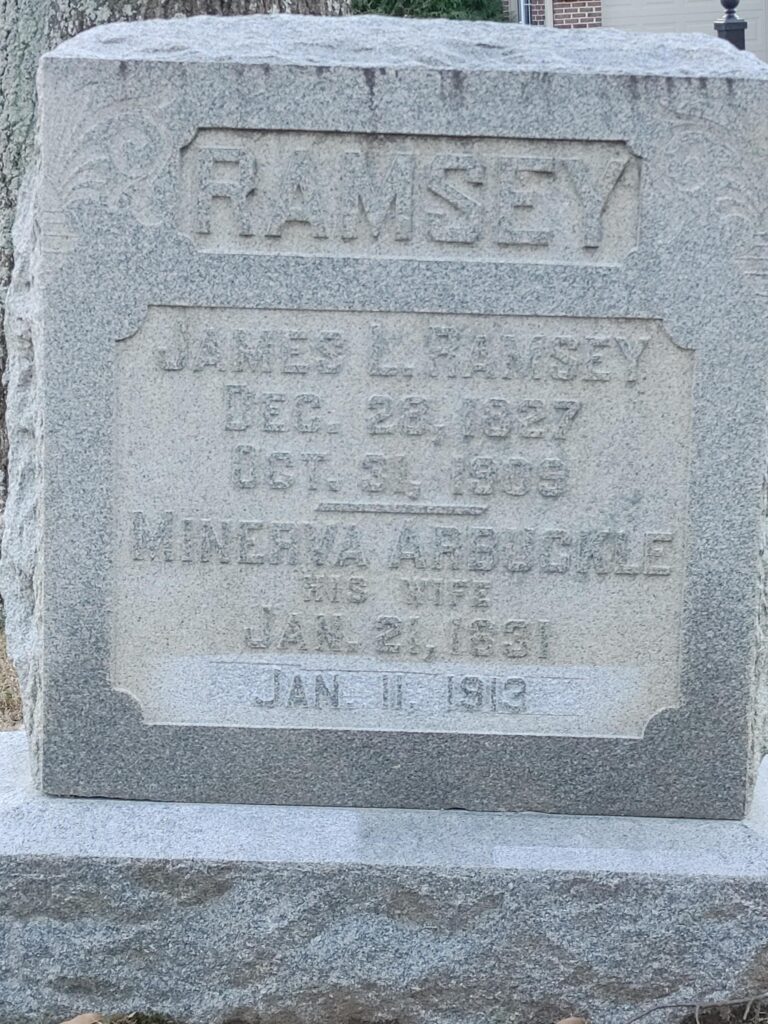
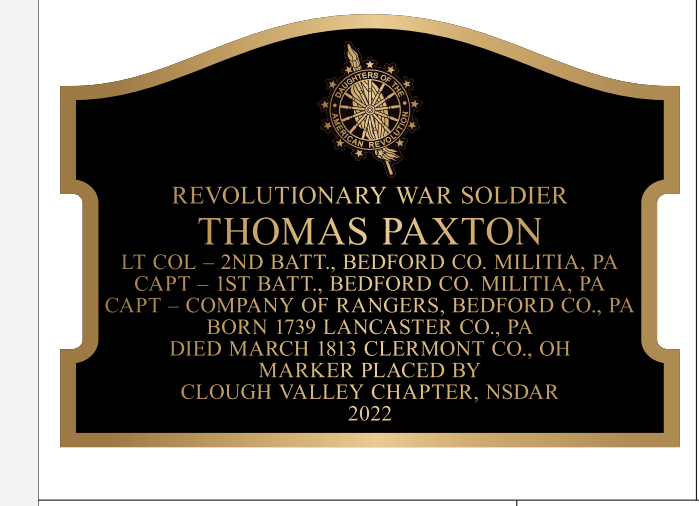
This past year, 2021, Riverview Monuments came through with their commitment and supplied the cemetery with beautiful black granite remembrance markers for the unknown graves within the confines of the cemetery. Riverview Monuments also sandblasted the death date of Minerva Arbuckle Ramsey on her headstone and is currently working with the Daughters of the American Revolution, Clough Valley Chapter which commissioned bronze plaques to the matching black granite used for the remembrance markers to mark LT. Col. Thomas Paxton and his daughter Isabella Paxton Ramsey’s grave. The Cincinnati Chapter of the Sons of the American Revolution is also coming up with their own marker for Captain John Ramsey to be installed in the cemetery.
We still could not find a local landscape company to even return phone calls to work on the grounds by leveling it out, planting grass seed, and providing grass management. Hopefully, we can find a company to provide this service in the early fall of 2022.
We are looking for volunteers to sand the flagpole and paint or donate a new flag pole in the month of April, 2022.
The Ramsey-Paxton Cemetery Association appreciates everyone that made this project a success! We could not even accomplish this task without some very key and instrumental partnerships. A huge “Thank You” to Loveland Magazine-our Media Sponsor, City of Loveland, Rainey Tree Service, Eads Fence Company, Loveland Legacy Foundation, Paxton’s Grill, Ramsey’s Trailside, and Riverview Monuments.
With the work coming to the end, we are pleased to announce the dedication of the cemetery in 2022. Please save the date: Saturday, May 7, 2022, at 1 PM at the Ramsey-Paxton Cemetery across from 185 Ramsey Court, Loveland, Ohio. We will have more information in the next couple of weeks. Everyone is invited to attend and celebrate Loveland’s heritage along with the families of Paxton and Ramsey.
For the ones that are not familiar with the historically significant of this cemetery the biography of Paxton and Ramsey are as follows:
The Ramsey-Paxton Cemetery originated in 1813 with the burial of Lt. Col. Thomas Paxton, a Revolutionary War Soldier, on land that he received for his military service. Paxton’s original land grant was 1,100 acres generally speaking the Northwest section of Clermont County. In 1795 Paxton and his sons-in-law came to settle the land and a year later sent for their wives and children to join them in their new home.
Lt. Col. Paxton (1739-1813) served with George Washington at Valley Forge in 1777 and with General Anthony Wayne at the Battle of Fallen Timbers in 1794. Lt. Col. Paxton is considered the first permanent settler between the Little Miami River and the Scioto River in the Virginia Military Tract, credited with raising the first crop of corn, and was the founder of Loveland. Paxton’s involvement is quite extensive helping Lytle with surveying lands in Clermont County down to parts of today’s community of Hyde Park, having the first polling place in Clermont County, and helping with the statehood of Ohio.
Captain John Ramsey, a son-in-law, was buried in the cemetery in 1847, along with other family members until 1913. Captain John Ramsey (1764-1847) was a Revolutionary War Patriot and one of the first settlers of Clermont County with other family members. He was considered a proficient hunter even though his leg was amputated as a result of carrying out military duties.
Miami Township, Ohio – Police have arrested a 23-year-old male, and have charged him with reckless assault for shooting himself and a female. A 24-year-old male has also been arrested and he was charged with tampering with evidence. The incident was first reported by the Miami Township Police at 11: 30 AM.
Task Force One divers were on the scene searching for the gun in a small body of water on the property at 818 Wards Corner Road.
The House of Joy is an iconic structure at Grailville (Loveland Magazine file photo)
by David Miller
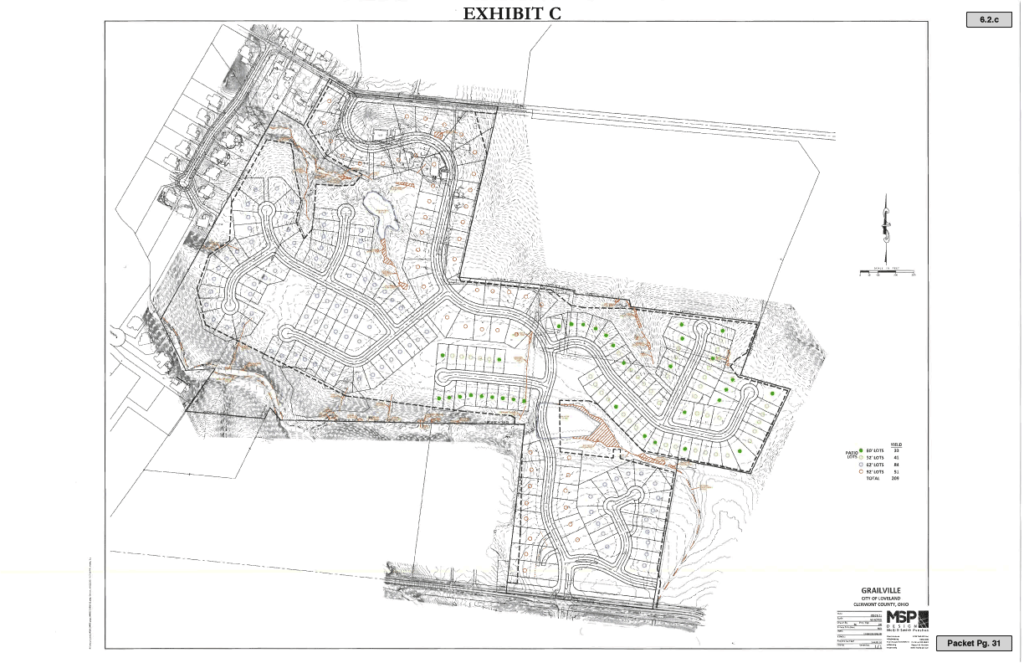
Loveland, Ohio – The proposed development of the Grailville site by the Drees Company includes 74 patio homes and 135 traditional-style homes totaling 209 lots. The final acreage of the Grailville site on O’Bannon Road was annexed into the City of Loveland on January 11. The land is situated between O’Bannonville Road and State Route 48 in Clermont County. Fourteen acres were already located within the city’s corporate limits. Both parcels, in total consist of approximately 111 acres.
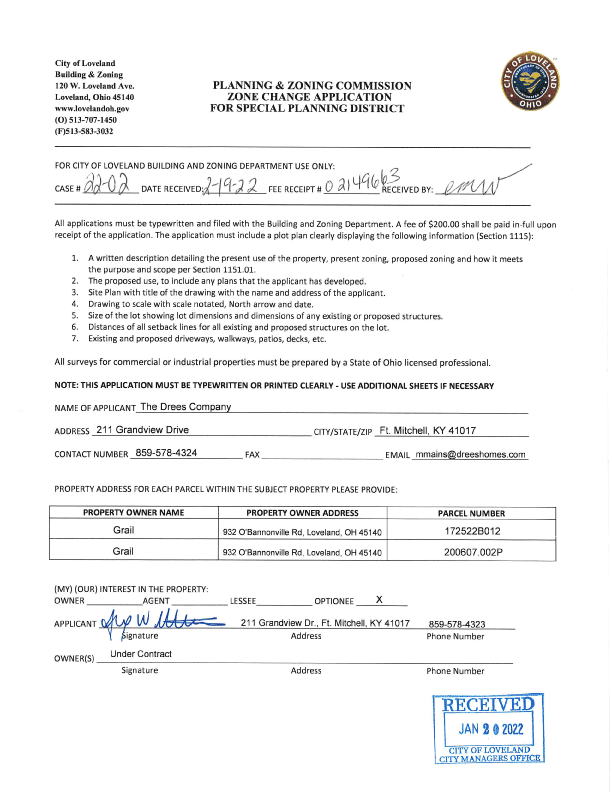
The Drees Company has submitted a concept plan to the Planning and Zoning Commission for changing the zoning to a Special Planning District.
City staff has recommended that the Commission hold a public hearing on the proposal on March 1.
The Commission will meet on February 1 with the Drees application on their agenda.
Right-Click these images to open in a new window or tab to view larger.
Clermont County, Ohio – New technology allows Clermont County to take emergency calls and dispatch help with speed and precision undreamed of just a few years ago.
“It has revolutionized 911,” said Dominick Daulton, program administrator, Department of Public Safety Services. “It’s truly impressive.”
The department implemented RapidSOS in 2018 to provide more accurate location of 911 callers. The free technology uses GPS from cell phones.
“It’s a huge game-changer for dispatchers in being able to locate callers more quickly,” Daulton said. “The location is available on dispatchers’ computer screens before they even answer the phone.”
The department’s 911 Center is the primary public safety answering point for Clermont County. Twelve emergency resource technicians/dispatchers and four supervisors handle calls and dispatch services for all townships and villages in Clermont County, except for Milford, Loveland and Union Township. The center receives 13,000 calls per month on average, about 5,300 for 911 emergencies. Dispatchers enter information in sophisticated Computer Aided Dispatch (CAD) systems. They strive to have help dispatched within 62 seconds of receiving a call.
RapidSOS started as a website where dispatchers had to manually type in the phone number each time a call was received. If a phone was equipped with RapidSOS (Apple iOS 12 and Android 4.0 and newer), dispatchers would see a location. In March 2020, Clermont County implemented an upgrade called Jurisdiction View that allowed locations to appear on the dispatcher’s computer screens before their phone even starts ringing. Dispatchers see a satellite map along with the exact location and information about the caller. Info you’ve provided through the Health app on iPhones such as name, age, height, weight, medications and allergies also appears.
The upgrades keep coming, too. RapidSOS Alerts started in 2021, with home alarm companies being able to send supplemental alerts through the RapidSOS Portal sometimes minutes before a phone call from the monitoring center. This will transition to direct alerts from RapidSOS in the near future, eliminating phone calls from alarm companies, to improve response times by minutes.
The 911 Center can also receive information directly from vehicles equipped with automatic crash notification systems.
Dispatcher Markie Planck has seen technology improve timeliness and accuracy consistently during her nearly seven years with Clermont County.
“I’m really glad we got RapidSOS,” Planck said. “We can now see on a computer screen where someone is before we even get the call. Oftentimes, members of the public don’t know where they are, but we can see exactly and dispatch fire or EMS to them quickly.”
In addition to major technological advances in receiving calls, the 911 Center in August 2020 implemented an automated fire and EMS dispatch technology called Locution. This helps dispatchers, who also are call takers, to put out calls quickly while focusing on the call they may be on. There is less of a delay when dispatching calls – and units in the field can talk to a dispatcher while dispatches through Locution are going out. The center can notify the one fire station needed for an emergency, instead of automatically alerting all stations in an area and sending unneeded off-hours wakeups to firefighters at other stations that aren’t needed for that particular emergency.
A few years back there was no quick way to know where callers were unless they used a house phone. In the beginning, cell phones only provided dispatchers with the location of the nearest cell phone tower, known as Phase 1. Then came the ability to triangulate an approximate location of the caller using multiple cell towers, which is known as Phase 2. Then came the latest upgrades which use the actual GPS in the phone to locate callers, with more changes on the way, including text-to-911.
John Kiskaden, director, Department of Public Safety Services, said that 80 percent of people now use wireless phones, making the upgrades more critical.
“It didn’t take long,” said John Kiskaden “All of the technology came together quickly.”
We are pleased people are now researching the Pandemic and how local newspapers survived. Some didn’t. Loveland Magazine did survive, and it was pure everyday persistence, sacrifice, and a dedication to staying alive (literally), and as a local Newspaper. We were early declared “Essential Workers” however that declaration did not provide us anything as the designation was quickly ignored at every level of government when they dolled out relief dollars and the help they could have provided. We stood in line with everyone else at the chance to apply for PPE funds, etc., and at times we were at the back of the lines for eligibility. We were still standing when our own City bought new high-tech water fountains with the COVID relief funds they received. Much of what you read here though is how we did it. What this story misses is an incredible effort it took for local papers in smaller communities to find accurate specific COVID 19 data in a hometown like ours that is in three counties with each county reporting in different formats and on different days of the week.
But how did so many local news organizations – especially newspapers – manage to survive the pandemic? Weeklies beefed up their daily online news coverage, business models were blown up and existing rationales for why journalism matters became more than theoretical to rural journalists.
Their determination to survive and serve as a public health lifeline for their communities fueled an oral history project that my colleague Teri Finnemanand I conducted, interviewing 28 journalists across seven states in the middle of the country. We learned how locally owned and family-owned newspapers made it through COVID-19.
“There’ve been times that we’ve had to reach out to mayors and different cities and communities across the state … to make sure that … they knew that [journalists] were deemed essential workers,” said Ashley Wimberley, executive director of the Arkansas Press Association. That label exempted news workers from stay-at-home orders and designated them as critically needed by their communities.
Oral history grabs the first impressions of history for those living now, looking back at what just happened. It helps people understand the present and how to move forward, out of a crisis. But it also records events for scholars and citizens in the future.
“Always remember that when you’re putting those stories in your newspaper, that you are printing your community’s history,” Amy Johnson, the publisher of the Springview Herald in Nebraska, told us.
Benny Polacca of the Osage News in Oklahoma told us something similar: He encouraged journalists covering some future pandemic to “do your due diligence in order to come to some type of understanding, some type of argument, some type of focus, if you were going to be reporting or researching the time of COVID-19.”
Often, it’s journalism on the coasts that gets the attention of researchers. The New York Times, The Washington Post, the Los Angeles Times – these big news organizations are written about constantly.
By talking to journalists in North Dakota, South Dakota, Nebraska, Kansas, Oklahoma, Arkansas and Louisiana, our project pushed back against this tendency to ignore the middle of the nation and its important journalism. As a kind of new essential worker, journalists found themselves in charge of explaining complicated guidance from state and local officials about COVID-19, how schools would work and where to get help.
“I hope that, through this, that our role as journalism, they [the public] realize how important it is that the information we put out, you know, how it affects them every day,” Johnson said.
Kansas Press Association Executive Director Emily Bradbury had a message for these journalists who were working for news organizations increasingly threatened with being shut down: “I want them to know that in the midst of an emergency, in the midst of what can seem like a hopeless situation, when they look at their financials, that what they’re doing is important. And what they’re doing matters, and that no one else can do what they do, and they look out for their communities like no one else.”
Emily Bradbury, Kansas Press Association Executive Director, tells reporters that ‘what they’re doing is important. And what they’re doing matters…and they look out for their communities like no one else.’ Will Mari and Teri Finneman, Author provided photo.
Loans, side hustles and deals
Reporters and editors found new ways of paying the bills. That meant accepting government subsidies in the form of Paycheck Protection Program loans. It meant, for some, going door to door and asking readers to subscribe, or keep subscribing. It meant consolidating newspapers, putting out more online editions, or taking pay cuts.
“People just don’t understand. It costs a lot of money and time to do this, and I just wish we – there was more value or people appreciate it or understood the value and the cost of really providing this service,” said Bonita Gooch, the publisher of The Community Voice, a Black newspaper based in Wichita, Kansas.
Some publishers took on side hustles to bring in revenue, creating ad copy for local business or doing marketing work.
At The Kingfisher Times & Free Press in Oklahoma, for example, Christine Reid, the paper’s editor, created ads for a local vocational-technical school. “I’ve also tried to use that as an avenue to … generate more ads for the newspaper,” Reid said.
Local publishers did whatever it took to stay afloat. As some of our initial findings have shown, that showed both opportunity and hesitancy about change.
“We’re gonna have to rely less on advertising revenue and more on subscription revenue, and so we’ve got to make sure we’re offering a unique product that they want to pay for,” said Letti Lister, the president and publisher of the Black Hills Pioneer in Spearfish, South Dakota.
We saw tentative signs of hope, as journalists got financial and moral support from their readers during a fraught election. “If anything, it’s rallied the troops, if you will, in our community because they trust us, they know that we’re going to report the news in a timely manner and keep the public up to date,” said Amy Wobbema, publisher of the New Rockford Transcript in North Dakota. Arguably most coverage was calm and steady.
But there was still hesitancy over what newspapers had to do to adapt. Some journalists are uncomfortable with receiving government funding and would rather rely on community support.
As South Dakota Newspaper Association Executive Director Dave Bordewyk put it: “Sort of, ‘Look, contribute to our newspaper … because if you value that importance of local news and journalism, then we need your support beyond just subscribing to the newspaper or advertising, which has gone away.’”
“That’s what we hope. What I hope comes out of this is that readers can understand that, and can … have a renewed value on what that [local] publication has done for their community during this pandemic,” Bradbury told us.
Around 97 percent of patients of all ages in Ohio hospitals today are unvaccinated.
When you get COVID-19 without the protection of a vaccine, there is a very real risk you’ll end up in the hospital or the obituary pages.
Columbus, Ohio – Ohio Governor DeWine today provided an update on the increased impact that COVID-19 is having on Ohio’s younger populations and the stress that the surge of cases is having on hospitals statewide.
“The bottom line is that we’re seeing our highest levels ever of hospitalizations among those under 50 years old,” said Governor DeWine. “Those who are getting very sick, being hospitalized, and dying of COVID are getting younger and younger. And it is because they are not vaccinated.”
Today, there were 459 newly-reported hospitalizations, the highest number of new hospitalizations since January.
The number of new hospitalizations for COVID-19 of those under 50, was the highest during the entire pandemic during the week of Sept. 5th, when Ohio hospitals admitted 398 patients under the age of 50.
During the most recent completed reporting week (Sept. 5 — Sept. 11), 230 Ohioans 39 and younger were admitted to the hospital, which is the highest number of admissions for COVID in this age group during the entire pandemic, even higher than during the winter surge levels when no one was vaccinated.
Around 97 percent of patients of all ages in Ohio hospitals today are unvaccinated.
In July, 48 percent of COVID-19 deaths were among those 69 years old and younger. In August, preliminary data shows that an average of two people younger than 50 died of COVID-19 in Ohio every day.
Last month, preliminary numbers showed 18 Ohioans 39 and younger died from COVID-19. This is compared to five people in that age range who died in June and two people in that age range who died in July.
Dr. Bruce Vanderhoff, Director, Ohio Department of Health “If you are young and unvaccinated it’s now probably only a question of when, not if, you get COVID-19. When you get COVID-19 without the protection of a vaccine, there is a very real risk you’ll end up in the hospital or the obituary pages. The numbers really tell it all, COVID has changed and is now making younger Ohioans who are not vaccinated very sick. Don’t become a statistic when there is a simple, safe, and effective alternative. Go out today and get vaccinated.”
Suzanne Bennett, M.D., Extracorporeal Membrane Oxygenation (ECMO) Program Director, University of Cincinnati Health “These rising numbers of sick COVID patients places a significant burden on our hospital beds, our medical teams, and worse yet, it creates scenarios that no one wants to think about where we do not have the space for patients who would otherwise benefit from receiving their care at large academic medical centers. We now need the help of the people in our community more than ever so that no one else needs to die from this disease.”
Alan Rivera, M.D., Hospitalist, Fulton County Health Center
“We are in a crisis mode. As compared to last year, our nursing staff is down probably 50 percent. We have nurses leaving the field, retiring early, or finding jobs elsewhere because of the long hours and the emotional strain. On top of that, our COVID numbers are now going up. In June and July I didn’t see any COVID patients. Now, the majority of the census in our hospital are COVID patients, and they’re younger, anywhere from 30 to 50.”
Joe Bates, R.N., B.S.N., Clinical Coordinator, Critical Care Unit, Genesis HealthCare System (Zanesville) “We’re seeing the younger population being hit hardest with this right now. Our average age right now that we’re seeing is around 59, with many of them being younger, as compared to last year when the average was about 78 years of age. Of the COVID positives that we currently have in the ICU, none of them are vaccinated who are on the ventilator.”
Terri Alexander, R.N., P.C.C.N., Summa Health (Akron)
“It’s just a sad, sad situation that we’re dealing with, and it’s tragic because it’s just so preventable. Please, please, please, get vaccinated. We live in a culture that has never experienced coming to the hospital and getting turned away, and I think people can’t fathom what that’s truly like until its them or their family members who are coming in and getting turned away.”












![[DeWine] COVID-19 Update for Ohio: highest levels ever of hospitalizations among those under 50](https://lovelandmagazine.com/wp-content/uploads/2020/05/covid-ohio-feature-.png)