Tag: clermont county

  • Pettit petition to run again for school board rejected by BOE

    Pettit petition to run again for school board rejected by BOE

    Loveland, Ohio – Homana Nebel an Administrative Associate with the Hamilton County Board of Elections has told Loveland Magazine that current Loveland City School Board member Michele Pettit’s nominating petitions to run for another four years on the Board has been rejected.

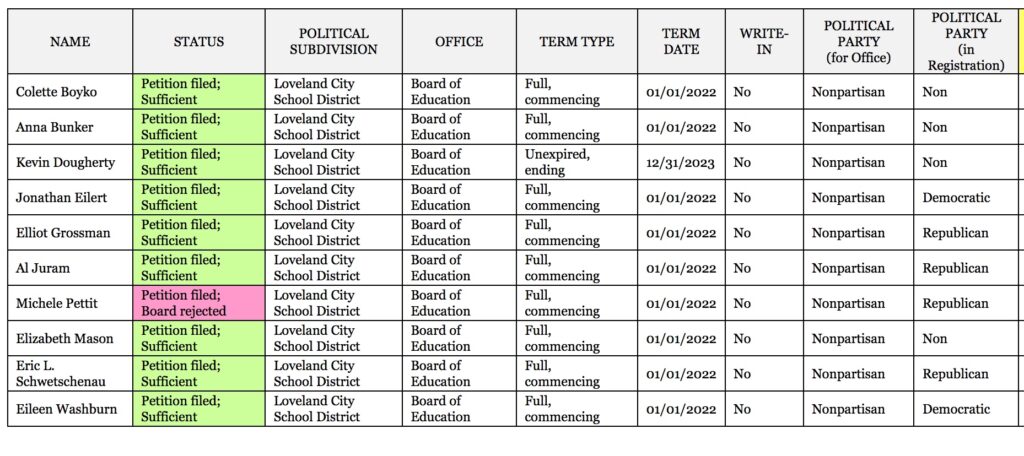
    Candidates for the Loveland School Board (provided by Hamilton County BOE)

    Nebel said that there was a problem with the petition/s she filed with signatures of Clermont County voters. Candidates need a total of 75 total valid signatures of District registered voters and Petitt ended up with only 55.

    Petitt has been notified and can appeal the rejection to the Board of Elections and be granted a hearing but as of 3 PM today they have not heard from her. Another option according to Nebel is for Petitt to file to be a write-in candidate and she has until August 23 by 4 PM to pay a fee and file the needed paperwork with her declaration of intent.

    Loveland Magazine has reached out to Petitt asking if she will pursue these two options.

    Petitt’s current term is set to expire on December 31. The election is on November 2.

  • Hemmer-Haight selected as new Clermont County Board of Elections director

    Hemmer-Haight selected as new Clermont County Board of Elections director

    Batavia, Ohio – Claire Corcoran, President of the Board of County Commissioners, today announced the selection of Stephanie Hemmer-Haight by the Clermont County Board of Elections as their new director effective today. She will replace Director Julia Carney, who has accepted a position as Assistant Clermont County Prosecutor.

    A news release issued this afternoon said that after considering “several impressive candidates”, the selection committee recommended Hemmer-Haight to the full board in today’s meeting. The board unanimously approved her as the new director.

    “We wish Stephanie Hemmer-Haight the best in this very important role,” Corcoran said. “We feel fortunate to have such an experienced and well-rounded selection for this position.”

    Hemmer-Haight received her Bachelor’s Degree in Business from Wilmington College and her Master’s Degree as an Intervention Specialist from Antioch University. She has been a county election official for nine years and has organized and led training for many of the county’s poll workers. She resides in Milford with her husband Michael Haight and their dog Pistol.

    Currently, secretary of the Milford Fire Department Board, she is also involved with veteran’s organizations, American Legion Fish Fries, and the Republican Executive Committee.

  • Clermont Commissioners end State of Emergency

    Clermont Commissioners end State of Emergency

    Batavia, Ohio – The Board of County Commissioners voted on Tuesday to end a State of Emergency that had been declared on March 18, 2020, due to the COVID-19 pandemic. The action was taken in concert with State of Ohio, which ended its State of Emergency on June 18.

    The emergency declaration, along with a previous resolution delegating disaster functions in event of an absence of a quorum of the board, spelled out a succession of leadership and the authority of the county administrator in an emergency. It also exempted from the competitive bidding process purchases related to the emergency that were greater than $50,000 but less than $100,000, so long as no fewer than three informal estimates were obtained. The declaration also allowed the county to obtain state and federal funds.

    Pam Haverkos, director of the Clermont County Emergency Management Agency, thanked the commissioners for their support throughout the pandemic.

    “Clermont County has definitely proved that we are a really resilient community – and that’s a result of the relationships we have built, the collaborations amongst our public safety partners, public health department, healthcare providers, local government agencies, social service agencies, schools, non-profit organizations, faith-based organizations and residents,” Haverkos said.

    “Response and recovery to a pandemic truly requires the ingenuity of the whole community,” she added.

    Haverkos thanked Health Commissioner Julianne Nesbit and Clermont County Public Health for their tireless work, often done behind the scenes.

    “They are the backbone of our response and recovery operations,” Haverkos said.

    Clermont County held its first preparedness meeting on Jan. 31, 2020. The county officially opened its emergency operations center on March 16, 2020. Initially, the emergency operations team met daily and it gradually transitioned into weekly COVID Defense Team meetings.

    In January, an emergency hotline number (732-8500) was activated to facilitate access to vaccines. The number has received almost 17,000 calls. It remains in service.

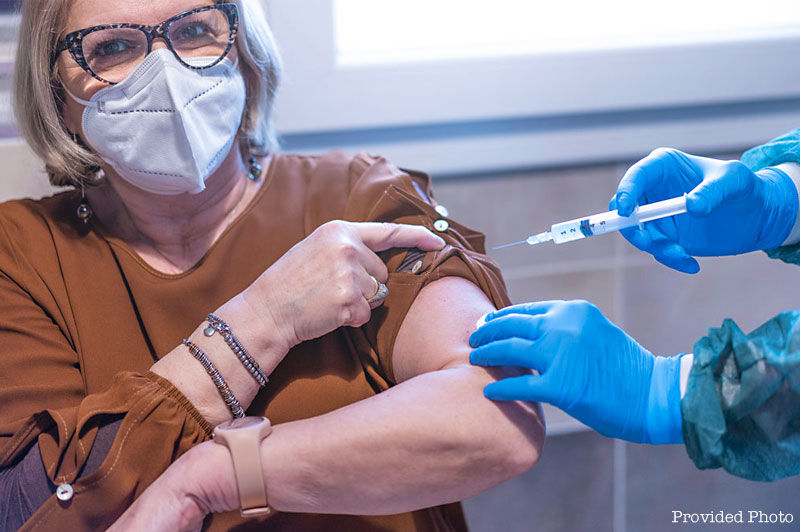
    Public Health has administered 36,632 vaccinations. Combined with vaccinations from other providers, about 45 percent of the county’s residents have received at least one dose and 41 percent have completed their vaccines.

    Vaccinations continue for those ages 12 and older.

    “We can’t thank your staff enough and the whole health department for coordination from the very beginning all of the way through – daily updates and keeping everyone posted, most of all taking care of the citizens of Clermont County,” said Claire Corcoran, President, Board of County Commissioners. “What a tremendous, tremendous job all of you did.”

    “Every communication meeting there for a while seemed like there was always new information, a new change of direction,” Commissioner David Painter said. “It really was a changing environment where you had to adapt. We realize how stressful that was.”

    Commissioner Bonnie Batchler added: “You and your staff are always there in every emergency in Clermont County. From my heart, I thank you for what you have always done.”

  • Financial help for rent and utility payments in Clermont County

    Financial help for rent and utility payments in Clermont County

    The program covers rental payments that are late and overdue including late fees as well as utility payments, including gas, electric, fuel oil, trash removal, internet service, and water and sewer.

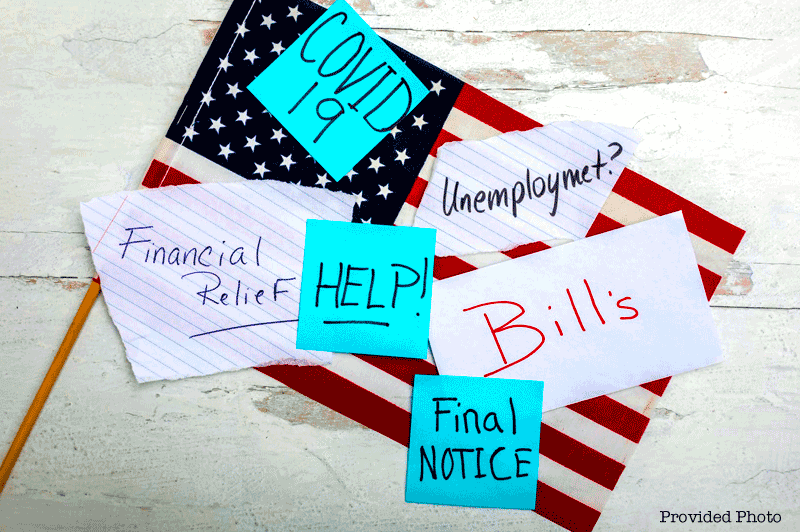
    Clermont County, Ohio – Residents who have fallen behind on rent and utility payments due to the pandemic can get financial help.

    How does the program work?

    The program was designed to assist Clermont County households that are unable to pay rent and utilities due to the COVID-19 pandemic. Eligible renter households may receive up to 12 months of past-due payment assistance and three months of future rental payments with direct payments made to the landlords and utility providers. Landlords may apply on behalf of the renter with their consent.

    Funding expires on Sept. 30, 2022. The program covers rental payments that are late and overdue including late fees as well as utility payments, including gas, electric, fuel oil, trash removal, internet service, and water and sewer.

    How is eligibility determined?

    • Income eligible, under 80% area median income (Area median income for a family of one is $48,350; family of four is $69,050.)

    • Income will be determined through a copy of the 2020 1040 tax form, pay stubs, and/or a self-declaration form.

    • Must be COVID-19 related

    Can landlords apply on behalf of the renter?

    • Yes. If eligible, assistance may be granted for rent and utilities.

    How do I make an application?

    • Email support@cccsi.org for an application

    • Visit: Clermont County Community Services, 3003 Hospital Drive, Batavia, Ohio 45103

    How was this program started?

    • The Board of County Commissioners approved a Clermont County Job and Family Services’ contact with Clermont County Community Services to administer the Emergency Rental Assistance Fund. Clermont County received $6.1 million in federal COVID-19 relief funds for renters through the Consolidated Appropriations Act of 2021.

  • Mini-grants available for activities that promote positive mental health and prevent addiction

    Mini-grants available for activities that promote positive mental health and prevent addiction

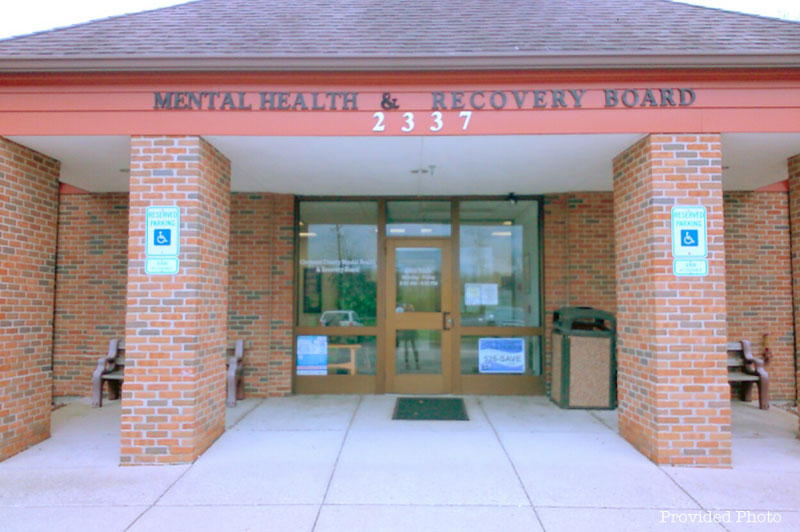
    Clermont County, Ohio – In a continuing effort to foster activities that promote positive mental health and prevent addiction, the Clermont County Mental Health and Recovery Board has announced that the opportunity for funding called “mini-grants” will again be available for the upcoming year.

    The Board is looking for innovative projects that will positively affect mental health and/or prevent addiction for any age group. A total up to $30,000, from the Board’s levy funds, is available for programs serving Clermont County residents.  The maximum funding per project is $4,000. The grant period is July 1, 2021 through June 30, 2022. Any organized group in Clermont County – with the exception of the contract agencies of the Mental Health and Recovery Board – can apply for funding. Previously funded applicants are eligible to reapply. Applicants must have a financial structure in place to account for the awarded funds. Funds may not be used to cover ongoing operating expenses.

    To apply for a mini-grant, please submit a brief proposal that includes the name, address, email address, and phone number of the contact person, a description of the activity/purpose for which the grant will be used, an explanation of how the activity will promote positive mental health and/or prevent addiction, a description of what part of the activity the mini-grant will fund if used with other monies, the date(s) of activity, and the amount of the funding request. Mini-grant funds cannot be used to purchase equipment such as iPads, iPods, tablets, or other electronic items. The funds can be used for materials, supplies, and/or food for activities planned.

    Proposals must be submitted no later than Monday, May 17, 2021, to: Mini-Grant Project, c/o Cindy Knoblauch, Clermont County Mental Health and Recovery Board, 2337 Clermont Center Drive, Batavia, OH 45103. Cindy Knoblauch: (513) 732-5400

    In 2019, the Clermont County Mental Health and Recovery Board funded a total of 17 mini-grants to 13 separate organizations. Ten schools in Clermont County received grants that assisted in initiating activities that helped children stay drug-free, established mentoring programs, or promoted mental health well-being. In addition, grants were awarded to other agencies providing services directed to community members, such as Safe Harbor of Hope and the YWCA.

    Any group receiving funding is required to submit a report to the Mental Health and Recovery Board on its efforts and resulting outcomes following completion of the activity. A final accounting of funds must be submitted within 60 days of the end of the activity. All unused funds must be returned to the Mental Health and Recovery Board.

    It is possible that mini-grants may not be available in the future or that a project funded once may not receive funds a second time, so mini-grants should be viewed as one-time-only funds.

    If you have any questions about applying for these grants, call the Clermont County Mental Health and Recovery Board at (513)732-5400.

  • Free rides to COVID-related appointments

    Free rides to COVID-related appointments

    Loveland, Ohio – Clermont Transportation Connection (CTC) is offering free rides to COVID-19 vaccination, testing and doctor’s appointments within Clermont County to people age 59 and younger. Rides are available 7 AM until 6 PM, Monday-Friday.

    Call 732-7433 (ext. 2) to schedule a ride. Give your name and phone number, home address, the clinic’s address, time of appointment and expected time to be picked up from the clinic.

    People 60 and older may call Clermont Senior Services at 513-536-4115 to schedule a ride.

    CTC received an Ohio Department of Transportation grant through its Rides to Community Immunity program offered throughout the state

  • [Video] Senior Miya Brines sets Loveland High School high jump record

    [Video] Senior Miya Brines sets Loveland High School high jump record

    by Grace Nunn

    Loveland, Ohio – Senior Miya Brines set a new Loveland High School high jump record on Saturday, March 27 clearing the bar at 5’6 1/2″ in the Loveland dual meet vs Princeton at Tiger Stadium. She placed 1st in the high jump.

    LHS Senior Miya Brines

    “I am very honored to be in the Loveland High School record books with so many other athletes. I believe hard work and dedication have a big impact on the way I perform and compete as an athlete,” Brines said.

    Miya also thanked her coaches for investing their time and effort into herself and the team and cannot wait for her future as an athlete.

    The previous record was 5’6 set in 2016 by Kendall Ewert.

    She also came in 1st in the long jump with a leap of 16′-10.75″, 1st in the 100-meter hurdles running a 14.59, and 1st in the 300 Meter hurdles at 48.67.

    Brines will continue her track and academic career at the University of Iowa.

  • Meet Adam Reed the next leader for Loveland High School

    Meet Adam Reed the next leader for Loveland High School

    David Miller is the Editor and Publisher of Loveland Magazine

    by David Miller

    Loveland, Ohio – Peggy Johnson announced her retirement at the end of January after 39 years in education and 6 years as Principal of Loveland High School (LHS).

    Thirty-nine-year-old Wyoming High School Principal, Adam Reed, who is entering his 17th year in education was recently announced as Johnson’s successor for the 2021-2022 school year.

    Reed grew up in Fairfield and currently lives in Loveland with his family. “I enjoy spending time with my family, golfing, and traveling,” Reed told Loveland Magazine in an email exchange. Education has been his only career path.

    “My wife Kate and I have three sons. Nolan is 7 and attends the Loveland Primary School, Hunter is 5 and will attend the Loveland Early Childhood Center next year, and Carson just turned 2. 

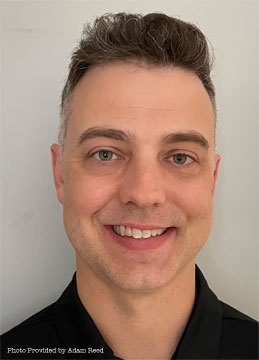
    Adam Reed will be the next Principal at Loveland High School

    Reed earned both his B.A. and Masters in Education at the University of Cincinnati before earning his Administrative and Superintendent Licensure from Xavier University.

    He is a graduate of Fairfield High School, was a varsity baseball coach, and was an assistant coach on a final four basketball team while at Fairfield. 

    I asked Reed what were his proudest accomplishments with the Wyoming schools and mentioned that the school certainly has bragging rights in regards to academics. “Leading the high school through the pandemic. Supporting students and teachers academically and socially and emotionally while creating the safest learning environment possible,” was his answer. Reed added, “Being an instructional leader with my staff as we integrated technology into their teaching practices and making the high school a Google school.” Reed is also proud that he created a culture where students “felt heard and valued”. 

    Adam Reed will be the next Principal at Loveland High School

    I also asked Reed what does he feel are his best skills that he will bring to LHS. He said, “I am a student-focused administrator and educator. I believe in meeting our students where they are in order to support their learning and goals after high school. I look forward to creating a positive culture and environment to support our teachers and students.”

    “While at Wyoming, I participated in our district-wide One Degree Shift work surrounding diversity,” was Reed’s response to a question about the goals of the Loveland District’s Diversity Advisory Board. He further emphasized, “For the 2021-2022 school year, Wyoming High School has created two new courses, African American Studies, and Women’s Studies. As I transition to Loveland, I will continue to focus on our students and meet them where they are. The work of the Loveland Diversity Advisory Board will be instrumental in creating a safe, equitable, educational environment that celebrates diverse perspectives, identities, cultures, and worldviews for all our students.”

    In speaking about her retirement, Peggy Johnson said in a statement issued by the District, “Working with teenagers is an unbelievable honor and seeing how they pursue their interests, overcome challenges, and succeed is a most rewarding experience.”

    Johnson has spent 39 years in education, beginning her career as a student-teacher in the Fall of 1980 at Loveland High School. She went on to teach students with hearing and language impairments for 17 years and served as a Special Education Supervisor in Hamilton City Schools. She served as principal of Turpin High School for 13 years and spent the last 6 years leading Loveland High School.

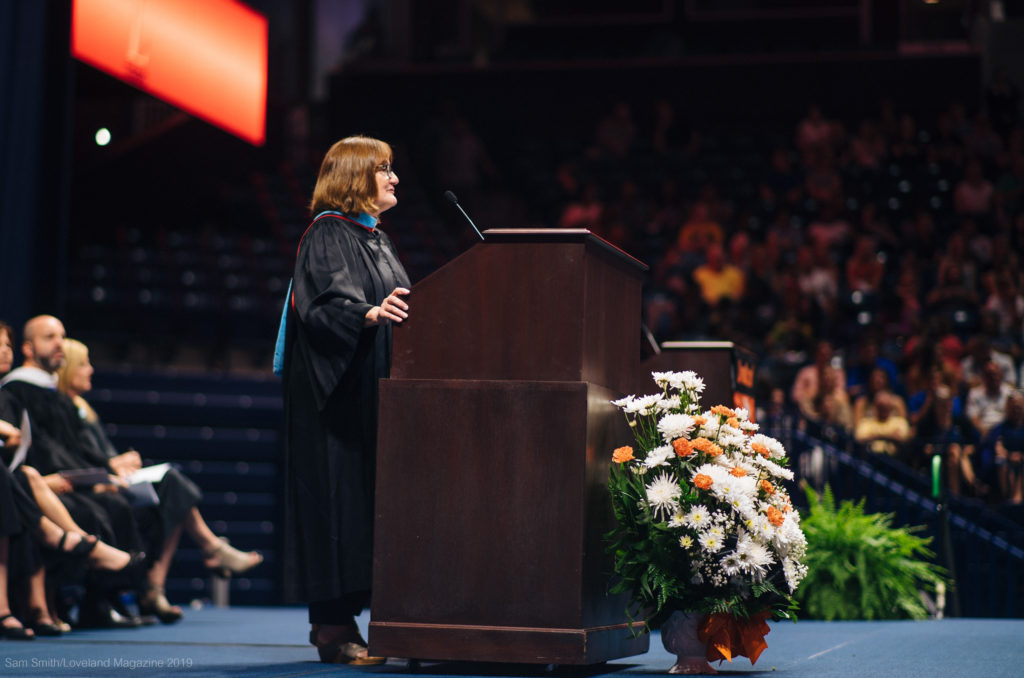
    Principal Peggy Johnson at the 2018 Commencement (Loveland Magazine file photo)

    A release by the District announcing her retirement said, “While at LHS, Johnson expanded the Advanced Placement program, business program, increased performance on state assessments, and “was dedicated to her students” according to Loveland Director of Human Resources Charles Ogdan. “There isn’t an event that happens where Ms. Johnson isn’t there mingling with students, taking pictures, and posting on Twitter in support of student success and growth,” Ogdan said. 

    “I wish to thank the LHS school community for the opportunity to work with talented, passionate, and dedicated educators and students and enthusiastic supportive parents and community,” Johnson said in the statement.

  • “We cannot thank you enough.”

    “We cannot thank you enough.”

    To the Loveland Community,
    
    We cannot thank you enough for your continued generosity. The Ben Morrison Memorial Fund at LCNB Bank has exceeded our expectations.  We will be able to give a scholarship in Ben’s name for many years to come. 
    
    I personally have felt all of your love and prayers. They continue to help me get through each and every day. 
    
    Again, thank you to all of you!
    
    Tori, Donnie, Ashlei and Kevin and Chelsei
  • I felt the tears welling behind my eyes and willed them not to escape

    I felt the tears welling behind my eyes and willed them not to escape

    There is value in having no child feel rejected and invisible in their own school. If I can help it, none of them will.


    A story by a Loveland resident presented by Loveland Magazine in collaboration with the Loveland Diversity Advisory Board

    A sharp pain startled me. Something had pelted my head. Whatever it was ricocheted to the floor with a hollow plink. I rubbed the back of my skull and looked around trying to determine what had hit me. As I did, I took another sharp blow, this time to the cheek, followed again by a distinct plinking sound. The next shot hit my shoulder. Then my neck. Finally one of the projectiles flew past my face and I was able to identify what was being hurled toward me. 

    It was a penny. 

    I looked in the direction from which the projectiles originated and saw a lunch table of my fifth grade peers laughing, trying to look inconspicuous in the conspicuous way guilty ten year-olds have a tendency to do.

    “Did she pick them up?” one whispered.

    “Shhhhh! She’s looking over here,” the other said, waving his hand in the universal sign to keep it down.

    More giggles.

    x

    I sheepishly rubbed my cheek, which by now was smarting and red. I looked down at the floor where several pennies lay in a telltale scatter at my feet. 

    Another sharp pain.

    “Pick up the pennies, Jew,” someone from the table jeered, just loud enough for me to hear.

    I felt the tears welling behind my eyes and willed them not to escape. No one would see me cry. Despite my best intentions, a tear leaked out, betraying me as it rolled down my injured cheek. Its saltiness stung against the broken skin.  

    x

    The perpetrators weren’t the school’s “bad” kids. They weren’t the “troublemakers.” They weren’t the kids who wadded up the stiff brown paper towels, wet them, and threw them up on the bathroom ceiling where they’d stick and harden like cement. 

    These were the kids who raised their hands to read aloud from the social studies textbook when the teacher asked for volunteers.They attended PSR at the church down the street from my house where a giant tree sprouted pink blossoms each spring before dropping her petals in a sudden heap. These were the kids who, if I’d told a teacher, would elicit the response of ‘Well now that doesn’t sound like them. I’m sure they meant nothing by it. Have you tried ignoring it?’

    x

    The lone tear fell onto the lunch table, a solitary puddle on the faux wood facade. Pennies? What does that even mean? I pondered this question silently, focusing intently on the fallen tear to prevent more from spilling out. I felt ashamed and embarrassed. I never mentioned it again. 

    This was the first time it happened, but it wouldn’t be the last.  

    At ten years old, I didn’t understand the deeply anti-Semitic implications of these kids’ actions. As an adult, I know they picked up on these stereotypes somewhere. I feel confident that the hateful message was learned outside of school, however subtly transmitted. Maybe slips of the tongue by their parents. Maybe from the innuendos presented in the news channel their family watched. Maybe from friends whose families held biases. But what about what they learned–or didn’t learn–while they were in school? What was the message there?

    There was nary a mention of Jewish people in my elementary school. Despite a small population of Jewish students, the curriculum had settled into a comfortable rhythm they saw no need to update. I remember clearly how each year my teachers were startled when they learned that I didn’t have a Christmas tree. 

    “What do you mean?” my second grade teacher asked incredulously. “Everyone has a Christmas tree,”  And so it went. 

    x

    I accepted my lot early. I dutifully completed my “Letter to Santa” assignments each December prior to “Christmas Break” where I’d take home the ornament I had to make for my non-existent tree. In the spring, I mustered up fake gusto to color oil pastel Easter egg cut-outs. I completed the multiplication worksheets asking how much tinsel Jane needs to trim her Christmas tree and conducted the science experiments on decorating Easter eggs with various substances, bright red beet juice staining my hands for days. 

     The message coming from the school was clear: one specific religion was the universal norm. Obviously, I was different. That made me a target. 

    I share this with you to illustrate that representation matters. While some may disagree, they are likely the ones who have never been in a situation where they were the “other.”

    Representation doesn’t mean anyone has to alter their own convictions or feel put on the defensive. It doesn’t mean one side is right and the other is wrong, that there’s a hidden agenda, or that any one lifestyle is being attacked. 

    What it does do is allow students to learn that the world is full of people whose beliefs, values, and opinions differ from their own. It means the students who aren’t part of the status quo feel a sense of belonging. At its best, it fosters mutual understanding and civility. Representation neither promotes one lifestyle, race, or religion, nor detracts from another. All representation does is to allow students to see that there are different ways of being and that there is validity in who we ALL are. 

    x

    While I cannot change my school experience, we owe it to our own kids the opportunity to explore diversity through equal and prominent representation. If you’re a minority, there is value in seeing someone like yourself; if you’re in the majority, there is value in seeing that there’s an actual living, feeling human being behind the label. Most importantly, there is value in having no child feel rejected and invisible in their own school. If I can help it, none of them will.