Loveland Magazine is one of the 400 news outlets worldwide, with a combined audience of over 2 billion people “Covering Climate Now”, a global journalism initiative committed to bringing more and better coverage to the defining story of our time.
The initiative, was co-founded by The Nation and Columbia Journalism Review
Mihaela Manova is “Covering Climate Now” in Loveland, Ohio as an editor for Loveland Magazine
In today’s Covering Climate Now post (written by Joseph Winters for Grist), Winters sheds light on journalism’s “bothsidesism” in an effort to distinguish the decline of acknowledgement and action for climate change in the media.
Ever wonder why Americans have been so slow to support climate action? A new study lays some of the blame on media bias —for 30 years, three of the country’s most influential sources of news gave too much credence to arguments that the world shouldn’t take decisive action to mitigate climate change.
“Opponents of climate action have been given an outsize opportunity to sway this debate,” said Rachel Wetts, the author of the study. Her results were published Monday in the Proceedings of the National Academy of Sciences.
Wetts analyzed 1,768 press releases from business, government, and social advocacy organizations from 1985 to 2013, categorizing them by their stance on climate action. She then ran the press releases through plagiarism detection software to see how often they were featured in the country’s largest-circulation newspapers: The New York Times, The Wall Street Journal, and USA Today.
She found that even though 10 percent of the press releases contained messaging against climate action — arguments like, “It would be too expensive to reduce greenhouse gas emissions” — 14 percent of them wound up in print. By contrast, the more prevalent press releases arguing for personal, corporate, or political action to tackle climate change were only covered 7 percent of the time. And the least-covered press releases came from groups with the most expertise on science and technology, such as the American Academy of Arts and Sciences and IBM.
Edward Mailbach, director of the George Mason University Center for Climate Change Communications, called these conclusions unsettling. “Rather than marginalize self-interested voices and give prominence to expert voices, these papers did just the opposite,” he said.
How to explain the results? Wetts said one reason for the imbalance might be tied to journalistic norms of objectivity, which reporters and editors often interpret as a need to give at least two sides to every story, no matter the science. She called this “false balance,” because it can put unsubstantiated opinions on the same footing as well-established facts. In the case of climate change, she said that the practice has lent legitimacy to those who deny climate change, leading readers to believe that denial is “more than a fringe stance.”
Previous research has suggested that this practice — also known as “bothsidesism” — began to decline in the mid-2000s. But Wetts’ analysis found no statistically significant change in coverage over the 30-year period of the study. She also said that the trend couldn’t be explained by excessive coverage of anti-climate press releases in the business-friendly Wall Street Journal. Claims that steps to curb carbon emissions would be too costly or undermine U.S. energy independence, for instance, also found favor in the liberal-leaning New York Times.
As climate denial falls out of fashion, what’s been called “climate delay” has taken some of its space. This is when people acknowledge the reality of climate change but seek to put off large-scale efforts to address it, sometimes redirecting responsibility for the climate crisis to consumers and emphasizing the downsides of urgent action.
Wetts scanned press releases for both climate denial and delay — anything that argued against climate action — regardless of whether they accepted the science.
“Maybe people are covering climate deniers somewhat less,” Wetts said, “but then they’re substituting in other conservative voices instead. They’re talking about people who are opposed to climate action for some other reason besides denying the science.”
Jennifer Marlon, a senior researcher at the Yale Program on Climate Change Communication, acknowledged that the media environment has changed since the mid-2010s — The New York Times in particular has ramped up its climate coverage — but she suspects that false balance continues to influence the national conversation. For instance, newspapers might be better at contextualizing opponents of climate action, explaining that their views are outside the mainstream. “But those arguments are still out there and are very much in play,” Marlon said.
Wetts called on researchers to investigate the effects of media skew on public policy. The messages amplified by the media “can dampen political will to act on climate change,” she said in a statement, “with potentially serious consequences for how we as a society address — or fail to address — this issue.”
Loveland Magazine is one of the 400 news outlets worldwide, with a combined audience of over 2 billion people “Covering Climate Now”, a global journalism initiative committed to bringing more and better coverage to the defining story of our time.
The initiative, was co-founded by The Nation and Columbia Journalism Review
Mihaela Manova is “Covering Climate Now” in Loveland, Ohio as an editor for Loveland Magazine
In today’s Covering Climate Now post, attention has been brought to the colossal heat wave affecting the Arctic, caused by the “increasing accumulation of greenhouse gases.” The full video and transcript has been brought to you by PBS News Hour.
By Judy Woodruff and William Brangham June 3, 2020
A
historic heat wave is occurring in the Arctic, already the fastest-warming place on Earth due to the increasing accumulation of greenhouse gases. Dr. Merritt Turetsky, director of the Institute of Arctic and Alpine Research at the University of Colorado Boulder, has studied the Arctic for decades. She joins William Brangham to discuss causes and consequences of the Arctic’s rising temperatures.
There’s a heat wave of historic proportions occurring in the Arctic right now, a region that is already the fastest warming place on Earth, due to the increasing buildup of greenhouse gases.
William Brangham talks with a scientist who’s worked in the region for decades.
William Brangham:
That’s right, Judy.
It is summer in the Arctic right now, so somewhat milder temperatures would be expected. But this heat wave, which has triggered huge wildfires in Siberia and increased melting of the permafrost, are likely the warmest temperatures ever recorded, and now are only going to make climate change worse.
Dr. Merritt Turetsky is the director of the Institute of Arctic and Alpine Research at the University of Colorado-Boulder. And she joins me from a cabin in Canada.
Dr. Turetsky, thank you very much for being here.
Merritt Turetsky:
Thank you.
William Brangham:
Can you just help us understand, what is going on in the Arctic right now? What is driving this intense heat wave?
Merritt Turetsky:
Let me start with an analogy.
So, when we come down with a fever, when our bodies spike a temperature, we stop, we realize that there’s a problem, and we provide care. And that’s exactly what’s happening today.
The Arctic is feverish, with temperatures spiking above 100 degrees Fahrenheit in multiple locations. So, these extreme temperatures are very unusual. They are record-breaking. But this is part of a longer-term trend.
In fact, last year, last summer was a very warm period in the Arctic, and Siberia and parts of Russia experienced the warmest winter on record. And it’s part of a trend that we anticipate will become more frequent in the Arctic because of climate change.
William Brangham:
And so I understand there’s also — there’s a high-pressure system, I guess, over the Arctic, which is making this particular issue.
But you’re saying that the longer-term trend of a warming atmosphere is really being felt in the Arctic very sharply.
Merritt Turetsky:
That’s exactly right.
So, this is part of a persistent warming trend. But, at the same time, the best tools that we have at our disposal in the scientific community, our climate models, predict more extreme conditions.
And this is true all around the world. We’re seeing more extreme conditions in storms, more extreme conditions in precipitation. And that’s the same in the arctic. We’re seeing more extreme temperature changes. And this is consistent with our predictions into the future.
William Brangham:
So, what are some of the impacts of that? I mean, for people who might look at this and think, I don’t live in the Arctic, the Arctic is very far away from me, what are some of the consequences of this warming trend in the Arctic?
Merritt Turetsky:
These Arctic changes will affect everyone on the globe, for a number of reasons.
The first is that, when the Arctic is warm, it changes weather patterns all around the world. The heat wave is triggering very rapid wildfires. And the Arctic is literally and figuratively on fire.
And this is likely to get worse as this heat wave continues through the summer. The emissions from those wildfires, of course, release greenhouse gases to the atmosphere. So, that affects climate of the entire planet through the greenhouse gas effect.
But the emissions from wildfires also affect air quality. These smoke plumes don’t stay in the Arctic. They drift globally with atmospheric circulation. Last summer, when the Arctic was set on fire because of warm conditions, smoke plumes reached the Western United States and affected air quality for millions of people.
So, these impacts in the Arctic are very strong locally. There are many people who live in the Arctic who depend on stable frozen ground. They, of course, are impacted.
William Brangham:
I mentioned also that there is the warming and melting of the permafrost.
For people who may not be familiar with what permafrost is and why it’s melting could impact climate change as well, can you explain that?
Merritt Turetsky:
Permafrost is the glue of Arctic ecosystems. It is literally the backbone upon which all of the soils and the vegetation and the animals in the Arctic depend upon. Permafrost is frozen ground. So, it can be frozen rock, frozen soil, frozen sediment. It’s defined by its temperature.
And the Arctic today is shaped by permafrost. But we are seeing widespread evidence on multiple continents in the Arctic that permafrost is thawing as a result of climate change. And, in many places, this can cause catastrophic impacts on the landscape.
Lakes can literally disappear in the period of a few weeks. These are lakes that have been used as fishing grounds for generations. And they simply disappear because the permafrost thaws, and it’s like pulling the plug out of a bathtub. All the water is allowed to drain away.
Permafrost is very important not only to supporting life in the Arctic, but it’s important for storing carbon. It’s been keeping carbon out of the atmosphere and benefiting climate for thousands and thousands of years.
But, once permafrost thaws, that carbon is now vulnerable to microbial decomposition, and it can be re-released into the atmosphere. Its fate is unknown. And scientists are trying to figure out just how much of that carbon will wind up in the atmosphere and what impacts it will have on our climate.
William Brangham:
All right, such an important topic.
Dr. Merritt Turetsky, thank you very, very much for your insight.
Loveland Magazine is one of the 400 news outlets worldwide, with a combined audience of over 2 billion people “Covering Climate Now”, a global journalism initiative committed to bringing more and better coverage to the defining story of our time.
The initiative, was co-founded by The Nation and Columbia Journalism Review
Mihaela Manova is “Covering Climate Now” in Loveland, Ohio as an editor for Loveland Magazine
In today’s column written by Mark Hertsgaard, the writer draws a parallel between the recent events of advocating against racism and the cause to stop climate change.
By The Climate Beat Newsletter/ Mark Hertsgaard June 3, 2020
S
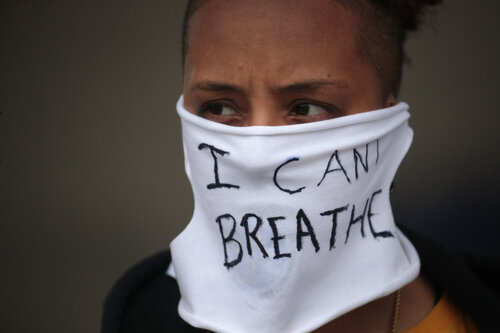
hortly after the police killing of George Floyd, Varshini Prakash tweeted, “If we can imagine stopping the climate crisis then we sure as hell can imagine a day when white supremacy is ancient history too.” Prakash, 27, is the co-founder and executive director of the Sunrise Movement, an uprising of young climate activists who have done more than any other group to push the idea of a Green New Deal onto the public agenda. To Prakash and her fellow activists, the fight for a livable planet and the fight against racial injustice are the very same fight.
“Equity and justice have to be the lens through which we solve [the climate] problem,” Prakash has said. “If it does not work for and benefit the most disadvantaged among us … it will not fix the problem.” The climate problem, in the eyes of this new generation of activists, is systemic and rooted in privilege. The poor, people of color, and women suffer first and worst from the heat waves, droughts, and storms unleashed by global warming, though they did little to cause that warming. The rich, the white, and the comfortable whose investments and lifestyles drive global warming are often shielded from its impacts. The same social systems that drive the climate crisis also perpetuate the racism that killed George Floyd and countless other people of color, and it is those systems that need replacing.
Days after the Democrats gained control of the US House of Representatives in the 2018 midterm elections, Prakash and dozens of Sunrise members occupied the office of incoming House Speaker Nancy Pelosi, demanding that Democrats back policies that matched the scale and urgency of the climate emergency. After rising Democratic star Representative-elect Alexandria Ocasio-Cortez joined the protesters and applauded their efforts, a handful of articles appeared in Politico and other Washington-focused news outlets. Three months later, after extensive consultations with the Sunrise Movement and others, Ocasio-Cortez and Senator Ed Markey introduced a congressional resolution calling for a Green New Deal. Suddenly, the Green New Deal was national news, with stories running in leading newspapers, magazines, and even network TV news programs.
Now, Prakash and Ocasio-Corte, along with Vermont Senator Bernie Sanders, are attempting to make a Green New Deal part of the official platform of the Democratic party in the 2020 campaign. Prakash is serving on a task force established by Sanders and former Vice President Joe Biden, the Democrats’ presumptive nominee, to try to devise a climate policy all Democrats can support in November. Biden and Sanders each nominated members to the task force, including one co-chair: Ocasio-Cortez for Sanders, and John Kerry—who, as Secretary of State under president Barack Obama, helped negotiate the Paris Climate Agreement—for Biden.
Media coverage of the Green New Deal has been scanty since Ocasio-Cortez and Markey introduced their resolution in February 2019, even as Sanders and most other Democratic candidates endorsed various versions of a Green New Deal during the primaries. Now, as Democrats debate whether to make a Green New Deal part of their argument for defeating Trump, newsrooms have an opportunity to catch up with the story. Americans deserve to know before they vote in November what a Green New Deal is, how it would work, what it would cost, what position the contending political parties and candidates take on it, and what difference it could make in the effort to preserve a livable planet.
The work of the Biden-Sanders task force is a good place to start. Like most climate activists during the primaries, the Sunrise Movement blasted candidate Biden’s climate proposals as much too weak. Yet after the task force completed its second meeting, Prakash tweeted a video message saying she was “cautiously optimistic” that she and her new colleagues would agree to “a national mobilization this decade that creates tens of millions of good paying jobs with access to a union.” She added that at a time “when we have 30 million unemployed in this country, we can take this opportunity to rebuild from the horrific impacts of COVID-19 stronger, more resilient and more sustainable than before.” And she made a point of praising the contributions of two Biden appointees, including Gina McCarthy, Obama’s former Environmental Protection Agency chief, who reportedly told the task force that the benefits of any climate policy “need to get to people today and tomorrow, not by 2050.”
The debate around the Green New Deal offers an abundance of news angles. Whether Biden and the Democrats go all in on a Green New Deal is unquestionably a big political story. It’s also a major business story: Which sectors of the economy stand to benefit from a Green New Deal? Which will resist, and why? Local coverage can ask what the mayors, governor, and other key public and private officials in a given region think a Green New Deal would mean for jobs and investment within their jurisdiction. International stories can explore how a justice-centered Green New Deal compares to the green stimulus programs the European Union, the International Monetary Fund, and other pillars of the global establishment have urged to revive coronavirus-battered economies. And looming over everything is a final question: how would a Green New Deal affect our civilization’s chances of surviving what remains, even amid this pandemic, the gravest threat of our time?
**Covering Climate Now is looking for stories about the intersection of climate and racial and economic justice. If you have recent or evergreen stories on the subject of climate justice that you are willing to share with the CCNow collaboration for republication, please send the links to sharing@coveringclimatenow.org. We will distribute a package of stories in a later email.**
Important Notice: Covering Climate Now’s interview with the UN Secretary General, like the G7 summit, is being rescheduled. Therefore, CCNow’s planned coverage of green stimulus spending June 5 to 12 will also be delayed. But both items remain on our agenda, and we’ll be in touch soon with more information.
Now, here’s your weekly sampling of the latest in climate news, from across the Covering Climate Now collaboration.
As America grapples with systemic racism, environmental groups are foregrounding climate justice and also confronting their own racist pasts. Many green groups remain overwhelmingly white and focused on such affluent issues as land conservation rather than ensuring clean drinking water for communities of color—but things are beginning to change, Grist reports.
On a similar note, ICYMI, in April HuffPost reported on the solar industry’s persistent diversity problem—and the companies fighting to change it.
Vox details how Joe Biden’s campaign and the climate movement are finding an unlikely but hopeful union, after candidates who were viewed as stronger on climate failed to win the primary. On the one hand, an appeal to climate voters can help deliver Biden the left, activists say; on the other, Biden’s Main Street appeal, coupled with his focus on jobs and investment, may finally shepherd political centrists to the climate cause. In the words of one environmental group leader: “Joe Biden isn’t the climate champion that the movement wanted, but he may be the champion they need.”
In 2020, America consumed more renewable energy than coal for the first time since the 1800s, when wood was used to power ships and trains, Bloomberg Green reports. “This shows us the trend toward renewables is clearly well underway,” said one expert. “We see it speeding up.”
Per The Guardian: COP26 talks, originally scheduled for November in Glasgow, will be delayed by a year, due to travel concerns associated with coronavirus. Some country’s representatives expressed concern that the delay could hinder emissions reductions. The UN climate chief, Patricia Espinosa, however, expressed optimism: “If done right, the [economic] recovery from the Covid-19 crisis can steer us to a more inclusive and sustainable path.”
Thanks for reading, stay safe, and see you next week!
Loveland Magazine is one of the 400 news outlets worldwide, with a combined audience of over 2 billion people “Covering Climate Now”, a global journalism initiative committed to bringing more and better coverage to the defining story of our time.
The initiative, was co-founded by The Nation and Columbia Journalism Review
Mihaela Manova is “Covering Climate Now” in Loveland, Ohio as an editor for Loveland Magazine
Today’s article talks about how current news sources don’t acknowledge the global climate crisis as much as they claim to have. This piece is written by the Covering Climate Now staff.
By Covering Climate Now on March 24, 2020
The Climate Beat
A
merica’s three mainstream television networks—ABC, CBS, and NBC—broadcast tens of thousands of news stories each year. But in 2019, only 0.7 percent of those stories addressed climate change, according to a new report by the left-of-center media watchdog group Media Matters. In other words, less than 1 out of every 100 network news stories talked about the problem that experts say could end life as we know it on the planet. This, even as extreme weather events ramped up the world over; as California and Australia burned; as the UN failed to generate decisive action on the crisis; as a Green New Deal emerged as the preferred policy of most Democrats challenging a president who rejects climate science wholesale; and as pollsters found that climate change had surged to the fore among voters’ concerns.
Now that Super Tuesday has come and gone, network television once again has an opportunity to show it can do justice to the climate story the rest of this 2020 election year. The three mainstream networks certainly have the journalistic resources to tell the climate story “so people get it,” as TV newsman Bill Moyers has put it. But actually doing so will require them to prioritize the climate story and leave behind some bad habits.
For example, when the networks did cover climate-adjacent stories (and what story isn’t anymore?) in 2019, they failed to make the climate connection. Drawn by riveting visuals and terrible human tragedy, news organizations swarmed the Bahamas in the aftermath of Hurricane Dorian, which ripped through the islands in August. (“It’s like seeing the destruction after an atomic bomb,” AP photographer Ramon Espinosa told Time magazine.) Scientists have made clear for years that higher global temperatures lead to stronger, more destructive storms. Between August 28 and September 5, ABC, CBS, and NBC produced a combined 216 stories on the hurricane for their morning, evening and weekend newscasts. But only one story, on CBS, mentioned climate change.
The three networks actually did better in 2019 than the year before, Media Matters found. In 2018, ABC, CBS, and NBC combined spent only half as much time on climate change as they did in 2019. ABC devoted more air time to the birth of a British royal baby in a single week than it did to the climate story during the entire year.
PBS NewsHour has demonstrated that it doesn’t have to be this way. The nightly broadcast aired 121 segments about climate change in 2019—more than the 116 segments the three networks’ nightly news programs did altogether. A NewsHour report on Dorian called island nations “cannon fodder in the relentless invasion spurred by climate change, the first casualties in a war they didn’t start.” (Indeed, it will often be small and poor countries that bear the first and worst impacts of a crisis spurred primarily by large industrial nations.) NewsHour also included climate change in its 2020 campaign reporting, airing 12 segments analyzing the Green New Deal and 23 discussing the role climate change might play in the election.
There are signs of hope at the networks. Each of them broadcast a fair amount of climate coverage last September, amid massive, youth-led climate strikes around the world and the UN Climate Action Summit in New York. NBC established a designated climate unit to bring focus and consistency to the network’s coverage. And CBS, an early partner of Covering Climate Now, has continued to increase its coverage in the opening months of 2020. Jeff Berardelli, a meteorologist and the network’s climate specialist, has appeared more frequently on the CBS Morning News and the network’s digital news site, CBSN. 60 Minutes has aired powerful climate stories, including one this week, six months after Dorian slammed the Bahamas, about the island nation shifting its electricity system away from fossil fuels to solar power and micro grids. Still, the Media Matters analysis shows, the nightly newscast continues to lag at CBS, as well as at NBC and ABC.
The climate crisis cries out for sustained, in-depth, high-profile coverage by the big three networks, which remain among the most influential voices in the American news media. Climate is unquestionably one of the top stories of the 2020 election, and surely there is room for more coverage of it if producers would cut back on the incessant, quickly-outdated horserace stories. Journalists at the networks know that they should be covering the climate story, and they have said that they will. What matters is actually doing it—starting now, and with a scope and urgency that match the crisis at hand.
Now, here’s your weekly sampling of the latest in climate news, from across the Covering Climate Now collaboration. When there are major developments in the climate story, we highlight them here. But our main goal is to provide inspiration to journalists everywhere, with smart examples of creative, outside-the-box climate coverage. As always, you can find climate coverage “best practices” on our website.
Renowned environmentalist and author Bill McKibben will pen a weekly climate newsletter for The New Yorker, called “The Climate Crisis”—“because this is what a crisis looks like,” McKibben writes in the newsletter’s first iteration. With the newsletter, McKibben says he aims to equip readers with the knowledge they need to engage the climate issue. He pledges to introduce key figures in climate activism, as well as the scientists whose work underlies that activism. “I wouldn’t bother doing any of this if I didn’t think that we could still make a real difference in the outcome,” McKibben writes. “But I can’t offer you any guarantee that we’ll win—the short time that science gives us to make sweeping changes is daunting.”
As youth around the world continue to form the vanguard of climate activism, Reuters takes a look atthe growing demand for school systems to keep pace. Some countries, including New Zealand, Italy, and Bangladesh, the latter at “the ground zero of climate change,” are leading the way in making climate and the environment central to school curricula. But students in many countries say their schools are failing to prepare them for the challenges sure to come in the decades ahead. “This is something that’s part of their future whether they like it or not,” one climate educator tells Reuters. “It’s a responsibility to talk to them about it.”
Canada’s government is in hot water with environmentalists and indigenous rights activists, as it threatens to ram oil and gas pipelines through the territories of indigenous peoples. The Nation offers a look at how the government’s response to protestors—an extensive crackdown by police and paramilitary forces—belie campaign promises by Prime Minister Justin Trudeau to make reconciliation with Canada’s indigenous groups a priority.
It’s critical for journalists to remember that the information space around the climate crisis remains clogged by misperception and disinformation—and that large segments of our audience benefit when we get back to the basics. For CBS, Berardelli takes up 10 common myths and misgivings of climate change—for example, that scientists disagree on the causes of climate change, that climate change is simply the result of natural weather fluctuations, that historical temperature records are somehow flawed—and breaks down what the science really says. The topics “have been studied thoroughly and debunked over and over again by climate scientists,” Berardelli writes. “Nevertheless these myths persist, often as a result of an organized disinformation campaign … to raise doubts among the public and delay action on human-caused climate change.”
As the federal government threatens to leave East Coast cities in the lurch against climate impacts, California’s government has approved an ambitious coastal protection plan, with state agencies directed to prepare for 3.5 feet of sea-level rise by 2050. “We are really at a crisis point globally,” Jared Blumenfeld, California’s secretary for environmental protection, told the San Francisco Chronicle. “We want to be a model for the rest of the world and give them hope about what we can do.”
And finally, a reminder to CCNow partners that from April 19-26 we will host a second “week of coverage” focused on Climate Solutions! If you plan to participate but haven’t gotten in touch, please let us know with an email to editors@coveringclimatenow.org! Not a partner? We hope you’ll consider joining our collaboration.
Loveland Magazine is one of the 400 news outlets worldwide, with a combined audience of over 2 billion people “Covering Climate Now”, a global journalism initiative committed to bringing more and better coverage to the defining story of our time.
The initiative, was co-founded by The Nation and Columbia Journalism Review
Mihaela Manova is “Covering Climate Now” in Loveland, Ohio as an editor for Loveland Magazine
Today’s article talks about how Climate Change contributes to a rift in economic prosperity from farming in Southern America as well as the resulting social strains that comes along with it. This article was written by Charlie Fidelman for Canada’s National Observer.
By Charlie Fidelman on January 24, 2020
K
ilometres short of the Mexico-U.S. border, rough hands yanked Javier Hernandez from the trunk. They beat him, fractured his skull and then buried him with straws poking from his nostrils for air.
Known as coyotes, Javier’s smugglers threatened to abandon his bloodied body in the desert unless his family paid a hefty ransom.
Javier had been on the road for three days. He’d left his rural farming village in central Oaxaca, one of Mexico’s poorest states, to find work in “El Norte.” One by one, Javier’s siblings had quit the family’s rain-dependent corn patch to slip over the border as undocumented immigrants. His eldest brother had immigrated to California before Javier was born. The summer Javier turned 19, drought withered the corn on the stalk. With no employment possibilities, Javier hired a coyote. He was the seventh Hernandez child to bid his teary-eyed mother goodbye.
He didn’t make it this time.
Before burying him alive, Javier’s kidnappers called the brothers, who dismissed the call as a scam. The kidnappers held the phone close to Javier: “Soy yo! Soy yo! — It’s me, it’s me,” he cried.
The family paid the $10,000 extortion fee with borrowed funds. A traumatized Javier was set free. To spare his mother the sight of his broken face, he stayed in a safe house. When I saw him at home months later, he complained of memory loss and anxiety. His sisters said he jumped at small noises and was terrified of leaving his room alone. Despite his ordeal, he told me he would try to get to the other side — “el otro lado” — again. “There’s nothing for me here,” he said softly.
Hundreds of thousands of young Indigenous campesinos, farmers, like Javier are putting down their tools to seek work abroad as harvests continue to drop dramatically. This migration coincides with an increased demand for work in Canada as foreign workers are recruited from Mexico.
In San Bartolomé Quialana, population 2,500, where the Hernandez family lives, pale stalks of sparse corn sway amid dry blades of grass. Women in embroidered huipils over ample skirts, their babies wrapped in rebozos on their backs, greet one another on the street in their native Zapotec, the pueblo’s official language. Instead of tractors rumbling, you hear the grunts of yoked oxen plowing hardened fields, led by men in straw hats, wide trousers and sandals called huaraches.
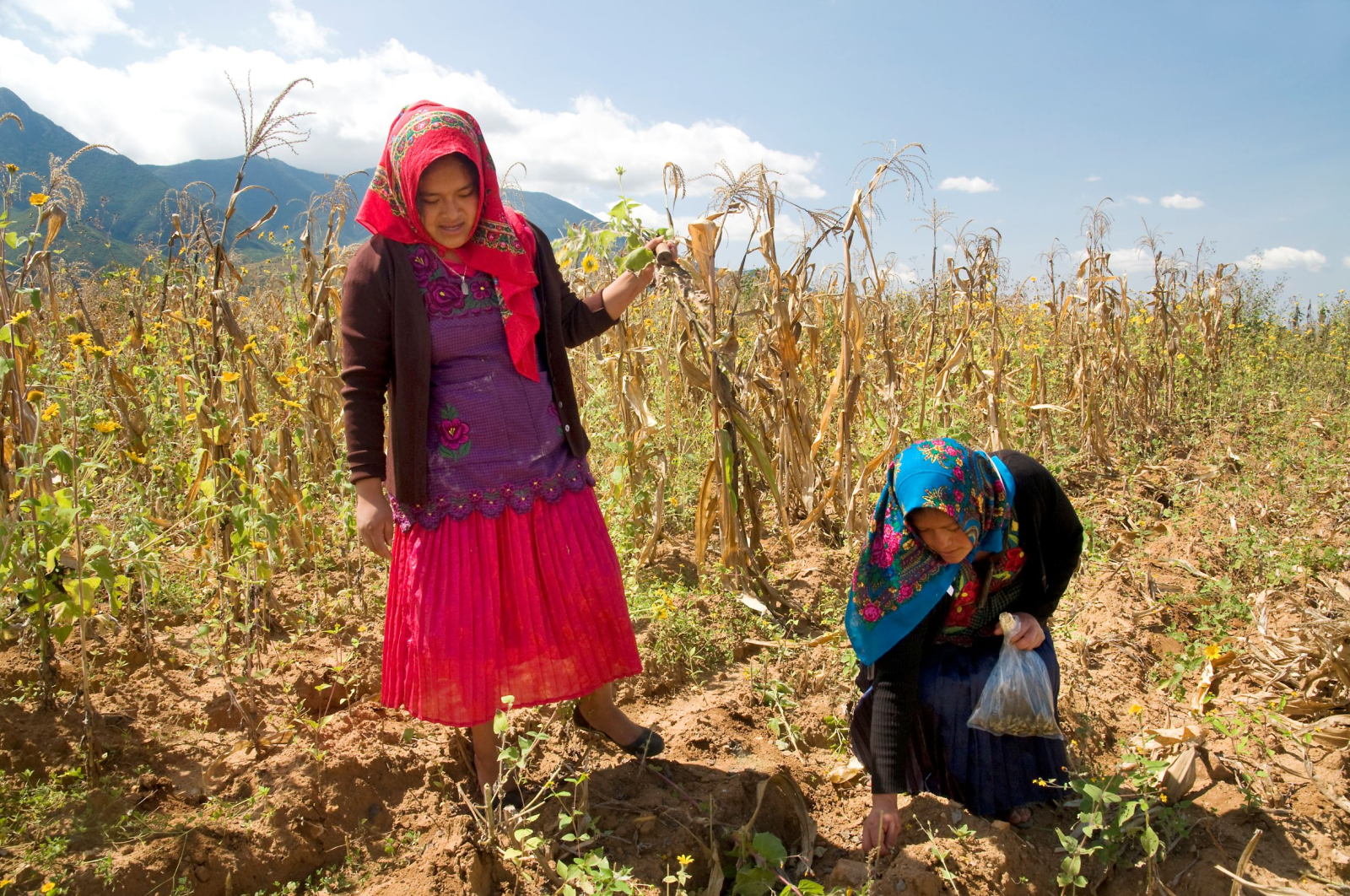
Grasshoppers, or chapulines, are popular in Mexican cuisine. Sisters Erika and Angelica Hernandez are picking chapulines in the family’s corn plot. Central Valleys of Oaxaca, Mexico. Photograph by Jean-Claude Teyssier
Nearly 80 per cent of San Bartolomé’s menfolk have gone north. Dozens of houses are in various stages of construction and neglect. Some have never been lived in; others are boarded up, their plots abandoned.
Every country, including Mexico, is facing climate change, from weather unpredictability to crop failure. And campesinos like Javier, who come from largely Indigenous communities and grow corn for their personal consumption, are feeling its worst impact. Struck by recurring drought and few employment opportunities, many see no way out but to go abroad to feed their families.
In Oaxaca’s colonial capital city, about half an hour from the central valley communities, school-age children beg on the streets, peddling China-made goods to soft-hearted tourists.
Of course, migration is not unique to Mexico. According to the Geneva-based International Organization for Migration, an estimated 200 million people will be climate migrants in 2050.
However, in rural Oaxaca this trend has created a unique social phenomenon whereby between 60 to 90 per cent of the men have gone north, leaving the women behind.
It’s a rare local family without kin in “el otro lado.” In some pueblos, it’s mostly women, children, old men and stray dogs on the streets.
Seeds of migration
Nowhere is migration more evident than in Oaxaca’s central valleys — the birthplace of corn nearly 8,000 years ago.
It would be hard to underestimate the importance of corn to Mexicans, said Toronto researcher Lauren Baker, whose book Corn Meets Maize, documents how corn is central to food security, biodiversity and culture. Called maize in Mexico, corn was once revered as a gift from the gods. According legends, Popol Vuh had forged mankind from one of its grains. Another folklore says the feathered serpent Quetzalcoatl gave the Aztec one grain of maize, from which they’ve cultivated ever since.
“We’re children of corn,” Mexicans are fond of saying.
“Corn is a cultural symbol tied to identity,” Baker said. Beyond a commodity, a staple crop and a core of the economy, “it’s who they are,” she said, and it’s woven into everyday life, culinary traditions, rituals, festivals and the spiritual system of Mexico.
As the poorest of farmers, campesino corn growers continue to suffer the worst from overlapping crises — political, economic and climactic — that deplete biodiversity and drive migration.
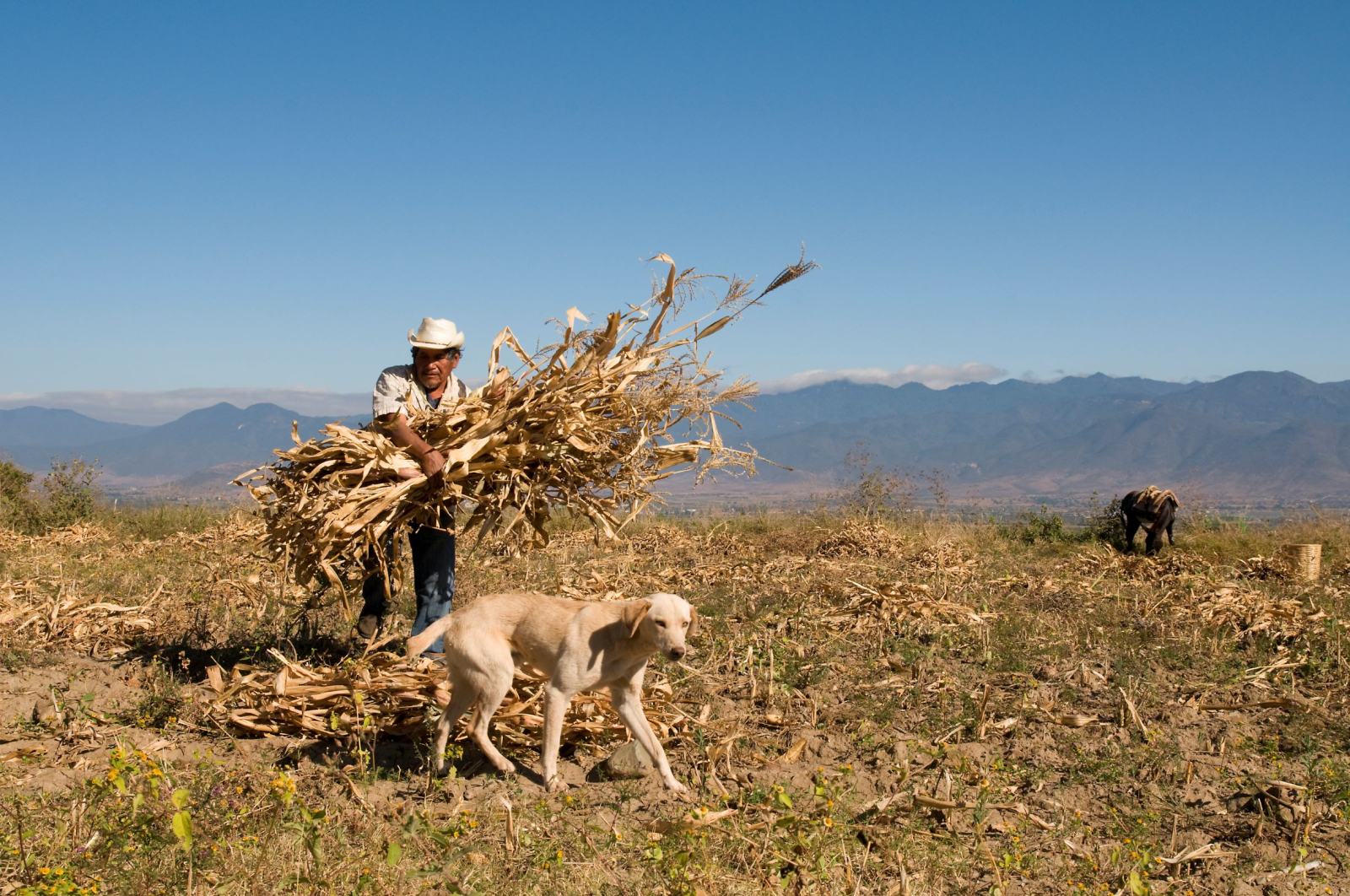
A campesino gathers dry corn stalks to feed his farm animals, as nothing is wasted on a substance farm. Central Valleys of Oaxaca, Mexico. Photograph by Jean-Claude Teyssier
Among the most notable is the free trade agreement (NAFTA) signed in the 1990s that led to the dumping of cheap, hybrid corn (sold below the cost of production) on the Mexican market. Campesinos can’t get good value for their surplus grain. And their personal consumption and survival is threatened by water shortages and drought conditions.
Environmental scientists from Princeton University, who crunch census data along with statistics on crop production and climate data, say changes in rainfall, climate risk and rural vulnerability propel Oaxaca’s farmers north in greater numbers. They warn that these changes will have significant future impacts on human mobility and displacements.
What’s at risk for Mexico’s people of the corn?
“All, absolutely all of it, is at risk,” Baker replied. “From globalization to climate change, from youth not being interested in farming anymore to the homogenization of agriculture and the pressure to grow only certain varieties.
“But there’s also renewed appreciation for how special corn is in Mexico,” she said, as well as for the role that campesinos play in preserving the culture of maize.
Oaxaca’s massive migration of campesinos worries government agencies including the non-profit International Maize and Wheat Improvement Center, known by its Spanish acronym, CIMMYT. As people abandon their farms, the biodiversity of maize suffers, says the organization, one of many that’s fighting to save native corn varieties by supporting an ecological approach to sustainable planting.
The planting projects are testimony to the fight for sustenance in a nation bound by the saying “Sin maiz no hay pais” (“Without corn, there is no country”).
Torn families
Javier’s father jokes that once his son leaves home, he’ll be stuck with only women. “And, God willing, my last remaining son will pass the border safely,” the elder Hernandez says. “I’ll be left with pura mujeres (only women at home).”
In the decade since I met the Hernandez family, their modest hacienda-style home — several tin-roofed rooms scattered around an inner courtyard — has improved thanks to the buying power accrued through remittances sent from the U.S. Erika, one of the three Hernandez sisters still living in the area (the fourth immigrated), gives me a tour, saying that a new room will be added there, where now the ox and sheep are tied to a post.
Among the many gifts from the siblings in el otro lado is a green Chevrolet pick-up truck, an eight-cylinder model with nearly 145,000 kilometres on it. It’s been parked idle in the courtyard for several months while the chickens peck at its giant tires.
“No one knows how to drive it,” Erika says with a shrug.
The Hernandez family relies on about two acres of rain-fed land, a milpa field where maize is planted among beans and squash. Backyard chickens supplement meals, along with fruits and vegetables from a kitchen garden, set up a few hundred metres behind their house. Any surplus produce goes to market to cover necessities and sundry items such as electricity and medicine, Coca-Cola and alcohol.
It’s a late afternoon in San Bartolomé. As Erika leads me to her mother’s garden along a dirt road, she comments on the dwindling population and the houses no one lives in.
“That’s my brother Oscar’s house,” she says of a modern two-storey cement and brick construction that went up slowly over two decades as remittance pay trickled in. “He’s never lived in it. He keeps promising my mother to visit. But he never does.”
We stop under a lemon tree. The garden is lush with avocado and apple trees. It’s water source is a 10-metre well on the property. Rows of chrysanthemums and alfalfa bend under in the sun next to tomatoes, beets, lettuce, onions and radishes. The cornfield on the outskirts of town has no well or irrigation system and relies entirely on rainfall.
When it doesn’t rain, the corn doesn’t thrive, Erika says simply. “Everyone is leaving because there’s no work and no water.”
But ambitions for a better future are etched against the emotional toll migration continues to exact. All our families are torn apart, Erika says. Oscar, the oldest brother, left nearly 20 years ago, followed in two- to three-year intervals by several others. One brother recently came back to marry a local woman, Erika says, but as for the others, “it’s not likely they’ll ever come back.”
They’ve put down roots and got married and their children are American. As illegal undocumented immigrants they can’t take the risk of getting caught sneaking across borders.
“We talk on the phone a lot, but my parents have grandchildren they’ve never seen,” Erika says.
There are 14 grandchildren living on the other side. Erika’s mother, Felipa Martínez Gómez, takes a faded photograph hanging on a nail on the kitchen wall, of her adult children when they were very young. She hugs it to her chest. “Six gone and a seventh almost got killed trying to get there,” she says, wiping a wet cheek.
Human displacement
The central valley area is no stranger to human displacement. The archeological ruins of Mitla, Yagul and Monte Albán are magnets for tourists. The ancient city of Monte Albán, about 1940 metres above sea level, was the former economic and political centre of the Zapotec civilization. The site was abandoned in 700 AD, historians say, after loss of basic resources and ecological balance led to its collapse.
Their descendants, adhering with pride to prehispanic Indigenous customs despite 500 years of conquest, are facing similar challenges. The annual migration from Oaxaca usually starts in August, once campesinos realize the corn will not flourish.
Some say migration has destroyed family structure, while others maintain that some have benefited from increased wealth from foreign remittances.
Sociologist Socorro Monterrubio, who worked with several communities in the Tlacolula District, located between the ruins of Mitla and Monte Albán, says that in Oaxaca economic migration has become a way of life.
Usually, people migrate to areas in the U.S. where they already have family or a social network, she said. But it can be quite hard on those left behind.
Monterrubio noted that women have always worked and contributed to food security. But with changes to family structure, women have been forced to assume new roles — head of family, keeper of the home, responsible for the agricultural work, their children’s upbringing and education — for which they were not prepared. It’s not just a question of division of labour but of capacity to get the work done.
Often, the women are abandoned. Some husbands return to Oaxaca every few years, stay long enough to impregnate their wives, and then slip over the border again, Monterrubio said. Sometimes the men disappear into the unknown — arrested or killed. But more often they find new wives and start second families, she said, “abandoning their Oaxaca partners. It’s more common than you think.”
Increasingly, it’s the women who tend to the corn and cactus fields, the backyard chickens and children. Faced with dwindling remittances, many work as domestics, caregivers and house cleaners. And turn to skills passed down from mother to daughter — making tortillas and tamales, ceramics and pottery, sewing and embroidery, rugs and baskets.
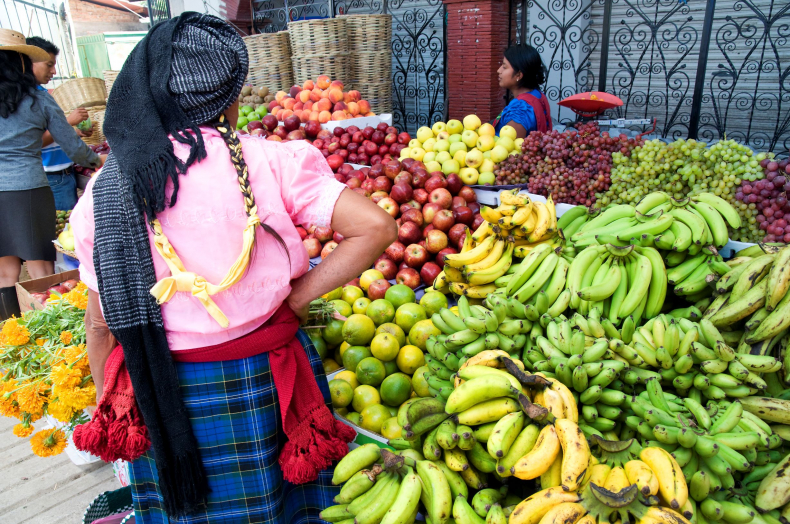
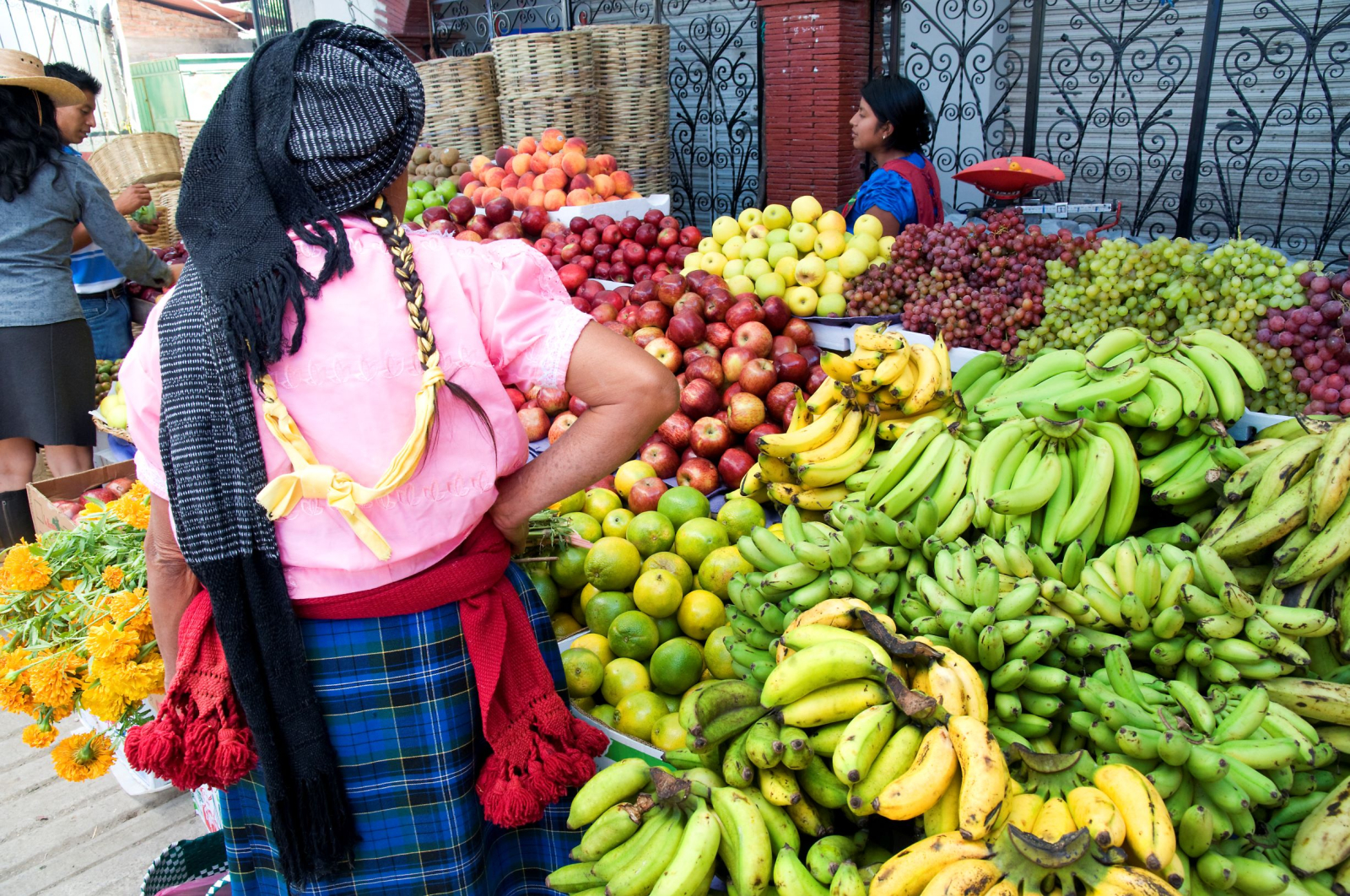
One of the oldest indigenous food and craft markets in the central valleys takes place every Sunday in Tlacolula de Matamoros, Oaxaca, Mexico. Photograph by Jean-Claude Teyssier
They sell their goods door-to-door in Tlacolula, paying a few pesos for a ride into town in rundown collective taxis that routinely squeeze six passengers into a space made for four. The busiest day is Tlacolula’s famed Sunday market, a meeting point for thousands of Zapotec, who come from the surrounding valleys and mountains to sell and socialize. Kiosks with cheese and meat, vegetables and fruit, pottery and rugs are spread along the streets from the central 17th-century church plaza. A tantalizing odour of meat and onions roasting on braziers fills the air.
From dawn to dusk hawkers call: “Que va llevar?” (What will you buy?)
Javier’s mother takes a spot at the entrance to the central plaza, close to the cheese and meat vendors, swatting at flies. She lays a cloth on the ground and arranges a spray of flowers, some cabbages and radishes next to bowls of lemons and avocados. The price of three avocados is about 10 pesos, or a few cents.
Last year, the Hernandez family celebrated the birth of their 15th grandchild, the first on this side of the border. Javier and Erika’s sister Angela Hernandez married Victor Diego, a campesino from San Lucas, a village eight kilometres east of her home. The couple named their son after the archangel Gabriel, “God’s strength.”
Like many farming families I’ve met, the Hernandez and Diego families are curious about travel restrictions to Canada, work visas and the cost of living. “What kind of work is there for campesinos? How much do plane tickets cost? Do you need tortilla bakers?”
All of Diego’s brothers have immigrated, his mother tells me at the Sunday market. He is the last one, she says, and her eyes tear at the thought of losing one more.
When Javier admits his plans to go north again, his mother speaks to him sharply in Zapotec.
“She’s telling him to stay,” Erika says.
He didn’t listen to her. Javier now works two full-time jobs in el otro lado, gardener by day, dishwasher by night. He dreams of becoming a DJ.
Charlie Fidelman was the winner of a journalism grant from the non-profit Fonds québécois en journalisme international, which provides journalists with funding for reporting international issues abroad. The foundation had no editorial input in this piece.
Loveland Magazine is one of the 400 news outlets worldwide, with a combined audience of over 2 billion people “Covering Climate Now”, a global journalism initiative committed to bringing more and better coverage to the defining story of our time.
The initiative, was co-founded by The Nation and Columbia Journalism Review
Mihaela Manova is “Covering Climate Now” in Loveland, Ohio as an editor for Loveland Magazine
Today’s article talks about London’s Heathrow airport, which is currently getting a ban on building a third runway due to the present climate change crisis. This article was written by Damian Carrington for The Guardian in partnership with Covering Climate Now.
By Damian Carrington on Feb 27, 2020
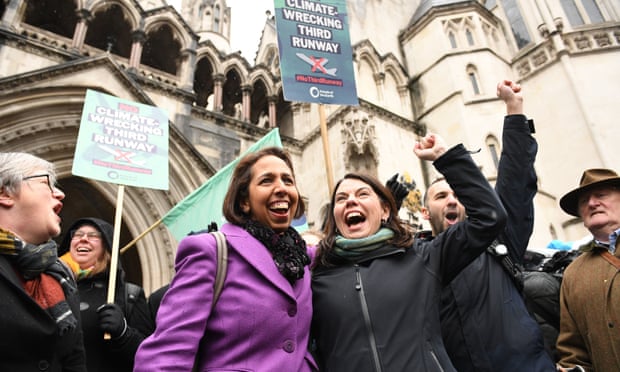
plans for a third runway at Heathrow airport have been ruled illegal by the court of appeal because ministers did not adequately take into account the government’s commitments to tackle the climate crisis.
The ruling is a major blow to the project at a time when public concern about the climate emergency is rising fast and the government has set a target in law of net zero emissions by 2050. The prime minister, Boris Johnson, could use the ruling to abandon the project, or the government could draw up a new policy document to approve the runway.
The government is considering its next steps but will not appeal against the verdict. The transport secretary, Grant Shapps, said: “Our manifesto makes clear any Heathrow expansion will be industry-led. Airport expansion is core to boosting global connectivity and levelling up across the UK. We also take seriously our commitment to the environment.”
Johnson has opposed the runway, saying in 2015 that he would “lie down in front of those bulldozers and stop the construction”. Heathrow is already one the busiest airports in the world, with 80 million passengers a year. The £14bn third runway could be built by 2028 and would bring 700 more planes per day and a big rise in carbon emissions.
Johnson is thought to have been looking for a pretext to withdraw support for the extra runway and could make the argument for Birmingham to provide increased airport capacity for London given that train journey times will be reduced by HS2.
The court’s ruling is the first major ruling in the world to be based on the Paris climate agreement and may have an impact both in the UK and around the globe by inspiring challenges against other high-carbon projects.
Lord Justice Lindblom said: “The Paris agreement ought to have been taken into account by the secretary of state. The national planning statement was not produced as the law requires.”
“It’s now clear that our governments can’t keep claiming commitment to the Paris agreement, while simultaneously taking actions that blatantly contradict it” said Tim Crosland, at legal charity Plan B, which brought the challenge. “The bell is tolling on the carbon economy loud and clear.”
Plan B’s intervention was one of a number of legal challenges against the government’s national policy statement, which gave the go-ahead for the new runway in 2018 after MPs backed it by a large majority. Others were brought by local residents, councils, the mayor of London, and environmental groups including Friends of the Earth and Greenpeace.
The challenges were dismissed in the high court in May 2019 but the complainants took their cases to the court of appeal, which delivered its verdicts on Thursday.
Plan B argued that the Paris agreement target, which the government had ratified, was an essential part of government climate policy and that ministers had failed to assess how a third runway could be consistent with the Paris target of keeping global temperature rise as close to 1.5C as possible.
“This is an opportunity for Boris Johnson to put Heathrow expansion to bed and focus on the most important diplomatic event of his premiership, the UN climate summit in Glasgow in November,” said Lord Randall, a former Conservative MP and climate adviser to the former prime minister Theresa May. “It’s his chance to shine on the world stage.”
The court of appeal did not overturn the high court’s dismissal of the other challenges, which related to air and noise pollution, traffic, and the multibillion pound cost of the runway.
But the Paris agreement ruling is far-reaching, according to Margaretha Wewerinke-Singh, an international public law expert at Leiden University, in the Netherlands. “Its implications are global,” she said.
“For the first time, a court has confirmed that the Paris agreement temperature goal has binding effect. This goal was based on overwhelming evidence about the catastrophic risk of exceeding 1.5C of warming. Yet some have argued that the goal is aspirational only, leaving governments free to ignore it in practice.”
Prof Corinne Le Quéré, at the University of East Anglia, said: “Government needs to put climate targets at the heart all big decisions, or risk missing their own net zero objectives with devastating consequences for climate and stability. I am relieved this is finally recognised in law.”
Climate campaigner Greta Thunberg said: “Imagine when we all start taking the Paris agreement into account.”
Heathrow and proponents of the third runway say it would provide an economic boost and is important for international business, particularly after Brexit. “The court of appeal dismissed all appeals against the government – including on ‘noise’ and ‘air quality’ – apart from one, [i.e. climate change] which is eminently fixable,” said a spokeswoman for Heathrow.
“We will appeal [as an interested party] to the supreme court on this one issue and are confident that we will be successful. Expanding Heathrow, Britain’s biggest port and only hub, is essential to achieving the prime minister’s vision of global Britain. We will get it done the right way.”
Mike Cherry, at the Federation of Small Businesses, said: “The verdict is a blow to small firms who need greater regional and global connectivity, as well as more opportunities to export.”
“No amount of spin from Heathrow’s PR machine can obscure the carbon logic of a new runway,” said John Sauven, at Greenpeace UK. “Their plans would pollute as much as a small country.”
Geraldine Nicholson, from local campaign group Stop Heathrow Expansion, said: “This is the final nail in the coffin for Heathrow expansion. We now need to make sure the threat of a third runway does not come back.”
At a separate event on Thursday, Alok Sharma, the business secretary and president of November’s UN COP26 climate summit, said: “The only economy which can avoid the worst effects of climate change, and thus continue to deliver growth, is a decarbonised economy. Our choices will make or break the zero-carbon economy.”
• This article was amended on February 28 2020. An earlier version had mistakenly called the business secretary Ashok Sharma, rather than Alok Sharma. This has been corrected.