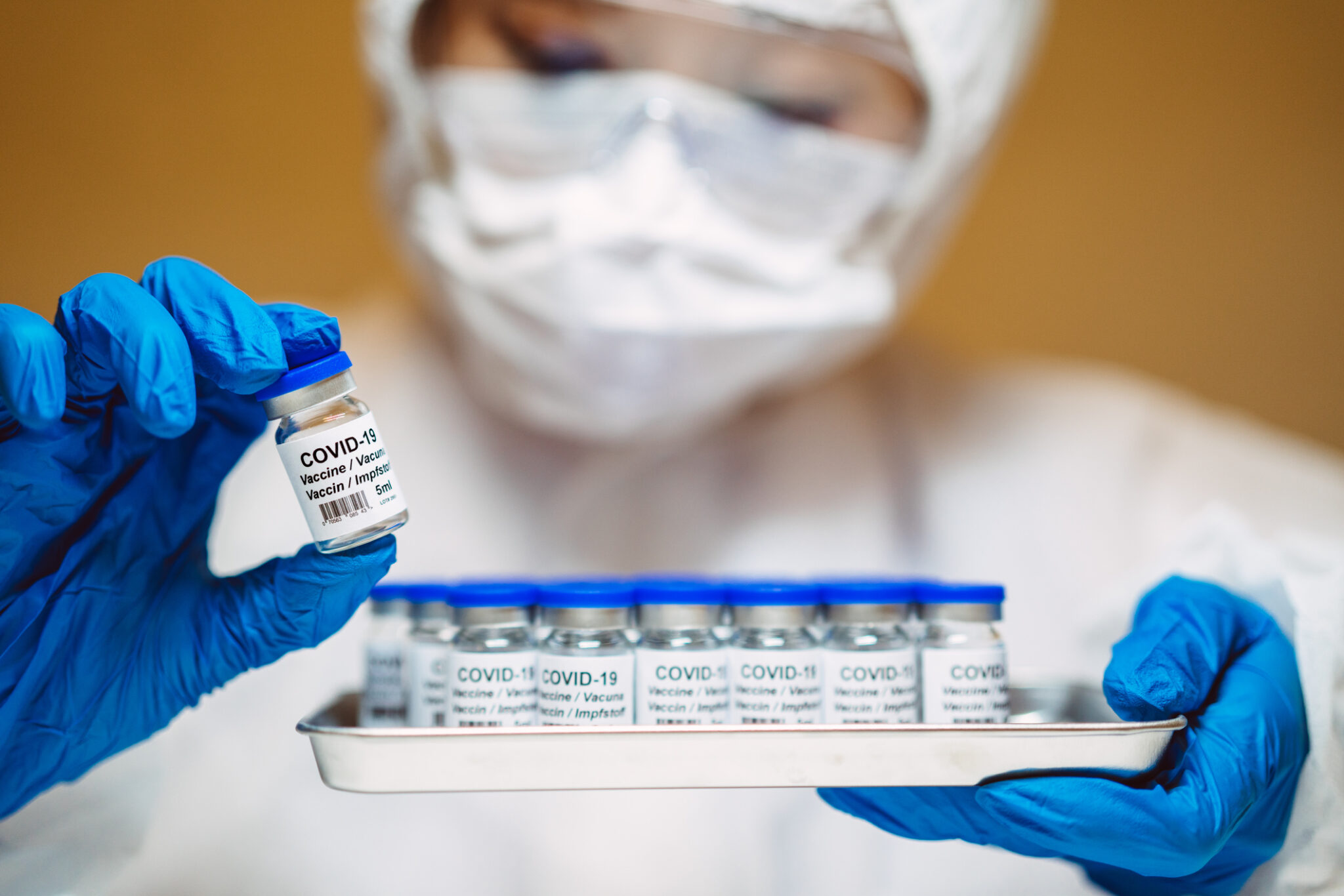
Tag: COVID-19

  • COVID-19 Update – Watch ODH Press Conference

    COVID-19 Update – Watch ODH Press Conference

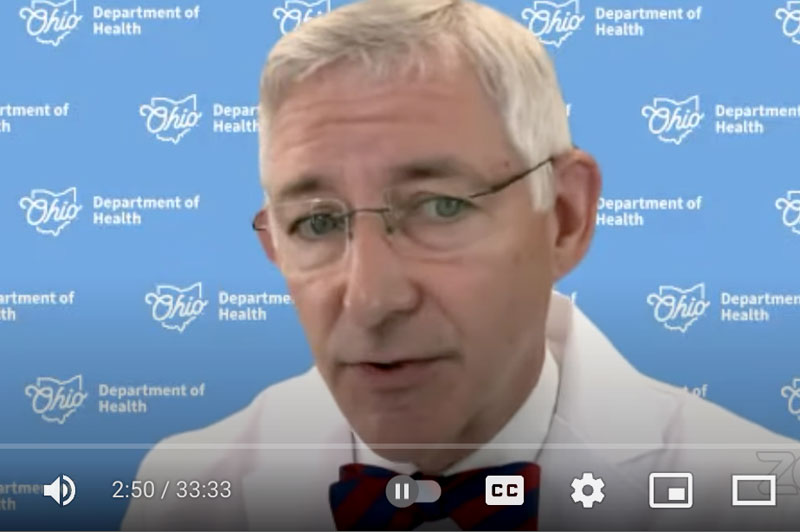
    Ohio Department of Health Director Bruce Vanderhoff hosted a press conference on COVID-19 and the updated COVID vaccine.

    Featuring Joe Gastaldo, M.D., infectious disease specialist and Vice President of Clinical Affairs for OhioHealth Dublin Methodist Hospital and OhioHealth Grady Memorial Hospital, and Vanessa Maier, M.D., MPH, Medical Director, MetroHealth Medical Center’s School Health Program.

  • Ohio Gov. Mike DeWine tests positive for COVID as cases rise

    Ohio Gov. Mike DeWine tests positive for COVID as cases rise

    By:  Ohio Capital Journal

    Ohio Gov. Mike DeWine announced he was positive for COVID-19 on Tuesday, noting the rising levels of the virus throughout the state.

    DeWine’s office announced the governor had tested positive Tuesday morning, after experiencing “mild, cold-like symptoms … including sneezing and a runny nose.”

    Under the advice of his doctor, DeWine’s office said he has started a round of Paxlovid, an anti-retroviral used to treat COVID-19.

    The press release from the governor said the predominant COVID-19 variant going around in the country is KP.3.1.1., in the omicron family of the virus, and cases have been increasing for months, DeWine’s office stated.

    “COVID-19 cases and wastewater detections of COVID-19 have been on the rise in Ohio since late June,” DeWine’s office stated in the release. “Though hospitalizations, which are a good indicator of disease severity, have risen modestly in much of the United States, they are not currently rising in Ohio.”

    The CDC estimated the KP.3.1.1. variant represented 36.8% of all cases in the U.S. in the two weeks ending Aug. 17.

    State data shows a rise in hospitalizations due to COVID, with 238 reports in the last week, and a three-week average of 190. In the last three weeks, hospitalizations have gone from 141 to 192, up to the most recent report of 238.

    The Ohio Department of Health said case levels “have not approached those of earlier this year,” for example in January when there were 41,344 cases reported, and “certainly not anywhere near the levels seen during the last major surge” of January 2022, according to a spokesperson for the department.

    While the omicron variants are attributed to the recent rise, press secretary Ken Gordon said “there is no evidence that these variants are causing more severe levels of disease.”

    “That said, COVID remains a very real health threat, and any increase in cases reaffirms the importance of staying up to date with vaccination,” Gordon wrote in a statement.

    When DeWine announced he had tested positive (and then negative) back in August 2020, right before he was set to accompany then-President Donald Trump in Cleveland, reported cases were at a 21-day average of 1,280. DeWine also tested positive for COVID in April 2022 and in September 2023.

    According to the most recent reports from the ODH, which releases COVID data once a week, reported cases in the last week were up to 7,347, a number that has steady risen to a three-week average of 6,656 cases.

    In November of 2020, months after shutdowns began in the country and DeWine had implemented closures of restaurants and bars but before vaccines were available, the governor had announced additional mask order enforcement and was again debating closing restaurants and other public facilities. On the day he announced further mask enforcement measures, the state saw a new record for COVID cases: 7,101.

    Nationally, the CDC reported 18.1% COVID-19 test positivity for the week ending Aug. 10, up from 17.9% the previous week. As of that same week, 1.9% of all deaths in the United States were due to COVID-19, up from 1.6% the week before.

    The governor’s office encouraged Ohioans to update their COVID vaccines when they are available this fall, and for those who haven’t been vaccinated or have not received the most recent booster dose to “talk to their health care provider about the current vaccine.”

    As of August. 15, less than 12% of Ohioans had updated their COVID-19 vaccine. The CDC recommends everyone six months or older to receive an updated vaccine “to protect against the potentially serious outcomes of COVID-19 this fall and winter whether or not they have ever previously been vaccinated with a COVID-19 vaccine.”

    “To date, hundreds of millions of people have safely received a COVID-19 vaccine under the most intense vaccine safety monitoring in United States history,” the CDC said in a release.

    According to the ODH, the U.S. Food and Drug Administration could approve an updated vaccine “as soon as this week,” after which the CDC will give specific recommendations.

    “It’s reasonable to anticipate the new vaccine may start to be available to the public in September,” the ODH stated.


    Susan Tebben
    Susan Tebben

    Susan Tebben is an award-winning journalist with a decade of experience covering Ohio news, including courts and crime, Appalachian social issues, government, education, diversity and culture. She has worked for The Newark Advocate, The Glasgow (KY) Daily Times, The Athens Messenger, and WOUB Public Media. She has also had work featured on National Public Radio.

    Ohio Capital Journal is part of States Newsroom, the nation’s largest state-focused nonprofit news organization.

    MORE FROM AUTHOR

  • Biden-Harris Administration Announces Partnership to Distribute Free COVID-19 Tests to Schools Across the Country

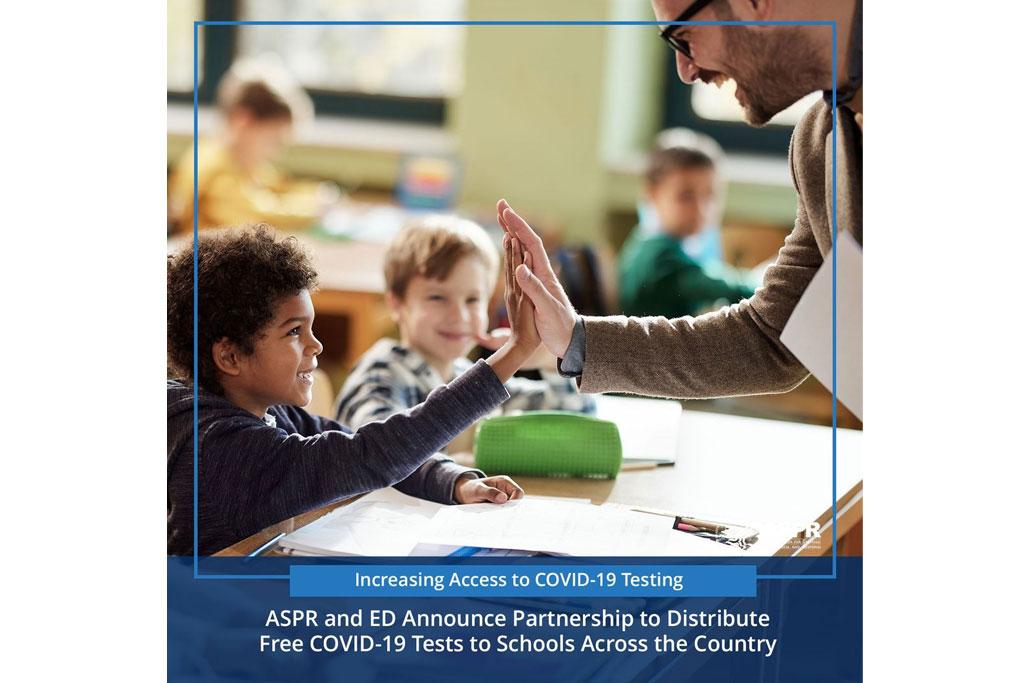
    Biden-Harris Administration Announces Partnership to Distribute Free COVID-19 Tests to Schools Across the Country

    School districts may distribute these tests for free to students, staff, parents, and school communities, with the expectation that millions of tests will be sent out in the coming months – allowing schools to stock nurses’ offices, distribute at events, send tests home with students or parents, and more.

    On Wednesday, the Administration for Strategic Preparedness and Response (ASPR), a division within the U.S. Department of Health and Human Services (HHS), and the U.S. Department of Education (ED), announced a partnership to distribute free COVID-19 tests to schools across the country. In a letter sent to local education agencies (LEAs) today by ED, school districts are being encouraged to order tests directly from the federal government to be made available to students, parents, staff, and school communities.

    “Keeping students and teachers safe has been a priority of the Biden-Harris Administration since day one. Making free COVID-19 tests available to schools this year ensures that students and staff can test throughout the winter months,” said Assistant Secretary for Preparedness and Response Dawn O’Connell. “The partnership announced today leverages ASPR’s ongoing test distribution programs to reach school communities through ED’s close relationship to school districts – helping keep communities healthy.”

    The tests will be made freely available to all traditional and charter LEAs nationwide. School districts may distribute these tests for free to students, staff, parents, and school communities, with the expectation that millions of tests will be sent out in the coming months – allowing schools to stock nurses’ offices, distribute at events, send tests home with students or parents, and more.

    “The Biden-Harris Administration remains a committed partner with schools in keeping our students and teachers safe and healthy,” said Assistant Secretary for Planning, Evaluation, and Policy Development at ED, Roberto Rodriguez. “These self-tests are easy to use and can play an important role in preventing the spread of COVID-19. We encourage schools to make use of these free resources to safeguard students, parents, and staff throughout the 2023-24 school year.”

    The partnership announced today is part of the Biden-Harris Administration’s efforts to boost COVID-19 testing access across the country – building on test distribution programs that ASPR has led for over two years. Over 1.6 billion COVID-19 tests have been distributed directly to households, schools, long-term care facilities, community health centers, and food banks through these channels – with over four million tests sent out each week, a number that is expected to rise as more school districts take advantage of this program.

    Additionally, ASPR opened another round of ordering on COVIDTests.gov on November 20, making four more free tests available to households ahead of the holidays. Today’s announcement builds on previous Biden-Harris Administration efforts to increase COVID-19 testing in schools to keep students safe and schools open.

    Read the full Dear Colleagues Letter from ED here.

    Order Today! Free COVID-19 At-Home Tests

    Get free COIVD-19 tests shipped directly to you at no cost before the winter holidays. Even if you have already ordered tests this fall, you can order more tests now.

    Order online or over the phone. Support is available in 150+ languages.

    Order Today!


  • COVID-19 Information Moving to ODH, DataOhio Websites

    COVID-19 Information Moving to ODH, DataOhio Websites

    Ohio Department of Health (ODH) Director Bruce Vanderhoff, M.D., MBA, has announced that all COVID-19 information from coronavirus.ohio.gov is moving to the ODH website. All COVID-19 statistics and weekly reports are moving to the DataOhio COVID-19 reporting page. Visitors to coronavirus.ohio.org will be automatically redirected to the ODH website.

    After the federal government declared the COVID-19 public health emergency in January, 2020, ODH launched coronavirus.ohio.gov to serve as a clearinghouse for information.

    When the federal government declared an end to the public health emergency in May of this year, ODH began planning to transition from that website to a series of pages on the ODH and DataOhio websites.

    “The Ohio Department of Health remains committed to monitoring and sharing key data regarding COVID-19,” Dr. Vanderhoff said. “Indeed, COVID-19 remains a major driver of respiratory illness along with other viruses like influenza and RSV for which important information is also available on our website.”

    The new site contains links to the COVID-19 statistics and dashboards that will continue to be updated weekly, as well as the latest guidance on prevention, testing, treatment, and vaccines. That information will continue to be updated, as well.

  • Nurse’s Notes: Preventative Healthcare

    Nurse’s Notes: Preventative Healthcare

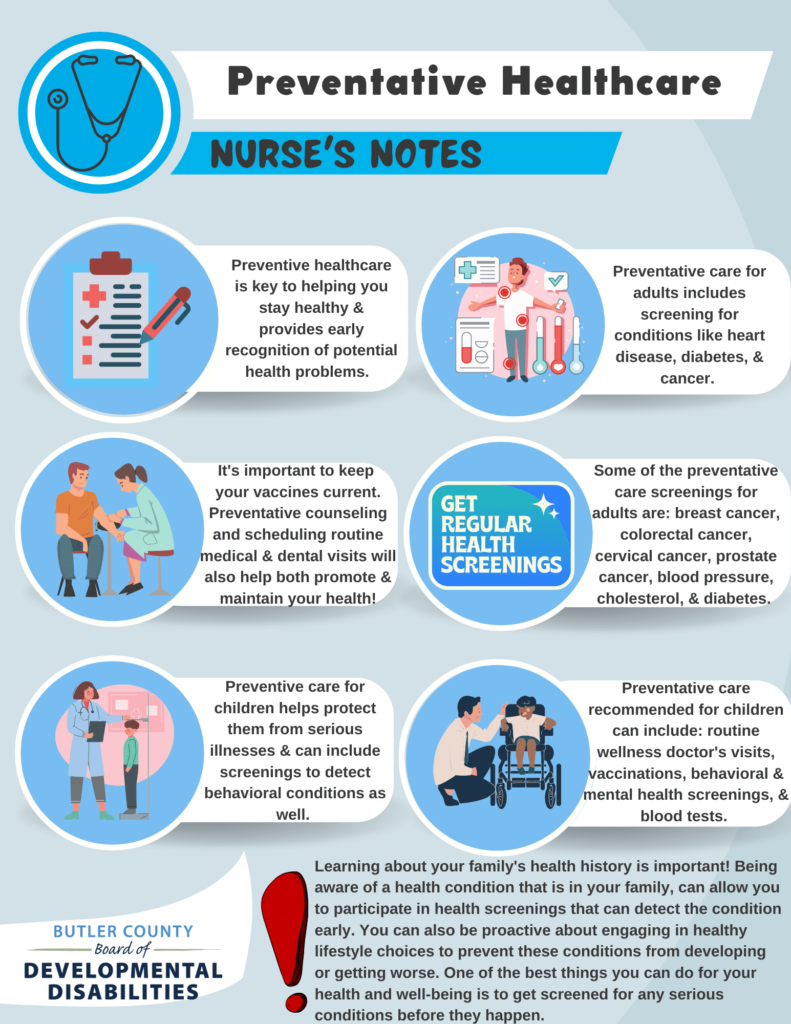
    Every month, the staff nurses at the Butler County Board of Developmental Disabilities share important health updates. This month, their nurses are talking about preventative healthcare!

    Preventive healthcare is key to helping you stay healthy and provides early recognition of potential health problems. Seeking preventative healthcare can help you live a longer, healthier life!

    Preventative care for adults typically includes screening for conditions like heart disease, diabetes, and cancer. This also includes counseling and receiving appropriate patient teaching on healthy eating and life habits.

    What are some of the screenings recommended for adults? (Please note that these screenings are recommended based on age and family history).

    • Screenings for breast cancer, colorectal cancer, cervical cancer, and prostate cancer: These types of cancers are affecting men and women the most and early detection can stop or slow the spread and allow early treatment.
    • Screenings for blood pressure, cholesterol, and diabetes: These screenings can detect common conditions that can be treated with basic lifestyle changes and or medications. If left untreated or diagnosed, they can lead to serious diseases and early death.
    • Immunizations: Not only children need vaccines, but adults should also stay on top of their vaccines as well.  Annual flu shots, COVID-19 vaccines and any necessary boosters can help you prevent illness and diseases. Visit the CDC for guidelines on vaccines.
    • Preventative Counseling: Preventative counseling and patient teaching is useful to help us make ongoing positive health related changes to promote a healthy lifestyle.
    • Scheduling routine medical and dental visits:  Annual physicals and routine dental care is valuable to maintain general health and ensure necessary recommended screenings are performed.

    Preventive care for children helps protect them from serious illnesses and can include screenings to detect behavioral conditions as well. Preventive healthcare can help children stay healthy when they’re young and promote healthy decision making as they grow older.

    What preventative care is recommended for children?

    • Well-child visits: Routine visits every few months when your child is an infant, and yearly after that.  Routine immunizations and screenings are also conducted during these visits.
    • Vaccinations: Vaccinations for children protect them from serious diseases now and in the future.
    • Behavioral and mental health screenings: Pediatricians routinely screen children for conditions like autism, depression, and developmental delays.
    • Blood tests: Various blood test screenings can be conducted throughout childhood to detect various diseases.

    Why is knowing your family history important?

    Learning that you have a family history of a serious health condition can be discouraging and stressful, but knowledge is power. When you are aware of a health condition that is in your family, you can participate in health screenings that can detect the condition early, so that treatment is more effective and can be started early on. You can also be proactive about engaging in healthy lifestyle choices to prevent these conditions from developing or getting worse.

    One of the best things you can do for your health and well-being is to get screened for any serious conditions before they happen. That’s what preventive health is about, and why medical experts recommend that all adults and children participate in routine tests, screenings, and immunizations.

    If you have any questions about preventive care and what screenings you or your children should get, be sure to talk with your doctor or healthcare professional. Check to see if you are up to date on your preventative care! 
    The Butler County Board of Developmental Disabilities supports over 3,700 people to live, work, and learn successfully in their community. Supports and services are available life-long through contracts with partner agencies or directly provided by our Board.
    Please visit the website of the Butler County Board of Developmental Disabilities often for more great information about the services that they provide, many of which go beyond the walls of their facilities and take place in the greater community.

    Look for, and subscribe to their newsletters!

  • Next generation of COVID-19 vaccines and therapies gets a $1.4 billion boost

    Next generation of COVID-19 vaccines and therapies gets a $1.4 billion boost

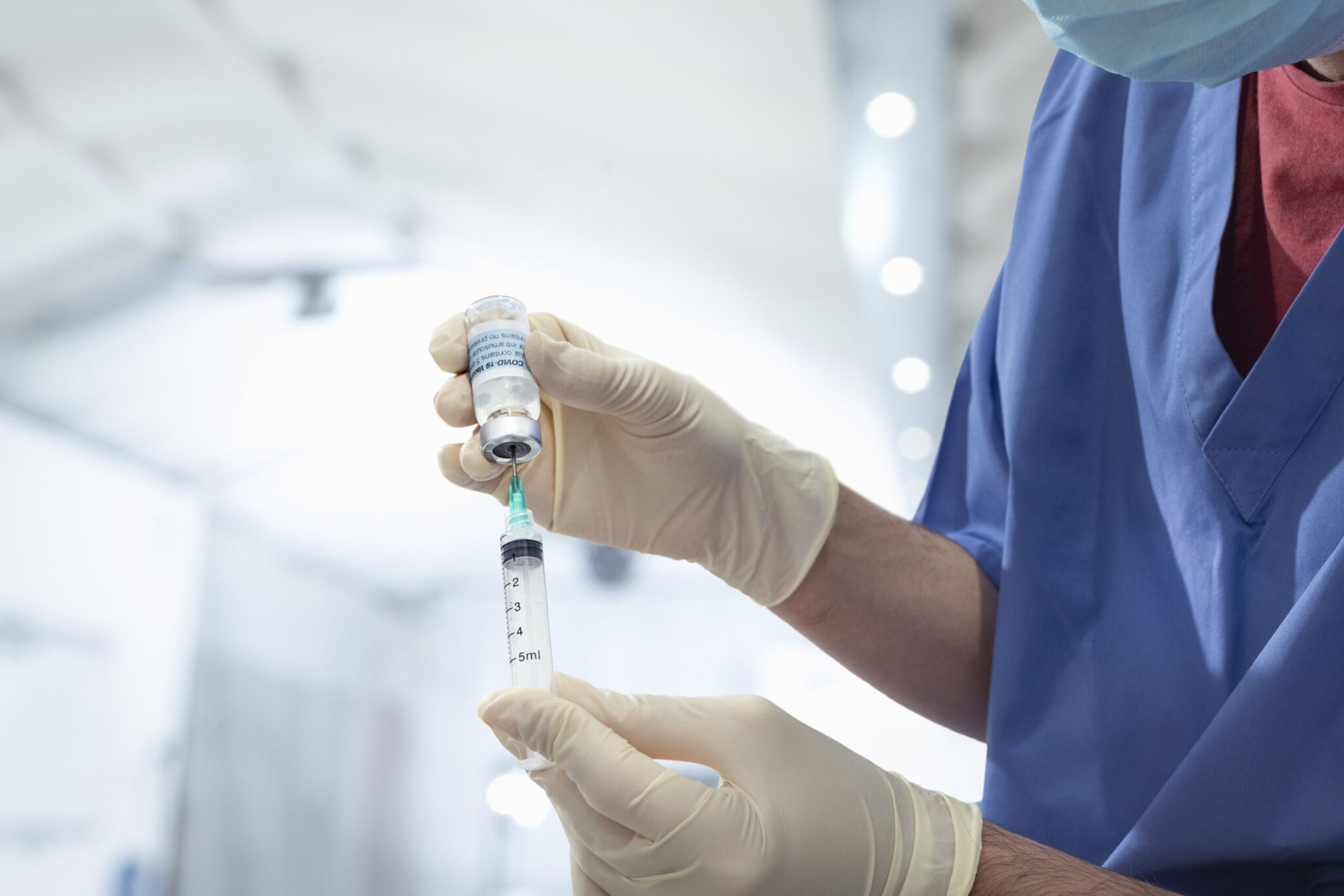
    A nurse holds a vial of COVID-19 vaccine and syringe. (Getty Images)

    BY:  Ohio Capital Journal

    WASHINGTON — The Biden administration on Tuesday announced a $1.4 billion investment in developing the so-called next generation of COVID-19 vaccines and treatments.

    Health and Human Services Secretary Xavier Becerra and Assistant Secretary for Preparedness and Response Dawn O’Connell made the announcement, saying the funding is part of the $5 billion program they hope will help the country get ahead of any future changes in COVID-19.

    “This is an investment in expanding our country’s ability to respond to the future variants that we might see coming out of COVID,” Becerra said. “It’s an investment in better protecting all of our community, including those who are immunocompromised, and who don’t respond well to the existing vaccines.”

    The $1.4 billion in funding should allow clinical trials for a new monoclonal antibody to start this autumn with clinical trials for a new COVID-19 vaccine starting as soon as the winter, O’Connell said.

    “Project NextGen is operationalizing the lessons we’ve learned about the COVID-19 virus to broaden the nation’s medicine cabinet and increase protection for all communities,” O’Connell said.

    The Biden administration, she said, expects to announce additional funding for Project NextGen programs before the end of the fiscal year on Sept. 30.

    The projects funded on Tuesday include

    • $1 billion for four Phase IIb clinical trial studies on a COVID-19 vaccine. That funding will go to ICON Government and Public Health Solutions, Inc of Hinckley, Ohio; Pharm-Olam, LLC, of Houston, Texas; Technical Resources International (TRI), Inc., of Bethesda, Maryland; and Rho Federal Systems, Inc., Durham, North Carolina.
    • $326 million to Regeneron for a monoclonal antibody to prevent COVID-19.
    • $100 million to Global Health Investment Corp., a non-profit organization that is managing an investment portfolio known as BARDA Ventures, referring to the federal agency called Biomedical Advanced Research and Development Authority. The portfolio should “expand investments in new technologies that will accelerate responses in the future,” according to a statement from HHS.
    • $10 million to Johnson & Johnson Innovation for a competition through Blue Knight, which HHS said in its statement is a partnership between BARDA and JLABS.

    An HHS official said the department is in the process of identifying the COVID-19 vaccines that will move into the Phase IIb clinical trials.

    Once the vaccines are identified, the HHS official said, the department would be able to “accelerate” their movement into clinical trials since a lot of the preparation to start a clinical trial can be going on before the vaccines are identified.

    The HHS official said the timeline for moving the next generation of COVID-19 vaccines to doctors’ offices and pharmacies will be determined by the data and how effective they may be when compared with the current vaccines.


    Jennifer Shutt
    JENNIFER SHUTT

    Jennifer covers the nation’s capital as a senior reporter for States Newsroom. Her coverage areas include congressional policy, politics and legal challenges with a focus on health care, unemployment, housing and aid to families.

    MORE FROM AUTHOR

  • FDA Authorizes first over-the-counter at-home test to detect both influenza and COVID-19 viruses

    FDA Authorizes first over-the-counter at-home test to detect both influenza and COVID-19 viruses

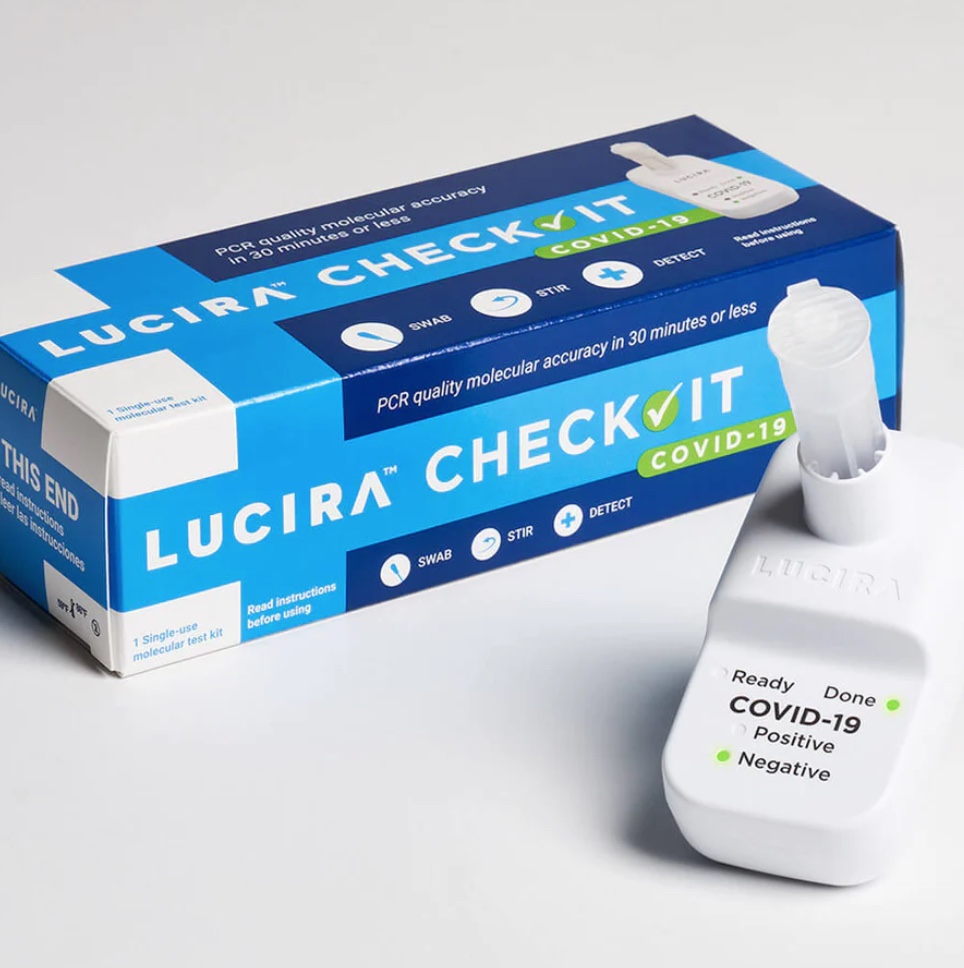
    On February 24, the U.S. Food and Drug Administration issued an emergency use authorization (EUA) for the first over-the-counter (OTC) at-home diagnostic test that can differentiate and detect influenza A and B, commonly known as the flu, and SARS-CoV-2, the virus that causes COVID-19. The Lucira COVID-19 & Flu Home Test is a single-use at-home test kit that provides results from self-collected nasal swab samples in roughly 30 minutes. 

    https://youtu.be/HA0n05d73Gc

    The Lucira COVID-19 & Flu Home Test is a single use test for individuals with signs and symptoms consistent with a respiratory tract infection, including COVID-19. The test can be purchased without a prescription and performed completely at home using nasal swab samples self-collected by individuals ages 14 years or older or collected by an adult for individuals 2 years of age or older. 

    The test works by swirling the sample swab in a vial that is placed in the test unit. In 30 minutes or less, the test unit will display the results that show whether a person is positive or negative for each of the following: Influenza A, Influenza B and COVID-19.

    Individuals should report all results obtained to their healthcare provider for public health reporting and to receive appropriate medical care. 

    According to the FDA, in individuals with symptoms, the Lucira COVID-19 & Flu Home Test correctly identified 99.3% of negative and 90% of positive Influenza A samples, 100% of negative and 88.3% of positive COVID-19 samples and 99.9% of negative Influenza B samples. Since there are currently not enough cases of Influenza B circulating to include in a clinical study, validation confirmed that the test can identify the virus in contrived specimens, and the EUA requires Lucira to continue to collect samples to study the test’s ability to detect Influenza B in real-world settings.   

    “As with all rapid diagnostic tests, there is a risk of false positive and false negative results. Individuals who test positive for either flu or COVID-19 should take appropriate precautions to avoid spreading the virus and should seek follow-up care with their physician or healthcare provider as additional testing may be necessary,” said the FDA in announcing the test. “Negative results for SARS-CoV-2 and influenza B should be confirmed, if necessary for patient management, with an authorized or cleared molecular test performed in a CLIA-certified laboratory that meets requirements to perform high or moderate complexity tests. Individuals who test negative and continue to experience symptoms of fever, cough and/or shortness of breath may still have a respiratory infection and should seek follow up care with their healthcare provider.”

  • Study shows uninsured children could increase with loss of pandemic-era coverage

    Study shows uninsured children could increase with loss of pandemic-era coverage

    Getty Images.

    “As we begin the process of redetermining eligibility for the first time in three years, we must pay particular attention to children’s needs to minimize the number of children who lose coverage.”

    Kelly Vyzral

    BY: SUSAN TEBBEN – Ohio Capital Journal

    A new study warns of a sharp rise in uninsured children in Ohio and across the country if pandemic-era coverage is allowed to fade away.

    The Georgetown University Health Policy Institute’s Center for Children and Families studied the impact of the Children’s Health Insurance Program (CHIP) and Medicaid on bringing down state’s uninsured rate, finding that it “proved to be a critical lifeline for more than half of the nation’s children during the pandemic.”

    Now that a March 2020 provision increasing the federal contribution to state Medicaid programs while requiring states to maintain continuous coverage for Medicaid patients during the COVID-19 public health emergency will be going away, the number of children falling under those protections will also be decreasing.

    “These children are at grave risk of losing coverage inappropriately in states that do not handle the renewal process with the utmost care,” the study stated.

    Because of a loss of income eligibility and “bureaucratic snafus,” the study estimates up to 6.7 million children in the U.S. will lose coverage because of the “unwinding” of pandemic-era programs, scheduled to happen on April 1.

    “The uninsured rate for children could easily more than double if states have inadequate staffing levels and overwhelmed call centers and do not take the time and care needed to properly conduct eligibility checks after the federal protections lift,” the study stated.

    From February 2020 to August 2022, Ohio saw a 26.7% increase in Medicaid and CHIP enrollment, ranking them 29th in the nation based on data from the Centers for Medicare & Medicaid Services. The share of enrollment made up by children in Ohio was 25.6%.

    “As we begin the process of redetermining eligibility for the first time in three years, we must pay particular attention to children’s needs to minimize the number of children who lose coverage,” Kelly Vyzral, senior health policy associate for the Children’s Defense Fund-Ohio, said in response to the study.

    The Children’s Defense Fund-Ohio said nearly half of children in Ohio are covered by Medicaid and other public health insurance programs. The study showed 54% of all American children are covered by Medicaid of CHIP.

    Ohio already has the 12-month continuous Medicaid and CHIP child eligibility for those under age 19 recommended by the study to mitigate losses and gaps in coverage.

    Continuous eligibility protects parents who see an increase in income during a 12-month period from losing child Medicaid or CHIP coverage.

    Ohioans should verify contact information with local benefits offices or through the Medicaid patient portal to avoid cancellation of child insurance, Vyzral said.

    Ohio must complete Medicaid eligibility checks by May 2024.

  • Corruption trial delayed by COVID

    Corruption trial delayed by COVID

    Former Ohio House speaker Larry Householder arrives for day two of his racketeering trial. Photo by Morgan Trau, WEWS.

    BY: MARTY SCHLADEN – Ohio Capital Journal

    CINCINNATI — A federal court trial over allegations of epic public corruption has been interrupted at least until Monday after a juror was diagnosed with COVID on Wednesday.

    “The Court was advised this afternoon that a juror has tested positive for COVID-19,” U.S. District Judge Timothy Black wrote in an order Wednesday evening. “In an effort to ensure everyone’s safety, jury trial will not convene for the duration of the week. The recess is CONTINUED until Monday, 1/30/2023 at 9:30 a.m.”

    In the trial, former Ohio House Speaker Larry Householder and lobbyist Matt Borges are accused of racketeering. 

    Householder is accused of masterminding a scheme in which $61 million — mostly from Akron-based FirstEnergy — was used to help elect Republican lawmakers who would make Householder speaker in 2019. In exchange, prosecutors say, Householder shepherded through a $1.3 billion utility bailout package and then protected it from a ballot initiative intended to repeal the measure.

    Borges is accused of acting corruptly in the successful effort to block the repeal.

    The great majority of the ratepayer money was intended to prop up two failing nuclear plants in Northern Ohio owned by FirstEnergy subsidiary FirstEnergy Services. Some went to “recession proof” coal-fired plants owned by the subsidiary that FirstEnergy management regarded as unsellable. 

    Even though the law was billed as a “clean air” measure, the rest of the package went to subsidize coal plants owned by utilities other than FirstEnergy — including a plant that’s not even in Ohio. Of the three tranches of subsidies, that is the only one that’s still in effect after FirstEnergy entered into a deferred-prosecution agreement.

  • In COVID’s third winter, biggest threat is three viruses at once

    In COVID’s third winter, biggest threat is three viruses at once

    BY: NICK EVANS – Ohio Capital Journal

    Ohio health officials are urging caution again this winter. But entering our third holiday season with COVID-19, the nature of those warnings is a bit different.

    Three at once

    As Ohio Department of Health Director Dr. Bruce Vanderhoff explained, this year the threat is multiple respiratory viruses at once.

    “Unlike the last two winters, it’s not just about COVID,” he said. “But the combination of COVID, influenza, and RSV, especially for those whose health is more vulnerable or who have not been adequately vaccinated against flu and COVID-19.”

    RSV, or respiratory syncytial virus, often feels like a common cold for adults and otherwise healthy children. But for infants, the elderly or immunocompromised people it can be dangerous. According to the CDC, RSV is the most common cause of bronchitis and pneumonia among kids 12 months old and younger.

    Unlike COVID-19 and flu, RSV has no vaccine.

    Precautions and metrics

    As ever, Vanderhoff’s chief precautionary recommendations are for people feeling ill to stay home and for everyone to wash their hands regularly. In situations where people must leave the house, officials recommend wearing an N95 mask.

    He also urged those who haven’t gotten vaccinated for the flu or COVID-19 to do so.

    “Vaccination is the safest and most dependable way to assure that you’re maximizing that cellular immunity I talked about,” Vanderhoff explained. “It gives your immune system its best opportunity to confront and beat the virus.”

    According to the CDC, the COVID-19 community level — a statistic based on number of hospital admissions and number of cases per 100k population — is low in many Ohio counties. Twelve rank as ‘high’ based on those metrics.

    Dr. Joe Gastaldo, OhioHealth medical director for infectious diseases, said people should be especially cautious in those counties.

    “In those scenarios, regardless of vaccination status, the recommendation is to wear a mask,” he said. “If you’re not feeling well wear a mask. I think specifically if you have an at-risk condition, or are immunocompromised, I would advise you as an infectious disease doctor to wear a mask indoors in public.”

    The CDC’s more familiar community transmission metric, based on cases per 100k population and percentage of positive tests, remains high throughout the state. All but nine of the Ohio’s 88 counties rank high for community transmission and none are low.

    As for RSV and the flu, Vanderhoff noted this year both started earlier and rose more rapidly than in past years. Both viruses have receded from their peak, he explained, but remain dangerous for some populations.

    Follow OCJ Reporter Nick Evans on Twitter.