Loveland, Ohio – The Centers for Disease Control and Prevention (CDC) has classified Hamilton, Clermont, and Warren Counties as having “High” COVID-19 community spread. The CDC looks at the combination of three metrics — new COVID-19 hospital admissions per 100,000 population in the past 7 days, the percent of staffed inpatient beds occupied by COVID-19 patients, and total new COVID-19 cases per 100,000 population in the past 7 days — to determine the COVID-19 community level.
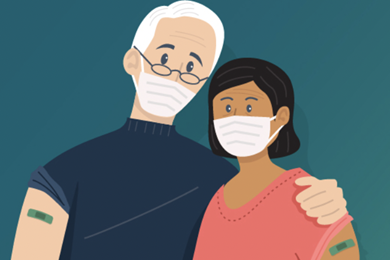
(K)N95 masks that are good quality and fit are important to protect yourself and others. (CDC Image)
Immediate recommendations from Hamilton County Public Health:
• Wear a well-fitting mask indoors in public, on public transportation, and in crowded outdoor areas regardless of your vaccination status.
TestAndProtectCincy.Com has a list of vaccination locations, PCR testing sites, Test-To-Treat testing sites, and where you can find at-home testing kits.vFind out more by visiting: HCPH.org/COVID19
At-home COVID-19 test kits can be requested from the federal government and shipped (USPS) to residential addresses. For information on how to store and use at-home tests, and other helpful tips, visit CDC.gov.
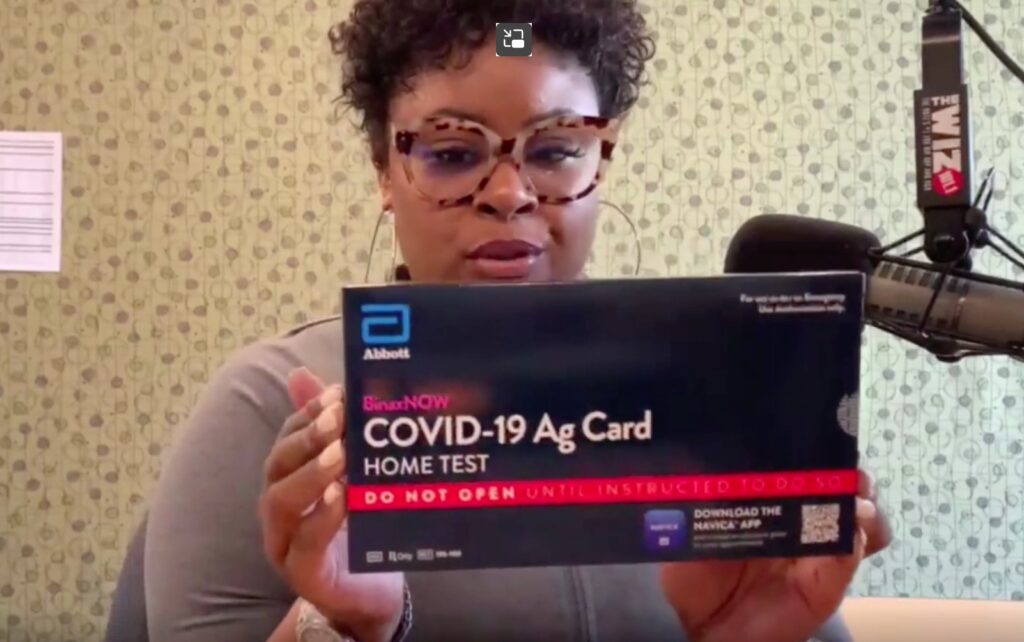
BinaxNOW Test Kits: BinaxNOW test kits have an expiration date that differs from the product label. Please read this update to see the extended expiry of your testing kit.
For guidance on the proper way to use your BinaxNOW testing kit, watch the below step-by-step video. For other brands, please refer to the instructions included in the test kit.
Watch this demonstration on how to use at-home test kits:
From popping flavors to colorful drinks, this nutrition club truly is a revolution!
Divyana Bose
by Divyana Bose
In the city of West Chester, Ohio, a tea and protein shake shop named the REvolution Nutrition Club opened its doors in January 2018. From fruity and refreshing teas to smooth and rich shakes, each drink is made with the intention of improving health.
REvolution Nutrition Club has over 40 shakes on their menu that are not only high in protein but are also low in carbs, sugar, and calories! Flavors like the Brownie Madness, Snickers, and Cake Batter keep REvolution Nutrition’s customers coming back time and time again. In addition to the nutritious shakes, the shop also carries high energy teas that are packed with antioxidants, vitamins, and Guarana, which improves mental concentration. Some of the most popular tea flavors include The Blue Lagoon and the Kingsgate Punch.
REvolution owner, Kiera Abrego, customizes each one of the shakes and teas she serves her customers according to their nutritional needs and goals. Each REvolution product uses nutrition to improve both the fitness level and overall health of each customer.
Kingsgate Punch Tea Energy Bomb
“My personal goal this year is to serve as many teas and shakes as possible as breakfast and lunch meal replacements,” Abrego said. “I also strive to make this business just a great atmosphere that is safe, fun, and inviting.”
The REvolution Nutrition Club gains most of its “first-time” customers through social media as Abrego believes it is the best way to market what the club has to offer. The community has also greatly contributed to REvolution’s growth in sales according to Abrego.
“Advertising comes from community interactions and communication,” Abrego said. “It is not only the social media factor but the positive word of mouth that gets around about my small business.”
To reward REvolution Nutrition Club’s loyal customers, Abrego developed a customer referral program in order to spread the word about the products her club has to offer and to give back to those who have supported the products the club serves. If a customer promotes REvolution through social media or refers someone to try out the club, that customer receives a free tea or shake!
“The community itself passes on invitations and referrals as we utilize social media to the best of our ability,” Abrego said. “The program consists of coupons to come in and try our products and try new and improved healthy drinks.”
REvolution continues to progress as a small business, but (like many businesses during COVID-19) did experience some struggles. Luckily Abrego had such a loyal customer base that her nutrition club was able to make it through tough times, bouncing back successfully!
“The largest impact on REvolution was that we were not able to be the bright and shiny part of someone’s day like we normally were,” Abrego said. “Relationships that we continued to build throughout the community had to be put on hold during this time and it was extremely difficult.”
Blue Lagoon Tea Energy Bomb
REvolution rose above the COVID-19 challenges and continues to grow as a business to this day! Abrego said new and improved drinks are constantly being made every month due to the influx of new customers this year.
“We do monthly features that normally take place around the holidays or special events,” Abrego said. “Thedrink features typically end up becoming a fan favorite and bring in even more customers!”
A personal preference of mine is the Blue Lagoon, the blue raspberry blend and standout color are just too hard to resist. Not to mention the energy boost I get in the day from just a few sips of this is amazing. Along with the blue lagoon, the Kingsgate punch is a close second with the bright red flavorful tea punching my palette with cherry and fruit punch all in one. In my eyes, these teas are perfect for a Summer refreshment and a perfect pick-me-up.
Five to ten years from now and with these never-ending flavors, Abrego plans to keep her business running and make her customers content. Her hopes are for her business to grow and expand not only in the social media market but through the community as well.
Cinnamon Toast Crunch Shake
“My goal is to be within the basis of one-hundred healthy and nutritious breakfast shakes with every breakfast and lunch meal replacement,” Abrego said. “We thrive off of person-to-person marketing and my desire is for my business to continue being the inviting and fun atmosphere for all.”
Hoping for a bright future ahead, Abrego’s past with bringing about the business has not been the easiest especially due to COVID-19. She started the business in 2018 and took ownership of the business through her personal wellness coach and over time lost a substantial amount of weight, meeting her weight loss goal.
“I decided to take on the Herbalife business full time because I instantly fell in love with the products and results,” Abrego said. “My husband was the confirmer as well when he fell in love with the shakes we offer and I knew I had to be a part of this.”
“We are truly a REVolution with these beverages that make staying healthy and sustaining energy possible,” Abrego said. “Our drinks can hopefully branch out to every community and will bring in more customers to try them.”
Abrego recommends for first-timers the Special Tea category from the REVolution menu since it has the most subtle energy level out of the three energy categories. The Tropical lemonade though in the Boosted category is her personal favorite with blends of strawberry and lemonade coming together with a little more energy added to it. Out of the shakedown category though, Abrego recommends the Cinnamon Toast crunch blend with 24 grams of plant-based protein, only two-hundred and thirty calories, and thirteen grams of net carbs. Not to mention, there are only nine grams of sugar in every shake! There are four separate categories in the “Shake down” category itself such as the Chocolate Sensations for the chocolate lovers, Sweet Tooth, Fan favorites, and Fruity Licious.
Along with the luscious flavors, the name REVolution says it all. Abrego said that these products truly stand out and benefit health or weight loss goals, which is where the name stemmed from.
As nurses, my husband and I witnessed truly awful and devastating things treating patients on the frontlines of this pandemic. Hundreds of thousands of Americans have died, while the millions who survived, now faced with disability, are left to grapple with the harsh realities of long COVID-19.
Among those millions of people living with long-term health impacts is our son Carter.
Four days before the COVID-19 vaccine was available for kids under 12, my 11-year-old son Carter tested positive for COVID-19. He had the common symptoms for the first few days, but as those subsided, I began noticing new ones like extreme thirst and frequent urination. In my gut, I knew it was diabetes. And sure enough, a mother always knows: Twelve days after his COVID-positive test, Carter was officially diagnosed with Type 1 diabetes.
In less than a month, everything about our lives changed. We don’t have any family history of any type of diabetes, so Carter’s diagnosis came out of nowhere, and we were not prepared. Our days now revolve around his blood sugar levels. Meal times are planned around insulin doses, mornings and evenings have a new medicine routine. Even as nurses, my husband and I could have never anticipated the severity of impact this diagnosis would have on our family.
I hear fellow nurses say there are more kids coming into the hospital and leaving with a diabetes diagnosis. Many of the newly diagnosed diabetics often had a recent COVID-19 infection. When a recent CDC report found children under 18 infected with COVID-19 are 2.66 times more likely to develop diabetes, it only confirmed the trend I witnessed in my hospital.
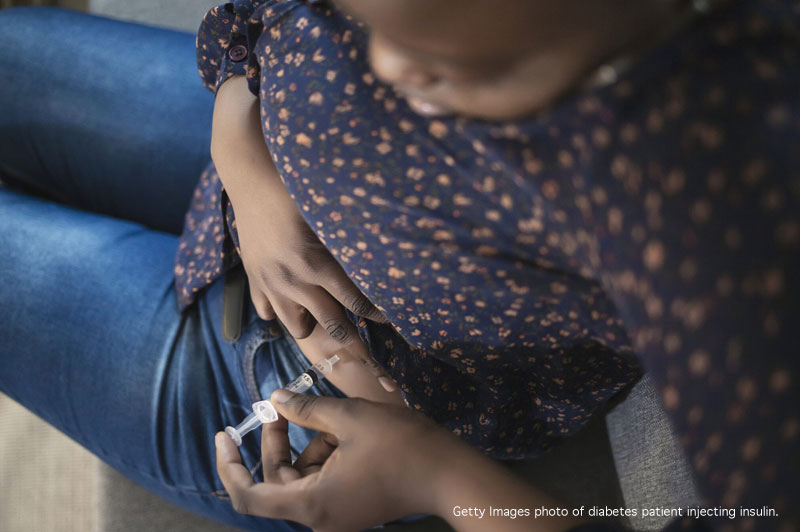
Carter was prescribed two different kinds of insulin, Humalog and Basaglar. Only a couple months into his treatment, our insurance decided it would no longer cover Humalog beginning in January of this year. We had just enough to last us through March. We cannot afford the out-of-pocket costs to keep Carter on the same kind of insulin, so we will need to switch him to a new kind of insulin before his body has even adapted to the current regimen.
We lose sight of the human cost when we ignore insulin price gouging. At the end of the day, we are putting a price on human life — on a child’s life.
I realize we are extremely lucky to have health insurance that keeps insulin costs manageable for our family. Since becoming part of the diabetes community, I’ve learned how rare it is to have sufficient insurance coverage and be able to afford insulin at all. As I read the heart-breaking posts from parents pleading for insulin donations in online communities, I think about how one unfortunate diagnosis can send a family to economic ruin through no fault of their own.
So, when the House passed the Affordable Insulin Now Act last week, I felt like Congress finally listened to the pleas of Americans with diabetes. The bill will cap insulin copays at $35 a month — reducing insulin costs by hundreds each year. In America, around 1 in 4 diabetics have rationed their insulin due to high costs. With nearly 60% of Americans under 17 having been infected with COVID-19, some of them may develop type 1 diabetes. It is more important than ever to do something about insulin prices.
By lowering the price of insulin and passing other federal prescription drug reforms, we can help existing diabetics and prevent newly diagnosed diabetics, especially kids, from being forced to ration life-saving medication.
I couldn’t imagine going through this emotional journey with the added stress of not being able to afford the one thing you need to keep your child alive. Type 1 diabetes is a lifelong condition; my son will never escape this. It’s not his fault he caught COVID-19. It’s not his fault that COVID-19 may have caused his diabetes. But he will be forever burdened by the price of insulin.
We are fortunate to be able to afford Carter’s insulin and supplies. But what about the families who aren’t so lucky? What happens to all of the kids who will eventually age off of their parents’ insurance, and their plans barely cover insulin? We lose sight of the human cost when we ignore insulin price gouging. At the end of the day, we are putting a price on human life — on a child’s life.
I would do whatever I could to get my child what he needs. I would give up my house, I would give up everything to keep him alive. I don’t know any parent who wouldn’t do the same. Our leaders in Congress must do everything they can, so people with diabetes and their caretakers aren’t left with such impossible choices. Now, it’s up to our representatives in the Senate to stand with parents like me and stop hiding behind the donations of pharmaceutical companies.
This commentary was first published in the Arizona Mirror.
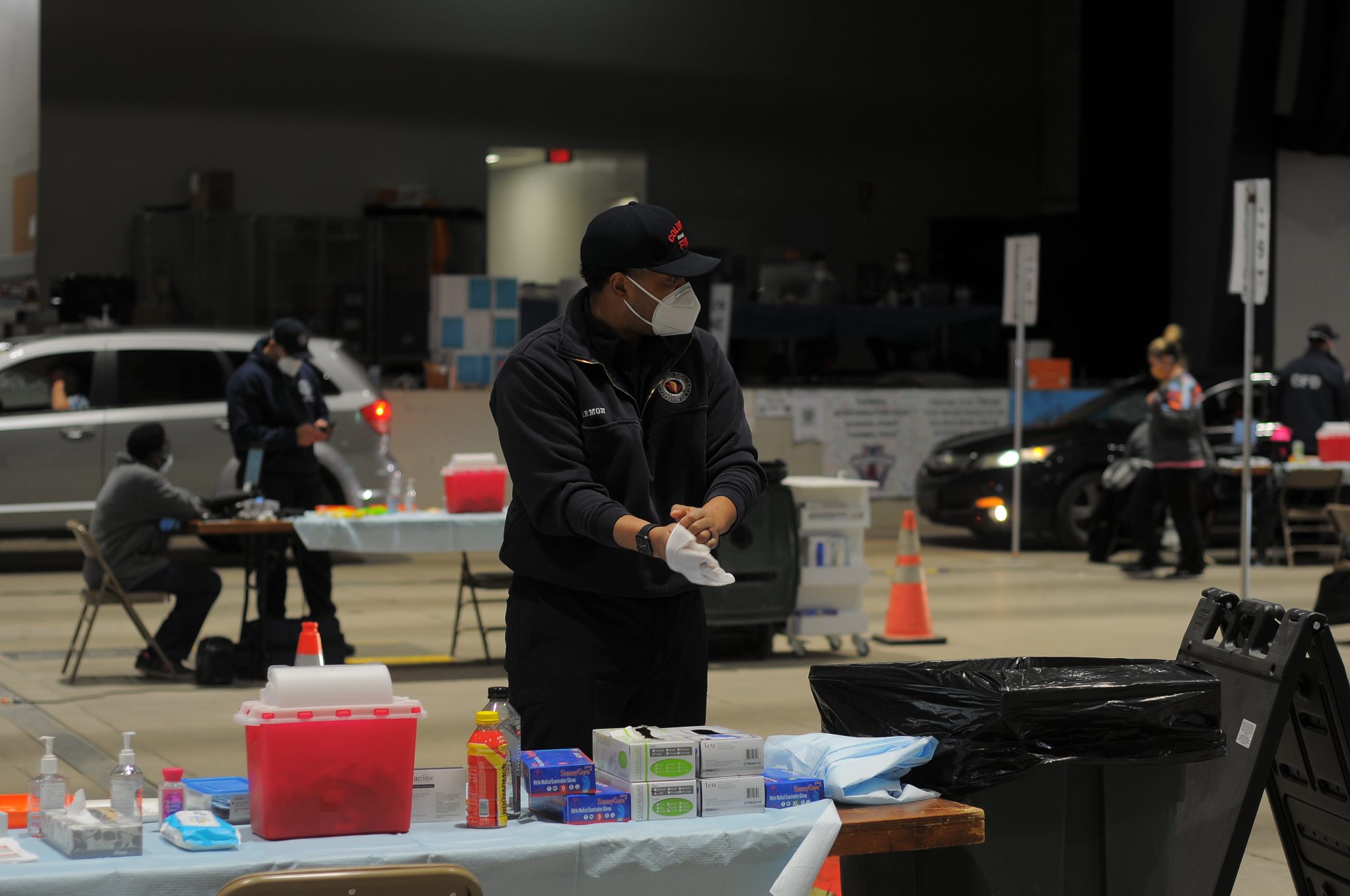
A Columbus Fire Department member dons gloves while working at a mass vaccination site at the Celeste Center in Columbus. Photo by Jake Zuckerman, Ohio Capital Journal.
Ohio’s COVID-19 vaccination campaign has hit a new lull after two months of record low numbers of residents getting vaccinated.
While the concept of diminishing marginal returns would suggest this is to be expected, Ohio remains under-vaccinated on a national and international scale. Just 62% of state residents are vaccine-started, and 57% are vaccine completed.
Ranked by state, Ohio is the 8th least vaccine-started in the nation and the 17th least fully-vaccinated, according to data from The New York Times. Americans nationally, despite widespread access to vaccines, are about 76% vaccine-started. That’s below a list of countries both wealthy and poor including Cuba (94%), Chile (93%), Canada (86%) and Vietnam (81%), according to Our World in Data, a global, public dataset tracking the pandemic. Ohio is about as vaccine-started as Pakistan (63%).
While COVID-19 cases, hospitalizations and deaths are significantly down from the winter surge, vaccination is still key for the present and future. It provides powerful, direct protection to the recipient. It also, when enough people in a community are vaccinated, provides indirect protection for those who aren’t vaccinated or have weaker immune systems.
The consequences of the low vaccination rate are simple and lethal. About 22,000 Ohioans have died of COVID-19 since Jan. 1, 2021. About 95% of them were unvaccinated. In the same period, 64,000 Ohioans were hospitalized with the disease. About 93.5% of them were unvaccinated.
At the more local level, more than half of Ohio’s 88 counties harbor populations where less than 1 in 2 residents are vaccinated, according to an analysis of state data. These counties tend to be more rural and Appalachian.
Like other frontiers of the pandemic, vaccination became mired in partisan politics with real human consequences. On average, former President Donald Trump won 53% of the vote share statewide in the 2020 elections. But in Ohio counties that are less than 50% vaccinated, Trump won on average 74% of the votes.
While COVID-19 deaths concentrated in populous, urban centers early in the pandemic, the paradigm shifted after vaccines became available, according to the Pew Research Center. By late 2021, death rates in the counties Trump won most decisively were about four times those of President Joe Biden’s winningest counties.
On a statewide basis, older Ohioans are vaccinated at significantly higher rates than their younger counterparts. For instance, those 65 and older are between 80% and 85% vaccinated. Those aged 20 to 49 are between 51% and 63% vaccinated.
Source: Ohio Department of Health. Graph by Jake Zuckerman.
Ohio schools require vaccination as a term of enrollment against a broad spectrum of infectious diseases like measles and chicken pox, yielding immunization coverage between about 75% to 95% depending on the disease.
However, the conservative state legislature has signaled an unlikeliness to mandate coronavirus vaccination.
Republicans in both chambers of the General Assembly passed legislation in 2021 blocking schools and colleges from mandating receipt of COVID-19 vaccines that are only federally approved on an emergency basis. Both the Moderna and Pfizer vaccine have since received full federal approval.
The Ohio House passed legislation prohibiting a wide range of employers, businesses and schools from requiring receipt of any vaccine, not just the COVID-19 vaccine. The Senate has not voted on the bill.
WASHINGTON — Pfizer and BioNTech on Tuesday asked the federal government to begin the approval process for a two-dose COVID-19 vaccine for children under 5.
The companies said in a joint statement they began the rolling submission process for an emergency use authorization at the request of the Food and Drug Administration “in response to the urgent public health need in this population.”
While the approval process is underway for the two-dose regimen, the company will continue researching a third dose that would likely be given at least eight weeks after a child receives the second dose.
Pfizer Chairman and Chief Executive Officer Albert Bourla said in the statement that increasing infections and hospitalizations of young children led the two companies to begin the approval process.
“As hospitalizations of children under 5 due to COVID-19 have soared, our mutual goal with the FDA is to prepare for future variant surges and provide parents with an option to help protect their children from this virus,” Bourla said.
“Ultimately, we believe that three doses of the vaccine will be needed for children 6 months through 4 years of age to achieve high levels of protection against current and potential future variants.”
Bourla said that if the FDA authorizes the two doses, that would allow parents to begin vaccinating their young children while waiting on approval of a third dose.
The submission announcement on Tuesday comes sooner than previously expected.
In mid-December, Pfizer and BioNTech announced they were modifying their trial to include a third dose of the vaccine for children between 2 and 4 years old after the two-dose approach didn’t lead to the type of immune response researchers sought. The trial did, however, produce the levels desired in children between six months and 2 years old.
The company said at the time that if the three-dose trial was successful, it would likely submit its emergency use request to the federal government in the first half of 2022.
Dr. Anthony Fauci, director of the National Institute of Allergy and Infectious Diseases, then said last week that parents needed to be patient in waiting for approval of the vaccine for younger children.
“I don’t think we can predict when we will see an [emergency use authorization] with that because the company is still putting the data before the FDA,” Fauci said during a White House briefing on the pandemic.
A poll released Tuesday by the Kaiser Family Foundation indicated about 31 percent of parents would get their small children vaccinated immediately.
Another 29 percent said they would wait and see while 12 percent said only if required and 26 percent of respondents said they definitely would not give their young child the vaccine.
JANUARY 10, 2022
It’s been a tough couple of years for everyone – adults and kids alike.
When the pandemic first started, we were all worried about getting the illness. That sentiment certainly still exists for some, in particular people who are immunocompromised and the elderly. However, it seems we have now transitioned into a more generalized anxiety related to COVID-19, but not necessarily about contracting it. And the unfortunate reality is that our kids are feeling the same way.
THE SITUATION: MORE KIDS HAVE ANXIETY NATIONWIDE
We’re seeing more kids with anxiety nationwide. More psychology visits. More visits to the Emergency Department for suicide attempts. In fact, suicide is the second-leading cause of death in kids 10 years and older.
I don’t mention this to cause panic in parents, but rather to heighten our sense of awareness. Our kids have suffered much in the way that adults have, and we need to watch and take note (more on that later). While we don’t have an exact link to causation at this time, we certainly can make some guesses.
WHY KIDS HAVE COVID-RELATED ANXIETYWe’re noticing that kids are behaving in ways that are similar to how we act after experiencing significant loss. And I think this makes sense. They have missed out on nearly two years of normalcy. Two years of attending school in a typical way. Two years of uncertainty and disbelief. They’ve missed major milestones and activities, such as graduation, school dances, field trips and sporting events.
Not to mention the developmental impacts of virtual school. Kids learn by interacting with others and through hands-on projects. They develop socially by having to navigate relationships and work things out. Their sense of well-being, especially for teens, is tied to their peers and achievements. And now that some of these activities have started up again, many are anxious about returning to them, because they’re out of practice.
So what can we as parents do about it? I recommend the following:
1. ENCOURAGE RESILIENCYResiliency is the ability to manage and bounce back from a stressor. Without social interactions and activities, these skills have been sitting on a shelf. They need to be dusted off and used. This will take work and time. It can start by explaining that they have the ability to do it – they can do hard things. Perhaps remind them of another time when they worked through something difficult. Have them focus on what’s within their control and let go of what isn’t. Read this previous post for more tips on teaching resiliency.
2. PROMOTE BASIC BRAIN HEALTHThe last couple of years have wreaked havoc on our basic brain health, and this impacts how we think and feel. We’ve gotten out of our normal routines, sleeping patterns and healthy meals. I recommend getting back to a daily structure. Have a normal bedtime. Engage in regular physical activity. Eat meals together. It doesn’t have to be every day or even at dinner, but children who eat meals with their families are often more resilient than those who don’t eat with their family.
3. NURTURE PARENT-CHILD CONNECTIONSConveying a sense of connection with your children is so important for their sense of well-being and willingness to open up to us. Just hang out together and have fun on a consistent basis. You don’t have to have big important discussions. This will plant the seed for them to trust you and confide in you when they need help.
4. TAKE CARE OF YOURSELFThis goes back to the oxygen mask metaphor – when you’re on a plane, you need to put your oxygen mask on before you help someone else put theirs on. The same goes for mental health. It is difficult to help someone else when you’re not taking care of yourself. I realize this is easier said than done, but start taking small steps. Ask another adult to partner with you in making self-care a priority.
5. NOTICE CHANGES IN YOUR CHILDBasic changes in your children can indicate that they are having a difficult time. Be on the lookout for changes in sleep, eating, appearance, academics, energy level, activities, and social interactions. Pay attention to their social media accounts. When you notice any of these differences, ask them about it. Say something like, “I’ve noticed you’re eating less than normal”. Or, “you’re not hanging out with Suzie as much”. Follow up with, “let’s talk about that”. Or, “have you noticed that too”? They may not be open up right at that moment, but you’ve opened the door and it may lead to more conversations. And if you’re concerned, say so.
6. GET HELP WHEN NEEDEDIt is okay to ask if they’ve had thoughts of suicide or wanting to die. Parents sometimes worry that they will plant those thoughts in their heads, but this just isn’t the case. This allows them to share concerning thoughts with us. By asking difficult questions, parents open the door for children to discuss difficult topics. Children who talk about these feelings with trusted adults are at less risk of acting on them.
If you notice significant changes in your children, or if they talk about wishing they were dead or having thoughts of killing themselves, never hesitate to contact a professional. You can reach out to our Pediatric Intake Response Center at 513-636-4124, our Division of Behavioral Medicine and Clinical Psychology at 513-636-8107, or refer to a list of contacts on our mental health and resources page.
Below is a release issued by the University of Cincinnati today.
Updates
Spring 2022 Return to Campus
Due to the recent increase in local, state, and national COVID-19 cases, and the high transmission rate of the Omicron variant, the University of Cincinnati will transition online January 5, 2022 and pivot back to full in-person activities on Monday, January 24, 2022.
To minimize the disruption that the high transmissibility of the Omicron variant and subsequent quarantining and classroom absences would have on our operations, classes, along with academic support services, will be conducted online for the first two weeks of the academic semester.
The goal of this in-person delay is for us to assess the impact of Omicron on our populations; let the spike in transmissions run its course; implement additional measures for screening testing and vaccination; and allow faculty, staff, and students the opportunity to receive booster shots.
We want to ensure that, when we come back, we come back to a safer, healthier and fully vibrant face-to-face experience.
Vaccine Requirement
In response to full FDA approval of the Pfizer-BioNTech vaccine, the University of Cincinnati is requiring students, faculty and staff to be vaccinated against COVID-19. The university is taking this step to promote the health and safety of our university community. Research shows vaccines are the most effective form of protection against COVID-19.
All World Health Organization endorsed vaccines, including those in the U.S. made by Pfizer, Moderna and Johnson & Johnson, will fulfill the vaccine requirement. Booster shots may also be required in the future.
The university’s physician-led COVID Response Team is closely monitoring, local, regional, national and global trends related to COVID 19. Current standard policies apply to university-related domestic travel. International travel, is subject to additional review in light of changing circumstances.
Effective December 6, 2021, due to the Omicron variant you will need to have a COVID-19 viral test (regardless of vaccination status or citizenship) no more than 1 day before you travel by air into the United States. You must show your negative result to the airline before you board your flight. If you recently recovered from COVID-19, you may instead travel with documentation of recovery from COVID-19 (i.e., your positive COVID-19 viral test result on a sample taken no more than 90 days before the flight’s departure from a foreign country and a letter from a licensed healthcare provider or a public health official stating that you were cleared to travel).
Effective November 29, 2021, students and scholars from Botswana, Eswatini, Lesotho, Malawi, Mozambique, Namibia, South Africa, and Zimbabwe will not be able to enter the U.S. as a result of the Omicron Coronavirus variant. Currently, no exemptions or an expiration date have been issued. Additional details will be added as they become available.
Facial Coverings
Given the most-recent developments with the virus, and in keeping with guidance from the CDC, individuals, both fully vaccinated and those not fully vaccinated, are required to wear a facial covering indoors (unless you have received an exemption or accommodation; or when eating, drinking or alone in a private room). See more details on facial coverings.
Those who are not fully vaccinated are required to wear a facial covering when outdoors and unable to maintain social distancing. Individuals who are not wearing a facial covering when outdoors are attesting to compliance with this requirement.
Spring 2022 Screening Testing
Currently, the university is offering weekly COVID screening testing. The testing site is located on the ground level of Steger Student Life Center.
Faculty, staff and students can submit proof of vaccination, which consists of a snapshot of your vaccination card, via the UC COVID Check app and the web-based version of the COVID Check app. Please do not submit other materials at this link.
The university may revisit these testing practices and protocols, depending on testing needs and the changing context.
Quarantine and Isolation
Given that broad access to vaccines is available, on-campus quarantine and isolation housing is on reserve for student use but may be limited depending on events. Thus, on-campus quarantine and isolation housing cannot be guaranteed at any time. All students should have individual plans for isolation and quarantine housing in the event they are required to do so. Let’s remember that vaccination is currently the best way to prevent the need to quarantine or isolate.
UC COVID Check App
The UC COVID Check App will remain in use and operation during the Spring 2022 Semester.
Students are required – and faculty, staff and visitors are strongly encouraged – to report via the UC COVID Check App if they develop viral symptoms, receive a positive COVID test result or have been in close contact with a COVID-positive person.
To Remember
As we move forward together as a community, let’s also remember our campus practices may need to change as conditions change. As such, all COVID-19 practices and policies are subject to revision and updates.
Questions
Please read the above information, links and other navigation on this page. If you still have questions after reviewing the available information, please email campusreturn@uc.edu Please check this site regularly as all COVID-19 practices and policies delineated throughout this site are subject to revision and updates.
Dr. Sherri Tenpenny testifies before the Ohio House Health Committee on June 8, 2021. During her presentation, she said vaccines are magnetizing to their recipients and “interface” with 5G cell towers. (Photo source: The Ohio Channel)
In June, Sherri Tenpenny, a state-licensed doctor of osteopathic medicine and notorious COVID-19 disinformer, baselessly claimed in a televised, government meeting that COVID-19 vaccines “magnetize” recipients and “interface” with cell towers.
The comment wasn’t an aberration from Tenpenny, who has in the past described vaccines as a tool of “depopulation.” The Ohio State Medical Board, an agency tasked with overseeing discipline and complaints of state physicians, still renewed her license in September as part what it called an “automatic” process of handling renewals.
Her renewal points to a bigger problem at the intersection of politics, mass media and public health: a loud, super minority of physicians has found ways to monetize lies about COVID-19 and vaccines that prevent it, and state medical boards are ill equipped to handle the problem, according to a report released earlier this month by the de Beaumont Foundation.
“During this ongoing public health emergency that has claimed more than 5 million lives globally, a small minority of physicians have exploited the credibility that comes with their medical licenses to disseminate disinformation to the public,” the report states. “Their lies, distortions, and baseless conspiracy theories have caused unnecessary suffering and death that are prolonging the pandemic.”
“Their lies, distortions, and baseless conspiracy theories have caused unnecessary suffering and death that are prolonging the pandemic.”
– de Beaumont Foundation
Only about 21% of state medical boards have taken any disciplinary action against a licensee for disseminating false or misleading health information, according to a survey conducted by the Federation of State Medical Boards. About 2 in 3 boards said they’ve noticed an increase in complaints on the issue.
Ohio’s medical board’s stated mission is to “protect and enhance the health and safety of the public through effective medical regulation.” Spokeswoman Jerica Stewart said state law allows the board to discipline doctors for making a “false, fraudulent, deceptive, or misleading statement in relation to the practice of medicine and surgery.” However, there’s a high standard of proof to meet. Tenpenny’s license, Stewart said, was automatically renewed, part of an automated process to keep up with the 92,000 licensees in Ohio. Tenpenny did not respond to an email.
“Ohio law prohibits the Medical Board from sharing details about received complaints and investigations even if a licensee chooses to publicly comment on their interactions with the board,” she said. “I’d also like to reiterate, a recent renewal does not prevent the board from taking future disciplinary action and does not mean that there isn’t an open investigation.”
The de Beaumont report criticizes boards that have “rubber stamped renewals for doctors who are in clear violation of medical standards, which allows them to do more harm with no questions asked.”
Medical boards have structural problems stopping them from disciplining disinformers, per the report. Their work is shrouded in secrecy, the problem is somewhat new and fast-evolving, and investigations are time consuming.
These claims fly in the face of real-world evidence showing vaccines are incredibly powerful protectors against serious health outcomes from COVID-19 like hospitalization or death. Likewise, researchers have found there’s no increase in mortality in vaccine recipients, and that recipients had lower rates of non-COVID-19 mortality after adjusting for age and other characteristics.
The de Beaumont Foundation, a public health advocacy group, commissioned polling on the issue from Morning Consult. Of 2,200 adult respondents, about 9 in 10 said physicians don’t have the right to “intentionally spread misinformation or false health information.” About 8 in 10 said they should be disciplined for doing so.
“As we have learned during the past two years, things shift quickly with COVID-19.”
– Ohio Hospital Association and Ohio Children’s Hospital Association
Today, the Ohio Hospital Association also distributed a letter from the Ohio Hospital Association and Ohio Children’s Hospital Association to Ohio school superintendents, administrators, and school board members encouraging them to implement a masking requirement when students return from the holiday break.
Dear School Superintendents, Administrators and School Board members:
Each of you has done a remarkable job in the face of the COVID-19 pandemic, working hard each day to keep your students safe and in school. We recognize the importance of in-person learning for the cognitive, social, and emotional development of our children, and share your belief that the best place for kids is in school, full-time, in the classroom learning with their peers.
As we have learned during the past two years, things shift quickly with COVID-19. Today, we are faced with a new variant, Omicron, which is more contagious than previous variants. This variant is spreading rapidly through Ohio and is expected to become the dominant variant within the coming weeks. In other parts of the country, where Omicron already has spread rapidly, pediatric hospitalizations have spiked. In New York City and the surrounding areas, pediatric hospitalizations jumped by 395% during December.
With adult hospitalizations already nearing an all-time high, and the positivity rate for those being tested for COVID-19 nearing 25%, we are reminding all Ohioans of the severity of our current situation.
The best protection against developing severe illness from COVID-19, for both school-aged children and adults, remains getting vaccinated. While younger, school-aged Ohioans continue to get vaccinated, it is critical that we keep following protocols to protect students, teachers, staff, and their families at home. To those of you who are continuing to require masks in school – thank you. This simple step is one of the best ways that we can slow the spread of the virus. To those who do not currently have a mask requirement, we respectfully ask that you consider one as your students return after holiday break. Health experts around Ohio have recommended Ohio schools have masking policies until more students get vaccinated, and that remains their recommendation as students return to school next week. This is even more urgent now because of the rapid spread of the Omicron variant.
We know that the virus that causes COVID-19 is spread when you cough, sneeze, talk, or sing. We know that masks work and are effective at slowing the spread of this virus. The best way to keep kids in school is to slow the spread of the virus. The best ways to slow the spread of the virus are to get vaccinated and wear a mask.
Even students who are asymptomatic or who have relatively mild symptoms have the ability to spread the virus to others. Their fellow students might then carry the virus home, spreading it to brothers and sisters, parents, and grandparents. If those family members are unvaccinated, they are at risk for severe illness and hospitalization while vaccinated family members can remain confident that their risk of severe illness is low.
Our healthcare system already is taxed, with one out of every four patients in the hospital with COVID-19. We’re fighting hard to save their lives, while treating other Ohioans who need our help, like children with broken bones, people suffering from strokes, or those needing emergency care after a car accident. We can’t do this alone. With Omicron spreading quickly through Ohio, we need everyone’s help to make it through the coming weeks. Please help us by requiring students to wear masks when they return to school.