Tag: dark money

  • Ohio’s leaders blocked (some) foreign money from issue campaigns. Advocates call it a dog-whistle

    Ohio’s leaders blocked (some) foreign money from issue campaigns. Advocates call it a dog-whistle

    Ohio Capital Journal

    Ohio’s Republican leadership last month refused to put Joe Biden on the presidential ballot unless the legislature adopted another measure that they claimed would protect against foreign money playing a role in the process by which citizens can initiate laws.

    But while some surely were concerned about malign foreigners improperly influencing state policy, some of them seemed to be playing on the same trumped-up fear of foreigners that they do in other contexts.

    When earlier problems arose with putting presidential candidates of both parties on the ballot, the legislature passed a “clean” bill fixing the problem as a routine matter.

    Moreover, with this latest law, Ohio lawmakers did nothing to bring transparency to dark money, which is flooding the state and can come from any source. It can be from foreigners, organized crime or interested parties — all unbeknownst to the electorate whose laws are being impacted. Such dark money played an indispensable role in the largest bribery scandal in Ohio — a scandal in which many of those same Ohio leaders played a part.

    In addition, critics said the move was really intended to make it more difficult for citizens to impose popular measures that the state’s gerrymandered supermajority opposes, such as protecting abortion rights and ending gerrymandering. As part of that, they said, it gives the state attorney general — who since 2011 has been a Republican — greatly enhanced powers to harass citizen-led attempts to change the law.

    Xenophobia

    Advocates for immigrants and others say that in pushing their “ban” on foreign money, some Republican leaders are playing on the anti-foreigner, anti-immigrant paranoia that Donald Trump has relentlessly whipped up since announcing his candidacy to be president in 2015.

    The new legislation not only bans contributions from foreign nationals, it also bans them from lawful permanent residents, or “green card” holders. That’s despite the fact that federal law allows such people to make contributions, and Bill Seitz, an attorney and a Republican member of the Ohio House, warned his colleagues that the prohibition could sink the entire measure in court.

    To an immigrant advocate, the dog whistle was easily audible.

    “They know what they’re doing, the people who are sponsoring these amendments,” said Lynn Tramonte, director of the Ohio Immigrant Alliance. “They’re making this about people who were born in other countries and adding on new categories of immigrants to be banned from donating money. The legislator who introduced that amendment knows that that makes it open to legal challenge. That was very clear. Both sides — Republicans and Democrats — expect that law to be challenged in court. So it was clearly not about the policy. It was about getting those headlines.”

    Some of the amendment’s staunchest supporters haven’t been shy about using such tactics.

    Secretary of State Frank LaRose was the first to flag the fact that the Democratic National Convention was too late to get Biden on the ballot under Ohio law. But instead of calling for a clean bill that would only fix that as the legislature had done in the past, LaRose had other demands.

    “Ohioans deserve confidence in the integrity of our elections, knowing that they aren’t being bought by foreign bullies or billionaires,” LaRose said in a May press release. “I hope the House does the right thing and takes action soon to close this loophole before it’s exploited again.”

    Other motives

    LaRose was referring to a Swiss billionaire who had made big contributions to the Tides Foundation, a U.S. group that helped finance Ohio voter efforts last year.

    One trounced an August attempt by LaRose and his allies to make it nearly impossible for citizens to initiate amendments to the Ohio Constitution. Then, in November, voters passed an amendment protecting abortion rights by a 14-point margin. LaRose had earlier told an audience of partisans that the August effort was 100% about stopping the abortion-rights measure in November.

    It’s not the only time LaRose, the state’s top elections official, has pressed a fear of foreigners into the service of what appear to be ulterior motives.

    For example, he’s conducted frequent voter purges, supposedly in the service of election integrity. Last year, he tried to make a splash by announcing that he had referred 641 cases of possible voter fraud to authorities.

    Sounds like a lot, but that’s only 0.0044% of the total votes cast. And when the Capital Journal did a follow-up investigation, less than 3% of those resulted in charges.

    In other words, just 0.000132% of the total number of votes cast since LaRose took office in 2019 might end in convictions. Yet LaRose last month announced yet another voter purge, claiming the threat of foreigners casting illegal ballots was why it was needed.

    “Ohioans overwhelmingly passed an amendment to our state Constitution which makes it clear that only U.S. citizens can vote in our elections,” LaRose said in a May 14 press release. “It is my duty under the law to uphold the Constitution, and the legislature has explicitly tasked me with ensuring that only eligible citizens can register and vote.”

    Spreading fear

    Elizabeth Neumann was deputy chief of staff of the U.S. Department of Homeland Security during the Trump administration.

    During a virtual press conference sponsored by the National Immigration Forum last week, she described how the “great replacement theory” — the idea that there’s a plot to replace white people, especially in positions of power — has led to numerous racist massacres. She said that whipping up fears of illegal voting is a softer version of the same theory that shooters invoked as they massacred people in Christchurch, New Zealand, a Walmart in El Paso, a Pittsburgh synagogue, and a Buffalo grocery store.

    “There’s a lot of conversation about how migrants are actually voting and this goes into that softer great-replacement theory and we anticipate that will continue to be a challenge this election year,” said Neumann, who is now chief strategy officer for Moonshot, which works to end online harms such as violent extremism and child trafficking.

    Tramonte, of the immigrant alliance, said the real aim of claims of illegal voting and purges and prosecutions is to scare marginal populations away from the polls. She said she helped conduct a focus group before last November’s election.

    “I heard from people who were citizens who said they were afraid to vote because they were afraid of being attacked,” she said. “They had a plan to go early in the morning and make sure they could get their vote cast because they wanted to make sure their voices were heard, but they were afraid.”

    In addition to not effectively addressing the problem of mystery money in our politics and making it harder and more frightening to participate in the process, there could be a darker consequence of the rhetoric around the bill Republicans demanded in exchange for putting a sitting president on the Ohio ballot.

    In an interview, Moonshot analyst Yuri Neves said that political leaders are invoking conspiracy theories when they insinuate that green card holders have a diabolical agenda or that masses of undocumented immigrants are voting illegally.

    “It suggests some coordinated plan by nefarious actors,” he said. “Depending on who you talk to, it’s globalists, Jews, etc. When we say it’s a conspiracy theory, it’s not just demographic changes happening as there always are. It’s that it’s some malevolent actors behind it. And that’s where it gets quite dangerous.”


    Marty Schladen
    MARTY SCHLADEN

    Marty Schladen has been a reporter for decades, working in Indiana, Texas and other places before returning to his native Ohio to work at The Columbus Dispatch in 2017. He’s won state and national journalism awards for investigations into utility regulation, public corruption, the environment, prescription drug spending and other matters.

    Ohio Capital Journal is part of States Newsroom, the nation’s largest state-focused nonprofit news organization.

    MORE FROM AUTHOR


  • Ohio AG Yost is prosecuting others in utility scandal, but he won’t discuss his own involvement

    Ohio AG Yost is prosecuting others in utility scandal, but he won’t discuss his own involvement

    Ohio Attorney General Dave Yost. (Photo by Morgan Trau, WEWS.)

    BY:  Ohio Capital Journal

    Ohio Attorney General Dave Yost this year brought criminal charges against four figures who were involved in the biggest bribery scandal in state history.

    Many thought they were long overdue. That’s especially true of cases filed against men accused of funding the conspiracy, but who still hadn’t been charged by federal prosecutors four years after the last of the alleged wrongdoing took place — and almost a year after two others began lengthy prison sentences.

    But Yost’s own name came up several times in the federal trial and his office last week again ignored detailed questions about the matter.

    The attorney general played an important role in the defeat of an attempted repeal of the corrupt bailout. And there were claims that he believed that the bailout was a bad law, but kept his mouth shut out of loyalty to one of the conspirators — and to the law’s major beneficiary.

    The issue is politically fraught for Yost because the state charges he filed this year have raised new questions about Lt. Gov. Jon Husted’s involvement in the scandal. Yost and Husted are widely expected to face each other in the 2026 race to be Ohio’s Republican nominee for governor.

    New charges

    Former House Speaker Larry Householder, R-Glenford, was sentenced to 20 years in federal prison last June for his role in a scheme in which Akron-based FirstEnergy paid more than $60 million to make him speaker in 2018 and to pass and protect a $1.3 billion ratepayer bailout the following year. It’s one of the biggest scandals in Ohio history, and so far it has also sent former GOP Chairman Matt Borges to prison for five years, resulted in two more guilty pleas — and seen two defendants die by suicide.

    But U.S. Attorney Kenneth Parker sidestepped a pretty important question last June when he stood in front of the federal courthouse in Cincinnati and boasted to the press about the convictions and sentences his assistants had just won. He was asked, what about the people who paid the bribes? Would they be charged? If so, when?

    All Parker would say was that the investigation was ongoing.

    In December, his team indicted Sam Randazzo, Gov. Mike DeWine’s nominee to be Ohio’s top utility regulator. In a deferred prosecution agreement, FirstEnergy said it paid Randazzo a $4.3 million bribe just before he became regulator. From that post, he did a number of lucrative favors for the company related to the bailout and he improperly helped with other matters as well, according to the indictment.

    But still uncharged by the feds are former FirstEnergy CEO Chuck Jones and Vice President Michael Dowling, the executives alleged to have directed truckloads of company money into 501(c)(4) dark money groups that financed the scandal.

    In February, a team of state prosecutors led by Yost stepped into the void by securing a grand jury indictment against Jones, Dowling and Randazzo. The charges relate to the bailout scandal, and also to a decade’s worth of shady dealings that allegedly paid Randazzo more than $10 million and ripped off industrial energy users and residential customers alike.

    In April, Randazzo died by suicide.

    Other questions

    The state indictment also raised new questions about the cozy relationships between the DeWine/Husted administration, FirstEnergy and Randazzo.

    Weeks before they were inaugurated, DeWine and Husted had dinner in downtown Columbus with Jones and Dowling — FirstEnergy’s top leadership — and discussed whether Randazzo would be acceptable to regulate the company. Jones and Dowling then drove about a mile to Randazzo’s German Village residence and negotiated the $4.3 million payoff, according to text messages that are being used in multiple court proceedings.

    The state indictment alleges that DeWine’s chief of staff, Laurel Dawson, knew about the payoff before the governor appointed Randazzo to chair the Public Utilities Commission of Ohio. But Dawson — whose husband was a FirstEnergy lobbyist who allegedly received a $10,000 loan from Randazzo — isn’t talking publicly about what she knew or what she told her boss.

    DeWine also continues to stand behind his former governmental affairs director, Dan McCarthy, who lobbied the legislature on DeWine’s behalf to pass the bailout law.

    Just before taking that job, McCarthy, too, was a FirstEnergy lobbyist — a job in which he set up a dark-money group that became a conduit for tens of millions in funding for the scandal. In last year’s trial, the prosecution presented evidence that FirstEnergy VP Dowling in 2019 ordered a subordinate to keep the then-DeWine aide’s name off of a $10 million infusion into the corrupt bailout even after being told that it would violate IRS rules to do so.

    DeWine and his staff haven’t explained what McCarthy and Dawson knew about the corrupt machinations as the bailout law was in the works — or when DeWine signed it mere hours after its passage.

    DeWine, Husted and their administration also haven’t explained what they knew about the long, shady relationship between Randazzo and FirstEnergy described in the state indictment. The governor’s spokesman has tried to suggest that it was common knowledge, but extensive evidence shows that Randazzo and FirstEnergy went to great lengths to conceal it.

    DeWine also has said he didn’t know about millions in dark money contributions FirstEnergy made in 2018 to support his gubernatorial bid. But a University of Cincinnati political scientist said it’s simply not believable that a company would make that kind of an expenditure and not make sure the beneficiary knew about it. That seems especially true for a company that subsequently admitted that it paid millions more in outright bribes.

    For his part, Husted won’t comment on the $1 million in dark money FirstEnergy spent supporting his 2018 bid for governor, or whether he  promoted Randazzo for the regulatory job when he dropped his bid and joined DeWine’s ticket.

    The two had history. As House speaker in 2007, Husted appointed Randazzo to the PUCO Nominating Council — a position he held until DeWine nominated him to chair the agency.

    Questions for the Attorney General

    Husted and Yost, the attorney general, are widely regarded as the frontrunners for the 2026 GOP gubernatorial nomination in a state that hasn’t elected a Democrat to that job since 2006.

    There hasn’t been any suggestion that Yost brought charges in the bailout scandal as a way of embarrassing his likely opponent. But at the same time, Yost’s office has avoided questions about his own involvement in the bailout controversy.

    According to text messages presented at last year’s federal court trial, Yost was drawn into the fight at a critical time. The bailout passed the Householder-run House at the end of May 2019, but a month later, opposition was growing in the state Senate.

    Borges, the former GOP chair who had run some of Yost’s political campaigns, had a June 26, 2019 text conversation with Juan Cespedes, who was also being paid to push the corrupt bailout law. Borges intimated that Yost believed that the law was a bad one.

    The AG “‘would be out front (in opposition) if not for (FirstEnergy) support and your involvement,’” Borges quoted Yost as saying.

    A spokesperson for Yost declined to comment at the time, citing the fact that he’d been subpoenaed in the case.

    Regardless of the AG’s view, so many people agreed that the bailout was a horrible law that an effort to undertake the cumbersome repeal process was getting underway even before it passed. Borges noted to Cespedes that Yost would have to give his approval before a repeal could get on the ballot. The AG would try to help them there, too, Borges said.

    If there’s any way the law will allow him to reject the language, he will do it,” Borges texted.

    Regardless of why, Yost ended up doing just that.

    Crucial lost time

    DeWine signed the bailout, House Bill 6, the day the Senate passed it — July 23, 2019. Six days later, repeal advocates had gathered 1,000 signatures from registered voters and submitted a summary of the repeal to Yost for his approval.

    Time was of the essence because under Ohio law, repeal advocates had to gather another 265,000 voters’ signatures within 90 days of the law’s passage to get it on the ballot. But first they had to wait for Yost to approve the ballot summary.

    The attorney general waited the full 10 days allotted him and then issued a rejection letter that seems at odds with any concept of “summary.”

    It was a six-page, 1,535-word document that picked apart the summary in excruciating detail.

    “He listed a lot of different things,” said Rachael Belz, CEO of Ohio Citizen Action, which was strongly opposed to the bailout. “It seemed like a lot to overcome. It didn’t seem very neutral.”

    The repeal was a referendum — the only one for which Yost has considered summary language since he’s been attorney general. Of the 26 other summaries he’s rejected, the vast majority were for proposed constitutional amendments and the rest were for initiated statutes.

    His rejection of the summary for the bailout repeal stands out for its length. It’s more than twice as long as his other rejections are on average, according to information available on the attorney general’s website.

    In the event, Yost’s initial rejection did heavy damage to the repeal effort.

    Proponents on Aug. 16, 2019 submitted a new summary, which Yost certified on Aug. 29, 2019. But by that time, the repeal team had only 54 days left of the original 90 to gather and submit more than a quarter-million valid signatures. Their time to complete the gargantuan task was cut almost in half, in other words.

    What followed was a lying, xenophobic and sometimes-violent campaign to defeat the repeal into which FirstEnergy plowed $36 million in dark money. Perhaps unsurprisingly, the repeal couldn’t get enough signatures and parts of the corrupt bailout law are still on the books.

    Yost’s office didn’t respond to questions about his role in the repeal — or Borge’s statements that were presented at the former political boss’s criminal trial. But for Belz of Citizen Action, there’s plenty of blame to spread among Ohio’s statewide leaders.

    “I don’t think Yost’s hands are clean,” she said. “I don’t think Husted’s hands are clean. I don’t think DeWine’s hands are clean. I don’t know whose hands are clean. Frankly, that’d be a shorter list.”


    Marty Schladen
    MARTY SCHLADEN

    Marty Schladen has been a reporter for decades, working in Indiana, Texas and other places before returning to his native Ohio to work at The Columbus Dispatch in 2017. He’s won state and national journalism awards for investigations into utility regulation, public corruption, the environment, prescription drug spending and other matters.

    Ohio Capital Journal is part of States Newsroom, the nation’s largest state-focused nonprofit news organization.

    MORE FROM AUTHOR

  • Ohio Lt. Gov. Husted won’t say if he knew about $1M dark-money contribution

    Ohio Lt. Gov. Husted won’t say if he knew about $1M dark-money contribution

    Donation came from utility behind massive bribery scandal

    BY:  – Ohio Capital Journal

    Ohio Lt. Gov. Jon Husted is refusing to say whether he was aware of a $1 million contribution in 2017 to a political group that was supporting his bid for governor. Instead, his office is only reiterating that the group wasn’t affiliated with the Husted campaign.

    The massive donation came from Akron-based FirstEnergy, which over the next two years ponied up more than $60 million in bribes in exchange for a $1.3 billion ratepayer bailout — a law that Gov. Mike DeWine signed just hours after it passed.

    The donation was discovered among a trove of documents that a group of news organizations including the Capital Journal requested from the Office of Ohio Consumers’ Counsel.

    As reported last week by the Energy News Network and Floodlight, the documents also contained emails indicating that Husted was lobbying DeWine to support the bailout. The lobbying came just 11 days after Husted abandoned his gubernatorial bid and joined DeWine’s ticket on Dec. 1, 2017.

    “Jon Husted called me to say he was meeting with DeWine on our issue to try and get him aligned to help keep the plants open,” a Dec. 12, 2017 email by FirstEnergy lobbyist Joel Bailey said.

    The plants were money-losing nuclear and coal plants that FirstEnergy wanted to prop up with the bailout and then spin off.

    FirstEnergy in 2021 signed a deferred prosecution agreement in which it admitted to paying bribes to elect a friendly Republican majority to the state House, which would elect a friendly speaker who would pass and protect the corrupt bailout.

    The company also admitted to paying a $4.3 million bribe to Sam Randazzo, DeWine’s pick to chair the Public Utilities Commission of Ohio, who died by suicide last week. A state indictment said that FirstEnergy executives arranged the bribe with Randazzo the same night they discussed his suitability as a regulator at a dinner meeting with Gov.-elect DeWine and Lt. Gov.-elect Husted on Dec. 18, 2018.

    The ensuing scandal has landed former House Speaker Larry Householder, R-Glenford, in federal prison for 20 years, and former Ohio GOP Chair Matt Borges for five. Two others have pleaded guilty and await sentencing. Another defendant, lobbyist Neil Clark, also died by suicide — clad in a “DeWine for Governor” T-shirt.

    DeWine and Husted haven’t been charged in case, and they adamantly deny wrongdoing.

    However, they haven’t publicly discussed just what they knew about Randazzo’s long-standing relationship with FirstEnergy, or what they knew about the torrent of dark money flooding from FirstEnergy into Capitol Square to pass and protect the bailout. They also haven’t discussed what senior administration officials with close ties to FirstEnergy might have known.

    Among the documents turned over once FirstEnergy made its agreement with federal prosecutors was a spreadsheet listing 501(c)(4) political contributions the company made in 2017.

    Such donations are called “dark money” because recipients don’t have to disclose their sources. By law, dark-money contributions can’t go directly to candidates, but they can go to groups that support them, but aren’t supposed to directly coordinate with them.

    The FirstEnergy spreadsheet is only now becoming public because the FBI investigated the scandal and the U.S. Department of Justice brought a prosecution. During the battle over the bailout law in 2019, there were suspicions that FirstEnergy was bankrolling the effort, but the press and public couldn’t know because the money was being funneled through dark-money groups — without which U.S. Attorney David DeVillers said the conspiracy would have been impossible.

    Now that FirstEnergy’s 2017 donation to a Husted-aligned group is known, it raises new questions.

    Special interests sometimes piously claim that they spend millions on politics solely in the interests of “good government.” But as was shown in Householder’s lengthy trial last year, corporate political donations are often — if not usually — intended to buy influence with people in government.

    In order for that to happen, a government official would have to know that a special interest had contributed on his or her behalf. But Husted — who is eyeing a 2026 gubernatorial run — won’t say whether he knew that FirstEnergy in 2017 gave a million bucks to a group supporting his earlier bid.

    His spokeswoman, Hayley Carducci, was asked if Husted knew of the contribution and if he did, when he learned of it. She was also asked if Husted persuaded DeWine to support the FirstEnergy bailout; what Husted knew about Randazzo’s links to FirstEnergy when he was picked to regulate the company; and whether he knew that FirstEnergy was flooding Cap Square with dark money in its effort to pass and preserve the bailout.

    In an email, Carducci repeated her earlier statement: “The Husted campaign never received this donation and is not affiliated with any of these groups.”

    She added, “As for your other questions, we will not be commenting.”


    Marty Schladen
    MARTY SCHLADEN

    Marty Schladen has been a reporter for decades, working in Indiana, Texas and other places before returning to his native Ohio to work at The Columbus Dispatch in 2017. He’s won state and national journalism awards for investigations into utility regulation, public corruption, the environment, prescription drug spending and other matters.

    Ohio Capital Journal is part of States Newsroom, the nation’s largest state-focused nonprofit news organization.

    MORE FROM AUTHOR

  • FirstEnergy gave $1 million to boost Ohio Lt Gov Husted’s campaign before scandal, document shows

    FirstEnergy gave $1 million to boost Ohio Lt Gov Husted’s campaign before scandal, document shows

    Records show Jon Husted worked behind the scenes to bail out the company’s nuclear power plants. The million dollar donation was secret — until now.

    BY:  AND 

    Versions of this story were published by Floodlight, Energy News Network and the Ohio Capital Journal.

    A surge in FirstEnergy political spending ahead of the utility’s push to secure a legislative bailout for its nuclear power plants included a $1 million dark money contribution to support the campaign of Ohio Gov. Mike DeWine’s eventual running mate.

    The previously unreported gift linked to Lt. Gov. Jon Husted’s 2017 primary bid was revealed as part of a raft of documents obtained under Ohio’s public records law by a coalition of news organizations, including Floodlight, Energy News Network, and the Ohio Capital Journal.

    Among the documents are company emails describing behind-the-scenes efforts by Husted to persuade DeWine to support House Bill 6, the utility-backed legislation at the heart of the state’s ongoing $60 million public bribery scandal.

    Neither Husted nor DeWine, whose campaign also benefited from a previously reported $1 million in dark money from the utility, has been implicated in the scheme in which eight people, including the state’s former House Speaker Larry Householder, have been indicted.

    Two of those charged in the multi-million-dollar scandal surrounding the passage of HB 6 may have taken their own lives, including Sam Randazzo, the former chairman of the Public Utilities Commission of Ohio, who was found dead earlier this week of an apparent suicide.

    ‘Confidential’ email details campaign gift

    One of the documents from the Office of the Ohio Consumers’ Counsel Office is a spreadsheet attached to a January 2020 message labeled “confidential.” It shows $1 million went from FirstEnergy to the conservative group Freedom Frontier in 2017, with “Husted campaign” noted as the reason.

    That group backed Husted during his 2017 primary campaign for governor. The group then supported DeWine after Husted dropped out of the race to become his running mate.

    Husted is considered among possible front runners for the Republican nomination for governor in 2026. A January report by the Jon Husted for Ohio campaign committee shows it got roughly $1.7 million last year.

    Husted was also dubbed the “‘Golden Boy’ for FirstEnergy” by lobbyist Neil Clark, a co-defendant with Householder and others in the federal government’s criminal corruption case. Clark died by suicide in 2021.

    In several of the recently released records, Husted is mentioned in the same breath as Householder, the convicted House speaker, and Randazzo, the former PUCO commissioner, by FirstEnergy leadership as they sought to pass and then defend HB 6, the nuclear and coal bailout law at the heart of Ohio’s ongoing corruption scandal.

     FirstEnergy records released via public records request show how executives at the power company relied on Ohio Lt. Gov John Husted and convicted former House Speaker Larry Householder to help them pass a $1.3 billion nuclear bailout bill. 

    Husted has maintained that his support for the 2019 law stemmed from his belief that nuclear energy is an important part of Ohio’s energy portfolio. Parties in HB 6-related shareholder litigation have subpoenaed Husted to answer questions under oath, although a new date needs to be set.

     FirstEnergy records released via public records request show how executives at the power company relied on Ohio Lt. Gov John Husted and convicted former House Speaker Larry Householder to help them pass a $1.3 billion nuclear bailout bill. 

    “The Husted campaign never received this donation and is not affiliated with any of these groups,” said spokesperson Hayley Carducci. By law, candidate campaigns are not supposed to coordinate with groups like Freedom Frontier, which can spend unlimited amounts to support or attack them.

    The document and others reflect a major commitment by FirstEnergy to Husted’s political future. Before 2017, the company’s reported political spending to support Husted was less than $25,000 per campaign, according to data from OpenSecrets.

    Dark money spending rises sharply

    More broadly, the document also indicates a major increase in FirstEnergy’s political spending through nonprofit groups exempt from taxes under Section 501(c)(4) of the Internal Revenue Code. Those, along with privately held corporations, are common structures for dark money organizations — groups that aren’t required by law to disclose the ultimate source of their funding.

    The company’s giving to such groups jumped to more than $12 million in 2017, after much lower levels of $200,000 in 2016 and $100,000 in 2015, according to the spreadsheet.

    Starting in 2014, FirstEnergy had sought bailouts for noncompetitive coal and nuclear plants. And in late 2016, regulators approved a $456 million consumer surcharge that ultimately was held unlawful. Yet the company claimed it needed more.

    The document details once-secret contributions to groups supporting “everyone from the mayor of Akron to President Trump that FirstEnergy made to secure bailouts for its soon-to-be bankrupt coal and nuclear plants and to gain influence on other key issues,” said Dave Anderson, policy and communications manager for the Energy and Policy Institute.

     A spreadsheet details dark money expenditures by northeastern power company FirstEnergy as it sought to secure a $1.3 billion bailout for its struggling nuclear power plants. The sheet reveals a previously unreported $1 million donation to benefit the candidacy of Ohio Lt. Gov. Jon Husted. 

    Anderson added that the spreadsheet also “provides some key new evidence for utility regulators and consumer advocates to use to ensure that every dollar of ratepayer money that FirstEnergy misused to fund its secret political spending is publicly disclosed and refunded, with interest and ideally serious financial penalties.”

    At the time, the author of the document that details the donations, Kristina Housley, was executive assistant to FirstEnergy’s Mike Dowling, who is now a defendant in a state criminal case along with former CEO Chuck Jones.

    Finding out all the details about the dark money spending behind HB 6 is like peeling back the layers of an onion, said Catherine Turcer, executive director of Common Cause Ohio.

    “The reason that transparency matters so much is that money that is spent in the shadows influences elections, and it influences really important policy decisions that impact us every day,” Turcer said. “And we have the right to know what is going on in government and how decisions are being made and who’s attempting to influence those decisions.”

    The ‘Golden Boy’ for FirstEnergy

    A December 2017 email from former FirstEnergy lobbyist Joel Bailey said Husted was working to get DeWine on board with FirstEnergy’s “issues.” FirstEnergy also supported other pro-DeWine/Husted efforts during the election cycle.

     Former FirstEnergy CEO Chuck Jones (top left), former FirstEnergy VP Michael Dowling (top right), former PUCO Chair Sam Randazzo (bottom middle). Graphic by WEWS. 

    After the election, Husted and DeWine dined with Jones and Dowling on December 18, 2018. Later that night, FirstEnergy agreed to pay $4.3 million to energy lawyer Randazzo, who went on to become DeWine’s first pick for chair of the Public Utilities Commission of Ohio. FirstEnergy later identified Jones and Dowling as the two people responsible for paying alleged bribes.

    Husted’s office has been evasive about his recollections, despite Jones noting in texts to Randazzo that the PUCO chair position was discussed in at least general terms. Another text by Jones in 2019 said the DeWine/Husted team was forced “to perform battlefield triage” to secure Randazzo’s nomination after a 198-page dossier provided to DeWine’s staff threatened to derail it.

    Evidence from last year’s criminal trial of Householder, the former Ohio House speaker, and lobbyist Matt Borges also included messages between former FirstEnergy executives Jones and Dowling about Husted working behind the scenes to build support for the bill. Among the actions were efforts to extend the bailout period for the company’s former nuclear power plants in Ohio.

    Husted long a friend of utilities

    Husted had been Ohio’s secretary of state immediately before becoming lieutenant governor. Before that, he served as House speaker in the General Assembly. In that role, he played a pivotal part in securing passage of another major energy bill, Senate Bill 221.

    At the time, Husted supported the law’s clean energy standards that were ultimately gutted by HB 6. However, SB 221 set the stage for so-called electric security plans. Those have let FirstEnergy and other utilities avoid full rate cases for more than a decade, while allowing cross-subsidies and adding multiple additional charges to consumers’ bills.

    “That bill upset the balance” of energy regulation in Ohio, said Ashley Brown, a former PUCO commissioner. “It was a humongous gift for the utilities.”

    Lawmakers repealed HB 6’s $1 billion-plus in subsidies for FirstEnergy’s former nuclear power plants and its recession-proofing provisions in 2021, eight months after the arrests of Householder and others.

    Earlier this year, Husted told NBC4 in Columbus the rest of HB 6 “needs to be completely removed.” He did not respond to Energy News Network questions this week about whether that includes both the law’s subsidies for two 1950s-era coal plants and its gutting of Ohio’s renewable energy and energy efficiency standards.

    FirstEnergy spokesperson Jennifer Young declined to comment on the company’s 2017 donation to Freedom Frontier due to ongoing litigation. However, she added, “FirstEnergy will post information regarding its support of 501(c)(4) social welfare organizations on the company’s website on a quarterly basis.”

    Those disclosures are currently required under the company’s July 2021 deferred prosecution agreement. That agreement expires later this year.

    Meanwhile, FirstEnergy still has not disclosed its dark money spending for the years 2018 through 2020. And proposals for reforms that would require such disclosures from all electric utilities remain stalled in the General Assembly.

    “It’s incredibly frustrating that Ohioans can be aware that dark money impacted decision-making at the statehouse,” Turcer said, “and yet we still haven’t gotten the legislators to create greater transparency.”

    The Energy News Network is a nonprofit news site dedicated to keeping influencers, policymakers and citizens informed of the important changes taking place in the transition to a clean energy system. Floodlight is a nonprofit newsroom that investigates the powerful interests stalling climate action. 

    This article first appeared on Energy News Network and is republished here under a Creative Commons license.

    _____________

    Mario Alejandro Ariza, Floodlight
    MARIO ALEJANDRO ARIZA, FLOODLIGHT

    Mario Alejandro Ariza is an investigative reporter and a Dominican immigrant. His byline has appeared in publications like the South Florida Sun Sentinel, The New Republic, and The Atlantic. Mario wrote a book called “Disposable City: Miami’s Future on the Shores of Climate Catastrophe,” which was published by Bold Type Books. His essays have been featured in The Believer and selected for Best American Essays. He lives in South Florida with a cat, a dog, and a sturdy pair of waterproof boots.

    MORE FROM AUTHOR

    Kathiann M. Kowalski, Energy News Network
    KATHIANN M. KOWALSKI, ENERGY NEWS NETWORK

    Kathi is the author of 25 books and more than 600 articles, and writes often on science and policy issues. In addition to her journalism career, Kathi is an alumna of Harvard Law School and has spent 15 years practicing law. She is a member of the Society of Environmental Journalists and the National Association of Science Writers. Kathi covers the state of Ohio.

    MORE FROM AUTHOR

  • Ohio Gov. Mike DeWine and Lt. Gov. Jon Husted subpoenaed in civil suit over bailout scandal

    Ohio Gov. Mike DeWine and Lt. Gov. Jon Husted subpoenaed in civil suit over bailout scandal

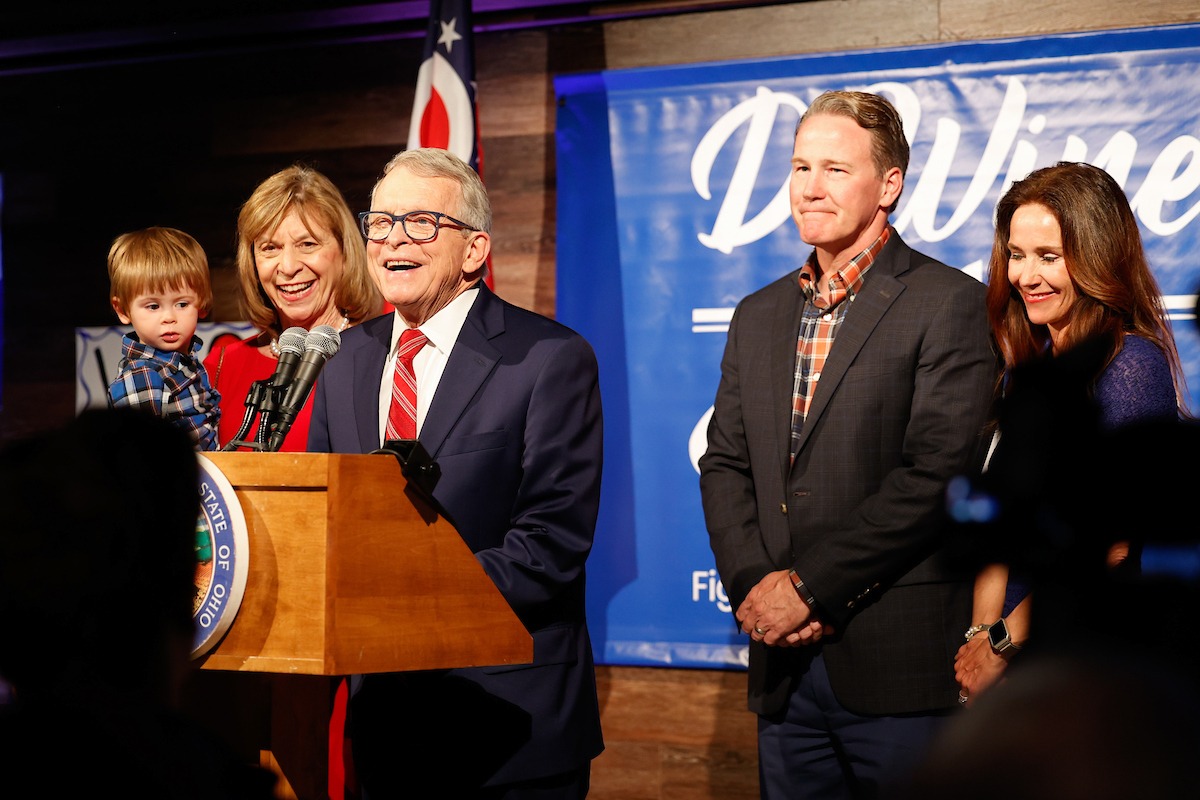
    COLUMBUS, OH — MAY 03: Ohio Gov. Mike DeWine joined on stage by First Lady Fran DeWine, grandson Calvin, Lt. Gov. Jon Husted and Second Lady Tina Husted to celebrate DeWine winning the Republican Party nomination for governor in the Ohio primary election, May 3, 2022, at the DeWine-Husted campaign headquarters, Columbus, Ohio. (Photo by Graham Stokes for the Ohio Capital Journal. Republish photo only with original article.)

    BY:  

    Plaintiffs in a civil suit related to a massive bribery and money-laundering scandal have subpoenaed documents from Ohio Gov. Mike DeWine and they’re scheduling a sworn deposition with Lt. Gov. Jon Husted.

    There have been four criminal convictions so far in the scandal and U.S. Attorney Kenneth L. Parker has said the investigation is continuing. However, there is no indication that DeWine or Husted is an object of it.

    Even so, members of the DeWine-Husted administration were significant players in the scandal and DeWine’s nominee to head up the Public Utilities Commission of Ohio could be a target of the probe.

    The demands for documents and testimony come in a class-action suit that big investors in Akron-based FirstEnergy filed against the company over its involvement in the scheme. Between 2017 and 2020, the company paid out more than $60 million to gain a $1.3 billion ratepayer bailout that was mostly intended to prop up two failing nuclear plants in Northern Ohio.

    Among those already convicted are former Ohio House Speaker Larry Householder, R-Glenford, who was sentenced to 20 years in prison for his role in what federal authorities said might be the biggest bribery and money-laundering scheme in Ohio history. Former state Republican Chairman Matt Borges in June was sentenced to five years for his role.

    However, others who played prominent roles in the scandal are yet to be charged.

    They include former FirstEnergy CEO Chuck Jones and former Vice President Michael Dowling, who directed the money to make Householder speaker in 2018 and then pass and and protect House Bill 6, the corrupt bailout legislation. They also include Sam Randazzo, DeWine’s first nominee to chair the Public Utilities Commission of Ohio.

    Jones, Dowling and Randazzo deny wrongdoing, but in a deferred prosecution agreement, FirstEnergy said Jones and Dowling paid Randazzo a $4.3 million bribe just as DeWine was selecting Randazzo to be FirstEnergy’s top regulator. In that post, Randazzo helped write the corrupt bailout bill and he helped FirstEnergy avoid a scheduled audit known as a “rate case” that was slated for 2024.

    Large investors such as pension and investment funds are suing FirstEnergy over the scandal, arguing that the company violated securities laws by not disclosing its reckless conduct. And then, when the feds made arrests in July 2020, its stock value plummeted — as did their investments.

    The plaintiffs in the civil case have been battling with Randazzo — who is not a defendant — since April over whether he has complied with judges’ orders to produce documents relevant to the $4.3 million in FirstEnergy money he received just before he began regulating the company.

    A magistrate judge and a special master in the case have consistently rebuked Randazzo for not cooperating more fully, with the most recent instance coming last week. Randazzo appealed up the food chain, asking Magistrate Judge Kimberly Jolson not to hold him to a disclosure order from the special master, Shawn K. Judge.

    The plaintiffs in the civil case asked Jolson to make Randazzo comply with Judge’s order to cough up more information. As part of the filing, they provided a table of depositions they’ve scheduled or are in the process of scheduling. To prepare for some, they presumably could use the information and documents they’re demanding of Randazzo.

    One deposition they’re scheduling is of Randazzo himself, which has a “target period” of March 4 to March 29.

    Another is of Husted, the lieutenant governor, which has a target period of Feb. 28 to March 19. Dave Anderson of the Energy and Policy Institute first flagged the document that listed Husted’s deposition.

    Hayley Carducci, Husted’s spokeswoman, on Tuesday said Husted is cooperating.

    “We’re aware of the civil investor lawsuit against First Energy,” she said in an email. “The Lt. Governor has already provided public records pertaining to this, and we will continue to comply as we have done in the past. There’s no new information to disclose.”

    As with Randazzo, Husted is not a defendant in the civil case.

    DeWine also has recently received a subpoena for documents in the civil case.

    “We’re reviewing it with counsel for what can be provided,” Press Secretary Dan Tierney said in an interview. “Our office is subject to the public records act and in a sense this is no different.”

    Tierney pointed out a distinction between the class-action suit and the case which has already convicted Householder and Borges and proceedings that could charge others.

    “This is a civil case and anybody has a right to bring a civil case if they want,” Tierney said of the proceeding in which the governor’s documents had been subpoenaed. “The civil process is where people say they’ve been damaged and they want the court to award damages. That is far different than the criminal case in which the federal government said public integrity laws had been violated.”

    He added, “It still remains in the criminal case that nobody in our office or the lieutenant governor’s office has been questioned or subpoenaed or had any legal filings like that.”

    Even in the absence of such requests, DeWine and his administration were involved several ways in the drafting and passage of the corrupt utility bailout:

    • He nominated Randazzo to head up the PUCO a day after it was publicly revealed that FirstEnergy had paid a group controlled by Randazzo millions of dollars over the years. “Forced DeWine/Husted to perform battlefield triage,” FirstEnergy CEO Jones said in a text message to Dowling. “It’s a rough game.”
    • While he was still a FirstEnergy lobbyist, Dan McCarthy set up Partners for Progress, a 501(c)(4) “dark money” group through which Jones, Dowling and others funneled millions into the conspiracy. DeWine hired McCarthy as his legislative affairs director and kept him in that post for a year after Householder and the others were arrested.
    • HB 6, the bailout legislation, was highly controversial as Householder jammed it through the legislature, other lawmakers testified at his trial. Even so, DeWine signed it the day it passed and when Householder was arrested, the governor’s first position was to keep the law in place — and part of it still is. DeWine reversed himself a day later, calling to repeal and replace the subsidies.

    Morgan Trau contributed to this report.


    Marty Schladen
    MARTY SCHLADEN

    Marty Schladen has been a reporter for decades, working in Indiana, Texas and other places before returning to his native Ohio to work at The Columbus Dispatch in 2017. He’s won state and national journalism awards for investigations into utility regulation, public corruption, the environment, prescription drug spending and other matters.

    MORE FROM AUTHOR

  • Coal company got big payback from HB 6

    Coal company got big payback from HB 6

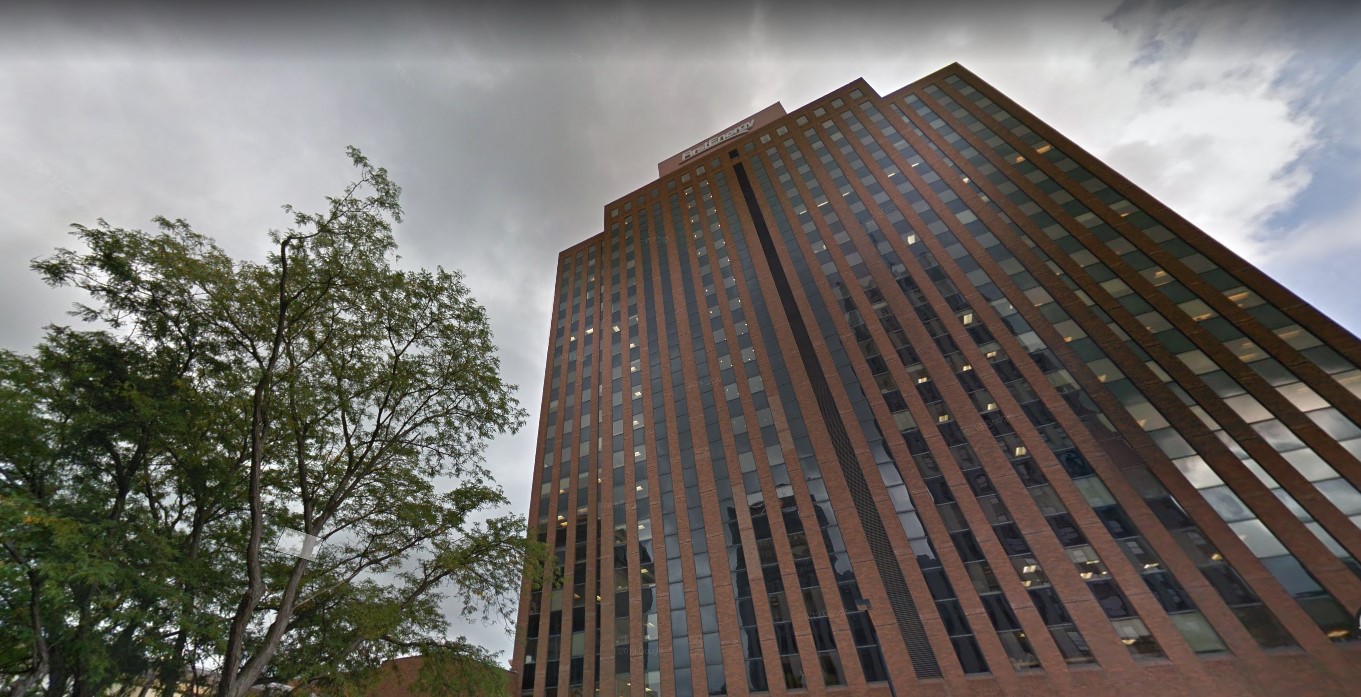
    FirstEnergy’s headquarters in Akron. Source: Google Maps.

    BY: Ohio Capital Journal

    A coal company got roughly $12.6 million above market prices to supply one of the 1950s-era plants subsidized by Ohio House Bill 6. That’s roughly 50 times the amount the company gave to the dark money group at the center of that coal and nuclear bailout law, according to a new analysis from the Checks and Balances Project.

    In other developments:

    • An evidentiary hearing about the reasonableness and prudence of the subsidized coal plants’ costs wrapped up last week. But it’s unclear when regulators might issue rulings.
    • In a separate FirstEnergy case, opponents want regulators to deny or limit more customer charges, saying the rider items should be considered in the company’s full rate case to be filed next May. The evidentiary hearing is expected to continue until Nov. 21.
    • Former Ohio House Speaker Larry Householder and lobbyist Matt Borges have appealed their criminal convictions but still haven’t filed their briefs. The Department of Justice has not yet filed additional criminal charges related to HB 6, either.

    Coal company overpayments

    A new report highlights how much Resource Fuels has collected for coal supplied to one of the two 1950s-era coal plants subsidized by HB 6 and run by the Ohio Valley Electric Company, or OVEC.

    OVEC paid roughly $12.6 million to Resource Fuels in above-market charges for coal, said Ray Locker, executive director of the Checks and Balances Project, which produced the report. And as a result of HB 6’s coal subsidies, Ohio ratepayers have been paying utilities for their share of OVEC’s costs that exceed their revenue.

    In 2018, Resources Fuels also sent $250,000 to Generation Now, the main dark money group in the HB 6 corruption scandal. The Energy and Policy Institute reported that wire transfer earlier this year and connected Resource Fuels to the Boich Companies, which the Columbus Dispatch had earlier identified as “Company C” in the 2020 criminal complaint against Householder and others.

    So, Resource Fuels “donated $250,000 to Generation Now to facilitate everything for Larry Householder. And the excess money they’ve been paid on this coal contract is 50 times more,” Locker said.

    To back up his calculations, Locker reviewed testimony statements filed with the Public Utilities Commission of Ohio by Elizabeth Stanton, an expert witness for the Office of the Ohio Consumers’ Counsel, and from John Seryak, an expert witness for the Ohio Manufacturers’ Association Energy Group. The case file also includes redacted audit reports from London Economics International.

    Stanton’s testimony showed that Clifty Creek, one of the two HB 6-subsidized coal plants, paid about one-fifth more per million BTUs (units of heat value) for coal bought from Resource Fuels, compared to another supplier of coal from the same mine. The price per million BTUs paid to Resource Fuels was also more than that paid to companies providing coal with a higher average heat value.

    The PUCO had let some utilities collect OVEC costs from ratepayers even before HB 6 passed. Seryak’s testimony said London Economics “repeatedly found that the cost under the Resource Fuels coal contracts is unusually high.” OVEC had a long-term deal with Resource Fuels, but it was neither prudent nor reasonable, he added. In his view, Ohio utilities have used the HB 6 coal subsidy riders “to recoup losses resulting from an unreasonable decision.”

    Seryak’s testimony also connected Resource Fuels to the Boich Companies and discussed the HB 6 corruption scandal.

    American Electric Power and Duke Energy both want the PUCO to strike parts of the testimony, arguing against Seryak’s point that the PUCO should not authorize recovery of the coal subsidies while the HB 6 investigations continue. They also want to keep out evidence about cost reviews of pre-HB 6 OVEC riders, which supports points made by Seryak and others.

    The PUCO’s hearing examiners struck those parts of Seryak’s testimony on Nov. 6 without a written opinion. The Ohio Manufacturers’ Association Energy Group appealed that decision to the full PUCO on Nov. 13.

    “That’s a total smokescreen to divert people from the details of these contracts,” Locker said. “The information is out there. And now they’re trying to stick the genie back in the bottle and say it doesn’t matter.”

    Representatives of the Boich Companies did not provide comments in response to Energy News Network’s questions.

    Read more: 

    Waiting

    The PUCO wrapped up its evidentiary hearing on the 2020 OVEC charges about which Seryak and Stanton provided testimony on Nov. 6. The hearing started on Halloween and took less than one week. Besides the above-market payments to Resource Fuels, challengers contended that other spending by the OVEC coal plants was not reasonable and prudent, including costs related to times when it was uneconomic to run them.

    Briefs and reply briefs are due Jan. 8 and Jan. 29, said Matt Schilling, spokesperson for the PUCO. After that, parties will wait for regulators to decide whether to disallow any costs that have already been passed through to ratepayers. Adjustments would presumably be reflected in future charges for the OVEC plants, which run through 2030.

    That wait could take a while. Regulators still have not ruled on challengers’ objections to pre-HB 6 OVEC plant costs. Nor have lawmakers advanced bills to repeal the subsidies.

    Costs for the coal subsidies continue to mount. The Office of the Ohio Consumers’ Counsel estimates those subsidies have cost ratepayers nearly $221 million since 2020 began.

    Read more:

    FirstEnergy riders

    The PUCO began another evidentiary hearing on Nov. 7 in a FirstEnergy rider case with roughly $1.4 billion at stake. The PUCO currently expects that hearing to continue through Nov. 21, Schilling said.

    Among other things, FirstEnergy wants to extend a “delivery capital recovery” charge. That DCR rider is involved in one of four cases the PUCO has put on hold since August 2022 while the Department of Justice considers more criminal charges related to HB 6. The new case also presents questions about possible side deals that may affect settlements. That issue was raised in another of the stayed cases.

    Despite the parallels, regulators declared on Oct. 18 that the rider case and two grid modernization cases “are completely unrelated” and refused to lift the stay. The PUCO also refused to put the rider case on hold, because it also deals with charges for customers who don’t choose a competitive electricity supplier. The current tariff for that is due to expire, and Ohio law requires a plan for those customers to be in place, the order said.

    The case “introduces various mechanisms aimed at ensuring the ongoing investment and maintenance of the distribution system,” FirstEnergy spokesperson Lauren Siburkis said, talking about the case’s charges for all customers. Those include the DCR rider and an advanced metering infrastructure rider, plus charges for vegetation management and storm mitigation.

    The increase for a residential customer using about 750 kilowatt-hours per month of electricity would initially be $3.11 per month. But witnesses for multiple challengers want regulators to deny various riders.

    For example, Justin Bieber, an expert for Kroger, said in a filed testimony statement that the DCR rider is improper “single-issue ratemaking.” Instead, he said, it should properly be considered in a full ratemaking case, which would look at all of a utilities’ revenues and expenses. He had a similar view about the vegetation management rider. FirstEnergy is due to file a full ratemaking case next May.

    Greg Meyer, an expert for the Office of the Ohio Consumers’ Counsel, similarly challenged the DCR rider, along with the advanced metering rider and storm recovery rider. Aside from the single-issue ratemaking problem, he noted that a process already exists for utilities to recoup major storm costs if they show the costs would impact their total operations.

    Colleen Shutrump, another expert for the Ohio Consumers’ Counsel, objected to a proposed energy efficiency rider, saying customers could get efficiency services in a competitive market.

    If approved, the riders would last eight years, with some possible adjustments in next year’s ratemaking case. A hearing on charges in a separate grid modernization case is set for January.

    Read more:

    Convictions on appeal

    Former Ohio House Speaker Larry Householder and lobbyist Matt Borges appealed their criminal convictions related to HB 6 this summer. Yet their lawyers have sought multiple extensions to file legal briefs on the trial court’s alleged errors.

    The filings are currently due next month, with the government’s responses due in January. For now, both remain in federal prisons.

    Meanwhile, Borges and Householder are still defendants in the state of Ohio’s HB 6 civil case, along with former PUCO Chair Sam Randazzo, FirstEnergy, Energy Harbor (formerly FirstEnergy Solutions), two former FirstEnergy executives and others.

    Borges’ amended answer filed on Oct. 25 denies liability for the state’s claims under the Ohio Corrupt Practices Act. The filing also says he wouldn’t be liable anyway because of the legal doctrines of in pari delicto or unclean hands. Those doctrines basically say plaintiffs can’t recover on a civil claim if they themselves engaged in wrongdoing.

    Borges’ lawyers did not respond to the Energy News Network’s request for comments about which state actors and what conduct they say supports those defenses.

    More charges?

    The Department of Justice has not yet filed charges against anyone other than Householder, Borges and others named in their July 2020 criminal complaint and indictment. (Three of the other defendants named have settled, and one has died.) As noted above, four FirstEnergy regulatory cases remain stayed, although various civil cases against the company continue to move ahead.

    A Nov. 6 order in one of the shareholder cases calls for Ebony Yeboah-Amankweh, a former lawyer and ethics officer for FirstEnergy, to answer plaintiffs’ lawyers’ questions under oath in a pretrial process called a deposition. The company ended her employment a few months after the 2020 complaint came out.

    A separate Nov. 6 order requires Randazzo to turn over documents and information which plaintiffs in that case have sought for months. Randazzo will also have to pay costs arising from the documents dispute.

    People from regulatory agencies or utilities “should not get to have their lawyers pick and choose what discovery and subpoena requests they will respond to, and what documents they will turn over,” said Dave Anderson, policy and communications manager for the Energy and Policy Institute.

    Read more:

    This article first appeared on Energy News Network and is republished here under a Creative Commons license.


    Kathiann M. Kowalski, Energy News Network
    KATHIANN M. KOWALSKI, ENERGY NEWS NETWORK

    Kathi is the author of 25 books and more than 600 articles, and writes often on science and policy issues. In addition to her journalism career, Kathi is an alumna of Harvard Law School and has spent 15 years practicing law. She is a member of the Society of Environmental Journalists and the National Association of Science Writers. Kathi covers the state of Ohio.

    MORE FROM AUTHOR

  • Federal judge blasts disgraced Ohio House speaker as a “bully,” sends him straight to jail

    Federal judge blasts disgraced Ohio House speaker as a “bully,” sends him straight to jail

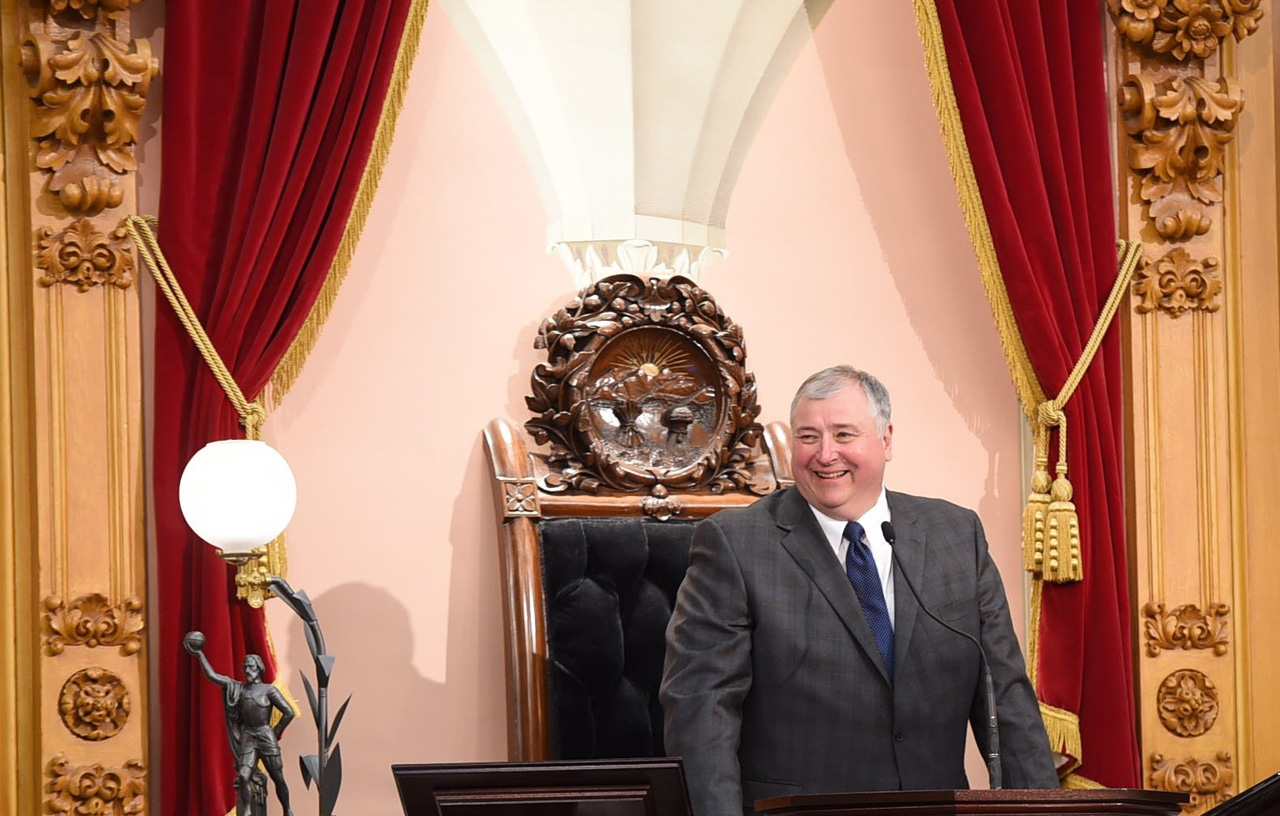
    Former House Speaker Larry Householder, R-Glenford. Source: Ohio General Assembly.

    BY:  Ohio Capital Journal

    CINCINNATI — Former Ohio House Speaker Larry Householder spent possibly his last moments as a free man around 2:30 p.m. Thursday and they couldn’t have been pleasant.

    U.S. District Judge Timothy Black gave the Glenford Republican the maximum possible sentence of 20 years and then ordered blue-shirted U.S. Marshals to immediately take him into custody. He rose, put his hands behind his back, the marshals cuffed him and led the once-powerful pol away.

    But before that humiliation, the judge blistered Householder for being the ringleader of a racketeering scandal in which Akron-based FirstEnergy paid him more than $59 million in bribes in exchange for a $1.3 billion bailout, most of which was intended to save two failing nuclear plants in Northern Ohio.

    Ratepayers could have used that money for things like education, health care or to start businesses, the judge said.

    “You handed that money to suits in private jets,” Black said.

    The judge made the speech and imposed the sentence after saying Householder clearly perjured himself during his criminal trial, which lasted from late January until mid-March.

    In it, Householder claimed to barely know FirstEnergy executives as federal prosecutors put on a mountain of evidence that Householder flew on their corporate jets, sat in their luxury boxes and dined in fancy restaurants as they plowed tens of millions of the corporation’s dollars into dark-money accounts.

    “You conned the people of Ohio and you tried to con the jury, too,” Black said in his gravely voice as Householder, clad in a gray suit and red tie, slumped his bulk back in his chair.

    The money from FirstEnergy and one of its subsidiaries was used to elect fellow Republicans in 2018 who would vote to make Householder speaker in early 2019. More than $500,000 of it was used to pay off Householder’s credit card bills, settle a lawsuit and to repair a house he owned in Florida.

    Tens of millions more went to pass the corrupt bailout — House Bill 6 — and to fund a thuggish campaign to thwart a citizen-initiated repeal.

    Earlier in the hearing, Assistant U.S. Attorney Emily Glatfelter said Householder used FirstEnergy’s dark money to crush a “citizen veto” and “because of this House Bill 6 remains in effect today.”

    That’s also because Republican supermajorities in Ohio’s gerrymandered legislature have refused to repeal the corrupt law even after arrests were made, and as they try to make it virtually impossible for citizens to initiate amendments to the Ohio Constitution.

    Also arrested in the scandal were lobbyists Juan Cespedes and Jeffrey Longstreth — who cooperated with prosecutors within days of their arrests — and Neil Clark, who died by suicide. Former Ohio GOP Chairman Matt Borges is slated for sentencing at 11 a.m. today, Friday.

    Steven Bradley, Householder’s attorney, sought leniency for his client. Referring to the possibility of a 20-year sentence, he said “That is effectively a life sentence for Larry Householder given his age and health situation.”

    Householder is 64 and overweight.

    Bradley argued that his client was around 60 when the racketeering conspiracy began in late 2016 and that prior to that, Householder did “innumerable” good deeds “for decades.” A 20-year sentence would “effectively give no consideration” to those good deeds, Bradley said.

    But when he spoke on his own behalf, Householder appeared to do more to harm his case than to help it, just as he did at trial.

    “My greatest commitment is to my creator… My next commitment is to my family,” he read from a prepared statement as he stood at the podium.

    Householder said that in the course of 38 years of marriage, “I can count on one hand” the number of nights he spent away from his wife, Taundra. Householder also described the crushing pain they suffered when they lost a four-year-old daughter.

    But then he pushed his claims past the point of plausibility.

    He said Taundra was planning to retire from her teaching position and next year, when he turns 65, he wanted to retire as well, saying he planned to “hang up my suit and tie.”

    Householder made that statement in the same courtroom where, only three months earlier, prosecutors put on testimony and displayed bank records and written messages from early 2020 that showed FirstEnergy and AEP putting money into dark money groups intended to fund an effort to change the state’s term limits so Householder could stay in office for as long as 16 more years.

    The former House speaker also implied that he wanted a lenient sentence not for himself, but for his family. Taundra, he said, would be alone while “I’ll be in a cold cell hours away.”

    But what might really have set Judge Black off was Householder’s profession of selfless public service.

    “My life has been a total and full dedication to making life better for those I serve,” he said.

    Black described voters who put out Householder yard signs, donated their hard-earned money to his campaigns, and pushed a button for him in the voting booth.

    “I’m not talking about some corporation or the (former FirstEnergy CEO) Chuck Joneses of the world,” Black said. Householder’s constituents who supported him “were saying, ‘I’m choosing to trust you,’ and you betrayed that trust,” the judge said.

    Black used Householder’s own words to give the lie to his claims. He quoted several recordings of Householder that were surreptitiously made during the conspiracy and played at trial.

    “If you’re going to fk with me, I’m going to fk with your kids,” Householder said in one of them.

    “Bottom line, you were a bully,” the judge said.

    If the federal racketeering statute didn’t cap sentences for a single count at 20 years, sentencing guidelines would have recommended life for the former House speaker, Black said. One reason for that is because Householder’s use of a mountain of hidden corporate money to elect a legislature, pass an exponentially bigger bailout for the company, and to crush a citizen repeal is “an assault on democracy,” the judge said.

    Black explained the special harm done by public corruption like that committed by Householder and his co-conspirators. To do so, he quoted former President Theodore Roosevelt, who ironically advocated the citizen-initiated amendment process in Ohio that Householder’s former Republican colleagues in state government are now trying to gut.

    “There can be no crime more serious than bribery,” Roosevelt said in a 1903 message. “Other offenses violate one law while corruption strikes at the foundation of all law.”

    When Borges, the former GOP chair, is sentenced today, it’s unclear what he’ll face. His involvement in the conspiracy was considerably less than Householder’s, but Judge Black showed that he’s not much in the mood for leniency when it comes to Ohio’s corrupt political culture.

    Also uncertain is when — or if — others might be charged.

    Former FirstEnergy CEO Chuck Jones and Vice President Micheal Dowling — as well as former FirstEnergy Solutions President John Kiani — directed the flood of corporate dollars into the Householder-controlled dark money groups, according to prosecutors.

    And FirstEnergy admitted in a deferred prosecution agreement that it paid  a $4.3 million bribe to Sam Randazzo just as Gov. Mike DeWine was appointing him to chair the Public Utilities Commission. Randazzo the helped draft the corrupt bailout law, according to trial testimony.

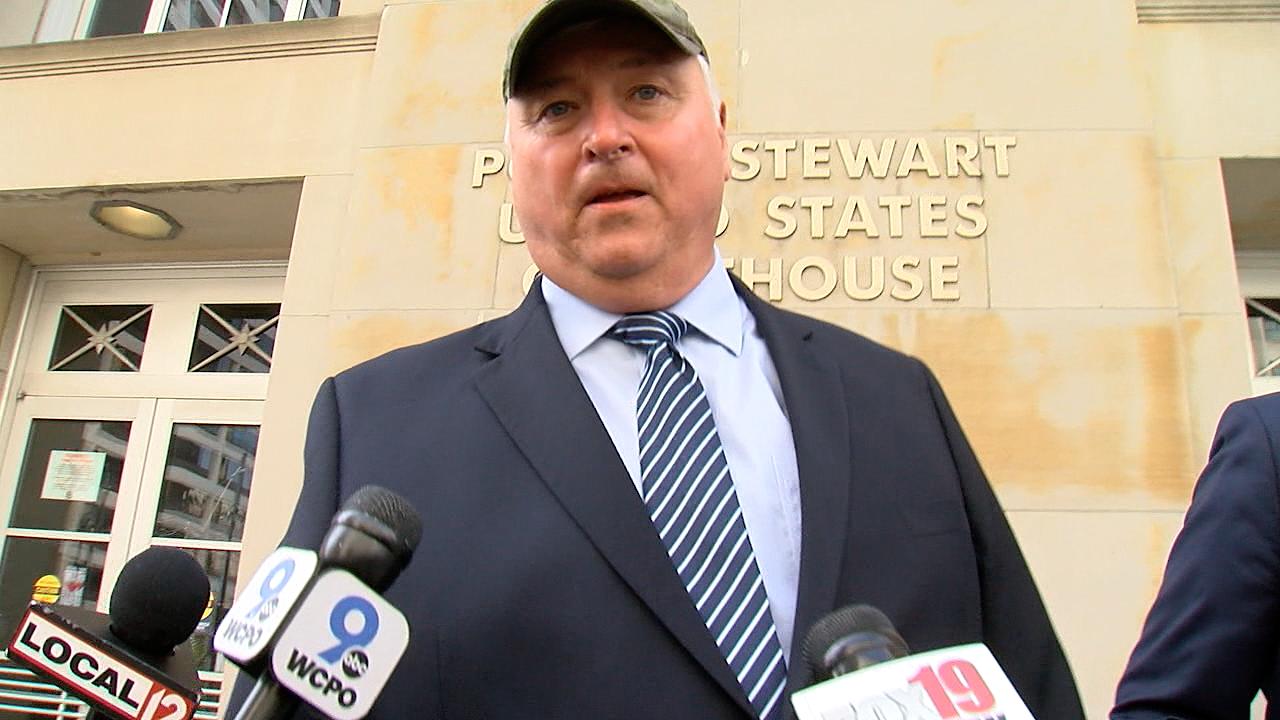
    On the steps of the Potter Stewart U.S. Courthouse just after the sentencing, U.S. Attorney Kenneth Parker was asked when or whether those men or others might be charged.

    “We continue to look through evidence and we continue to listen to recordings and speak to individuals, so if something’s there we’re going to go there, too, and address it,” he said.


    Marty Schladen
    MARTY SCHLADEN

    Marty Schladen has been a reporter for decades, working in Indiana, Texas and other places before returning to his native Ohio to work at The Columbus Dispatch in 2017. He’s won state and national journalism awards for investigations into utility regulation, public corruption, the environment, prescription drug spending and other matters.

    MORE FROM AUTHOR

  • AEP doesn’t have much to say about its support for corrupt utility bailout

    AEP doesn’t have much to say about its support for corrupt utility bailout

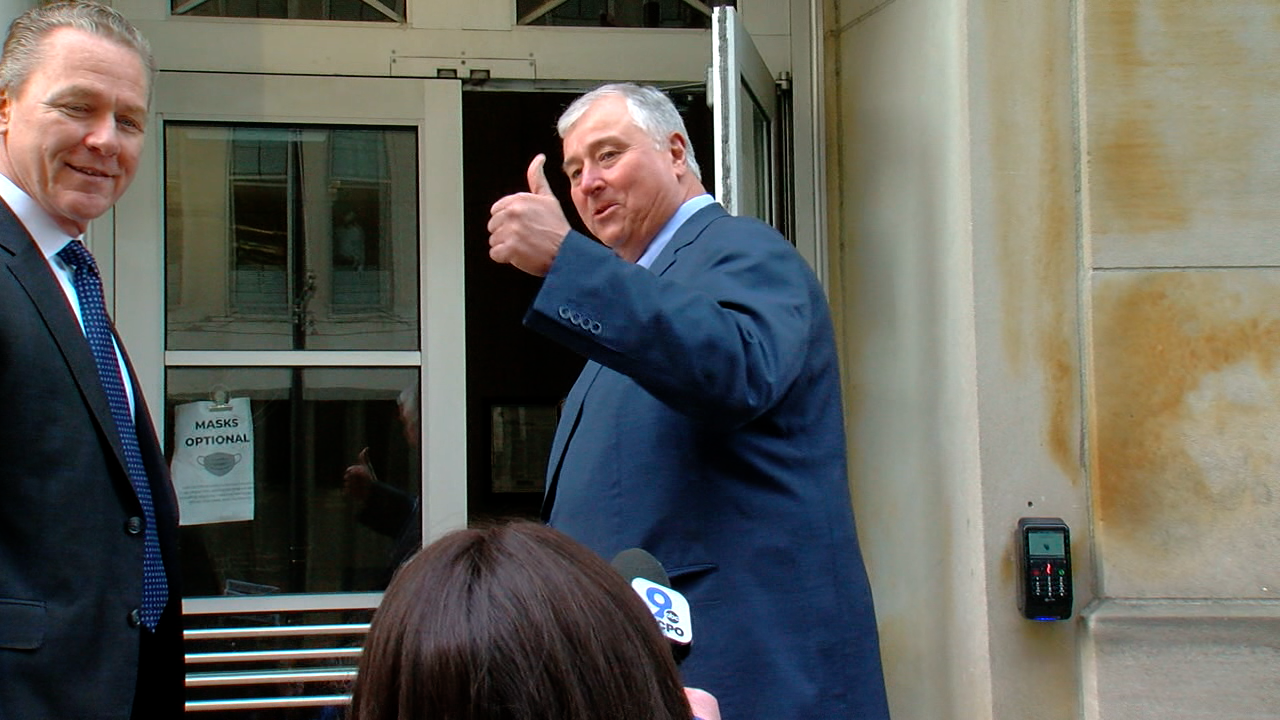
    Larry Householder speaks after guilty verdict. Photo by: WEWS/WCPO.

    BY:  Ohio Capital Journal

    Columbus-based utility giant AEP wasn’t at the epicenter of a historic bribery and money-laundering scandal in 2019. But it also wasn’t very far away as a corrupt deal was hatched in the Ohio Capitol to use $61 million in bribes to pass a $1.3 billion bailout.

    The name of the nation’s sixth-largest electric utility came up repeatedly in the seven-week criminal trial that ended earlier this month in the racketeering convictions of former Ohio House Speaker Larry Householder and former state GOP Chairman Matt Borges.

    Through its dark-money group, AEP provided more than $900,000 that was used to help pass the bailout. And to date, it has received more than $60 million to subsidize aging coal plants that belong to a consortium in which it owns a 40% stake.

    Just after the utility bailout was passed and a repeal attempt was thwarted, AEP spent another $500,000 through the same dark money group on an effort that stood to keep Householder in the speakership well into the 2030s. During the trial, a federal prosecutor asked a Householder co-defendant who had pleaded guilty why AEP would spend so much to keep the speaker in power.

    “It kind of went without saying that they support anything that’s good for the speaker because anything that’s good for the speaker is good for them,” the aide, Jeffrey Longstreth, testified.

    But everything changed when Householder and four others were arrested in July of 2020. Now AEP doesn’t seem interested in talking about its actions prior to that.

    Mysterious money

    Lobbyists and other wired-in parties on Capitol Square knew that as the battle heated up over the 2019 bailout measure — House Bill 6 — a geyser of cash was financing the effort to pass and protect it from repeal.

    It was logical to suspect that the money was coming from a utility industry that stood to benefit. But there was no way to be sure because it was coming through 501(c)(4) dark money groups that don’t have to disclose their donors.

    But then the FBI got involved.

    Acting on a tip, it launched an investigation. Using subpoenas, wiretaps, confidential informants, forensic accountants and undercover agents, investigators were able to grope their way through the dark money smokescreen and determine who was really behind the push for an unpopular corporate bailout.

    By far and away the biggest donor was the biggest beneficiary — Akron-based FirstEnergy. Starting in 2017 it ponied up what would become about $60 million to elect representatives who would vote to make Householder speaker in 2019 and then to pass and protect HB 6. In return, it stood to get about $1 billion of the benefit of the bailout — a return of more than $16 on each dollar it invested.

    But AEP is getting an even better return — more than $66 for every one of its dollars that made their way into the dark money group that fueled the HB 6 scheme. And, because the part of the bailout that benefits AEP is the only part of HB 6 that hasn’t been repealed, AEP is continuing to collect that money. That means returns from its dark money expenditure will only improve over time.

    AEP hasn’t been accused of wrongdoing in the scandal, and a spokesman denied that it acted improperly.

    “AEP participates in legislative and regulatory processes ethically and in compliance with the laws of the states where we operate,” the spokesman, Scott Blake, said in an email. “As we have previously stated, we do not believe that AEP was involved in any wrongful conduct.”

    And a board member of the dark money group AEP solely funded, Empowering Ohio’s Economy, claimed it didn’t know its dollars were used for nefarious purposes — even though it was at least partly in on the secret of HB 6’s mysterious funding.

    “Obviously, knowing what we know now, we wouldn’t have made the donations,” the board member, J.B. Hadden, told the Dayton Daily News in December 2020.

    The company is, however, being investigated by the U.S. Securities and Exchange Commission about its involvement in the passage of HB 6.

    Belated transparency

    However, AEP didn’t seem all that eager week to discuss its contributions which, until Householder was arrested, were secret. In the wake of the scandal, the company decided to start disclosing what dark money groups it contributes to, but only going forward.

    “We adopted a revised political engagement policy in 2021, which is available at ​https://aep.com/investors/governance/politicalengagement,” Blake said. “Under that policy, beginning with contributions made in 2020, AEP has disclosed its contributions of $5,000 or more to 501(c)(4) social welfare organizations as part of AEP’s annual disclosures. Organizations that receive contributions from AEP are subject to their own disclosure requirements.”

    But since the company started making such disclosures, Empowering Ohio’s Economy hasn’t appeared on them. AEP was the group’s sole contributor and its top lobbyist, Tom Froehle, was on its board.

    The dark money group gave $700,000 to Generation Now, a dark money group controlled by Householder, that has since pleaded guilty to its role in the scandal. It gave another $200,000 to the Coalition for Opportunity and Growth, which ran TV ads supporting House candidates who would back Householder for speaker.

    During the Householder trial, two of Householder’s co-defendants and other witnesses testified how money from Generation Now financed savage attacks on opponents of Householder candidates. And, when the recall campaign got underway, it paid for false, anti-China commercials, private eyes and “blockers” — people who harassed and even assaulted petition circulators, witnesses testified.

    In an early 2019 text message presented to the jury, Borges described efforts to get AEP on board with a bailout that primarily benefited FirstEnergy.

    “Lots of pressure from FE, AEP, renewable standards, setbacks… so thought is to move a comprehensive package and let everyone get a little (bit) of what they want,” Borges said.

    Then in testimony, Householder’s fixer, Longstreth, described what AEP got.

    “They received a benefit of… there were two coal plants in southwest Ohio,” Longstreth testified. “I’m not exactly sure where. One of them is actually just over the line in Indiana. I’m not sure where the other one is. They had to be created because of the U.S. Department of Defense needed them created 50 years ago (it was actually 68.) I don’t really know all of the details on it, but they received some benefit for running those plants on a continuing basis.”

    Longstreth, who pleaded guilty to his involvement in the conspiracy, was referring to the Ohio Valley Electric Corporation, or OVEC, in which AEP holds a 40% interest. According to the Office of Ohio’s Consumers’ Counsel, the corporation so far has received about $152 million in ratepayer subsidies as a consequence of the corruptly passed HB 6.

    But Blake, the AEP spokesman, didn’t respond directly when asked if the HB 6 arrests in July 2020 had anything to do with its decision to report dark-money contributions going forward.

    “The decision to list contributions over $5,000 to 501(c)(4) organizations was made in the second half of 2020, and the reporting began with contributions made that year,” he said. “AEP has not made a contribution to Empowering Ohio’s Economy since 2019.”

    In addition, Blake wouldn’t comment on the misleading way Empowering Ohio’s Economy described itself in 2019 as it made huge, secret contributions of AEP money that ended up being used in a bribery and money-laundering scandal. On its IRS Form 990, the group blandly described its purpose as:

    “Promoting Ohio as well-suited to host and support major conventions or similar events and as an attractive destination for travel, business meetings and vacations. The methods of achieving these purposes include funding and hosting major conventions and meetings via internet, professional organizations, and social media education to the general public.”

    Even though AEP was the dark money group’s sole contributor and its top lobbyist sat on its board, Blake said it wasn’t AEP’s job to answer for the misleading description.

    “501(c)(4) organizations are subject to their own reporting requirements and any questions about what they reported would need to be addressed by them,” he said.

    Subsidizing coal in a warming world

    The Intergovernmental Panel on Climate Change earlier this month warned that greenhouse gas emissions must be cut swiftly and dramatically to spare future generations from the worst consequences of global warming. So subsidizing two coal plants built during the Eisenhower administration might not seem the best use of ratepayer resources.

    It also might seem important to avoid rewarding corporate attempts to secretly buy ratepayer subsidies for their regulated monopolies.

    But legislative attempts to end the HB 6 coal subsidies so far have been unsuccessful and Blake cited last year’s jumps in natural gas prices as a reason for keeping the $130,000-a-day subsidies in place.

    “The recent increase in natural gas prices has shown that (the Ohio Valley Electric Corporation) offers customers price stability,” he said. “As we transition to cleaner resources, power from the OVEC plants offer security from rising natural gas prices and can provide power when renewables like wind and solar are unavailable.

    Blake added, “Having reliable generation resources is critical to providing the reliable power our customers need. Customers receive a credit when OVEC outperforms the energy market. The current mechanism supports only the actual costs of providing secure, reliable energy.”

    Indeed, default rates for customers of AEP, FirstEnergy and other Ohio utilities are all jumping this month to reflect high wholesale rates last year, when gas prices were high — partly as a consequence of disruptions caused by war in Ukraine. But keeping the dirty, coal-fired plants spinning now might make less sense because natural gas prices are down dramatically, and closer to their 10-year average.

    Householder’s friend

    While AEP might have wanted to distance itself from secret spending supporting Householder just after his arrest, it showed no such compunction in the months immediately before the feds broke up the racketeering scheme.

    Householder’s fixer, Longstreth, testified how — fresh off his HB 6 success — the speaker turned his sights to even bigger game. He’d used tens of millions in secret utility dollars to create a political juggernaut that made him speaker and that enabled him to pay off his financial backers. Now he sought to keep his juggernaut dominating Ohio politics — possibly until 2036.

    Longstreth had discovered that the idea of reforming Ohio’s legislative term limits polled well and he and his boss figured they could push one with an important catch. It would limit lifetime service to 16 years, but if it would reset the clock on everybody. That would mean the then-61-year-old Householder could serve until he was 77.

    To fund the scheme, Householder and his aides again turned to businesses that stood to gain the most from having close allies in the government — the utilities whose monopoly subsidiaries’ revenues were controlled by it.

    After he was approached in early 2020, then-First Energy CEO Chuck Jones in a text message described Householder as “an expensive friend.” But FirstEnergy quickly agreed to secretly spend $2 million on Householder’s tenure-enhancement scheme.

    On the witness stand in the Householder trial, Longstreth described a similarly warm reception from AEP’s then-CEO Nick Akins. Longstreth said he attended a meeting in early 2020 at AEP’s Columbus headquarters with Householder, Akins and two lobbyists.

    Longstreth testified that Akins’ reception to the plan that stood to make Householder speaker well into the next decade was “very positive.”

    “It was probably a 30-minute meeting,” Longstreth said, according to a transcript of the trial. “Fifteen minutes of it, you know, exchanging pleasantries and talking about anything that they had going on and then 15 minutes of us explaining it, and they said sounds great, we’ll get back to you and they did get back to us and said they would be supportive.”

    Shortly thereafter, AEP contributed $500,000 to the dark money group Householder set up for the initiative through AEP’s own dark money group, Empowering Ohio’s Economy.

    But then forces struck that were beyond the control of even Householder and Ohio’s largest utility companies. Neither can be counted on to intervene in the future.

    Asked why the term-limits initiative didn’t get off the ground, Longstreth referred to a Feb. 29, 2020 email he sent to FirstEnergy providing instructions on how to wire money into Householder’s new dark money organization.

    “COVID hit like two weeks later, and then we were arrested in July,” Longstreth testified. “So it never happened.”

    _______________________________

    Marty Schladen
    MARTY SCHLADEN

    Marty Schladen has been a reporter for decades, working in Indiana, Texas and other places before returning to his native Ohio to work at The Columbus Dispatch in 2017. He’s won state and national journalism awards for investigations into utility regulation, public corruption, the environment, prescription drug spending and other matters.

    MORE FROM AUTHOR

  • Former Ohio speaker, GOP chair found guilty of racketeering

    Former Ohio speaker, GOP chair found guilty of racketeering

    Former Ohio House Speaker Larry Householder gives the thumbs up as he enters the courthouse where he is expected to testify Wednesday, March 1, 2023. Photo from WEWS.

    BY: MARTY SCHLADEN – MARCH 9, 2023 2:03 PM Ohio Capital Journal

    CINCINNATI — After more than nine hours of deliberation, a jury on Thursday found former Ohio House Speaker Larry Householder and state Republican Chairman Matt Borges guilty of felony racketeering charges in connection with a billion-dollar utility bailout that was passed in 2019.

    Both men face maximum sentences of 20 years in what prosecutors said was likely biggest bribery and money laundering scandal in Ohio history. U.S. District Judge Timothy Black will schedule a sentencing hearing.

    After the verdict, one of Householder’s attorneys, Steven Bradley, confirmed what observers have suspected almost from the start of testimony.

    “Of course we’re going to appeal the verdict,” he told reporters minutes after the jury left the courtroom. Householder stood off to the side in a blue business suit, clutching a camouflage trucker cap.

    He affirmed that he would continue to fight the charges.

     Convicted felon Larry Householder outside the federal courthouse in Cincinnati where a jury found him guilty of racketeering. Photo by Marty Schladen, Ohio Capital Journal.

    “This is just the first step in the process,” Householder said. “Stay tuned.”

    As part of the racketeering scheme, Akron-based FirstEnergy and other utilities paid tens of millions into an effort to elect friendly lawmakers in 2018 who would vote to make Householder speaker the following year. Immediately after taking the speaker’s gavel, Householder worked furiously to pass a $1.3 billion bailout, the vast majority of which benefited FirstEnergy subsidiary FirstEnergy Services.

    The company was being dragged down by losses from its nuclear and coal plants and executives were seeking a bailout. While it got more than $1 billion out of the deal, Householder got political power as well as more than $500,000 personally, jurors found. Borges played a smaller role, but he paid a $15,000 bribe to help defeat an attempt to repeal the bailout and he received more than $100,000 in funds that originated with FirstEnergy, prosecutors said.

    The verdict could have far-reaching implications for the use of “dark money” — funds paid into 501(c)(4) organizations that don’t have to reveal the sources of their funding. In the wake of the 2010 U.S. Supreme Court decision Citizens United v FEC, the use of such funds has become ubiquitous in state and national politics.

    Thursday’s verdict might start to start to draw some boundaries around such expenditures.

    In the case of the Ohio bailout, a financially strapped Householder found common cause with a financially ailing FirstEnergy. After paying billions to prop up a subsidiary with failing and nuclear and coal plants, the parent corporation in 2016 decided to send the subsidiary into bankruptcy. They wanted a ratepayer subsidy for the failing nuclear and coal plants so they could be sold off after the subsidiary emerged from bankruptcy.

    FirstEnergy’s top executives were seeking a bailout at the same time a financially strapped Householder was seeking a return to the Ohio speakership. Their relationship grew in luxurious settings that belied the financial problems besetting both.

    Householder attended a World Series game in November 2016 in the FirstEnergy box in Cleveland with CEO Chuck Jones. Two months later, Householder flew to Donald Trump’s inauguration aboard FirstEnergy’s private jet and stayed in the same $500-a-night hotel as Jones. Prosecutors showed the jury photos of Householder’s son and a FirstEnergy executive in the back of a limousine just outside a fancy steakhouse dinner.

    Within weeks of the inauguration, Householder’s underling set up Generation Now, a 501(c)(4) dark money group into which FirstEnergy almost immediately started pouring what would become tens of millions of dollars.

    The money was used to fund support staff for candidates who would vote to make Householder speaker and to finance attack ads against their opponents.

    When opponents started gathering signatures to repeal the bailout law, House Bill 6, FirstEnergy poured $36 million into an effort to block it. Householder took control of the push to block the repeal, while Borges assisted — both by pressuring Attorney General Dave Yost and by paying $15,000 for inside information about the petition campaign.

     Center, former Ohio Republican Party chair, and statehouse lobbyist, Matt Borges with his attorneys outside of the federal courthouse. Photo courtesy of WEWS.

    That money was used to finance a torrent of misleading, anti-China ads and a petition-blocking effort that in some cases devolved into outright battery, witnesses testified.

    And because it was dark money, the public couldn’t know that it was FirstEnergy that was financing the gargantuan fight to pass and protect a much larger bailout from which it benefited — until federal law enforcement stepped in. During the trial, investigators from the FBI described how they used accountants, informants, subpoenas and wiretaps to unravel the tangle of dark money groups and political-action committees that were used to obscure the origins of the funds that were used in the scheme.

    “Today was a victory for the people of Ohio,” U.S. Attorney Kenneth L. Parker said on the steps of the Potter Stewart U.S. Courthouse shortly after the verdict. Parker declined to answer whether further indictments can be expected in the case — including for Jones and other FirstEnergy executives who paid the money that the jury on Thursday determined to be bribes.

    Also unknown is whether Gov. Mike DeWine’s first appointee to chair the Public Utilities Commission of Ohio, Sam Randazzo, will be charged. Randazzo took $4.3 million from FirstEnergy shortly before being nominated to the post and once nominated, he helped write the bailout law, House Bill 6. He resigned shortly after the FBI searched his Columbus condo in 2020.

    The verdict might be sending shock waves around Capitol Square and other power centers because defense attorneys for Householder and Borges argued that the conduct described by prosecutors was perfectly legal — politics as usual.

    In a statement, Parker offered a different take.

    “As presented by the trial team, Larry Householder illegally sold the statehouse, and thus he ultimately betrayed the great people of Ohio he was elected to serve,” the U.S. attorney said. “Matt Borges was a willing co-conspirator, who paid bribe money for insider information to assist Householder. Through its verdict today, the jury reaffirmed that the illegal acts committed by both men will not be tolerated and that they should be held accountable.”

    Outside the courthouse, Householder said that he will go back to his Perry County farm to plant a garden and fish with his kids while federal authorities complete a pre-sentence report and a sentencing hearing is scheduled.

    That his attorneys plan to appeal has been suspected almost since testimony began on Jan. 23. On Feb. 1, they undertook the risky gambit of accusing Judge Black of being biased against their client in open court.

    They also took a risk by placing Householder on the stand to testify in his own behalf. During cross examination, Assistant U.S. Attorney Emily Glatfelter confronted Householder with numerous inconsistencies and apparent falsehoods.

    Householder was asked just after the verdict if he thought the decision to testify was a mistake. He said it wasn’t

    “I waited two-and-a-half years to tell my story,” he said. “I wanted the opportunity to speak.”

  • On the stand, former House speaker confronted by prosecutors with inconsistencies

    On the stand, former House speaker confronted by prosecutors with inconsistencies

    Former Ohio House Speaker Larry Householder gives the thumbs up as he enters the courthouse where he is expected to testify Wednesday, March 1, 2023. Photo from WEWS.

    BY: MARTY SCHLADEN – Ohio Capital Journal

    The cross examination prompted some observers to say Householder badly damaged his defense against federal racketeering charges by using the risky tactic of testifying in his own defense. It marked the end of the evidentiary phase of the trial. Closing arguments will begin Tuesday.

    Householder and former Republican Party Chairman Matt Borges are accused in a scheme to use $61 million in funds mostly from Akron-based FirstEnergy to make Householder speaker and then to pass and protect a $1.3 billion bailout that primarily went to prop up a subsidiary’s failing nuclear plants.

    Over more than five weeks of testimony, prosecutors have put on evidence they say proves Householder passed the bailout in return for massive 501(c)(4) “dark money” contributions and for more than $500,000 in personal benefits. Perhaps as a sign that they didn’t believe things were going well, Householder and his defense team took the controversial step of putting him on the witness stand on Wednesday.

    Defense attorneys are usually reluctant to put their clients on the stand because prosecutors can use cross examination to catch them in lies. That seemed to be Assistant U.S. Attorney Emily Glatfelter’s goal as she cross-examined Householder on Thursday.

    Hardball

    Glatfelter played secret recordings of conversations that jarringly contradicted Householder’s claims that as speaker, he wanted to be a peacemaker. Under its earlier leadership, Householder said, the House Republican Caucus was too “divisive.”

    “I didn’t want enemies. I wanted friends,” Householder said Wednesday, trying to refute claims that he was an autocratic leader who demanded unstinting loyalty from lawmakers and contributors.

    Glatfelter played a wiretap recording of a conversation between Householder and Neil Clark, a lobbyist who was charged in the conspiracy and later died by suicide.

    “We like war and you know that Neil,” Householder told Clark. Then referring to Republican Reps. Dave Greenspan and Scott Lipps, whom Householder considered insufficiently supportive, he said, “If you f**k with me, I’ll f**k with your kids.”

     Former House Speaker Larry Householder, R-Glenford. Source: Ohio General Assembly.

    The former speaker had earlier denied being involved in using dark, or “C4” money to make attack ads, but when Clark asked “You’re talking about C4 money?” Householder responded, “Yeah.”

    When Glatfelter asked Householder if he punished contributors and lawmakers who supported his foes instead of him, Householder said, “I can’t think of any consequences” he had meted out to non-supporters.

    Then Glatfelter played a recording between Householder and Clark in which they discussed what to do about non-supporters.

    “We can f**k them over later,” Householder said.

    In the dark about dark money

    The prosecutor also didn’t buy Householder’s claim of general ignorance about the operations of Generation Now, a 501(c)(4) dark money group into which FirstEnergy pumped scores of millions to pass and protect the bailout legislation. The entity was created and controlled by Jeffrey Longstreth, Householder’s underling, a few weeks after Householder flew with FirstEnergy Vice President Michael Dowling to Donald Trump’s 2017 inauguration aboard FirstEnergy’s corporate jet.

    Householder claimed that he was so new to the dark money game that Longstreth had to explain how such groups worked.

    And, as he did through much of the cross examination, Householder answered questions repetitively and seemingly grudgingly. When asked by Glatfelter what the former speaker thought the purpose of Generation Now was, Householder responded, “To educate the public on important issues and support candidates who support those issues.”

    Records and testimony from Longstreth — who pleaded guilty in the case — indicated that dark money from Generation Now was used to make and run ferocious attack ads against opponents of “Team Householder.” Then it was used to claim without evidence that an effort to repeal the bailout was really a Chinese effort to take over the Ohio energy grid. 

    Because such groups don’t have to disclose their contributors, FirstEnergy was able to keep its fingerprints off its involvement in passing and protecting legislation of such interest to the company.

    Prosecutors also played recordings and showed written messages indicating that Householder was involved in planning Generation Now-funded messages. But asked by Glatfelter several times on Thursday what he believed the dark money group actually did, Householder tried not to move far from his initial answer.

    The group was for “educating the public on issues that are important to Ohio and me and supporting candidates who support those issues,” he said.

    Champagne travel for a “country Republican”

    The former speaker and the prosecutor also clashed over Householder’s flight to the Trump inaugural. Householder and his son were invited to do so by Cleveland businessman Tony George.

     Former FirstEnergy CEO Charles “Chuck” Jones. Source: FirstEnergy, via Flickr

    Glatfelter asked what George’s relationship with FirstEnergy was. Householder said George “knew Chuck” — referring to FirstEnergy CEO Chuck Jones.

    Incredulous, Glatfelter said, “There’s a difference between knowing somebody and having access to his company jet, right?”

    Householder said that the only reason Dowling, the FirstEnergy vice president, flew with the group is because George said someone from the company had to be on the flight. The implication, apparently, was that the trip wasn’t part of the plan for a FirstEnergy bailout.

    Householder said he agreed to take the flight to save time. But traveling by private jet might not fit with  his explanation earlier in the day of the difference between him and Borges.

    “He’s a country club Republican and I’m more of a country Republican,” Householder said.

    The former speaker also claimed that he didn’t intend to fly free. 

    “From day 1, I was going to pay for that flight,” he said.

    More than two months later, Householder paid FirstEnergy $2,647. He said he paid then because that’s how long it took for FirstEnergy to send him a bill — not because the Dayton Daily News had written a story about the flight and the questionable appearance that it made.

    That Householder would take a private jet without knowing what the cost would be is difficult to square with another statement he made about himself when he testified a day earlier.

    “Anybody who’s been around me knows I’m cheap,” Householder said. “I drive a 2001 GMC Sonoma and I don’t like to spend money.”

    Glatfelter punched other holes in Householder’s attempts Wednesday to distance himself from FirstEnergy executives on the trip to the Trump inaugural. She showed that George reserved rooms at the same hotel for Householder and CEO Jones within a minute of each other and paid the same amount for both — $1,500. 

    Householder said he believed the Ohio Republican Party paid for his room.

    Personal payments, questionable sources

    Observers have said that one of the most damning kinds of evidence against Householder is that Longstreth had paid more than $500,000 to settle a lawsuit against the speaker, repair a house he owned in Florida, and to retire credit card debt. Longstreth said he had papers drawn up to formalize the payments as loans, but Householder never would sign them.

    Householder said his plan was to pay Longstreth when the Florida house was sold. When it finally did sell — for nearly $700,000 — Householder said he couldn’t pay Longstreth because both had been arrested in July 2020 and he believed any payments to a co-defendant could be used against him. The former speaker said he planned to pay Longstreth when the case is over.

    Householder also showed a curious lack of interest in the sources of Longstreth’s money. 

    Longstreth testified that he received millions in FirstEnergy money through Generation Now and into a separate account that he used to pay Householder’s debts, hire contractors, pay himself, and the like.

    Glatfelter asked Householder where Longstreth got the money to pay Householder’s debts and to run the sweeping political operation.

    “His business wasn’t my business,” Householder said of the man he hired to recruit candidates, get them elected, and then get them to vote to make him speaker.

    Lack of disclosure

    Glatfelter also took Householder to task for not disclosing debts and gifts in compliance with state ethics laws. 

    He didn’t disclose a $1.89 million judgment against him over a failed Alabama coal mine. Nor did he disclose 2016 World Series tickets that were given him at a discount from the going rate of $2,500 apiece, Glatfelter said. And he failed to report the $1,500 hotel room George got him for Trump’s inauguration.

    Householder testified that his attorney filed the disclosures and that he had only “glanced over” them. 

    Glatfelter pointed him to the portion of the disclosures in which the filer says he or she knows the contents of the disclosure and has to swear it’s accurate — a legally binding attestation similar to the one Householder made before testifying. She asked Householder if the documents bore his electronic signature.

    “I don’t even know what an electronic signature is,” he replied.

    Pressed, Householder responded with several versions of, “I relied on the advice of my attorney.”