Blue Ash, Ohio – September 8 will be the first day of school for all students, including those in a virtual classroom learning setting. Parents have been asked to look for more information about their student’s school’s transition days for face-to-face learners on September 3-4. Half of Grades K-4, Grades 5-6, Grades 7-8, and Grades 9 and 12 students will attend on each of those days to ease the transition to school.
September 8 will be the first day of school for all students. It will also be the first day of school for students in the virtual classroom setting.
Grades K-4, Grades 5-6, Grades 7-8, and Grades 9 and 12 students in the in-person option will enter the hallways on either September 3 or 4. Half of each will attend on each of those days to ease the transition to school.
Families have been offered two options for the return to school.
Sycamore Community Schools will provide students Grades K-12 who cannot or do not wish to return to school with 100% virtual classroom learning fIve days a week.
In Virtual Classroom Learning, parents and guardians of elementary students assume the role of a “Learning Partner”. Each child will be taught by a Sycamore Community Schools teacher who will support the child in his or her learning, grade submitted work, and monitor the child’s progress. However, parents and guardians provide “vital support” for younger students in an online learning environment.
Students will follow a daily schedule of instruction
Sycamore teachers will instruct the virtual classrooms
Virtual classrooms will follow the same sequencing and teach the same standards as the face to face instructional model.
Aligned to Ohio’s Learning Standards and Sycamore Schools’ curriculum maps.
100% online environment
Student privacy protected
How will Virtual Classroom Learning be different from the 4th Quarter remote learning experience?
Attendance will be taken daily
Students will have a daily learning schedule
Students will be actively engaged in learning new content
Student learning will be assessed formatively and summatively
Students will receive grades per the district grading scale
Teachers will engage with students daily
Teachers will monitor student progress to ensure students are learning and progressing successfully through the standards
Virtual Classrooms will be monitored to ensure student engagement and curricular alignment, similar to the process in a face to face teaching environment
To ensure educational equity, Virtual Classroom ‘walk-throughs’ by an administrator or instructional expert will occur, similar to the process in a face to face teaching environment
Live streaming of classes will be considered as an option where appropriate, such as with unique courses at the HS
How will Virtual Classroom Learning be similar to Face-to-Face Learning?
Sycamore teachers will teach the virtual classrooms
Sycamore teachers will develop relationships with students
Sycamore teachers will use curriculum resources and best instructional practices to engage students in learning
Sycamore teachers in the virtual classroom will collaborate with the face to face teachers
Students will take the same common assessments in both models, as well as MAP assessments, as a means to ensure educational equity and alignment of learning expectations
Students will receive Intervention, Special Education, Gifted and/or ESOL support and have access to mental health services
Every effort will be made to allow students to take the same courses as in the face to face environment. Some exceptions may occur.
Curriculum is either the same as Sycamore’s or aligned tightly with Ohio’s Learning Standards and Sycamore’s Curriculum to ensure educational equity.
FACIAL COVERINGS
All staff members are required by the state of Ohio to wear district-approved facial coverings during the school day, unless it is unsafe to do so or where doing so would significantly interfere with the learning process.
All students Grades K-12 will be required to wear district-approved masks on the bus and during the school day with the exception of lunch, recess, and PE classes, or if social distancing can be ensured.
Families will be responsible for providing clean, cloth masks
District will provide a mask if a student forgets, loses, or destroys their mask at school
Masks must meet CDC recommendations and adhere to the Sycamore Code of Conduct • Medical waivers will be given for both students and staff
Accommodations for medical waivers include 6 feet or more distancing from others in class and physical barriers
MODIFIED RECESS WILL BE PROVIDED AT THE PK-8 GRADE LEVELS INCLUDING, BUT NOT LIMITED TO:
Adjustments in schedules to reduce numbers of students on the playground
Limited use of shared equipment
Sanitation in between cohorts
Playground supervisors will ensure physical distancing as much as possible
MODIFIED PHYSICAL EDUCATION WILL BE PROVIDED AT ALL LEVELS INCLUDING, BUT NOT LIMITED TO:
Use of outdoor spaces as much as possible
Forward only positioning for exhalation activities
Limited partner/group games and shared equipment
Sanitation in between cohorts
REIMAGINED MUSIC AND THEATER CLASSES WILL BE PROVIDED WITH:
Enhanced levels of music appreciation, songwriting, and music culture/history
Limited exhalation and shared instrument activities
12 feet physical distancing and forward only positioning for exhalation activities
Use of outside spaces as much as possible
You can read Sycamore’s complete back to school plan HERE.
Indian Hill, Ohio – The Indian Hill School District is ready to welcome students back on Thursday, August 27, for the 2020-2021 school year.
A message from Superintendent Kirk Koennecke
The Plan Overview
Each family will begin the 2020-2021 school year with two options:
1. In-person Learning at the Indian Hill School District
2. Brave Virtual Academy
In-Person Learning
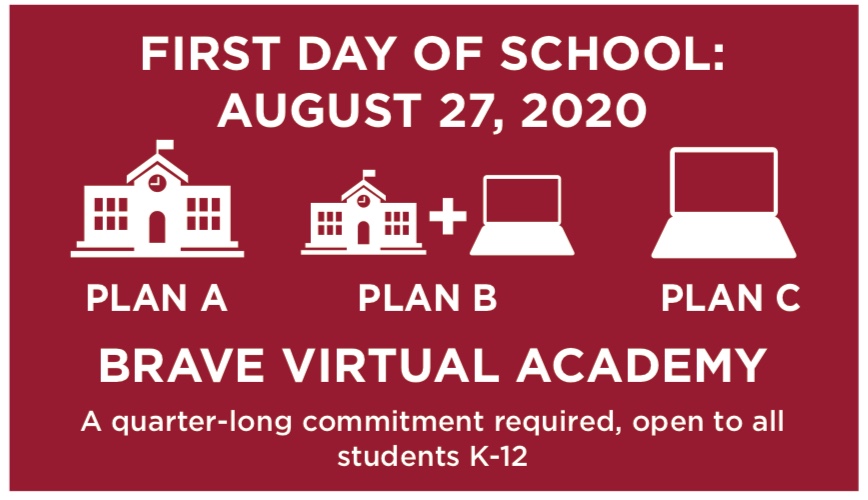
Plan A: Five days a week of in-person instruction
Plan B: Hybrid, two days a week of in-person instruction and three days of online learning
Plan C: Online learning facilitated by assigned teachers if conditions warrant that a face-to-face setting is not safe
Please note: If you select In-Person Learning for your student, local health conditions will help to determine whether our District will participate in Plan A, Plan B, or Plan C. Please see accompanying documents for more information about the Indian Hill Schools Attendance Model Overview.
What does the start of the school year currently look like for In-Person Learning?
For the start of the 2020-2021 school year, students who select to participate in In-Person Learning will return to school in a Plan B, hybrid model on Thursday, August 27.
Do I have a choice of days for the hybrid learning model?
Students will be assigned to Team 1 on Mondays and Tuesdays or Team 2 on Thursdays and Fridays. Though we would like to make this a choice per family, we will be sorting students into these groups based on several factors: coordinating the same schedule for siblings in the same family; transportation routing and needs; and enrollment balance. Families will be notified of placement through a placement letter by August 13. We also recognize that there will be some families who have extraordinary circumstances that may warrant a request of a specific group. In that placement communication that will be sent to you directly from your student’s building, there will be a form to complete to indicate a request to change team assignment due to extraordinary circumstances.
Not comfortable with In-Person Learning? Welcome to the new Brave Virtual Academy!
The Brave Virtual Academy is a brand new offering of the Indian Hill School District. This option is available to all students K-12 who choose to remain home. We are only requiring students commit a quarter at a time to give families as much flexibility as possible. Students in the Brave Virtual Academy will work directly with Indian Hill faculty in a virtual setting using our unique Indian Hill curriculum.
Our staff did an incredible job of navigating emergency distance learning in the midst of so many unknowns this past spring. This upcoming school year will be different. Our educators have spent the summer entrenched in professional development with national experts to sharpen skills for our Brave Virtual Academy.
Specific teachers will be assigned to the Brave Virtual Academy. Their sole responsibility will be the education of students who have selected this learning plan. At Indian Hill High School, students will have access to the full course of study. An individual learning plan will be developed for each Indian Hill High School student that may include participation in a state-of-art eLearning platform, independent study, and virtual participation in in-person classes.
What Brave Virtual Academy is not: Plan C.
This has been a point of mild confusion, so we want to help explain what will happen with your student.
If you selected In-Person Learning and the District is forced to transition to Plan C due to safety concerns, your student will continue learning with the same teachers and same peers online. Students who selected Brave Virtual Academy will see no change if the District transitions to Plan C.The students in the Brave Virtual Academy will remain in their previously established courses with Indian Hill faculty and peers.
We want you to have complete details for all that our Brave Return to School program entails including: health and safety measures; attendance model overview; plan details; and our COVID-19 screening flowchart. Click here to view the information packet we have built; we hope these documents will answer your questions.
What will stay the same? Our #IHPromise to you and your family …
Each day brings change and challenge, but also new opportunities. We have a vision of Enduring Excellence in Learning, Leadership, Innovation, and Service. This is part of our #IHPromise to you, and that will never change.
Dayton, Ohio – University of Dayton President Eric F. Spina, Ph.D
began his “Dear Students” letter on Sunday with praise for their “cooperation in wearing face coverings, physical distancing and avoiding group gatherings. We’ve noticed a real improvement in recent days. I’ve seen it with my own eyes as I walked around campus.”
However, the Sunday message continued in announcing that in the past two days, a “concerning” number of students are now in isolation for testing positive or in quarantine as close contacts. Spina said, “It is clear several clusters of the virus have emerged among networks of students based upon activities that occurred a week or so ago that did not comply fully with our safety protocols. These clusters appear to be interconnected, and we need to take more stringent measures now to prevent the virus from spreading further.”
As of August 23, UD has 68 identified positive cases on campus. Individual cases are posted in detail on the UD dashboard reflecting results from individuals who have been working, living, studying or otherwise on campus. (See the UD status levels definitions below)
[bg_collapse view=”button-orange” color=”#4a4949″ expand_text=”Show Status Levels” collapse_text=”Show Less” ]
Status 1 – GREEN – CONTAINED: A small number of individuals have tested positive, and contact tracing suggests that exposures are confined and the situation can be contained, isolated, and remediated. If an exposed or infected individual is a resident, they will be referred to quarantine or isolation as needed. Affected areas are decontaminated and University medical and contact tracing staff can monitor for possible escalation. All other campus and residence operations remain unaffected.
Status 2 – GREEN – LOCALIZED: An outbreak, for example, could occur in a particular floor, classroom, office suite, or common area where contact tracing still allows for a high degree of confidence in the ability to isolate and contain any flare-ups. It may require a floor, class, office suite, or common area to be closed for a period of time to allow for proper decontamination and containment to prevent ongoing exposure. A larger number of residents may be put in isolation or asked to quarantine.
Status 3 – YELLOW – CAUTION: An outbreak occurs where the ability to contact trace with high confidence makes it difficult to identify a specific area for containment, isolation and remediation. It may be necessary to close affected areas or buildings, isolate or move affected students, and/or ask impacted employees to move to remote operations. Some courses may switch to strictly online modality.
Status 4 – RED – WARNING: In the event contact tracing cannot reliably identify affected parties or spaces and contain the spread of COVID-19 campuswide, the University may switch all students to fully remote learning while staying in their on-campus residences. Commuter students will not come to campus and will use virtual learning tools. Students with the ability to return home may be asked to do so. Impacted employees will be asked to work remotely. The University will return to more normal, in-person operations once it can contain the outbreak.
Status 5 – PURPLE – VACATE: If the spread of COVID-19 on campus or locally is such that public health guidance or direction, or the University administration with the advice of our medical panel deems it critically necessary for the safety of our entire campus community to move students off campus to continue their classes, the University will initiate the following process:
Students within 400 miles of campus have 24 hours to move out of their on-campus residences.
All other domestic students will have 48 hours to move out of their on-campus residences.
International students can work with CIP regarding any special accommodations.
Students unable to move out of their on-campus residences in the allotted time can email housing@udayton.eduto make alternate arrangements.
Should an immediate evacuation of campus be necessary such that students cannot take their belongings with them, the University will contact students at a later date about a possible move-out process.
[/bg_collapse]
In consultation with the school’s medical advisory panel and with the support of Public Health – Dayton & Montgomery County, U.D. elevated the campus status level to 3 – YELLOW – CAUTION.
A temporary shift to remote learning for undergraduate courses, Aug. 24-28 was implemented.
The university has implemented several measures to help identify, contain, and isolate the spread of the virus. Those measures include:
All undergraduate classes will be held remotely at least for the next week. Undergraduate commuter students should not come to campus. Please remember you are responsible for checking your email for updates from your instructors.
Graduate courses and clinical experiences may convene in person, with the permission of the program director and the dean.
Dining services will continue as established for this fall.
Mass will be virtual.
RecPlex will be closed, but outdoor recreation will be allowed using proper safety protocols.
Roesch Library will be closed to undergraduates.
Student clubs and organizations must meet remotely.
Undergraduate student employees should not report to work in-person, unless they work for Student Development, Dining Services or Admissions and receive guidance from supervisors.
Students are not to leave campus unless they have been asked to go home to isolate or quarantine, or unless it is absolutely necessary. Students who leave campus for extended periods may be subject to testing/quarantine/isolation upon their return.
As announced earlier, the University will launch the next phase of our testing program this week to help us better understand where clusters are emerging and to identify those who are infected with the virus, but who may not know it. This is essential as we seek to minimize the spread of the virus..
We continue to believe we can contain this virus on campus, especially with the positive attitude that so many of you have demonstrated. While we have seen the virus pop up in connected clusters, we have not yet seen wide community spread.
The President urged students to be forthcoming with contact tracers, and reminded students that neither them nor the contacts they identify will face discipline for “merely becoming sick.”
In a separate message to parents, faculty, and staff, Spina said, “It is clear that while there does not appear to be wide community spread of the virus”
Spina added that the temporary move is a vote of confidence in the student’s ability and willingness to help limit the spread of COVID-19, “so we won’t have to make it a permanent move.”
Spina’s plea was for students to “Please remain vigilant about observing UD and public health safety measures, and encourage fellow students to abide by them. The entire campus community appreciates your efforts to wear face coverings indoors and outdoors, practice physical distancing, and, especially, to avoid gatherings or groups larger than 10 people.”
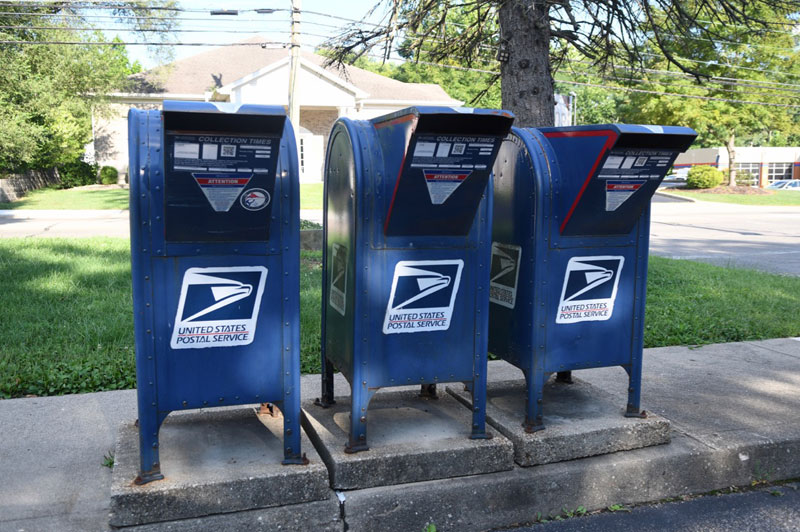
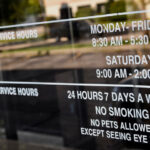
Loveland, Ohio – To supplement the story below (4 Ohio Republicans join House Dems to pass bill to boost post office funding by $25B) from the Ohio Capital Journal, Loveland Magazine visited two of the closest local U.S. Post Offices to document the number of mailboxes placed outside the buildings. We also documented the days and hours of operation of each.
While unlikely that the Trump Administration would attempt to interfere with the delivery of election-related mail in our heavily Republican voting area, nearly all Loveland mail does go to or from the Dalton Street processing center in Cincinnati. Interfering with mail delivery in the heavily Democratic voting urban areas of Cincinnati’s urban core is not beyond reasonable suspicion. And, the President may use mail problems in any part of the country to delegitimize and dispute the November election results.
One day ago the President tweeted, “The greatest Election Fraud in our history is about to happen. This may top the Democrats illegally spying on my campaign!”
On August 20 the President tweeted this, “They are sending out 51,000,000 Ballots to people who haven’t even requested a Ballot. Many of those people don’t even exist. They are trying to STEAL this election. This should not be allowed!”
Trump said last week on Fox News that he opposes some funding because he doesn’t want it used for mail-in votes, repeating his claim that it would lead to “fraudulent” election results.
WCPO has reported that processing machines from Cincinnati’s Dalton Street post office have been removed and remain offline and unusable.
The Cincinnati Enquirer recently reported that according to Jim Sizemore, president of the American Postal Workers Union in Cincinnati that in May and June, the USPS “pulled the plug on eight mail processing machines in Cincinnati, accounting for 19% of the processing center’s capacity.” The eight machines could process collectively 243,000 pieces of mail an hour according to the Enquirer. Mail is piling up on the floor at the Queensgate facility according to Sizemore.
WCPO’s John Matarese says the VA is now notifying veterans that they should order their medicine earlier than usual because at this time it cannot guarantee on-time delivery. And, by law, it cannot ship medication via private services.
Sen. Rob Portman said on August 21 on his FaceBook page, “A number of veterans have reached out to my office recently expressing concern about delays in the USPS delivery of their critical prescription medications. This is not acceptable. This morning I pressed Postmaster General DeJoy for answers.” And on August 19 Portman said, “We must protect Ohioans right to vote during to the ongoing COVID-19 pandemic. That’s why I sent a letter to the Postmaster General with Congressman Bob Latta calling on the USPS to ensure the timely & accurate delivery of election-related materials in Ohio.”
Rep. Brad Wenstrup told constituents in an email on Monday that the postal service has enough money on hand, “$14 billion cash” and that he voted to “open a $10 billion line of credit through the CARES Act” to help with any COVID-19 issues. Wenstrup said the USPS has enough money on hand to remain “fully function” until August of next year and that Speaker Pelosi has “manufactured a crisis and rushed the House back to vote on an irresponsible and unneeded amount of money on a problem that does not currently exist.”
Paige Pfleger reported in a Cincinnati Public Radio story on August 20 that, “Since the pandemic, even more Ohioans have opted to receive their medications by mail, to avoid possible exposure or to save money.”
Antonio Ciaccia of the Ohio Pharmacists Association is quoted in the story, “We have heard some extreme anecdotes over the last couple weeks where patients are waiting one, two, three weeks for their medications,” and adds that he’s never heard so many complaints about delivery delays.
On August 18, Senator Sherrod Brown is quoted in a Cleveland.com article about mail sorting equipment being dismantled in Cleveland. Brown said, “As the U.S. Postal Service has warned Ohio and other states that it may not be able to meet mail-voting deadlines this November, the visibly idle equipment along with mail delays and post office budget shortfalls have fueled fears that the upcoming election will be undermined.”
Reporter Sabrina Eaton writes in the Cleveland.com article:
President Donald Trump’s assaults on mail-in balloting, even as he has requested an absentee ballot to vote from his new residence in Florida, have raised questions over whether he’s deliberately trying to sabotage an election that will likely have more mail-in ballots than ever because of reluctance to vote in person during the coronavirus pandemic.
In a news conference over the weekend, Trump said universal mail-in voting would be “catastrophic. It’s going to make our country a laughingstock all over the world.”
“The ballots are lost, there’s fraud, there’s theft, it’s happening all over the place,” said Trump. “Now we’re going to do it with this whole, vast, big section of the country? It’s crazy.
Check out these two voter guides recently published by Loveland Magazine with information about requesting absentee ballots. Keep in mind that Ohio officials are recommending you stay ahead of these absolute dates to ensure your mail coming to and from the post office is delivered in time for your vote to count.
Loveland Magazine is interested in hearing from readers if they have experienced any delays in receiving mail (timely delivery of medicine, paychecks and other essentials) or about concerns they may have about receiving absent ballot requests or sending their ballot back to the local Boards of Elections. Please send us your thoughts.
These photos were taken on the evening of August 16 at the Loveland and Symmes post offices. We do not know if any additional boxes were recently removed but is does not appear so. Although the quantity of mailboxes and hours of operation at these locations would not necessarily reflect current delays in mail delivery, we did want to document current conditions in advance of the November 3rd Presidential Election.
Mail boxes at the Symmes Township Post Office at 9370 Fields Ertel Road
Mail boxes at the Loveland Post Office at 200 Loveland Madeira Road
Loveland Post Office at 200 Loveland Madeira Road
Collection times on the mailboxes at the Loveland Post Office at 200 Loveland Madeira Road
Service times at the Symmes Township Post Office at 9370 Fields Ertel Road
Service times at the Loveland Post Office
4 Ohio Republicans join House Dems to pass bill to boost post office funding by $25B
House Speaker Nancy Pelosi said Saturday that mail delays are depriving Americans of timely delivery of medicine, paychecks and other essentials. Photo by Justin Sullivan | Getty Images
WASHINGTON — The U.S. House convened a rare weekend session Saturday in an attempt to stop the U.S. Postal Service from allegedly disrupting mail service to sabotage the November elections.
The Democratic-led chamber passed a bill 257-150 that would infuse $25 billion into the agency as it prepares for a surge in mail-in ballots and bar it from changing operations or service levels in place at the beginning of the year.
The prohibition would remain in effect through January 2021 or for the duration of the coronavirus crisis — whichever is later.
The bill passed largely along party lines, though more than two dozen Republicans joined Democrats in backing the legislation, including four Ohio Republicans: Reps. Troy Balderson (12th District), David Joyce (14th District), Steve Stivers (15th District) and Mike Turner (10th District). Rep. Bob Gibbs (R-7th District) did not vote. No Democrats voted against the bill.
One Republican in favor was Rep. Brian Fitzpatrick of Pennsylvania, who said the post office needed to be funded so his constituents could get their mail delivered on time. “Republicans and Democrats must come together and address the serious challenges that USPS has been facing for some time now,” he said.
Senate Majority Leader Mitch McConnell (R-Ky.) is not expected to take up the measure. He told his hometown paper Tuesday that he doesn’t think a stand-alone bill funding the postal service would pass the chamber.
The White House threatened Friday to veto the post office boost, calling it “an overreaction to sensationalized media reports that have made evidence-free accusations that USPS has undertaken reforms to achieve political rather than operational objectives.”
But House Speaker Nancy Pelosi (D-Calif.) maintains that the administration is trying to suppress votes as the nation heads into a fraught election season in which the postal service will serve as “election central.”
In addition to undermining the integrity of the elections, the delays are depriving Americans of timely delivery of medicine, paychecks and other essentials, Pelosi said at a press conference Saturday.
Democratic lawmakers made similar allegations on the House floor.
The administration has mounted a “sabotage campaign” to manipulate the vote, Rep. Debbie Dingell, a Michigan Democrat, said Saturday morning.
Democratic Rep. Brenda Lawrence of Michigan and a member of the House Oversight and Reform Committee, said the bill would prohibit the postmaster general from making any changes that would undermine the post office. She said the postmaster general has “tried to rip it apart from the inside” and “our democracy is hinging” on delivery of the mail.
“Don’t mess with the USPS,” said Rep. Debbie Wasserman Schultz (D-Fla.).
Republicans charged Democrats with ginning up a manufactured crisis intended to deny the president a second term. House Minority Leader Kevin McCarthy (R-Calif.) said postal problems predate 2020 and the Trump administration.
GOP Rep. Rob Woodall of Georgia called Saturday’s vote a “punctuation mark” at the close of last week’s Democratic National Convention. This “wasteful partisan exercise” will “go nowhere” in the GOP-controlled Senate and “help no one,” he added.
Rep. Debbie Lesko, a Republican from Arizona, echoed the sentiment, calling the controversy “phony political theater.” Pelosi has gone “politically postal,” she said, quoting a recent Wall Street Journaleditorial.
The House approved $25 billion for the postal service in a $3 trillion coronavirus relief package approved in May. Pelosi pointed out Saturday that the USPS board of governors — a bipartisan group of members appointed by Trump — backs the funding.
Trump said last week on Fox News that he opposes some funding because he doesn’t want it used for mail-in votes, repeating his claim that it would lead to “fraudulent” election results.
He said changes to overtime, retail hours and the location of mail processing machines and blue mailboxes were made to save costs and streamline operations but said earlier this week he would suspend some of his moves until after the elections to avoid the appearance of impropriety. He also said he wouldn’t close existing mail processing facilities and would use “standby” resources in October to meet mail surges.
On Friday, he insisted that secure elections are his “sacred duty” and top priority this fall.
But Pelosi on Saturday called DeJoy’s promise into question, pointing to his decision not to replace mail infrastructure that has already been removed. She also pointed to Trump’s comment earlier this week calling for law enforcement officers at polling places.
“It is all designed to suppress the vote,” Pelosi said.
DeJoy is slated to testify again on Monday in a hearing before the Democratic-led House Oversight and Reform Committee, where he is expected to face more withering questioning. Robert Duncan, chair of the U.S. Postal Service Board of Governors, will also appear before the committee.
Allison Stevens is a Washington D.C. reporter for States Newsroom, a network of state-based nonprofit news outlets that includes the Ohio Capital Journal.
Loveland, Ohio – A former LHS student-athlete has found himself on another prestigious list for excelling in the game of football! Ball State redshirt Senior, Drew Plitt, was placed on the watch list for the Johnny Unitas Golden Arm Award just two weeks after being placed on the watch list for the Manning Award, which recognizes the top-performing quarterback in America.
The Golden Arm Award was named after Johnny Unitas, an 18-year NFL veteran, who began his stellar football career with the Baltimore Colts in 1958. Unitas was not only responsible for creating football’s 2-minute drill he also racked up some very impressive stats throughout his career.
The recipient for the Golden Arm Award each year is selected by the Johnny Unitas Golden Arm Educational Foundation and the Johnny Unitas Golden Arm Selection Committee. The top Senior quarterback is chosen based on their performance on and off the field. This year Plitt joins Kent State’s Dustin Crum on the Johnny Unitas Golden Arm Award watch list. Plitt and Crum are the only MAC quarterbacks on the list.
2020 Golden Arm Award Watch List
Jack Abraham, Southern Miss Jake Bentley, Utah James Blackman, Florida State Ian Book, Notre Dame Alan Bowman, Texas Tech Myles Brennan, LSU Charlie Brewer, Baylor Chase Brice, Duke Anthony Brown, Oregon Shane Buechele, SMU Sean Clifford, Penn State Jack Coan, Wisconsin K.J. Costello, Mississippi State Dustin Crum, Kent State Micale Cunningham, Louisville Sam Ehlinger, Texas Justin Fields, Ohio State Feleipe Franks, Arkansas Chase Garbers, California Jarrett Guarantano, Tennessee Donald Hammond III, Air Force Sam Hartman, Wake Forest Hendon Hooker, Virginia Tech Josh Jackson, Maryland Mac Jones, Alabama D’Eriq King, Miami
Trevor Lawrence, Clemson Levi Lewis, Louisiana Adrian Martinez, Nebraska Dylan McCaffery, Michigan Davis Mills, Stanford Kellen Mond, Texas A & M Tanner Morgan, Minnesota Jamie Newman, Georgia Patrick O’Brien, Colorado State Asher O’Hara, Middle Tennessee Brandon Peters, Illinois Kenny Pickett, Pittsburgh Drew Plitt, Ball State Brock Purdy, Iowa State Peyton Ramsey, Northwestern Shawn Robinson, Missouri Anthony Russo, Temple Nick Starkel, San Jose State Zach Smith, Tulsa Zac Thomas, Appalachian State Skylar Thompson, Kansas State Dorian Thompson-Robinson, UCLA Kyle Trask, Florida Brady White, Memphis Zach Wilson, BYU Terry Wilson, Kentucky
After the MAC made the decision to postpone all scheduled fall contests in 2020, as well as MAC championships, due to the COVID-19 pandemic, Plitt expressed his feelings on the cancellation and the honor of being placed on the Golden Arm watchlist.
“This has been an unexpected and frustrating year for us and the cancellation of the season was extremely disappointing. The team was playing really well having a lot of fun and enjoying the little bit of normal we were experiencing when on the field for practice,” Plitt explained, “For all us, football is an escape from reality, a time to forget everything else in the world, put on the helmet and pads and be a kid again and it’s very disappointing and very frustrating that we won’t be playing and really didn’t have much say in the entire decision making. The award watchlist is a tremendous honor and really a testament to my teammates because, without them, I wouldn’t be able to do what I do. It’s awesome to be apart of the watchlist but I’ve got other things on my mind like winning a MAC championship first and foremost! That’s what our team wants, the awards come when a team performs great and wins.”
Plitt’s parents Steve and Julie said they couldn’t be prouder of their son’s accomplishments and hope they will get to see him play his final college season.
“As Drew moves through each phase of his sports career and life he continues to amaze me and make me proud. This is just another example,” Julie Plitt said, “He is privileged to have great coaches and players to help him in this journey.”
Bryce, Julie, Marie, Steve, and Drew Plitt at Marie’s volleyball Senior night in 2019
“For me personally, being raised and growing up in Baltimore, this resonates deeply inside. Johnny Unitas went to our church and I saw him there often,” Steve Plitt explained, “His youngest son graduated from the same high school as I did. Johnny Unitas was the pinnacle of success in Baltimore, not for just being maybe the best QB of all time, but his time off the field spent in the community helping others. My roots are from Baltimore, and I know that there is a little of that ‘blue-collar’ Baltimore grit in Drew’s spirit as well. Johnny U was my father’s favorite QB, Drew never had the chance to meet his grandfather, so in some way this connection is both humbling and very, very special for me.”
Here at Loveland Magazine, we want to congratulate Drew Plitt for representing Loveland in such a positive way! We admire Plitt’s hard work and dedication and commend his parents for raising such a top-notch student-athlete! We will be rooting for you Drew when you get back out on the field!
For more of Ohio and Loveland’s sports updates stay tuned to the Sports 411 With ME, Cassie Mattia!
A school funding bill originally sponsored by new Ohio House Speaker Bob Cupp is getting a fresh look and hopefully time in front of legislative committees before year’s end, according the legislator now heading up the bill.
The other original sponsor of the proposed legislation, state Rep. John Patterson, said a substitute bill is in the works that should touch on longstanding concerns the Ohio Supreme Court had about the constitutionality of the state’s education system.
“We’re taking a more balanced approach in the new bill,” Patterson, D-Jefferson, said.
The state’s contribution to education budgets has stagnated over time, while private schools have benefitted from the EdChoice scholarship program, in which some state funding for public school districts has been redirected to religious, charter and community schools.
EdChoice scholarships were frozen at current levels in an omnibus bill responding to the COVID-19 pandemic.
State Rep. John Patterson, D-Jefferson.
Patterson said a substitute version of House Bill 305 seeks to address “overarching criticisms” of the original bill, and the education system itself. One of the major criticisms is the distribution of money in the school funding formula between school districts with varying financial situations.
“Under the current formula, districts are all interconnected, so as one district becomes wealthier, another becomes poorer,” Patterson told the Ohio Capital Journal.
So, in the new plan co-sponsored this time by Rep. Gary Scherer, R-Circleville, the legislators want to reassess the amount that districts are able to raise on their own before they decide what the amount of state aid would be to schools.
The proposed bill would also take the weight solely off of property taxes for school funding, something the 1997 decision by the Ohio Supreme Court in DeRolph v. State of Ohio ruled was a big reason the education system violated the state constitution.
The new plan will combine property and income taxes along with a calculation of a district’s wealth level to “determine a district’s true capacity to raise its fair share,” according to Patterson.
“The question is what is fair for the locals, and what is fair for the state,” Patterson said. “We have fine-tuned for that.”
Ohio House Speaker Bob Cupp (Ohio House Photo)
Disadvantaged students would receive more immediate help than in previous funding models if the new bill is made law. In the original proposal for the bill, aid would have been phased in over time for school districts, but legislators are now looking to channel that aid to districts immediately.
Patterson planned to meet with interested parties — teachers’ unions, public school officials and community school representatives on Tuesday to discuss the plan. One of those parties is the Ohio Federation of Teachers, who said school funding needs a direction that accounts for social and emotional learning as well as test proficiency.
“We’re hopeful that (the sponsors) are moving in the right direction,” said OFT executive director Melissa Cropper. “No school funding formula will be perfect, but having no school funding formula has been a disaster.”
In the next month, simulations of financial situations will be run to test the effectiveness of the bill as it stands, and Patterson hopes the bill will be ready when the Ohio House returns to regular session in September.
After anticipated amendments and passage of the bill, Patterson said implementation of the new formula could take years.
With EdChoice pitting private schools and public schools against each other for funding in the state model, Patterson said concerns were brought from both sides, and his bill plans to address private school issues as well.
“What I’ll say is we have heard their criticism and have addressed their concerns in the substitute bill,” Patterson. “I think they’re going to be pleased.”
The changes made to the bill Cupp once authored have the blessing of the new speaker, according to Patterson.
“Speaker Cupp understands the absolute necessity of passing House Bill 305 in this General Assembly,” Patterson said.
Neither Cupp nor Scherer responded to requests for comment.
Susan Tebben is an award-winning journalist with a decade of experience covering Ohio news, including courts and crime, Appalachian social issues, government, education, diversity and culture. She has worked for The Newark Advocate, The Glasgow Daily Times, The Athens Messenger, and WOUB Public Media. She has also had work featured on National Public Radio.
Milford, Ohio – On August 21, Milford School Superintendent John Spieser announced that the District needed to delay the start of the school year for one week. The first day of school for all Milford students (either learning In-Person or in Eagle Online) will be Monday, August 31.
In announcing the delay, Spieser said, “We know this delay will be an inconvenience for our families. However, it is the right thing to do at this time for our students and our staff. Our entire staff has been working diligently to open school, but with the challenges COVID presents, some things have proven to need more time than estimated. Things we thought would come together have not yet, and we need the additional time.”
Spieser said that giving school staff an extra week to prepare will help “tremendously”. “An extra week will give us more time to finalize student schedules.
Elementary children, both for In-Person and Eagle Online, received their teacher assignments last week. Junior High and High School students, both for In-Person and Eagle Online, will receive their schedules this weekend.
Spieser said that the delay will also give the Transportation Department more time to finalize routes.
Once parents finalized their decision August 7, the District originally implemented a “freeze period” until the end of the first two weeks of school, not allowing any switches between learning plans. Yet, to accommodate the various needs of families, they did allow parents to switch their children from attending in person to attending online. Spieser said, “We over burdened ourselves by the number of requests we committed to accommodate, which then impacted teacher assignments and student schedules significantly. We can no longer accommodate requests to switch from in person to online until September 14.”
This delay does not impact extra-curricular or athletics; those will continue as scheduled.
The first day of school was originally scheduled for Monday, August 24.
Parents/students have the choice between In-Person Learning and Eagle Online Learning. Students who are learning In-Person are learning in the buildings daily with safety protocols in place. Students who are learning in Eagle Online do not attend in-person, they learn through our online program delivered by Milford teachers.
A look at how overcrowding and poor design contributed to two of the worst national outbreaks
This article was provided by Eye on Ohio, the nonprofit, nonpartisan Ohio Center for Journalism. Please join their free mailing list as this helps us provide more public service reporting.
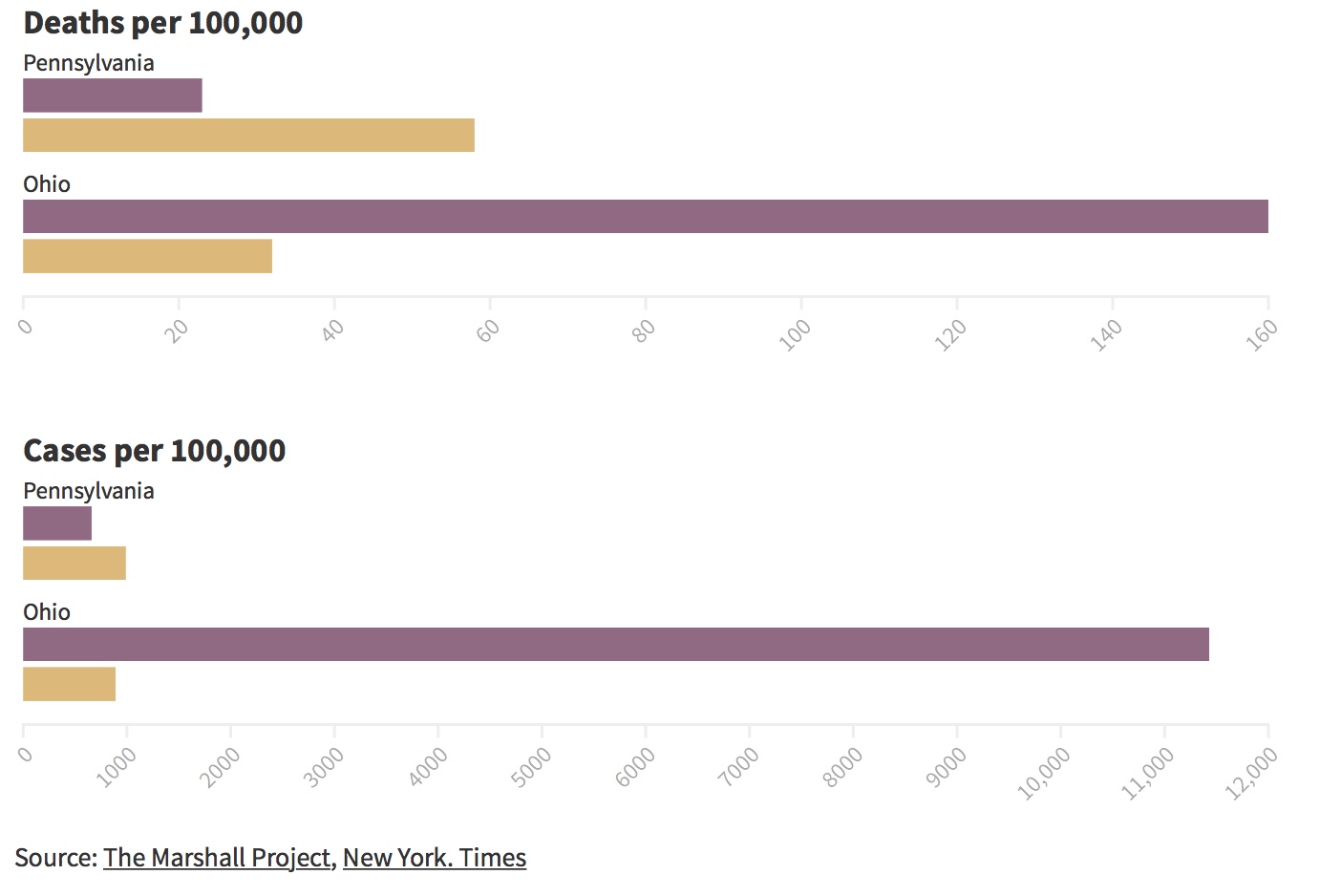
For the first two months after the COVID-19 pandemic hit the U.S., Ohio’s response set an example. Thanks to an early shutdown order, the state’s per-capita deaths from the virus as of late April were less than half of those in neighboring Pennsylvania, a state with similar demographics.
But inside the two states’ prison systems, it was a different story.
By late April , the death rate from COVID-19 in Ohio prisons was 22 per 100,000, a rate more than 4 ½ times the overall Ohio rate and nearly twice the national rate.
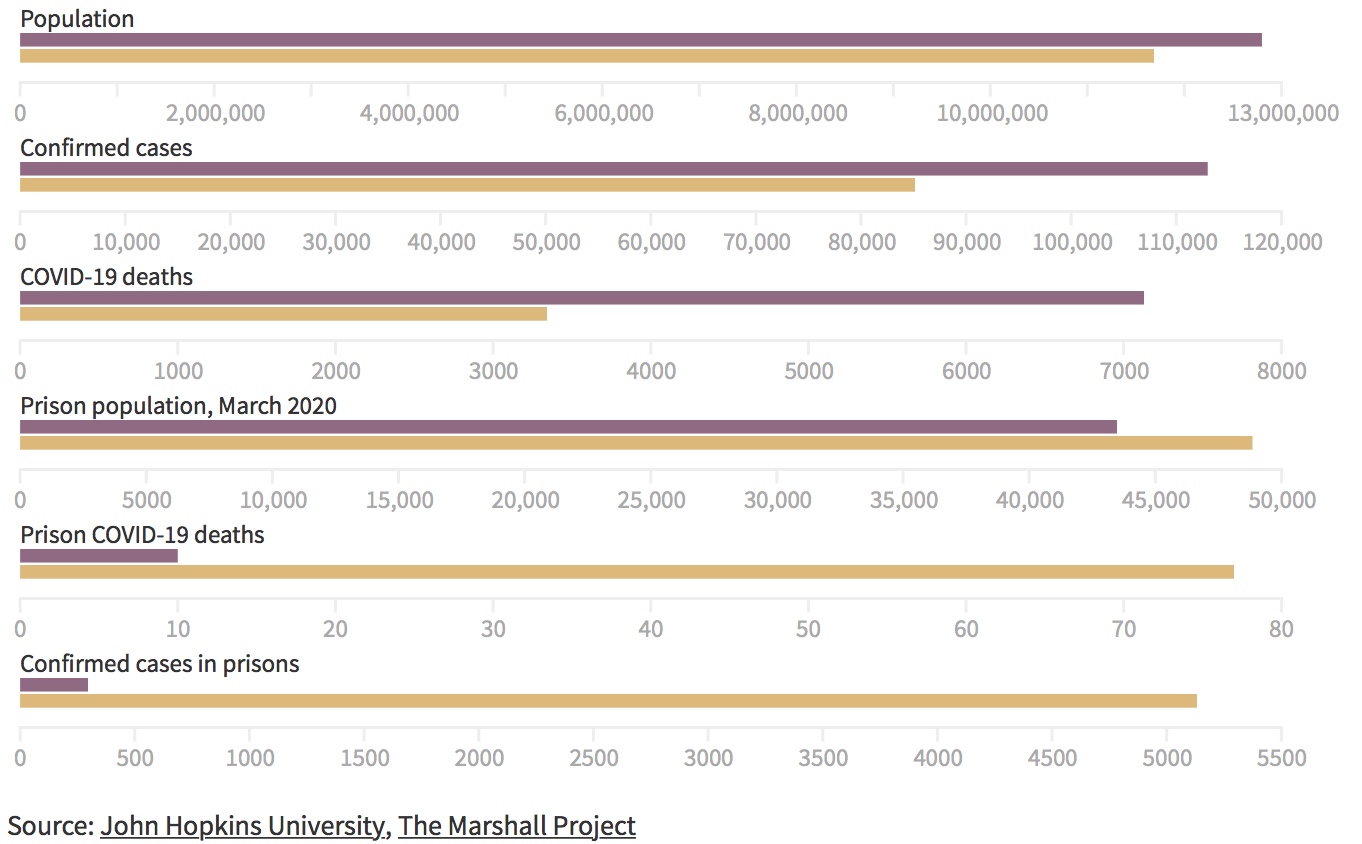
As of August 14, there have been 77 inmate deaths known to be caused by COVID-19, and another 10 suspected— a rate of 160 deaths per 100,000 people. Ohio’s prisons have incubated two of the four largest COVID outbreaks in the nation.
In Pennsylvania’s prison system, which houses about 44,000 inmates at 25 facilities, the death rate was comparatively low— 10 incarcerated people have died as of mid August, for a death rate of 23 per 100,000 people, despite the virus showing up in each state just a few days apart. In fact, a Pennsylvania inmate is less than half as likely to die of COVID-19 as a free Pennsylvanian.
Why have Ohio’s prisons failed so thoroughly to control the spread of COVID-19 when Pennsylvania fared far better?
No state has had a model approach for controlling the virus in prisons. All have made missteps that put inmates’ and staff members’ lives at risk, according to prisoners and prisoner advocates. Prison outbreaks have also spread into the communities outside their walls. But, whether through foresight or luck, factors in some states have kept the virus from running rampant as it has in Ohio prisons. As the country faces new waves of cases, corrections departments may be able to learn from what helped or harmed some states during the first stage of the pandemic.
While advocates for incarcerated people in Pennsylvania caution against holding that state’s experience as a model for how to respond to the pandemic, they agree that the answer may lie both in how crowded the prisons are, and how inmates are housed.
Crowded prisons spread disease
Controlling an outbreak of infectious disease in a prison is never easy. As with other communal living facilities such as nursing homes, once a respiratory illness enters, close quarters gives a virus ample opportunity to spread.
Overcrowding only makes the situation worse.
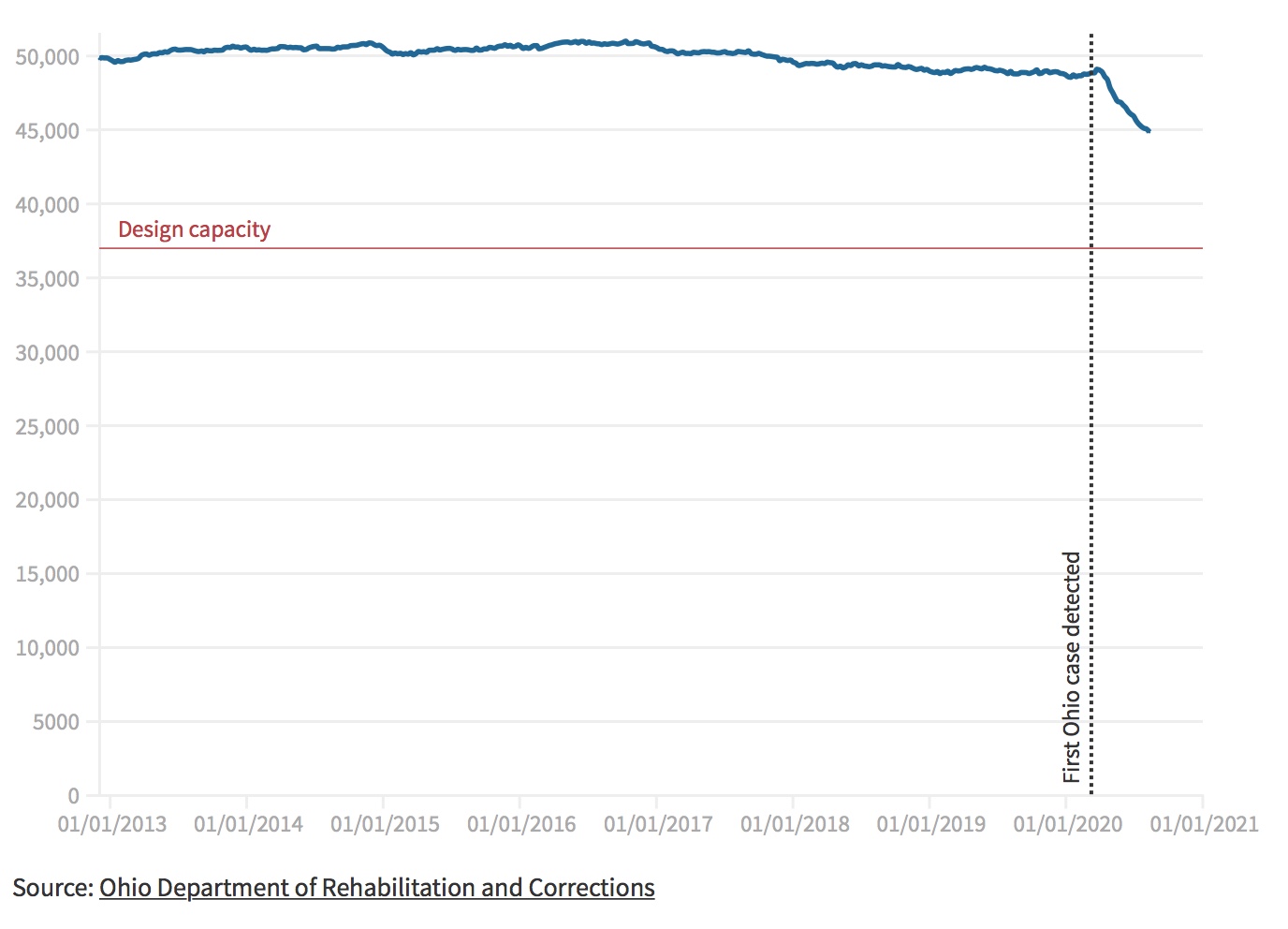
In Ohio, where the prisons were 32% above capacity in February, the virus spread rapidly.
In Pennsylvania’s prisons, at 95% of capacity in February, there were outbreaks in several prisons, but far fewer deaths.
That state’s biggest outbreak to date—183 infections and five deaths among inmates— happened at its oldest prison facility, the 131-year-old State Correctional Institution (SCI) Huntingdon in central Pennsylvania.
“SCI Huntingdon dates from the late 1800’s and has cells with open bars, and four-story housing units with open air shafts to all of the cells,” said Claire Shubik-Richards, executive director of the Pennsylvania Prison Society, a non-profit inmate advocacy organization. “So when the virus came in it spread like wildfire.”
In other, newer Pennsylvania prisons with significant outbreaks, such as SCI Phoenix, the virus proved easier to control. Only 49 inmates at Phoenix, which opened about 2 years ago, have tested positive, and four have died, despite being located in hotspot Montgomery county, just north of Philadelphia.
“The thing about that facility was that the outbreak went up and then went down pretty quickly because it’s a facility where isolating people is pretty easy,” Shubik-Richards said, because it has more single and double-occupancy cells than open dorm units.
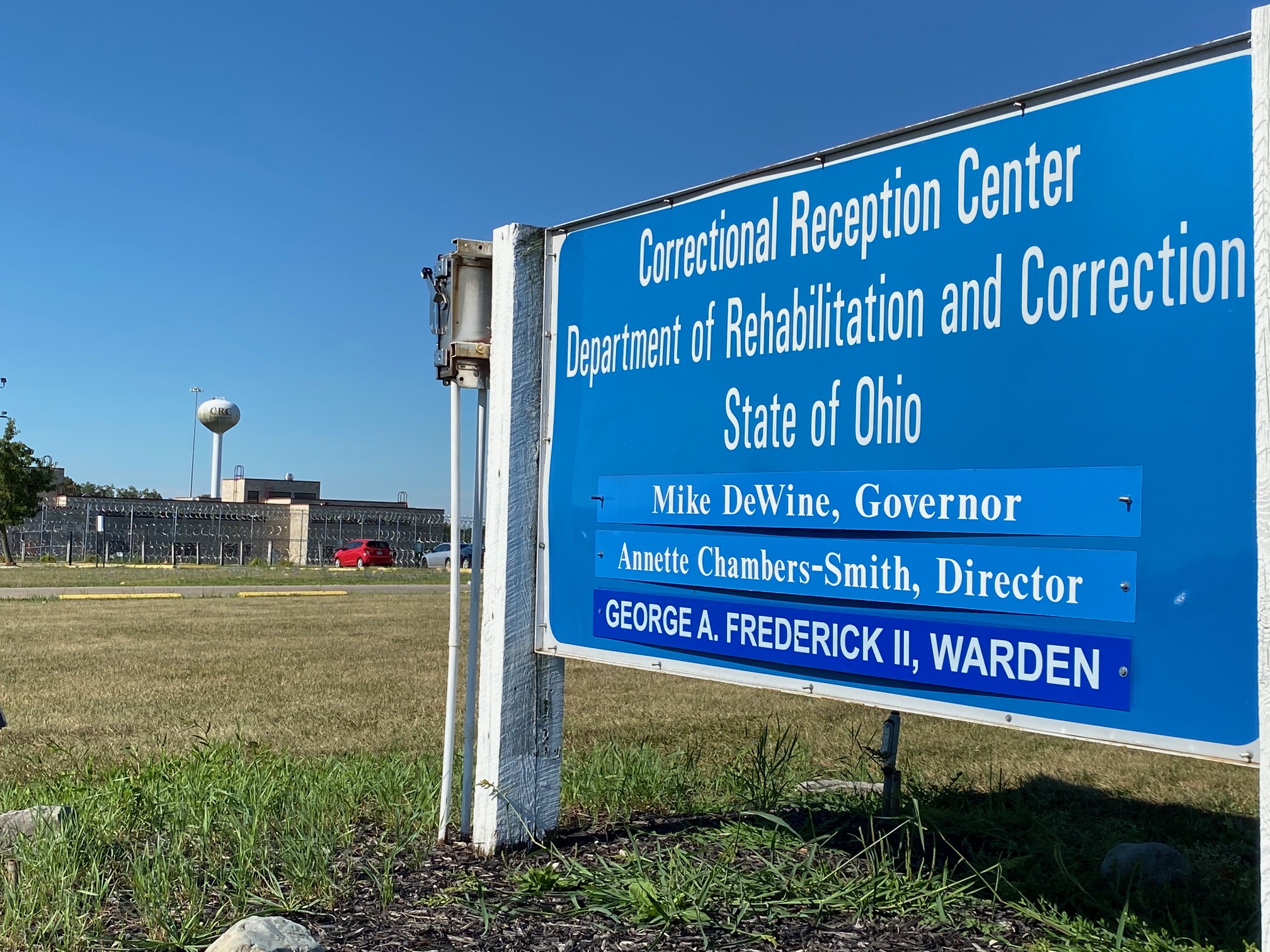
In Ohio’s more crowded prison system, the virus was first detected in a staff member in the 66-year-old Marion Correctional Institution on March 29. Less than a month later, nearly 4,000 inmates across the state had tested positive for the virus; 10 were dead, as was one staff member.
Now, the death count is approaching 80. Ohio’s prison system is home to two of the four largest COVID-19 outbreaks in the nation, with 2,440 cases at Marion Correctional Institution in rural central Ohio, and 1,792 at Pickaway Correctional Institution outside Columbus.
Pickaway, built in the 1920s as a mental hospital and converted to a prison in 1984, was designed to hold 1,328 people. As the pandemic began in Mid-March, it held 2,047– 54 percent over capacity.
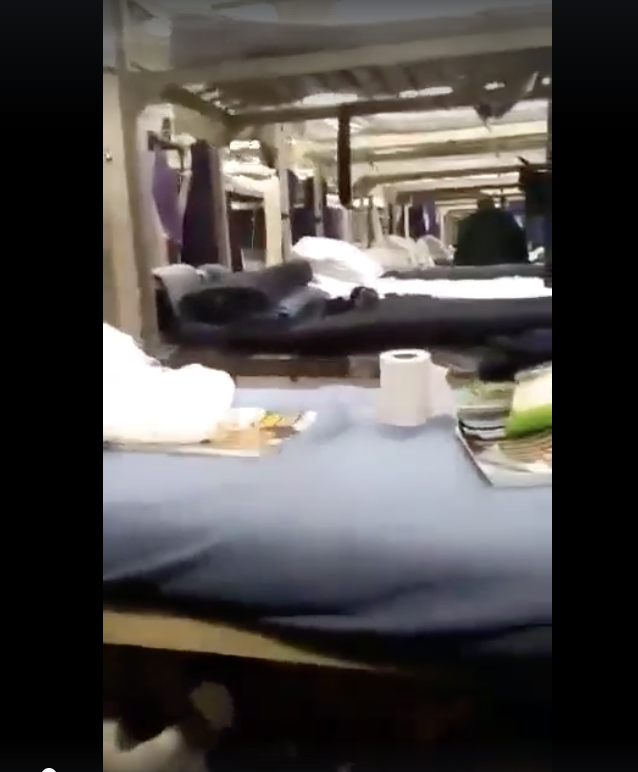
In one cell phone video that purportedly shows the inside of Pickaway, seemingly endless racks of double-bunked beds are visible, with no barriers and little space between.
“Everybody’s stacked on top of each other, man,” says the person wielding the camera. “Ain’t no social distancing in here….They’re playing with our lives, man.”
Picture of Ohio dorms
Virus runs amok in dorms
Pickaway was designed to have 87% of its beds in open double-bunk dorms, described in a 2015 state prison renovation plan as “barrack-style” (sic), where beds were typically three feet apart. When prisons are overcrowded, staff often squeeze even more beds into the dorms than they were designed to hold, said Meghan Novisky, a Cleveland State University professor who studies how prisons impact health.
In the 2015 master plan, state officials acknowledged that the prison’s dorm-style housing was a problem, not because of disease, but because it elevated prisoners’ stress, setting the stage for unrest.
“A critical need is to improve the dormitory living conditions and reduce the very high levels of crowding,” the report said. “The [Strategic Capital Master Plan] recommends the phased conversion of all dormitory living units to a cubicle-type configuration where inmates will have a higher degree of personal space and privacy.”
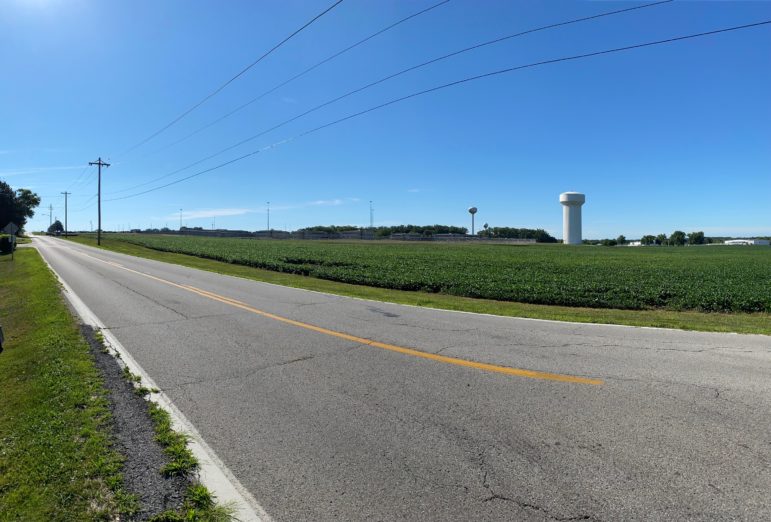
Outside Pickaway Correctional Institution. (Photo Credit Eye on Ohio)
Ohio Department of Rehabilitation and Correction (DRC) spokesperson JoEllen Smith said that some of the plan’s recommendations for Pickaway have been implemented. The Orient Correctional Institution, a prison adjoining Pickaway that hasn’t been used since 2001, was demolished, as was Pickaway’s dilapidated E block of dorms. But construction of a new unit with over a thousand beds is on hold due to the pandemic.
Around March 29, leadership at Marion – designed to hold 73% of its inmates in dorms – declared that prisoners in dorms would sleep arranged head-to-foot. That way their faces would be more than three feet apart, according to an email between the prison’s medical services director and the Marion County public health department, obtained by the Documenting COVID-19project at The Brown Institute for Media Innovation.
According to daily statistics released from Ohio DRC, on April 21, more than 28,000 of the state’s 48,396 inmates were either “isolated” or “quarantined.” But in overcrowded prisons where most inmates lived in dorms, both happened in groups, according to numerous inmates.
Daily coronavirus reports from DRC noted that “isolation” meant keeping infected inmates away from those who weren’t sick, while “quarantine” meant “limiting the movements” of someone who may have been exposed to the virus. Guidance issued by the DRC early in the pandemic said it was preferable to quarantine inmates in the infirmary, but if not enough cells were available, they could be “quarantined” in “an area large enough to hold beds and equipment for a minimum of 50 patients.”
Marion was designed to hold 450 inmates in cells. On April 16, 2,417 inmates there were listed as “in quarantine.”
The close quarters of dorm-style housing is a problem in other Ohio prisons, too, inmates reported.
Javalen Wolfe, an inmate incarcerated in dormitory-style housing at Belmont Correctional Institution in southeastern Ohio, said that every time a flu or a cold enters the prison, there’s no stopping it.
“This is how it works because we live so close together. If one person gets sick, everybody gets sick,” he said. “We are literally two feet, maybe two and a half feet between the next person, and there’s no divider, no wall.”
At least nine Belmont inmates had died of COVID-19 as of Aug. 10. Belmont was designed to have 1,855 beds, over 90% of which would be in dorms. As of March 17, near the beginning of the outbreak in Ohio, 2,719 inmates were crammed into the prison— 146% of the population it was meant to hold.
Of the 77 confirmed COVID-19 deaths in Ohio prisons as of mid-July, 67 of them were in prisons that were designed to hold at least half their inmates in dorms. Of the deaths in prisons made up mostly of cells, 10 were in Franklin Medical Center, a small prison dedicated to caring for the system’s most seriously ill inmates.
The worst Pennsylvania outbreaks were at two prisons where inmates were housed almost exclusively in cells – Huntingdon and Phoenix. But the system overall houses just 19% of its inmates in dorms. Roughly 60% of Ohio’s inmates live in dorms, according to Department of Rehabilitation and Corrections Director Annette Chambers-Smith. Each dorm can hold anywhere from 40 to 300 inmates.
And even Pennsylvania’s worst prison outbreaks paled in comparison to Ohio’s. At Huntingdon, the prison with the most deaths, 359 coronavirus cases were confirmed, out of 1,835 inmates. Phoenix housed 2,825 inmates as of late July, 89 of whom tested positive for COVID-19 at some point.
Since mass testing wasn’t conducted at any of the Pennsylvania prisons, the death toll is probably a more faithful indicator of the spread of the disease. The inmate death rate at Huntingdon was 272 COVID-19 deaths per 100,000 people. At Pickaway, it was 1,709, and at Franklin Medical Center, it was over 2,000.
In an interview with Eye on Ohio, DRC Director Annette Chambers-Smith acknowledged that the open bays make it difficult to control the virus. She said they have attempted to mitigate dorm crowding by spreading inmates out in other areas that aren’t normally used for housing, such as gymnasiums and classrooms.
”They literally installed lavatories and facilities in a building so that it could be used overnight to house people,” she said.
And administrators are experimenting with makeshift barriers between dormitory beds at most of its prisons to reduce transmission.
Reducing overcrowding– release of prisoners
Pennsylvania started the pandemic in a relatively good position in terms of space after years of modest, gradual population reduction. They freed up more space after the pandemic hit by giving 3,500 people sentence reprieves and shutting down the county court system.
Several other states have taken steps to free up space in their prisons since the pandemic began, with 15 reducing their prison populations 10% or more between March and June, according to data from The Marshall Project.
Connecticut has taken the most drastic measures, cutting its inmate population by more than 22%, from 12,364 on March 8, the day the virus was first detected in a Connecticut prison, to 9,604 on August 12. Six inmates have died so far in the Connecticut system, which houses only 12,000 inmates thanks to a decade-long pre-pandemic decarceration effort that reduced the population from about 20,000 in 2008.
Compared to the state’s prison population in March, its per-capita death rate has been less than half that of Ohio’s prisons.
That’s despite the fact that, according to prisoner advocate groups in Connecticut, the state made many of the same missteps as Ohio in their attempts to quarantine and isolate inmates.
Melvin Medina, public policy and advocacy director for the ACLU of Connecticut, said that the CDC has recommended isolating people with laboratory-confirmed COVID-19 together and quarantining close contacts together as a group due to limited space in prisons, but did not indicate how large these groups can or should be.
“Our DOC took that to say that in dorm-style settings if there was one sick person in a dorm of 100 people, that meant that whole block was quarantined together,” he said. “They locked sick and healthy people in together and let the virus run its course. In hindsight, I’m deeply thankful that our death count was really low. We could have had a disaster, and we got very lucky.”
Advocates like Novisky say releasing inmates is the best way to protect them from COVID-19, since any group housing makes it hard to control the spread of disease. Even in places where prison populations have dropped by double-digit percentages, advocates say it’s not enough.
“They need to release those that are medically vulnerable,” based on the CDC’s criteria, not just those who are close to the end of their sentences or incarcerated for non-violent offenses, said Nyssa Taylor, criminal justice policy counsel for the American Civil Liberties Union of Pennsylvania. The state is home to about 4,000 older adults serving life sentences, she said, one of the highest such populations in the country.
“I don’t think we should be politicizing who to release,” she said. “I think it’s really important to look at how to save lives, not just ‘release all the non-violent.”’
Meanwhile, Ohio’s prison population fell by about 5.2% between March and June. By August 11, it had fallen 9%.
“I think part of the problem that they’re running into is we really haven’t taken advantage of options to reduce our population size,” said Novisky.
On April 15, Ohio Gov. Mike DeWine announced he was invoking an overcrowding statute to release some prisoners early. Inmates who were within 90 days of their planned release date could be eligible for early release, but only if they met a list of criteria. That excluded people convicted of most types of violent crime, who had served more than one sentence, who had previously been denied judicial release, or who had committed a serious infraction while in prison.
“It basically eliminated everyone,” Novisky said.
Chambers-Smith said the department has taken multiple steps to reduce the population, including reviewing cases of elderly inmates or those with health conditions that make them especially vulnerable to COVID-19. The list of crimes that disqualify inmates for early release under Ohio’s emergency overcrowding law, she noted, is set by the Ohio legislature. The law would have to be amended to loosen those criteria.
“There are more serious crimes where you wouldn’t want to think about people getting out before they’re ready,” she said. “There’s a balancing act here between keeping the public safe and keeping the people in prisons safe.”
Of the 77 Ohio inmates who have died of COVID-19, 34 — more than half— were in prison for sex offenses. Another 18 had been convicted of murder. The average sentences for rape or murder are more than 20 years. Many of the men killed by the coronavirus had grown old in prison.
But most Ohio inmates are serving time for lesser crimes. Only about 12% of Ohio’s inmates were convicted of murder, and 16% were sex offenders. Meanwhile, 15% of Ohio’s inmates were in prison for drug offenses, with 10% serving time for burglary.
But almost a third of Ohio’s inmates released in 2014 ended up back in prison within three years, according to the most recent recidivism study published by the state. All of those prisoners would have been disqualified by DeWine’s exemptions. And with the prisons packed full of repeat offenders, even low-level ones, it would have been difficult to keep older, more vulnerable inmates serving long sentences for more serious crimes isolated.
A spokesperson clarified that it was a joint decision of the governor’s office and the DRC to disqualify repeat offenders, not a stipulation of the emergency overcrowding law.
The day of his announcement, DeWine said he had found 105 people who were eligible for early release, though he noted that more would be considered as they came within 90 days of the end of their sentence.
Since then, the number of inmates has declined slightly, but more due to court shutdowns meaning fewer people sentenced than the slow trickle of early releases. As of August 11, Ohio’s prison population was still nearly 8,000 people over capacity.
Putting the community at risk
Ohio’s prison pandemics also put those outside of prison walls at risk.
As prisons were cut off from visitors, it may have created the false impression that diseases that spread in prisons would stay in prisons. But the Marion outbreak demonstrated otherwise. County health officials and residents voiced concerns in emails that both staff and inmates who finished their sentences were capable of spreading the virus across multiple counties.
In one email obtained by the Documenting COVID-19 project, Traci Kinsler, the Marion County health commissioner, noted that the Marion prison was not isolating inmates before releasing them. Marion released at least one inmate who was known to be infected with COVID-19. He moved to Ashland County.
Chambers-Smith said the department initially offered staff members the option of staying at the facility where they worked to avoid infecting their families. When that offer had few takers, they contracted with hotels to give prison workers a place to sleep, or at least shower before they went home.
Inmates are tested before their release dates, she said, and those who were selected for early release have their release dates pushed back if they test positive until they are considered recovered— officially defined by the department as 14 days past the onset of symptoms, and 72 hours symptom-free. If they reach their regularly scheduled release date, the department has no authority to keep them incarcerated, but will release COVID-positive people with a quarantine order. She said the department collaborates with health departments and religious organizations to give them a place to liveand supplies so they can self-isolate.
Kinsler told Eye on Ohio that the Marion prison outbreak flooded the Marion Public Health Department with cases all at once, and at first officials in various departments struggled with contact tracing. They were able to contact most of the infected people who were released, though, and alerted the county health departments where they settled.
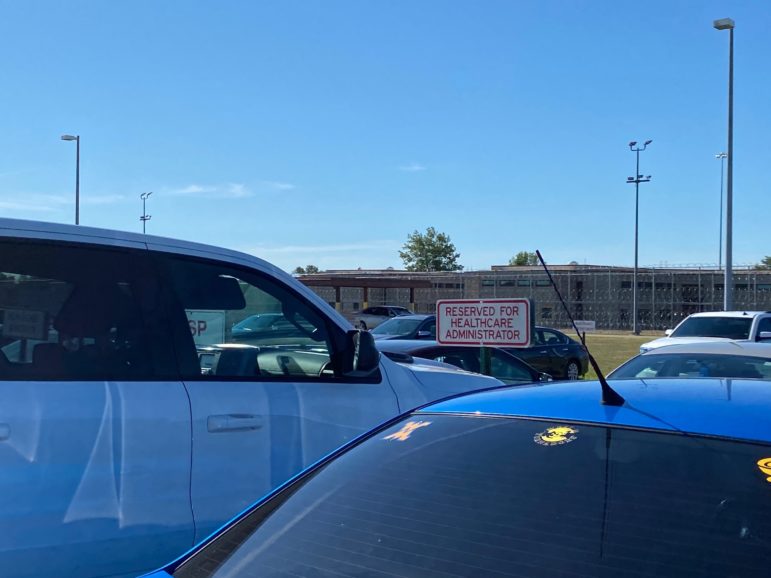
Parking Spot for the Healthcare Administrator at Pickaway Correctional Institution. (Photo Credit Eye on Ohio)
Ultimately, most of the 2,532 people known to be connected to the outbreak at Marion Correctional were either inmates or staff. But the virus made its way to an additional 58 people outside the prison, including family members, health care workers and food workers.
And there could be other cases where health workers simply forgot to label the infection as related to the Marion prison outbreak in the database.
Chambers-Smith said the danger works both ways.
”If there’s COVID out in the community, there’s COVID in the prisons,” she said.
This story is sponsored by the Northeast Ohio Solutions Journalism Collaborative, composed of 16-plus Greater Cleveland news outlets including Eye on Ohio, which covers the whole state.
Tonya Schaeffer, M.Ed, LPCC-S is a co-owner of Hope Restored Counseling Services, LLC in the West Loveland Historic District at 600 West Loveland Avenue. She can be reached at 513-683-HOPE (4673)
by Tonya Schaeffer
According to National Institute of Mental Health, suicide is a major public health problem and a leading cause of death in the United States. The effects of suicide go beyond the person who acts to take his or her life – it can have a lasting effect on family, friends and communities.
Are Suicide Rates Increasing?
The American College Health Association (ACHA) states that the suicide rate among young adults, ages 15-24, has tripled since the 1950’s.On average, there are 129 suicides per day in the U.S. More males die from suicide than females (approximately four male deaths by suicide for each female death by suicide). However, females attempt suicide three times more often than males.
Some risk factors for suicide include: previous attempts; depression and other mental health disorders; family history of a mental health or substance disorder; family history of suicide; drug and alcohol abuse; family history of violence, including physical or sexual abuse; impulsivity and or poor self control; hopelessness; medical illness; firearms in the home; and being exposed to others’ suicidal behavior, such as a family member, peer or media figure.
There are many other factors that could lead to suicide, too. Even among people who have risk factors for suicide, most do not attempt it. It remains difficult to predict who will act on suicidal thoughts.
The following behaviors may be a sign that someone is thinking about suicide: talking about wanting to die or wanting to kill themselves, sharing feelings of hopelessness, or feeling empty or numb. Other behaviors include planning or looking for a way to kill themselves, such as searching online for ideas, stocking up on pills or newly acquiring potentially lethal items (firearms or ropes). In addition, talking about being a burden to others, giving away important possessions, displaying extreme mood swings, or suddenly changing from very sad to very calm or happy are telltale signs.
Often in my office, a parent might be confused about how serious they should take their child talking about suicide. They might think their child is just seeking attention. However, suicidal thoughts or actions are a huge red flag that the person is in distress and an alert they need help. Any warning sign or symptom of suicide should not be ignored. Threatening to die by suicide is not a typical response to stress and should not be taken lightly.
Addressing Some Common Myths of Suicide
If I talk about suicide, then it might put the idea in their head.
This is not true! Several studies examining this concern have demonstrated that asking people if they are having suicidal thoughts or behaviors does not induce or increase such thoughts or experiences. Asking someone directly, “Are you thinking of killing yourself,” can be the best way to identify someone at risk for suicide. Another myth is people believing that talking to the person directly can’t make a difference to them. Talking to the person can help tremendously – it opens up a line of communication. Ignoring or minimizing a person’s feelings, thoughts or actions surrounding suicide is not advisable.
Most of the time a family member or friend are the first people to notice the warning signs of suicide. If someone tells you they are going to kill themselves, do not leave them alone, and do not promise anyone you will keep their suicidal thoughts a secret. It is important to have a plan in place to make sure the individual is as safe as possible. But, you should seek professional help as soon as possible.
As a mental health professional, suicide is a major concern and we are quite often assessing for it. The amount of request for services related to suicide has increased dramatically over the years.
If you have someone in your life who you believe is suicidal, don’t wait to reach out for help.This is not something to take lightly. In fact, if they are displaying risk factors and have a plan, take them to a local emergency room to be assessed. All too often people are seeing warning signs and reach out to us for services, and due to demand we can’t accommodate them in their time of need.
Resources
If you know someone in crisis, you can also call the toll-free NATIONAL SUICIDE PREVENTION LIFELINE at 1-800-273-TALK (8255), 24 hours a day, 7 days a week. The service is available to everyone. The deaf and hard of hearing can contact the LIFELINE via TTY at 1-800-799-4889. All calls are confidential.
Contact social media outlets directly if you are concerned about a friend’s social media updates, or dial 911 in an emergency.
The Crisis Text Line is another resource available 24 hours a day, 7 days a week. Text “HOME” to 741741.
Tonya Schaeffer, M.Ed, LPCC-S is a co-owner of Hope Restored Counseling Services, LLC in the West Loveland Historic District at 600 West Loveland Avenue. She can be reached at 513-683-HOPE (4673)
Loveland, Ohio – School District staff was back in the buildings this week to prepare for students who will return on Monday, August 31.
Staff received health and safety training from the district nurses and had the option of several virtual learning sessions. Staff joined sessions such as Building Community in a Remote Environment and Creating Videos That Teach Not Tell as part of their required professional learning.
Thirty additional learning sessions, facilitated by Loveland teachers, were offered for staff members. Additional learning options will be offered next week.
The health services team has been working all summer developing the health and safety protocols for the 2020-2021 school year. In the video below, Loveland’s District Nurse Judy Leamy covers the new health protocols in place for this school year.
The District has also posted health protocols on the School website at the following link: 2020 COVID Health Services
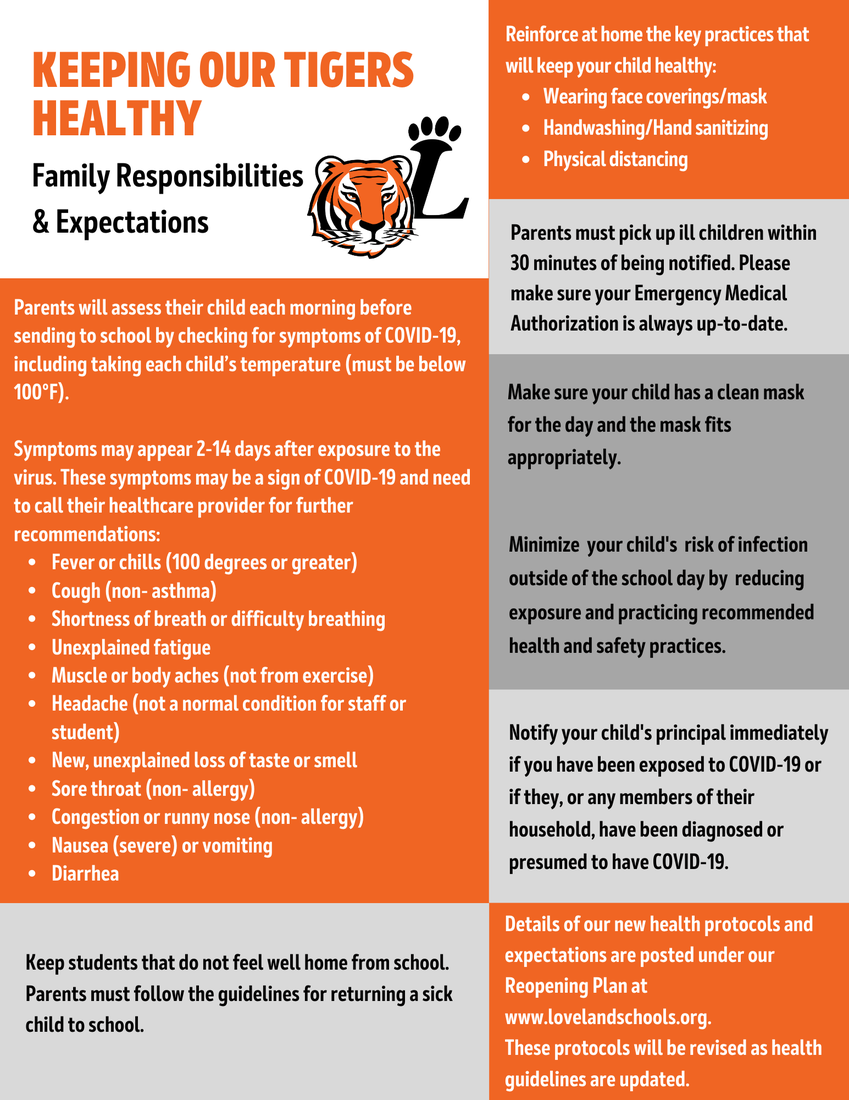
The Health Services Reopening Plan covers such topics as:
• Faculty/Staff/Student/Family Responsibilities and Expectations



















 By
By