Loveland, Ohio – During the COVID-19 pandemic, Loveland City School District (LCSD) Board of Education meetings have been live-streamed to provide public viewing. The Board is not meeting in person, instead, they are using the “Zoom” App and putting their meetings on YouTube. At their
last meeting on June 2, a decision was made to leave the videos on-line, instead of deleting them from further public viewing when the meeting is over.
Also, at the meeting, they discussed how the public could again participate in their “Business” meetings and restoring the public participation portion of the meeting that is usually on the agenda.
In a press release issued by the District on June 12, it stated, “The Board is committed to hearing from the public and continues to welcome input through email.”
While meetings are not open for the public to attend, the Board requests that you email your input to the Board of Education at board@lovelandschools.org.
The Board must have received your email by 4 PM on the date of the meeting if you wish to have it read at the beginning of the meeting, and you must indicate that you wish to have the statement read aloud.
Guidelines
Your statement should not be longer than three minutes, should not reference names of employees or students of the district, and should not include any offensive comments or language.
Statements will be read in the order in which they are received, for a total of no more than 30 minutes. All statements will be available to all Board of Education members and those not fitting within the 30-minute limitation will be noted as having been received. All members of the public submitting statements will have their names recorded in the public participation section of the minutes of the meeting.
The next business meeting of the Board of Education is scheduled for Tuesday, June 23.
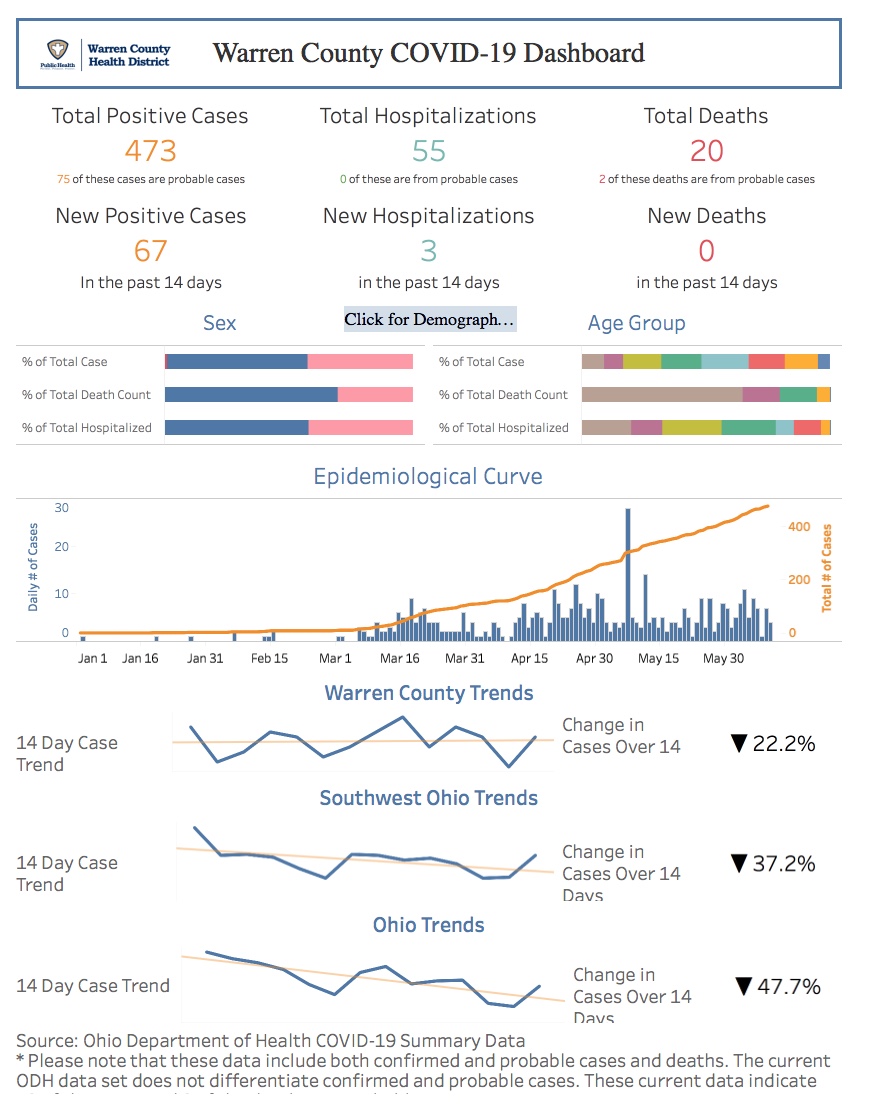
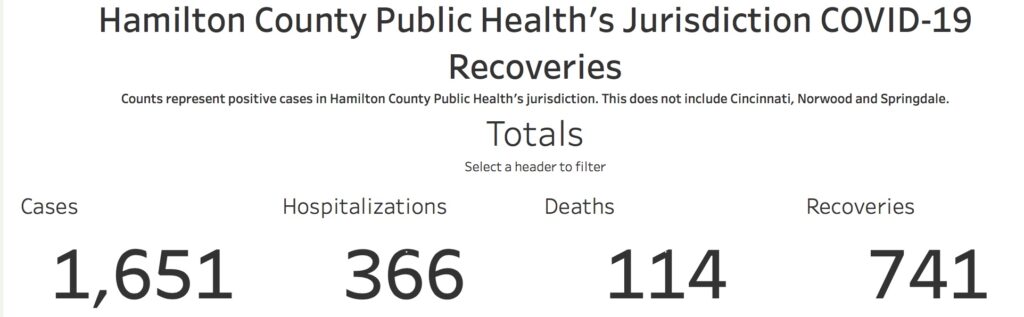
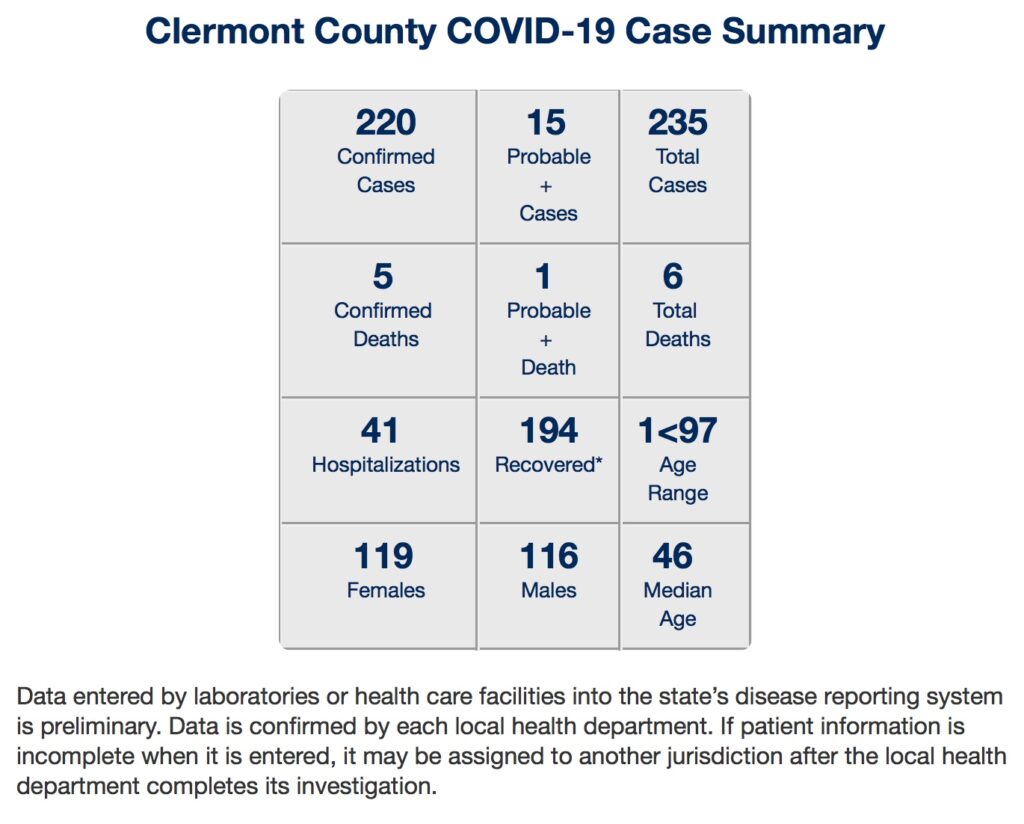
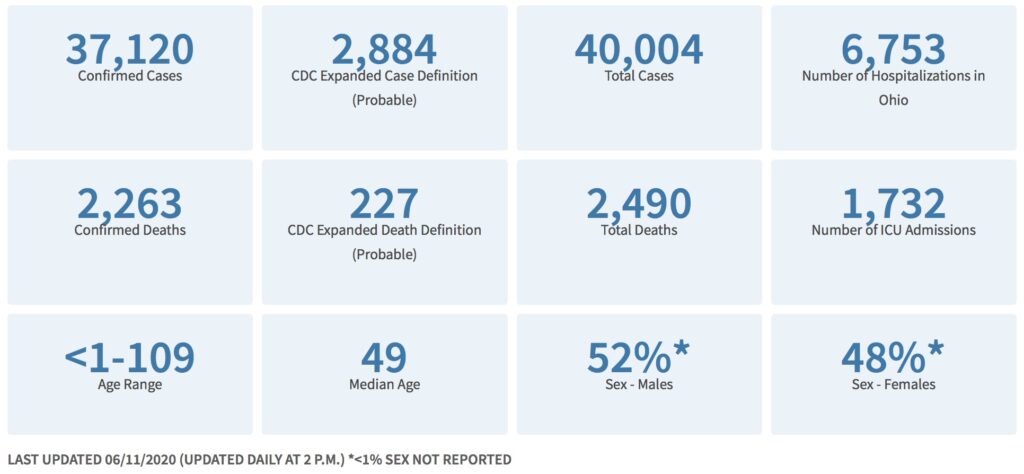
As Warren County continues to reopen from the COVID-19 pandemic closures, the Warren County Health District wants the residents of our county to know that we are seeing a rapid increase in community spread of COVID-19 cases.
If you have attended family gatherings, church services, funerals, or live in an apartment building or other multi-family dwelling, we encourage you to monitor yourself closely for any symptoms and consult your doctor if necessary. Many times the symptoms are similar to mild seasonal allergies and may include, but are not limited to: fever, cough, shortness of breath, fatigue, headache, runny nose, congestion and loss of taste or smell.
As the county has continued to reopen, the Health District wants to encourage you to take precautions to protect yourself and to stay healthy, by reducing the spread of COVID-19, as you are out in the community.
If you are sick, stay home.
Wear a face covering over your nose and mouth when around others, to protect others and yourself.
Maintain a distance of at least 6 feet between yourself and other people.
Avoid large gatherings and confined spaces, whenever possible.
Use a hand sanitizer that contains at least 60% alcohol when out in public or you cannot wash your hands.
Wash your hands often with soap and water for 20 seconds
Cover your cough or sneeze with a tissue, then throw the tissue in the trash. Wash your hands with soap and water or use hand sanitizer after cough or sneezing.
Avoid touching your eyes, nose, or mouth as much as possible. The Health District is continuing to work to reduce the spread of COVID-19 and protect the health of all Warren County residents. For the latest information and updates about the current situation visit www.coronavirus.ohio.gov. If you have questions or concerns call (513) 695-2475.
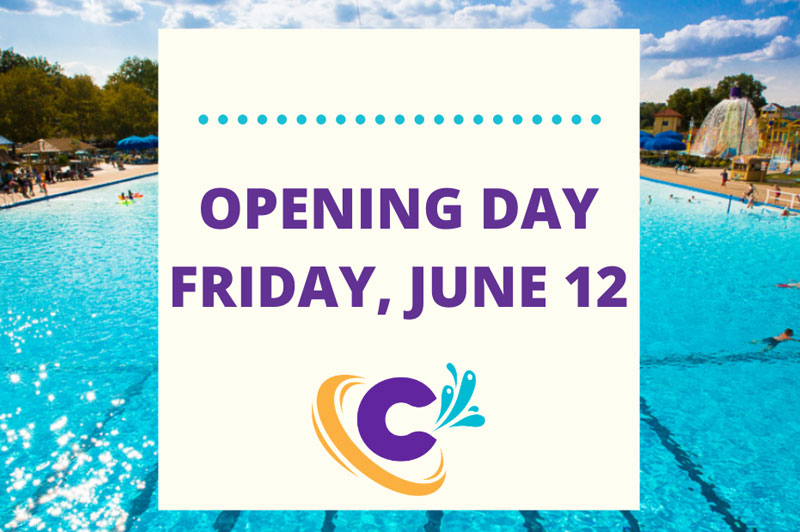
In order to align with social distancing best practices, Coney Island is limiting its daily attendance this season. Accordingly, all guests must make an advance reservation in the form of a daily ticket or a season pass reservation. Daily tickets are available online and can NOT be purchased at the park. Season passholders may make reservations via a new system that will be launching shortly. Additional information will be shared with season passholders via email soon. Thank you for your understanding.
Loveland, Ohio – Summer is finally here! As the temperatures start to rise, Loveland’s local businesses are preparing by offering fresh Summer specials, releasing new products, supporting new local causes, hosting fun community events, and creating fitness challenges.
Here at Loveland Magazine, we thought it would be fun to share with you, our loyal readers, the “Summer Salad!” This segment will include everything you need to know about the community of Loveland and its local businesses so that you can live out your Summer to the fullest! So what are you waiting for Loveland?! Read below to see how you can support Loveland and have fun while doing it this Summer!
Looking for a job?
Community of Loveland, Ohio are you looking for a job and you have previous gutter installing experience? All American Gutter Protection is hiring! Visit All American Gutter Protection’s Facebook Page for more details: https://www.facebook.com/EndGutterCleaningForever/
Want to help a local cause?
Loveland Interfaith Effort LIFE is asking students to donate both backpacks and school supplies that they will no longer be using! Read below to see how you and your children can get involved now!
“Now that your kids have finished their school year (albeit most unusual!), you’re likely cleaning out papers, book bags, etc. If you have gently used required reading books that are not likely to be read again, please consider donating them to LIFE for our August Student LIFE Shop event–they’ll be added to the age-appropriate backpacks and supplies. Donations can be dropped at any time to the bins inside the glass doors at the side entrance of Prince of Peace Lutheran Church, or to the donation entrance at the Pantry (back of the church by the preschool ramp) during open hours (Th: 3-6:30, Sat. 9-12:30). Thanks for sharing the love of reading with our kids!”
THIS WEEK’S PRIMARY NEEDS
Beans of any kind
Mixed vegetables
Jelly
Peanut butter
Oatmeal
Cereal
Rice or rice dishes
Fresh potatoes
Fresh onions
Apples or oranges
Loveland, Ohio can you guess what this picture is of? Loveland Museum Center will be doing more fun picture challenges for the community throughout the Summer! Check https://www.facebook.com/LovelandHistoricalMuseum/ for the photo challenge results!
LAST WEEK MANY OF YOU CORRECTLY IDENTIFIED THE JACK FOR AN AUTOMOBILE. HOW MANY OF YOU WILL IDENTIFY THIS WEEK’S “WHAT IS THIS” CORRECTLY?
Go to the Museum’s FaceBook page to submit you guess.
The museum will be closed on weekends until further notice. Scheduled events are postponed indefinitely. Check here and Museum Center Web page for updates. The office will remain open part-time and phone messages and emails will be answered in a timely manner.
Loveland, Ohio if you have been following or are a part of Vibe Fitness Loveland’s Fitness Challenge the winners are being announced shortly! Stay tuned to their Facebook page at https://www.facebook.com/vibefitloveland/ for the fitness challenge winners!
Wow, check out these SUMMER flavors at Vibe Nutrition! Grab your favorite flavor today to cool down on the hottest day of the year!
Steve and Julie Plitt, a local couple with strong ties to Loveland, Ohio are selling Pf5 Liquid Formula Hand Sanitizer in bulk!
The Plitts offer Bulk, Totes, Cases, Individual Gallons, and Free Delivery to Southwest Ohio to combat viruses, germs, and bacteria!
Kings Island announces 2020 Season opening dates
An opening date for Soak City water park is to be determined…
Kings Island announces 2020 Season opening dates
“Kings Island Park will open first to Season Passholders only, and will operate with stringent hygiene protocols, procedures to manage capacity and enable social distancing.” Read on…
New tees at RP Diamond
As stores, restaurants, and boutiques begin to reopen, we want to remind everyone to support local businesses in any way you can! RP DIAMOND is offering “Support Local 45140” shirts online now! Show everyone how you support local business by rocking one of these awesome shirts around town!
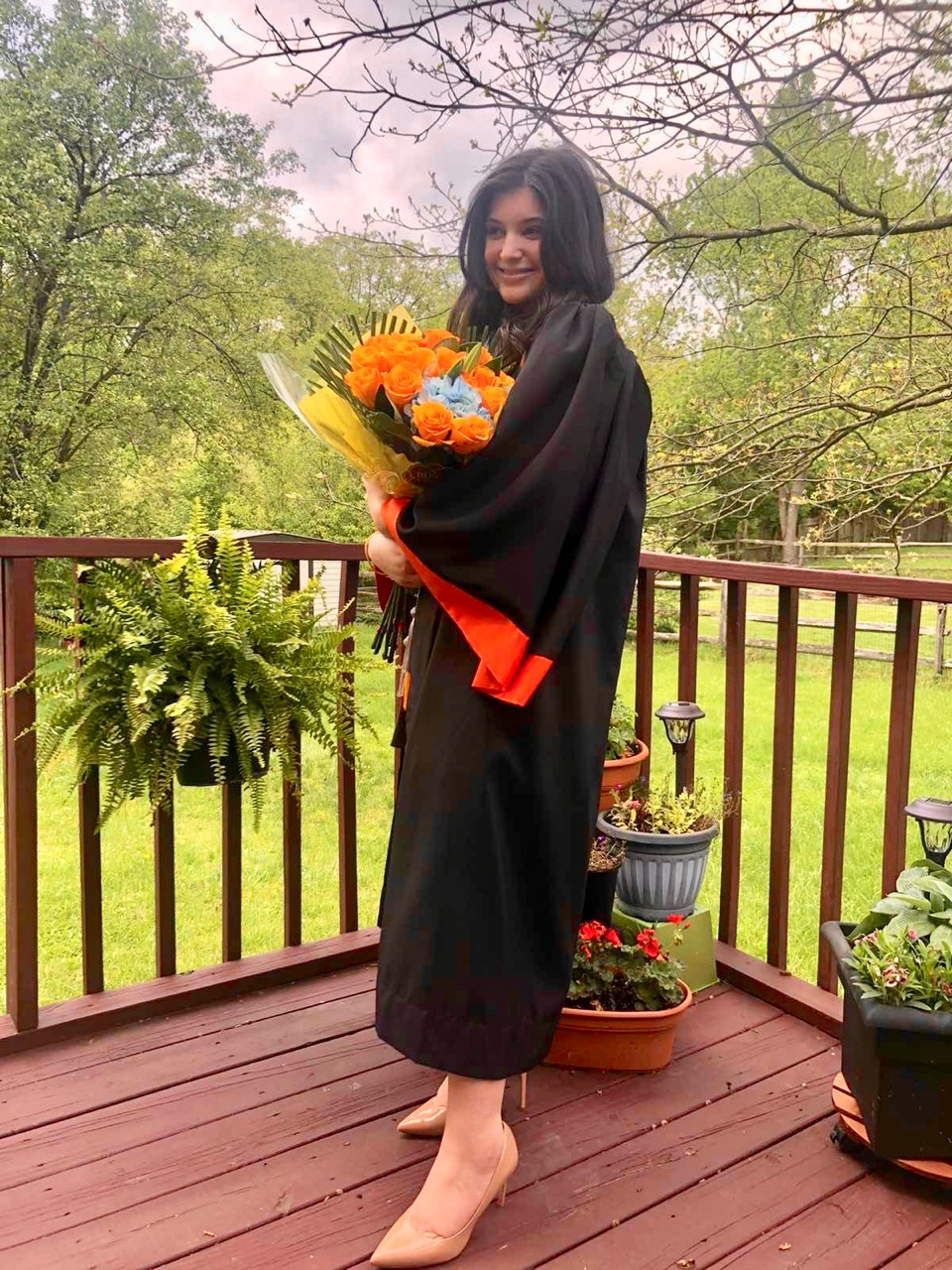
Mihaela Manova is now a Loveland High School Graduate. She joined Loveland Magazine as an Intern in September of 2019 and was soon promoted to be the Editor for our “Covering Climate Now” series. She will study journalism at Miami University.
Here is Loveland High School’s 2020 Graduation (my graduation) in photos and videos – you can experience the whole 11-hour day!
By: Mihaela Manova
Loveland, Ohio – In the year where all schools have closed and many are awaiting a graduation of some sort, Loveland High School has managed to show to its seniors and their respective family members that Covid-19 will not dictate the end to their academic careers. Here is a piece through the point of view of a 2020 graduate.
Where to begin… this year has proved to us, the student body, our limits and our achievements, the mostly good and the mostly bad. Say you were an athlete competing in the beginning of the year or a straight-A student who dedicated their time to their studies, or you could be even both for all we know. You possess qualities that make you stand out and even though you may not know most of the time, many people see that about you. To the class of 2020, don’t fret, the best years are coming ahead.
Before graduation in May of 2020
In the last few days before graduation, I would assume we had the same thoughts crossing our minds. What would these days have looked like if we were in school? Would I be as happy as I am now? Will I be satisfied when I receive my diploma, even when it is placed into my hands gently and in a sterile manner?
Many, (from what I have observed), do not see our current situation as a stop to their plans. While following protocol, these people have decided to make the best of it, even with the distance that comes between them.
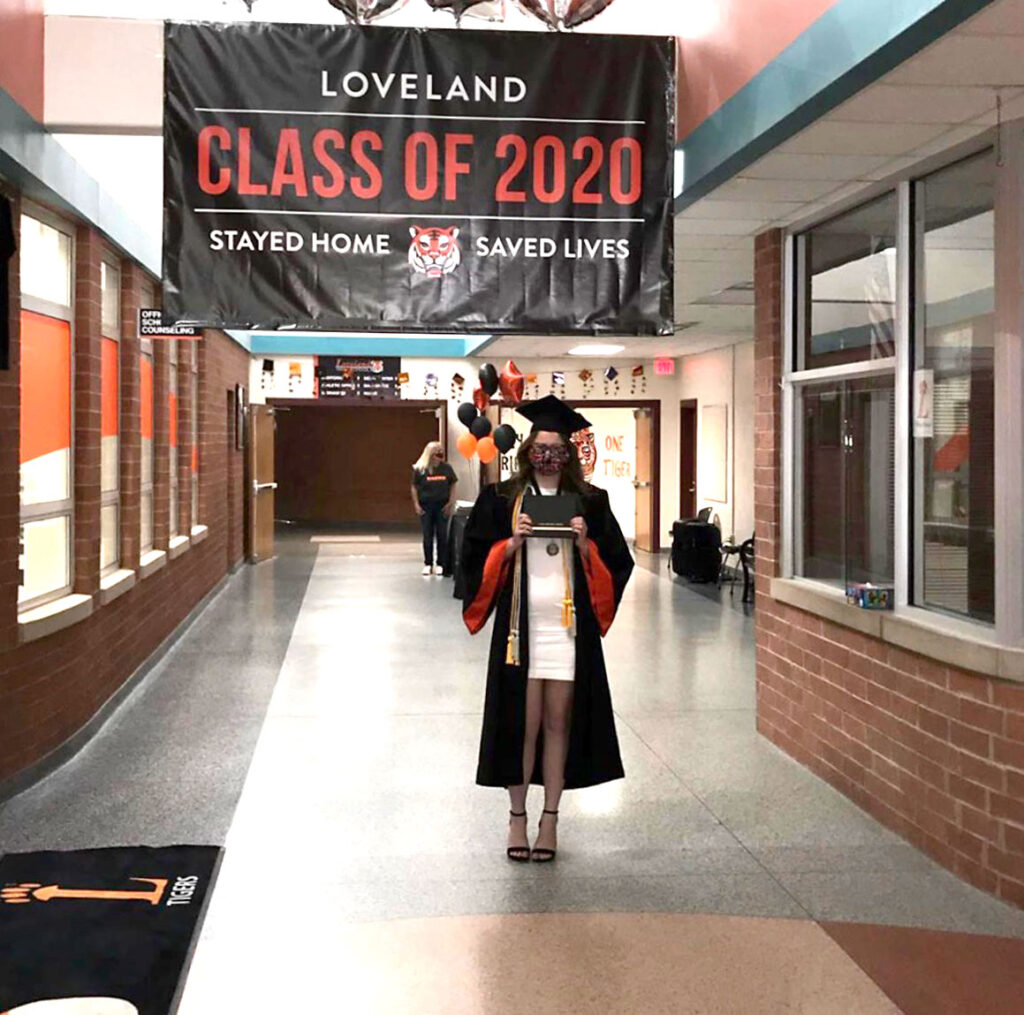
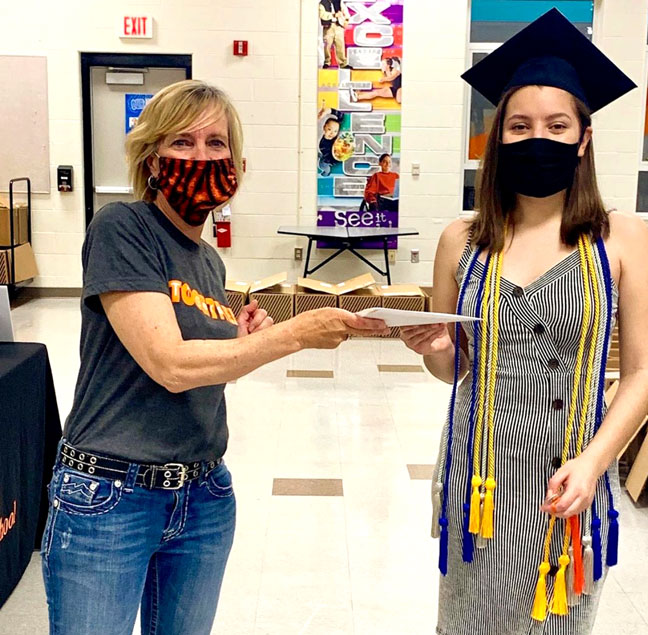
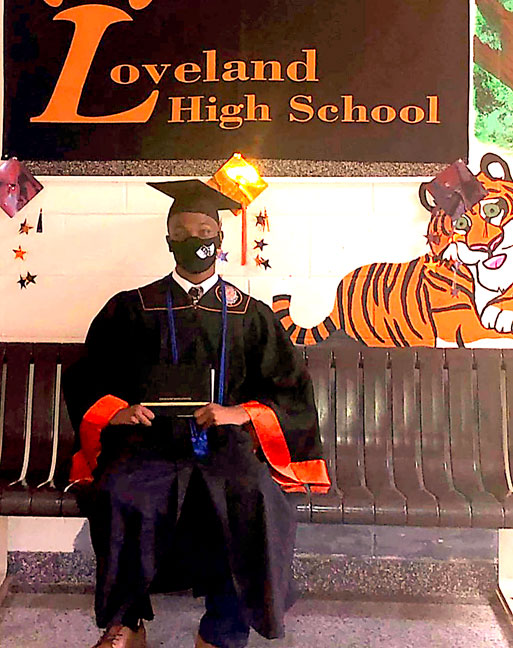
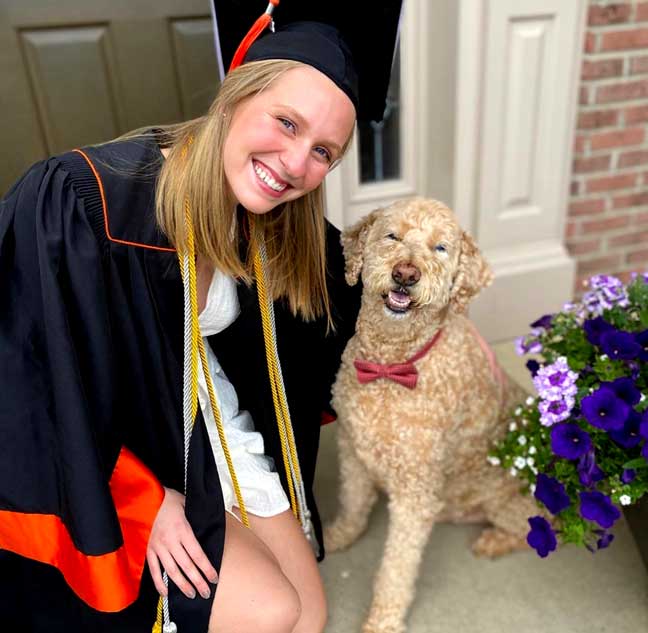
With gratitude towards the health care workers that are around us (and around the world), who are parents, aunts, uncles, and more, it was a sight to see the families coming together in our school, to see a personal milestone be achieved.
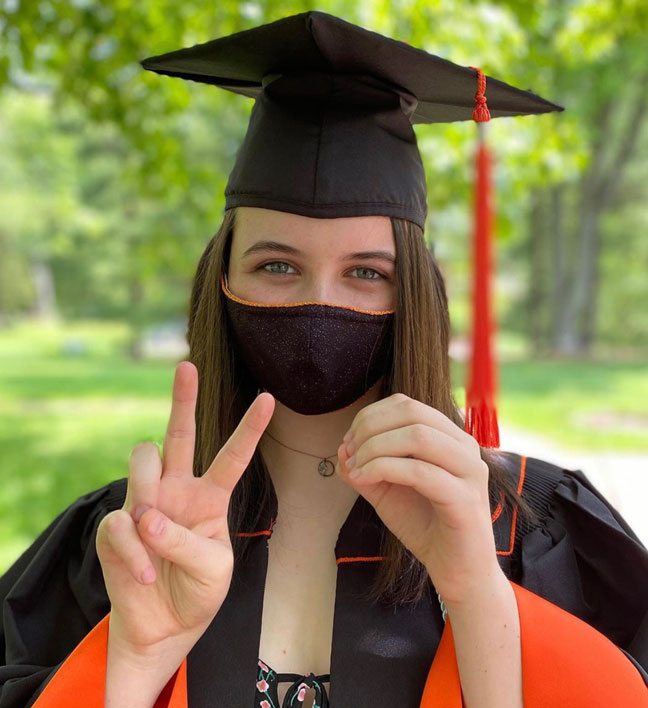
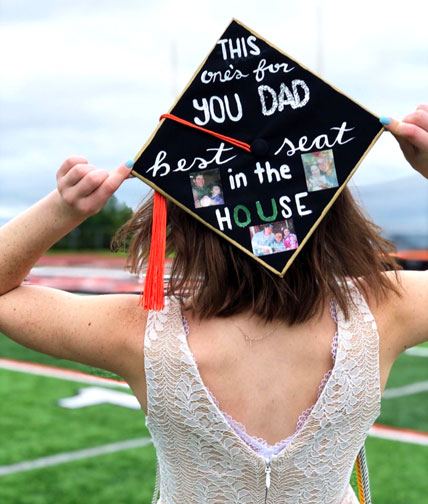
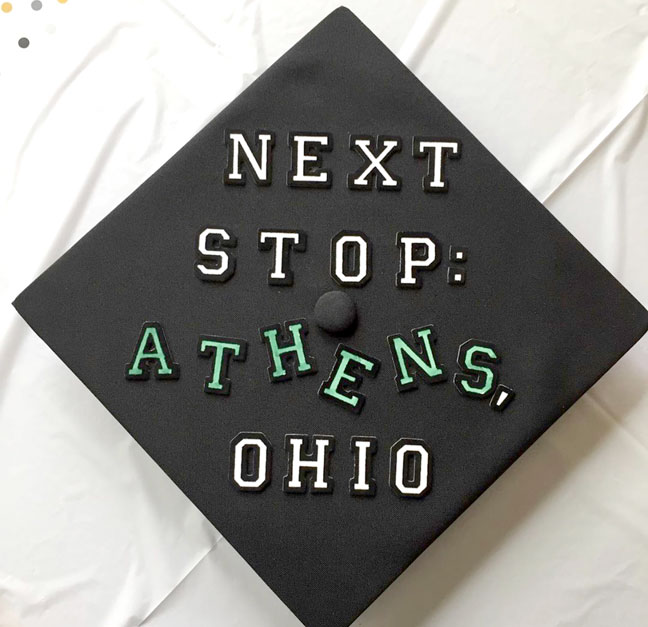
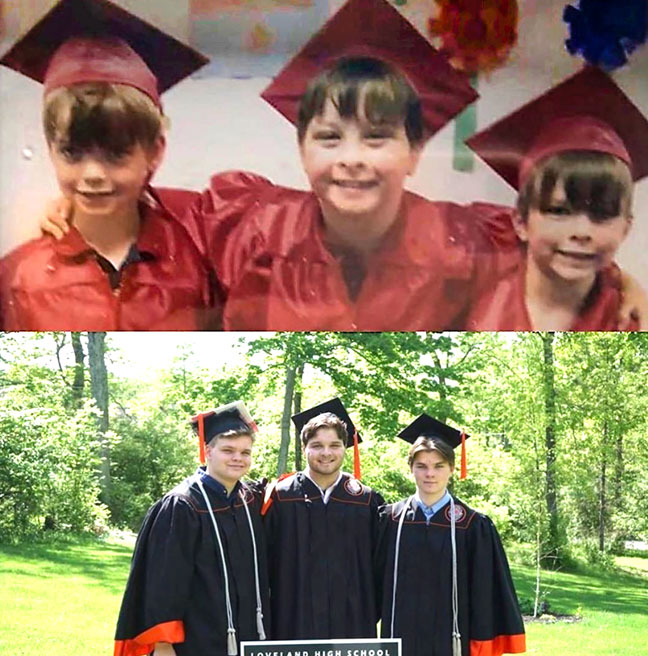
(Click on any photo to see it enlarged)
Ella Kiley
Carson Sarver
Mitchell McManis
Allison Rountree
(left to right) Joey Jeffcott, Jack Jeffcott, and Brady Jeffcott
Erin Dickman
So how did our day proceed? Here is a type of journal entry that may suffice, with, of course, 2020 vision.
For starters – graduating Senior students were categorized into time slots for each family to have a personal experience (at a distance) with usually the time being around 30 min – 1 hour depending on the traffic.
The high school itself showcased a labyrinth for the cars that would soon lineup, tape making borders for each car to snake around until it found itself ready to go into the school. While waiting you can see a range of cars decorated with festive balloons and markings often saying “Go Tigers!” or “Graduate 2020” in colors of orange and black. Others would have cars following one another with family members anxiously awaiting their turn.
While the wait was long, it gave time to observe the atmosphere as it is a (hopefully) once in a lifetime spectacle of following strict protocol. You could look out the car window and see the people who were soon going to come in, properly dressed in their orange and black togas with facial masks to match.
When it was our turn to park in the parking lot, kind men with masks spoke of the directions in parking, getting out, and entry to the building. The entrance to our high school included a blown up tiger head that engulfed every individual that walked in, making our last walk inside be memorable.
Staff by the entrance were ready to take pictures of the graduate and their family, and once walking into the building you would hear “Hello!” followed by an excited “Congratulations!”
There was no lack of positivity or hints of melancholy anywhere. Once inside the building, each family would wait for another to finish going through all of the stations. The first station was a table with a quick spell-check of the name of the graduate alongside an award for academic excellence this semester if you were excellent.
More greetings ensued as we moved on to the final moment that we were waiting for. With smiles underneath the masks but highlights in all the eyes, it was finally time to hand it off to a family member and walk solitary to the podium leading to the auditorium.
In front of you, principal Peggy Johnson would lead you to the hidden entrance of the podium while behind you, was your family recording every step of the way. In the auditorium, massive posters and lighting donned a dramatic feel to this ceremony, as there were two types of cameras ready for you. One was the video recording of you walking across, and another was for a professional photo when you “turn” the tassel.
Rosa Karl
William Gibbs-Heard
Claire Wallace (2020)
Claire Wallace (young)
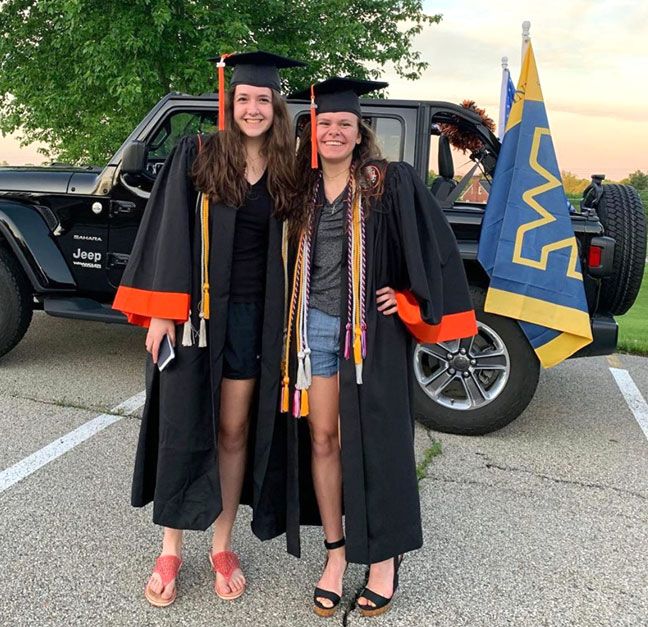
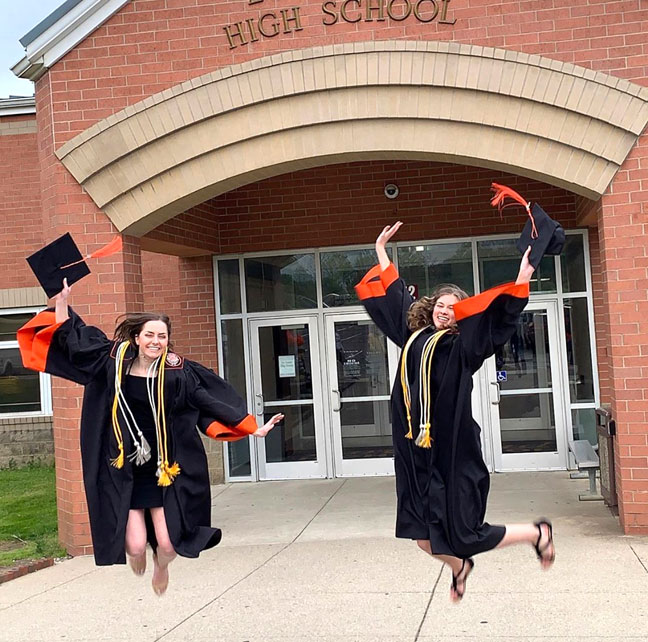
Samantha James and Emily Zirkelbach
(left to right) Calloway Hefner, Ben Russ, Lexi Duff, Greyson Hensley, Christian Morckel
Natalie Drury and Kirstin Thomas
With the moment upon you, you hear your full name announced, so you walk across to the far end of the stage, noticing that every seat wore printed pictures of the staff and teachers. This gesture brings a smile to your face when you know how much these people wanted to be there and how long it took for each portrait to get designed, printed, and taped on the seats.
After stepping off and a rush of pride and adrenaline is expected as you have finally done it! You would now put on your “2020 Mask” again and wait for further instruction and clearing of the cafeteria. With your family, you would go to the cafeteria hearing more “Congratulations” and the dreadful returning of the toga (which you secretly want to keep).
Returning the toga, you immediately get a packet of your diploma and a booklet of all the student names and achievements.
Lastly, you break through the doors of the cafeteria, with more felicitations from a staff member that follows the question, “So what are you doing after this?” as you wait. I wasn’t sure if it was meant to be answered for now or for later but I was happy knowing that good things await…
A note:
Speaking for the class of 2020 and myself we would like to say big, big thank you’s to our school, the organizers, the staff, the people outside helping, and the teachers and volunteers. Without your efforts we would have never had a great graduation like this, so we thank you for adapting to these measures and staying positive for our day!
And we also cannot forget to thank the people working on the front lines and in hospitals at the moment, your efforts will not be forgotten in battling this epidemic. BIG THANK YOU TO ALL!
Sincerely,
Mihaela
Watch these videos of the 2020 Commencement Ceremony that were produced by Loveland High School ( (videography and digital production); Shawn Miller (lighting and sound production); Lane Aylor, Hayden Floyd, David Knapp and John Lape (technical assistants)
As we entered the School
Welcome by Olivia VonDeylen
Carson Sarver Class President
Senior Choir members perform Irish Blessing
Sophia Dillhoff Salutatorian
Ashley George Valedictory Address
National Anthem Tribute by Chamber Orchestra and Show Choirs
Principal Peggy Johnson
Superintendent Dr. Amy Crouse and School Board President Kathy Lorenz
Each student receiving their diploma
Below is the entire video of the LHS Graduation that was produced by the school.
To see each graduate cross the stage drag the slider to the 28:52 minute mark.
The entire video of the Commencement exercise
Also read these stories about the Class with 2020 Vision…
Ohioans who are eligible for the Supplemental Nutrition Assistance Program (SNAP) can now use their Ohio Direction cards to purchase food online through Walmart and Amazon, the Ohio Department of Job and Family Services (ODJFS) has announced.
“We know many Ohioans are struggling and that food purchasing has been a challenge for many, especially older Ohioans and those with limited access to transportation,” said ODJFS Director Kimberly Hall. “We hope online purchasing gives individuals more options and makes it easier for them to both stay safe and eat nutritiously.”
Previously, Ohio SNAP recipients could order groceries online at Giant Eagle, Walmart and some Kroger stores, but they had to pay inside the stores or at curbside. After receiving federal approval, ODJFS successfully tested online purchasing with Walmart and Amazon. While Ohio SNAP recipients can order food online from a variety of retailers, only Walmart and Amazon allow online purchasing with EBT cards. Individuals may choose to have groceries delivered, but federal rules still prohibit using SNAP benefits to pay for any delivery charges.
Qualify for SNAP
Individuals may qualify for SNAP if their household’s gross monthly income is at or under 130% of the federal poverty guidelines. Ohioans can apply at benefits.ohio.gov. Benefits can be used to buy most food products, with the exception of alcoholic beverages, vitamins and/or medicines, and hot food
made to be eaten immediately, including prepared food from grocery stores and restaurants.
ODJFS has provided additional assistance to SNAP recipients during the pandemic:
Began issuing Pandemic EBT benefits for children who normally receive free or reduced price meals at school.
Issued supplemental SNAP payments to qualifying households in March, April and May and is preparing to issue them again in June.
Waived administrative verifications normally required at food banks, to streamline the process and limit person-to-person contact.
Extended SNAP recertification periods for March, April, May and June by six months.
“Kings Island Park will open first to Season Passholders only, and will operate with stringent hygiene protocols, procedures to manage capacity and enable social distancing.”
Mason, Ohio – Kings Island has announced this morning that they will be open initially for Season Passholders only and shortly thereafter for daily ticketholders.
Key Park Opening Dates:
Park Open to Season Passholders: July 2 – 11
Park Open to Season Passholders and Daily Ticketholders: Beginning Sunday, July 12
“We are ready to welcome our guests back to Kings Island for some long-overdue fun,” said Mike Koontz, General Manager of Kings Island in a news release. “The safety of our guests and associates has always been and will always be our top priority. The park’s new health and safety protocols align with CDC recommendations, and have been shaped by information from company and industry health and safety experts, along with our state and local government officials.”
The Park says there are new protocols to create a safe and clean environment and include:
A new online reservation system; each guest is required to have a reservation prior to their visit to enable capacity management;
A requirement to complete a pre-visit health screening declaration 24 hours prior to admission;
A touchless temperature screening prior to entering the facility for both guests and associates;
Requirements for all guests, associates and vendors to wear masks as directed by the protocols
Social distancing markers throughout the park, including ride queue lines;
Limited guest/associate contact;
Enhanced cleaning procedures, including additional deep cleaning and sanitization of restrooms, dining facilities and other busy areas;
Additional hand sanitization stations; and
Capacity management throughout the park.
The park will initially open to Season Passholders with limited capacity and hours. Kings Island will be sending emails to passholders, inviting them to begin making reservations. Only passholders will be able to make reservations for at least the first week; daily ticket reservations will open within the next two weeks.
An opening date for Soak City Water Park is to be determined.
All guests are asked to download Kings Island’s free mobile app to make a reservation and facilitate their park visit. 2020 Season Passes have been extended to through 2021.
Employment opportunities are currently available throughout the park, and a virtual hiring process has been deployed so applicants can apply and interview remotely. Openings can be found at www.visitkingsisland.com/jobs.
Hello Loveland friends – I really hope if you read this first sentence and find the time to read these next several paragraphs. It’s lengthy but I think it’s important.
Since graduating from Loveland High School in 1998, Eric Armstrong obtained degrees in Chemical Engineering and Spanish from Purdue University. When not working in technical sales; he enjoys traveling the world in his free time.
Systemic racial inequality, prejudice, ‘White Privilege’, are tough topics, powerful words. I imagine white people; are uncomfortable when they hear them, feel defensive when directed towards them, and I think most importantly are confused about what to do about them.
You see racists are easy to identify and label, they wear hoods, yell slurs, and burn crosses. Racists don’t hide their disdain, they’re proud of it, and most importantly I imagine 90% of White Americans can say unequivocally “I’m not a racist, that’s not me!” “My family raised us to…”, “I have very close ____ friends.” etc…
Other words, however, are harder to define
The other words however are harder to define; they are subtle, woven into our nation’s very fabric, everyday behavior, and actions. Unfortunately, our country was built and founded on them. In their most basic forms, even Black Americans can struggle to explain them, it’s often an uneasy feeling or a story, the way you were treated. It’s some simple task that Black Americans worry about that would never cross the mind of a white person.
A profound ignorance exists in education
Moreover, IF you as a White American can comprehend the definitions and give examples of these words, then you’d realize 100% of White Americans have existed/participated/enabled them. That’s honestly what is at the core of everything happening today. A profound ignorance exists and the cure is education, open dialogue, and a paradigm shift in how we respond.
I personally haven’t said much about what’s happened recently about the rash of killings locally here in Indianapolis or across the country. I’ve admittedly deflected and given short PC answers. There are two reasons and they are shared by many Black Americans;
1) It reopens painful feelings and emotional wounds, and if you’re a Black American who has existed as I have (fairly comfortably) it’s a jarring reminder of what could happen to you and your friends, family, and colleagues.
2) It’s exhausting. If you know me, I enjoy talking and pushing the boundaries of comfort on many topics. I don’t shy away from talking about race if engaged and I try to keep the conversation light so I’m approachable and those who truly want to understand, learn and change have a safe place to do so. However, for every one of those interactions, there are 20 other conversations, comments, posts, when White American dismiss Black Americans’ experiences as “one-off occurrences” or say “why do you make everything about race. It isn’t always about race.” Or “Well if “______Black American” wasn’t doing _____, _____ wouldn’t have happened.”
Something different is happening now
So admittedly, lazily, embarrassingly, I felt like this latest response was going to be the US status quo. People get fake mad, they post “Black Lives Matter” and are upset for a while, some Black Americans protest and march, then in a couple months things/people go back to ‘normal’.
But I decided to write this because something different is happening. White Americans are out marching too, they’re verbalizing the issues and not just repeating buzz words. Most importantly they’re engaging us. They’re messaging me, texting me and asking me to have conversations. They’re asking me what those confusing words mean to ME, asking what my experience has been.
A business colleague who I consider a friend sent me this;
“Weird non-work related question. Would you be interested in coming to our house for dinner in the next two weeks? No need to answer tonight. The bigger human conversation is that our kids need to meet people who don’t look like them.”
WOW.
Maybe it WILL be different this time…
Because if everyone wants to know how we “fix things” how we “make it better”. That’s it in a nutshell. White Americans must willingly have a lot of introspection, ask questions of themselves and Black Americans, and state the following:
“I acknowledge that though I’m not a racist; I’m ignorant, uninformed, and contributing to prejudice, systemic racism, and white privilege with my inactivity. My posts and words are NOT enough.”
How do you know you are contributing to this climate?
What are the questions? How do you know you are contributing to this climate?
If as a White American you’ve ever posted or said, “Skin color doesn’t matter to me.” or “I don’t see race.” Unless you are actually visually impaired; you’re saying (whether you intend to) I’m not recognizing that because your skin is brown, your experience in this world has been markedly different than mine.
It must be acknowledged that race is a factor, a variable in a human’s life experience and reactions, questions, interactions, must be adjusted.
Change your language to take that into account, instead say, “I actively try not to let my inherent biases and ignorances negatively impact how I interact with Black Americans.” SEE COLOR, VALUE DIFFERENCES.
If as a White American you’ve called something ‘ghetto’ or used the word as an adjective to associate things with Black Americans. I compare it with how people use the word ‘gay’ to describe something they dislike.
Or you’ve said “_____ doesn’t act black” or “_____ isn’t really even black.” Your words mean you believe they exhibit positive characteristics ascribed to White Americans.
Other behavior
How about these? You have many black friends and co-workers… right? Have you been to their homes or invited them to yours? Do you vacation with them? Have these conversations with them?
It may not be how you treat those Black American friends and colleagues. How do you interact with the Black Americans who are strangers? Do you strike up conversations? Do you avoid sitting by them, cross the street, wait for the next elevator…?
I have seen a lot of this world and our country and I’ve been invited into the homes of strangers internationally and never to the homes of some of my ‘friends’ here in the US.
My Christian friends; do you attend diverse church services? What does your congregation look like? God valued/preaches inclusion and diversity but why is the church segregated?
How about the neighborhood where you live? Any Black neighbors? Do your kids have Black American classmates? Do Black American kids play with your kids at your home and vice versa? If you say “No, there just aren’t Black Americans where I live. I live there because it’s safe and has good schools.” Well if there are no Black Americans there; are they in the underperforming schools and unsafe neighborhoods? The separate but equal ones?
You have to ask why is that?
If you asked your kids who are three Black Americans they know? Are they all celebrities/athletes? Do you go to businesses, concerts, read books, and see movies by Black Americans? You have to ask why is that? Who/what experiences are you exposing yourself and family to or limiting them from becoming educated about?
Racist people are not the problem – I call it arms length prejudice
Again, the racist people are not the problem. We know where they stand and what they believe. It’s the tolerant White Americans, the ones that have casually existed with Black Americans. I call it arms length prejudice. You have been fine with Black people having equal rights as long as it doesn’t change your world, come into your neighborhood, school, or church. As long as it doesn’t date your sons and daughters.
Have you been social distancing from Black Americans?
Have you been social distancing from Black Americans? You have to ask yourself have you been perpetuating that arm’s length distance whether subconsciously or consciously? Do you want things to change? Do you really care about the Black friend(s) or those Black strangers that you post black squares and Black lives matter hashtags about? It’s going to take more than posts and rhetoric. If you care about Black Americans but stand by while prejudiced comments are being spoken or ‘posted’ then it won’t change.
If it’s tolerated by our leaders and business owners as them just “speaking their mind” or “telling it how it is” then you are supporting their harmful rhetoric.
Our young humans
Many of you are currently raising the young humans who will determine how Black Americans are treated in the next 20 to 40 years and beyond. If you change their experiences and relationships with Black Americans you will change the behaviors and outcomes. Posts, black squares, and words are fantastic; education, action, and follow up are better.
It’s time for conversations
Marching and demonstrating serves only to keep the issue in front of people’s minds. The actual work is done right here with us having the conversations and listening. Calling people out, calling yourself out. A lot of people want to be healthy, but don’t want to exercise. I see the same behavior with race. A lot of White Americans want the conversations about race to stop, for the problems to go away, but they don’t want to do the hard work to get us there.
A lot of people want to be healthy, but don’t want to exercise.
It’s time for these conversations. For White Americans to ask your friends of color about the first time they were called the n-word or were pulled over/followed for no reason?
These conversations that must be had between Blacks and Whites are going to be uncomfortable they’re going bring upon Whites feelings of guilt and shame and often times Blacks may be embarrassed or angry, not at you, about their struggle; but it’s an important step in healing and understanding.
Conversations can start today
Lastly, both Blacks and Whites must understand that changing a behavior takes a long time. Some people estimate it takes 10,000 hours of doing a task to master it. How many hours have you and your children spent discussing, interacting, and educating yourself about Black Americans? Black Americans, how many conversations have you opened yourself up to with White Americans? This is not going to happen overnight…but the conversations can start today.
I LOVE YOU ALL & GOD BLESS
Eric Armstrong graduated from Loveland High School in 1998
Loveland, Ohio – This is an interview with Kristy McNally just after she came back from one of the Prayer Peace Walks that have been organized by Desmon Gault all last week.
The walks through Loveland neighborhoods were in response to the death of George Floyd who died in police custody on May 25 in the Powderhorn community of Minneapolis, Minnesota. While Floyd was handcuffed and lying face down on a city street during an arrest, Derek Chauvin, a white American Minneapolis police officer, kept his knee on the right side of Floyd’s neck for 8 minutes and 46 seconds; according to the criminal complaint against Chauvin, 2 minutes and 53 seconds of that time occurred after Floyd became unresponsive.
McNally lives in the West Loveland Historic District with her husband Mike and their children.
Inwood Park, Cincinnati OH – Sunday, March 31st, 2020 After a handful of changes in location, the Facebook-organized rally labeled as “Be Heard, Be Safe;…
David Miller is the Editor and Publisher of Loveland Magazine
by David Miller
Loveland, Ohio – This is an interview with the Epiphany United Methodist Church, Youth Pastor Scott Russ, just before he departed to join one of the Prayer Peace Walks that have been organized by Desmon Gault all this week.
The walks through Loveland neighborhoods were in response to the death of George Floyd who died in police custody on May 25 in the Powderhorn community of Minneapolis, Minnesota. While Floyd was handcuffed and lying face down on a city street during an arrest, Derek Chauvin, a white American Minneapolis police officer, kept his knee on the right side of Floyd’s neck for 8 minutes and 46 seconds; according to the criminal complaint against Chauvin, 2 minutes and 53 seconds of that time occurred after Floyd became unresponsive.
Inwood Park, Cincinnati OH – Sunday, March 31st, 2020 After a handful of changes in location, the Facebook-organized rally labeled as “Be Heard, Be Safe;…





![[BREAKING] Warren County Health Director sees rapid increase in community spread of COVID-19 cases](https://lovelandmagazine.com/wp-content/uploads/2020/05/covid-ohio-feature-.png)


 by Cassie Mattia
 Community of Loveland, Ohio are you looking for a job and you have previous gutter installing experience? All American Gutter Protection is hiring! Visit All American Gutter Protection’s Facebook Page for more details:
  The time is almost here for the Little Miami River Chamber Alliance’s Symmetry Women’s Virtual Event! Visit this link:


 Vibe Nutrition








 “We know many Ohioans are struggling and that food purchasing has been a challenge for many, especially older Ohioans and those with limited access to transportation,” said ODJFS Director Kimberly Hall. “We hope online purchasing gives individuals more options and makes it easier for them to both stay safe and eat nutritiously.”
 can be used to buy most food products, with the exception of alcoholic beverages, vitamins and/or medicines, and hot food



 Since graduating from Loveland High School in 1998, Eric Armstrong obtained degrees in Chemical Engineering and Spanish from Purdue University. When not working in technical sales; he enjoys traveling the world in his free time.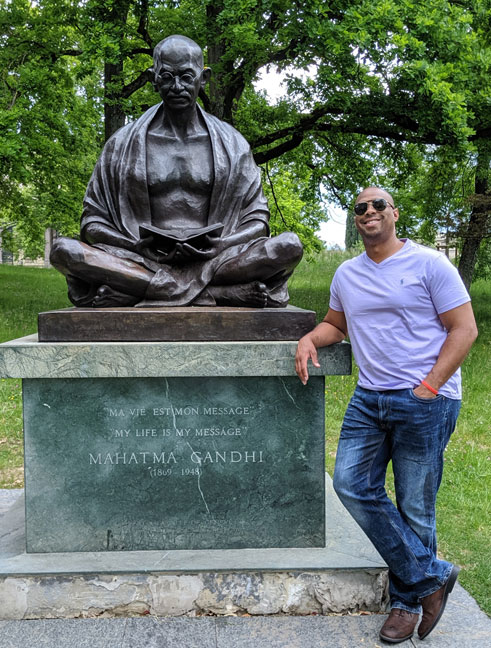




![[Interview] Youth Pastor Scott Russ speaks about George Floyd and racial justice](https://lovelandmagazine.com/wp-content/uploads/2020/06/maxresdefault-4.jpg)
