Author: Guest Column

  • The Hollowness of this Juneteenth a Sober Reality

    The Hollowness of this Juneteenth a Sober Reality

    Image by Rashod Taylor

    An opinion piece emailed to the desk of Loveland Magazine by Vann R. Newkirk II the Senior editor of the Atlantic.

    “The purpose of Juneteenth was always a celebration of emancipation, of the Black community’s emergence out of our gloomy past. But it was also an implicit warning that what had been done could be done again.”

    Five years ago, as the streets ran hot and the body of George Floyd lay cold, optimistic commentators believed that America was on the verge of a breakthrough in its eternal deliberation over the humanity of Black people. For a brief moment, perhaps, it seemed as if the “whirlwinds of revolt,” as Martin Luther King Jr. once prophesied, had finally shaken the foundations of the nation. In 2021, in the midst of this “racial reckoning,” as it was often called, Congress passed legislation turning Juneteenth into “Juneteenth National Independence Day,” a federal holiday. Now we face the sober reality that our country might be further away from that promised land than it has been in decades.

    Along with Memorial Day and Martin Luther King Jr. Day, Juneteenth became one of three federal holidays with explicit roots in Black history. Memorial Day was made a national observance in 1868 to honor soldiers felled during the Civil War, and was preceded by local celebrations organized by newly freed Black residents. The impetus for MLK Day came about with King’s assassination exactly a century later, after which civil-rights groups and King’s closest associates campaigned for the named holiday. Memorial Day and Martin Luther King Jr. Day both originated in times when the Black freedom struggle faced its greatest challenges. Juneteenth—an emancipation celebration popularized during Reconstruction—was codified during what purported to be a transformation in America’s racial consciousness.

    But, like its predecessors, Juneteenth joined the federal-holiday ranks just as Americans also decided en masse that they were done with all that. The 1870s saw the radical promise of Reconstruction give way to Jim Crow; the 1960s gave way to the nihilism and race-baiting of the Nixonian and Reaganite years. In 2024, the election of Donald Trump to a second term signaled a national retreat from racial egalitarianism. In his first months as president, he has moved the country in that direction more quickly than many imagined he would.

    Trump has set fire to billions of dollars of contracts in the name of eliminating “DEI,” according to the White House. His legislative agenda threatens to strip federal health care and disaster aid for populations that are disproportionately Black. The Department of Defense has defenestrated Black veterans in death, removing their names from government websites and restoring the old names of bases that originally honored Confederate officers. The Federal Aviation Administration plans to spend millions of dollars to investigate whether recruiting Black air-traffic controllers (among other minority groups) has caused more plane crashes. The Smithsonian and its constituents have come under attack for daring to present artifacts about slavery and segregation. Books about Black history are being disappeared from schools and libraries. The secretary of education has suggested that public-school lessons about the truth of slavery and Jim Crow might themselves be illegal.

    There were, perhaps, other possible outcomes after 2020, but they didn’t come to pass. The Democratic Party harnessed King’s whirlwinds of revolt to power its mighty machine, promising to transform America and prioritize racial justice. Corporations donned the mask of “wokeness”; people sent CashApp “reparations” and listened and learned. But the donations to racial-justice initiatives soon dried up. The party supported a war in Gaza that fundamentally undercut any claim to its moral authority, especially among many young Black folks who felt kinship with the Palestinians in their plight. When DEI emerged as a boogeyman on the far right, many corporate leaders and politicians started to slink away from previous commitments to equity. Democratic Party leadership underestimated the anti-anti-racism movement, and seemed to genuinely believe that earned racial progress would endure on its own. The backlash that anybody who’d studied history said would come came, and the country was unprepared.

    Trump and his allies spend a lot of time talking about indoctrination and banning DEI. But by and large, the campaign against “wokeness” has always been a canard. The true quarries of Trump’s movement are the actual policies and structures that made progress possible. Affirmative action is done, and Black entrance rates at some selective schools have already plummeted. Our existing federal protections against discrimination in workplaces, housing, health care, and pollution are being peeled back layer by layer. The 1964 Civil Rights Act might be a dead letter, and the 1965 Voting Rights Act is in perpetual danger of losing the last of its teeth. The Fourteenth Amendment itself stands in tatters.

    Five years after Democratic congresspeople knelt on the floor in kente cloth for nearly nine minutes, the holiday is all that really remains. This puts the oddness of today in stark relief. The purpose of Juneteenth was always a celebration of emancipation, of the Black community’s emergence out of our gloomy past. But it was also an implicit warning that what had been done could be done again. Now millions of schoolchildren will enjoy a holiday commemorating parts of our history that the federal government believes might be illegal to teach them about.

    I once advocated for Juneteenth as a national holiday, on the grounds that the celebration would prompt more people to become familiar with the rich history of emancipation and Black folks’ agency in that. But, as it turns out, transforming Juneteenth into “Juneteenth National Independence Day” against the backdrop of the past few years of retrenchment simply creates another instance of hypocrisy. What we were promised was a reckoning, whatever that meant. What we got was a day off.

  • Choice One Engineering Named One of Zweig Group’s 2025 Best Firms To Work For

    Choice One Engineering Named One of Zweig Group’s 2025 Best Firms To Work For

    by Choice One Engineering

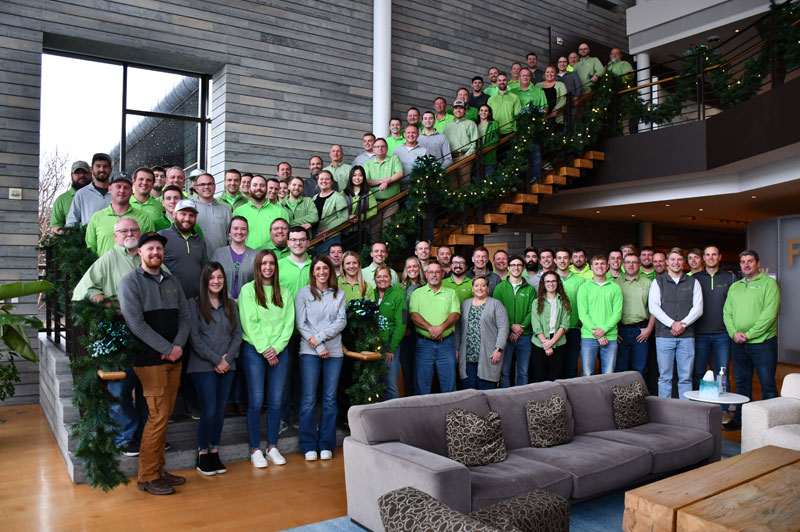
    Choice One Engineering with an office in Historic Downtown Loveland is honored to be recognized as one of Zweig Group’s 2025 Best Firms To Work For in the Civil Engineering category. This national award celebrates outstanding workplaces in the architecture, engineering, and construction (AEC) industry across the U.S. and Canada.

    Notably, this marks the 13th consecutive year that Choice One has ranked in the Top 5 of this prestigious award—an achievement that underscores the company’s dedication to building a workplace where people genuinely love to come to work.

    This recognition reflects Choice One’s commitment to cultivating a workplace where people feel appreciated. With a culture built on trust, camaraderie, and a shared sense of purpose, Choice One Engineering continues to set the standard for what it means to create a meaningful and rewarding employee experience.

    “At Choice One, we’ve found that when you create an environment where people find fulfillment doing meaningful work within their community, everything else just falls into place,” said Matt Hoying, President. “This award really reflects the incredible team we have and the culture we’ve built together—one that’s about enjoyment, growing together, and making real connections.”

    Firms were evaluated through an intensive process that included an in-depth corporate survey and anonymous employee feedback, measuring everything from benefits and retention to engagement and satisfaction. Choice One was recognized in the 50–99 employee category, standing out for its intentional focus on employee well-being, leadership, and organizational health.

    “The firms honored this year demonstrate what it looks like to invest in people in a meaningful, measurable way,” said Chad Clinehens, President and CEO of Zweig Group. “Their commitment to creating environments where employees feel valued and empowered is what drives innovation, retention, and long-term success.”

    With a mission to be the best firm to work with and for, Choice One Engineering continues to prove that a strong culture isn’t just good for employees—it’s good for business, clients, and communities.

    To learn more about Choice One Engineering, please visit www.choiceoneengineering.com

  • Does this make you feel safe?

    Does this make you feel safe?

    by Everytown for Gun Safety

    It’s impossible to keep up with all that’s going on in our federal government. But Congressional leaders are relying on our collective apathy to advance dangerous policies that put our lives at risk.

    Over 200 lawmakers in Congress have already signed onto a bill that would gut state gun laws and create a new federal mandate that would force states to allow people with dangerous histories to carry hidden, loaded guns in states that wouldn’t otherwise let them. We need to show our opposition: Send a message urging your Congressional lawmakers to reject this bill.

    More than 38,000 people have demanded that their representatives oppose this deadly bill—but your lawmakers have yet to hear from you, friend.

    Take a moment to tell your legislators that you’re counting on them to reject this dangerous Concealed Carry Mandate.

    Together, we can defeat the gun lobby and keep our communities safe.

    Thanks for taking action,

  • Ohio’s Emergency Preparedness at Risk: The Perils of Defunding the Readiness Community

    Ohio’s Emergency Preparedness at Risk: The Perils of Defunding the Readiness Community

    by Deirdre Beluan, CEO The Health Collaborative

    In an era marked by escalating natural disasters, public health crises, and infrastructure vulnerabilities, Ohio’s emergency preparedness infrastructure stands as a critical safeguard for its residents. However, recent federal budget proposals threaten to erode this essential framework, leaving communities exposed and ill-equipped to respond to emergencies.

    For over 20 years, The Health Collaborative has been charged with leading the Southwest Ohio Tri-State Disaster Preparedness Coalition, which ensures the area is prepared for and ready to respond/recover from disasters, public health emergencies, and other catastrophic events that impact the over 2 million people. The Coalition provides everything from specialized staff training and exercises to coordination and operational support during emergencies, all to mitigate impact and save lives.

    President Trump’s proposed budget eliminates the Hospital Preparedness Program (HPP), the federal funding that allows Tri-State Disaster Preparedness Coalition to exist.

    The Coalition does the kind of work behind the scenes that most of us don’t have to think about. Life-saving acts that keep people in our communities safe. Things like:

    • Securing generators for local long-term care facilities during an extreme weather
    • Coordinating resources during the 2024 IV fluid shortage
    • Managing behind-the-scenes communication during the latest potential measles incident

    This work (and much more) ensures stakeholders stay informed and ready to respond.

    The erosion of emergency preparedness funding not only compromises immediate response efforts but also undermines long-term resilience. Investments in preparedness are cost-effective, reducing the human life and economic toll of disasters. As climate change intensifies and public health threats evolve, the need for sustained and reliable funding becomes increasingly important.

    In short, this is what we will face if the program is eliminated:

    • Lives at risk — Poor coordination will directly lead to preventable deaths during emergencies.
    • Significant economic costs – High recovery and expenses, overwhelmed hospitals and lost productivity.
    • Breakdown of trusted partnerships — Loss of long-standing relationships that ensure fast, coordinated responses.
    • Fewer resources weakens hospital capacity when they’re needed most — Critical shortages in personnel, equipment (like ventilators, tents, and generators) supplies, and funding during crises.
    • Spread of misinformation — Without unified messaging, the public is more vulnerable to confusion and harmful misinformation.
    • No clear ownership — Without a defined structure, no one takes responsibility, and response efforts stall.

    It is critical that Ohio policymakers recognize the importance of emergency preparedness and prioritize funding to ensure the safety and well-being of all residents. This comparatively modest investment yields substantial returns by strengthening community resilience. Failure to act exposes the public to unnecessary risk and leaves the state dangerously unprepared for future crises.

    Please let your federal legislators know that investing in emergency preparedness and coordination is critical for safe and thriving communities and they must protect the Hospital Preparedness Program that funds the Tri-State Disaster Preparedness Coalition.

  • Lafayette’s role in the American Revolution as partisanship surrounds the teaching of American history

    Lafayette’s role in the American Revolution as partisanship surrounds the teaching of American history

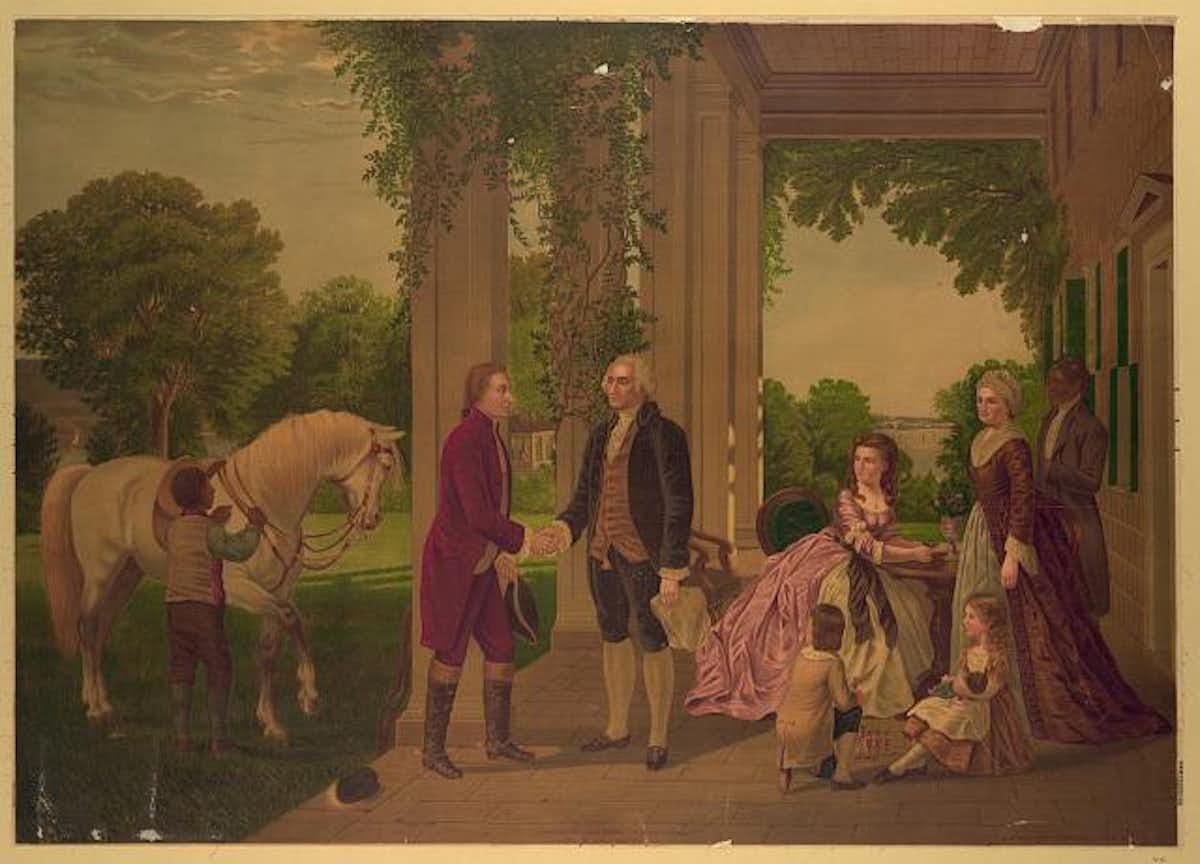
    ‘The reception of Lafayette at Mount Vernon, home of Washington,’ painted by Herman Bencke around 1875. Bencke & Scott/Library of Congress

    Matthew Smith is a visiting associate professor of history Miami University

    by Matthew Smith

    America is nearing the 250th anniversary of its revolutionary birth, the Declaration of Independence. July 4, 2026, will mark a milestone – and a time for reflection.

    Yet as fascination with America’s founding endures, controversy colors how the revolution is taught across the United States. From contested efforts by The New York Times “1619 Project” to put slavery at the center of America’s story, to attempts to limit teaching about race and racism, partisanship surrounds the teaching of American history. Anniversaries can inspire public passion, but they can also open old wounds.

    As an American historian and a naturalized citizen of the United States, I regard the American Revolution with both personal and professional interest. The fact that I grew up in the United Kingdom amuses my students to no end whenever we discuss the Revolutionary War. Sometimes, in my British-accented English, I remind them I did not personally grow up with King George. Teaching history is encouraging students to think critically about the past without dictating what emotions they should feel – patriotic or otherwise.

    Sadly, in the U.S., the sort of objective historical knowledge once taken for granted now appears to be waning. According to the National Assessment of Educational Progress, just 13% of eighth graders in 2023 ranked “proficient” in American history. A 2010 survey found that 26% of adults could not identify from whom America declared its independence, with China, Mexico and France among the responses.

    America divorcing France would have been news to Gilbert du Motier, better known as the Marquis de Lafayette. His commitment to the new country not only helped secure its independence, but it also helped solidify American identity decades later.

    Key alliance

    A privileged aristocrat who served in both the American and French revolutions, Lafayette went to war at age 19. Commissioning and equipping his own expedition across the Atlantic in 1777, he fought in many battles against the British, including decisive action at Yorktown. Earning George Washington’s confidence, Lafayette attained the rank of major general in the Continental Army.


    A painting of two men in jackets, breeches and stockings greeting each other on a porch as women look on.

    ‘The reception of Lafayette at Mount Vernon, home of Washington,’ painted by Herman Bencke around 1875. Bencke & Scott/Library of Congress


    Lafayette’s enrollment in the U.S. military predated the 1778 alliance between his home country and the United States. Eventually, France’s alliance turned the tide against Great Britain on land and at sea. By the war’s end, the French had supplied some 12,000 soldiers, 22,000 sailors and dozens of warships to the American cause, plus huge financial resources. When Lafayette volunteered, however, he was one of just a few foreign volunteers – and the most acclaimed.

    “Nowadays,” as historian Sarah Vowell conceded, Americans think of Lafayette as “a place, not a person.” But an abundance of cities, counties and thoroughfares named after the revolutionary hero attest to his former celebrity. During World War I, U.S. troops sailed to France under the slogan “Lafayette here we come,” promising to repay America’s debt of gratitude to France.

    A growing country

    Older Americans may recall the U.S. bicentennial of 1976, marked with much pageantry and even a state visit by Queen Elizabeth II. America’s semicentennial, however – the 50th anniversary of independence – played a far greater role shaping the idea of America in the minds of its citizens.

    Lafayette starred in the buildup to this 1826 commemoration, the first of its kind at the national level. President James Monroe, a fellow veteran of the War of Independence, invited Lafayette to be “the guest of America,” honored as the last living major general of the Continental Army. Beginning in July 1824, at the age of 66, Lafayette embarked on a triumphal tour of all 24 states then comprising the union – nearly double the original 13.


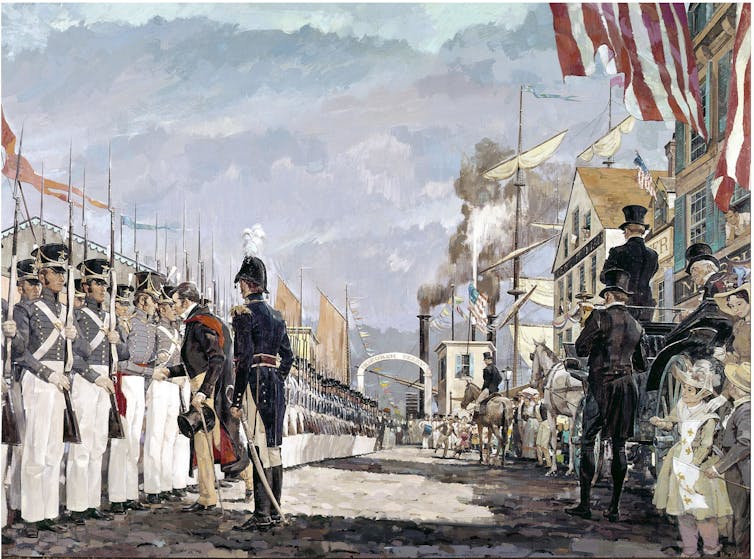
    A line of men in uniform stand in formation on a street as onlookers stand nearby.
    Lafayette greeting members of the National Guard upon his arrival in New York in 1825, painted by Ken Riley. The National Guard/Flickr via Wikimedia Commons


    As Lafayette headed west, borne by horse-drawn carriage, steamboat and canal barge, he journeyed across a changing America. Nowhere was America’s economic and demographic growth more evident than Cincinnati, where a crowd of 50,000 welcomed Lafayette in May 1825. Once a small frontier town, Cincinnati was growing faster than any comparably sized city in the nation: Its population increased from around 15,000 to roughly 115,000 in the quarter century following Lafayette’s visit.

    He addressed his audience with emotion: “The highest reward that can be bestowed on a revolutionary veteran is to welcome him with a sight of the blessings which have issued from our struggle for independence, freedom and equal rights.”

    Lafayette gave human face to America’s national commemoration. He granted citizens of frontier states like Ohio – hitherto excluded from the revolutionary narrative – license to celebrate themselves. High turnouts in western stops such as Cincinnati reflected enthusiasm for grand spectacles. They also reflected the growth of America’s print media, which had advertised his visit, and improved transportation in formerly remote regions of the country.

    Lafayette’s tour culminated with a September 1825 state banquet in Washington, D.C., hosted by the new president, John Quincy Adams. Adams – the son of America’s second president, John Adams – praised “that tie of love, stronger than death,” connecting Lafayette “for the endless ages of time, with the name of Washington.”

    Rose-colored glasses

    The enthusiasm that welcomed Lafayette 200 years ago was authentic. But like all good history lessons, Lafayette’s legacy is open to interpretation.

    A seated, brown-haired man in a suit jacket and khaki-colored pants sits in a glen with his cane beside him.
    ‘Portrait of Lafayette as an Old Man,’ painted by Louise-Adéone Drölling around 1830. Musée de l’Armée via Wikimedia Commons


    His grand tour cemented the myth of “the Era of Good Feelings”: a golden age of American political harmony. In reality, the seeds of America’s civil war were already evident. Missouri’s 1820 admission to the union threatened the country’s precarious balance between states that opposed slavery and states that allowed it – a crisis Thomas Jefferson warned was “a fire bell in the night.”

    Likewise, Lafayette’s lionization in the western United States coincided with the ongoing forced removal of Indigenous people. Ohio, for example, forcibly removed its last Native American tribe in 1843.

    Despite the uses and abuses of historical memory and the aversion of modern historians toward hero-worship, Lafayette remains a charismatic figure – a “citizen of two worlds” who championed both abolitionism and women’s rights. I believe his fading public memory indicates a troubling amnesia. America’s anniversary offers the opportunity to reconsider his legacy, alongside revolutionary stories of Americans from all walks of life.

    As Lafayette wrote home following the British army’s surrender in 1781: “Humanity has won its battle. Liberty now has a country.”

    _________________

    Published June 9, 2025 by The Conversation.

  • Ohio and Loveland’s Remarkable Reptiles

    Ohio and Loveland’s Remarkable Reptiles

    by Julie Watson

    In last month’s column (April Showers bring Vernal Pools) we talked a lot about Ohio’s native amphibians (frogs, toads, and salamanders). This month I want to talk about Ohio’s native reptiles, most of which can be found in Loveland. Reptiles are cold-blooded (the scientific term is ectothermic), breathe air, and are covered with scales. The buckeye state has over 45 native species of reptiles. 12 of them are turtles.

    Turtles have changed very little in the past 200 million years. These living fossils have been inhabiting the woodlands and waterways of Ohio since the Triassic period. Most turtles have long life spans with some going past the century mark. While turtles have a reputation for being slow, this is really only true of land-based turtles like tortoises and box turtles. They don’t need to be fast because they eat vegetation which they don’t have to chase. Their thick shells and heavily scaled legs protect them from attack. Many aquatic turtles can swim very quickly in order to catch their prey, things like invertebrates, frogs and fish.

    Ohio’s largest and longest living turtle, the snapping turtle, sits in the mud at the bottom of ponds and slow-moving waterways and catches its prey with a lightning-fast chomp. These heavy weights can weigh up to 35 pounds and they will consume anything they can catch and swallow including rodents and birds.

    Believe it or not, Ohio is home to five native species of lizards and one species that has become established (European wall lizard) in and around Loveland. While most of them can only be found in Ohio’s southern counties, populations of the common five lined skink are scattered across the state.

    The remaining native reptiles are snakes. Now, I know what you’re thinking, but keep reading. There are only three venomous (not poisonous) snake species native to Ohio: the northern copperhead, which despite its name, can only be found in a few of Ohio’s southern counties; the eastern massasauga, a short, thick bodied rattlesnake scattered amongst marshes and bogs across the state (including the Loveland area); and the timber rattlesnake found in only a few southern Ohio counties. In general, all three species are nonaggressive unless provoked. If you come across one give it plenty of space.

    The rest of Ohio’s native snake species are both harmless and helpful, often consuming pests. Several of our native snakes grow to be less than a foot long, while the eastern/black rat snake can grow up to six feet in length.

    Due to factors like habitat loss, pollution, and lack of understanding, Ohio’s native reptiles are in trouble. Five species are endangered, which means that they are in danger of being extirpated; four are threatened, meaning that if stress continues or increases the species may become endangered; and 11 are species of concern which means populations are being closely monitored for signs of distress. That adds up to almost half of Ohio’s native reptile population.

    So, how can you and I help our native reptiles? Here are some suggestions:
    Watch the roads. Remember reptiles are cold-blooded (ectothermic) which means they are unable to produce their own body heat. They seek out warm places like roads, sidewalks, and parking lots. If you encounter a snake or lizard avoid it. If it’s a turtle, it may be crossing to find a spot to lay eggs. In this case, if you want to help it across, always take it in the direction it was already headed. Helping snapping turtles can be risky. They can reach everywhere on their body except their tails; however, picking larger ones up by the tail can potentially harm them. After touching any reptile always wash your hands thoroughly.

    Give them space. This holds true when encountering any type of wildlife. Observe from a distance and don’t try to handle them. Generally, if you leave them alone, they will leave you alone.

    Don’t use pesticides, poisons, or sprays. If you poison a food source, toxins will build up in the consumer eventually causing death and/or reproduction defects (as in the case of bald eagles). Also. most reptiles have sensitive skin that easily absorbs harmful chemicals. Besides, many of our native reptiles consume pests and are therefore beneficial to have around.

    Educate yourself. Go to: http://wildlife.ohiodnr.gov for more information. Learn more about Ohio’s amazing reptiles and appreciate them for their beauty and the roles they play.

  • Beyond the backlash: What evidence shows about the economic impact of DEI

    Beyond the backlash: What evidence shows about the economic impact of DEI

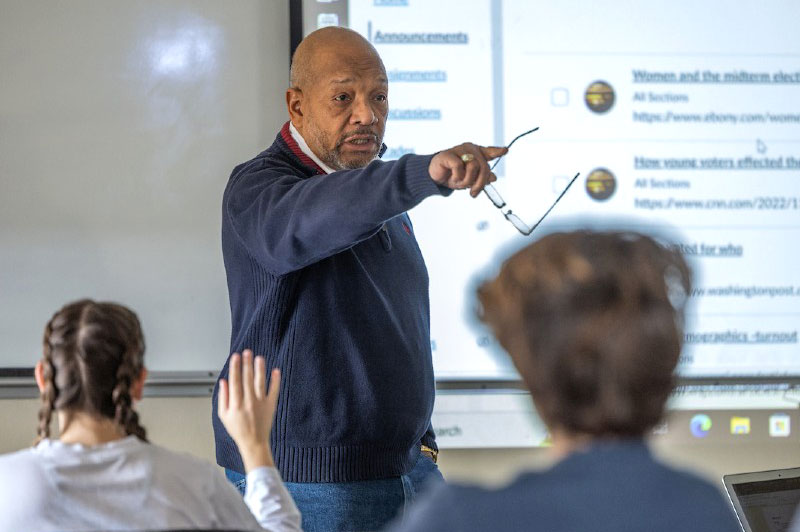
    Photo of Rodney Coates by Miami University

    by Rodney Coates,

    Few issues in the U.S. today are as controversial as diversity, equity and inclusion – commonly referred to as DEI.

    Although the term didn’t come into common usage until the 21st century, DEI is best understood as the latest stage in a long American project. Its egalitarian principles are seen in America’s founding documents, and its roots lie in landmark 20th-century efforts such as the 1964 Civil Rights Act and affirmative action policies, as well as movements for racial justice, gender equitydisability rightsveterans and immigrants.

    These movements sought to expand who gets to participate in economic, educational and civic life. DEI programs, in many ways, are their legacy.

    Critics argue that DEI is antidemocratic, that it fosters ideological conformity and that it leads to discriminatory initiatives, which they say disadvantage white people and undermine meritocracy. Those defending DEI argue just the opposite: that it encourages critical thinking and promotes democracy − and that attacks on DEI amount to a retreat from long-standing civil rights law.

    Yet missing from much of the debate is a crucial question: What are the tangible costs and benefits of DEI? Who benefits, who doesn’t, and what are the broader effects on society and the economy?

    As a sociologist, I believe any productive conversation about DEI should be rooted in evidence, not ideology. So let’s look at the research.

    Who gains from DEI?

    In the corporate world, DEI initiatives are intended to promote diversity, and research consistently shows that diversity is good for business. Companies with more diverse teams tend to perform better across several key metrics, including revenueprofitability and worker satisfaction.

    Businesses with diverse workforces also have an edge in innovationrecruitment and competitiveness, research shows. The general trend holds for many types of diversity, including agerace and ethnicity, and gender.

    A focus on diversity can also offer profit opportunities for businesses seeking new markets. Two-thirds of American consumers consider diversity when making their shopping choices, a 2021 survey found. So-called “inclusive consumers” tend to be female, younger and more ethnically and racially diverse. Ignoring their values can be costly: When Target backed away from its DEI efforts, the resulting backlash contributed to a sales decline.

    But DEI goes beyond corporate policy. At its core, it’s about expanding access to opportunities for groups historically excluded from full participation in American life. From this broader perspective, many 20th-century reforms can be seen as part of the DEI arc.

    Consider higher education. Many elite U.S. universities refused to admit women until well into the 1960s and 1970s. Columbia, the last Ivy League university to go co-ed, started admitting women in 1982. Since the advent of affirmative action, women haven’t just closed the gender gap in higher education – they outpace men in college completion across all racial groups. DEI policies have particularly benefited women, especially white women, by expanding workforce access.

    Similarly, the push to desegregate American universities was followed by an explosion in the number of Black college students – a number that has increased by 125% since the 1970s, twice the national rate. With college gates open to more people than ever, overall enrollment at U.S. colleges has quadrupled since 1965. While there are many reasons for this, expanding opportunity no doubt plays a role. And a better-educated population has had significant implications for productivity and economic growth.

    The 1965 Immigration Act also exemplifies DEI’s impact. It abolished racial and national quotas, enabling the immigration of more diverse populations, including from AsiaAfricasouthern and eastern Europe and Latin America. Many of these immigrants were highly educated, and their presence has boosted U.S. productivity and innovation.

    Ultimately, the U.S. economy is more profitable and productive as a result of immigrants.

    What does DEI cost?

    While DEI generates returns for many businesses and institutions, it does come with costs. In 2020, corporate America spent an estimated US$7.5 billion on DEI programs. And in 2023, the federal government spent more than $100 million on DEI, including $38.7 million by the Department of Health and Human Services and another $86.5 million by the Department of Defense.

    The government will no doubt be spending less on DEI in 2025. One of President Donald Trump’s first acts in his second term was to sign an executive order banning DEI practices in federal agencies – one of several anti-DEI executive orders currently facing legal challengesMore than 30 states have also introduced or enacted bills to limit or entirely restrict DEI in recent years. Central to many of these policies is the belief that diversity lowers standards, replacing meritocracy with mediocrity.

    But a large body of research disputes this claim. For example, a 2023 McKinsey & Company report found that companies with higher levels of gender and ethnic diversity will likely financially outperform those with the least diversity by at least 39%. Similarly, concerns that DEI in science and technology education leads to lowering standards aren’t backed up by scholarship. Instead, scholars are increasingly pointing out that disparities in performance are linked to built-in biases in courses themselves.

    That said, legal concerns about DEI are rising. The Equal Employment Opportunity Commission and Department of Justice have recently warned employers that some DEI programs may violate Title VII of the Civil Rights Act of 1964. Anecdotal evidence suggests that reverse discrimination claims, particularly from white men, are increasing, and legal experts expect the Supreme Court to lower the burden of proof needed by complainants for such cases.

    The issue remains legally unsettled. But while the cases work their way through the courts, women and people of color will continue to shoulder much of the unpaid volunteer work that powers corporate DEI initiatives. This pattern raises important equity concerns within DEI itself.

    What lies ahead for DEI?

    People’s fears of DEI are partly rooted in demographic anxiety. Since the U.S. Census Bureau projected in 2008 that non-Hispanic white people would become a minority in the U.S by the year 2042, nationwide news coverage has amplified white fears of displacement.

    Research indicates many white men experience this change as a crisis of identity and masculinity, particularly amid economic shifts such as the decline of blue-collar work. This perception aligns with research showing that white Americans are more likely to believe DEI policies disadvantage white men than white women.

    At the same time, in spite of DEI initiatives, women and people of color are most likely to be underemployed and living in poverty regardless of how much education they attain. The gender wage gap remains stark: In 2023, women working full time earned a median weekly salary of $1,005 compared with $1,202 for men − just 83.6% of what men earned. Over a 40-year career, that adds up to hundreds of thousands of dollars in lost earnings. For Black and Latina women, the disparities are even worse, with one source estimating lifetime losses at $976,800 and $1.2 million, respectively.

    Racism, too, carries an economic toll. A 2020 analysis from Citi found that systemic racism has cost the U.S. economy $16 trillion since 2000. The same analysis found that addressing these disparities could have boosted Black wages by $2.7 trillion, added up to $113 billion in lifetime earnings through higher college enrollment, and generated $13 trillion in business revenue, creating 6.1 million jobs annually.

    In a moment of backlash and uncertainty, I believe DEI remains a vital if imperfect tool in the American experiment of inclusion. Rather than abandon it, the challenge now, from my perspective, is how to refine it: grounding efforts not in slogans or fear, but in fairness and evidence.

    Rodney Coates is a Professor at Miami University in Oxford, Ohio.

    Rodney Coates has research and teaching expertise in critical pedagogy, critical race theory, race and ethnic relations, stratification, human rights and social justice, educational sociology, political processes, urban sociology, political sociology, and public sociology.

    Teaching, Research, and Other Activities

    Rodney D. Coates is a public sociologist engaged in critical race, social justice, social movements, social policy, and practice. For Coates, being a public sociologist means that the work he does must have an impact in the wider communities — both within and external to the university.

    He has conducted bias training for school districts and municipalities, police, and universities. He works with local communities, corporations, and Miami University to establish pathways to progress for under-represented students in such fields as STEM, business, and law.

    At Miami University he was the driving force for the creation of the Miami-Cincinnati Scholars program which provides full scholarships for underrepresented students going into STEM.

    As a public intellectual he is frequently featured in both national and local press to include NBC and NPR. He is a published poet, essayist, and editorialist. His sunset photos have been featured as the covers of several books, multiple exhibits. These photos have also been the basis for the HOPE endowed scholarship at Miami University for underrepresented students.

    He has developed and taught a wide assortment of courses such as Introduction to Critical Race and Ethnic StudiesIntroduction to Social JusticeCritical Race and Post-Colonial StructuresCivil Rights and Social Movements, and Human Rights and Social Movements. His course on globalization, social justice, and human rights, which links universities from around the globe (to include the United Kingdom, Moscow, Milano, Italy, Spain, British Columbia) has received several awards and been featured in published articles.

    Coates developed a summer bridge program for scholar-athletes in their freshman year. This course, treating the athletes as if they were honors students, sets the expectations and curriculum to challenge them to perform way above what they believe they could ever accomplish. Increasing gpa and graduation rates have increased each year the program has been offered.

    His books have won awards and charted new territory. He and co-authors are revising their SAGE-published The Matrix of Race: Social Construction, Intersectionality, and Inequality, having sold over 4,000 copies in its first four years since publication. It is currently being revised for the 3rd edition, slated for publication in January 2025. Coates has a record of scholarship that spans three decades and includes numerous published peer-reviewed articles, books, book chapters, and collections.

    Coates is a recipient of the 2021 College of Arts and Science’s Distinguished Educator Award. His award presentation, “Critical Race Theory and the Search for Truth,” is available for viewing.

    Education

    • Ph.D., Sociology, University of Chicago
  • April Showers Bring Vernal Pools

    April Showers Bring Vernal Pools

    Breeding salamanders  lack vocal chords, although some species can make clicking or popping sounds with their jaws. There are approximately two dozen species of salamanders that call the Buckeye state home.

    by Julie Watson

    Spring is here! The school year is winding up, the days are getting warmer, and rain is falling. Spring rain is essential.  It waters all the new plant growth, pulls pollen out of the air, and boosts water table and wetland levels.

    All wetlands are important. They help control flooding and provide habitat for a wide variety of plants, animals, and invertebrates. In fact, wetlands often have more biodiversity than most other types of habitats.

    A vernal pool at the Ohio Sawmill Wetlands Education Area in Dublin, Ohio

    One very special type of wetland that occurs commonly in Ohio is the vernal pool. The word ‘vernal’ refers to anything relating to spring. These shallow pools are filled by melting snow and spring rains. Having no permanent inlet or outlet, they tend to dry out during the summer months. But vernal pools are more than just large puddles. They are crucial habitats hosting a wide variety of species.

    However brief their stay, vernal pools are vital for the survival of many amphibian species. Many frogs, toads, and salamanders use vernal pools as breeding grounds. Some return to lay their eggs in the same vernal pools that they hatched from. Since vernal pools are temporary wetlands, they are free of fish which would prey on their eggs and young.

    The mating calls of many of these frogs and toads often betray the location of vernal pools. Spring peepers and wood frogs are the earliest to start. They can usually be heard before the snow stops flying.

    Wood Frog photo by DDauri Daniel D’Auria – Own work, CC BY-SA 3.0, https://commons.wikimedia.org/w/index.php?curid=10998356

    The tiny wood frog is the toughest amphibian, ranging as far as northern Canada. Unlike other cold-blooded species, they don’t bury themselves during winter months. Instead, they hibernate under leaf litter found on the forest floor. This leaves them vulnerable to freezing. Wood frogs are the only species able to manufacture natural ‘antifreeze’ which keeps their cells from freezing while allowing the area between their cells to turn to solid ice. As much as 45% of a wood frog’s body freezes during the winter. But when winter loses its grip, these cool frogs thaw out and make their way to vernal pools to find a mate.

    In addition to noisy frogs and toads, Ohio’s vernal pools also play host to breeding salamanders. These amphibians lack vocal chords, although some species can make clicking or popping sounds with their jaws. There are approximately two dozen species of salamanders that call the Buckeye state home. However, several species are endangered due to habitat loss. Like their noisier cousins, salamanders are carnivorous predators consuming mostly worms, insects, and other invertebrates.

    Due to the timing of vernal pool appearances, they are often important rest stops for migrating birds and mammals emerging from winter sleeps. They provide fresh, still water and protein rich snacks.

    Listen to Spring peepers…


    Vernal pools are also helpful to us humans. Like all wetlands, they help control flooding by holding onto excess water. In turn, they filter the water making it safer when it is slowly released into the water table. They also absorb large amounts of carbon dioxide from the air, helping to slow climate change.

    In other words, vernal pools are wonderous places that deserve our respect and protection. Although they are still common throughout the Buckeye state, they are only around for a limited time, spring. If you’d like to check out a vernal pool near you, ask your local park system where to find one. If you are lucky enough to find one, please observe from a distance so you don’t disturb the delicate ecosystem.

  • “It is a party! It’s Spring! ” by Elizabeth (Schickel) Robinson

    “It is a party! It’s Spring! ” by Elizabeth (Schickel) Robinson

    Poppies from Armand and White Iris from Becky, photo © Elizabeth Robinson

    I am grateful to share my Natural Wonderings/Wanderings. I write them as time and spirit allow. The idea and title were conceived one day many years ago when exploring outside with my young family. It would be quite a few years more before I began writing them in 2008. There are many connecting points over the years in observations of nature, life, and seasons. One for me is a strong sense of home-place, specifically in our little corner of the world here, in Southwestern Ohio. This sense of place helps carry interrelatedness over time and retains a comforting, familiar thread over endless variations within the cycle of nature and life.


    _______________

    In latest winter, when the world is gray, my spirit longs for sun and spring. Grace arrives with snowdrops nosing up through blotchy snow, and soon, tiniest blue flowers, like wishes come true, sprinkling the greening grasses.

    In the parade of spring, thin green blade-like leaves herald the timid crocus. getting bolder in the gathering light, beginning to show off spring colors of lavender, white, and yellow. The forsythia blooms butter yellow. Stepping into the dance,  the daffodils and sweet-smelling jonquils, colors ranging from salmon to white to the brightest yellow. I like to name them, fun names like Sweet Smiles and Pipit.

    My flowers give added joy by reminding me of the gardening friends who gifted me.  Here are Iris from Becky, Woodland Poppies from Cindi, and ferns from brother-in-law Kurt.

    Sometimes, I covet the brightest fire engine red, and nothing shouts “ red” like red tulips. The clumps of 5 -10 planted around the yard last fall don’t disappoint. These make my heart ache, their beauty reminds me of my mother, who loved red and wore it so well.

    In the spring shade garden, spring marches on.  Pink Bleeding Heart is sending its perfect packet of flowers in greeting beneath a single sky blue Virginia Bluebell.  Pushing up from the ground and unfurling are a host of Hosta.  Lining my basement steps, Solomon’s Seal quietly exhibits nodding, shy little white bells that march in neat rows up the underside of stems. In shadiest corners, ferns are beginning to unwind their tight little green balls as the False Forget Me Nots are sending up whorls of heavenly blue. Creeping low, is Wild Ginger with perfect, heart-shaped leaves. I will keep an eye out for its unusual blossom, spotted brownish red, and hugging the ground so close it is hidden unless you know to look.

    Where the sun is more plentiful, Iris are sending up stately buds.  In late April, the first one, deep purple, has bloomed. What is it about Iris?  They have presence and class, like ladies of a certain age, elegantly dressed and perfectly accessorized.  Nearby,  the Poppies are sending up Egyptian-looking shoots wth curving, graceful necks and bobbing fuzzy oval grey green buds. Poppy flowers are garden standouts, in the brightest orange, large and fragile, their petals resembling crinkly crepe paper.. They look so fine paired with the tall, lovely, brilliant, white Iris.  Did I mention their smell?  Please! Stick your nose right in one and inhale the freshness of springtime, with a definite hint of lemon.

    A new Iris, gleaned from a friendly, roadside gardener,  bloomed sunset orange this year. For two springs, I have patiently waited for it to grow strong enough to flower.  For just such occasions, I carry a small shovel in my car for roadside stops.  I hear memories of my kids’ voices,  “mom,  are you allowed to do that?

    My garden gives me buckets of delight and beauty that is a pure gift from God, helped along by neighborly friends.

    It rained yesterday. The bright orange Poppy petals litter the sidewalk like crepe paper after a party.

    It is a party!   It’s Spring! 

    ___________________

    Elizabeth (Schickel) Robinson has always lived in Loveland, married and raised a family here. Family, faith, service, community and creativity are most important to her. She is an artist driven to notice and bring beauty to others including creating commissioned works of art for hospitals and churches. She cares about our culture and wants to build opportunities for community and connection to God, each other and creation. She recently retired as a Registered Nurse at Cincinnati Children’s where she was privileged to care for patients and their families. She strives to live with her eyes wide open, seeing the extraordinary in the ordinary in life and nature that surrounds her.

  • Pollinator Protection

    Pollinator Protection

    by Julie Watson

    Save the Bees. I’m sure you’ve heard or seen such slogans increasingly over the past couple of decades. Of course, I’m all for saving any species, but some of the claims of activist groups on bee decline are a bit frightening. In trying to research the topic of bees and their necessity to humanity’s survival, I found varied and often contradictory reports. Sifting through the data, a few undeniable truths emerged.

    First of all, honeybees are not native to North America. They were domesticated over 9,000 years ago which precedes the domestication of animals like chickens, pigs, and horses. Honeybees originated in either Asia or Africa and spread to Europe. European settlers brought honeybees to the east coast of North America approximately 400 years ago. They slowly began to make their way across the continent.

    Secondly, although there are 4,000 species of bees native to North America, bees are not the only kind of insect pollinators. Other insects like ants, flies, butterflies, moths, wasps, and beetles do their fair share of pollinating too. Most of these undomesticated, native pollinators have seen sharp population declines since the turn of the century.

    Thirdly, there are many factors contributing to pollinator decline. More study is needed to determine the exact causes of dwindling populations of pollinating insects. However, we do know that many of the world’s important agricultural crops, including most fruits, nuts, and vegetables, are dependent on insect pollinators.

    At this stage of the game, all insect pollinators could use a little human help. Until researchers and scientists can agree on what is causing pollinator decline and how to stop it, what can you as a homeowner do about the situation?

    There are some steps you can take that will make a difference. Some of them are simple. Most of them will have additional benefits for the planet, your person, and your wallet.

    1. Hold off on spring yard word until we’ve had at least 10 consecutive days of 50 degrees or higher. Many pollinators overwinter in the leaf piles and natural debris that accumulate before the snow begins to fly.
    2. Go chemical free. Avoid using man-made chemical pesticides on your lawn and around your home. Not only do they affect whatever they are targeted towards, they also contaminate ground water, affect air quality, and many have been proven to contribute to human health issues like cancer.
    3. Embrace early bloomers like dandelions and violets. These bright bursts of color in your yard provide much needed sustenance to pollinators emerging from winter hibernation.
    4. Plant pollinator-friendly plants and trees that are native to your area. Native species require less water and care, and they will attract native pollinators. If you don’t have much room, use pots, window boxes, or sprinkle them in among your garden plants. If you want to help on a large scale, replace your grass with flowering lawn alternatives (like clover or creeping thyme) or plant portions of your lawn as native meadows. Both will reduce long-term lawn care costs.
    5. Raise your mowing deck. Leaving the grass slightly longer than normal provides shelter and cover for all kinds of pollinators as well as natural pest eaters like lady bugs and lightning bugs. It also means less frequent mowing which can save both time and money.
    6. Provide pollinators with water and shelter. Insect pollinators benefit from shallow pans of water with rocks placed in them that extend above the water surface. This gives them an opportunity to drink without drowning. Pollinator houses, whether storebought or homemade, can provide safety from predators and weather. Many simple plans are available online.

    Here are some resources to help you become a pollinator protector:

    The Ohio Extension Service has a hotline (April 1st – October 31st) for questions about pollinators or gardening (330) 296-6432 or visit go.osu.edu/pchotline.

    Ohio Pollinator Habitat Initiative https://www.ohiopollinator.org/

    The Cincinnati Zoo has a pollinator program. https://cincinnatizoo.org/gardens/plant-for-pollinators/

    Queen City pollinator Project offers education for grades 3 through adults  https://www.queencitypollinatorproject.org/