Author: Guest Column

  • “Paying off Debt Means Lower Taxes for Loveland City School District Residents”

    “Paying off Debt Means Lower Taxes for Loveland City School District Residents”

    An Op-Ed from Loveland City School District Treasurer John Espy

    Loveland City School District has paid off its last outstanding bond and is now debt-free. A construction bond was issued in 1998, and after nearly three decades of sound financial management, the bond has now been paid in full. The result is lower property taxes for Loveland City School District property owners.

    In 1998, district voters approved a bond for school construction and renovation projects. The money was primarily used to build Loveland Intermediate School and renovate Loveland Middle School. When they were issued, the bonds were funded at 5.17 mills. In the years since, the bonds have been refunded, or essentially refinanced, at lower rates – the most recent being .95 mills. The final payment on the bond debt was made in December of 2024, and local property taxes are no longer being collected to repay that debt.

    With the repayment of the bond, the average property owner in Loveland City School District is now paying about $136 less per year in local property taxes. Unless you looked closely at your most recent tax bill, you might have missed this bit of good news. The district is now debt-free, and all of our building bonds have been paid in full, marking a major financial milestone for our schools and community.

    As the Treasurer of Loveland City School District, I value transparent financial reporting and keeping our commitment to being a responsible steward of taxpayer funds. District leadership remains committed to transparency and providing you with the information you need to understand how your tax dollars are being managed.

    School funding in Ohio is complex, but our community has made it clear they want to learn more about the subject. Our State School Funding Committee, School Finance Town Hall last fall, and our ongoing Community Advisory Team Meetings have all allowed me to explain school finances to our community. I’ve also recently launched a series of educational “Finance Friday” videos and social media posts. The videos explain some foundational topics in school finance so our community is better informed. I hope you’ll take the time to watch my “Finance Friday” videos and share them with your friends. I also ask that you share the good news that Loveland City School District is debt-free after keeping our commitment to paying off the 1998 construction bonds.

    If you ever have questions about our district finances, please let me know. I can be reached at espyjo@lovelandschools.org.

     

  • “The March of New Life” by Elizabeth (Schickel) Robinson

    “The March of New Life” by Elizabeth (Schickel) Robinson

    “Spring Flowers and Happy Bees” © Elizabeth (Schickel) Robinson

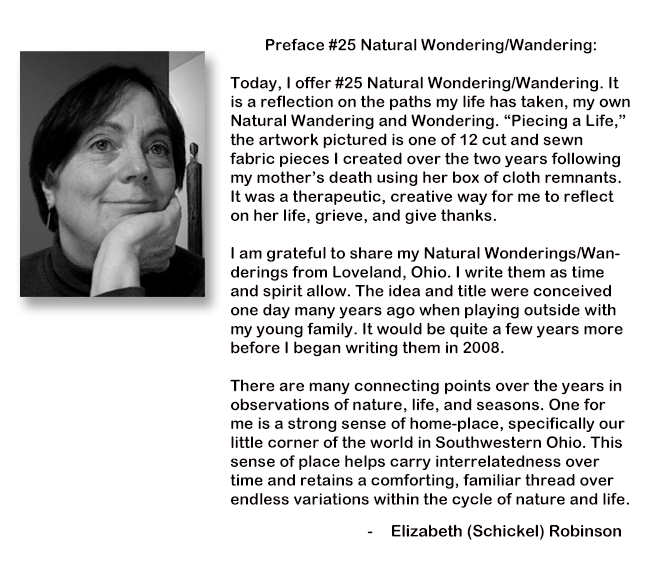
    I am grateful to share my Natural Wonderings/Wanderings. I write them as time and spirit allow. The idea and title were conceived one day many years ago when exploring outside with my young family. It would be quite a few years more before I began writing them in 2008. There are many connecting points over the years in observations of nature, life, and seasons. One for me is a strong sense of home-place, specifically in our little corner of the world here, in Southwestern Ohio. This sense of place helps carry interrelatedness over time and retains a comforting, familiar thread over endless variations within the cycle of nature and life.
    _______________

    In late February and early March, I am feeling a change.

    Pondering what lies waiting under the dark, wet earth, my mind’s eye roams just below the surface. I feel a pulse, visualizing millions-billions-of innumerable seed varieties unfurling. Nascent palest sprouts of white/green creeping steadily and relentlessly toward the increasing light. The earth’s surface still belies the magnitude of activity I know is imminent. The Magnificent Mystery of Creation is again beginning to unfold in this just Spring-ing time of the year.

    We are in the lion and lamb “fickles” of March. The stalwart yet delicately lovely Snowdrops and Winter Aconite, the first harbingers of spring, were a welcomed surprise, blooming through late February snow and ice. Now, in the gathering warmth of mid-March, they are making their final curtsies as ceremonial marshals of the Spring Parade, leavening our yearning for all we know will follow.

    Daffodils, sure spreaders of sunshine, are beginning to bloom, swaying and bowing in spring breezes. Crocuses greet us, and the tiniest Bluets and Salt-and-Pepper diminutives are peeking into grasses at our feet. “Please, notice me! Look at us! We are here for your Joy!” The pulse is quickening…

    Lordy, Lordy, my husband is talking about planting spring lettuce!

    This is The MARCH of New Life

    With all Creation, we shout for Joy, “Alleluia!”

    ___________________

    Elizabeth (Schickel) Robinson has always lived in Loveland, married and raised a family here. Family, faith, service, community and creativity are most important to her. She is an artist driven to notice and bring beauty to others including creating commissioned works of art for hospitals and churches. She cares about our culture and wants to build opportunities for community and connection to God, each other and creation. She recently retired as a Registered Nurse at Cincinnati Children’s where she was privileged to care for patients and their families. She strives to live with her eyes wide open, seeing the extraordinary in the ordinary in life and nature that surrounds her.

  • Ohio weather: Everyone jokes about it – by Julie Watson

    Ohio weather: Everyone jokes about it – by Julie Watson

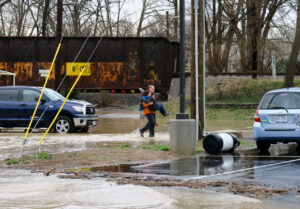
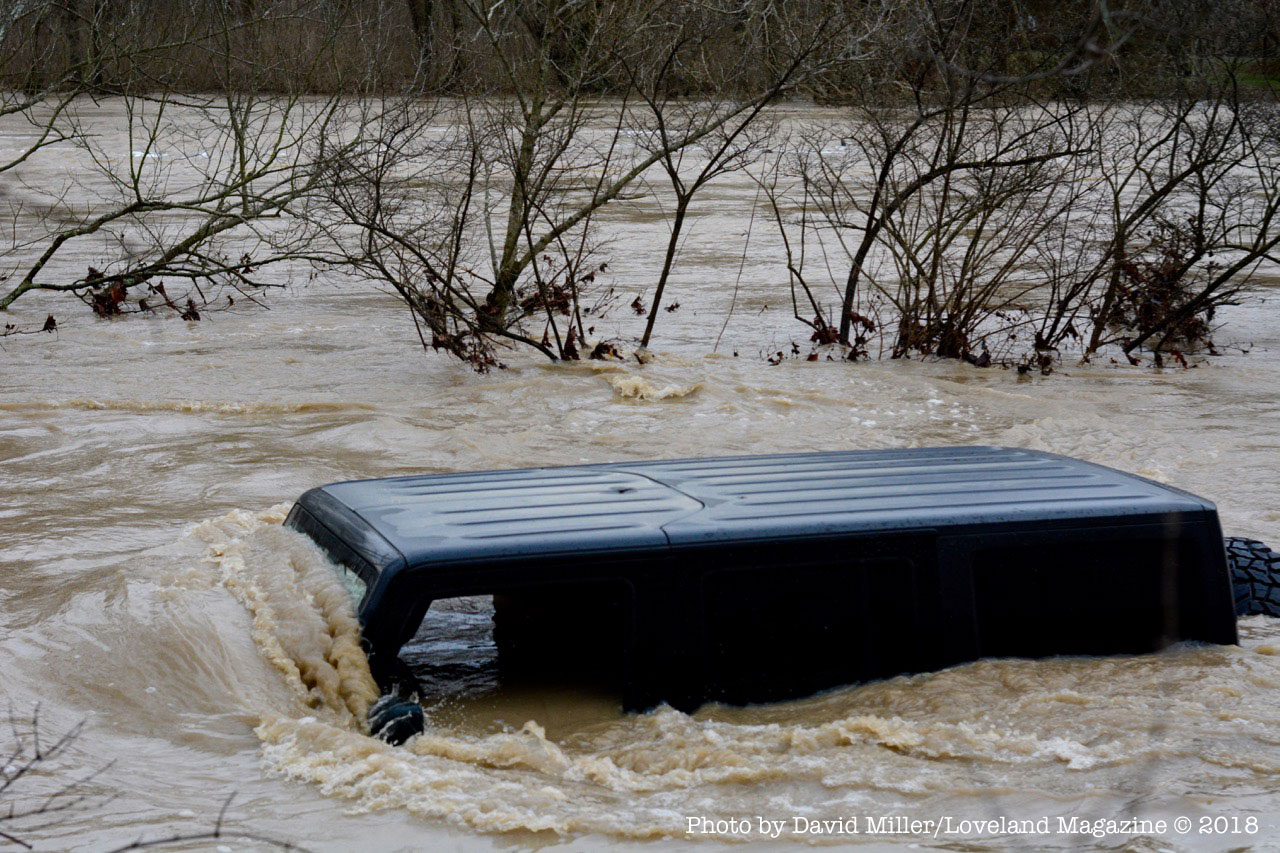
    In 2018, a driver drove his Jeep into the flood waters of East Kemper Road and the occupants had to swim to safety. The automobile remained almost completely submerged overnight and the driver was cited by the Loveland Police because he ignored “Road Closed” signs. (Loveland Magazine file photo)

    by Julie Watson

    Wait five minutes and the weather will change; You can experience all four seasons in the span of a few hours; Mother Nature can’t seem to make up her mind.

    Spring is the season when Ohio weather is the most unpredictable. Spring weather can be downright dangerous, even deadly. Rain and warming temperatures can cause flooding and fog. Changing temperatures can result in strong storms bringing lightning, high winds, hail, and tornadoes. 2024 saw a record breaking 74 tornadoes in the Buckeye State. Six of them were in Warren County alone.

    Here are some tips to stay safe in Ohio weather this spring:

    • Never drive through flood water. Water is the strongest force on earth. Even if flood water appears to be shallow, currents can carry dangerous debris and weaken infrastructure foundations. Water levels can also rise quicker than expected. The National Weather Service slogan ‘Turn around, don’t drown’ is good advice.

    • When driving in foggy conditions reduce your speed accordingly. Be sure to leave plenty of distance between you and vehicles in front of you. If fog is heavy, turn your hazard lights on, and your headlights even if it is daylight. Just remember to use your low beams. High beams will reflect more off of the fog making it even more difficult to see. If fog is too thick, consider pulling off the road.

    Loveland Magazine File Photo (© 2017)

    • In stormy weather, there are some basic rules to remember. If you are at home, keep an emergency storm kit stocked and handy. It should contain a flashlight (with good batteries), bottled water, blankets, hand sanitizer, a first aid kit. You can add more things to it if you choose.

    • When it is storming, avoid touching any device that is plugged in including corded phones. Avoid plumbing and water including washing hands, showering, washing dishes. Stay away from doors and windows that may contain metal.

    • If tornadic activity is expected, go to the lowest level of the building taking your storm kit and charged cell phone with you. If you cannot get below ground level the next best place is in an interior room with no windows, in a bathtub (dry of course), or under a sturdy piece of furniture like a table or workbench. Crouch down and cover your head with your hands.

    • If you are outdoors during sever weather take shelter from hail and high winds. Do not shelter under or near trees. Watch out for blowing debris.

    • During a lightning storm remember that thunder is the sound that lightning makes. If you hear thunder, there is lightning in the area even if you cannot see it. Lightning wants to find the quickest path to the ground, so it tends to strike the tallest object around; do not shelter under trees. If you are the tallest thing around, stay low. Another quick path for lightning to travel is through conductors like metal, water, and electric lines. Avoid touching concrete structures which contain metal rebar. Stay away from water and power lines.

    • If a tornado is near, evacuate all vehicles and find the lowest spot possible, like a ditch (as long as its not filled with water).  Lie flat or crouch down covering your head with a blanket, jacket, or your hands. Do not seek shelter under an overpass or bridge.

  • Becca Moates: Current Governor DeWine budget proposal undoubtedly leads to additional Loveland levy

    Becca Moates: Current Governor DeWine budget proposal undoubtedly leads to additional Loveland levy

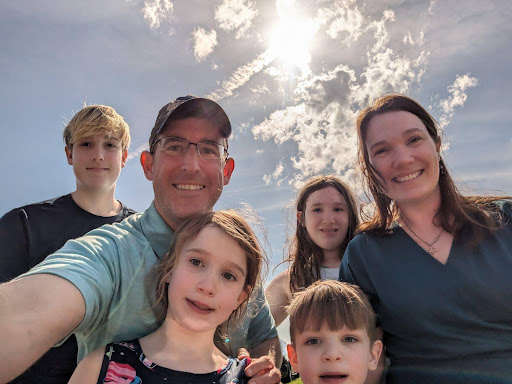
    Becca Moates and her family (Provided)

    by Becca Moates

    Dear Loveland School District,

    Let’s start with:

    Our goal this week is to send 1000 letters to the statehouse by March 21, 2025. Help make this happen! 

    Our family moved here a decade ago after the military, and what a well-loved decade it has been. When we packed and moved like the nomads we had been previously, we never expected to find such a great community. It has been everything from a patient phone call from a teacher, a basket of laundry when the dryer broke (3 times in the last decade), and a dish of food when a loved one passed away. Loveland is a small town with a big heart.

    Our schools are a vital component of our community, and our students thrive thanks to the dedication of our educators. We rank in the top 3% of districts in the state, with 97% of districts having more teacher support per student. Our teachers and staff are dedicated, as are our wonderful students. We personally,  have four children and three of them in Loveland schools. It has been amazing to watch how they thrive and grow as people.

    The current budget proposal from Governor DeWine leads to lost funds for Loveland schools which will undoubtedly lead to additional revenue requests from the school district. Let’s continue to build the unity we have as community members to support the students who are the heart of our vibrant community.

    While we can and should discuss levies, we currently face a more significant financial crisis affecting our community.

    In 2021, Governor DeWine enacted the Fair School Funding Plan (FSFP), which aimed to implement three phases to support public school funding in Ohio, where over 90% of children attend public schools. 

    The new budget proposal will not fully fund the Loveland City School District, and our Governor and legislators need to understand that Loveland is one of many school districts affected by this situation. Currently, the proposed bill does not adhere to the guarantee established previously.

    Not only is the Governor failing to fulfill his promise, but we will also face a reduction of $2.5 million over the next five years. 

    Your Job Community:

    We can unite on this issue. If the state cuts funding (and as a state we are 45th out of 50 states in per pupil funding), the foundation of our community: our schools will suffer. It is time for our legislators to hear from all of us. We need Governor DeWine to endorse a bill that benefits our schools. We need to come together. Write letters, call legislators, and call the Governor. 

    Read the Loveland Schools Lobbying Request.

    Watch John Espy our school Treasurer testify before the Ohio House Finance Committee (42 Minute mark).

    Sincerely,

    Becca Moates, MSN, APRN-CFNP

    _____________

    Who To Contact

    Download the list or click below PDF to enlarge.

    What to Say?

    Here are some suggestions for what to include in your phone calls, emails, and letters to state lawmakers:

    • Your name
    • Your role (parent, student, staff member, community member) in the Loveland City School District.
    • Your story (explain why you support Loveland City Schools, your family’s experience with Loveland City Schools, and why you are concerned about funding cuts for our district. Make it clear that decisions about funding impact children and communities.)
    • Your request (for example: protect the “guarantee” because reducing it would hurt funding for our district, fully implement the Fair School Funding Plan with updated inputs, and increase the state share minimum to 20%)
    • Your appreciation (thank them for their work in Columbus and their attention to this issue that is important to you and our community.)

    We suggest you write an email message to lawmaker, then use that message as a script for a phone call. The message can then be printed and mailed to lawmakers for an additional contact point.

    [pdf-embedder url=”https://lovelandmagazine.com/wp-content/uploads/2025/03/Loveland-State-Legislators-136th-General-Assembly-2025.pdf” title=”Loveland State Legislators – 136th General Assembly 2025″]

  • I am once again asking Ohio lawmakers to please just feed the children

    I am once again asking Ohio lawmakers to please just feed the children

    Students getting their l lunch at a primary school. (Photo by Amanda Mills/Centers for Disease Control and Prevention.)

    Commentary

    by David DeWitt

    I am once again asking Ohio lawmakers to please just feed the children. For all that is good and decent, at long last, may we please at least just make sure schoolchildren aren’t going hungry?

    Pleading for the state government to make sure that Ohio schoolchildren aren’t spending their days dealing with hunger pangs, tired, irritable, distracted, unable to concentrate, unable to learn, well, that has traditionally been an obscene and mind-boggling ask for too many Ohio lawmakers.

    They keep declining to do it.

    But as my buddy Alexander Pope says, hope springs eternal in the human breast.

    So I will continue sounding the call, because I hold the firm and unshakeable, but apparently insane opinion that schoolchildren shouldn’t be going hungry.

    They should be fed. All of them. Whatever meals they need.

    Student hunger is pervasive in Ohio.

    With more than 1.6 million public school students, about 57% of them meet qualifications and are participating in free and reduced lunch programs.

    Data from Feeding America shows 1 in 5 Ohio children live in homes that are food insecure. In some counties like Cuyahoga and Adams and Scioto, it’s 1 in 4.

    Here’s the rub: A 2023 report from Children’s Defense Fund Ohio found that 1 in 3 children who live in those food insecure homes don’t qualify for free school meals because their households are technically over the 185% of poverty line.

    Many others don’t participate for fear of judgment.

    This means that hundreds of thousands of schoolchildren in Ohio are going hungry during the school day because either they’re not covered or fear the stigma.

    Rubbing gravel on the wound, Republicans in U.S. Congress are right now looking at making cuts that would slash national school meal programs, impacting 280,000 Ohio kids.

    But in Ohio, a new bipartisan bill, Ohio Senate Bill 109, would make sure that no Ohio K-12 student has to go through the day hungry. The legislation sponsored by state Sen. Bill Blessing, R-Colerain Twp., and state Sen. Kent Smith, D-Euclid, would provide breakfast and lunch at no cost to public and chartered nonpublic school students.

    During the 2023 Ohio budget season, a proposal for universal school meals was made but was never passed.

    Under this cycle’s proposal, the Ohio Department of Education and Workforce would be directed to reimburse public and chartered nonpublic schools who participate in the national school breakfast and lunch programs by covering the gap between the federal reimbursements for free and reduced-price breakfasts and lunches and those who would be required to pay because they don’t qualify for meal assistance.

    The bill lists an appropriation of $300 million to support the state reimbursements. The state operating budget is projected at $108 billion for fiscal year 2026 and $110 billion for fiscal year 2027.

    Blessing and Smith plan to push for the bill to be included in the two-year budget due July 1, currently under negotiation in the Ohio House.

    A group of high schoolers from across Ohio rallied at the Statehouse this past Tuesday advocating for it.

    Every teacher I’ve ever talked to about it has told me the same thing: Hunger is an enormous barrier to learning. Meanwhile, kids are being put into social situations where they either go hungry or face the judgment of their peers.

    As we all know, the antenna of fear of social stigma and judgment is sky high in childhood and adolescence.

    We have a simple and effective solution: Remove the stigma, remove the fear of judgment, remove the school meal caste system, and just feed the children, all of the children.

    If the basic humanity and decency of it isn’t compelling enough, I can make an economic argument.

    Well-fed kids make for more attentive and engaged students. Attentive and engaged students have better academic success. Most successful students become successful citizens. Successful citizens grow the economy.

    So, feed the children. All of the children, all the same.

    Please just feed the children.

    YOU MAKE OUR WORK POSSIBLE.

    GET THE MORNING HEADLINES.

    ________________
    David DeWitt
    David DeWitt

    Ohio Capital Journal Editor-in-Chief and Opinion Columnist David DeWitt has been covering government, politics, and policy in Ohio since 2007, including education, health care, crime and the courts, poverty, state and local government, business, labor, energy, the environment, and social issues. He has worked for the National Journal, The New York Observer, and The Athens NEWS. He holds a bachelor’s degree from Ohio University’s E.W. Scripps School of Journalism and is a board member of the E.W. Scripps Society of Alumni and Friends. He can be found on X @DC_DeWitt

    Ohio Capital Journal is part of States Newsroom, the nation’s largest state-focused nonprofit news organization.

    MORE FROM AUTHOR


  • Winging into Spring with Julie Watson

    Winging into Spring with Julie Watson

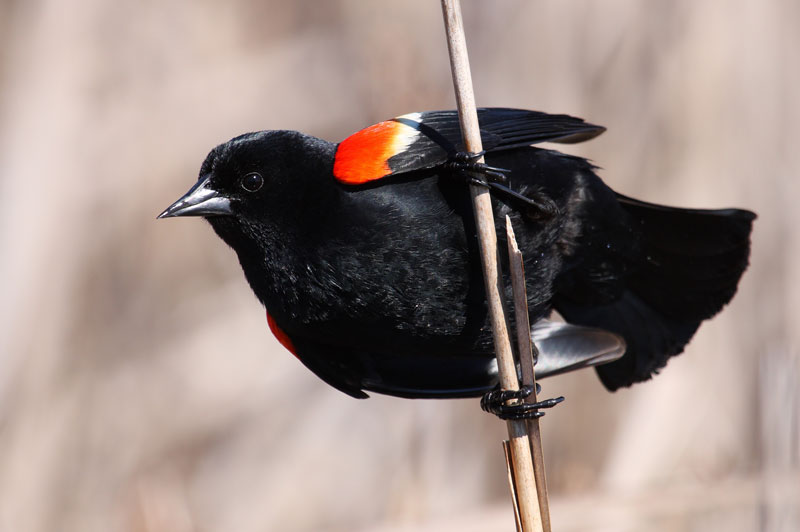
    By Cephas – Own work, CC BY-SA 3.0, https://commons.wikimedia.org/w/index.php?curid=10271562

    by Julie Watson

    It’s March, and spring is in the air, literally. No matter if the month came in like a lion or a lamb, look and listen to the skies for evidence. Harbingers of spring are winging their way north as you read this. And no, I’m not talking about robins. Robins don’t actually migrate; they stay in Ohio year-round. So that ‘first robin of spring’ sighting isn’t something to get all worked up about.

    However, in the past two weeks I have seen and heard flocks of Sandhill Cranes, Trumpeter Swans, Turkey Vultures, and most exciting of all, blackbirds. Now, blackbirds may not seem all that great, but keep reading and you’ll find out why they are.

    There are many species of blackbirds, Brewer’s, Grackles, and Cowbirds, just to name a few. They are generally black to brown, medium sized, perching birds, and they stick together. Many different types of blackbirds will congregate and travel together in large flocks during migration; after all, there is safety in numbers. Blackbirds are so gregarious they will even flock with European Starlings from time to time.

    But the reason its so exciting to see blackbirds in Ohio this time of year belongs to one species in particular Agelaius phoeniceus, more commonly known as the red-winged blackbird. These are the true sign of spring, and last week, I saw two of them!

    CC BY-SA 3.0, https://commons.wikimedia.org/w/index.php?curid=308953

    The females and immature males are slightly larger than sparrows with similar markings. This provides excellent camouflage amongst the cattails and marsh grasses where they nest. As with most bird species, mature males are more showy than the others. Males of breeding age are glossy black with a patch of red at the top of the wing called an epaulet. Sometimes these epaulets are concealed revealing only the yellow stripe that underlines the red.

    Ok, so with all these visual obstacles, how do you know if red-winged blackbirds have returned to usher in spring? This is where listening comes in. Red-wings have a very musical call with notes that sound like running water. It is easily recognized. In fact, it’s one of my favorite bird calls (right behind most owl calls). Check it out: Red-winged Blackbird Sounds, All About Birds, Cornell Lab of Ornithology.

    Males call to attract mates and defend their territory. Their sound can be heard in marshy areas and among farmland all summer long. In fact, some would argue that in addition to crickets, red-wing blackbird calls are the sound of summer.

    Listen to a Red Winged Blackbird

    When those cold March winds blow and snowflakes are flying, it’s easy to doubt that spring is right around the corner. Remember, all you have to do is look and listen to the skies for proof that spring is on its way.

    If you’d like to be able to identify birds, Cornell Lab of Ornithology, a world leader in wild bird research and identification developed the Merlin App. The App went live in 2014. It is free and runs on both Apple and Android devices. Happy birding!

    As spring approaches all of our feathered friends could use a little help. Here’s what you can do:

    • Fill the feeders
    • Provide fresh water
    • Provide shelter from weather and predators near the feeders
    • Keep cats away
    • Put up nest boxes
    • Put bits of string, yarn, hair and fur out in your yard for nesting materials

  • COMMENTARY: My family isn’t sick: Trump’s dangerous attack on neurodivergent Americans

    COMMENTARY: My family isn’t sick: Trump’s dangerous attack on neurodivergent Americans

    Stock photo via Getty Images.

    Americans with autism, ADHD and other conditions deserve recognition and support, not to be treated as a ‘health crisis’

    Carolyn McCoy
    by Carolyn McCoy

    President Donald Trump’s recent executive order on chronic disease and mental health is dangerous: It groups autism and ADHD — natural, genetic neurotypes — alongside chronic diseases. This is not just inaccurate, it is harmful to millions of neurodivergent Americans fighting for acceptance and equal rights.

    Autism and ADHD are not diseases. They are not illnesses. They are not a “health crisis.” They are neurodevelopmental variations, passed down through families — just like eye color.

    I am neurodivergent. So is my child, my mother, my sister and my nephew. We are not sick. We do not need curing. What we need is recognition, support, and a society that doesn’t try to erase us.

    This harmful framing isn’t just offensive — it’s a strategic attack on disabled people, targeting our children first.

    Stripping away protections

    For years, I have fought to get my daughter the support she needs in school. She is too smart to be recognized for her disabilities, yet too disabled to fit into the school environment. The system refuses to acknowledge that neurodivergent children struggle in ways that aren’t immediately visible — and now, they are making it even harder.

    While Trump calls neurodivergence a “health crisis,” Republican-led states are suing to strip away protections for disabled children. Multiple states want to eliminate Section 504 protections, which ensure that kids with disabilities have rights to accommodations in school

    And it doesn’t stop there. Trump’s hand-picked Secretary of Health and Human Services, Robert F. Kennedy Jr., has a long history of spreading misinformation about autism and ADHD. He falsely claimed vaccines cause autism — a claim that’s been widely debunked for many years — and referred to the rise in autism diagnoses as a “holocaust.”

    Now, this same man is leading federal health policy.

    Follow the money

    Let’s be honest: They simply don’t want to spend money on kids like mine.

    Those 504 plans and disability protections cost money, and rather than ensuring public schools provide equitable access, states are diverting those funds elsewhere.

    In Ohio, the expansion to near-universal private school vouchers has almost entirely benefited wealthy families that were already sending their kids to private schools.

    This is about funding education for the privileged while gutting public schools.

    YOU MAKE OUR WORK POSSIBLE.

    Mask, hide or be punished

    I was diagnosed young. Instead of being encouraged to embrace who I was, I learned to suppress my natural instincts, reactions and behaviors.

    For years, I played the part. The world received me more kindly when I wasn’t being myself.

    It wasn’t until recently that I started to undo the years of conditioning that told me my natural way of existing wasn’t acceptable. For the first time in my life, I feel authentically me.

    I am happier now, even though the world doesn’t always accept me the way it did before. And I refuse to let my daughter grow up believing she has to do the same.

    But this executive order? The lawsuits against 504 plans? The diversion of public funds to private schools?

    They are telling our children exactly that: Mask. Hide. Fit in. Or be punished.

    What we actually need

    If the administration truly wants to address health disparities, it should support neurodivergent individuals, not pathologize us. That means:

    • Protecting 504 plans and disability rights
    • Reforming education to stop punishing neurodivergent kids for being themselves
    • Increasing access to neuro-affirming healthcare
    • Acknowledging that neurodivergence is not a crisis

    The government can cling to outdated, ableist narratives or listen to the millions of neurodivergent individuals saying:

    We are not a disease. We are not a crisis. We have always been here, and we are not going anywhere.

    We demand a retraction of this harmful framing, recognition that neurodivergence is part of human diversity, and real action — not to “fix” us, but to create an environment where we can thrive.

    We will not stand by while our rights — and our children’s rights — are taken away. It’s time to push back.

    Loudly. Relentlessly. Neurodivergent voices will not be silenced.

    ____________

    Carolyn McCoy
    Carolyn McCoy

    Carolyn McCoy is a mother to a neurodivergent 11-year-old and two stepchildren, ages 13 and 15. She is a marketing strategist, mentor, writer and advocate for neurodivergent and human rights, and she is passionate about fostering a more inclusive world. In addition, Carolyn serves on the committee for Cancer Gateway Research’s Celeb Fight Night, supporting critical cancer research initiatives.

    MORE FROM AUTHOR

  • Living or visiting Loveland can be a Naturally Healthy 2025

    Living or visiting Loveland can be a Naturally Healthy 2025

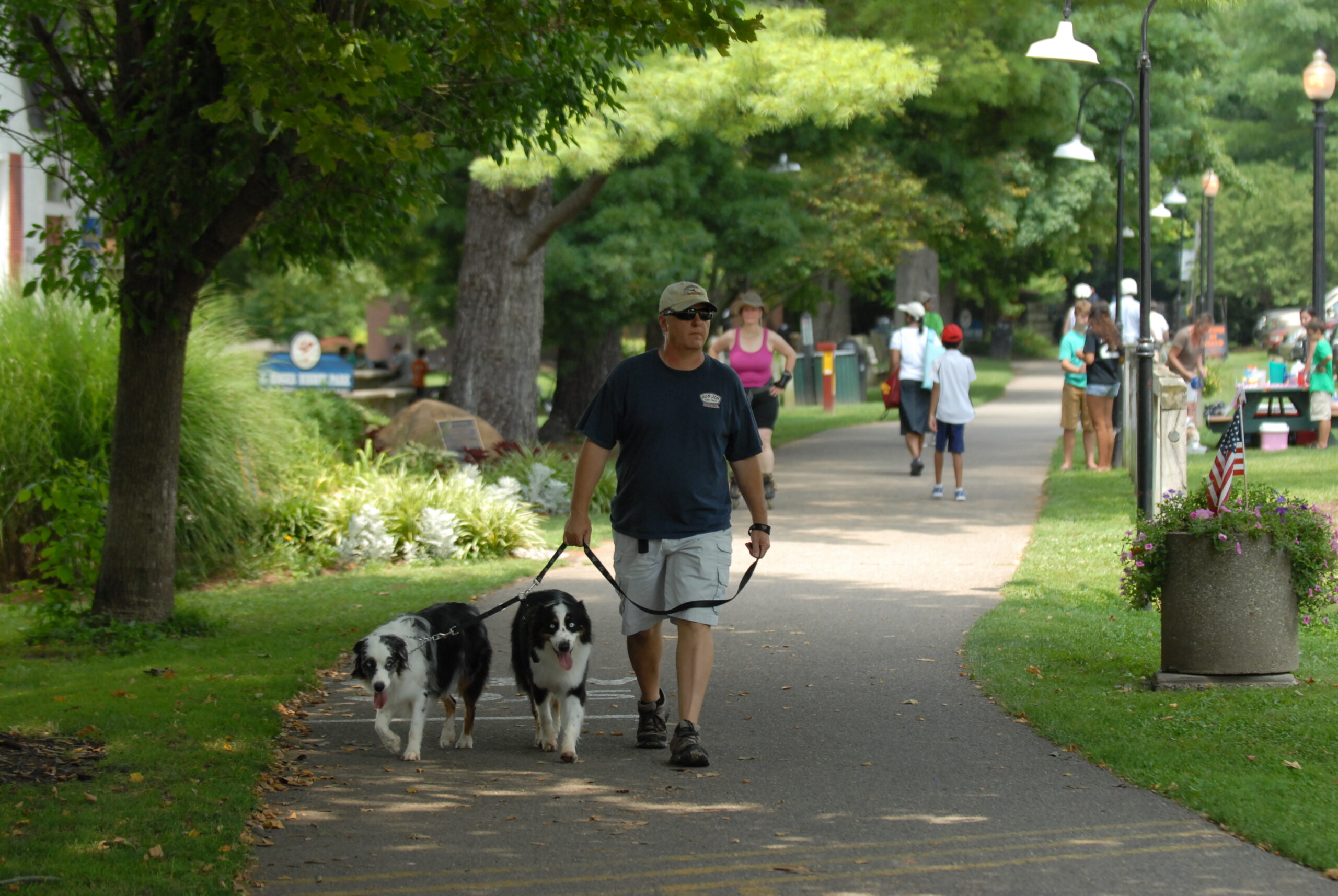
    The Loveland Bike Trail in Loveland’s Historic District

    Photo © David Miller 2025

    by Julie Watson

    Just over half of us have made New Year’s resolutions. The most common ones revolve around physical and mental wellbeing.  Topics like exercise, fitness, and losing weight weigh heavy on our minds. Just as important are issues such as socializing, de-stressing, finding life’s balance, inner peace and others that fall under the mantle of mental health.

    Living in or visiting Loveland, Ohio can mean you are in the perfect place to help you live up to the promises you’ve made to yourself on January 1st.

    If you’ve made a personal health related resolution or goal for 2025, there is a simple and free way to accomplish what you’ve set out to do. I’m talking about nature.

    Research shows that spending even short amounts of time in nature can have positive effects on both mental and physical health. The American Psychological Association purports that spending time in nature can improve mood, and attention while at the same time lowering stress levels. They even claim reduced risk of psychiatric disorders and increased empathy and cooperation. Studies show that exposure to green spaces like parks and trails can increase cognitive development and promote self-control.

    Photo by David Miller © 2025

    Hiking, walking, kayaking, canoeing, and jogging are great ways to get some exercise while spending time outdoors. Don’t forget about taking in deep breaths of fresh air which promotes better sleep.

    So how much time do we need to spend in nature to start seeing benefits? One study found that two hours of nature exposure per week led to significant upticks in both mental and physical health. The best part is that the breakdown of those two hours didn’t matter. In other words, the benefits are the same whether the two hours were spent in one block of time or several shorter blocks of time.

    Rafting on the State and National Scenic Little Miami River in the heart of Downtown Loveland. Photo by David Miller © 2025

    Southwest Ohio residents have easy access to many free, fine parks and trails. Check out city, county, and state parks (https://ohiodnr.gov) as well as The Loveland Bike Trail (The Loveland Bike Trail Map Home – The Loveland Bike Trail Map). This trail is paved and offers users over 70 miles of safe exercise. It also connects the Ohio to Erie Trail which connects the Ohio River to Lake Erie. Lake Isabella is a Hamilton County park right on the outskirts of Loveland. Lake Isabella is a quiet 74-acre park on the bank of the State and National Scenic Little Miami River.

    As you can see, opportunities to reach your health and fitness goals for 2025 are plentiful. So, get out into nature for a better you.

    Some tips for enjoying all the benefits that nature can offer this winter:

    • Be sure to check the weather forecast.

    • Dress appropriately. Light thin layers that can be removed as you warm up are best.

    • When temperatures dip, keep sensitive skin like fingers and ears covered.

    • Wear good shoes or boots to keep your feet supported and dry.

    • Beware of snow and ice. Slow down. Invest in walking cleats that slip on over shoes or boots (think Yaktrax).

    • If there is snow and the sun is out, wear polarized sunglasses to help you see while preventing snow blindness.

    • Drink plenty of liquids. It’s easy to get dehydrated in the winter so be sure to drink enough.

    • Prevent chapped lips and hands by using lip balm and lotions that contain sunblock.

    • When possible, go with a friend, not only for safety reasons, but also for accountability.

    • Be sure your cell phone is fully charged. Cold air causes batteries to drain more quickly.

  • “Piecing a Life” by Elizabeth (Schickel) Robinson

    “Piecing a Life” by Elizabeth (Schickel) Robinson

    “Piecing a Life.”Created from my mother’s cloth remnants inherited after her death.

    © Elizabeth Robinson Studio, all rights reserved

    Professionally, I am an artist and retired registered nurse. Although I have been an artist throughout my adult life, nursing came later.  
    When my children were small, and I was breastfeeding my youngest, I was contemplating returning to school to become a registered nurse. I had a dilemma that many families face: searching for a way that fit me and my family to bring in additional income. 

    In my life I have been blessed with many inspirations, one of those was my Godfather who was both poet and nurse. I admired him, and his path intrigued me. Could becoming a professional nurse combine my natural caregiving tendencies as a mother and community member with my love of creating and giving as an 
    artist?  Would this path for me be life-giving and practical?

    One day my sister-in-law, also a nursing mom, was visiting with her young family. I mentioned my thoughts. Her little son overheard and had questions. She queried him, do you know what a nurse does? “Yes,” he confidently responded … “she gives milk to whoever needs it.” While not exactly correct in the literal sense, this was a young child’s loving and sweet response spoken directly from the heart and family experience.

    Many years later my children are grown, but I have never forgotten those useful words and the inspirational truth contained there-in. I did become a registered nurse. My nephew’s words, “she gives milk to whoever needs it,” is a continuing 
    point of navigation in my life, generally and specifically as a nurse and artist. 

    Nursing a baby is a singular joy and deep connection based on love and mutual need between mother and child. Knowing this, I find it lovely and very meaningful that nursing a baby as in breastfeeding and nursing professionally share the same root of mutual caregiving and receiving. As a registered nurse my desire to attend and advocate for others is met with my patients’ profound need of care for body and spirit. I strive to holistically assist them in leaning toward the healing they desire. It is my hope that this is a reflection of God’s sustaining love for us both.

    “Be an apostle of beauty,” an exhortation from Pope Francis is another point of life navigation for me. As an artist I am driven to create, but “be an apostle of beauty?” This calls me to right action and deep responsibility to create with clear attentiveness to love, noticing, and sharing the elemental and inherent beauty of life and creation that surrounds us. As an artist I know in my bones “that beauty saves me” and in the words of Dostoevsky “can save the world.”   

    Through tempest and sunshine, life has taught me the greatest comfort and indeed joy in life is in open-hearted giving and receiving love. Love manifested wonderfully and differently in each of us.

    ___________________

    Elizabeth (Schickel) Robinson has always lived in Loveland, married and raised a family here. Family, faith, service, community and creativity are most important to her. She is an artist driven to notice and bring beauty to others including creating commissioned works of art for hospitals and churches. She cares about our culture and wants to build opportunities for community and connection to God, each other and creation. She recently retired as a Registered Nurse at Cincinnati Children’s where she was privileged to care for patients and their families. She strives to live with her eyes wide open, seeing the extraordinary in the ordinary in life and nature that surrounds her.

  • Loveland Magazine columnist Julie Watson made her first ‘book’ out of paper and yarn when she was 10

    Loveland Magazine columnist Julie Watson made her first ‘book’ out of paper and yarn when she was 10

    The books are written under the pen name: Mercy Givens

    by Julie Watson

    I’ve wanted to be an author since I was four years old. I made my first ‘book’ out of paper and yarn when I was 10. I wrote my first play when I was in 5th grade. When I was 13, the 1st short story I ever wrote won the jr. creative writing category for the state of Ohio.

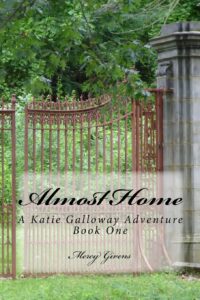
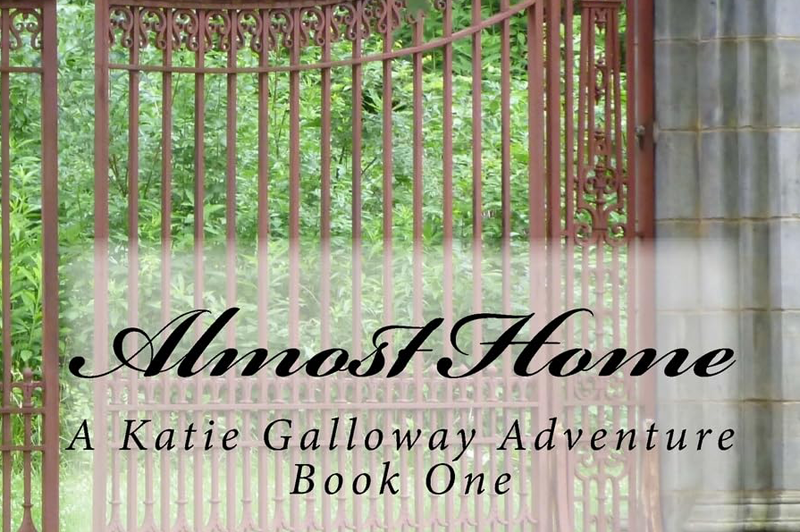
    I’ve written everything from poems to newspaper articles to try and become the best writer I could be. I’ve filled notebooks upon notebooks with all kinds of writing. It took 37 years before I published my first book, Almost Home: A Katie Galloway Adventure, Book 1. Book 2 of the Katie Galloway series, Decidedly Courageous, came along three years later. Two years after that I published book 3 of the series, Turbulent Waters.

    These books are works of historical fiction. Many hours of research went into each of them. I not only wanted to get the story’s time period correct, but also the attitudes and circumstances of the day. True, historical facts begin each chapter and help set the stage for the timely events that shape Katie’s world. These books are set in my favorite historical period which includes westward expansion in America.

    Katie Galloway is born into affluence in a world torn by the politics of slavery and civil war. Her life is torn between her mother’s fruitless world of New Orleans’ high society, and her father’s need for financial security on a lonely Texas ranch.

    As the South struggles to rebuild itself during Civil War Reconstruction, Katie comes of age as she searches for hope, truth, and a place to call ‘home’. Along the way she wrangles cattle, founds a school, loses her family, saves a man’s life, and survives the worst smallpox epidemic the world has known.

    Katie’s story is a powerful testament of faith, family, human rights, and tenacity, which transcends all the books in the series. As a lover of history, I truly enjoyed following Katie on her adventures. The books are written under the pen name: Mercy Givens and are for sale on Amazon. Look for more Katie Galloway adventures in the future.