I am writing to express my deep concern regarding the recent decision by Loveland City to deny the validity of case #2024-03: 200 Railroad Avenue HPPC Appeal based upon a 3rd party filing by a concerned Loveland resident. (Demolition of home in Loveland Historic District causing uproar)
Ironically, as we debate the future of historic buildings and the little yellow house on Railroad Avenue, a ten year anniversary of the groundbreaking on Loveland Station Apartments approaches (November 12, 2014).
Just barely a decade ago, Loveland residents woke up to a massive three-story apartment complex near the train crossing in our historic two-story whistle stop town, constructed even at the expense of losing our iconic train whistle. Transparency was nowhere to be found, and residents were left angered and baffled how it happened. Some even called to tear the buildings down.
As elected officials, Loveland City Council members are entrusted with the responsibility of representing the interests of all Loveland residents, especially when they show up at public meetings. We vote for them; at the very least, we expect transparent processes.
We asked only for an appeal to a zoning decision to demolish this historic house in question. Yet the City, under solicitor Joe Braun, denied several concerned citizens at the scheduled public appeal meeting an opportunity to contribute factual evidence as to the historic value of the home. From our perspective, the process failed.
It is crucial that our elected officials remain responsive to the concerns of their constituents. By actively listening to the community and considering their input on historical and architectural significance of buildings to the city, the City Council can make informed decisions that benefit both present and future generations. But they didn’t listen at all.
The City’s decision to allow the appeal to precede so far as to set a specific date for the appeal review and then, at that meeting, subsequently invalidate the appeal on technical grounds was not only unfair but suggests strategic timing to obstruct an open process.
This action effectively limited the opportunity for other residents to submit further appeals prior to the deadline, undermining the very essence of a transparent and democratic processes.
Residents showed up prepared because they believe the 200 Railroad Avenue building is a significant piece of Loveland’s history. Indeed, it was acknowledged by Council Member Neal Oury at the October 22nd Loveland City Council meeting that the original brick structure remains standing and sound.
In fact, it is the only remaining brick structure just a few yards from the Little Miami Railroad tracks on Railroad Avenue.
Residents who showed up to the appeal meeting wanted to know what we’re demolishing of our remaining history as a whistle stop town. They want thoughtful deliberation as part of a transparent process. Instead, the City appeared non-responsive.
It is essential that the City conducts public meetings in a fair and impartial manner. By disregarding the concerns of residents and limiting public participation in a zoning appeal process, the City has once more set itself up for hard questions reminiscent of seven years past.
This public doubt stems from the Loveland Station Apartments development followed by the era of Mayor Mark Fitzgerald and the attempt to replace the current Loveland City Hall with a FOUR story, multipurpose building in a public-private deal, as much as we would like to forget. Residents were angry, yes, and the city hall project was kicked aside—for now.
The maneuver to deny the appeal on October 30th, while deft, was strangely reminiscent of 2017 when failure of transparent process went so far that (then) resident Neal Oury called for a public recall of mayor Fitzgerald before announcing his own candidacy for a Loveland City Council seat. But it didn’t stop there. Transparent process failed so miserably that in 2017, a resident filed a sunshine lawsuit against the City of Loveland.
How can we take a step back?
A better way forward than denying the appeal process would have included 1) any council members with longterm friendship with the owner or developer recuse himself from votes on the question of demolition, and 2) residents given an actual opportunity to present their research findings at a newly scheduled Zoning Appeals Meeting.
Why not slow down and get it right? I urge the City Council to not dig in but instead to reverse its decision to deny the appeal on October 30th before razing the historic house.
Moving forward, I hope this latest pubic disappointment serves as a reminder to Council to prioritize transparency and open communication with residents, especially when making special zoning decisions that involve any plans for multi-unit buildings. (Six, three-story apartments proposed adjacent to Nisbet Park on Loveland Bike Trail)
By fostering a more inclusive and participatory decision-making process, Loveland City Council can better ensure that residents remain mutually supportive of their many hours of earnest public service.
Thanks to your hard work and commitment to the people we serve, 66% of Hamilton County voters approved the Developmental Disabilities Services levy for five more years. The renewal of this levy means that HCDDS can continue supporting people with developmental disabilities to live, work, learn, and fully participate in their communities.
Many people were instrumental to the success of this levy, and I want to take a moment to specifically point out a few of our essential supporters.
We could not have done this without the help of our amazing provider community, who dedicated time, funding, and so much effort to this campaign.
I also want to thank all of our staff for their dedication to our mission every day. The wide margin of community support for our levy shows that Hamilton County voters continue to recognize and value the high-quality services we provide.
And finally, I want to give a big thank you to all of the people and families we serve who helped by volunteering, spreading the word, and being ambassadors for HCDDS and this levy.
Thank you all, and congratulations!
Sincerely,
Leia Snyder, Hamilton County DD Services Superintendent
It isn’t 99 degrees, and the sidewalks aren’t melting – happy days! School is back in session; the kids are getting free breakfast and lunch, and our Tiger weekend bags are going home with nearly 100 kids. Our Middle and High School Pantries are stocked with supplies so the kids can grab what they need. This really helps the families that use the free and reduced school program; it provides those extra meals and snacks on Saturday and Sunday as well as long weekends and holidays. Are your kids’ part of a cheer, football, soccer, team, a choir or band group, Scouts, youth group, etc. looking for a project? Have them collect items for our bags or put together bags – we are happy to send you a list! Kids LOVE the idea of helping other kids.
We just finished our Back-to-School event and have other exciting events coming up; Empty Bowls, Pass It On (which fills the Thanksgiving Boxes, Holiday Boxes), the Giving Shop, there is never a quiet moment at the LIFE Food Pantry. We always need more assistance. Won’t you please consider volunteering? Look at our website and visit the volunteer section; we’d love to welcome you to our group for as little or as much time as you can donate. It’s a lot of fun and camaraderie for the community!
After the inevitable delays that happen with remodeling and construction projects, I’m excited to announce that we moved last weekend! Seeing things come together is so fulfilling when you know how much this move will mean for the clients. Most of all, I’m overwhelmed with gratitude by the flood of support from the community with the contributions arriving; from monetary donations to shelving to lamps to composting bins to sinks from our wish list. It feels a little bit like the Olympics; training, training, training, just waiting for the Ready, Set, GO! Our new address is 677 Loveland Madeira Rd., right next to ACE hardware. Look for information on a grand opening in October. We still have some items needed for the new location on our Amazon Wishlist if you would like to donate. You’ve never seen someone get so excited about opening an Amazon box and finding a composting bucket or a sink sprayer or an electronic bug zapper – it’s like Christmas every day! In all seriousness, we are appreciative of everything that comes our way and if you look at the list, you’ll see there are no fancy items and no high-end frills, just basic needs.
This event is an opportunity to mingle in the art gallery, learn about our foundation’s tireless mission of educating our communities about the fentanyl crisis, and bid on auction items that will help support our foundation’s goals. All proceeds from the evening go toward supporting our mission so that no family loses their Jack.
The need for fentanyl awareness is great. Fentanyl is the leading cause of death of 18-45 year olds in the U.S. and is increasingly impacting all ages. The only way to combat this epidemic is through spreading awareness. And we can’t spread our message without YOU! Purchase tickets here!
Also, if you or someone you know are interested in becoming a sponsor and joining an outstanding group of philanthropic supporters committed to making a difference in our community, click here to learn more about this great opportunity.
For more information on The Jack Quehl Foundation or the event, please contact Event Chairperson Jennifer Homer by email here. We look forward to seeing you and thank you in advance for your support!
The need for fentanyl awareness is great. Fentanyl is the leading cause of death of 18-45 year-olds in the U.S. and is increasingly impacting all ages. The only way to combat this epidemic is through spreading awareness in schools, the community and our workplaces. Education around fentanyl poisoning is relevant and vital for your business operations:
1. Employee Well-being: Your workforce likely comprises individuals who may be directly or indirectly affected by the fentanyl crisis. Educating employees about the risks of fentanyl contamination in the community can help safeguard their well-being and promote a healthier workplace environment. On-boarding new employees is a great time to share this information.
2. Customer Safety: If your business caters to young adult clientele, whether through products, services, or entertainment venues, you have a responsibility to ensure their safety. Providing information on fentanyl poisoning equips your customers with knowledge to make informed decisions and protect themselves from potential harm.
3. Corporate Social Responsibility: Demonstrating a commitment to social responsibility is paramount in today’s business landscape. By participating in educational initiatives on fentanyl poisoning, your business can actively contribute to the well-being of the community it serves, enhancing its reputation and fostering goodwill among stakeholders.
4. Legal and Reputational Risks: In the event of a fentanyl-related incident on your premises, ignorance is not a viable defense. Proactive education and preventive measures can mitigate legal liabilities and shield your business from reputational damage associated with such tragedies.
5. Economic Impact: The fentanyl crisis exerts a substantial economic toll, encompassing healthcare costs, lost productivity, and potential litigation expenses. By investing in education and prevention efforts, businesses can help alleviate this burden and contribute to the overall economic resilience of their communities.
In light of these compelling reasons, we urge you to consider integrating education on fentanyl poisoning into your business practices. If you would like us to come speak to your workforce, we can make a tangible difference in combating this epidemic. Together, we can empower individuals with the knowledge and resources they need to stay safe and thrive in our communities. Please complete this form and we will be in touch.
Thank you for your attention to this critical issue. We stand ready and look forward to the possibility of working together toward a safer, healthier future for all.
AFT President Randi Weingarten and Ohio Federation of Teachers President Melissa Cropper respond to the continued lies and political vitriol directed at the Haitian community in Springfield, Ohio
“The Springfield community needs help, not hate. Instead of working with city leaders to address issues like affordable housing, healthcare access, education and transportation, divisive politicians like JD Vance, Donald Trump and Senate candidate Bernie Moreno have been spreading hatred in a cynical attempt to score political points.
“There is no place in a civilized nation for conduct like Vance’s bald-faced admission that he is telling lies to fuel bigotry, and Trump’s planned visit to Springfield to fan the flames. The candidates’ deeply racist remarks are unacceptable on their face, but the consequences are real: They have incited bomb threats and led to an influx of white supremacist groups.
“We stand with the Springfield community—including educators, healthcare workers, migrant advocates, and city and state officials—as they work constructively to address their city’s growing pains while remaining a welcoming home for Haitian migrants, many of whom have fled violence. We commend Ohio Gov. Mike DeWine for correctly labeling these stories as ‘garbage that was simply not true’ and for denouncing the hate groups that are descending on Springfield.
“The United States was built on immigration. We look after our neighbors and believe in a shared future. We stand with all of Springfield’s residents as they resist the forces of darkness and demagoguery determined to exploit their city for rank political gain.”
The American Federation of Teachers is a union of 1.8 million professionals that champions fairness; democracy; economic opportunity; and high-quality public education, healthcare and public services for our students, their families and our communities. We are committed to advancing these principles through community engagement, organizing, collective bargaining and political activism, and especially through the work our members do.
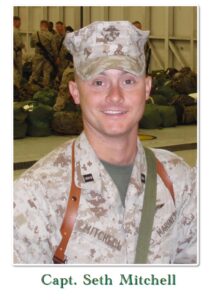
Since 2010 a core group of Seth Mitchell’s friends from Loveland High School’s class of ’97, have hosted the Captain Seth Mitchell Hero 5k in Loveland. Like many high schoolers, Seth participated in sports, club activities and was the Senior Class president along with being voted “Mr. Personality” by the class of ‘97.
He later achieved the rank of Captain in the Marine Corp where he served two tours in Iraq, one as an infantryman and piloted a Cobra Helicopter during his second tour of Iraq in addition to his last tour of Afghanistan.
After Seth was killed in a mid-air collision in October 2009, Seth’s friends started the Captain Seth Mitchell Hero 5K and the scholarships to honor and remember their friend.
Many of you have participated in the 5K and proceeds from the annual 5K go to fund scholarships in Seth’s memory.
The scholarship committee includes Damien Cook, Marisa Sobb, Mollie Emerick, Greg Carpinello and myself and his mother Connie. The committee seeks to find the LHS senior that reminds them most of Seth. While academic performance is considered, they look mostly for: “did he or she remind us of Seth”?
The committee looks for students that are hard workers, not afraid to set goals, experience some failure and overcome obstacles in their life. These are things witnessed in Seth. Other things that were known about Seth and looked for in scholarship recipients are: loyalty to friends, kindness, selflessness and the desire to serve others. Like Seth, the 2024 recipients are typical high school kids that like to be involved and have a lot of fun.
Since 2010 the Seth Mitchell Memorial Scholarships have totaled over $110,000, providing recipients a solid financial start for their post high school life. For 2024 The Seth Mitchell Memorial scholarship fund awarded two $5,000 scholarships. In addition, the Mitchell Family partners with the Let Us Never Forget Scholarship Foundation and provided an additional $5,000 scholarship.
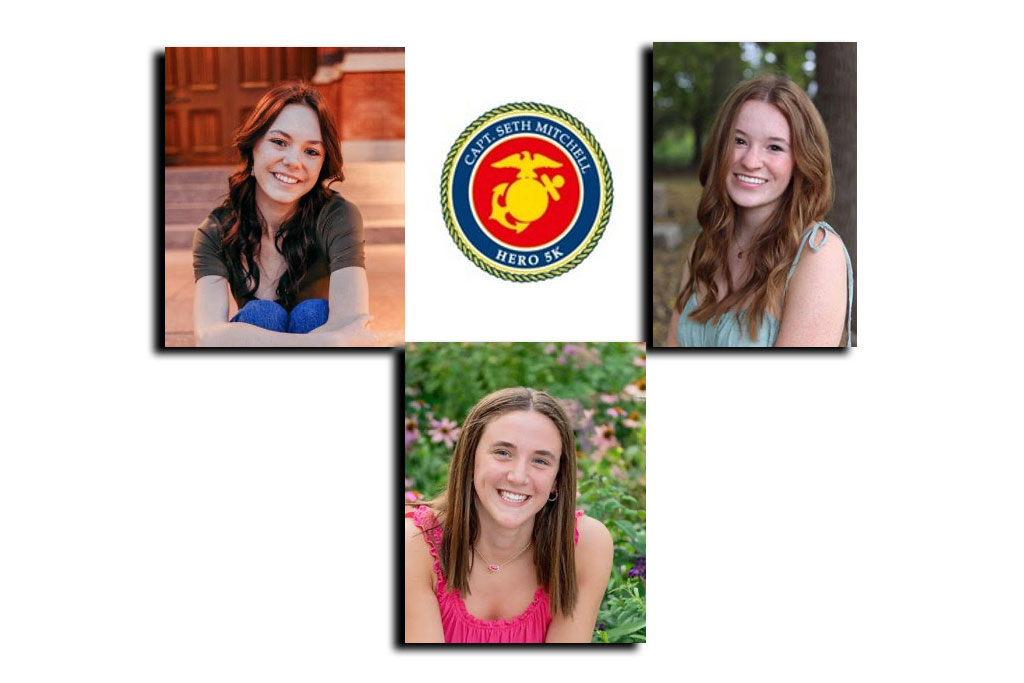
Recipients of the 2024 Seth Mitchell Memorial Scholarship are Maura Johnson and Elena Plante
Maura Johnson Elena Plante
The recipient of the 2024 Let Us Never Forget Seth Mitchell Scholarship is Gabby Saletta
Gabby Saletta
Lastly, the committee presented the following students with a $500.00 Memorial scholarship for 2024:
Ian Richards
Reagan Dell
Amelia Macura
Brady Burns
Thank you for your continued support through donations and participation in the effort to “Never Forget Seth” and those who gave the ultimate sacrifice to our great nation. We look forward to seeing you in October for the 15th Annual Captain Seth Mitchell Hero 5K, scheduled for October 5th at 10 AM at the Linda Cox Trailside Parking Lot. The 2024 Carolina Beach Seth Mitchell Hero 5k is October 12, at 9 AM, at Harbour Point in Carolina Beach NC.
Steve Mitchell is the Father of Captain Seth Mitchell
Donald Trump announced Monday Ohio junior U.S. Sen. J.D. Vance as his running mate in the 2024 Election, and I have some concerns.
Like J.D. Vance, I am also 39 years old; I also grew up in a struggling old industrial city in Ohio; I have also lost countless people close to me to the scourge of drug addiction; and I have also spent a lot of time in Appalachia — although my time was spent as a reporter in the Ohio foothills of Appalachia covering poverty, education, crime, courts, transportation, health care, business, and labor for nearly a decade.
Where does one begin? Perhaps 2016 when Vance first launched into the national spotlight with his memoir, “Hillbilly Elegy.” The memoir part of the book I found interesting and sad and heartbreaking on the level of all the other stories I have witnessed, heard, and reported on about childhood traumas passed down in families struggling with poverty.
Then there was the other part of his book, the diagnosis and prescription part, that I couldn’t understand or relate to: A certain seething contempt and scorn for the people of Appalachia and the Ohio “rust belt,” as though their struggles were the result of deep personal character flaws and a lack of bootstrapping, and not predictable consequences wrought by growing up poor in a region wracked by exploitation, stuck in cycles of generational poverty, and mired in the kind of desperation that accompanies these things.
Most reporters drift toward certain topics of personal interest, and mine has always been the hardships of those in poverty and all its attendant ills. You see, “poverty” is not its own specific beat; it’s a topic wrapped up in the largest resource, funding and hence achievement gaps in education; it’s tied to the lack of reliable transportation to get to work, or job interviews; it’s weighted down by a lack of access to primary and preventative health care, and even internet access; it’s connected to childhood trauma, and hunger, and the long-term denial of regular meals and nutritious food; it’s burdened by increasing costs and regressive taxes: A greater and greater percentage of income goes toward rent, utilities, groceries, toiletries.
I’ve met grandmothers providing kinship care to their grandchildren who’ve had to look at a couple boxes of mac and cheese and hot dogs, a loaf of bread and PB&J, as food for the week. I’ve met mothers working two jobs having to face a high electric bill but not having enough leftover for shampoo and deodorant. Imagine the bullying at school that leads to, and then think about how that bullying is just one more additional hardship — like not ever having your parent or parents around because they’re working two jobs, and you have to take care of younger siblings from the time you turn nine because child care is unaffordable.
The generally crushing existence of all of it year after year, decade after decade, a lifetime of one blow after another; one trauma after another; one setback after another; one car breakdown, one broken bone or disease racking up medical debt, one layoff sending the family hurtling toward crisis and bankruptcy, just imagine it, and you begin to see how poverty perpetuates itself by breaking everyone in it down, and leaving the vast majority without a shot to break the cycle. And of course the susceptibility to addiction is high. Anything to fade away from the nightmare for a few hours. So that begets all its own problems and cycles and traumas from there. I learned all about it in the courtrooms and at the addiction treatment centers.
So here is where I take issue. While I covered poverty in Appalachia, these are the cycles and problems of poverty at-large, wherever you find it, in the cities or in the hills, regardless of race, creed, or religion, throughout the country. This is not some cultural problem with Appalachia or the so-called “rust belt” — which is an insulting term, by the way, as is “Hillbilly.” This is what poverty is like anywhere in America. All that and much more.
Appalachia itself is charming and noble. The “Hey Buddy” drawl and geniality of so many people is downright charismatic. A lot of folks are a helluva lot of fun to go four-wheeling with or to visit with over a draft at the local hole-in-the-wall. There’s genuine warmth and a good-times attitude. There’s an authentic kindness and lack of pretension. Then you learn the history of the coal mines and the breaker boys and the company towns and the union-busting and the Battle of Blair Mountain, and the Matewan Massacre, and you begin to understand what the region has been through and where it is now.
The rural Ohio I know is full of strong, caring, resilient, community-minded people. I can say the same for the cities. Sometimes I get asked where I look for hope, and I always say that it’s not the politicians; it’s the thousands of good-hearted people working so hard every day to help their communities, in cities, towns and villages across Ohio. In my work as a reporter, I’ve been lucky enough to meet a whole heckuva lot of them.
VANDALIA, OHIO -Former U.S. President Donald Trump and Ohio Republican U.S. Senator JD Vance. (Photo by Drew Angerer/Getty Images.)
So after all my years of reporting their stories, some things seem pretty obvious to me as far as what can be done to help these communities, and giving tax cuts to billionaires just isn’t one of them. But that’s what Donald Trump is promising.
What these communities need is lots of funding and support to overcome the poverty achievement gap in education with best practices: early childhood education, before school programming with a full breakfast for those who need it; full universal lunch during school hours; and after school programs with dinner availability and options ranging from athletics to music and the arts to media production to outdoor activities. We need full, well-rounded education; and good pay and trauma-informed training for all teachers and public-facing workers; and connected, wraparound support systems for families.
We shouldn’t be cutting our education budgets, commoditizing and privatizing education as billionaires are planning to do under Trump, and leaving whole communities out in the rain to perpetuate the cycles. We should realize, to paraphrase Frederick Douglass, that it’s easier to give a child education, hope, and opportunity than it is to fix a broken man.
We should be making our public schools palaces of such learning, hope and opportunity, that keep children away from potentially toxic or negligent home environments for as long as possible; that give them three square, nutritious meals a day if that’s what some need; that provide them with good adult role models and mentorship, and allow them the opportunity to explore a variety of interests to find their individual passions to pursue, and a pathway toward a fulfilling, stable career and adulthood.
On Wednesday night, J.D. Vance made his pitch to the “working man” in his vice presidential acceptance speech. Stood up next to the actual Trump agenda, I just don’t know what he’s talking about. That’s my concern. Nothing in the Trump agenda tangibly promises to help the families J.D. and I know so well. Quite the opposite. Meanwhile, as far as the heart-wrenching menace of drug addiction, J.D. has already prioritized defunding Ukraine over fighting fentanyl.
In short, I have grave questions about J.D. Vance’s judgment and trustworthiness, and I do not understand his apparent desire to overthrow the post-WWII Pax Americana in favor of some sort of nationalistic isolationism where autocrats run amok, with a reactionary domestic agenda that dismantles programs for people in poverty and will only exacerbate and perpetuate their plight and exploitation — while Trump and the five dozen billionaires supporting him get even more filthy, stinking rich.
DAVID DEWITT
Ohio Capital Journal Editor-in-Chief and Opinion Columnist David DeWitt has been covering government, politics, and policy in Ohio since 2007, including education, health care, crime and the courts, poverty, state and local government, business, labor, energy, the environment, and social issues. He has worked for the National Journal, The New York Observer, and The Athens NEWS. He holds a bachelor’s degree from Ohio University’s E.W. Scripps School of Journalism and is a board member of the E.W. Scripps Society of Alumni and Friends. He can be found on X @DC_DeWitt
Ohio Capital Journal is part of States Newsroom, the nation’s largest state-focused nonprofit news organization.
And, ever so shamefully, we see it here in America, under the obnoxious guise of Making America Great Again, setting out to systematically destroy all those qualities that ever made her great in the first place: A self-governing constitutional republic of checks and balances cemented in the rule of law and the rights and liberty of the people — by the people, for the people.
by David DeWitt
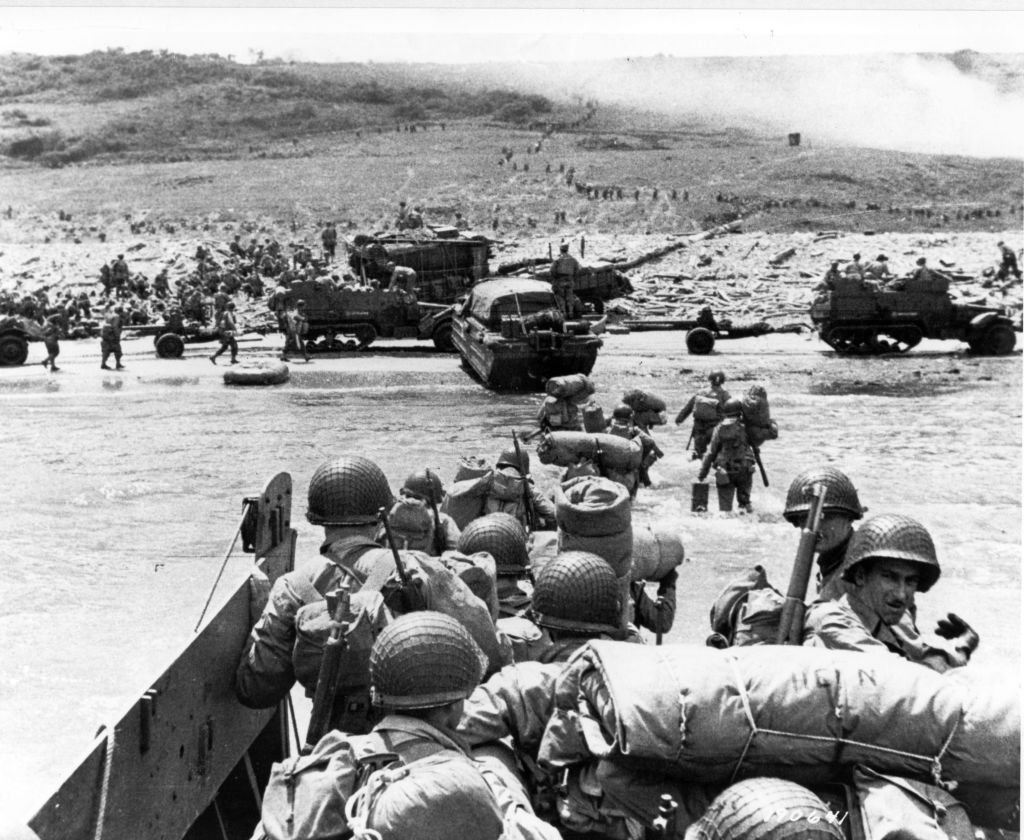
Eighty years ago today, in the early morning hours of June 6, 1944, the largest invasion fleet in human history crossed the English Channel and launched an unprecedented, world-turning assault on Nazi-occupied France. Remembering the enormity of that moment is as critical for America now as it has ever been.
German Gen. Erwin Rommell inspects his “Atlantic Wall” beach obstacle fortifications. (Creative Commons).
The Ohio combat engineers were assigned to Omaha Beach to clear mine-laden log posts and ramps, seven-foot steel frames known as Belgian gates, five-foot tall, triple crossbeam steel hedgehogs, and large coils of concertina razor wire that can cut so deep into the flesh it can make you bleed out.
This was 500 yards of absolute hell on Earth, under heavy bombardment from 85 German machine gun sites, 45 rocket launchers, 35 blockhouse pillboxes, 18 anti-tank guns, eight artillery bunkers and four open artillery pieces raining down shells of death and destruction.
Two years after the failed Dieppe raid to test the German “Atlantic Wall” defenses, which ended in disaster, British Prime Minister Winston Churchill was reluctant at first to agree to American and Russian calls to open up the new front in the war: The Russians to take pressure off them in the east, the Americans to confront the Germans head-on instead of continuing to spin wheels in Africa and Italy. And to foreclose the possibility of Stalin’s Russia from taking Germany alone and having such an upper hand in deciding the post-war fate of the world.
With the Italian front at stalemate in 1943, Churchill acceded and Operation Overlord was born. U.S. Gen. Dwight D. Eisenhower was made Supreme Allied Commander over the operation, overseeing all Allied army, naval and air forces.
General Dwight D. Eisenhower gives the order of the day, “Full victory–nothing else” to paratroopers somewhere in England, just before they board their airplanes to participate in the first assault in the invasion of the continent of Europe. (Photo from the U.S. Library of Congress.)
As Hitler faced heavy losses to the Russians on the Eastern Front, he began to suspect a pending invasion in France and reassigned his top general Erwin Rommel to the defense of the Nazis’ Atlantic Wall. It was Rommel who ordered all of the mines and land obstacles along the Atlantic Wall that the Ohio combat engineers would soon be clearing for Allied troops and tanks to get a foothold.
The engineering feats to make the Allied invasion a success astonish. A secret oil pipeline was laid beneath the English Channel to fuel and refuel Allied invasion vehicles. Tanks were built with flailing chains in front to detonate mines. Other tanks were built to crash into the sea wall and act as ramps for yet other tanks to get hold on the beach. Gigantic floating ports were hauled across the channel to offload supplies once the beaches were taken.
On the intelligence side, the Allies played a masterful game. All of the German spies in Britain had been turned into double agents. Everybody knew the French tides would be at their lowest on June 5, so the location of the invasion, not the timing, was key. The natural location for such a large-scale attack would be Pas-de-Calais, France, across the straits of Dover from Southeast England — the shortest distance between Great Britain and France.
A dummy, inflatable Sherman tank, used to deceive German intelligence during World War 2. (Public domain photo.)
Knowing the Germans were eyeing an invasion in Calais from Dover, fake, blow-up, dummy tanks, aircraft, jeeps, and even barracks were amassed in Dover, England as a deception for German reconnaissance. Propaganda was put out that the much-feared American Gen. George Patton was amassing forces there.
The Luftwaffe were kept clear by the then-dominant Royal Air Force from the actual amassing of troops further west on the southern coast of England, across from Normandy. The Allies also transmitted fake radio calls duping the Germans into believing the attack would indeed come at Calais. Even the Allied troops thought they were going to Calais, until they didn’t.
Meanwhile, Allied bombers attacked German radar stations along the coast, and supply railways, routes, bridges, canals, and oil storage inland. It was Eisenhower who insisted on bombing transportation infrastructure, to stop Germans from shoring up defenses to the actual location of attack, despite the heavy civilian casualties.
Delayed by bad weather on June 5, the Allied invasion of Normandy was postponed one day, to June 6, and almost immediately everything went wrong. The bad weather continued. An air force raid of 13,000 bombs on German beach defenses almost all missed their targets, landing behind the German lines. Paratroopers dropped behind the German defense lines missed designated landing sites due to heavy cloud cover and were bogged down by flooded fields. Gliders bringing artillery to support the paratroopers suffered 33% casualties, but still managed to capture key bridges to stymie German reinforcements.
American soldiers landing in Normandy, France, on the morning of June 6, 1944, the beginning of the long-awaited invasion to liberate continental Europe from the grip of Nazi Germany. (Photo from the Library of Congress.)
Another fortune for the Allies was that Hitler stayed up late the night of June 5, and slept in on June 6. Rommel was back in Germany celebrating his wife’s birthday. This critically delayed German decision-making as the invasion took place.
At dawn on June 6, the weather opened up, giving the Allies the opportunity to strike around 6:30 a.m.
American forces were assigned to take Utah and Omaha beaches to secure the critical port of Cherbourg on the western side of Normandy. At Utah beach, the sea was calm and German defenses thinner, but 1,000 German soldiers awaited the Americans at Omaha. Many tanks at Omaha were launched too early and sank into the sea. Thousands of American soldiers became trapped on the beaches under German machine gun and artillery fire. America suffered 3,000 casualties on Omaha Beach alone that first day.
It wasn’t until after 9 a.m. that Hitler woke up for the day and took stock of the news, but another British deception snagged him: After the Royal Air Force dropped tin foil over the English Channel between Dover and Calais, German radar intelligence was deceived into thinking it was a fleet moving on Calais, and that Normandy was just an elaborate deception.
Eventually the sheer scale and weight of the Allied invasion of Normandy overwhelmed German defenses on the beaches and, after 10,000 casualties, a beachhead was established. The Allied troops then began to move toward their targets inland.
By the afternoon, Hitler realized how thoroughly he’d been deceived and he finally released his Hitler Youth-run Panzer tank divisions to intercept British forces taking the city of Caen. The German 88mm was able to destroy Allied tanks before they got into firing distance. The battle for Caen was supposed to last one day. It took seven weeks for Allied forces to prevail, often in house-to-house fighting through the city.
Meanwhile the other Allied troops swept their way over Normandy that summer, eventually surrounding German forces in an envelope called the Falaise pocket — the decisive final engagement in the Battle for Normandy, cinching Operation Overlord’s ultimate success. It was only days later that, on Aug. 25, Paris was liberated by the Allies after four years of Nazi occupation.
Allied forces suffered 226,386 casualties in total during the Battle of Normandy that summer. America suffered 124,394 casualties with 20,668 killed. An estimated 25,000 to 39,000 civilians were killed.
The significance
A member of the 3rd U.S. Infantry Regiment places flags at the headstones of U.S. military personnel buried at Arlington National Cemetery. (Getty Images.)
D-Day stands as one of the greatest turning points for humankind in world history. It wrote the note of doom for the fascists who had overrun Europe in the second quarter of the 20th Century, abusing the law and using goon squads to seize power, manifesting fear and terror to maintain it, and visiting the most horrifying atrocities on all “others” they deemed sub-human.
The autocrats of the mid-20th Century, whether the fascists in Germany, Spain, and Italy, or the imperialists in Japan, or the Stalinists in Russia, or the Maoists in China, all in their own ways sought to fasten the planet to the same kind of strong-arm authoritarianism that has defined most of known human civilization, through empires, feudalist oligarchies, monarchies, theocracies and dictatorships.
Standing against the forces of fascism at D-Day were the forces of the Enlightenment, and Western Civilization, and Representative Democracy, embodied in the bold heroism of the Allied troops, and the decisive planting of America’s stake as a leader on the world stage.
Today across the world we see strong-arm authoritarianism emboldened again, in Russia and North Korea, in the theocracies in the Middle East, in the autocratic rule of communist China and the corrupt, petty dictatorships strewn about Asia and Africa, and in extremist right-wing reactionary political movements in South America and in Hungary and throughout Europe.
And, ever so shamefully, we see it here in America, under the obnoxious guise of Making America Great Again, setting out to systematically destroy all those qualities that ever made her great in the first place: A self-governing constitutional republic of checks and balances cemented in the rule of law and the rights and liberty of the people — by the people, for the people.
These forces would wish all humanity return to the nationalistic isolationism of the past, to undo the post-World War II alignment of Western Civilization, to allow strong-arm authoritarians to seize power and dismantle institutions so that they no longer serve the people and the rule of law, but serve one man and one political party.
Their aims would roll back global cooperation and commitments, to instead perpetuate a crude dog-eat-dog world of autocrats jockeying for land and resources and using civilian lives as chattel and cannon fodder.
They’re playing a high stakes game of raw power that can be found throughout all of history. But what makes their movement here so un-American — this attempt to place one man above the rule of law, above the constitution, above the people, and above any and all obligations beyond himself — is that they are attempting to regress America to a mean that our foundation, history, and national identity has been one long existential exercise in defying.
In 2024, we face another historic inflection point. The eyes of the world are again upon us.
Those American soldiers who stormed the shores of Utah and Omaha beaches in the prime of their youth, they faced absolute terror; a violent, explosive maelstrom of brutal chaos, bloodshed and destruction that would traumatize any one of us for life, were we lucky enough to survive. Many did not.
Many sacrificed their lives that summer in service to an ideal — the ideal of American representative democracy forever as a bulwark against the forces of tyranny and totalitarianism.
We must always treasure their sacrifice, and never insult it by abandoning that ideal, for which they gave everything, for which those young men laid down their lives and gave their very existence.
DAVID DEWITT
Ohio Capital Journal Editor-in-Chief and Opinion Columnist David DeWitt has been covering government, politics, and policy in Ohio since 2007, including education, health care, crime and the courts, poverty, state and local government, business, labor, energy, the environment, and social issues. He has worked for the National Journal, The New York Observer, and The Athens NEWS. He holds a bachelor’s degree from Ohio University’s E.W. Scripps School of Journalism and is a board member of the E.W. Scripps Society of Alumni and Friends. He can be found on X @DC_DeWitt
Ohio Capital Journal is part of States Newsroom, the nation’s largest state-focused nonprofit news organization.
Saturday August 24th at Hickory Woods Golf Course will be the 4th annual golf event for Loveland’s own Ben Morrison Fund Golf Outing, benefiting Mental Health wellness, hope, and advocacy in our local young people!
by Tori Morrison
Gather your foursome and join the day of fun on the links for a great cause.
Interested in sponsoring a hole, game or part of the fun? We welcome you!
This is out biggest annual fundraiser – and last year our golf outing raised $18,000!
The Ben Morrison Fund is proud to have invested over $30,000 in our community through outreach programs and donations relevant to mental health wellness and advocacy.
• Our Ben’s Way initiative is already in 7 schools in 5 districts, reinforcing positivity
and building hope. • We have sponsored over 30 Ben’s TEAMS awareness events, impacting 52,000+ • We have given 33 scholarships, equal to $27,500 in 4 years. • Over 1390+ Loveland students and 300 teachers and staff have been impacted by our work with Hope Squad, My Fave 5, and the 988 Initiative
We reach out to children where they are and to our community where they can see us. We sponsor children who are in need. We shout out 988 everywhere we can, so that everyone knows what it is and how to find it in a crisis. We bring animals into the schools for all to connect with. We give coffee and breakfast to teachers and buy them books on mental health. We sponsor events to raise awareness and show up at
the Flying Pig marathon to cheer people on. We are on the radio, in print, at sporting events, local fairs, corporate functions,
inclusion events, mental health events, talking to law enforcement, talking to everyone we meet and encouraging one and all to “Cont;nue Your Story“.
We are passionate about mental health wellness for everyone.
Thank you to all who have supported the Ben Morrison Fund and we encourage all to join our day of fun on the greens to support our fight to shine a light on struggles with mental health – so that no one has to fight alone.



 Residents showed up prepared because they believe the 200 Railroad Avenue building is a significant piece of Loveland’s history. Indeed, it was acknowledged by Council Member Neal Oury at the October 22nd Loveland City Council meeting that the original brick structure remains standing and sound.



![[Guest Opinion] Springfield Community Needs Help, Not Hate](https://lovelandmagazine.com/wp-content/uploads/2024/09/ohio-fed-of-teachers.png)
 After Seth was killed in a mid-air collision in October 2009, Seth’s friends started the Captain Seth Mitchell Hero 5K and the scholarships to honor and remember their friend.