Author: Guest Column

  • Kaleidoscope Youth Center: “Tell Gov DeWine to VETO HB68.”

    Kaleidoscope Youth Center: “Tell Gov DeWine to VETO HB68.”

    HELP STOP HOUSE BILL 68 FROM BECOMING LAW: Contact Governor Mike DeWine (614-466-3555, governor@governor.ohio.gov, or governor.ohio.gov/contact (https://t.co/J3VeRi8yb4) ) and tell him to VETO H.B. 68.

    Yesterday, the Ohio Legislature passed House Bill 68 to ban gender-affirming care for minors and ban trans women and girls from playing K-12 and college sports in Ohio. The bill now moves to desk of Governor Mike DeWine. Once received, he’ll have 10 days to sign or veto the bill.

    Kaleidoscope Youth Center is disgusted by H.B. 68 and we denounce and condemn its passage. Moving this legislation forward demonstrates a complete disregard and concern for the lives, futures, and – perhaps most importantly – the humanity of Ohio’s youth. We ask that Governor DeWine not sign this bill into law.

    H.B. 68 is blatant discrimination. This bill unnecessarily targets transgender and nonbinary youth, their families and allied providers and health professionals. H.B. 68 politicizes the lives of young people in Ohio with zero regard for their health and wellbeing. It is an egregious misuse of power and a breach of public trust in caring for the youth of Ohio.

    Legislation and policies such as H.B. 68 do nothing to protect any child or young person, and instead, only further marginalizes and promotes harm. This is bullying behavior. Ohio’s young people and their families deserve more.

    KYC is committed to standing with and for our young people and continuing to be a safe place where they can be affirmed and loved in community.

    https://www.instagram.com/p/C0z_iXup01k/
    SIGN THE OHIO IS HOME LETTER (https://tinyurl.com/OhioIsOurHome)
  • Urging support for nascent cultivated-meat industry

    Urging support for nascent cultivated-meat industry

    by Jon Hochschartner,

    The delayed federal farm bill should include increased public funding for cultivated-meat research. For those who aren’t familiar with the term, cultivated meat is grown from livestock cells, without slaughter. It has the potential to dramatically reduce the suffering we inflict on animals, as well as our greenhouse-gas emissions and pandemic risk.

    The Department of Agriculture has provided billions of dollars of subsidies to livestock producers. Surely, it can offer some assistance to the nascent cultivated-meat industry, which holds so much promise. Forward-thinking legislators should make certain this happens, by including more government money for cellular-agriculture research in the farm bill.

    Jon Hochschartner
    41 Salmon Brook Street
    Granby, CT 06035
    (703) 901-1011

  • We were glad that we had a local agent that could take our call

    We were glad that we had a local agent that could take our call

    by CeeCee Collins

    This month’s article focuses on Insurance for Small Businesses. I’m going to push that thought out a little further and say that Insurance is also very important for non-profit organizations.

    As a nonprofit ourselves, I truly saw no need for our organization to carry a lot of insurance and felt (to be honest) that the cost was a burden to our small chamber’s budget. I can say that over the past ten years, we have had to call on our insurance a few times. We were glad that we had a local agent that could take our call, listen, and offer the best solution when we were in need.

    I know this topic isn’t as exciting as some other newsletter topics, but I feel the article attached really offers insight as to why it is important to carry the right insurance. The article starts with the basics and goes into a little more detail.

    The Little Miami River Chamber Alliance works with many different types of carriers. A few of our main commercial carriers are Bush Re Shea, Saxon Financial, State Farm-Nikki Shah, Wallace Insurance, Goosehead Insurance-Joni Wagner, Valerie Long & Ricky Heflin: Shelter Insurance, and Cincinnati Business and Family Insurance. Just to name a few!

    Please don’t leave your business vulnerable or yourself by not obtaining the right insurance. I’m happy to connect you to the agents above. Text or email me and I’m happy to get you set up.

    Have a great holiday season!

    __________________

    CeeCee Collins is President of the Little Miami River Chamber Alliance.

    She was born and raised in Beavercreek, Ohio, CeeCee Collins attended Carroll High School and has been a swimmer her entire life. She received her undergraduate degree at Xavier University where she also participated on the swim team for four years. She graduated from college in 1989 and began working at USA Today Newspaper as a Regional Marketing Manager. After marrying James Collins IV, they moved to Tampa, FL where she worked for the Tampa Metropolitan Area YMCA for 6 years as an Executive Director.

    CeeCee and her family moved back to the tri-state area after her second child’s birth. She continued to work for the Greater Cincinnati YMCA for 10 years part-time. CeeCee then pursued full-time work and became the Development Director at Ohio Valley Voices for 6 years. Throughout her years at the YMCA and Ohio Valley Voices she was active in the Little Miami River Chamber Alliance (formerly the Loveland Area Chamber of Commerce). She became the President of the Chamber in 2013.

    CeeCee continues to enjoy working at the chamber and keeping up with her three children.  She and Jim live in Miami Township.

  • Ohio Issue 1 and Issue 2 carry massive significance for younger voters

    Ohio Issue 1 and Issue 2 carry massive significance for younger voters

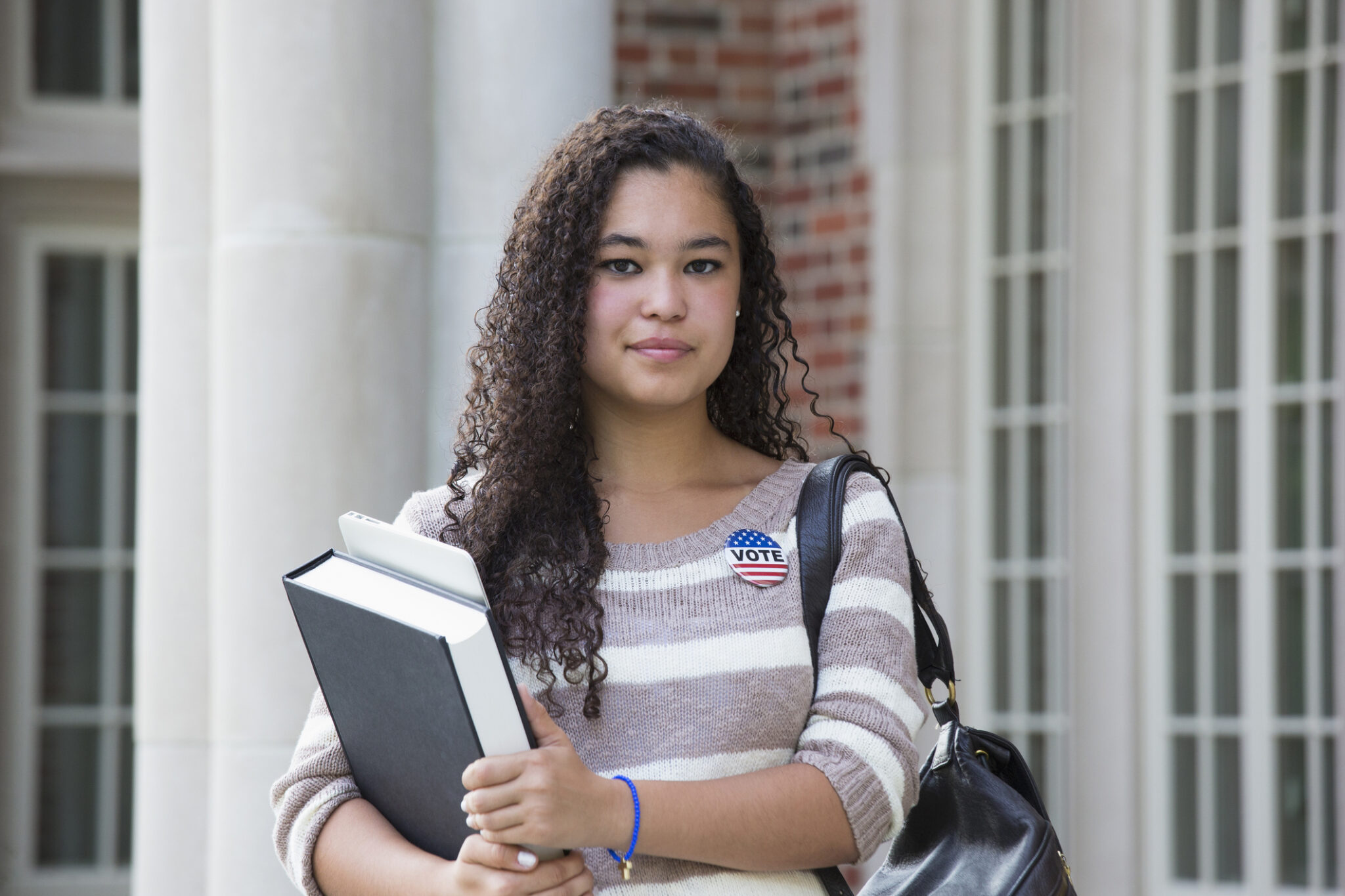
    A college student voter. Getty Images.

    COMMENTARY

    Gen Z and millennial voters could play an important role in deciding fate of reproductive rights amendment and marijuana law

    by David DeWitt

    For Gen Z and millennial Ohio voters, Issue 1 and Issue 2 are critically important. Whether we vote and how we vote will shape what kind of rights and freedoms we have for ourselves and our loved ones well into the future.

    Issue 1 would establish a state constitutional right to “make and carry out one’s own reproductive decisions,” including decisions about abortion, contraception, fertility treatment, miscarriage care, and continuing pregnancy.

    Issue 2 would create a new state law to legalize and regulate recreational marijuana for adults aged 21 and above, including cultivation, processing, sale, purchase, possession, and home growth.

    Tussling over legal access to abortion care and the criminalization of marijuana has shaped American politics for decades, and they stand as two issues where the consequences of law and policy fall heaviest on younger people.

    In an average of births in Ohio between 2019 and 2021, 4.9% were to women under the age of 20, and 2.5% were to women ages 40 and older, while 92.6% were to women ages 20 to 39, according to the March of Dimes.

    Using Ohio Department of Health statistics for 2022, patients 17 and under received 2.5% of abortions performed, and patients over age 40 received 3% of abortions performed, while patients between the ages of 18 and 40 received 94.5% of abortions performed.

    According to the FBI Crime Data Explorer — which does not sort by type of drug involved in state-by-state data — 60% of drug violations in Ohio in 2022 were charged against people between the ages of 20 and 39, a far higher percentage than any other age group. Nationwide, it wasn’t until 2020 that other drugs took over marijuana possession as the No. 1 reason for a drug-related arrest. Nevertheless, more than 315,000 people across America were arrested for marijuana possession in 2020, accounting for 27.5% of drug-related arrests. Also in 2020, Black Americans accounted for about 38.8% of marijuana possession arrests despite representing just 13.6% of the population.

    Younger voters are notoriously unreliable at showing up to vote during non-presidential elections, much less odd-number year elections. Even during presidential elections they show up to the polls at lower rates than other age groups.

    The 2020 presidential election, for instance, had the highest turnout of the 21st century, with 66.8% of citizens 18 years and older voting, but for voters ages 18 to 24, only 51.4% cast ballots, according to U.S. Census Bureau reports. In 2018, Americans ages 18 to 29 made up 11% of voters and 30% of non-voters, according to Pew Research Center. In 2022, they made up 10% of voters and 27% of non-voters.

    This Nov. 7 in Ohio, the stakes are highest for millennial and Gen Z voters. What kind of present and future do we want for ourselves and for Ohio?

    What rights do we want to establish in the constitution, or would we rather leave it up to the politicians to determine our generations’ access to reproductive medical care?

    What kind of freedom do we think adults 21 and over should have from criminal marijuana charges, or should Ohio continue to saddle adults with drug offense records over cannabis possession?

    Voting is our most precious and fundamental right, the spigot from which all of our other rights and freedoms flow. Gen Z and millennial generation voters must participate in these critical decisions, or we are relinquishing significant power over our lives to others who do not bear the same burdens of impact.

    As the writer David Foster Wallace observed, “In reality, there is no such thing as not voting: you either vote by voting, or you vote by staying home and tacitly doubling the value of some Diehard’s vote.”

    Early voting in Ohio has begun. Here is everything voters need to know:

    When do I vote?

    For early, in-person voting, vote at your local county board of elections on these days:

    • Oct. 26-27: 8:00 a.m. – 5:00 p.m.
    • Oct. 30: 7:30 a.m. – 7:30 p.m.
    • Oct. 31: 7:30 a.m. – 8:30 p.m.
    • Nov. 1-3: 7:30 a.m. – 7:30 p.m.
    • Nov. 4: 8:00 a.m. – 4:00 p.m.
    • Nov. 5: 1:00 p.m. – 5:00 p.m.

    Citizens can no longer vote on Nov. 6, the Monday before the election.

    Mailed absentee ballots must be postmarked by Nov. 6.

    On Election Day Nov. 7, vote at your polling location. Find your polling place by clicking or tapping here.

    Polls are open from 6:30 a.m. to 7:30 p.m. on Election Day. If you are in line at the time polls close, stay in line, because you can still cast your ballot.

    If absentee ballots are not returned by mail, they must be received by your board of elections by 7:30 p.m. on Election Day.

    What do I need to vote?

    In order to cast a ballot, voters must have an unexpired Photo ID such as a passport or driver’s license. Previously, voters were able to use non-photo documentation such as bank statements, government checks or utility bills to vote. That is no longer the case under a new law passed in Ohio last year. Student IDs are not considered valid under that law.

    CLICK HERE for more information on ID requirements.

    Here is the list of acceptable types of valid photo ID:

    • Ohio driver’s license
    • State of Ohio ID card
    • Interim ID form issued by the Ohio BMV
    • A US passport
    • A US passport card
    • US military ID card
    • Ohio National Guard ID card
    • US Department of Veterans Affairs ID card

    More information for voters

    To check your voter registration status, find your polling place, view your sample ballot and more, head to the Ohio Secretary of State’s VoteOhio.gov website.


    David DeWitt
    DAVID DEWITT

    OCJ Editor-in-Chief and Columnist David DeWitt has been covering government, politics, and policy in Ohio since 2007, including education, health care, crime and courts, poverty, state and local government, business, labor, energy, environment, and social issues. He has worked for the National Journal, The New York Observer, The Athens NEWS, and Plunderbund.com. He holds a bachelor’s degree from Ohio University’s E.W. Scripps School of Journalism and is a board member of the E.W. Scripps Society of Alumni and Friends. He can be found on Twitter @DC_DeWitt

    MORE FROM AUTHOR

  • Ohio politicians used redistricting for gerrymandered horse-trading. Kick them out of the process

    Ohio politicians used redistricting for gerrymandered horse-trading. Kick them out of the process

    COMMENTARY

    by David DeWitt

    It should be abundantly clear to all fair-minded Ohioans at this point that politicians have no business being involved in the redistricting process after lawmakers used the latest round of Ohio House and Senate district mapmaking to strike a bipartisan deal that amounts to little more than gerrymandered horse-trading.

    Fittingly under the cover of darkness late Tuesday night, Ohio Republican and Democratic politicians conducted a shrewd, self-serving negotiation to once again gerrymander Ohio’s Statehouse maps in behalf of their own short-term political power interests, instead of all working earnestly toward fair, representative maps.

    Ohio Democratic commissioners had a choice of whether to get whatever they could for now and hope voters pass reform, or to get raked by Republicans on the commission with worse maps than we have now, but this time likely destined to be rubber-stamped by a partisan right-wing Ohio Supreme Court. They chose the former.

    The Ohio Redistricting Commission’s bipartisan agreement among politicians show a Republican advantage of 61 to 38 in the Ohio House under the new map, with eight competitive Democratic toss-up seats and three competitive GOP toss-ups.

    In the Ohio Senate, the new map shows a 23 to 10 Republican advantage, with three competitive Republican toss-up seats and one competitive Democratic toss-up seat.

    Compare this to Ohio’s current unconstitutionally gerrymandered maps forced upon voters in 2022. Before the 2022 Election, the current gerrymandered districts showed a Republican advantage in 56 House seats. In the Ohio House, all 19 competitive districts under the current maps were Democratic, with zero competitive Republican districts.

    That meant that Democrats had to spend money and resources in 19 House districts and win every single one in order to maximize their House seats. Republicans didn’t have to “defend” a single seat, and could focus all of their money and resources on “pick-ups” — taking seats that lean Democratic on-paper.

    The Republicans’ unconstitutionally partisan mapmaking paid off. The 2022 Election saw Ohio Republicans winning 67 state House seats.

    In the Ohio Senate under the current maps, Republicans before the election looked to hold an edge in 18 Senate seats, and there were seven competitive toss-ups. Republicans ended up winning 26 Senate seats last November, while Democrats won seven seats total.

    So what are we looking at here with Tuesday night’s agreement among the bipartisan politicians?

    Democrats don’t have to spend the money and resources to defend nearly as many seats in the Ohio House. Instead of defending 19 seats, they will be defending eight seats and targeting three GOP seats. Essentially, their political resource management and allocation will be easier. Same thing in the Senate. They will be able to focus their resources on attempting to defend one seat and to pick up three GOP seats.

    Best case scenario for Democrats under the new maps: They pick-up six Senate seats total over their current number of seven, for a 20-13 Republican chamber; and/or they pick up nine seats total in the Ohio House over their current 32 seats by protecting their eight competitive seats and winning three GOP-leaning targets, for a 58-41 Republican chamber.

    That best case scenario for Democrats would break the GOP’s supermajorities; however, if Democrats were to not win the competitive Republican-leaning seats, the GOP would retain supermajorities of 61-38 in the Ohio House and 23-10 in the Ohio Senate.

    The best case scenario for Republicans would be not only to hold on to their supermajorities, but to win as many competitive Democratic-leaning districts as possible. If they were to defend their three competitive seats and win six out of the eight Dem-leaning competitive districts in the House, for instance, they would retain their current 67-32 advantage. Keep in mind that in 2022, they won 11 Dem-leaning competitive House seats.

    So by striking this deal on more gerrymandered maps, Democratic politicians gave themselves an easier time with money and resource allocation in 2024 and a very difficult but still possible shot to take away GOP supermajorities, and the GOP gave themselves a good chance to retain their supermajorities in both chambers while still having the opportunity to possibly expand them even further than the maps suggest now on-paper.

    But there’s more.

    Beyond this gerrymandered horse-trading on the Ohio House and Senate numbers, Democrats are indicating they are putting faith in the idea that the impact of gerrymandering lessens over time as the data used to draw the maps become outdated — so this deal prevents the GOP from both punishing Democrats severely right now, and from coming back for another redraw with fresh data to more efficiently gerrymander the maps again. Democrats also advocated Tuesday night for 2024 anti-gerrymandering reform, indicating they see this deal as a stop-gap measure before real reforms can take place thanks to voters.

    Republicans meanwhile have obtained a strong political cudgel to wield against that very effort to replace the Ohio Redistricting Commission made up of politicians with an Ohio Citizens Redistricting Commission that kicks the politicians out of the process. Republicans will say that the process worked, they obtained bipartisan agreement just as voters in 2015 intended with redistricting reform, that these maps are not gerrymandered, and in 2024, they’ll say something along the lines of, “Far-left special interests want to hijack the constitution and put power in the hands of unelected bureaucrats.”

    This process did not work.

    Redistricting in Ohio has been a two-year travesty with an ignominious conclusion for everyone involved, Republican and Democratic politicians alike.

    The prevailing motivation of every politician Tuesday night was shrewd political self-interest, not sacred obligation and duty to the public.

    No matter what anybody thinks of the advantages or disadvantages of the deal that was struck, it’s clear that these incentives for political horse-trading must be removed.

    The only incentive for mapmakers should be fair and representative maps that evenly maximize competitiveness.

    The way to remove these bad incentives to make these kind of damned-if-you-do, damned-if-you-don’t deals is to kick all of these politicians out of the process.

    Whether it’s partisan or bipartisan, gerrymandering must end. On Tuesday night in Ohio, it did not.


    David DeWitt
    DAVID DEWITT

    Ohio Capital Journal Editor-in-Chief and Columnist David DeWitt has been covering government, politics, and policy in Ohio since 2007, including education, health care, crime and courts, poverty, state and local government, business, labor, energy, environment, and social issues. He has worked for the National Journal, The New York Observer, The Athens NEWS, and Plunderbund.com. He holds a bachelor’s degree from Ohio University’s E.W. Scripps School of Journalism and is a board member of the E.W. Scripps Society of Alumni and Friends. He can be found on Twitter @DC_DeWitt

    MORE FROM AUTHOR

  • Christopher Myers: Endorses Myra Powers for Milford School Board

    Christopher Myers: Endorses Myra Powers for Milford School Board

    by Christopher Myers

    Myra Powers is the dynamic leader we need to ensure our Milford School Board focuses on helping kids grow. An independent nonpartisan voter like the bulk of MEVSD residents, I objectively endorse Myra Powers for School Board when partisan dialogue brags about assaulting genitalia, reneges on medical and student bankruptcy rights, and conspires against our English-derived constitutional welfare practices.

    As a retired educator who served Milford students 41 years, and who April and I were in class with, Myra possesses experiential wisdom in child development, community leadership, and strategic thrift that make her the unparalleled champion of civic education running this cycle. When she was an MEVSD instructor, Myra was named Milford-Miami Township Educator of the Year for good reason! She will continue to elevate education for all Milford’s children. Please lend your voice to her effort, get involved, and contribute at www.MyraForMilford.com!  And vote MYRA POWERS November 7th!
    Now, let’s look at the fuller heroine behind the epic signage!
    STRATEGIC THRIFT – 
    The greatest lesson a college preparatory public traditional high school can teach a student is how to collect, use, and create the best resources available to them — and to TRY. Myra is an example of how no other area district does more with less than Milford. I am incredibly proud to be a soldier in Myra’s army of former students supporting her for school board: As my teacher at Miami Elementary, Myra helped transform our school into the most forward-thinking and cutting-edge primary environment in the district. She prepared us to both lead and to take college-level courses in high school. Myra’s introduction to enrichment learning helped prepare me to pass both AP American History and AP English with credit, thus saving me between $8,000 and $15,000 (2023 USD) of required coursework to complete my bachelor’s at Ohio’s oldest university.
    CHILD DEVELOPMENT –
    So many students are just blowing in the wind. With a world that increasingly values transactive financialization toward school life — which does muddy our collective action — Myra is a role model who prioritizes the deeper human meaning and value from personal involvement; where students develop and lend talents to community culture. Through my young growth’s darkest moments, Myra was an energetic, memorable, motivating educator telling me YOU CAN IF YOU TRY!  Ms. Powers imparted a strong difference for me through the emphasis on meaning. In her classroom (literally a closet in 1998) Myra taught my first poetry, world studies, and advanced reading lessons with highly creative projects (we still have The Rats of NIMH trilogy on our bookshelf)! For Myra, education molds from a welcoming, creative human culture, instilling psychological safety, proactively overcoming life’s bait, and enculturing an understanding of civility so that students have the capacity to navigate complex problems throughout their growth as well.
    COMMUNITY LEADERSHIP –
    While Myra continues to be a testament to involvement, teachers are allowed to have personal lives, too. Edith Martin served on our Board in the 1990s, Myra is an Edith!  Her candidacy offers rock-solid, unmistakable civic value to our beloved Milford brand. This lady has dedicated her life to serving Milford (in 1998, Myra made me do a report on natural resources and the economy…by designing a talking website, in the 4th grade). Myra is the choice of longtime community members for School Board because she is one of our own, an “ordinary” Appalachian hero, and we love her for it.
    ACTION REQUIRED –
    Use the economic power that you have earned in Milford to help this great advocate win BIG! Myra needs everyone who cares to execute three action items:
    1. Contribute, support, and get involved in all ways you can: Visit www.MyraForMilford.com, where you can order yard signs and donate; canvass neighbor-to-neighbor; and like Myra Powers for Milford School Board on social media.
     
    2. Tell 10 MEVSD voters about Myra Powers and ask them to get involved.  
     

    3. Vote for Myra Powers, Emily Chesnut, and Yes for Milford on November 7th!


    Christopher Myers lives off of Cook Road in Miami Township in the Milford School District

  • A “Thank You” from Joel, Mary, and Josh Wegener

    A “Thank You” from Joel, Mary, and Josh Wegener

    by Joel, Mary, and Josh Wegener

    Special Neat Treats would like to thank the wonderful citizens of Loveland and the surrounding area for your support of our family business throughout this summer.

    We are especially grateful to Carol Hall for organizing the recent event to help offset some of our unexpected mechanical expenses. We now have 2 ice cream trucks and both of them incurred some major expenses this summer. Thank you to those who attended this fun event in Downtown Loveland as well as those who gave online. It was so humbling to experience the generosity of so many friends of Special Neat Treats.

    We are winding down for the season, but have had so much fun sharing neat treats with special people in this our 3rd season of operation. We have met so many beautiful people and have had so many opportunities to share our story. We hope to see some of you yet this season before we park the trucks until next year.

    We are looking forward to next summer for another season of sharing hope and special treats with all of you!

    ______________

    Joel announces the winners of the raffle live on Facebook!

    Joel was live on Facebook before the event began.

    Learn about Special Neat Treats on Facebook!

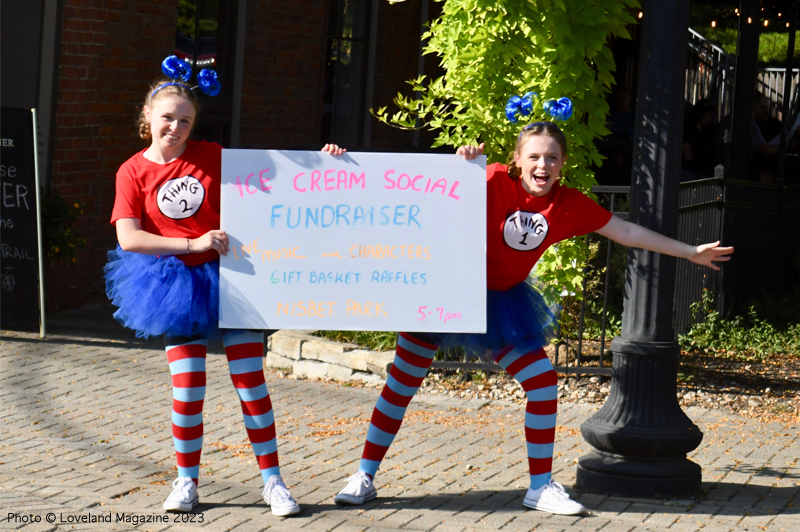
    Here are some photos from the Special Neat Treats’ fundraiser in Nisbet Park

  • Dan Shallenberger: Pease please please be patient with our bus stops

    Dan Shallenberger: Pease please please be patient with our bus stops

    by Dan Shallenberger

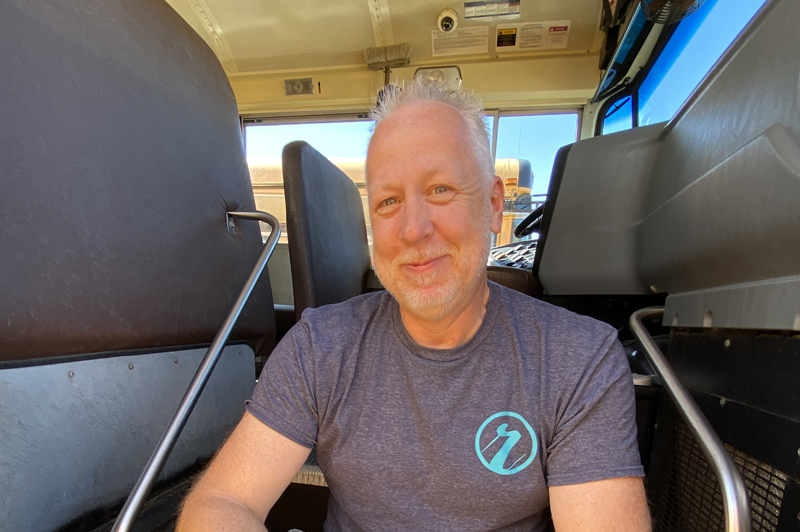
    I have been a school bus driver for 10 years and I have a request for all residents everywhere: please please please be patient with our bus stops and follow the law. I know it stinks getting stuck behind a school bus, and it stinks even more when there’s a stop that’s annoyingly long. There’s always a reason if I am stopped for a lengthy period of time, longer than a usual “drop-n-drive-away” stop.

    Today I was stopped for my elementary route, and one student was crying as she was exiting the bus. Apparently she is really struggling with something, and after school is when she let out all the stress that had been accumulating during the day.

    I talked with her and her friend for a moment to try to learn about her situation and encourage her to have a fun evening and start off tomorrow positively.

    Doing that caused me to be at my stop for longer than usual, maybe 1 minute. Now I know that can feel like a long time when you’re stopped behind me, but deciding to fly through my stop sign is incredibly dangerous. I’m sure whoever did this was truly in a hurry and needed to be somewhere, and I’m sorry for holding them up. But putting kids’ lives at risk is the worst possible option.

    Please be patient when behind school buses. I know it can be frustrating, but trust us that there’s a good reason when we’re taking too long. These kids are very important to us and we are often more than just a “driver” to them, and they need positive and supportive interactions everywhere they can get them.

  • JCRC Condemns West Chester Tea Party’s Antisemitic Rhetoric

    JCRC Condemns West Chester Tea Party’s Antisemitic Rhetoric

    Recently, the Jewish Federation of Cincinnati’s Jewish Community Relations Council learned that on September 5 the West Chester Tea Party hosted a speaker who disseminated numerous extreme antisemitic conspiracy theories. The West Chester Tea Party subsequently repeated many of these ideas in an email sent to their membership on September 9.

    Since this came to our attention, we have discovered that the West Chester Tea Party has a long history of sharing vitriolic antisemitic rhetoric through its Facebook page and Gab account. A non-exhaustive list of conspiracy theories propagated by the group include that Jews: control the media, finance, and politicians; manipulate African Americans; are imposters who have replaced the “real Jews”; engage in child sacrifice; and are disloyal to the United States.

    We are keenly aware of how antisemitism is on the rise in our country. The normalization of antisemitism by an active, local political organization makes this worse and is absolutely unacceptable.

    We are grateful for the Republican elected officials who have voiced their support to the Jewish community, making clear that they do not condone this group’s behavior. Likewise, given that this speaker was hosted at St. Gertrude the Great Catholic Church, we thank the Archdiocese of Cincinnati for helping us confirm that the church that hosted this event is not formally affiliated with the Roman Catholic Church. The Archdiocese has affirmed that they would not allow such behavior within one of their facilities. The Cincinnati Jewish community is lucky to have leaders in the Republican and Catholic communities who will stand up to hate such as this, which is purportedly committed in their names.

    Until such a time as the West Chester Tea Party has not just deleted this material, but demonstrates a commitment to opposing antisemitism, we call on those who consider themselves allies to the Jewish community not to seek their endorsement, appear at their programs, or work with them. Doing anything less normalizes this behavior and makes our community less safe.


    About the Jewish Community Relations Council

    The Jewish Community Relations Council (JCRC) is the non-partisan public affairs arm of the Jewish Federation of Cincinnati. Its mission is to protect Jewish security, recognizing that Jewish security depends on a just society for all. To achieve this mission, it advocates for the local Jewish community through Israel education; fighting antisemitism, discrimination, and racism; and building understanding with other ethnic, religious, and civic organizations. For more information, please visit jewishcincinnati.org/jcrc

  • Without Direct Support Professionals, I would not be able to live on my own

    Without Direct Support Professionals, I would not be able to live on my own

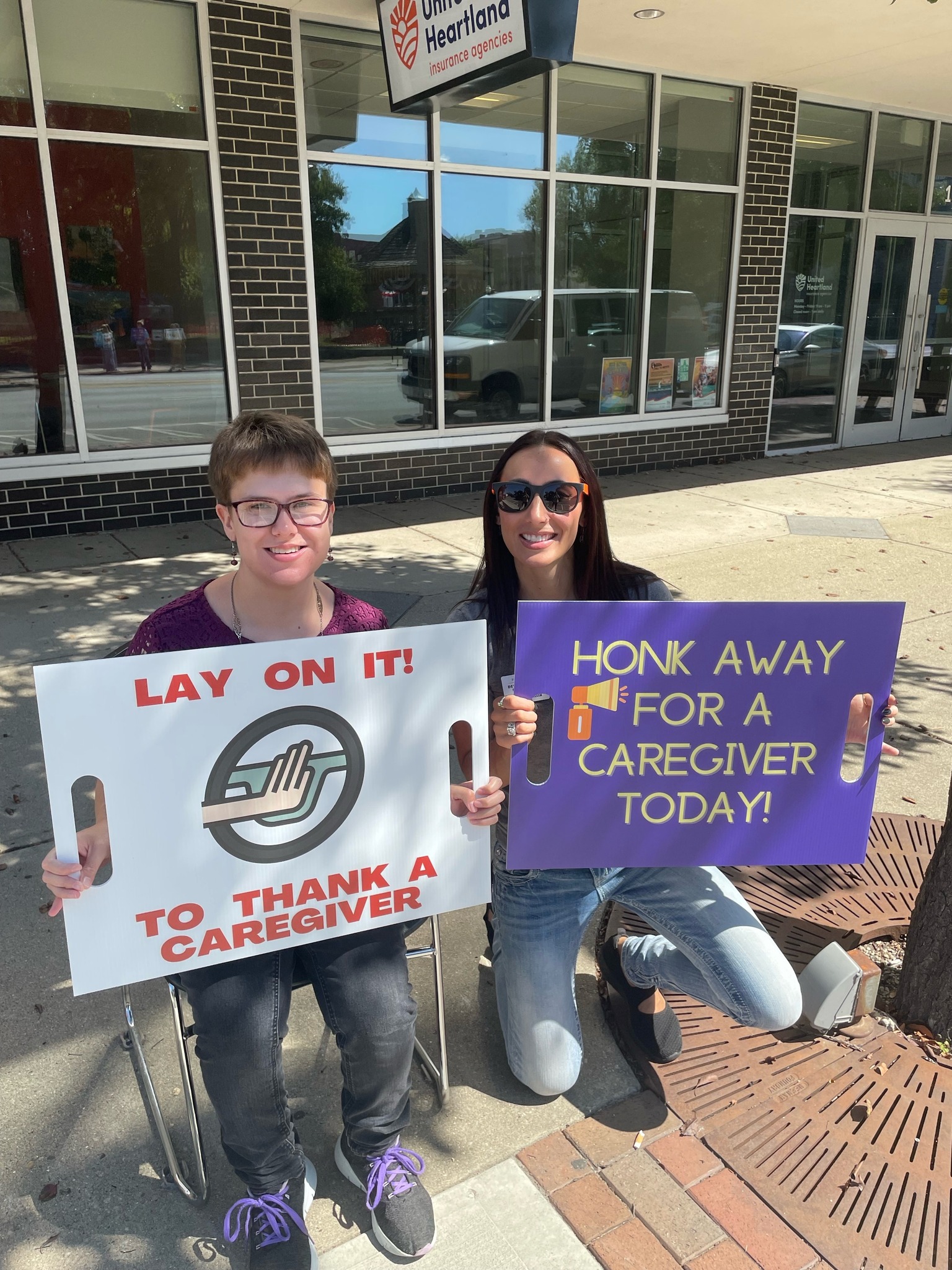
    Courtney Hineman and Cassie Mattia at the Butler County Board of Developmental Disabilities Annual DSP Appreciation Honk-a-Thon

    It’s DSP Appreciation Week and it’s the perfect time to express my gratitude.

    Courtney Hineman

    by Courtney Hineman

    This week is DSP Appreciation week. My name is Courtney Hineman and I work at the Butler County Board of Developmental Disabilities as the Community Outreach Advocate. I also receive services due to my disability.

    I have direct support professionals (DSPs) who come to my apartment every day. They help me with getting ready for the day, making sure I take my medications, take me to and from work, laundry, and cleaning my apartment.

    They also take me to do fun things out in the community like visiting my family and friends, going to the Cincinnati Zoo, Kings Island, going to church/ bible study, and going to Best Buddies events in Oxford. Sometimes with staff it can feel like I’m just hanging out with a friend because of getting to see each other almost every day and the close relationship we have. I feel like my staff look out for me like I’m their own family member.

    I am very grateful that I have good, hardworking staff because without them I would not be able to live on my own. If you are a direct support professional thank you so much for your hard work and dedication! You really are making a difference in people’s lives.

    About Courtney Hineman

    Courtney Hineman is a disabilities rights advocate. She is the Community Outreach Advocate at the Butler County Board of Developmental Disabilities and was appointed by Governor DeWine to the Ohio Developmental Disabilities Council for the second term. She is a member of Butler County’s self-advocacy group, Speak Up, and has enjoyed participating in Best Buddies.

    About the Butler County Board of Developmental Disabilities

    The Butler County Board of Developmental Disabilities provides services and supports to over 3,700 Butler County residents so they can successfully live, work, and learn in the community. Supports and services are available life-long through partner agencies or directly provided by the Board. The Board’s primary source of funding is from property tax levies collected annually and the Board was last on the ballot in 2004.