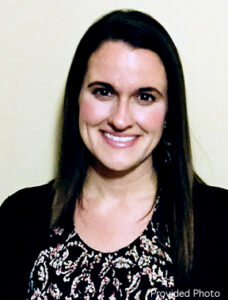
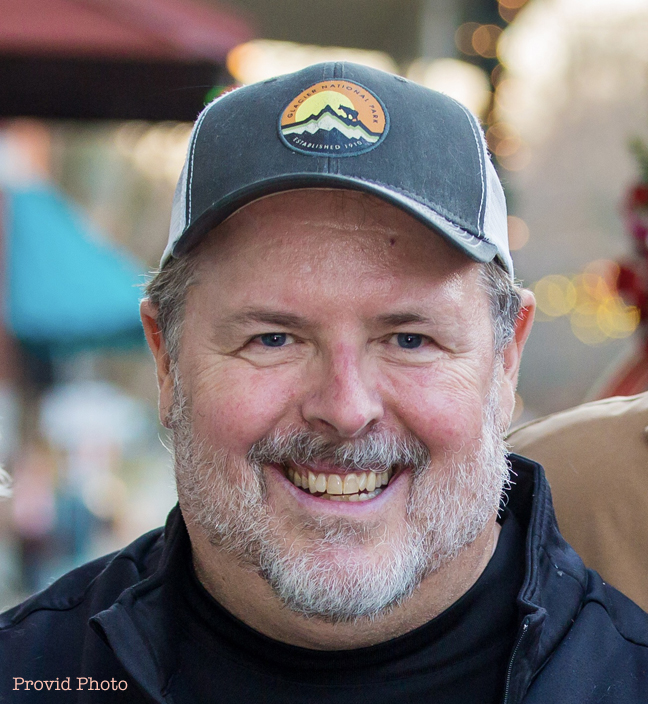
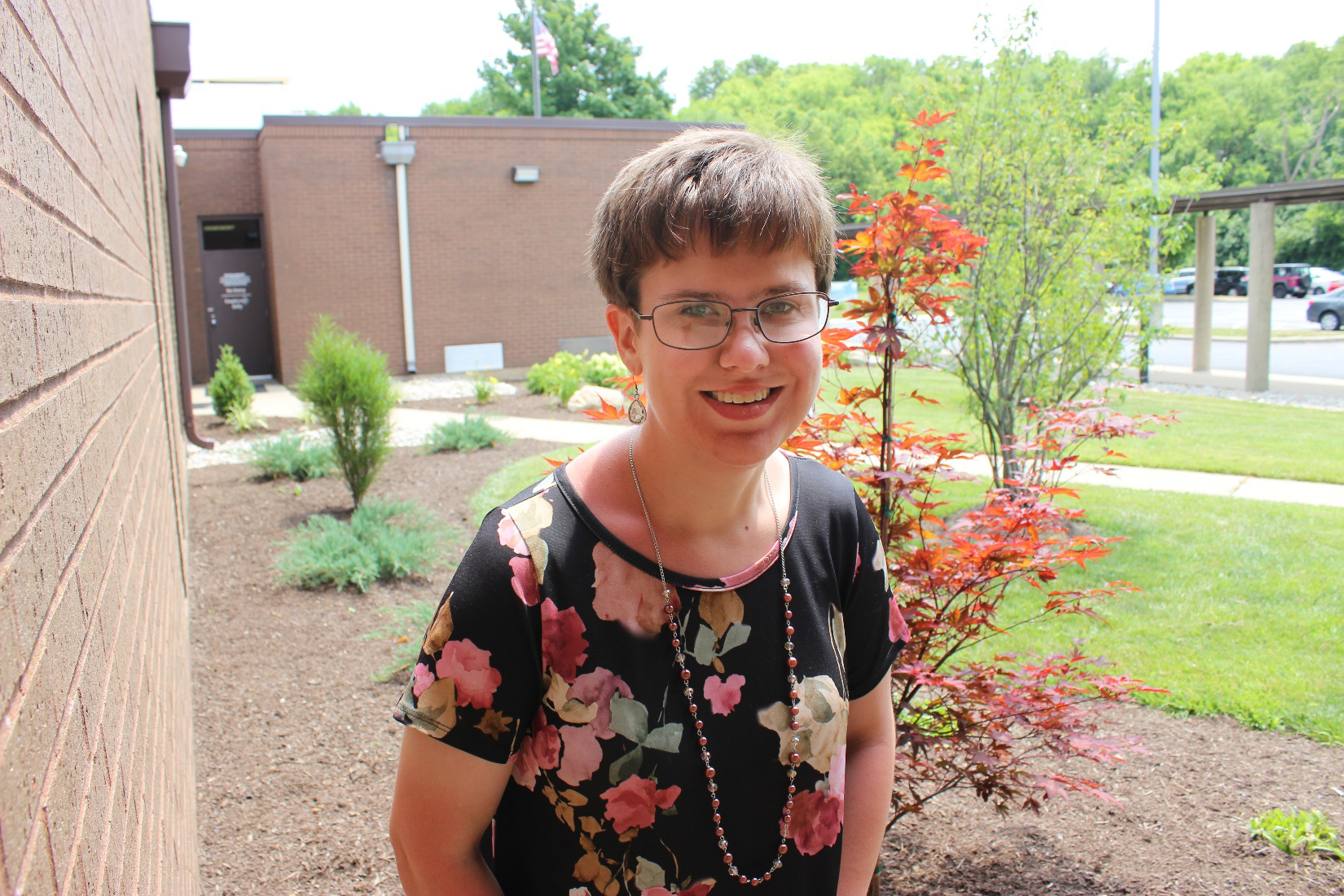
Ellen Main, is a stay-at-home mom of two boys in Loveland Schools: one kindergartener and one first grader. Her family lives in the Belle Meade subdivision.
by Ellen Main
Loveland City School District has an operating levy on the May 2 ballot this year. Because Loveland has not passed a school levy in nine years, they are in desperate need of these funds to maintain their current high quality of education. If the levy is not passed, they will move towards State minimum services. Our students and future students deserve better than this. As a mom of two young Loveland students, I am witness to the outstanding and dedicated faculty, staff, and administration in our community. My experience at a recent school event illustrates this perfectly.
Waiting anxiously for the show to begin, I looked around at all the other parents, siblings, grandparents, and other family members sitting in the Loveland Primary School gym and thought how grateful I am to live in this community. After the heartwarming show, during which the look of pride on my son’s face almost made me tear up, we walked through a gallery of children’s art—vibrant paintings, oil pastel drawings, and construction paper weavings covered the hallways from floor to ceiling. My son showed such confidence in finding his art on the walls and explaining it to his family. Then, he led us to his classroom (Ms. Miller, Room 9), where he showed us two beautiful books, one created by him (about koalas) and one created by his classmate, a biography about what makes my son special (my son created one about his classmate too). He proudly showed us all his work, which had an Australian theme (each class had a different country). All of this thanks to the hard work, energy and creativity of Lauren Alten (music teacher) and Kayla McClary (art teacher) as well as the classroom teachers, custodians, administration—too many people to mention.
The “Around the World” Showcase is an example of what makes Loveland Schools such a special place to be. Music, theatre, art, athletics, physical education, robotics and so many other programs we may take for granted won’t be possible much longer if we don’t pass a school levy. Think about the most memorable and important moments of your elementary and secondary education—most likely they were made possible because of school levies being passed.
I was lucky enough to have some extraordinary teachers in the Perrysburg School District in Northwest Ohio. My most memorable experiences had to do with music and theatre, which would not have been available without teachers having the freedom to use their creativity to benefit students both in the classroom and through extracurricular activities. Maybe yours have to do with sports, science club, art, student government, none of which would be possible without our talented educators, who would slowly be cut due to lack of funds. We cannot deny future generations these experiences.
Right now, the employees at Loveland Schools are doing amazing work despite not having the money—92 percent of all Ohio school districts receive more money per student yet we are in the top 2 percent in the state on the Ohio Department of Education scorecard. We cannot keep the talented and hard-working people we have in Loveland Schools now if they feel stressed that they may lose their jobs or if the class sizes are so big they are spending all of their time managing student behavior rather than teaching.
With the passing of the levy on May 2, we can keep not only our schools strong but our community as well. Voting yes for Loveland Schools on May 2 is a vote for our students and future students and also for the well-being of our entire community.
Spring in the Midwest – we’ve seen sunshine, flowers, heavy rain, crazy wind and even snow!
As we move into a new season, we always have fresh hope. But many of our clients are facing the same issues that plagued them through the winter. Unpaid bills and rising food and shelter costs continue to weigh on their minds.
Spring is the time of our annual Feed The Hungry campaign, which brings hope that LIFE clients will have a brighter season.
This year we are changing the name to better reflect what we do – it’s more than food. While food donations are important, monthly pledges from the community and business partners help us buy needed perishables such as milk, eggs, and cheese but also does so much more. Financial donations allow us to pay emergency financial assistance for items such as rent, utilities, prescription medicines, and maintenance for vehicles, so clients can continue to live safely in their homes and have reliable transportation for work.
You will receive information next month about this important campaign, and how you can be a LIFEsaver* with just the click of a button from the comfort of your home, office, or anywhere. We make it easy for to make a monthly donation, would you please consider it? Of course, we welcome one-time donations as well, which is also easy to do online. You can also drop a check in the mail or bring it by in person – we love to show off our pantry!
Spring cleaning is just around the corner! We need cleaning products such as window and floor products, all-purpose cleaners, paper towels, bathroom cleaning products, anything you use to make your house fresh and clean. When you pick up supplies for your home, please consider adding a few additional items to donate to the pantry.
*LIFE is so thankful for our LIFEsavers, who provide an ongoing monthly contribution to help our neighbors in need. If you’d like to learn more about donating and being a LIFEsaver, visit our
Developmental Disabilities Awareness Month is the right time to talk about it
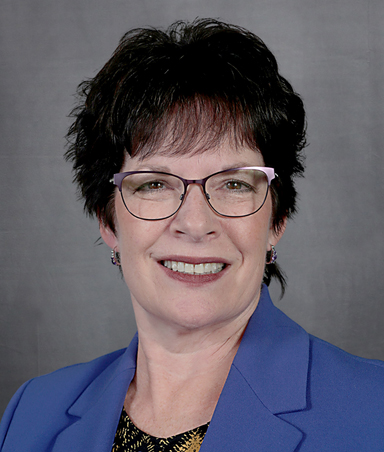
by Lisa Guliano
Before the 1950s, Ohio residents with developmental disabilities were often sent to institutions or kept at home, isolated and hidden from the public. Thanks to the advocacy efforts of parents who wanted better for their children, change was brought about. In 1952, parents in Butler County formed what would later become the Butler County Board of Developmental Disabilities (BCBDD).
With such a start, BCBDD has always had a hand in advocating for people with developmental disabilities and despite progress, there are many ways that advocacy is still needed to this day.
In 1986, the Ohio Legislature signed into law a Bill of Rights for people with developmental disabilities. The statute includes 24 rights to legally reinforce the freedom to choose and experience life. These are basic rights such as: the right to participate in decisions that affect their lives; the right to social interaction with members of either sex; the right to food adequate to meet accepted standards of nutrition; and the right to privacy, including periods of privacy and places of privacy to name some examples.
It has always been difficult for me to accept that people with disabilities needed additional protection under the law to simply be treated equally as all citizens.
Given that reality, our Board’s mission focuses on supporting people to live, work and learn in their community. What that looks like is different for every person depending on their goals and dreams for their future – just like you and me. Our role as advocates is an honorable one — it is vitally important given the history of people with disabilities living in institutions and being hidden from the community for being different.
Supporting people with disabilities to access opportunities to develop their full human potential – language also included in the Bill of Rights – incredibly increases our value as a society. Each person realizing their goals and dreams has an exponential effect on all of us.
If you’re trying to think of examples of what our mission looks like in the community, I’d encourage you to look at yourself, possibly your family members and even your friends. Haven’t we all worked on a plan for our lives and accessed support from others along the way? Are there times when you or someone you know faced challenges, or even barriers because of being different or not fitting a “typical profile?” As you’ve walked your path in life, recall the times where your opportunities led you to reaching goals, getting closer to your full potential, contributing to your sense of worth, your family and your community.
Diversity doesn’t look all that different for people with disabilities as they focus on living their best lives – not defined by us – but supported by us. We celebrate Developmental Disabilities awareness month in March and I’m challenging you to focus on the abilities, not the disabilities of people in our community, recognizing the unique ways all of us contribute to society.
I’d like to take a few minutes of your time to share my perspective on the school levy that will be on the May ballot.
I’m a 60-year-old, 30-year Loveland area resident with a home in the Loveland school district. I’m semi-retired and our children, who attended Loveland schools from K-12, are grown. Being semi-retired means, like many of you, I watch my spending closely. As someone who has always been proud of the Loveland Schools’ reputation and performance, the divide in our community from the past few levies has been disheartening. I have friends and neighbors on both sides of this issue. I have voted no in the past and I understand why people feel as they do about the situation.
The perspective I want to share is fairly simple, and one that as fellow property owners I hope you will consider. I firmly believe it’s in all of our best interests to be more aligned this May.
The premise is this: I understand that property values are subject to a variety of factors. I believe that school district performance is among the leading considerations of families looking to move to a new community. The way l see it a school district that does not support reasonable funding requests is destined for declining property values over time, as school performance and reputation declines. The reality is that things do cost more over time and it does cost to attract and retain top talent.
Let’s say for the sake of argument that property values drop 10 percent over the next ten years. If your Loveland home was valued at the current Zillow average of $355,000, you will take a $35,500 hit when you sell it. That is a very significant loss. I would prefer to pay a few hundred dollars more each year to help maintain the good reputation of our schools, protect our property values and provide our students with a well-rounded educational experience.
While each of us has reasons that affect our decisions about these levies, I believe what we have in common is that we all prosper when we have a high performing school district. I would like our state to provide a better funding mechanism for our public schools, but unfortunately, it doesn’t. I trust that our current school leaders are good stewards of our hard earned tax dollars and I believe that they reacted appropriately to our feedback when the District overreached.
After voting against the oversized levy a few years ago, I will be voting yes on the May levy that will be on the ballot, mostly to help protect our property values. I’m willing to find the additional hundreds of dollars per year as an investment in education, our community and in all of our property values.
I appreciate you giving this issue further consideration and I respect that each of you has the right to vote for what you believe is best for your situation.
March is Developmental Disabilities (DD) Awareness Month which makes it the perfect time to share how my community created opportunities for me and partly because of that, I’ve been able to flourish. As someone who lives with a developmental disability, I want others with disabilities to have similar opportunities for employment, leadership, and friendship.
When I was younger, I got to be a part of a summer work program through the Butler County Board of Developmental Disabilities (BCBDD). My first job was cleaning toilets and tables at Barn N Bunk, and I cleaned at Camp Campbell Gard as well. Later, I worked at the East Butler YMCA at the customer service desk.
I really enjoyed getting to interact with people and learn new things. For many people with disabilities, building friendships or gaining leadership skills can be difficult. For me, these work experiences helped create opportunities for both leadership and friendship. I feel my past work experiences lead me to the job I have now because I was able to learn how to interact with customers and show others that I’m a hard worker.
Sometimes, it can be hard for people with disabilities to develop friendships. For me, Best Buddies helped bridge that gap. Best Buddies is an international organization that matches people with and without disabilities for friendship. Through Best Buddies I have learned how to grow in a relationship with a friend, I’ve been able to try new things, and I’ve learned leadership skills. One of my favorite experiences through Best Buddies was painting pumpkins with my new friend.
Through Best Buddies, I have attended leadership trainings which helped me in my role as Community Outreach Advocate at BCBDD. At those leadership trainings we learned how to share our story. We learned how to write a speech and how to present in front of others. This has given me confidence not only at work but also in my personal life. I now know that I can speak up for myself and that sharing my experience can help others with disabilities and their families.
These opportunities helped me tremendously. You can create that for someone in your community. I hope that you take the time this month and every month to give someone with a disability an opportunity to grow in their skills and help them live the best life they can live.
Hello all! As you probably know, teachers aren’t paid enough (how could they be?) and are often responsible for the supplies our community’s children need for a great education!
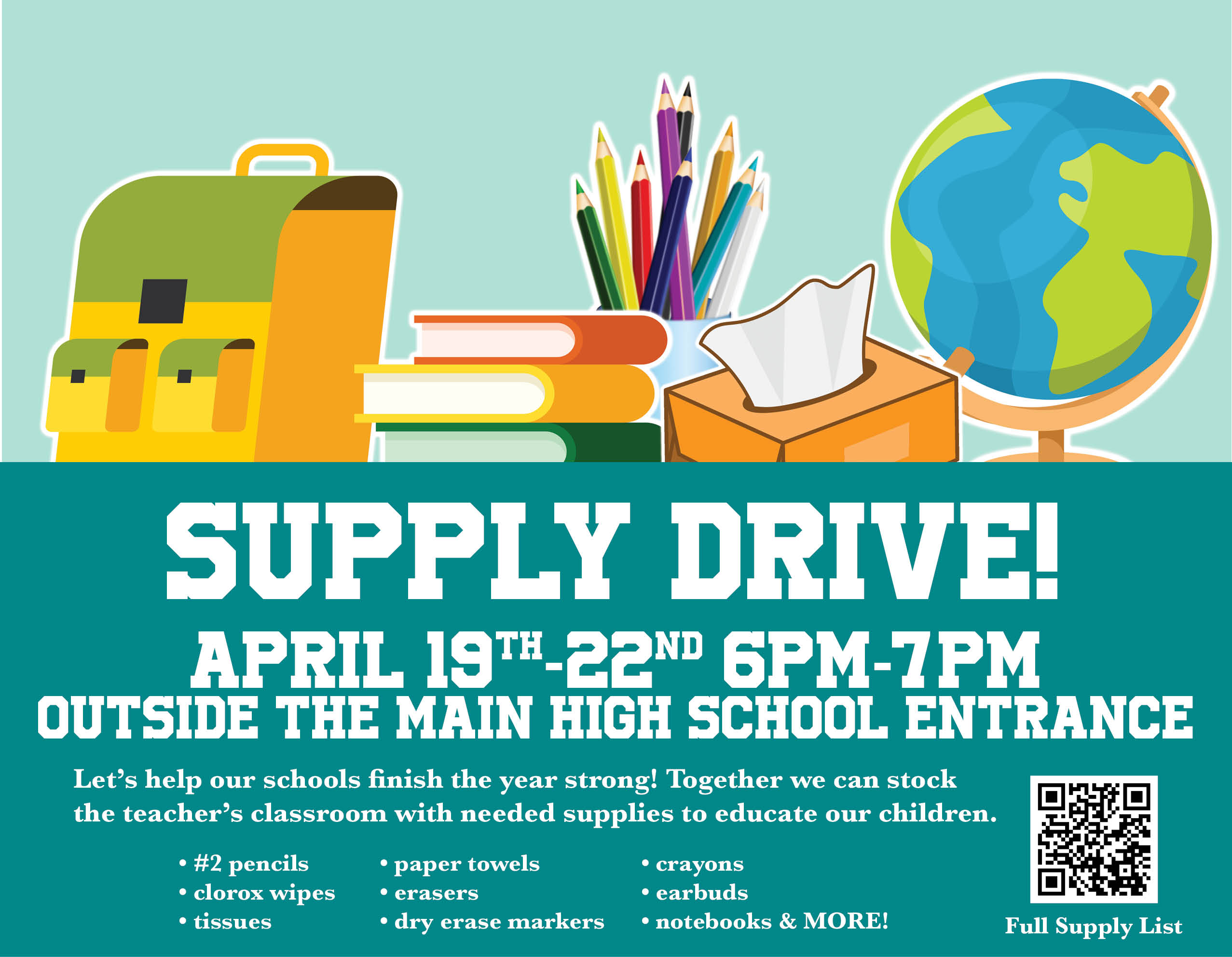
We’re most of the way through the school year, and those supplies are running low. So I’m arranging a supply drive for Loveland Schools! I have a list (scan the QR code) of needed supplies, and I know our teachers will appreciate any help.
If you have kids at the schools, you can send supplies in with them the week of April 17-21. Or, if you’d rather drop them off yourself, I’m arranging a drop-off location at the Highschool on April 19, 20, 21, and 22 from 6 PM to 7 PM.
Why these dates, you ask? Because those are the same nights our amazing High School is putting on the play, Murder on the Orient Express.
You can drop off supplies and go see the show! Do some good and have a night of entertainment. What could be better? Please share with anyone you know that might want to donate or help!
Every day more details emerge from Ohio’s billion-dollar bailout bribery trial showcasing gargantuan levels of arrogance, corruption, and enabling among energy executives and Ohio’s most powerful Republican politicians.
Pointing to the U.S. Supreme Court’s disastrous Citizens United ruling, Clark described to undercover FBI agents how to make dark money contributions in a way calculated to get a public official’s attention, saying those should come in chunks of $15,000, $20,000, $25,000 or more.
“Based on a Supreme Court decision, businesses can do this and nobody can do anything about it,” Clark said. “Politicians can get a bunch of money and say, ‘I didn’t know.’”
And that exactly how many Ohio politicians have been operating, this trial is showing: Selfish, reckless, greedy, amoral, large-scale, pay-to-play grift.
The scope of corruption at every turn in Ohio is a bit staggering, so let’s take a look at all we’ve learned so far, all together in one place:
Indicted former Ohio House Speaker Larry Householder. Official photo.
Executives from financially struggling FirstEnergy flew Ohio House speaker aspirant Larry Householder and associate Jeff Longstreth to D.C. on the FE corporate jet in January 2017 for some swanky steakhouse dinners.
Partners for Progress was the dark money project of then-FirstEnergy lobbyist Dan McCarthy. It received $5 million from FirstEnergy within a few weeks of when McCarthy founded it.
Juan Cespedes. Photo provided.
During a meeting between Householder and FirstEnergy lobbyists in October 2018, a lobbyist named Robert F. Klaffky slid an envelope containing a check for $400,000 across the table and under Householder’s hand as they discussed a $1.3 billion ratepayer bailout of failing nuclear and coal plants, former FirstEnergy lobbyist Juan Cespedes testified.
“Our client cares very much about this issue,” Klaffky told Householder.
“We were trying to establish the fact that our support was specifically tied to the legislation,” Cespedes said.
All told, Householder’s dark money political machine amassed $61 million in utility company contributions to elect a legislature that would make him speaker and pass the bailout.
Why did it go through the dark money groups like that? It was thought to be bad optics if the struggling company were publicly giving the money, Cespedes said in testimony.
Even though he was supposed to be regulating the utility, the official, Sam Randazzo, played a role in writing the bailout legislation, according to documents released by the Ohio House.
Center, former Ohio Republican Party chair, and statehouse lobbyist, Matt Borges with his attorneys outside of the federal courthouse. Photo courtesy of WEWS.
“He’s going to be a friend in this process,” Borges texted to Cespedes. “So let’s be prepared to speak up for him.”
Cespedes responded, “We will support him more than anyone.”
Ohio Secretary of State Frank LaRose. Official photo.
Kiani had plans to operate the two FirstEnergy Solutions nuclear power plants in Ohio for a short period, get a government bailout and then sell the power plants in a deal in which he stood to make $100 million, Cespedes testified.
DeWine and Husted, as well as Yost and LaRose, were reelected to second four-year terms in 2022.
Husted, Yost, and LaRose are all poised to continue to seek political advancement in Ohio.
Generation Now, Cespedes, and Longstreth have pleaded guilty.
FirstEnergy entered into its deferred prosecution agreement.
Neil Clark died by suicide in 2021, nine months after being indicted by federal prosecutors.
The federal racketeering trials of Householder and Borges are ongoing and expected to last until March.
Jurors will review all the evidence and decide their fate.
It will be up to Ohioans to decide how long we will continue to allow our politicians to rob and abuse us in service to themselves and private interest profiteering.
Every day we learn more about how Ohio government has really been operating under the design of unscrupulous thieves and grifters, rotting the institutions of our state into a national joke and embarrassment: a grotesque totem to pay-to-play corruption; a decayed and decrepit husk of representative democracy.
I really like this article as it offers an interesting point of view and deep dive into happiness. This is a tough time of year around here; dark, cold weather, post-holiday and back to grind. I felt this would be a great article to share.
One of the highlights I liked about the study conducted (references cited in the article) is how it correlates strong social and family interaction to your level of happiness. One lesson it focuses on is how people that focused on work more than family and friends weren’t as happy.
Personally, I learned this lesson a long time ago. Our family was young, and I wanted to have it all. Although I was working part time, I was dragging my kids to work with me. I told myself it was for our family, to help. When I looked inward and was stressing my children out, it was about me. I wanted to have the satisfaction of working and the rewards that can come with that. I wasn’t happier, the work simply caused more stress for me and my family. Someone gently (thanks Jim), pointed that out and I made the adjustment. I did continue to work, just in a different more flexible role.
Another portion of the article explains, “Social Fitness.” Sounds like a new buzzword for the year-LOL. Seriously, social fitness is taking stock in relationships through time. They point out that some relationships energize you and some may drain you. Take stock and decide who you want to connect with further and who do you need to move on from. The best way to improve social fitness is to schedule time with those you want to further connect.
I really enjoy the people I work with; however, I get driven and have really worked to make time to give myself and those I work with the time to share. For some reason, I had it in my head that socializing while working was a big no, no! Obviously, when you balance socializing in the work place it can strengthen your work environment. When I was much younger, I would call our corporate office and jump right into business. One time, the person on the other end, said, “CeeCee, you never ask how I am, lets chat for a second.” They were correct. I felt like they didn’t have time, well I was wrong, and we became much better coworkers and friends.
Today, a large part of why I love my work is because I truly care about the people I work with.
We’re all still learning but thankfully, I have grown and am a tad more intuitive today.
I have been a Loveland resident for 32 years and an avid supporter of the Loveland Herald and Loveland Magazine. It has been a delight to read articles about our community, the wonderful things our schools and businesses are doing, and the fabulous events that Loveland has to offer. It has always been a positive form of communication and has rarely shown bias until recently.
I am saddened that Loveland Magazine has become an ally of the Democratic Party, showing one-sided reporting on abortion to the recent issue of Speaker of the House.
Loveland has seen division over the recent school levy. Please don’t continue to divide us with political issues. Either stop reporting one side of an issue or don’t report anything political at all.
Please continue to be a positive, encouraging voice that unites rather than divides.
If you don’t have health insurance — or just want to explore your options — go to healthcare.gov on or before Jan. 15 to get covered with affordable health insurance now.
Having and keeping good quality affordable health care is personal for me. The Affordable Care Act saved my life.
In 2017, I walked into a doctor’s office with a nagging cough and walked out with a stage four cancer diagnosis. My Obamacare policy paid for the six months of chemotherapy and a month of radiation treatments I needed to be in remission today. As a small business owner, before the ACA I was only eligible for junk insurance. If I still had that policy, I would be bankrupt or dead.
Nobody knows what our future holds. From an accident to an unexpected diagnosis, we all deserve great health care when we need it. When we are sick or injured, our focus should be on healing, not living through sleepless nights worrying how to pay for it.
In the past, Affordable Care Act health insurance policies weren’t always affordable for some middle class Americans like me and perhaps you, too. At the time I was diagnosed, I did not qualify for financial help.
These health insurance savings are especially important for self-employed people, small business owners and employees, gig workers, temp workers, and older people who have retired but are not yet eligible for Medicare.
To find out what discounts you are eligible for (and also whether you may be eligible for Medicaid or other programs in your state), go to healthcare.gov and plug in your estimated income for 2023. If you live in a state with its own state-based health insurance exchange, you will be redirected to the website for your state.
The deadline for open enrollment is Jan. 15. After that date, you would only be able to sign up if you qualified for a special enrollment period — perhaps you moved, or experienced a life change such as getting married or divorced, or lost health insurance through your employer.
There is much more work to do, but we have come far on making health care more affordable in the past few years.
Even if you didn’t qualify for help before, the subsidies available through the Inflation Reduction Act mean that millions more Americans like you and I will get financial assistance. Take a few minutes to go through your options, and figure out what coverage possibilities you’re eligible for.
If there is more you want to know about open enrollment and your options, check out my CareTalk show and podcast, where experts answer your health insurance questions and talk through larger issues in our health care system.
Time is running out to ensure you and your family have access to affordable health care this year. The life you save could be your own. Get covered through healthcare.gov today.