Author: Guest Column

  • Invasive plant removal day: “We also laughed, motivated each other, and shared our passion for restoring our woodland ecosystems.”

    Invasive plant removal day: “We also laughed, motivated each other, and shared our passion for restoring our woodland ecosystems.”

    Strong Coalition Begins Healing at the West Loveland Nature Preserve

    by Lauren Enda

    On Saturday, September 10th, three paid contractors and 13 volunteers spent a total of 53 hours working and sweating in the West Loveland Nature Preserve. Our goal was to remove as many invasive plants in the Preserve as possible, allowing the healing of this delicate ecosystem to begin.

    Invasive plants prevent native plants and trees from growing, but they also undermine the health and vitality of tall, mature trees. As a result of the reduction of healthy native plants, the insect and bird populations are suffering. Unfortunately, in the West Loveland Nature Preserve (WLNP), as in many woodlands in southwest Ohio, invasive plants have started to, or already do, outnumber native ones. The contractor/volunteer team working at the WLNP on the 10th was trying to reverse that ratio. 

    Working together, the team identified the invasive plants, cut them down, applied herbicide to the remaining stalks, and finally stacked them for removal by Loveland’s Public Works. At the end of the workday, we estimated that we had cut down between 900 and 1000 invasives. This seems like a big number, but it represents a very small drop in a very large bucket of invasive plants. There are tens of thousands of invasives left to cut. The vast majority of what we downed was bush honeysuckle, some many decades old and incredibly large. We also cut callery pear, multiflora rose, and privet among others. In the massive tangle of honeysuckle, we uncovered a discarded tire, a mirror, alcohol bottles, and a few dead trees being held up by the honeysuckle that had grown around them. 

    Watch this video of the piles of honeysuckle that were cut and ready for the chipper.

    Prior to the event, experts from several organizations in the field of invasive removal were contacted to ensure that best practices were used. Unfortunately, even with expert guidance, professional technicians, and seasoned volunteers, invasive removal is not a “one and done” task. Continued monitoring of an area to cut invasives that are regrowing will be necessary to ensure the continued healing of the woodland.

    Many individuals helped ensure the success of the day. Many thanks to Loveland’s Public Works Department for logistics support and for taking care of the cut woody debris; to Loveland’s Marketing Team for their help in getting the word out about the event; and to the City Manager for trusting the team to allow us to do the work.  

    Finally, a huge shout-out goes to the twelve volunteers, who spent a beautiful Saturday protecting the WLNP. It was hard, hard work, but we also laughed, motivated each other, and shared our passion for restoring our woodland ecosystems. For those few hours, we were a bonded community with a shared vision. As that community grows, so too will the health of Loveland’s natural spaces.

    Please visit the West Loveland Nature Preserve and observe the transformation. The area we worked is at the West Loveland Avenue entrance, near the intersection with Glen Lake Road. We worked both sides of the trail for approximately 50 yards – though we got further on the side along the creek. You can see the “Hidden” creek from the path now. You can see the forest floor and see the trunks of the trees. Dappled sunshine now reaches the forest floor, something that has not happened in years. Hopefully, this event will be the beginning of the long healing process that the natural spaces in Loveland desperately need.


  • Be a Honeysuckle Hero

    Be a Honeysuckle Hero

    by Lauren Enda

    Loveland, like most of southwestern Ohio, has been invaded. According to UC biology professor, Denis Conover, “Amur honeysuckle is now the most abundant woody plant in Hamilton County. One bush can produce thousands of seeds that get dispersed by birds and mammals. Native plants just don’t have a chance. Everything that depends on the native plants — insects, birds — can be lost.” * The onslaught of invasive species is troublesome and dangerous to our local ecosystems. Multiple types of invasives are resident in Loveland’s nature preserves, parks, roadsides, and back yards. And we must eradicate them as the first step in healing our woodlands and natural spaces. 

    How can you help? Fight to protect Loveland’s woodlands on Saturday, September 10th from 9am to 3pm at the West Loveland Nature Preserve. (See further information below.) A coalition of residents, City of Loveland Public Works, non-local volunteers, and hired contractors will be working together to start healing the city’s green spaces. This event is hopefully the first of many to remove invasives from our city one area at a time. 

    Everyone is invited to join the fight. An invasive removal contractor, Honeysuckle Removal,** will do the really hard labor of cutting the invasives, many of which are decades old and twenty feet tall. Volunteers will work behind them to apply herbicide to ensure the invasives don’t regrow and then pile the debris for the City of Loveland Public Works to pick up after the event. The more volunteers we have, the more the contractor can focus on cutting invasives and the quicker the rebirth of the woodlands will be. In a show of good will, the contractor is “donating” two people from their company to help us get through the invasives quicker and educate volunteers. Pretty great, right?

    You can volunteer for an hour, or you can come all day. If you don’t have time to stay and work, please stop by anyway to learn a bit more about invasives, their dangers, and how to eradicate them in your own yards. 

    Many intractable problems exist in our world today, most of them so huge and so far away that we may feel there is nothing we can do. But removing invasives is relatively easy, local, doable, and extremely beneficial to our ecosystems. Everyone can make a real difference in fighting this massive problem. You will see direct results of your work, helping sunlight hit the forest floor for the first time in years. Joining the fight for healing the West Loveland Nature Preserve is as easy as showing up on Saturday, September 10th. Once you see the transformation of the area, you will better understand the problem, the solution, and how important this work is.

    For more information or to volunteer, please contact Lauren at lauren_enda@hotmail.com.

    What: Invasive removal at West Loveland Nature Preserve

    When: Saturday, September 10th from 9 am to 3 pm

    Where: Park on Glen Lake Rd, Pheasant Woods Court, or Shingleoak Drive. There is an entrance to the Preserve near there along West Loveland Avenue

    What to wear: Long-sleeved shirt and long trousers, hat, and if desired, sunscreen and bug spray 

    What to bring: Sturdy work gloves, water bottle, eye protection if you have it

    Lauren Enda lives in Loveland at Hidden Creek


    * Invasive species are taking over Ohio forests | University Of Cincinnati (uc.edu)

    ** Honeysuckle Removal LLC

  • What’s The Cost of proposed Loveland School levy?

    What’s The Cost of proposed Loveland School levy?

    by Linda Holtkamp

    By now, the people of Loveland Schools should know about the proposed Loveland School levy, and how the cost of this proposed increase will affect your property taxes.

    Currently, 1 Mill is equal to almost exactly $1,000,000, and the school is asking us for 4.9 Mills, additional. The formula to calculate what this proposed levy will cost you is simple. Superintendent Mike Broadwater has a video on the school website with an explanation and many thanks to him for providing that.

    Find your property on your County Auditor’s website. Look for “property search” on both Hamilton and Clermont County sites. There you will find both the Appraised Market Value (full appraised value of your home) and also the Assessed Value (the amount that is taxable). Then grab your calculator and use this:

    Appraised Market Value (full home or house value) x .35 x .0049 = $$$$

    OR, use your Assessed Value (taxable amount) x .0049 = $$$$

    With either math formula, the amount you will owe will be the same $$$$.

    The .0049 represents the amount of this levy ask… 4.9 Mills, generating a total of close to $4.9 Million Dollars, each year, continuously (permanently), as an operating levy for the schools. 

    A Google search for current home values in Loveland lists that properties in Loveland range from $40,000 to $2.9 Million. The Grail was going to sell land to the school district for $7.7 Million, so yes, there are some high-value properties that exist here.

    The LCSD treasurer used the Zillow website in his presentation at a recent board meeting. Zillow lists the average house value in Loveland, at the end of July, to be $377,047.

    Using the average house value that the treasurer listed, $377,047, the calculated increase for an average value home in Loveland, for this school levy, will be about $650 per year. This is a permanent tax, which will be piled on top of the existing 18 continuous (permanent) levies, two permanent inside millage taxes, as well as a 26-year bond levy (which will be paid off in a few years).

    69% of homes in Loveland are lived in by the homeowner, while 31% are rental properties, according to RentCafe, a marketing website that tracks these trends.

    Homeowners will have to pay the extra costs of this levy, and other recent property taxes that have passed but not yet been billed, starting in January 2023. Landlords can be expected to raise rents to cover the 13% increase in Loveland School taxes, and those other taxes as well. Rentals in Loveland are pricy, average $1,361 for 959 sq. ft., only surpassed locally by rentals in Blue Ash.

    Information from the recent Census lists that 6.1% of people in Loveland are under 5 years old, and that 26.3% are under 18 years of age. This would indicate that, out of Loveland’s population, about 20% are school-age children. A good number of those school-age children do not attend Loveland Schools, but opt for private, parochial, charter, or homeschooling.

    Residents over 65 years old, seniors, again according to Census numbers, comprise 15.9% of the population of Loveland. It seems there are close to as many senior citizens in Loveland as there are school-age children.

    According to the school website, the District serves a population of 50,000, when including those who live both inside and outside of Loveland City proper. Student enrollment in LCSD is approximately 4,000. That works out to 8% of Loveland-at-large residents are students of LCSD.  That means 92% of Lovelanders sacrifice monetarily via property taxes, to educate 8% of the Loveland district population.

    Though many residents strongly insist this 13% increase in school property taxes is for the good of the 4,000 current students of Loveland, is there ever any emphasis on how a 13% increase might harm the considerable number of senior citizens in Loveland? The Homestead tax reduction, (aimed at helping seniors) has effectively disappeared, so relief on property taxes is essentially nonexistent. 

    For those who feel that not passing this levy will hurt property values… that depends on your outlook. Of all the people who live in Loveland now, according to the Census, 69% were born in Ohio. As a life-long resident myself, I know that many, many of these 69% are “long-term” residents of Loveland. Think of those you know who have made their home here for at least 15 years, as well as those who have lived here for decades. Do we like seeing our property values rise? Of course, we do. But do these permanent levies, which burden us forever, give us a good return on our investment? Or are higher property values more likely to aid those who live here only for a short time? We’ve spent tens upon tens of thousands of dollars to support the schools. Our schools… LCSD. Proudly. Will property value increases repay any of that? Will some residents eventually be forced out of their homes because continual taxation is part of the homeownership costs that are skyrocketing? Admittedly you can’t monetize the value of education. You can’t accurately assess the harm of passing on the cost of these school levies to those who truly can’t afford them, either.

    Remember that 2/3 of our community does not have children attending Loveland Schools. But a tax like this, if passed, places a burden on every single resident.. homeowner or renter, school parent or senior. The importance of voting cannot be overstated, and absentee or early in-person voting makes it easy for us all.

    Many of us complain about how much is sent to schools already, but these taxes are firmly entrenched, school enrollment numbers continue to drop, and LCSD has been making everything work pretty well with the over $50 Million Dollars per year that they already get (some $35 Million of that from local property taxes… us). They use these funds to educate 4,000 students out of a district population of 50,000… 8% of our community at large.

    These funds cannot be taken back, so use them with our blessing.

    Don’t ask for more.

  • A tale of two countries and two parties

    A tale of two countries and two parties

    by Mark P. Painter

    In 2016 one country elected a narcistic, opportunist, bigoted, congenital liar, claiming populism but born to wealth and privilege, a cheating and mostly failed businessman, to head the party and the government. He proceeded to appoint grifters and incompetents to the cabinet, valued loyalty to himself above loyalty to the country. He lied to the country, his colleagues, courts, and then lied about the lies. He was clearly the worst and most dangerous leader the country ever had.

    But his party allowed, even encouraged, his behavior. Except for a very few righteous Republicans—who were drummed out—the party became his enablers, parroting his lies and excusing his behavior. Other enablers—corrupt media—also spread the lies as fact, duping many people.

    His party even had a chance to remove him, twice, to stop the harm. But they still abetted his designs. The whole party was trapped by the Orwellian Big Lies they helped spread.

    Even after he was defeated by a vote of the people, most party members backed his lies. In effect, they sanctioned his efforts to cling to power by subverting democracy. When he attempted to stage a coup—a rejection of democracy itself—those who could act stayed silent. Yes, a few criticized the leader for sedition—but they quickly backtracked and again swore fealty to an aspiring tyrant.  

    Now this country stands in danger of another coup attempt.

    Now this country stands in danger of another coup attempt. The danger is real—we are just now seeing the full and awful truth of January 6. And the leader, far from being disgraced, stands tall in his party still—and remains a threat to our very democracy.

    In 2019 another country, albeit through a different but democratic system, elected a narcistic, bigoted, congenital liar, claiming populism but born to wealth and privilege, to head the party and the government. He proceeded to appoint grifters and incompetents to the cabinet, valued loyalty to himself above loyalty to the country. He lied to everyone about everything. He broke laws and rules that he himself had enacted.  

    Some in his party criticized him. But not nearly enough. But he went too far—he lied to the legislature and was caught. About a month after that, leaders of his own party denounced him. They went to him and told him he must resign. And he did. He is now disgraced and no longer a danger to his country or the world.

    In three years, Great Britain ridded itself of a cancer.  In the United States, we still have ours after six. 

  • I’m really seeing where the next phase of employment is headed

    I’m really seeing where the next phase of employment is headed

    by CeeCee Collins

    As I’ve had some time to spend with my 20-something-year-old children over the summer. I’m really seeing where the next phase of employment is headed firsthand. Very different from my generation (mid 50’s), we and our parents were taught to find a job in the town we were in, get up each day and go into the office and grind. If it was the 80’s it was a “who could put in the most hours,” contest each and every day. 

    I know we’ve all been reading and hearing about the latest way our children are working, but to see it in action has been…interesting. Perhaps, I’m a tad jealous, but mostly I’m happy for them. I kind of keep waiting for the fallout of their choices. What I’m referring to is their ability to FIRST pick the city, state, or country they wish to work (live) in and THEN find employment. No way would my dad have allowed that, nor would I have jumped into that risky venture years ago. 

    It’s cool, I’m seeing kids head south (I probably would have gone that route as I love the water), or head to Colorado (not my scene but I would have done the skiing). I often say, I don’t have a lot of regrets in life, but I do wish I would have taken time between college and real life to go on an adventure. Thrown caution to the wind! Live simply, waited tables, and hoped I had enough money for rent and food. I took a job that really was not the best fit for me after college but it paid my bills.

    Workers today don’t even have to go that extreme. Yea, I’m a tad jealous. It has been great to hear where they all land. My son has a large friend group from high school and college. They truly all picked different cities to work in. They go visit each other often and have a place to stay. By the way, he is in Nashville. My friends and I say, could you have imagined doing this?!? Ha, ha!

    I get it technology has advanced, etc. I’m just saying it would have made stepping into the workforce a little less painful after college if I could choose where I lived. If you read this and have thoughts or opinions, I’d love to hear them on our Facebook page

    Hope you are having a great July and stay safe!

  • What if anti-abortion activists really wanted to reduce abortion rates?

    What if anti-abortion activists really wanted to reduce abortion rates?

    Birth control pills. Getty Images.

    Countries with more restrictions on abortion do not have lower rates of abortion

    A Guest Column by Rob Moore

    The U.S. Supreme Court’s landmark decision to strike down the right to family privacy around abortion care has cleared the way for Ohio’s six-week ban on legal abortion.

    Since about 1 in 3 women do not realize they are pregnant until six weeks or later, this bill effectively bans legal abortion care for a large number of pregnant women. 

    Ohio lawmakers are not stopping there, either. Boldly saying that pregnancies resulting from rape and incest should be required by the government to be carried to term, legislative leaders are pushing to ban legal abortion care in its entirety.

    This approach may come off as extreme in the face of its tepid support among the general public. According to the Pew Research Center, more Ohioans think abortion should be legal in all or most cases than those who think that it should be illegal in all or most cases. One in four women will have an abortion in their lifetime and most do not believe the extreme ontological claims about moral standing pushed by legislative leaders.

    A tragedy of legislative leaders’ efforts on abortion is how ineffective they will be at achieving their own goals. A 2017 cross-country analysis of abortion restrictions found that countries with more restrictions on the practice of abortion do not have lower rates of abortion. Believe it or not, interference with the private medical decisions of citizens is not only frowned upon in liberal democracies and beyond, it is also extremely difficult to do.

    Perplexing is legislative leaders’ ignorance of the decline of abortion over the past few decades. According to both the Guttmacher Institute and the CDC, the number of abortions in the United States have declined from a peak of about a million and a half in 1990 to less than a million in 2020.

    So what can legislative leaders do if they want to actually reduce abortion? There is one tool that has led to the reduction of abortion over the past decades that legislators could use that also do not infringe on personal medical decisions. That is improvement of access to contraceptives.

    Washington University of St. Louis researchers found that providing access to no-cost contraceptives cuts abortion rates by 62% to 78% among those who receive the contraceptives. Researchers at the Guttmacher Institute have found reductions in abortions are driven particularly by increase of use of long-acting reversible contraceptives such as intrauterine devices (IUDs), which have high success rates in reducing pregnancies and give women the ability to control when they want to become pregnant.

    A high-profile Colorado program providing long-acting reversal contraceptives to low-income women reduced teen births and abortions by 50% according to the Colorado Department of Public Health & Environment. In my graduate studies I worked with a team to conduct a cost-benefit analysis on a national version of this program, finding such a program would have benefits that would far outweigh its costs.

    Abortion is not going away. Even families that plan well find themselves in tragic situations where a fetus is unviable or the mother will die. Police state intervention is unlikely to be tolerated by families or effective in reducing abortion rates. But anti-abortion activists can reduce abortions if they want to: by increasing access to contraceptives that give families control over their reproductive health.

  • Monkeypox is spreading but the Ohio Department of Health hasn’t spread the message

    Monkeypox is spreading but the Ohio Department of Health hasn’t spread the message

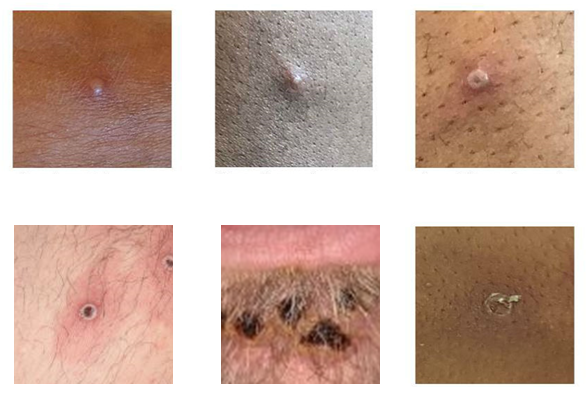
    The monkeypox virus causes lesions that can resemble sores from acne, an ingrown hair or other viruses. They are infectious until the scab is fully healed. (UK Health Security Agency/CDC).

    A Guest Column by Kenyon Farrow

    It may come as a surprise to most people in Ohio that in addition to dealing with the ongoing problem of COVID-19 ebbs and flows of infections and variants, we actually have an entirely different infectious disease to be concerned about: monkeypox. And the Ohio Department of Health (ODH) has done very little else to engage the public in any detail about the virus, how it’s spread, any plans to scale up testing and when the state might be able to access the vaccines that are approved to prevent contracting the virus.

    So far, all we’ve gotten is one press release announcing the first suspected case of monkeypox in the state. On June 13, the Ohio Department of Health issued a press release announcing this case, with messaging from ODH Director Dr. Bruce Vanderhoff, that seemed to downplay the threat monkeypox could play to the health of Ohioans. 

    “What I want to emphasize strongly is that monkeypox does not spread easily between people, and so the risk to Ohioans generally is very low,” he said. 

    Dr. Vanderhoff is correct in one sense. Monkeypox, compared to airborne virus like COVID-19, is less efficient in spreading from person to person. But it does spread through physical contact with someone who has contracted the virus — and that contact can be sexual contact, but also kissing, cuddling, bodily fluids and any contact where you could come into contact with the lesions that most often accompany an infection, and without testing can sometimes be mistaken for other diseases like herpes or congenital syphilis. And while monkeypox is rarely fatal, it is an extremely excruciating illness for those who contract it. Furthermore, it is more dangerous for infants and children, and pregnant people. 

    Since June 13, when the ODH first announced a suspected case, we now have 3 documented cases, according to the Centers for Disease Control & Prevention. While this number may seem low and like nothing most Ohioans should worry about, the truth is we actually do not have an accurate count to know whether monkeypox is spreading here, and how rapidly. 

    The ODH has not launched any public education materials in the form of televised or radio public service announcements, social media posts, press conferences or outreach efforts so most Ohioans would know about the virus, how its spread, and how to protect themselves. ODH has not announced any places around the state where one can get tested for monkeypox if you suspect you may have it. 

    And even if monkeypox cases here are currently few in number, they may not stay that way. Unlike COVID-19 where summertime has typically meant lower transmission rates because people are outdoors more and have windows open to allow clean air to circulate, there are more events where people come into close contact with one another. Airports and flights are packed. Summer is full of music festivals, county fairs, amusement parks and all sorts of events where people are often in close contact. Prisons and jails, due to medical neglect, overcrowding and unsanitary conditions created by lack of care, can also become a venue through which monkeypox could spread in and out of carceral settings. 

    Furthermore, monkeypox seems to be spreading rapidly in most American cities among LGBTQ people, particularly gay/bisexual men. June was Pride Month and every corner of the state has had pride festivals last month (and folks from Ohio, including myself, who’ve traveled to pride festivals in other cities and back) how do we actually know whether we have more cases without doing the proper public education and outreach campaigns connected to an infrastructure to offer testing to people who think they’ve been exposed?  

    JYNNEOS (also known as Imvamune or Imvanex) is a 2-dose vaccine for monkeypox currently in limited supply in the U.S., and according to the U.S. Health and Human Service’s (HHS) Office of the Assistant Secretary of Preparedness & Response, only 4 doses (enough for 2 people to be fully vaccinated against monkeypox) have been distributed to Ohio until more doses can be secured and imported later this year. 

    But will ODH or Gov. Mike DeWine advocate for Ohioans to get access to this vaccine once more doses become available? And will the set up a monkeypox testing and distribution plan?

    I certainly hope so. But in the current political climate, it would not shock me if yet again good public health policy is taking a back seat to politics, endangering the lives of Ohioans in the process. The Ohio GOP’s in the last few years has passed anti-LGBTQ legislation, further criminalized abortion after the Supreme Court decision overturning Roe v. Wade, and their 2021 bill to dismantle the authority of the ODH to be able to issue and enforce measures to protect Ohioans during public health emergencies, all add up to ways in which ODH may have been the victim of state capture by personal and political interests that have zero to do with the stated mission of the organization. 

    One only need to look at what happened a month prior to the June notice on the first possible monkeypox case in Ohio—two ODH staffers (who were in the sexually transmitted infections prevention department) were fired or resigned because they included information about an upcoming training for medical providers on how to prescribe a medication used for women experiencing miscarriages or for abortions up to 10 weeks (which was 6 weeks before the U.S. Supreme Court decision to overturn Roe v. Wade) in an e-newsletter (first reported by Ohio Capital Journal on June 22). 

    The OCJ piece also noted that ODH’s HR department also took issue with the newsletters promotion of “National Masturbation Month; Honor Our LGBT Elders Day; International Day Against Homophobia, Pansexual and Panromantic Visibility Day; SLAM (Sexuality, Liberators, and Movers); Black and Blue – Suicide in our own Leather, Kink and Queer Communities; and National Condom Month.” 

    How is the STI prevention program at ODH supposed to do prevention work without taking advantage of these anniversaries to get the public’s attention? Is this the reason why they’ve been so lackadaisical about monkeypox virus education, outreach and testing? 

    To be sure, no one was looking for a monkeypox outbreak in 2022. As someone who’s worked in public health on infectious diseases as a policy advocate and journalist for more than two decades, this wasn’t on my radar either. But that’s the thing with infectious disease — they take advantage of human frailty and ignorance. And just when you least expect it, they’ve find a way to grow and to thrive. And ignorance on a virus and how to prevent it, and government negligence in creating educational, outreach, testing and vaccination opportunities become ways that diseases spread. 

    So knowing this, one would expect our state health department leadership to take more of an active role publicly to get ahead of what could be a real public health catastrophe. I hope they choose public health over politics. 

  • Ohio Republicans’ attempted erasure of a 10-year-old rape victim is incredibly sick and disturbed

    Ohio Republicans’ attempted erasure of a 10-year-old rape victim is incredibly sick and disturbed

     Left to right: Republican Ohio Gov. Mike DeWine, Republican Ohio Attorney General Dave Yost, and Republican U.S. Congressman Jim Jordan. Official photos.
    Ohio Capital Journal Editor-in-Chief David DeWitt

    A Guest Column by David Dewitt

    The first and most important thing to recognize right now is that a heinous, violent crime was committed on a 10-year-old Ohio child, and thankfully justice has now found the alleged perpetrator.

    Columbus man was indicted Wednesday in a case that made national and international headlines about 10-year-old girl who had to travel to Indiana for an abortion after Ohio’s abortion ban went into effect following the U.S. Supreme Court overturning Roe v. Wade.

    The story is horrifying and tragic. She has experienced enormous trauma. My heart breaks for her, and I’m very grateful to all the hard-working professionals out there providing her and her family assistance in what must be a truly awful time.

    Republican Ohio Gov. Mike DeWine and his spokesman responded to the story by ignoring questions about whether children should be forced to have their rapists’ babies. Then DeWine allies contacted members of the press, asking how sure they were that the case of the pregnant 10-year-old even happened.

    The Washington Post, the conservative Daily Caller and other media outlets published stories saying that the case was unverified. The Wall Street Journal Editorial page suggested the story was a “fanciful tale.” The National Review’s Michael Brendan Dougherty referred to the case as “a fictive abortion and a fictive rape.”

    Republican Ohio Attorney General Dave Yost went on Fox News Monday to raise further doubts. He said he works closely with law enforcement authorities and he’d gotten “not a whisper” about the case.

    Hamilton County Republican Party Chair Alex Triantafilou on Twitter called the case, “A garbage lie that a simple google search confirms is debunked.”

    State Rep. Brian Stewart tweeted the Washington Post story saying he “wouldn’t trust an abortionist to tell me whether the sky is blue.”

    Ohio U.S. Rep. Jim Jordan tweeted, “Another lie. Anyone surprised?

    None of them had the patience to verify for themselves with certainty the truth of the matter before going public on a massive, self-serving scale.

    The propaganda erasing this 10-year-old’s existence was so swift it spread out over right-wing social media like a blanket. Those advocating the truth of her story — privately already confirmed for some of us, and crushing to hear about — were subjected to wild-eyed mockery and ridicule.

    It’s incredibly disturbing that the default position of so many sick and twisted people — including Ohio’s most prominent Republican elected officials — is to very vocally and very publicly question whether the rape and impregnation of a 10-year-old child ever happened.

    DeWine, Yost, and other Ohio Republicans hurt a traumatized child once by forcing her to flee the state in order to receive health care; then they hurt her again by peddling propaganda erasing her; now they’re hurting her a third time by refusing to acknowledge and apologize for their actions.

    This case was never implausible. In 2020, the most recent year for which statistics are available, 52 girls aged 14 and younger had abortions in Ohio, according to the state department of health. A review of just the city of Columbus’ police log since March 15 uncovered 59 reports of sexual assaults of girls 15 and younger that, based on the information available, could have resulted in pregnancy.

    Nevertheless, the wheels and integrity of local journalism spun and uncovered the truth, with the Columbus Dispatch breaking the news of confirmation of the case.

    But after the confirmation broke Wednesday, DeWine’s spokesman, Dan Tierney, again refused to comment on whether child rape victims should be forced to carry their pregnancies to term.

    Ten-year-olds who become pregnant are by definition rape victims. But Ohio’s abortion law signed by DeWine doesn’t make exceptions for rape and incest.

    Yost’s office didn’t respond Wednesday when asked whether he believes child rape victims should be forced to carry pregnancies, nor whether it was important to believe stories about sexual violence. Instead he put out a statement applauding the arrest.

    Yost offered no correction, no apology, and showed no contrition for going on national television to try to erase the lived experience of a child rape victim.

    They behave on a base level so repugnant and removed from the general good-heartedness of most Ohioans it’s almost unfathomable.

    “Apologize for what? Questioning a newspaper story?” Yost, Ohio’s top law enforcement officer, said about a case in his own county.

    DeWine, Yost, and other Ohio Republicans hurt a traumatized child once by forcing her to flee the state in order to receive health care; then they hurt her again by peddling propaganda erasing her; now they’re hurting her a third time by refusing to acknowledge and apologize for their actions.

    These powerful Ohio Republican politicians have thoroughly and completely shed themselves of any sense of shame or conscience.

    They’re disgusting and disgraceful; callous, careless and cruel.

    This is a matter of basic human decency, good faith and sensitivity on the most fundamental level of society.

    If they are willing to try to erase the traumatic story of a 10-year-old rape victim, whose pain and suffering will they not try to ignore and erase?

    They behave on a base level so repugnant and removed from the general good-heartedness of most Ohioans it’s almost unfathomable.

    I honestly don’t know how they sleep at night, or look at themselves in the mirror in the morning.

  • 10-year-old rape victim apparently not among Ohio Gov. DeWine’s ‘most vulnerable’ needing protection

    10-year-old rape victim apparently not among Ohio Gov. DeWine’s ‘most vulnerable’ needing protection

    Ohio Capital Journal Editor-in-Chief David DeWitt

    A Guest Column by David Dewitt

    Gov. Mike DeWine spends a lot of time jawing about his concern for protecting the “most vulnerable” Ohioans whenever he signs a draconian law attacking the bodily autonomy of others.

    But as we learned according to reporting from the Indianapolis Star this week, a 10-year-old Ohio rape victim was forced to travel to Indiana for an abortion after the U.S. Supreme Court overturned national abortion rights, and within hours Ohio Attorney General Dave Yost had a federal court put Ohio’s six-week abortion ban signed by DeWine in 2019 into effect.

    From the Indy Star:

    On Monday three days after the Supreme Court issued its groundbreaking decision to overturn Roe v. Wade, Dr. Caitlin Bernard, an Indianapolis obstetrician-gynecologist, took a call from a colleague, a child abuse doctor in Ohio.

    Hours after the Supreme Court action, the Buckeye state had outlawed any abortion after six weeks. Now this doctor had a 10-year-old patient in the office who was six weeks and three days pregnant.

    Could Bernard help?

    Though Indiana lawmakers are poised to further restrict or ban abortion in mere weeks with a special session July 25, for now, the procedure still is legal there. And so, the Star reported, the girl soon was on her way to Indiana to Bernard’s care.

    Asked Wednesday about the law he signed preventing this 10-year-old rape victim from having a choice over her pregnancy in Ohio, DeWine could only stutter and stammer through a political hack non-answer:

    “Yeah, first of all, I have no more information than you do or anybody does. Reading in the in the paper, it came came as you know, from a story out of out of Indiana from from a doctor over there. This is a horrible, horrible tragedy, you know, for a 10-year-old to be assaulted, 10-year-old to be raped, you know, as a father and grandfather, it just it’s just gut-wrenching to even even even think about it. I assume that the doctor has reported this. I assume that if she was treated at an emergency room, you know, these are all mandatory reporters. So I’m assuming that this has been referred to children’s services, I assume has also been referred to local whatever the local law enforcement agency is. We have out there a obviously a rapist. We have someone who is dangerous and we have someone who should be picked up and locked up forever. And again, I don’t not knowing all the facts of the case, I’m just assuming that that process has has in fact, has in fact, been been followed. [sic]”

    Everyone knows that the rape of a 10-year-old is horrible and the rapist should be thrown in prison. That’s not the question.

    The question is for DeWine to explain why he thinks he is justified in creating law to force child rape victims to carry pregnancies from their rapists. On that subject, DeWine’s silence rang loud.

    DeWine would inflict the emotional and physical violence of forced birth-giving on child rape victims, but won’t take responsibility for his own actions.

    This is a most disgusting form of cowardice.

    Either DeWine has the courage of his convictions and explains why children must undergo this suffering he’s causing; or he’s a coward.

    From his answer, it’s apparent he’s so unconcerned — while this has made national and international news all week — he hasn’t bothered to seek out the facts of the case.

    Compare his current posture to the rhetoric DeWine deployed when he signed the law that caused this situation:

    “The essential function of government is to protect the most vulnerable among us, those who don’t have a voice,” DeWine said.

    If a 10-year-old rape victim does not rank among Ohio’s most vulnerable, I shudder to imagine DeWine’s conception of vulnerability.

    This is just the beginning. Fifty-two children under the age of 15 received abortion care in Ohio in 2020, according to the latest statistics from the Ohio Department of Health. This was one example that came within days of the Supreme Court’s ruling and the enactment of Ohio Republicans’ law.

    Over the coming years, there will be many more. We will report on each story we can, and they will all be heartbreaking to read, I’m sure, and devastating to everyday Ohioans’ lives.

    This is what happens when long-standing freedoms are ripped away from Americans by extremist politicians and politically motivated, activist courts.

    This is what happens when politicians choose to be blind to the nuances and complexity of life, and instead stake out radical, absolutist positions, and then give those positions the power of law.

    Ohio Republicans are planning to move legislation next that will ban nearly all abortions, again with no exceptions for rape or incest.

    The sponsor says she has the votes in the General Assembly as well as the “full support” of DeWine.

    State Rep. Jean Schmidt doesn’t know yet, she said, whether they will make this new, even more extreme law before or after the November General Election. She’s called forced pregnancy for rape victims “an opportunity.”

    Ohio Republicans and Mike DeWine may be fine with making our state an example of heartless cruelty before the eyes of the nation and the world.

    I think it’s sick and monstrous.

    But that’s the law they made and threaten to make worse, so they don’t get to shirk responsibility and accountability for their actions.

    Each heartbreaking story of suffering and pain falls squarely on their heads.

  • Today is the 4th of July, and each stripe and every star is there, messy as it is

    Today is the 4th of July, and each stripe and every star is there, messy as it is

    I smiled and thanked him. “Not sure how long it will last this time,” I said, “but we’ll see.”

    by Stefanie Badders Laufersweiler

    “Patriotism” has taken on so many different and sometimes wildly varying meanings and interpretations that even the word itself feels divisive, a point of constant contention. A contest rather than a coming together. Who is truly a patriot and who isn’t? Are you patriotic enough, or at all? Do your views, does your existence, insult the very idea of patriotism?

    I wish we could throw out the word and find another.

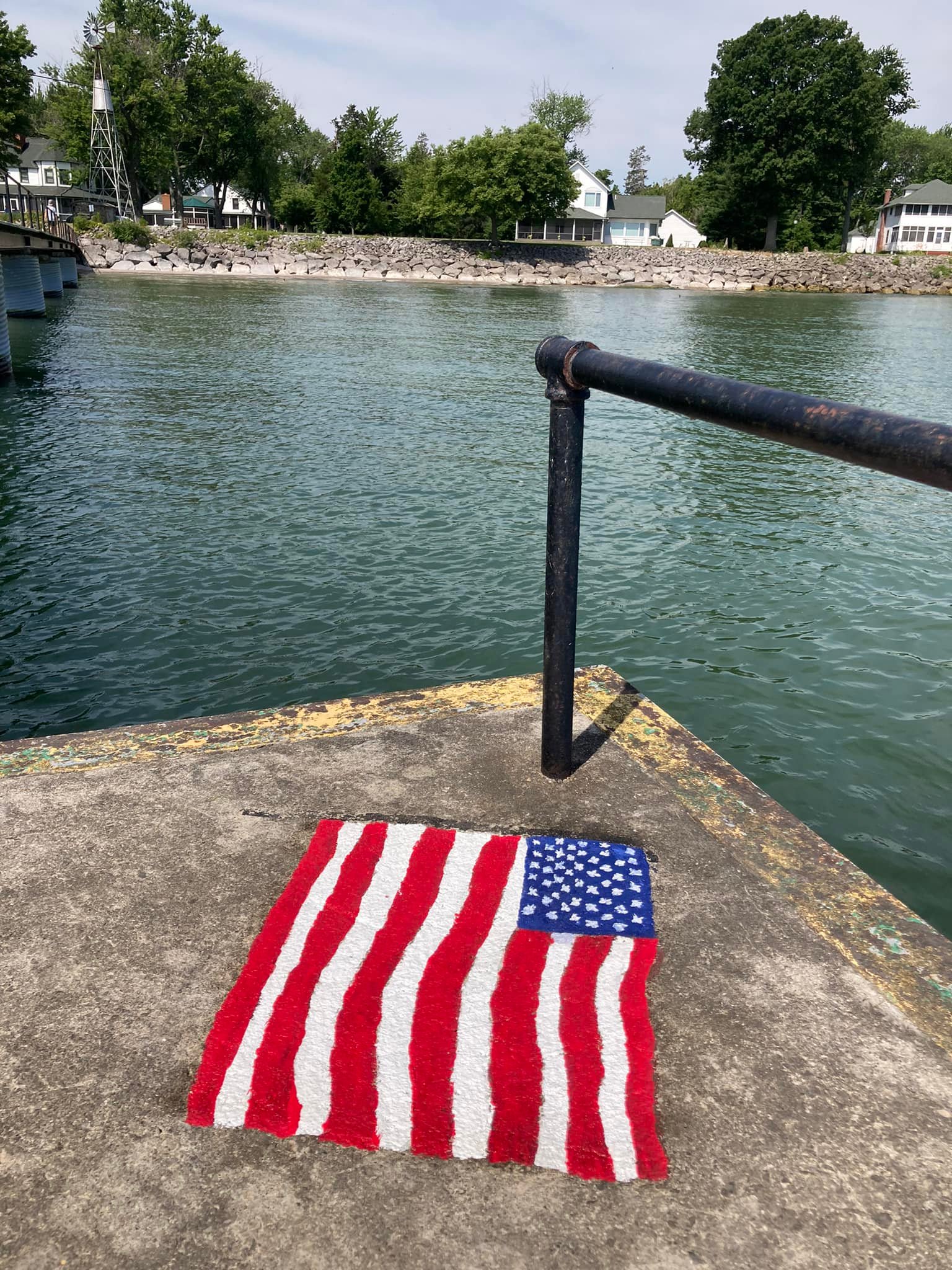
    It feels loaded, weaponized, and as worn out as this flag that someone painted at the edge of our dock. A few flags have come and gone in that same spot over the years. Fresh paint from some well-meaning fellow lake-goer always gives way to waves and wind that batter the concrete over time. But, someone always repaints it, eventually.

    Today is the 4th of July, and some (like me) woke up not really feeling it. For those reeling from recent events (take your pick), it feels disingenuous right now to celebrate independence, unity and democracy as they relate to America. For others, it feels more celebratory this year; for some, it may feel the same way it does pretty much every year. And we all manage to offend each other with our individual takes, long after the fireworks and barbecues are over.

    I still love this country, even when it’s hard. Even when I believe we have endless work to do to make it a better place. Even when it doesn’t feel all that united. Even when the weight of our differences, our inequities and our struggles feels incredibly heavy. Because, perpetually, underneath all of that is hope.

    I still love this country, even when it’s hard.

    Hope is what powers and empowers us. To keep trying, and talking. To show up always, or anyway. To set boundaries, but still leave a door cracked. To appreciate what’s been done that we can be proud of, while acknowledging there’s still much more to do, because this country is, if anything, a work in progress.

    Today I walked down to the dock with some brushes and got to work repainting that worn-out flag. I didn’t do it perfectly; the stars barely resemble stars, and the stripes run into each other in places. But each stripe and every star is there, messy as it is. It got me wondering who painted it in the first place, and who repainted it after that.

    As I packed up my painting supplies, I wished a father and his son good luck as their fishing lines hung over rail.

    “It looks great,” the dad told me, eyeing the fresh paint. “It’s needed to be done for a while.”

    I smiled and thanked him. “Not sure how long it will last this time,” I said, “but we’ll see.”