Tag: David Miller

  • After roundtable, Ohio Dems talk next steps following Norfolk Southern derailment

    After roundtable, Ohio Dems talk next steps following Norfolk Southern derailment

    BY: SUSAN TEBBEN – Ohio Capital-Journal

    Ohio Statehouse Democrats have been in discussions with environmental groups and first responders to talk about how to help East Palestine recover from the toxic chemicals leaked as a result of a Norfolk Southern train derailment.

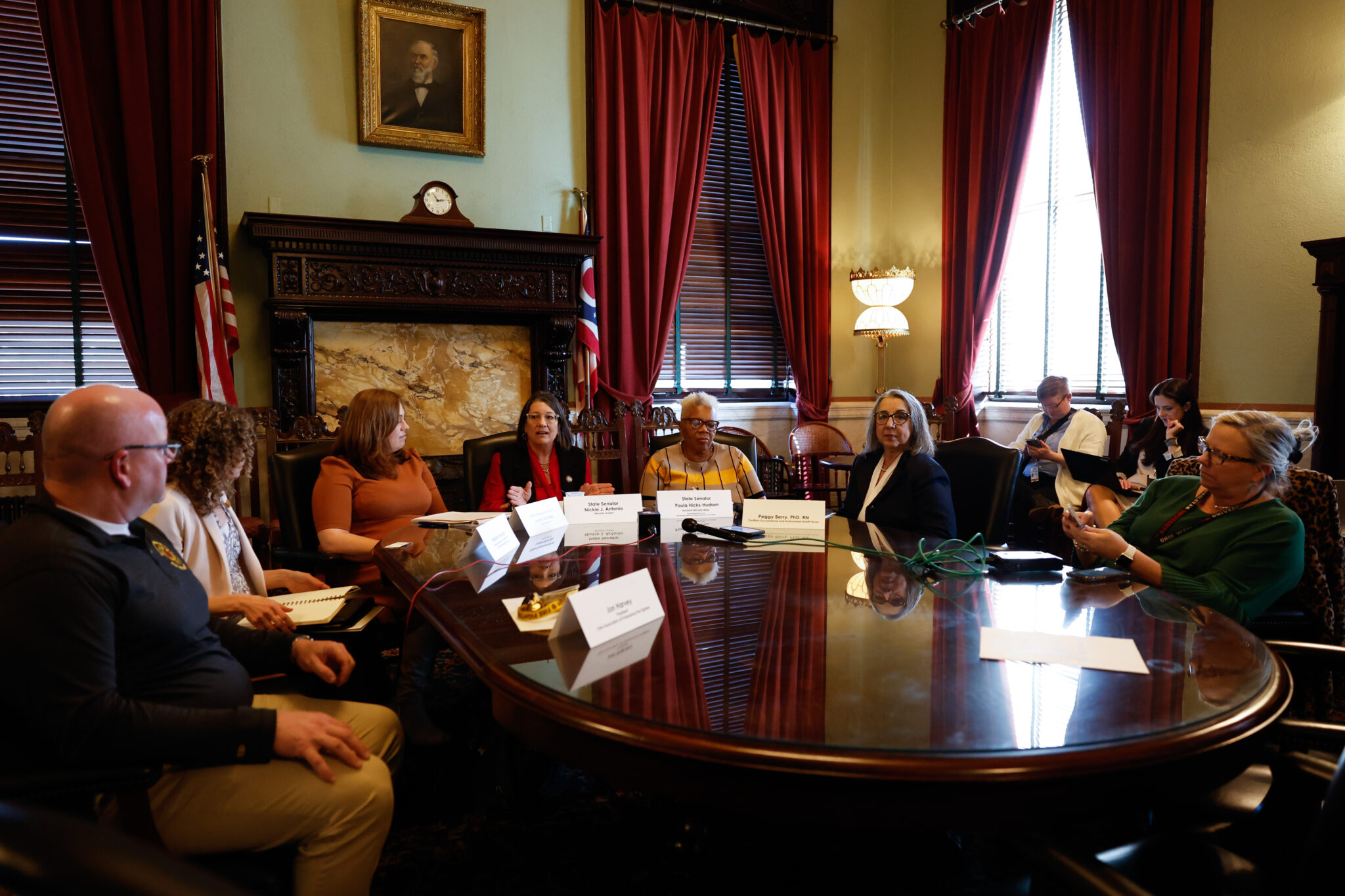
    Senate Minority Leader Nickie Antonio, D-Lakewood, joined with Assistant Minority Whip Sen. Paula Hicks-Hudson, D-Toledo, and state Rep. Lauren McNally, whose 59th House District includes East Palestine, to talk about protecting residents and bringing federal resources to the area.

    “What we’re looking at is a town and the citizens of this town that are being hit with a big question mark,” Hicks-Hudson said.

    The town was tipped into panic after a Norfolk Southern train transporting various chemicals, among them toxic vinyl chloride, derailed, spilling the chemicals and causing an areal evacuation ordered by Gov. Mike DeWine.

    Though the residents have been allowed back, the leak and the subsequent clean up methods have left many residents and state leaders wondering how the derailment happened and what the environmental effects will be for years to come.

    There have already been reports of animal deaths and sicknesses connected to the chemical spill, and alerts that not only the local water supply but the Ohio River may have been infiltrated by vinyl chloride and the other contaminants housed in the train cars.

    In a Tuesday press conference, DeWine and other state officials said the leak and fire used to burn off the chemicals killed off thousands of fish in the waterways, though vinyl chloride has not been found in downriver water samples.

    Here are resources provided via the Ohio EPA and U.S. EPA for those affected by the East Palestine train derailment:

    For smells, fumes, animals, health and other concerns:
    Taggart Road Incident Hotline: (234) 542-6474

    To request in-home air testing (for residences within the 1-mile evacuation zone):
    Residential Re-Entry Request Hotline: (330) 849-3919

    Private water well questions:
    Columbiana County Health Department: (330) 424-0272

    Any other Ohio EPA-related calls about the incident can be directed to the Public Interest Center’s Lisa Cochran or Mary McCarron:(614) 644-2160

    One week on from the lifting of the evacuation order, Democrats say they are looking to work with Republicans on legislative fixes to the faults spotlighted by the derailment. To prepare themselves, Antonio, Hicks-Hudson, and particularly McNally met with first responders and environmentalists to talk about how to respond to the incident, and how to prevent it from happening again.

    “It’s not just East Palestine and it’s not just the residents, it’s the businesses, it’s the entire Mahoning Valley,” McNally said. “It goes to show you how huge this catastrophe has affected a very tiny town.”

    One of the people the Democrats met with was Jon Harvey, president of the Ohio Association of Professional Firefighters, who pushed for a statewide incident management system that would bring together decision makers in one spot in a quicker amount of time.

    “One of the issues that you have is the different jurisdictions that come in and the type of decisions they can make,” Harvey said.

    Legislators and experts alike want to see a state of emergency declaration open up federal resources to the area to help residents with things like the cost of bottled water and longterm health monitoring. Melanie Houston, managing director of water policy for the Ohio Environmental Council, said the state should also own the authority the Ohio EPA and the US EPA have to hold Norfolk Southern accountable.

    “They can do things like issue penalties and put companies like Norfolk Southern under orders,” Houston said, meaning mandatory measures that the companies must complete. “We want to see the Ohio EPA and the US EPA lean into those authorities.”

    A disaster declaration is something Antonio said she knows DeWine is also looking into, and it “sounds like something that we may advocate for.”

  • Former associate testifies that ex-Ohio GOP Chair Borges paid to spy on bailout repeal effort

    Former associate testifies that ex-Ohio GOP Chair Borges paid to spy on bailout repeal effort

    BY: MARTY SCHLADEN – Ohio Capital Journal

    CINCINNATI — Former Ohio Republican Party Chairman Matt Borges paid $15,000 off the books in 2019, a witness testified Tuesday. It was in an attempt to gather inside information about the campaign to repeal a $1.3 billion utility subsidy that had just been passed by the legislature, a Borges associate said.

    In addition, the chairman of the company that benefited most from the subsidy in an email referred to the scheme as a “black op” and said he was prepared “to do whatever it takes” to defeat the repeal effort, the witness, Juan Cespedes, said. Coincidentally, the chairman, John Kiani, started his career at Enron, a Houston Energy company that collapsed under a wave of unmet contracts and accounting scandals in 2001.

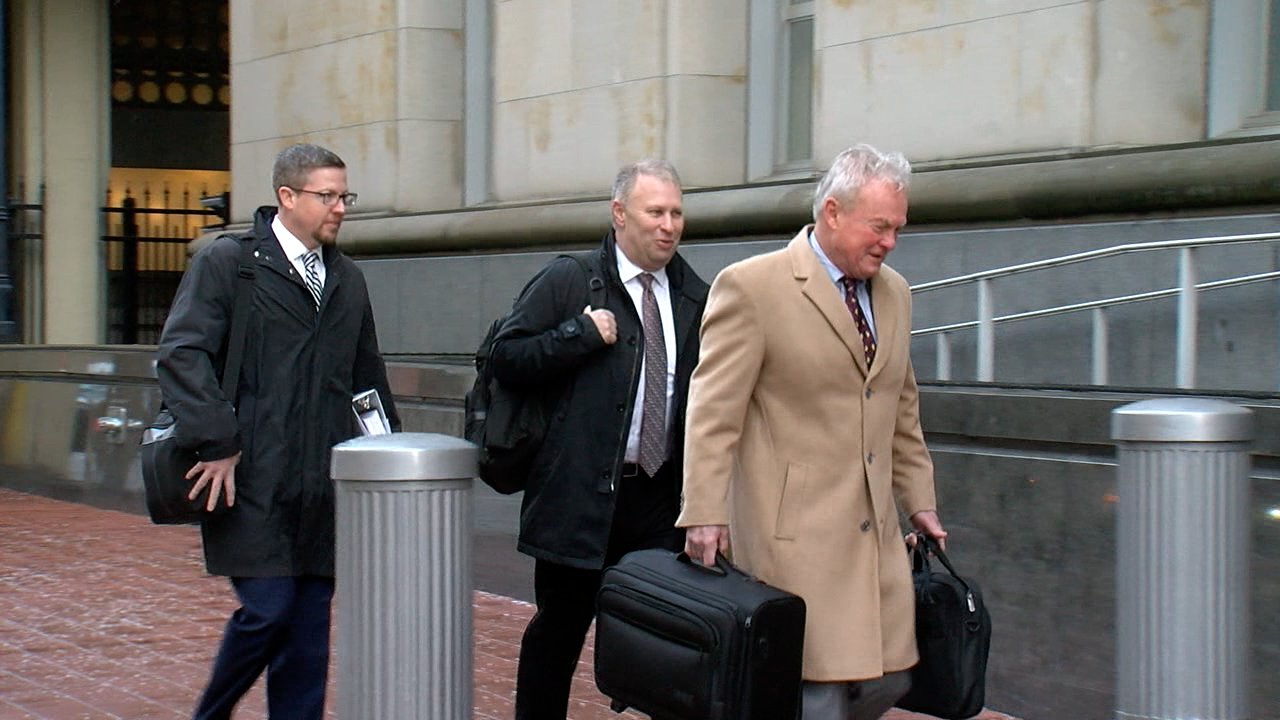
    It was the 11th day in the federal court trial of Borges and former Ohio House Speaker Larry Householder, R-Glenford. Borges is accused of assisting Householder and others in a scheme to use $61 million from Akron-based FirstEnergy to make Householder speaker and pass the massive bailout.

    The bulk of the bailout was intended to benefit money-losing nuclear and coal plants owned by FirstEnergy subsidiary FirstEnergy Solutions. It was going through bankruptcy proceedings and executives with the parent company and the subsidiary desperately wanted the bailout to complete the bankruptcy, spin off FirstEnergy Solutions and possibly sell the nuclear plants.

    Gov. Mike DeWine signed the bailout the same day it passed in 2019, but a repeal effort started amid reports that it was “the worst energy bill of the 21st century.” Not only did it prop up 70-year-old coal plants under the guise of being a “Clean Air Program,” it also gutted the state’s renewable energy standards.

    Borges was part of a team of lobbyists who worked to pass and protect the bailout, House Bill 6. And, because of his long experience in Ohio politics, he was asked to make use of some of his relationships in the effort, Cespedes, another member of the team, testified.

    Cespedes was also charged with racketeering, but he pleaded guilty and is cooperating with prosecutors.

    The off-the-books payment

    One of the primary acts Borges is charged with has to do with a $15,000 payment he made during the repeal effort to Tyler Fehrman, who was helping manage the campaign to gather enough valid signatures to get the repeal on the ballot. 

    Inside information was valuable to the pro-H.B. 6 team because it enabled them to gauge the strategy and likelihood of success of the repeal effort.

    Cespedes testified that he tried to keep the plan to recruit Fehrman from Kiani, the FirstEnergy Solutions chairman whose company financed a big portion of the fight against the repeal. Kiani was a hard-charging executive and Cespedes believed that once he learned of the spying effort, he would press the operatives relentlessly. 

    However, Cespedes said, Borges told Kiani about it, and it seems Cespedes’s worries were well founded.

    In an Aug. 31, 2019 text, Kiani asked “what happened to the black ops?” in a reference that Cespedes said was to the spying effort. Then, in a Sept. 2, 2019 text, Cespedes told Borges that Kiani, “reiterated to do whatever it takes to get this information.”

    It appears that Fehrman was paid, but it’s unclear what he was paid for.

    In taped conversations played earlier in the trial, Borges discussed paying Fehrman, but he claimed to Fehrman that it was for work Fehrman might do some time in the future. But Borges made other statements that seemed to show that he knew the two were doing something wrong.

    “It would be bad for both of us if the story came out,” he told Fehrman in a recording that Fehrman made with the help of the FBI. “But it would be worse for you.”

    On Tuesday, Cespedes testified that he roughed out a budget at the time of the repeal campaign. He made an entry in it to pay $25,000 to an “employee.” Cespedes said the money was intended for Fehrman.

    Asked why he used “employee” to label the entry, Cespedes said, “I wasn’t going to write ‘bribe.’ I wasn’t going to write anything nefarious.”

    Prosecutors displayed a photograph of what they said was a contemporaneous budget that Borges roughed out in a notebook that Cespedes had photographed. Cespedes testified that when he asked Borges why a payment to Fehrman wasn’t in it, Borges “simply said it wasn’t something he wanted to write down.”

    Cespedes testified that Fehrman later went quiet on Borges and Cespedes assumed that their deal had fallen through. But after the repeal campaign had failed, an accounting showed that the $15,000 had been paid, Cespedes said. 

    When he asked Borges about it, “He said, ‘I just wanted to keep him quiet,’” Cespedes testified.

    Earlier in the HB 6 fight, Borges and Cespedes were struck by Kiani’s connections to Enron, which ceased to exist after one of the biggest corporate scandals to that point in American history.

    “The shocking thing last night was learning that Kiani came from Enron,” Borges said in a text.

    Kiani went from there to work as a hedge fund manager and then he made his way onto the FirstEnergy Services board as an activist investor. Cespedes testified that a Kiani aide told him that Kiani would make $100 million from the sale of FirstEnergy Solutions’ nuclear plants. 

    Regardless of whether that’s accurate, Kiani clearly was willing to spend lots of corporate money to win subsidies for them. To fund a statewide, eight-week media campaign for the bailout, bankrupt FirstEnergy Solutions approved a $15 million budget, Cespedes testified.

    That amount would grow after the bill passed and the repeal fight got underway.

    Kiani continues to be executive chairman of Energy Harbor, the new name for FirstEnergy Solutions after it emerged from bankruptcy. His company bio credits him with “the successful operational and financial turnaround of Energy Harbor into a leading, carbon free power infrastructure and energy supply company.”

  • 50th Anniversary Tribute to Vietnam Veterans

    50th Anniversary Tribute to Vietnam Veterans

    Wednesday, March 29, 2023

    At the Cintas Center on Xavier University’s Campus

    An Evening of Honor and Entertainment
    All veterans, members of the military, and the public are welcome

    FREE TO THE PUBLIC. REGISTRATION REQUIRED IN ADVANCE no later than Friday, March 24, 2023.

    Register Now

    Volunteer

    KEYNOTE SPEAKER

    Rocky Bleier

    Vietnam War Veteran and Super Bowl Champ

    Rocky is a member of the Congressional Committee for the 50th Anniversary of the Vietnam War and the Purple Heart Foundation. He is an active board member of the Warriors to Citizens Foundation, which is devoted to helping soldiers, police, fire, EMTs, and their families recover from the psychological harm caused by career-induced stress.

    Rocky will share his story about his time in Vietnam and his amazing journey to recovery from injuries sustained while in the service.


    6 PM:  Pre-event live music from the ‘60s and ‘70s with The Remains

    • Live music from the ‘60s and ‘70s with The Remains
    • Concessions available for purchase throughout the event

    7 PM:  Tribute program begins

    • Rocky Bleier, Super Bowl Champ and Vietnam Veteran
    • Entertainment acts, including Bob Hope impersonator and tribute by Bill Cunningham
    • Stories of Vietnam veterans
    • Recognition of veterans from all eras and military branches
    • Special ceremony for Vietnam veterans

    9 PM:  Program Concludes

  • Ribbon Cutting and Open House at new Chamber office

    Ribbon Cutting and Open House at new Chamber office

    by David Miller

    Loveland, Ohio – The public is invited to join the Little Miami River Chamber Alliance as they celebrate moving into their new office.

    There is plenty of free parking behind the office that can be accessed from either the driveway off of West Loveland or the driveway off of Center Alley.

    March 2

    5 until 7 PM

    514 West Loveland Avenue

    Drinks and light appetizers provided

    The ribbon cutting is at 5:30 PM

    The new office is next-door to Union Savings Bank.

  • Paxton’s Grill in Historic Loveland, Ohio now serves breakfast

    Paxton’s Grill in Historic Loveland, Ohio now serves breakfast

    Loveland, Ohio – The wait is over, Loveland! Breakfast has returned Back to Paxton’s!

    A full breakfast menu will be available every day, from 8 AM until 2 PM.

    Paxton’s Website

    Paxton’s on FaceBook

  • The 2023 Valentine Breakfast in video and photos

    The 2023 Valentine Breakfast in video and photos

    by David Miller

    Miami Township, Ohio – The Little Miami River Chamber Alliance held its annual Valentine’s Day Breakfast on Friday, February 10 at the Oasis Conference Center. The emcee was Pastor Bill Hounshell.

    2014 Valentine Lady, Janis Fogle

    Children from the Loveland schools and the adult that won their age-group poetry submissions were called to the microphone to recite their poems. Loveland school superintendant, Mike Broadwater presented the poetry winners a certificate.

    2014 Valentine Lady, Janis Fogle said on the Loveland Valentine Ladies FaceBook page that the Loveland Valentine Ladies have already stamped close to 2,650 Valentine cards at the Loveland Post Office, for the 2023 Valentine season. She said, “Cards went to locations such as The Netherlands, Austria, Sweden, the UK, as well as most of the 50 states, plus Washington DC.”

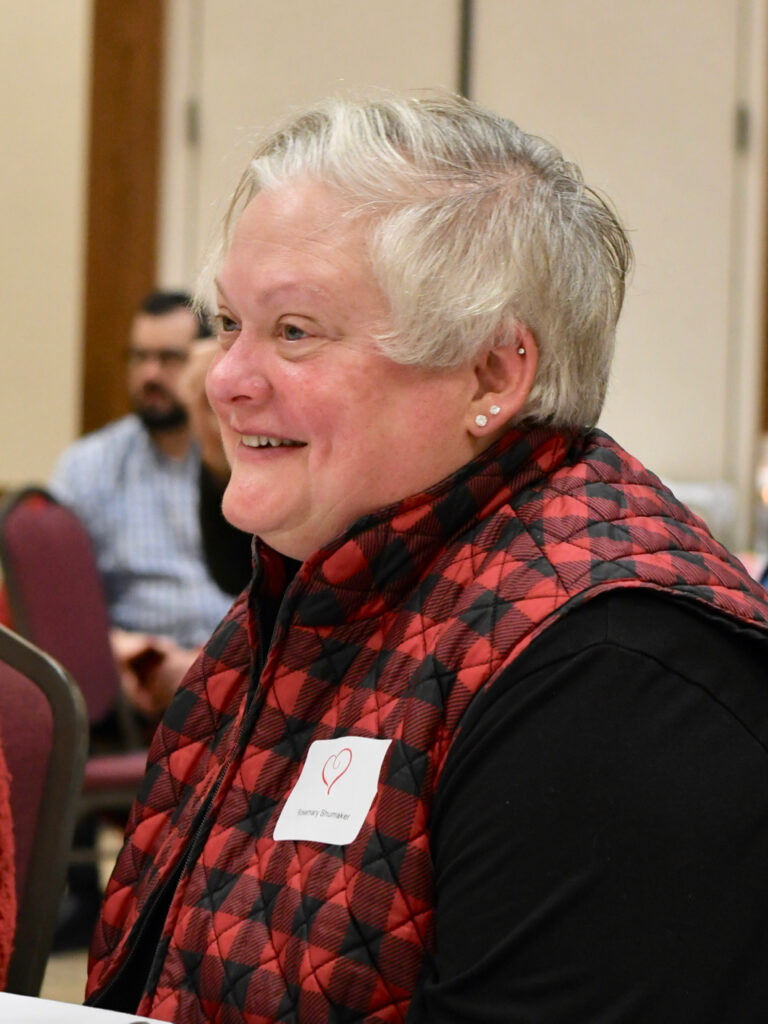
    Rosemary Shumaker

    This year’s Valentine Card designer, Rosemary Shumaker was introduced and an enlargement of her card was prominent on center stage.

    The 2023 Loveland Valentine Card designed by Rosemary Shumaker
    Steve Zinser, a former Loveland Principal led the Delta Kings as they serenaded 2023 Valentine Lady, Donna Barns as well as singing numerous songs throughout the morning.

    Here are video and photo highlights:

    Here are the poetry contest winners reading their poetry:

  • Attorneys general from 23 GOP-led states including Ohio back suit seeking to block abortion pill

    Attorneys general from 23 GOP-led states including Ohio back suit seeking to block abortion pill

    BY: JENNIFER SHUTT – Ohio Capital Journal

    Attorneys general representing nearly two dozen Republican states are backing a lawsuit that would remove the abortion pill from throughout the United States after more than two decades, eliminating the option even in states where abortion access remains legal.

    The state of Missouri filed its own brief in the case Friday while Mississippi Attorney General Lynn Fitch filed a brief on behalf of her state as well as Alabama, Alaska, Arkansas, Florida, Georgia, Idaho, Indiana, Iowa, Kansas, Kentucky, Louisiana, Montana, Nebraska, Ohio, Oklahoma, South Carolina, South Dakota, Tennessee, Texas, Utah and Wyoming.

    “The serious nature of the FDA’s unlawful actions, and the agency’s decision to invite lawbreaking by private parties and government actors across the country, favors broad relief,” the 22 Republican attorneys general wrote in the multi-state brief.

    “The FDA and the Administration as a whole have no intention to respect the Constitution, the Supreme Court, or the democratic process when it comes to abortion. This Court’s decisive action is warranted,” they added.

    The case, Alliance for Hippocratic Medicine v. U.S. Food and Drug Administration, was originally filed in the U.S. District Court for the North District of Texas in mid-November by Alliance Defending Freedom, an anti-abortion legal organization.

    The lawsuit argues, on behalf of four anti-abortion medical organizations and four anti-abortion physicians, that the U.S. Food and Drug Administration exceeded its authority when it approved mifepristone to end pregnancies in 2000.

    The prescription medication was originally approved for up to seven weeks into a pregnancy but is now approved for up to 10. It is used as part of a two-drug regimen that includes misoprostol as the second pharmaceutical.

    The abortion pill, mifepristone, is legal at the federal level, though several GOP states have laws in place that restrict abortion to less than 10 weeks, setting up a dispute between state law and the federal government’s jurisdiction to approve pharmaceuticals.

    If the judge doesn’t pull the abortion pill entirely, the anti-abortion organizations’ lawsuit argues to move the dosage and prescribing process back to how it worked before 2016, when the FDA made changes to its approval.

    DOJ says suit ‘unprecedented’

    The U.S. Justice Department argued in its court filing the anti-abortion groups’ lawsuit “is extraordinary and unprecedented.”

    “Plaintiffs have pointed to no case, and the government has been unable to locate any example, where a court has second-guessed FDA’s safety and efficacy determination and ordered a widely available FDA-approved drug to be removed from the market — much less an example that includes a two-decade delay,” wrote attorneys for the U.S. Justice Department.

    The Republican attorneys general said in their Friday briefs that “while the FDA is authorized to evaluate new drugs for safety and effectiveness, States are primarily responsible for protecting the health and welfare of their citizens.”

    “Many States, including several amici here, have thus enacted laws to regulate abortion-inducing drugs and account for their dangers,” they wrote.

    “Such laws can include in-person examination and dispensing requirements, qualification requirements for prescribers, mandates for informed consent, bans on distribution by mailing, or some combination of these and other safety limitations.”

    The 22 attorneys general argued in their brief that the FDA’s approval of the abortion bill has two legal flaws.

    The first is that it “defies the agency’s own regulations” since the section the FDA first approved the drug under, Subpart H, “does not permit the agency to greenlight elective abortions on a wide scale.”

    The second, they wrote, is that allowing abortion medication to be sent via the mail is in direct contrast to a federal law that prohibits “using the mail to send or receive abortion-inducing drugs such as mifepristone.”

    Missouri Attorney General Andrew Bailey, in a separate brief, wrote that he agreed with the arguments made in the original lawsuit and by his fellow Republican attorneys general, but that he wanted to highlight facts “recently uncovered in litigation.”

    Missouri’s brief alleges that medication abortions, which have been used for more than two decades, “are much riskier than surgical abortions” and that “there is a lack of substantial information that the drugs will have the effect they purport.”

    Accessing abortions

    Dr. Jamila Perritt, president & CEO for Physicians for Reproductive Health, said during a press briefing this week on the court case that abortion medication is safe and effective, and that “when abortion is more difficult to access, we know that this means abortion gets pushed later and later into pregnancy as folks try to navigate these barriers.”

    If the judge in the case were to pull mifepristone, Perritt said, people in states where abortion is still legal would be able to access abortion using misoprostol alone since “there are approved regimens of managing medication abortion using only misoprostol.”

    Perritt added that “while it is equally safe … dosage and timing to completion of the abortion varies if mifepristone is not added to the equation.”

    Patients in legal states would also still have access to procedural abortion, Perritt noted.

    Reproductive health experts have said the suit is based on flawed evidence, selected studies and anecdotes.

    Dr. Iffath Abbasi Hoskins, president of the American College of Obstetricians and Gynecologists, said in a written statement in January that “restricting access to mifepristone interferes with the ability of obstetrician–gynecologists and other clinicians to deliver the highest-quality evidence-based care for their patients.”

    “Since 2020, continued usage of mifepristone for abortion care without the in-person dispensing requirement has been shown to be safe and effective,” she wrote when the FDA announced it would allow commercial pharmacies to fill prescriptions for mifepristone.

    The judge in the lawsuit, Trump appointee Matthew Joseph Kacsmaryk, could rule on whether to pull mifepristone from the market as soon as this month.

    Any ruling is likely to be appealed to the conservative-leaning 5th U.S. Circuit Court of Appeals and could eventually find itself in the U.S. Supreme Court.

  • $461,000 awarded to improve Loveland Tiger’s safety

    $461,000 awarded to improve Loveland Tiger’s safety

    by David Miller

    Loveland, Ohio – Loveland City School District has been awarded nearly a half million dollars in the latest round of the Ohio K-12 School Safety Grant program. The state funding will support improvements to safety security upgrades across the district. 

    “The safety of our students is our greatest responsibility, and receiving state support for our efforts will help tremendously. We appreciate Governor DeWine and the General Assembly’s dedication to the Ohio K-12 School Safety Grant program,” Superintendent Mike Broadwater said in a news release from the District.

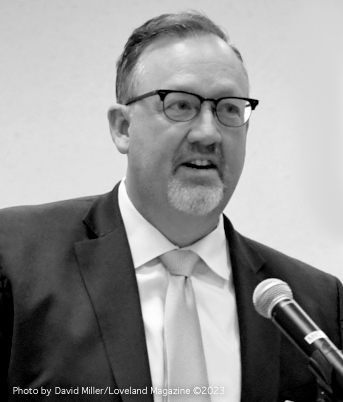
    Loveland Superintendent Mike Broadwater

    The grant provides $461,250 to pay for security system improvements across the district. This grant will allow for the installation of additional security cameras and equipment. The grant will also provide funds for new safety technology on all district school buses according to the release.

    This is the fourth round of the Ohio K-12 School Safety Grant program. Of all school districts in Hamilton County, Loveland received the fourth-highest grant funding in this current round. Loveland also received $100,000 in the second round of the program, which was used to replace the public address system at Loveland Primary and Loveland Elementary Schools.

    Loveland Early Childhood Center is earmarked for $65,225 in this latest round.

    Loveland Elementary is earmarked for $50,000 in this latest round.

    Loveland High School is earmarked for $100.000 in this latest round.

    Loveland Intermediate School is earmarked for $97,625 in this latest round.

    Loveland Middle School is earmarked for $98,400 in this latest round.

    Loveland Primary School is earmarked for $50,000 in this latest round

    The Goshen Local School District received $400,000 in the latest round of school safety grants. The Great Oaks Career Campus in Clermont County received $100,000.

    There is a “Round Five” to be recommended in the coming weeks according to Governor Mike DeWine Ohio as part of the General Assembly’s House Bill 45.

    Indian Hill Exempted Village School District had previously been awarded $299,714, Sycamore Community Schools $93,824, and Little Miami Local Schools $200,000.


  • Food Pantry sends SOS

    Food Pantry sends SOS

    Loveland, Ohio – If you are doing your shopping for the weekend would you consider dropping a box or two of cereal off at the LIFE Food Pantry?

    The pantry has sent out an SOS saying they are completely out of cereal.

    “Thank you for helping us keep those little tummies fed (ok, big tummies eat cereal too…)!”

    LIFE is a faith and community-supported organization that provides food, financial assistance, and programs to those experiencing hardship in the greater Loveland area.

    Tuesday – Saturday 10 AM until noon

    Tuesdays and Thursdays 4 PM until -6:30 PM

    Other Current Needs

    FOOD: Applesauce, Baked Beans, Bisquick, Canned Chicken, Cereal, Chili Beans, Cooking Oil, Flour, Hearty Soups, Hot Cocoa Mix, Juice-Family Size, Peanut Butter, Pears, Pineapple, Potato Sides, Refried Beans, Rice Side Dishes, Sugar
     
    PERSONAL CARE: Body Wash, Cold Medications, Feminine Hygiene Products

    PAPER GOODS: Kleenex, Paper Towels, Toilet Paper

    BABY: Pull-Ups (all sizes), Diapers (sizes 4, 5, 6 and 7)

    WEEKEND BAGS: Individual Shelf Stable White Milk, Tuna and crackers

  • Ohio abortion rights advocates prepare for more legal fights

    Ohio abortion rights advocates prepare for more legal fights

    Getty Image

    BY: SUSAN TEBBEN – Ohio Capital Journal


    With the abortion landscape changing in Ohio and around the country, one abortion rights group is building up its legal effort for those seeking or providing abortion care.

    Abortion Fund of Ohio recently announced the launch its Legal Access Program, through a partnership with law firm Friedman, Nemecek, & Long, L.L.C., that will provide free legal assistance and referrals to attorneys “for Ohioans facing criminal and civil penalties for reproductive health care.”

    “We’re building out a network of lawyers who will take on these cases, so that we have more lawyer power,” said Morgan Mitchell, legal access fellow for AFO.

    Mitchell said cases are popping up in the state where confusion and lack of knowledge of where abortion and procedures that could be connected to abortion (like miscarriage, medically called a “spontaneous abortion”) legally stands.

    In one such case, covered by NPR, a woman wondered if the six-week abortion ban was causing doctors to hesitate in treating her heavy bleeding at a Painesville emergency room, bleeding that had already been confirmed to be caused by a miscarriage.

    Currently, abortion is still legal up to 22 weeks in Ohio after a state court blocked a six-week ban indefinitely, but national fights against receiving medication abortion through the mail and a discussion of abortion bans on the federal level have advocates worried that reproductive healthcare may be fought for in the courts rather than medical clinics and hospitals.

    Ohio’s own Attorney General Dave Yost signed onto a letter with more than a dozen other state attorneys general warning CVS and Walgreens against distributing medication to induce abortions through the mail due to various state laws that prohibit it. Ohio’s law, passed in 2022, forbids abortion medication to be provided to patients without a physician present.

    A recent study published in the Journal of Health Politics, Policy and Law, co-authored by researchers from three Ohio universities, said even the regulations that are in effect involve working with state administration, and the bureaucracy has created an system where regulations “have become exceedingly difficult to comply with” for abortion providers.

    Even medical students in the state are left nervous and confused about what restrictions may mean for their education and future career, should they decide to provide reproductive healthcare.

    One group the legal access program is particularly hoping to help is minors who may want to use a legal method to get around needing the consent of their parents to obtain an abortion, a method called judicial bypass.

    According to the Ohio Supreme Court, a minor seeking consent to have an abortion can petition the juvenile court in their county of residence or in a border county, with the help of a court-appointed attorney if they don’t have one.

    A judge then determines if a minor “is sufficiently mature and well enough informed to decide intelligently whether to consent to an abortion or that the abortion is in the best interests of the (minor).”

    Judicial bypass has been on the books since before the fall of Roe v. Wade, but the legal access program is only including that as part of the legal options so that Ohioans know all their legal rights.

    “We’re just trying to let people know this exists, we’re not telling people to have an abortion, or telling their parents they’re bad parents,” Mitchell said.

    With the six-week ban (and other abortion bans that were attempted but not passed by Ohio legislators in previous years) not including any exceptions for rape or incest, and no standards for sex education present in the state, Mitchell said it’s frustrating that a minor has to go to court to prove maturity and intelligence, when some legislators would force them to bear a child, no matter their age.

    “It’s really an attack on bodily autonomy and it’s scary to see it be separated from health care, because this is a decision you’re making for your body,” Mitchell said. “We want to be able to give anyone regardless of age the opportunity to pursue whatever they want with their bodies.”

    The six-week ban pause is being appealed by the state.