Tag: David Miller

  • Ohio utility regulator front and center in massive bailout scandal

    Ohio utility regulator front and center in massive bailout scandal

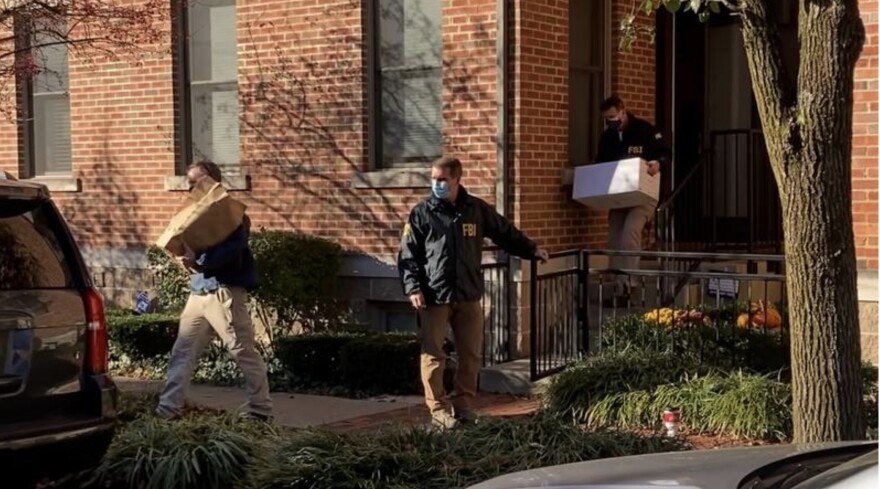
    FBI agents remove boxes of materials from PUCO Chairman Sam Randazzo’s condo in Columbus Nov. 17, 2020. Photo courtesy of Daniel Konik/Statehouse News Bureau.

    BY: MARTY SCHLADEN – Ohio Capital Journal

    CINCINNATI — Ohio’s utility regulator is at the center of a massive bribery and money laundering scandal that has been the focus of a trial here since late last month. In 2019, its chairman and a very recent senior official played a central role in writing corrupt bailout legislation that would give more than $1 billion in subsidies to companies the Public Utilities Commission of Ohio was supposed to be regulating.

    But did their role in the process violate any PUCO rules? The answer is unclear.

    When it comes to being a consumer watchdog, the PUCO doesn’t have the best track record. 

    Since 2008, it has granted more than $1 billion in electric rate increases that were later declared illegal by the Ohio Supreme Court. But, thanks to the way the increases — or “riders” — were written, there’s no way to force utilities to return those ill-gotten gains to ratepayers.

    In at least one of those instances, a regulator might have known the rate hike was illegal when he voted to grant it.

    In June of 2019 — as Akron-based FirstEnergy was funneling millions through dark-money groups to pass the bailout that is the subject of the trial here — the Supreme Court struck down an increase that had already paid the company a non-refundable $460 million. Asim Haque, who months earlier was chairman of the PUCO, sent a FirstEnergy executive a text suggesting that Haque knew the increase was illegal when he voted for it. Haque then said he was just kidding.

    Then, just last month, the PUCO approved an increase of more than 50% in fixed rates for Columbia Gas without making the company go through a formal process to show that it needs the money. That means that after five years throughout much of Ohio, it likely will cost nearly $60 a month just to have gas service  — regardless of whether you live in a 500 square-foot apartment or if you live in a mansion on a five-acre lot. Any payments for gas itself will be in addition to that amount.

    It doesn’t appear that Columbia owner NiSource needed the money. Last year, before the PUCO allowed the rate hike, NiSource’s profits came in $217 million — or 41% — higher than expected. Then, a month after the increase was granted, NiSource announced it was increasing its profit forecast for 2023.

    In a press release, the company boasted of “strong regulatory execution” — including by winning the fixed-rate increase from the PUCO.

    And then there’s House Bill 6, the 2019 law that is the subject of the trial in federal court here that has been ongoing since Jan. 23.

    Former Ohio House Speaker Larry Householder and former Ohio Republican Party Chairman Matt Borges are on trial for their participation in what prosecutors say is likely the biggest bribery and money laundering scandal in Ohio history. They allege that $61 million that mostly came from FirstEnergy was used to make Householder speaker in 2019, and then to pass and protect the $1.3 billion bailout. Most of that money was intended to prop up FirstEnergy’s failing nuclear and coal plants.

    No current or former PUCO employees have been charged in the scandal. But, to put it charitably, the conduct of at least two of them was puzzling — given that the agency’s mission is to protect ratepayers who don’t have a choice about buying the utilities’ products.

    In January 2019, Householder won the speakership and was beginning his push for a FirstEnergy bailout. At the same time,  FirstEnergy lobbyist Ty Pine sent PUCO senior advisor Pat Tully’s resume to Jeff Longstreth, Householder’s right-hand man, according to testimony in the trial. Within weeks, Tully had moved from his PUCO job to one as senior advisor for energy policy in the House Republican Caucus.

    Sam Randazzo, a former FirstEnergy consultant, was confirmed as Gov. Mike DeWine’s nominee to chair the utility commission in April 2019. When he nominated Randazzo, DeWine brushed off warnings that his nominee had “opaque and undisclosed” ties to FirstEnergy.

    In the Householder trial, Tully testified that while Randazzo was still a nominee, he met with Tully, Householder and Rep. Nino Vitale R-Urbana. From there, Tully worked with Randazzo to help draft the utility bailout, HB 6, and to reconcile it with draft legislation submitted by FirstEnergy. The bill secured final passage in July 2019 — months after Randazzo had taken the helm at the utility commission.

    In other words, Ohio’s top utility regulator helped write a law that gave a billion-dollar bailout to a company he was supposed to be regulating on the ratepayers’ behalf. And he was heading an agency that over the previous decade had awarded electric utilities more than $1 billion in illegal, non-refundable rate hikes.

    Randazzo would later resign after the FBI in 2020 raided his Columbus condo. And in a deferred prosecution agreement, FirstEnergy admitted that it paid him $4.3 million just before he became PUCO chairman.

    But does the PUCO have any rules against the role Randazzo played in drafting HB 6? 

    Asked if the agency had a policy prohibiting a commissioner from helping write legislation affecting a utility he or she is supposed to be regulating, spokesman Matt Schilling initially seemed to say that it did not.

    “The PUCO is a state agency and will always be responsive to requests for information or technical assistance to the Ohio General Assembly on matters related to utilities and commercial transportation,” Schilling said in an email last week.

    But in answer to a follow-up, Schilling seemed to say something different. He was asked if that means PUCO believes there was nothing inherently improper about its chairman helping to draft legislation creating subsidies for utilities the agency regulates.

    “No, I never stated anything like that,” Schilling replied. “The PUCO does not comment on ongoing proceedings or court cases.”

    So what about commission employees doing as Tully did when he had a FirstEnergy lobbyist passing out his resume? After all, you might pull punches as a regulator if you’re hoping to land a job with one of the companies you’re supposed to be regulating.

    Schilling’s response might not be very reassuring. He cited a law that “prohibits Commission employees from seeking employment with utilities regulated by the Commission.”

    But Schilling also sent along agency guidance that contains a pretty big loophole.

    “Although this law prohibits Commission employees from soliciting Commission-regulated utilities for employment, it does not prevent employees from considering employment opportunities with these utilities in instances in which the utility approaches the employee,” it said.

    It seems that, after the fact, it might be difficult for the PUCO to figure out who approached whom when an employee jumps ship for a well-paid utility job. And its protections against conflicts of interest during the hiring process don’t seem ironclad.

    “However, if you are contacted by a utility concerning a possible job offer, you must immediately advise your supervisor of the contact so that your supervisor can limit your duties to matters which do not involve the utility in question while any discussions are taking place,” the guidance said.

    In Tully’s case, he didn’t end up directly on FirstEnergy’s payroll. But he did help write a law that the company paid more than $60 million for.


  • Loveland Spring brush pick-up

    Loveland Spring brush pick-up

    Loveland, Ohio – The 2023 spring brush pickup program will begin on Monday, March 20. Brush must be placed in the grass near the roadside no later than Sunday night, March 19. Public Works will collect the brush for approximately two weeks.

    Loveland’s Guidelines

    The following are guidelines established for the brush pick-up program:

    • Brush must be placed at the curb or edge of roadway. Do not place brush in the roadway, gutter, ditches, or on sidewalks. 
    • Do not block fire hydrants.
    • Please remove basketball hoops from sidewalks, cul-de-sacs, the end of your driveway, etc. In many neighborhoods, basketball hoops make it difficult for our leaf/brush crews to navigate the route and make turns. 
    • Limbs cannot exceed 10 inches in diameter at the cut section.
    • Limbs should be placed at the curb with the cut section facing the street and all limbs should be facing the same direction. This makes it easier and faster to handle.
    • No leaves, pine needles, grass clippings, bamboo, ornamental grass, or other yard waste will be collected.
    • Small twigs and sticks should be bundled with twine in bundles 12 inches in diameter. Twigs or sticks can also be placed in a container at the curb, but no other yard waste should be in the containers. No loose piles of sticks and debris, please.

    You may also view Illustrated Brush Pick-Up Instructions (PDF) or our how-to video.
  • Dairy Whip Opening Day: Where Ice Cream and people have gathered since 1955

    Dairy Whip Opening Day: Where Ice Cream and people have gathered since 1955

    Quality Soft Serve Ice Cream Since 1955 in Loveland, Ohio

    The Loveland Dairy Whip opens daily beginning Friday, March 3 at 2 PM

    A family-owned business offering a wide variety of soft-serve specialty desserts.​

    ABOUT LDW

    A family-owned business offering a wide variety of desserts. Teresa (Flint) Morgan (current owner) got her start at age 11 by bagging hamburgers for her parents, Marian & Jim Flint, which owned the Dairy Whip from 1972 through 1986. We no longer serves food as the “Fifth Wheel Hamburgers“ which was popular in the 70s, however, we are still known for our creamy soft serve ice cream.

    We use a high quality soft serve mix and only quality products. While offering the usual vanilla, chocolate and twist cones (with eyes for kids) which can be topped with sprinkles or chocolate/cherry/cake batter dip top, we also offer eight other flavors like Blue Moon, Dreamsicle, Cake Batter. Some of our specialties are Parfay’s and Cyclones with a variety of candy toppings.

    The Chocolate Mountain, Reese, Oreo and Black Raspberry Chip are only a few of the favorites. We also have special “Kid Sundaes” We have “Specialty Desserts” like the Hot Fudge Brownie, Strawberry Short Cake, Hot Caramel cake. All have ice cream and a cake from a local bakery.

    If you desire one of the classics, we have them too (shakes, banana boats and sundaes).

    The LDW on the WEB

    The LDW on FaceBook

  • [Photos] Tiger Women bow out to #1 team in Ohio

    [Photos] Tiger Women bow out to #1 team in Ohio

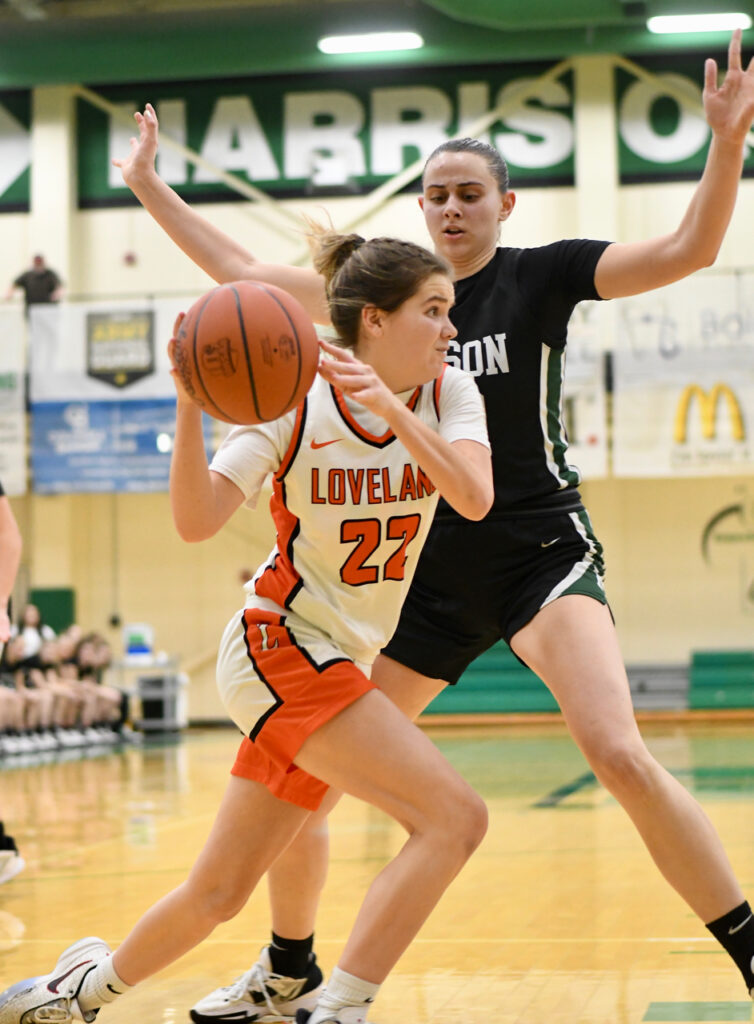
    Loveland Senior Guard Josie Early

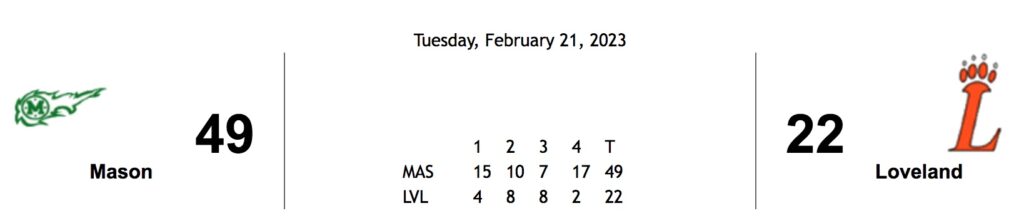
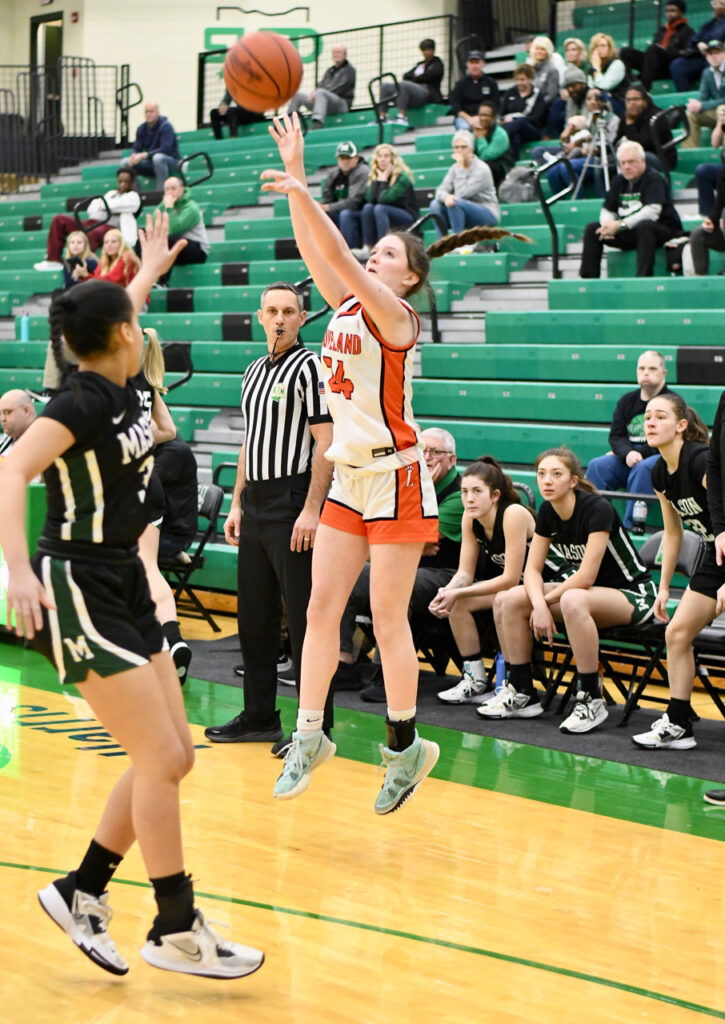
    Harrison, Ohio – The Loveland High School Women’s Basketball Team ended their season in the 3rd round of the Ohio Basketball Tournament with a loss to the #1 team in Ohio. The game on Tuesday afternoon was played at Harrison High School. The score was Mason 49, Loveland 22. Josie Early led the Tiger scoring with 8 and Olivia Raby scored 5. Grace Dressell scored 4.

    The Tigers (11-5, 17-8) finished in 3rd place in the ECC.

    Conference leader West Clermont went into their tournament game on Monday and saw their 24 and-no-loss season disappear. The Kings Knights (13-1, 21-5), # 2 in the ECC beat the Wolves 49-43. Kings continued their tourney journey by beatingt Centerville today 61-53.

    Meanwhile, the Tiger Men’s team lost their entry game in the State Tournament on Tuesday 73-47 against Princeton.

    Photos ©2023 by David Miller/Loveland Magazine.

  • Defense lawyer boils over in Ohio utility bailout and political bribery racketeering trial

    Defense lawyer boils over in Ohio utility bailout and political bribery racketeering trial

    Former Ohio House Speaker Larry Householder, a Perry County Republican, second from left, with attorneys outside of his racketeering trial. Photo courtesy of WEWS.

    BY: MARTY SCHLADEN – Ohio Capital Journal

    CINCINNATI — The defense of former Ohio House Speaker Larry Householder erupted Thursday in Householder’s epic corruption trial.

    Defense attorney Mark Marein of Cleveland suggested it was because of U.S. District Judge Timothy Black’s unfairness. But it came after a day in which the defense team’s attempts to undermine prosecution witnesses’ credibility might have come to naught.

    The sparks flew in the fourth week of the trial. Householder and former Ohio Republican Party Chairman Matt Borges are accused of racketeering in a scheme to use $61 million in utility money to make Householder speaker and pass a $1.3 billion bailout that mostly benefited Akron-based FirstEnergy, the primary contributor.

    Earlier on Thursday, defense attorney Steven Bradley cross examined Jeffrey Longstreth, who operated as Householder’s right-hand man through his bid for the speakership and the 2019 passage and defense of the bailout law, House Bill 6.

    Longstreth was arrested along with Householder, Borges, and two others in July 2020. He is now cooperating with prosecutors in exchange for a sentencing recommendation of less than six months.

    The dinners

    During direct examination Wednesday, Longstreth described fancy dinners with Householder and FirstEnergy’s top executives during Donald Trump’s inauguration in 2017 in Washington, D.C. 

    At one, Longstreth described being at one end of a long table with FirstEnergy Vice President Michael Dowling in a noisy steakhouse, while Householder sat with company CEO Chuck Jones at the other. Longstreth said he couldn’t hear the conversation at the other end of the table, but at his end Dowling told him FirstEnergy needed help and it wanted to help Householder become speaker.

    Dowling instructed Longstreth to set up an organization to receive FirstEnergy’s millions, Longstreth said. 

    “He said (the money) needed to be undisclosed and unlimited contributions,”  Longstreth testified on Wednesday.

    Apparently seeking to impeach Longstreth’s memory, Bradley on Thursday showed the jury an itinerary indicating that Jones took the FirstEnergy corporate jet to D.C. the morning after the steakhouse dinner. He also produced a credit card receipt showing that Jones attended a dinner at a different restaurant the following night than where a second, more-intimate dinner was described by Longstreth on Wednesday.

    But Assistant U.S. Attorney Emily Glatfelter asked Longstreth if itineraries change. He agreed they often do.

    She then produced credit card receipts and car records that indicated Jones may well have been in D.C and could have attended the first dinner as Longstreth described. She also showed that on the following night, the dinner Bradley said Jones attended ended about 30 minutes before the one Longstreth said he attended began.

    Longstreth testified that it was common at presidential inaugurations to attend multiple receptions and dinners in the same evening. Apparently that’s a major purpose of the quadrennial gatherings: To stay in $600 hotels, eat multiple $200 dinners, and figure out how to split up the taxpayers’ —or  ratepayer’s — money.

    Whistleblower former state Rep. Dave Greenspan

     Former State Rep. Dave Greenspan, R-Westlake. Official photo.

    After Longstreth left the stand, the prosecution called former state Rep. Dave Greenspan, R-Westlake. He said he never voted to make Householder speaker and he never supported House Bill 6. 

    “I didn’t believe in corporate bailouts,” Greenspan said, explaining that this one was especially hard to support because FirstEnergy hadn’t shown that it needed the money and the bill put no restrictions on how it was spent. “There was nothing in the bill that required FirstEnergy to do anything.”

    As a sign of how unpopular the bill was, 17 Republicans voted against it when it passed the House in April 2019. And it’s an important reminder that it would never have become law without the support of Ohio House Democrats.

    Greenspan described the intense pressure he was under from Householder and lobbyist Neil Clark to vote for the bill. He was so disturbed by it that he contacted a member of the U.S. Marshal’s Service, who put him in touch with the FBI.

    During cross examination, Marein, another of Householder’s attorneys, seemed dumbfounded that Greenspan contacted the FBI, which he referred to as the “Federal Bureau of Investigation” in a tone that in many places would pass for shouting.

    Then, as he tried to read lengthy passages of Greenspan’s grand jury testimony, Judge Black repeatedly cut the attorney off and told him to ask a question.

    Another attack at the judge

    On Feb. 1, Marein undertook a risky gambit by accusing the judge of bias, saying that Black had it in for his client because Householder opposed Black’s run for Ohio Supreme Court 22 years ago. After the jury filed out Thursday afternoon, Marein doubled down.

    He started off so loudly that Black admonished Marein to show the same respect for him that Black believed he’d shown Marein.

    A little more quietly, Marein said, “You’re really tying our hands. Overruling our objections. Quite frankly, I don’t know what’s going on.”

    Then he added, “Is there something personal against Mr. Householder?”

    When Marein finished, Black asked, “Is that all?”

    Marein said yes, Black banged his gavel and said, “We’re in recess.”

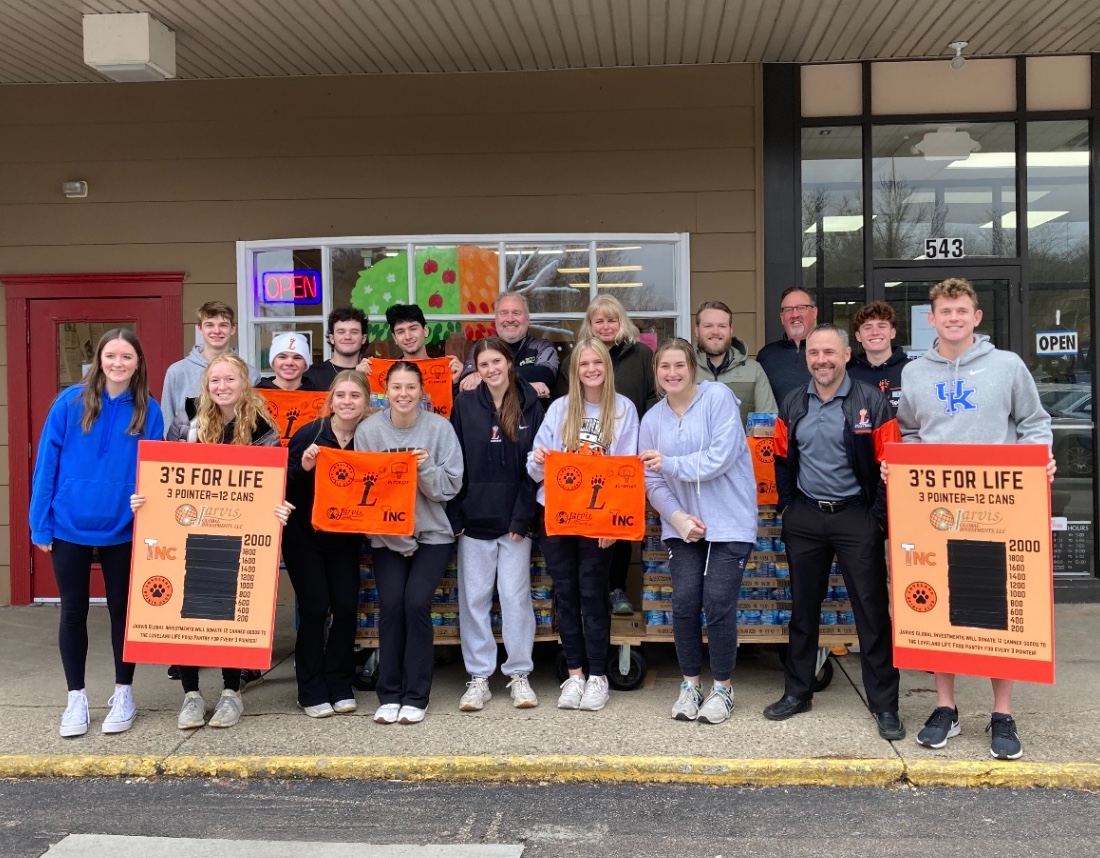
  • Students at Loveland High School collected 3,000 canned goods for the LIFE Food Pantry

    Students at Loveland High School collected 3,000 canned goods for the LIFE Food Pantry

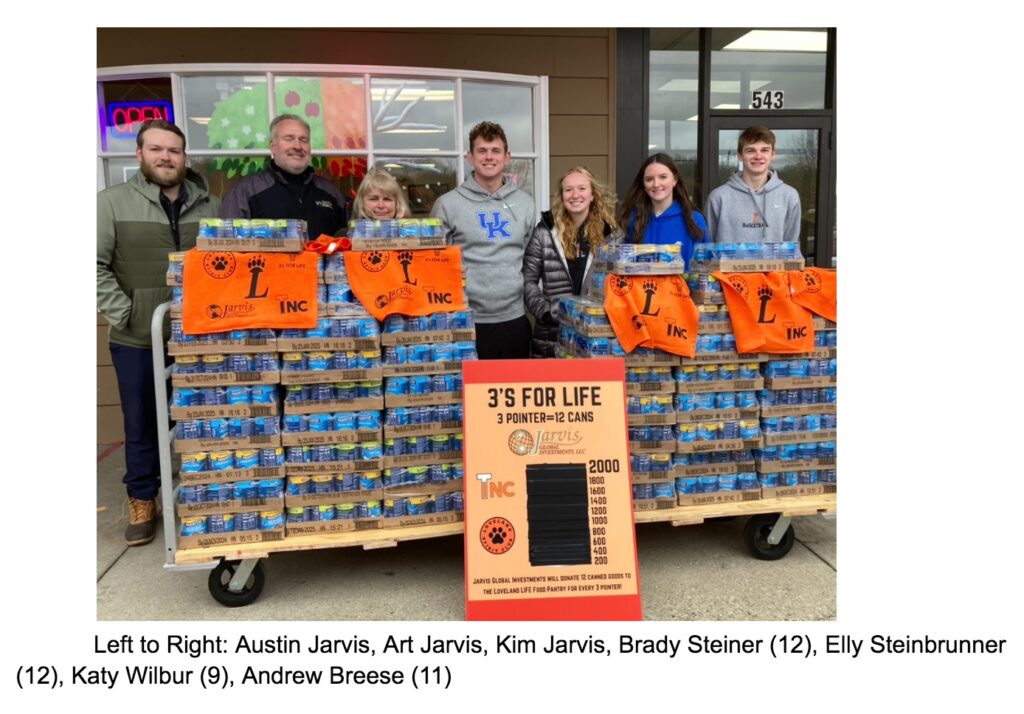
    Back Row: Andrew Breese, Evan Patterson, Tyler Huff, Ronan Mirza, Art Jarvis, Kim Jarvis, Austin Jarvis, Mike Broadwater, Matt McCarthy

    Front Row: Katy Wilbur, Elly Steinbrunner, Courtney Keyser, Campbell Massey Grace Haught, Sydney Jenkins, Faith Daugherty, Craig Murnan, Brady Steiner

    Loveland Freshman Katy Wilber drained seven threes at Indian Hill on January 18. (Loveland Magazine File Photo)

    Loveland, Ohio – The 2022-2023 “3’s For Life” fundraiser collected more than 3,000 canned goods for the local LIFE Food Pantry. The fundraiser was a partnership between Jarvis Global Investments, Tigers Incorporated, Loveland Spirit Club, and the Loveland Men’s and Women’s Basketball teams.

    For every 3-pointer made at Loveland basketball home games, Jarvis Global Investments donated 12 canned goods to the food pantry. During the 2022-2023 basketball season, 92 three-point shots were made, leading to 1,104 canned goods that were donated.

    In addition to cans donated from the three-point shots, Tigers Incorporated and Loveland Spirit Club Members, Elly Steinbrunner and Brady Steiner, collected an additional 1,639 canned goods from the community, including the Loveland Meijer and Biggby Coffee locations. The total cans from the community and three-point shots totaled 2,743 canned goods, and Jarvis Global Investments provided additional cans to bring the total to 3,000.

    PROUDLY SERVING HUNDREDS OF LOCAL FAMILIES EACH MONTH

    Read about the LIFE Food Pantry and how you can help by ORGANIZING your own food drive.

  • Making boats, fish, and waves at Whistle Stop Clay Works exhibition at Loveland Library

    Making boats, fish, and waves at Whistle Stop Clay Works exhibition at Loveland Library

    Photos by Alex Eicher

    Loveland, Ohio – The Loveland Branch of the Cincinnati Public Library is hosting an art installation of boats, fish, and waves by Whistle Stop Clay Works through March 24th in celebration of the NCECA 2023.

    The conference, which is geared toward art educators, ceramicists, and clay enthusiasts, will be held in Cincinnati from March 15 through 18 at the Duke Convention Center. NCECA (National Council on Education for the Ceramic Arts) strives to promote and improve the ceramic community through education, community building, research, and creative inspiration. They offer programs events and publications to support the ceramic field and communities in with ceramic organizations’ work.  

    The theme of NCECA 2023 is ‘Current’, so boats, fish and waves were chosen to signify the importance of the Ohio River to the area.

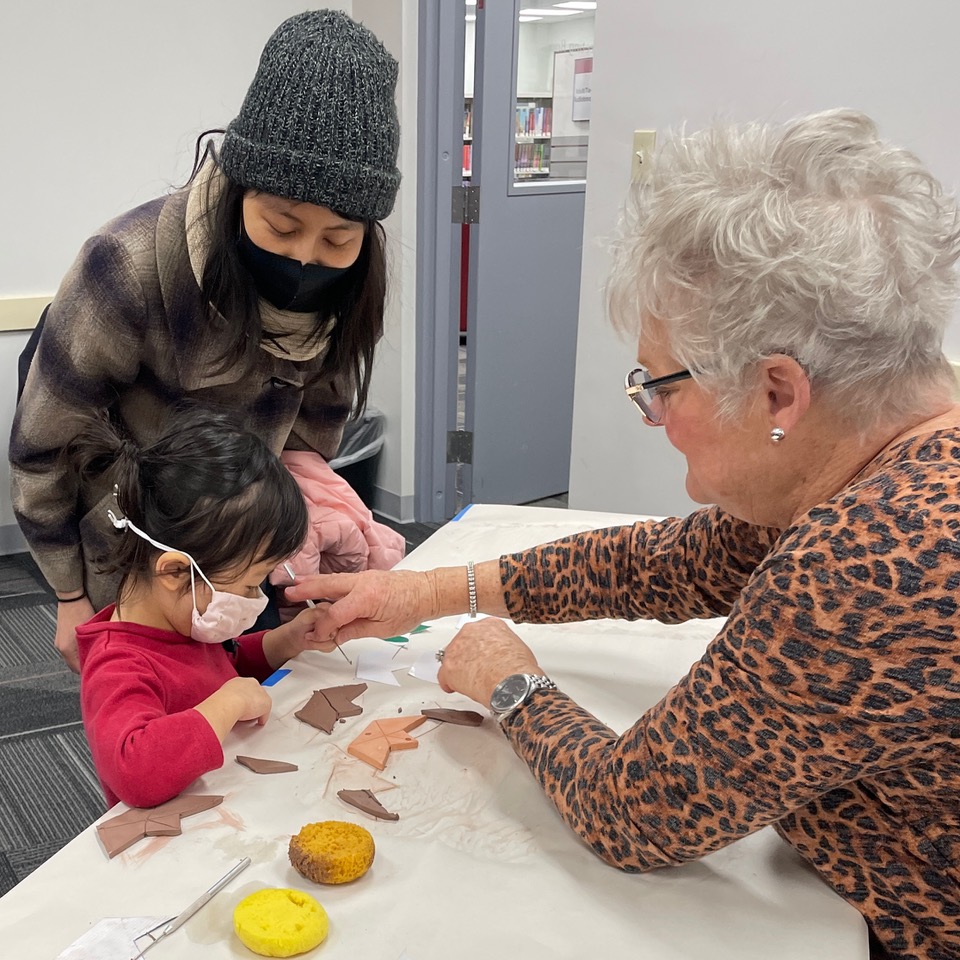
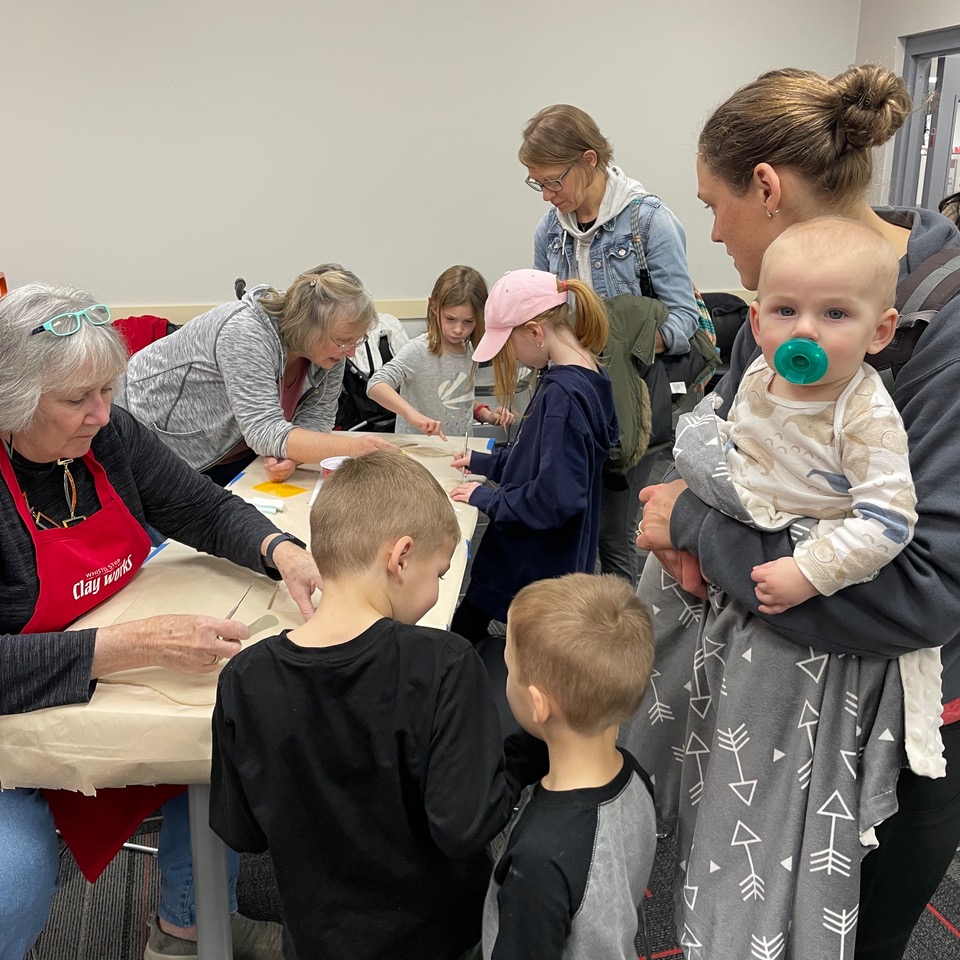
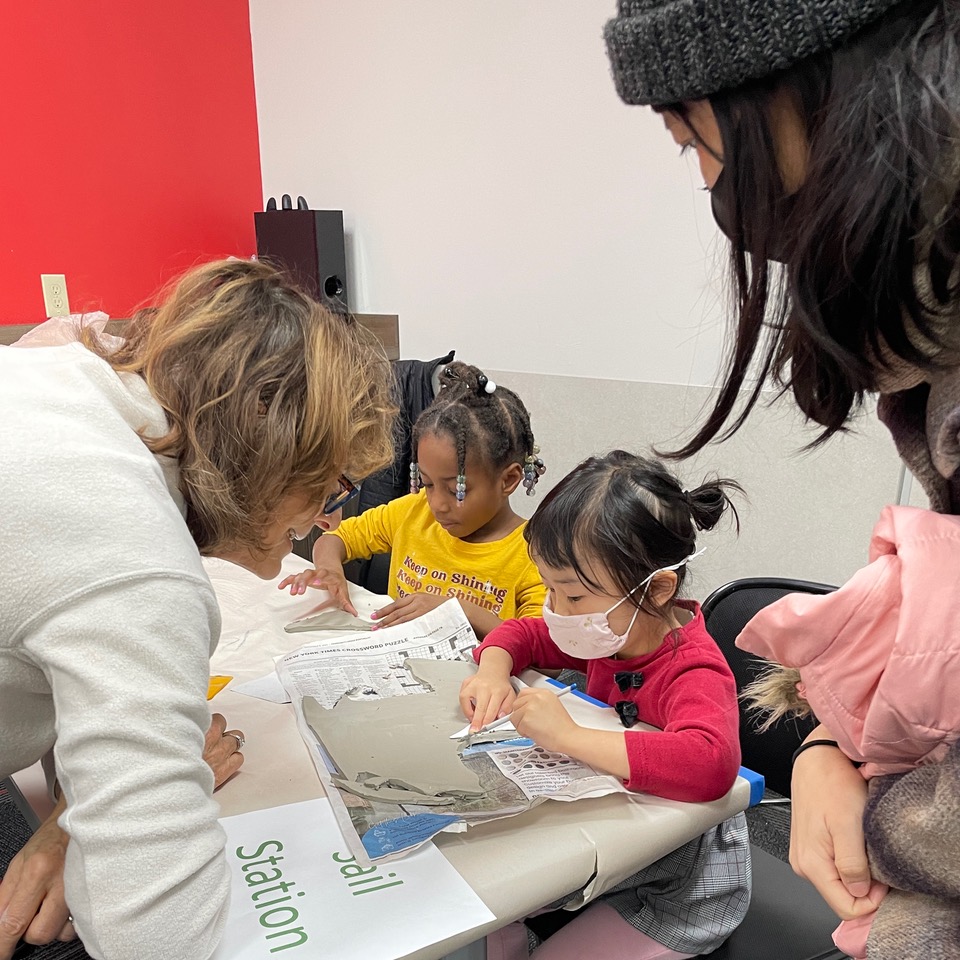
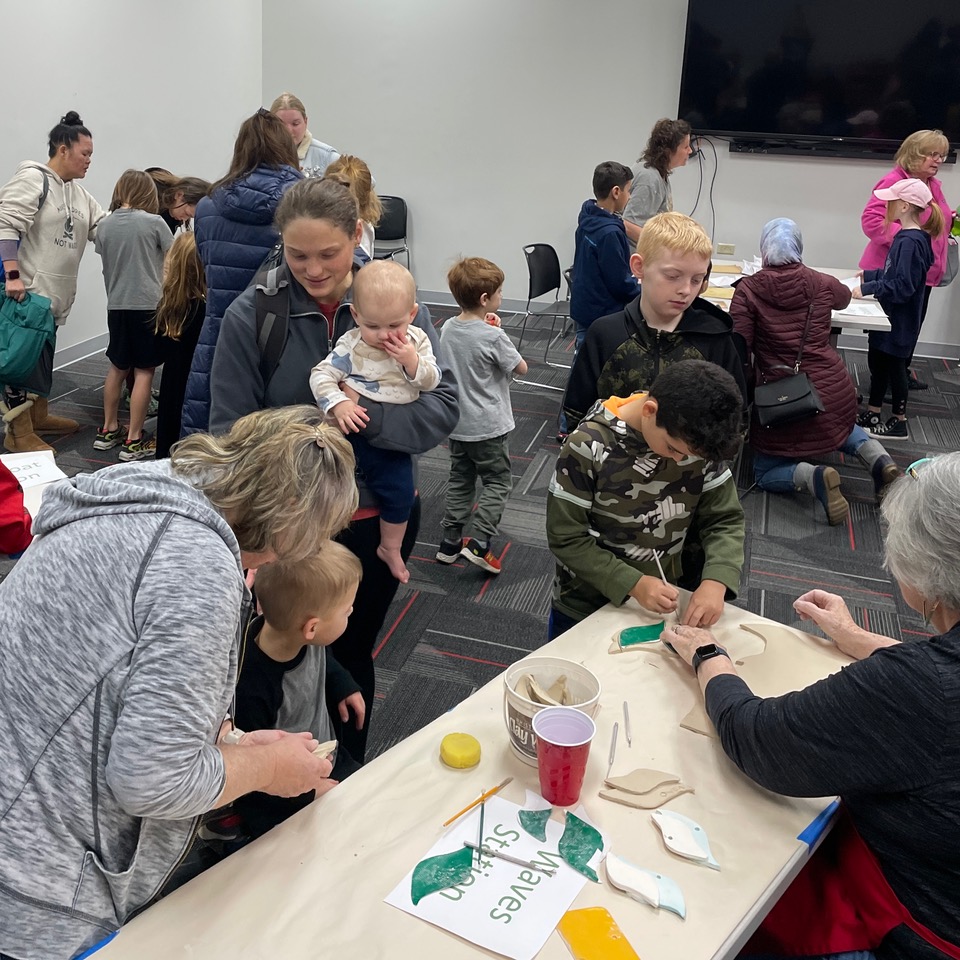
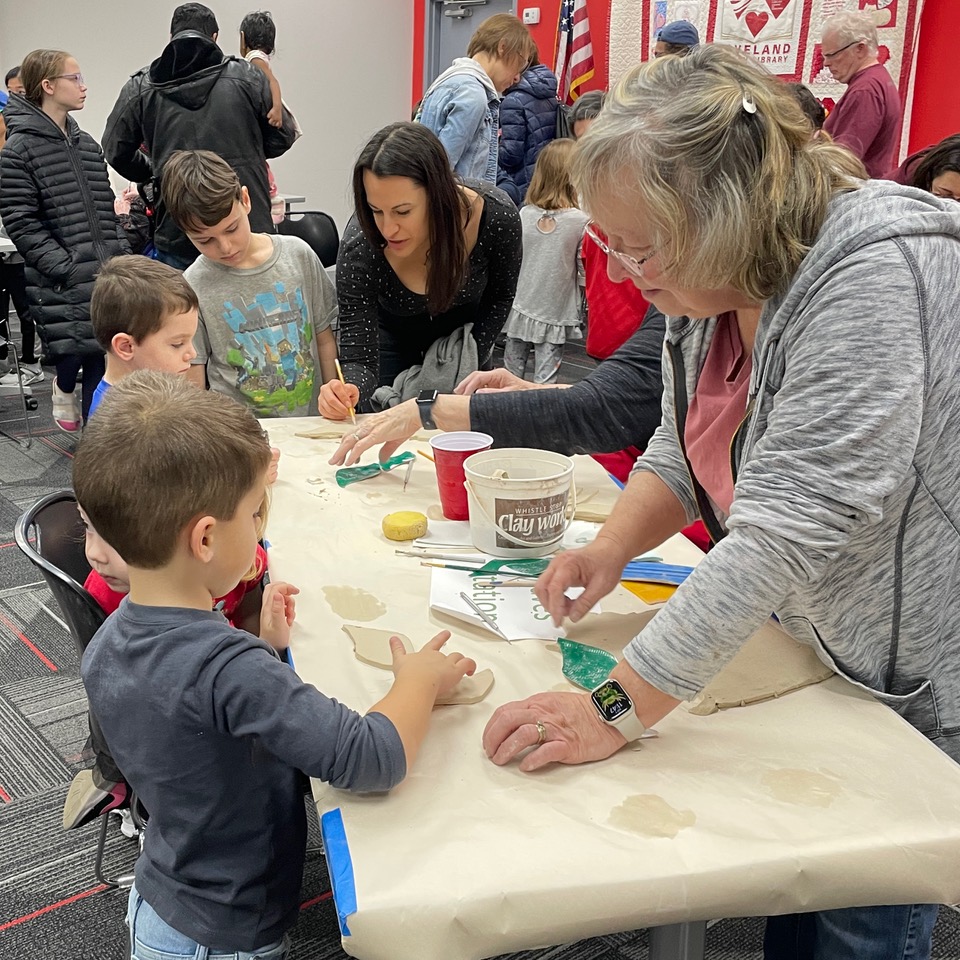
    On Saturday, January 7 the Loveland library and Whistle Stop Clay Works (WSCW) co-hosted a three-hour event to make the objects for the art installation. Children and adults made clay boats, sails, waves and fish out of clay to be used for the installation. In addition to clay projects, there was an opportunity for people to make origami boats. There was a similar event held at WSCW, where people could make clay items for the installation as well. 

    “This is a fantastic partnership between artists and the public library. These were free events, so that helped make it accessible to a wide variety of people,” said Bonnie McNett, one of the organizers. “In addition, people can come back to the library and find the exact boat they made because they stamped a unique number on the boat they created.  

    The artists can pick up their art after March 24th.

    “It’s really an interactive event,” continued McNett. “The Library and Whistle Stop wish to thank the 20 volunteers who helped make the art installation possible and also want to thank Kentucky Mud Works for donating the clay used in the creation of the clay armada.”

    The library is at 649 Loveland Madeira Road in the Shoppers Haven Plaza in Loveland, Ohio.  Information about NCECA can be found at www.NCECA.net.

    Whistle Stop Clay Works is located in Historic Downtown Loveland. Learn more HERE.

  • Loveland grad Sam Smith named Director of Photography on high-profile short film

    Loveland grad Sam Smith named Director of Photography on high-profile short film

    Samuel Smith operates a camera out of the back of a truck in San Diego, California. (Photo by Savannah Braswell)

    Since leaving Loveland in 2018 for the prestigious New York University, Sam Smith has been cinematographer on numerous projects including Crimson Ties, directed by Francesca Scorcese.

    A slash of Edward Hopper-esque smoggy evening light outlines a working-class mother, hunched over a sewing machine. A split composition: out of focus in the background of her 1956 New York tenement apartment, her children hug their father.

    Bobby, 11, donning a school uniform, stands over the camera with a note in her hand. A low angle, wide-lens shot might indicate confidence. But not here. The note fills the frame and holds the power. Her body looks awkward and distorted—her hands are too big, torso too long, head too small.

    These are two images from Heartbreak on Murray Hill, a short film to be photographed by Loveland local Samuel Wright Smith. The movie is the true story of the director’s (Malcolm Quinn Silver-Van Meter) grandmother’s childhood breakup in 1956 immigrant NYC. Samuel Smith will act as the eyes of the film, sculpting light, movement and framing.

    For as long as he can remember, Samuel Wright Smith has had a camera glued to his face. When he first found himself in the tight-knit Cincinnati film scene, he was only 14. Smith spoke about his roots:

    “Making a film takes a village. I am indebted to organizations like The Cinedepenent Festival, The Underground Academy, Loveland Magazine, the Overture Awards/Artswave, and the many Cincy mentors and patrons of the arts. Cincinnati offered the impetus to realize my dreams. It feels fitting that my biggest project yet is about community.” 

    Since leaving Loveland in 2018 for the prestigious New York University Tisch School of the Arts, Smith has been cinematographer on numerous projects including Crimson Ties, directed by Francesca Scorcese, which premiered at Tribeca. In 2020, at only age 19, he published a photo book titled Abandoned Cincinnati through Fonthill Publishing.

    Samuel Wright Smith is the author of Abandoned Cincinnati, a 2019 photo/commentary book available in Cincinnati bookstores and online through Amazon. The book explores the history, beauty, and implications of Cincinnati’s vacant structures.

    Recently, Smith shot a feature film with the Secoya indigenous community in the Ecuadorian rainforest. His work has garnered attention at other major festivals including Nashville Film Festival and Beverly Hills Film Festival. 

    For Heartbreak on Murray Hill, the crew will build a replica 1956 tenement apartment. Smith describes the style as “warm realism”. Pulling inspiration from American Realist painters, he intends to create a style that is bold, believable, and magical.

    Heartbreak on Murray Hill is the story of 11-year-old Bobby and her first breakup in 1950s NYC. It is based on a true story.

    Heartbreak is set to be one of NYU’s most ambitious thesis films ever. Seeking an indie budget of $150k, the film is fiscally sponsored and donations are tax-deductible.

    “Writing and photographing for Loveland Magazine in high school opened my eyes to the possibility of meaningful work through the lens of a camera. I owe so much of where I am to David Miller, the LM publisher. So many peers, teachers and community organizers in the Loveland community gave me the push to pursue my dreams. I can’t believe that this is my life now. Living off of art seemed impossible once. But thanks to community: here I am,” said Smith.

    “Sam started as a Loveland Magazine Intern while he was still attending Loveland High School and soon was paid for his skillful work. I was still able to hire Sam a few times for special projects after he went to NYC to study. Since the day we were first introduced his photographic eye and writing has always seemed magical,” said Loveland Magazine Managing Editor, David Miller. “I cannot wait to see this new film and really wish the team success in securing the funding they need and do hope the Loveland and Cincinnati community will support Sam’s career.”

    DONATE and SUPPORT the Production of Heartbreak on Murray Hill

    Learn more about Heartbreak on Murray Hill and meet the team

    Learn about Director Malcolm Quinn Silver-Van Meter

    Director Malcolm Quinn Silver-Van Meter

    Find Samuel Wright Smith’s work here

    Watch this promotion for the film Capulí, which Smith recently shot in the Secoya indigenous community in the Ecuadorian rainforest

  • Corruption trial witness: Householder called them “loans” but wouldn’t sign documents

    Corruption trial witness: Householder called them “loans” but wouldn’t sign documents

    Former Ohio House speaker Larry Householder arrives for day two of his racketeering trial. Photo by Morgan Trau, WEWS.

    Former House speaker received $500K in bailout scandal and called them loans, but never paid any of it back

    BY: MARTY SCHLADEN Ohio Capital Journal

    CINCINNATI — In Washington, D.C. during Donald Trump’s January 2017 inauguration, then-Ohio Rep. Larry Householder had a dinner meeting with the top executives with Akron-based FirstEnergy. The executives stressed their likely need for a state bailout — and their need for a way to make unlimited, untraceable contributions to Householder’s bid for speaker, Householder’s top lieutenant testified Wednesday.

    By late 2019, scores of millions in FirstEnergy dollars had passed through the 501(c)(4) “dark money” account that had been set up at the executives’ request. Householder had won the speaker’s gavel. And the state had passed a $1.3 bailout that mostly benefited a FirstEnergy subsidiary. 

    In addition, Householder had gotten more than $500,000 for personal expenses that had originated with the utility. The speaker agreed to call them “loans,” but he never quite got around to signing legal documents that were prepared — much less to paying back any of the money, the witness, Jeffrey Longstreth, testified Wednesday.

    If true, it and other events described Wednesday illustrate widespread ratepayer-financed malfeasance that threatened to make Householder speaker in alliance with Ohio utilities almost indefinitely.

    Four weeks into the blockbuster corruption trial, Longstreth’s testimony could prove crucial. Because he set up the dark money group and handled much of Householder’s political business, Longstreth is likely to have had one of the best views into whether the former speaker enriched himself in exchange for championing the bailout.

    Showing that Householder personally enriched himself as he rammed through an unpopular corporate bailout could go a long way to convincing the jury that the former speaker participated in an illegal conspiracy. 

    He and former Ohio Republican Party Chairman Matt Borges are being tried on charges of racketeering. Federal prosecutors have said the $61 million in utility money that was used to pass the billion-dollar bailout is likely the largest bribery and money laundering scandal in Ohio history.

    Longstreth, who functioned as Householder’s political strategist and general fixer, has pleaded guilty and is cooperating with prosecutors in exchange for a favorable sentencing recommendation. On Wednesday, he explained to jurors that by the time of the dinner meeting during Trump’s inauguration, it was clear to him that Householder was well familiar with then-FirstEnergy CEO Chuck Jones and what Jones wanted for his company.

    Meetings with FirstEnergy executives

    In late 2016, as Householder captured a House seat that he held in the early 2000s, FirstEnergy was drowning in debt from its money-losing nuclear and coal plants. The company was laying the groundwork to send the subsidiary that owned the plants into bankruptcy, and executives calculated that state or federal subsidies would make it attractive to buyers.

    In December 2016, the newly elected Householder hired Longstreth to spearhead his plan to elect enough sympathetic Republicans in 2018 that they would make Householder speaker at the start of 2019.

    A month later, Householder and Longstreth were in D.C. for Trump’s inaugural — and to meet with Jones and FirstEnergy Vice President Michael Dowling. At one steakhouse dinner, Longstreth was seated at the end of a long table with Dowling, and Jones and Householder were seated at the other.

    Dowling “said they were going to get going, get your organization set up,” Longstreth testified, explaining that he understood “organization” to mean a limited liability corporation or a dark money group that could receive FirstEnergy money. “He said (the money) needed to be undisclosed and unlimited contributions.”

    The next night, the dinner at another D.C. steakhouse was more intimate, with just Householder, Jones, Dowling, Longstreth and maybe one other in attendance. Jones, the FirstEnergy CEO, explained the company’s financial woes and that they were working on a federal solution to them.

    “They said, ‘If not, we’re going to need something on the state level,’” Longstreth quoted Jones as saying.

    He added that Householder mostly sat quietly through that part of the discussion because he “already knew everything that was being said, it seemed to me.”

    Longstreth said he didn’t know about all of Householder’s previous dealings with Jones, but said the men were well enough acquainted that they attended a World Series game together in Cleveland the previous October.

    The political strategist testified that it was clear to him that FirstEnergy’s enormous contributions were expressly in exchange for a bailout.

    “I knew their donations were (predicated) on the expectation that something like House Bill 6 would happen,” Longstreth said.

    Money for Householder

    Householder didn’t just get money from FirstEnergy to advance his political ambitions, Longstreth said.

    In spring of 2017, Householder called Longstreth into his office to complain of financial problems. He was head of a group of investors in an Alabama coal mine that had defaulted on a loan, he was having problems with his Perry County farm and he had a house in Florida that was badly in need of repair.

    Longstreth said Householder told him that he needed to solve some of those problems or he’d be forced to drop his bid for speaker. And, he said, because Householder was his only client, that would be a big problem for Longstreth, too.

    Using money out of an account that was funded by the dark money group that FirstEnergy paid into, Longstreth said he paid lawyers, settled the Alabama lawsuit and financed the repair of Householder’s Naples, Fla., home.

    Longstreth had a loan agreement drawn up, but Householder never signed the papers, he said.

    “We had multiple discussions, but it was a kick-the-can-down-the-road type of scenario,” Longstreth said.

    In late 2019 when the issue came up, Householder “asked me in the course of our conversation, ‘Are you whole?’” Longstreth said, explaining that he interpreted the question to mean that Householder wanted to know if somebody other than Longstreth had ultimately paid Householder’s debts. 

    “It was one of those hair-on-the-back-of-your-neck situations,” Longstreth said, adding they both knew the arrangement the speaker was suggesting was illegal. 

    At another meeting at the Buckeye Lake AMVETS post, Householder requested help with credit card bills, Longstreth said. Earlier in the trial, prosecutors displayed bank records showing that the debt was about $20,000.

    Longstreth said he stressed to Householder that they needed to stay on the right side of the law. 

    “I said it had to be something we can do legally because you can’t get something for nothing,” Longstreth said.

    Testimony on widespread corruption

    Wednesday’s testimony about Householder’s loans was against a backdrop of widespread corruption that threatened to become endemic.

    Before Longstreth took the stand, Pat Tully testified that within weeks he moved from a senior position at the state’s utility regulator, the Public Utilities Commission of Ohio, to being a senior advisor to the House Republican Caucus. In early 2019, Tully said, Householder met with him, Rep. Nino Vitale, R-Urbana, and Sam Randazzo, Gov. Mike DeWine’s nominee to chair the PUCO — and who around that time received a $4.3 million payment from FirstEnergy.

    Tully described how he worked with Randazzo to help draft the utility bailout, House Bill 6, and to reconcile it with draft legislation submitted by FirstEnergy. He wasn’t asked about the propriety of a current and very recent regulator writing a law in which one of the state’s largest utilities had such an obvious interest.

    In Longstreth’s testimony, he said that after HB 6 passed in 2020, he and Householder mounted an effort that could make him speaker for the foreseeable future in a kind of permanent alliance with Ohio’s big utilities.

    Earlier in the trial, prosecutors played recordings of Householder ally Neil Clark saying that thanks to dark money, utilities like FirstEnergy could contribute vast sums to politicians and keep their origin secret. In that way, Clark said, supposedly regulated utilities could exercise huge influence behind the scenes.

    Ohio law currently limits lawmakers to eight years in either house, but they’re free to run for the other chamber after that — and can do so as long as they like. So Householder’s speakership would at least have been interrupted in 2024.

    But Longstreth found that the idea of passing a law limiting lifetime service to 16 years polled well. And it had a huge silver lining for Householder — it would reset the clock so the speaker was free to stay in the House and be its leader for the next 16 years if he could keep getting the votes.

    Longstreth estimated that it would cost $15 million to $20 million to buy ads selling the idea to voters. For the money, Householder and Longstreth decided to turn to utilities FirstEnergy and AEP, both of which reaped millions from the bailout. Their interest in keeping Householder in the speaker’s chair was clear, Longstreth said.

    “It kind of went without saying that they would support anything that was good for the speaker because anything that was good for the speaker was good for them,” Longstreth said.

    After meetings with top executives with both companies in February 2020, Householder secured pledges of support from each, Longstreth said. Then reality intervened.

    “COVID started in March and then we were arrested in July,” Longstreth said.

  • Study shows uninsured children could increase with loss of pandemic-era coverage

    Study shows uninsured children could increase with loss of pandemic-era coverage

    Getty Images.

    “As we begin the process of redetermining eligibility for the first time in three years, we must pay particular attention to children’s needs to minimize the number of children who lose coverage.”

    Kelly Vyzral

    BY: SUSAN TEBBEN – Ohio Capital Journal

    A new study warns of a sharp rise in uninsured children in Ohio and across the country if pandemic-era coverage is allowed to fade away.

    The Georgetown University Health Policy Institute’s Center for Children and Families studied the impact of the Children’s Health Insurance Program (CHIP) and Medicaid on bringing down state’s uninsured rate, finding that it “proved to be a critical lifeline for more than half of the nation’s children during the pandemic.”

    Now that a March 2020 provision increasing the federal contribution to state Medicaid programs while requiring states to maintain continuous coverage for Medicaid patients during the COVID-19 public health emergency will be going away, the number of children falling under those protections will also be decreasing.

    “These children are at grave risk of losing coverage inappropriately in states that do not handle the renewal process with the utmost care,” the study stated.

    Because of a loss of income eligibility and “bureaucratic snafus,” the study estimates up to 6.7 million children in the U.S. will lose coverage because of the “unwinding” of pandemic-era programs, scheduled to happen on April 1.

    “The uninsured rate for children could easily more than double if states have inadequate staffing levels and overwhelmed call centers and do not take the time and care needed to properly conduct eligibility checks after the federal protections lift,” the study stated.

    From February 2020 to August 2022, Ohio saw a 26.7% increase in Medicaid and CHIP enrollment, ranking them 29th in the nation based on data from the Centers for Medicare & Medicaid Services. The share of enrollment made up by children in Ohio was 25.6%.

    “As we begin the process of redetermining eligibility for the first time in three years, we must pay particular attention to children’s needs to minimize the number of children who lose coverage,” Kelly Vyzral, senior health policy associate for the Children’s Defense Fund-Ohio, said in response to the study.

    The Children’s Defense Fund-Ohio said nearly half of children in Ohio are covered by Medicaid and other public health insurance programs. The study showed 54% of all American children are covered by Medicaid of CHIP.

    Ohio already has the 12-month continuous Medicaid and CHIP child eligibility for those under age 19 recommended by the study to mitigate losses and gaps in coverage.

    Continuous eligibility protects parents who see an increase in income during a 12-month period from losing child Medicaid or CHIP coverage.

    Ohioans should verify contact information with local benefits offices or through the Medicaid patient portal to avoid cancellation of child insurance, Vyzral said.

    Ohio must complete Medicaid eligibility checks by May 2024.