Loveland, Ohio – Here is a Loveland Magazine Documentary. It is a love story of how 27 years ago the Simpson Farm in the West Loveland Historic District was preserved in its pristine beauty and in perpetuity.
Local residents banded together and fought hard to establish a 41-acre conservation covenant that was eventually placed on the Simpson Farm deed.
You will learn how the Drees’ bulldozers and proposed condos eventually lost traction and were steered away from Loveland.
It was a four-year “labor of love” to keep the acreage in the heart of our “Sweetheart City” untouched by human hands so all future generations of girls and boys could fall in love with it as well.
You can win the fight against City Hall and “developers” when precious greenspace needs protecting.
This is a love story. As often happens, love stories often mingle with their nightmares and the familiar sleepless nights. First, the love story though, and perhaps at a later time what the current heartache is.
(You can view the story in a larger size by using the “+” button.)
Here you can watch the accompanying video. Featured are the sights and sounds of the wildlife that resides on the “Farm”. The primary reason for the effort that began 25 years ago was to provide a sanctuary and a peaceful place for the animals you see in this video.
The Restrictive Covenant Establishing the Conservation District
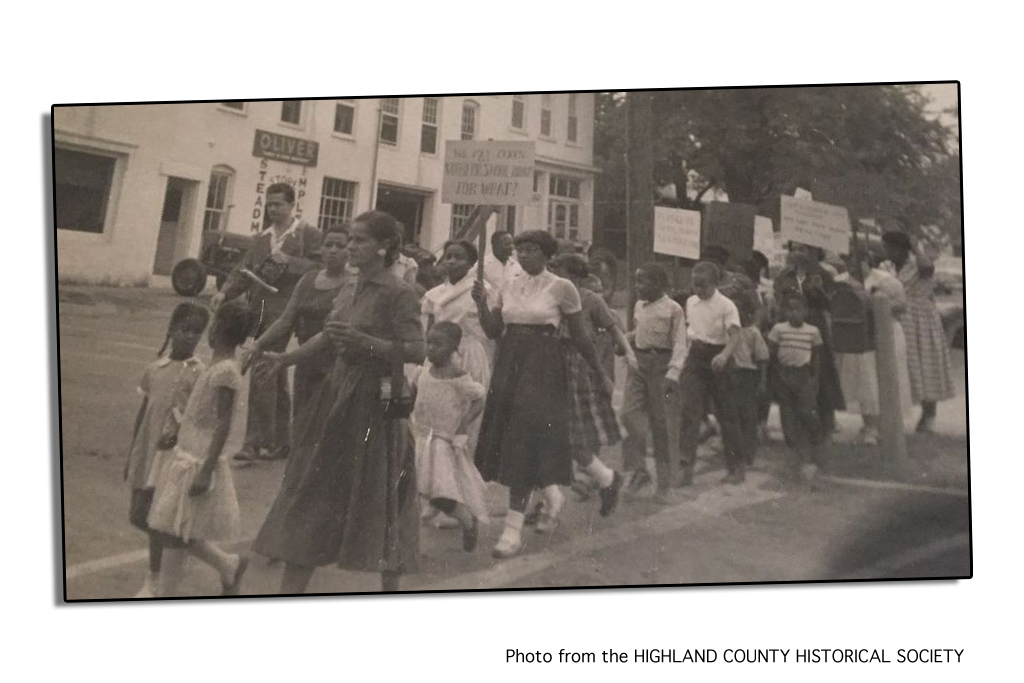
For over two years, 55 Black mothers and children in Hillsboro, Ohio, marched daily to a whites-only school to demand admission. The Lincoln School Story highlights a facet of the Black struggle for freedom that is too often under-recognized. Remembering the efforts of the marchers to integrate public schools in southwest Ohio provides important context for understanding the Black experience in the United States. The stories shared by the Lincoln School marchers help us imagine a future free of racial inequality.
This project provides an opportunity to connect and build understanding. Here are a few of the things documentary viewers said they want to share with their friends:
“History lives through us. We first learn to experience history in our bodies then later in our hearts.”
“Ohio played an important role in the civil rights movement.”
“The fearless and persistent mothers who fought for a better life for their children. AMAZING!”
“There are good people in dark places! Keep believing.”
“Perseverance and love can change the world.”
Ohio Humanities is proud to support important projects like The Lincoln School Story so that we can learn from the powerful dedication and bravery of those who fight for change. We plan to expand this project by funding an extended documentary that will explore the story in more depth and producing complementary educational materials and a children’s book.
If you value projects like The Lincoln School Story, please make a gift to Ohio Humanities so that more Ohioans can learn about the people, moments, and movements that have made our state what it is. And help us reach more people by sharing this link with your friends and family. Encourage them to sign up to receive our newsletter, magazine, updates on events and activities, and more ways to get involved with Ohio Humanities. Sincerely,
“Do you think the industry uses recycling to sell more plastic? Absolutely.”– Plastic Wars, PBS
Loveland Magazine is one of the 400 news outlets worldwide, with a combined audience of over 2 billion people “Covering Climate Now”, a global journalism initiative committed to bringing more and better coverage to the defining story of our time.
The initiative was co-founded by The Nation and Columbia Journalism Review
Mihaela Manova is the Loveland Magazine “Covering Climate Now” Editor
Today’s article focuses on Plastic Wars from PBS and Frontline
By Mihaela Manova
W
ith enough free time right now to rediscover a hobby, some choose to spend it on new cooking, or even spring cleaning. But as those people participate in their new hobbies, and some begin to throw out things; others begin to collect them.
Plastic Wars, a documentary on the current pollution problem has made people turn their heads at what is thrown away while looking at the recycling industry and its good, bad, and ugly. With investigating the “battle over plastics, ” Frontline and NPR dive into an investigation over how we are managing the waste, what is going on in the recycling industry, and how the public is contributing to minimizing it. If you haven’t caught this documentary on PBS yet, you can watch it HERE.
“Bloated seabirds and littered waterways have fueled a global anti-plastic movement.”
The industry
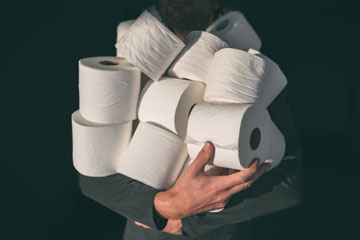
Current news sites display headlines that describe how the COVID-19 pandemic is influencing this industry. Words like “piling,” “waste,” and “sabotage” are at the top of their Google search. More plastic waste is being produced by the jumbo packs of toilet paper that some are hoarding. Cans, cardboard, and other packaging of snacks are now loaded in the pantry before quickly consumed and thrown away. The recycling industry is at risk, for more reasons than one.
The hoarding of toilet paper has skyrocketed, yet businesses are now setting limits on how much is allowed to be bought per person.
According to Wired, “First, given that plastic is oil, when oil prices fall—as they have in recent years—plastic gets cheaper to make. This corrupts the economics of recycling.” This news source continues to talk about the relations with China and how they have banned imports of plastic and mixed paper.
On top of all of that, Tom Szaky (founder/CEO of TerraCycle) confirms, “The third is what no one notices, that the quality of the waste is going down,” says Szaky. This is known as “lightweighting,” and it was happening long before the pandemic began. By making plastic bottles thinner, the manufacturer saves money by using less plastic. But, Szaky says, “it becomes progressively less profitable for a garbage company to bother recycling.”
To combat this with the pandemic and quarantine still going, you can begin to take notice of the amount of waste that piles up from the rapid purchases that you have made from your local grocery store or even packages from the mail. Consider biodegradable products as options and do not desert your recycling bin.
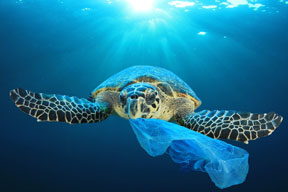
Pictured: Turtle consumption, plastic vs jellyfish
The Sea Turtle craze
Many of us have heard of the craze concerning the conservation of sea turtles. In the documentary, it was mentioned that there was an overwhelming awareness that a sea turtle video made upon the public and mostly, the youth. In the realm of social media platforms, influencers, instagrammers, and tik-tokers spread the word about this cause and what anyone can do to help. One of those things became the metal straw trend, where it blew up on almost all platforms.
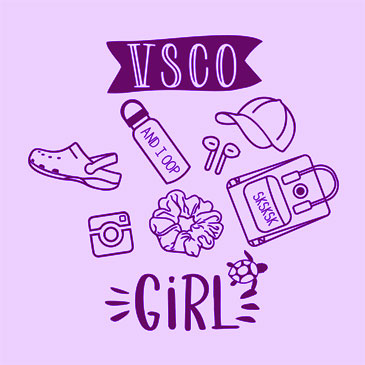
The essentials of a modern VSCO girl
As self-proclaimed VSCO girls donned the metal straws and used it for their aesthetic, companies were ready for them too, as many would begin to produce these straws in the help of the environment, but others claim, it was just to stay relevant.
Sketchy websites selling metal straws began to pop up on various platforms, overpricing said straws to the more than the average amount. People began building companies on the basis of this trend, which now have to find the next best thing. When building a company based on sustainability and/or biodegradable products, it is known that these efforts will continue to spread a trend for products to be produced ethically. But on the opposite side, some choose to use these trends for fast money and later fall due to the loss of interest over time.
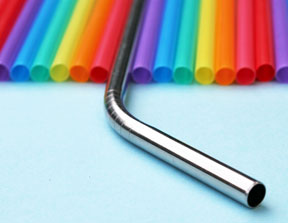
The popularization of metal straws
As many know, one of the biggest companies in the market, Starbucks, has massively changed its straw policy. The Guardian discusses the change from straws to the strawless lids by saying, “But is it really a big win for the environment? Reason, a magazine and blog published by the rightwing Reason Foundation, has claimed that the Nitro lids Starbucks will be making standard use more plastic than a combination of the company’s current lids and plastic straws. Now, as many months have passed since the massive metal straw revolution, environmentalists are still concerned with the amount of plastic that is left.”
Starbucks answered with their reasoning behind this, “Starbucks does not dispute that the new lids use more plastic. However, they stress that “the strawless lid is made from polypropylene, a commonly-accepted recyclable plastic that can be captured in recycling infrastructure, unlike straws which are too small and lightweight to be captured in modern recycling equipment.”
There is more talk concerning another major chain brand revamping their packaging. McDonald’s and Starbucks are working together to develop better disposable packaging in an act of saving the environment.
Easier recycling = more money
Plastic Wars provided awareness for the process of recycling and what products are made from this process. Statistics show that 9% of the world’s plastics are recycled. The documentary mentions that soda bottles and milk jugs are easier to recycle and in turn, equate more money being produced from them. In counter to this, mixed plastics that are mostly part of our everyday packaging, do not get recycled easily and cannot be sold.
If you want to save the planet while making extra cash, items like electronics, glass bottles, and ink cartridges are most wanted. Most importantly, check your state regulations and nearby recycling stations for more information on products, rules, and offers.
Despite efforts spreading across America to reduce the use of plastic and the crisis of ocean pollution growing, the plastics industry is rapidly scaling up new production and promoting a familiar solution: recycling. But it’s estimated that no more than 10% of plastic produced has ever been recycled. The documentary “Plastic Wars,” from FRONTLINE and NPR, reveals how plastic makers for decades have publicly promoted recycling, despite privately expressing doubts that widespread plastic recycling would ever be economically viable.


![[Documentary] How Loveland, Ohio’s Simpson Farm was preserved in its pristine beauty](https://lovelandmagazine.com/wp-content/uploads/2022/11/simpsom-farm-story-feature.jpg)

![[On Earth Day’s 50th Birthday] Why you should watch Plastic Wars / Covering Climate Now](https://lovelandmagazine.com/wp-content/uploads/2020/04/feature-plastic-wars.jpg)