Tag: Duke Energy

  • Duke Energy prepares for winter storm Elliott and urges customers to do the same

    Duke Energy prepares for winter storm Elliott and urges customers to do the same

    • Mix of below-freezing temperatures and high winds are expected to cause power outages Thursday and Friday
    • Duke Energy lineworkers, damage assessors and vegetation crews are ready to respond
    • Customers are encouraged to prepare in advance for extended outages and check on loved ones

    Loveland, Ohio – Duke Energy is monitoring and preparing for a winter storm system that is expected to cause power outages across southwest Ohio and Northern Kentucky this holiday weekend. A mix of dangerously low temperatures, high winds and snow is predicted to move across the region beginning late Thursday evening and continuing through Friday evening.

    Snow on its own typically has little to no impact on the electric system. However, high winds may bring down trees, limbs and power lines, while below-freezing temperatures result in increased demand to the power grid. These types of winter storms can also create hazardous driving conditions, which could impede Duke Energy workers’ ability to assess storm damage and restore power. Crews are prepared and will work as quickly as possible to restore power, however, expected high winds will also restrict some restoration efforts.

    “As Duke Energy meteorologists are tracking this significant winter weather event, crews are preparing to restore power as safely and quickly as possible,” said Anthony Brown, Midwest Storm Director, Duke Energy. “Our top priority is to keep our customers informed and urge them to prepare in advance.”

    Customers are encouraged to maintain a plan to move family members – especially those with special needs – to a safe, alternative location in case an extended power outage occurs, or evacuation is required.

    In a press release, Duke says, “Crews will work diligently to restore power in impacted communities as quickly as possible. As restoration begins, the first priority is to repair large power lines and other infrastructure that will return power to the greatest number of customers as safely, quickly and efficiently as possible. Crews then can work on repairs affecting individual neighborhoods and homes.”

    Safety information from Duke

    Duke Energy encourages customers to have a plan in place to respond to an extended power outage after severe weather. Below are some tips:

    Before the storm

    • Create (or update) an emergency supply kit to save valuable time later. The kit should include everything an individual or family would need for at least two weeks, especially medicines, water, nonperishable foods and other supplies that might be hard to find after a storm hits.
       
    • Keep a portable radio or TV or a NOAA weather radio on hand to monitor weather forecasts and important information from state and local officials.
       
    • Charge cellphones, computers and other electronic devices in advance of storms to stay connected to important safety and response information. Consider purchasing portable chargers and make sure they are fully charged as well.
       
    • Pet owners should arrange to stay at evacuation shelters that accept pets; friends’ or family members’ homes; or pet-friendly hotels.

    After the storm

    • Stay away from power lines that have fallen or are sagging. Consider all lines energized, as well as trees, limbs or anything in contact with lines.
       
    • If a power line falls across a car that you are in, stay in the car. If you MUST get out of the car due to a fire or other immediate life-threatening situation, do your best to jump clear of the car and land on both feet. Be sure that no part of your body is touching the car when your feet touch the ground.
    • The quickest way for customers in Ohio and Kentucky to report power outages is by calling 1.800.543.5599.
       
    • You can receive status updates on a power outage affecting you by texting REG to  57801, or sign-up online at duke-energy.com/outagealerts.

    Generator Safety

    • Always operate a generator in accordance with manufacturer’s guidelines and instructions. Do not operate more appliances and equipment than the output rating of the generator.
       
    • To avoid carbon monoxide poisoning, never use a generator indoors or in attached garages.
       
    • Only operate the generator outdoors in a well-ventilated, dry area away from air intakes into the home.
       
    • To avoid electrocution, plug individual appliances into the generator using heavy-duty, outdoor-rated cords with a wire gauge adequate for the appliance load.
       
    • If connecting into the house wiring is necessary on a temporary basis, homes should have a transfer switch installed by a licensed electrician.
       
    • Additional storm tips as well as current outage information is located on duke-energy.com/storm under the “Outage and Storm Information.”
  • Duke Energy will complete several gas main projects within the City of Loveland

    Duke Energy will complete several gas main projects within the City of Loveland

    E Loveland Gas FINAL

    Project #1
    East Loveland Avenue: Oct. 24-Dec. 2

    Duke Energy is replacing gas main along East Loveland Avenue. The approximate location is near the East Loveland Nature Preserve and Fifth Street. Project dates are Oct. 24-Dec. 2, 2022, with work hours from 9 a.m.-5 p.m. 

    One lane of the road will be closed, and temporary traffic signals will be used to keep vehicles moving. Some on-street parking along East Loveland Avenue will be restricted during the project. 

    Downtown Gas Project FINAL

    Project #2
    Historic Downtown Loveland: Nov. 9 – Dec. 30

    Gas main replacement will occur in several locations in Historic Downtown Loveland: 

    • the intersection of State Route 48/Second Street (near Graeter’s and the fire station)
    • along East Broadway Street from approximately the Five Points intersection to the trestle bridge
    • and along Karl Brown Way from the trestle bridge to Harrison Avenue near Nisbet Park.

    Work is scheduled for Nov. 9 -Dec. 30, 2022, and will occur Monday-Friday after 9 a.m. Overnight work will not occur during this project.

    Single lanes will be closed with two-way traffic maintained by flaggers. Some sidewalk access and on-street parking will be restricted as needed to facilitate the work.

    Sr 48 Gas FINALProject Project #3
    State Route 48/Oakland Road: Late November 2022 – January 2023

    Duke Energy will complete approximately 3-4 weeks of gas main work along State Route 48/Oakland Road from late November 2022 to January 2023. The road will be affected from the east end of St. Columban’s property (just past the football field) to the intersection of Loveland-Miamiville Road/Oak Street.

    This project will require day and night work. For day work, single lanes will be closed with two-way traffic maintained by flaggers. For night work, a portion of State Route 48 (at the Loveland-Miamiville intersection) will need to be fully closed for part of the project. The road will be fully closed from 9 p.m. – 6 a.m. with the road reopened during the day. Overnight traffic will be detoured.

    More Information

    For more information about construction projects in the city, click here. If you have specific questions about the gas projects, contact City Engineer Cindy Klopfenstein, PE, CFM, at (513) 683-0150.

  • Millions of Ohioans facing home gas and electric rate hikes

    Millions of Ohioans facing home gas and electric rate hikes

    Duke’s parent company made $820 million in profit in the first quarter of 2022 after netting about $3.6 billion last year. It paid its shareholders $3.1 billion in dividends in 2021 and paid its CEO $16.4 million in salary.

    BY: JAKE ZUCKERMAN Ohio Capital Journal

    Ohio utility companies have asked state regulators for permission to raise home gas, electric and water costs on more than 2.75 million Ohio customers.

    Those charges could be spread between customers of Columbia Gas, AES Ohio, Duke Energy, and Aqua Ohio. The utilities, all investor-owned, are collectively asking for another $400 million in annual charges.

    Any base rate increases require the approval of the Public Utilities Commission of Ohio, which is headed by five commissioners chosen by the governor for five-year terms. The PUCO’s staff review the companies’ requests and pose recommendations to the commissioners, who decide what the utilities can ultimately charge their customers.

    The utilities’ requests come in an inflationary period — consumer prices are up 8.6% over the year ending May 2022 and unleaded gas costs just below $5 per gallon. Last week, the head of the U.S. Federal Reserve said a recession is a possibility.

    “It is bad timing for utilities to be seeking rate increases at the PUCO, with consumers already hurting from soaring energy prices and inflation,” said Bruce Weston, executive director of the Ohio Consumers’ Counsel, a state agency that represents residential ratepayers in PUCO cases.

    “Ohio should lead with its heart and keep Ohioans connected to their utility services.”

    They also come at a turbulent time for the commission. Its former chairman resigned in 2020 after FBI agents were seen raiding his home. Last summer, the utility FirstEnergy Corp. alleged in court documents that it paid him a $4.3 million bribe for regulatory favors. He has denied wrongdoing and has not been charged. The U.S. Department of Justice twice subpoenaed the PUCO last year for records related to the case.

    Two commissioners previously worked for the companies they now regulate. Commissioner Dan Conway previously represented American Electric Power as an attorney in private practice. Commissioner Lawrence Friedeman has worked for IGS Energy, Vectren Energy Delivery of Ohio, Columbia Gas Services, and the Ohio Gas Association.

    Thus far, the PUCO staff has recommended granting slimmed-down versions of rate hike requests from Columbia Gas, Duke and Aqua Ohio. The AES case awaits a key ruling from a PUCO judge. None of the four has reached a final decision.

    A rate freeze would be very bad for customers. It would be damaging to the company’s credit ratings and make it difficult, if not impossible, for the company to provide reliable service.

    – AES Ohio attorney at a PUCO hearing last month

    Columbia Gas

    Columbia Gas asked the PUCO to allow a $221 million annual rate increase for its natural gas distribution service. This would take the form of a fixed fee increase, up from $16.75 per month to $46.31. According to analysis from the Ohio Consumers’ Counsel, that could increase to an $80 fixed cost per month in five years.

    PUCO staff identified some evidence of the company padding its costs in their report. When PUCO staff reviewed Columbia’s cost data provided by the utility to justify the hike, they found the company included $304,000 in costs for a workout facility and locker rooms at its downtown headquarters. The report also found an instance where the Columbia acquired five “thermal cameras” for COVID-19 temperature checks, each at a cost of $14,995. PUCO staff called the spending “significantly excessive” compared to a handheld thermometer.

    The PUCO staff recommended the commissioners approve a more modest base distribution revenue increase of between $35 million and $58 million per year. The OCC urged the PUCO to go even lower, proposing a $9.8 million increase.

    The proposed increase was the subject of a handful of sparsely attended public hearings last month. Evidentiary hearings start next month. They’ll be followed by a round of briefings before a final decision, according to a PUCO spokesman.

    NiSource, the utility’s parent company, made $431 million in profits in the first quarter of 2021. Last year, it paid its CEO $6.6 million, and paid its shareholders $345 million in dividends.

    Company spokesman Eric Hardgrove declined to answer specific questions about the gym or the thermometers.

    “Columbia is committed to our customers and the communities we proudly serve,” he said. “To continue to provide safe, affordable and reliable natural gas service, we must continue to invest in our system to upgrade aging infrastructure, just as investments are made in bridges, roads and other infrastructure in our cities, towns and communities. In addition, Columbia offers a wide variety of energy assistance, energy efficiency, payment plans, and PIPP to help customers afford their utility bills.”

    Duke Energy

    Duke Energy, which services 700,000 customers around Cincinnati, proposed raising both its electric rates and its gas rates. (It has comparatively few gas customers).

    On the electric side, the company requested a 10% base distribution revenue increase, which comes out to about $55 million per year.

    According to the OCC, this means a typical residential customer will see a monthly base distribution charge increase from about $37 to $49, costing roughly $144 per year.

    PUCO staff recommended a more modest increase of about .33% to 3%, or about $2 million and $15 million.

    On the gas side, Duke also filed a pre-application with the PUCO to raise its natural gas rates. However, this is in its early procedural stages and wouldn’t take effect until at least 2023.

    For electric costs, the PUCO is holding public hearings next month before an evidentiary hearing, which could take a week or so. Then comes a round of court filings and a commission decision. A PUCO spokesman guessed a decision could come mid-fall at the earliest.

    The utility’s parent company made $820 million in profit in the first quarter of 2022 after netting about $3.6 billion last year. It paid its shareholders $3.1 billion in dividends in 2021 and paid its CEO $16.4 million in salary.

    Company spokeswoman Sally Thelen said Duke is making smart investments to provide “safer and more reliable and secure” energy to customers while “diligently lowering operation and maintenance” costs. She said Duke is allowed to earn a fair return on its investments.

    “We know how vital electricity is to our customers, communities and region, and that energy is a significant monthly expense for our customers,” she said. “We also know that higher bills are never embraced. That’s why we continue to work hard to keep our costs down. We remain committed to helping our customers who may be experiencing financial hardship and struggling to pay their everyday expenses and energy bills. Duke Energy continues to support its customers, and connect them with available assistance and offer tools and programs – including flexible payment plans – to help manage their energy bills.”

    AES Ohio

    AES Ohio — formerly known as Dayton Power and Light, which serves 527,000 western Ohio customers — asked for a 49% base distribution revenue increase worth about $121 million per year.

    According to the OCC, this would raise an average customer’s bill by about $13.42 per month.

    The utility’s parent company, AES, has faltered compared to its peer companies, reporting a $409 million net loss in 2021, as it paid its CEO $14 million in salary. Addressing the PUCO, AES Ohio’s CEO testified to the company’s “very fragile” financial condition, according to the Dayton Daily News.

    In July 2021, the PUCO staff initially recommended a rate increase to boost AES’ base distribution revenues by at least $61 million. However, staff have since sided with arguments raised by the OCC and said the company’s 2009 agreement with the commission blocks the company from raising its rates.

    The question was put before a PUCO judge at a hearing last month. Jeff Sharkey, an attorney representing AES Ohio, made several arguments against the existence of a rate freeze, including that state law doesn’t give the PUCO the power to order one in the first place. He said the utility has already struggled with reliability. A failure to increase its revenue could harm its credit rating, which threatens the company’s service.

    “A rate freeze would be very bad for customers,” he said, according to a transcript of the hearing.

    “It would be damaging to the company’s credit ratings and make it difficult, if not impossible, for the company to provide reliable service.”

    The case awaits a final decision from the PUCO. Company spokeswoman Mary Ann Kabel defended the rate increase request, stating it covers the cost of grid investments.

    “Since our last distribution rate case in 2015, the updated distribution base rates would allow us to recover for investments required and are already completed as a result of the devastating 2019 Memorial Day tornadoes,” she said. “It also allows us to continue performing important activities, such as enhanced tree trimming to reduce the likelihood and length of outages. Over the years, AES Ohio has taken the necessary steps to keep rates reasonable through efficient distribution operations to meet the growing needs of our customers. Today and with the proposed increase we continue to have with the lowest distribution rates of the investor-owned electric utilities in Ohio.”

    Aqua Ohio

    Aqua Ohio, a subsidiary of Essential Utilities, provides treated water for about 150,000 Ohioans. It proposed to the PUCO a base distribution revenue increase of about $8.3 million (12%). Staff counter-proposed a $2.3 million to $4.1 million revenue increase.

    The application is still pending review.

    An unopposed settlement agreement was filed this month by all parties to the case. That settlement awaits approval from the commission. It calls for a rate hike, though less than the company originally requested. It also calls on the company to fund a $20,000 account annually via its shareholders as a bill-pay assistance program for low income customers, and to start disclosing the number of residential service disconnections per year.

    Aqua Ohio’s parent company, Essential Utilities, made nearly $200 million in profits last quarter and $432 million in profits in 2021. Spokesman Jeff La Rue defended the proposed rate increase.

    “Aqua has invested more than $147 million in water since our last rate case,” he said. “That investment is important to ensure safe and reliable services as well as regulatory and environmental compliance. Our rate case is an attempt to recover a portion of that investment.”


  • Ohioans spent $211 million subsidizing two coal plants over last two years

    Ohioans spent $211 million subsidizing two coal plants over last two years

    BY: JAKE ZUCKERMAN – Ohio Capital Journal

    Electric customers across Ohio collectively spent an estimated $211 million via add-on bill charges over the last two years to cover for losses from two coal-fired power plants that continue to bleed millions annually, according to new data from state regulators.

    The money to the Ohio Valley Electric Corp. (OVEC) — an entity comprised of several investor-owned utilities from multiple states that operates the plants — flows thanks to a 2019 state law now at the center of a criminal bribery prosecution.

    The Public Utilities Commission of Ohio began to allow three of the utilities that own and are contractually obligated to buy power from OVEC — American Electric Power (43% equity stake), Duke Energy (9%), and AES Ohio (4.9%) — to pass on their losses on OVEC to their customers, starting in the mid-2010s. The payments were originally only allowed through 2024. Through 2019, the three utilities’ customers were charged an estimated $159 million on OVEC.

    House Bill 6, a law passed in 2019 that’s now the focal point of what prosecutors have said is the largest political corruption investigation in state history, extended the subsidies through 2030 and spread the three utilities’ (AEP, Duke and AES) losses to electric customers of all Ohio utilities (not just those that own OVEC).

    In 2020, Ohio electric customers statewide paid $115 million to OVEC’s owners to cover their losses on the deal, according to data provided by a PUCO spokesman. In 2021, they paid about $97 million (July through December 2021 costs are estimates). Under the law, residential customers pay a maximum $1.50 per month to utilities to cover their OVEC losses. Industrial customers pay a maximum of $1,500.

    OVEC operates two 1950s-era coal plants in Cheshire, Ohio and Madison, Indiana, originally built to power the federal government’s uranium enrichment facilities near Portsmouth. That agreement ended in 2003. The utility companies that own OVEC last renegotiated their contract in 2011 extending its life through 2040.

    Technically, the OVEC plants could save utility customers money if OVEC could generate and sell electricity at below-market costs. However, a mix of market forces, environmental regulations and recently spending more than $1 billion on a “scrubber” system designed to limit emissions have left the plants selling electricity at costs well above those of PJM, an energy marketplace serving utilities in 13 states including Ohio.

    “[Our] analysis shows that at this time, the OVEC plants cost customers more than the cost of energy and capacity that could be bought on the PJM wholesale markets,” wrote London Economics International, a firm the PUCO commissioned to audit the subsidies, in December.

    A draft version of a 2020 PUCO-commissioned audit by the same firm found that “keeping the plants running does not seem to be in the best interests of the ratepayers.” The line was removed from the final version at the request of a PUCO staffer who asked the auditors to use a “milder tone and intensity of language,” according to emails obtained by the Ohio Consumers’ Counsel (OCC), which represents ratepayers in PUCO cases and has advocated ending the OVEC subsidies.

    In a 2018 bankruptcy filing, FirstEnergy disclosed losing $12 million per year due to its 4.85% equity stake in OVEC. As lawmakers considered HB 6, legislative analysts estimated Ohio utilities paid $94 million above wholesale market costs in 2018 alone to purchase OVEC-generated electricity.

    Along with the raw finances, Ohio consumers are subsidizing plants that have belched nearly 21 million tons of carbon dioxide, 21,000 tons of nitrogen oxide, and 12,000 tons of sulfur dioxide into the atmosphere since January 2020, plus smaller discharges of arsenic, lead, and mercury, according to data from the U.S. Environmental Protection Agency provided by the OCC.

    “Why the hell is this still in place?” said Neil Waggoner, an advocate with the Sierra Club’s Beyond Coal campaign. “I think that this is utility capture in practice. This is the utilities in this state having a death grip on the regulators and people in power to the point that they’re getting exactly what they want.”

     The Clifty Creek Power Plant, in Madison, Indiana, which is operated by OVEC. Photo taken by Rep. Casey Weinstein, D-Hudson, who visited the plant and has called for a repeal of state law forcing Ohio ratepayers to subsidize it.

    A sticky bailout

    FirstEnergy Corp. admitted in July to paying more than $60 million to an account controlled by the former House Speaker and his allies to ensure passage of HB 6. The prosecutors’ allegations have focused in court documents on an estimated $1.3 billion nuclear bailout and other non-coal related provisions of the sweeping bill that are favorable FirstEnergy. Former speaker Larry Householder, accused of using the money to engineer passage of the bill and shore up his own political aims, has pleaded not guilty. Two Householder allies involved in the alleged scheme have pleaded guilty to racketeering.

    State lawmakers in early 2021 passed legislation repealing the nuclear bailout and “decoupling” provision (a ratepayer-backed revenue guarantee for FirstEnergy). However, the OVEC bailout was left intact.

    There are bipartisan efforts in the House and Senate to repeal the OVEC bailout from state law, and the narrower PUCO-approved bailout that preceded them. Neither has come up for a vote and the sponsors are pessimistic on their chances.

    Sen. Mark Romanchuk, R-Ontario, perhaps the plants’ most prominent critic and co-sponsor of the Senate legislation, said he is in negotiations with the utilities that own the plants and is not giving up. He declined an interview.

    “Not sure where things will go but we’re not giving up,” Romanchuk said.

    House Democrats have called for a repeal of the OVEC subsidies, though they only control 34 of 99 seats in the chamber. Rep. Jeff Crossman, a Parma Democrat who recently announced plans to run for attorney general, said the OVEC charges should be repealed but as much is unlikely.

    He said OVEC’s sponsors contribute tens of thousands in campaign contributions per year, mostly to Republicans. AEP, through a middleman, contributed $700,000 to Generation Now, the account prosecutors say Householder used to engineer passage of HB 6 in the first place.

    “There’s probably not a will to undo the OVEC charges,” he said. “They donate gobs of cash to the right folks. There’s just no other reason to support these plants.”

    House Speaker Bob Cupp, R-Lima, said in October he doesn’t believe there’s support in the House Republican caucus to repeal the coal bailout.

    House Majority Leader Bill Seitz, R-Green Twp., has told several state media outlets the bailouts aren’t going anywhere. He did not respond to written questions about the uneconomic nature of the plants, or why ratepayers should cover their owners’ losses on them.

    “We’ve beat this [OVEC] horse to death. It’s not going to change,” Seitz said to Cleveland.com in October. “They’ve introduced God knows how many bills — none of them are going anywhere, in my humble opinion.”

    Michigan takes action

    AEP is by far OVEC’s largest shareholder, with a roughly 43% equity stake in the company, and the two share several executives.

    While repeal efforts in Ohio are at a lull, other states have signaled resistance to allowing utilities to continue to pass OVEC’s owners’ losses to customers.

    The Michigan Public Service Commission in a November order noted that OVEC’s costs exceed the market price of electricity by tens of millions. It warned that AEP’s local utility may not be able to pass on all its OVEC losses to customers that are “incurred because of imprudent” decisions.

    “The order today put I&M [an AEP unit] on notice that the Michigan share of these excess costs are unlikely to be permitted without additional evidence that continuing to purchase power from the units was in the best interest of its customers,” the Michigan regulators said in a news release.

    AEP spokesman Scott Blake said in an email the OVEC plants are “critical resources that help ensure the reliability of the grid and offer protection from increases in the costs of other fuels.” He said AEP Ohio customers for decades benefitted from OVEC’s power via affordable electricity and good jobs. OVEC, he argued, insulates customers from cost spikes caused by things like a surge in natural gas prices or a shortfall of renewable energy supply.

    “AEP Ohio customers benefited for decades from the power provided by OVEC in the form of affordable electricity and good jobs,” he said. “While there may be years where power from OVEC is more expensive than the market, as generation from natural gas and other sources becomes more expensive, customers could see refunds from OVEC in the future.”

    Fitch Ratings determined OVEC’s outlook is “stable” in February — just one step above “speculative.” However, its analysts found that repealing HB 6 wouldn’t necessarily harm OVEC’s prospects. The analysts reasoned that for one, in the event of a repeal, AEP, Duke and AES would still be able to pass on their OVEC losses to customers. For two, the “sponsoring” utilities have already contractually agreed to purchase the power OVEC generates, regardless of who eats the losses.

    Meanwhile, in a Virginia appeal of a public service commission rate case, Virginia Attorney General Mark Herring accused OVEC of charging an AEP utility in Virginia well beyond market costs for electricity. The case is ongoing.

  • The Best of Loveland’s 1st Oktoberfest!

    The Best of Loveland’s 1st Oktoberfest!

    by Cassie Mattia

    Loveland, Ohio – Did you attend Loveland’s First Oktoberfest? If not well do we have an early Halloween treat for you! 

    I of course went to both days of Loveland’s Oktoberfest on September 24th and 25th and wow was it an absolute showstopper! Not only did all of the Downtown Loveland area transform into a place filled with German food, drinks, and activities, Nisbet Park located right off the Loveland Bike Trail successfully turned into a traditional Biergarten!

    A Look Around Nisbet Park’s Oktoberfest Biergarten

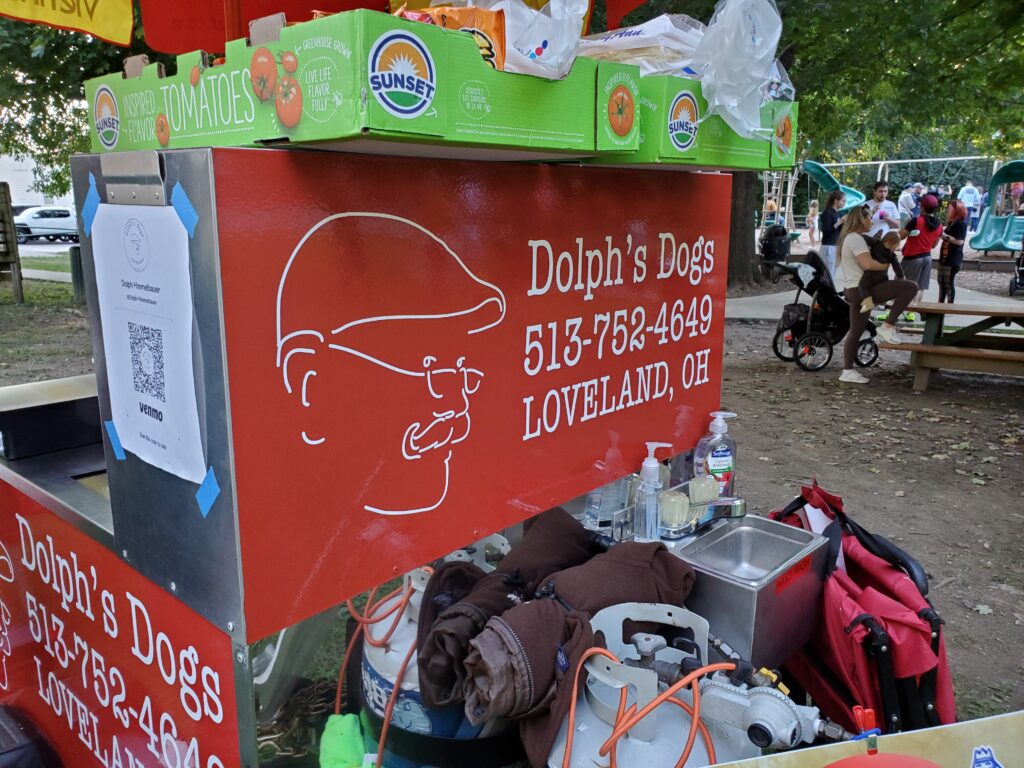
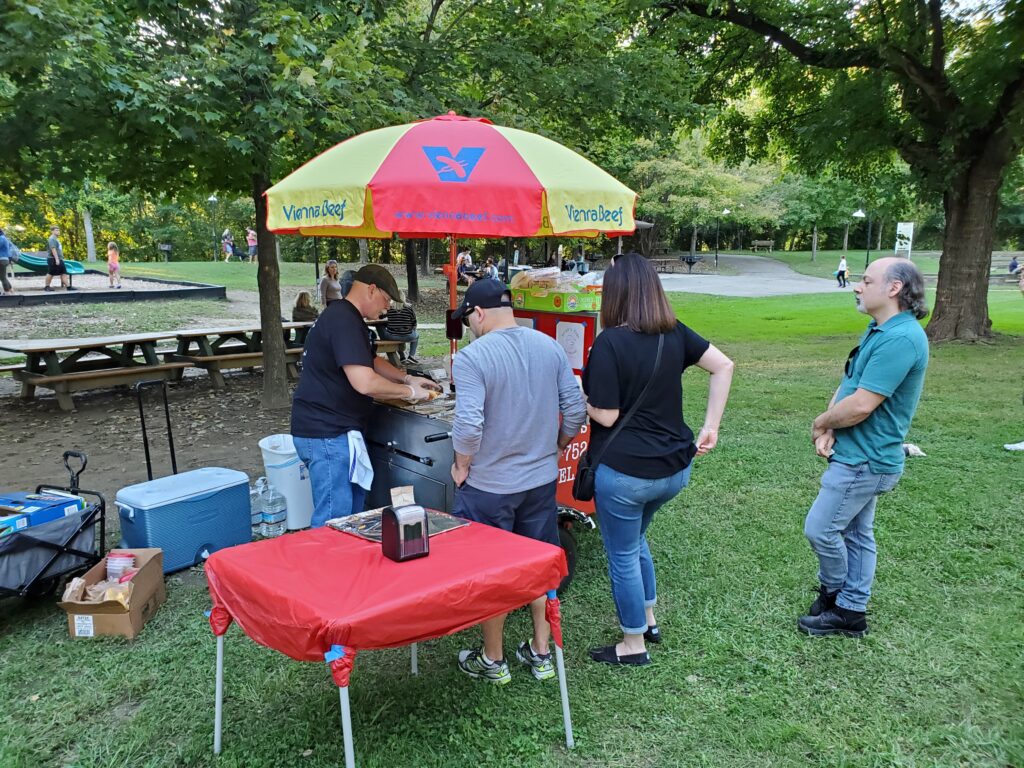
    The Nisbet Biergarten was home to the Warsteiner Beer Emporium, the Stein Slide, live entertainment, the Wiener Dog Race, local vendors like Kona Ice, Dolph’s Dog’s, Epic Picnics, Right Stuff Grill, and Cincy Shirts (sold custom Loveland Oktoberfest T-shirts), the Stein Hoisting finals, the Tapping of the Keg, and beautifully decorated picnic tables surrounded by lights for families and friends to sit down and take in the atmosphere! Those that attended were able to grab beer tickets or buy a Loveland Oktoberfest keepsake mug to fill with traditional Oktoberfest Warsteiner Beer.

    A Stein Slide Challenge

    The local Downtown Loveland restaurants also participated in the Oktoberfest magic by providing traditional German food specials and hosting the prelims of the Stein Hoisting a.k.a “The Masskrugen Challenge!” 

    The streets of Loveland were filled with people wearing their finest German Lederhosen’s or Dirndl’s, in which Bishop’s Quarter’s held a costume competition for those wanting to show off their attire!

    The Wiener Dog Race was the star of the festival as 15 Wiener Dogs competed for a Tara’s Pet Boutique Gift Card in front of a sea of people. Although the race itself was tight, my very own Dorkie (Dachshund Yorkie Mix) Dean took the first place finish! I decided to donate the gift card to the 2nd place Wiener Dog who was also a very impressive competitor! 

    A Look Around The Wiener Dog Race

    One of the most traditional Oktoberfest moments was the Keg Procession that then led into the Tapping of the Keg! I was proud to be a part of the Keg Procession that included many cherished Loveland community members including LMRCA President Cee Cee Collins, LMRCA Board President Doug Portman, and Mayor Kathy Bailey. Once we arrived at the Main Stage located in the Biergarten both Mayor Bailey and Portman tapped the keg which led to an explosion of cheers and beer chugging from the crowd. What a wonderful moment of celebration it was for the city of Loveland!

    Check out the videos below of The Wiener Dog Race, The Keg Procession, and the Tapping of the Keg!

    Loveland’s 1st Oktoberfest turned out better than anyone could have imagined! We would like to say thank you to all those who came out to celebrate Oktoberfest! Your support for the city of Loveland and its local businesses means the world to us! We would also like to say thank you to Loveland’s Oktoberfest sponsors, The Little Miami River Chamber Alliance, Besl and Baden, Coldwell Banker Realty, The Christy Jones Team, Historic Loveland on the Bike Trail, Synergy, Duke Energy, Ramsey’s Trailside, Paxton’s Grill, Dale Robertson Custom Jewelry, Suzi Cree from Keller Williams Realty, PRMG, and Warsteiner. 

    For those who didn’t attend Loveland’s 1st Oktoberfest, we hope to see you all next year!

    For more Loveland event updates stay tuned to the Loveland Salad With ME, Cassie Mattia!

  • Ratepayers spent $166 million and counting bailing out coal plants under law that passed via bribes

    Ratepayers spent $166 million and counting bailing out coal plants under law that passed via bribes

    BY: JAKE ZUCKERMAN and Ohio Capital Journal

    Despite several plea deals with federal prosecutors regarding bribery on a massive scale to pass legislation providing a windfall to nuclear and coal companies, Ohio utility customers continue to fund bailouts of failing coal-fired power plants in Ohio and Indiana.

    In the first half of 2021, Ohio utility customers paid $51 million to subsidize the plants, which are jointly owned by Ohio utility companies like American Electric Power, Duke Energy, AES Ohio and others. That’s on top of the $115 million ratepayers paid last year, according to data from state utility regulators.

    Sen. Mark Romanchuk, R-Ontario, has spearheaded efforts within the GOP on a piece-by-piece strategy to repeal the remnants of House Bill 6, which codified the coal bailout through 2030.

    HB 6 passed via the muscle of $61 million that utility giant FirstEnergy Corp. paid into an account secretly controlled by House Speaker Larry Householder, R-Glenford. That money funded the bill’s passage and enriched those in on the scheme, according to a statement of facts the company proffered to the U.S. Department of Justice. (Householder has pleaded not guilty to a count of racketeering and awaits trial.)

    Romanchuk said Tuesday he’s facing resistance from his counterparts on the Senate Energy and Public Utilities Committee as far as repealing the coal plant bailouts.

    “You need votes to get it out of committee; the votes probably aren’t there right now,” he said to reporters after a hearing.

     State Sen. Mark Romanchuk, R-Ontario. Official photo.

    “The legislation has some other things in it like refunds that are probably, in the minds of committee members, not what they want to vote for.”

    Earlier this year, representatives of the utilities that comprise the Ohio Valley Electric Corp., which owns the two plants, appeared before the committee to argue in favor of the subsidies.

    Senate Energy Chairman Rob McColley, R-Napoleon, said Tuesday he has no update on timing regarding a vote to repeal the coal bailouts. He said Romanchuk is working behind the scenes to prepare the bill for a vote, but he’s not involved in specific details.

    “You know how I feel about House Bill 6. I voted no because I thought it stunk from the very beginning,” he said. “But at the same time, we’ve got to work this through the committee process and that’s what we’re trying to do.”

    Tuesday’s hearing: solar credits

    The Senate Energy and Public Utilities Committee met Tuesday to consider Senate Bill 118, a Romanchuk bill that would repeal a lesser-discussed piece of HB 6: a $20 million annual credit, funded by utility customers, for certain solar projects.

    Franklin County Common Pleas Judge Chris Brown halted collections over nuclear and solar subsidies under HB 6 via an injunction in December, according to PUCO spokesman Matt Schilling. However, in April, Brown issued a ruling allowing the solar fund collections to begin on Nov. 1, 2021.

    SB 118 has support from opponents of HB 6: the conservative group Americans for Prosperity, the Ohio Manufacturing Association, and the Ohio Consumers Counsel, which represents ratepayers.

    Lobbyists representing OMA and AFP described the credit structure as a form of cronyism, alleging HB 6 was narrowly tailored to ensure the payments made it to a select few solar projects.

    A spokeswoman from the Ohio Air Quality Development Authority, which oversees the solar credit program, confirmed collections from consumers won’t begin until Nov. 1. Five projects in Highland, Brown, Hardin and Vinton counties have been approved to receive payments within the program.

    Householder update

    Householder was arrested and indicted in July 2020. Lawmakers ousted him as Speaker of the House shortly thereafter. He was expelled as a member of the Ohio General Assembly in June of this year.

    He has maintained his innocence throughout. He’s scheduled to appear for a status conference before a federal judge Oct. 5.

    “I have not, not have I ever, taken a bribe or solicited or been solicited for taking a bribe. Never,” Householder said.

    Two alleged Householder co-conspirators — his political strategist Jeff Longstreth and lobbyist Juan Cespedes — pleaded guilty in October 2020 to one count each of racketeering. Neil Clark, a high power GOP lobbyist, was charged as well. He died by suicide earlier this year.

    In July, FirstEnergy admitted in court documents that it paid $61 million into an account that Householder controlled to pass HB 6. The company agreed to pay a $230 million penalty and plead guilty to a charge of wire fraud.

    The documents state the company paid $22 million to Sam Randazzo, an energy lawyer appointed by Gov. Mike DeWine to lead the PUCO, in the decade before his appointment. This includes a $4.3 million payment just before he assumed the post.

    In return, Randazzo allegedly used his chairmanship to shield PUCO from regulatory scrutiny that could cost it hundreds of millions. Randazzo denied any wrongdoing and has not been charged with a crime.

  • New program to place former foster children on a path to self-sufficiency

    New program to place former foster children on a path to self-sufficiency

    Hamilton County, Ohio – GreenLight Fund Cincinnati and Hamilton County Job and Family Services are teaming up to bring First Place for Youth to Cincinnati. First Place for Youth is an innovative program aimed at helping foster children transition to adulthood using a youth-centered, trauma-informed approach. The program will help nearly 100 children a year in Hamilton County with housing, education and employment services.

    First Place for Youth originated in California and has a proven track record in helping youth develop necessary skills for adulthood. 91 percent of participating youth are employed when they graduate from the program. The education and workforce based program uses housing as a stabilizing force. Young people in the program live independently in apartments and receive wraparound support, education services, employment services and other help to become self-sufficient. This model, which is new to Cincinnati, will be operated by an existing, local non-profit organization who will be chosen later this month.

    First Place for Youth anticipates helping nearly 350 young people over the next four years, 90 percent of local transition-age youth.

    Moira Weir, director of Hamilton County Job and Family Services, which operates the local foster care system, said approximately 100 children a year “age-out” of the foster care system at age 18 or 21, meaning they are not reunified with their biological parents or adopted by new parents. First Place for Youth anticipates helping nearly 350 young people over the next four years, 90 percent of local transition-age youth.

    Weir’s organization worked with the University of Cincinnati’s Economic Center on a recent study that found children aging out of the local child welfare system eventually cost local residents $17.7 million in social expenses and lost productivity each year. Those costs are related to the youths’ involvement in the criminal justice, homeless and health care systems, as well as lost productivity because they are not employed at the same level as their peers in the general population.

    “You can imagine what life is like for an 18-year-old who is suddenly on their own with no family to turn to in times of trouble,” Weir said. “Research shows these young people are more likely to drop out of school, be unemployed, suffer physical or mental health problems, become teen parents, end up in the criminal justice system – they are more likely to fall victim to a host of social problems. We are excited to supplement our existing services with this incredibly innovative program GreenLight is bringing to our community. We are grateful for a community-based approach to this problem.”

    The GreenLight Fund works to improve the lives of low-income children and families by partnering with local community leaders to identify gaps in services in our community and then scours the country for innovative approaches to filling those gaps. Once a solution is found, GreenLight invests an initial $600,000 and draws on community connections to launch the solution in Cincinnati. GreenLight then measures results to ensure real change is happening.

    “We are thrilled to partner with Hamilton County Jobs and Family Services to support youth aging out of foster care in our community,” says Tara Noland, GreenLight Cincinnati’s executive director. “This proven, trauma-informed and data-driven model will drastically change the future trajectory of nearly all local youth who age out of care, helping them enter adulthood successfully and ultimately become thriving members of our community.”

    GreenLight Fund Cincinnati has raised $1.8 million in funding from organizations such as the Cincinnati Business Committee, the Cincinnati Regional Business Committee, Cincinnati Children’s Hospital, Bank of America, Duke Energy and others. Launched in 2015, it has served more than 1100 children and families through two portfolio organizations, the Center for Employment Opportunities and the Family Independence Initiative. First Place for Youth will be GreenLight’s third investment in Cincinnati.

    First Place for Youth has an extensive database of outcomes that make it a proven program ideal for replicating in our city. Hamilton County Job and Family Services will match GreenLight’s initial $600,000 investment with $6.5 million in ongoing support.


  • City establishes new fixed rate for members in electric aggregation program

    City establishes new fixed rate for members in electric aggregation program

    A Press Release from City Hall

    Loveland, Ohio (April 4, 2019) – City of Loveland officials are pleased to announce that they have established a low fixed rate for members in the City’s electric aggregation program. The City selected Dynegy as the program’s supplier following a competitive proposal process for a two-year program starting with the May 2019 meter read.  Dynegy recently won a competitive proposal process and is replacing Constellation as the program’s supplier. Program members will pay a low fixed rate of 5.015 cents/kWh for their May 2019 through May 2021 meter reads. Residents should look for a mailer from Dynegy on or about April 8th, announcing the new rates, terms and conditions.

    “We’re excited about the two-year offer of 5.015 cents/kWh which is lower than the expiring rate that served us well. The savings will be a benefit to our residents,” said Dave Kennedy, City Manager of Loveland. Kennedy concluded by saying, “Current program members and those customers who are receiving their electric supply from the local utility, Duke Energy, will receive an opt-out letter. The letter will explain the low offer we negotiated and the means to opt-out should a customer not want to participate in the program. Residents will have 21 days to return an opt-out card to Dynegy, if they decide not to participate.”

    Mayor Kathy Bailey said, “We are delighted by the low fixed rate for Loveland residents and businesses. This low rate will allow residents to predict their costs for the next two years.  Our rate of 5.015 cents/kWh is very attractive, and we expect participation rates in our program to be high.  Customers who are currently served by other suppliers may also join the City’s program by contacting Dynegy at 888-682-2170.”

    Customers served by another supplier should review the obligations in their existing contract before joining the City of Loveland program, as many suppliers charge a fee for early termination. Customers wishing to join the program must be in good standing with their bill payment and cannot be part of the utility’s percentage of income payment program (PIPP).

    The City is pleased to have made this program possible but asks that you do not call the city offices.  They are not equipped to handle a large volume of calls.  If residents have any questions, they should contact Dynegy at 888-682-2170 after the opt-out notice arrives.


  • Air quality alert continues into Monday

    Air quality alert continues into Monday

    The Ohio EPA is predicting that the ozone level will be 125 on Monday.

    Predicted Air Quality Index (AQI) for the Loveland Area
    125
    Unhealthy for Sensitive Groups on Saturday
     

    Health Message: Active children and adults, and people with lung disease, such as asthma, should reduce prolonged or heavy exertion outdoors.


    Steps you should take to protect you or your children’s health

    Reduce prolonged or heavy outdoor exertion. Take more breaks, do less intense activities. Watch for symptoms such as coughing or shortness of breath. Schedule outdoor activities in the morning when ozone is lower.

    People with asthma should follow their asthma action plans and keep quick relief medicine handy.


    Do Your Share!

    • Carpool, bike or walk instead of driving.
    • Use your most fuel efficient vehicle and drive gently.
    • Keep your motorcycle in the garage. They don’t have the pollution controls modern passenger vehicles do.
    • Refuel your vehicle after 8 PM; do not top off when refueling and tighten the gas cap.
    • Avoid idling your vehicle. (Avoid drive-thru windows.)
    • Combine trips and eliminate unnecessary vehicle trips
    • Do not use of gasoline-powered lawn equipment
    • Do not use of oil-based paints and stains
    • Never burn leaves or other yard trimmings.
    • Do not use fire pits.
    • Conserve electricity by turning off unnecessary lights.
    • Turn your air conditioner thermostat up and use room fans for cooling.
    • Save the power boating for another day.
    • Initiate an Air Pollution Alert Day policy where you work; whether that be a company you own, an employee, a local government agency you work for, or a school district.

    Sign up  for Enviroflash and Start Receiving Your Air Quality Forecast


    Children and Air Pollution

    Children face special risks from air pollution because their lungs are growing and because they are so active and breathe in a great deal of air.

    Just like the arms and legs, the largest portion of a child’s lungs will grow long after he or she is born. Eighty percent of their tiny air sacs develop after birth. Those sacs, called the alveoli, are where the life-sustaining transfer of oxygen to the blood takes place. The lungs and their alveoli aren’t fully grown until children become adults. In addition, the body’s defenses that help adults fight off infections are still developing in young bodies. Children have more respiratory infections than adults, which also seems to increase their susceptibility to air pollution.

    Furthermore, children don’t behave like adults, and their behavior also affects their vulnerability. They are outside for longer periods and are usually more active when outdoors. Consequently, they inhale more polluted outdoor air than adults typically do.

    Read on at The American Lung Association…


    Take advantage of special savings on energy efficient lighting and other products offered by Duke Energy

    LEDs use up to 90% less energy than traditional bulbs

    LEDs last at least 15 times longer than traditional bulbs


  • Air quality remains dirty for Friday

    Air quality remains dirty for Friday

    Reduce prolonged or heavy outdoor exertion. Take more breaks, do less intense activities. Watch for symptoms such as coughing or shortness of breath. Schedule outdoor activities in the morning when ozone is lower.

    People with asthma should follow their asthma action plans and keep quick relief medicine handy.


    Air Quality Forecast for Friday, May 25

    (Click the Real-Time Air Quality link and watch in real-time as the pollution rolls across our region.)

    Air Quality Index (AQI)
    115
    Unhealthy for Sensitive Groups
    Health Message: Active children and adults, and people with lung disease, such as asthma, should reduce prolonged or heavy exertion outdoors.
    ACTION DAY


    Do Your Share!

    • Carpool, bike or walk instead of driving.
    • Use your most fuel efficient vehicle and drive gently.
    • Keep your motorcycle in the garage. They don’t have the pollution controls modern passenger vehicles do.
    • Refuel your vehicle after 8 PM; do not top off when refueling and tighten the gas cap.
    • Avoid idling your vehicle. (Avoid drive-thru windows.)
    • Combine trips and eliminate unnecessary vehicle trips
    • Do not use of gasoline-powered lawn equipment
    • Do not use of oil-based paints and stains
    • Never burn leaves or other yard trimmings.
    • Do not use fire pits.
    • Conserve electricity by turning off unnecessary lights.
    • Turn your air conditioner thermostat up and use room fans for cooling.
    • Save the power boating for another day.
    • Initiate an Air Pollution Alert Day policy where you work; whether that be a company you own, an employee, a local government agency you work for, or a school district.

    Sign up  for Enviroflash and Start Receiving Your Air Quality Forecast


    Children and Air Pollution

    Children face special risks from air pollution because their lungs are growing and because they are so active and breathe in a great deal of air.

    Just like the arms and legs, the largest portion of a child’s lungs will grow long after he or she is born. Eighty percent of their tiny air sacs develop after birth. Those sacs, called the alveoli, are where the life-sustaining transfer of oxygen to the blood takes place. The lungs and their alveoli aren’t fully grown until children become adults. In addition, the body’s defenses that help adults fight off infections are still developing in young bodies. Children have more respiratory infections than adults, which also seems to increase their susceptibility to air pollution.

    Furthermore, children don’t behave like adults, and their behavior also affects their vulnerability. They are outside for longer periods and are usually more active when outdoors. Consequently, they inhale more polluted outdoor air than adults typically do.

    Read on at The American Lung Association…


    Take advantage of special savings on energy efficient lighting and other products offered by Duke Energy

    LEDs use up to 90% less energy than traditional bulbs

    LEDs last at least 15 times longer than traditional bulbs


    Pottery Affaire in Loveland on Saturday, June 9th

    Whistle Stop Clay Works (WSCW) is hosting its first annual Pottery Affaire on Saturday, June 9th from 11am to 4pm. The show features unique,…