Do you know that David Kenyon of Company 21, an all-African-American firehouse in Chicago “had an epiphany” and they thought the idea crazy—until they saw that Company 21 was often the first to arrive on scene?
With no changes planned for the state education funding formula included in Gov. Mike DeWine’s proposed budget, education advocates and some state legislators are left wanting more.
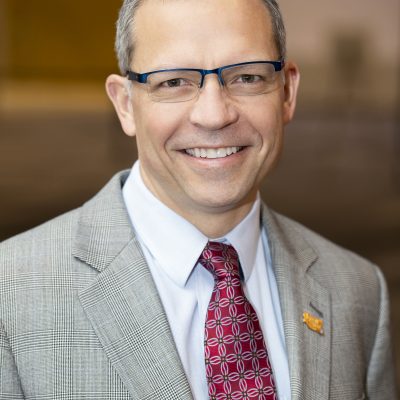
“The devil is always in the details,” said Scott DiMauro, head of the Ohio Education Association, in a statement after the release of the budget. “Education spending must be a top priority in Ohio to ensure our students, educators and communities receive the resources they need to succeed.”
Scott DiMauro
DeWine’s budget proposal brings funding back to pre-pandemic levels and includes a jump in non-academic wraparound services, but saves the bulk of changes to education funding for the legislature to figure out.
The OEA said they were encouraged by an expansion to broadband access and mental health services as part of the support for schools.
“However, OEA is disheartened to see the same amount of general revenue fund money is going into the state’s foundation formula as in (fiscal year) 18,” the association wrote in their statement.
Another of Ohio’s biggest teachers unions, the Ohio Federation of Teachers, agreed that DeWine “chose to punt” on overhauling the school funding system without acknowledging the Cupp-Patterson plan, some of which went into the capital budget last year, but for the most part stays in limbo as the General Assembly begins anew.
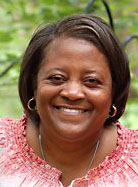
Melissa Cropper
“Additionally, the governor’s budget maintains the disastrous local funding deductions for charter and private schools that have been draining public school budgets,” said OFT President Melissa Cropper in a statement.
The non-profit Ohio Children’s Alliance praised the “key investments for Ohio’s children and families” that the governor carried over from the previous biennial budget, and said they were pleased to see more money go toward student wellness and youth services.
“With the unprecedented challenges COVID-19 has caused to communities and providers, targeting investments in telehealth and the child and family services workforce are critical parts of a comprehensive solution,” said Mark Mecum, CEO of the OCA.
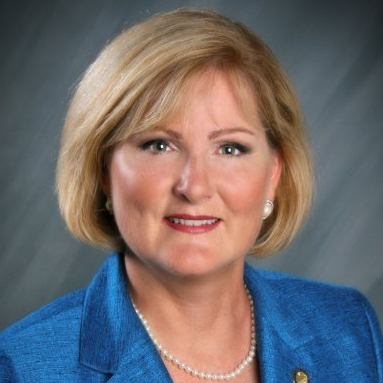
State Sen. Teresa Fedor
State Sen. Teresa Fedor, D-Toledo, called the governor’s proposal “shortsighted” when it comes to education and support for children.
“We should be fixing our unconstitutional funding formula — not continuing to siphon more public school dollars to private education,” Fedor said after the budget proposal was released.
With the school funding now in the legislature’s hands, House Minority Leader Emila Strong Sykes, D-Akron, said it would be a primary issue as the House Democrats begin their work, including “fully and fairly funding our public schools.”
“We look forward to digging into the details of the governor’s proposal to see how it makes sense long-term without one time money and that it delivers on the promise of opportunity for all Ohioans,” Sykes wrote.
David Miller is the Publisher of Loveland Magazine
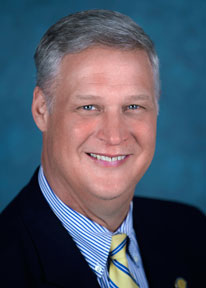
Loveland, Ohio – The Loveland City School District recently hired Bradley Neavin to serve as Superintendent. Neavin’s contract runs from February 10 until the Board hires a permanent superintendent, or until July 3.
Neavin’s first official day begins on Wednesday, however, he sat for an interview this morning from the Board office via Zoom so we could introduce him to the community and ask a few questions about his role in the District in the coming months.
The Steubenville native chatted with me about the Steelers/Browns/Bengals, and the Ohio University Marching 110. We also talked about the funding in Governor DeWine’s proposed K-12 education budget, the Ohio Legislature’s attempt to fix school funding, and DeWine’s goal of re-opening Ohio’s schools on March 1. And, more…
Do you know Katherine Johnson’s hand-written calculations were critical to America’s success during our first human spaceflight missions? Take a look and welcome to Black history!
I share with you this Facebook post from the Northrop Grumman Corporation
In honor of Black History Month, Northrop Grumman announced this week they were proud to name their next Cygnus spacecraft in honor of the groundbreaking mathematician who “time and time again broke through barriers of gender and race.”
Do you know the origin of Lady Liberty? Take a look and welcome to Black history!
The Washington Post wrote, “Of the statue’s long-forgotten history: Lady Liberty was originally designed to celebrate the end of slavery, not the arrival of immigrants. Ellis Island, the inspection station through which millions of immigrants passed, didn’t open until six years after the statue was unveiled in 1886.”
I share with you this Facebook post from The Washington Post from May 23, 2019:
On Feb. 1, as Black History Month began in Ohio’s classrooms and virtual classrooms, Gov. Mike DeWine unveiled his proposed budget for the next two years, which continues the education funding policies that systematically underfund public schools that educate Black students and even shift some of that funding away toward unaccountable, for-profit private schools.
Black History Month is an important time for our nation’s educators to focus their curriculum around the contributions that African Americans have made in government, industry, art, science, literature, and every field of human endeavor. However, we do a disservice to our students if we don’t also teach about the harder, more painful history of slavery, segregation, disenfranchisement, and racist violence, and if we do not weave it into our everyday curriculum as deeply as it is woven into the fabric of our country.
Even then, we are not telling the full story if we teach about these topics as relics of the past, as dark chapters of our country’s past that have ended. Racist structures in our society didn’t cease to exist when the Thirteenth, Fourteenth and Fifteenth Amendments were ratified following the Civil War, or after Brown vs. the Board of Education desegregated schools, or after the 1964 Civil Rights Act, or even after Barack Obama’s historic election.
Each of those events has been an important step along the way, but as we are reminded all too often, the vestiges of white supremacy live on in our current institutions. We see it in the over-policing and incarceration of Black, brown, and immigrant communities, we see it in our city neighborhoods that were shaped by redlining, and we see it in Ohio’s school funding system.
When we teach Black history, educators can make the connections about how the racial injustices of the past have turned into the systemic racial disparities of the present, and how we can demolish the underpinnings of injustice. There is no better place to start than with our broken school funding policies which underfund and segregate schools with large populations of Black students.
In Ohio, we underfund schools in Black communities with a school funding formula that was found unconstitutional by the Ohio Supreme Court more than 20 years ago because it relied so heavily on local property taxes that it denied an equitable and adequate education to students in low-income areas.
We segregate schools in Black communities with voucher and charter policies that divert students and drain funding from local public schools. Often cloaked in the language of racial justice, vouchers and charter schools have the opposite effect when put into practice. The NAACP has often opposed these policies because they “divert much needed funding for public education to private or charter schools, thereby further dismantling the viability of the public education system and limiting the number of children who would be afforded the opportunity of an adequate and effective education.”
This vicious cycle of underfunding schools in communities of color, and then punishing them for not being able to meet their students’ needs by underfunding them further, must end. We must stop pitting parents and communities against one another, and instead renew our commitment for high quality public schools for all Ohio students.
Last year, the Ohio House passed the Fair School Funding Plan with an overwhelming bipartisan majority, yet the Senate refused to take the issue up. The Plan would have put Ohio on a six-year path toward equitable funding of public schools in Ohio, and would have immediately ended punitive and harmful deductions for vouchers and charter schools from local public school funds.
This would ensure that public school districts receive money only for the students who are enrolled to attend but without the added penalty of deducting money due to students opting for private or charter schools. These changes would strengthen schools in Ohio’s cities and in our rural areas, giving students from all backgrounds increased opportunities. Despite the Fair School Funding Plan receiving an 84-8 vote in the House, the Ohio Senate allowed the bill to die without even receiving a vote.
DeWine had the opportunity to take the hard work and bipartisan agreement for this new school funding formula and insert it as a framework into his budget proposal. Instead, his proposal continues the status quo which is actively undermining our ability to provide an equitable education.
As educators, we can not teach Black History without also being activists in our own realm, fighting for an education system that gives every child, no matter their race or where they live, equal access to a high quality, free public education.
Each year, thousands of southwestern Ohio students enroll in career-technical education (CTE) classes that lead to professional credentials in a career field by the time they finish high school. These students become nurses, aviation technicians, website designers, veterinary assistants, personal trainers, dental assistants, fire fighters, and more. Some take CTE classes in their own high school; others go to a regional career center serving their school district. About half continue on to college, often with credits earned in high school.
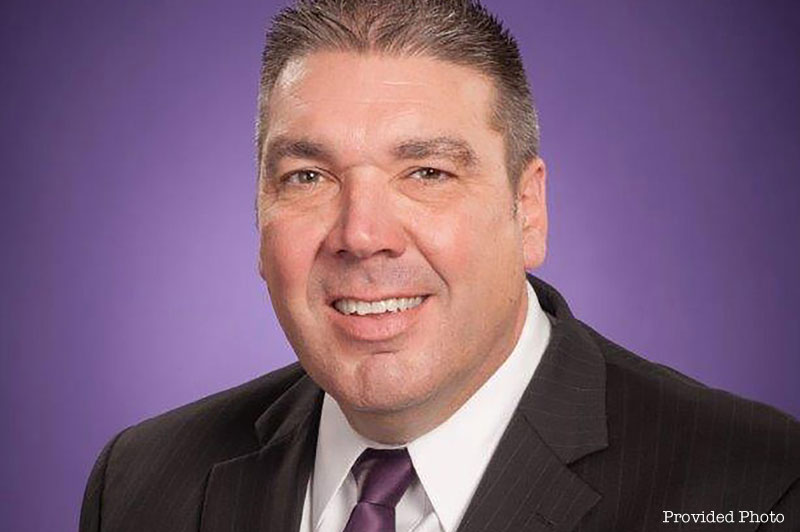
Great Oaks Career Campuses President/CEO Harry Snyder
The research shows that CTE works. American high school students in career-technical education (CTE) programs are more likely to graduate, according to the U.S. Department of Education. Other studies show that those students are more likely to be satisfied with their education and earn higher wages when they graduate. Adults who earn shorter-term CTE credentials can out-earn bachelor’s degree holders.
“CTE students have an impact while they’re still in school, and they make our community successful throughout their lives,” said Great Oaks Career Campuses President/CEO Harry Snyder. He said that local experts, business owners, and other community leaders are graduates of CTE programs, including those offered at the four Great Oaks campuses.
Area businesses see value in CTE. Over 1400 local leaders serve on Business and Industry Advisory Councils at Great Oaks, helping educators choose curriculum, purchase equipment, and share their knowledge with students.
CTE instructors are required to be experienced in their fields. Computer programming courses are taught by accomplished computer programmers; practical nursing programs are led by veteran nurses; culinary students learn from local chefs.
CTE students learn using the equipment and tools they’ll use in their career field. Aviation students at the Laurel Oaks Career Campus work on airplanes in a hangar in Wilmington; engineering students program robotic manufacturing equipment, and cosmetology students learn in fully-equipped salons at the school.
More than 200 Great Oaks students are currently on placement in local businesses, practicing skills from computer repair to automotive refinishing while still in school.
More than 90 satellite programs allow high school students to have unique experiences in Great Oaks classes without leaving their high school. For instance, engineering students in Project Lead the Way, a Great Oaks satellite program at Milford High school, have designed and built prosthetic arms, devices to hold hockey sticks and violin bows, specialized masks, and other equipment to help children accomplish tasks and do more in their lives.
Cincinnati Zoo Director of Construction Management Gary Gilbert is a graduate of Diamond Oaks Career Campus. He’s one of 32 Distinguished Alumni of Great Oaks, a list that includes inventors, a fire chief, police chiefs, business owners, an Olympic gold medal winner, an Emmy nominee, and numerous educators.
February is CTE Month each year, and local schools use that time to share facts about career-technical education. For instance:
“Career-technical education is so much more than the vocational classes of the past,” said Snyder. “CTE graduates have professional credentials and options for great careers, pathways to college, and success in whatever they choose to do.”
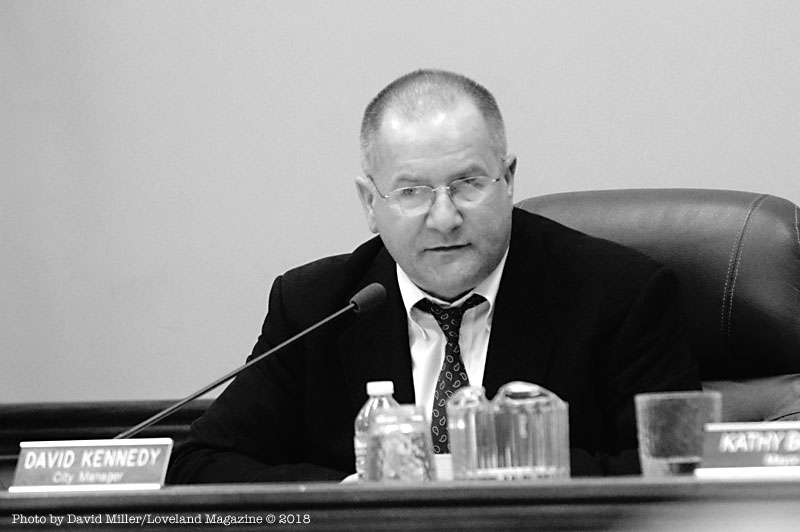
Loveland, Ohio – City Manager Dave Kennedy told Loveland Magazine that the demolition of the public tennis courts at the city-owned Steven Boike Park at #1 Tiger Trail will not impact the existing parking lot used by high school students.
Loveland City Manager Dave Kennedy (Loveland Magazine file photo)
“The intent is that the area where the Boike Courts are will be used for a half-soccer field. They can then be used for soccer practices for the younger age groups,” explained Kennedy.
There were 5 five unlighted tennis courts at the park.
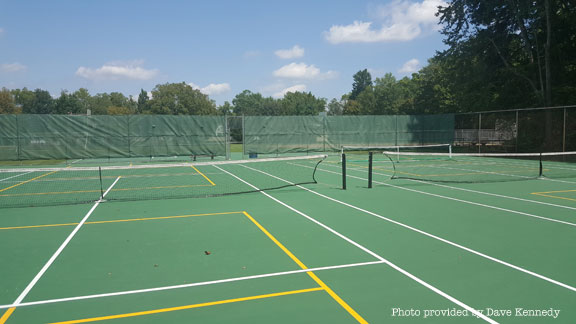
Kennedy added, “We also have courts at Lever Park which just got approval from Council for a repair, resurfacing, and re-striping like McCoy Park did in 2019.’ The work on the Lever Park Courts is scheduled to begin this spring.
McCoy Park after the recent improvements
There are two public tennis courts at Leever Park on Heidelberg Drive and two at McCoy Park on Oak Street.
Loveland, Ohio – In a unanimous vote last evening the Loveland School Board hired (pending contract approval) Bradley Neavin as an Interim Superintendent until a permanent replacement for Dr. Amy Crouse can be found.
In an answer to the question of what Neavin will be paid, Board President Kathy Lorenz told Loveland Magazine this afternoon that, Neavin’s “contract details will most likely be approved next week at a special meeting.”
Crouse’s last day is February 9. She resigned in December. Neavin will begin working on February 10.
Speaking on the selection of a permanent superintendent, Lorenz said, “I believe we will begin with a search as early as February 2nd in a scheduled work session.”
Neavin most recently served as Superintendent of Vandalia-Butler City Schools from 2013-2017. From 2007-2013 he served as Superintendent of Eaton Community Schools. Neavin has spent 32 years in education as a superintendent, principal, assistant principal, and band director before retiring in 2017.
Neavin’s LinkedIn profile says he is retired and was an account executive with Energy Optmizers, USA from September of 2017 until October 2018 and lives in Eaton, Ohio.
Bradley Neavin’s Education:
Ohio University ( Bachelor of Music Education) 1980 – 1985
Miami University in Oxford (Superintendent Licensure and Education Leadership) 2003 – 2007
Wright State University (Master of Education, Educational Leadership and Administration) 1997 – 1999





![[VIDEO] Interview with Loveland’s new Superintendent of Schools](https://lovelandmagazine.com/wp-content/uploads/2021/02/neavin-3.jpg)