In March, The Ohio Association of Foodbanks notified more than 150 farms that supplied Ohio’s food pantries with fresh produce, meat, and dairy that the USDA’s Local Food Purchase Assistance program was ending. The pandemic-era assistance initiative gave local governments federal aid to connect food banks with farms in a 400-mile radius.
The program connected food pantries with local producers until it was ended earlier this year.
Cincinnati Edition airs every weekday during the noon hour, bringing you all the new and noteworthy reporting from NPR’s Cincinnati affiliate, with a focus on the entire Tri-State metro area in Ohio, Indiana and Northern Kentucky. Covering topics ranging from local and regional government to business and economics, science and technology, the arts, education and health, Cincinnati Edition is a grab bag of the interesting and important things going on around town, with context and analysis from experts, insiders and the investigative reporters from NPR Cincinnati station WVXU’s local beats as well as NPR News.
Share your thoughts with producers by emailing talk@wvxu.org or calling 513-419-7100
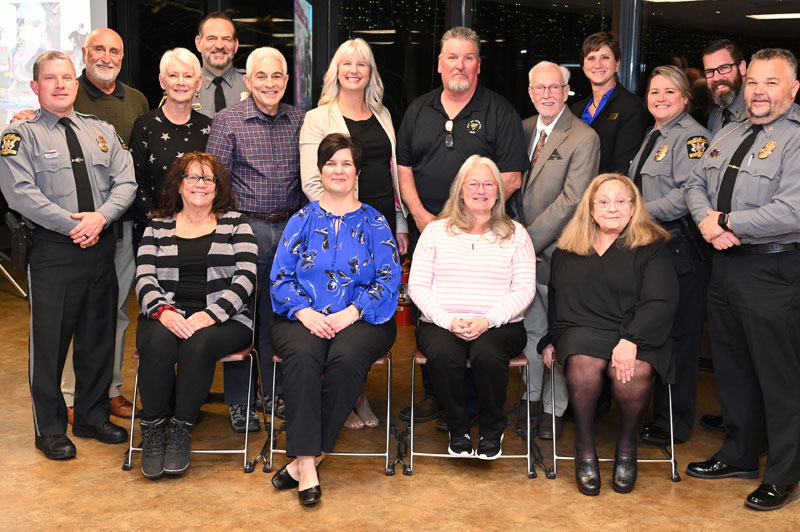
Loveland, Ohio -The Loveland Tiger Pathways program held an “Internship Appreciation Luncheon” at the Landing event Center on Tuesday, May 20 to thank dozens of local businesses and organizations.
The program provides real-world learning experiences for Loveland High School interns, “So they can make better decisions about college and careers.”
Loveland Magazine was recognized and we congratulate everyone that participated in the program.
Editor in Chief David Miller was in attendance to accept a plaque on behalf of Loveland Magazine.
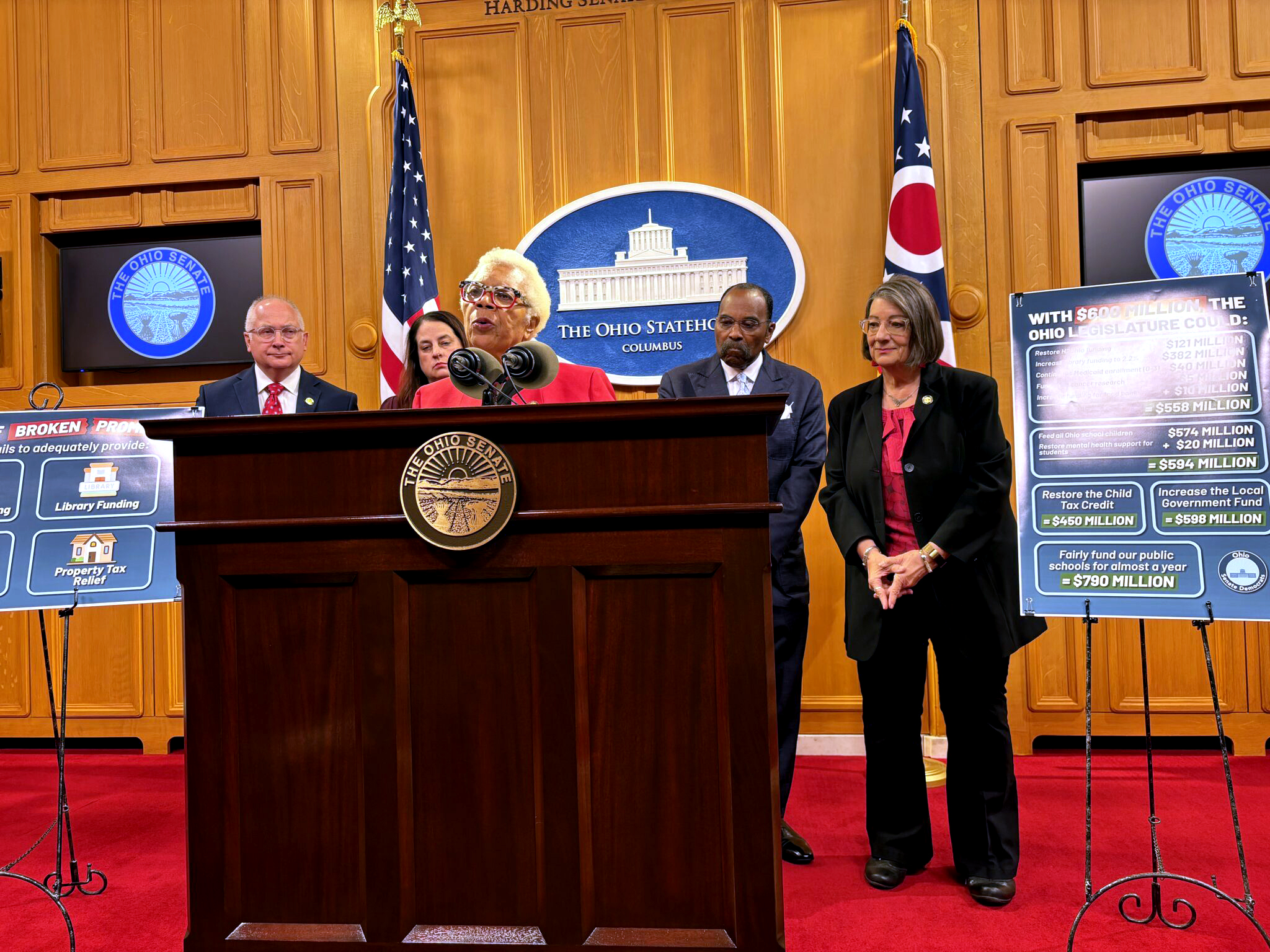
Ohio state Sen. Paula Hicks-Hudson, D-Toledo, and other members of the Senate Democratic Caucus discuss the amendments they submitted to the state’s two-year operating budget. (Photo by Megan Henry, Ohio Capital Journal).
Ohio Senate Democrats have submitted 423 amendments to the two-year state operating budget — including one removing the $600 million bond package for a new Cleveland Browns stadium in Brook Park, and one to fully fund public schools.
The Ohio House passed their version of the budget last month and the Senate is currently working on the budget, which Ohio Gov. Mike DeWine must sign into law by June 30.
GET THE MORNING HEADLINES.
“This budget steals from our children by defunding public schools, transfers money for health care and libraries to rich benefactors, all the while failing to address the needs of hard working everyday Ohioans,” Senate Minority Leader Nickie J. Antonio, D-Lakewood, said Tuesday during a press conference.
“This Republican budget prioritizes partisan agendas and handouts to the wealthy and well-connected, also through vouchers, tax breaks, and a stadium giveaway to the tune of more than half a billion dollars, all paid for by the working class,” she said.
The Senate Democrats had a few different ideas for how $600 million can be spent — a direct shot at how the Ohio House Republicans added a bond package for a new Cleveland Browns stadium for that same amount in their version of the budget.
Republicans hold a 24-9 supermajority in the Ohio Senate, giving Democrats very little power to enact any of their priorities. Nevertheless, Democratic lawmakers laid out their vision of what the state could be doing differently.
The Ohio legislature could restore H2Ohio funding for $121 million, increase library funding to 2.2% for $382 million, offer continuous Medicaid expansion enrollment for $40 million, fund child cancer research for $5 million, and increase funding for food banks for $10 million (which totals to $558 million), Antonio said.
Or lawmakers could feed all Ohio school children for $574 million and restore mental health support for students for $20 million, Antonio said.
The legislature could restore the Child Tax Credit for $450 million, increase the Local Government Fund by $598 million, and fairly fund public schools for almost a year for $790 million, Antonio said.
“If I were queen of the world, all these things would be part of our general fund budget,” she said.
If $600 million is bonded out for a sports franchise, “Ohioans are still on the hook for that money in the long run,” Antonio said.
“I thought what the governor proposed originally was actually a better way to go because the funds were coming from outside entities,” Antonio said. “It has the whole state in mind, not just one group in one part of the state.”
She said she would “be much more supportive” of an amendment along those lines.
School funding
To fully fund public schools based on statistics from the Fair School Funding Plan from 2021, schools would need an additional $666 million in funding (more now with inflation), but the proposed budget only gives them about $226 million.
“It breaks the promise we’ve made for our children in public schools by abandoning fully funding the Fair School Funding Plan,” Antonio said.
The Cupp-Paterson Fair School Funding Plan from 2021 was supposed to take six years and was meant to change how public dollars are provided to K-12 schools by giving additional support to local districts so they can rely less on property taxes.
The first two years were partially fully funded and the second two years were fully funded. There are two more years left.
“Our caucus has submitted amendments that would fully fund the fair school funding plan,” Antonio said.
The Senate Democratic amendments would also increase the state minimum teacher salary from $35,000 to $50,000, she said.
Additional amendments
Ohio Senate Democrats added an amendment to restore DeWine’s proposed $1,000 child care tax credit and another that would remove the language the Ohio House added to the budget that would make changes to the Ohio Housing Trust Fund.
The Housing Trust is funded by a portion of the fees collected by county recorders, with half of the fees staying with the county and the other half going back to the fund — which requires at least 50% of the funds be spent in non-urban areas.
The House budget proposal would remove the requirement for county recorders to send the state Department of Development money to reallocate the funds — something housing advocates say make it less effective across the state.
“Rural areas would also be most impacted by the potential blocks of housing services as well, but all Ohio communities will see service disruption and increases in homelessness and decrease in access to affordable housing,” said Ohio state Sen. Paula Hicks-Hudson, D-Toledo.
Ohioans deserve better from the state budget, Antonio said.
“I think a whole lot of everyday Ohioans are going to be very surprised and have a whole lot of buyer’s remorse when they find out what it is that these people are doing on their behalf,” Antonio said when asked about the Republican supermajority in the Statehouse.
Megan Henry is a reporter for the Ohio Capital Journal and has spent the past five years reporting in Ohio on various topics including education, healthcare, business and crime. She previously worked at The Columbus Dispatch, part of the USA Today Network.
Ohio Capital Journal is part of States Newsroom, the nation’s largest state-focused nonprofit news organization.
In a short meeting, the Ohio Ballot Board signed off on a proposed constitutional amendment abolishing property taxes in the state. The only question before the board was whether the proposal contains one or multiple amendments.
Supporters contend lawmakers have been unwilling or unable to make significant enough changes as property taxes climb. But critics warn eliminating that revenue stream could cripple important services like schools and first responders.
Campaign reaction
GET THE MORNING HEADLINES.
The day after the ballot board meeting, Beth Blackmarr described her mood as ‘busy.’
“Busy, busy, busy,” she said, “I mean, here we go — we’ve got to hit the ground running.”
Blackmarr is part of the organization Citizens for Property Tax Reform which is leading the repeal campaign. With the ballot board’s decision, the group is now able to start gathering signatures to appear on the ballot.
To go before voters, they’ll need 10% of the electoral turnout from the last governor’s race (just shy of 415,000). Additionally, in 44 of Ohio’s counties, they’ll need signatures from at least 5% of the governor’s race turnout. In practice, campaigns turn in hundreds of thousands more signatures than necessary to make up for any rejections.
Blackmarr said they want to start collecting “as soon as humanly possible,” and work could begin as early as next week. Asked whether they’d work with paid circulators, she just laughed.
“Many of us are youthful at heart, but senior citizens that are just really working out of our pockets,” she said. “There’s no big money backing this at all. It’s all volunteer.”
The merits
Blackmarr argued Ohio’s current property tax system is broken. She points to other states like New Jersey and Texas that have far more generous initiatives to keep seniors, vets and the disabled in their homes.
“You can’t have senior citizens who have paid for their homes — fully paid for — having to move out because they can’t afford property tax,” she insisted.
Blackmarr contends those kinds of protections are low-hanging fruit. Lawmakers have had continual warnings and “ample opportunity” to act. Instead, she argued, they’ve dithered with changes at the margins.
“I suspect it’s because they built a wobbly tower of property tax law over these decades,” she said, “and they’re afraid to pull one of the blocks out, because they’re afraid the whole thing’s gonna come tumbling down.”
That ‘tumbling down’ is exactly the concern many critics voice about the plan. The most recent annual report from the Ohio Department of Taxation puts 2023 property tax collections at about $18.5 billion. That’s an enormous amount of funding to just disappear. It’s roughly double the amount reported for state income taxes, and a billion more than Ohio’s sales and use tax.
Spread evenly, it would cost every single Ohioan more than $1,500 to make up that gap in funding.
Blackmarr argued repeal will just force lawmakers “to come up with an alternative.” But that’s a big ask — particularly for Republicans allergic to tax increases.
Still she’s right about dramatic increases in property taxes. The same Department of Taxation report shows assessed values climbing almost 40% in five years while tax collections have risen more than 21%.
Legislature’s role
In a statement following the ballot board decision, House minority leader Allison Russo said the proposal “clearly demonstrates frustration by Ohioans on this issue” and blamed lawmakers for failing to act.
“However, this particular initiative concerns me because while it eliminates the property tax, it doesn’t explain how we’ll replace the funds that support police, fire departments, public education, and other critical services,” she said.
Russo argued Democrats have signed on to bipartisan legislation providing direct relief but Republican leaders haven’t prioritized those bills.
Blackmarr acknowledged that as their campaign gains steam, pressure will grow on lawmakers to pass legislation or propose their own ballot measure to undercut their efforts.
“At the end of the day it goes to the voters,” she said. “They have to make the decision for themselves.”
And if lawmakers’ intervention means voters have to choose between competing visions, that’s just fine with Blackmarr.
“Wouldn’t that be nice, you know?” she said.
Follow Ohio Capital Journal Reporter Nick Evans on X or on Bluesky.
Nick Evans
Nick Evans has spent the past seven years reporting for NPR member stations in Florida and Ohio. He got his start in Tallahassee, covering issues like redistricting, same sex marriage and medical marijuana. Since arriving in Columbus in 2018, he has covered everything from city council to football. His work on Ohio politics and local policing have been featured numerous times on NPR.
Ohio Capital Journal is part of States Newsroom, the nation’s largest state-focused nonprofit news organization.
The committee was designed to reduce barriers to care for people of color, LGBTQ+ people and rural Americans. A new executive order deemed it “unnecessary.”
President Donald Trump has directed the Centers for Medicare and Medicaid Services (CMS) to disband a committee to identify and reduce systemic barriers that people of color, LGBTQ+ people and rural Americans encounter when trying to access government health care programs.
The directive came as part of an executive order on “commencing the reduction of the federal bureaucracy.”
Trump directed the heads of relevant agencies to disband within two weeks entities that include the Health Equity Advisory Committee at CMS, the Advisory Committee on Voluntary Foreign Aid at the U.S. Agency for International Development, the Community Bank Advisory Council at the Federal Deposit Insurance Corporation, and Secretary’s Advisory Committee on Long COVID at the Department of Health and Human Services.
“It is the policy of my Administration to dramatically reduce the size of the Federal Government,” Trump wrote in the order. “This order commences a reduction in the elements of the Federal bureaucracy that the President has determined are unnecessary.”
The establishment of the CMS Health Equity Advisory Committee was prompted by an executive order “On Advancing Racial Equity and Support for Underserved Communities Through the Federal Government” that Democratic President Joe Biden signed on his first day in office.
Xavier Becerra, the head of the Department of Health and Human Services under Biden, published the committee’s charter in July 2024, with the stated goal of making “recommendations on the identification and resolution of systemic barriers in the CMS programs that hinder access and quality for beneficiaries and consumers.”
The committee’s purview included Medicare, the government health insurance program for the elderly and disabled; Medicaid, the government health insurance program for lower-income Americans; the Children’s Health Insurance Program (CHIP) for children from low-income families; and the marketplace of health insurance programs established by the Affordable Care Act. Its mandate included addressing systemic barriers to access that included structural racism, which Trump labeled a “divisive concept” during his first administration.
A December 2024 notice in the Federal Register soliciting nominations for committee members said that the panel would, “focus on health disparities in underserved communities … such as but not limited to Black, Latino, and Indigenous and Native American persons, Asian Americans and Pacific Islanders and other persons of color; members of religious minorities; lesbian, gay, bisexual, transgender, and queer persons; persons with disabilities; persons who live in rural areas; and persons otherwise adversely affected by persistent poverty or inequality.”
Health disparities in underserved communities are well documented, as are disparities in accessing medical care.
Research shows that Type 2 diabetes, a condition that often worsens with age and requires frequent doctor’s visits, impacts Black and Latinx Americans at higher rates than White Americans. Rates are also higher in rural areas, with Alabama, Kentucky, Georgia and West Virginia reporting some of the highest. An April 2024 CMS report showed that Indigenous and Black Americans in particular faced barriers to accessing care for diabetes and related conditions.
In the first month of his second presidency, Trump has focused on reducing the size of the federal government and dismantling diversity, equity and inclusion (DEI) and accessibility (DEIA) efforts within federal agencies. Civil rights groups on Wednesday sued the Trump administration over a series of DEI-related executive orders, arguing they were unconstitutional because Trump both exceeded his presidential authority and because the orders discriminated against Black and transgender Americans.
Researchers have warned that the DEI orders are so broad that they could hamper efforts to study race- and gender-identity-related disparities across a variety of subjects, including health care.
A list of diversity-related words that are allegedly banned from being used by federal agencies has been circulating in Washington. Reuters reported Thursday that some scientists at the Food and Drug Administration (FDA) had been told to stop using the words “woman,” “disabled” and “elderly” in external communications. The White House told the newswire that the agency had misinterpreted Trump’s executive orders.
Trump said in an interview with Fox News this week that “Medicare, Medicaid, none of that stuff is going to be touched.” Hours later, he endorsed a GOP budget proposal in the House of Representatives that would gut Medicaid funding. A White House spokesperson told Politico that “the Trump administration is committed to protecting Medicare and Medicaid while slashing the waste, fraud, and abuse within those programs.”
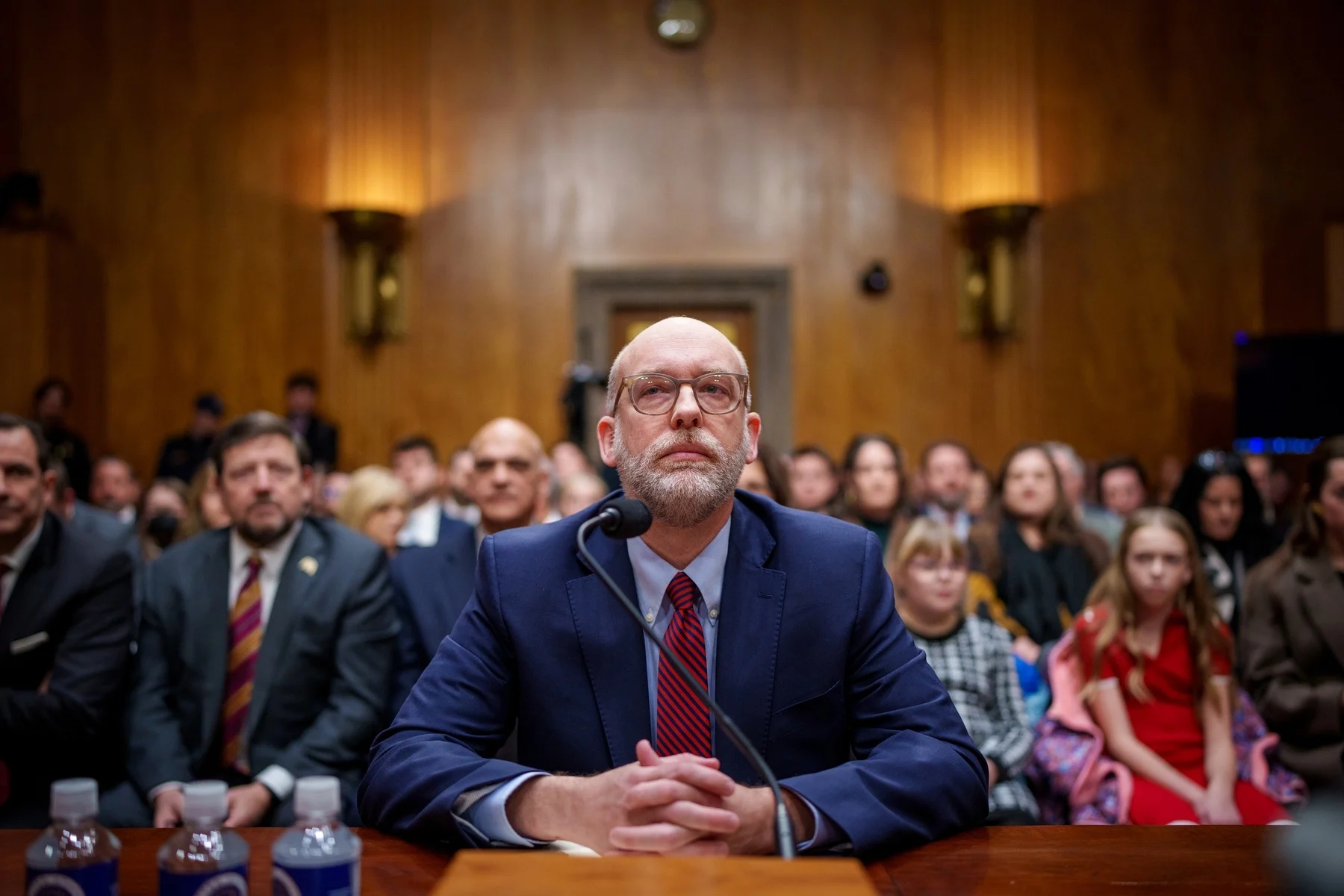
Russell Vought sees the Office of Management and Budget as a “nerve center” that can be used to curtail DEI programs and purge the federal workforce of Trump’s perceived enemies.
Read Amanda Becker’s Loveland connection in her Bio below.
The U.S. Senate on Thursday approved Project 2025 architect Russell Vought to lead the Office of Management and Budget (OMB) on a party-line vote after Democrats held the floor overnight in an attempt to delay the confirmation since they did not have the numbers to block it.
Vought was confirmed by a vote of 53-47.
For 30 hours, starting on Wednesday afternoon and into Thursday evening, Democrats took turns on the Senate floor to protest Republican President Donald Trump’s nomination of Vought, who also led OMB at the tail end of Trump’s first administration.
During his first stint at OMB, an under-the-radar entity that wields immense influence over the federal government by crafting the president’s budget, Vought helped Trump come up with a plan to jettison job protections for thousands of federal workers and assisted with a legally ambiguous effort to redirect congressionally appropriated foreign aid for Ukraine. In the years since, Vought founded two pro-Trump groups whose work has focused on discrediting structural racism and curtailing diversity, equity and inclusion (DEI) programs. The chapter that Vought wrote for Project 2025 detailed how the budget agency could be used to withhold money appropriated by Congress and eliminate dissent within agencies by purging them of employees.
Trump said repeatedly during his campaign that he had not read Project 2025 and did not know its authors, though at least 60 percent of its more than 350 contributors were linked to the president. These include appointees and nominees from his first administration, members of his prior transition team and unofficial advisers.
Project 2025 is a 920-page roadmap from the conservative Heritage Foundation about how Trump’s second administration could use the federal government to enact a far-right Christian agenda. If implemented — and some of the Trump administration’s earliest moves track the blueprint’s objectives — it has the potential to redefine rights long held by all Americans, with disproportionate impacts for women, LGBTQ+ people, people of color and vulnerable populations like the elderly and disabled.
“What was in Project 2025 that made it so widely hated across the political spectrum? A few things: firing civil servants, weaponizing the Department of Justice and the Federal Bureau of Investigation, unleashing force onto protestors, and targeting political opponents, restricting abortion nationwide, ripping retirement and health care benefits from seniors, dismantling public education,” Sen. Elizabeth Warren said Wednesday evening on the Senate floor in a speech opposing Vought’s nomination.
Warren noted that Vought has called on Congress to outlaw medication abortion and encouraged discrimination against transgender people in the workplace. She continued: “Now, Donald Trump has named the lead architect of Project 2025, Russ Vought, to oversee the federal government’s entire budget office … to carry out the Republican blueprint to make our government force people to live in the image that Russ Vought and other extremist Republicans approve of.”
Last week an OMB letter sent by acting director Matthew Vaeth instructing federal agencies to pause “all activities related to obligation or disbursement of all Federal financial assistance” sent shock waves across Washington. The White House moved to quell the backlash. A federal judge earlier this week issued a temporary restraining order, extending a pause on implementing the directive.
Vought, in an interview with conservative activist Tucker Carlson shortly after Trump’s reelection, discussed how the incoming administration could force federal agencies to “come to heel and do what the president has been telling them to do.” He likened OMB to the “nerve center” through which Trump could ensure his policy directives trickle down through the federal agencies that employ more than 2 million Americans.
Many of these federal workers received an email last week from the Office of Personnel Management (OPM), which acts as the federal government’s human resources department, with the subject line “Fork in the Road.” The email offered them a chance to opt into a “deferred resignation” program intended to trim the federal workforce and set an acceptance deadline of February 6. Already, federal employees identified as working on DEI programs had received letters notifying them that they were placed on leave and could be fired. Some have sued the administration.
Labor unions representing federal employees also sued over the resignation offer and deadline, and a federal judge on Thursday blocked OPM from enforcing it. White House press secretary Karoline Leavitt said that about 40,000 workers had already accepted the offer and the White House expected that number to grow. Leavitt said she was not part of discussions about next steps or whether layoffs would follow if enough employees did not resign.
“Americans need to know that OMB is extremely powerful, with oversight over the president’s budget and functionally all federal agency actions, including regulatory decisions,” Democratic Sen. Mazie Hirono of Hawaii said Thursday.
“With such responsibility, the person leading this office needs to be level-headed and impartial. They need to put loyalty to the Constitution above loyalty to the President,” she added. “Mr. Vought, however, is the ultimate yes-man.”
It has been my honor to work with Community Advisory Team (CAT) this year and to represent them as I have presented their feedback to the local school board. Working alongside a group of passionate and dedicated community members to support the continued success of our students and schools. This team, which includes numerous volunteers from throughout the community, has been a cornerstone of the district’s commitment to authentic community engagement, and our discussions have brought fresh perspectives to key issues facing our schools.
Our first meeting focused on the well-being and academic success of our students. The CAT was given the opportunity to learn about district efforts to address student mental health, and various intervention programs for both gifted students and students facing various challenges including students for whom English is not their primary language. One of the most significant pieces of feedback shared by our group was the growing concern about student fatigue. I presented this feedback to the school board, emphasizing the need for changes to better support students’ mental health. I was heartened to see their thoughtful consideration of our input. As a result, the district is planning to implement a later high school start time beginning with the 2025-26 school year, a decision rooted in research on the benefits of better sleep for teenagers.
In our second meeting, we turned our attention to school finance. Treasurer John Espy provided an in-depth look at the district’s finances, sparking engaging conversations about how to make this information clearer and more accessible to the public. The creation of the “Finance Fridays” video series is a direct response to the input from our team, offering a new way for the community to better understand the district’s funding and expenditures.
Looking ahead, our team will tackle discussions on the Loveland Tiger Pathways program and district facilities. I am confident these conversations will yield actionable ideas to further strengthen our schools and ensure we are meeting the needs of all students.
Throughout this process, I have been consistently impressed by the district leadership’s openness and responsiveness. Superintendent Mike Broadwater and the school board have not only welcomed our input but acted on it, demonstrating their commitment to fostering a true partnership with the community. This collaborative approach underscores the spirit of the #beLOVEland initiative and highlights why our district continues to excel on so many levels.
I would like to encourage everyone in our community to get involved in whatever way you can—whether by attending Town Halls, completing district surveys, or even joining the CAT in the future. Your voice matters, and together we can ensure that Loveland schools remain a source of pride and opportunity for our entire community.
On behalf of the Community Advisory Team, I want to thank Superintendent Broadwater, the school board, and all of the district staff for their hard work and dedication to our students. Together, we are creating a district that listens, grows, and continues to thrive.
Sincerely,
Brad Goldie
Community Advisory Team Member
Brad Goldie lives in the Symmes Creek neighborhood in Symmes Township. He is a professor at Miami University.
LifeWise Academy is a Hilliard-based religious instruction program that started in 2019 and now enrolls 50,000 students across 29 states. (Photo by Megan Henry, Ohio Capital Journal.)
Ohio Senators have added a public school mandatory religious release time policy bill to a piece of legislation that would force educators to out a students’ sexuality to their parents.
The amendment to require Ohio public school districts to put a policy in place to release students for religious instruction was added to House Bill 8 during last Tuesday’s Senate Education Committee Meeting. The two Democrats on the committee, Catherine Ingram and Vernon Sykes, voted against the amendment.
“A school district shall, rather than may, have a policy governing religious release time instruction,” said state Sen. Sandra O’Brien, R-Ashtabula.
Ohio law currently permits school district boards of education to make a policy to let students go to a course in religious instruction, but this would change the wording in the Ohio Revised Code from “may” to “shall” — meaning this would be a mandate for Ohio school districts.
State Reps. D.J. Swearingen, R-Huron, and Sara Carruthers, R-Hamilton, introduced H.B. 8, which passed in the Ohio House last year. The bill would require public schools to let parents know about sexuality content materials ahead of time and give them the option to request alternative instructions.
GET THE MORNING HEADLINES.
It would also ban any sexuality content from being taught to students in kindergarten through third grade. The bill defines sexuality content as “oral or written instruction, presentation, image, or description of sexual concepts or gender ideology.”
Senate Minority Leader Nickie Antonio, D-Lakewood, said H.B. 8 is not what Ohio needs.
“It’s certainly not what the children and the teachers and the parents of Ohio need,” she said. “I think we need to maintain the ability of children to be able to talk to teachers, social workers, counselors, with some confidentiality, and parents need to be able to be involved with their children, but also know that sometimes children need somebody to talk to.”
There were 62 parental-rights bills in 24 states last year, according to FutureEd, an independent think tank at Georgetown University’s McCourt School of Public Policy.
More amendments were added to H.B. 8 during Wednesday’s Senate Education Committee meeting.
“This amendment creates exceptions for disclosure requirements where they would conflict with federal law,” O’Brien said. “It also clarifies that nothing in House Bill 8 prohibits mandatory reporting under state law. Lastly, the amendment clarifies that nothing in House Bill 8 prohibits or limits career and academic mentoring between a teacher and student.”
Religious release time
The amendment language was taken from two companion bills regarding religious release time — Senate Bill 293 and House Bill 445. Hundreds of people have submitted opponent testimony against both bills, which are in committee.
Two central Ohio school districts, Westerville and Worthington, recently rescinded their religious release time policy. Both districts formerly allowed LifeWise Academy to take public school students off-campus for Bible classes during school hours.
The United States Supreme Court upheld released time laws during the 1952 Zorach v. Clauson case, which allowed a school district to have students leave school for part of the day to receive religious instruction.
Release time in the middle of the school day is problematic, Antonio said.
“It disrupts the flow of (students) dealing with their studies,” she said. “I think it needs to be on an individual school district basis to make those kinds of decisions.”
About 170 people submitted opponent testimony against the newly amended H.B. 8 at Tuesday’s Senate Education Committee. H.B. 8 was up for a possible committee vote, but no vote was taken. The bill has had six hearings in the Senate Education Committee.
The two-year General Assembly wraps up at the end of the month, so any bill that doesn’t pass will die and would have to be reintroduced in the next General Assembly. The final House and Senate sessions of the year are currently scheduled for next week.
The Ohio House passed a bill that would allow school districts to create a policy to expel a student that poses an “imminent and severe endangerment” to the safety of other students or school staff for 180 school days, and possibly longer.
House Bill 206 passed with a 65-15 vote during Wednesday’s session. The bill now heads to the Ohio Senate for consideration. Any bill that does not pass by the end of the year will die and would have to be reintroduced next General Assembly.
State Reps. Gary Click, R-Vickery, and Monica Robb Blasdel, R-Columbiana, introduced H.B. 206 last summer, which passed in the Ohio House Primary and Secondary Committee a little over a year ago.
“House Bill 206 will grant greater flexibility to schools when expelling dangerous individuals, while also producing a re-entry plan designed to promote the safety and protection of all students and staff,” Robb Blasdel said.
She said the bill will give more control to school administrators, parents and mental health professionals “when dealing with the most difficult and stressful cases they encounter, understanding that these decisions are best made at the local level.”
H.B. 206 defines “imminent and severe endangerment” as bringing a firearm or a knife “capable of causing serious bodily injury” to school, making a bomb threat to a school building, causing serious physical harm to someone at school or making an “articulated or verbalized threat, including a hit list, threatening manifesto, or social media post, that would lead a reasonable person to conclude that the pupil poses a serious threat,” according to the bill’s language.
The bill would allow a district school board to create a policy that would authorize the superintendent to create conditions for an expelled student to meet before being reinstated — including an assessment by a psychiatrist, licensed psychologist, or licensed school psychologist to evaluate if the student poses a danger.
GET THE MORNING HEADLINES.
After the assessment, the expelled student can be reinstated “if the superintendent determines that the pupil has shown sufficient rehabilitation,” according to the bill.
A student’s expulsion can be extended 90 days at a time and there is no limit on how many times a student’s expulsion may be extended, according to the bill.
“Our current law says that you can only be expelled for 180 days, and then you must be permitted to return to school, readmitted unconditionally,” Click said. “And while we do believe in rehabilitation, we also think that there ought to be safety first. We ought to consider the safety of our students, safety of our teachers, the safety of the faculty and everyone that’s on that property. This just allows flexibility for schools to make sure that the student has been rehabilitated and that the students and the teachers are safe when the student returns to school.”
There are about 180 school days in an average school year and the bill would require the superintendent to come up with a list of alternative educational options for the expelled student.
While all of the votes against the bill came from Democrats, 10 Democrats voted for the bill. Ohio House Minority Leader Allison Russo, D-Upper Arlington, was one of the 15 Democrats who voted against the bill.
“For me, it was the disproportionate impact that expulsions have on children of color,” Russo said on why she voted against the bill. “I don’t think that there are enough safeguards in that bill to protect and provide necessary mental health and behavioral health support for children who are in … crisis. I think there’s a more thoughtful way to do that.”
Children’s Defense Fund Ohio released a report earlier this year that found that Black male students were 4.3 times more likely to be suspended or expelled than their white peers.
The report discovered that Black students represented 39.7 per 100 students with “discipline occurrences.” Disabled students who were suspended or expelled accounted for 22.2 of every 100 students and students considered economically disadvantaged saw 21.5 discipline occurrences per 100 students.
The Ohio Poverty Law Center said the bill is well-intentioned, but needs work.
“HB 206 … still places far too much discretion in the hands of school officials to expel a student indefinitely,” Ohio Poverty Law said in a statement. “One of the greatest predictors of academic success is being present in the classroom, and we must exercise extreme caution when giving schools the power to remove students from school for extended periods.”
Megan Henry is a reporter for the Ohio Capital Journal and has spent the past five years reporting in Ohio on various topics including education, healthcare, business and crime. She previously worked at The Columbus Dispatch, part of the USA Today Network.
Ohio Capital Journal is part of States Newsroom, the nation’s largest state-focused nonprofit news organization.
Loveland Magazine Managing Editor David Miller graduated from the Loveland Citizen’s Police Academy on November 15, 2023. Here he is during the graduation ceremony with Det. Jessee Moore and Lt. Amy Campbell who led the Loveland participants.
by David Miller
Loveland, Ohio – The Loveland Citizens Police Academy is a free, fun, hands-on learning experience. You will get to know your neighbors and your local officers.
Last year our first meeting was a meet and greet, dinner and tour of the Loveland Safety Center and we received an official shirt and many useful items in a swag bag. Our last meeting was a formal dinner where we each received diplomas and special gifts.
Some of the classes we participated in were a gun safety class and live range shooting at the Scarlett Oaks Public Safety Building. One week we participated in an active shooter situation that took place at a local church. We were hand cuffed and handcuffed our fellow classmates, and investigated a mock crime scene. We were given a course at a mock crash scene and used “extraction” tools and learned about an air-care rescue. The criminal justice system was explored as well as visiting the Clermont County Jail and criminal court. We saw a demonstration by a K-9 officer and his dog.
Since 1998, LPD has hosted the academy, “to increase positive community interaction, facilitate communication, and provide education to residents about law enforcement.”
The Academy will meet from September 4 until November 13 on Wednesday evenings.
Selections will be made in August. All applicants will receive confirmation on their acceptance or being placed on a wait list.
About the Academy
The academy is comprised of 10 sessions. Participants will meet on Wednesday evenings for approximately three hours. Each session will teach about a police topic such as
Use of Force & Media Portrayal
Investigations & Crime Scenes
Taser & Handcuffing with Defensive Tactics
Use of the Scenario “MILO” Training System
Narcotics Investigations
Gun Safety
Participants will also take a tour of the Clermont County Jail, interact with the fire department/air care, participate in a K9 officer demo and much more.
Eligibility & Cost
The program is free and open to Loveland residents at least 18 years old. If your application is selected, a background check and waiver of liability will be required.
The Loveland Citizens Police Academy Alumni Association is a group of community members who have graduated from the course. The LCPAAA hosts meetings every other month and plans for volunteers to help the Loveland Police Department at community events throughout the year.
At the recent Loveland Food Truck Rally on 5/11/24, the LPD and the LCPAAA collected 409 items to help stock the LIFE Food Pantry and collected $854 in monetary donations!








 Loveland, Ohio -The Loveland Tiger Pathways program held an “Internship Appreciation Luncheon” at the Landing event Center on Tuesday, May 20 to thank dozens of local businesses and organizations.