Tag: election

  • School Board appoints Dr. Brad Goldie to vacant position

    School Board appoints Dr. Brad Goldie to vacant position

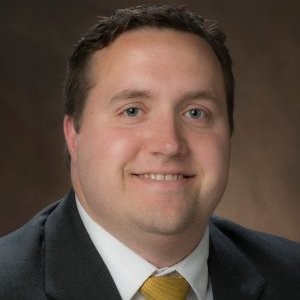
    Dr. Brad Goldie (LinkedIn photo)


    This story took this turn on July 25.

    Loveland, Ohio – Due to the resignation of board member Kevin Daugherty, the Loveland Board of Education met on 17 June to fill his seat for the remainder of his term, which is through the end of the current calendar year, December 31, 2023.

    The Board entered into an executive session to conduct phone interviews with the following candidates:

    Josh Hendrickson

    Christina Jeranek

    Anna Bunker

    Lynn Mangan

    Elaine Hipps

    Marcia Neumann

    Brad Goldie

    Roger Talyor

    Elliot Grossman

    Carly Tamborski

    Brain Tibbs

    After the executive session ended, Board President Dr. Kathryn Lorenz said that instead of choosing a candidate who said they would run for election in November, they chose a candidate who indicated they would not be seeking a permanent seat on the Board.

    Lorenz, Rev. Jonathan Eilert, Dr. Eric Schwetschenau, and Eileen Washburn voted to appoint Dr. Brad Goldie to the vacant position.

    Goldie is an Assistant Professor of Finance at Miami University and serves on the District Finance Committee.

  • Kevin Dougherty resigns from Loveland City School District Board of Education

    Kevin Dougherty resigns from Loveland City School District Board of Education

    Loveland School Photo

    Loveland, Ohio – Loveland City School District Board member Kevin Dougherty submitted his resignation at Last night’s meeting.

    In this video, you can watch Dougherty announce his decision, and the reaction of Board members and administrators to the announcement.

    Board President, Kathy Lorenz also explains the policy for finding a replacement and appointment to fill Dougherty’s unexpired term.

    Dougherty was appointed to the Board in May 2020 for a term that expires at the end of this year.

    A public announcement will be forthcoming about how to apply for the remainder of Dougherty’s term in office.

    This video is excerpted from the District archive of the meeting.

  • Bipartisan bill would legalize marijuana in Ohio

    Bipartisan bill would legalize marijuana in Ohio

    Loveland, Ohio and Columbus

    House Bill 168 would rename Ohio’s Medical Marijuana Control Program to the Division of Marijuana Control and it would be in charge of regulating the medical marijuana and adult-use programs.

    BY:  Ohio Capital Journal

    Ohioans 21 and older would be able to cultivate, purchase and possess marijuana if a bipartisan bill passes in the Ohio Statehouse.

    State Reps. Jamie Callender, R-Concord, and Casey Weinstein, D-Hudson, introduced House Bill 168 — also known as the Ohio Adult Use Act — earlier this month.

    The bill would also allow conviction records for prior cultivation and possession offenses to be expunged.

    “Adult-use is good for our economy, good for our justice system, and the right thing to do,” Weinstein said in a news release. “Ohioans are ready to legalize cannabis.”

    HB 168 would put a 10% sales tax on adult-use cannabis products. Researchers at Ohio State University estimate the potential annual tax revenue generated from adult-use cannabis in Ohio ranges from $276 million to $374 million in year five of an operational adult-use cannabis market.

    “It opens up a route for people to have access to cannabis without punishment, without losing their jobs, without losing child custody,” said Tim Johnson, CEO of Cannabis Safety First.

    The bill would rename the Ohio’s Medical Marijuana Control Program to the Division of Marijuana Control and it would be in charge of regulating the medical marijuana and adult-use programs. The division would be housed within the Ohio Department of Commerce.

     COLUMBUS, OH — JANUARY 03: Rep. Jamie Callender (R-Concord) speaks from the floor during opening day ceremonies of the 135th General Assembly of the State of Ohio, January 3, 2023, in the House Chamber at the Statehouse in Columbus, Ohio. (Photo by Graham Stokes for Ohio Capital Journal. Republish photo only with original story.) 

    “Through the expansion of Ohio’s successful Medical Marijuana program to all Ohioans, we will not only be building upon best practices from around the country but utilizing the lessons learned here in Ohio,” Callender said in a news release.

    Twenty-two states, including Michigan, and Washington, D.C. have legalized the recreational use of and sale of cannabis.

    “It’s time for Ohio to act on this before we fall too much further behind our neighbors,” Weinstein said.

    Legalizing marijuana would free up the judicial system from cannabis arrests and possession charges, Johnson said.

    “It will allow law enforcement to centralize their resources around more harmful drugs and other priority incidents as far as criminal activity and so forth in their communities,” he said.


    Expunged


    The expungement piece of the bill would help people go through a quicker process to get their possession or trafficking charges erased.

    “The whole principle behind all of this is … to open up our workforce pool … to allow people to return to being able to purchase homes, go to school, receive grants, have custody rights, all of that,” Johnson said.

    Gov. Mike DeWine signed Senate Bill 288, a massive criminal justice reform bill, into law earlier this year and it went into effect in April.

    One of the things the bill does is allow prosecutors to expunge low-level marijuana possession offenses. It also prevents arrests and convictions for possessing marijuana paraphernalia from appearing in Ohio’s criminal records.

    Coalition to Regulate Marijuana like Alcohol

    The Coalition to Regulate Marijuana like Alcohol is collecting petition signatures to get a similar proposal on November’s ballot. The coalition needs to get 124,000 signatures from 44 of Ohio’s 88 counties by the July 5 deadline.

    Their proposal would legalize and regulate the cultivation, manufacturing, testing and sale of marijuana to Ohioans 21 and up. Ohioans 21 and older could home grow with a limit of six plants per person and 12 plants per residence, and it would impose a 10% tax at the point of sale for each transaction.

    The proposal was submitted by citizens through an initiated statute, so it is not an amendment to the state’s constitution. Ohio’s Aug. 8 special election will ask voters if the state constitution should be harder to amend.

     COLUMBUS, Ohio — APRIL 20: Tim Johnson, an Air Force veteran and retired law enforcement officer who has worked with Ohio lawmakers on cannabis legislation joins supporters of legalized marijuana, April 20, 2023, outside the Statehouse in Columbus, Ohio. (Photo by Graham Stokes for Ohio Capital Journal. Republish photo only with original story.) 

    Pricilla Harris, executive director of the Sensible Movement Coalition, is excited about the legislation to legalize marijuana, but said advocates favor the ballot proposal.

    The ballot proposal has more protections for possession limits — 2.5 ounces compared to the bill’s 50 grams.

    “We are still looking for patient protection, workforce protection for employers,” Harris said. “Unfortunately, we are just kind of lacking in that area when it comes to the bill.”

    Between legislation and the ballot initiative, marijuana activists are confident weed will soon be legalized in Ohio.

    “Either way you’re gonna see something happen this year in Ohio,” Johnson said.

    Harris said it’s exciting to think about marijuana potentially being legalized.

    “We would no longer be putting collateral damage on the residents of Ohio that are choosing cannabis as their medicine or their personal use,” she said.

    Senate Bill 9

    Senate Bill 9 — introduced by State Sens. Stephen Huffman, R-Tipp City, and Kirk Schuring, R-Canton — would expand Ohio’s medical marijuana program by adding​​ more permissible forms of medical marijuana and adding to the list treatments for medical conditions.

    It would also create a 13-member Medical Marijuana Oversight Commission that would oversee the Division of Marijuana Control within the Department of Commerce to oversee Ohio’s Medical Marijuana Program.

    Currently, the Ohio Department of Commerce, the State Medical Board of Ohio, and the Ohio Board of Pharmacy oversee regulation and licensing in the marijuana program.

    There are 355,368 patients that have registered for medical marijuana and 168,741 have both an active registration and an active recommendation as of March, according to the Ohio Medical Marijuana Control Program.

    Follow OCJ Reporter Megan Henry on Twitter.


    Megan Henry
    MEGAN HENRY

    Megan Henry is a reporter for the Ohio Capital Journal and has spent the last five years reporting on various topics including education, healthcare, business and crime at The Columbus Dispatch, part of the USA Today Network.

    MORE FROM AUTHOR

  • Loveland school levy passes

    Loveland school levy passes

    Loveland, Ohio – The Loveland City School District asked voters to approve an additional 4.9 mills permanent operating levy on May 2nd. Here are the accumulated results reported as of 10:56 PM from all 3 of the county BOE’s. These numbers are “Unofficial Results” until several weeks have passed and the Boards meet to certify results.

    TOTAL

    YES – 5,707

    NO – 4,473

    _________________________

    CLERMONT COUNTY

    YES – 2,933

    NO – 2,027

    HAMILTON COUNTY

    YES – 2,704

    NO – 2,384

    WARREN COUNTY

    YES –  70

    NO – 62

  • Town Hall called to discuss 4.9 mill Loveland operating levy

    Town Hall called to discuss 4.9 mill Loveland operating levy

    Superintendent Mike Broadwater (Loveland Magazine file photo)

    Loveland, Ohio – The Loveland City School District will hold a Town Hall Meeting on Tuesday, April 25, at 6 PM in the Media Center at Loveland Intermediate School. In his April 19 “Schools Update” Superintendent Mike Broadwater said, “The purpose of this Town Hall is to provide a forum for our Loveland City Schools community to ask questions about the upcoming 4.9 mill operating levy on the ballot on May 2.”

    The Town Hall will include the Superintendent, Treasurer Rob Giuffre’ and two members of the Board of Education. It will not be an official meeting of the Board. The Superintendent’s newsletter did not specify which board members will participate in the discussions.

    If you cannot attend, you can watch a live stream by following this link.

    Only in-person attendees can participate with questions or comments. After the meeting, the live stream recording will be available on the Board of Education YouTube channel.

    During the Town Hall, Broadwater said, “We will work to take questions or comments from as many participants as possible to foster conversation around these important issues.”

  • 227 Ohio-based Organizations Denied Opportunity to Voice Opposition of Minority Rule Bill

    227 Ohio-based Organizations Denied Opportunity to Voice Opposition of Minority Rule Bill

    GettyImages
    Columbus, Ohio –  In a narrow 7-6 vote, the Ohio House Constitutional Resolutions Committee passed a resolution allowing HJR 1 — a bill that seeks to increase the ballot threshold for amending the constitution from a simple majority to 60% — to a floor vote.
    Following the resolution’s passage, a denial of 111 years of direct democracy right, Catherine Turcer, executive director of Common Cause Ohio, made the following statement representing a coalition of 227 organizations in opposition to a 60 percent threshold and an August special election for special interests.
    “Since 1912, Ohioans from across the political spectrum have utilized the right to amend our Constitution via the petition process. Direct democracy gives voters the ability to make a real impact and has helped engage Ohioans in the political process. There is no justifiable reason, after over 100 years, to make this already challenging process even harder.
    “Today, a sham committee shut down public testimony in opposition. This is not what democracy should look like. Extreme lawmakers turned away over 100 Ohioans who took time from their day to show up and testify in opposition. Committee Chair Phil Plummer clearly did not want to hear from voters. He and an ultra-slim margin of his anti-voter colleagues had already made up their minds, and they bullied this bad idea out of committee.
    “We have a growing coalition of 227 organizations representing hundreds of thousands of voters who will not compromise the sacred principle of one person, one vote. In Ohio and this country, a simple majority means 50 plus one equals democracy. We will not allow this undemocratic, unfair, unnecessary, and unpopular attack on voting rights and freedom to stand.”
    Additionally, the Ohio Senate passed Senate Joint Resolution 2 this afternoon, which also changes the threshold for passage of amendments to the Ohio Constitution to 60 percent. Similar to HJR 1, this measure makes the citizen initiative process more difficult by requiring 5% of the gubernatorial vote in all 88 counties. These proposals also remove the “cure period” for collecting additional signatures if a campaign falls short.
  • Ohio Ballot Board fights back against abortion amendment lawsuit

    Ohio Ballot Board fights back against abortion amendment lawsuit

    Voters casting ballots. | Mario Tama/Getty Images

    BY:  Ohio Capital Journal

    The Ohio Ballot Board submitted its comments to the Ohio Supreme Court, pushing back against claims they abused their power in verifying a proposed abortion amendment to the state constitution.

    The Ohio Attorney General’s Office wrote a brief on behalf of the ballot board, saying its members “correctly refused to usurp the people’s power by splitting the petition … into multiple amendments.”

    The lawsuit, filed on behalf of two members of Cincinnati Right to Life, argued that the amendment contains more than one constitutional issue, therefore should be split, and should not have been unanimously approved by the ballot board.

    The ballot board’s OK allowed pro-abortion rights groups to move forward with signature collection, in which they must collect more than 400,000 valid voter signatures by July 5.

    Because the proposed amendment mentions reproductive health and abortion, attorney Curt Hartman argued the ballot measure involved two different issues, a claim pro-abortion rights groups and the Ohio Ballot Board members deny.

    “The weakness of (Right to Life members Margaret DeBlase and John Giroux’s) claim is best exemplified by their failure to argue how many proposed amendments are supposedly included within the petition and what those amendments are,” Assistant Attorney General Julie Pfeiffer wrote on behalf of the ballot board.

    The ballot board is made up of legislative members, citizens, and the Ohio Secretary of State, who chairs the board. Currently, the legislative members are state Sen. Theresa Gavarone, R-Bowling Green; state Sen. Paula Hicks-Hudson, D-Toledo; and state Rep. Elliot Forhan, D-South Euclid.

    Secretary of State Frank LaRose is the chair, and Stoutsville resident William Morgan completes the board.

    One of the arguments made in the lawsuit is that no discussion was held when the board met to consider the amendment. LaRose asked for discussion before he asked for a vote, and none happened.

    Gavarone was the only one to make a comment, speaking against the amendment, but voting yes to the move, calling it a “procedural” vote.

    “(Giroux and DeBlase) fail to show how any alleged failure by the ballot board members to conduct a fulsome discussion amongst themselves before voting to certify the proposed amendment led to a decision that was ‘unreasonable, arbitrary or unconscionable,” the AG’s office wrote in defense of the board.

    LaRose made several comments during the meeting explaining that the vote did not represent any comments on the merits of the initiative, and instructed the public not to speak on the merits, as the vote was only to decide whether the measure only involved one constitutional issue.

    In response to the lawsuit, Pfeiffer brought up Giroux, who spoke during the public comment portion of the meeting. Giroux called the amendment “intentionally unjust and misleading,” but he “did not offer any specific proposal splitting up the petition or further opine as to the number or content of the separate amendments contained therein,” the board argued to the court.

    The ballot board did not need to analyze facts in the case, Pfeiffer argued, only whether the petition contains one amendment “on the face of the document.”

    ____________________________

    Susan Tebben
    SUSAN TEBBEN

    Susan Tebben is an award-winning journalist with a decade of experience covering Ohio news, including courts and crime, Appalachian social issues, government, education, diversity and culture. She has worked for The Newark Advocate, The Glasgow (KY) Daily Times, The Athens Messenger, and WOUB Public Media. She has also had work featured on National Public Radio.

    MORE FROM AUTHOR

  • Urgent! Loveland Community Needs School Levy Passed

    Urgent! Loveland Community Needs School Levy Passed

    Ellen Main, is a stay-at-home mom of two boys in Loveland Schools: one kindergartener and one first grader. Her family lives in the Belle Meade subdivision.

    by Ellen Main

    Loveland City School District has an operating levy on the May 2 ballot this year. Because Loveland has not passed a school levy in nine years, they are in desperate need of these funds to maintain their current high quality of education. If the levy is not passed, they will move towards State minimum services. Our students and future students deserve better than this. As a mom of two young Loveland students, I am witness to the outstanding and dedicated faculty, staff, and administration in our community. My experience at a recent school event illustrates this perfectly.

    Waiting anxiously for the show to begin, I looked around at all the other parents, siblings, grandparents, and other family members sitting in the Loveland Primary School gym and thought how grateful I am to live in this community. After the heartwarming show, during which the look of pride on my son’s face almost made me tear up, we walked through a gallery of children’s art—vibrant paintings, oil pastel drawings, and construction paper weavings covered the hallways from floor to ceiling. My son showed such confidence in finding his art on the walls and explaining it to his family. Then, he led us to his classroom (Ms. Miller, Room 9), where he showed us two beautiful books, one created by him (about koalas) and one created by his classmate, a biography about what makes my son special (my son created one about his classmate too). He proudly showed us all his work, which had an Australian theme (each class had a different country). All of this thanks to the hard work, energy and creativity of Lauren Alten (music teacher) and Kayla McClary (art teacher) as well as the classroom teachers, custodians, administration—too many people to mention.

    The “Around the World” Showcase is an example of what makes Loveland Schools such a special place to be. Music, theatre, art, athletics, physical education, robotics and so many other programs we may take for granted won’t be possible much longer if we don’t pass a school levy. Think about the most memorable and important moments of your elementary and secondary education—most likely they were made possible because of school levies being passed.

    I was lucky enough to have some extraordinary teachers in the Perrysburg School District in Northwest Ohio. My most memorable experiences had to do with music and theatre, which would not have been available without teachers having the freedom to use their creativity to benefit students both in the classroom and through extracurricular activities. Maybe yours have to do with sports, science club, art, student government, none of which would be possible without our talented educators, who would slowly be cut due to lack of funds. We cannot deny future generations these experiences.

    Right now, the employees at Loveland Schools are doing amazing work despite not having the money—92 percent of all Ohio school districts receive more money per student yet we are in the top 2 percent in the state on the Ohio Department of Education scorecard. We cannot keep the talented and hard-working people we have in Loveland Schools now if they feel stressed that they may lose their jobs or if the class sizes are so big they are spending all of their time managing student behavior rather than teaching.

    With the passing of the levy on May 2, we can keep not only our schools strong but our community as well. Voting yes for Loveland Schools on May 2 is a vote for our students and future students and also for the well-being of our entire community.

    _________________________

  • Marcia Neumann: Reason to vote no on school operating levy

    Marcia Neumann: Reason to vote no on school operating levy

    by Marcia Neumann

    Marcia Neumann resides within the school district and the City of Loveland limits in Hamilton County.

  • Why we need to support Loveland students this election season

    Why we need to support Loveland students this election season

    by Allison Kiehl

    Since the failure of the 2020 tax levy in support of Loveland City Schools, it’s no secret that there has been a divide in the Loveland community. Through that election and for weeks after, vote yes and vote no signs dotted homeowners’ front lawns and businesses as if a symbol of pride for people on both sides of the issue.

    This divisive spirit was reinvigorated back in August of 2022 when the district once again announced that a school levy tax would be displayed on this year’s midterm ballot.

    Make no mistake, there were problems with the levy when it was presented back in 2020 that led to its doomful demise led to its failure rate of over 60%.

    Recognizing that voters were not ready to build a new campus at Grailville, the Board placed a 6.95 mill operating-only levy on the March 2020 ballot, however, it also failed by a wide margin.

    The school district has faced the repercussions of budget constraints. This most noticeably led to the loss of staff members and revoking of bussing for high school students, among other consequences.

    However, the past failures then need to pave a pathway to success for this year’s initiative: a 4.9 mill operating levy for Loveland City Schools.

    This initiative is about the school’s current operational funding. It is about the individual students and teachers who would face the repercussions of further budget cuts including the looming potential of even more courses and staffing cuts within the district.

    “The state of Ohio is the only state without any inflationary adjustment for education funding. In order to maintain local control, we must either ask our community for additional funding or make substantial cuts,” reads the school’s website. “Before making cuts, and eliminating programs, we feel it is important to give the voters an opportunity to approve additional funding.”

    While the district has confirmed that if the levy does not pass, it will be “eliminating programs,” there is no confirmation as to what those programs will be. However, based on national trends, the possibility of the loss of music education within Loveland City Schools is a real, yet alarming prospect.

    According to the Arts Education Data Project, only 83% percent of schools in their area of research, which includes Ohio, have music programs offered to students. Nationally, the project projects there are over 2 million students without access to arts education.

    This number of students and schools without access to music education is expected to only go up, as The Trinity Voice reports that there has been a steady decline in music programs nationwide.

    After the fall of the 2020 levy, the music department suffered, by losing staff members and the remaining educators being burdened with additional responsibilities. Classes were cut, and students lost out on opportunities that have previously been offered.

    For example, guitar classes are one of the music electives that fell victim to budget cuts. Neither beginning or advanced guitar opportunities are available to students.

    Voters should not and cannot let this happen again because the students of Loveland deserve the very best education that the community can offer. They deserve to participate in music classes if not for the experience, then to gain the proven benefits of social-emotional learning, improved mental health, and increased test scores.

    According to the Journal of Research in Music Education, students ages who are involved with music are also better students. They generate higher standardized testing in studies conducted in both elementary school and secondary schools.

    More importantly, student participation in music is proven to make students happy. Research conducted by California State University San Marcos with middle and high school choir students at a mid-sized suburban school district.

    Students reported they liked the accepting class climate, the community and connections made between their classmates and teacher, and the subject matter’s activities that improve the student’s mood by making them happy and decreasing their stress, all aspects that increased their mood and success in school.

    According to the research, the independent variable of whether students joined the choir positively affected the dependent variable of whether students experienced an impact in their success in school.

    Whatever opinions the community holds about the levy, it is important to understand the ballot language and what the initiative requires of the community. The ballot language of Issue four for 2022 reads as follows:

    “An additional tax for the benefit of the Loveland City School District for the purpose of current operating expenses at a rate not exceeding 4.9 mills for each one dollar of valuation, which amounts to $0.49 for each one hundred dollars of valuation, for a continuing period of time, commencing in 2022, first due in the calendar year 2023.”

    The levy is asking 4.9 mills for each dollar of valuation from the community, which is the smallest school levy that voters in Hamilton County will decide on this season. The money goes primarily toward staff salaries and benefits, along with various operating costs, according to Loveland City Schools.

    That cost varies depending on the household within the Loveland District, however, according to Redfin, the average home value within Loveland is around $300,000. Based on that average, the levy would cost the homeowner a little over $500 per year.

    The opposition to the levy speaks of issues with transparency, trust, and timing. However, if this levy does not pass, the students will be facing real consequences of “substantial budget cuts” as soon as the upcoming school year.

    For more information on what will be on your ballot this November or to find an in-person voting location nearest to you, please HERE for Hamilton County, HERE for Warren County, and HERE for Clermont County.

    This Election Day, November 8, at the polls, vote with students in mind. Your vote is one more ballot to help support music education and supports the students of Loveland City Schools because, we as a community, cannot sit back and watch further repercussions of failed-levy budget cuts.