Tag: first responders

  • Ohio property tax repeal campaign preparing to collect signatures

    Ohio property tax repeal campaign preparing to collect signatures

    Ballot petition signature collection. Photo by WEWS.

    By:  Ohio Capital Journal

    In a short meeting, the Ohio Ballot Board signed off on a proposed constitutional amendment abolishing property taxes in the state. The only question before the board was whether the proposal contains one or multiple amendments.

    Supporters contend lawmakers have been unwilling or unable to make significant enough changes as property taxes climb. But critics warn eliminating that revenue stream could cripple important services like schools and first responders.

    Campaign reaction

    GET THE MORNING HEADLINES.


    The day after the ballot board meeting, Beth Blackmarr described her mood as ‘busy.’

    “Busy, busy, busy,” she said, “I mean, here we go — we’ve got to hit the ground running.”

    Blackmarr is part of the organization Citizens for Property Tax Reform which is leading the repeal campaign. With the ballot board’s decision, the group is now able to start gathering signatures to appear on the ballot.

    To go before voters, they’ll need 10% of the electoral turnout from the last governor’s race (just shy of 415,000). Additionally, in 44 of Ohio’s counties, they’ll need signatures from at least 5% of the governor’s race turnout. In practice, campaigns turn in hundreds of thousands more signatures than necessary to make up for any rejections.

    Blackmarr said they want to start collecting “as soon as humanly possible,” and work could begin as early as next week. Asked whether they’d work with paid circulators, she just laughed.

    “Many of us are youthful at heart, but senior citizens that are just really working out of our pockets,” she said. “There’s no big money backing this at all. It’s all volunteer.”

    The merits

    Blackmarr argued Ohio’s current property tax system is broken. She points to other states like New Jersey and Texas that have far more generous initiatives to keep seniors, vets and the disabled in their homes.

    “You can’t have senior citizens who have paid for their homes — fully paid for — having to move out because they can’t afford property tax,” she insisted.

    Blackmarr contends those kinds of protections are low-hanging fruit. Lawmakers have had continual warnings and “ample opportunity” to act. Instead, she argued, they’ve dithered with changes at the margins.

    “I suspect it’s because they built a wobbly tower of property tax law over these decades,” she said, “and they’re afraid to pull one of the blocks out, because they’re afraid the whole thing’s gonna come tumbling down.”

    That ‘tumbling down’ is exactly the concern many critics voice about the plan. The most recent annual report from the Ohio Department of Taxation puts 2023 property tax collections at about $18.5 billion. That’s an enormous amount of funding to just disappear. It’s roughly double the amount reported for state income taxes, and a billion more than Ohio’s sales and use tax.

    Spread evenly, it would cost every single Ohioan more than $1,500 to make up that gap in funding.

    Blackmarr argued repeal will just force lawmakers “to come up with an alternative.” But that’s a big ask — particularly for Republicans allergic to tax increases.

    Still she’s right about dramatic increases in property taxes. The same Department of Taxation report shows assessed values climbing almost 40% in five years while tax collections have risen more than 21%.

    Legislature’s role

    In a statement following the ballot board decision, House minority leader Allison Russo said the proposal “clearly demonstrates frustration by Ohioans on this issue” and blamed lawmakers for failing to act.

    “However, this particular initiative concerns me because while it eliminates the property tax, it doesn’t explain how we’ll replace the funds that support police, fire departments, public education, and other critical services,” she said.

    Russo argued Democrats have signed on to bipartisan legislation providing direct relief but Republican leaders haven’t prioritized those bills.

    Blackmarr acknowledged that as their campaign gains steam, pressure will grow on lawmakers to pass legislation or propose their own ballot measure to undercut their efforts.

    “At the end of the day it goes to the voters,” she said.  “They have to make the decision for themselves.”

    And if lawmakers’ intervention means voters have to choose between competing visions, that’s just fine with Blackmarr.

    “Wouldn’t that be nice, you know?” she said.

    Follow Ohio Capital Journal Reporter Nick Evans on X or on Bluesky.


    Nick Evans
    Nick Evans

    Nick Evans has spent the past seven years reporting for NPR member stations in Florida and Ohio. He got his start in Tallahassee, covering issues like redistricting, same sex marriage and medical marijuana. Since arriving in Columbus in 2018, he has covered everything from city council to football. His work on Ohio politics and local policing have been featured numerous times on NPR.

    Ohio Capital Journal is part of States Newsroom, the nation’s largest state-focused nonprofit news organization.

    MORE FROM AUTHOR

  • AARP Ohio calls on lawmakers to pass legislation to provide dementia training to first responders

    AARP Ohio calls on lawmakers to pass legislation to provide dementia training to first responders

    AARP Ohio also asks the General Assembly to support bills that benefit Ohio’s 50 plus population as they age in place

    Columbus, Ohio – Today, AARP called on Ohio lawmakers to pass House Bill 23, commonsense legislation that would help Ohio’s family caregivers who have a loved-one with Alzheimer’s Disease or other dementia. The bill would develop education and require training for first responders addressing difficult situations for individuals with dementia.

    The bill will

    • help develop and train the peace officers and specified emergency medical service personnel to recognize the key signs of Alzheimer’s and related dementia
    • train peace officers and specified emergency medical service personnel to appropriately interact with persons living with dementia
    • educate peace officers and specified emergency medical service personnel on how to best intervene in situations where these individuals may be at risk of abuse and neglect.

    “The symptoms of dementia aren’t always consistent, or even easily recognizable. You know the ones providing care or have provided care for someone with dementia need all of the help and support they can get,” said Veronica McCreary Hall, a retired nurse, an AARP Ohio volunteer and former family caregiver for her father, who was diagnosed with Alzheimer’s Disease. “Ohio’s first responders can play a critical role in keeping them safe and protected.”

    There are an estimated 220,000 individuals living with Alzheimer’s disease and dementia in Ohio, with a projection to see nearly a 20% increase in those living with Alzheimer’s and other dementias by 2030. 421,000 family caregivers bear the burden of the disease in Ohio, with 614 million hours of unpaid care.

    “Mandatory training for first responders will help protect vulnerable Ohioans with Alzheimer’s Disease or other related dementia, while giving their families peace of mind,” said Holly Holtzen, state director for AARP Ohio. “Passing this legislation is a step in the right direction and could impact hundreds of thousands of lives.”

    AARP Ohio also supports additional legislation that will benefit Ohioans and help keep them safe and secure.

    • House Bill 305/Senate Bill 220
      This bipartisan bill would cap the price of insulin at no more than $35 for a 30-day supply.
       
    • House Bill 461
      House Bill 461 will establish a private room per-day rate to be added to a facility’s daily Medicaid rate.  Medicaid will pay facilities an additional reimbursement for each resident housed in a private room. Nursing facilities will be incentivized to offer single-occupancy rooms, ultimately increasing safety in nursing home residents.
       
    • House Bill 625/Senate Bill 325
      The quality of resident care and nursing home operations and performance is often related to rates and reimbursements. AARP Ohio is urging lawmakers to pass legislation that would increase Medicaid rates in 2023 for nursing homes. The bill would also be a major benefit for nursing facilities, as incentive payments may be related to direct staff retention.
       
    • House Bill 419
      Elder abuse is on the rise, yet it often goes unreported. AARP urges the passage of this legislation to ensure mandatory reports are filed.
  • Webinar Series: Suicide Prevention and First Responders

    Webinar Series: Suicide Prevention and First Responders

    First responders, including paramedics, EMTs, firefighters, and police officers, are at special risk for suicide due to their exposure to trauma as well as other factors that are matter-of-course for this work.

    Join Steven M. Click, Director of the Ohio Office of First Responder Wellness in the Ohio Department of Public Safety, to learn why it can be difficult to engage first responders in suicide prevention efforts, tips to bypass barriers, and upcoming opportunities to support first responder suicide prevention activities in your community.

    American Sign Language interpretation will be available for the live and recorded presentation.

    Learning objectives: After participating in this webinar, attendees will be able to

    1. Explain why first responders are uniquely vulnerable to suicide,
    2. Recognize protective factors that reduce the likelihood of first responders dying by suicide,
    3. Identify strategies for engaging first responders in effective suicide prevention activities.

    Registration is free for OSPF members and $25 for non-members. Continuing education will be provided for prevention, addiction counseling, social work, marriage and family counseling, and psychologists.

  • Loveland Police and Fire Chiefs respond to questions about local vaccine distribution

    Loveland Police and Fire Chiefs respond to questions about local vaccine distribution

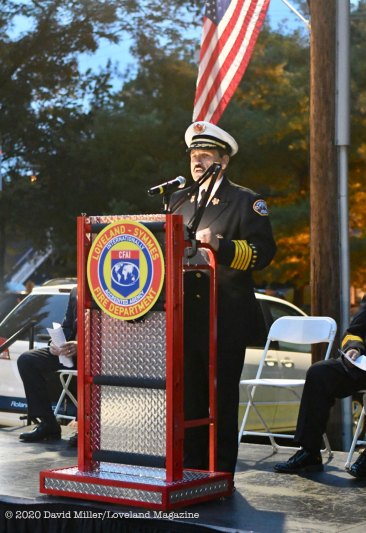
    Loveland, Ohio – “Many things are still in flux. We are on daily morning briefings with the Health Department and Homeland Security officials. Many of the questions you have asked are being ironed out at this time,” said Loveland/Symmes Fire Chief Otto Huber.

    Loveland Magazine asked both Huber and Loveland Police Chief Sean Rahe several questions yesterday as local delivery of a COVID 19 vaccine approaches. Chief Huber responded on behalf of both department chiefs.

    Loveland/Symmes Fire Chief Otto Huber speaking at Loveland’s 9/11 ceremony in September.

    First responders will be in Phase 1 of Ohio’s vaccine distribution plan along with high-risk healthcare workers, and seniors living in congregate settings (i.e. nursing homes).

    Ohio Capital Journal reported on Tuesday that Federal regulators could allow two COVID-19 vaccines for emergency use as early as December, but getting the vaccines from out-of-state manufacturers to 11.7 million Ohioans poses a web of logistical challenges.

    The Ohio Department of Health has identified 10 sites across the state that will receive the pre-positioned vaccine after a COVID-19 vaccine is given emergency-use authorization. Once the Centers for Disease Control and Prevention’s Advisory Committee on Immunization Practices issues its recommendation on how to use the vaccine, these sites will begin administering the vaccine immediately to those who choose to receive it and are identified as able to receive it in the first stage.

    The ten pre-positioned sites were selected based on geography, population, and access to ultra-cold storage capacity. The University of Cincinnati Hospital Medical Center in Clifton is the Cincinnati area site.

    The Chiefs were asked if they have established any policy about their employees receiving the vaccine when it becomes available and if officers and firefighters will be required to be vaccinated. The chiefs were also asked whether they will be vaccinated. Huber said, “We will be providing the opportunity for our staff to receive vaccines as they are offered.”

    Huber also said, “At this point, we will be leaning on our Medical Director Dr. Policastro for guidance. We hope to have a plan finalized with the Health Department very soon. Keeping our staff safe so that we can safely provide service to our residents is our highest  priority.”

    Loveland Magazine also asked if there was anything that can be shared about plans for distribution in the City of Loveland or Symmes Township when a vaccine is available to the general public and whether local Kroger stores are the designated point of distribution for area residents when the vaccine is universally available. “Loveland and Symmes are both points of distribution however we do not know yet if they will choose to open those PODS,” said Huber.

    Under the draft issued by the Statehouse that was released on October 28, Ohio would implement a 4-phase approach to distributing the COVID-19 vaccine once it’s available.

    A summary of the phases are as follows:

    Phase 1 – High-risk healthcare workers, first responders, seniors living in congregate settings (i.e. nursing homes)

    Phase 2 – Public health workers, teachers and school employees, homeless individuals, prison workers and inmates, persons with mental health in group homes or institutions, and individuals with a medical condition putting them at greater risk of mortality due to COVID-19

    Phase 3 – Students, young adults, children, and individuals in high risk occupations

    Phase 4 – Universal availability


    You can read the complete draft: ODH Draft COVID-19 Plan that was released on October 28.

  • Great Oaks launches drone piloting certification for first responders

    Great Oaks launches drone piloting certification for first responders

    drone photo of extrication

    Promoted Post

    Drones can save lives. First responders can learn how through a new first-in-the-world certification program for adults at Great Oaks Career Campuses:  Emergency Services Drone Operator.  This program teaches the use of drones for fire fighting, law enforcement, and emergency medical rescue.

    Drone technology can be used during a fire to keep fire fighters safe while viewing the scene, after a fire by investigators, as a set of eyes during vehicle or foot chases, as a tool for search-and-rescue, or in many other ways by first responders.

    The first class of students began on October 5, and included eleven firefighters and emergency services professionals from Sharonville, Norwood, the Village of Woodlawn, and the City of Cincinnati.

    “Great Oaks is pioneering the use of this technology to save lives,” said Great Oaks Fire Academy Commander Johnny Mason.  “An emergency services drone operator needs to know not just how to fly the drone, but how to view and interpret an emergency scene from above.”

    The class offered at Great Oaks is the first course approved by ProBoard to certify students in NFPA 2400, the standard for Small Unmanned Aircraft Systems (SUAS) for Public Safety Operations.  Mason said that during the five-day class, students will plan missions, fly missions, and learn to maintain drones.  They will also hold such training exercises as approaching a suspicious vehicle, conducting search-and-rescue activities, and dealing with hazmat situations.

    During a training demonstration for local officials, Johnny Mason said the timing of launching this class was fortunate.  “Great Oaks is celebrating 50 years this year, and I can’t think of a better way to celebrate than to introduce training in life-saving technology.”

    For more information, contact Great Oaks Public Safety Services at 513.771.1142.

  • Ohio’s draft COVID-19 immunization plan

    Ohio’s draft COVID-19 immunization plan

    Here are the highlights of Ohio’s draft COVID-19 immunization plan. You can read the complete draft: ODH Draft COVID-19 Plan

    The final plan must be submitted to the CDC by November 1st.

    Under the draft, Ohio would implement a 4-phase approach to distributing the COVID-19 vaccine once its available.

    A summary of the phases are as follows:

    Phase 1 – High-risk healthcare workers, first responders, seniors living in congregate settings (i.e. nursing homes)

    Phase 2 – Public health workers, teachers and school employees, homeless individuals, prison workers and inmates, persons with mental health in group homes or institutions, and individuals with a medical condition putting them at greater risk of mortality due to COVID-19

    Phase 3 – Students, young adults, children, and individuals in high risk occupations

    Phase 4 – Universal availability

  • Eifert’s Decision to Honor David Dorn Will Test Limits of League’s New Social Justice Policy

    Eifert’s Decision to Honor David Dorn Will Test Limits of League’s New Social Justice Policy

    by Christopher Ball

    In early September, former Bengals tight end Tyler Eifert announced that he would choose to honor the memory of David Dorn, a retired St. Louis police captain who was killed in June of this year.

    Christopher Ball is a longtime Loveland resident and an attorney

    Eifert was selected by the Bengals in the first round of the 2013 NFL Draft and played his first seven seasons in Cincinnati. He recently signed a 2-year $9.5 million deal with the Jacksonville Jaguars, where he hopes to make a comeback after several injury-plagued seasons with the Bengals. 

    In addition to a new chapter in his NFL career, Eifert plans to wear a decal honoring Mr. Dorn this season, as part of the league’s recent decision to allow players to wear decals on the back of their helmets 

    The NFL’s new stance is a stark reversal from its prior positions. In 2016 the league refused to allow Dallas Cowboys players to wear decals to honor five police officers killed by a sniper in downtown Dallas. Even Jerry Jones, the owner of the Cowboys, felt that allowing players to put unique messages on their helmets or wear pink to honor cancer survivors, would open “Pandora’s Box’ that would be difficult to ultimately control. In 2013 Bears wide receiver Brandon Marshall was fined for wearing green shoes to highlight issues surrounding mental health. 

    Whatever you may think of his opinions, Colin Kaepernick’s visible on-field protests against systemic racism and police violence are unquestionably a large part of the reason that he is no longer playing football. Prior to 2020, it was clear that the National Football League was doing all that it could to keep politics, protests, and uniform variance out of its brand. 

    Now that has all changed. 

    Roger Goodell has admitted that both he and the league were wrong for not listening to protesting players sooner. The new decal initiative is the National Football League’s attempt to, at least in part, allow its players to express their non-football opinions on the field, while they are at work, doing their jobs. While the new rules were ultimately put in place to allow players to place decals on their helmets “bearing names or initials of victims of systemic racism and police violence” Eifert’s choice sends a different message, one very similar to those of the 2016 Dallas Cowboys. Eifert himself has a long history of supporting military and first responders during his career, and so his choice to honor David Dorn is not surprising.  

    What will be interesting to see is whether the league will allow him to wear a decal honoring Dorn even though, by most standards, the slain police captain is not a “victim of systemic racism or police violence.” Early reports suggest that the players will be allowed to pick from an approved list of names, with options such as George Floyd, Breonna Taylor, and Ahmaud Arbery. While the NFL has not officially released its policy on decals, nor have they provided the complete list of names from which its players can choose, Eifert’s decision to honor Dorn is one that will no doubt spark debate on the boundaries of the NFL’s new policy. 

    Whether it opens Pandora’s box, as Jerry Jones once feared, is yet to be seen.

  • Loveland/Symmes Fire Department Introduces “Smart911” to the Community

    Loveland/Symmes Fire Department Introduces “Smart911” to the Community

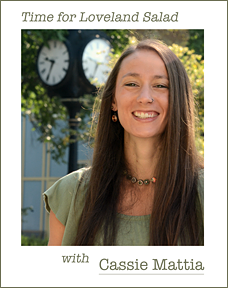
    Columnist Cassie Mattia lives in Historic Downtown Loveland

    Loveland, Ohio The speed and the accuracy when receiving a 911 call are top priorities to any 911 dispatcher. Although these 911 dispatchers do their best to focus on speed and accuracy one fact that many people may not know is that 80 percent of 911 calls are made from a cell phone meaning no matter how quickly a dispatcher works to alert first responders that dispatcher is only able to identify the caller’s phone number and a VERY vague sense of their location. If a 911 caller is unable to speak due to their emergency situation how is a 911 dispatcher able to effectively get emergency personnel to where they need be quick? This is a problem that emergency responders have been working hard for a very long time to make better or even fix permanently.

    Smart911

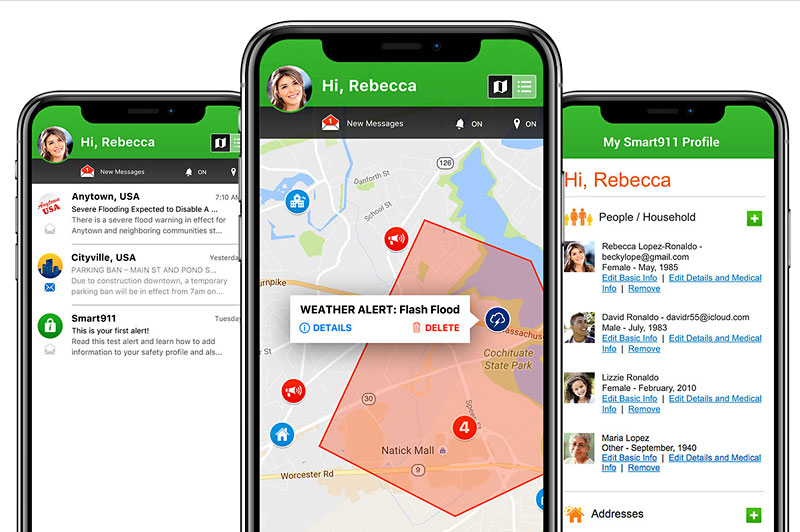
    Recently the Loveland-Symmes Fire Department and Northeast Communications came across a solution that many police and fire departments have adopted due to the 911 issue. It’s called “Smart911,” and it’s a national 911 database that ensures when you dial 9-1-1 your information is readily available. According to Smart911’s website when you download the Smart911 application to your phone, “you can provide 9-1-1 call takers and first responders critical information you want them to know in any kind of emergency.

    A Mobile App For A Mobile Community

    You can now download the Smart911 app for free to create a Safety Profile and receive targeted alerts.

    When you call 9-1-1, your Smart911 Safety Profile displays on the 9-1-1 screen and the call takers can view your addresses, medical information, home information, description of pets and vehicles, and emergency contacts. You can provide as much or as little information as you like.

    Smart911 is a national service meaning your Smart911 Safety Profile travels with you and is visible to any participating 9-1-1 center nationwide.”

    Jon D. Frye, Deputy Chief of Loveland-Symmes Fire Department couldn’t hold back his excitement for the Smart911 partnership with Northeast Communications.

    “We are so excited to announce that Northeast Communications has partnered with Smart 911, a National 911 Database to ensure your information is available at the time of need.  Please register yourself and your family at www.smart911.com or download the Smart911 app on your smartphone. You can list all your information about your home, medical history, medications, best door to access and much more. Anytime you call 911 within our community your information will automatically be available to our dispatchers,” Frye explained, “Smart911 is free, all we ask is our residents and businesses register online.  Wherever you travel your information goes with you, as long as the nearest 911 center are subscribers of the Smart911 product,” Frye added, “Smart 911 has many other features, such as reverse text 911 if a caller dials 911 but is unable to speak due to the situation, language barrier or medical issues the dispatcher can immediately send a text to your phone number and start a text conversation. Smart 911 instantly accesses all of the information that you have put into the system to ensure the quickest, most appropriate information is passed along to first responders.”

    If you would like more information on how you can get your loved ones signed up for Smart911 visit www.smart911.com or download the Smart911 app on your smartphone.


  • Sherrod Brown announces $28,572 to Goshen Township Fire and EMS

    Sherrod Brown announces $28,572 to Goshen Township Fire and EMS

    Washington, D.C. U.S. Sen. Sherrod Brown (D-OH) has announced that the U.S. Department of Homeland Security’s (DHS) Federal Emergency Management Agency (FEMA) has awarded a total of $163,811 to two Clermont County fire departments for operations and safety through the Assistance to Firefighters Grants (AFG) Program.The funds include:

    • $135,239 to the Wayne Township Fire and Rescue
    • $28,572 to the Goshen Township Fire and EMS

    “Ohio firefighters and first-responders work every day to protect our families,” said Brown.“We must support our first-responder organizations so that communities in Clermont County have the resources to shield families and homes from fire hazards.”

    The AFG Program supports fire departments across the country to ensure the safety of both first-responders and the public. The program provides funds for supplemental training, upgrades to protective equipment, facility modifications, and other supplies that protect firefighters and first-responders in moments of crisis. Grants are awarded to fire department-based and non-affiliated EMS organizations that best address the priorities of the AFG Program. More information about the AFG Program can be found here.

    Interested fire departments can contact Brown’s grant coordinator to receive information about federal grant opportunities by clicking here.


    Advertisement Sangha is a place to experience skillfully designed, fun, and inspirational hatha yoga classes close to home.


  • Firefighter Cancer Registry Act signed by President

    Firefighter Cancer Registry Act signed by President

    Loveland, Ohio – Today, President Trump signed U.S. Sen. Sherrod Brown’s (D-OH) bipartisan legislation to establish a voluntary cancer registry for firefighters into law. Brown’s bill, the Firefighter Cancer Registry Act, requires the Centers for Disease Control and Prevention (CDC) to create and maintain a voluntary registry to collect data on cancer incidence among firefighters.

    Loveland/Symmes Fire Chief Otto Huber said in reaction to the announcement, “Any data collection that will  assist the national fire service in evaluating the risk associated with Firefighting will go along way to improving how we manage risk on the fire ground.”

    The data collected by the registry will be used with existing state data to better assess and prevent cancer among firefighters. The Senate passed Brown’s bill by unanimous consent in May.

    “Ohio firefighters put their lives on the line every day,” said Brown. “The enactment of the Firefighter Cancer Registry Act will help ensure we’re using all of the tools at our disposal to prevent and treat cancer in first responders who sacrifice their own safety to protect others.”

    Huber said, “Today’s modern construction and products of combustion from petroleum based furnishing place our members in a higher risk then ever. We must rethink how we deploy and how we protect our members against today’s risks.”

    In addition to establishing the volunteer registry, Brown’s bill requires the CDC to develop a strategy to maximize participation, develop guidance for state agencies, encourage inclusion among participants and to seek feedback from nonfederal experts. The CDC would also be required to ensure the data collected is made public and accessible for research.

    “I am pleased that the national spot light is on this subject. We need to work collaboratively to improve fire ground safety and reduce the exposure to our members of the products of combustion,” said Huber.


    Findings from a Study of Cancer among U.S. Fire Fighters

    In 2010, the National Institute for Occupational Safety and Health (NIOSH) began a multi-year study of nearly 30,000 fire fighters from the Chicago, Philadelphia, and San Francisco Fire Departments to better understand the potential link between fire fighting and cancer. The study was a joint effort led by researchers at NIOSH in collaboration with researchers at the National Cancer Institute and the University of California at Davis Department of Public Health Sciences, and supported in part by the U.S Fire Administration. This study was completed in late 2015.

    What we found

    The fire fighters we studied showed higher rates of certain types of cancer than the general U.S. population.

    Based on U.S. cancer rates:
    ●● Fire fighters in our study had a greater number of cancer diagnoses and cancer-related deaths.

    ○● These were mostly digestive, oral, respiratory, and urinary cancers.
    ●● There were about twice as many fire fighters with malignant mesothelioma, a rare type of cancer caused by exposure to asbestos.

    ○● Exposure to asbestos while fire fighting is the most likely explanation for this.●● There were more cases of certain cancers among younger fire fighters.

    ○● For example, fire fighters in our study who were under 65 years of age had more bladder and prostate cancers than expected.

    When comparing fire fighters in our study to each other:

    • ●●  The chance of lung cancer diagnosis or death increased with amount of time spent at fires.
    • ●●  The chance of leukemia death increased with the number of fire runs.

    Read on from CDC.GOV…