Tag: FirstEnergy

  • Further questions about DeWine administration’s involvement in Ohio bribery scandal

    Further questions about DeWine administration’s involvement in Ohio bribery scandal

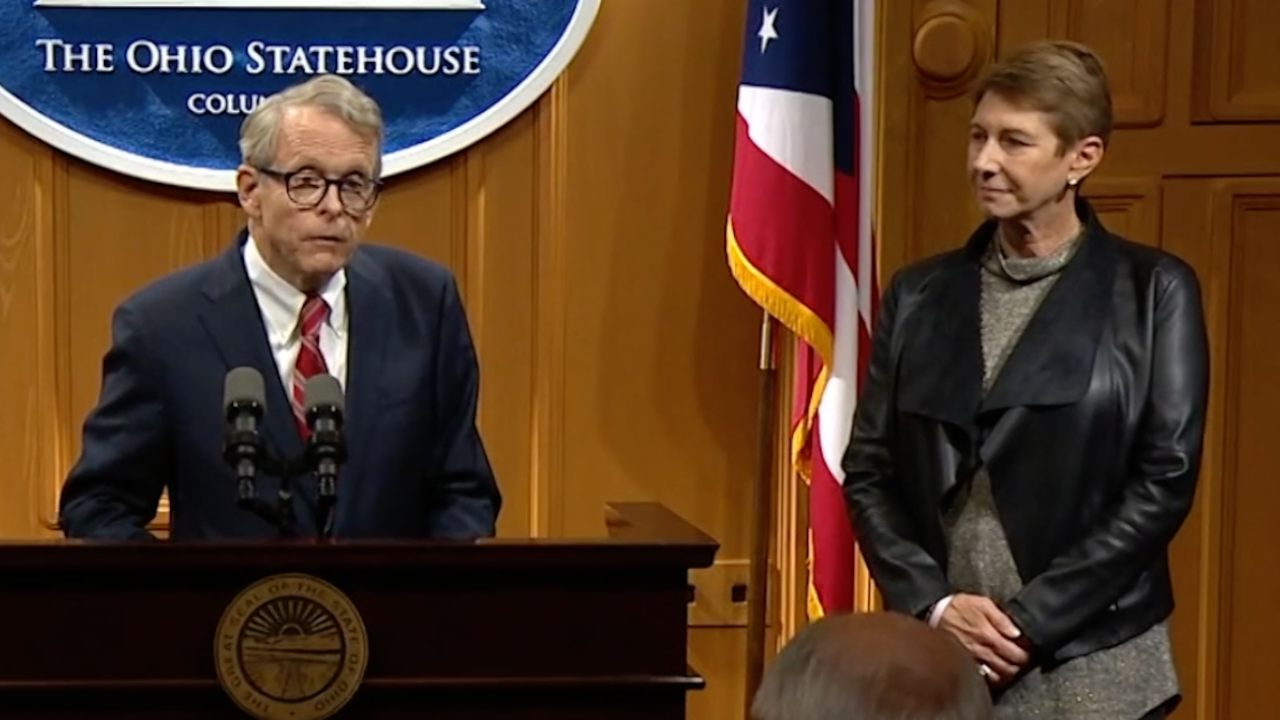
    File photo of Ohio Gov. Mike DeWine and advisor Laurel Dawson at a press conference. (Photo from WEWS.)

    New court filing gives new details about aide, husband

    BY:  

    As Gov. Mike DeWine in 2019 nominated Sam Randazzo to be Ohio’s top utility regulator, Randazzo went to great lengths to hide a decade-long relationship with FirstEnergy that had paid him more than $10 million. Those payments included $4.3 million just as DeWine was picking Randazzo, according to court documents filed last week.

    Yet DeWine Press Secretary Dan Tierney in February said it “was well known that Randazzo was a paid consultant for FirstEnergy.” On Tuesday, Tierney modified that statement to say “it was well known to our staff that Mr. Randazzo was an energy consultant, and it was well-known to them and many people that Mr. Randazzo was a consultant employed by First Energy.”

    DeWine’s appointee to chair the Public Utilities Commission of Ohio, Randazzo went on to help write and lobby for a $1.3 billion bailout that Akron-based FirstEnergy paid more than $60 million in bribes to pass, according to a federal jury and the indictments of Randazzo and two former FirstEnergy executives.

    The scandal broke into the open in July 2020, when the FBI arrested former House Speaker Larry Householder, R-Glenford, and four others. Householder and former Ohio GOP Chairman Matt Borges were convicted, two others pleaded guilty, and lobbyist Neil Clark died by suicide.

    DeWine, who signed the bailout law, and his staff haven’t been accused of illegal activity in the case. But with the administration’s many connections to FirstEnergy, questions continue to linger about exactly what DeWine and his team knew about the conspiracy and what they did with that knowledge.

    A big question relates to the period when the governor was picking Randazzo to be the state’s top utility regulator. Did DeWine or top members of his staff know that Randazzo had a long, lucrative relationship with FirstEnergy, one of the biggest utilities he’d be regulating?

    A state indictment of Randazzo said that he had a shady relationship with FirstEnergy stretching back to 2010. It included hiding his work for FirstEnergy from industrial energy users Randazzo served as general counsel as he secretly skimmed from settlement payments FirstEnergy made to the industrial users, the indictment said.

    Big money, big favors

    On Dec. 18, 2018, Gov.-elect DeWine and Lt. Gov.-elect Jon Husted had dinner at the Columbus Athletic Club with FirstEnergy CEO Chuck Jones and Vice President Michael Dowling.

    The executives would be indicted along with Randazzo in February 2024. At the dinner, the men discussed with DeWine and Husted whether to make Randazzo the chief regulator of the executives’ company, the indictment said.

    The executives drove from the dinner to Randazzo’s German Village condo for another discussion. The same evening, Randazzo texted Dowling a column of figures ending with “Total 4,333,333.”

    The indictment said that within weeks, the executives paid Randazzo that amount without an invoice and over a company lawyer’s objections. DeWine nominated him to chair the PUCO a few weeks after that.

    Over the next 18 months, Randazzo labored to draft, pass, and protect the company’s massive bailout and did a number of additional, highly lucrative favors besides, the indictment said. It all ended with his resignation after the FBI searched his condo four months after Householder and the others were arrested.

    But what DeWine and his staff knew about Randazzo’s relationship with FirstEnergy as they were considering whether to make him its regulator appears to be a matter of dispute.

    “In January 2019, FirstEnergy agreed to pay out in full Randazzo’s consulting services contract just before he was nominated to run the PUCO,” a bill of particulars that was filed last week to accompany the indictment says. “It was not a gift: Randazzo would work hard for FirstEnergy from inside the government. He did not disclose his relationship, going so far as to lie about it in testimony to the General Assembly and failing to disclose to the Ohio Ethics Commission the massive sums of money he’d received from the company he would soon regulate.”

    Who knew?

    Randazzo’s indictment says Randazzo did, however, “tell the Governor-elect through his incoming Chief of Staff that he had received $4.3 million from FirstEnergy, which he claimed was final payment of a ‘consulting agreement.’” It added that Randazzo didn’t disclose the other millions he made as a FirstEnergy consultant or his work lobbying for the electricity giant.

    Tierney, DeWine’s press secretary, on Tuesday said that Randazzo’s consulting work for FirstEnergy was well known — at least inside the administration.

    “I note our office is not a party to the prosecution, so we cannot vouch for any claims made by the prosecution or defense in these cases,” he said in an email. “Speaking for the staff of the Governor’s office, it was well known to our staff that Mr. Randazzo was an energy consultant, and it was well-known to them and many people that Mr. Randazzo was a consultant employed by FirstEnergy.”

    However, FirstEnergy’s top brass feared public knowledge of their relationship could scuttle his nomination. On Jan. 30, 2019, Dowling, the FirstEnergy vice president, sent a panicked text to CEO Jones. It said Randazzo was going to pull out of the PUCO nomination process because the press found the name of one of his shell companies on a bankruptcy filing by a subsidiary FirstEnergy was seeking to bail out.

    When Randazzo’s nomination got back on track, the executives expressed relief.

    “A bullet grazed the temple,” Dowling told Jones, according to one of the texts filed as part of a civil suit over the scandal.

    “Forced DeWine/Husted to perform battlefield triage,” Jones responded, referring to Lt. Gov. Jon Husted. “It’s a rough game.”

    So while administration insiders might have known about the Randazzo-FirstEnergy relationship, it clearly wasn’t common knowledge to the public who would have to pay the utility’s inflated bills. Tierney didn’t answer why, if DeWine knew that Randazzo was a FirstEnergy consultant, he didn’t disclose that to the public the PUCO is supposed to protect from monopoly utilities.

    Inside connections

    While Tierney said he couldn’t vouch for the information in the indictments or other court filings, he said it would have been extraordinary to ask Randazzo whether he had been paid money by Ohio utilities as the administration was vetting him for the position as their chief regulator.

    “…it would have been unusual to review past employment compensation with the Governor as part of cabinet director vetting,” Tierney said.

    As for the chief of staff who did the vetting — Laurel Dawson — she had a FirstEnergy connection of her own. Her husband, Mike Dawson, was a FirstEnergy lobbyist whom the indictment said had received a $10,000 loan from Randazzo a few years earlier.

    It’s unclear whether the loan was repaid or whether Laurel Dawson reported it to DeWine. The DeWine aide isn’t speaking publicly.

    It’s also unclear whether Laurel Dawson told the governor that her husband participated in an early 2020 text conversation with Randazzo and Dowling. The conversation was included in the bill of particulars filed last week.

    The three jokingly discussed rate cases and decoupling — two matters for which prosecutors say Randazzo had by then received multi-million-dollar bribes from FirstEnergy in exchange for doing even more valuable favors for the company.

    State prosecutors say that for Randazzo, engaging in the exchange amounted to an improper ex parte conversation. It might have been of interest to DeWine to know that his chief of staff’s lobbyist husband was having such talks with the governor’s PUCO chairman.

    According to a witness list reported on Tuesday by the Toledo Blade, prosecutors plan to call both Dawsons to testify at the trial of Randazzo, Dowling and Jones.

    Pretending?

    Despite the questions surrounding what Laurel Dawson knew about Randazzo and FirstEnergy — and about what she told her boss — she remains on his staff as an advisor, making $182,000 last year.

    “The Governor has previously stated on the record at media briefings he has full faith in Ms. Dawson,” Tierney said.

    But what did he know?

    The indictment of DeWine’s PUCO chairman and the energy executives has an image of notes that Dowling made in late 2018 as FirstEnergy lobbyist Josh Rubin coached him up on how to talk to Gov.-elect DeWine. They warn the FirstEnergy executives not to tell him that they planned to go meet Randazzo just after discussing his appointment at dinner with DeWine and Husted.

    Rubin added that DeWine could be cagey.

    “Sometimes he knows what you’re talking about,” Dowling wrote in his notes. “Sometimes he doesn’t. Sometimes he does and pretends he doesn’t.”

    Tierney was asked if DeWine now is feigning ignorance of the dealings between his administration, his nominee to head the PUCO and FirstEnergy. Tierney replied by saying that some of the players in the scandal have shown a tendency to make questionable statements.

    “Throughout the (utility scandal) prosecutions, third parties have made claims which have been self-serving and ultimately not true,” he said. “I will note, however, the state prosecution alleges the defendants deliberately withheld relevant information from the Governor, Lt. Governor, and other government officials.”


    Marty Schladen
    MARTY SCHLADEN

    Marty Schladen has been a reporter for decades, working in Indiana, Texas and other places before returning to his native Ohio to work at The Columbus Dispatch in 2017. He’s won state and national journalism awards for investigations into utility regulation, public corruption, the environment, prescription drug spending and other matters.

    Ohio Capital Journal is part of States Newsroom, the nation’s largest state-focused nonprofit news organization.

    MORE FROM AUTHOR


  • Digging into the latest indictment of former Ohio House Speaker Larry Householder

    Digging into the latest indictment of former Ohio House Speaker Larry Householder

    Former Ohio House speaker Larry Householder arrives for day two of his racketeering trial. (Photo by Morgan Trau, WEWS.)

    Some allegations address Householder’s actions after the feds arrested him in 2020

    BY:  Ohio Capital Journal

    Former House Speaker Larry Householder has again been indicted on charges related to his actions in a massive bribery and money laundering scandal.

    The Glenford Republican is already serving a 20-year sentence in federal prison after being convicted last March of racketeering in a scheme in which Akron-based FirstEnergy paid more than $60 million to purchase a $1.3 billion, ratepayer-financed bailout.

    The state charges concern some conduct Householder engaged in after he was arrested in July 2020. They also concern debts and other items that Householder admitted during his federal trial that he didn’t report to the Joint Legislative Ethics Commission as required.

    The former speaker faces maximum sentences of from three to eight years on each of the 10 state charges from the Cuyahoga grand jury. And importantly, if he’s convicted of one of the counts — theft in office — he’s permanently disqualified from holding public office.

    In a video accompanying the announcement of the indictment, Ohio Attorney General Dave Yost noted that Householder has served two different stints as speaker, and that if he’s successful in appealing his federal conviction, “he might well try for a third bite at the apple.”

    Five of the 10 state counts Householder faces stem from his use of campaign funds to pay lawyers after his July 2020 arrest. In the video in which Yost appeared, Deputy Attorney General Carol O’Brien said Householder knew that was illegal when he did it.

    Several other counts relate to Householder “not reporting significant credit card debts going back to at least 2016, as well as gifts from lobbyists and significant loans from individuals.”

    Among gifts Householder received from FirstEnergy were flights to and from the 2017 inaugural of Donald Trump.

    Householder is due in Cuyahoga Common Pleas Court to be arraigned on April 12.

    The new state charges follow the announcement last month of state charges against former FirstEnergy CEO Chuck Jones and Vice President Michael Dowling. The executives are accused of financing the $60 million scheme to bail out two unprofitable nuclear plants owned by the utility so they could spin them off.

    Also indicted was Sam Randazzo, Gov. Mike DeWine’s pick to be Ohio’s top utility regulator. Jones and Dowling paid Randazzo $4.3 million mere weeks before DeWine nominated him to the commission in February 2019.

    DeWine’s chief of staff, Laurel Dawson, knew of the payment, but an administration spokesman said she didn’t tell the governor until after the FBI searched Randazzo’s Columbus condo in 2020.

    The governor stands behind Dawson because it wasn’t until 2021 that the payment was alleged to be a bribe, the spokesman said.

    Randazzo was charged by federal authorities in relation to his role in the scandal in December.

    Despite all the prosecutions and allegations of wrongdoing, the bailout law, House Bill 6, is still on the books. As a result, ratepayers have ponied up nearly a quarter-billion dollars to prop up two aging coal plants.

    Despite the fact that Ohio ratepayers are shouldering that burden, one of the plants isn’t even in Ohio, but in Indiana instead.


    Marty Schladen
    MARTY SCHLADEN

    Marty Schladen has been a reporter for decades, working in Indiana, Texas and other places before returning to his native Ohio to work at The Columbus Dispatch in 2017. He’s won state and national journalism awards for investigations into utility regulation, public corruption, the environment, prescription drug spending and other matters.

    Ohio Capital Journal is part of States Newsroom, the nation’s largest state-focused nonprofit news organization.

    MORE FROM AUTHOR

  • Ohio indictments provide a better picture of squalid relationships that spurred massive scandal

    Ohio indictments provide a better picture of squalid relationships that spurred massive scandal

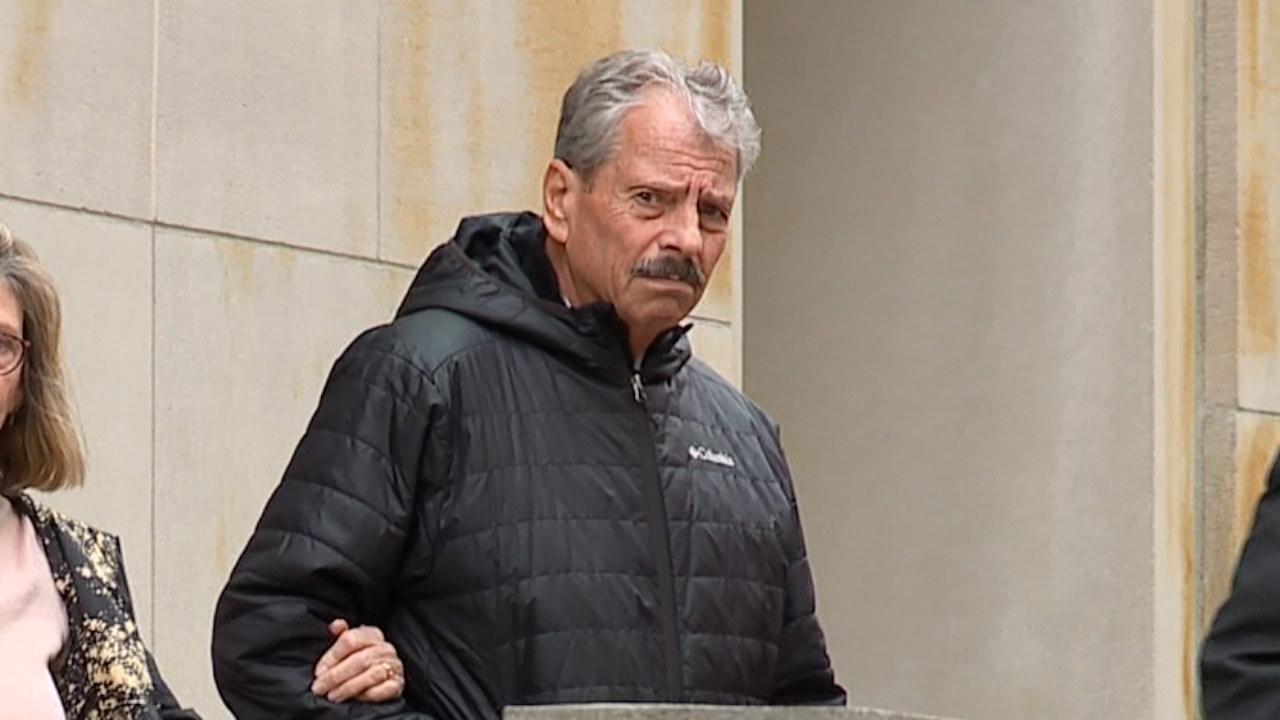
    Former Public Utilities of Ohio Chair Sam Randazzo at court. (Photo by WEWS.)

    BY:  Ohio Capital Journal

    An Ohio grand jury has handed up a 44-count indictment against three players in what is likely the biggest bribery scandal in state history. And when the 50-page indictment was unveiled Monday, it provided new details about a decade of payoffs and conflicts as one of them — who became the state’s top regulator — allegedly did a huge electric utility’s bidding.

    The indictment concerns a $1.3 billion dollar bailout that Akron-based FirstEnergy has already admitted to the federal government that it paid more than $60 million in bribes to purchase.

    Former Ohio House Speaker Larry Householder, R-Glenford, and former state GOP Chairman Matt Borges are serving federal prison sentences for their roles in the 2019 passage of the bailout and the dirty-but-succesful fight to thwart a voter-led repeal.

    When federal prosecutors in 2021 charged those two and three others, they said their investigation continued. But it wasn’t until December that they charged another in the case — Sam Randazzo, a lawyer and longtime energy consultant whom Gov. Mike DeWine nominated to chair the state’s top regulator, the Public Utilities Commission of Ohio.

    That left the people who paid the alleged bribes — FirstEnergy’s top executives — uncharged in a scheme that took place more than four years ago.

    Double dealing

    All that changed Monday when Ohio Attorney General Dave Yost announced state charges against Randazzo and former First Energy CEO Chuck Jones and former Vice President Michael Dowling for their alleged roles in the criminal conspiracy. The three were arraigned in Akron on Tuesday and each pleaded not guilty.

    They were charged in an indictment that alleged shady dealings between the them stretching back 13 years.

    “It all began with a well-lawyered theft in 2010,” the indictment said.

    It went on to describe how Randazzo was general counsel for a group of large FirstEnergy customers — the Industrial Energy Users of Ohio — while also working as a FirstEnergy consultant. Only, the Industrial Energy Users didn’t know that Randazzo was also being paid by the company they were paying him to fight, the indictment said.

    It accuses Randazzo of settling the industries’ claims against FirstEnergy on terms acceptable to FirstEnergy and running the settlements through Randazzo-controlled shell companies where he took a skim — again, unknown to the industrial energy users.

    “His clients, the industrial members of IEU-Ohio, did not know he was a consultant for FirstEnergy,” the indictment said. “Randazzo did not tell them. Years later, some of the money would make its way to IEU-Ohio. Some of it would end up in Randazzo’s pocket.”

    The Industrial Energy Users appear to have engaged in some cynical conduct of their own, however. The indictment describes a 2015 agreement in which FirstEnergy was to pay Randazzo’s company $8.5 million for “consulting services.”

    It was really a cash “side deal” in which FirstEnergy paid the industrial users to drop their objections to a rate hike FirstEnergy wanted, supposedly in the name of “energy security,” the indictment said. In other words, prosecutors said that with Randazzo’s facilitation, FirstEnergy paid off a wealthy, powerful group of electricity users in order to raise rates on everybody else.

    Such arrangements proved quite profitable for Randazzo.

    “Between 2016 and 2019, FirstEnergy paid… $13,152,639.94 to Randazzo’s two shell companies,” the indictment said. “Of that total, Randazzo gave $7,756.903.84 to his IEU-Ohio Client and kept $5,395,736.10 for himself.”

    Cozy relationships

    This is the guy the incoming DeWine-Husted administration thought would be a good candidate to regulate utilities — companies to which Ohioans have little choice in paying their billions.

    The state indictment describes how, on Dec. 18, 2018, FirstEnergy execs Jones and Dowling met with Gov.-elect DeWine and Lt. Gov.-elect Jon Husted at the Columbus Athletic Club and discussed whether the executives wanted Randazzo to regulate their massive electric utility.

    The notion that a governor would ask a huge utility who might be acceptable as a regulator might itself seem startling. But after the dinner, according to the indictment, Jones and Dowling did something even more brazen.

    They went to Randazzo’s German Village condo and pursuant to that, Randazzo solicited a $4.3 million payment from Jones and Dowling, the indictment said. FirstEnergy paid the money “without ever having received an invoice for the payment and without any work or consulting services being performed,” the indictment said. It added that the executives made the payment over the objections of a company lawyer.

    Randazzo told Laurel Dawson, DeWine’s chief of staff, about the payment, calling it a “consulting agreement.” But he didn’t tell her of the other millions he’d gotten from the utility he was seeking to regulate, the indictment said. Randazzo also never told the Ohio Ethics Commission about any of the money he’d gotten from FirstEnergy, the indictment said.

    In Dawson, Randazzo might have had a sympathetic audience. Her husband, Michael Dawson, was a “paid FirstEnergy lobbyist” in 2016, when he’d gotten a $10,000 loan from Randazzo, the indictment said.

    But if his chief of staff told DeWine about the huge payoff Randazzo got from FirstEnergy, it must not have fazed the new governor. DeWine nominated Randazzo to be chairman of the Public Utilities Commission — the ratepayers’ supposed protector — on Feb. 4, 2019.

    Versatile player

    During Householder’s six-week trial in Cincinnati last year, federal prosecutors put on exhaustive evidence of how the FirstEnergy executives financed Householder’s bid to become speaker and to pass the notorious bailout known as House Bill 6.

    “Together, Jones, Dowling, Randazzo and his shell companies worked in concert to steal the power of government and bend it to the will of FirstEnergy,” was the way the state indictment unveiled on Monday put it.

    Most of the details of Randazzo’s involvement in the creation and passage of HB 6 are already known from the federal trial. They show him acting in multiple, conflicting, often-undisclosed capacities — similar to those the state indictment alleges he had already played with FirstEnergy and the industrial energy users.

    Even though he was supposed to be a regulator, Randazzo drafted portions of the bailout legislation and passed them between FirstEnergy officials and a Householder employee who had recently worked for the PUCO. They sometimes only shared printed copies of the huge bill, out of an apparent apprehension about leaving electronic fingerprints.

    According to text messages between Jones and Dowling, Randazzo went so far as to actively lobby for passage of the bailout — which would seem a big departure from the traditional duties of a disinterested regulator.

    Jones and Dowling discussed a meeting about HB 6 that Randazzo had with Sen. Steve Wilson, R-Maineville, and the Senate’s counsel. “We have a good plan to help,” Dowling told his boss.

    Other officials

    Despite the fact that DeWine had reason to know Randazzo was connected to FirstEnergy, the governor made him the state’s top utility regulator and he signed the billion-dollar bailout that benefitted the company the day it passed. And on July 21, 2021 — the day Householder was arrested — DeWine said he wasn’t in favor of repealing the measure.

    The governor subsequently walked that back, but HB 6 is still on the books and Ohio utilities are still getting hundreds of millions in ratepayer subsidies as a result.

    DeWine wasn’t the only state official to act at least peripherally in the scandal.

    Secretary of State Frank LaRose has refused to explain the “private” updates that FirstEnergy CEO Jones said the state’s chief elections official was providing during an attempt to gather signatures to put an HB 6 repeal on the ballot.

    And Yost himself dealt a mortal blow to the signature gathering when he initially rejected the ballot language — cutting nearly in half the time HB 6 opponents had to gather a quarter-million valid signatures. And in text messages presented in the federal trial, Borges told a co-conspirator that Yost thought HB 6 was a bad law, but wouldn’t speak up because of help he’d gotten from FirstEnergy in the past.

    Beyond the bailout

    Randazzo’s alleged help to FirstEnergy wasn’t limited to HB 6. He also thwarted a PUCO look into the company’s books that was likely to force a cut in electricity bills. That would have caused falling stock prices and a hit to Jones’ and Dowling’s portfolios, the indictment said.

    The erstwhile regulator was apparently so helpful that Jones at one point told a FirstEnergy subordinate to back off for fear of being too obvious. In a text message included in the indictment, Jones told Dennis Chack that Randazzo’s pro-FirstEnergy conduct “has a lot of talk going on in the halls of PUCO about does he work there or for us?”

    Even so, Randazzo’s behavior at the PUCO continued to be shameless, urging fellow regulators to join him in lobbying for the corrupt bailout, the indictment said.

    Randazzo “began internally lobbying PUCO staff members between July 2020 and September 2020 to generate strategies to save HB 6, despite facing internal objections about the inappropriateness of the effort to save HB 6,” it said.

    The indictment included a Sept. 15, 2020 email in which Randazzo told subordinates, “One option (and I really think we need to get other commissioners and staff into a proactive mode): We could, on our own initiative, issue a show-cause order to (FirstEnergy) directing (FirstEnergy) to show that no costs associated with HB 6 have been included in any riders or base rates.”

    Had such an order been issued, the result would have been misleading. While the bill didn’t raise consumer costs through riders or base rates, it included a provision that ensured FirstEnergy would collect at least as much as it did in one of its best years and it created a massive subsidy for money-losing coal plants.

    Randazzo’s efforts seemed finally to end two months later, when the FBI searched his condo.


    Marty Schladen
    MARTY SCHLADEN

    Marty Schladen has been a reporter for decades, working in Indiana, Texas and other places before returning to his native Ohio to work at The Columbus Dispatch in 2017. He’s won state and national journalism awards for investigations into utility regulation, public corruption, the environment, prescription drug spending and other matters.

    MORE FROM AUTHOR


  • [BREAKING] Ex-First Energy executives, Ohio utility regulator charged by state in bailout and bribery scandal

    [BREAKING] Ex-First Energy executives, Ohio utility regulator charged by state in bailout and bribery scandal

    From left to right: Former PUCO Chair Sam Randazzo, former FirstEnergy CEO Chuck Jones, former FirstEnergy VP Michael Dowling. (Mugshots from the Summit County Sheriff’s Office. Graphic by WEWS.)

    BY:  AND  Ohio Capital Journal

    Ohio law enforcement authorities on Monday filed numerous felony charges against two former First Energy executives and a former top utility regulator in what has been called the biggest bribery and money-laundering scandal in Ohio history.

    Ohio Attorney General Dave Yost announced scores of felony charges against a former regulator who also has been charged federally, and against two people who haven’t — former top executives for Akron-based FirstEnergy whom the company admitted paid more than $60 million in bribes between 2016 and 2020 in exchange for a $1.3 billion ratepayer bailout.

    Charged were Sam Randazzo, former chairman of the Public Utilities Commission. Already facing felony charges in federal court, the state indictment charges him with 22 more, including grand theft, bribery, and money laundering. The indictment accuses him of taking bribes from FirstEnergy from 2010 until just before he became chairman of the commission in 2019.

    Also charged were former FirstEnergy CEO Chuck Jones and Vice President Michael Dowling. Between them, they face 22 felony charges similar to those faced by Randazzo.

    “This indictment is about more than one piece of legislation,” Yost said Monday. “It is about the hostile capture of a significant portion of Ohio’s state government by deception, betrayal, and dishonesty.”

    The state charges that were announced Monday didn’t deal with much of the activity addressed in the federal case. They instead focused on the relationship between Jones, Dowling, and Randazzo between 2010 and early 2019, when they paid him $4.33 million just as he was becoming the state’s top utility regulator.

    The House Bill 6 scandal

    Back in 2019, former Ohio House Speaker Larry Householder took $61 million in bribes in exchange for legislation to give FirstEnergy a $1 billion bailout, named House Bill 6, all at the expense of the ratepayers.

    The scheme was revealed in three main ways — two separate whistleblowers and a phone wiretap.

    In March 2023, a jury found Householder and former Ohio Republican Party leader Matt Borges guilty beyond a reasonable doubt for their involvement in the racketeering scheme that left four men guilty and another dead by suicide.

    In late June that year, federal judge Timothy Black sentenced Householder to 20 years in prison. Borges got 5 years. The two surviving defendants took plea agreements early on, helping the FBI, and are still awaiting their sentencing. The feds are asking for 0-6 months for them.

    Until Monday, only federal indictments had been handed out.

    HB 6 mainly benefited FirstEnergy’s struggling nuclear power plants, but those provisions were later repealed. There are aspects of the bill still in place, though.

    The Ohio Valley Electric Corporation (OVEC) got a handout from the scheme. It expanded a bailout of the OVEC plants and required Ohioans to pay for two 1950s-era coal plants— one in the Southern area of the state and the other in Indiana. The main beneficiaries of this are American Electric Power Company (AEP), Duke Energy and AES Ohio.

    Despite this scandal becoming public years ago, ethics laws in the state have not changed to prevent schemes like this from happening.

    There are numerous bipartisan efforts to repeal HB 6 totally and to put forward ethics laws. None are going anywhere, it seems.

    Monday’s indictments

    AG Yost was joined by Summit County Prosecutor Sherri Bevan Walsh and Sheriff Kandy Fatheree for the announcement Monday.

    “The crimes committed by these individuals impacted the pocketbooks of every hard working Ohioan and further shook our faith in the institutions and organizations that we count on to represent us and to provide us with essential services,” Fatheree said. “Today, we take another important step in ensuring that justice is served for these crimes and that those who took advantage of the public’s trust are held accountable.”

    FirstEnergy as a company has already admitted in a deferred prosecution agreement to bribing public officials in Ohio, including a $4.3 million bribe to Randazzo. Jones and Dowling allegedly paid this to him.

    Randazzo pleaded not guilty to the federal charges against him in December.

    The Sustainability Funding Alliance of Ohio and IEU-Ohio Administration Company are also named in the filing. Randazzo controlled each of them, and they were allegedly shell companies created to further his criminal activity.

    Reactions

    While Monday was probably not the best day for Randazzo, Jones and Dowling, it was a great day for whistleblower Tyler Fehrman.

    Fehrman is the Republican operative-turned-FBI informant who is credited with exposing this mass public corruption at the Statehouse — and he is cheering the AG and Summit County for these arrests.

    “These guys deserve to have everything taken away from them,” Fehrman said. “They deserve it.”

    Borges attempted to bribe Fehrman, and threatened him, to be a part of the scandal — even at one point telling him that if he snitches, Borges would “blow up his house.”

    That conversation was actually set up and recorded by the feds. Instead of staying quiet, Fehrman testified, helping the jury to return guilty verdicts in the federal trial.

    Fehrman ended up having to change careers and flee the state due to fears of retaliation — and because he was ostracized — but now he gets to watch as the scheme continues to unravel.

    “You can hide your actions in the dark for a little bit,” Fehrman said Monday. “But the sun always rises and the truth always comes out. Every time one of these guys gets indicted, especially the people that made it possible for Matt and Larry to have the opportunity to do what they did to me — to see them get in trouble, it’s extremely vindicating.”

    He agreed with Yost’s statement that there can be no justice without holding the check-writers and the masterminds accountable.

    Case Western Reserve University law professor Mike Benza believes these charges are going to be hard to fight. When asked the best possible scenario for them, other than pleading guilty, he said their best bet could be to argue this is politics as usual.

    “It seems that the focus from the defense side is going to be much like the focus from Householder and Borges — this is just how things get done in Columbus,” Benza said. “This is just the normal sausage-making of public policy and it may not be pretty and you may not like it, but this is the reality and it doesn’t equal corruption.”

    Clearly, that wasn’t a winning argument in federal court.

    Part of the reason why it may have worked so poorly in Black’s federal courtroom is because Householder went against the advice of the vast majority of criminal defense attorneys and decided to testify in his defense.

    The now-convicted felon used the bribe money to put himself and his allies into power, demolishing and threatening anyone in his path, as well as paying off credit card debt and renovations to his home in Florida.

    Benza believes Randazzo, Jones, and Dowling are facing difficult days ahead.

    “Randazzo is probably going to be looking at dying in prison,” Benza responded. “Jones and Dowling are probably in that same boat.”

    Ferhman is hoping for more indictments, including high-profile names.

    “The clock is ticking for the other people that were involved,” Fehrman said.

    He named Gov. Mike DeWine Lt. Gov. Jon Husted as people of interest for him.

    DeWine has been complying with a subpoena he received in a civil case connected to the scandal, he said.

    FirstEnergy investors are suing for being negatively impacted financially by the scandal. They have subpoenaed documents from DeWine, and they’re scheduling a sworn deposition with Husted.

    In a one-on-one interview with the governor, DeWine was asked if he was nervous about the scandal, or, more importantly — if was he worried for Husted. DeWine said no to both.

    Randazzo has been named as the mastermind behind HB 6, due to him being one of the creators of it — according to the feds. But DeWine was how he came into power.

    DeWine was asked in the same interview if he regretted naming Randazzo the state’s top utility regulator.

    “Oh, look, if I knew what I know now, if I knew that — I certainly would not have appointed Sam Randazzo to that position,” DeWine responded.

    DeWine said he was the best person for the job, claiming that he wasn’t aware that Randazzo was FirstEnergy’s handpicked man.

    “While our office was not privy to the indictment and have not yet reviewed it, the indictment alleges very serious acts,” DeWine’s spokesperson Dan Tierney said Monday afternoon. “Our office has full faith in the criminal justice system to adjudicate these serious allegations in an appropriate manner.”

    ________________

    Marty Schladen
    MARTY SCHLADEN

    Marty Schladen has been a reporter for decades, working in Indiana, Texas and other places before returning to his native Ohio to work at The Columbus Dispatch in 2017. He’s won state and national journalism awards for investigations into utility regulation, public corruption, the environment, prescription drug spending and other matters. MORE FROM AUTHOR

    Morgan Trau
    MORGAN TRAU

    Morgan Trau is a political reporter and multimedia journalist based out of the WEWS Columbus Bureau. A graduate of Syracuse University’s S.I. Newhouse School of Public Communications, Trau has previously worked as an investigative, political and fact-checking reporter in Grand Rapids, Mich. at WZZM-TV; a reporter and MMJ in Spokane, Wash. at KREM-TV and has interned at 60 Minutes and worked for CBS Interactive and PBS NewsHour. MORE FROM AUTHOR

  • Ohio Gov. Mike DeWine and Lt. Gov. Jon Husted subpoenaed in civil suit over bailout scandal

    Ohio Gov. Mike DeWine and Lt. Gov. Jon Husted subpoenaed in civil suit over bailout scandal

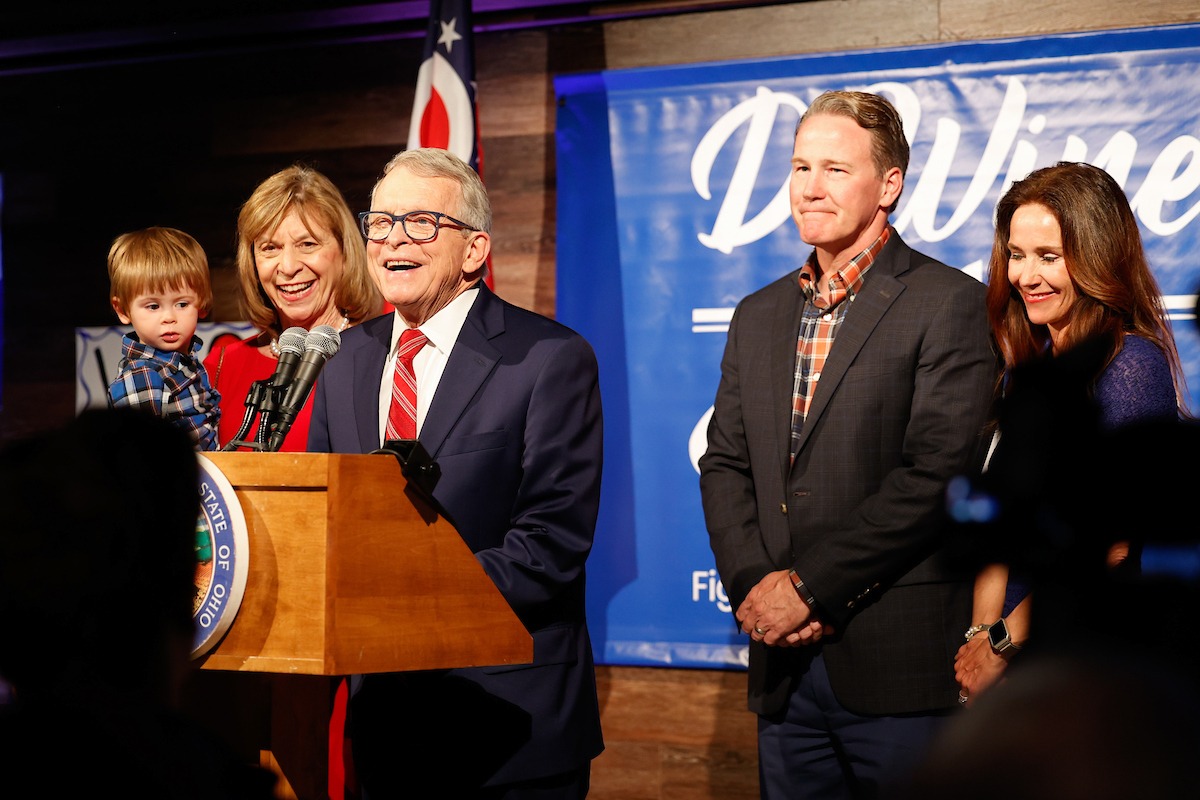
    COLUMBUS, OH — MAY 03: Ohio Gov. Mike DeWine joined on stage by First Lady Fran DeWine, grandson Calvin, Lt. Gov. Jon Husted and Second Lady Tina Husted to celebrate DeWine winning the Republican Party nomination for governor in the Ohio primary election, May 3, 2022, at the DeWine-Husted campaign headquarters, Columbus, Ohio. (Photo by Graham Stokes for the Ohio Capital Journal. Republish photo only with original article.)

    BY:  

    Plaintiffs in a civil suit related to a massive bribery and money-laundering scandal have subpoenaed documents from Ohio Gov. Mike DeWine and they’re scheduling a sworn deposition with Lt. Gov. Jon Husted.

    There have been four criminal convictions so far in the scandal and U.S. Attorney Kenneth L. Parker has said the investigation is continuing. However, there is no indication that DeWine or Husted is an object of it.

    Even so, members of the DeWine-Husted administration were significant players in the scandal and DeWine’s nominee to head up the Public Utilities Commission of Ohio could be a target of the probe.

    The demands for documents and testimony come in a class-action suit that big investors in Akron-based FirstEnergy filed against the company over its involvement in the scheme. Between 2017 and 2020, the company paid out more than $60 million to gain a $1.3 billion ratepayer bailout that was mostly intended to prop up two failing nuclear plants in Northern Ohio.

    Among those already convicted are former Ohio House Speaker Larry Householder, R-Glenford, who was sentenced to 20 years in prison for his role in what federal authorities said might be the biggest bribery and money-laundering scheme in Ohio history. Former state Republican Chairman Matt Borges in June was sentenced to five years for his role.

    However, others who played prominent roles in the scandal are yet to be charged.

    They include former FirstEnergy CEO Chuck Jones and former Vice President Michael Dowling, who directed the money to make Householder speaker in 2018 and then pass and and protect House Bill 6, the corrupt bailout legislation. They also include Sam Randazzo, DeWine’s first nominee to chair the Public Utilities Commission of Ohio.

    Jones, Dowling and Randazzo deny wrongdoing, but in a deferred prosecution agreement, FirstEnergy said Jones and Dowling paid Randazzo a $4.3 million bribe just as DeWine was selecting Randazzo to be FirstEnergy’s top regulator. In that post, Randazzo helped write the corrupt bailout bill and he helped FirstEnergy avoid a scheduled audit known as a “rate case” that was slated for 2024.

    Large investors such as pension and investment funds are suing FirstEnergy over the scandal, arguing that the company violated securities laws by not disclosing its reckless conduct. And then, when the feds made arrests in July 2020, its stock value plummeted — as did their investments.

    The plaintiffs in the civil case have been battling with Randazzo — who is not a defendant — since April over whether he has complied with judges’ orders to produce documents relevant to the $4.3 million in FirstEnergy money he received just before he began regulating the company.

    A magistrate judge and a special master in the case have consistently rebuked Randazzo for not cooperating more fully, with the most recent instance coming last week. Randazzo appealed up the food chain, asking Magistrate Judge Kimberly Jolson not to hold him to a disclosure order from the special master, Shawn K. Judge.

    The plaintiffs in the civil case asked Jolson to make Randazzo comply with Judge’s order to cough up more information. As part of the filing, they provided a table of depositions they’ve scheduled or are in the process of scheduling. To prepare for some, they presumably could use the information and documents they’re demanding of Randazzo.

    One deposition they’re scheduling is of Randazzo himself, which has a “target period” of March 4 to March 29.

    Another is of Husted, the lieutenant governor, which has a target period of Feb. 28 to March 19. Dave Anderson of the Energy and Policy Institute first flagged the document that listed Husted’s deposition.

    Hayley Carducci, Husted’s spokeswoman, on Tuesday said Husted is cooperating.

    “We’re aware of the civil investor lawsuit against First Energy,” she said in an email. “The Lt. Governor has already provided public records pertaining to this, and we will continue to comply as we have done in the past. There’s no new information to disclose.”

    As with Randazzo, Husted is not a defendant in the civil case.

    DeWine also has recently received a subpoena for documents in the civil case.

    “We’re reviewing it with counsel for what can be provided,” Press Secretary Dan Tierney said in an interview. “Our office is subject to the public records act and in a sense this is no different.”

    Tierney pointed out a distinction between the class-action suit and the case which has already convicted Householder and Borges and proceedings that could charge others.

    “This is a civil case and anybody has a right to bring a civil case if they want,” Tierney said of the proceeding in which the governor’s documents had been subpoenaed. “The civil process is where people say they’ve been damaged and they want the court to award damages. That is far different than the criminal case in which the federal government said public integrity laws had been violated.”

    He added, “It still remains in the criminal case that nobody in our office or the lieutenant governor’s office has been questioned or subpoenaed or had any legal filings like that.”

    Even in the absence of such requests, DeWine and his administration were involved several ways in the drafting and passage of the corrupt utility bailout:

    • He nominated Randazzo to head up the PUCO a day after it was publicly revealed that FirstEnergy had paid a group controlled by Randazzo millions of dollars over the years. “Forced DeWine/Husted to perform battlefield triage,” FirstEnergy CEO Jones said in a text message to Dowling. “It’s a rough game.”
    • While he was still a FirstEnergy lobbyist, Dan McCarthy set up Partners for Progress, a 501(c)(4) “dark money” group through which Jones, Dowling and others funneled millions into the conspiracy. DeWine hired McCarthy as his legislative affairs director and kept him in that post for a year after Householder and the others were arrested.
    • HB 6, the bailout legislation, was highly controversial as Householder jammed it through the legislature, other lawmakers testified at his trial. Even so, DeWine signed it the day it passed and when Householder was arrested, the governor’s first position was to keep the law in place — and part of it still is. DeWine reversed himself a day later, calling to repeal and replace the subsidies.

    Morgan Trau contributed to this report.


    Marty Schladen
    MARTY SCHLADEN

    Marty Schladen has been a reporter for decades, working in Indiana, Texas and other places before returning to his native Ohio to work at The Columbus Dispatch in 2017. He’s won state and national journalism awards for investigations into utility regulation, public corruption, the environment, prescription drug spending and other matters.

    MORE FROM AUTHOR

  • More signs that criminal investigation into Ohio utility bailout continues

    More signs that criminal investigation into Ohio utility bailout continues

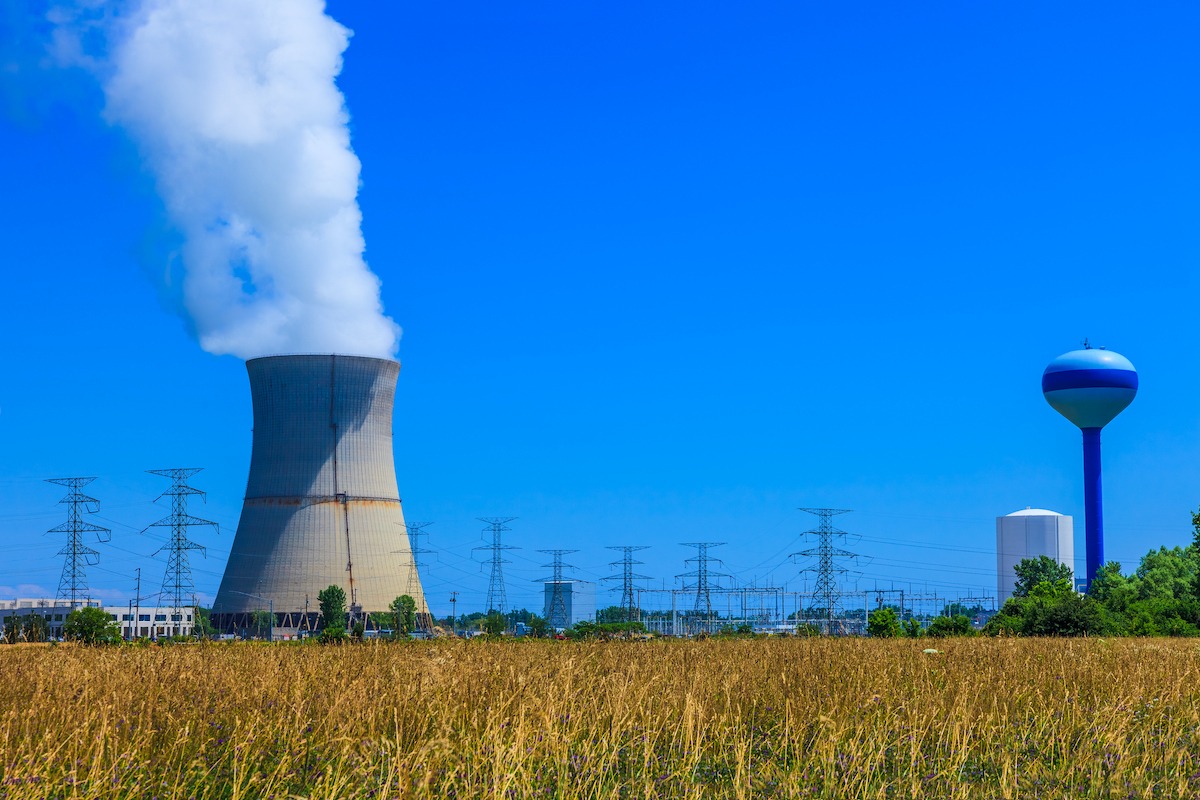
    Davis-Besse Nuclear Power Station with electricity pylons, Ohio. Getty Images.

    BY:  Ohio Capital Journal

    Five have been charged and four have been convicted in a massive bribery and money-laundering scandal, but there were more signs this week that the federal criminal investigation is continuing.

    In court documents filed in a separate case on Monday, a special master said that a major player in the conspiracy — Akron-based FirstEnergy — continues to cooperate with federal prosecutors. The same documents order the major beneficiary of the conspiracy, a former FirstEnergy subsidiary, to do more to cooperate in a federal class-action suit.

    Former House Speaker Larry Householder, R-Glenford, and former GOP Chairman Matt Borges in June were respectively sentenced to 20 and five years in federal prison for their roles in the conspiracy. Two others have pleaded guilty and await sentencing, while a third who was charged died by suicide.

    In the conspiracy, FirstEnergy and its then-subsidiary paid more than $60 million from 2017 to 2019 to make Householder speaker so he could pass and protect a $1.3 billion bailout. Of that sum, the vast majority was intended to prop up two nuclear plants owned by the subsidiary, then called FirstEnergy Solutions.

    Over the course of a six-week trial in Cincinnati early this year, prosecutors put on evidence that FirstEnergy found itself in a precarious state because its heavy investments in coal and nuclear-powered generation were being undercut by cheap natural gas. Top executives with the company — including then-CEO Chuck Jones and Vice President Michael Dowling — desperately sought a ratepayer bailout to prop up the nuclear plants so they could spin them off and get most of the liability associated with closing and cleaning them up off their books.

    In 2019, as Householder was shepherding the bailout through the legislature, FirstEnergy Solutions was in bankruptcy and emerged in February 2020. It had a new name, Energy Harbor, and it was no longer a subsidiary of FirstEnergy.

    Five months later, the FBI arrested Householder and the others. Then large pension and investment funds sued FirstEnergy, saying the reckless, undisclosed conduct of its top executives caused investors to lose billions when that conduct hit the public fan.

    FirstEnergy signed a deferred prosecution agreement admitting wrongdoing and agreeing to pay a $230 million penalty to the government. But that didn’t get it off the hook in the multiple civil suits it’s faced, including the class action filed in the Southern District of Ohio by large investors.

    As part of the suit, those investors have been battling FirstEnergy for communications and other information that might implicate officials other than Jones and Dowling, who were fired.

    They’re also battling Sam Randazzo. He isn’t named in the suit, but FirstEnergy said he took a $4.3 million bribe from Jones and Dowling just as Gov. Mike DeWine nominated Randazzo to chair the Public Utilities Commission of Ohio at the beginning of 2019. The class-action plaintiffs say Randazzo might be sitting on text messages and other communications relevant to the conspiracy.

    Jones, Dowling and Randazzo deny criminal wrongdoing in the scandal, but U.S. Attorney Kenneth L. Parker in June said that the investigation was continuing. On Monday, Special Master Shawn Judge also said in a court filing that the investigation continues — and that FirstEnergy is cooperating.

    “During this jury trial, the government highlighted Jones’s and Dowling’s purported relationships with Householder and involvement in the conspiracy,” Judge wrote, referring to the criminal trial earlier this year. “And multiple representations before the Court suggest that FirstEnergy’s cooperation with government investigations is ongoing.”

    Judge is helping to referee the numerous discovery disputes in the class-action case. In this instance, he ordered Energy Harbor to provide almost everything the FirstEnergy investors wanted.

    As a now-independent company, Energy Harbor said it’s not a defendant in the civil case, so it shouldn’t be put to the trouble and expense to provide the information the pension and investment funds are demanding.

    But Judge noted that while it was still a FirstEnergy subsidiary, the company “​​contributed $43 million of the $60 million paid to Householder and his affiliates in exchange for the official action of passing (the bailout law) and defending it from a repeal referendum.”

    In addition, Judge wrote, the subsidiary’s lobbyist, Juan Cespedes, helped direct some of those funds and pleaded guilty to his role in the racketeering conspiracy.

    Judge then ordered Energy Harbor to provide the plaintiffs with the information they requested, but reduced the time period the required documents span by several months.


    Marty Schladen
    MARTY SCHLADEN

    Marty Schladen has been a reporter for decades, working in Indiana, Texas and other places before returning to his native Ohio to work at The Columbus Dispatch in 2017. He’s won state and national journalism awards for investigations into utility regulation, public corruption, the environment, prescription drug spending and other matters.

    MORE FROM AUTHOR

  • Coal company got big payback from HB 6

    Coal company got big payback from HB 6

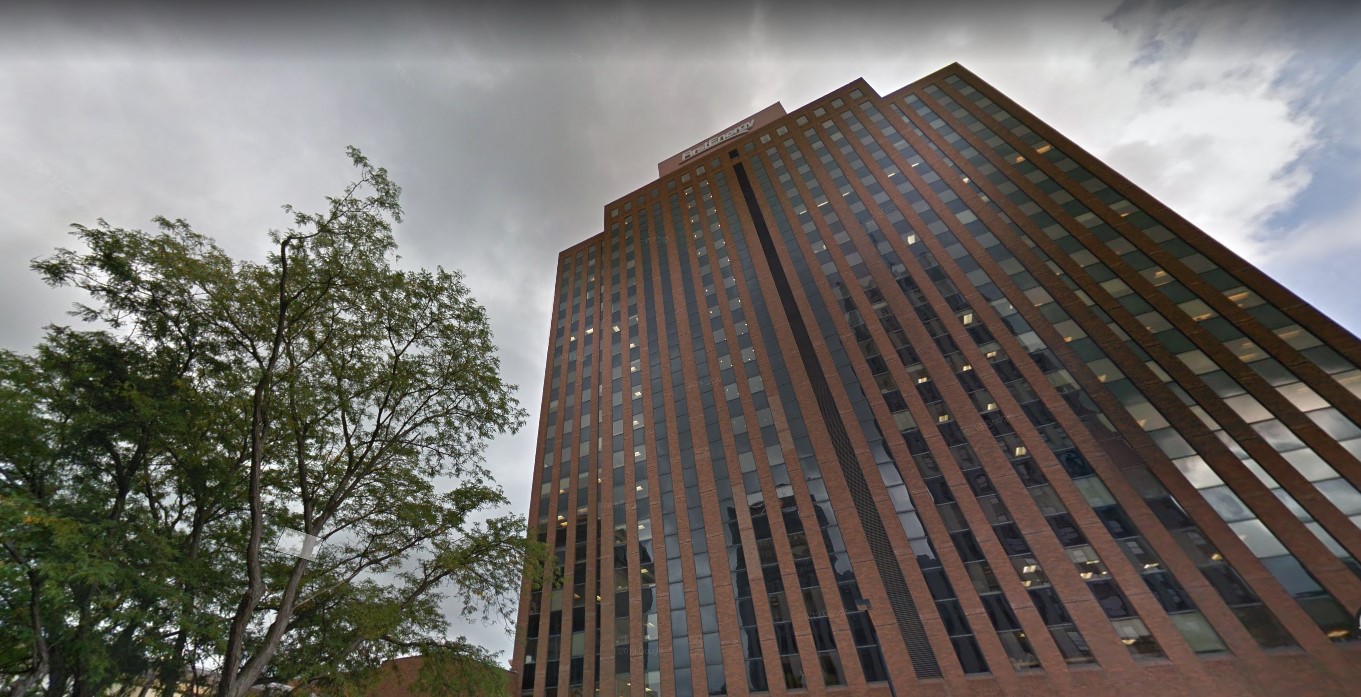
    FirstEnergy’s headquarters in Akron. Source: Google Maps.

    BY: Ohio Capital Journal

    A coal company got roughly $12.6 million above market prices to supply one of the 1950s-era plants subsidized by Ohio House Bill 6. That’s roughly 50 times the amount the company gave to the dark money group at the center of that coal and nuclear bailout law, according to a new analysis from the Checks and Balances Project.

    In other developments:

    • An evidentiary hearing about the reasonableness and prudence of the subsidized coal plants’ costs wrapped up last week. But it’s unclear when regulators might issue rulings.
    • In a separate FirstEnergy case, opponents want regulators to deny or limit more customer charges, saying the rider items should be considered in the company’s full rate case to be filed next May. The evidentiary hearing is expected to continue until Nov. 21.
    • Former Ohio House Speaker Larry Householder and lobbyist Matt Borges have appealed their criminal convictions but still haven’t filed their briefs. The Department of Justice has not yet filed additional criminal charges related to HB 6, either.

    Coal company overpayments

    A new report highlights how much Resource Fuels has collected for coal supplied to one of the two 1950s-era coal plants subsidized by HB 6 and run by the Ohio Valley Electric Company, or OVEC.

    OVEC paid roughly $12.6 million to Resource Fuels in above-market charges for coal, said Ray Locker, executive director of the Checks and Balances Project, which produced the report. And as a result of HB 6’s coal subsidies, Ohio ratepayers have been paying utilities for their share of OVEC’s costs that exceed their revenue.

    In 2018, Resources Fuels also sent $250,000 to Generation Now, the main dark money group in the HB 6 corruption scandal. The Energy and Policy Institute reported that wire transfer earlier this year and connected Resource Fuels to the Boich Companies, which the Columbus Dispatch had earlier identified as “Company C” in the 2020 criminal complaint against Householder and others.

    So, Resource Fuels “donated $250,000 to Generation Now to facilitate everything for Larry Householder. And the excess money they’ve been paid on this coal contract is 50 times more,” Locker said.

    To back up his calculations, Locker reviewed testimony statements filed with the Public Utilities Commission of Ohio by Elizabeth Stanton, an expert witness for the Office of the Ohio Consumers’ Counsel, and from John Seryak, an expert witness for the Ohio Manufacturers’ Association Energy Group. The case file also includes redacted audit reports from London Economics International.

    Stanton’s testimony showed that Clifty Creek, one of the two HB 6-subsidized coal plants, paid about one-fifth more per million BTUs (units of heat value) for coal bought from Resource Fuels, compared to another supplier of coal from the same mine. The price per million BTUs paid to Resource Fuels was also more than that paid to companies providing coal with a higher average heat value.

    The PUCO had let some utilities collect OVEC costs from ratepayers even before HB 6 passed. Seryak’s testimony said London Economics “repeatedly found that the cost under the Resource Fuels coal contracts is unusually high.” OVEC had a long-term deal with Resource Fuels, but it was neither prudent nor reasonable, he added. In his view, Ohio utilities have used the HB 6 coal subsidy riders “to recoup losses resulting from an unreasonable decision.”

    Seryak’s testimony also connected Resource Fuels to the Boich Companies and discussed the HB 6 corruption scandal.

    American Electric Power and Duke Energy both want the PUCO to strike parts of the testimony, arguing against Seryak’s point that the PUCO should not authorize recovery of the coal subsidies while the HB 6 investigations continue. They also want to keep out evidence about cost reviews of pre-HB 6 OVEC riders, which supports points made by Seryak and others.

    The PUCO’s hearing examiners struck those parts of Seryak’s testimony on Nov. 6 without a written opinion. The Ohio Manufacturers’ Association Energy Group appealed that decision to the full PUCO on Nov. 13.

    “That’s a total smokescreen to divert people from the details of these contracts,” Locker said. “The information is out there. And now they’re trying to stick the genie back in the bottle and say it doesn’t matter.”

    Representatives of the Boich Companies did not provide comments in response to Energy News Network’s questions.

    Read more: 

    Waiting

    The PUCO wrapped up its evidentiary hearing on the 2020 OVEC charges about which Seryak and Stanton provided testimony on Nov. 6. The hearing started on Halloween and took less than one week. Besides the above-market payments to Resource Fuels, challengers contended that other spending by the OVEC coal plants was not reasonable and prudent, including costs related to times when it was uneconomic to run them.

    Briefs and reply briefs are due Jan. 8 and Jan. 29, said Matt Schilling, spokesperson for the PUCO. After that, parties will wait for regulators to decide whether to disallow any costs that have already been passed through to ratepayers. Adjustments would presumably be reflected in future charges for the OVEC plants, which run through 2030.

    That wait could take a while. Regulators still have not ruled on challengers’ objections to pre-HB 6 OVEC plant costs. Nor have lawmakers advanced bills to repeal the subsidies.

    Costs for the coal subsidies continue to mount. The Office of the Ohio Consumers’ Counsel estimates those subsidies have cost ratepayers nearly $221 million since 2020 began.

    Read more:

    FirstEnergy riders

    The PUCO began another evidentiary hearing on Nov. 7 in a FirstEnergy rider case with roughly $1.4 billion at stake. The PUCO currently expects that hearing to continue through Nov. 21, Schilling said.

    Among other things, FirstEnergy wants to extend a “delivery capital recovery” charge. That DCR rider is involved in one of four cases the PUCO has put on hold since August 2022 while the Department of Justice considers more criminal charges related to HB 6. The new case also presents questions about possible side deals that may affect settlements. That issue was raised in another of the stayed cases.

    Despite the parallels, regulators declared on Oct. 18 that the rider case and two grid modernization cases “are completely unrelated” and refused to lift the stay. The PUCO also refused to put the rider case on hold, because it also deals with charges for customers who don’t choose a competitive electricity supplier. The current tariff for that is due to expire, and Ohio law requires a plan for those customers to be in place, the order said.

    The case “introduces various mechanisms aimed at ensuring the ongoing investment and maintenance of the distribution system,” FirstEnergy spokesperson Lauren Siburkis said, talking about the case’s charges for all customers. Those include the DCR rider and an advanced metering infrastructure rider, plus charges for vegetation management and storm mitigation.

    The increase for a residential customer using about 750 kilowatt-hours per month of electricity would initially be $3.11 per month. But witnesses for multiple challengers want regulators to deny various riders.

    For example, Justin Bieber, an expert for Kroger, said in a filed testimony statement that the DCR rider is improper “single-issue ratemaking.” Instead, he said, it should properly be considered in a full ratemaking case, which would look at all of a utilities’ revenues and expenses. He had a similar view about the vegetation management rider. FirstEnergy is due to file a full ratemaking case next May.

    Greg Meyer, an expert for the Office of the Ohio Consumers’ Counsel, similarly challenged the DCR rider, along with the advanced metering rider and storm recovery rider. Aside from the single-issue ratemaking problem, he noted that a process already exists for utilities to recoup major storm costs if they show the costs would impact their total operations.

    Colleen Shutrump, another expert for the Ohio Consumers’ Counsel, objected to a proposed energy efficiency rider, saying customers could get efficiency services in a competitive market.

    If approved, the riders would last eight years, with some possible adjustments in next year’s ratemaking case. A hearing on charges in a separate grid modernization case is set for January.

    Read more:

    Convictions on appeal

    Former Ohio House Speaker Larry Householder and lobbyist Matt Borges appealed their criminal convictions related to HB 6 this summer. Yet their lawyers have sought multiple extensions to file legal briefs on the trial court’s alleged errors.

    The filings are currently due next month, with the government’s responses due in January. For now, both remain in federal prisons.

    Meanwhile, Borges and Householder are still defendants in the state of Ohio’s HB 6 civil case, along with former PUCO Chair Sam Randazzo, FirstEnergy, Energy Harbor (formerly FirstEnergy Solutions), two former FirstEnergy executives and others.

    Borges’ amended answer filed on Oct. 25 denies liability for the state’s claims under the Ohio Corrupt Practices Act. The filing also says he wouldn’t be liable anyway because of the legal doctrines of in pari delicto or unclean hands. Those doctrines basically say plaintiffs can’t recover on a civil claim if they themselves engaged in wrongdoing.

    Borges’ lawyers did not respond to the Energy News Network’s request for comments about which state actors and what conduct they say supports those defenses.

    More charges?

    The Department of Justice has not yet filed charges against anyone other than Householder, Borges and others named in their July 2020 criminal complaint and indictment. (Three of the other defendants named have settled, and one has died.) As noted above, four FirstEnergy regulatory cases remain stayed, although various civil cases against the company continue to move ahead.

    A Nov. 6 order in one of the shareholder cases calls for Ebony Yeboah-Amankweh, a former lawyer and ethics officer for FirstEnergy, to answer plaintiffs’ lawyers’ questions under oath in a pretrial process called a deposition. The company ended her employment a few months after the 2020 complaint came out.

    A separate Nov. 6 order requires Randazzo to turn over documents and information which plaintiffs in that case have sought for months. Randazzo will also have to pay costs arising from the documents dispute.

    People from regulatory agencies or utilities “should not get to have their lawyers pick and choose what discovery and subpoena requests they will respond to, and what documents they will turn over,” said Dave Anderson, policy and communications manager for the Energy and Policy Institute.

    Read more:

    This article first appeared on Energy News Network and is republished here under a Creative Commons license.


    Kathiann M. Kowalski, Energy News Network
    KATHIANN M. KOWALSKI, ENERGY NEWS NETWORK

    Kathi is the author of 25 books and more than 600 articles, and writes often on science and policy issues. In addition to her journalism career, Kathi is an alumna of Harvard Law School and has spent 15 years practicing law. She is a member of the Society of Environmental Journalists and the National Association of Science Writers. Kathi covers the state of Ohio.

    MORE FROM AUTHOR

  • FirstEnergy seeks $1.4 billion more from Ohio ratepayers. Watchdog objects

    FirstEnergy seeks $1.4 billion more from Ohio ratepayers. Watchdog objects

    Getty Images

    BY:  Ohio Capital Journal

    Even as its former top executives await possible criminal charges for gouging ratepayers, Akron-based FirstEnergy is seeking a $1.4 billion rate increase. The state’s consumer watchdog objects, saying the company’s profits are higher than normal and that it should use a more thorough process to prove that it really needs the money.

    The electric utility is seeking the increase as part of its “electric security plan” — a package of investments aimed at improving reliability and efficiency.

    “Our plan will build on the significant enhancements we’ve made to reinforce the grid against progressively stronger storms,” a statement on the FirstEnergy website quotes Patricia Mullin, acting president of FirstEnergy’s Ohio operations, as saying. “We’re committed to making the right investments to ensure a modern, more reliable grid while also keeping electric bills affordable, and we will continue working with interested stakeholders to ensure an open and thorough review of our proposal.”

    However, the state’s consumer watchdog, the Ohio Consumers’ Counsel, is objecting to the proposal on several grounds. For example, OCC contends that FirstEnergy is already highly profitable and shouldn’t need more of the ratepayers money.

    That’s not true, FirstEnergy spokeswoman Lauren Siburkis said in an email.

    “Our most recently disclosed return on equity in Ohio (shared during the third quarter earnings call) shows that to be 6.2%, which is much lower than the recently authorized returns in Ohio of 9.5% to 10%,” she said.

    However, the company, which operates in several states, appears to be doing quite well overall. In its third-quarter financial disclosure, the company reported that so far this year its per share earnings are up 17% over last year.

    OCC, the consumer watchdog, also objects to the mechanism through which FirstEnergy is seeking the rate hike. It’s asking the Public Utilities Commission of Ohio to approve “riders” in a process that isn’t as rigorous as a full “rate case.” That’s when regulators and others scrutinize many aspects of a utility’s operations and its books to ensure they’re not unfairly profiting from the monopolies that regulators grant them.

    FirstEnergy has abused the rider process in the past. As part of a huge bribery and money-laundering scandal, the company in 2019 received a “decoupling rider” that allowed the company to bill customers tens of millions to cover shortfalls in revenue.

    Chuck Jones, then the company’s CEO, boasted to investors that the rider made the company “somewhat recession-proof.” The rider was repealed after FirstEnergy admitted wrongdoing in a deferred prosecution agreement.

    OCC is arguing that going through a full rate case is the best way to prevent mischief and inefficiency.

    “Reliance on an excessive number of trackers, riders and other special regulatory mechanisms decreases a utility’s incentive to manage all aspects of its business in a cost-effective manner,” regulatory auditing expert Greg Meyer said in testimony to the regulatory commission that OCC sent to reporters last week. “FirstEnergy seems to ignore the fact that under its proposed (electric security plan), FirstEnergy’s consumers will be required to pay for energy-efficiency programs, demand-response programs and the multiple riders, in between base rate cases. These charges will add costs to the bills of FirstEnergy’s consumers without a review of all the relevant factors of FirstEnergy’s operations.”

    Asked why FirstEnergy didn’t seek the rate hike as part of a full rate case, Siburkis seemed to say FirstEnergy couldn’t wait six months, when one is scheduled.

    “The settlement we reached in 2021, which received the PUCO’s approval and delivered $306 million in customer benefits, explicitly requires us to submit the rate case in May 2024, no sooner and no later,” she said.

    That settlement was a deferred prosecution agreement in which FirstEnergy ponied up $230 million in fines and said that in addition to other bad acts, Jones and former Vice President Michael Dowling bribed Sam Randazzo — Gov. Mike DeWine’s first appointment to chair the PUCO — $4.3 million in exchange for regulatory and other favors.

    Jones and Dowling were fired and Randazzo resigned. All three men deny wrongdoing, but in court filings, they have acknowledged that federal law enforcement is investigating their conduct.

    Four already have been convicted over their participation in the scandal. Former Ohio House Speaker Larry Householder in June was sentenced to 20 years in federal prison for shepherding the corrupt utility bailout through the legislature. Former state GOP Chairman Matt Borges was sentenced to five years for playing a lesser role, and two others have pleaded guilty and await sentencing.

    For six weeks early this year, federal prosecutors put on a mountain of evidence in a Cincinnati courtroom about how FirstEnergy spent more than $60 million helping Householder bribe and bully through a $1.3 billion utility bailout that benefitted that company far more than any other utility.

    Now it’s asking for almost the same amount without going through the most rigorous regulatory scrutiny. Asked why ratepayers should trust FirstEnergy’s claims, Siburkis said the company has turned the page on its ugly recent past.

    “FirstEnergy has accepted responsibility for its actions related to House Bill 6 and has taken significant steps to put past issues behind us,” she said. “Today, we are a different, stronger company with a sound strategy and focused on a bright future.”


    Marty Schladen
    MARTY SCHLADEN

    Marty Schladen has been a reporter for decades, working in Indiana, Texas and other places before returning to his native Ohio to work at The Columbus Dispatch in 2017. He’s won state and national journalism awards for investigations into utility regulation, public corruption, the environment, prescription drug spending and other matters.

    MORE FROM AUTHOR

  • Ohio utilities’ efficiency programs among the worst in wake of corrupt utility law, report says

    Ohio utilities’ efficiency programs among the worst in wake of corrupt utility law, report says

    Getty Images

    BY:  Ohio Capital Journal

    House Bill 6 wasn’t only a bad law because it involved $61 million in bribes in exchange for a $1.3 billion utility bailout.

    Most of the bailout payments have been repealed, but somehow the law — the product of perhaps the biggest corruption scandal in Ohio history — remains on the books. And after it eliminated most efficiency programs, Ohio utilities have gone from above average to among the worst in the country, according to an analysis that was released last week.

    One of them, Columbus-based AEP, acknowledged that in the absence of the efficiency programs, acknowledged that the elimination of the programs has limited what it can offer customers to save electricity.

    The American Council for an Energy Efficient Economy, a Washington, D.C.-based non-profit, publishes an efficiency scorecard of the nation’s 53 largest electric utilities once every three years.

    It found that in 2018 — a year before the corrupt bailout was passed — Duke Ohio had the 18th-best score for efficiency programs. AEP Ohio had the 21st-best programs, according to the scorecard. Edison Ohio came in at 34th.

    But the scorecard published last week looked at data related to efficiency programs in 2021 — a year after HB 6 took effect. It found that AEP and Duke tied for 49th out of 53.

    In an email, AEP spokesman Scott Blake said “House Bill 6 ended energy efficiency requirements, which hampers our ability to offer programs to customers. AEP Ohio had implemented many successful energy efficiency programs prior to this change in state law. Our customers have expressed interest in energy efficiency, and we have proposed to offer a new menu of voluntary programs in our Electric Security Plan currently under consideration by the Public Utilities Commission of Ohio. They would need to approve those programs in order for us to offer them to customers.”

    Edison Ohio is a subsidiary of Akron-based FirstEnergy, which paid more than $60 million to finance the corrupt bailout law that gutted efficiency standards. It finished dead last in the most recent efficiency score.

    The 2019 law was ramrodded by former House Speaker Larry Householder, R-Glenford. The vast majority of the money it required from ratepayers went to prop up two failing nuclear plants in Northern Ohio. FirstEnergy wanted to prop them up so it could sell them and avoid liability for cleaning up the sites when they’re shut down.

    With global temperatures increasing at an alarming rate, HB 6 makes warming worse in at least two ways.

    It forces Ohio ratepayers to spend hundreds of millions propping up two aging coal plants — including one that isn’t even in Ohio. And it gutted energy-efficiency and renewable standards that utilities formerly had to adhere to.

    The efficiency standards were built into consumers’ bills to incentivize the use of technologies that save electricity and thus obviate the need for more carbon-spewing generation. For example, they enabled Ohio utilities to offer discounts on fluorescent light bulbs when they were relatively expensive, but much longer-lasting and efficient than incandescent bulbs.

    The idea was that with greater demand, manufacturers would scale up production and make them more cheaply. That approach helped to allow the federal government to completely phase out the sale of incandescent bulbs this year.

    The way efficiency standards worked, regulators set goals and offered “shared savings” to utilities and consumers once those goals were met. Rob Kelter, a senior attorney with the Environmental Law and Policy Center, conceded in an interview last month that the efficiency incentives weren’t perfect.

    “I think there were some legitimate concerns that legislators raised about the value of efficiency and whether the programs were well-run,” he said. “But the programs were always pretty good and they delivered good value to customers.Were we too generous with the incentives for utilities? Yeah. A little bit.”

    For example, Kelter said, when they were collecting money from incentives for fluorescent bulbs, utilities were slow to move to the next technology, LED bulbs, because they had a sure thing in fluorescents.

    Regardless of the programs’ merits, some Ohio officials have long opposed efficiency standards.

    Sam Randazzo — whom Gov. Mike DeWine in 2019 nominated to chair the Public Utilities Commission — had previously worked as a utility lobbyist to repeal efficiency and renewable standards.

    In a deferred prosecution agreement with the federal government, FirstEnergy said it bribed Randazzo $4.3 million to do its bidding as he was poised to become the state’s top regulator. The FBI searched his Columbus condominium a few months after the July 2020 arrests of Householder and four others in the HB 6 conspiracy, but Randazzo hasn’t been charged.

    During Householder’s federal court trial earlier this year, witnesses testified that even though he was supposed to be regulating utilities, Randazzo helped draft HB 6, the corrupt bailout legislation. Perhaps predictably, it eliminated efficiency and renewable standards and prompted the news organization Vox to call it “the worst energy bill of the 21st century.”

    One reason Randazzo and the HB 6 conspirators might have been so eager to eliminate the efficiency and renewable programs was to use the resulting savings as what government insiders call a “pay for.” The bailout that was going to FirstEnergy — and to a much lesser extent AEP and other utilities — was going to show up on ratepayers’ bills. So those pushing the legislation looked for other things to cut to pay for the new charges.

    On the witness stand, Householder, who was later sentenced to 20 years in prison, said he “wanted to do away with costly mandates.” He and other HB 6 supporters claimed that eliminating efficiency and renewable standards would save consumers more than $1 billion.

    But federal prosecutors smashed those claims, showing that the supporters’ math didn’t take the full cost of HB 6 into account. Householder and the others also failed to mention that through efficiency programs, ratepayers stood to save by using less electricity.

    The efficiency scorecard that found such precipitous drops among Ohio utilities in the wake of HB 6 scores them according to numerous metrics. But more than half of the available points are from three straightforward ones: net annual and lifetime electricity savings, and peak demand reduction.

    The latter measure is important because when electricity demand reaches a peak, system operators often have to fire up gas-powered generation facilities to meet it. By contrast, when customers use electricity during off-peak times, they’re pulling power that’s already on the grid.

    Mike Specian, lead author of the efficiency scorecard, praised the three big Ohio utilities for some of their offerings — including discounts to customers who use power at off-peak times.

    However, Specian said in an email, “the cancelation of utilities’ efficiency programs (in HB 6) had an adverse impact on nearly every other aspect of utility performance that we evaluated, including for low-income customers.”

    Duke didn’t respond to questions for this story.

    Lauren Siburkis, a FirstEnergy spokeswoman, said in an email that she isn’t “able to comment on the (efficiency) report itself.” But she said her company has numerous efficiency programs that it voluntarily offers customers.

    They include $100 rebates for energy-efficient appliances such as refrigerators, freezers and clothes dryers. The company also incentivizes efficiency among commercial and industrial customers through its commercial lighting program, Siburkis said.

    Blake, of AEP, said a bill is moving through the legislature that would allow ratepayers to voluntarily participate in efficiency programs.

    “The legislature is considering House Bill 79, a bipartisan effort sponsored by Bill Seitz and Bride Rose Sweeney, that would allow AEP Ohio and other utilities to offer energy efficiency programs while giving customers the option to participate,” Blake said.


    Marty Schladen
    MARTY SCHLADEN

    Marty Schladen has been a reporter for decades, working in Indiana, Texas and other places before returning to his native Ohio to work at The Columbus Dispatch in 2017. He’s won state and national journalism awards for investigations into utility regulation, public corruption, the environment, prescription drug spending and other matters.

    MORE FROM AUTHOR

  • Multiple signs that federal corruption investigation in Columbus heating up — again

    Multiple signs that federal corruption investigation in Columbus heating up — again

    Getty Images

    BY: Ohio Capital Journal

    After two former Republican officials in June were sentenced for their roles in a massive racketeering conspiracy, U.S. Attorney Kenneth Parker said the investigation was continuing. At least two signs emerged last week that the proceedings might be intensifying.

    Former Ohio House Speaker Larry Householder was sentenced to 20 years in federal prison on June 29 and former state GOP Chairman Matt Borges was sentenced to five years a day later. Both played roles in a scandal in which Akron-based FirstEnergy and other utilities paid more than $61 million to pass a $1.3 billion ratepayer bailout that was mostly intended for a subsidiary that FirstEnergy was spinning off that owned two Northern Ohio nuclear plants.

    In addition to Householder and Borges, two others who were arrested in July 2020 have pleaded guilty and a third died by suicide.

    But on March 10, just after a jury convicted Householder and Borges, a reporter asked Parker an obvious question: What about the people who paid the bribes? Would they be charged? Parker would only say that the investigation was continuing.

    Attorneys for the men who were FirstEnergy’s top executives at the time of the conspiracy — former CEO Chuck Jones and former Vice President Michael Dowling — have already said in court filings that they believe federal investigators are looking at their clients.

    This month brought two more pieces of evidence that federal investigators are considering further prosecutions in the bribery and money laundering scandal.

    On Aug. 4, Hilary M. Williams, who is representing FirstEnergy, submitted a filing in a massive class-action case against the company over the bailout scandal. She informed the scores of lawyers for the pension and investment funds suing the company that they’re not the only ones who want to see the emails and text messages the FirstEnergy executives sent as the bribery scheme was taking place.

    “Counsel… we confirmed this morning that we may disclose to the parties that certain governmental authorities have requested the production of the entire contents of iPad and iPhone devices used by Mr. Jones or Mr. Dowling from January 1, 2016 through December 31, 2020,” Williams wrote. “In keeping with the protocol in this matter, those documents will be produced to all parties, and we expect to do so at approximately the same time that production is made to the requesting governmental authorities.”

    She added. “Mr. Dowling and Mr. Jones used more than a dozen devices during the relevant time period, and processing and reviewing the contents of those devices requires substantial processing time and then time to review for confidentiality and privilege. We are working to complete the review as quickly as possible, and expect to make these productions on or about September 15, 2023.”

    A spokeswoman for the U.S. attorney’s office didn’t comment on whether the “governmental authorities” Williams referred to worked for Parker, whose office prosecuted Householder and Borges.

    However, Parker last week sent a letter to the Public Utility Commission of Ohio asking the regulator to further postpone its investigation into the racketeering scandal.

    “The PUCO proceedings involve issues related to the U.S. Department of Justice of the United States’ investigation, and the United States believes that continued discovery in the PUCO proceedings may directly interfere with or impede the United States’ ongoing investigation,” the letter said. “For that reason, the United States respectfully requests that PUCO stay the PUCO proceedings for a period of six months from the date of this letter. The United States reserves the right to request that the stay be extended beyond this time.”

    Among those the feds may be investigating are Jones, Dowling and Sam Randazzo, whom Gov. Mike DeWine nominated to chair the PUCO in early 2019.

    In a deferred prosecution agreement, FirstEnergy said it paid Randazzo a $4.3 million bribe just before his nomination in exchange for favors the ostensible regulator did for the company. Randazzo denies wrongdoing, but in the Householder trial, witnesses testified that Randazzo played a key role in drafting the corrupt bailout legislation.

    Plaintiffs in the class-action suit earlier this month filed texts and emails between Jones, Dowling and Randazzo. They indicate that the three met in Randazzo’s Columbus condo in December 2018 and arranged to pay the soon-to-be regulator $4.3 million and made it clear that they expected something in return. They also appear to indicate that in addition to his work on the the bailout, Randazzo helped exempt FirstEnergy from a 2024 rate review it had been required to undergo.

    The class-action plaintiffs are accusing FirstEnergy of violating securities law by concealing its illegal conduct from investors. Last week, they filed a transcript of an earnings call from July 23, 2020 — days after Householder, Borges and three others were arrested in the racketeering conspiracy. In it, Jones appeared to mislead analysts about his and his company’s role in it.

    “I believe that FirstEnergy acted properly in this matter, and we intend to cooperate fully with the investigation to, among other things, ensure our company and our role in supporting House Bill 6 is understood as accurately as possible,” said Jones, who would be fired months later. “In the meantime, we wanted to share our preliminary perspective on this issue and reinforce the values with which we operate our company.”

    Jones also claimed that he and his subordinates followed “the highest standards of conduct.”

    “This is a serious and disturbing situation,” he said. “Ethical behavior and upholding the highest standards of conduct are foundational values for the entire FirstEnergy family and me personally. These high standards have fostered the trust of our employees, our customers and the financial community. We strive to apply these standards in all business dealings including our participation in the political process.”

    Jones sat for a sworn deposition in the class-action case in July. Last week, U.S. Magistrate Judge Kimberly Jolson ordered Dowling to sit for one in October.


    Marty Schladen
    MARTY SCHLADEN

    Marty Schladen has been a reporter for decades, working in Indiana, Texas and other places before returning to his native Ohio to work at The Columbus Dispatch in 2017. He’s won state and national journalism awards for investigations into utility regulation, public corruption, the environment, prescription drug spending and other matters.

    MORE FROM AUTHOR