Tag: Frank LaRose

  • Citizens Not Politicians: Ohio Supreme Court should tell ballot board to ‘start over’

    Citizens Not Politicians: Ohio Supreme Court should tell ballot board to ‘start over’

    A July 1 rally of Citizens Not Politicians at the Ohio Statehouse. (Photo by Graham Stokes for Ohio Capital Journal. Only republish photo with original story.)

    By  Ohio Capital Journal

    Advocates pushing an anti-gerrymandering amendment in Ohio to remove politicians from mapmaking in favor of a citizen commission said the state’s ballot board should be forced to start over on summary language for the November proposal.

    Attorneys said the proposed amendment would ban partisan gerrymandering “by setting forth robust redistricting criteria to ensure fair maps, selection standards to ensure the new commission’s impartiality and accountability, and transparency measures to ensure public information and participation,” according to a merit brief filed Thursday.

    But they say the summary language written by Ohio Secretary of State Frank LaRose and adopted by a majority of the Ohio Ballot Board on Aug. 16 “would have voters believe exactly the opposite.”

    The Ohio Ballot Board decides what language voters will see on their ballots when they go to vote, but that summary language does not change what the proposed amendment would actually do. In a 3-2 vote, the Ohio Ballot Board approved summary language that supporters of the anti-gerrymandering amendment say is intentionally misleading and biased against the amendment. They have filed a lawsuit with the Ohio Supreme Court opposing the summary language.

    The merit brief is part of that lawsuit filed by Citizens Not Politicians, the group who has led the charge for the anti-gerrymandering amendment. The lawsuit asks the state’s highest court to order changes to the summary language made by the ballot board, chaired by Ohio Sec. of State LaRose.

    The proposed amendment signed by more than 535,000 verified Ohio voters would replace the current Ohio Redistricting Commission made up of seven politicians, including LaRose, with a 15-member citizens commission made up of Republicans, Democrats, and independents.

    Citizens Not Politicians Attorney Don McTigue pointed to a change made by state Sen. Theresa Gavarone, R-Bowling Green, during the ballot board’s meeting, in which she changed the word “manipulate” to “gerrymander” when describing the methods of redrawing congressional and statehouse district lines within the amendment.

    “Earlier this year, Attorney General Dave Yost certified that the Amendment’s summary was ‘fair and truthful,’” McTigue wrote. “That summary states, consistent with the amendment’s plain text, that the amendment would ‘ban partisan gerrymandering.’”

    The brief emphasizes what the original complaint filed on Aug. 19 asserted, which is that the opinion of whether or not the proposed amendment “offers better policy than the existing system” should be left up to the voters in November.

    “The Ballot Board’s job is to provide ballot language that gives voters the facts so that they can make up their own minds,” the brief states.

    That language should follow constitutional rules dictating the language and the title, something the LaRose language doesn’t do, according to Citizens Not Politicians.

    The Ohio Constitution states ballot language “shall properly identify the substance of the proposal to be voted upon,” and the language “shall not be held invalid unless it is such as to mislead, deceive or defraud the voters.”

    The Ohio Revised Code says the secretary of state or the ballot board is required to “give a true and impartial statement of the measures in such language that the ballot title shall not be likely to create prejudice for or against the measure.”

    The title of the redistricting amendment, as approved by the board majority, is “to create an appointed redistricting commission not elected by or subject to removal by the voters of the state.”

    “The Ballot Board’s attempt to put a thumb on the scale against the amendment is a thumb in the eye of Ohioans who expect their representatives on the Board to carry out their mandatory duties impartially,” McTigue wrote.

    The Ohio Attorney General has filed an answer to the complaint, but the filing has already received criticism from the Democratic members of the ballot board, who say they were not consulted on the legal document, nor have they been given outside counsel to speak on their behalf, despite the fact that the the two Democrats, state Sen. Paula Hicks-Hudson and state Rep. Terrence Upchurch, voted against the ballot board language.

    Hicks-Hudson and Upchurch ended up filing a brief themselves on Wednesday night, in which they did not fight arguments that the ballot board “as a whole violated its constitutional duty,” and said the “chosen ballot title is inaccurate, biased, argumentative and misrepresents the proposed amendment’s procedures for removing commissioners who fail to comply with their duties.”

    McTigue said the court “has never hesitated to strictly enforce the legal requirements for the text that appears on the ballot, in recognition of Ohioans’ century-old right to amend their constitution and laws through direct democracy.”

    “The court should do the same here, by directing (the ballot board) to start over and adopt ballot language and a ballot title that are consistent with their clear legal duties.”

    The Ohio Supreme Court was asked just last year to make changes to a ballot board-approved summary, in that case for the reproductive rights constitutional amendment that would eventually pass with 57% of the vote.

    The coalition that sued took issue with ballot language that used the phrases “unborn child” and “reproductive medical treatment,” along with using the phrase “the citizens of the State of Ohio” rather than just “the State of Ohio” when speaking of the prohibitions against “indirectly burdening, penalizing or prohibiting abortion.”

    In a similar way to the redistricting amendment author’s arguments that the LaRose language could mislead voters as to the intentions of the proposed amendment, the lawsuit against the reproductive rights amendment summary said it could mislead voters about the rights the amendment created, the restrictions in the amendment, discretion when it comes to fetal viability and state regulation of the amendment.

    The Ohio Supreme Court said they agreed “that the ballot language approved by the ballot board misleads the average voter about whose actions the amendment restricts.”

    “But the ballot language is not defective in any other respect,” the court wrote.

    The court asked the ballot board only to change the phrase “citizens of the State of Ohio” to “State of Ohio,” and approved the rest.

    Justice Michael O’Donnelly wrote in his concurring opinion that it was “unfortunate that advocacy seems to have infiltrated a process that is meant to be objective and neutral.”


    Susan Tebben
    Susan Tebben

    Susan Tebben is an award-winning journalist with a decade of experience covering Ohio news, including courts and crime, Appalachian social issues, government, education, diversity and culture. She has worked for The Newark Advocate, The Glasgow (KY) Daily Times, The Athens Messenger, and WOUB Public Media. She has also had work featured on National Public Radio.

    Ohio Capital Journal is part of States Newsroom, the nation’s largest state-focused nonprofit news organization.

    MORE FROM AUTHOR

  • A clean sweep: How Bernie Moreno became Ohio’s Republican U.S. Senate nominee

    A clean sweep: How Bernie Moreno became Ohio’s Republican U.S. Senate nominee

    BY:  Ohio Capital Journal

    Tuesday night went about as well as Ohio’s Republican U.S. Senate nominee Bernie Moreno could’ve dreamed. Despite a three-person race, Moreno was able to secure a majority of GOP voters and won in all 88 of Ohio’s counties. And it’s a victory that cements former President’s Donald Trump’s influence in the state. In two elections in a row, Trump’s favored candidates have been able to fend off challengers from the party’s establishment conservative wings.

    Turnout

    But the primary also offered an interesting test: with Trump’s own nomination in the bag, would his backing still drive MAGA voters to the polls?

    The answer was a qualified yes. Tuesday’s primary election brought out 22% of registered voters. That’s far lower than 2016’s still-hotly contested presidential primary in Ohio, but it falls right between the two most recent primaries in 2020 and 2022. When it comes the raw figures, GOP voters cast a nearly identical number of ballots as they did in 2022 and about 200,000 more than they did in 2020.

    “I think most experts were expecting a drop off,” University of Akron political scientist David Cohen said. “I think the (Matt) Dolan and (Frank) LaRose campaigns were hoping for a drop off, but obviously that didn’t happen.”

    “The numbers for Moreno are really kind of surprising,” he added, calling it “a clean sweep.”

    “Most people including myself were expecting a Moreno win, but I wasn’t expecting (a margin of) almost 18% — that’s crazy. A three-person race where he wins a majority of the Republican vote? That is really unexpected,” Cohen said.

    Meanwhile, political scientist David Niven from the University of Cincinnati turned the question of turnout back on the Democrats.

    “The lowest turnout in the state was Hamilton County. The second lowest turnout in the state was Franklin County,” Niven said. “Democrats obviously didn’t have a competitive Senate race, but oh my — I mean, the 87 and 88th counties for turnout were two of the absolute lynchpins of any kind of Democratic path to success.”

    Niven downplayed the overall turnout figures, though, as reflecting “an overall dearth of energy.” Even if it didn’t crater, he said, matching an off-cycle primary and a by-then uncontested presidential primary, during a pandemic no less, isn’t that high a bar.

    Still, Niven said, “It is really notable that more than twice as many Republicans showed up as Democrats. Even with a competitive Senate primary, that is a major red flag for Democrats.”

    Trump effect

    Former president Donald Trump cast a long shadow over Ohio’s GOP Senate primary. While Moreno and Ohio Secretary of State Frank LaRose jockeyed for his endorsement, state Sen. Matt Dolan, R-Chagrin Falls, argued his legislative record best mirrored Trump’s platform. All three built their pitch to voters around issues like immigration and border enforcement that Trump has made the centerpiece of his campaign.

    But nowhere was Trump’s influence more apparent than in his last-minute rally in Dayton.

    “It sure looks like Donald Trump was really able to motivate his base to vote yesterday,” Cohen said.

    “I just think that the results yesterday show that the Ohio Republican Party is now Trump’s party,” Cohen continued, “the Republican base in Ohio is Trump’s base, and there doesn’t really seem to be any going back.”

    He argued that’s not necessarily a recipe for long-term success but it’s still pretty hard to ignore.

    As Election Day drew nearer, polls had indicated the race was close and Dolan might even have an advantage. More establishment-leaning GOP figures like Gov. Mike DeWine former U.S. Sen. Rob Portman, broke for Dolan before Trump announced his visit.

    “I don’t think it would be a shock to anybody to realize that the country club, polite-mannered (Republican) party in Ohio is no more,” Niven said. “I do think it’s notable that Portman and DeWine thought they could ride in and save Dolan. I do think that’s the very last gasp of that sort of thing in Ohio politics —their day has passed.”

    Wednesday, DeWine said he would support Moreno and Trump in the general election.

    Niven as well pointed to the rally as an important factor in Moreno’s success. It created a “saturation point,” he said, reminding Ohioans who’d begun tuning out election ads that Moreno is Trump’s pick.

    “If every Republican in Ohio knows who the endorsed candidate is,” he explained, “Bernie Moreno wins the primary, and the rally went a long way toward that.”

    One mission

    In the final weeks of the primary campaign the attacks grew personal and bitter. It was clear during his victory speech that Moreno was still smarting, but he brushed off the campaign season hostility.

    “One of the things that we do as Republicans is we have spirited debates,” Moreno said, “Now maybe it’s like a little too spirited, could’ve been a little less spirited, right? But we have spirited debates and that’s okay.”

    “What we have to do now is, as a fully united party, understand we have one mission which is to get rid of Sherrod Brown,” Moreno said.


    In a social media post conceding the race, LaRose struck a similar note, saying, “The family disagreements that define partisan primaries are behind us.”

    Moreno could get a boost from having Donald Trump at the top of the ticket. The former president has twice won Ohio by eight points. But that track record could cut the other way, too. A cash-strapped Trump campaign may focus its efforts on states that are in play rather than a state it’s likely to win.

    Despite recent polling that shows Trump with an even bigger advantage, Cohen predicted the race will tighten before November. Given an improving economy and Republicans taking the losing side on a 2023 reproductive rights ballot measure, he doubts Trump will be able to match his previous showings in the state. Cohen also pointed to former South Carolina Gov. Nikki Haley collecting 14% of Ohio’s Republican presidential votes despite exiting the race about two weeks before the election.

    Ohio’s recent history of split-ticket could also present an opening for Brown even if Trump carries the state. Brown benefitted from voters backing candidates from both parties in 2018, but Niven noted the state has shifted to the right in the past six years.

    “The bottom line here is if Sherrod Brown’s campaign can make this a choice between two people, he can still win this thing,” Niven said. “If this campaign boils down to a choice between two parties, he cannot win this thing, the gulf is too large.”

    “So, if it’s a question of people, I think the Brown campaign looks at this as an ideal outcome,” he added. “If it’s a question of party, he’s swimming against a tide that’s just getting bigger and stronger.”

    Follow OCJ Reporter Nick Evans on Twitter.


    Nick Evans
    NICK EVANS

    Nick Evans has spent the past seven years reporting for NPR member stations in Florida and Ohio. He got his start in Tallahassee, covering issues like redistricting, same sex marriage and medical marijuana. Since arriving in Columbus in 2018, he has covered everything from city council to football. His work on Ohio politics and local policing have been featured numerous times on NPR.

    Ohio Capital Journal is part of States Newsroom, the nation’s largest state-focused nonprofit news organization.

    MORE FROM AUTHOR

  • Ohio’s Republican U.S. Senate candidates spar in first televised debate

    Ohio’s Republican U.S. Senate candidates spar in first televised debate

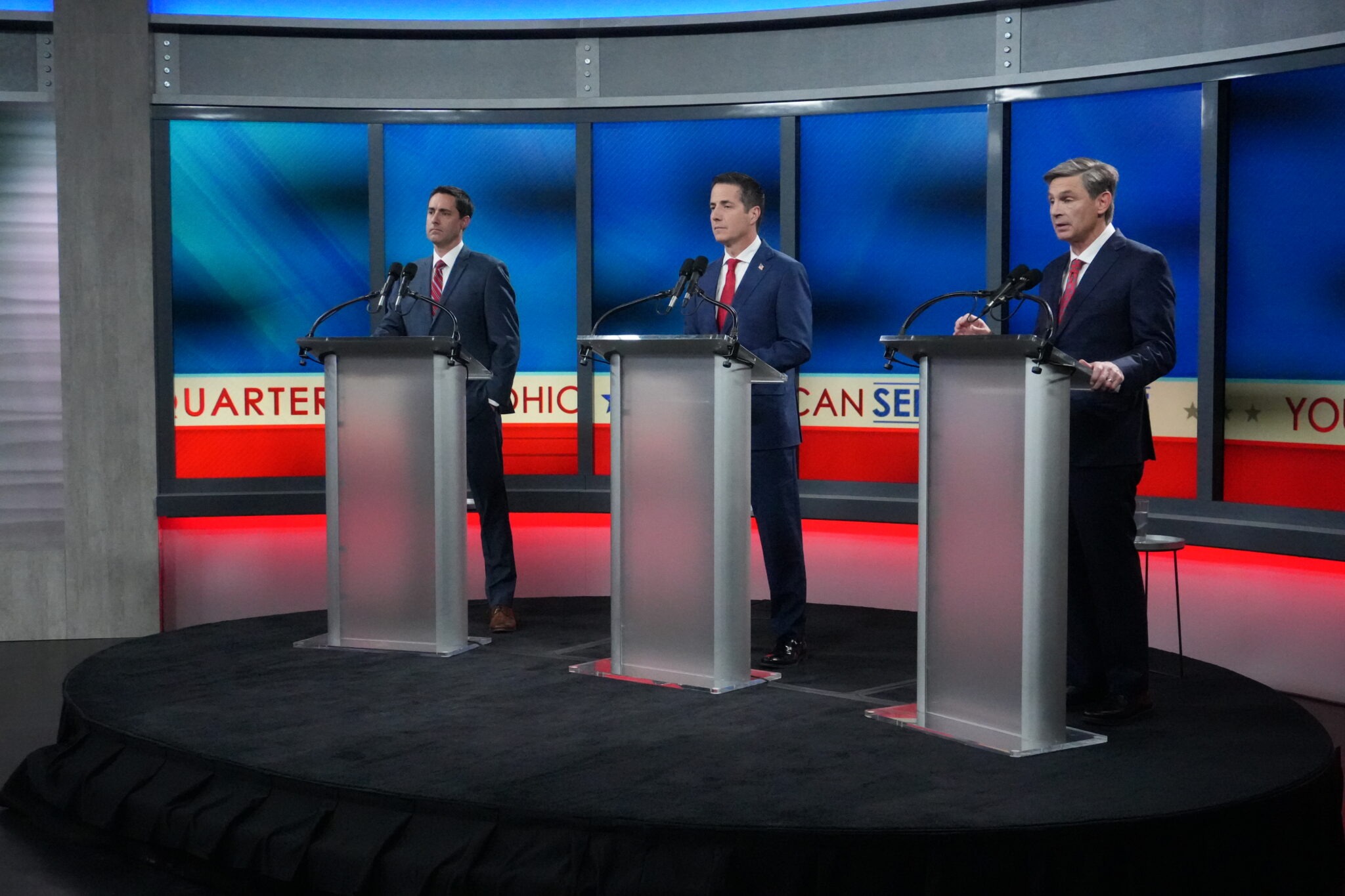
     (From left) Sec. of State Frank LaRose, Bernie Moreno, and state Sen. Matt Dolan, R-Chagrin Falls, on the debate stage. (Photo courtesy of WCMH-TV.)

    BY:  –  Ohio Capital Journal

    The three Ohio Republican candidates competing for their party’s U.S. Senate nomination met Monday in the race’s first televised statewide debate.

    State Sen. Matt Dolan, R-Chagrin Falls, Ohio Sec. of State Frank LaRose, and Cleveland-area businessman Bernie Moreno tussled over issues like immigration, abortion and the economy. Each insists they should be the state’s Republican standard bearer, while their competitors would fall flat against Ohio Democratic U.S. Sen. Sherrod Brown.

    The debate sets the stage for what could be a consequential and highly competitive race. While presidential campaigns have largely moved away from Ohio to focus on other battlegrounds, the state could help determine who controls the closely divided Senate.

    Ohio’s primary election is March 19.

     Ohio’s first televised statewide U.S. Senate debate for 2024. (Photo courtesy of WCMH-TV.) 

    Immigration

    The debate kicked off with a discussion of immigration and the U.S.-Mexico border. It’s been a perennial issue for Republicans and one that all three candidates have made a centerpiece of their campaigns. But the rhetoric has grown sharper since Ohio’s last U.S. Senate campaign in 2022.

    During the last cycle, now-U.S. Sen. J.D. Vance, R-OH, argued cartels should be designated terrorist organizations. Now, all three Republican candidates embrace the idea.

    Does LaRose agree the U.S. should use drone strikes against them? “100%,” he said, adding, “we must define these cartels as foreign terrorist organizations and use the full force of the U.S. military and the U.S. federal government to kill them so that they can’t kill our fellow Americans.”

    LaRose has also proposed deploying three military divisions to the border.

    Moreno criticized that rhetoric as “irresponsible.”

    “We have to work with Mexico to give Mexico the option,” he argued, “They can be our largest legal trading partner or our largest illegal trading partner — they can’t be both.”

    Similarly, Dolan argued the administration should threaten to withhold aid and trade with Mexico to compel its participation in fighting cartels.

    But all three candidates readily staked out an even more radical position — ending birthright citizenship. “Birthright citizenship is a bad idea,” LaRose argued, adding people who came to the country illegally should not be able to “take advantage of that.”

    It’s an idea former President Donald Trump has dangled for years, but birthright citizenship is guaranteed by the Fourteenth Amendment.

     Sec. of State Frank LaRose, left, and Bernie Moreno. (Photo courtesy of WCMH-TV.) 

    Abortion

    The candidates also made their case for a national abortion ban — even if they quibbled with the terminology.

    “You’re using that word, I’m not,” Moreno argued before pitching “a 15-week floor where there’s common sense restrictions after 15 weeks.”

    Dolan signed on to 15 weeks, with “the three exceptions,” presumably rape, incest, and health of the mother.

    LaRose argued “it’s not enough to be pro-birth” and insisted “we need to make sure there are supports available” for prospective mothers.

    Still, like the others, LaRose argued, “the states can set their own standards, but there should be a bare minimum that we look at at the federal level.”

    But after the U.S. Supreme Court’s decision overturning Roe v. Wade sent abortion policy back to the states, the moderators pressed the candidates on why they believe federal lawmakers should be involved at all.

    “I don’t want it to be a federal issue,” Dolan insisted, “but I don’t want late term abortions to be the norm in the United States of America because that is out of touch.”

    A few minutes later, however, the moderators asked Dolan whether federal lawmakers should pursue anti-trans legislation and he offered a different argument.

    “No,” he said, “the Tenth Amendment makes it clear. The issues that are not expressly stated in the Constitution are left to the states and in Ohio.”

     OH Sec. of State Frank LaRose, speaking, and Bernie Moreno. (Photo courtesy of WCMH-TV.) 

    The economy and federal spending

    When it comes to backing stopgap continuing resolutions to keep the federal government funded, LaRose and Moreno both readily embraced shutting down the federal government as a negotiation tactic.

    “You would never run a business that way,” Moreno said, dismissing the approach as kicking the can down the road. “Republicans need to go into a negotiation with nothing off the table,” he added.

    LaRose insisted “if the Democrats are unwilling to join us on border security, if they’re unwilling to get the out-of-control spending under control, you bet I’m willing to shut down the government.”

    He added it’s not something to “relish” but “absolutely a tool we have to be willing to use.”

    Dolan stands out for his experience actually drafting budgets as the Ohio Senate’s Finance committee chair. And while he said he wouldn’t use continuing resolutions, he emphasized his ability to get agreement.

    “You have to be willing to make difficult choices and I have a career where I have made difficult choices,” Dolan argued, “They always haven’t been the best political choice for me, but they’ve always been the best for Ohio.”

     Bernie Moreno, left, and state Sen. Matt Dolan, R-Chagrin Falls. (Photo courtesy of WCMH-TV.) 

    The Trump factor

    Moreno got the former president’s endorsement late last month — a boon for the candidate after Trump’s backing helped propel Vance’s primary victory in 2022.

    LaRose had sought Trump’s endorsement as well, and after falling short, argued what matters is who will have the president’s back in the Senate. But Moreno pushed back.

    “The reality is he did endorse me,” Moreno insisted. “He knows who Frank LaRose is and doesn’t think that Frank will have his back and understands that dynamic.”

    In this campaign, and his unsuccessful run in 2022, Dolan has made a point of not seeking Trump’s approval. He insists “I’m about enacting Trump policies,” but that his chief focus is on Ohio voters.

    “They know that I will fight for Ohio,” Dolan argued, “and they also know the only thing you can trust about my two opponents is that when the political winds change, they will change with it.”

    It’s one of the few areas in which the candidates diverge, even if it’s more a matter of style than substance.

    A much more significant divergence is evident when it comes to funding for Ukraine. All three have vocally supported aid for Israel — LaRose quoting the Bible in doing so. But when it comes to Ukraine, LaRose contends “not another penny will go to Ukraine until we’ve secured the southern border.”

    “The world’s most exceptional nation can do things to make sure that our world is safer and more importantly, that America is more secure,” LaRose argued, “and that means that we need to create the circumstances where the fight in Ukraine can end very rapidly.”

    Moreno wants nothing to do with additional aid to Ukraine, arguing instead “what we need to do is drive towards peace and end the killing in Ukraine.”

    But Dolan, noting he represents a substantial Ukrainian population, said he views the issue differently. “This isn’t a balance sheet war for them,” he said, “this is real.”

    “If the United States does not continue to provide ammunition, weaponry, and aid to Ukraine, then Ohio boys and girls will be fighting Russia, in Poland, Western Europe or the Baltics,” Dolan argued.

    “That is a result of their policies,” he said of LaRose and Moreno.

    Democratic prebuttal

    Meanwhile, Democrats in Ohio are feeling a bit optimistic after recent victories for marijuana and abortion rights ballot measures. After voters approved Issue 1, enshrining abortion access in the state constitution, the Ohio Democratic Party began arguing abortion would be on the ballot again in 2024. All three Republican candidates, party chair Liz Walters argued, support a national abortion ban.

    Even as Republicans have tried to steer the race onto more favorable territory, former President Donald Trump has dragged it back — calling the repeal of Roe v. Wade during his administration “a miracle.

    In a call with reporters before Monday’s debate, the party aimed to keep the issue front and center. Dr. Catherine Romanos, a family doctor in Columbus, said her patients “breathed a sigh of relief” after the passage of Issue 1 last November.

    “They asked me less often if what they’re doing is breaking the law and they seem confident to come and get the care that they need,” she said.

    Echoing the warning that Republican candidates would support national abortion restrictions, Romanos argued “They think they know better than Ohioans. They’re wrong.”

    Follow OCJ Reporter Nick Evans on Twitter.


    Nick Evans
    NICK EVANS

    Nick Evans has spent the past seven years reporting for NPR member stations in Florida and Ohio. He got his start in Tallahassee, covering issues like redistricting, same sex marriage and medical marijuana. Since arriving in Columbus in 2018, he has covered everything from city council to football. His work on Ohio politics and local policing have been featured numerous times on NPR.

    MORE FROM AUTHOR

  • Ohio Secretary of State signs voter data sharing agreements with three states

    Ohio Secretary of State signs voter data sharing agreements with three states

    BY:  Ohio Capital Journal

    Ohio Secretary of State Frank LaRose has struck a deal to share voter data with three other Republican-led states. The agreement comes roughly six months after LaRose chose to exit a much larger, bipartisan interstate compact known as ERIC.

    Ohio’s new agreements give the state access to interstate voter information on its own terms. When LaRose announced Ohio was backing out of the compact, he praised that “a al carte” model.

    But even with three new partner states, Ohio will get a lot less of that information than it got from ERIC.

    LaRose’s new deal

    Under the agreements, Ohio will share voter data with elections officials in Florida, Virginia and West Virginia. Those states in turn will give Ohio access to their voter rolls. However, LaRose’s announcement offers scant details about scope and terms of the agreements.

    In a press release, LaRose touted “state-specific data sharing and security protocols.”

    “Ohio took the lead on this election integrity project,” LaRose said, “and it’s only one aspect of the work we’re doing to keep our elections honest as we prepare for the next presidential election year.”

    Unlike the previous the data sharing system, LaRose inked three separate agreements with each individual state. The secretary said the data will allow both states to identify cross state voter fraud and duplicate registrations. Ohio Capital Journal has requested those agreements, but they were not immediately made available.

    Amanda Grandjean, a deputy assistant and senior advisor in LaRose’s office, said they anticipate additional agreements with other states.

    “These new agreements came from a 27-state working group that formed earlier this year in hopes of finding a more durable and accountable solution to cross-state data sharing that fit each state’s individual needs,” Grandjean said.

    Grandjean led negotiations on the three existing deals. She expressed confidence more will follow as states address “legal and cybersecurity protocols.”

    The deal they left behind

    Previously, Ohio was part of ERIC, the Electronic Registration Information Center. State elections officials lead the organization, and it pools voter data from member states. Using that combined database and information from federal sources, ERIC helped members maintain accurate voter rolls.

    It also enabled them to identify voters illegally casting ballots in different states for the same election. Last October, for instance, LaRose touted finding 75 incidents of alleged multi-state voter fraud.

    As part of ERIC’s efforts, though, member states had to encourage eligible but unregistered voters to register. In his letter to ERIC announcing Ohio’s decision to pull out, LaRose alluded to those requirements.

    Conservative media seized on those demands, describing them as “a left-wing voter registration drive.” ERIC member states fall all along the spectrum of conservative to liberal. Two of the most left-leaning states in the country, California and New York, have never joined.

    Since 2022, eight states, all of them Republican-led, have left ERIC. Texas’ resignation from the organization will take effect in October. After that, the organization will include 24 states and the District of Columbia.

    At a panel on election policy last month hosted by the National Conference of State Legislatures, even one of the conservative leaning panelists criticized the exodus. Matt Germer from the R Street Institute argued conservative states should reform ERIC rather than leave.

    “Instead, what we’ve seen are a number of states throwing the baby out with the bathwater.”

    But in LaRose’s announcement of his office’s new agreements, he took a parting shot at the organization.

    “This is a major new development,” LaRose insisted, “as states look to move beyond the old model of sharing voter data through an unaccountable third-party vendor.”


    Follow OCJ Reporter Nick Evans on Twitter.

    Nick Evans
    NICK EVANS

    Nick Evans has spent the past seven years reporting for NPR member stations in Florida and Ohio. He got his start in Tallahassee, covering issues like redistricting, same sex marriage and medical marijuana. Since arriving in Columbus in 2018, he has covered everything from city council to football. His work on Ohio politics and local policing have been featured numerous times on NPR.

    MORE FROM AUTHOR

  • Former GOP Chair Borges chair sentenced to five years in massive corruption case

    Former GOP Chair Borges chair sentenced to five years in massive corruption case

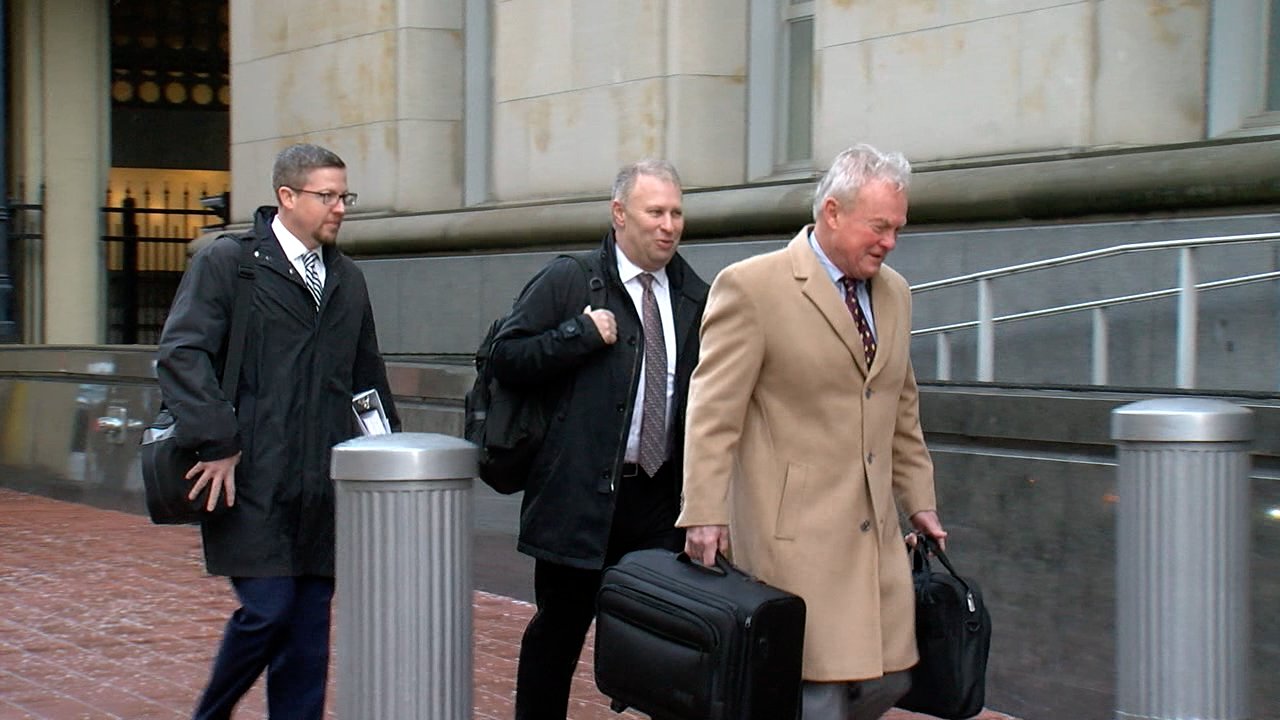
     Center, former Ohio Republican Party chair, and statehouse lobbyist, Matt Borges with his attorneys outside of the federal courthouse. Photo courtesy of WEWS.

    BY:  Ohio Capital Journal

    CINCINNATI — It was Matt Borges, the former chairman of the Ohio Republican Party, who was handcuffed by U.S. Marshals Friday after being sentenced to five years in prison for his participation in the biggest corruption scandal in state history.

    But federal prosecutors made clear that they were trying to send a message to other state leaders who played roles in the scandal and are now trying to pretend they didn’t.

    The sentencing of Borges, 51, follows the 20-year sentence U.S. District Judge Timothy Black meted out a day earlier to former Ohio House Speaker Larry Householder for masterminding the scheme. Akron-based FirstEnergy and other Ohio utilities ponied up more than $60 million between 2017 and 2020 to pass and protect a $1.3 billion ratepayer bailout that was mostly intended to benefit FirstEnergy.

    Borges received a lesser sentence because he was only involved in 2019, when FirstEnergy funneled $38 million into a dark-money group that funded an ugly, falsehood-strewn campaign to defeat a citizen-initiated repeal of the unpopular bailout. Because those voices were squelched — and because Ohio’s Republican legislature refuses to repeal the corrupt bailout — Ohioans continue to be harmed by the racketeering conspiracy, said Assistant U.S. Attorney Matthew Singer.

    The bulk of the subsidies — those going to two nuclear plants in Northern Ohio and a fee to “recession-proof” FirstEnergy — have been suspended. But Ohio ratepayers continue to pay hundreds of millions to prop two coal plants owned by AEP and other utilities, including one that’s in Indiana.

    The effort to gather enough voter signatures to put a repeal of the bailout — House Bill 6 — failed after Borges bribed a worker with the petition drive $15,000 for inside information and opened lines of communication with Republican officeholders.

    At the same time, teams of “blockers” harassed and allegedly assaulted petition gatherers and Householder’s minions flooded the airways with ads falsely claiming that the repeal effort was really China’s bid to take over the Ohio energy grid.

    The scheme Borges participated in was meant to “prevent Ohio voters from exercising their right to reject this corruption,” Singer said. “Ohioans never had the opportunity to vote up or down on this legislation.”

    Singer also pointed the finger at people only speaking out about Householder now and not earlier.

    “It’s interesting that some people are piling on (Householder) after the fact,” he said. “So many knew what was happening in real time and did nothing about it. Not only did they do nothing about it, they helped facilitate it.”

    Ohio Secretary of State Frank LaRose in a Tuesday appearance on Cincinnati’s 700WLW claimed that everybody who knew Householder knew he was “a crook” at the time the mammoth conspiracy was taking place. However, LaRose never spoke out against the deal at the time. And in text messages presented to the jury, FirstEnergy CEO Chuck Jones said that LaRose — who also heads up the Ohio Ballot Board — was giving him “private” updates about the signature-gathering effort.

    LaRose has refused to explain whether he was in communication with Jones or what he might have told him, but Singer, the prosecutor, seemed to refer to the state’s top elections official on Friday.

    Not only did Householder, Borges and their Republican allies squelch a citizen-initiated attempt to repeal the corrupt utility bailout, the gerrymandered legislature is now putting Issue 1 on the Aug. 8 ballot. It would make it virtually impossible for citizens to initiate amendments to the state Constitution. LaRose, a major supporter of the move, claims it will reduce corruption in Ohio.

    During Borges’ sentencing Friday, Singer decried the fact that many of the uncharged players in the racketeering scandal continue to thrive on Capitol Square. They include mega-lobbyist Robert Klaffkey, whom co-defendant Juan Cespedes testified slid a check for $400,000 in FirstEnergy dark money across a table to Householder during a 2018 meeting. Klaffkey denied sliding the check, but he didn’t deny being present.

    Singer said that it was remarkable that Klaffkey was “comfortable sitting in a room and sliding a $400,000 check to a public official.”

    Klaffkey is hardly alone.

    Megan Fitzmartin was paid hundreds of thousands as she aided Householder and co-defendant Jeffrey Longstreth in creating a Householder-friendly Republican majority in the state House. Now she’s policy director for the Republican supermajority in Ohio’s gerrymandered House.

    Corruption — and tolerance of it — corrodes our political foundation, Singer said.

    “Once corruption takes hold democracy itself becomes a charade,” he said.

    Cespedes and Longstreth are yet to be sentenced and U.S. Attorney Kenneth L. Parker on Thursday hinted that others might yet be charged in the scandal.


    Marty Schladen
    MARTY SCHLADEN

    Marty Schladen has been a reporter for decades, working in Indiana, Texas and other places before returning to his native Ohio to work at The Columbus Dispatch in 2017. He’s won state and national journalism awards for investigations into utility regulation, public corruption, the environment, prescription drug spending and other matters.

    MORE FROM AUTHOR

  • Ohio SOS gives yet another reason to make it a lot harder for voters to amend Constitution

    Ohio SOS gives yet another reason to make it a lot harder for voters to amend Constitution

    [vc_row][vc_column][vc_column_text]

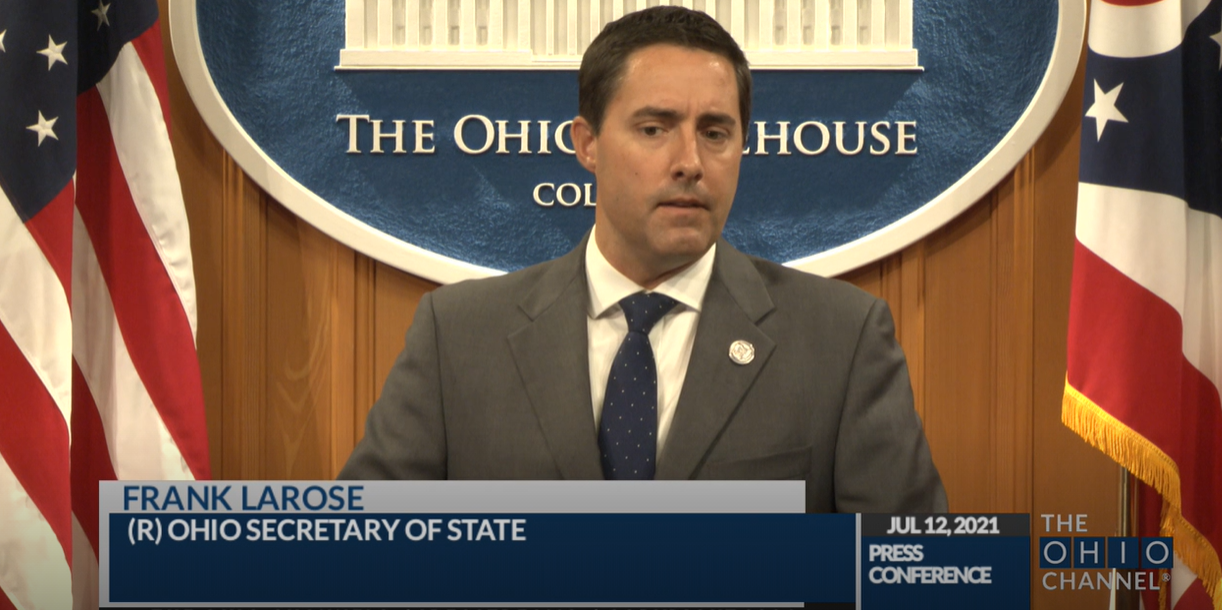
    Secretary of State Frank LaRose announces the referral of 117 cases of alleged voting and voter registration fraud stemming from the 2020 elections. Photo courtesy The Ohio Channel.

    BY:  Ohio Capital Journal

    Ohio Secretary of State Frank LaRose on Wednesday offered another rationale for making it much more difficult for voters to amend the Ohio Constitution. Now he’s saying it’s needed to fight a possible power grab like one that grew out of a massive bribery and money-laundering scandal.

    But LaRose didn’t mention in his op-ed that his name came up repeatedly in a criminal trial related to the scandal and that he appeared to be in close communication with some of its central figures.

    Nor did his office respond when asked whether LaRose ever spoke out against the corrupt utility bailout before the FBI started arresting people in July 2020.

    Slippery explanations

    The secretary of state — who is said to be eyeing a run for U.S. Senate next year — has been pushing to increase the portion of votes needed for a citizen-initiated amendment from 50% to 60%. As he and his allies have, they’ve given a shifting set of reasons for why that’s needed.

    Last November, during a lame-duck session of the legislature, LaRose and state Rep. Brian Stewart, R-Ashville, held a press conference saying that the change was necessary to prevent wanton amendments to the Ohio Constitution by monied special interests. But they didn’t point to any examples of how that had happened in the past.

    Many suspected an ulterior motive.

    LaRose sat on a Republican-dominated redistricting commission that last year ignored seven Ohio Supreme Court rulings saying that the legislative and congressional maps the commission produced violated anti-gerrymandering amendments overwhelmingly approved by Ohio voters. That prompted Maureen O’Connor, the outgoing Republican chief justice, to urge Ohioans to pass new, more-tightly written amendments this year.

    Ohio was also roiled when a highly restrictive abortion law took effect last June just after the U.S. Supreme Court overturned Roe v. Wade and horror stories poured out of abortion clinics and hospitals. An effort quickly started to get an amendment on the ballot protecting abortion rights after other protections easily passed in other states.

    But at last year’s presser, LaRose denied that his goal was to block anti-gerrymandering or abortion-rights amendments. The constitutional change he was advocating was a long-term, fundamental one that he didn’t seek to block such short-term disputes, he claimed.

    Just weeks later, however, Stewart, LaRose’s sidekick at the presser, sent a letter to his GOP colleagues in the House explaining the real reasons for making it harder for Ohioans to amend their constitution: to stop abortion-rights and anti-gerrymandering amendments that appear to be favored by strong majorities of Ohioans.


    [/vc_column_text][vc_raw_html]JTNDYmxvY2txdW90ZSUyMGNsYXNzJTNEJTIydHdpdHRlci10d2VldCUyMiUzRSUzQ3AlMjBsYW5nJTNEJTIyZW4lMjIlMjBkaXIlM0QlMjJsdHIlMjIlM0VIZXJlJTI2JTIzMzklM0JzJTIwdGhlJTIwZnVsbCUyMGxldHRlci4lMjBJdCUyMGFsc28lMjB0aWVzJTIwdGhlJTIwaXNzdWUlMjB0byUyMHJlZGlzdHJpY3RpbmclMjByZWZvcm0lMkMlMjBhbmQlMjByZXNwb25kcyUyMHRvJTIwdGhlJTIwb3JnYW5pemVkJTIwbGFib3IlMjBncm91cHMlMjB0aGF0JTIwcmFsbGllZCUyMGF0JTIwdGhlJTIwT2hpbyUyMFN0YXRlaG91c2UlMjB5ZXN0ZXJkYXkuJTIwJTNDYSUyMGhyZWYlM0QlMjJodHRwcyUzQSUyRiUyRnQuY28lMkZpbGhXTFBpV00wJTIyJTNFcGljLnR3aXR0ZXIuY29tJTJGaWxoV0xQaVdNMCUzQyUyRmElM0UlM0MlMkZwJTNFJTI2bWRhc2glM0IlMjBBbmRyZXclMjBUb2JpYXMlMjAlMjglNDBBbmRyZXdKVG9iaWFzJTI5JTIwJTNDYSUyMGhyZWYlM0QlMjJodHRwcyUzQSUyRiUyRnR3aXR0ZXIuY29tJTJGQW5kcmV3SlRvYmlhcyUyRnN0YXR1cyUyRjE2MDMxMzAzODQ3NDQ1MzQwMTYlM0ZyZWZfc3JjJTNEdHdzcmMlMjU1RXRmdyUyMiUzRURlY2VtYmVyJTIwMTQlMkMlMjAyMDIyJTNDJTJGYSUzRSUzQyUyRmJsb2NrcXVvdGUlM0UlMjAlM0NzY3JpcHQlMjBhc3luYyUyMHNyYyUzRCUyMmh0dHBzJTNBJTJGJTJGcGxhdGZvcm0udHdpdHRlci5jb20lMkZ3aWRnZXRzLmpzJTIyJTIwY2hhcnNldCUzRCUyMnV0Zi04JTIyJTNFJTNDJTJGc2NyaXB0JTNF[/vc_raw_html][vc_column_text]The attempt to rush a bill through lame duck last year failed.

    Now Stewart, LaRose and their allies are trying to pass it through Ohio’s now-unconstitutionally gerrymandered legislature. If it passes, it would put the measure requiring 60% of the vote to amend the state constitution on the ballot. And, since the vote would be under the existing rules, it would require just 50% of the vote to pass.

    Also on the pile of accusations that it’s a naked power grab is that LaRose, Stewart and their allies want to put the measure on the ballot in a low-turnout August election. They’re doing so just months after passing a bill that had LaRose’s support to eliminate such elections as costly and unnecessary — and three months before the abortion amendment is expected to hit the ballot.

    A new reason

    While he’s being accused of attempting a power grab, LaRose says he’s trying to stop them.

    On Tuesday, The Columbus Dispatch published an op-ed in which he furnished yet another reason to make it harder for voters to change the state Constitution. He cited an attempt by former House Speaker Larry Householder to pass an amendment changing the state’s term limits so Householder could stay speaker for another 16 years.

    It was part of a breathtaking scheme in which Householder and his allies took more than $61 million from Akron-based FirstEnergy and other utilities, used the money to make him speaker in January 2019, and then pass and protect a $1.3 billion ratepayer bailout that mostly went to FirstEnergy.

    Fresh off the passage of the bailout, Householder raised millions in early 2020 from FirstEnergy and AEP for his scheme that would allow him to stay longer in office. But it died with his arrest that July.

    It might seem ironic that LaRose would use a corruption scandal to gut a 1912 reform measure that was aimed at curbing corrupt, unresponsive government, but that’s what he argued. He said all it takes to change the Constitution now “is a well-funded, dishonest political campaign and a simple majority vote.”

    LaRose added that Householder planned to call his tenure-extension scheme “Ohioans for Legislative Term Limits, a deceptive name for a constitutional amendment that would more than double his term in office. It should come as no surprise that FirstEnergy Corporation, the company at the center of Householder’s racketeering scandal, agreed to bankroll the amendment campaign.”

    Significant omissions

    While he accused his opponents of “hysterical hyperbole” as he tries to make it 20% harder for voters to succeed in the already difficult process to amend the Ohio Constitution, there were some important things LaRose didn’t say in his Op-Ed.

    For starters, FirstEnergy didn’t only bankroll Householder in 2018 as the now-convicted former speaker elected a team of lieutenants who would hand him the speaker’s gavel. The utility also bankrolled LaRose to the tune of $25,000 that year as he ran for secretary of state.

    It was part of nearly $50,000 that the energy company — which signed a deferred prosecution agreement in the Householder scandal — has given LaRose, the campaign-finance tracker FollowTheMoney.org reports.

    And while LaRose is decrying the bailout now that there have been arrests and convictions, there was reason to know there was something wrong with it well before they took place.

    Insiders knew that somebody was burying Capitol Square in cash throughout the 2019 passage of House Bill 6, the corrupt utility bailout. That was especially true as FirstEnergy dumped what the FBI later determined was $36 million into a blatantly-dishonest-but-successful fight to beat back a repeal.

    Because the funds were non-disclosable 501(c)(4) dark money, it was impossible for the public to know exactly where they were coming from until the feds stepped in and used subpoenas and other special powers to find out.

    But HB 6 was such bad legislation and the campaign to stop the repeal so over-the-top that there was plenty of reason to suspect that somebody was being bought off to pass it. It was a massive corporate bailout that Householder and others were trying to officially declare a tax. Republican lawmakers who didn’t want to cast such a damaging vote described withering pressure from House leadership.

    Former friends

    LaRose’s office didn’t answer Wednesday when asked if the secretary of state ever spoke out against HB 6 before the FBI started making arrests.

    In the Cincinnati corruption trial that ran from late January to mid-March, federal prosecutors presented several communications to the jury that might indicate that LaRose was actually sympathetic to the effort to pass and protect the corrupt bailout.

    On July 23, 2019, as the repeal effort got underway, text messages flew between two prominent figures in the scandal: Matt Borges, the former Ohio Republican Party chairman who was convicted along with Householder; and Juan Cespedes, a lobbyist who pleaded guilty and cooperated with prosecutors.

    Borges told Cespedes he had received “a message from the secretary of state on the ballot-measure issue.”

    The men were hoping for help from LaRose. He’s chairman of the Ohio Ballot Board, which, along with Attorney General Dave Yost, has to approve the language of constitutional amendments before they’re circulated for the hundreds of thousands of needed voter signatures — and before they’re placed on the ballot.

    In the case of the HB 6 repeal, Yost initially sent the language back for revisions, then he and the ballot board approved it. But that wasn’t before the original 90 days opponents had to gather the signatures was whittled down to 53.

    In the end, time ran out before opponents could gather them. But at the beginning of the effort, Borges seemed to be talking to LaRose about what LaRose needed in exchange for his help.

    “LaRose is expecting us to be publicly supportive of him,” Borges said. “Apparently petitioners (for the repeal of HB 6) are going to call on him to step down from the ballot board because of ‘conflicts.’ He can be our friend in this process, so let’s be prepared to speak for him.”

    Continuing communication

    Later in the repeal fight, FirstEnergy’s two top executives discussed asking LaRose’s help with Yost. In addition to hamstringing the petition effort, supporters of the corrupt bailout wanted to have it officially declared a tax, and thus legally exempt from repeal.

    “I’ve been asked by (subsidiary FirstEnergy Solutions) to call Frank LaRose to get Frank to call Dave Yost,” Vice President Michael Dowling texted CEO Chuck Jones, according to messages put into evidence by prosecutors. “If Frank tells Yost that he believes HB 6 is a tax, Yost will come out publicly and say it, which (FirstEnergy Solutions) thinks helps with the Supreme Court. Frank is reluctant to make the call. I have a call in to Frank and I will ask him to do it.”

    LaRose may have been reluctant about making that call. But he apparently wasn’t reluctant to keep talking to the people who funded the scandal he’s now condemning and using as a reason to make it harder for voters to amend the Ohio Constitution.

    In October 2019 — shortly before the repeal effort failed — Jones sent a text to John Kiani, the chairman of the FirstEnergy subsidiary that was to receive $1 billion of the bailout. It indicated that both LaRose and Householder had been providing the FirstEnergy CEO with “private” information on the repeal effort.

    “For what it’s worth, LaRose and Householder think it’s game over,” Jones told Kiani. “But that is a private conversation unless they’ve told you the same thing. And Householder has a ‘quick fix’ anyway.”

    And then in November 2019 — just after the repeal failed — other messages indicated that LaRose wanted to cement a relationship with Kiani, the hard-charging former Enron executive whom Cespedes testified stood to make $100 million off the sale of FirstEnergy’s bailed-out nuclear and coal plants.

    Borges texted Cespedes that LaRose, “told me he wants to get to know Kiani, and I said, ‘Are you sure about that?’”

    Cespedes replied, “He will live to regret that.”[/vc_column_text][/vc_column][/vc_row]

    ____________________________________

    MARTY SCHLADEN

    Marty Schladen has been a reporter for decades, working in Indiana, Texas and other places before returning to his native Ohio to work at The Columbus Dispatch in 2017. He’s won state and national journalism awards for investigations into utility regulation, public corruption, the environment, prescription drug spending and other matters.

    MORE FROM AUTHOR

  • FirstEnergy exec tried to keep DeWine aide’s name off of $10M transaction

    FirstEnergy exec tried to keep DeWine aide’s name off of $10M transaction

    BY: MARTY SCHLADEN – Ohio Capital Journal

    In October 2019, as a battle raged over an attempt to repeal a $1.3 billion utility bailout, a FirstEnergy executive worked to keep the name of a senior aide to Gov. Mike DeWine off of a $10 million infusion of corporate cash into the fight. 

    The executive, Vice President Michael Dowling, did so even after an assistant told him it would violate IRS rules to not list the DeWine aide on the transaction, according to text messages presented Tuesday in the federal corruption trial of former Ohio House Speaker Larry Householder and lobbyist Matthew Borges. The men are accused of racketeering in a scheme to use $61 million from FirstEnergy in exchange for the massive bailout, most of which went to prop up the company’s failing nuclear and coal plants in order to make them attractive to buyers.

    DeWine has denied involvement in the arrangement even though he met with FirstEnergy executives and visited one of its nuclear plants in 2018 as he was seeking the governorship and FirstEnergy was lavishly funding Householder’s effort to elect sympathetic Republicans who would then vote to make him speaker. For his part, DeWine received $23,000 from the Akron-based utility for his campaign and his inaugural celebration, according to Ohio Citizen Action. He vowed to donate the money to charity following revelations of the scandal.

    The governor appointed as chairman of the Public Utility Commission of Ohio a former FirstEnergy consultant who was paid $4.3 million by the utility just before taking his seat on the commission. Even though he was supposed to be regulating the utility, the official, Sam Randazzo, played a role in writing the bailout legislation, according to documents released by the Ohio House. 

    In early 2019, DeWine also appointed FirstEnergy lobbyist Dan McCarthy to be his legislative affairs director, meaning McCarthy was in charge of representing DeWine’s interests before the General Assembly.

    In early 2017, while McCarthy was still working for FirstEnergy, Householder and his son, along with FirstEnergy CEO Chuck Jones and others, flew corporate jets to Washington, D.C. for fancy dinners and Donald Trump’s inaugural

    Just after that, McCarthy formed a 501(c)(4) group called Partners for Progress. Also known as a “dark money” group, it received $5 million from FirstEnergy within a few weeks of when McCarthy founded it.

    In an affidavit supporting Householder’s arrest, FBI Special Agent Blane Wetzel said Partners for Progress was “designed to conceal the nature, source, ownership, and control of the payments” from FirstEnergy and associated companies. Through the rest of 2018, McCarthy continued as president of Partners for Progress as it pumped FirstEnergy money into a Householder-controlled dark money group and funded the effort to make Householder speaker.

    The following year, McCarthy resigned that role to work for DeWine in the legislature as Householder shepherded the bailout legislation, House Bill 6. When a final version passed in July 2019, DeWine signed it the same day.

    But opponents quickly started a campaign to circulate petitions to put a repeal on the ballot. That prompted FirstEnergy to pump even greater sums into a “decline to sign” campaign aimed at thwarting the petitions.

    It funded xenophobic mailers and broadcast ads claiming without evidence that the repeal effort was a Chinese plot.

    “Who is knocking at your door?” began a mailer read in court Tuesday. “Foreign enemies have infiltrated our energy grid,” it added and said, ominously, that circulators of repeal petitions “are asking for your information.”

    In October 2019, executives with FirstEnergy and its generation-owning subsidiary seemed panicked that the repeal effort might succeed and they were planning to pump $10 million more into the effort to stop it — through Partners for Progress, the dark money group started by McCarthy, who was now a DeWine aide.

    Dowling, the FirstEnergy vice president, seemed to think it wouldn’t be a good look for the name of a DeWine official to show up on paperwork accompanying the huge transaction.

    “Please make sure Dan McCarthy’s name is not on the filing,” Dowling said in a text message to Partners for Progress Treasurer Michael Vanburen that was presented in court Tuesday.

    Vanburen replied that even though McCarthy was no longer president of the dark money group, IRS rules required that his name be on the filing. Dowling didn’t accept that.

    “There must be a creative way to handle this,” he said. “It’s important that (McCarthy’s) name not be listed.”

    Asked if DeWine asked that McCarthy’s name not be used in paperwork regarding the money transfers, Press Secretary Dan Tierney in an email said, “No. Dan McCarthy resigned from Partners for Progress in December 2018. Dowling’s comments, as you have relayed them to me, do not match the timeline of McCarthy’s affiliation with Partners for Progress.”

    DeWine seems to have been in touch with FirstEnergy executives around the time of the repeal effort. Later in October 2019, FirstEnergy CEO Jones texted Vice President Dowling to say, “DeWine’s on board. I talked to him on Wednesday.”

    According to Jones, they talked about whether the repeal HB 6 effort would gather enough valid signatures to get the measure on the ballot.

    “He said their valid rate was less than 30%,” Jones said of DeWine.

    For his part, Tierney said, “The Governor does not have any recollection of such a conversation.”

    In a later text conversation, Jones said he’d received similar assurances from Secretary of State Frank LaRose.

    After arrests were made in the House Bill 6 scandal, DeWine staunchly defended McCarthy and kept him in his administration for more than a year, until Sept. 24, 2021.

    “As far as I know, Dan McCarthy has been well-respected for many, many years, long before he started working for me as our legislative director and I have faith in his integrity,” DeWine said in early 2021 as questions about the role McCarthy’s dark money group played in the bribery and money laundering scandal continued.

    In another trial-related matter, U.S. District Judge Timothy Black on Tuesday said that he had released a second juror, this time for testing positive for COVID. An earlier juror had been released for refusing to wear a mask.

    That brings the number of alternate jurors to two for a trial that is expected to last into early March.

  • Local election workers tell secretary of state they can’t be ‘complicit in illegitimate elections’

    Local election workers tell secretary of state they can’t be ‘complicit in illegitimate elections’

    BY: SUSAN TEBBEN – Ohio Capital Journal

    A group of election precinct officials have sent a letter to the Ohio Secretary of State say they “cannot defend democracy” when the Ohio Redistricting Commission, including Secretary of State Frank LaRose, aren’t doing the same, they say.

    Election workers in 23 counties signed on to a letter asking the commission and LaRose to heed their warnings that the maps adopted by the commission and pushed along by a federal court are unconstitutional, and therefore would push precinct workers to be a part of elections “when the outcomes of those elections have already been predetermined by politicians who manipulated districts to prevent fair competition.”

    “As precinct election officials, we cannot in good faith participate in a primary election on August 2 if it proceeds with unconstitutionally gerrymandered districts, and we advise our fellow poll workers to not be made complicit in illegitimate elections,” the letter stated.

    The officials said they are continuing to collect signatures on the letter, and cite Ohio Attorney General Dave Yost in arguing more time exists for the General Assembly to change election dates and methods before the November general election.

    The Ohio Redistricting Commission has also been given a June 3 deadline by the Ohio Supreme Court to resubmit a legislative district plan, after finding the maps adopted invalid for the second time.

  • Ohio Secretary of State says he didn’t call for Supreme Court chief’s ouster

    Ohio Secretary of State says he didn’t call for Supreme Court chief’s ouster

    (Photo by Susan Tebben, OCJ.) 

    BY: MARTY SCHLADEN – Ohio Capital Journal

    Ohio Secretary of State Frank LaRose on Tuesday denied that he had called for the impeachment of Ohio Supreme Court Chief Justice Maureen O’Connor after she had repeatedly ruled against LaRose and the rest of her fellow Republicans on the Ohio Redistricting Commission.

    LaRose’s comments come four days  after he told a group of Union County Republicans that Justice O’Connor had “violated her oath of office” and that for the legislature to impeach her  “may be the right thing to do”.

    Audio obtained by the OCJ of Secretary Frank LaRose speaking at a Union County Republicans breakfast last week.

    The state’s top elections official was at the Franklin County Board of Elections on Tuesday as he kicked off early voting for most of this year’s primaries. It won’t include ballots for state legislative candidates because of a dispute over gerrymandering — a fracas over the boundaries of the districts in which members of the state House and Senate will run. 

    Tired, apparently, of partisan gerrymandering, Ohio voters in 2015 overwhelmingly approved a constitutional amendment that requires districts be drawn so that the partisan makeup of the legislature resembles the partisan breakdown in recent statewide elections. 

    That’s not how things stand now. Republicans have won recent elections with about 54% of the vote, but they control 65% of the seats in the state House and 78% of the state Senate.

    This year, using the new system for the first time, the five Republicans on the seven-member redistricting commission have passed four sets of maps that O’Connor and the three Democrats on the Supreme Court have ruled are too partisan.

    Republican Justice Pat DeWine has continued to sit in the case even though several ethics experts have said he has a clear conflict because his father, Gov. Mike DeWine, is a member of the redistricting commission. Justice DeWine has voted in favor of upholding the maps that his father and the other Republicans have passed.

    Meanwhile, Republican frustration with O’Connor, who will leave the court at the end of the year, has been boiling over. Some Republican members of the legislature last month floated the idea of impeachment.

    Gov. DeWine called the notion “extraordinary” and said it’s a bad idea to talk about removing judges whenever one disagrees with their decisions. But LaRose, the secretary of state, wasn’t so reticent on Friday when asked at a Union County Republican breakfast if O’Connor should be impeached.

    “I think that she has not upheld her oath of office, and that to me is a basic test of a public servant,” he said. “That’s up to the state legislature, whether they want to impeach the chief justice or not. I certainly wouldn’t oppose it.”

    LaRose stipulated that any impeachment would take so long that “it may feel really good, and it may be the right thing to do because she’s violated her oath of office by making up what she wants the law to say instead of interpreting what it actually says. But I don’t know if it would accomplish much, but I’d be fine with it if they did.”

    At Tuesday’s event, LaRose tried to draw a distinction between saying impeachment may be the right thing to do and actually calling for it.  

    “The thing that I did was not call for anybody to be impeached,” he said. “I answered a question that was asked at a little breakfast gathering where I was with a group of supporters in Union County and what I said was, ‘It’s up to the state legislature.’ There are 33 senators and 99 representatives. If they gather evidence and hold that trial for an impeachment, if they decide as the people’s representatives to do that, then I don’t oppose that.”

    LaRose and some legislative Republicans are not alone in being frustrated by the redistricting battle. For the second time, the Supreme Court has ordered members of the commission to show why they shouldn’t be held in contempt for failing to pass maps that comply with the court’s interpretation of the state Constitution. Responses were submitted on Monday.

    Some members have argued that they shouldn’t be held individually liable for the actions of a seven-member body they don’t control. And some have argued for the court to simply impose maps on the commission would overstep its powers as a judicial body.

    LaRose on Tuesday said holding contempt proceedings is another overreach.

    “It’s a ridiculous idea that a co-equal branch of government would be held in contempt for doing our job in a way that the court doesn’t like,” he said. “What we have attempted to do all throughout this process is follow the rules that are set out in the Constitution — and not just the one part of the Constitution that the court seems to be focusing on, but all of the line-drawing rules in the Ohio Constitution.”

    LaRose was asked if he was attacking a co-equal body by publicly saying that he, a statewide official, was OK with the impeachment of a Supreme Court justice who had ruled against him.

    “Certainly not,” he said. “The Constitution lays out the process for impeaching and removing a justice from the Ohio Supreme Court or other elected officials. That’s not a power I have. I can express my opinion as a citizen just like any of us can and what I was telling this group of supporters in Union County a couple days ago is that if the state legislature found evidence and carried out that process, then I wouldn’t stand in the way of that.

    “And I certainly have concerns that the court has delved into really the politics of this more than they should have. But that’s a choice up to the General Assembly and certainly not a choice I get to make. I was simply expressing my opinion,” he said.

    Democratic Secretary of State candidate Chelsea Clark said LaRose’s comments about O’Connor make him unfit for his office.

    “It’s now obvious to anyone that Frank LaRose can’t be trusted to administer organized elections and now when he’s called out for the chaos, he wants to blame the referees,” she said in an email. “To claim ‘it would feel good’ to impeach the chief justice because he disagrees with the court’s rendering is pathetic. For someone who claims to believe in separation of powers, Secretary LaRose has no problem trying to overturn the will of the people.”

    LaRose on Tuesday said primary elections for legislative seats most likely will take place in August.

  • LaRose would ‘be fine with’ chief justice’s impeachment over redistricting rulings

    LaRose would ‘be fine with’ chief justice’s impeachment over redistricting rulings

    Ohio Secretary of State Frank LaRose talks to reporters. (Photo by Susan Tebben, OCJ.)

    Ohio elections chief says O’Connor ‘violated her oath’ by rejecting GOP-drawn districts

    BY: MARTY SCHLADEN – Ohio Capital Journal

    Ohio Secretary of State Frank LaRose on Friday said he “certainly wouldn’t oppose it” if the legislature impeached Ohio Supreme Court Chief Justice Maureen O’Connor over her joining in rulings rejecting GOP-generated maps for Congress and the legislature, according to a recording of a breakfast meeting with Union County Republicans.

    LaRose, who is not a lawyer, said in the recording his fellow Republican “violated her oath of office by making up what she wants the law to say instead of interpreting what it actually says.”

    O’Connor joined the court’s three Democrats in ruling multiple times that the congressional and legislative maps approved by a majority vote of Republicans violated the Ohio Constitution by unfairly favoring the GOP. 

    Some Republican members of the legislature had previously raised the possibility of impeaching O’Connor, who will leave office at the end of the year. But LaRose, the state’s top elections official, is apparently the first of the five Republicans on the state’s seven-member redistricting commission to say he’d go along with it.

    Such calls to effectively end the career of a judge because her rulings didn’t go the GOP’s way have been too extreme for at least one other Republican on the commission — Gov. Mike DeWine.

    “This is an extraordinary measure to take,” he said when the idea was floated earlier this month. “I think we don’t want to go down that pathway, because we disagree with a decision by a court, because we disagree with a decision by an individual judge or justice. Not a good idea.”

    LaRose’s spokesman was sent a transcript of the secretary’s comments about O’Connor. The spokesman was also asked whether LaRose believes judges should be removed whenever LaRose thinks they misinterpret the law — and whether such a belief undermines the entire purpose of having courts. The spokesman, Rob Nichols, didn’t respond to an email and a phone call.

    LaRose made his comments about O’Connor at the Union County Republican Breakfast on Friday, according to a recording obtained by the Capital Journal. The source of the recording provided it on the condition of anonymity.

    County Republican Party Chairman Justin Hogan didn’t immediately respond to an email requesting comment.

    On the recording, the secretary of state was asked, “Can you talk about the ex-Republican O’Connor, should she be impeached?”

    LaRose replied: “I think that she has not upheld her oath of office, and that to me is a basic test of a public servant. That’s up to the state legislature, whether they want to impeach the chief justice or not. I certainly wouldn’t oppose it.”

    He was referring to repeated rulings in which O’Connor sided with the court’s Democrats in saying that maps passed by the Republican majority on the redistricting commission were illegally gerrymandered. 

    In recent statewide elections, voters have supported Republicans by roughly a 54-46 margin. But the maps produced by Republicans favor the party to have much greater representation in the legislature and Congress.

    They violate constitutional amendments overwhelmingly passed by Ohio voters requiring that the partisan makeup of the state legislature and congressional delegation resemble the general partisan makeup of the state, O’Connor has ruled.

    GOP members of the commission were called to the state Supreme Court on Monday to show why they shouldn’t be held in contempt after ignoring maps generated by independent commissioners and passing another set of maps that again heavily favors Republicans.

    The impasse has created a constitutional crisis in Ohio, with deadlines approaching for the primary, but no district boundaries in which candidates can run. LaRose on Friday acknowledged that impeaching O’Connor wouldn’t end the crisis, but on the recording said it might “feel really good.”

    “I don’t know if it will solve our current problem because the impeachment process would take a couple months and we’re going to need to have district lines way before that,” he said. “And so it may feel really good, and it may be the right thing to do because she’s violated her oath of office by making up what she wants the law to say instead of interpreting what it actually says, but I don’t know if it would accomplish much, but I’d be fine with it if they did.”

    LaRose didn’t explain how O’Connor misinterpreted the law, much less how such a misinterpretation would violate a justice’s oath of office.

    The secretary of state’s sharp partisan tone is a stark departure from the bipartisan one LaRose struck when he initially ran for office in 2018.

    At the time, he told The Columbus Dispatch that he wanted to “bring a sense of civility and bipartisanship to how we conduct elections.”

    He added: “I want to be part of a party that wins elections because we work harder, have better candidates and we have better ideas.”

    More recently, LaRose has taken a harsher line, including taking to Twitter twice in February to make sweeping, misleading attacks on a supposedly partisan news media, and saying former President Donald Trump is right to make his claims about voter fraud.

    The Associated Press noted on Thursday that LaRose posted the first such tweet a day after learning he’d drawn two opponents in the Republican Primary. Both have parroted Trump’s false claims about rampant voter fraud in the 2020 presidential election, AP reported.