Tag: Frank LaRose

  • Unfinished business: 5 legislative priorities in Ohio pushed to 2021

    Unfinished business: 5 legislative priorities in Ohio pushed to 2021

    By Tyler Buchanan and Ohio Capital Journal

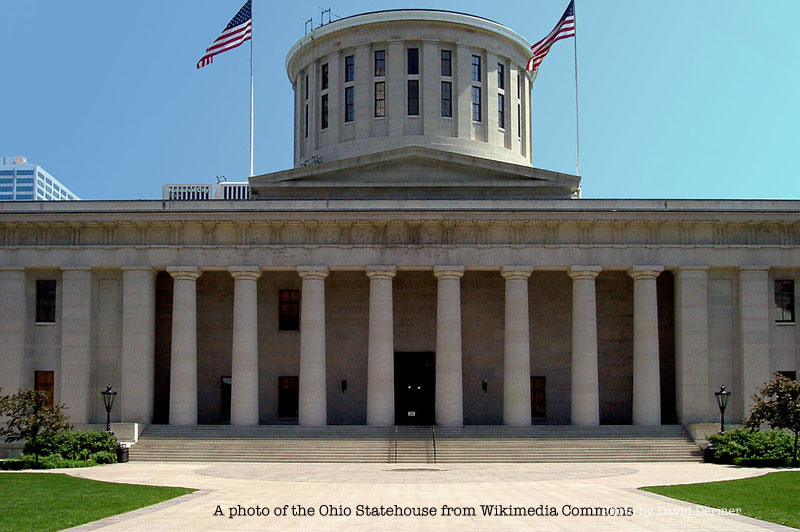
    Columbus, Ohio – The 133rd Ohio General Assembly wrapped up its term with a flurry of lame-duck activity last week, closing out a challenging year of legislating amid a global pandemic. 

    Lawmakers hurried to get priority bills passed and sent to Gov. Mike DeWine’s desk for a signature before the two-year term ended. There were, however, a number of major legislative projects that did not get passed.

    Here are some of the priorities falling to the 134th General Assembly, which starts in January:

    What to do with House Bill 6?

    After months of deliberation about House Bill 6, lawmakers have decided to punt any repeal or replacement effort to 2021.

    HB 6 is the $1.3 billion nuclear bailout bill at the center of what has been called the largest corruption scheme in state history. 

    In the days after Speaker Larry Householder and four other political operatives were arrested in July, one thing was clear: Ohio lawmakers needed to do something about the tainted bill. 

    DeWine, who signed the bill into law in 2019, called for its repeal. Householder was removed as House Speaker. His replacement, Rep. Robert Cupp, R-Lima, said one of the first priorities of his speakership would be addressing HB 6. 

    Davis Bees Nuclear Power Station with electricity pylons, Ohio. Getty images.

    Cupp did create a new “House Select Committee on Energy Policy and Oversight,” which met nine times between September and December to hear testimony on various attempts to repeal HB 6.

    Members could not come to an agreement on how to best approach HB 6; some wanted a full repeal, others wanted only certain portions replaced and a few defended the whole bill as being good public policy, even if it did come about through sordid means. 

    Two of those involved have already pleaded guilty in federal court; the cases against Householder and two others are ongoing.

    Householder was reelected to another term and it remains to be seen if the chamber will take a vote in 2021 to expel him. When Cupp was elected as speaker in July, he indicated such a vote would wait until after the new term starts.

    School spending reform will take more time

    The Ohio Supreme Court ruled the state’s school funding model was unconstitutional back in 1997. Decades later, lawmakers are still working to figure out a constitutional and equitable substitute.

    A bipartisan funding overhaul passed the House in early December, but did not make it through the Senate. 

    Sen. Matt Dolan, R-Chagrin Falls, who chairs the Senate Finance Committee, wrote in a December letter “there is not enough time in the legislative session for the Senate to have the in-depth hearings this bill deserves.” Dolan suggested the new formula could be passed as a piece of the next state budget, which will be decided in the first half of 2021.

    Republicans still concerned about pandemic authority

    For all the condemnation leveled against Ohio’s pandemic response by Republican lawmakers in 2020, the legislature achieved little this year in the way of curbing the government’s executive powers.

    Between May and December, Republicans introduced numerous bills targeting the pandemic authority of the governor and the Ohio Department of Health (ODH). Only a few of them passed, and DeWine followed through on a pledge to veto any bill restricting ODH’s ability to issue health orders meant to stem the spread of COVID-19.

    DeWine vetoed a bill over the summer which would have reduced the penalties for violating a public health order. Lawmakers did not seek a veto override. 

    Gov. Mike DeWine is pictured during his statewide address on Wednesday, Nov. 11. Photo courtesy Ohio Channel.

    More recently, DeWine vetoed a bill to prevent ODH from issuing widespread quarantine orders (it also would’ve given lawmakers authority to vote down any public health orders). Despite protests and pressure from conservative lawmakers to override the veto, such a vote was not taken during the lame-duck session.

    Late in the term, lawmakers debated efforts to make future health orders more fair to business owners, should they be necessary. At other points this year, legislators said they wanted to address the state’s pandemic authority for future crises beyond the coronavirus. Those efforts may come up again in 2021.

    Campaign finance and election reform

    These were two hotly-debated topics this year in large part because of the presidential election cycle and the House Bill 6 scandal.

    As the Ohio Capital Journal has reported, lawmakers proposed a wide array of improvements to the state’s election system over the past term — from automated voter registration to online absentee ballot requests. Some legislators expressed worry about approving reforms during an election year, which may provide an opportunity for reforms to be heard during an “off year” like 2021. 

    The HB6 scandal involved allegations of bribery money being funneled through “dark money” groups in order to influence Ohio elections and public policy. These groups are registered nonprofits which are not required to disclose who funds them. 

    Ohio Secretary of State Frank LaRose, whose office oversees campaign finance in the state, came out in favor of improved transparency when it comes to “dark money groups.” He supported legislative efforts which followed Householder’s arrests to require such groups to publicly disclose their financial activity. 

    Secretary of State Frank LaRose is flanked by state Reps. Gayle Manning and Jessica Miranda during a press conference in support of HB 737.

    A bipartisan bill proposing reforms to the state’s campaign finance system did not receive a hearing in 2020, but these efforts may carry over to the new term.

    Split opinions on criminal justice reform

    There was much attention paid to the legislature’s work to reform the Ohio criminal justice system, with plenty of disagreements leading to mixed results.

    Lawmakers passed Senate Bill 1, which expands access to drug treatment programs in lieu of convictions and broadens the description for criminal records that may be sealed. 

    A separate bill to reclassify low-level drug offenses from felonies to misdemeanors passed the Senate last June, but was not taken up for a vote during the House’s lame-duck session. The bill sought to divert drug offenders into treatment rather than criminal punishment.

    Despite bipartisan support in the Statehouse and among civil rights groups, the bill remained controversial among law enforcement groups and prosecutors. The Ohio State Bar Association came out against the bill, arguing in testimony that some drug offenders “must have serious consequences hanging over their heads like the threat of a felony and prison time” in order to commit to a treatment program. 

    Rep. Bill Seitz, R-Green Twp., a supporter of the bill who will serve as Majority Floor Leader next term, told The Cincinnati Enquirer that work will continue in 2021 on criminal justice reform.
  • Where Ohio’s GOP leaders are on the outcome of the election

    Where Ohio’s GOP leaders are on the outcome of the election

    By Marty Schladen – November 9, 2020 (Ohio Capital Journal)

    Some, but not all, Ohio Republican officials on Monday appeared to be distancing themselves from Donald Trump’s unsubstantiated claims that the Nov. 3 election is being stolen from him.

    Trump racked up early leads — particularly in some battleground states where Republican lawmakers refused to allow early processing of mail-in votes. A massive portion of the electorate was expected to take advantage of mail-in voting because of the coronavirus pandemic and some states, such as Ohio, were ready to start processing them weeks before Election Day.

    Also, Trump for months has been discouraging his supporters from voting by mail. So it was widely expected in states like Pennsylvania, Michigan and Wisconsin that most of the early results to come in would be from Election Day voting and would heavily favor Trump. Those would be followed by mail-in ballots heavily favoring former Vice President Joe Biden and would take days to count.

    That’s just what happened, and by late Saturday morning all major U.S. news organizations judged that Biden had built an insurmountable lead in Pennsylvania and projected him to be the winner of the election.

    By Monday afternoon Trump’s allies were talking about legal challenges to the vote in several states, but the Washington Post reported that there appeared to be no central strategy. Meanwhile, many others called on Trump to stop undermining the public faith in the electoral process and concede.

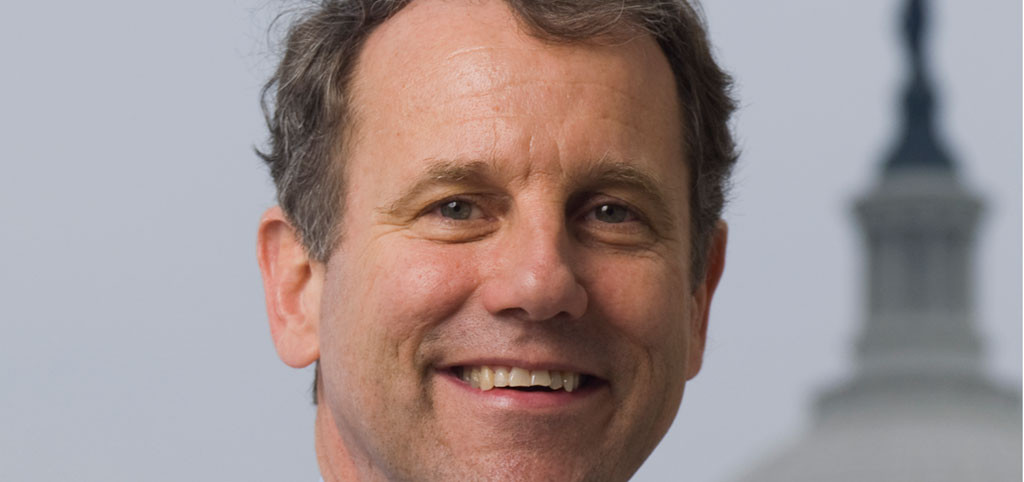
    “We all knew the counting process was going to take longer than usual this year because of the once-in-a-lifetime pandemic and higher voter turnout,” U.S. Sen Sherrod Brown, a Democrat, said over the weekend. “Counting votes and making sure every voice is heard is not fraud — it’s democracy at work. The President’s attacks on our democratic process are dangerous, but we will count every single vote.”

    U.S. Sen Sherrod Brown

    On Sunday, former President George W. Bush became the most prominent Republican to essentially declare the election over when he congratulated Biden.

    Early Monday afternoon, Ohio Gov. Mike DeWine, also a Republican, congratulated Biden, although he said Trump has every right to go to court if he wishes.

    “I congratulate Vice-President Biden,” DeWine said in a statement. “It would appear that President Trump’s legal team will be filing legal actions. The President’s lawyers have every right to present evidence in court on any legal issues or irregularities involving the election, and the courts are the proper place to hear evidence on these issues.  When lawsuits have concluded and election results are certified, it is important for all Americans to honor the outcome.”

    The office of Ohio’s top elections official, Secretary of State Frank LaRose, was more direct when asked if LaRose believed Biden had won.

    “Yes, he does,” his spokeswoman, Maggie Sheehan, said in an email.

    She pointed to an Oct. 6 statement LaRose had made on Fox News.

    “When the results on election night say one thing and then when the results change over the ensuing several weeks, that’s not a sign that something nefarious is happening,” he said. “In fact, quite the contrary. It’s a sign that the legal process is being allowed to play itself out so that every legally cast vote can be tabulated. That’s exactly what we need to do.”

    Meanwhile another Ohio Republican, Attorney General Dave Yost, is following Trump into court. Politico reported Monday that Yost’s office had filed a friend-of-the-court brief with the U.S. Supreme Court challenging a three-day extension for ballots to be received in Pennsylvania. That is one of the matters Trump and his allies are litigating.

    Attorney General Dave Yost

    Yost’s office didn’t respond when asked if the attorney general believed Biden had won the election. But Georgetown University Law Professor Josh Chafetz tweeted that the Supreme Court effort was pointless.

    Yost released a statement saying that the legal action transcends pollitics.

    “This constitutional question will come up again in future elections,” it quoted him as saying. “It is in the best interest of all Ohioans — all of America — to gain a definitive answer, regardless of politics.”

    The office of U.S. Sen. Rob Portman didn’t immediately respond when asked if he believed that Biden had won the election. But over the weekend, Portman refused to criticize Trump for appearing in the White House East Room early Wednesday morning to declare himself the winner.

    U.S. Sen. Rob Portman

    His office referenced a series of tweets posted on Friday that didn’t address whether it was right for a president to call himself the winner of an election in which vast numbers of votes hadn’t been counted.

    The office of Ohio Auditor Keith Faber, an ardent Trump supporter, didn’t respond when asked if he believed Biden had won the election.

    Ohio Treasurer Robert Sprague didn’t answer whether he thought Biden had won, but he urged patience.

    “While news organizations make projections, they do not determine the winner of the Presidential election — the people do,” he said in a statement issued by his office. “That’s why it’s important to allow the elections departments of all 50 states to continue completing their certification processes so the 2020 election can be finalized properly and in accordance with the states’ laws. This process takes time, and it’s in the best interest of our republic to ensure it’s done right, rather than done fast.”


    Marty Schladen

    Marty Schladen has been a reporter for decades, working in Indiana, Texas and other places before returning to his native Ohio to work at The Columbus Dispatch in 2017. He’s won state and national journalism awards for investigations into utility regulation, public corruption, the environment, prescription drug spending and other matters.