Tag: Governor DeWine

  • Becca Moates: Current Governor DeWine budget proposal undoubtedly leads to additional Loveland levy

    Becca Moates: Current Governor DeWine budget proposal undoubtedly leads to additional Loveland levy

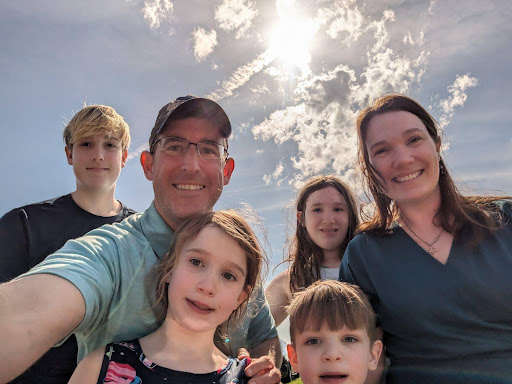
    Becca Moates and her family (Provided)

    by Becca Moates

    Dear Loveland School District,

    Let’s start with:

    Our goal this week is to send 1000 letters to the statehouse by March 21, 2025. Help make this happen! 

    Our family moved here a decade ago after the military, and what a well-loved decade it has been. When we packed and moved like the nomads we had been previously, we never expected to find such a great community. It has been everything from a patient phone call from a teacher, a basket of laundry when the dryer broke (3 times in the last decade), and a dish of food when a loved one passed away. Loveland is a small town with a big heart.
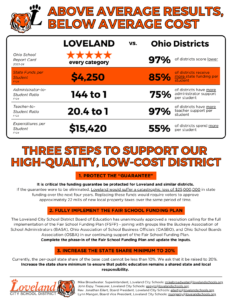
    Our schools are a vital component of our community, and our students thrive thanks to the dedication of our educators. We rank in the top 3% of districts in the state, with 97% of districts having more teacher support per student. Our teachers and staff are dedicated, as are our wonderful students. We personally,  have four children and three of them in Loveland schools. It has been amazing to watch how they thrive and grow as people.

    The current budget proposal from Governor DeWine leads to lost funds for Loveland schools which will undoubtedly lead to additional revenue requests from the school district. Let’s continue to build the unity we have as community members to support the students who are the heart of our vibrant community.

    While we can and should discuss levies, we currently face a more significant financial crisis affecting our community.

    In 2021, Governor DeWine enacted the Fair School Funding Plan (FSFP), which aimed to implement three phases to support public school funding in Ohio, where over 90% of children attend public schools. 

    The new budget proposal will not fully fund the Loveland City School District, and our Governor and legislators need to understand that Loveland is one of many school districts affected by this situation. Currently, the proposed bill does not adhere to the guarantee established previously.

    Not only is the Governor failing to fulfill his promise, but we will also face a reduction of $2.5 million over the next five years. 

    Your Job Community:

    We can unite on this issue. If the state cuts funding (and as a state we are 45th out of 50 states in per pupil funding), the foundation of our community: our schools will suffer. It is time for our legislators to hear from all of us. We need Governor DeWine to endorse a bill that benefits our schools. We need to come together. Write letters, call legislators, and call the Governor. 

    Read the Loveland Schools Lobbying Request.

    Watch John Espy our school Treasurer testify before the Ohio House Finance Committee (42 Minute mark).

    Sincerely,

    Becca Moates, MSN, APRN-CFNP

    _____________

    Who To Contact

    Download the list or click below PDF to enlarge.

    What to Say?

    Here are some suggestions for what to include in your phone calls, emails, and letters to state lawmakers:

    • Your name
    • Your role (parent, student, staff member, community member) in the Loveland City School District.
    • Your story (explain why you support Loveland City Schools, your family’s experience with Loveland City Schools, and why you are concerned about funding cuts for our district. Make it clear that decisions about funding impact children and communities.)
    • Your request (for example: protect the “guarantee” because reducing it would hurt funding for our district, fully implement the Fair School Funding Plan with updated inputs, and increase the state share minimum to 20%)
    • Your appreciation (thank them for their work in Columbus and their attention to this issue that is important to you and our community.)

    We suggest you write an email message to lawmaker, then use that message as a script for a phone call. The message can then be printed and mailed to lawmakers for an additional contact point.

    [pdf-embedder url=”https://lovelandmagazine.com/wp-content/uploads/2025/03/Loveland-State-Legislators-136th-General-Assembly-2025.pdf” title=”Loveland State Legislators – 136th General Assembly 2025″]
  • Governor DeWine Appoints Husted to U.S. Senate

    Governor DeWine Appoints Husted to U.S. Senate

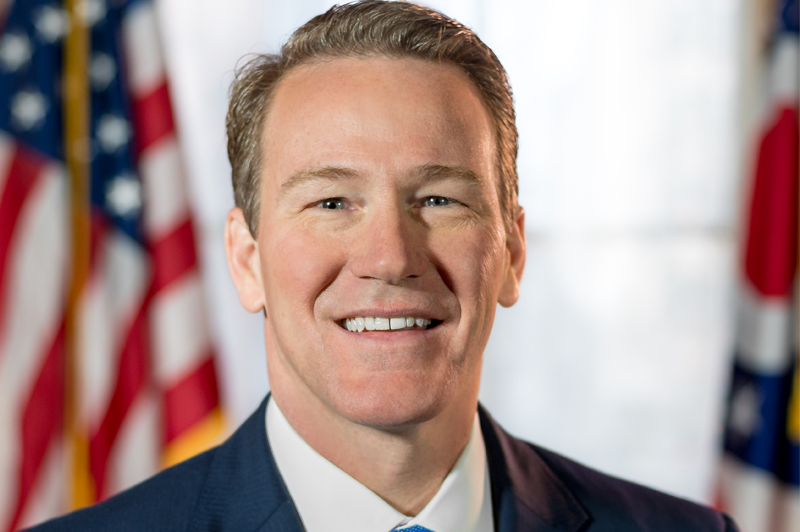
    Columbus, Ohio – Ohio Governor Mike DeWine announced yesterday that he has appointed Lt. Governor Jon Husted to serve as Ohio’s next United States senator.

    LtGov-Jon-HustedHusted will replace JD Vance, who resigned from the Senate last week and will take office as the 50th vice president of the United States on Monday.
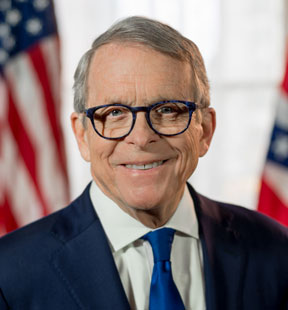
    “There were many people who I considered very qualified to serve in the U.S. Senate to represent the State of Ohio, but I came to the conclusion that the best person to serve is a person who has been close to me for the last six years – a person who I work with almost daily –  and that is Lt. Governor Jon Husted,” said Governor DeWine. “I have worked with him, I know he is knowledgeable, I know his heart, I know what he cares about, and I know his skills. All of that tells me he is the right person for the job.”

    “I know Ohio well, and I will fight for Ohio as a U.S. senator,” said Lt. Governor Husted. “I look forward to working with President Trump, Vice President Vance, and the Republican majority who have an America First agenda to fight inflation, stop illegal immigration, and advance conservative values.”

    Prior to serving in the DeWine Administration, Husted served as Ohio secretary of state, speaker of the Ohio House of Representatives, and a member of the Ohio Senate.

    “My time here at the Statehouse has been a true joy, but representing Ohio in the U.S. Senate is an amazing opportunity,” said Lt. Governor Husted. “It is something that an adopted kid who grew up on County Road J in Montpelier, Ohio, could have never imagined.”

    Husted started his life in a foster home before being adopted by his parents, Jim and Judy. He is the oldest of three children and was raised in Northwest Ohio’s Williams County. He graduated from Montpelier High School and earned both his bachelor’s and master’s degrees from the University of Dayton.

    Husted is married to Tina Husted and is the father of three children, Alex, Katie, and Kylie. His first grandchild, Margaret, was born last year to parents Alex and Kathleen.


    MORE: Jon Husted’s Full Biography


    Governor DeWine has not yet selected a candidate to fill the lieutenant governor position. Once selected, the individual must be confirmed by both the Ohio Senate and Ohio House of Representatives.

  • Governor DeWine Authorizes Emergency Ban of Nine Synthetic Opioids

    Governor DeWine Authorizes Emergency Ban of Nine Synthetic Opioids

    Ohio Governor Mike DeWine signed an executive order today authorizing the Ohio Board of Pharmacy to immediately classify nine synthetic opioids as Schedule I controlled substances, effectively banning their sale and use in the state.

    These nine synthetic opioids are known as nitazenes. Initially developed decades ago as potential alternatives for morphine that were never approved for medical use, new nitazene compounds are increasingly being found in the illicit drug supply in Ohio.

    These nitazenes are often more potent than other Schedule I opioids like heroin or fentanyl and present an elevated risk of negative outcomes caused by unintentional drug poisonings, including death.

    “These are extremely dangerous substances being designed by clandestine chemists in an attempt to skirt the law while keeping them highly addictive,” said Governor DeWine. “My administration is doing everything in our power to rapidly detect and schedule these types of compounds to ensure that law enforcement has the tools they need to prosecute those who make and sell these potentially lethal substances to the fullest extent of the law.”

    Executive Order 2024-06D

    The emergency order was prompted by intelligence gathered as part of an early detection process developed by the Ohio Narcotics Intelligence Center (ONIC), in partnership with RecoveryOhio, the Ohio Board of Pharmacy, and a network of forensic toxicologists and chemists known as the Emerging Drug Scientific Working Group (EDSWG). The early detection process, which includes the proactive collection of reports from Ohio’s criminal justice system and forensic labs, allows ONIC to identify, analyze, and triage information on emerging drugs that are not controlled substances.

    Frequently mixed with other controlled substances, including other opioids such as already scheduled nitazenes or fentanyl and stimulants such as cocaine or methamphetamine, each of these nine nitazene compounds have been identified by Ohio crime labs, confirming their presence in the state. Further evidence from the dark web compiled by ONIC demonstrates the availability and interest in nitazene compounds for illicit use.

    Nitazene compounds are becoming increasingly involved in overdose deaths in Ohio. As recently as 2020, just three overdose deaths involving nitazene compounds were confirmed and reported to the Ohio Department of Health (ODH). However, a significant jump occurred in 2021 and 2022, which saw an average of 57 such deaths per year. Although 2023 data is not yet complete, ODH has recorded 77 nitazene-involved overdose deaths for the year – and this number only represents confirmed cases. Due to under reporting, the true number of overdose deaths involving nitazene compounds is expected to be much higher.

    Synthetic opioids are the primary cause of deaths related to unintentional drug poisonings in the United States. Nitazene compounds contribute to those poisonings. In multiple unintentional drug poisonings, nitazenes have been the only compounds identified as a contributing factor.

    The executive order suspends the normal rulemaking process to allow the Ohio Board of Pharmacy to immediately classify these nine nitazene compounds as Schedule I controlled substances, making the sale and trafficking of these compounds a criminal offense. For more information regarding this emergency action, visit Pharmacy.Ohio.gov/Nitazenes.

    These nitazene compounds are the latest to be banned under the DeWine Administration. Armed with ONIC’s early detection intelligence, the Ohio Board of Pharmacy has now emergency scheduled a total of 17 nitazene compounds since 2020.

    Additionally, last year, Governor DeWine signed an executive order to classify xylazine as a Schedule III controlled substance, making Ohio one of the first states in the nation to schedule xylazine as a controlled substance drug.

    If you believe you or someone else is in immediate danger of a drug overdose, call 911 immediately.

    Like other synthetic opioids, overdoses involving nitazene compounds can be reversed using naloxone.

    Naloxone should always be administered anytime an overdose is suspected, even if the overdose is believed to be caused by nitazenes. Multiple doses of naloxone may be needed to reverse an overdose involving synthetic opioids.

    For more information about obtaining free naloxone, visit: Naloxone.Ohio.gov.

  • [DeWine] COVID-19 Update for Ohio: highest levels ever of hospitalizations among those under 50

    [DeWine] COVID-19 Update for Ohio: highest levels ever of hospitalizations among those under 50

    Around 97 percent of patients of all ages in Ohio hospitals today are unvaccinated.

    When you get COVID-19 without the protection of a vaccine, there is a very real risk you’ll end up in the hospital or the obituary pages.

    Columbus, Ohio – Ohio Governor DeWine today provided an update on the increased impact that COVID-19 is having on Ohio’s younger populations and the stress that the surge of cases is having on hospitals statewide.

    “The bottom line is that we’re seeing our highest levels ever of hospitalizations among those under 50 years old,” said Governor DeWine. “Those who are getting very sick, being hospitalized, and dying of COVID are getting younger and younger. And it is because they are not vaccinated.”

    • Today, there were 459 newly-reported hospitalizations, the highest number of new hospitalizations since January.
    • The number of new hospitalizations for COVID-19 of those under 50, was the highest during the entire pandemic during the week of Sept. 5th, when Ohio hospitals admitted 398 patients under the age of 50.
    • During the most recent completed reporting week (Sept. 5 — Sept. 11), 230 Ohioans 39 and younger were admitted to the hospital, which is the highest number of admissions for COVID in this age group during the entire pandemic, even higher than during the winter surge levels when no one was vaccinated.
    • Around 97 percent of patients of all ages in Ohio hospitals today are unvaccinated.
    • In July, 48 percent of COVID-19 deaths were among those 69 years old and younger. In August, preliminary data shows that an average of two people younger than 50 died of COVID-19 in Ohio every day.

    • Last month, preliminary numbers showed 18 Ohioans 39 and younger died from COVID-19. This is compared to five people in that age range who died in June and two people in that age range who died in July.

    Dr. Bruce Vanderhoff, Director, Ohio Department of Health
    “If you are young and unvaccinated it’s now probably only a question of when, not if, you get COVID-19. When you get COVID-19 without the protection of a vaccine, there is a very real risk you’ll end up in the hospital or the obituary pages. The numbers really tell it all, COVID has changed and is now making younger Ohioans who are not vaccinated very sick. Don’t become a statistic when there is a simple, safe, and effective alternative. Go out today and get vaccinated.”

    Suzanne Bennett, M.D., Extracorporeal Membrane Oxygenation (ECMO) Program Director, University of Cincinnati Health
    “These rising numbers of sick COVID patients places a significant burden on our hospital beds, our medical teams, and worse yet, it creates scenarios that no one wants to think about where we do not have the space for patients who would otherwise benefit from receiving their care at large academic medical centers. We now need the help of the people in our community more than ever so that no one else needs to die from this disease.”

    Alan Rivera, M.D., Hospitalist, Fulton County Health Center
    “We are in a crisis mode. As compared to last year, our nursing staff is down probably 50 percent. We have nurses leaving the field, retiring early, or finding jobs elsewhere because of the long hours and the emotional strain. On top of that, our COVID numbers are now going up. In June and July I didn’t see any COVID patients. Now, the majority of the census in our hospital are COVID patients, and they’re younger, anywhere from 30 to 50.”

    Joe Bates, R.N., B.S.N., Clinical Coordinator, Critical Care Unit, Genesis HealthCare System (Zanesville)
    “We’re seeing the younger population being hit hardest with this right now. Our average age right now that we’re seeing is around 59, with many of them being younger, as compared to last year when the average was about 78 years of age. Of the COVID positives that we currently have in the ICU, none of them are vaccinated who are on the ventilator.”

    Terri Alexander, R.N., P.C.C.N., Summa Health (Akron)
    “It’s just a sad, sad situation that we’re dealing with, and it’s tragic because it’s just so preventable. Please, please, please, get vaccinated. We live in a culture that has never experienced coming to the hospital and getting turned away, and I think people can’t fathom what that’s truly like until its them or their family members who are coming in and getting turned away.”

  • Ohio gov thinks a law is making kids sick and says it’s unconstitutional. He won’t challenge it

    Ohio gov thinks a law is making kids sick and says it’s unconstitutional. He won’t challenge it

    DeWine spokesman says risks are too high

    BY: MARTY SCHLADEN and Ohio Capital Journal

    Some are questioning Gov. Mike DeWine’s sincerity when he says he’s doing all he can to fight the spread of coronavirus among children.

    DeWine and the leaders of children’s hospitals are in a panic over the lack of masking in Ohio schools. Hospital admissions of children with covid are up 536% since July and the hospitals report that they’re being overwhelmed by the surging delta variant and an unusual jump in other respiratory illnesses.

    [Watch video] Ohio Children’s Hospital leaders briefing for school administrators –…

    DeWine and the hospitals are pleading with local school officials to enact their own mask mandates because DeWine says his hands are tied by Senate Bill 22 — a law the GOP-controlled legislature passed in March over his veto. 

    It circumscribes the governor’s ability to issue health orders such as his 2020 statewide mask mandate by limiting them to 30 days. After that, the legislature would have to sign off in order to continue them.

    Asked on Tuesday why he wouldn’t impose a mask mandate as a temporary measure, DeWine said he didn’t want to muddy the issue.

    “All that will do is cause a great deal of confusion and then I think people would say, ‘Well there’s no mandate on, there’s no requirement on, we can go back, there’s really no reason to keep masks on,” the governor said. “I’m afraid what would happen is we would slide backwards, we would go the wrong way.”

    However, some noted that when SB 22 was passed, the governor, who is a lawyer, didn’t believe it would stand up in court.

    “Lots of talk out there excusing @GovMikeDeWine‘s refusal to issue a school mask mandate,” Katie Paris, founder of the group Red Wine and Blue, tweeted. “His hands are NOT tied. He could issue a mandate today and if the legislature fights it, he could take them to court.”

    She followed up with a thread that included the statement DeWine issued when he vetoed SB 22.

    “We believe that significant portions of SB 22 are unconstitutional,” the statement says. “Parts of the bill violate the separation of powers doctrine embedded in our Ohio Constitution; other parts violate Article II, Section 15 of the Ohio Constitution, proscribing how laws must be made; and even other parts of the bill likely violate Article IV, Section 5 of the Ohio Constitution, by exercising power reserved to the judiciary.” 

    Loveland School Superintendant Mike Broadwater

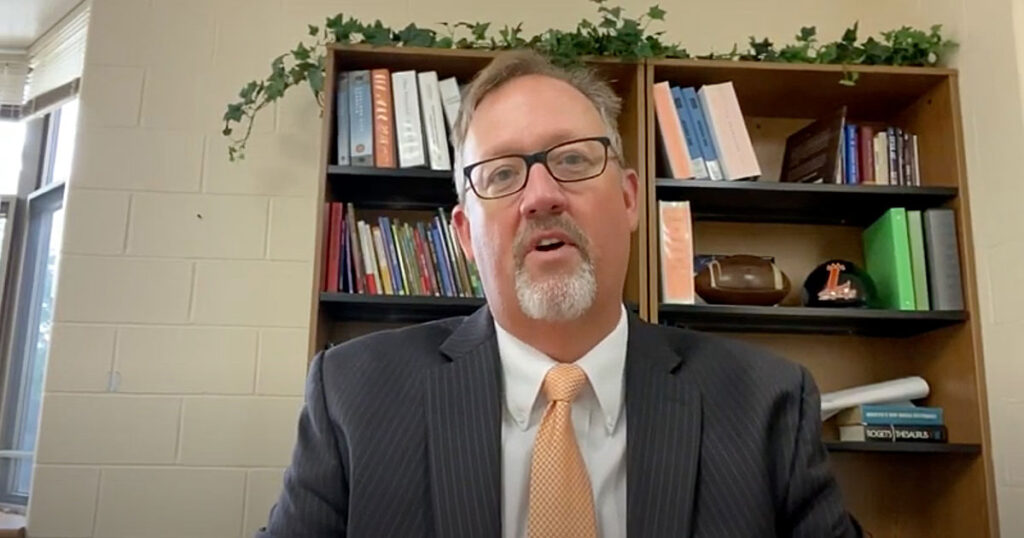
    Loveland School Superintendant Mike Broadwater told Loveland Magazine on Thursday, “It is unfortunate that Governor DeWine no longer has the power to issue health orders that would put every school district across the state in the same situation if that’s what he feels is best. But by leaving it to local control, he’s allowing each district to make the decision that fits best for their community.”

    The current policy of the Loveland City School District is that students in grades PreK-6 are required to wear a mask indoors. Students in grades 7-12 do not have to wear face coverings. All others, while in the buildings must wear masks.

    The Legislative Service Commission also questioned the legality of a draft of the bill, writing that it “might be vulnerable to a constitutional challenge on the grounds that the legislature cannot take such an action by resolution.” But for some reason, it was dropped from the final version of the bill, which was otherwise unchanged.

    Asked why DeWine doesn’t just impose a mask order and fight it out in court, Press Secretary Dan Tierney on Wednesday said it was too risky.

    “Somebody who’s advocating for that is hoping that a judge puts on an immediate restraining order that would allow (the mask mandate) to continue, but you also have to weigh the chance that a judge could rule the other way: that the legislative recision is perfectly valid,” Tierney said.

    He added that DeWine’s current approach — persuading local officials to put on their own mask mandates — is making rapid progress. The portion of students in schools with mask mandates has jumped from 35% on Sept. 1 to 54% on Tuesday, Tierney said.

    “We went from a little over a third to a little over a half of students being in a school where everybody wears a mask in less than two weeks,” he said.

    But while DeWine is blaming the GOP supermajority in the legislature for sapping his ability to fight his coronavirus, on Wednesday he signed off on legislative maps that would preserve that supermajority. Even as DeWine helped to approve the maps, he questioned whether they would survive a court challenge, Gannett journalist Haley BeMiller reported.

    The move by DeWine — who has also criticized President Joe Biden’s vaccination-or-test mandate — prompted a blast from John Hagner, campaign manager for Dayton Mayor Nan Whaley, who is seeking the 2022 Democratic gubernatorial nomination.

    https://twitter.com/JHagner/status/1438485210811748356

    “Mike DeWine on Tuesday: the gerrymandered Republican supermajority is keeping me from protecting kids and keeping them in school,” Hagner tweeted. “Mike DeWine on Wednesday: ok, let’s have four more years of an even more gerrymandered Republican supermajority.”

    Reporter Jake Zuckerman of the Ohio Capital Journal and David Miller, Editor of Loveland Magazine contributed to this rstory.

  • [Watch video] Ohio Children’s Hospital leaders briefing for school administrators – September 14, 2021

    [Watch video] Ohio Children’s Hospital leaders briefing for school administrators – September 14, 2021

    by David Miller

    The Ohio Children’s Hospitals Association made a direct appeal on Tuesday, September 14 to school superintendents to require masks for staff and students during the current surge of the coronavirus.

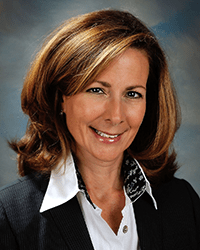
    Patty Manning, MD, is the Chief of Staff at Cincinnati Children’s Hospital Medical Center (Photo by CCHMC)

    Patty Manning, MD, Chief of Staff, Cincinnati Children’s Hospital Medical Center said, “Our inpatient numbers are the highest they’ve been. Our ICUs are caring for more patients than there’s ever been. More children are on ventilators than there has ever been. There are more children than ever entering our emergency departments and our urgent care centers. That impacts the care of all children, not just those that are COVID-19 positive.”

    The plea was made during a virtual meeting with superintendents and the clinical leadership from six Ohio children’s hospitals including Dayton Children’s Hospital, ProMedica Russell J. Ebeid Children’s Hospital, Cincinnati Children’s Hospital Medical Center, Nationwide Children’s Hospital, Akron Children’s Hospital, and University Hospitals Rainbow Babies & Children’s Hospital. 

    “The data are now clear that there is a higher level of COVID-19 in school districts where masks are not required,” said Governor DeWine. “If we want our schools to stay open, the best way to do that is for those 12 and over to get vaccinated. But because those under 12 are still too young to be vaccinated, we need students who come in to school to wear a mask until we get through this.” 

       The current policy of the Loveland City School District is that students in grades PreK-6 are required to wear a mask indoors. Students in grades 7-12 do not have to wear face coverings. All others, while in the buildings must wear masks.
    

    Efforts to reach Loveland Superintendant Mike Broadwater via email, asking him if he attended the virtual meeting and had any comment about it have not been successful securing an email response.

    In the background of this urgent plea is that State Reps. Jean Schmidt (R-Loveland/Miami Township) announced on August 25 she has introduced House Bill 400, which would prohibit public schools from mandating students to wear a mask. The bill introduction comes as statewide concerns from parents have heightened as several public schools, including the Loveland District have implemented school mask mandates for some of their students.

    Data that support this appeal according to a new release from the Ohio Children’s Hospitals Association include: 

    • Since August 15, 2021, there have been 29,823 Ohio school-aged kids ages 5 to 17 with confirmed and probable cases of COVID-19.
    • Cases among this age group increased 198 percent from the week of August 15th as compared to the week ending September 4.
    • As reported yesterday by the American Academy of Pediatrics, COVID-19 cases among children have increased 240 percent nationally since early July when the Delta variant began to surge. During that same period in Ohio, there has been a 2000 percent increase in cases among Ohio children.
    • COVID-19 cases are increasing at nearly twice the rate among school-aged kids as compared to the rest of the population. This past week Ohio saw a 44 percent increase among school-aged children and only a 17 percent increase among the rest of the population.
    • Over the two-week period ending September 4, 2021, there was an average of 909 cases per 100,000 school-aged Ohio kids versus 561 cases per 100,000 people comprising the rest of the population. 
    • The 16 days with the highest number of cases per day throughout the entire pandemic for kids aged 5 to 17 in Ohio have all been in the last 19 days. This includes every day except the three days of the Labor Day weekend.
    • In Ohio school districts where masks are optional, among school-aged kids, there are both higher case rates per 100,000 at 945.7 and a greater week-over-week increase in cases. School districts where masks are optional have seen a 54 percent week-over-week increase compared to a 34 percent increase in school districts where masks are either required for all or required for some (usually K-8th grade).

    Nick Lashutka, President and CEO of the Ohio Children’s Hospital Association
    “This is a perfect storm, and it’s impacting kids like it hasn’t before. It’s a combination driven by COVID-19 cases increasing, primarily driven by the Delta variant, increasing respiratory illnesses, more mental health challenges, and staffing challenges. Everyone can agree that our number one goal is to keep children in schools five days a week, and that’s what we shared with the state’s superintendents today.”

    Debbie Feldman, President and CEO of Dayton Children’s Hospitals
    “Ohio is truly blessed to have some of the best children’s hospitals in the country. We pride ourselves on meeting the needs of our kids. Our commitment is really threatened right now. For a long time, COVID-19 was perceived as a disease that didn’t impact children. That’s not the case anymore. Today, 25 percent of COVID-19 cases are in kids. We’re feeling that in our children’s hospitals.”

    Paula Grieb, DNP, RN, Chief Nursing Officer, ProMedica Russell J. Ebeid Children’s Hospital
    “In the city of Toledo and at Ebeid Children’s Hospital, we’ve seen significant in-patient and out-patient volumes, and we’ve seen a significant increase in kids with respiratory illnesses. We had a significant event occur last night in Lucas County. That means if a rescue squad responded to a 911 call and picked up a patient to take them to a hospital that was on EMS bypass, that rescue squad would not be allowed to stop at that hospital. The county EMS system would have to dispatch each call one at a time. That means a patient wouldn’t necessarily go to the hospital closest to them or best-suited to take care of the patients’ needs.”

    Rustin Morse, MD, CEO, Nationwide Children’s Hospital
    “We are in uncharted territory. Not just in children’s hospitals, but adult hospitals as well. The infrastructure is strained like it hasn’t been before. We are asking people to get vaccinated if they aren’t already, and we are asking them to wear masks.”

    Patty Manning, MD, Chief of Staff, Cincinnati Children’s Hospital Medical Center

    “Our inpatient numbers are the highest they’ve been. Our ICUs are caring for more patients than there’s ever been. More children are on ventilators than there has ever been. There are more children than ever entering our emergency departments and our urgent care centers. That impacts the care of all children, not just those that are COVID-19 positive.”

    CASE DATA/VACCINE INFORMATION

    Video of today’s full update, including versions with foreign language translation, can be viewed on the Ohio Channel’s YouTube page

    For more information on Ohio’s response to COVID-19, visit coronavirus.ohio.gov or call 1-833-4-ASK-ODH.

  • OhioMeansJobs.com links job seekers with potential employment

    OhioMeansJobs.com links job seekers with potential employment

    Columbus, Ohio – On Tuesday, Governor DeWine and Lt. Governor Husted announced the launch of a new, innovative resource on OhioMeansJobs.com that links Ohio job seekers with potential employment opportunities through the information provided on their resume. The announcement was made during a meeting of the Governor’s Executive Workforce Board at Columbus State Community College.

    “SkillsMatch” fulfills a promise made by the DeWine-Husted Administration to design a match-making application that connects people seeking work to businesses that are hiring. Supported by detailed data on the newly redesigned OhioMeansJobs website, this resource extracts job seekers’ skills from their resumes and links them to a job-match recommendation based on those skills.

    “The SkillsMatch tool reinforces our commitment to better connecting job seekers with in-demand positions,” said DeWine.  “As our economy continues to bounce back, I know that this new tool will help serve both Ohioans and Ohio employers.”

    “For job seekers and employers, we aim to be better at matchmaking than a dating app,” said Husted, Director of the Governor’s Office of Workforce Transformation. “This fulfills the promise Governor DeWine and I made to use technology to improve customer service, and there’s no better service than finding someone a great job that they enjoy, that pays them well, and that allows them to live their version of the American dream.”

    The resource allows job seekers to directly upload their resume to OhioMeansJobs.com, select the skills on their resume that they’d like matched with potential job opportunities, and watch in real-time as the tool displays which skills line up with a particular job posting. Additionally, SkillsMatch will show job seekers which skills are missing from their resume based on keywords in job postings on the site, giving them the opportunity to improve and update their resume so they can have a better chance of matching with the kind of position they are seeking.

    The SkillsMatch tool was developed through the Governor’s Office of Workforce Transformation, InnovateOhio and the Ohio Department of Job and Family Services.

    OhioMeansJobs.com currently has 189,681 jobs posted with 103,025 that pay more than $50,000 per year.

  • Governor DeWine Announces Vaccine Incentives

    Governor DeWine Announces Vaccine Incentives

    In an effort to increase the number of Ohioans who currently have not taken a COVID-19 vaccine to get vaccinated, Governor DeWine announced a series of statewide drawings to help incentivize vaccinations.

    Ohioans under the age of 18 who are eligible to receive a COVID-19 vaccine will be entered into a drawing for a four-year full scholarship to any of Ohio’s state colleges and universities, including full tuition, room, and board.

    Ohioans aged 18 and older will be entered into a weekly drawing with a prize of up to $1 million.

    A total of five weekly drawings for each prize will take place, with the first winners being announced on May 26th. Winners must have received at least one dose of a COVID-19 vaccine by the date of the respective drawing.

    The drawings will be administered by the Ohio Department of Health, with technical assistance from the Ohio Lottery Commission, and will be funded through existing allocations to the Ohio Department of Health of unexpended coronavirus relief funds.

    Further details and contest rules will be announced by the Ohio Department of Health and the Ohio Lottery Commission next week during a briefing to news media.

  • Want to stay COVID 19 legal? Read the new orders from Ohio

    Want to stay COVID 19 legal? Read the new orders from Ohio

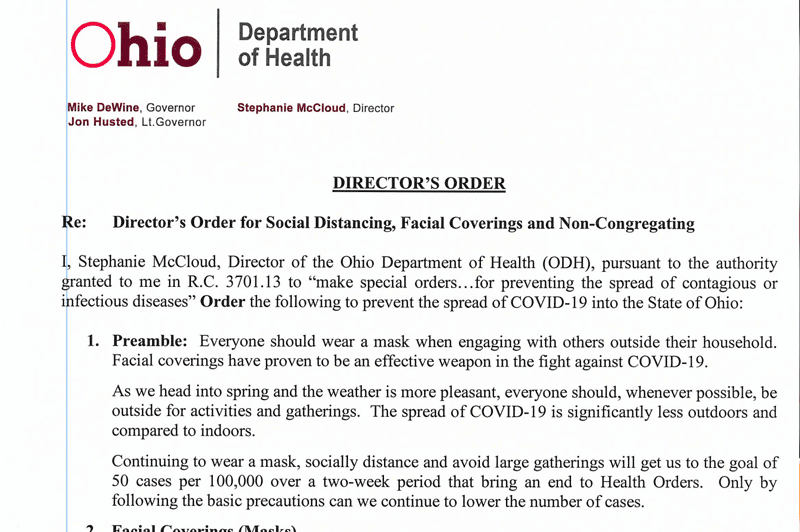
    Governor DeWine announced today that the Ohio Department of Health has issued a “simplified” health order that “streamlines” previous orders into a single order that underscores the most important tenants of infection prevention. 

    “Our understanding of this virus and how it spreads is much more advanced than it was when we first learned about coronavirus in early 2020,” said Governor DeWine. “As we move to begin a new chapter in our fight against the pandemic, where more and more Ohioans are being vaccinated, this new order will focus on our best defense measures against COVID-19, such as wearing a mask, social distancing, limiting large gatherings, being outside, and practicing good hand hygiene.” 

    Read the Orders:

  • 10 PM to 5 AM curfew extended

    10 PM to 5 AM curfew extended

    UP -DATE:

    Governor DeWine announced on January 22 at 5 PM that the Curfew will last until January 30.

    Loveland, Ohio – Governor DeWine announced that the Ohio Department of Health will extend Ohio’s 10 PM to 5 AM curfew.  Additional details will be forthcoming. 

    The curfew does not apply to those going to and from work, those who have an emergency, or those who need medical care. The curfew is not intended to stop anyone from getting groceries or going to the pharmacy.  Picking up carry-out or a drive-thru meal and ordering for delivery is permitted, but serving food and drink within an establishment must cease at 10:00 p.m.

    The curfew was first enacted in November and was expected to last 21-days.

    The curfew, was set to expire this Saturday.

    CURRENT CASE DATA

    In total, there are 849,704 confirmed and probable cases of COVID-19 reported in Ohio and 10,518 confirmed and probable COVID-19 deaths. A total of 44,315 people have been hospitalized throughout the pandemic, including 6,465 admissions to intensive care units. In-depth data can be accessed by visiting coronavirus.ohio.gov

    Video of today’s full update, including versions with foreign language translation, can be viewed on the Ohio Channel’s YouTube page

    For more information on Ohio’s response to COVID-19, visit coronavirus.ohio.gov or call 1-833-4-ASK-ODH.