Tag: Governor Mike DeWine

  • Details of Ohio’s “Responsible RestartOhio” plan

    Details of Ohio’s “Responsible RestartOhio” plan

    Columbus, Ohio – Ohio Governor Mike DeWine, Lt. Governor Jon Husted, and Director of the Ohio Department of Health Dr. Amy Acton, made several announcements yesterday regarding Ohio’s plan to restart Ohio’s economy during the ongoing COVID-19 pandemic.

    HEALTHCARE

    Beginning May 1, 2020, all medically necessary procedures that do not require an overnight stay in a healthcare facility or do not require inpatient hospital admission and minimize the use of personal protective equipment may move forward. This includes regular doctor visits, well-care checks, well-baby visits, out-patient surgeries, imaging procedures, and diagnostic tests. Dental services and veterinary services may also proceed if a safe environment can be established.

    Healthcare providers and facilities that plan to resume providing these services must adhere to infection control practices, have sufficient PPE, and talk with patients about the risk of contracting COVID-19.

    Surgeries and procedures that, if not performed, would cause a threat to a patient’s life, a threat of the spread of cancer or the permanent dysfunction of a limb or organ, the presence of severe symptoms causing an inability to perform activities of daily living, and/or the risk of rapidly worsening symptoms have always been permitted even if an overnight stay is necessary.

    “RESPONSIBLE RESTART OHIO”

    The “guiding principles” of the Responsible RestartOhio plan are protecting the health of employees, customers, and their families, supporting community efforts to control the spread of COVID-19, and responsibly getting Ohio back to work.

    “We put this plan together based on all the information we have about how dangerous COVID-19 still is right now, balanced with the fact that it’s also dangerous to have people not working,” said Governor DeWine. “COVID-19 is still out there. It’s still killing people. We’re asking Ohioans to be reasonable and rational. Please don’t take huge chances, and please use common sense when you go out and where you go out.”

    Are you finding this information is important to your daily life?

    Manufacturing, Distribution, and Construction Businesses

    Beginning on May 4, 2020, manufacturing, distribution, and construction businesses may reopen if these businesses can meet mandatory safety requirements (see graphic below) for customers and employees. The full Responsible RestartOhio plan for manufacturing, distribution, and construction can be found at coronavirus.ohio.gov/ResponsibleRestartOhio.

    General Office Environments

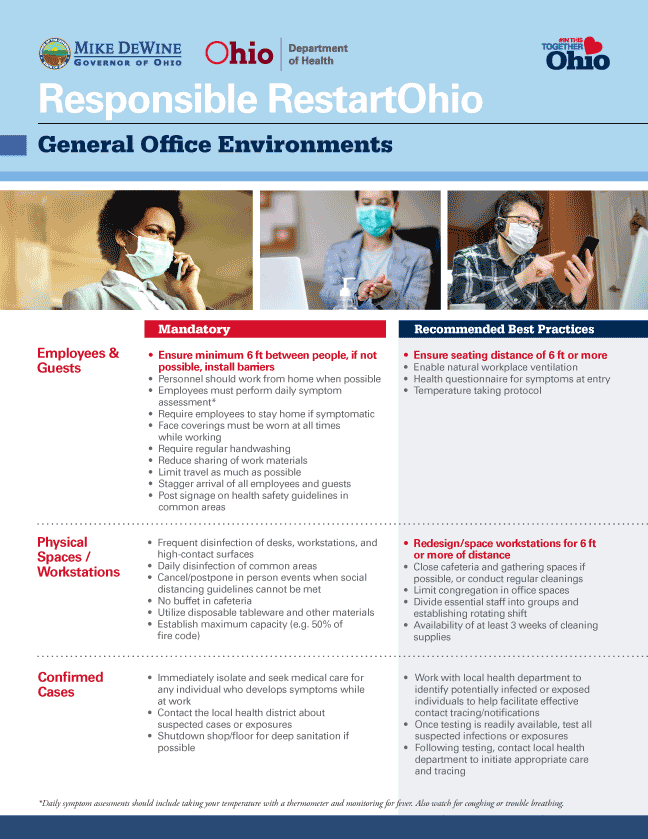
    Beginning on May 4, 2020, general office environments may reopen if these businesses can meet mandatory safety requirements (see graphic below) for customers and employees. The full Responsible RestartOhio plan for general office environments can be found at coronavirus.ohio.gov/ResponsibleRestartOhio.

    CONSUMER, RETAIL, and SERVICES

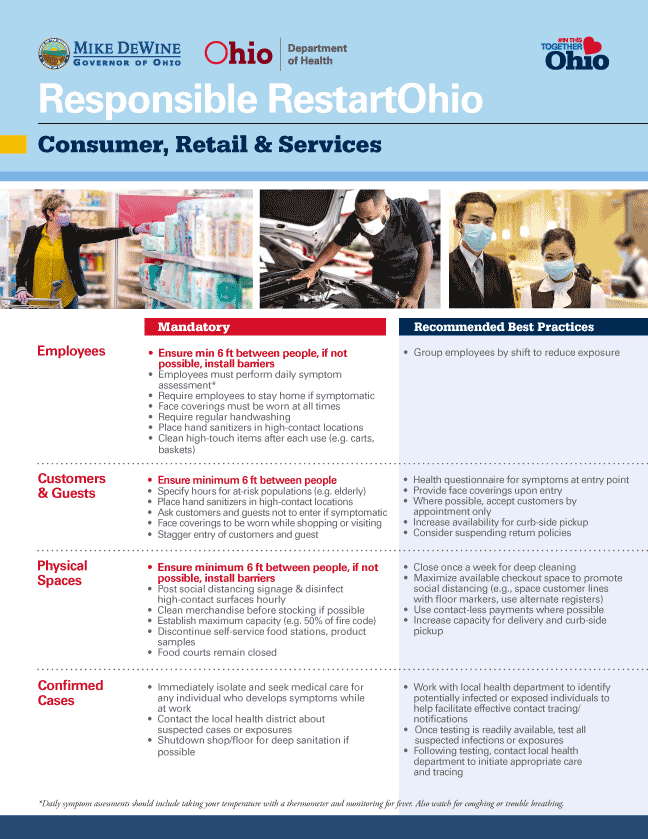
    Beginning on May 12, 2020, consumer, retail and services, may reopen if these businesses can meet mandatory safety requirements for customers and employees. (see graphic below) The full Responsible RestartOhio plan for consumer, retail, and services can be found at coronavirus.ohio.gov/ResponsibleRestartOhio.

    ALL BUSINESSES

    The general safe business practices that all businesses must follow as they reopen are:

      • Requiring face coverings for all employees, and recommending them for clients and customers at all times
      • Conducting daily health assessments or self-evaluations of employees to determine if they should work
      • Maintaining good hygiene at all times such as hand washing and social distancing
      • Cleaning and sanitizing workplaces throughout the day and at the close of business or between shifts
      • Limiting capacity to meet social distancing guidelines

    “I have an obligation as the Governor of Ohio to get people back to work and keep them safe. Opening everything up at once would not be consistent with the obligation to keep people safe,” said Governor DeWine. “Our Responsible RestartOhio plan is the best guarantee that Ohioans will feel safe going to stores and employees will feel safe going to work. I’m optimistic about our future, but we can’t be reckless.”

    CONTINUED CLOSURES

    Continued Business Closures Graphic

    The following types of establishments are ordered to remain closed due to their increased risk of potential COVID-19 exposure:

        • Schools and daycares
        • Dine-in restaurants and bars (carry-out is still permitted)
        • Personal appearance and beauty businesses
        • Older adult daycare serveries and senior centers
        • Adult day support or vocational rehabilitation services in group settings
        • Entertainment, recreation, and gyms

    For greater detail on the types of businesses that must stay closed, visit coronavirus.ohio.gov/ResponsibleRestartOhio.

    STAY AT HOME ORDER / LARGE GATHERINGS

    Because the danger of COVID-19 still exists, Ohio’s Stay at Home order will remain in effect to encourage Ohioans to continue making reasonable, rational decisions about leaving home.

    Although anyone is susceptible to getting sick with COVID-19, those who are 65 or older are encouraged to be especially careful, as are those with high-risk conditions such as chronic lung disease, moderate to severe asthma, heart conditions, diabetes, chronic kidney disease, or liver disease, as well as those who are immunocompromised or obese.

    Large gatherings of more than 10 people are still prohibited.

    MORE INFORMATION

    More detailed information on the Responsible RestartOhio plan can be found at www.coronavirus.ohio.gov/ResponsibleRestartOhio.

    Current Ohio and Local Data

    There are 16,325 confirmed and probable cases of COVID-19 in Ohio and 753 confirmed and probable COVID-19 deaths. A total of 3,232 people have been hospitalized, including 978 admissions to intensive care units. In-depth data can be accessed by visiting coronavirus.ohio.gov.

    CLERMONT COUNTY

    72 confirmed cases. 4 probable cases. 76 total cases. 47 recovered. 21 hospitalizations. 2 deaths.

    HAMILTON COUNTY

    1048 Hamilton County confirmed cases. 241 hospitalizations. 56 deaths. (Includes Cincinnati, Norwood, and Springdale.)
    WARREN COUNTY
    124 confirmed cases. 22 hospitalizations. 11 deaths.

    Video of yesterday’s full update of the Statehouse briefing, including versions with foreign language closed captioning, can be viewed on the Ohio Channel’s YouTube page.


    Are you finding this information is important to your daily life?

  • OHSAA Confirms Cancellation of Spring Sports

    OHSAA Confirms Cancellation of Spring Sports

    by Cassie Mattia

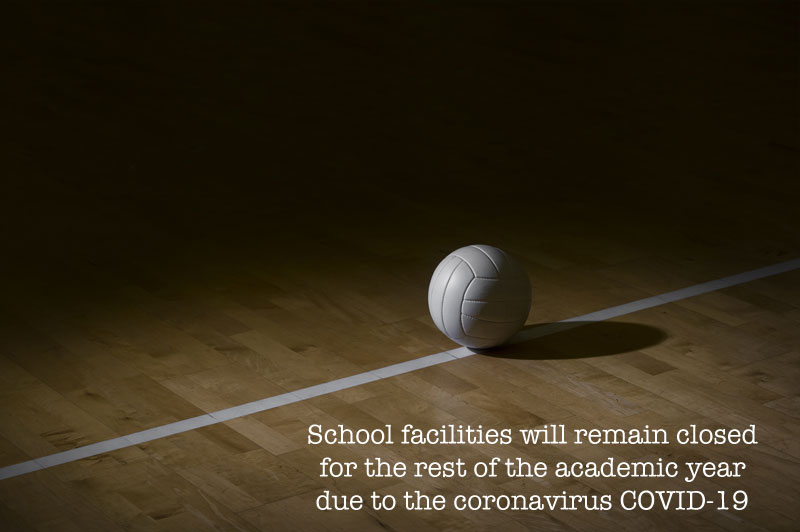
    Loveland, Ohio – The Ohio High School Athletic Association (OHSAA) informed member schools, including the Loveland City School District Monday, April 20th, that Spring sports would officially be canceled. This decision was made after Ohio Governor Mike DeWine announced earlier the same day that school facilities would remain closed for the rest of the academic year due to the coronavirus COVID-19.

    OHSAA Executive Director Jerry Snodgrass sent out a memo confirming to school administrators following Governor DeWine’s press conference about the Spring sports cancellation. For weeks, the OHSAA communicated that if schools remained closed for the year Spring sports would be canceled as well. Of course, there were several reasons that went into the final decision of Spring sports being canceled, one of the main reasons being that it would be nearly impossible to ensure the health and safety of all individuals and support personnel involved in practices and contests at all member schools.

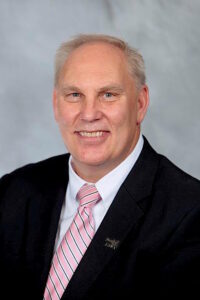
    OHSAA Executive Director Jerry Snodgrass

    “As we have stated in our previous communications, today’s announcement by Governor DeWine to close schools for the remainder of the 2019-20 school year also will now result in the cancellation of OHSAA-sponsored spring sports seasons including tournaments,” Snodgrass wrote Monday.

    The OHSAA’s mandatory no-contact period for all interscholastic sports will remain in effect until at least May 3, and could in fact be extended until a later date. Coaches and school administrators have been encouraged to have non-mandatory electronic and online communications with their student-athletes during the no-contact period. The closure of school facilities includes all athletic facilities for any interscholastic training, practice, or competition.

    In an interview Monday afternoon, Snodgrass reflected on the unprecedented times that the pandemic has brought to the nation and the impact it has had on schools and interscholastic athletics.

    “I’ve heard from so many people who have said ‘You really need to understand what this means to our kids,’” Snodgrass said during the interview. “I’m a parent. I was a coach. I grew up every day as a player and a coach wanting to play high school sports and get to the state tournament. So I do think I understand that. I also have to go with the fact that my number one concern that I have, over everything, is the health and safety of everyone involved. It’s not just our student-athletes. It’s the parents, coaches, umpires, officials, the scorekeepers. All those things enter into this. It’s a tough decision and it’s one that I and all the other Executive Directors of the other states never thought we would have to do. Never did I think this would be the case, but I’ve tried to be as prepared as I could every step of the way.”

    Snodgrass also addressed the Summer and the start of Fall sports in the interview

    “July is a very physical month for our student-athletes entering fall sports, so we have already started looking at, if this continues through the summer, we’ll have the potential of having a lot of kids who haven’t had the physical activity that they would normally have going into a fall season. So for the health and safety of everyone, we have to look at the acclimation periods going into the fall, if that happens. We have to be prepared for that. We’re also talking about that if this does go through the summer, what is the likelihood that a student can get in to get a physical (annual medical exam). We have a sports medicine advisory group that is looking at that. They are looking at all aspects such as whether artificial surfaces need to be treated. We are relying on the advice of experts in our decision making.”

    The OHSAA said that they will continue to communicate throughout the Spring and during the Summer regarding any adjustments to OHSAA’s off-season regulations, academic eligibility standards, sports medicine updates, and more. STAY TUNED!


    Want a yummy way to Help OHSAA out of their scholarship shortfall?

    Raising Cane’s Partners with the OHSAA to Support Programs for Student-Athletes!


  • Ohio Department of Health issues nursing home order

    Ohio Department of Health issues nursing home order

    Actualización de COVID-19: Orden para Asilo de Ancianos, Venta de Licores, Financiación de TANF, Pruebas Rápidas, Actualización de la prisión

    The Ohio Department of Health today issued an order requiring long-term care facilities to notify residents and families within 24 hours of a resident or staff member testing positive for COVID-19.

    “The Ohio Department of Health had been strongly encouraging facilities to notify families all along, but this order makes this notification mandatory,” said Governor Mike DeWine. “Families of long-term care residents have a right to know if individuals at these facilities are sick.”

    Governor DeWine also announced that a list of long-term care facilities with positive COVID-19 cases will be listed on coronavirus.ohio.gov as the information becomes available.


    CURRENT OHIO DATA: 

    There are 6,975 confirmed and probable cases of COVID-19 in Ohio and 274 confirmed and probable COVID-19 deaths. A total of 2,033 people have been hospitalized, including 613 admissions to intensive care units. In-depth data can be accessed by visiting coronavirus.ohio.gov.

    Confirmed Cases: (updated daily when authorized)
    Warren County: 76
    53 males, 23 female
    Hospitalizations: 12
    Deaths: 1

    Clermont County COVID-19 Case Summary

    39
    Confirmed
    Cases

    Probable
    Cases
    9
    Hospitalizations
    24
    Recovered
    23-86
    Age Range
    1
    Death

    Confirmed Cases: (updated daily when authorized)
    Warren County: 76
    53 males, 23 female
    Hospitalizations: 12
    Deaths: 1

    Confirmed Cases in Butler County: 124
    Deaths in Butler County: 3

    Video of today’s full update from Governor DeWine, including versions with foreign language closed captioning, can be viewed on the Ohio Channel’s YouTube page.
    For more information on Ohio’s response to COVID-19, visit coronavirus.ohio.gov or call 1-833-4-ASK-ODH


  • Duke Energy Convention Center selected for “Enhanced Hospital Capacity” other local COVID 19 news

    Duke Energy Convention Center selected for “Enhanced Hospital Capacity” other local COVID 19 news

    Ohio’s new stay at home order goes into effect at midnight tonight.

    Columbus, Ohio – Ohio Governor Mike DeWine, Lt. Governor Jon Husted, and Dr. Amy Acton, MD, MPH, provided the following updates on Ohio’s response to the COVID-19 pandemic this afternoon. 

    HOSPITAL CAPACITY 

    The announcement said that Ohio must double its hospital capacity due to the oncoming COVID-19 surge, Ohio has developed a plan to expand healthcare services at alternative sites in addition to the traditional medical care facilities. Representatives from health care systems, local governments, county emergency management agencies, state agencies, the Ohio National Guard, among others, examined buildings across the state that could support large numbers of patients.

    The following sites have been selected based on considerations such as distance to an existing hospital, conditions safe for patients and health care professionals, and space to meet the region’s expected needs, including the Duke Energy Convention Center in downtown Cincinnati.

    1. Seagate Convention Center, Lucas County
    2. Case Western University’s Health Education Campus, Cuyahoga County
    3. Dayton Convention Center, Montgomery County
    4. Covelli Convention Center, Mahoning County
    5. Duke Energy Convention Center, Hamilton County
    6. Greater Columbus Convention Center, Franklin County

    These facilities would be used for the mildly ill, while the sickest patients will be housed in traditional hospitals.

    Assessments of other sites will continue if needed.

    The press release from the Governor’s office said that health care regions in southern and southeastern Ohio have determined the existing hospital facilities in their areas will, with additional equipment, be capable to handle a surge in patients without going to an off-site location.

    OHIO NATIONAL GUARD TO ASSIST FEDERAL PRISON

    Governor DeWine announced that he has authorized the Ohio National Guard to assist federal authorities in the Elkton Federal Correctional Institution in Columbiana County where seven inmates have tested positive for COVID-19, and three inmates have died from the disease.

    “To be clear, this is not a state facility, it is a federal prison – but, this prison is in Ohio. Ohio citizens work there, and their families live here,” said Governor DeWine. “As we’ve said for weeks, we’re all in this together, and providing state help for this federal prison is the right thing to do.”

    The Ohio National Guard’s mission will be focused on providing medical assistance. They will not be armed, nor will they be providing security.

    The guardsmen and women will assist in the prison’s infirmary with non-COVID-19 cases and with patients who are showing symptoms of the disease. These soldiers, who all work in the medical field, will have N-95 respirators for protection while they work to augment the current prison medical staff. They will treat those they can and triage others with serious symptoms for hospital care.

    The guard also stands ready to help with transporting the seriously ill patients to the hospital in the event of a surge of sick inmates. In addition to staff, the guard will bring equipment and ambulances with them as well.

    Governor DeWine also requested that the Federal Bureau of Prisons and U.S. Department of Justice cease accepting new inmates at the facility.

    DISPUTE RESOLUTION 

    Lt. Governor Husted announced that the administration’s Dispute Resolution Commission, which was initially announced last week, is now prepared to receive submissions from essential businesses as well as county health departments.

    The panel, which includes Ohio Department of Commerce Director Sheryl Maxfield, Development Services Agency Director Lydia Mihalik, and Public Utilities Commission of Ohio Chairman Sam Randazzo, will specifically seek to resolve disputes when two county health departments disagree on whether a type of business should or should not be deemed essential during the state of emergency. The purpose of the commission is to provide clarity and ensure that similarly-situated businesses are treated fairly, regardless of which side of a county line they operate.

    For more information, visit Coronavirus.Ohio.gov/BusinessHelp and select the “Businesses & Nonprofits” tab for more information.

    REMINDER – NEW STAY AT HOME ORDER

    Ohio’s new stay at home order goes into effect at midnight tonight. You can find the full order at coronavirus.ohio.gov.

    Retailers will be required to determine a maximum number of customers allowed in the store to account for proper physical distancing. That number must also be displayed at the businesses’ entrances.

    REMINDER – SNOWBIRDS MUST SELF-QUARANTINE 

    Governor DeWine today reminded “snowbirds” that they must quarantine for 14 days once they arrive in Ohio.

    “I know that many of our Ohio snowbirds will soon be returning from places like Florida, and we want to make sure that you remain healthy and that those around you remain healthy,” said Governor DeWine.

    In addition to those returning after spending winter elsewhere, anyone who has traveled outside of Ohio for any other reason must also self-quarantine for 14 days upon their return. This order excludes truckers, healthcare workers, other workers providing essential services, and those who live on the state border.

    CURRENT OHIO DATA

    There are 4,450 confirmed cases of COVID-19 in Ohio and 142 deaths. A total of 1,214 people have been hospitalized, including 371 admissions to intensive care units. In-depth data can be accessed by visiting coronavirus.ohio.gov.

    • 4,450 – Confirmed Cases in Ohio
    • 371 – Number of ICU admissions
    • 1,214 – Number of Hospitalizations in Ohio
    • 142 – Number of Deaths
    • <1–101 – Age Range
    • 54 – Median Age
    48%* – Sex – Males
    52%* – Sex – Females
    LAST UPDATED: 04/06/20 (UPDATED DAILY AT 2 P.M.) *<1% SEX NOT REPORTED

    In Clermont County there are 27 cases, 4 hospitalizations, and 1 death.

    In Hamilton County there are 394 cases, 66 hospitalizations, and 9 deaths.

    In Warren County there are 37 cases, 5 hospitalizations, and 0 deaths.

    In Butler County there are 75 cases, 29 hospitalizations, and 2 deaths.

    Video of today’s full update, including versions with foreign language closed captioning, can be viewed on the Ohio Channel’s YouTube page.

    For more information on Ohio’s response to COVID-19, visit coronavirus.ohio.gov or call 1-833-4-ASK-ODH.


  • OHSAA Announces Cancellation of all Winter Tournaments

    OHSAA Announces Cancellation of all Winter Tournaments

    by Cassie Mattia

    Columbus, Ohio – Since the COVID-19 outbreak athletes all over Ohio have been awaiting the decision on whether or not their sport will continue with competitions. On Thursday, OHSAA’s Director of Communications Tim Stried, Executive Director Jerry Snodgrass, and the rest of the OHSAA staff worked together to release a statement confirming that all OHSAA winter tournaments would be moved from postponed to canceled. Stried specified that the wrestling, basketball and ice hockey winter tournaments would not be completed. As unfortunate as this is for many Ohio High School athletes it is a matter of health and safety at the end of the day. Below is a statement from Tim Stried regarding the cancellation of the winter tournaments.


    “The Ohio High School Athletic Association announced Thursday that the winter sports tournaments of wrestling, basketball and ice hockey, which were postponed indefinitely on March 12, are now canceled due to the coronavirus COVID-19 pandemic. It is anticipated that schools will not be able to reopen for many weeks, which prevents interscholastic athletics from taking place.

    The start of the OHSAA’s spring sports of softball, lacrosse, baseball, track and field, and boys tennis is still postponed, which coincides with schools not being open.

    Earlier Thursday, OHSAA Executive Director Jerry Snodgrass and his staff communicated with the schools that were still competing in those winter tournaments to announce the decision.

    ‘We are just devastated that the tournaments cannot be completed,’ said Snodgrass. ‘But our priority is the safety of our student-athletes, coaches, communities, and officials. Governor Mike DeWine is asking all Ohioans to do everything they can to stop the spread of this virus. That request, along with our schools not being able to reopen for weeks, means that school sports cannot happen at this time. Even if our schools reopen this spring, it will be difficult to find facilities willing to host the tournaments. Most campuses are shut down until mid to late summer. We are already planning for ways that these student-athletes will be honored at next year’s state tournament,’ said Snodgrass.

    The 16 schools that qualified for the girls’ basketball state tournament and the four teams that qualified for the ice hockey state tournament will all receive state tournament programs. The 672 student-athletes who qualified for the wrestling state tournament will all receive a program, certificate and weigh-in card.

    These four winter state tournaments and a few events during World War 2 (1941-45) are the only sports cancellations in the history of the OHSAA, which was founded in 1907.

    No state champions will be listed for these four sports in 2020. The OHSAA does not use state polls from the media or coaches associations to determine state champions.

    A reminder that OHSAA coaches can communicate electronically with their student-athletes, but no practices, scrimmages or contests of any kind are permitted until further notice.

    On March 13, Snodgrass sent this memo to member schools: https://www.ohsaa.org/news-media/articles/ohsaa-winter-and-spring-sports-update

    More information regarding spring sports will be provided when available.”

    If you would like more information on the latest announcements and Ohio High School sports updates you can visit www.ohsaa.org. If you would like to check out OHSAA’s social media pages you can visit twitter.com/OHSAASports or facebook.com/OHSAASports.


  • Governor DeWine announces Early Childhood Mental Health Credential

    Governor DeWine announces Early Childhood Mental Health Credential

    Columbus, Ohio – Ohio Governor Mike DeWine today announced the launch of Ohio’s new Infant Mental Health Credential for early childhood professionals, the first of its kind in the state. This credential provides professional development to support the social-emotional needs of Ohio’s youngest children. Early childhood professionals who hold this credential will have met the state’s minimum core standards.

     “When children are young, they are building the foundation for the rest of their lives. It’s important that we ensure they have the emotional and behavioral skills to succeed,” said Governor DeWine. “This new credential guarantees that those early childhood professionals have specialized skills and training to help young children reach their best possible wellness.”

    Applications are being accepted through the Ohio Child Care Resource and Referral Association. Early childhood system professionals working in the following categories may apply:

    • Child Care
    • Early Learning
    • Home Visiting
    • Community Health
    • Early Intervention
    • Maternal Health
    • Infant and Early Childhood Mental Health
    • Primary Health
    • Occupational Therapy
    • Any Additional Allied Health Professionals

    For more information on Ohio’s Infant Mental Health Credential, please visit https://occrra.org/our-resources-page/


  • DeWine Authorizes Deployment of Ohio National Guard to assist Commonwealth of Puerto Rico

    DeWine Authorizes Deployment of Ohio National Guard to assist Commonwealth of Puerto Rico

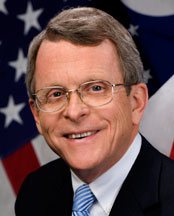
    Ohio Governor Mike DeWine

    Columbus, Ohio –  Governor Mike DeWine issued a proclamation today authorizing specified members of the Ohio National Guard to provide emergency aid to the Commonwealth of Puerto Rico after a series of powerful earthquakes caused massive destruction and widespread power outages.

    Governor DeWine’s proclamation allows the Ohio National Guard unit to remain on active duty until the disaster recovery assistance is complete and an emergency no longer exists.

    Beginning on December 28, 2019, the U.S. territory experienced hundreds of earthquakes, culminating in a 6.4 magnitude earthquake on January 7, 2020, and multiple aftershocks, near Guanica on the island’s southwestern coast.

    Puerto Rico’s governor declared a state of emergency due to the widespread damage and utility disruption.

    “I have authorized the mobilization of the Ohio National Guard to provide emergency assistance until basic services in the impacted areas are restored,” said Governor DeWine. “I have instructed Ohio’s Adjutant General

    to take whatever actions are necessary to assist local authorities to protect the lives, safety, health, and property of citizens affected by these devastating earthquakes.”

    The Ohio Air National Guard 200th RED HORSE (Rapid Engineer Deployable Heavy Operational Repair Squadron Engineer) Squadron will support earthquake relief efforts by establishing two Disaster Relief Bed-down Systems, which are deployable kits capable of providing basic housing and life support facilities, such as tents, showers, and latrines, for up to 150 military personnel responding to the disaster.

    Disaster relief missions and supporting our homeland is why America has a National Guard to call when the nation and her citizens need us most.

    “Disaster relief missions and supporting our homeland is why America has a National Guard to call when the nation and her citizens need us most. Our Ohio Air National Guard Airmen at the 200th RED HORSE Squadron are ready and anxious to support earthquake relief efforts in Puerto Rico. This is what we do,” said Maj. Gen. John C. Harris Jr., the Ohio adjutant general.

    The 200th RED HORSE Squadron, headquartered in Port Clinton, Ohio, with a detachment in Mansfield, is equipped to provide engineering, construction, and logistics capabilities worldwide on short notice.

    “Being able to support another state for domestic response is exciting,” said Col. Michael Hrynciw, commander of the 200th RED HORSE Squadron.”

    “Being able to support another state for domestic response is exciting,” said Col. Michael Hrynciw, commander of the 200th RED HORSE Squadron. “We train for this all the time in support of our friends and neighbors. The Ohio National Guard leads the way in helping others.”

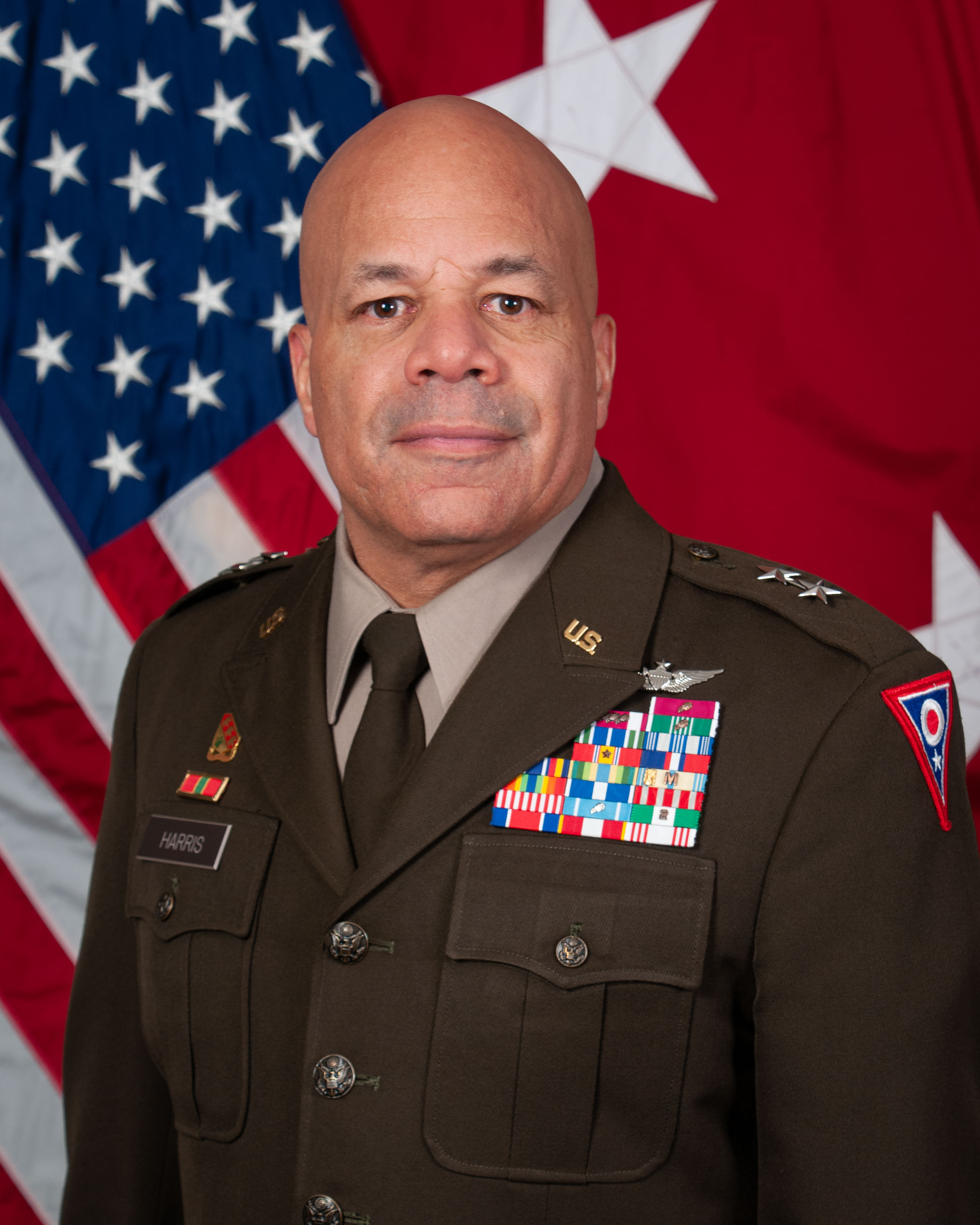
    Major General John C. Harris, Jr.

    Governor DeWine’s proclamation allows the Ohio National Guard unit to remain on active duty until the disaster recovery assistance is complete and an emergency no longer exists.

    Governor DeWine’s proclamation allows the Ohio National Guard unit to remain on active duty until the disaster recovery assistance is complete and an emergency no longer exists.

    The Ohio National Guard is deploying the equipment and personnel as part of the Emergency Management Assistance Compact, which allows states to send personnel, equipment, and commodities to assist with response and recovery efforts in other states or territories.


  • DeWine announces programs to prevent custody relinquishment, modernize care for Multi-System Youth

    DeWine announces programs to prevent custody relinquishment, modernize care for Multi-System Youth

    Columbus, Ohio – Governor Mike DeWine today announced that the Ohio Departments of Medicaid and Job and Family Services will issue $31 million in new funding to support youth and families served by multiple systems. In addition to providing direct support to children and families, these funds will also help to modernize Ohio’s 88 county Family and Children First Councils, which coordinate care for children served by multiple systems.

    “This is a tragedy, and we are taking bold steps to address these situations.”

    “Too many Ohio families lack access to the care that their children need to be happy and healthy. For some families, this results in parents making the unfathomable choice to relinquish custody of their child to help them get the care they need,” said Governor DeWine. “This is a tragedy, and we are taking bold steps to address these situations. Over the next two years, we will invest $68 million to prevent custody relinquishment, fund services for some of Ohio’s most in-need children, and begin to modernize the way we care for youth who require support from multiple systems.”

    In state fiscal year 2020, the administration will provide $31 million to implement new programs to address the unmet needs of youth served through multiple social services systems, including those at risk of being relinquished and those who have already been taken into children’s services custody.

    First, the Ohio Departments of Medicaid and Job and Family Services have jointly developed a state-level program to provide financial support to youth and families with complex needs who may be at risk of custody relinquishment or have already been relinquished to the foster care system. Beginning October 9, 2019, families, through their county Ohio Family and Children First Council, can apply for direct financial aid to cover costs associated with their child’s care. A total of $8 million has been made available to support families in need.

    Second, the Ohio Department of Job and Family Services will provide $20 million to county public children’s services agencies (PCSAs) to assist with costs for children who require support from multiple systems and have been relinquished or are at risk for relinquishment. Following rulemaking, funds will be released early in calendar year 2020.

    Ohio Family and Children First will gather feedback and develop best practices over the next few months.

    Finally, Ohio Family and Children First will immediately begin working with stakeholders to develop an action plan to reduce custody relinquishment and better serve Ohio’s children with the most complex needs. The Multi-System Youth Action Plan Committee will evaluate the existing Family and Children First Cabinet infrastructure, current practices across the state, and service needs. Based on this evaluation and action plan, funds will be made available for both sustainability efforts and technical assistance.

    “We look forward to working with families and communities to improve outcomes for our most in-need young people. These funds will not only help families this year, but they will also help transform the systems that care for these youth,” said Governor DeWine.

    Ohio Family and Children First will gather feedback and develop best practices over the next few months, then make improvements to the state program to better serve Ohio’s children and families as allocations are made for $37 million in funding set aside for state fiscal year 2021.


  • Governor DeWine announces proposals to reduce gun violence, increase mental health prevention, treatment

    Governor DeWine announces proposals to reduce gun violence, increase mental health prevention, treatment

    Columbus, Ohio – Ohio Governor Mike DeWine today announced a series of legislative reforms to address gun violence and outlined further action to increase mental health prevention, identification, and treatment to better protect Ohioans.

    “Gun violence doesn’t just take the form of mass shootings, people are victims every day in Ohio and across the country,” said Governor DeWine. “I believe that this is both a public safety issue and an individual wellness issue – we must address both sides to help solve the problem. It’s time to do something, and that is exactly what we are going to do.”

    This series of solid, workable reforms will help get guns out of the hands of people who should not have them under the law while protecting the rights of law-abiding citizens who are entitled to the right to bear arms and will help prevent and treat those struggling with mental illness.

    Governor DeWine’s proposals include:

    Safety Protection Orders

    Governor DeWine is asking the legislature to pass a law to allow courts to issue Safety Protection Orders which would remove firearms from potentially dangerous individuals and get them the mental health treatment they need all while maintaining an individual’s right to due process.

    Increased Access to Inpatient Psychiatric Care

    Over the past several years, Ohio’s state psychiatric hospitals have become predominantly used by patients who are court-ordered there for restoration to competency to stand trial. This week 79% of the adults in our state psychiatric hospitals are under court order.  The Ohio Department of Mental Health and Addiction Services (OhioMHAS) is working to create a process where courts and community-based providers can work together to restore competency for those to stand trial in an outpatient setting which will free more hospital beds and decrease wait time for admission. The Ohio General Assembly will need to pass legislation to create this community-based misdemeanor competency restoration process.

    Early Intervention

    As part of the 2019-2020 biennium operating budget, the state is investing $675 million in wrap-around services for schools to design individualized programs, working with local mental health providers or social service organizations, to address the social and emotional challenges our students face.

    Access to Behavioral Health  Services

    The Ohio Department of Medicaid is investing $15 million in telehealth mental health services to students, so no matter where a child lives, they have access to high-quality mental health care.

    Risk Factor and Resource Identification

    OhioMHAS will be working with communities to increase knowledge of risk factors, help parents identify when their child is showing warning signs of a mental illness. The department will share screening tools with clinicians and help connect community-based services to link parents, families, and schools with proven supports and strategies to manage a child’s wellness over the child’s lifetime.

    Background Checks

    Governor DeWine is calling on the Ohio General Assembly to pass a law requiring background checks for all firearms sales in the state of Ohio with certain limited, reasonable exceptions, including gifts between family members.

    Increased Penalties for Felons Who Illegally Possess Firearms

    Gun violence occurs in neighborhoods and communities every day across Ohio and the nation. Law enforcement reports that the majority of this violence is perpetrated by a relatively small number of individuals who don’t have the right to possess a gun. Governor DeWine is calling on the General Assembly to increase penalties on felons who illegally possess or use guns.

    Increased Penalties for Violent Felons Who Illegally Possess Firearms

    Governor DeWine is calling on the General Assembly to increase penalties violent felons and other people found with a gun they do not have the legal right to possess. The crime of having a weapon while under a disability is currently a third-degree felony punishable by a maximum of three years in prison. On a first offense, the crime should be a second-degree felony punishable by two-to eight-years in prison, and for subsequent offenses, it should be a first-degree felony punishable by three- to eleven-years incarceration.

    Increased Penalties for People Who Commit Felonies while in Possessing Firearms

    This proposal would increase penalties for people who commit felonies with a firearm or who possess a firearm while committing a felony to a mandatory additional one- to three-year sentence.

    Increased Penalties for Brandishing a Gun

    The General Assembly should pass a law that increases the penalty for those who commit a felony while brandishing a firearm to a mandatory three- to five-year sentence.

    Increased Penalties for Straw Purchases

    So-called “straw” purchases, the act of purchasing guns for or giving guns to another individual are currently illegal under Ohio and federal law. However, this practice is far too common, so Governor DeWine is calling on the General Assembly to increase the penalty for a straw purchase to a second-degree felony punishable by two to eight years in prison.

    Increased Penalties for Illegally Obtained Guns

    We should increase the penalty for a person who possesses a firearm that they know was obtained through an illegal or fraudulent purchase in order to avoid a federal background check.  A person who possesses the gun should be punished in the same manner as a person who bought the firearm, increasing the penalty to a second-degree felony punishable by two- to- eight years in prison.

    Increased Penalties for Those Who Improperly Provide Firearms to Minors

    Too many kids are carrying guns on the streets often with tragic consequences. Adults who furnish firearms to minors must be held accountable.  Governor DeWine proposes that the General Assembly increase the penalty for improperly providing a firearm to a minor to and a third-degree felony punishable by up to three years in prison.

    School Tip Line

    The DeWine administration is expanding the state’s school safety tip line, where kids and adults can call or text anonymously to 844-723-3764 with tips about potential school violence.

    Social Media Monitoring

    In a 24-7 world of social media, threats can arise at any time. The Hub at the Ohio Department of Public Safety is expanding its ability to monitor and track potential threats on social media and will share that information with local school and local law enforcement.

    Community Safety

    The operating budget provides nearly $9 million to help harden soft targets like non-profits and religious organizations to make their facilities more secure.

    School Safety and Intervention Programs

    Working closely with Sandy Hook Promise, Ohio’s schools are implementing their “Know the Signs” safety program across the state. This program equips school staff with knowledge and skills to identify potential threats of violent action and take steps to intervene. There are 23 training dates already scheduled.

    “I believe these proposals fulfill three important requirements. They can pass the legislature, they make meaningful progress toward safer communities, and they are Constitutional. Passing them won’t be easy, but this is the right thing to do and this is the right time to do it,” Governor DeWine added. “We can pull together to do meaningful things to protect lives. It won’t be easy, but I believe in this state, and I believe in our people.”

    Click here for Governor DeWine’s prepared remarks.

    Click here for details on the Governor’s proposals.


  • New Hocking Hills Visitor Center opens

    New Hocking Hills Visitor Center opens

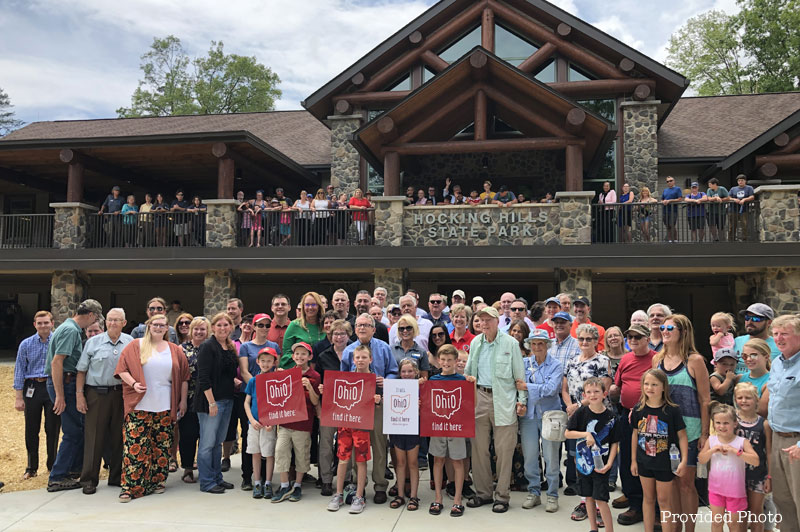
    Logan, Ohio – Ohio Governor Mike DeWine and Ohio Department of Natural Resources Director Mary Mertz today opened the new Hocking Hills Visitor Center at Hocking Hills State Park.

    The new visitor center includes 8,500 square feet of indoor space as well as upper and lower covered verandas that add 5,000 square feet to the building. The center provides space to learn, explore, and plan a visit to Hocking Hills State Park.

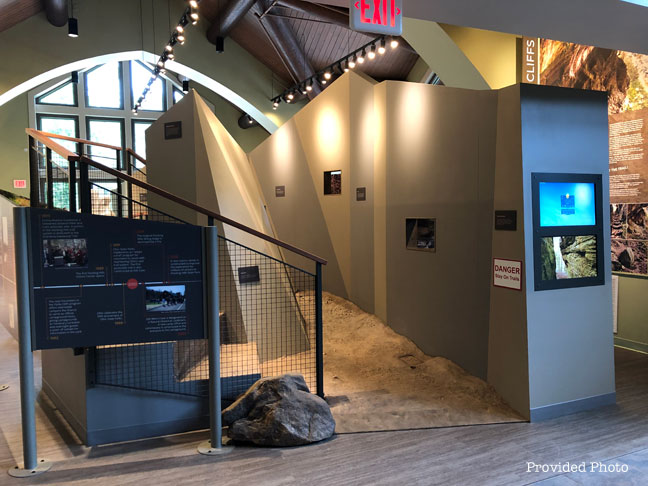
    The Hocking Hills Visitor Center features interactive exhibits on both the upper and lower levels that will help guests learn about the unique nature and history of the Hocking Hills region.

    More than 4 million visitors annually go to the Hocking Hills region.

    Displays located on the upper level of the building focus on helping visitors: plan their day; navigate the Hocking Hills State Park, the Hocking Hills State Park, and nearby state nature preserves. In the center, you can learn about the trails systems and address the safety considerations of hiking the trails. The lower level of the building takes visitors through the history and ecology of the Hocking Hills region. A large-scale cave built into the center of the room gives visitors a one-of-a-kind experience learning about the unique geology of gorges in the area.

    Restrooms and water bottle filling stations are also located on the lower level, and a visitor information desk and gift store are located on the upper level.

    Visitors to the center also will learn about some of the little-known wonders and history of the Hocking Hills area and how the state’s foresters and Civilian Conservation Corps (CCC) played a central role in preserving and protecting the wonders of the region for future generations.

    Recently, Hocking Hills State Park was highlighted in the New York Times. The writer described it as “ethereal and mystical.”

    Additional information about Hocking Hills State Park is available on ODNR’s website.