Tag: hamilton county

  • Building “Alternative Care Centers”

    Building “Alternative Care Centers”

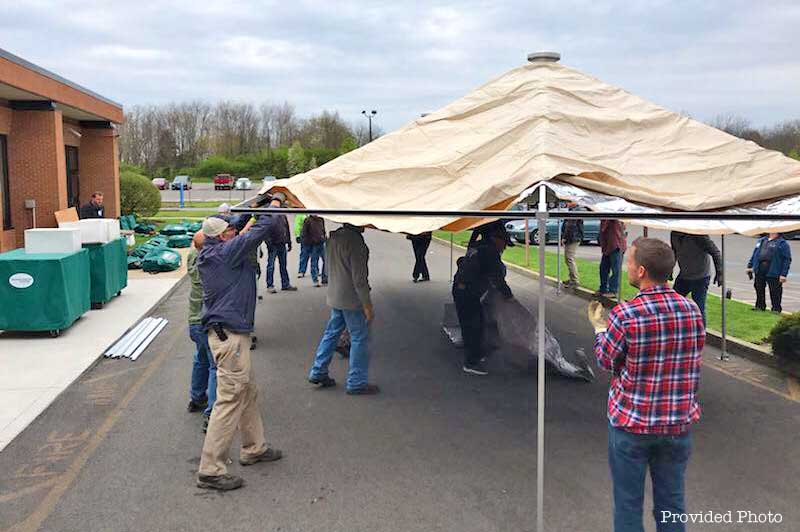
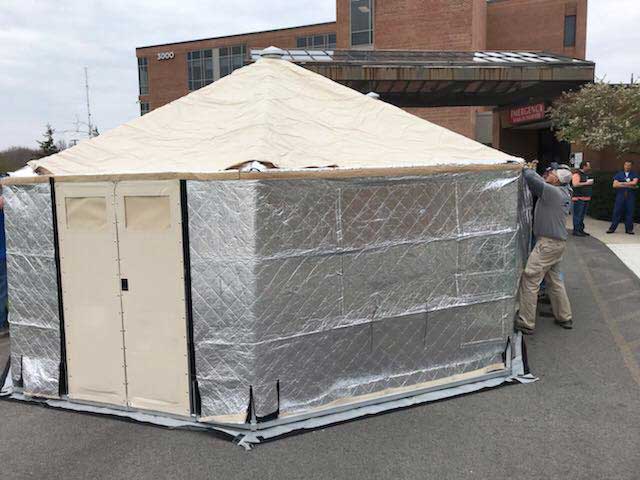
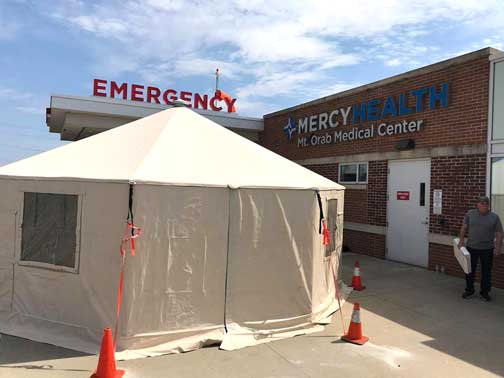
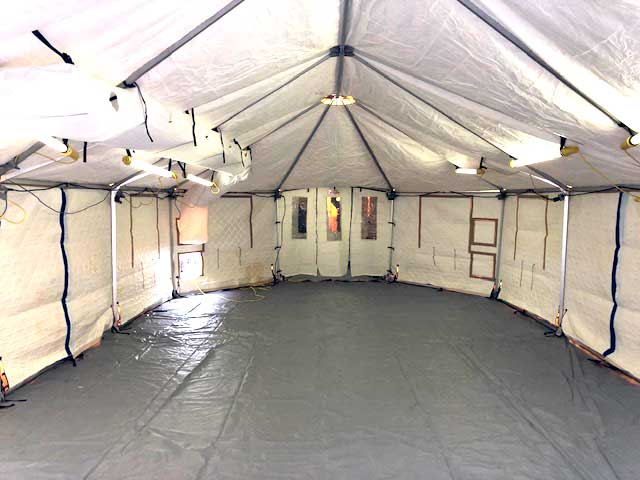
    The Clermont County Engineer’s staff partnered with the Greater Cincinnati Health Collaborative, Clermont County Public Health, Mercy Hospital staff, and the Central Joint Fire-EMS District Saturday morning to construct “Alternative Care Centers” in Brown, Clermont, and Hamilton County.


    513-683-1052
    215 Loveland-Madeira Rd

    Loveland, Ohio 45140

    Ready to improve your Health? Request your Appointment today!
    Call Us (513) 683-1052 or  REQUEST APPOINTMENT
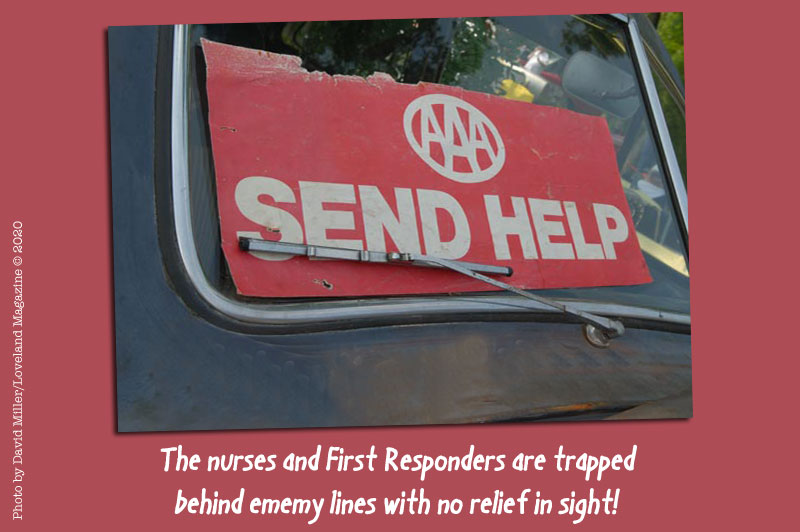
  • PPE donations still needed locally to help nurses and first responders that are on the front lines

    PPE donations still needed locally to help nurses and first responders that are on the front lines

    Hamilton County, Ohio – The Southwest Ohio region’s healthcare professionals and first responders need your help to protect them as they work tirelessly to treat and fight the COVID-19 outbreak. To alleviate the strain on the region’s healthcare system, Hamilton County Emergency Management and Homeland Security Agency (EMHSA) is requesting donations of Personal Protective Equipment (PPE). The specific need of the County is: N95 masks, surgical masks, disposable splash gowns, and exam gloves (latex-free preferred, but all unopened boxes of gloves will be accepted).

    Specific industries that may be able to assist include: dental offices, veterinary offices, construction companies, hair salons and beauty supply stores. If you are able to donate, please call 513-263-8200 for donation drop-off location and additional information. Phone lines are monitored Monday-Friday, 8 AM-5 PM. If the phone is not answered, leave a message with your name & contact information, and your call will be returned as soon as possible.

    A webpage with information regarding COVID-19 donation needs can be viewed HERE.


  • State and County statements on coronavirus (COVID-19)

    State and County statements on coronavirus (COVID-19)

    “Fortunately, we have had no confirmations of COVID-19.”

    HAMILTON COUNTY, OHIO– Hamilton County Public Health (HCPH), as one of 113 local health departments in Ohio, is part of a highly-organized prevention and response effort for the coronavirus, or COVID-19 outbreak.  The agency is in lockstep with the Ohio Department of Health (ODH) and the Centers for Disease Control and Prevention (CDC) in managing protocols for prevention and if necessary, mitigation of cases of COVID-19.

    “As of today, there are no confirmed cases of COVID-19 in Ohio,” says Greg Kesterman, interim health commissioner at HCPH.  “We are working diligently with resources at the local, state and federal levels to make sure our response plan is up-to-date, our partners are well-informed, and the healthcare community knows exactly how to handle any eventuality.”

    Symptoms of the COVID-19 in people who have been exposed can include fever, cough and shortness of breath. The symptoms may appear in as few as two days or as long as 14 days after exposure. Reported illnesses have ranged from people with little-to-no symptoms to people becoming severely ill and dying.

    Current responsibilities for local health departments are working together across Ohio to monitor individuals returning from travel in China and other countries.  ODH is informed of travelers returning to Ohio.  If a traveler returns to Hamilton County, HCPH is responsible for monitoring and quarantining those individuals for 14 days – the incubation period for COVID-19.  Monitoring includes daily temperature checks while the local health department is in constant communication with those quarantined.  If a person develops symptoms during the quarantine period, HCPH helps them get the care they need.

    “To date, we have been responsible for monitoring people who fit the travel criteria established by CDC,” Kesterman says.  “Fortunately, we have had no confirmations of COVID-19.”

    Another important public health responsibility is contact tracing.  If an individual develops symptoms, health department staff track and monitor individuals with whom they may have had contact.  These could include family members, friends, work colleagues or other individuals.

    HCPH and health departments across the State are in constant contact with ODH.  There are regular conference calls with the State and health care facilities to share current information and guidance and to stay on top of ever-changing challenges with the response to coronavirus.

    “The actions that we’re all taking are very similar to our work during the Ebola response in 2014,” Kesterman adds.  “What we’re doing is very typical public health work.  We update plans, track and monitor those potentially exposed and then put protocols into place to prevent the risk of spreading the virus.”

    According to the CDC, imported cases of COVID-19 in travelers have been detected in the U.S. Person-to-person spread of COVID-19 also has been seen among close contacts of returned travelers from Wuhan, China but at this time, this virus is NOT currently spreading in the community in the United States.  The potential public health threat posed by COVID-19 is high, both globally and to the United States.

    But individual risk is dependent on exposure.  For the general American public, who are unlikely to be exposed to this virus at this time, the immediate health risk from COVID-19 is considered low.  Under current circumstances, certain people will have an increased risk of infection, for example healthcare workers caring for patients with COVID-19 and other close contacts of persons with COVID-19.

    Flu is currently a greater threat to public health.  HCPH urges everyone to get a flu shot.  It’s not too late and at the very least, the vaccine can help lessen symptoms and reduce their duration.

    For more information on flu and COVID-19, visit: www.hcph.org; www.cdc.gov; or odh.ohio.gov.


    Ohio Governor DeWine and the Ohio Health Director released an update COVID-19 Prevention and Preparedness Plan

    Ohio Governor Mike DeWine was joined by Ohio Department of Health Director Amy Acton, MD, MPH; Cuyahoga County Health Director Terry Allan, MPH; and MetroHealth President and CEO, Akram Boutros, M.D., FACHE today gave an update on the state’s preparedness and education efforts to limit the potential spread of Coronavirus Disease 2019 (COVID-19). There are no confirmed cases of COVID-19 in Ohio nor anyone currently under investigation for the virus.

    “I want to be clear that the threat of Coronavirus in Ohio and the United States remains low,” said Governor Mike DeWine, “but this could change, and we have to be prepared.  I believe it is imperative that we are open with the public and are communicating information in real-time about the Coronavirus to both inform and educate our communities.  We will communicate what we know, when we know it.”

    COVID-19 is a respiratory virus strain that has only spread in people since December 2019. The Centers for Disease Control and Prevention (CDC) continues to consider the health risk from COVID-19 to be low among the general public in the U.S. However, COVID-19 continues to be an issue of concern internationally and there is potential for an eventual community person-to-person spread to occur in this country. 

    “Since the start of this outbreak, we’ve taken a proactive approach to prepare and carefully monitor potential cases and travelers about COVID-19 in Ohio,” said Dr. Acton. “As the CDC advised, we need to be prepared for community spread of COVID-19. We are working to make sure our healthcare partners, first responders, state agencies, and local health departments have the resources they need to respond.”

    Today Governor DeWine ordered the following action by state agencies:

    •     The Ohio Department of Transportation will post information from the Ohio Department of Health in all state rest areas on hand washing protocols including messages on Ohio Travel TV.
    •     The Departments of Rehabilitation and Corrections and Youth Services will increase frequency and use of disinfectant measures in all their state facilities to protect inmates, families, and staff.
    •     The Governor called on Ohio college and university leaders to urge every student and faculty member on their campuses who have not yet received a shot to get one at their health clinic immediately. 
    •     The Governor is asking our college and university leaders to prohibit college travel to nations where the CDC has recommended no travel, such as China and South Korea. 
    •     The Governor is asking college and universities to take appropriate action to accommodate students who are studying abroad and may need to come back to the United States. 
    •     The Governor is asking the Ohio Department of Aging to continue working with local aging networks to identify the most vulnerable older adults with the highest needs to make sure that plans are in place to meet their needs – whether that is providing additional meals or additional medication or other personal care needs.
    •     The Governor is asking local aging advocates across Ohio to go out into their communities to check on nursing care facilities to ensure that all illness prevention methods are in place.  
    •     The State of Ohio will also be paying aggressive attention to common areas in state-owned buildings, including significantly increased cleaning frequency of these areas and hand sanitizer stations in common lobbies and hallways.

    Governor DeWine announced that on Thursday of next week, the state will be convening a summit in Columbus for all of Ohio’s local public health departments and health commissioners and staff that will include members of the Governor’s Cabinet.   

    Symptoms of the COVID-19 in people who have been exposed can include fever, cough and shortness of breath. The symptoms may appear in as few as two days or as long as 14 days after exposure. Reported illnesses have ranged from people with little-to-no symptoms to people becoming severely ill and dying.

    “As this situation evolves, we will continually update Ohioans through our website, odh.ohio.gov, our Facebook page and our Twitter account,” said Dr. Acton “It’s important to remember that the most accurate and timely information regarding this outbreak is available through the Ohio Department of Health, as well as the CDC.”

    For information and updates related to COVID-19, visit the Ohio Department of Health website at www.odh.ohio.gov or coronavirus.ohio.gov


  • Hamilton County Health Commissioner to retires after 27 Years in Office

    Hamilton County Health Commissioner to retires after 27 Years in Office

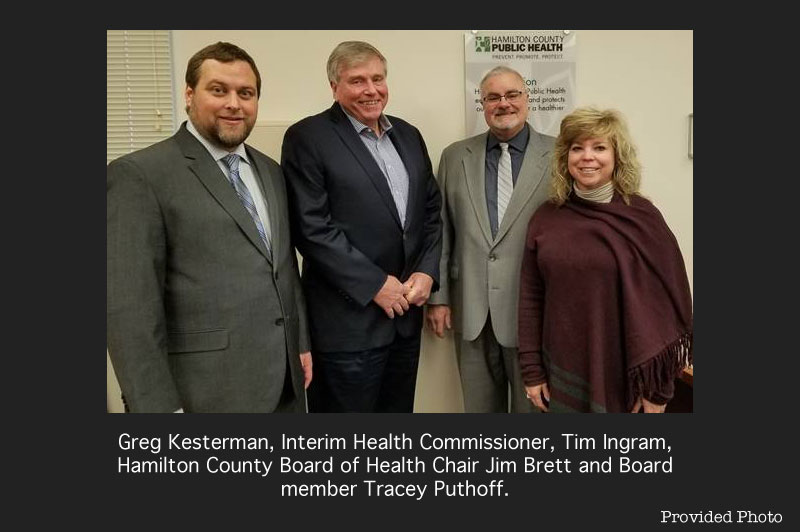
    Hamilton County, Ohio – Hamilton County Health Commissioner Tim Ingram has announced he is retiring from Hamilton County Public Health to pursue other opportunities. He is being replaced on an interim basis by Assistant Health Commissioner for Environmental Health Services, Greg Kesterman.

    “It has been an honor and privilege to lead this agency,” Ingram said.  “Our staff is top-notch, passionate about their work and dedicated to customer service. We’re in a much better place that we were in 27 years ago.” Ingram says he is considering opportunities in teaching, health care and continuing to work with the disease of addiction, in addition to enjoying family time, travel and other activities.

    According to Hamilton County Board of Health Chair Jim Brett, “Tim’s leadership has advanced this agency light-years from where he began. Under his leadership, we have seen numerous awards, national and international recognition. The Board of Health thanks Tim for his leadership and expresses the utmost confidence in interim commissioner Kesterman. Under Greg’s leadership, we will continue to advance what we feel is one of the best public health programs in Ohio – and beyond.”

    Kesterman is a graduate of the University of Cincinnati with a bachelor’s degree in environmental studies and received a master’s in public administration from Northern Kentucky University. He began his career as a sanitarian in the agency’s Environmental Health Division, moving up to division director before assuming the role of assistant health commissioner.

    “I am most excited to lead this team,” he says.  “This is an incredibly important time in public health, as our global society necessitates new approaches to public health and safety. We are well positioned in Hamilton County to take on challenges, as we continue to expand our work on the disease of addiction, ensure the safety of our food service, and maintain sanitation for our focus areas. We have a world-class staff and I can’t wait to get going!”


  • Loveland Magazine Directory of local government leadership in 2020

    Loveland Magazine Directory of local government leadership in 2020

    Loveland City School District

    Dr. Kathryn Lorenz President

    Ned Portune Vice President

    Art Jarvis – Member

    Michele Pettit – Member

    Eileen Washburn – Member

    Dr. Amy Crouse – Superintendent

    Kevin Hawley  Treasurer/CFO


    City of Loveland

    Kathy Bailey – Mayor

    Robert Weisgerber – Vice Mayor

    Andy Bateman – Member

    Ted Phelps – Member

    Tim Butler – Member

    Neal Oury – Member

    Kent Blair – Member

    Dave Kennedy – City Manager

    Michelle Byrde – Finance Director


    Symmes Township

    Jodie Leis – Board President

    Kenneth N. Bryant – Vice-President

    Phil Beck – Trustee

    Joseph C. Grossi – Fiscal Officer

    Kimberly A. Lapensee – Administrator


    Miami Township

    Ken Tracy – Chairperson

    Mary Makley – Vice Chair

    Karl Schultz – Member

    Eric Ferry – Fiscal Officer

    JEFF WRIGHT – Township Administrator


    Hamilton Township

    Brent Centers – Administrator


    Deerfield Township

    Kristin Malhotra – President of Board of Trustees

    Lelle Lutts Hedding – Vice President of Board of Trustees

    Jim Siciliano – Trustee

    Dan Corey – Fiscal Officer

    Eric Reiners – Township Administrator


    City of Milford

    AMY VILARDO – Mayor

    LISA EVANS – Vice-Mayor

    KIM CHAMBERLAND – Member

    ANET COOPER – Member

    TED HASKINS – Member

    SANDY RUSSELL– Member

    Kyle Mitchell – Member

    MICHAEL DOSS City Manager

    Patricia Wirthlin – DIRECTOR OF FINANCE


    City of Montgomery

    Chris Dobrozsi – Mayor

    Craig Margolis – Vice Mayor

     Lee Ann Bissmeyer – Council Member

    Michael Cappel – Council Member

    Gerri Harbison – Council Member

    Lynda Roesch – Council Member

    Ken Suer – Council Member

    Brian Riblet – City Manager

    Katie Smiddy – Finance Director


    Clermont County

    David L. Painter – President

    Edwin H. Humphrey – Vice President

    Claire B. Corcoran – Commissioner

    Thomas J. Eigel – County administrator


    Hamilton County

    Denise Driehaus – President

    Stephanie Summerow Dumas – Vice-President

    Victoria Parks (Appointed)

    Todd Portune (Retired)

    Jeff Aluotto – Administrator

    DEPARTMENTS

    Warren County

    Tom Grossmann – Commissioner
    Shannon Jones – Commissioner
    David G. Young – Commissioner
    Tiffany Zindel – Administrator
    Martin Russell – Deputy Administrator
    Tina Osborne – Clerk of Commissioners

    Property Search
    Job Opportunities
    County News
    Auditor’s Office
    Recorder’s Office
    Child Support
    Water Department
    Building & Zoning
    Maps & GIS
    Disclaimer
    Directions
    Warren County Campus Map

      • Auditor – 513-695-1235
      • Clerk of Courts – 513-695-1120
      • Commissioners – 513-695-1250
      • Engineer – 513-695-3301
      • Prosecutor – 513-695-1325
      • Recorder – 513-695-1382
      • Sheriff – 513-695-1280
      • Treasurer – 513-695-1300


  • Supreme Court Lets Martin v. Boise Stand:  People Experiencing Homelessness Cannot Be Punished for Living in Absence of Adequate Housing or Sheler

    Supreme Court Lets Martin v. Boise Stand: People Experiencing Homelessness Cannot Be Punished for Living in Absence of Adequate Housing or Sheler

    Persons experiencing homelessness cannot be punished for sleeping outside on public property in the absence of adequate alternatives.


    Cincinnati, Ohio – This morning, the U.S. Supreme Court denied a petition by the city of Boise to review the case Martin v. Boise (formerly Bell v. Boise). This leaves in place earlier rulings by the 9th Circuit that persons experiencing homelessness cannot be punished for sleeping outside on public property in the absence of adequate alternatives.

    The Supreme Court’s decision, issued without comment, means the April 2019 ruling is binding in the 9th Circuit, covering nine states including most of the western states, and carries national influence.

    In a press release issued today, Josh Spring, Executive Director of the Greater Cincinnati Homeless Coalition said, “This is very important news, as our federal lawsuit filed last year by people experiencing homelessness and the Homeless Coalition continues to move forward here in the 6th Circuit.”  Their lawsuit aims to overturn City of Cincinnati policies criminalizing people experiencing homelessness outdoors and hopes to squash last year’s Common Pleas Court order making it an arrestable offense to experience homelessness outdoors anywhere in the Hamilton County including Loveland.

    The Law Center’s Executive Director, Maria Foscarinis, said, “Ultimately, our goal is to end homelessness through housing…so that no one has to sleep on the streets in the first place. We hope that the 9th Circuit decision will help communities find the political will to put that housing in place. Housing, not handcuffs, is what ends homelessness.”

    John Parvensky, Acting Executive Director of the National Coalition for the Homeless described this as a “victory”, saying, “…it will force communities to address homelessness proactively – through the development of an adequate supply of affordable housing, while providing safe and appropriate emergency shelter in the interim”.

    For the full text of the Law Center press release and links to documents from the case, click here.

    For the full text of the National Coalition press release click here.


    Oh Christmas Tree Oh Christmas Tree Why Not Give the Gift of Charity…


  • Polling locations, voting hours, Election Guide

    Polling locations, voting hours, Election Guide

    VOTE TOMORROW, NOVEMBER 5!

    VOTING HOURS:
    6:30 AM – 7:30 PM
    FIND YOUR POLLING LOCATION:
    In Hamilton County enter your address HERE
    In Clermont County follow this LINK
    In Warren County follow this LINK

    Read our guide to candidates and issues


  • How to entice a Loveland property tax payer, by cooking a lobster

    How to entice a Loveland property tax payer, by cooking a lobster

    by Walter D. Golladay

    Walter Golladay is a resident of Loveland

    Thursday evening, the 12th, our Loveland School Superintendent and Treasurer hosted a “…community meeting about Loveland Schools’ November 5 ballot issue. The meeting will include a presentation and the opportunity for the audience to ask questions.”

    During the meeting, a resident asked the following question: “How much more in property taxes will I have to pay if the 2019 tax levy is passed?” Our school treasurer responded with a lengthy meandering non-answer.

    The short answer is, visit your respective county auditor at:

    Hamilton County: https://wedge.hcauditor.org/

    Clermont County: https://www.clermontauditor.org/_DNN/

    Warren County: https://www.wcauditor.org/

    On each county website, search for your specific property. The quickest way is to search by the property owner. Enter your name, and accurate property information will appear.

    On your respective homeowner’s page, your 2018 property taxes will show what you paid. On your respective individual 2019 upcoming tax levy page, it will show what you will pay if the school district property tax levy is passed. One-half of the upcoming taxes will be due January 2020!

    Earlier this week, the “Loveland School Board authorizes a phase-in bond portion of levy over three years if Nov. 5 issue passes.” In so doing, Loveland property owners would benefit from a 3 year phase-in of the bond portion of the levy resulting in lower property tax levies of $20 per month for each $100,000 in the tax year 2019, and $35 per month in the tax year 2020, and the full levy charge of $49 per month would take effect in the tax year 2021.

    If the newly proposed school district tax levy 2-year diet is accepted by the Hamilton County Auditor, then for tax year 2019, a first-year diet of $20 per month translates into an additional $240 per annum; for the tax year 2020, the second year diet of $35 per month translates into $420 per annum; and in the tax year 2021 your diet terminates with $49 per month for $588 per annum, continuing indefinitely.

    As of yesterday, “Friday the 13th”, all 3 county websites report property taxes due and payable in the tax year 2019, of the full – no-diet – $588 per annum.

    The school district 2-year diet reminds me of the old parable: throw a lobster in boiling hot water to cook, it will jump out; throw a lobster in cold water, then add heat, it will happily swim around until its cooked. Which lobster are you?


  • New program to place former foster children on a path to self-sufficiency

    New program to place former foster children on a path to self-sufficiency

    Hamilton County, Ohio – GreenLight Fund Cincinnati and Hamilton County Job and Family Services are teaming up to bring First Place for Youth to Cincinnati. First Place for Youth is an innovative program aimed at helping foster children transition to adulthood using a youth-centered, trauma-informed approach. The program will help nearly 100 children a year in Hamilton County with housing, education and employment services.

    First Place for Youth originated in California and has a proven track record in helping youth develop necessary skills for adulthood. 91 percent of participating youth are employed when they graduate from the program. The education and workforce based program uses housing as a stabilizing force. Young people in the program live independently in apartments and receive wraparound support, education services, employment services and other help to become self-sufficient. This model, which is new to Cincinnati, will be operated by an existing, local non-profit organization who will be chosen later this month.

    First Place for Youth anticipates helping nearly 350 young people over the next four years, 90 percent of local transition-age youth.

    Moira Weir, director of Hamilton County Job and Family Services, which operates the local foster care system, said approximately 100 children a year “age-out” of the foster care system at age 18 or 21, meaning they are not reunified with their biological parents or adopted by new parents. First Place for Youth anticipates helping nearly 350 young people over the next four years, 90 percent of local transition-age youth.

    Weir’s organization worked with the University of Cincinnati’s Economic Center on a recent study that found children aging out of the local child welfare system eventually cost local residents $17.7 million in social expenses and lost productivity each year. Those costs are related to the youths’ involvement in the criminal justice, homeless and health care systems, as well as lost productivity because they are not employed at the same level as their peers in the general population.

    “You can imagine what life is like for an 18-year-old who is suddenly on their own with no family to turn to in times of trouble,” Weir said. “Research shows these young people are more likely to drop out of school, be unemployed, suffer physical or mental health problems, become teen parents, end up in the criminal justice system – they are more likely to fall victim to a host of social problems. We are excited to supplement our existing services with this incredibly innovative program GreenLight is bringing to our community. We are grateful for a community-based approach to this problem.”

    The GreenLight Fund works to improve the lives of low-income children and families by partnering with local community leaders to identify gaps in services in our community and then scours the country for innovative approaches to filling those gaps. Once a solution is found, GreenLight invests an initial $600,000 and draws on community connections to launch the solution in Cincinnati. GreenLight then measures results to ensure real change is happening.

    “We are thrilled to partner with Hamilton County Jobs and Family Services to support youth aging out of foster care in our community,” says Tara Noland, GreenLight Cincinnati’s executive director. “This proven, trauma-informed and data-driven model will drastically change the future trajectory of nearly all local youth who age out of care, helping them enter adulthood successfully and ultimately become thriving members of our community.”

    GreenLight Fund Cincinnati has raised $1.8 million in funding from organizations such as the Cincinnati Business Committee, the Cincinnati Regional Business Committee, Cincinnati Children’s Hospital, Bank of America, Duke Energy and others. Launched in 2015, it has served more than 1100 children and families through two portfolio organizations, the Center for Employment Opportunities and the Family Independence Initiative. First Place for Youth will be GreenLight’s third investment in Cincinnati.

    First Place for Youth has an extensive database of outcomes that make it a proven program ideal for replicating in our city. Hamilton County Job and Family Services will match GreenLight’s initial $600,000 investment with $6.5 million in ongoing support.