This Black Friday, Great Parks is encouraging you to spend time with friends and family and enjoying your parks when you #OptOutside.
Great Parks is celebrating the holiday with free entry to all 21 parks and preserves.
You can experience 78 miles of trails, over 17,500 acres of natural habitat and wildlife, lakes and river access, playgrounds, dog parks, golf courses and so much more!
Enjoy a 28-acre pay lake that is stocked weekly March through October and offers fishing from the bank, dock or rental boat. Electric trolling motors are permitted. Personal watercrafts, such as canoes and kayaks, are not permitted on the lake. Lake Isabella also has a full-service boathouse and reservable Chart Room, Riverside Lodge and Shady Elm Shelter for group outings. The park offers picnic areas, a playground and access to the Little Miami River.
Loveland Sweets is a purveyor of hand-crafted chocolates, caramels, marshmallows, and ice creams. Our house-made candies are prepared in small batches.
Hamilton, County, Ohio – On June 18, Democratic County Commissioners, Todd Portune, and Denise Driehaus, voted to raise the Hamilton County’s sales tax by 0.2 percent for 18-months to balance the budget.
Today a group of Hamilton County Republicans presented petition signatures of 38,000 residents to the County Auditor hoping that voters in November will prevent the tax from taking effect. In announcing their success they said they needed 23,629 valid signatures to get the Referendum on the ballot. The petitions will remain in the Auditior’s office for 10-days for public inspection and them go to the Board of Elections where the signatures will be checked for accuracy.
Alex Triantafilou, the Hamilton County Republican Party chairman said in a press release today, “While the counting and confirming of the validity of these signatures will take several weeks, we are very pleased with the overwhelming support we received from every corner of Hamilton County and from citizens of all political stripes.”
Todd Portune and Denise Driehaus said the County faces a $28 million structural deficit and they were not willing to lead a county that cannot provide basic services. They blamed actions of the State House for their budget woes.
Relaxed atmosphere and friendly service welcomes you back time and time again! Located in the heart of the Historic Loveland District Just outside Cincinnati, Ohio.
Pool Sanitation and Safety Practices for Safe Swimming
With temperatures and heat indices soaring, a dip in the pool is a great way to cool off. However, those pools can spread disease if not maintained and attended properly.
“Before you go swimming, visit our website and look up inspection reports for the pools in Hamilton County for which we have responsibility.”
“It’s like clockwork in that every year when the temperatures start to rise, we see a corresponding increase in illness caused by water-borne pathogens,” says Hamilton County Health Commissioner Tim Ingram. “Knowledge of good sanitation practices and a little common sense goes a long way toward reducing uncomfortable and sometimes dangerous illness.”
Many of the diseases in pool water come from fecal accidents and/or a lack of good sanitation practices. It’s important to follow these steps to prevent pool contamination:
• Don’t swim when you have diarrhea. This is especially important for kids in diapers. You can spread germs in the water and make other people sick.
• Don’t swallow the pool water. In fact, avoid getting water in your mouth.
• Please practice good hygiene. Take a shower before swimming and wash your hands after using the toilet or changing diapers. Germs on your body end up in the water.
• Take children on frequent bathroom breaks and check diapers often. Waiting to hear “I have to go” may mean that it’s too late.
• Change diapers in a bathroom and not at poolside. Germs can spread to surfaces and objects in and around the pool and spread illness.
• If you notice an accident in the pool, leave the pool and notify pool authorities immediately.
“It’s also crucial to maintain safe swimming practices,” Ingram adds. “Drowning and other avoidable accidents are all too common this time of year.” Safe swim practices include:
• Don’t swim alone.
• Make sure children are capable swimmers and are supervised at all times.
• Take CPR and first aid classes.
• Keep away from drain covers and outlet pipes.
• Ensure sunscreen is applied to prevent sunburn.
• Keep glass bottles away from pool areas.
• Don’t dive into shallow water.
• Have the following items available:
• Flotation device and / or shepherd’s crook;
• Phone to call 911;
• First aid kit.
“Before you go swimming, visit our website and look up inspection reports for the pools in Hamilton County for which we have responsibility,” Ingram says. “A little prevention and precaution can ensure that your cool dip is as enjoyable as it’s supposed to be.” Inspection reports for pools can be viewed at www.hcph.org.
Batavis, Ohio – Deaths due to drug overdoses declined for the second straight year in Clermont County, according to the Clermont County Coroner’s Office.
In 2017 76 deaths were caused by accidental drug overdoses.
In 2017, the Coroner’s Office, under the direction of Dr. Brian Treon, ruled that 76 deaths were caused by accidental drug overdoses. This compared to 83 in 2016, and 94 in 2015 – the highest number since Clermont County began to see the effects of increased opioid use in the late 2000s.
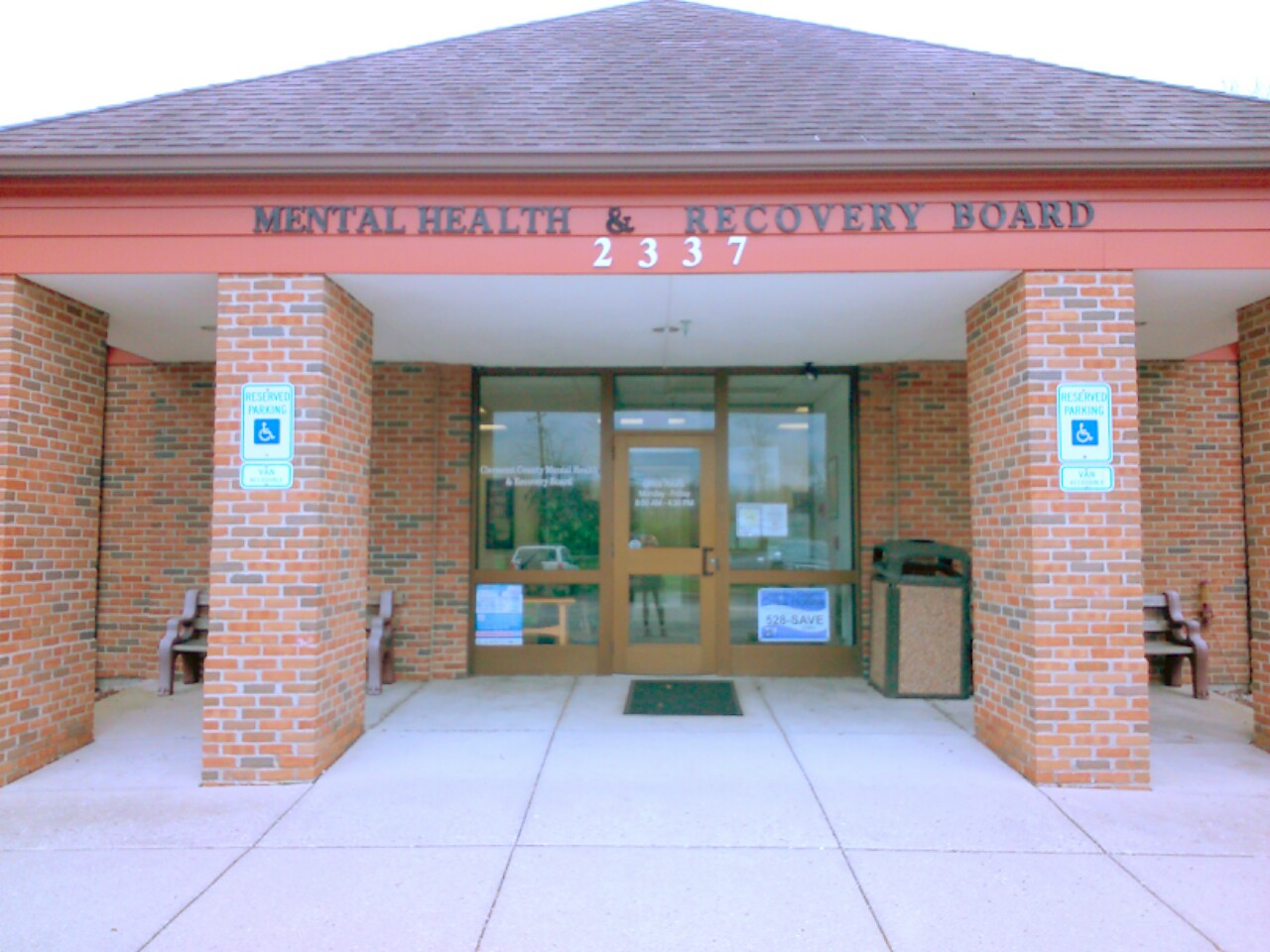
“We are encouraged by these numbers,” said Karen Scherra, the director of the Clermont County Mental Health & Recovery Board (MHRB). “These numbers indicate that the comprehensive measures we as a county have taken to address this issue are working.” The MHRB, the county hub in the fight against opioid addiction, is the lead organization in Clermont County’s Opiate Task Force, a collaborative that began in 2013 to address the opioid crisis in the county.
In 2017, more medication-assisted treatment and other kinds of treatment became available to more people suffering from substance abuse disorder, Scherra said. In 2017, MHRB spent over $1.9 million on addiction treatment services.
Other advances in 2017 included more Quick Response Teams.
Other advances in 2017 included more Quick Response Teams, which go to the homes of those who have survived overdoses to connect them to recovery resources; and more police/fire/EMS departments carrying Narcan, which can reverse overdoses.
In addition, a long-term recovery home for men was opened in 2017 in Clermont County. MHRB is now working on funding to open a similar home for women. Clermont County also opened a women’s wing in the Community Alternative Sentencing Center. This jail alternative connects clients with multiple treatment options.
Funding for these initiatives are provided through a combination of MHRB levy funds, federal and state grants.
“In response to the rise in drug overdose deaths, we created an Overdose Death Review Committee in 2014,” said Public Health Commissioner Julianne Nesbit.
Clermont County Public Health, a member of the Opiate Task Force, is also on the forefront of the opioid battle. “In response to the rise in drug overdose deaths, we created an Overdose Death Review Committee in 2014,” said Public Health Commissioner Julianne Nesbit. “We look at aggregate level data to see if there are any trends that we can address to help reduce future deaths in the community.
“Since we first saw the increase in drug overdose deaths, we have had a full-time Injury Prevention Coordinator who works to educate the community and work with our partners on the drug epidemic.”
In March, Hamilton County reported that overdose deaths for 2017 had increased 31 percent over the previous year to 529. Butler County reported a 20% increase to 232.
More information on Clermont County’s Opiate Task Force can be found on its website, www.getcleannowClermont.org.
For more information, contact MHRB Executive Director Karen Scherra, kscherra@ccmhrb.org, 513.732.5407.
Treasurer Josh Mandel Announces Launch of the City of Loveland Checkbook on OhioCheckbook.com
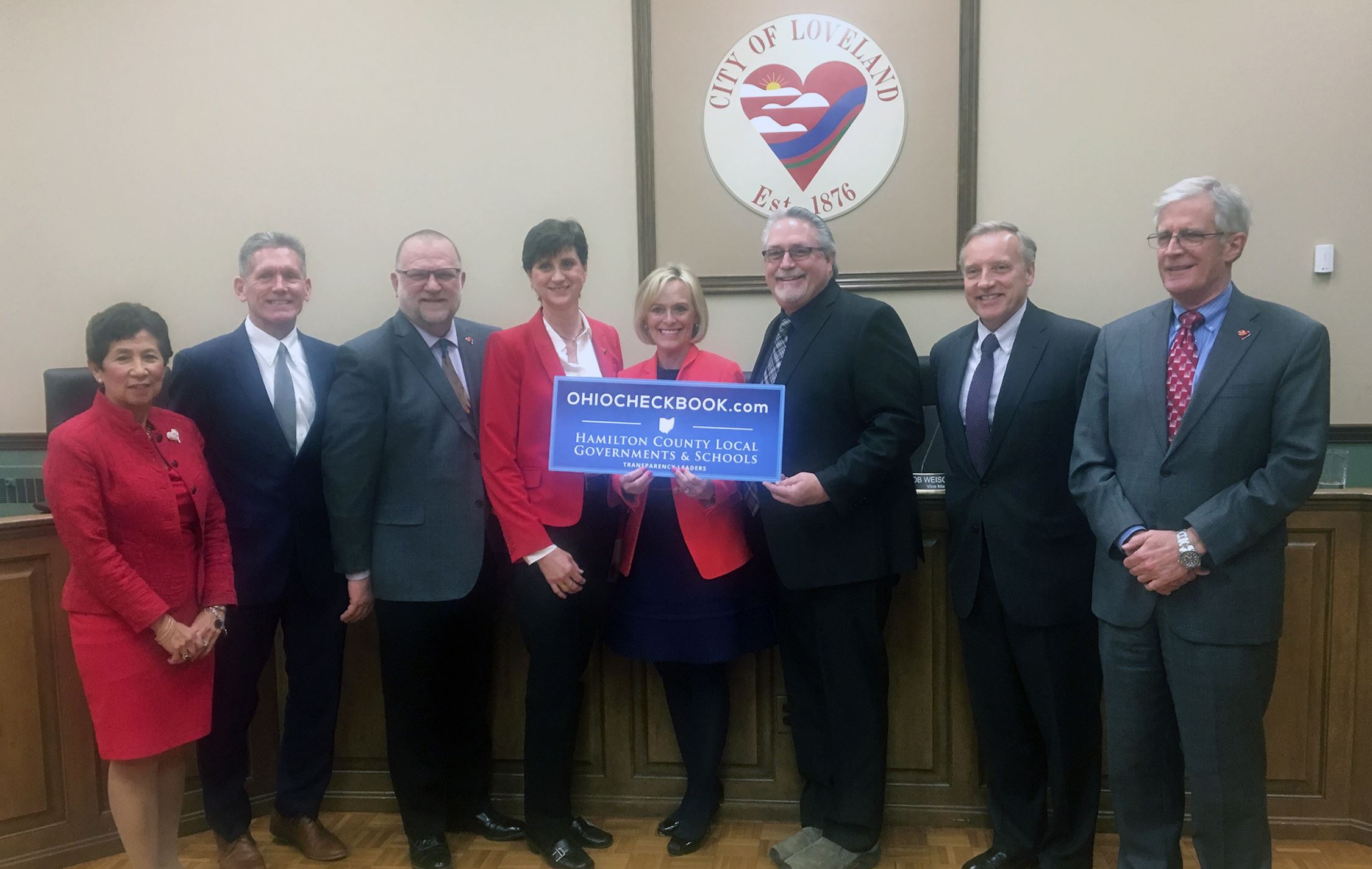
Loveland, Ohio – Treasurer Josh Mandel announced on April 11 the launch of the City of Loveland’s online checkbook on OhioCheckbook.com. In December 2014, Treasurer Mandel launched OhioCheckbook.com, and for the first time in Ohio history put all state spending information on the internet.
The Ohio Treasurer’s office was joined at the announcement by Loveland Mayor Kathy Bailey, Vice Mayor Robert Weisgerber and City Councilmembers Angie Settell, Ted Phelps, Tim Butler, Neal Oury and Kent Blair.
Loveland is the ninth city in Hamilton County to post their spending on OhioCheckbook.com. Loveland’s online checkbook includes over 33,000 individual transactions that represent more than $89 million of total spending over the past five years.
“I believe the people of Hamilton County have a right to know how their tax money is being spent, and I applaud local leaders here for partnering with my office to post the finances on OhioCheckbook.com,” said Treasurer Mandel. “By posting local government spending online, we are empowering taxpayers across Ohio to hold public officials accountable.”
“We’re excited to allow our residents to take a closer look at how the City spends its’ taxpayer dollars,” said Loveland Acting Finance Director Michelle Byrde.
Mayor Kathy Bailey added. “The City is proud to join the Ohio Checkbook Program, and welcome the financial transparency it offers for interested residents”
OhioCheckbook.com displays more than $644 billion in spending over the past ten years, including more than 173 million transactions. The website includes features such as:
“Google-style” contextual search capabilities, to allow users to sort by keyword, department, category or vendor;
Fully dynamic interactive charts to drill down on state spending;
Functionality to compare state spending year-over-year or among agencies; and,
Capability to share charts or checks with social media networks, and direct contact for agency fiscal offices
Hamilton County Public Health (HCPH), working in conjunction with the U.S. Environmental Protection Agency (EPA), have discovered lead and arsenic contamination in fields at Taylor Creek Youth Organization.
Taylor Creek Youth Organization (TCYO) is a non-profit sports organization located in Hamilton County’s Whitewater Township. The organization’s sports complex, located at 8015 Furlong Road., provides baseball, softball and soccer fields. In addition, the complex hosts a weekly “turkey shoot” during the winter months.
A citizen complaint was sent to the Ohio EPA with concern that lead from the turkey shoots could potentially contaminate playing fields. Children and other individuals using the playing fields might potentially be exposed to unsafe levels of lead.
The Ohio EPA referred the case to Hamilton County Public Health. HCPH staff conducted a visual inspection of the field in closest proximity to the field used for the turkey shoots. Visual inspection indicated debris from shotgun shells littering the field, as well as particles of a gray metallic substance. Inspectors suspected the substance was lead.
A licensed lead risk assessor employed by HCPH took soil samples from the field. In addition, a water sample was collected from a hose fixture on the west side of the facility’s concession stand. Test results for soil were returned confirming soil contamination with lead and arsenic. Water sample results showed no contamination.
Lead poisoning is caused by swallowing or breathing lead. Unborn babies and children under six years old are most at risk. Lead poisoning hurts the brain and nervous system and can cause learning and behavior problems.Some of the effects of lead poisoning may never go away. Lead in a child’s body can: slow down growth and development; damage hearing and speech; and make it hard to pay attention and learn.
Arsenic occurs naturally in soil and minerals and may enter the air, water and land from wind-blown dust and may get into water from runoff and leaching. Breathing high levels of inorganic arsenic can give you a sore throat or irritated lungs.
Swallowing arsenic can cause nausea and vomiting, decreased production of red and white blood cells, abnormal heart beat, damage to blood vessels, and a sensation of “pins and needles” in hands and feet.
“While we feel that the potential risks to children who have played on these fields are small, we would advise anyone concerned to consult with their physician,” says Hamilton County Health Commissioner Tim Ingram. “Tests for both lead and arsenic exposure are readily available and easy to administer.
“The staff at Taylor Creek Youth Organization has been extremely cooperative,” Ingram adds. “They obviously have great concern for the children and others who use the facility and we appreciate the cooperation.”
Further soil sampling will be conducted to better understand the extent of the contamination. For more information on lead exposure, visit Hamilton County Public Health website at hcph.org and search “lead.”
EDITOR’S NOTE: In reaction to this editorial, City Council voted on Tuesday, April 24 to have a public hearing on this proposal during the City Council meeting of May 9.
It’s past time City Hall start a dialogue with those most affected
by David Miller, Publisher
Come take a walk with me while I tell you a story
It’s just my opinion, but I believe City Hall should start talking to people about this before it gets so far along people will need 1.6 million dollars worth of arguments against it. Once City Hall gets the funding for what they will describe as “Free Money” it will be extremely hard to turn council members to “No” votes. Residents should be given a fighting chance.
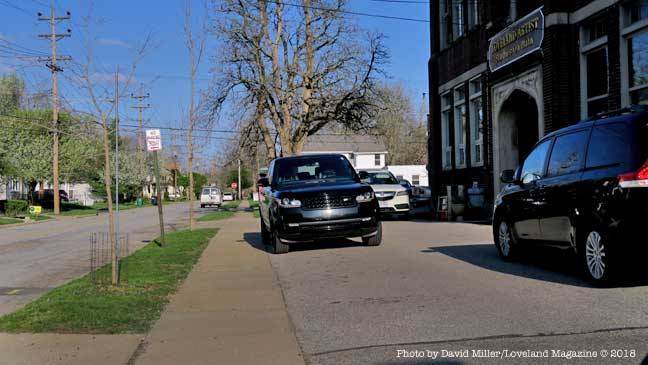
As the equivalent of a one-lane asphalt road that will cozy within feet of the front doors of homes and businesses in the West Loveland Historic District and along Loveland Madeira Road, and City Hall moves closer to securing funding, property, and homeowners have yet been asked their opinion. Almost all do not yet know the proposal has already been partially funded by Hamilton County and the Ohio, Kentucky, Indiana Council of Governments has committed their resources to finding 80 percent of the $1,623,000 and growing price tag for construction.
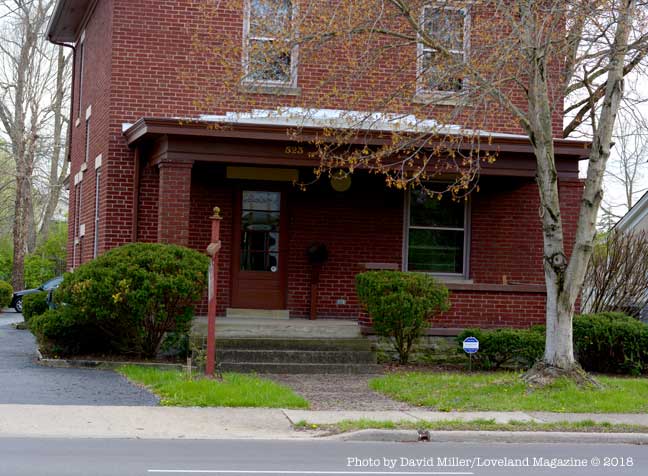
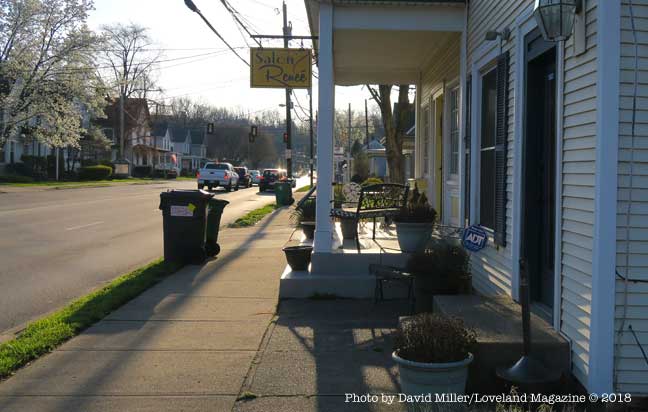
This is a view of the North side of West Loveland Avenue where construction of a 12′ wide swath of asphalt would require the removal of the front porch of this business. The entry to the basement of this business is through the porch floor.
Some front porches would have to be removed to accommodate the 12’ wide asphalt bicycle road. The road will be reduced to 10’ wide only where construction proves difficult.
As the City Hall proposal gets yet more expensive and closer to fruition there is still no initiative from the Council table to ask the thoughts and suggestions of citizens, home-owners, affected businesses, property owners, or pertinent City Commissions and Committees.
As the City Hall proposal gets yet more expensive and closer to fruition there is still no initiative from the Council table to ask the thoughts and suggestions of citizens, home-owners, affected businesses, property owners, or pertinent City Commissions and Committees.
One property and business owner along the proposed route wrote to City Hall. Paul Elliott said, “I am under the impression that such a proposal ‘has legs’, and city officials are even seeking funding sources. First, as a taxpaying resident and longtime business/property owner on West Loveland Avenue, I am disappointed that no city official has approached either the public in general nor us property owners who may be affected by such a bike corridor.”
The project, called the Loveland Connector Trail, will be approximately 1.4 miles long and will begin at the Deer Ridge II Apartments being built next to New Hope Baptist Church. It will continue along Loveland Madeira Road to Main Street, to the southern part of Wall Street, then to West Loveland Avenue, crossing over the Little Miami River at the Col. Paxton Bridge ending in Historic Downtown.
“I am disappointed that no city official has approached either the public in general nor us property owners who may be affected by such a bike corridor.” – Resident and affected business owner, Paul Elliott.
The goal and impetus for the project are to reduce congested parking in the Downtown Historic District by encouraging Loveland Bike Trail users to park somewhere along the new bike road and ride their bikes into Historic Downtown.
City Manager, Dave Kennedy announced in February that he was confident he will find 80% of the $1,623,000 cost from the Federal Government. He has since announced changes that will raise the price tag an undetermined amount.
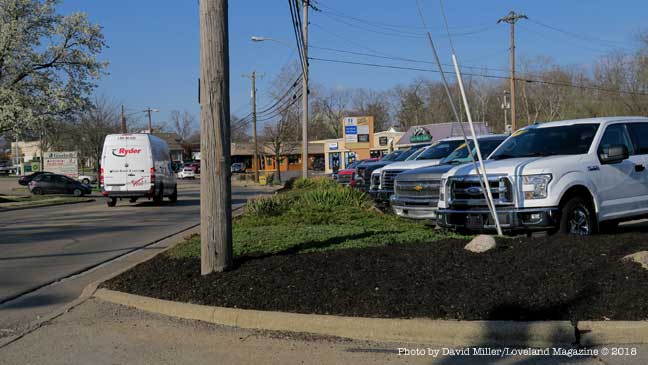
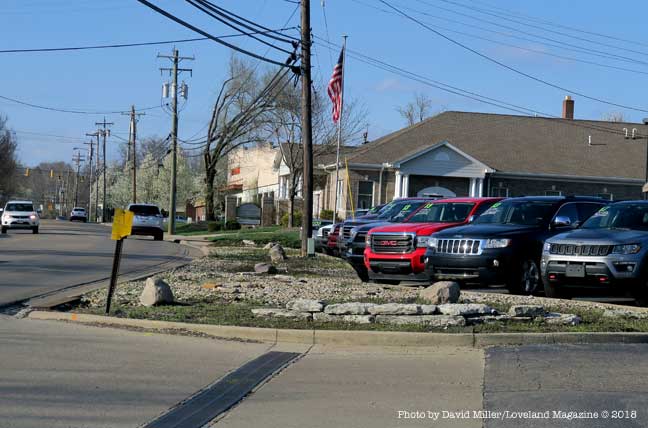
A view of an automobile dealership that has softened their business frontage. Something will have to give way for the proposed 12′ asphalt bike road.
The study does not contain any data on the potential number of users, nor potential customers to Loveland Madeira Road businesses. The study also does not address any repercussions on the residential neighborhood of Main Street or the Business/Residential neighborhood on West Loveland Avenue. For instance, it does not address future maintenance or whether property owners will be responsible for snow and ice removal on a path that replaces their current sidewalks. It’s right to ask when residents are left without sidewalks, “When will the bike road be cleared of snow? Who will do it, with what type of equipment, and when will it happen?”
A close look at what is described as a “Detailed Cost Estimate” appears to be grossly underestimated in terms of things that are absent consideration such as acquiring private property, relocating business signs, and replacing private parking,
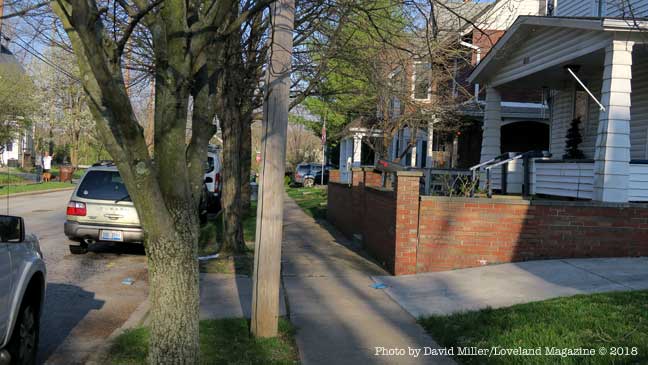
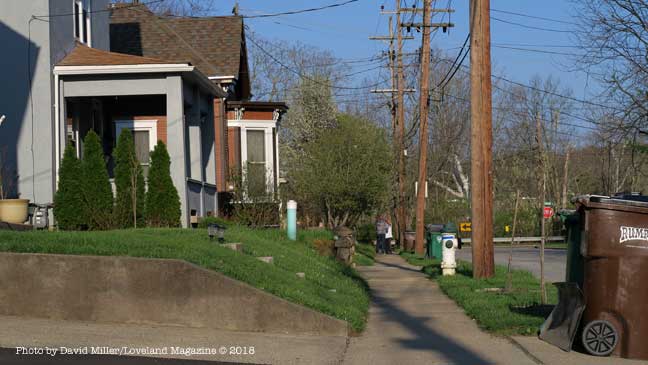
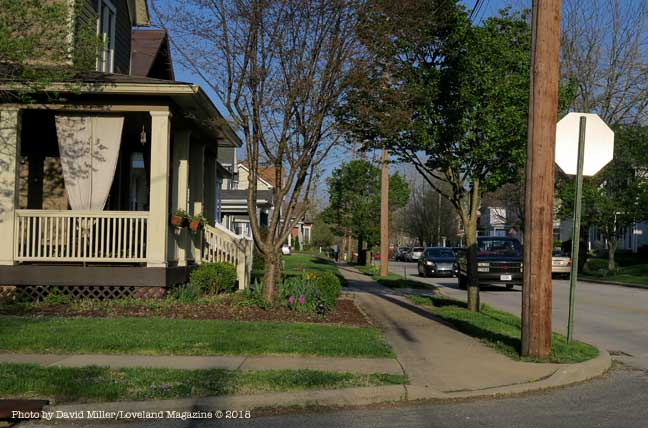
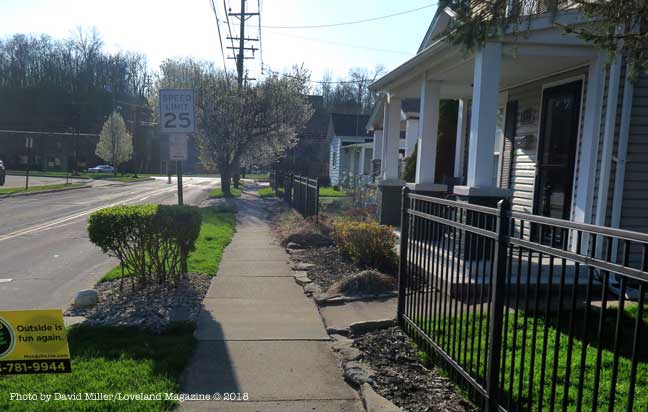
Light colored 4′ tree-shaded concrete sidewalks where children can walk without shoes, and people walk their dogs will be replaced with a 12’ barren swath of black, heat-absorbing asphalt the width of a one-lane road just feet from homes.
Light colored 4′ tree-shaded concrete sidewalks where children can walk without shoes, and people walk their dogs will be replaced with a 12’ barren swath of black, heat-absorbing asphalt the width of a one-lane road just feet from homes where owners will pay higher air-conditioning costs.
There has been no recommendation to forward the proposal to the Planning and Zoning Commission, Tree and Environment Committee, Beautification Committee, or Safety Service & Street Improvement Committee for review. No public hearings are scheduled. None have been suggested.
Phelps and City Manager Dave Kennedy have attended workshop/training on a Federal grant program along with a meeting with OKI officials to discuss the city’s project in more detail. While the updated cost estimate is being secured, the grant application is being reviewed and various needed documents are prepared. They plan to ask City Council in May to move forward seeking funding.
Phelps said that people who are using the bike trail are using too many of the downtown parking spots and using them for too long a period of time. “This is going to give them another place to get on the trail, better parking, easier on and off.” He believes the bike road will bring in new customers to Loveland Madeira Road businesses when they park nearby but head into Historic Downtown. The study does not contain any data on the potential number of users, nor potential customers to Loveland Madeira Road businesses. The study also does not address any potential negative repercussions on the residential neighborhood of Main Street or the Business/Residential neighborhood on West Loveland Avenue.
Some “Progressives” may love the idea, some may like it but believe it ill-considered given the impact on individuals who live or have invested in the impacted area. Some money conservatives may believe it an economic boon to both the Historic District and Loveland Madeira Road. Some money crunchers may ask, where is the cost-benefit analysis and just how many people will actually use it and spend money along Loveland Madeira Road. Some may ask if all costs factors have been included in the early estimate and if the price tag goes north after a grant is awarded – who will get stuck.
Elliott said his email to City Hall, that included the City Manager, Mayor and Council, the Planning and Zoning Commission, the Recreation Commission, and the Streets and Public Safety Committee was his attempt to open a dialogue between the decision makers, and those “of us” who will be financially and personally affected.
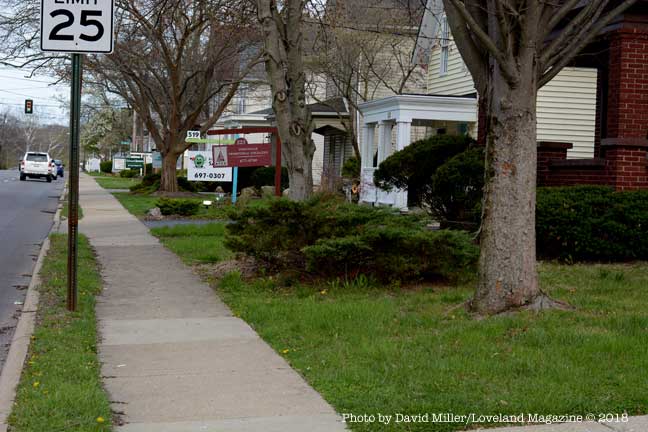
Resident and business owner Paul Elliott bought this business building on West Loveland Avenue in 1997. He has asked City Hall how the proposed connector path will affect the front yard of his property.This is a view of business and residential properties on the South side of West Loveland Avenue. Although the proposal isn’t clear, presumably this 4′ concrete sidewalk will be replaced by a 12′ wide swath of asphalt, equivalent to a one-lane road. These street trees will with be cut down or have their roots severely damaged by the excavation. It is not clear whether the grassy strip will remain.
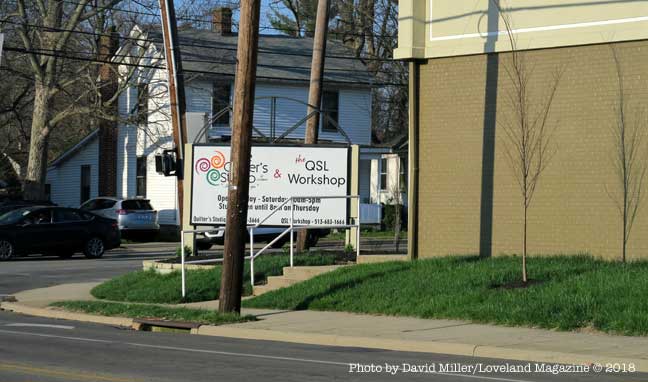
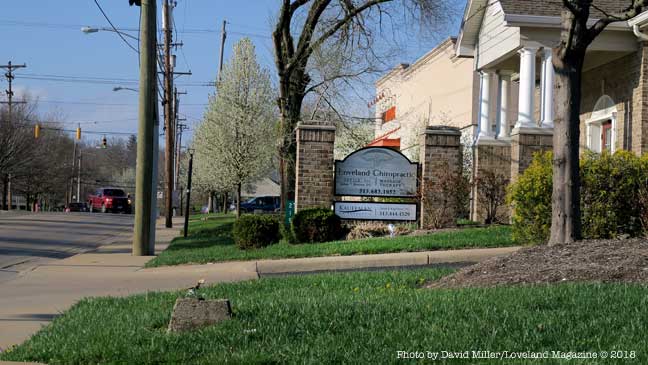
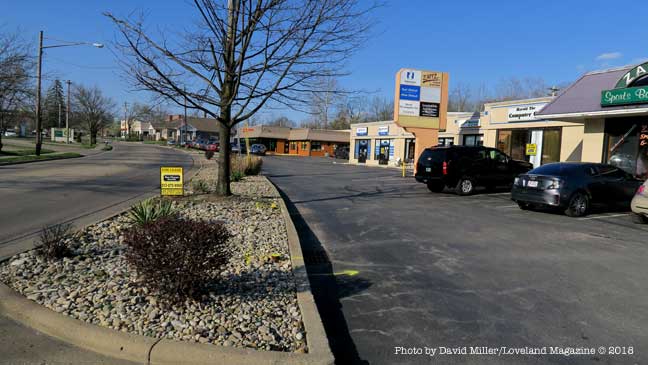
Another view of the beauty salon on the North side of West Loveland Avenue where construction of a 12′ wide swath of asphalt would require the removal of the front porch of this business. The entry to the basement of this business is through the porch floor.If the 12′ wide bike road wraps around this building this sign and landscaping will have to go. The sign may need to be replaced with two signs to satisfy the business owner, yet there is no apparent budget item for moving or replacing business signs in the proposal.Depending whether the 12′ bike road goes down this side of Main Street, these street trees may be removed. These utility poles if moved to the left would might result in fatal topping of the trees. If the poles remain in place it puts the asphalt even closer to the house. If the road goes on top of the tree roots the trees will shortly die. The owners will pay higher air-conditioning cost without their shade trees. If the trees die because of the location of the bike road, the home owner will then be required to pay to have the tree removed. Will the homeowner’s brick wall survive the project?This is another problem area on Main Street where homeowners will lose a good portion of their already small front yard.The 12′ bike road could cut across the front yard of this Main Street home taking out a tree and landscaping.Another front porch, this one on Main Street may stand in the way of the 12′ wide asphalt bike road or end up only inches away.If the 12′ wide asphalt bike road goes down this side of Main Street it will leave the Artists Studios on Main without street trees and much needed parking.The landscaping, street trees, utility polls, and sign at this business on Loveland Madeira Road appear to be in the path of the 12′ wide bike road.This landscaping area that softens the appearance of this automobile dealership on Loveland Madeira Road will be replaced with a 12″ asphalt bike road.This is more of the landscaping along Loveland Madeira Road that will be removed (or most of the parking lot) to make room for a 12′ asphalt bike road.
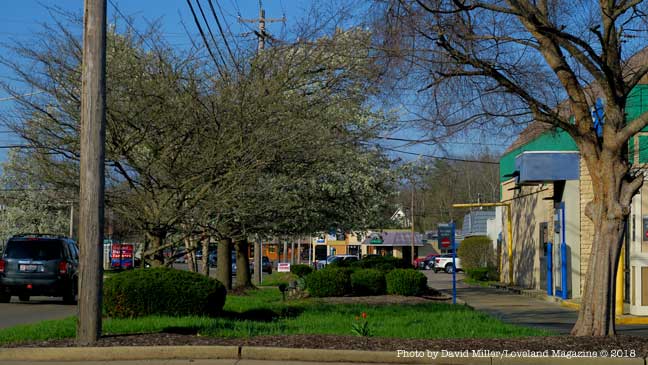
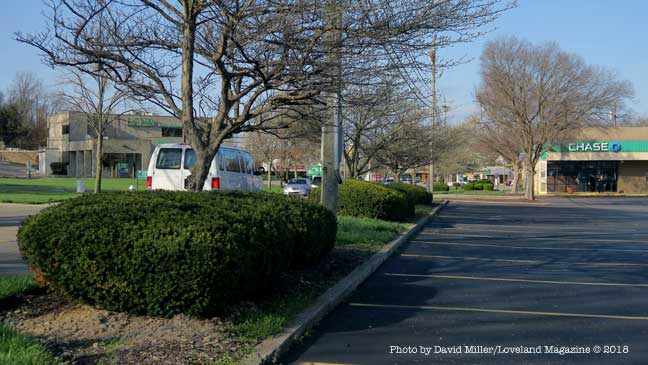
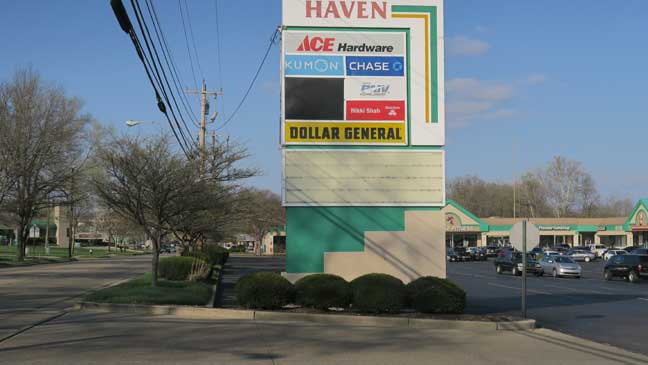
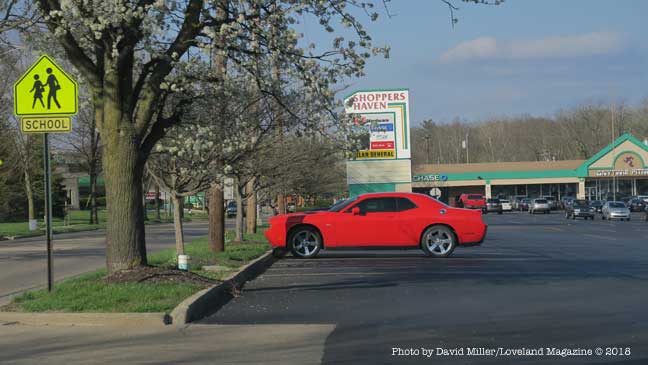
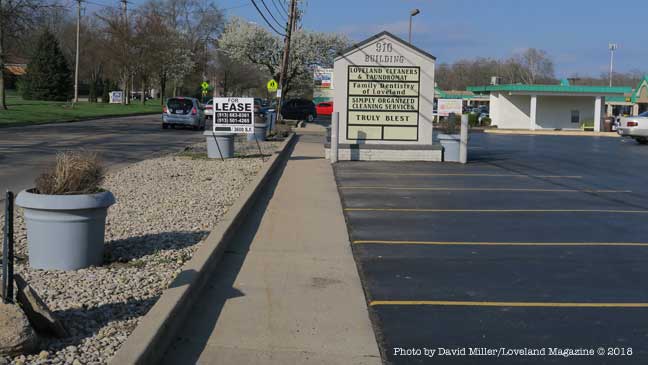
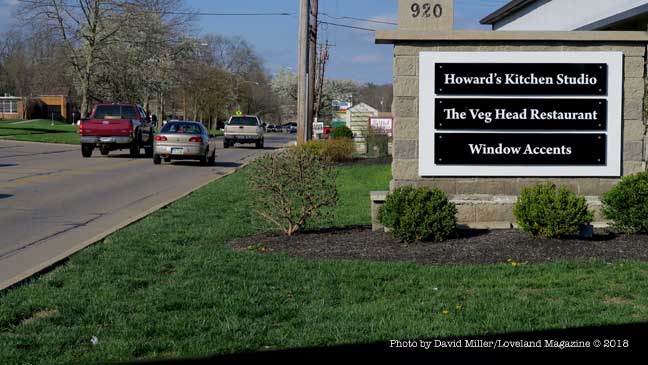
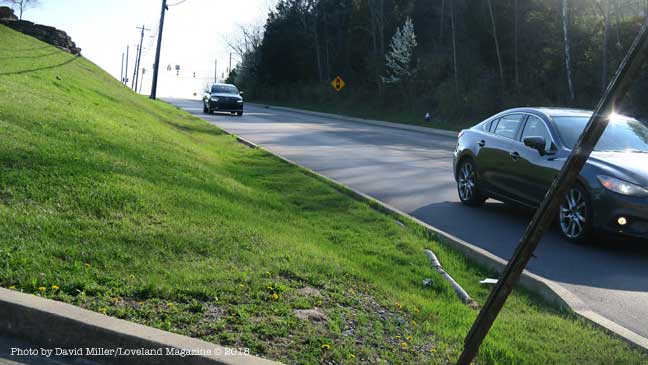
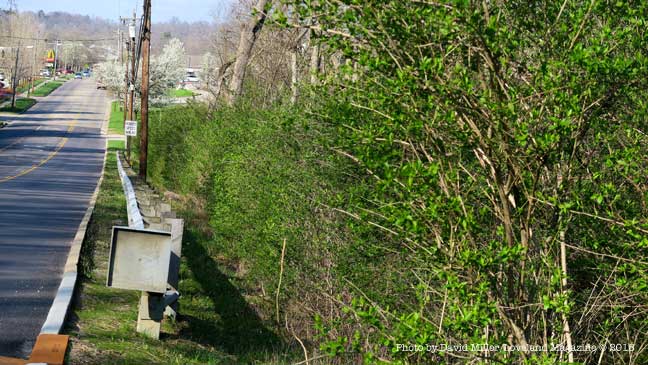
This is the only green space at the Chase Bank on Loveland Madeira Road. There will be a 12′ asphalt bike road running down the middle of it.If a proposed 12′ wide asphalt bike road goes past Shoppers Haven shopping center these street trees may be removed, utility lines moved, parking spaces removed, or all three. Private property may have to be acquired through “willing seller – willing buyer” agreements or “taking” by eminent domain and associated legal costs. In the end, these parking spaces used by local businesses and the schools may be eliminated for the prospect of freeing up parking spaces a mile away in Historic Downtown.There does not appear to be a budget item for moving this business sign out of the path of the proposed 12′ wide asphalt bike road, nor is there any discussion of whether the owner and the businesses would want their sign moved further away from the visibility of automobiles on Loveland Madeira Road.If a proposed 12′ wide asphalt bike road goes past Shoppers Haven shopping center these street trees may be removed, utility lines moved, parking spaces removed, or all three. Private property may have to be acquired through “willing seller – willing buyer” agreements or “taking” by eminent domain and associated legal costs. In the end, these parking spaces used by local businesses and the schools may be eliminated for the prospect of freeing up parking spaces one mile away in Historic Downtown.Will the landscaping and street buffer, the business sign and the parking at the 910 Building be sacrificed to free up an un-estimated number of parking spaces for the businesses one mile away in Historic Downtown?Another Loveland Madeira Road business sign in the way of a proposed 12′ asphalt bike road. Is this sign still going to have the same visibility if it is relocated? Is there enough room to just push it closer to the building or will it need to be re-engineered, and reconstructed smaller?This is the hillside in front of New Hope Baptist Church where City Hall wants to build a 12′ wide asphalt bike road. Its there money in the estimate of cost to build a retaining wall or will the hill just get steeper?This is Loveland Madeira Road looking North from New Hope Baptist Church toward Kroger. The guard rail protects motorists from a steep immediate drop into a very deep ravine. The 350′ long stretch quickly drops 50′ below the grade of the road. It is not clear if the budget estimate has taken into consideration the expense of building a 12′ wide bike road at the edge of this ravine.
Loveland, Ohio – On Thursday, March 29 at 11:20 PM, many residents received a phone call from the Hamilton County Emergency Management & Homeland Security Agency. It was a recorded robocall notifying residents that a flood warning had been issued. Problem was, it was supposed to alert residents along the Great Miami River, not the Little Miami. The failure was due to a malfunction in Hamilton County’s mass notification tool according to Ryan McEwan, the Assistant Director of the agency. The National Weather Service in Wilmington issued a Flood Warning for the Great Miami River in western Hamilton County.
In a press release, McEwan said, “Hamilton County Emergency Management & Homeland Security Agency (EMHSA) is working with our mass notification vendor to identify why the malfunction occurred and to ensure it does not occur again.”
On the agency’s Facebook page one resident posed this question:
“I got a call at 11:30 on my land line phone. I didn’t subscribe. Wondering why.”
The agency responded:
“You were alerted of the Flood Warning because our system is set up to call land lines during an emergency that could threaten life safety or when severe weather (like a Tornado Warning or Flood Warning) is issued for your area. Unfortunately, there was a malfunction in the system last night that called more residents than intended. We have since fixed this issue and it should not happen again. We sincerely apologize for the inconvenience.”
Another resident asked this question:
“The phone call at that hour of the night scared me half to death!! I was afraid there was something wrong with one of our children or grandchildren!”
The agency did not respond.
Another resident asked this question:
“When it IS working properly, will we be notified every hour on the hour? That how it worked for me overnight…1x would have been sufficient. Just wondering, thank you!”
The agency responded:
“No ma’am. I really apologize for the inconvenience. We have addressed the issue so that the system will work as intended. Again, we sincerely apologize.”
RP Diamond is the exclusive retailer of LOVELAND HIGH SCHOOL SPIRIT WEAR Welcome to RP Diamond Printing & Embroidery located at 370 Loveland Madeira Road.
CITY OF LOVELAND COUNCIL (Includes Clermont, Hamilton, and Warren Counties)
4 to be elected – 4 year term
Andy Bateman – 901
Tim Butler – 2009
Pamela Gross – 799
Barry Kuhn – 704
Neal Oury – 1912
Ted Phelps – 1875
Rob Weisgerber – 1833
Stephen G. Zamagias – 341
Andy Bateman – 347 E. Loveland Ave.
Clermont County Votes – 193
Hamilton County Votes – 610
Warren County Votes – 98
Total Votes – 901
Tim Butler – 1102 Hickory Ridge Ln.
Clermont County Votes – 454
Hamilton County Votes – 1370
Warren County Votes – 185
Total Votes – 2009
*Pamela Gross – 343 Huntington Dr.
Clermont County Votes – 139
Hamilton County Votes – 571
Warren County Votes – 89
Total Votes – 799
Barry Kuhn – 806 Kenmar Dr.
Clermont County Votes – 139
Hamilton County Votes – 509
Warren County Votes – 56
Total Votes – 704
Neal Oury – 401 Lowell St.
Clermont County Votes – 483
Hamilton County Votes – 1254
Warren County Votes – 175
Total Votes – 1912
*Ted Phelps – 137 Pheasantlake Dr.
Clermont County Votes – 436
Hamilton County Votes – 1263
Warren County Votes – 176
Total Votes – 1875
*Rob Weisgerber – 240 E. Loveland Ave.
Clermont County Votes – 435
Hamilton County Votes – 1230
Warren County Votes – 168
Total Votes – 1833
*Stephen G. Zamagias – 212 Thomas Paxton Ct. Zamagias was appointed to serve the unexpired term of Linda Cox after her resignation.
Clermont County Votes – 66
Hamilton County Votes – 238
Warren County Votes – 37
Total Votes – 341
*Incumbant
(The unexpired term term (till 12/02/2019) of Mark Fitzgerald has yet to be filled). Fitzgerald resigned on 8/14/17 rather than face a recall election this November. The other members of the current council whose terms expire in 12/02/2019 are, Angie Settell and Kathy Bailey.
LOVELAND CITY SCHOOL BOARD (Includes Clermont, Hamilton, and Warren Counties)
3 to be elected – 4 year term
Michele N. Pettit – 2953
Ned Portune – 2961
Eileen Washburn – 2963
Dave Blumberg (Write-In Candidate)* – 403
*We will report on election night how many write in votes were received. It is not until the official count that we will have a true total of “valid” write in votes.
The other members of the current Board whose terms expire in 12/31/19 are, Kathryn Lorenz, Ph.D. and Art Jarvis. Tim Taggart was appointed to fill the unexpired term of Linda Pennington. The term ends after this November’s election. This Board position is one of the open seats you see above (3 to be elected – 4 year term).
HAMILTON COUNTY ISSUES
ALCOHOL, DRUG ADDICTION AND MENTAL HEALTH SERVICES
Links associated with a candidate’s name are to the Candidate Statement provided to Loveland Magazine. Go HERE to read all of Loveland Magazine’s Election News PUBLISHED IN 2016 – 2017
Norwood, Ohio – LOVELAND MAGAZINE TV broadcast live on Friday from the Hamilton County Board of Elections when the Loveland Community Heartbeat Political Action Committee returned to again submit petitions to place the recall of Loveland Mayor Mark Fitzgerald on the November ballot. Fitzgerald has two years remaining on his four-year term and the group wants Neal Oury to run head-to-head with the Mayor so Oury can serve the remaining two years.
Slightly more than 1,800 signatures were gathered in a week on a revised petition after their first signature drive proved unsuccessful because of insufficient language on the petition. Previously, more 2,054 signatures were gathered and submitted on July 22. In a press release issued earlier in the day Spokesperson Halie Rebeccaschild said, “It was a significant setback, but it didn’t last long. An astounding 1,800 signatures were collected over the past week.”
The release elaborated, “To put that in perspective, the initial round of 2,050 recall signatures was collected over a nine-week period, for an average of 225 signatures per week. The second signature collection averaged more than 225 signatures per day. “In the end, residents will have their voices heard at the ballot box in November,” said Rebeccaschild.
Fitzgerald was given an opportunity to comment on the second set of petitions being submitted to the Board of Elections but did not respond. He has also not responded to questions Loveland Magazine emailed to him about the allegations being made about him.
This interview with Rebeccaschild was conducted just after she turned in the new batch of signatures.







 “Before you go swimming, visit our website and look up inspection reports for the pools in Hamilton County for which we have responsibility,” Ingram says. “A little prevention and precaution can ensure that your cool dip is as enjoyable as it’s supposed to be.” Inspection reports for pools can be viewed at




 by David Miller, Publisher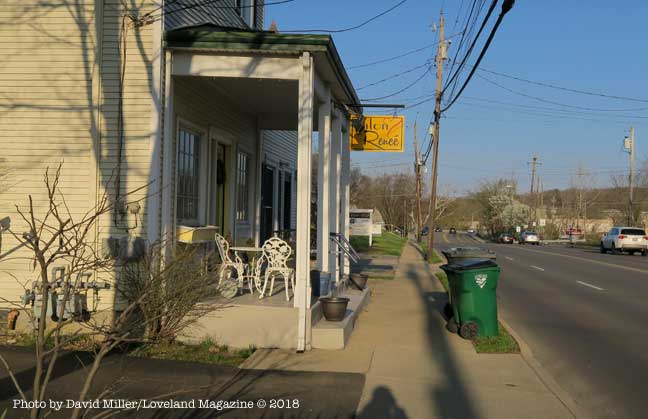



![[VIDEO] Interview with Halie Rebeccaschild after turning in Fitzgerald recall petitions for 2nd time.](https://lovelandmagazine.com/wp-content/uploads/2017/08/maxresdefault-1.jpg)