Loveland Magazine

LOVELAND MAGAZINE

News and Events from the Loveland, Ohio Area

Without fear or favor

Since 2004

  • Latest Stories & News
  • Loveland & Local
  • Statehouse & Around OhioNews from the Ohio Statehouse and beyond
  • Region & Beyond
  • Table of Discussions
  • Courtney Explains It All
  • Education
  • Sports
  • Art & Culture
  • Entertainment
  • Inclusion & Accessibility
  • Health & Wellness
  • Loveland Magazine YouTube
  • EDITORIAL
  • About Us

Tag: hamilton county

  • Loveland Police Department has placed automated license plate readers throughout the city

    Loveland Police Department has placed automated license plate readers throughout the city

    by David Miller

    Loveland, Ohio – The Loveland Police Department has placed automated license plate readers throughout the city to capture the “fingerprint” of vehicles.

    According to City Hall, the police will utilize the “latest technology to detect and deter criminal activity” and are using Flock Safety Automated License Plate Readers.

    Automated License Plate Reader (Photo provided by City of Loveland)

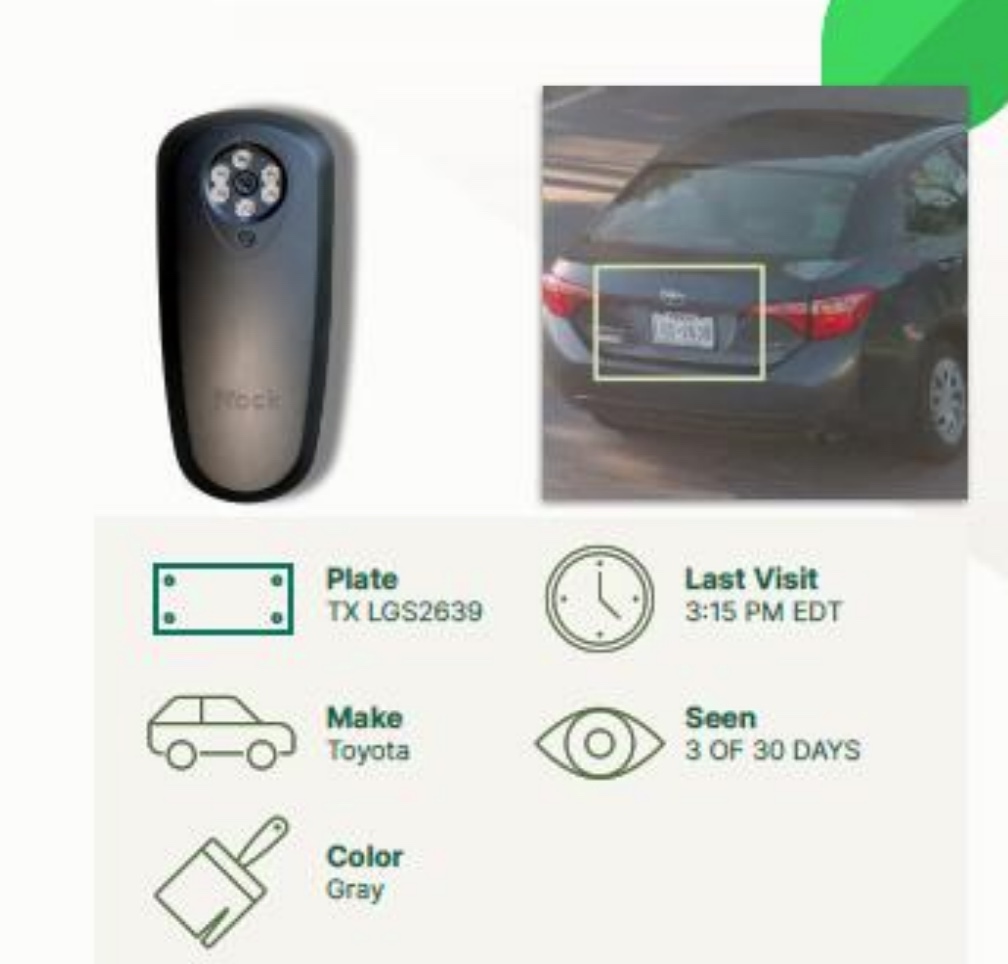
    In a news release, City Hall says that approximately 70% of all crimes involve a vehicle. “With the readers, a vehicle fingerprint can be captured: the license plate, make, model, color, and number of times the vehicle has been seen. Alerts are sent to officers for cars wanted in connection with crimes, stolen vehicles, wanted persons, and Amber/Silver Alerts for missing persons. Investigators can use Flock data (stored for 30 days) to identify cars used in crimes.”

    The City says the devices will not be used for traffic enforcement. Alerts are sent to officers for cars wanted in connection with crimes, stolen vehicles, wanted persons, and Amber/Silver Alerts for missing persons.

    Flock Safety Automated License Plate Reading Camera (Image by Flock Safety)

    The City gives this example of how the Flock data could be used: “In 2022, a senior resident with memory issues drove away from home. The family contacted LPD to report a missing person. A search of Flock could have provided a direction of travel. The resident’s vehicle could have been entered into Flock’s database, and officers would be alerted if/when it passed by any Flock license plate reader nationwide.”

    Below is what their “Transparency Portal” says about what data will be maintained and its current usage.

    “Loveland OH PD uses Flock Safety technology to capture objective evidence without compromising on individual privacy. Loveland OH PD utilizes retroactive search to solve crimes after they’ve occurred. Additionally, Loveland OH PD utilizes real time alerting of hotlist vehicles to capture wanted criminals. In an effort to ensure proper usage and guardrails are in place, they have made the below policies and usage statistics available to the public.”

    What’s Detected: Vehicle Fingerprint
    License Plates, Vehicle Make, Vehicle Color, Last Visit Date / Time, Number Of Days Seen
    What’s Not Detected
    Facial recognition, People, Gender, Race
    Acceptable Use Policy
    Data is used for law enforcement purposes only. Data is owned by Loveland OH PD and is never sold to 3rd parties.
    Prohibited Uses
    Immigration enforcement, traffic enforcement, harrassment or intimidation, usage based solely on a protected class (i.e. race, sex, religion), Personal use
    Access Policy
    All system access requires a valid reason and is stored indefinitely.
    Hotlist Policy
    Hotlist hits are required to be human verified prior to action.
    Data retention (in days)
    30 days
    Number of owned cameras
    6
    Vehicles detected in the last 30 days
    163,191
    Searches in the last 30 days
    31
    Hotlists Alerted On
    National Crime Information Center (NCIC) which includes vehicles wanted for crimes, missing and wanted persons, AMBER & Silver Alerts
    _______________________________
    Download Flock Safety Overview (PDF)
    Apr 18, 2023
  • The what to do and “Why” when under a Boil Water Advisory

    The what to do and “Why” when under a Boil Water Advisory

    by David Miller

    Loveland, Ohio – The loss of positive pressure within a distribution water pipe may allow disease-causing microorganisms from surrounding soil or groundwater to be drawn into the pipe that feeds your home or business.

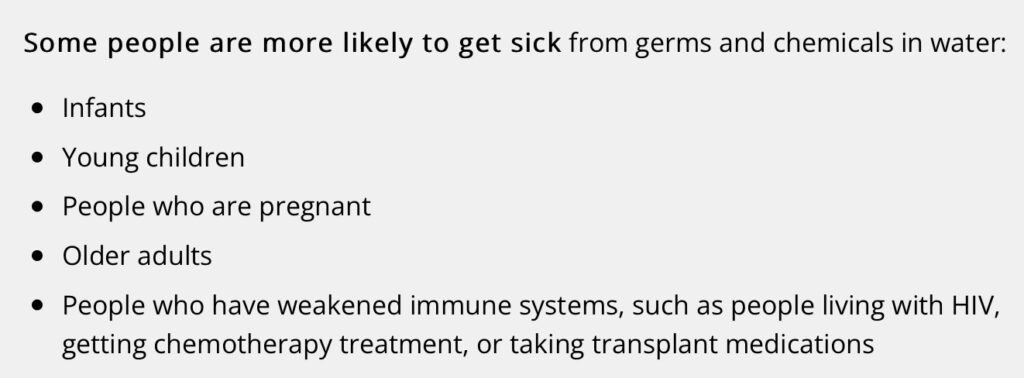
    The City of Loveland recently issued a Boil Water Advisory for portions of Downtown after a water main break, however, did not simultaneously inform residents or businesses what it meant, what they needed to do, or why they should take important steps to protect their health or the health of customers and employees. Nor did the City tell anyone what risk they were taking if they used the possibly contaminated water coming from the tap.

    “With little to no in-house water treatment, a lot of local restaurants are forced to close for the duration of the advisory. The ones that choose to remain open must bear a significant cost of substitution, for example, by using bottled water. As soon as a BWA is issued, every equipment utilizing water, from the soda machine to the ice machine, needs to be thoroughly cleaned out and all pre-made product from such machines needs to be thrown away.”*

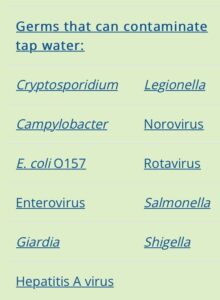
    Germs That Can Contaminate Tap Water

    “Distribution systems are usually under enough pressure so that any cracks let clean water out (at a cost to taxpayers), but prevent dirty water from getting in. When water mains break, however, system pressure drops—and those cracks allow contaminants like viruses to seep in. Water main breaks are thus a key vulnerability that promote waterborne disease.”**

    Read Background:

    Boil water advisory has been issued in Loveland

    Below is what the CDC (Centers for Disease Control) recommends when a boil water notice is issued to residents or food service facilities.

    _________________________

    Drinking water advisories let people know that tap water could be contaminated and make them sick. Advisories tell people, schools, hospitals, businesses, and others about the situation and how to take immediate action, if necessary. Water systems and state or local agencies issue these advisories when they have concerns about water contamination.

    Boil Water Advisory for Residences

    Español (Spanish) | Print
    Water Boiling on a Gas Stove, stainless pot.

    If your local health officials issue a boil water advisory, you should use bottled water or boil tap water. This is because a boil water advisory means your community’s water has, or could have, germs that can make you sick.

    Advisories may include information about preparing food, drinks, or ice; dishwashing; and hygiene, such as brushing teeth and bathing. Boil water advisories usually include this advice:

    • Use bottled or boiled water for drinking, and to prepare and cook food.
    • If bottled water is not available, bring water to a full rolling boil for 1 minute (at elevations above 6,500 feet, boil for 3 minutes). After boiling, allow the water to cool before use.
    • Boil tap water even if it is filtered (for example, by a home water filter or a pitcher that filters water).
    • Do not use water from any appliance connected to your water line, such as ice and water from a refrigerator.
    • Breastfeeding is the best infant feeding option. If you formula feed your child, provide ready-to-use formula, if possible.

    Handwashing

    • In many cases, you can use tap water and soap to wash hands during a boil water advisory. Follow the guidance from your local public health officials.
    • Be sure to scrub your hands with soap and water for at least 20 seconds. Then, rinse them well under running water.
    • If soap and water are not available, use an alcohol-based hand sanitizer that contains at least 60% alcohol.

    Bathing and showering

    • Be careful not to swallow any water when bathing or showering.
    • Use caution when bathing babies and young children. Consider giving them a sponge bath to reduce the chance of them swallowing water.

    Brushing teeth

    • Brush teeth with boiled or bottled water. Do not use tap water that you have not boiled first.

    Washing dishes

    • If possible, use disposable plates, cups, and utensils during a boil water advisory.
    • Household dishwashers generally are safe to use if:
      • The water reaches a final rinse temperature of at least 150 degrees Fahrenheit (66°Celsius), or
      • The dishwater has a sanitizing cycle.
    • Sanitize all baby bottles.
    • To wash dishes by hand:
      • Wash and rinse the dishes as you normally would using hot water.
      • In a separate basin, add 1 teaspoon of unscented household liquid bleach for each gallon of warm water.
      • Soak the rinsed dishes in the water for at least one minute.
      • Let the dishes air dry completely before using again.

    Laundry

    • It is safe to wash clothes as usual.

    Cleaning

    • Clean washable toys and surfaces with:
      • Bottled water,
      • Boiled water, or
      • Water that has been disinfected with bleach [PDF – 1 page].

    Caring for pets

    • Pets can get sick from some of the same germs as people or spread germs to people. Give pets bottled water or boiled water that has cooled.
    • If bottled water is not available, bring water to a full rolling boil for 1 minute (at elevations above 6,500 feet, boil for 3 minutes). After boiling, allow the water to cool before use.
    • Boil tap water even if it is filtered (for example, by a home water filter or a pitcher that filters water).
    • Do not use water from any appliance connected to your water line, such as ice and water from a refrigerator.

    Caring for your garden and houseplants

    • You can use tap water for household plants and gardens.
    More Information
    • Do Not Drink Water Advisory
    • Do Not Use Water Advisory
    • EPA – Drinking Water in Your Home

    Guidelines for Food Service Facilities During and After a Boil Water Advisory

    During a Boil Water Advisory

    When a boil water advisory is issued that affects a food service establishment and the local health department does not indicate that food service establishments must close, the following precautions should be taken by food service facilities until they are notified by authorities that the advisory has ended.

    General

    • Post signs or copies of the water system’s health advisory.
    • Develop a plan to notify and educate employees about emergency procedures.
      Food Preparation
    • Shut off appliances that use tap water, such as ice machines, drinking fountains, produce misters, bottled water refill machines, soft drink fountains connected to the water supply, and water dipper wells.
    • Discard ice and mixed beverages made with contaminated water.
    • Use packaged ice from approved sources.
    • Use bottled water, boiled water, or water that has been disinfected with bleach for drinking, food preparation, washing produce and cooking.
    • If possible, use disposable plates, cups, and utensils. Hygiene and Cleaning
    • Wash hands with soap and tap water. When you are done washing and drying your hands, use an alcohol based hand-sanitizer and let hands air dry.
    • Commercial dishwashers generally are safe to use if the water reaches a final rinse temperature of at least 165°F–180°F, as determined by your local or state authorities.
    • If you are not able to use disposable plates, cups, and utensils and do not have a dishwasher, wash dishes by hand following these instructions:
    • Wash and rinse the dishes as you normally would using hot water.
      In a separate basin, add 1 teaspoon of unscented household bleach for each gallon of warm water.
      The bleach label should say that it contains 5–9% of sodium hypochlorite. Soak the rinsed dishes in the water for at least 1minute. Let the dishes air dry completely before using again.
    • The local health department may add requirements to protect public health during the boil water advisory, such as modifying food preparation, prohibiting menu items or closing operations. Consult with [health department contact] for specific requirements.

    After the Boil Water Advisory is lifted

    When a food service establishment is notified that the boil water advisory has been lifted and the drinking water supply is safe, the following actions need to be taken.

    • Flush pipes throughout the facility by running each faucet with cold water for [X] minutes.
    • Flush, clean, and sanitize appliances that use tap water (such as beverage dispensers, spray misters, coffee and tea urns, ice machines, glass washers, dishwashers) according to the manufacturer’s instructions.
    • Run water softeners through a regeneration cycle.
    • Flush hot water tanks.
    • Run drinking fountains continuously for [X] minutes to flush the system.
    • Replace and sanitize water filter cartridges according to the manufacturer’s instructions.
    • Take proper steps to flush ice machines by following the manufacturer’s instructions, including:
      • Throw out any remaining ice.
      • Flush the waterline to the machine inlet.
      • Close the valve on the waterline behind the machine.
      • Disconnect the waterline from the machine inlet.
      • Open the valve and run 5 gallons of water through the valve. Dispose of the water.
      • Close the valve.

    ___________________________

    * Impact of Water Main Breaks on Drinking Water for Food & Beverage Establishments

    * Negative Consequences for Public Health

    Apr 17, 2023
  • City Hall calls two public hearings

    City Hall calls two public hearings

    Loveland, Ohio – City Hall has invited interested parties to attend two public hearings.

    The first is on April 25 and it is about Flood Damage Prevention Regulations. The second hearing is about new proposed Outdoor Lighting Regulations and is on May 9.

    To learn more follow these links:

    CHAPTER 554: OUTDOOR LIGHTING REGULATIONS

    Flood Damage Prevention Regulations

    Both hearings are at Loveland City Hall, 120 West Loveland Avenue at 7 PM.

    Apr 16, 2023
  • Ohioans can still use abortion drug mifepristone, but that could change

    Ohioans can still use abortion drug mifepristone, but that could change

    Loveland, Ohio and Columbus
    Since Roe v Wade was overturned last summer, abortion medication has been under fire as the abortion drug mifepristone is the subject of a federal lawsuit and some states are attempting to restrict access by threatening legal action against retail pharmacies and suppliers of the drug. (Adobe Stock).

    BY: MEGAN HENRY – Ohio Capital Journal

    An abortion drug remains legal in Ohio at the moment, but the legality of mifepristone hangs in the balance after a Texas federal judge suspended the Food and Drug Administration’s approval of mifepristone last week.

    Trump-appointed U.S. District Judge Matthew Kacsmaryk stopped the FDA’s approval of mifepristone, the first in a two-drug regimen of mifepristone and misoprostol taken 24 to 48 hours apart to terminate a pregnancy. The FDA first approved the two-drug regimen in 2000.

    “This is a very direct and targeted attack on a very specific drug for a very specific reason,”said Planned Parenthood of Greater Ohio Public Policy Director Danielle Firsich.

    Mifepristone was used for 9,891 abortions in Ohio in 2021, according to the Ohio Department of Health. The drug was used the most in Franklin County (2,806), Summit County (2,008), and Cuyahoga County (1,643).

    Mifepristone and misoprostol

    There is an alternative regimen for patients who wish to have a medication abortion that involves just the abortion drug misoprostol.

    “It’s still a safe and effective regimen, it’s just not as patient-convenient or patient-centric as the current regimen,” said Planned Parenthood of Greater Ohio’s Chief Medical Officer Dr. Adarsh E. Krishen.

    The mifepristone and misoprostol regimen gives patients more predictability with regard to when a pregnancy is going to end, he said.

    “With the misoprostol regimen, there’s more variation in terms of the timing of when that pregnancy may end, as well as there’s prolonged bleeding after the use of the medication,” Krishen said. “If you are a person who needs to work or do other things in your life, it will be much more complicated and complex for you.”

    With the misoprostol-only regimen, bleeding can last up to one to two weeks after taking the medication, the pain lasts longer, and patients tend to be more nauseous, Krishen said.

    Bleeding stops within a few days, or sooner, with the mifepristone and misoprostol regimen, Krishen said.

    Cramping occurs with both regimens, he said.

    “If you are someone who is seeking abortion care or miscarriage … you will be able to continue to receive the same kind of care with the misoprostol only option,” Firsich said. “The only difference is the frustration, the chaos, and the confusion that decisions like these make.”

    She said decisions like these make patients more hesitant to access abortion care and not understand the rights they have to care.

    “It may make physicians more hesitant to provide certain types of care because they are afraid they may be doing something illegal or something they don’t have the authority to do now because of variations in state, local and federal laws,” Firsich said.

    The Texas federal judge is not targeting misoprostol.

    “(Misoprostol) has many other medical applications far outside of abortion care, so it would be very difficult to target misoprostol in the same way they are mifepristone,” Firsich said.

    Fifth Circuit Court of Appeals

    The United States Department of Justice filed an emergency stay motion with the Fifth Circuit Court of Appeals and is asking the 5th Circuit to respond to its request for a stay by noon on Thursday. Kacsmaryk’s ruling would take effect Friday unless the 5th Circuit puts it on hold.

    “This is notoriously the most conservative appellate court in the country,” Firsich said.

    She believes this ruling will eventually go to the United States Supreme Court.

    Within hours of the Texas ruling on Friday, U.S. District Judge Thomas Rice, ruled mifepristone should continue to be available in 17 states and the District of Columbia. Ohio is not one of those 17 states.

    What Ohio lawmakers, Ohio Right to Life is saying

    Ohio House Minority Leader Allison Russo, D-Upper Arlington, condemned the Texas federal judge’s ruling.

    “The FDA, a trusted federal agency, has determined it is safe for women to use this medication for their health care,” Russo said. “As lawmakers, we should ensure our policies reflect the expertise of trusted medical professionals.”

    State Rep. Beth Liston, D-Dublin, said mifepristone has been proven safe and effective.

    “A woman’s medical decisions should be left between herself and a medical professional. Not a judge in Texas,” said Liston, who has a medical degree.

    State Rep. Anita Somani, D-Dublin, said maternal mortality will increase by taking away access to mifepristone.

    “This ruling opens up the door to other medications like contraception becoming politicized and taken off the market. It is a dangerous precedent and hurts the FDA’s ability to do their job in a nonpolitical fashion,” said Somani, who is an OBGYN at OhioHealth.

    Firsich shares those fears and said “this could lead to an incredible dangerous slippery slope.”

    Ohio Right to Life is praising Kacsmaryk’s ruling.

    “As a young woman carrying a child, I look forward to the day when such rulings are no longer necessary—declaring whether or not human life deserves to be protected,” Ohio Right to Life’s spokesperson Elizabeth Marbach said in a statement.

    Abortion is currently legal in Ohio up to 22 weeks.

    Follow OCJ Reporter Megan Henry on Twitter.

    •••••••••••••••••••••••••••••••••••••

    MEGAN HENRY

    Megan is a reporter for the Ohio Capital Journal.

    MORE FROM AUTHOR

     

    Apr 13, 2023
  • Cincinnati Enquirer selling semi-auto handguns and “Assault” rifles

    Cincinnati Enquirer selling semi-auto handguns and “Assault” rifles

    Clippings of recent advertisements found in The Cincinnati Enquirer and delivered to local doorsteps.

    Loveland. Ohio – Last Sunday on Mother’s Day, the Cincinnati Enquirer delivered to doorsteps these reports and commentary about gun violence.


    And this advertisement from a local gun dealer.

    Christmas Presents

    Enquirer advertisements from November 24, 2022, urging customers to buy semi-auto handguns, semi-auto shotguns, semi-auto “Assault” rifles, high-capacity 40-round magazines, and high-velocity “NATO” ammo developed for military and police.

    Apr 12, 2023
  • Red Cross seeking volunteers for Sound the Alarm campaign

    Red Cross seeking volunteers for Sound the Alarm campaign

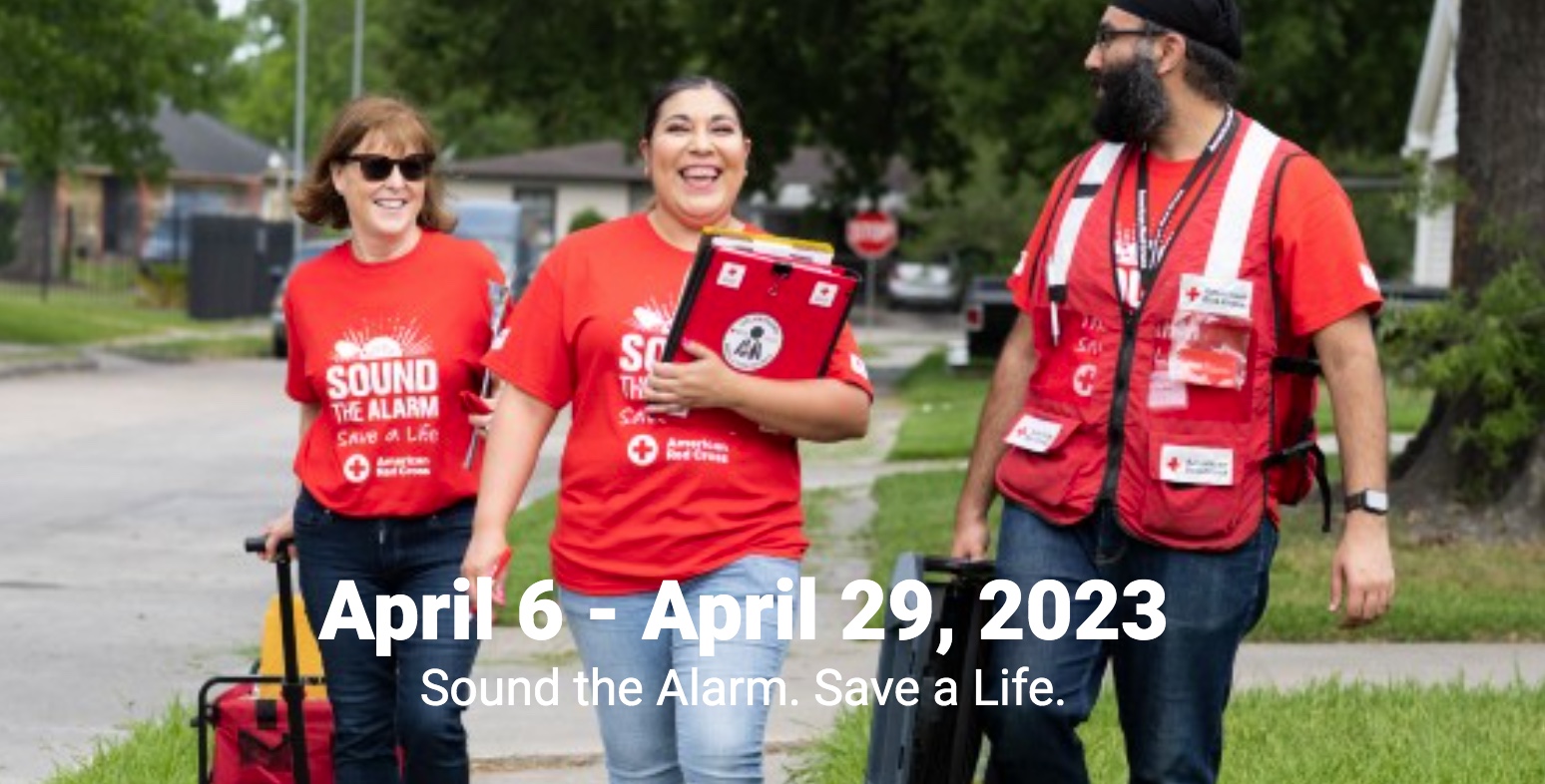
    Loveland, Ohio – The Greater Cincinnati Tri–State chapter of the American Red Cross is seeking volunteers for its 2023 Sound the Alarm campaign taking place throughout April.


    Volunteers needed to install FREE smoke alarms in homes

    Sound the Alarm is part of the larger Red Cross Home Fire Campaign which aims to reduce home fire deaths and injuries by providing disaster preparedness information, home fire safety instruction, and the installation of FREE smoke alarms. Since the program’s inception in 2014, more than 36,000 families in Central & Southern Ohio have been made safer through the Red Cross Home Fire Campaign. Of the approximately 62,000 disasters the Red Cross responds to across the country every year, more than 90 percent are home fires.

    There are two types of volunteer opportunities available in the Cincinnati area:

    1. Volunteers are being sought to go into designated neighborhoods and leave behind informational door
    hangers, alerting residents that the Red Cross will soon be in the area to install free smoke alarms.

    2. Volunteers are needed to install FREE smoke alarms in area homes.

    Volunteers who sign up to participate would be working with other Red Cross volunteers and staff, and members of local fire departments.

    “Just One Day of Your Life Can Change Someone Else’s Forever”

    Sound the Alarm volunteer opportunities in the Cincinnati area:
    Anyone interested in volunteering should go to redcross.org/Cincinnati and click on the Sound the Alarm information box on the home page.

    April 7, 2023
    Distribution of informational door hangers

    Green Acres Mobile Home Park

    6074 Deerfield Rd, Loveland

    April 10, 2023
    Smoke Alarm installation event

    Green Acres Mobile Home Park

    6074 Deerfield Rd, Loveland

    April 11, 2023
    Distribution of informational door hangers

    Mount Airy neighborhood
    6121 Colerain Avenue, Cincinnati

    April 14, 2023
    Distribution of informational door hangers

    Goshen area

    1785 State Route 28, Goshen

    April 15, 2023
    Smoke Alarm installation event

    Mount Airy neighborhood
    6121 Colerain Avenue, Cincinnati


    April 17, 2023
    Smoke Alarm installation event

    1785 State Route 28, Goshen

    April 18, 2023
    Distribution of informational door hangers

    Alexandria, KY neighborhoods

    7951 Alexandria Pike, Alexandria, KY

    April 21, 2023
    Distribution of informational door hangers

    1560 Bethel New Richmond Rd.
    New Richmond, OH 45157

    April 22, 2023
    Smoke Alarm installation event

    Alexandria, KY neighborhoods

    7951 Alexandria Pike, Alexandria, KY

    April 24, 2023
    Smoke Alarm installation event

    1560 Bethel New Richmond Rd.
    New Richmond, OH 45157

    Residents in need of FREE state–of–the–art smoke alarms can call the Red Cross hotline to make an installation appointment 844–207–4509.


    Sound the Alarm FAQs

    How do I find the address/times?


    How should I prepare for my event?


    What should I wear?


    What should I expect on the day of the event?


    May I bring other people with me?


    What information will I receive after I register?


    What if there is bad weather?


    How do I cancel?


    Who can I contact with other questions?


    Apr 6, 2023
  • Northeast Communications center becomes member of program to protect children

    Northeast Communications center becomes member of program to protect children

    Loveland and Symmes Township, Ohio – From the moment the report of a missing child comes in, to the resolution of the case, every action taken has the potential to make the difference between a successful recovery and a tragic outcome.

    The National Center for Missing and Exploited Children (NCMEC) developed the Missing Kids Readiness Program to promote best practices for responding to calls of missing, abducted, and sexually exploited children. Emergency communications centers and law enforcement agencies are recognized for meeting essential training and policy elements demonstrating preparedness for responding to a missing child incident.

    To meet the requirements of the Program, the Northeast Communications Center (NECC) located at the Loveland Safety Center on Lebanon Road worked with NCMEC on their missing child policy to ensure it met the critical elements of the model policy for emergency communications centers. In addition, Aaron Burg, Captain of Communications, completed the required agency administrator training and ensured all Dispatchers and Training Officers completed their required training.

    “By demonstrating remarkable leadership, and making this commitment of training and preparedness, NECC is communications to its citizens and families that protecting the lives and safety of their children is a top priority,” said Symmes Township in their Spring newsletter.

    Armed with the information, knowledge, and operational resources gained through meeting the program criteria, NECC is positioned to respond more quickly, comprehensively, and effectively when a child’s life or safety may be at stake.

    NECC becomes the 8th emergency communications center in the State of Ohio and the 2nd in the Greater Cincinnati region to become a member in the Missing Kids Readiness Program.

    To learn more about NCMEC and the Missing Kids Readiness Program, click here.

    To see the full listing of all MKRP recognized agencies, click here.

    Learn more about the Northeast Communications Center (NECC) located at the Loveland Safety Center on Lebanon Road. Since 1999, the Northeast Communications Center has been providing 911 service, emergency, and non-emergency dispatching for the City of Loveland and Hamilton County District 3.

    Apr 4, 2023
  • Snider Road Closure

    Snider Road Closure

    [vc_row][vc_column][vc_column_text]Symmes Township, Ohio – The Township has announced that beginning on Monday, April 3rd, Snider Road was to be closed for up to 120 days to repair the overpass structure which is situated just north of the I-71/I-275 interchange. The project will include replacing the concrete parapets and vandal fencing and conducting other minor bridge work.

    Traffic will be detoured by way of Kemper Road, US 22/3, Mason-Montgomery Road and Fields-Ertel Road.

    For more information, contact Kathleen Fuller at the Ohio Department of Transportation at (513) 933-6517.[/vc_column_text][/vc_column][/vc_row]

    Apr 4, 2023
  • If “Enough is Enough” – here are resources to make a difference

    If “Enough is Enough” – here are resources to make a difference

    [vc_row][vc_column width=”2/3″][vc_column_text]

    What does an AR-15 do to a human body? A visual examination of the deadly damage. – Washington Post

    How to Make a Difference

    Moms Demand Action is a grassroots movement of Americans fighting for public safety measures that can protect people from gun violence. We pass stronger gun laws and work to close the loopholes that jeopardize the safety of our families. We also work in our own communities and with business leaders to encourage a culture of responsible gun ownership. We know that gun violence is preventable, and we’re committed to doing what it takes to keep families safe.

    After Jim Brady, a gun owner, Republican and President Reagan’s Press Secretary, survived a gunshot to his head, he and his wife Sarah, worked tirelessly alongside Democrats and Republicans to pass the bipartisan Brady Bill to ensure background checks were conducted on gun sales. But we cannot rest on that victory. America’s gun violence epidemic continues to worsen. Today, led by Brady President Kris Brown, we work with gun owners and non-gun owners and individuals of all identities and ideologies to create solutions! Together, there is nothing we cannot accomplish.

    A movement of nearly 10 million mayors, teachers, survivors, gun owners, students, and everyday Americans.

    Ultimately, our movement exists to end gun violence and save lives.

    Thanks to the hard work of our volunteers across the country, we have won unprecedented victories against the gun lobby—at the ballot box, in state legislatures, and in corporate America.

    Born out of a tragic school shooting, March For Our Lives is a courageous youth-led movement dedicated to promoting civic engagement, education, and direct action by youth to eliminate the epidemic of gun violence.

    We aim to create safe and healthy communities and livelihoods where gun violence is obsolete.

    From Tragedy To Transformation

    Sandy Hook Promise is a national nonprofit organization founded and led by several family members whose loved ones were killed at Sandy Hook Elementary School on December 14, 2012. Based in Newtown, Connecticut, our intent is to honor all victims of gun violence by turning our tragedy into a moment of transformation. By empowering youth to “know the signs” and uniting all people who value the protection of children, we can take meaningful actions in schools, homes, and communities to prevent gun violence and stop the tragic loss of life.

    Contact President Joe Biden

    Contact Vice President Kamala Harris

    Contact your representative in the U.S. House

    Contact your U.S. Senator

    Contact Gov. Mike DeWine

    Contact your State Legislators

    Locate your mayor by name, city, or population size.

    Loveland City Hall

    Miami Township

    Symmes Township

    Hamilton Township

    Deerfield Township

    Clermont County

    Hamilton County

    Warren County


    [/vc_column_text][vc_column_text]

    How to talk with your child. A message from Sesame Street

    Violence in Communities – YouTube

    [/vc_column_text][vc_video link=”https://www.youtube.com/watch?v=WXtFhqIhWwo”][vc_column_text]Access to an unsecured firearm in the home increases the risk of injury or death. Protect yourself and your loved ones by storing your guns securely – locked, unloaded, and away from ammunition. Learn more about safe gun storage practices at www.EndFamilyFire.org.[/vc_column_text][vc_video link=”https://youtu.be/UwZXj0rymOU” title=”Access to an unsecured firearm in the home increases the risk of injury or death. Protect yourself and your loved ones by storing your guns securely – locked, unloaded, and away from ammunition. Learn more about safe gun storage practices at www.EndFamilyFire.org.”][/vc_column][/vc_row]

    Mar 29, 2023
  • Butler • Clermont • Hamilton • Warren: COVID-19 deaths and cases rising

    Butler • Clermont • Hamilton • Warren: COVID-19 deaths and cases rising

    CDC recommends use of COVID-19 Community Levels to determine the impact of COVID-19 on communities and to take action. CDC also provides Transmission Levels (also known as Community Transmission) to describe the amount of COVID-19 spread within each county. Healthcare facilities use Transmission Levels to determine infection control interventions.

    The COVID-19 Community Level and associated metrics presented below are updated weekly on Thursday; the values for the same hospital-based metrics presented below may differ because they are updated daily.

    How Do I Find a COVID-19 Vaccine or Booster?

    Stay Up to Date with COVID-19 Vaccines Including Boosters

    Butler County, Ohio

    Weekly deaths and cases are rising in Butler County.

    COVID-19 Community Level Medium Recommended actions based on current level Stay up to date with COVID-19 vaccines. Get tested if you have symptoms. Wear a mask if you have symptoms, a positive test, or exposure to someone with COVID-19. Wear a mask on public transportation. You may choose to wear a mask at any time as an additional precaution to protect yourself and others. If you are at high risk for severe illness, consider wearing a mask indoors in public and taking additional precautions.

    Clermont County, Ohio

    Weekly deaths and cases are rising in Clermont County.

    COVID-19 Community Level Medium Recommended actions based on current level Stay up to date with COVID-19 vaccines. Get tested if you have symptoms. Wear a mask if you have symptoms, a positive test, or exposure to someone with COVID-19. Wear a mask on public transportation. You may choose to wear a mask at any time as an additional precaution to protect yourself and others. If you are at high risk for severe illness, consider wearing a mask indoors in public and taking additional precautions.

    Hamilton County, Ohio

    Weekly deaths and cases are rising in Hamilton County.

    COVID-19 Community Level Medium Recommended actions based on current level Stay up to date with COVID-19 vaccines. Get tested if you have symptoms. Wear a mask if you have symptoms, a positive test, or exposure to someone with COVID-19. Wear a mask on public transportation. You may choose to wear a mask at any time as an additional precaution to protect yourself and others. If you are at high risk for severe illness, consider wearing a mask indoors in public and taking additional precautions.

    Warren County, Ohio

    Weekly deaths and cases are rising in Warren County.

    COVID-19 WARREN Community Level Medium Recommended actions based on current level Stay up to date with COVID-19 vaccines. Get tested if you have symptoms. Wear a mask if you have symptoms, a positive test, or exposure to someone with COVID-19. Wear a mask on public transportation. You may choose to wear a mask at any time as an additional precaution to protect yourself and others. If you are at high risk for severe illness, consider wearing a mask indoors in public and taking additional precautions.Weekly Metrics Used to Determine the COVID-19 Community Level
    Dec 2, 2022
←Previous Page
1 2 3 4 5 6 … 22
Next Page→

Loveland Magazine

News and Events from the Loveland, Ohio Area

  • Latest Stories & News
  • Loveland & Local
  • Statehouse & Around OhioNews from the Ohio Statehouse and beyond
  • Region & Beyond
  • Table of Discussions
  • Courtney Explains It All
  • Education
  • Sports
  • Art & Culture
  • Entertainment
  • Inclusion & Accessibility
  • Health & Wellness
  • Loveland Magazine YouTube
  • EDITORIAL
  • About Us

© All Rights Reserved © 2004-2025 Loveland Magazine

Designed with WordPress