Tag: hamilton county

  • Outbreak of “Zombie Deer” Disease in Hamilton and Warren County

    Outbreak of “Zombie Deer” Disease in Hamilton and Warren County

    Although staring with no fear of the photographer, this is a healthy deer on the Simpson Farm, the location of the Loveland Magazine office

    This story by Sean Behling was originally published in the Loveland Roar
    Sean Behling
    Sean Behling

    The Ohio Division of Wildlife confirmed on Wednesday, August 31st, that there was an outbreak of Epizootic Hemorrhagic Disease (EHD), which is also referred to as “Zombie Deer Disease.” This disease causes deer to seemingly lose their fear of humans.

    13 different Southwestern Ohio counties have confirmed cases of deer infected with EHD. This includes Athens, Butler, Champaign, Franklin, Greene, Hamilton, Highland, Madison, Perry, Preble, Ross, Union, and Warren counties.

    EHD is a virus that infects deer through the bites of small insects called midges, also called gnats, which live and breed in small pools of standing water. This disease is not spread from animal to animal and is not infectious to people or pets. Infected deer show symptoms within 5-10 days of being infected and many die within 36 hours of showing symptoms (The Journal).

    Signs of this disease include swelling in the neck, head, or tongue, difficulty breathing, and walking in circles having their heads hung down. The most notable sign of this disease, however, is that deer seemingly lose all fear of humans, sometimes just standing and staring off into the distance, unfazed by the people around them. Infected deer also experience fevers and dehydration, so they’re likely to be found in or near bodies of water.

    EHD is one of the most common ailments affecting deer right now, with cases happening most often in late summer and fall, as well as during periods of drought. Since the disease spreads through midges, which live in water, deaths from EHD in the deer population are expected to stop once the first frost sets in and midge activity begins to slow down.

    Chronic Wasting Disease also found in Wyandot and Marion counties

    There is also another disease that is commonly referred to as “Zombie Deer Disease” which causes deer to lose their fear of humans, called Chronic Wasting Disease (CWD). Chronic Wasting Disease is not caused by a virus but is instead caused by a misfolded protein, called a prion. While this means it is far rarer than EHD, CWD has been found here in Ohio starting last year. Though uncommon in Ohio, so far eight deer have tested positive in Wyandot and Marion counties.

    Symptoms of CWD, similarly to EHD, include staggering, excessive drooling, and showing little to no fear of humans. Different from EHD, however, is the fact that deer infected with CWD can take months to show symptoms, instead of just a couple of weeks.

    Ohio regulations state that all deer harvested in Wyandot, Marion, and neighboring Hardin counties must be tested for chronic wasting disease. More information about how to do that is available on ohiodnr.gov. Plus, although the Ohio Department of Natural Resources says there is “no strong evidence” CWD can infect humans, the Centers for Disease Control and Prevention say the meat of contaminated animals should not be consumed (The Enquirer).

    Any sightings of sick or dead deer should be reported to wildohio.gov. This will not only help the Ohio Department of Natural Resources track the disease as it spreads, but will allow them to run tests to better understand this unusual disease.


  • Be a Honeysuckle Hero

    Be a Honeysuckle Hero

    by Lauren Enda

    Loveland, like most of southwestern Ohio, has been invaded. According to UC biology professor, Denis Conover, “Amur honeysuckle is now the most abundant woody plant in Hamilton County. One bush can produce thousands of seeds that get dispersed by birds and mammals. Native plants just don’t have a chance. Everything that depends on the native plants — insects, birds — can be lost.” * The onslaught of invasive species is troublesome and dangerous to our local ecosystems. Multiple types of invasives are resident in Loveland’s nature preserves, parks, roadsides, and back yards. And we must eradicate them as the first step in healing our woodlands and natural spaces. 

    How can you help? Fight to protect Loveland’s woodlands on Saturday, September 10th from 9am to 3pm at the West Loveland Nature Preserve. (See further information below.) A coalition of residents, City of Loveland Public Works, non-local volunteers, and hired contractors will be working together to start healing the city’s green spaces. This event is hopefully the first of many to remove invasives from our city one area at a time. 

    Everyone is invited to join the fight. An invasive removal contractor, Honeysuckle Removal,** will do the really hard labor of cutting the invasives, many of which are decades old and twenty feet tall. Volunteers will work behind them to apply herbicide to ensure the invasives don’t regrow and then pile the debris for the City of Loveland Public Works to pick up after the event. The more volunteers we have, the more the contractor can focus on cutting invasives and the quicker the rebirth of the woodlands will be. In a show of good will, the contractor is “donating” two people from their company to help us get through the invasives quicker and educate volunteers. Pretty great, right?

    You can volunteer for an hour, or you can come all day. If you don’t have time to stay and work, please stop by anyway to learn a bit more about invasives, their dangers, and how to eradicate them in your own yards. 

    Many intractable problems exist in our world today, most of them so huge and so far away that we may feel there is nothing we can do. But removing invasives is relatively easy, local, doable, and extremely beneficial to our ecosystems. Everyone can make a real difference in fighting this massive problem. You will see direct results of your work, helping sunlight hit the forest floor for the first time in years. Joining the fight for healing the West Loveland Nature Preserve is as easy as showing up on Saturday, September 10th. Once you see the transformation of the area, you will better understand the problem, the solution, and how important this work is.

    For more information or to volunteer, please contact Lauren at lauren_enda@hotmail.com.

    What: Invasive removal at West Loveland Nature Preserve

    When: Saturday, September 10th from 9 am to 3 pm

    Where: Park on Glen Lake Rd, Pheasant Woods Court, or Shingleoak Drive. There is an entrance to the Preserve near there along West Loveland Avenue

    What to wear: Long-sleeved shirt and long trousers, hat, and if desired, sunscreen and bug spray 

    What to bring: Sturdy work gloves, water bottle, eye protection if you have it

    Lauren Enda lives in Loveland at Hidden Creek


    * Invasive species are taking over Ohio forests | University Of Cincinnati (uc.edu)

    ** Honeysuckle Removal LLC

  • Current guidance and information about Monkeypox in Hamilton County

    Current guidance and information about Monkeypox in Hamilton County

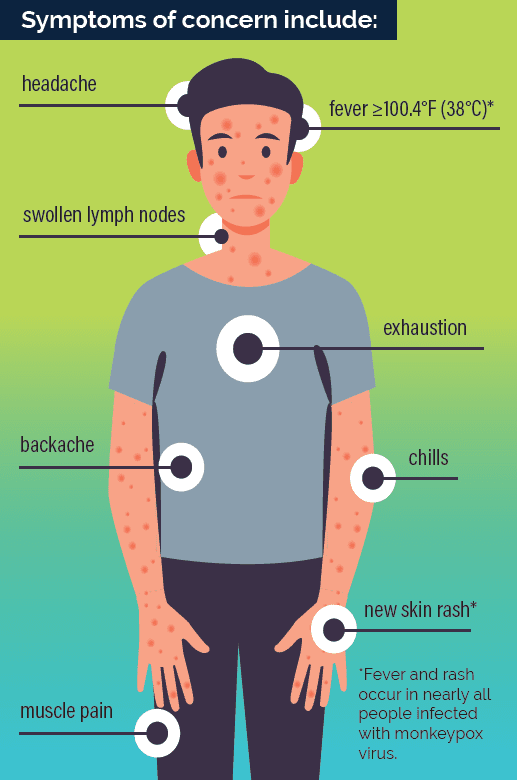
    Monkeypox is a disease caused by a virus (monkeypox virus) not commonly seen in the United States. Monkeypox can cause a rash which may look like pimples or blisters, sometimes with a flu-like illness. While CDC works to contain the current outbreak and learn more about the virus, it is important that you to have information so you can make informed choices when you are in spaces or situations where monkeypox could be spread. Monkeypox can be spread from the time symptoms start until the rash has healed, all scabs have fallen off, and a fresh layer of skin has formed. This can take several weeks.

    Can I get the monkeypox vaccine?

    Monkeypox vaccines are in limited supply. Like early distribution of the COVID-19 vaccine, the monkeypox vaccine is initially being distributed to those at highest risk. If you would like to be notified when the monkeypox vaccine is available, complete our monkeypox vaccine registration.

    Vaccine Distribution Tiers

    Tier 1

    People at risk for occupational exposure (i.e. lab personnel with high exposure risk) and individuals identified as close contacts or direct exposures

    Tier 2

    Attendees at events/venues linked to known monkeypox transmission

    Tier 3

    Individuals likely to have prolonged intimate contact that would put them at higher risk of being exposed

    Teir 4

    Nationally or locally identified groups with high risk of exposure

    What should a person do if they have a new or unexplained rash or other symptoms?

    Immediate actions:

    • Self isolate.
    • Avoid sex or being intimate with anyone until you have been checked out by a healthcare provider.
    • Avoid gatherings, especially if they involve close, personal, skin-to-skin contact.
    • Think about the people you have had close, personal, or sexual contact during the last 21 days, including people you met through dating apps. To help stop the spread, you might be asked to share this information if you have received a monkeypox diagnosis.

    Seeking Care:

    • CALL your primary care doctor or urgent care before arriving in person. Let them know you have symptoms or have a confirmed exposure. This will allow staff time to prepare for a safe visit for you, them, and other patients.

    For uninsured, under-insured and Medicaid recipients – you can visit one of the following Federally Qualified Health Centers:

    Lincoln Heights Health Center
    1401 Steffen Ave.
    Appointments: (513) 588-3623

    Mt. Health Family Practice
    1411 Compton Rd.
    Information: (513) 522-7500
    Appointments: (513) 588-3623

    Cincinnati Medical Center (Equitas Health)
    2805 Gilbert Ave., Cincinnati, OH 45206
    Phone: (513) 815-4475

    Cincinnati Health Department Primary Health Care (Limited availability):

    Ambrose H. Clement Health Center
    3559 Reading Road, Suite 101
    513-357-7320

    Millvale at Hopple Street Health Center
    2750 Beekman Street
    513-357-7320 during the week
    513-352-3191 on Saturday

    Braxton F. Cann Memorial Health Center
    5818 Madison Road
    513-357-7320

    Bobbie Sterne Health Center
    1525 Elm Street
    513-357-7320

    Northside Health Center
    3917 Spring Grove Avenue
    513-357-7320

    Price Hill Health Center
    2136 W. 8th Street
    513-357-7320

    How is monkeypox spread?

    Monkeypox can spread to anyone through close, personal, often skin-to-skin contact including:

    • Direct contact with monkeypox rash, scabs, or body fluids from a person with monkeypox. We believe this is currently the most common way that monkeypox is spreading in the U.S.
    • Touching objects, fabrics (clothing, bedding, or towels), and surfaces that have been used by someone with monkeypox.
    • Contact with respiratory secretions.

    This contact can happen during intimate contact including:

    • Oral, anal, and vaginal sex or touching the genitals (penis, testicles, labia, and vagina) or anus (butthole) of a person with monkeypox.
    • Hugging, massage, and kissing.
    • Prolonged face-to-face contact.
    • Touching fabrics and objects during sex that were used by a person with monkeypox and that have not been disinfected, such as bedding, towels, fetish gear, and sex toys.

    What are the symptoms of monkeypox?

    • You may experience all or only a few of the symptoms of monkeypox.
    • Most people with monkeypox will get a rash.
    • Some people have developed a rash before (or without) flu-like symptoms.
    • Monkeypox symptoms usually start within 3 weeks of exposure to the virus.
      • The flu-like symptoms may include fever, headache, muscle aches and backache, sore throat, cough, swollen lymph nodes, chills, or exhaustion.
      • If someone has flu-like symptoms, they will usually develop a rash 1-4 days later.
    • The rash may be located on or near the genitals or anus but could also be on other areas like the hands, feet, chest, or face.
      • The rash will go through several stages, including scabs, before healing.
      • The rash can look like pimples or blisters and may be painful or itchy.
      • The rash may also be inside the body, including the mouth, vagina, or anus.
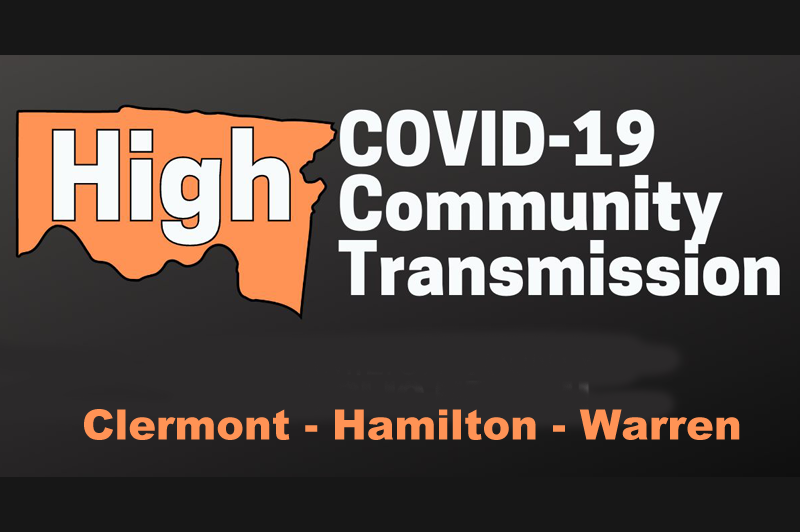
  • Hamilton, Clermont, and Warren Counties now have “High” COVID-19 community spread

    Hamilton, Clermont, and Warren Counties now have “High” COVID-19 community spread

    Loveland, Ohio – The Centers for Disease Control and Prevention (CDC) has classified Hamilton, Clermont, and Warren Counties as having “High” COVID-19 community spread. The CDC looks at the combination of three metrics — new COVID-19 hospital admissions per 100,000 population in the past 7 days, the percent of staffed inpatient beds occupied by COVID-19 patients, and total new COVID-19 cases per 100,000 population in the past 7 days — to determine the COVID-19 community level.

    (K)N95 masks that are good quality and fit are important to protect yourself and others. (CDC Image)

    Immediate recommendations from Hamilton County Public Health:

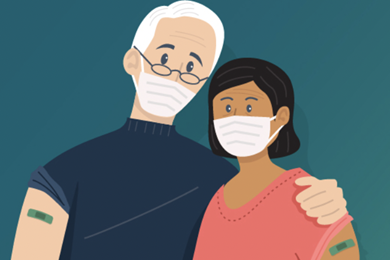
    • Wear a well-fitting mask indoors in public, on public transportation, and in crowded outdoor areas regardless of your vaccination status.

    • Stay up to date with COVID-19 vaccines.

    • Get tested if you have symptoms.

    • If you are at high risk for severe illness, consider taking additional precautions. Talk to your doctor to find what works best for you.

    • Stay home if you are sick.

    Community Resources

    TestAndProtectCincy.Com has a list of vaccination locations, PCR testing sites, Test-To-Treat testing sites, and where you can find at-home testing kits.vFind out more by visiting: HCPH.org/COVID19

    COVID-19 Testing Locations in Clermont County

    Upcoming Vaccine Clinics in Clermont County

    Warren County Covid 19 Vaccine Info

    No-Cost Home Test Kits

    Request an At-Home Test Kit

    At-home COVID-19 test kits can be requested from the federal government and shipped (USPS) to residential addresses.  For information on how to store and use at-home tests, and other helpful tips, visit CDC.gov.

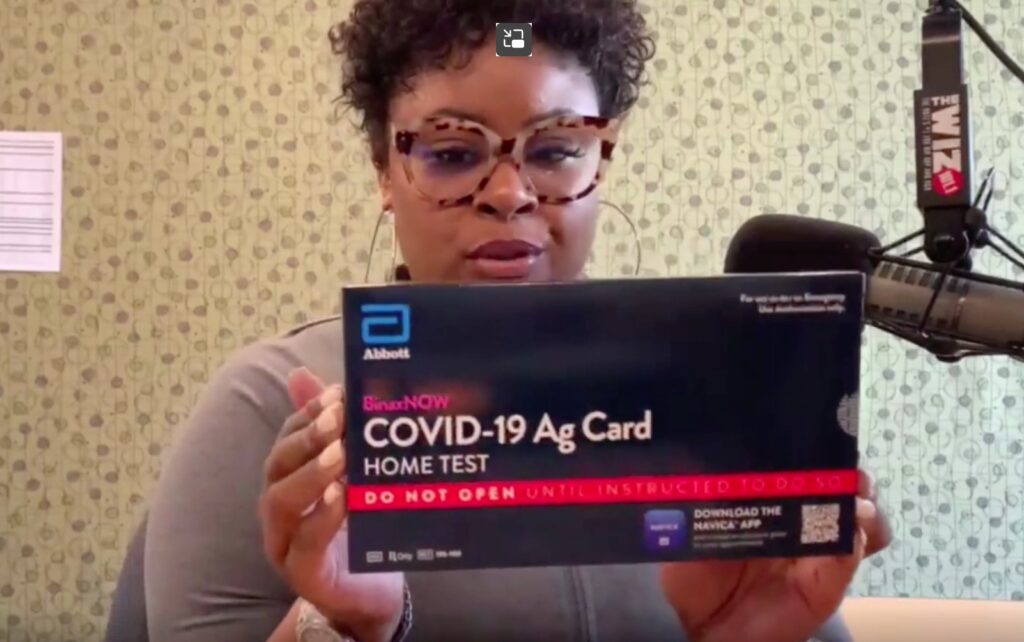
    BinaxNOW Test Kits:  BinaxNOW test kits have an expiration date that differs from the product label.  Please read this update to see the extended expiry of your testing kit.

    For guidance on the proper way to use your BinaxNOW testing kit, watch the below step-by-step video. For other brands, please refer to the instructions included in the test kit.

    Watch this demonstration on how to use at-home test kits:

  • Questions arise about possible Native American remains and “Mound” at site of proposed Parking Garage in the Historic District

    Questions arise about possible Native American remains and “Mound” at site of proposed Parking Garage in the Historic District

    *Please read this CORRECTION to this story.

    The hillside in Loveland’s downtown where a highly contested proposed parking garage may be built

    “It is not known whether the ‘mound’ remains or is an Indian mound, but it is possible.” – Hamilton County Community Development

    David Miller is the Publisher and Editor of Loveland Magazine

    by David Miller

    Loveland, Ohio – The possibility of Native Americans’ remains under the site of a proposed parking garage on a hill in “Historic Downtown” may give a new connotation beyond the history of White settlers and developers of the area.

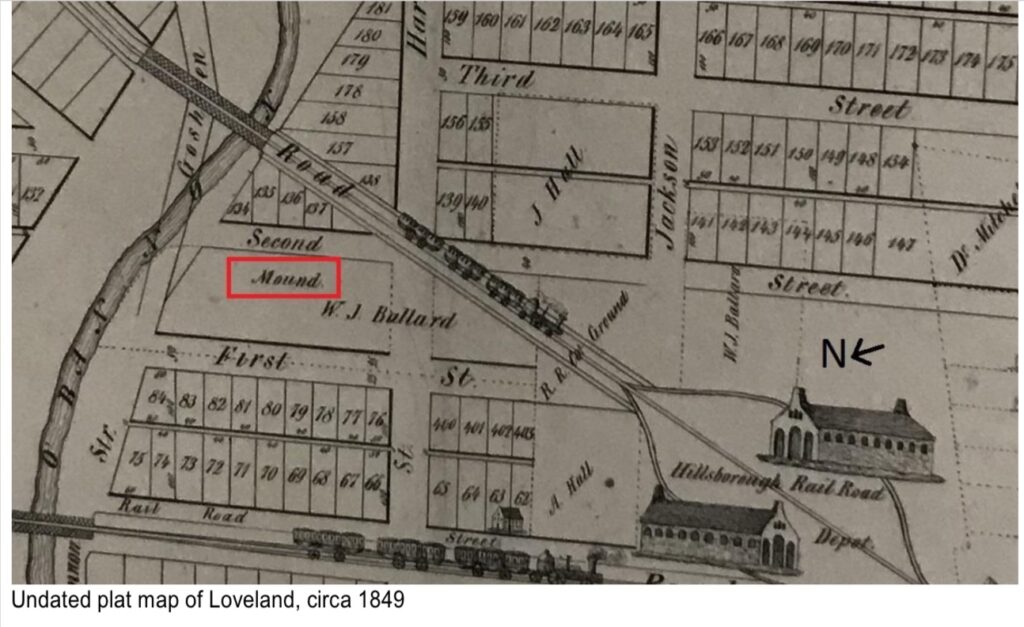
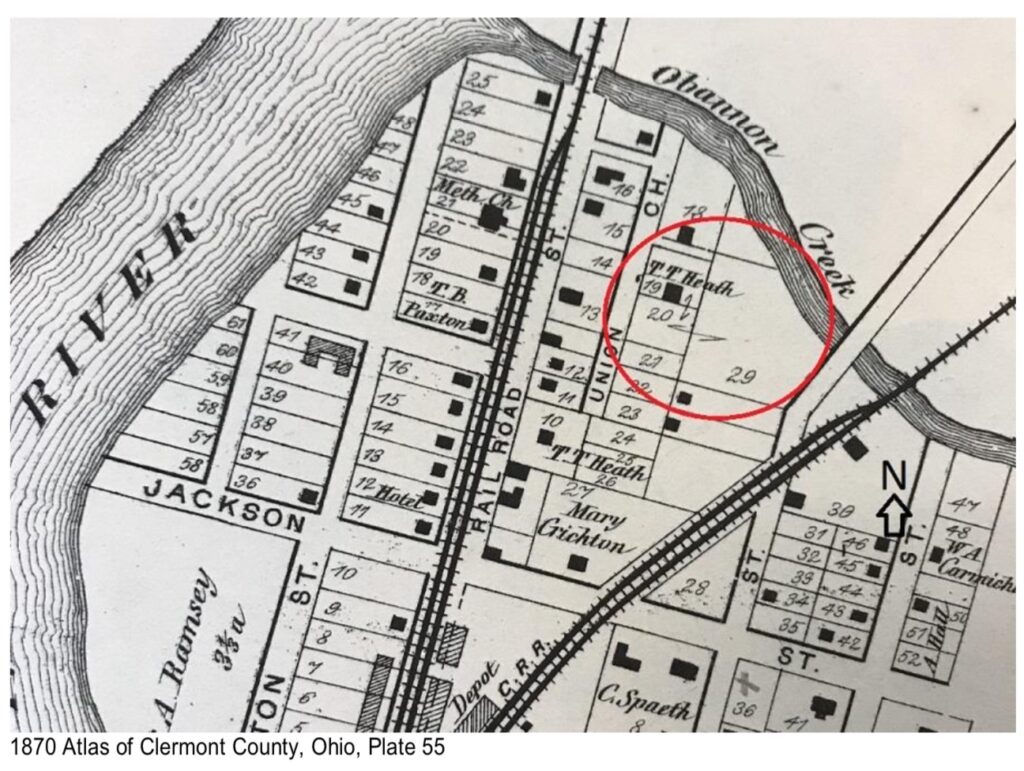
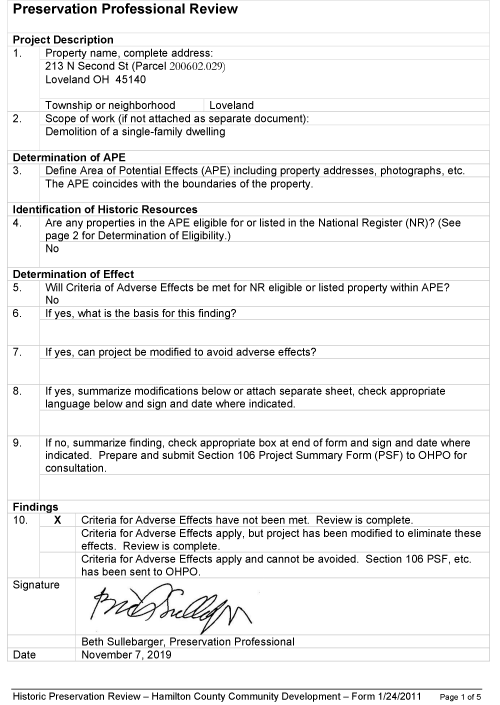
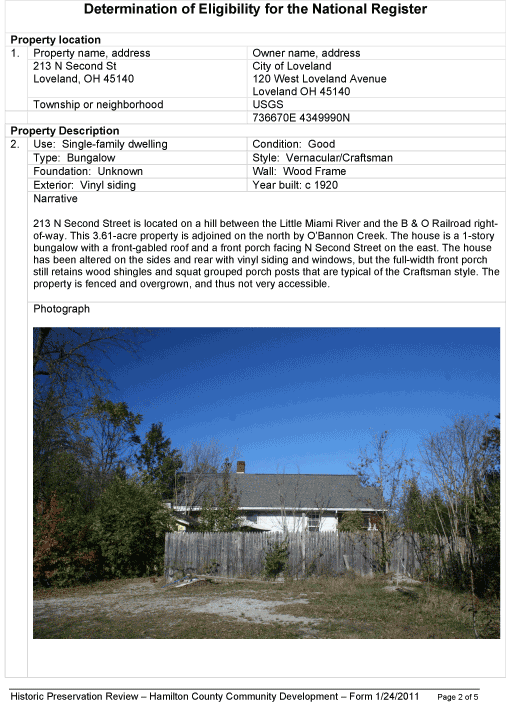
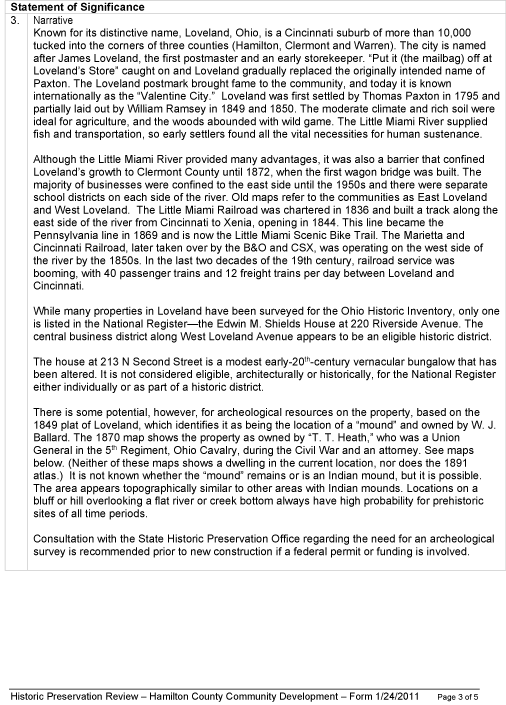
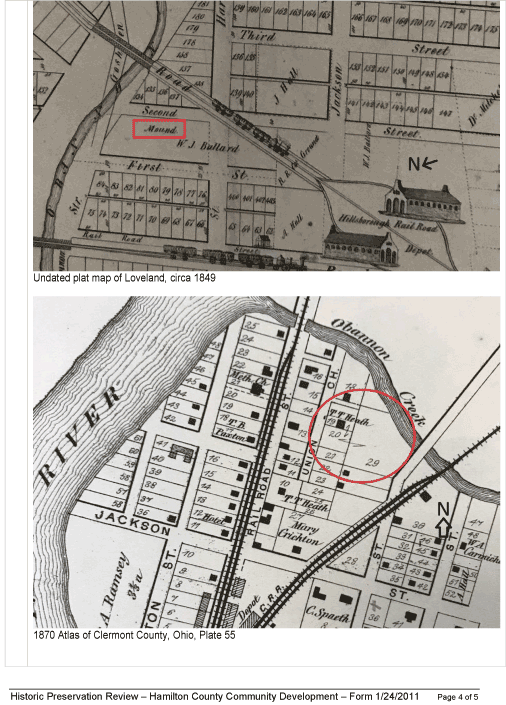
    At Monday’s City Council meeting, both Lauren Enda and Tom Scovanner reported that they have come into possession of a 2019 report by a preservation consultant that was commissioned by Hamilton County. The report says there is some potential for “archaeological resources” on the property. The report was based on an 1848 map of Loveland. The consultant said the map identifies a “mound” at the location. The report was commissioned because Loveland was seeking federal dollars to demolish two houses on the site and the money Loveland was seeking, was ultimately federal dollars. According to Enda and Scovanner, the report concluded that there was no historical significance to the houses so the City was given a green light to proceed with removing them.

    However, after the houses were removed, the City proceeded to do excavation on the hillside to make a temporary overflow parking lot to mitigate parking congestion in “Historic” downtown apparently without the knowledge of the reported mound that may contain the remains of American Indians who once lived on the bank of O’Bannon Creek which abuts the hillside. O’Bannon Creek enters the Little Miami River a few hundred feet downstream.

    The proposed garage site is 213 North Second Street (Parcel 200602.029).

    Enda says that as soon as she received the report she immediately put in a call to City Manager Dave Kennedy who could not be reached. She then sent the report to both Kennedy and Councilmember Andy Bateman on April 8. She sent it to Bateman because he is the council’s representative on the City Historical Preservation and Planning Commission (HPPC). Bateman is a sitting member of the Commission.

    Enda’s presumption was that Bateman would forward the report to all of the HPPC members, however, the report was not brought up or discussed at their next meeting. She had asked Bateman in an email, “Please share with the other members as I do not have their addresses.” She said on Monday that she was surprised that it was not discussed at the HPPC meeting.

    After Enda and Scovanner gave speeches during the open forum at Monday’s council meeting, there was also no discussion between Council and the City Manager. She said on Monday that she did not hear back from either Kennedy or Bateman after she sent them the report. *

    City Manager Kennedy told Loveland Magazine via email that he first knew of the report when Enda sent it to him on April 8 at 2 PM. He said that subsequently, the Ohio Historic Preservation Office contacted him and they are scheduling a time to discuss the matter.

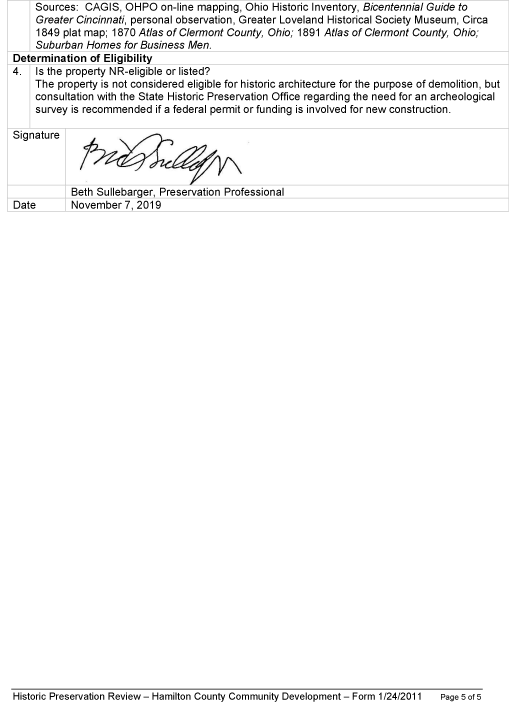
    The Hamilton County Community Development Historic Preservation Review worksheet says, “It is not known whether the ‘mound’ remains or is an Indian mound, but it is possible. The area appears topographically similar to other areas with Indian mounds. Locations on a bluff or hill overlooking a flat river or creek bottom always have high probability for prehistoric sites of all time periods.” It concludes, “The property is not considered eligible for historic architecture for the purpose of demolition, but consultation with the State Historic Preservation Office regarding the need for an archeological survey is recommended if a federal permit or funding is involved for new construction.”

    Enda said at the council meeting that according to Loveland’s Director of Finance, Mark Medlar, Loveland taxpayers have already spent $980,000 on purchasing the site, demolition, and design engineering for the “multi-million dollar” proposed garage.

    Enda wants Council to commission an archaeological survey of the property which she says is the recommendation of the Ohio History Connection. The Ohio History Connection was formerly the Ohio Historical Society and carries out history services for Ohio and its citizens focused on preserving and sharing the state’s history. This includes housing the state historic preservation office, the official state archives, local history office and managing more than 50 sites and museums across Ohio.

    Enda was contacted by the Greater Cincinnati Native American Coalition, who in turn have reached out to other Native American organizations such as the National Congress of the American Indians in Washington, DC. During the council meeting, Scovanner read a letter from the Cincinnati organization.

    Enda has advocated for months for residents to be given the chance to vote the proposed parking garage up or down at the ballot box.

    She says that if there are Indian remains at the site they should be treated with respect and dignity.

  • Elizabeth Kelly, MD of Cincinnati elected as president of the Hamilton County Board of Health

    Elizabeth Kelly, MD of Cincinnati elected as president of the Hamilton County Board of Health

    Hamilton County, Ohio – Hamilton County Board of Health completed its annual reorganization at its April 11 meeting, electing Elizabeth Kelly, MD of Cincinnati as president of the board and Dan Meloy of Colerain Township as vice president.

    The five-member Board of Health is the governing body of Hamilton County Public Health. In addition to Kelly and Meloy, board members include Tracey A. Puthoff, Esq. of Anderson, Jim Brett of Whitewater Township, and Mark Rippe of Sycamore Township. The Board has the authority to adopt public health rules and regulations, which have the same status as law, and to enact policies within Hamilton County Public Health’s jurisdiction, including all of Loveland. The Loveland City School District also recognizes the Hamilton County Health District as its guiding agency.

    The Board of Health’s regular meeting schedule through March, 2023 will be on the second Monday of each month at 4 PM at Hamilton County Public Health, 250 William Howard Taft, Cincinnati, OH 45219. All meetings are open to the public.

    For more information about the Hamilton County Board of Health, including minutes of Board of Health meetings, visit www.hamiltoncountyhealth.org.

  • Hamilton County Overdose Deaths Remain Relatively Steady Despite Statewide Increases

    Hamilton County Overdose Deaths Remain Relatively Steady Despite Statewide Increases

    Hamilton County, Ohio – Hamilton County Addiction Response Coalition (HC ARC) released its annual report on the State of the Addiction Crisis in Hamilton County. In 2021, overdose deaths remained relatively steady despite statewide increases reported by the Ohio Department of Health.

    Hamilton County has made several adjustments in response to the addiction crisis. The Quick Response Team (QRT) is now a full-time program that includes reactive overdose follow-up and proactive outreach in hotspot communities.

    To read the full report, click HERE.

  • Meet our newest advertiser: Rick Ogden Heating & Air Conditioning

    Meet our newest advertiser: Rick Ogden Heating & Air Conditioning

    Beat the heat 24/7, call Rick today!

    Rick’s been there for his customers for 40-years!

    Rick Ogden Heating & Air Conditioning has been providing Loveland and the Tri-State area with quality heating and cooling solutions since 1982. During this time, they have built a well-deserved reputation for honesty, professionalism, and friendly service. Whether you need emergency air conditioning service, heat pump installation, or just want to improve your indoor air quality, their trained technicians have the experience and expertise to take care of all your HVAC needs.

    Poorly maintained heating and cooling systems are costly and can leave your home uncomfortable throughout the year. It’s important to find an HVAC contractor that is reliable and friendly, and with Rick Ogden Heating & Air Conditioning, you can rest easy knowing your home is in good hands.

    The expert team has experience servicing a wide variety of systems, including:

    • Gas Furnaces
    • Electric Furnaces
    • Oil Furnaces
    • Boilers
    • Air Conditioning
    • Humidifiers
    • Heat Pumps
    • Hot Water Heaters

    Aside from impeccable service and thorough knowledge, Rick Ogden Heating & Air Conditioning carries only the very best in HVAC products. They offer items from Comfortmaker, Aprilaire, and Honeywell, all top brands in the industry. They will always treat you like you’re part of the family, only recommending the best for your heating and cooling system installations and repair.

    Finding a reliable HVAC contractor is vital to the maintenance and quality of your heating and cooling systems. If you’re located in Hamilton or Clermont county or the southern areas of Butler and Warren counties, your search is over. When you trust the professionals at Rick Ogden Heating & Air Conditioning, you will receive 24-hour emergency services, high-quality products, on-going maintenance, and unbeatable HVAC installation and repair.

    Give them a call at (513) 683-3714 today for a free estimate. You can also visit them online to view a comprehensive list of their heating and cooling services.

  • Fire/EMS levy to be on Loveland’s May ballot

    Fire/EMS levy to be on Loveland’s May ballot

    by David Miller

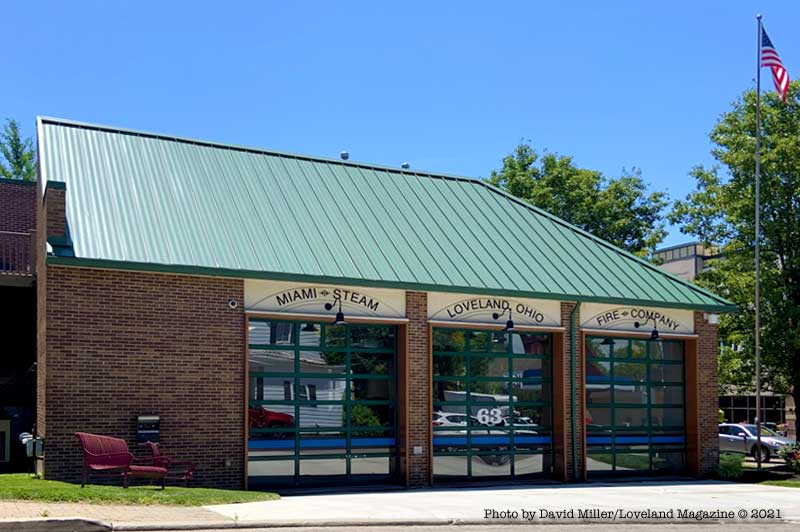
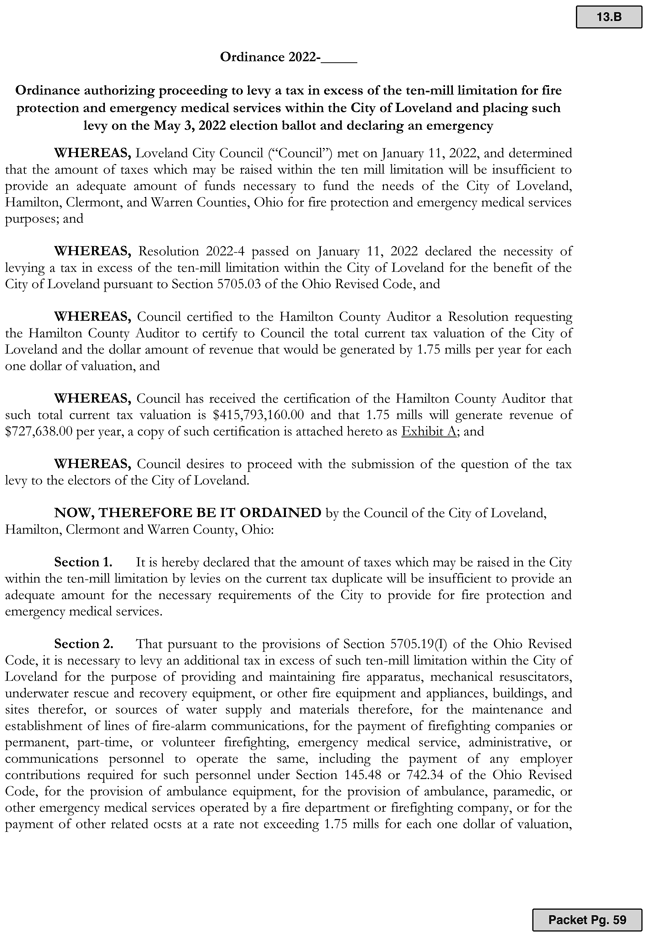
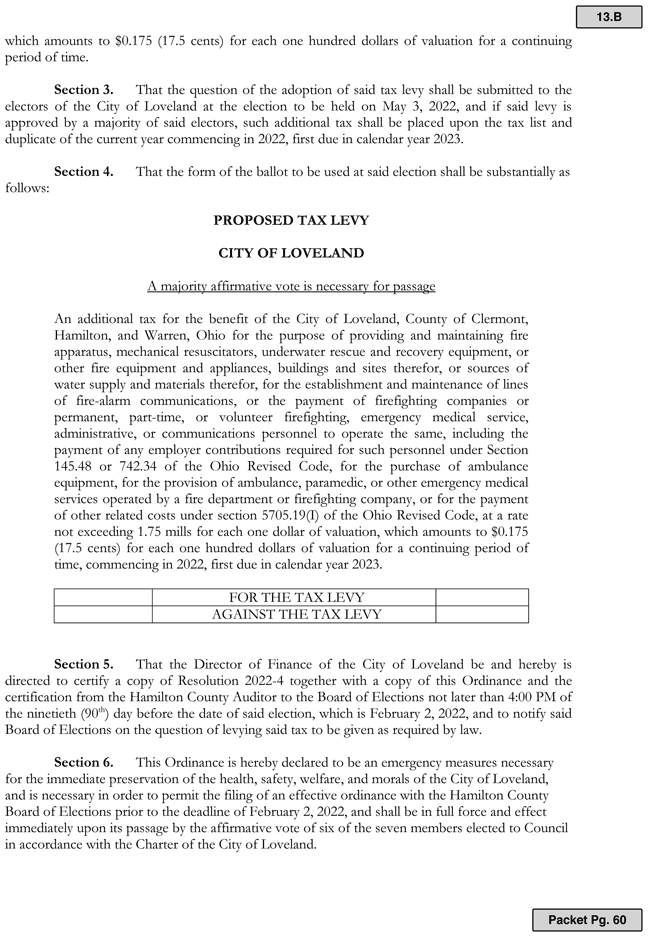
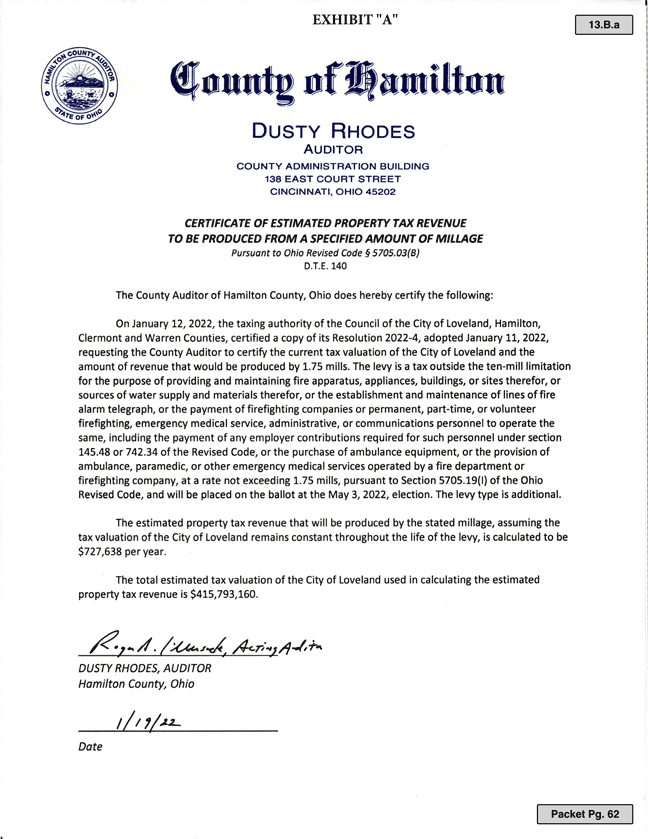
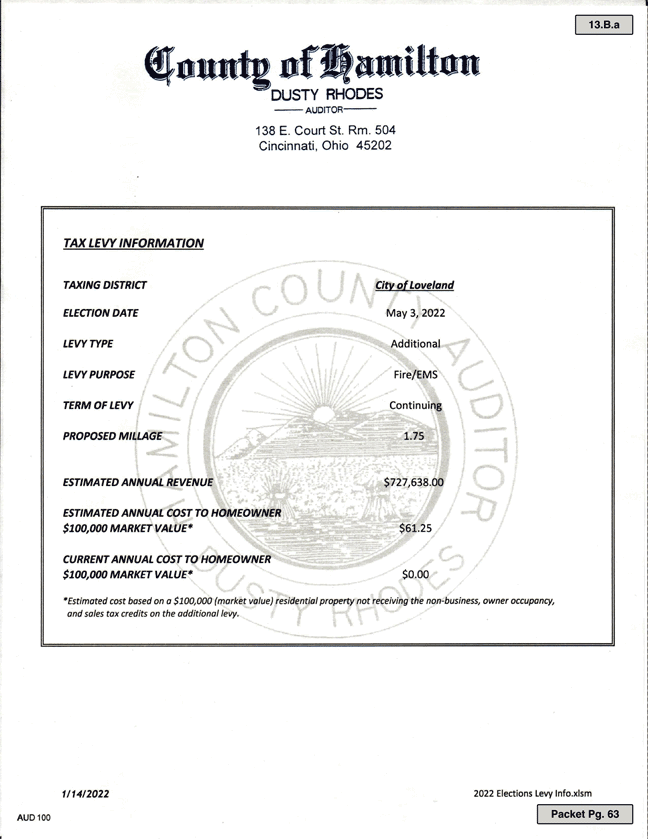
    Loveland, Ohio – City Council approved Ordinance 2022-17, which authorized a levy to be placed on the May 3, 2022 ballot for fire protection and emergency medical services. It is a 1.75 Mill Fire and EMS Levy. Finance Director Mark Medlar reported that the City of Loveland currently has four levies to pay for Fire and EMS services and noted that the last levy was approved in 2014.

    City Manager Dave Kennedy told the council on January 20, that the city received an estimated tax valuation from the Hamilton County Auditor’s Office of $415,793,160. This estimate is for the entire city which includes parts of Hamilton, Clermont, and Warren Counties. The estimated property tax revenue that will be produced by a 1.75 mill levy is $727,638 per year. “This amount is sufficient to maintain fire and EMS services”, according to the City Manager.

    The estimated cost to an owner of a home with a $100,000 market value is $61.25 per year.

  • Loveland City School District will be closed tomorrow, Friday February 4th

    Loveland City School District will be closed tomorrow, Friday February 4th

    Loveland, Ohio – The Loveland City School District will be closed tomorrow, Friday, February 4th.