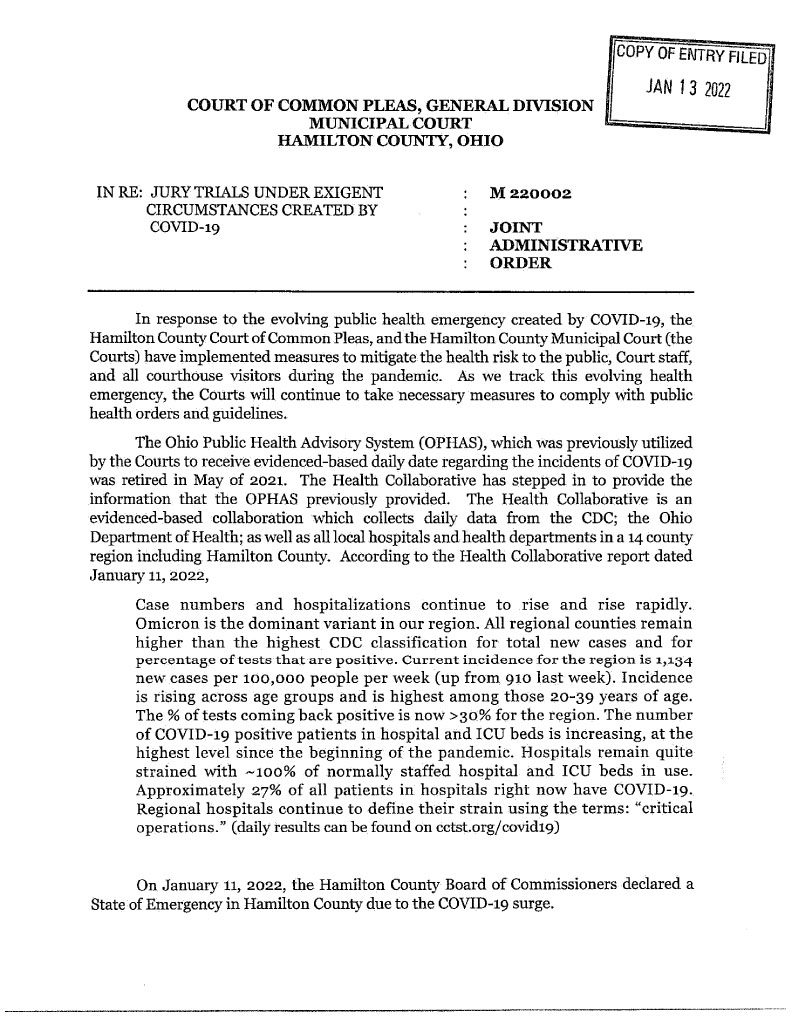
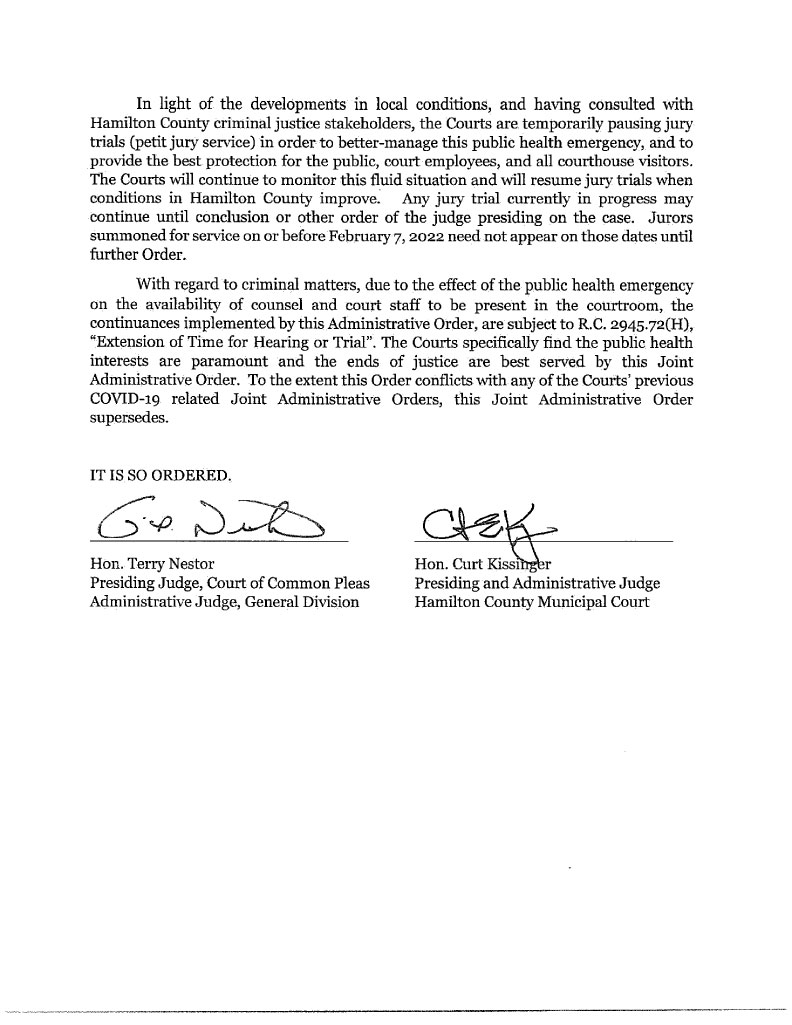
Hamilton County, Ohio – Jury Trials in Hamilton County have been paused. If you received a summons for Petit Jury Duty on 1/18/22, 1/24/22, or 1/31/22 you do not need to report.
The order, which you can read below is in effect until 2/7/22.
Grand Jury service is still ongoing. If you have a summons for Grand Jury you must still report.
UPDATE: The Test and Protect contract between Hamilton County and The Health Collaborative expires at the end of this year when CARES Act funding ends, but the testandprotectcincy.com website will continue to be updated with no-cost testing locations in our region. Hamilton County Commissioners allocated an additional $1.2 million in American Rescue Plan dollars to continue to fill gaps in testing in 2022. New locations will be announced soon.
10+ stores in Hamilton County, 30 + stores in region
Schedule online or call 1 (800) 679-9691
PCR Drive-Thru Testing. Type of test varies by location, see website for details. Patients with insurance testing for travel and work requirements could be required to pay a copay. Please check with your provider.
While the testing program through Hamilton County ceases on December 28, the testandprotectcincy.comwebsite will continue to be updated with no-cost testing locations in our region.
Testing remains a critical component in mitigating the spread. Until vaccines are far-reaching, and our hospitals are no longer strained due to COVID illness, testing is still the gold standard for keeping our community safe. Please continue to help us share this messaging. When our community needed help, we built a successful solution for keeping our county safe during the biggest public health crisis of our time. Thank YOU for your support of Test and Protect.
PLEASE NOTE: Test and Protect offers COVID-19 tests at NO COST to all those who live or work in Hamilton County. Remember, you do not need health insurance to get a COVID-19 test. If you have insurance, please bring your insurance card so that the insurance plan can be billed. You will not need to pay any copay or co-insurance. You will not be asked about immigration status.
Test and Protect DOES NOT offer COVID-19 vaccines. For the latest information on vaccines and provider locations, please visit healthcollab.org/vaccine-info.
WHAT YOU’LL NEED
Our test events are for people who live or work in Hamilton County, so please bring documentation demonstrating residence or employment in Hamilton County. Below is a list of acceptable forms of documentation; please bring ONE of the following:
Driver’s License, state-issued ID, student ID, or work ID
Voter registration, property tax bill, or other county issued documentation
Rent receipts or mortgage statement
Utility bills or bank statements
Pay stub
Letter from employer
Business card
ACCESS FOR PEOPLE WITH DISABILITIES
For those with a physical disability, such as limited mobility or those who use a wheelchair, please check here for a list of locations with full access. For those with special needs requiring additional support, please visit Hamilton County Developmental Disabilities Services.
Testing information is updated Monday through Friday. Outdoor testing locations are subject to same-day cancellation due to inclement weather. PLEASE NOTE: UC’s Addiction Sciences Division has a separate registration page and requires an appointment. Click or tap the event name below to pre-register.
Event Date
Organization
Address
Neighborhood
StartTime
EndTime
Access Notes
12/20/2021
Kinder Garden School Blue Ash
10969 Reed Hartman Hwy Blue Ash, OH 45242
Blue Ash
9:00 AM
1:00 PM
12/20/2021
Crossroads Oakley
3500 Madison Road Cincinnati, OH 45209
Oakley
10:00 AM
4:00 PM
Site entrance is across from Mike’s Car Wash, look for a purple flag
10+ stores in Hamilton County, 30 + stores in region
Schedule online or call 1 (800) 679-9691
PCR Drive-Thru Testing. Type of test varies by location, see website for details. Patients with insurance testing for travel and work requirements could be required to pay a copay. Please check with your provider.
If you would like to request on-site testing at your organization, please complete THIS FORM. For questions, please call the Test and Protect hotline at 513-618-3656 and leave a message with your name, organization, call-back number, email address, and reason for calling. Someone will get back to you within 24 hours.
Testing FAQs
WHEN/HOW WILL I RECEIVE MY TEST RESULTS?
Test results from the lab are expected within 2-3 days.
All results – positive, negative or indeterminant – will be emailed to you within three days.
Please check your email inboxes (including spam folder) for test results sent from covidtesting@uc.edu.
If you do not have an email address and are in need of documentation of your results, please call (513) 558-8898.
WHO WILL BE ADMINISTERING THE TESTS?
WHAT KIND OF TEST WILL WE BE USING?
HOW ACCURATE IS THE TEST WE’RE USING?
DO I NEED A DOCTOR’S PRESCRIPTION TO GET TESTED?
CAN I PRE-REGISTER FOR MY TESTING DATE?
WHAT HAPPENS IF I TEST POSITIVE?
HOW IS OUR TESTING DIFFERENT FROM OTHER TESTS? POP UP SITES?
MY ORGANIZATION HAS CURRENT ACTIVE CASES OF COVID-19, CAN WE REQUEST TESTING?
WHAT ARE THE REQUIREMENTS FOR INDIVIDUALS UNDER AGE 18?
About Test and Protect
Test and Protect is funded by Hamilton County, Ohio through the CARES Act, and is a partnership among Hamilton County, The Health Collaborative, five regional health systems, and one regional university to:
Make testing convenient for those that need it
Test people at a location that they can get to (somewhere near you)
Get results to those tested as quickly as possible
Stop the spread by providing positive case information to public health workers
Understand the spread of the disease to better protect and improve the health of all people in Hamilton County.
On-site testing is provided by the University of Cincinnati and UC Health.
Hamilton County COVID-19 Serology Study: Hamilton County is assessing the number of people who have been previously exposed to COVID-19. If you visit an Emergency Department in Hamilton County, and you are having blood drawn for laboratory tests, a small amount may be used for this purpose. This work is funded by the federal CARES Act. If you have any questions, contact study staff at covidserology@ucmail.uc.edu. Please do not use this email address to request testing.
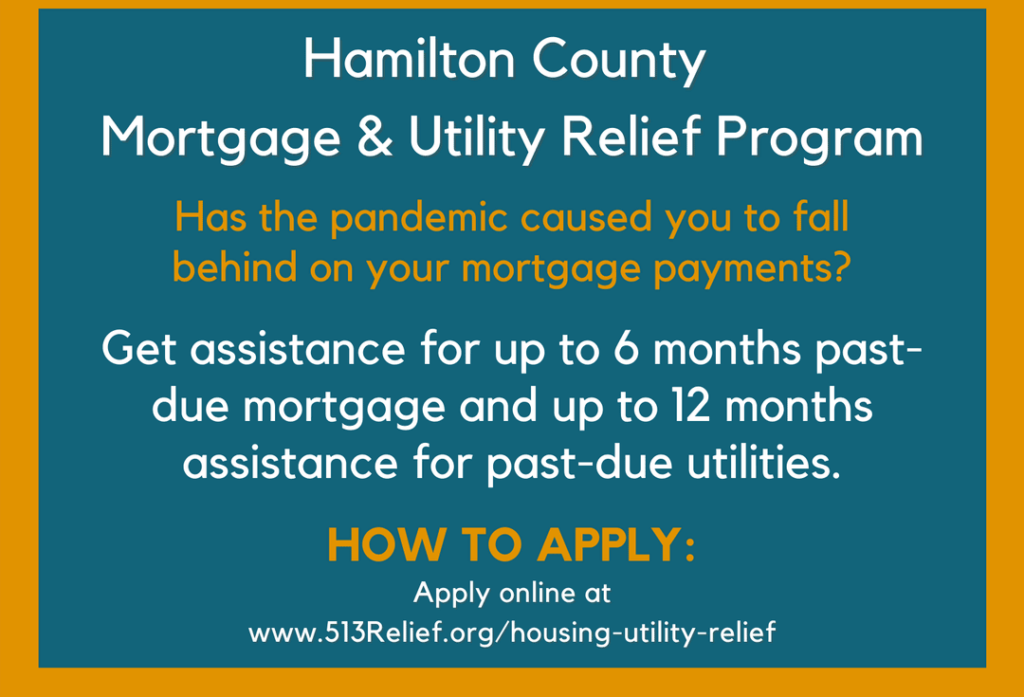
If you are a Hamilton County homeowner struggling to pay bills due to the pandemic, help may be available through the Hamilton County Mortgage & Utility Relief Program.
We are pleased people are now researching the Pandemic and how local newspapers survived. Some didn’t. Loveland Magazine did survive, and it was pure everyday persistence, sacrifice, and a dedication to staying alive (literally), and as a local Newspaper. We were early declared “Essential Workers” however that declaration did not provide us anything as the designation was quickly ignored at every level of government when they dolled out relief dollars and the help they could have provided. We stood in line with everyone else at the chance to apply for PPE funds, etc., and at times we were at the back of the lines for eligibility. We were still standing when our own City bought new high-tech water fountains with the COVID relief funds they received. Much of what you read here though is how we did it. What this story misses is an incredible effort it took for local papers in smaller communities to find accurate specific COVID 19 data in a hometown like ours that is in three counties with each county reporting in different formats and on different days of the week.
But how did so many local news organizations – especially newspapers – manage to survive the pandemic? Weeklies beefed up their daily online news coverage, business models were blown up and existing rationales for why journalism matters became more than theoretical to rural journalists.
Their determination to survive and serve as a public health lifeline for their communities fueled an oral history project that my colleague Teri Finnemanand I conducted, interviewing 28 journalists across seven states in the middle of the country. We learned how locally owned and family-owned newspapers made it through COVID-19.
“There’ve been times that we’ve had to reach out to mayors and different cities and communities across the state … to make sure that … they knew that [journalists] were deemed essential workers,” said Ashley Wimberley, executive director of the Arkansas Press Association. That label exempted news workers from stay-at-home orders and designated them as critically needed by their communities.
Oral history grabs the first impressions of history for those living now, looking back at what just happened. It helps people understand the present and how to move forward, out of a crisis. But it also records events for scholars and citizens in the future.
“Always remember that when you’re putting those stories in your newspaper, that you are printing your community’s history,” Amy Johnson, the publisher of the Springview Herald in Nebraska, told us.
Benny Polacca of the Osage News in Oklahoma told us something similar: He encouraged journalists covering some future pandemic to “do your due diligence in order to come to some type of understanding, some type of argument, some type of focus, if you were going to be reporting or researching the time of COVID-19.”
Often, it’s journalism on the coasts that gets the attention of researchers. The New York Times, The Washington Post, the Los Angeles Times – these big news organizations are written about constantly.
By talking to journalists in North Dakota, South Dakota, Nebraska, Kansas, Oklahoma, Arkansas and Louisiana, our project pushed back against this tendency to ignore the middle of the nation and its important journalism. As a kind of new essential worker, journalists found themselves in charge of explaining complicated guidance from state and local officials about COVID-19, how schools would work and where to get help.
“I hope that, through this, that our role as journalism, they [the public] realize how important it is that the information we put out, you know, how it affects them every day,” Johnson said.
Kansas Press Association Executive Director Emily Bradbury had a message for these journalists who were working for news organizations increasingly threatened with being shut down: “I want them to know that in the midst of an emergency, in the midst of what can seem like a hopeless situation, when they look at their financials, that what they’re doing is important. And what they’re doing matters, and that no one else can do what they do, and they look out for their communities like no one else.”
Emily Bradbury, Kansas Press Association Executive Director, tells reporters that ‘what they’re doing is important. And what they’re doing matters…and they look out for their communities like no one else.’ Will Mari and Teri Finneman, Author provided photo.
Loans, side hustles and deals
Reporters and editors found new ways of paying the bills. That meant accepting government subsidies in the form of Paycheck Protection Program loans. It meant, for some, going door to door and asking readers to subscribe, or keep subscribing. It meant consolidating newspapers, putting out more online editions, or taking pay cuts.
“People just don’t understand. It costs a lot of money and time to do this, and I just wish we – there was more value or people appreciate it or understood the value and the cost of really providing this service,” said Bonita Gooch, the publisher of The Community Voice, a Black newspaper based in Wichita, Kansas.
Some publishers took on side hustles to bring in revenue, creating ad copy for local business or doing marketing work.
At The Kingfisher Times & Free Press in Oklahoma, for example, Christine Reid, the paper’s editor, created ads for a local vocational-technical school. “I’ve also tried to use that as an avenue to … generate more ads for the newspaper,” Reid said.
Local publishers did whatever it took to stay afloat. As some of our initial findings have shown, that showed both opportunity and hesitancy about change.
“We’re gonna have to rely less on advertising revenue and more on subscription revenue, and so we’ve got to make sure we’re offering a unique product that they want to pay for,” said Letti Lister, the president and publisher of the Black Hills Pioneer in Spearfish, South Dakota.
We saw tentative signs of hope, as journalists got financial and moral support from their readers during a fraught election. “If anything, it’s rallied the troops, if you will, in our community because they trust us, they know that we’re going to report the news in a timely manner and keep the public up to date,” said Amy Wobbema, publisher of the New Rockford Transcript in North Dakota. Arguably most coverage was calm and steady.
But there was still hesitancy over what newspapers had to do to adapt. Some journalists are uncomfortable with receiving government funding and would rather rely on community support.
As South Dakota Newspaper Association Executive Director Dave Bordewyk put it: “Sort of, ‘Look, contribute to our newspaper … because if you value that importance of local news and journalism, then we need your support beyond just subscribing to the newspaper or advertising, which has gone away.’”
“That’s what we hope. What I hope comes out of this is that readers can understand that, and can … have a renewed value on what that [local] publication has done for their community during this pandemic,” Bradbury told us.
The Veterans Crisis Line connects Veterans in crisis and their families and friends with qualified, caring Department of Veterans Affairs responders through a confidential toll-free hotline, online chat, or text. Veterans and their loved ones can call 1-800-273-8255 and Press 1, chat online, or send a text message to 838255 to receive confidential support 24 hours a day, 7 days a week, 365 days a year. Support for deaf and hard of hearing individuals is available.
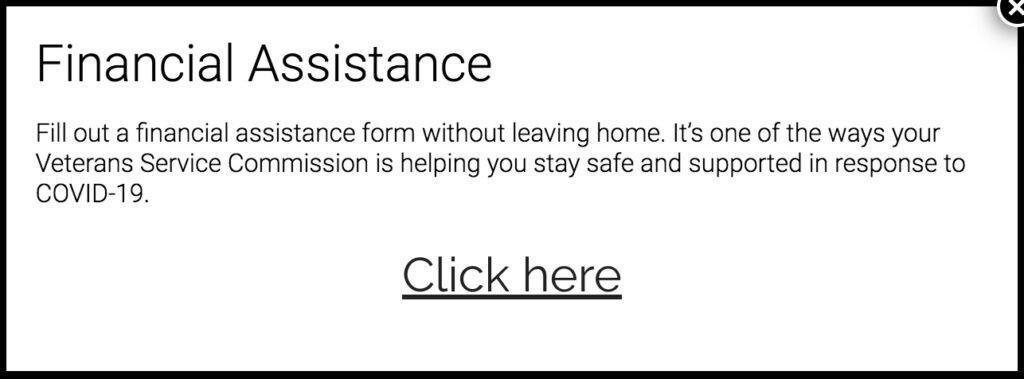
Fill out a financial assistance form without leaving home. It’s one of the ways your Veterans Service Commission is helping you stay safe and supported in response to COVID-19.
VA Medical Center Transportation Program
Hamilton County Veterans Service Commission is excited to announce the VA Medical Center Transportation Program. Metro passes are available at no cost for VAMC Cincinnati medical appointments. Eligibility: Honorably discharged veteran and Hamilton County resident. Requirements: One-time office visit to establish eligibility and appointment verification (available from VAMC). Ask about Metro Access. Call 513-946-3300.
VA Benefits
The Hamilton County Veterans Service Commission has Service Officers to assist in filing for VA benefits.
County Veteran Service Officers (VSOs) are accredited through the Ohio Department of Veterans’ Services. VSOs are also accredited through various congressionally chartered veteran service organizations.
By appointment only, call 513-946-3300 to speak with a Service Officer and to schedule an appointment.
FAQ
Do you provide emergency financial assistance?
Emergency funds for food, housing and utilities may be provided to veterans and/or their dependants. The following factors will be considered when determining financial need: proof of veteran status (DD-214 or other separation or discharge record), proof of household income, and current bills. Unemployed veterans are required to be actively seeking employment or must provide medical evidence of the inability to work.
Where can I get information about my late father’s military career?
Call our office at 513-946-3300 for details pertaining standard form 180.
What can I do to upgrade my bad conduct discharge, if possible?
Call our office at 513-946-3300 for details about an upgrade discharge packet.
How does a veteran become enrolled in the “direct deposit” program for VA compensation or pension benefits?
We can assist in completing this form and faxing it to VA Regional Office.
I was on active military duty from 1959 through 1960. I recently became disabled, not from any service-connected cause, and may not be able to return to work. Am I eligible for nonservice-connected pension benefits from VA since I now have a limited income?
Veterans’ entitlement to nonservice-connected disability pension is premised on three basic criteria: the individual must have a minimum of 90 days of active military service, one of which must have been during a designated wartime period; the veteran must be permanently and totally disabled or so disabled that it would be impossible for the average person to pursue substantially gainful employment; and the veteran’s countable income must be within limits defined by statute. Because your active service was entirely during peacetime, you do not meet the service eligibility requirement for pension benefits.
My ex-spouse was a veteran. Am I entitled to benefits?
Generally, the answer is no. The end of the marriage normally means the end of eligibility for benefits.
I am a veteran. Will VA pay for my funeral and burial expenses?
No. Only veterans who are receiving monetary benefits at the time of death qualify for the payment of burial and/or funeral expense. Even in those cases, VA payments will not come close to paying for the average funeral and burial expense.
I got hurt when I was in the service. Does that mean I am service connected?
No – you are not service connected until the VA adjudicates your formal claim and grants service connection. It is a formal, legal process.
I was told I cannot file a claim for service connection because I have been out too long.
Not true. It may be harder to get your claim approved, but there is no time limit for filing a claim for service connection. We recommend you file as soon as possible after release from active duty because the effective date of your claim is determined by when you file. The start payment date is the same. If you got out in 1958 and your claim is approved in 2010, you will be paid only from the date you filed your claim – not back to your discharge.
Do you have to serve in a war to be considered a Veteran?
No. There are different requirements based on which benefit is sought. Generally a Veteran is a member of the Armed Forces that has served on Active duty for other than training purposes or who was disabled due to their military service. Please call for more information.
Can I get a copy of my discharge paper?
Yes. We can assist in obtaining a copy of your military discharge (DD-214). Please call for more information.
My father/mother is now a patient in a nursing home. Medicaid says I have to apply for VA Pension, what do I do?
You will need to file an application for VA Pension. You will need to bring in an original or certified copy of DD 214, Separation Paper, all monthly income received from all sources, amount of Assets, Marriages, Divorces, Death Certificates, Social Security Numbers of Veteran and Dependents.
In the late 1960s and early 1970s, there was growing concern too many young people were not prepared to enter the labor market. Ohio responded by creating vocational school districts, which ensured that young people would have a broad range of career options.
By 1970, 22 school districts joined together to form the Hamilton County Joint Vocational School District.
Initially, there were to be two campuses, one on the east side and one on the west, but in 1971 all that changed when Great Oaks acquired the old Army depot in Sharonville. Additionally, 13 more school districts joined the vocational school district. In 1972, the school changed its name to Great Oaks and added a fourth campus with the addition of the Clinton County Air Force Base.
NEW! Vision Care Technology
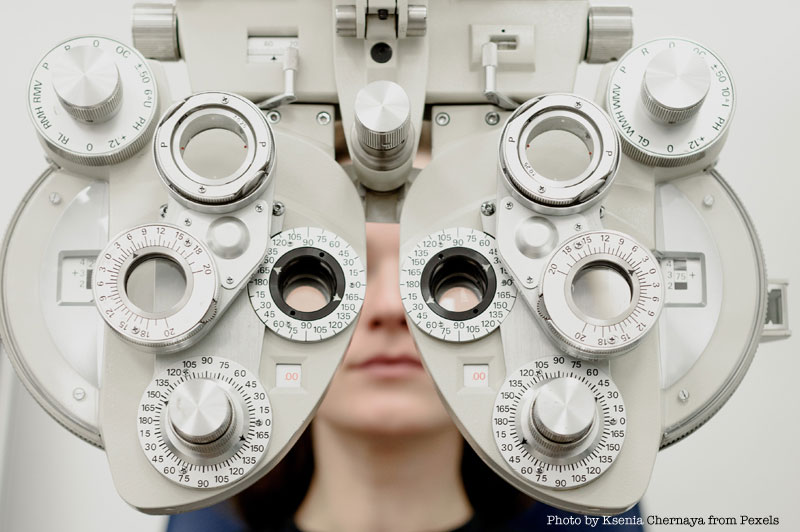
Diamond Oaks to offer Vision Care Technology program for fall 2022
Three out of four people in the U.S. wear glasses or contacts to correct their vision, according to the Vision Impact Institute. The World Health Organization calls vision health a global priority.
At the same time, an aging population is expected to increase the demand for opticians, lab technicians, and other professionals in the vision care field.
That’s why Great Oaks Career Campuses will begin high school courses in Vision Care Technology at the Diamond Oaks Career Campus in Dent starting in August 2022. The program was originally slated to begin in 2021, but was delayed.
Great Oaks Director of Teaching and Learning Joel King said that the program provides new options for high school students. “It’s a field that offers good jobs and opportunities for growth,” he said. “This will give students who are interested in health care the chance to learn valuable skills, work with the same equipment that professionals use, and finish high school with knowledge and preparation that gives them an advantage in their career field.”
“Great Oaks’ role is to find career needs and create programs that start students on the path to success,” said Great Oaks President/CEO Harry Snyder. “Vision Care Technology serves our community by training the next generation of health care and laboratory professionals.”
Students will learn about common eye disorders; how to test for visual acuity, depth perception, and color blindness; proper use of optical instruments; and prescription analysis and fitting technologies.
The program will cover:
The anatomy and physiology of the eye
Basics of ocular surgery
Use of ophthalmic equipment
Identification and treatment of eye injuries
Local vision screening
Ethics and scope of practice
Medical terminology
The program is open to students entering their junior year of high school in fall 2022. Applications will be accepted starting November 15. For more information, go to greatoaks.com/visioncare or contact Laura Domet at Diamond Oaks Career Campus, dometl@greatoaks.com or 513.612.7006.
Hamilton County, Ohio – Effective Tuesday, September 8, 2021 at 8 AM the Hamilton County Sheriff will no longer transport bodies for the Hamilton County Coroner. A new vendor, the Greater Cincinnati Funeral Trade Company has been chosen.
Hamilton County said in a release through The Health Collaborative that, “They are a local organization with 6 dedicated vehicles and 12 transporters. There is nothing required on your part as we make this transition. All body transport details and arrangements will continue to be handled by our investigative staff.”
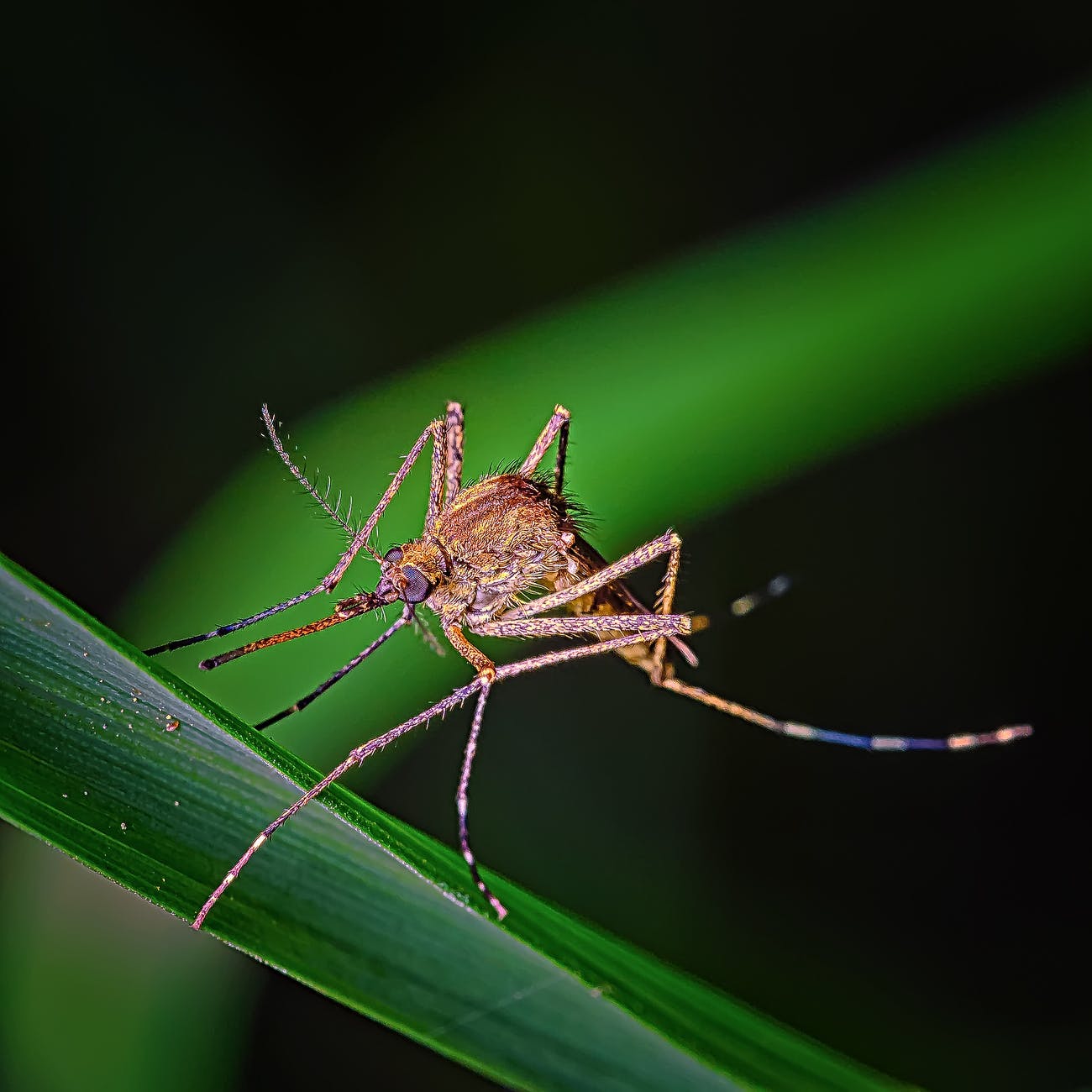
Hamilton County is reminding everyone to continue to take summertime precautions against mosquito bites after mosquitoes that were recently trapped at the Columbia Township compost facility on Hill and Dale Dr. tested positive for West Nile virus (WNV). West Nile Virus is a viral disease that can be passed from mosquitoes to humans. Hamilton County Public Health (HCPH) maintains traps throughout the County during the summer to test for the presence of disease. While this is the first positive identification in HCPH’s jurisdiction, other positive pools have been identified elsewhere in the County.
People over age 50 have the highest risk of developing severe WNV infections
Hamilton County Public Health staff will be conducting surveillance activities in the neighborhoods and commercial areas around where the mosquitoes were collected. They will be looking for areas of standing water, applying larvicide, making sure swimming pools are operating properly and advising residents on precautions they can take to avoid mosquito bites.
“We can all take action to eliminate mosquito breeding sites and take precautions to avoid mosquito bites,” Greg Kesterman, Hamilton County Health Commissioner says. “West Nile was first identified in Ohio in 2001, so it’s not new to our area, but we like to take the opportunity to remind everyone to take precautions.”
Hamilton County Public Health advises all Hamilton County residents to DRAIN, DUNK and PROTECT in an effort to reduce the mosquito population and prevent West Nile Virus:
DRAIN
Look for and drain sources of standing water on your property – litter, tires, buckets, flower pots, wading pools and similar items that could create standing water and become mosquito breeding sites.
Frequently change water in bird baths and pet bowls.
Drain small puddles after heavy rainstorms.
DUNK
Apply mosquito larvicide, sometimes called mosquito “dunks,” to areas of standing water that cannot be drained. The “dunks” are environmentally safe and won’t harm pets. Purchase them at your local hardware store.
PROTECT
Cut your grass and trim shrubbery.
Make sure screens in windows and doors are tight-fitting and free from defect.
Wear long sleeves and pants during peak mosquito hours – dawn and dusk.
Use an EPA-registered insect repellent such as those containing DEET, picaridin or oil of lemon or eucalyptus. Always follow the directions on the package.
WNV is a viral disease affecting the central nervous system that can be transmitted to humans by mosquitoes. It is important to note that most people who are bitten by an infected mosquito will never become sick. Everyone, however, should be aware of the symptoms of WNV. Symptoms may develop two to 14 days after someone is bitten by an infected mosquito.
No Symptoms in Most People. Approximately 70-80 percent of people who are infected with WNV will not show any symptoms at all.
Milder Symptoms in Some People. Up to 20 percent of the people who become infected will display symptoms which can include fever, headache, and body aches, nausea, vomiting, and sometimes swollen lymph glands or a skin rash on the chest, stomach and back. Symptoms can last for as short as a few days, though even healthy people have been sick for several weeks.
Serious Symptoms in a Few People. Less than one percent of people infected with WNV will develop severe illness. The severe symptoms can include high fever, headache, neck stiffness, stupor, disorientation, coma, tremors, convulsions, muscle weakness, vision loss, numbness and paralysis. These symptoms may last several weeks, and neurological effects may be permanent.
While all residents of areas where virus activity has been identified are at risk, people over age 50 have the highest risk of developing severe WNV infections. Anyone experiencing any of these symptoms should contact their healthcare provider for evaluation.
For more information on West Nile Virus, please contact Hamilton County Public Health at (513) 946-7800 or visit us online at www.hamiltoncountyhealth.org.
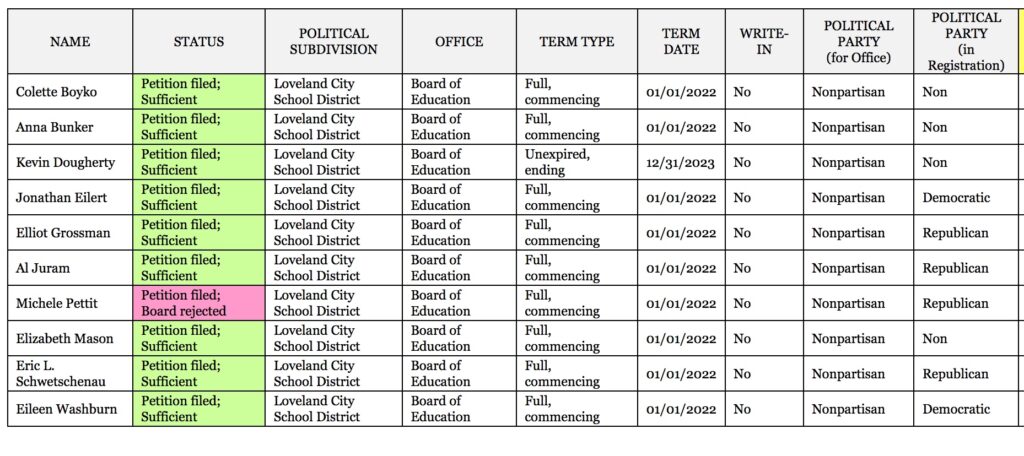
Loveland, Ohio – Homana Nebel an Administrative Associate with the Hamilton County Board of Elections has told Loveland Magazine that current Loveland City School Board member Michele Pettit’s nominating petitions to run for another four years on the Board has been rejected.
Candidates for the Loveland School Board (provided by Hamilton County BOE)
Nebel said that there was a problem with the petition/s she filed with signatures of Clermont County voters. Candidates need a total of 75 total valid signatures of District registered voters and Petitt ended up with only 55.
Petitt has been notified and can appeal the rejection to the Board of Elections and be granted a hearing but as of 3 PM today they have not heard from her. Another option according to Nebel is for Petitt to file to be a write-in candidate and she has until August 23 by 4 PM to pay a fee and file the needed paperwork with her declaration of intent.
Loveland Magazine has reached out to Petitt asking if she will pursue these two options.
Petitt’s current term is set to expire on December 31. The election is on November 2.