Tag: health care

  • Ohio legislators, medical leader fear vaccine hesitancy, health care impacts if RFK Jr. confirmed

    Ohio legislators, medical leader fear vaccine hesitancy, health care impacts if RFK Jr. confirmed

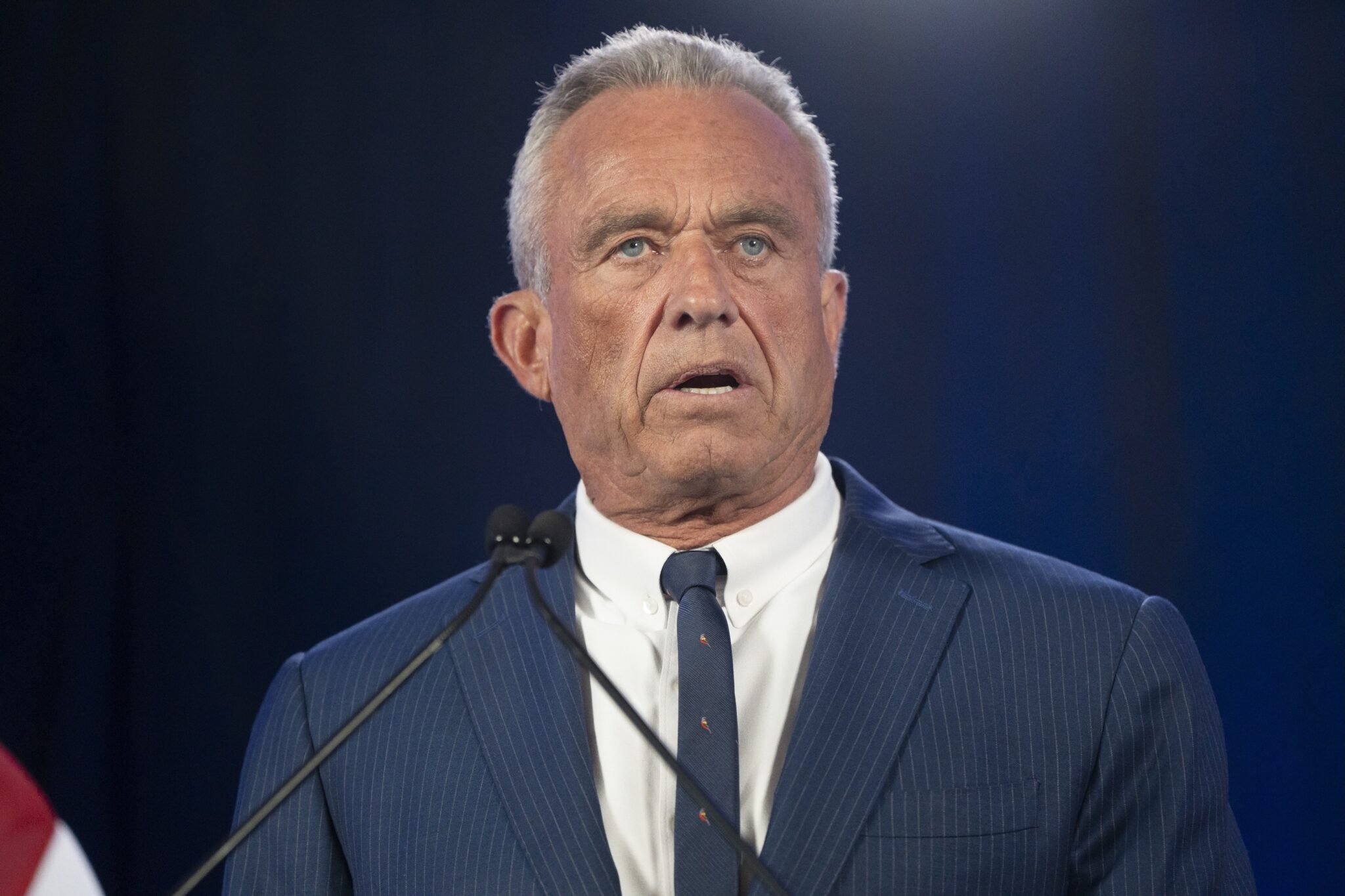
     Robert F. Kennedy Jr. (Photo by Rebecca Noble/Getty Images)

    By:  Ohio Capital Journal

    State legislators and medical experts in Ohio are decrying the nomination of Robert F. Kennedy, Jr., to the U.S. Department of Health and Human Services.

    Democratic lawmakers and a leader at the Toledo Lucas County Health Department expressed particular concern over access to health care and the future of vaccination requirements and information.

    “I think the question is are you going to trust somebody to run our entire health enterprise in this country who has no scientific background to understand why doctors, nurses, dentists are recommending that we actually do these things,” said Dr. Jonathan Ross, board president for the TLCHD.

    State Rep. Michele Grim, D-Toledo, who holds a master’s in public health, said the comments Kennedy, Jr., has made about vaccines in the past makes her nervous about his leadership of a federal medical agency with a multi-billion-dollar budget.

    “I know that vaccines save lives,” Grim said during a press conference hosted by Protect Our Care. “We eradicated small pox with vaccines, we almost eradicated polio, but now that is coming back because of the vaccine hesitancy.”

    Grim also takes issue with Kennedy’s “arcane” views on HIV/AIDS, something she focused on as part of her public health education. She said the views he’s expressed, are “very problematic in that space.”

    Ross, Grim and her fellow state Reps. Terrence Upchurch and Elgin Rogers said they hope the Trump administration will reconsider Kennedy, Jr.’s appointment, but failing that, they urged the U.S. Senate to conduct thorough questioning of the nominee, ultimately stopping the appointment.

    “I think that this appointment is probably the most dangerous, because it has a great impact on the public health, not just of the people of Ohio, but everyone in this country,” Upchurch, D-Cleveland said.

    GET THE MORNING HEADLINES.


    Ross and the legislators are concerned about the state of the overall national health care system with the appointment of Kennedy, Jr., but they see potential problems at the state level as well.

    “I think what impacts we’ll see is there could be less funding for our health departments, there could be some vaccine hesitancy, and I think we’ve seen that on the local level and also on the state level,” Grim said.

    Ross pointed to the possible reversal of insurance protections for Americans up to age 26 and undoing of Medicaid expansion as issues that could lead to increased health issues, and increased economic issues on top of everything else.

    With a loss of coverage in the Medicaid space, and if threats the Trump administration has made previously about repealing the Affordable Care Act come to fruition, crippling medical debt could fall on more and more Americans, leading to bankruptcies, along with unnecessary hospitalizations because of a lack of health coverage.

    “Being poor is also very bad for your health,” Ross said.

    Rogers, D-Toledo, said the disparities that already exist in health care for communities of color could also get worse with leaders lacking the information they need to make positive change.

    “If you have leaders who don’t understand the science, who are willing to ignore the science, they’re going to ignore other factors across the state of Ohio and that impact the people of Ohio who come from the most trying conditions,” Rogers said.

    A way forward could include state-level legislative action to protect certain aspects of the health care system that may be impacted by the new administration, and the new appointment. Ross said Medicaid work requirements that were considered in Ohio and federally would not be the way forward, and keeping an eye on efforts to require work as part of the Medicaid eligibility would help preserve the health care landscape.

    “People are more likely to be able to work if they have health care coverage, so precluding health care coverage for people who are not working is the opposite of what you want to do,” according to Ross.

    The legislators pledged to keep public health at the forefront of the minority caucuses priorities, though they face a tough slog leading a charge in a Statehouse with GOP supermajorities in both chambers.

    “I can see a world where there is another effort to attack vaccinations (on the state level),” Upchurch said.

    For Grim, whether Kennedy, Jr., is confirmed or not, it’s up to legislators to make sure the public and their fellow legislators know that a loss of Medicaid benefits or any hits to public health would negatively impact all Ohioans, not just a small minority.

    “We need to make sure that our caucus is a voice for public health and the benefits of vaccines,” Grim said.

    YOU MAKE OUR WORK POSSIBLE.

    _______________
    Susan Tebben
    Susan Tebben

    Susan Tebben is an award-winning journalist with a decade of experience covering Ohio news, including courts and crime, Appalachian social issues, government, education, diversity and culture. She has worked for The Newark Advocate, The Glasgow (KY) Daily Times, The Athens Messenger, and WOUB Public Media. She has also had work featured on National Public Radio.

    Ohio Capital Journal is part of States Newsroom, the nation’s largest state-focused nonprofit news organization.

    MORE FROM AUTHOR

  • Ohio abortion rights advocates prepare for more legal fights

    Ohio abortion rights advocates prepare for more legal fights

    Getty Image

    BY: SUSAN TEBBEN – Ohio Capital Journal


    With the abortion landscape changing in Ohio and around the country, one abortion rights group is building up its legal effort for those seeking or providing abortion care.

    Abortion Fund of Ohio recently announced the launch its Legal Access Program, through a partnership with law firm Friedman, Nemecek, & Long, L.L.C., that will provide free legal assistance and referrals to attorneys “for Ohioans facing criminal and civil penalties for reproductive health care.”

    “We’re building out a network of lawyers who will take on these cases, so that we have more lawyer power,” said Morgan Mitchell, legal access fellow for AFO.

    Mitchell said cases are popping up in the state where confusion and lack of knowledge of where abortion and procedures that could be connected to abortion (like miscarriage, medically called a “spontaneous abortion”) legally stands.

    In one such case, covered by NPR, a woman wondered if the six-week abortion ban was causing doctors to hesitate in treating her heavy bleeding at a Painesville emergency room, bleeding that had already been confirmed to be caused by a miscarriage.

    Currently, abortion is still legal up to 22 weeks in Ohio after a state court blocked a six-week ban indefinitely, but national fights against receiving medication abortion through the mail and a discussion of abortion bans on the federal level have advocates worried that reproductive healthcare may be fought for in the courts rather than medical clinics and hospitals.

    Ohio’s own Attorney General Dave Yost signed onto a letter with more than a dozen other state attorneys general warning CVS and Walgreens against distributing medication to induce abortions through the mail due to various state laws that prohibit it. Ohio’s law, passed in 2022, forbids abortion medication to be provided to patients without a physician present.

    A recent study published in the Journal of Health Politics, Policy and Law, co-authored by researchers from three Ohio universities, said even the regulations that are in effect involve working with state administration, and the bureaucracy has created an system where regulations “have become exceedingly difficult to comply with” for abortion providers.

    Even medical students in the state are left nervous and confused about what restrictions may mean for their education and future career, should they decide to provide reproductive healthcare.

    One group the legal access program is particularly hoping to help is minors who may want to use a legal method to get around needing the consent of their parents to obtain an abortion, a method called judicial bypass.

    According to the Ohio Supreme Court, a minor seeking consent to have an abortion can petition the juvenile court in their county of residence or in a border county, with the help of a court-appointed attorney if they don’t have one.

    A judge then determines if a minor “is sufficiently mature and well enough informed to decide intelligently whether to consent to an abortion or that the abortion is in the best interests of the (minor).”

    Judicial bypass has been on the books since before the fall of Roe v. Wade, but the legal access program is only including that as part of the legal options so that Ohioans know all their legal rights.

    “We’re just trying to let people know this exists, we’re not telling people to have an abortion, or telling their parents they’re bad parents,” Mitchell said.

    With the six-week ban (and other abortion bans that were attempted but not passed by Ohio legislators in previous years) not including any exceptions for rape or incest, and no standards for sex education present in the state, Mitchell said it’s frustrating that a minor has to go to court to prove maturity and intelligence, when some legislators would force them to bear a child, no matter their age.

    “It’s really an attack on bodily autonomy and it’s scary to see it be separated from health care, because this is a decision you’re making for your body,” Mitchell said. “We want to be able to give anyone regardless of age the opportunity to pursue whatever they want with their bodies.”

    The six-week ban pause is being appealed by the state.

  • Ohio health care leaders want child health investment by year’s end

    Ohio health care leaders want child health investment by year’s end

    Adobe Stock photo.

    BY: SUSAN TEBBEN – Ohio Capital Journal

    A coalition of health care advocates want to see congressional investment in child health care by the end of the year, including permanent funding for the Children’s Health Insurance Program.

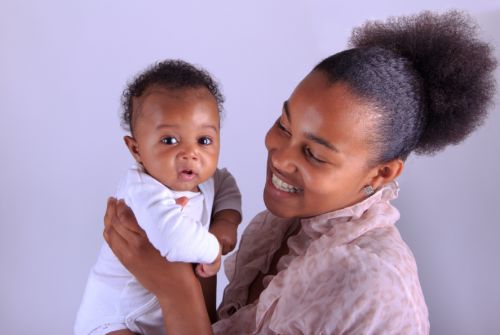
    The coalition, Protect Our Care Ohio, held a press event to push for improvements to maternal health, child outcomes and the issues like discrimination that can increase mortality and lower birth rates, particularly in Black Americans and Black Ohioans.

    “Our Black babies are dying at a rate of three times that of which babies, even here in Toledo/Lucas County,” said Celeste Smith, former coordinator of the Toledo/Lucas County Commission on Minority Health.

    An 2020 analysis by the Commonwealth Fund showed that maternal deaths have been increasing in the U.S., but that most of those deaths are preventable. They found that a “relative undersupply of maternity care providers, especially midwives” and a lack of “comprehensive postpartum supports” contributes to the mortality rates in the country.

    The study also found that more than half of pregnancy-related deaths happen after birth.

    The CDC found that Black babies make up the highest number of deaths per live births in the country as well, with a maternal death rate for Black mothers of three to four times the rate of white mothers.

    Part of the problem, Ohio health advocates say, is the price of health care. For those families that have insurance, often the plans they can afford leave holes in coverage. Many plans chosen for their affordability have high deductibles, even those provided by an employer.

    “Employee-sponsored health care is no longer the gold standard,” said Erika White, chair of the Healthy Lucas County CHIP (Children’s Health Insurance Program). “In reality, many families can not afford their employer health plans and that means the care that we need for our children is falling to the side.

    It is for that reason that the CHIP program through Medicaid is such a needed resource, White said.

    The CHIP program works through Medicaid and separate CHIP programs and is funded both through states and federal block grants.

    According to an annual report filed with the U.S. Department of Medicaid, Ohio’s child enrollment in CHIP rose more than 4% between 2020 and 2021. The increase was due to “economic and policy changes related to the COVID-19 pandemic,” according to the report.

    The Ohio Department of Medicaid has “educated state agency partners and numerous community stakeholders that work with low-income families” to increase outreach efforts, but in terms of reaching uninsured children, Ohio “does not have an effective way to measure” the outreach methods, the report stated.

    One way the problem could be helped is through the permanent authorization of funds for CHIP, which is currently active through June 2023.

    “CHIP is a block grant program, meaning Congress must act periodically to extend funding for the program,” White said.

    A lapse in the funding could mean a lack of health care access for millions of children, more than 9 million nationally in most recent figures from the U.S. Department of Medicaid.

    spending bill being considered by Congress could be the way forward for child health care funding, and an easy way for lawmakers to show their priorities, Smith says.

    “As we reach the end of the year, Congress has not just an opportunity but an obligation to take meaningful action to confront this preventable crisis,” Smith said.

  • A “Women’s Wave” happened Sunday in Loveland

    A “Women’s Wave” happened Sunday in Loveland

    David Miller is the Managing Editor of Loveland Magazine

    by David Miller

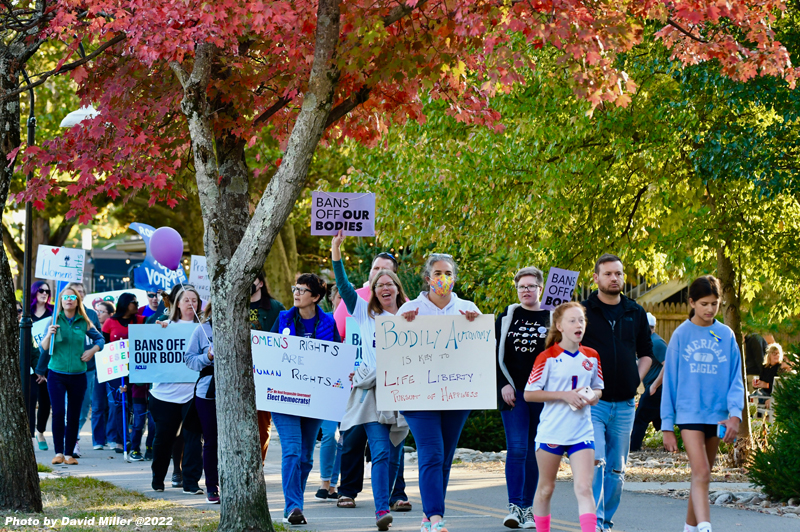
    Loveland, Ohio – Adults and children from across the tri-state gathered in Nisbet Park along the Little Miami River in Historic Downtown on a sunny and warm Fall Sunday afternoon to be part of a “Women’s Wave” of activists out to change the course of voting patterns in our community. After speeches, they walked for an hour throughout our business district and along the Loveland Bike Trail engaging locals and tourists with the refrain of the sentiments they were so adamant about. It was a demonstration for human rights and as odd as that sounded throughout the streets of this quaint community nicknamed, “The Sweetheart of Ohio” it happened. “Human Rights” that have been taken away from themselves, their children, and those they love. The political agenda on most minds was the U.S. Supreme Court overthrowing Roe v Wade and a woman’s right to have an abortion, reproductive rights such as birth control, and how that decision led to even more extreme legislation and proposals from some elected officials at the Ohio Statehouse, and in D.C.

    Health care, including the sometimes life-saving medical care of needed abortions and the tangled net that women and their healthcare providers are caught in, gun violence, mass shooting in schools, the right to gender equality, LGBTQ people’s rights, and a safer future for young girls were all talking points throughout the afternoon.

    Many Democratic candidates for local and state offices spoke and a candidate for the U.S. House. Parts of Loveland are in Ohio Representative Jean Schmidt’s district and the local organizer, Bailey Moak, said that is why she chose downtown Loveland for the event location. She wants to show Schmidt where the unemployment line is. She believes that Schmidt and other currently serving politicians don’t align with Loveland’s values.

    I asked organizer Moak on Monday to send me some of her thoughts after the event had ended. You can also watch her speaking at the event and watch a photo essay of photos from the event below. The rally was certainly an appeal for local “pro-choice” residents to get to the polls on November 8 and vote for “pro-choice” candidates, however, the photo essay will explain why so many people gathered in the park, their myriad reasons, and then marched.

    I found the event to be a huge success. We met our goals to engage and educate voters, raise awareness to threats against women’s rights in our community and shed light on dangerous politicians like Jean Schmidt from Loveland who proposed legislation to ban medical care to women and children across Ohio (HB598), and ban access to curriculum on diversity and inclusion to students across our state (HB616). 
    
    We rallied, we celebrated the promise of what new leadership can do to preserve and expand our freedoms, and we marched in protest of extremism and hate. 
    
    During the March we disrupted some nice family dinners occurring on the patios of local businesses in Downtown Loveland with our passionate demonstration. This disruption is NECESSARY. All too often we side-step important discussions with our families, friends and community members to avoid feeling uncomfortable. The only way individuals, families and communities can grow is through engagement and vulnerability, which can result in a bit of discomfort. As demonstrators passed, families and friends breaking bread together were compelled to address important topics, which in my experience, leads to understanding and connection. 
    
    This is why we Listen. This is why we Speak. This is why we Act. We do it for our communities and families. 
    
    I want to thank our passionate volunteers and our speakers: Brian Flick, Dr. Jeanne Corwin, Dr. Vanessa Enoch, Dr. Nabila Babar, Joy Bennett, Jen Perez and Rep. Jessica Miranda, and our partnering organizations: Ohio Physicians for Reproductive Rights, Ohio ACLU, Ohio Red Wine and Blue, the Ohio Democratic Women’s Caucus and Democracy in Action for participating in this event.
    
    I also want to thank the City of Loveland, the Loveland Fire Department, and Loveland PD Chief, Michael Gabrielson for their support in working with event organizers to ensure this was a safe and successful event that this community can be proud of.
    

  • ‘Unequivocal nightmare:’ OB/GYNs fear uncertainty, health care delays post-Roe

    ‘Unequivocal nightmare:’ OB/GYNs fear uncertainty, health care delays post-Roe

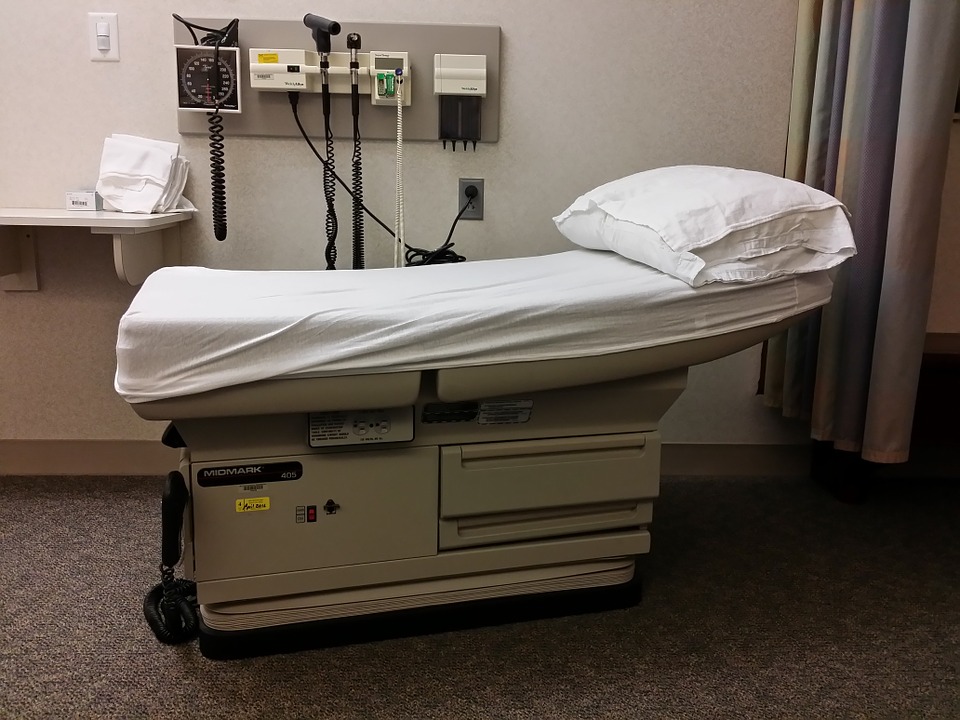
    A medical exam room. File photo from MaxPixels.net.

    BY: SUSAN TEBBEN – Ohio Capital Journal

    Doctors fighting to keep their patients alive are worried about new abortion-related paperwork and legal advice that would hold up necessary care for their patients.

    Consulting lawyers and keeping complicated documentation is a part of life now that the U.S. Supreme Court overturned Roe v. Wade and Ohio put a six-week abortion ban in place.

    “If (patients) are in the midst of a pregnancy loss and a heartbeat is present… we then have to do the same paperwork for someone who was having an elective termination (abortion),” said Dr. Amy Burkett, an OB/GYN hospitalist in Northeast Ohio.

    Doctors face potential criminal charges and risks to their medical licenses because of what they say are unclear regulations and specifications on abortion. Beyond that, the changes to the health care landscape nationally and in Ohio create an environment where doctors who know a pregnancy isn’t viable may have to watch a parent carry the pregnancy anyway.

    “Being forced to go down the path is just an unequivocal nightmare, especially if you think of someone going through an entire pregnancy against their will when they know the fetus is going to die,” said Dr. David Hackney, maternal fetal medicine specialist in the Cleveland area, and chair of the American College of Obstetrics and Gynecologist’s Ohio chapter.

    Hackney, who works with high risk pregnancies and diagnoses birth defects, said abortion bans can increase the complication rate in pregnancies merely by increasing the number of pregnancies coming to term.

    As Roe v. Wade was overturned Friday and Ohio implemented its six-week abortion ban, Hackney was on call, and went to sleep that night unsure how he would proceed with medical care the next day.

    “It’s a Friday night, and all of a sudden the legal ground has changed entirely beneath my feet,” Hackney said.

    With cases that can include time-sensitive care and bleeding that must be dealt with urgently, Hackney said not having a plan in place can cause distractions with dangerous impacts on infant and parent health. That plan may now have to include referrals to other health systems, and even other states for legal options.

    “When it comes to a lot of these legal issues, the most important thing to have is a plan before something awful happens,” Hackney said. “We are even now still working out the details and trying to figure out processes.”

    Abortion bans could have impacts on pregnancy-related procedures that have nothing to do with abortion as well, according to doctors. Dr. Tom Burwinkel, a reproductive endocrinologist who also works on in-vitro fertilization, says bills like HB 598 — a proposed complete abortion ban in Ohio — could cause legal confusion and liabilities for facilities storing embryos or working with those embryos.

    Because the bill, which is currently sitting in a House committee, says an “unborn child” is defined at the time of fertilization, embryos that are damaged even accidentally or through natural occurrences in the IVF process could be held against the doctors conducting the work.

    “If we have embryos stored and something happens to the liquid nitrogen tanks, are the physicians and the people that own the facilities on the hook for the loss of thousands of embryos?” Burwinkle posed.

    Though IVF isn’t impacted by the six-week abortion ban, Burwinkle worries about the future of the IVF field and other pregnancy medicine, as laws and bills in the state focus on ideological ideas of life rather than the medicine involved.

    “Obviously the legislature wants to take things a step further … and that’s somebody imposing their religious beliefs on others. I thought this country was founded on religious freedoms,” Burwinkle said.

    Comments made by U.S. Supreme Court Justice Clarence Thomas in support of overturning Roe v. Wade are giving physicians further reason to be concerned about the future of gynecology, especially contraceptives.

    Burkett said it’s important for the public to understand that contraceptives are not considered abortion medication, even as legislation might couple things like Plan B with abortion-inducing drugs, and misinformation exists coupling IUDs with abortion.

    “IUDs are not considered abortion medications,” Burkett said. “Plan B is also not considered an abortion medication. Neither are medically considered abortifacients.”

    Misinformation about contraceptives does not just impact the public who may not have done enough research, but a part of legislation sponsored by non-medical professionals who may not be listening to the medical community. Hackney said ACOG representatives are always willing to serve as a resource for legislators.

    “In general, most of this legislation happens without meaningful, or certainly not with mainstream medical input,” Hackney said.

    Follow OCJ Reporter Susan Tebben on Twitter.

  • Columbus city attorney, Cuyahoga County prosecutor pledge not to enforce abortion bans

    Columbus city attorney, Cuyahoga County prosecutor pledge not to enforce abortion bans

    BY: SUSAN TEBBEN –  Ohio Capital Journal

    Local legal officials say they and other city attorneys and county prosecutors in the U.S. will not make abortion ban enforcement a priority.

    Zach Klein, city attorney for the city of Columbus, and Cuyahoga County Prosecutor Michael O’Malley signed on with more than 60 other prosecutors throughout the country, pledging not to use their offices’ resources to enforce abortion bans.

    “We will continue to use our prosecutorial discretion to put the safety and security of Columbus residents first by allocating our resources to target the most serious crimes facing our community,” Klein wrote in a statement.

    The city attorney’s office does not prosecute felony offenses, of which most abortion-related charges would be. Those would fall under the Franklin County Prosecutor’s Office.

    However, legislation currently being considered by the Ohio legislature could include misdemeanor charges, such as a charge of “promoting” abortion, and the city attorney plans to keep from using his resources on those charges as well, a spokesperson for Klein said on Tuesday.

    “The announcement that the City Attorney’s Office will not prosecute abortions shows women, health care providers and residents where we stand should these cases come before us,” said communications director Pete Shipley.

    Franklin County Prosecutor Gary Tyack did not respond to requests for comment as to whether or not he supported the letter. Republican Hamilton County Prosecutor Joe Deters has indicated he would enforce the ban.

    The letter, which was created on June 24 and is still being updated with more attorneys signatures as of Tuesday, says the attorneys “cannot stand by and allow members of our community to live in fear of the ramifications of this deeply troubling decision.”

    “Laws that revictimize and retraumatize victims go against our obligation as prosecutors to protect and seek justice on behalf of all members of our community, including those who are often the most vulnerable and least empowered,” the letter states.

    Though the attorneys didn’t all agree on a moral level about abortion, they agreed individual beliefs shouldn’t dictate the justice system.

    “But we stand together in our firm belief that prosecutors have a responsibility to refrain from using limited criminal legal system resources to criminalize personal medical decisions,” the letter stated.

    Currently in Ohio, abortion is legal up to six-weeks of pregnancy. Legal ramifications of the law are focused on the medical professionals conducting abortions, not on those receiving the abortions. Criminal and civil penalties could be leveled against doctors.

    A bill that sits in the legislature awaiting committee passage would ban abortion entirely, with no exception for rape or incest, and create penalties for “promotion” of abortion as well.

    RELATED: Ohio Attorney General Dave Yost has six-week abortion ban put into effect

    RELATED: A weekend of protests in Columbus following Dobbs decision

    COLUMBUS, OH — JUNE 24: Rebecca Molnar of Hilliard (left) acknowledges support from a passing car from a small group of protesters gathering after the Supreme Court announced the reversal of Roe v. Wade, June 24, 2022, at the Ohio Statehouse, Columbus, Ohio. (Photo by Graham Stokes for the Ohio Capital Journal.)

    COLUMBUS, OH — JUNE 24: Christy Hahn of Columbus holds up her sign to passing cars from a small group of protesters gathering after the Supreme Court announced the reversal of Roe v. Wade, June 24, 2022, at the Ohio Statehouse, Columbus, Ohio. Hahn, who has three daughters and six grandchildren, said it was important to come out to protest because “the court is eating away women’s rights bit by bit.” (Photo by Graham Stokes)

    COLUMBUS, OH — JUNE 24: A young woman who chose not to give her name joins a small group of protesters gathering after the Supreme Court announced the reversal of Roe v. Wade, June 24, 2022, at the Ohio Statehouse, Columbus, Ohio. When asked why it was important to come out a companion answered “because today the constitutional rights were take away from 50% for the population.” (Photo by Graham Stokes)

    COLUMBUS, OH — JUNE 24: Rebecca Molnar of Hilliard joins a small group of protesters gathering after the Supreme Court announced the reversal of Roe v. Wade, June 24, 2022, at the Ohio Statehouse, Columbus, Ohio. (Photo by Graham Stokes)

    COLUMBUS, OH — JUNE 24: A sign on a statue announces a rally for later in the day after the Supreme Court announced the reversal of Roe v. Wade, June 24, 2022, at the Ohio Statehouse, Columbus, Ohio. The statue of an adult female figure of Peace, a palm of peace grasped in her hand, draws a little girl close to herself to confide that the greatness of the nation is in her peaceful pursuits. (Photo by Graham Stokes)

    COLUMBUS, OH — JUNE 24: Christy Hahn of Columbus (left) gives a thumbs up to a passing car from a small group of protesters gathering after the Supreme Court announced the reversal of Roe v. Wade, June 24, 2022, at the Ohio Statehouse, Columbus, Ohio. Hahn, who has three daughters and six grandchildren, said it was important to come out to protest because “the court is eating away women’s rights bit by bit.” (Photo by Graham Stokes)

    COLUMBUS, OH — JUNE 24: Rebecca Molnar of Hilliard (center) signals to a passing car from a small group of protesters gathering after the Supreme Court announced the reversal of Roe v. Wade, June 24, 2022, at the Ohio Statehouse, Columbus, Ohio. (Photo by Graham Stokes)

    COLUMBUS, OH — JUNE 24: An abortion rights supporter joins a small group of protesters gathering after the Supreme Court announced the reversal of Roe v. Wade, June 24, 2022, at the Ohio Statehouse, Columbus, Ohio. (Photo by Graham Stokes)

    COLUMBUS, OH — JUNE 24: A small group of supporters of abortion rights gathering after the Supreme Court announced the reversal of Roe v. Wade confronts a counter protester, June 24, 2022, at the Ohio Statehouse, Columbus, Ohio. (Photo by Graham Stokes)

    COLUMBUS, OH — JUNE 24: A small group of supporters of abortion rights gathering after the Supreme Court announced the reversal of Roe v. Wade, June 24, 2022, at the Ohio Statehouse, Columbus, Ohio. (Photo by Graham Stokes)

    Protesters gathered at the statehouse to voice opposition to the Dobbs decision overturning Roe v. Wade. (photo by Nick Evans)

    Tim Ryan addressing the crowd outside the statehouse. (photo by Nick Evans)

    Ohio U.S. Sen. Sherrod Brown speaks at a rally for abortion rights at the Ohio Statehouse. Photo by Nick Evans, OCJ.

  • Ohio Attorney General Yost files for 6-week abortion ban as Roe is overturned

    Ohio Attorney General Yost files for 6-week abortion ban as Roe is overturned

    Advocates pledge renewed fight for abortion access

    BY: SUSAN TEBBEN AND NICK EVANSOhio Capital Journal

    As Ohio Attorney General Dave Yost filed court motions to enact Ohio’s six-week abortion ban, a motley bunch of protesters gathered near the Ohio Statehouse on Friday in a tiny sliver of shade cast by the William McKinley statue.

    They held signs declaring “abortion is healthcare” or “abortion is a human right.” Another read “our democracy, it is broken.”

    Ohio Attorney General Dave Yost. (Photo by Justin Merriman/Getty Images)

    Cheri Wells stood next to her one-year-old daughter, Lux, who was strapped into a stroller.

    “I brought my daughter down here because this absolutely has everything to do with her, too,” she said.

    “It’s taking away her rights to overturn Roe vs. Wade, as well,” she said. “I mean, it’s all about controlling women, period.”

    Advocates surge ahead

    Advocacy groups and leaders for and against abortion spoke out on the U.S. Supreme Court’s ruling overturning the nationwide right to abortion included in Roe v. Wade.

    Religious and anti-abortion groups praised the decision that overturned abortion legalization that had been in place since the early 1970s, and continued their push for prohibitions in Ohio.

    “Ohio Right to Life encourages our pro-life legislative majorities and Governor DeWine to be ambitious and end abortion once and for all in our great state,” said anti-abortion lobby Ohio Right to Life’s president Michael Gonidakis.

    The anti-abortion groups have state leaders on their side, as Gov. Mike DeWine promised backing for the six-week ban that has been tied up in federal court, and Attorney General Yost put the wheels in motion for that ban to become effective.

    In a motion filed less than an hour after the Dobbs decision was released by the U.S. Supreme Court, Yost’s office asked to dissolve the injunction that kept the state abortion ban from going into effect in 2019 when it was passed by the Ohio General Assembly.

    “Because there exists no just reason for delay, defendants respectfully request this court immediately dissolve the preliminary injunction and dismiss this case,” Yost wrote in the motion to the U.S. District Court for the Southern District of Ohio.

    Later Friday night, a court granted the motion, and Gov. Mike DeWine signed an executive order permitting the Ohio Department of Health to set rules for the law.

    Those in the pro-abortion realm are not sitting on their laurels after the much-anticipated decision came through.

    In a Friday afternoon press call, members of Planned Parenthood of Ohio said while the ruling had been expected, even before a draft opinion leaked to the public, the results were no less devastating.

    “Ohioans should not have to figure out how to safely provide health care for themselves,” said Iris Harvey, president and CEO of Planned Parenthood of Greater Ohio. “It’s an attack on your rights, an attack on your privacy and your freedom.”

    Though abortion is now legal at six weeks rather than 20 weeks after a missed period, pro-abortion advocates maintained a message that until a court rules or another ban is put in place, abortion is still legal in the state of Ohio.

    Case Western Reserve University law professor Jessie Hill, who has worked on cases defending reproductive rights, said there “are still legal moves to be made” and lawyers intend to continue pursuing options.

    One way in which Hill said abortion advocates can move forward is by giving advice that is protected under the First Amendment.

    “The state can not, as a general matter, ban truthful, factual information,” Hill said.

    Working within the state’s legal system is also in the playbook to keep abortion legal.

    “Our in-state strategy ensures that we protect the Ohio Supreme Court, which has been a backstop for securing reproductive justice,” said Rhiannon Carnes, co-founder and co-executive director of the Ohio Women’s Alliance Action Fund.

    The group is working with partners to “implement harm reduction measures to ensure that people who need an abortion can obtain the essential health care they deserve,” according to a statement by the OWA. A “voter education plan is also” being launched as the August 2 primary and November general election approach.

    “We are all coming together to build independent political power against those stigmatizing abortion and forcing their political objective on our lives and bodies,” Carnes said in the statement.

    One Small Step

    In the Ladies Gallery at the Ohio Statehouse, a group of anti-abortion activists held a press conference to applaud the Dobbs decision. The room, set aside to honor the achievements of women in Ohio politics, regularly hosts events of all kinds, but the setting wasn’t lost on the speakers.

    Beth Vanderkooi of Greater Columbus Right to Life described abortion as a “systemic injustice” meant to discriminate against women.

    “True advocates for women’s rights would work together to bring down these injustices rather than tell women that their path to equality, to liberty and to freedom, rests on the dismembered bodies of their dead children,” she said.

    The organizers sought to cast Friday’s decision as a watershed achievement for civil rights, comparing it to the reversal of Dredd Scott and Plessy and invoking the words of Martin Luther King, Jr. They also propped it up as a landmark historical event on the order of the moon landing or D-Day.

    “It’s one small step for babies,” Created Equal vice president Seth Drayer insisted, “one massive leap for humankind, because Dr. King famously said that injustice anywhere is a threat to justice everywhere.”

    While abortion advocates prepare for their next moves, Created Equal’s president Mark Harrington said their fight was far from over. Invoking Winston Churchill, he called the Dobbs decision “the end of the beginning.”

    That posture certainly means advocating for greater restrictions or even the elimination of abortion at the state level, but given Justice Clarence Thomas’ suggestion that the court should next revisit rulings on the legality of same-sex marriage and relationships, as well as contraceptives, some worry the right to an abortion is far from the only one under threat.

    Despite promising continued action, Harrington distanced his organization from Thomas’ remarks.

    “The idea that one justice which we may or may not agree with on these other issues, says that from the bench in his opinion, doesn’t really matter unless the court actually has a case,” Harrington said. “And there’s no future that I can see where that’s actually going to occur in the short term.”

    While Harrington and others who spent years fighting abortion look to the future with the wind in their sails, people like Cheri Wells are looking ahead with uncertainty. The leak of Justice Samuel Alito’s draft opinion in Dobbs may have undercut the shock of the decision, but the despair is just as deep.

    “For some reason, in the back of my mind,” she said, “I thought someone was gonna save us.”

  • Analysis: Billion-dollar whitewash?

    Analysis: Billion-dollar whitewash?

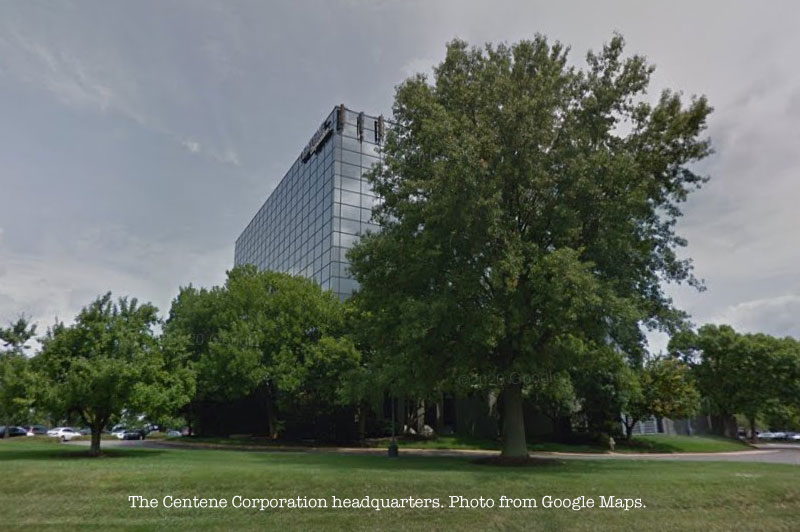
    Centene execs eager to put Medicaid scandal in the rearview without explaining what they did

    By Marty Schladen and Ohio Capital Journal

    In the wake of a blockbuster settlement of fraud claims, the top executive at the nation’s biggest Medicaid contractor was eager Wednesday to put the matter behind the company, which derives most of its revenue from taxpayers.

    But even though executives repeatedly used some form of the word “transparency,” they seem to be trying to get past the scandal without explaining to taxpayers and shareholders what, exactly, they did. 

    That’s kind of a big deal as the company asks states and the federal government to continue to trust it to handle taxpayers’ billions. It’s also a big deal in a health care arena where huge corporations have been accused of exploiting a lack of transparency to overcharge taxpayers vast sums of money.


    Centene agrees to pay a record $88.3 million to settle Ohio…

    David Miller – Jun 14, 2021


    Michael F. Neidorff, chairman, president and CEO of Centene Corp., on Wednesday told investors that the $153 million the company is paying two states and the $1.1 billion it plans to pay 20 others settles a matter that was cleared up years ago. 

    “The agreement addresses a situation from 2017 to 2018,” he said. “The policies and practices that created the situation were changed in 2019, making the matter very much a thing of the past. With this agreement, Centene will be able to put the situation behind us in a timely manner.”

    To make sure none of the investment analysts viewing the presentation missed it, Neidorff hammered the point again.

    “I would like to reiterate that the matter in the agreement is very much a thing of the past and we are looking forward to bringing this to resolution as we move ahead and focus on delivering the highest quality of care to our members,” he said.

    The problem is, many states seem poised to accept settlement money and continue paying billions to Centene with only the vaguest idea of what the company did in 2017 and 2018, and what it might have cost taxpayers.

    On Monday, Ohio Attorney General Dave Yost announced that Centene initiated settlement talks and just four months after Ohio sued the company, Centene had agreed to pay $88.3 million. 

    Because it’s the first — and so far only — state to sue in the matter, Ohio’s getting special treatment. If any state gets more, Centene will have to plus up its settlement with Ohio to match it, Yost said.

    On Wednesday, Neidorff claimed that the state governments on which his company depended for much of its $120 billion in annual business deserved transparency.

    “We have a deep respect for our state partners, and have addressed their concerns expeditiously, increasing the transparency of our pharmacy network,” he said.

    But that transparency has been hard to spot in the company’s recent actions.

    Centene on Monday stressed that it admitted no wrongdoing as it shelled out all that money. The press release announcing the settlement was titled “Centene announces no-fault agreements with Ohio and Mississippi to resolve pharmacy subsidiary claims.”

    Centene’s press operation on Tuesday didn’t respond to a question asking for an explanation of the conduct over which the company was prepared to pay out $1.24 billion. 

    And on Wednesday, Centene’s six top executives answered a multitude of windy, jargon-laden questions from stock analysts. But they ignored another, seemingly simple one: Don’t taxpayers and shareholders deserve to know what Centene did to necessitate such a massive payout?

    The company is presumably anxious to keep other states from suspending their enormous contracts the way the Ohio Department of Medicaid has. And the company clearly wants to stop attorneys general in other states from following Yost’s lead by filing lawsuits alleging that Centene bilked taxpayers out of tens of millions of dollars.

    “Pursuing the matter in court could have involved litigation in 22 jurisdictions over the next three to five years,” Neidorff said. “And we all know what legal reserves and expenses that could have generated.”

    Unless other states do sue, the Ohio suit and earlier investigations there might be the fullest picture the public gets of Centene’s alleged misconduct.

    Yost’s team accused Centene of creating a non-transparent chain of pharmacy middlemen to overbill taxpayers through a few stratagems.

    “One was double billing,” Yost said Monday. “A process by which they used more than one entity to process a claim and added costs to it — overbilling.”

    Yost’s team also accused Centene of pocketing $6.7 million a year in funds that were intended to pay pharmacists to dispense drugs. 

    “They actually claimed they were paying more to the pharmacists than they actually were,” he said.

    The AG also accused the company of marking up drugs by as much as $400,000 in a single week. In court filings, Centene denied the claims.

    Mississippi, the other state with which Centene announced a settlement, was much less specific in its claims of wrongdoing.

    “Following suspicions that PBMs were inflating their bills, in 2019, the auditor’s office launched an investigation to review invoices produced by a Centene-owned company,” a joint press release by Attorney General Lynn Fitch and state Auditor Shad White said. “Contracts required payments be capped by certain industry-standard prices, and the PBM was charging Medicaid more than the allowed price cap.”

    Whether other state attorneys general will go into more detail is unclear. Those in Georgia, Florida, Kansas, New Mexico and Texas didn’t respond when asked whether they’ll seek settlement money from Centene or whether they’ll publicly describe what they believe the Medicaid contractor did wrong.

    They should be more forthcoming as the process moves forward, said Greg Reybold, vice president and association counsel of the Georgia Pharmacy Association — a group that says Centene and other healthcare giants have used non-transparent middlemen to drive drug prices up and community pharmacists out of business.

    “I think folks should know: What were some of the practices that were being investigated?” he said Tuesday.

    Georgia has some distinct similarities to Ohio. For example Centene-owned managed-care organizations in both states saw much higher markups of generic drugs than their peers did.

    An Ohio analysis showed that in 2017 all Medicaid managed-care plans were charging taxpayers far, far more for generic drugs than they were paying pharmacists. But Centene’s Buckeye Health Plan was charging almost double what the others were.

    Buckeye marked up generics an average of $11.60 each for the 4.57 million generic prescriptions it handled, while the average of the other four Medicaid managed-care organizations under contract with Ohio Medicaid was about $5.95. That means middlemen working for Centene marked up generic drugs $26 million more than if they were charging what the others were — and the the analyst hired by the Ohio Department of Medicaid concluded that together, the plans were charging at least triple the going rate

    And it turned out that a Centene-owned pharmacy middleman was paid $20 million for services that had an identical description to services that another middleman, CVS Caremark, said it provided. Be that as it may, the companies later said they weren’t double-dipping.

    Altogether, pharmacy middlemen working for Centene’s managed-care organization in Ohio charged $33 million more for the cheapest class of drugs in 2017 than they paid pharmacists. That was the highest rate for any of Ohio’s five managed-care organizations.

    Similarly, an audit of fiscal year 2019 commissioned by the Georgia Department of Community Health determined that the difference between what Centene-owned Peach State Health Plan was charging taxpayers for drugs and what pharmacies were getting was far greater than it was for the state’s other three managed-care organizations.

    A Myers and Stauffer report obtained by the Capital Journal said that at $12.93 per prescription, the Peach State markup in 2019 was almost quadruple the average of the other three plans. 

    Also similar to Ohio was that generic markups under the Centene managed-care organization totaled $30 million that year.

    That’s a lot of coincidences, Reybold said.

    “It begs the question, what isn’t being fleshed out?” he asked. “What don’t we know?”

  • Sherrod Brown: Trick after trick to pay people less

    Sherrod Brown: Trick after trick to pay people less

    “If even a global pandemic will not get corporations to rethink their exploitative business model, it’s time to stop letting them run the economy.”

    By: U.S. Sen. Sherrod Brown

    In the early months of this pandemic, as businesses and feel-good news stories hailed America’s workers as the heroes of our time, I published an open letter to America’s corporate leaders, imploring them to live up to their ad campaigns and invest in the workers who make their businesses successful. I wrote: If you truly believe that workers are essential to your companies, then treat them that way.

    All that has changed are that corporate profits have gone up.

    Since then, CEOs have not been beating down my door to discuss renewed efforts to invest in their workers. It has been six months, and all that has changed are that corporate profits have gone up, hazard pay has disappeared, and more workers have died. Since the pandemic started, hundreds of thousands of American workers have died of COVID-19 after contracting the virus on the job.

    Even as small businesses have shuttered in communities all over the country, profits for the largest retail companies have soared during the pandemic. Workers’ pay, predictably, has not. The Brookings Institution studied the 13 biggest retailers in the country and found that their earnings have shot up 39% compared with last year, and stock prices are up 33%. But wages have only gone up by about $1 an hour. 

    Trick after trick to pay people less 

    Amazon’s quarterly profits increased by close to a staggering 200%. Yet it rolled back its still-meager $2-per-hour raise in June, and announced a one-time bonus of just $300 per worker. Yes, you read that correctly — not $3,000, but $300, from a company that brought in $280 billion in revenue last year. 

    The company also has no plans to change its broader business model built on exploiting workers, largely workers of color and women, and busting unions. Amazon makes ample use of contractors, including what it calls “Amazon Flex” drivers — and as with other “gig economy” jobs, “flex” is just corporate PR speak for denying workers their rights as employees. 

    Of course Amazon is far from alone in its treatment of workers, nor is this problem new. For decades, corporations have used trick after trick to pay workers less and deny them health careretirement savingspaid leave and basic job security. We’ve seen the results of this corporate business model that treats workers as expendable: Profits go upCEO pay soars, and stock buybacks explode. And the middle class shrinks. 

    Profits go up, CEO pay soars, and stock buybacks explode. And the middle class shrinks.

    If even a global pandemic, where America’s workers have been on the front lines, will not get corporations to rethink their exploitative business model, it’s time to stop letting them run the economy. They had their chance. They failed. If corporate America won’t deliver for its workers, then government and unions must.

    In this presidential election, American voters made it clear they’ve had enough of the current system, where Wall Street runs the show. Joe Biden ran a campaign appealing directly to what he called the backbone of our country: hardworking people who get their money from a paycheck, not the stock market. And he won a commanding victory — over 81 million Americans gave him a 7-million-vote margin, more votes than any other presidential candidate in U.S. history, and a mandate for change. 

    It’s time for us to deliver results.

    An economy that reflects our values

    We can’t go back to business as usual before the pandemic, when it wasn’t working for a whole lot of people. If we are to build back better, we must create a new system centered on the dignity of work.

    In my open letter in June, I laid out actions corporations could take on their own, like raising base pay to $15 an hour. Since many of them refuse, we must raise the federal minimum wage to $15 an hour. Workers are still not safe on the job, so President-elect Biden must immediately issue an OSHA Emergency Temporary Standard forcing corporations to protect their workers from contracting or spreading the virus in the workplace and strengthen overall enforcement, so workers don’t have to worry about getting injured or becoming ill just for doing their job. 

    Many companies still deny their employees paid sick days, even during a pandemic.

    Many companies still deny their employees paid sick days, even during a pandemic, so we must pass a national paid family leave plan. Corporations are expanding rather than ending the exploitative “independent contractor” business model, so we must use the law to make them treat their workers as the true employees that they are. Corporations continue to coerce workers out of forming unions, so we must pass the PRO Act to guarantee workers a voice in their workplace.

    We can deliver on every measure of economic security I outlined in June, with or without corporate CEOs’ blessing. The economy isn’t physics — it’s not governed by scientific laws outside our control. It’s made up of people making choices about our values and what kind of society we want to live in.

    We have the power to change how the economy works, so it rewards work instead of greed. We can create more jobs at middle class wages. We can give people power over their lives and schedules. We can expand economic security and opportunity for everyone. Americans voted for this change, and we will not wait for corporations to reform themselves on their own. They never have. They never will. It’s up to the rest of us create a country where all work has dignity.

  • Small Business making the Best out of a Bad Situation

    Small Business making the Best out of a Bad Situation

    Barberton, Ohio – “We have recently introduced a new product to assist many Market Segments with the re-opening of their businesses from the COVID-19 Pandemic, including Restaurants, Hospitality, Retail, etc. This is a clear vinyl shade to use in any guest/employee contact area,” said Don Burgstahler from Mason.

    MAG Resources – A small business in Barberton, OH has introduced a product to help small businesses open safely. MAG has come out with a protective shield solution, MAG Shield, to provide safety for your customers and employees. MAG being a national supplier to many major National Accounts across the United States, quickly realized a product would be needed to help many market segments including Hospitality, Restaurants, Health Care, Offices, Retail, and many others that experience Customer/ Employee contact.

    MAG has come up with a product that is certified to be in your commercial buildings. “Our product carriers a fire-retardant certificate (NFPA 701), which is required in the commercial atmosphere. We have implemented these in our own office building to help separate shared working environments to maintain employee/customer safety,” said Burgstahler. “The MAG shield is a clear vinyl shade that unlike many of the solutions now has many design options to help integrate with your facilities design.”

    “We are offering three different systems to assist with different installation requirements and budgets. Each product doing their part to help provide ultimate safety.”